The Ultimate 7-Day Central Dalmatia Sailing Itinerary

Seven days is the right amount of time to sail Central Dalmatia properly. Our suggested crewed charter itinerary begins and ends at ACI Marina Trogir, just outside Split, and threads the four islands that define this stretch of the Adriatic—Brač, Hvar, Vis, and Šolta—with the Pakleni archipelago and the Biševo Blue Cave folded in as highlights. With your professional captain and private chef running the boat, the only job on your list is to step aboard, pour something cold, and let the Dalmatian coast unfold.

The route is built around the Maestral, the reliable afternoon thermal wind that fills in from the northwest most summer days. It makes for easy reaching between islands, short passages rather than long ones, and plenty of time for lunch at anchor, an afternoon swim in a pine-shaded cove, or an unhurried dinner ashore in a stone-walled konoba. Roughly one hundred sixty nautical miles total over the week, nothing forced, nothing skipped.

Day 1: ACI Marina Trogir to Milna on Brač

Your week begins at ACI Marina Trogir, a short transfer from Split airport and one of the cleanest, best-run marinas on the Dalmatian coast. Your professional crew welcomes you at the passerelle with cold drinks and a proper chart briefing, walks you through the boat, and gets your gear stowed while you take a first look at the old town of Trogir a few hundred meters across the channel—medieval stone, a fortified waterfront, and the kind of quiet that Split traded away long ago.

Once lines are off, your captain points the bow south across the Split Channel for Milna on the western tip of Brač—about fifteen nautical miles on an easy beam reach as the Maestral fills in through the afternoon. It's the ideal shakedown leg: enough sailing to feel the boat move under you, short enough that there's no pressure to rush. Milna itself is a proper sailor's harbor, a deep notch cut into the limestone with a pine-lined waterfront and a handful of stone houses that haven't changed much in a hundred years.

Tonight you eat ashore. Konoba Mlin, a converted olive mill at the head of the bay, is the kind of place that does one thing and does it properly—grilled fish off the day's catch, peka lamb if you order ahead, local Plavac Mali by the carafe. Walk back along the quay, a nightcap on deck with the lights of the harbor reflecting in the water, and the first full night aboard.

Highlights of your first day:

  • Welcome and chart briefing with your crew at ACI Marina Trogir.
  • Beam reach across the Split Channel on the afternoon Maestral.
  • Quiet anchorage in Milna, Brač's best-protected harbor.
  • Dinner ashore at Konoba Mlin, the converted olive mill at the head of the bay.
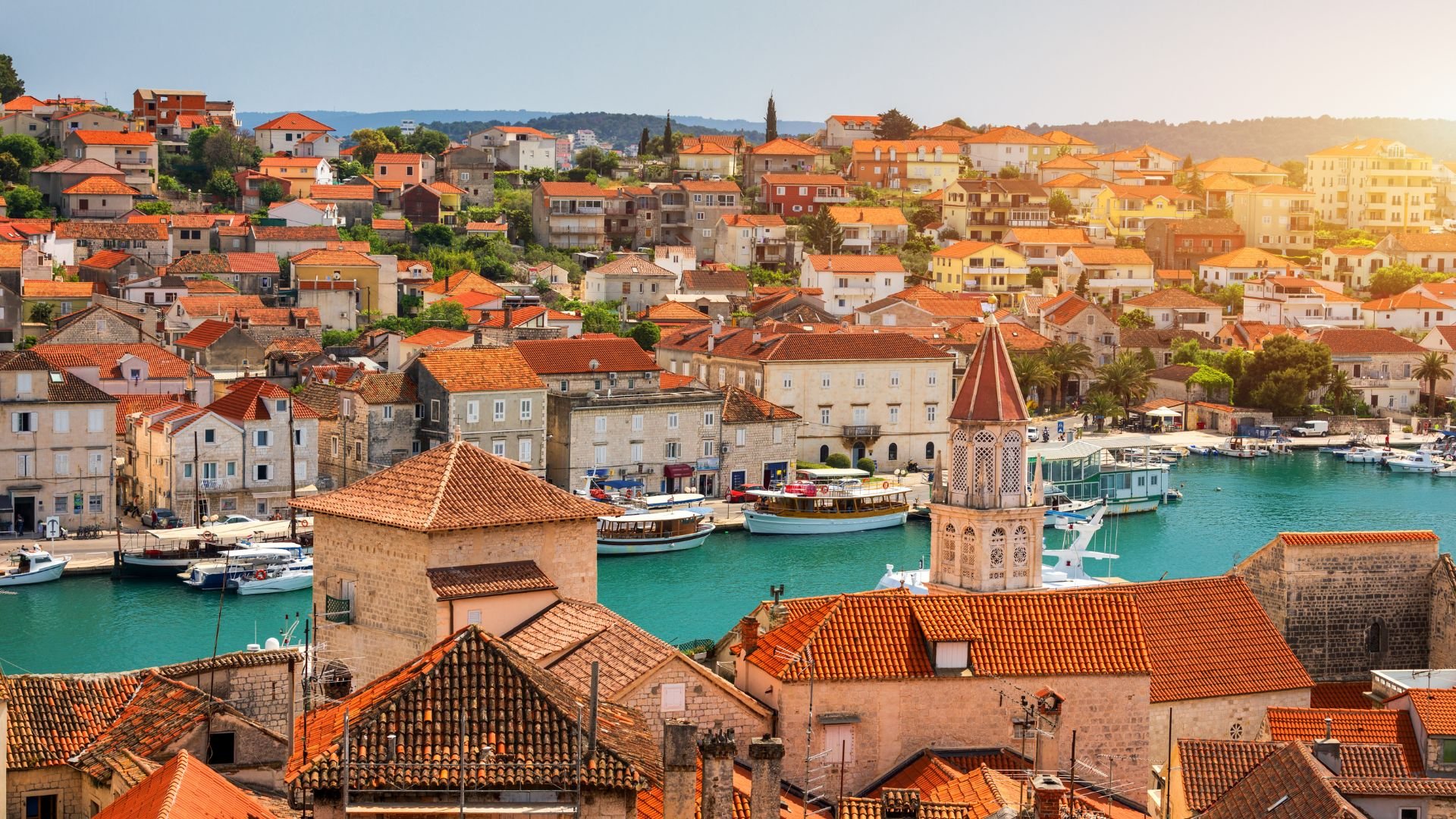
The medieval waterfront of Trogir, just across the channel from ACI Marina.
Hvar Town from above.
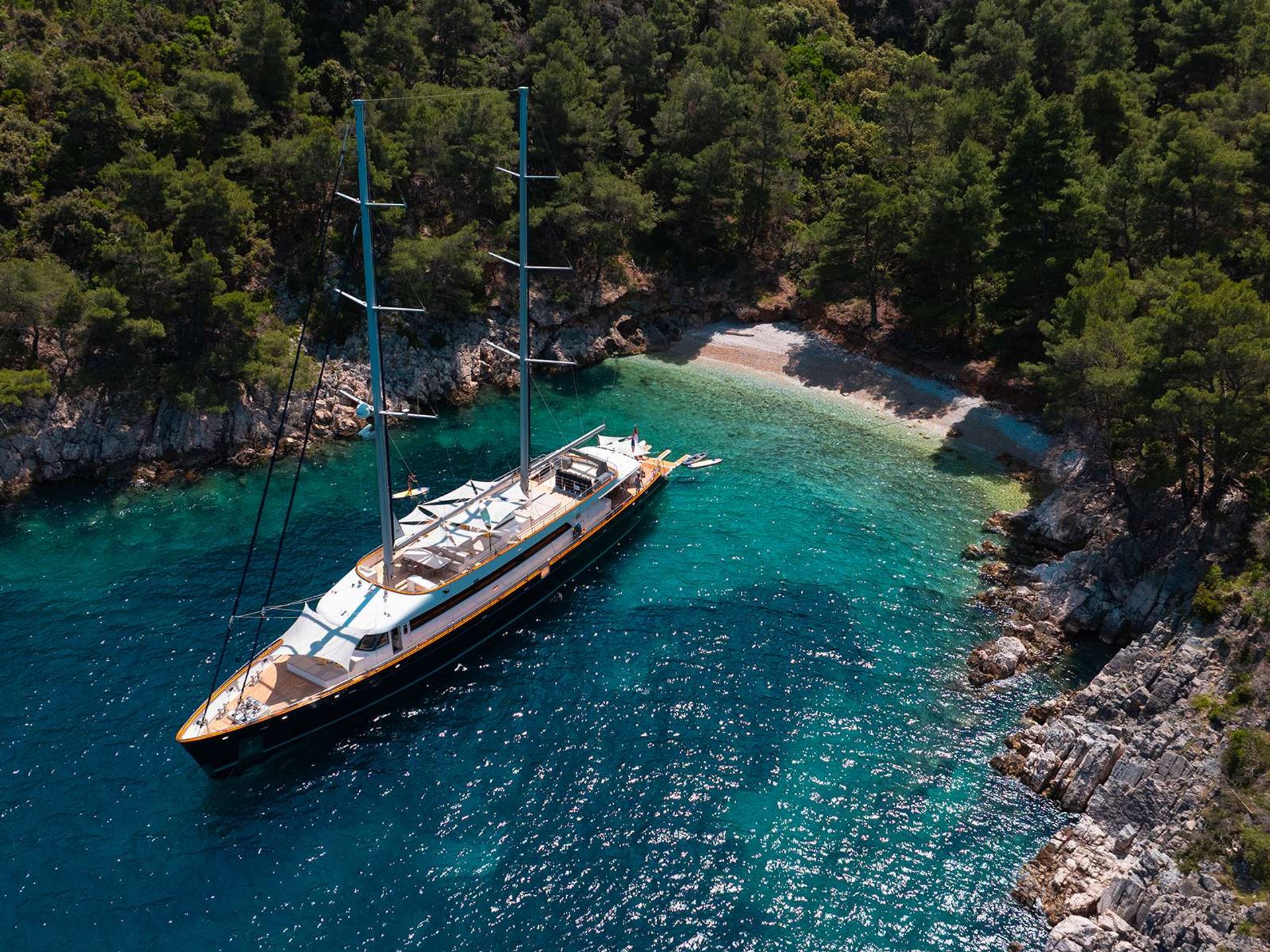
A traditional sailing yacht at anchor in a protected Dalmatian cove.
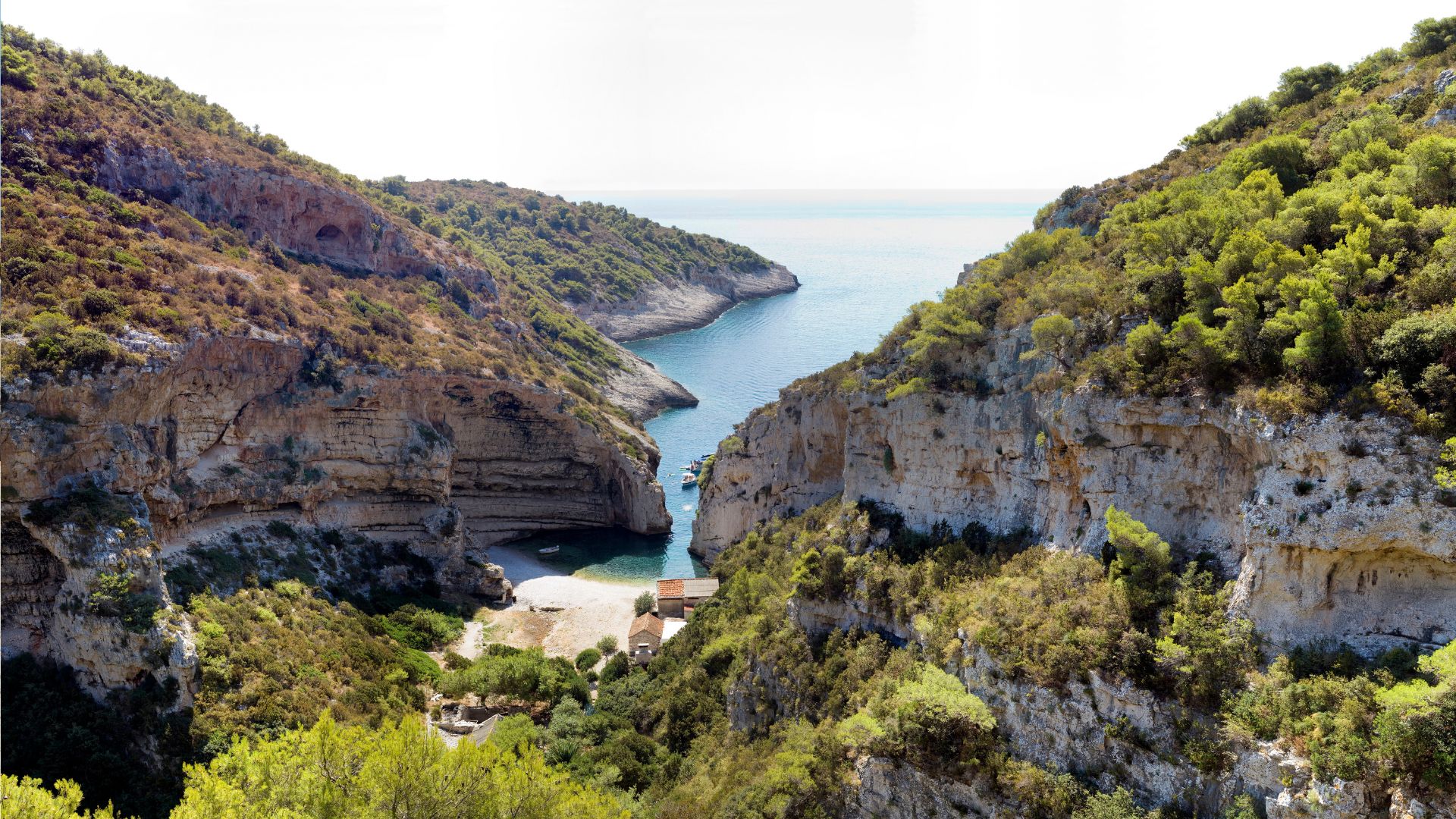
A dramatic cliff-walled cove on the south coast of Vis.
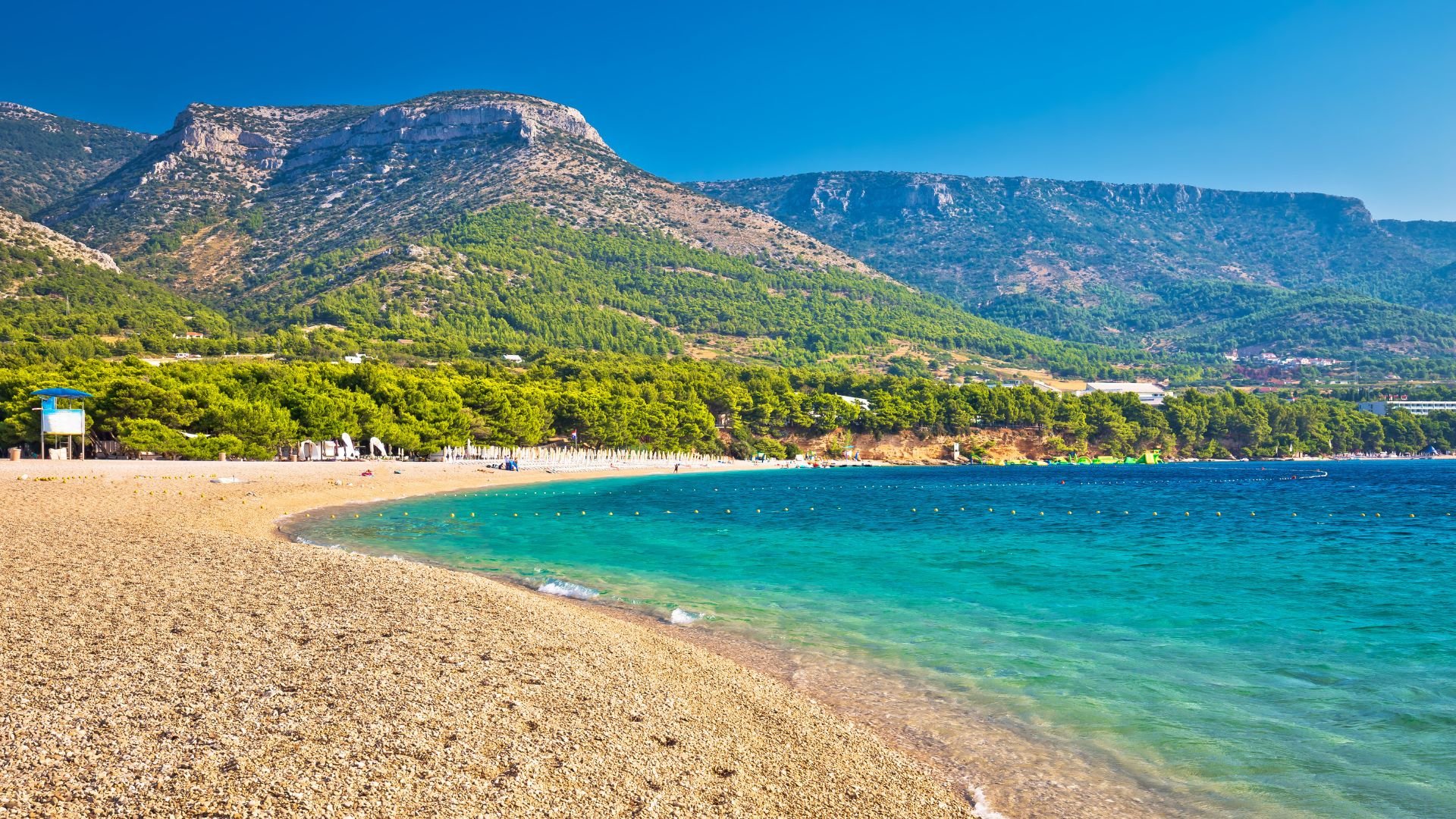
The horn of Zlatni Rat projecting from the south shore of Brač near Bol.
Zlatni Rat—the golden horn—shifts shape with the current, and no two photographs of it ever look quite the same.
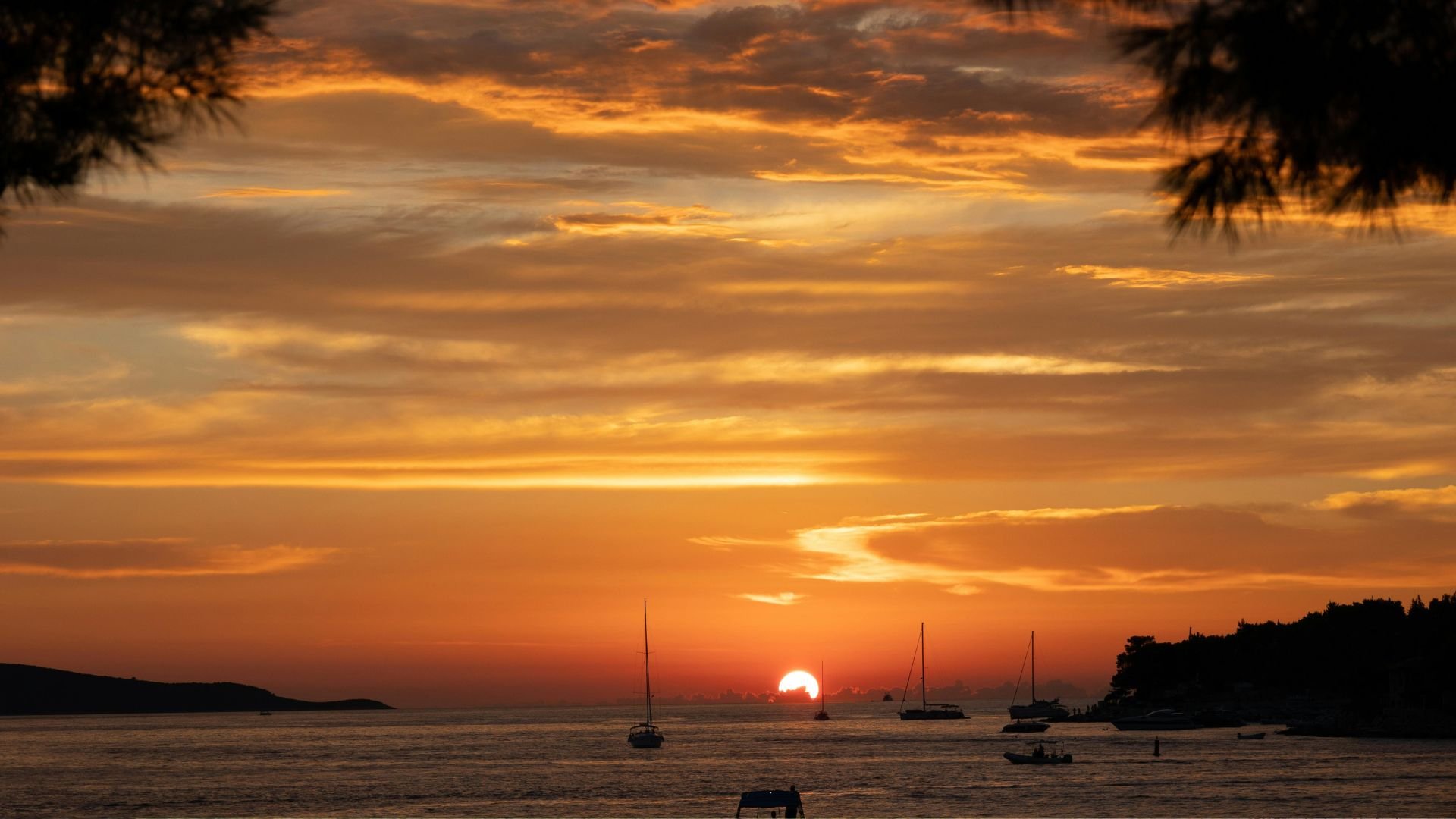
Sailboats silhouetted against an Adriatic sunset, framed by pine trees.
Late afternoon on the hook, sailboats silhouetted against the Adriatic sun.

Day 2: Milna to Bol and Zlatni Rat Beach

After breakfast aboard, your crew clears Milna and works east along the south shore of Brač toward Bol—about eighteen nautical miles, most of it a comfortable reach once the Maestral fills in around late morning. The south side of Brač has almost no harbors and very few anchorages, so the coast runs by uninterrupted: white limestone cliffs, dark pine forests tumbling down to the water, the occasional fisherman's chapel perched above a cove. You'll see almost no boats until Bol comes into view.

Bol is best known for Zlatni Rat, the sand-and-pebble spit that juts out from the coast like a horn and bends one way or the other depending on the day's wind and current. You've seen it on every Croatia postcard ever printed. Your captain will drop anchor in the bay just west of the beach, well off the pedestrian crowd ashore, and the rest of the afternoon is a swim, a paddleboard, and a long lunch prepared by your chef under the sun awning.

Late afternoon is the window. The day-trip boats from Split pull out by four, the beach quiets down, and a tender ride in gets you a walk out to the tip of the horn with the water going coral-pink as the sun drops behind Šolta. Back aboard for sundowners, a chef-prepared dinner on deck, and a night at anchor in what is, in the summer, one of the more photographed stretches of coastline in Europe.

Highlights of Day 2:

  • Reach east along the uninterrupted south shore of Brač.
  • Anchor off Zlatni Rat and swim the bay while the day-trippers are ashore.
  • Chef-prepared lunch aboard under the sun awning.
  • Late-afternoon walk to the tip of the horn once the crowds have thinned.
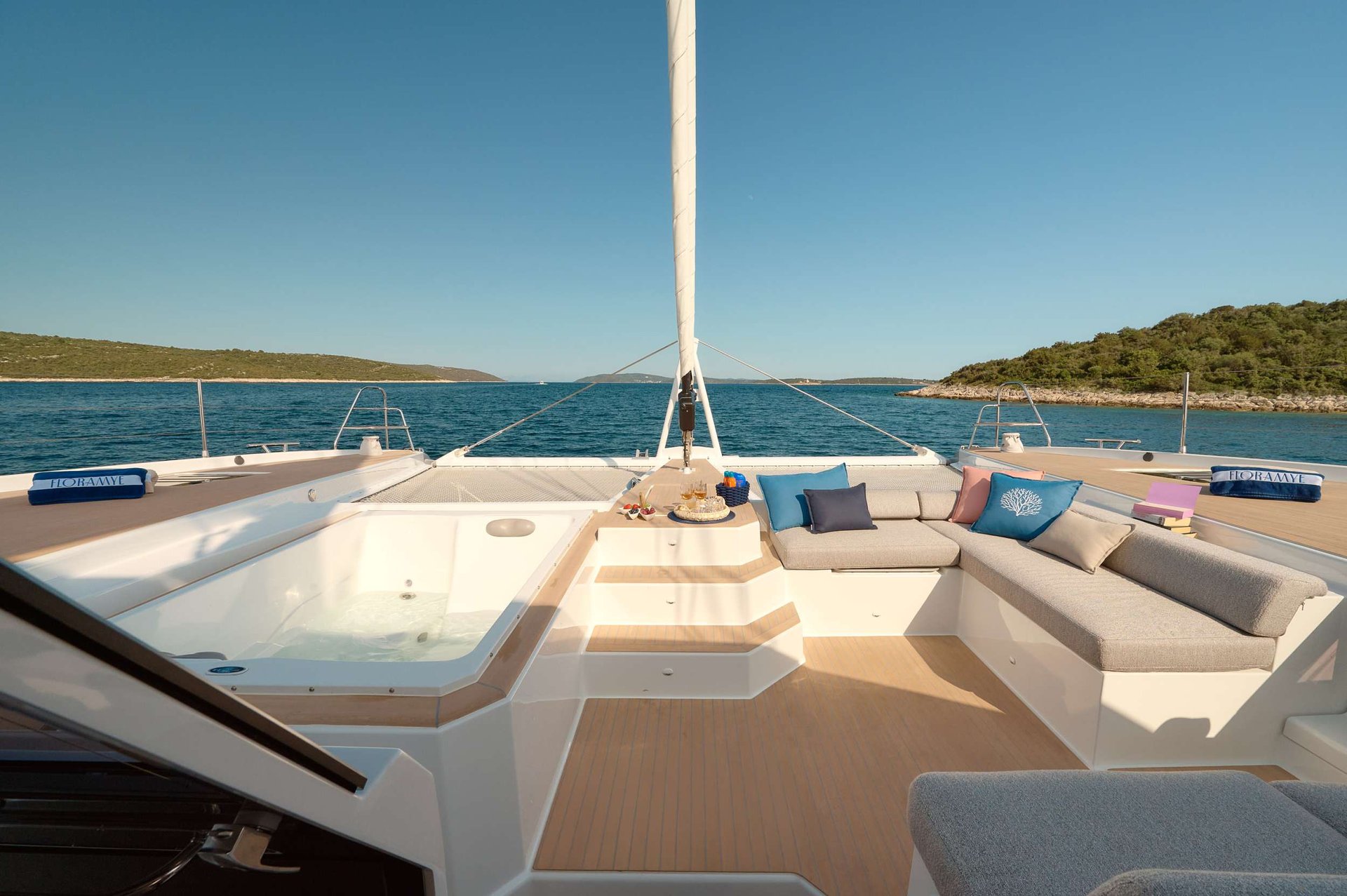
The bow lounge of a crewed charter yacht at anchor in a Dalmatian cove.
A long lunch at anchor in a pine-ringed Pakleni cove—exactly the kind of midday the Adriatic was built for.
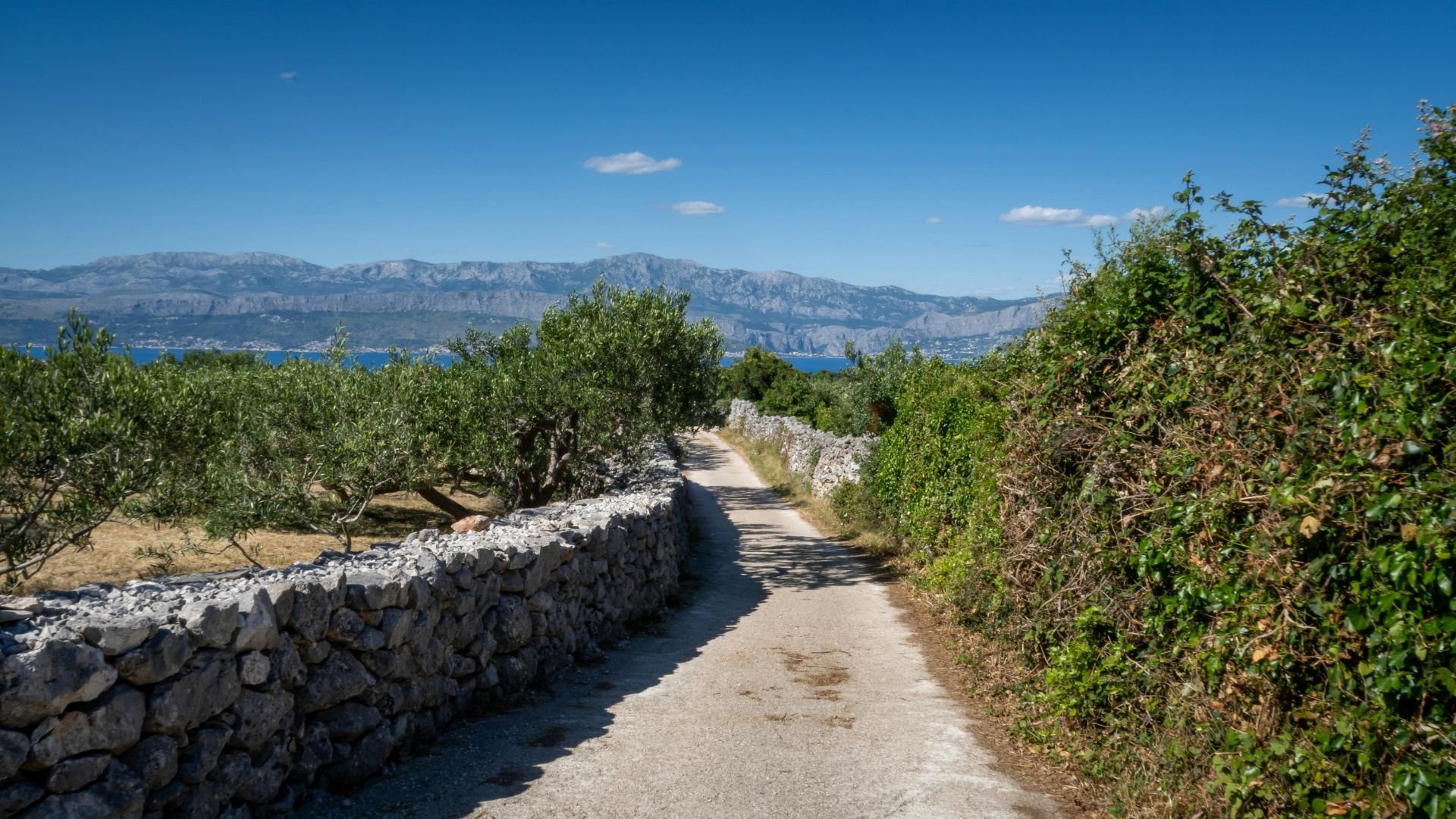
A stone-walled path running through olive groves on the Stari Grad Plain.
The Stari Grad Plain has been farmed on the same Greek-drawn grid since the 4th century BC—still producing wine and olive oil today.

Day 3: Bol to Stari Grad via a Pakleni Lunch Stop

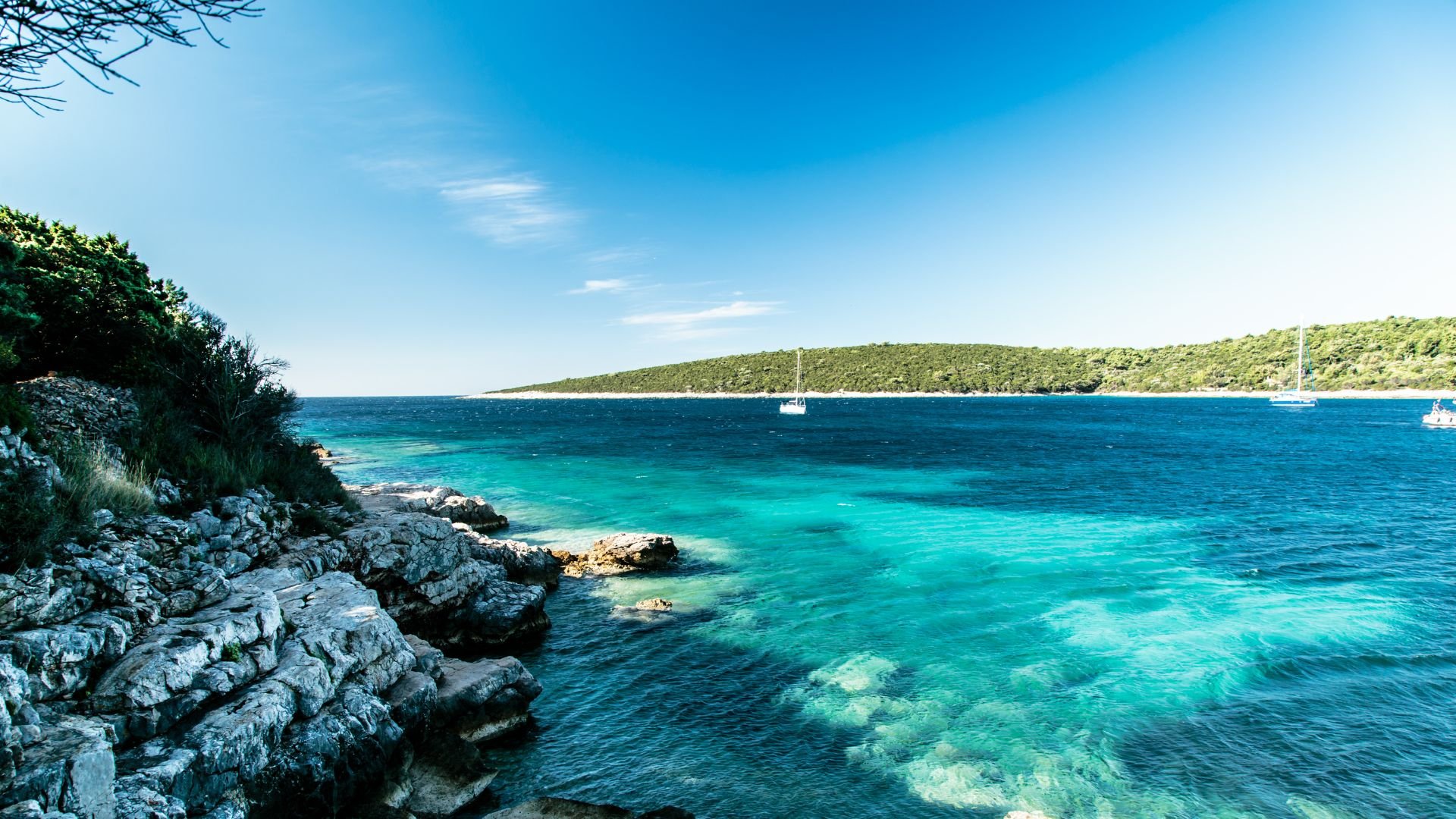
Today is the longest day of the week at roughly twenty-five nautical miles, but it's broken in half by a proper lunch stop. Your captain lifts anchor early and sails south across the Hvar Channel toward the Pakleni Islands—the small archipelago that shelters the front of Hvar Town. Rather than fighting for space in the main Pakleni anchorages, you'll tuck into one of the quieter coves on the back side—Vinogradišće or Stari Stani—where the water runs deep blue, the pines reach down to the waterline, and there's almost always room to swing on the hook.

Your chef sets out a long lunch aboard while the swim ladder comes down and the water toys come out. This is the kind of midday stop the Adriatic was built for—shaded by pine, glass-still water, and nowhere else to be. Mid-afternoon, as the Maestral picks up, your captain points the bow around the eastern end of Hvar for the short run into Stari Grad Bay on the island's north side.

Stari Grad is the oldest town in Croatia and the quieter, older sibling to Hvar Town on the south coast. The harbor is calm, the waterfront is all polished stone and pale yellow façades, and behind the town the UNESCO-listed Stari Grad Plain still runs on the grid the Greeks drew in the 4th century BC—dry-stone walls, olive groves, small vineyards, still producing the Plavac Mali and olive oil that end up on your table. Walk the plain in the late light, dinner ashore at Kod Damira or Jurin Podrum, and back to the boat well-fed.

Highlights of Day 3:

  • Morning sail south across the Hvar Channel to the back side of the Pakleni Islands.
  • Long chef-prepared lunch at anchor in a pine-shaded cove.
  • Afternoon reach around the east end of Hvar into Stari Grad Bay.
  • Walk through the UNESCO Stari Grad Plain and dinner ashore in the old town.
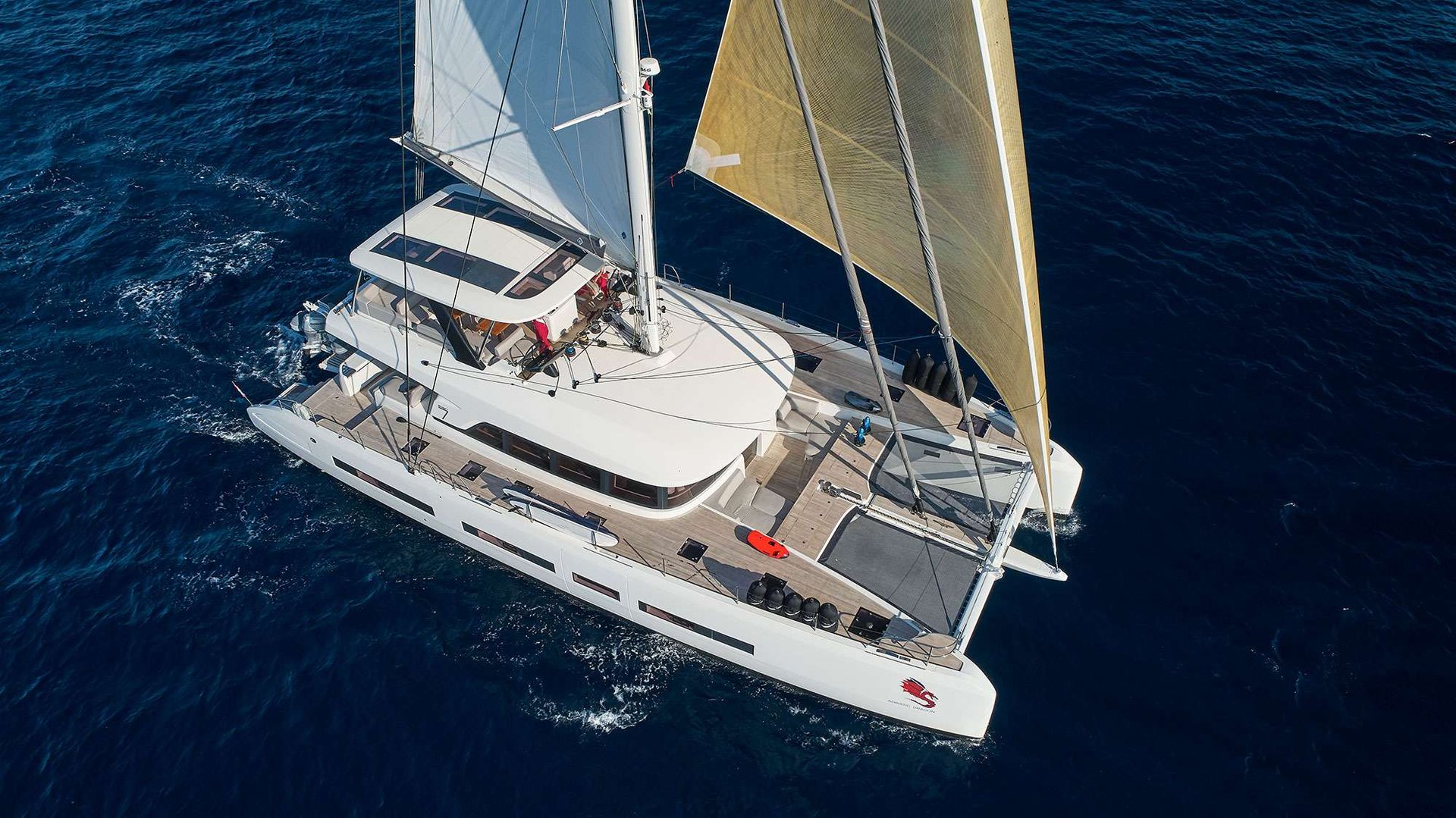
A crewed sailing catamaran reaching under full canvas on the Adriatic.
The afternoon Maestral makes this stretch of coast a sailor's week—easy reaches from island to island under full canvas.
A summer day on the Dalmatian coast with boats at anchor.
Vis still feels a generation behind the rest of the Dalmatian islands—terraced vineyards, empty bays, fewer boats on the water.

Day 4: Stari Grad to Vis via the North Coast

Morning breakfast on deck in the flat water of Stari Grad Bay, then your crew clears the bay and points west-southwest for Vis—about twenty-two nautical miles along Hvar's north coast and then across the open channel to Vis Island. The Maestral typically makes this a reach rather than a beat, and the north shore of Hvar rolls past to port with small coves, a handful of fishing villages, and the long limestone spine of the island rising above.

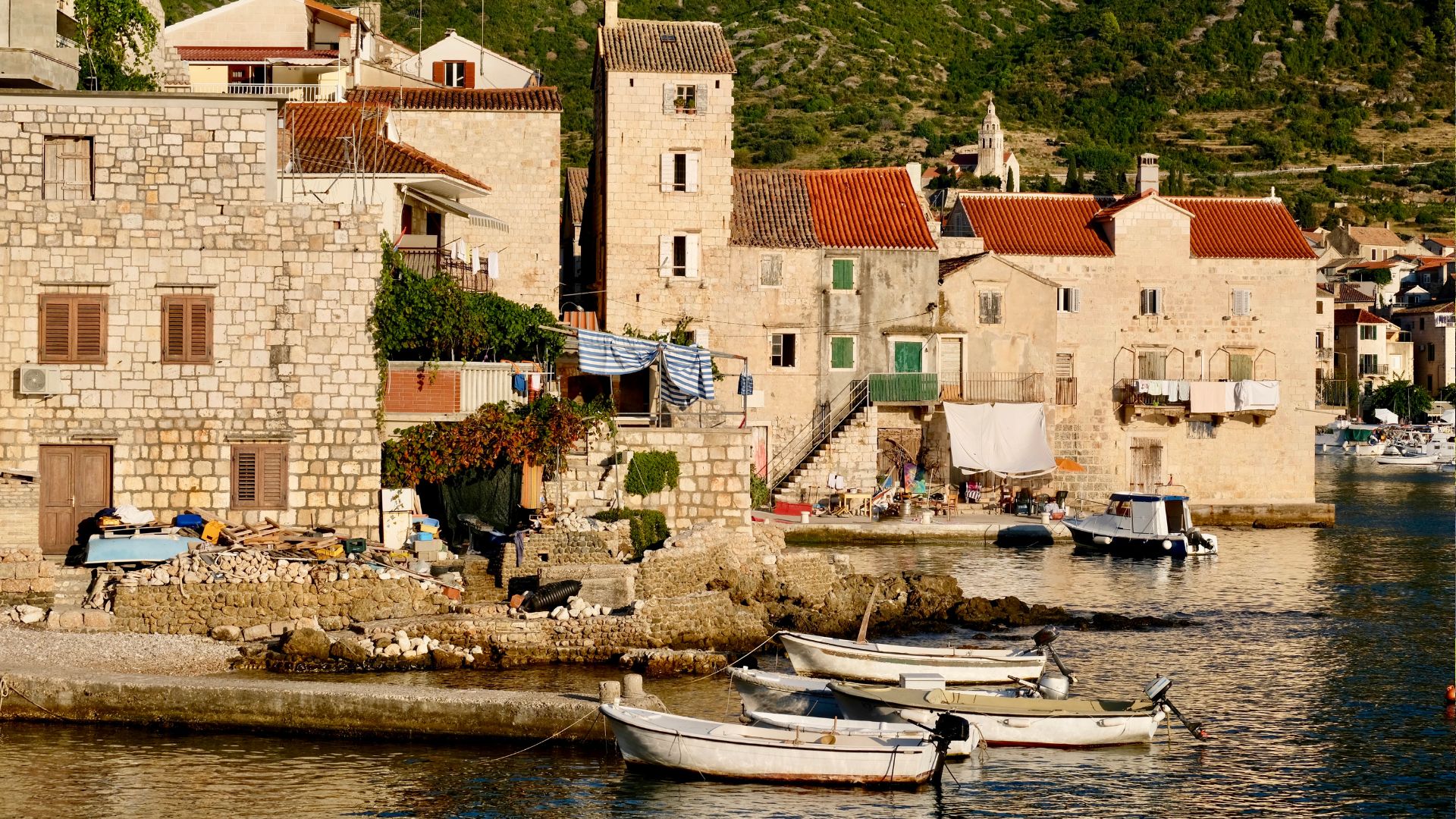
Vis is the outpost of the route. It sat behind a Yugoslav military quarantine until 1989 and didn't open fully to foreign visitors until the mid-nineties, which is why it still feels a generation behind the rest of the Dalmatian islands. Your captain brings the yacht into Vis town harbor, on the north shore of the island, and takes a berth on the town quay—a working waterfront with a Venetian bell tower at one end and a fish market at the other.

Tonight you eat inland, and you eat well. Book a car up to Konoba Roki's, a family-run peka restaurant tucked into a hilltop village in what was once a restricted military zone on the interior of the island. Peka is lamb, veal, or octopus cooked for hours under an iron bell buried in hot coals, and Roki's does it as well as anyone on the Adriatic—served on long wooden tables, with their own wine, in a cold stone room that feels more like a cellar than a dining room. Order it when you book the table; the bell takes three hours.

Highlights of Day 4:

  • Reach west along Hvar's quiet north coast and across to Vis.
  • Arrival at Vis town harbor, on a working Venetian waterfront.
  • Afternoon to wander the old town and the fish market.
  • Dinner inland at Konoba Roki's—peka under the bell, pre-ordered at booking.
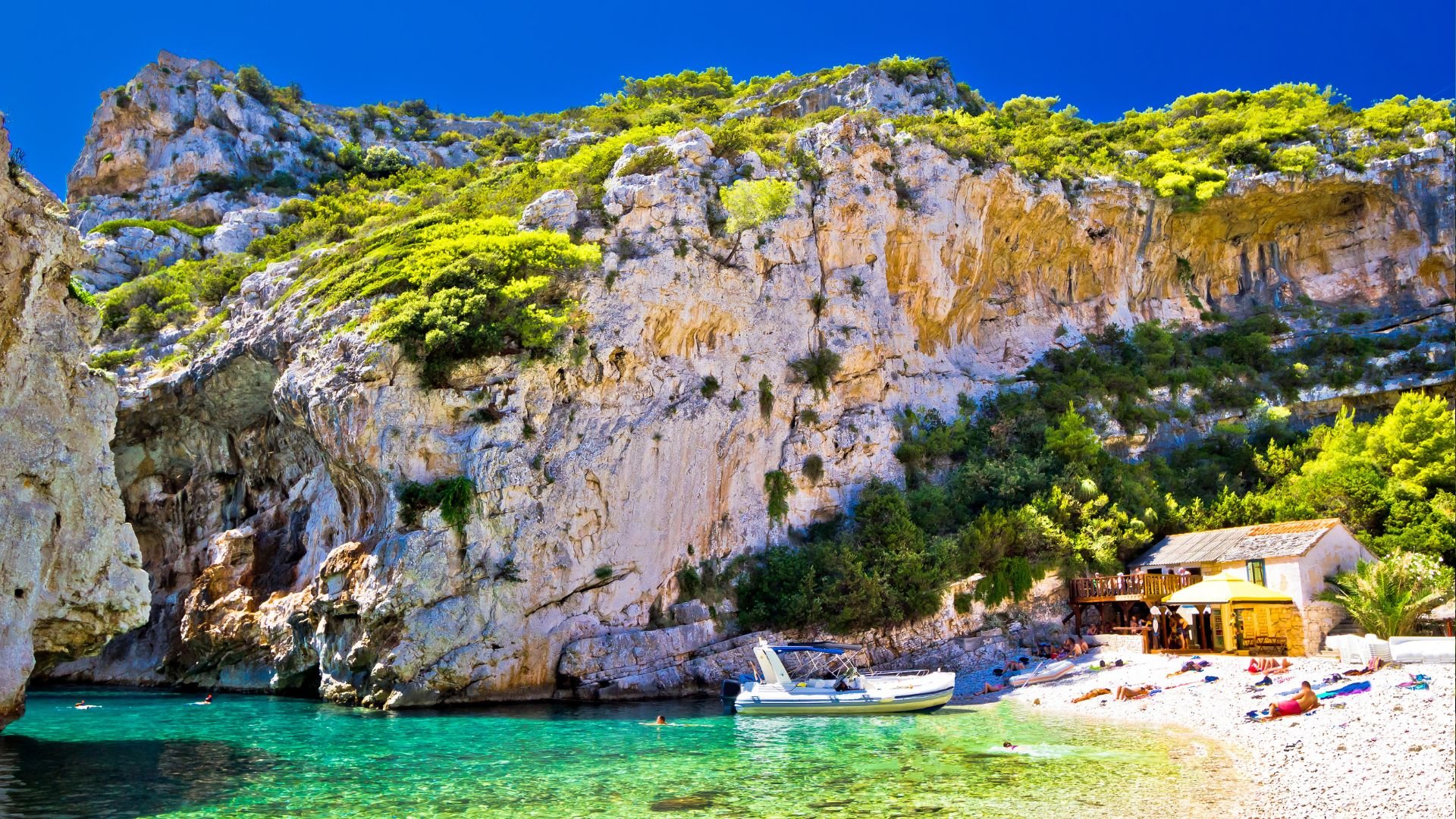
A dramatic limestone cliff cove with a small pebble beach on the south coast of Vis.
The south coast of Vis is a wall of limestone pierced by narrow coves you could sail past without ever seeing.
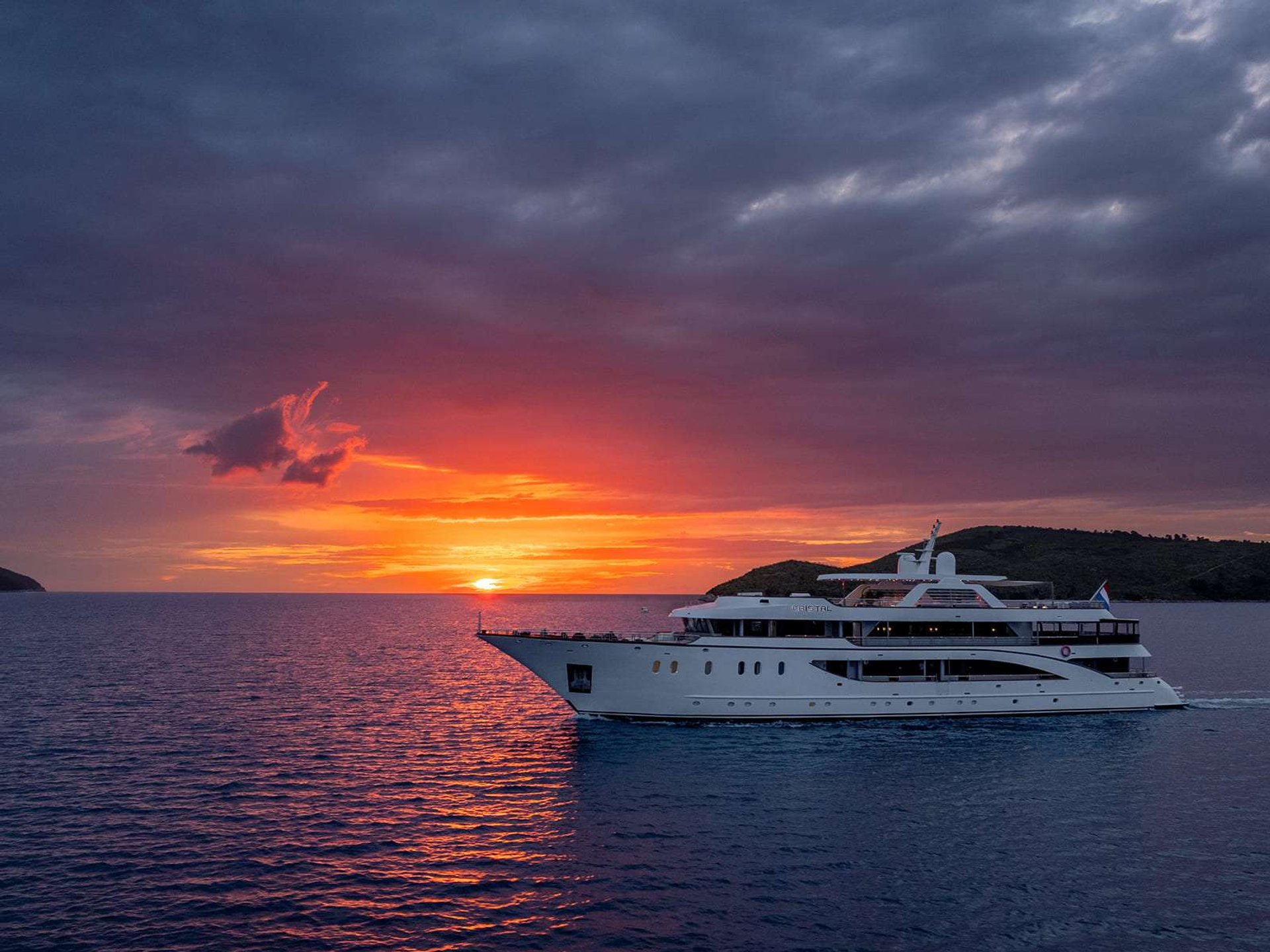
A crewed motor yacht silhouetted against a dramatic Adriatic sunset.
An evening cruise off Komiža—quiet water, all local fish for dinner ashore, and the kind of sunset that closes out a good sailing day.

Day 5: Biševo Blue Cave at Dawn, Stiniva, and Komiža

This is the day the week is built around, and it starts early. The Blue Cave on the island of Biševo, a few miles off Vis, has a narrow south-facing entrance that only admits direct sunlight for about an hour around midday—roughly 11 AM to noon, depending on the season—at which point refraction through the underwater opening lights the entire interior a deep, electric blue. The problem is that every tour boat on the Dalmatian coast knows this, and the line to get in during the light window can run an hour and a half. The move is to arrive at dawn.

Your captain leaves Vis before first light, covers the short run to Biševo, and has you on the tender and inside the cave as the light comes up. You get the cave almost to yourselves, the blue isn't quite at its peak but it's close, and—critically—you're already back aboard and moving by the time the first tour boats round the point. The rest of the day belongs to you.

From Biševo, the captain works back up the south coast of Vis and drops anchor off Stiniva, a bay that sits behind a thirty-foot slot between two limestone cliffs. You swim in, or tender in, and spend a long, slow lunch at anchor with your chef setting out something light on deck. By late afternoon, the yacht eases around the west end of the island into Komiža, the old fishing town on Vis's south shore. Dinner ashore at Pojoda or Jastožera—simple, excellent, all local fish—and a quiet night in the harbor.

Highlights of Day 5:

  • Dawn departure for the Biševo Blue Cave, ahead of the tour-boat line.
  • Swim and chef-prepared lunch at anchor in Stiniva Bay.
  • Afternoon arrival in Komiža, Vis's old fishing harbor.
  • Dinner ashore at Pojoda or Jastožera—local fish, nothing fussy.
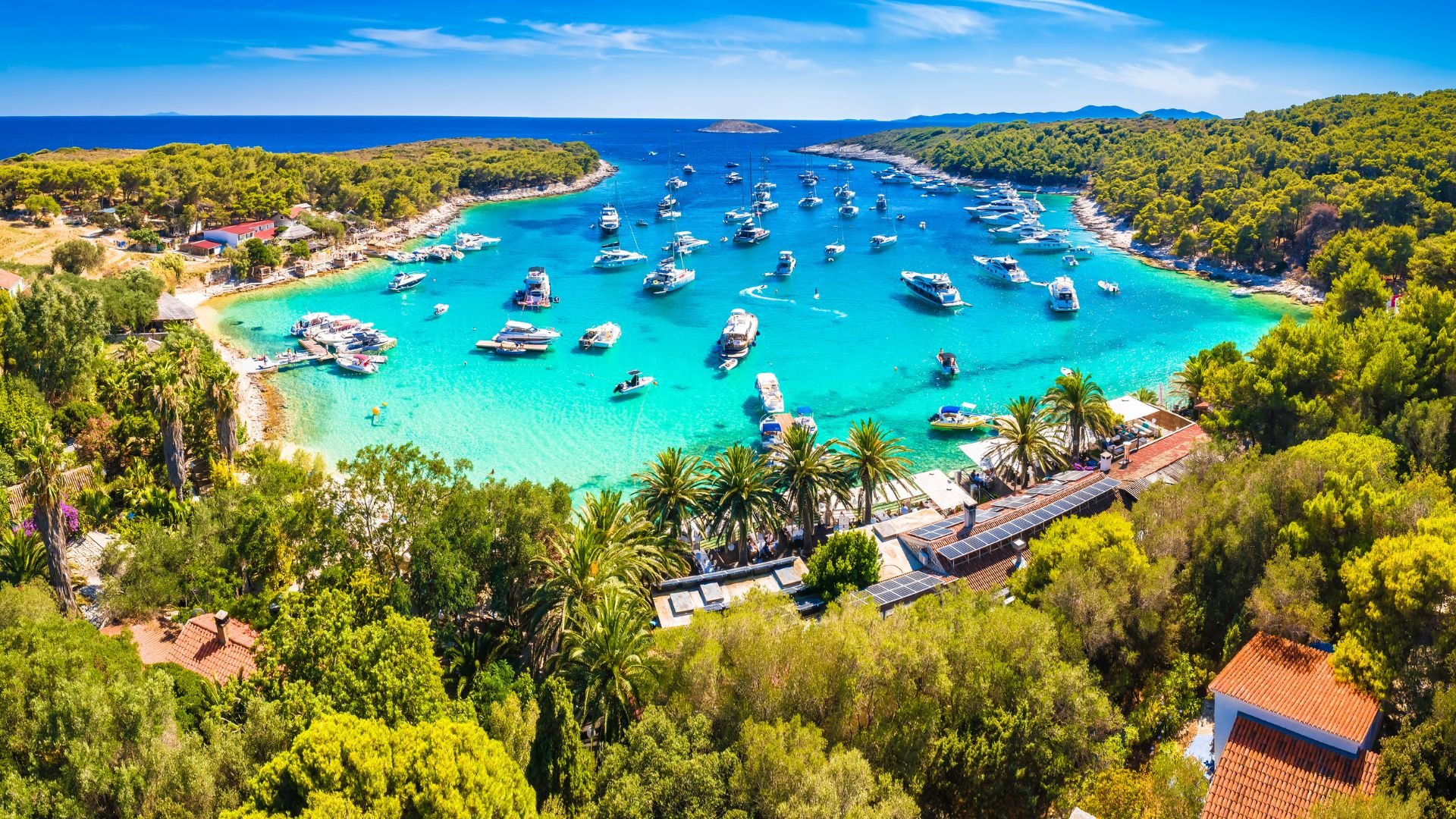
An aerial view of yachts packed into the Palmižana cove in the Pakleni Islands.
Palmižana is the social anchorage of the week—short tender ride to Hvar Town, and the best lunch on the archipelago.
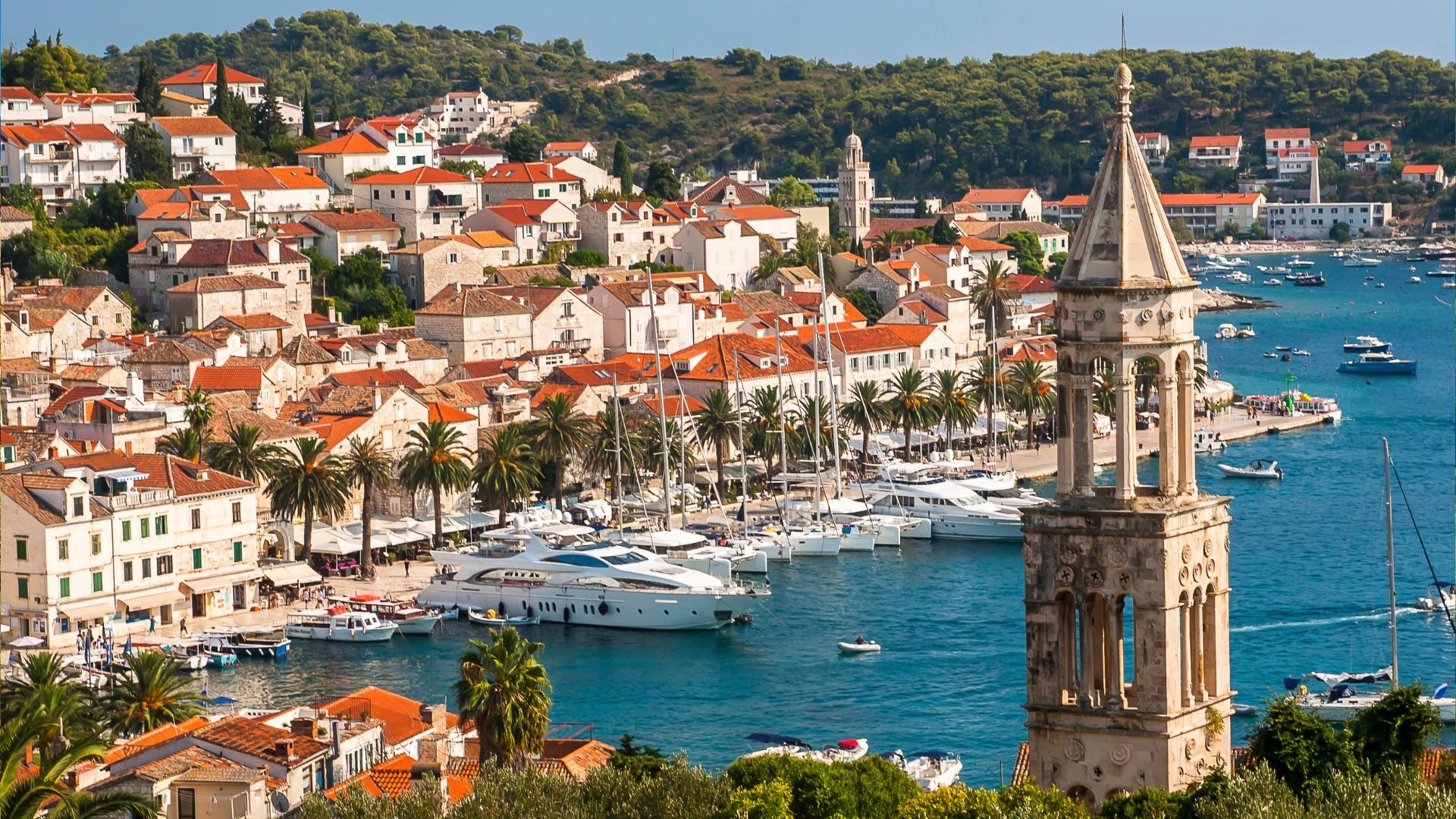
Hvar Town from above, with the fortified harbor and the Fortica fortress on the hill.
Hvar Town from the Pakleni side—fortified walls, bell tower, and the loudest sunset scene in Dalmatia.

Day 6: Komiža to Palmižana and a Night in Hvar Town

After breakfast aboard, your captain clears Komiža and sets a northeast course back across the Vis Channel toward the Pakleni Islands—about twenty-eight nautical miles, a good steady reach as the Maestral builds through late morning. This is the longest sail of the back half of the week, but it's also one of the prettiest stretches: open water in front, Hvar's limestone spine growing on the horizon, the Pakleni islets appearing last as you close with the Hvar Channel.

Your destination is Palmižana, the main bay on the island of Sveti Klement and the social center of the Pakleni archipelago. Pick up a mooring ball in the cove, and the tender runs you five minutes across to lunch at Toto's or Meneghello—both are family-run, both sit on the hill above the bay, and both have been doing Dalmatian seafood at a very high level for decades. Meneghello in particular comes with its own botanical garden and art; this is not a beach shack.

Afternoon for swimming, paddleboarding, and napping off lunch. As the sun drops, the tender runs the short crossing to Hvar Town on the main island. This is the one night of the week that leans into the scene: sundowners at Carpe Diem on the waterfront, a move up to Hula Hula bar on the cliffside for the actual sunset, dinner at Konoba Menego in the old town—a three-room stone konoba up the hill, no electricity, all local, every course brought out slowly. Tender back to Palmižana late, and the boat is quiet when you step aboard.

Highlights of Day 6:

  • Long reach northeast from Komiža to the Pakleni Islands on the afternoon Maestral.
  • Lunch at Toto's or Meneghello above Palmižana cove.
  • Sunset at Hula Hula, drinks at Carpe Diem, dinner at Konoba Menego in Hvar Town.
  • Tender back to a quiet mooring at Palmižana.
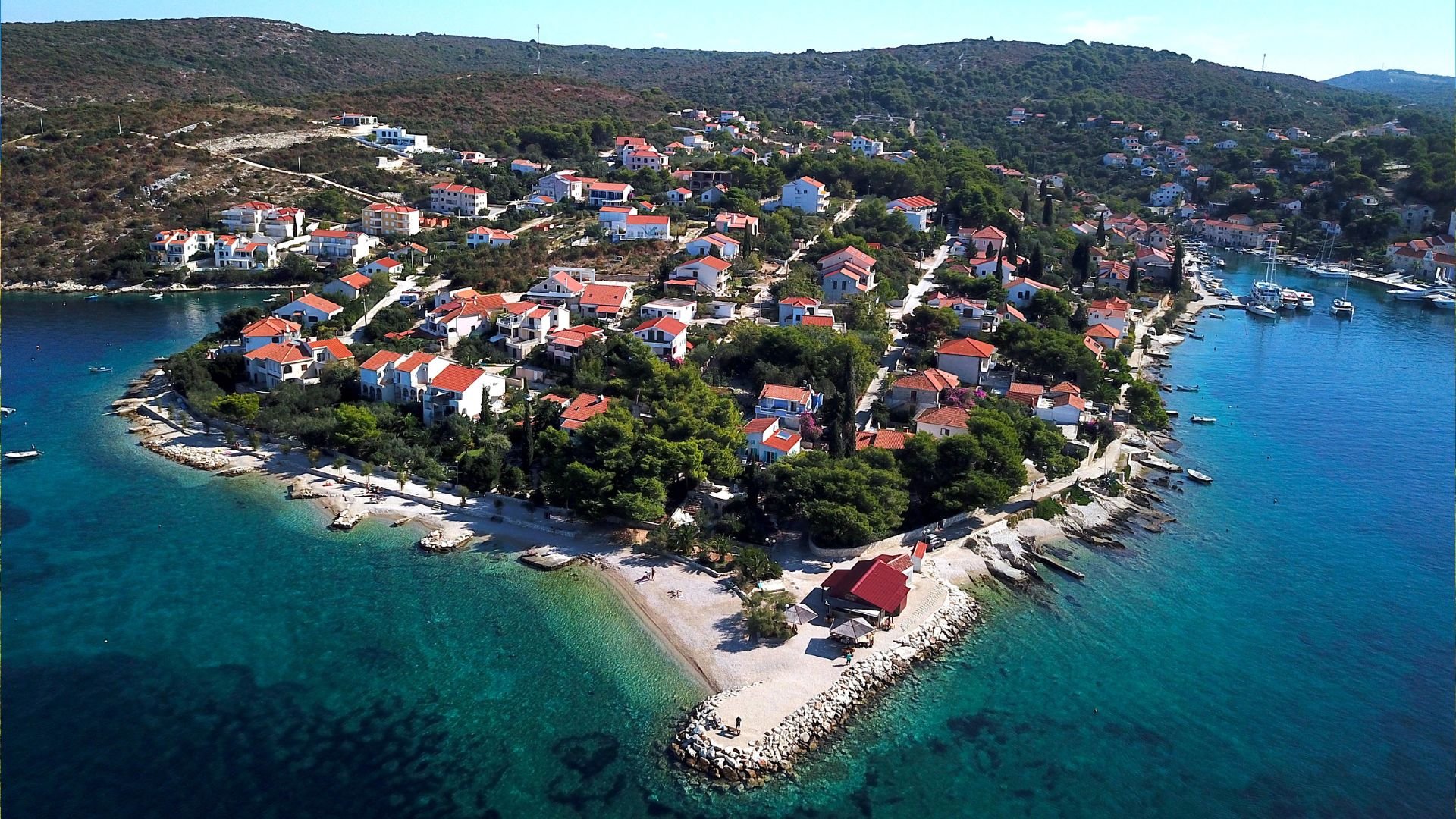
The harbor of Maslinica on the western tip of Šolta.
Maslinica on Šolta: seven small islets off the mouth of the harbor, one restored castle, and the quietest last lunch of the route.
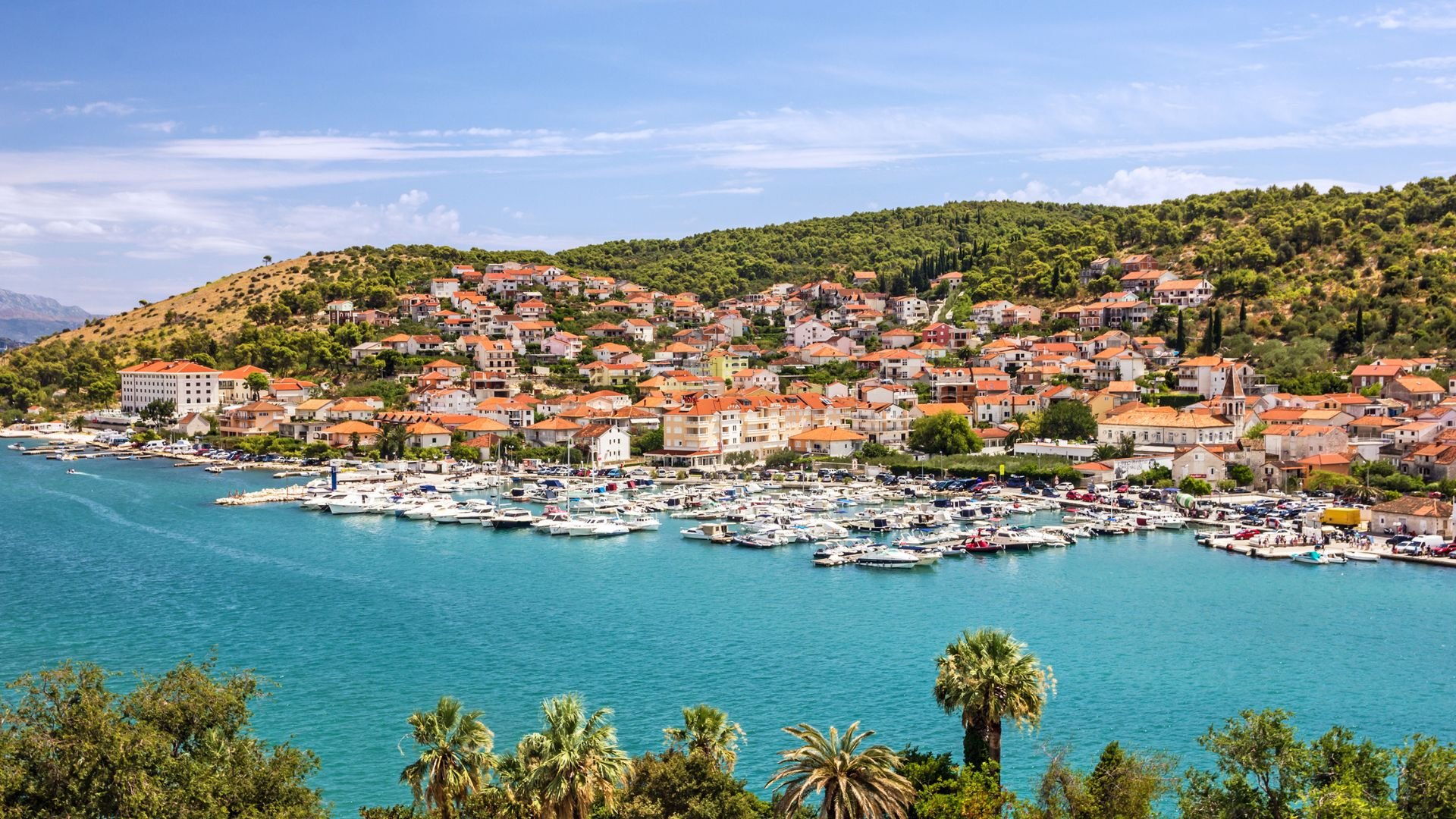
Panorama of the Trogir area and its marina from above.
The final Maestral reach brings you back into the Trogir basin—same berth you left from a week ago.

Day 7: Palmižana to Šolta and Back to Trogir

The last full day threads north through the islands back toward the base—about thirty nautical miles total, broken in half by a lunch stop on Šolta, the quietest of the islands on the route. Your captain clears Palmižana in the morning, crosses the Hvar Channel, and works up the south coast of Šolta toward Maslinica on the island's western tip.

Maslinica is a small, still-working fishing harbor with seven small islets strung across the mouth of the bay—good swimming on the hook, almost no charter traffic, and the kind of pace that makes the week's accumulated miles finally catch up to you in a good way. Lunch ashore at Martinis Marchi, a restored 18th-century castle at the head of the harbor, or aboard with your chef if you'd rather not move. Either way, it's a long, slow lunch; there's no reason to rush.

Mid-afternoon, the captain lifts anchor for the final leg back across the Split Channel to Trogir—about fifteen miles, usually a quick reach as the Maestral runs you home. Your crew handles the approach to ACI Marina Trogir, ties up on the same berth you left from a week ago, and tonight's dinner is aboard—a farewell meal from your chef, the last bottle of something Dalmatian, and time to sit with a week's worth of anchorages without rushing the last evening.

Highlights of Day 7:

  • Morning crossing from Palmižana up to Maslinica on Šolta.
  • Long lunch at Martinis Marchi, in a restored 18th-century castle.
  • Final Maestral reach back across the Split Channel to Trogir.
  • Farewell chef-prepared dinner aboard at ACI Marina Trogir.

Day 8: Farewell to Dalmatia

A slow breakfast aboard, one last coffee on the aft deck, and a short transfer to Split airport with your crew handling every logistic from the dock. Step off with salt still in your hair, a week of Dalmatian anchorages in your camera, and a pretty good idea of when you're coming back.

Prefer a one-way south? Our Split to Dubrovnik itinerary trades the round-trip for the long run down the coast to Dubrovnik—Mljet National Park, Korčula, the Elaphiti Islands, and a final approach under the city walls.