Split to Dubrovnik: A 7-Day Dalmatian Coast Sailing Itinerary

A one-way passage from Split to Dubrovnik is the most satisfying week of sailing in the Mediterranean, and it isn't particularly close. You get the bookends of two UNESCO old towns—Diocletian's Palace in Split, the city walls of Dubrovnik—strung together by roughly 170 nautical miles of island-hopping through the heart of the Dalmatian coast. With a professional captain and private chef running the yacht, the only real decisions you need to make are which konoba you want a table at and how long you'd like to linger over lunch.

The route is built around the rhythm of the Maestral—the reliable northwesterly thermal that fills in most afternoons from late spring through September—and it's deliberately weighted toward short, scenic legs with one longer offshore day in the middle. You'll stop for lunch at the Pakleni Islands, swim inside the cliffs of Stiniva on Vis, eat lobster in Komiža, watch the Moreska sword dance in Korčula, drift between the saltwater lakes of Mljet, and sail into Dubrovnik past the old city walls on the final morning. It's an itinerary designed for guests who want real sailing, real food, and real time on the kind of islands that reward slowing down.

Day 1: Split (ACI Marina) to Milna on Brač

Your week begins at ACI Marina Split, tucked on the west side of the city harbor with Diocletian's Palace a ten-minute walk across the promenade. Your professional crew meets you at the slip with cold drinks and a chart briefing that frames the week ahead, then gives you time to settle into your cabin before a short walk through the palace—a living 1,700-year-old Roman complex where you can eat dinner inside walls built for an emperor. Get that walk in; you'll be looking back at the Marjan peninsula from the water in a couple of hours.

Around mid-afternoon, the captain slips lines for a gentle 15-nautical-mile shakedown sail across the Split Channel to Milna on the western tip of Brač. If the Maestral fills in on cue, you'll be reaching on flat water with the Riva shrinking behind you and the limestone of Brač growing on the bow—the kind of first afternoon that resets your nervous system inside an hour.

Milna is a small, U-shaped harbor with a Baroque church, a handful of stone konobas, and enough room for a boat like yours to tuck up against the town quay. Your private chef handles the first dinner aboard—likely something off the day's market run in Split, fresh fish on the grill, a bottle of Pošip from Korčula to set the tone for the wines you'll drink the rest of the week.

Highlights of your first day:

  • Seamless welcome and chart briefing at ACI Marina Split.
  • A walk through Diocletian's Palace before lines are off.
  • Short shakedown sail across the Split Channel to Milna, Brač.
  • Chef-prepared welcome dinner on the quay with Pošip from Korčula.
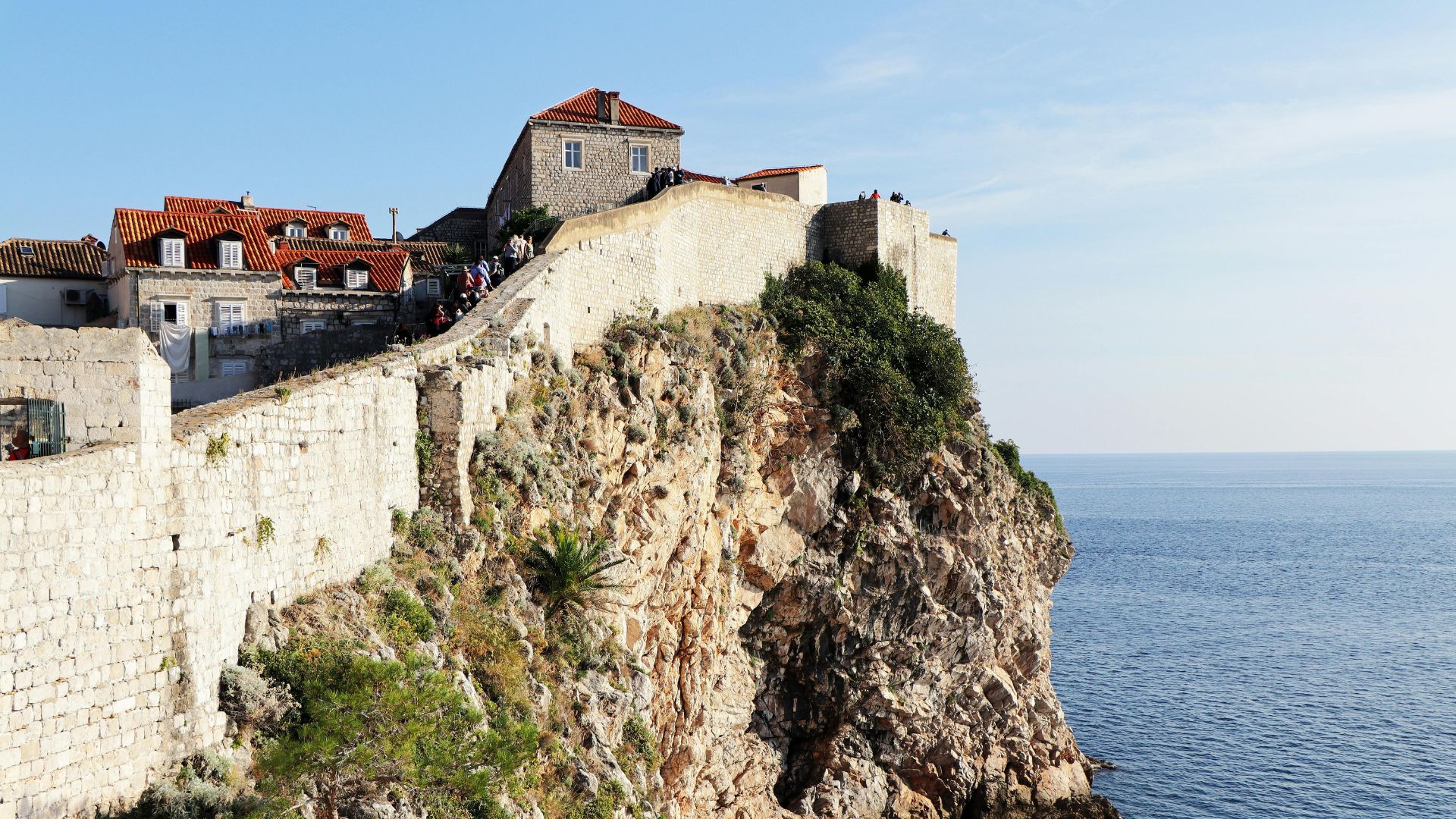
Dubrovnik's UNESCO old city walls above the Adriatic—the final landfall of the week.
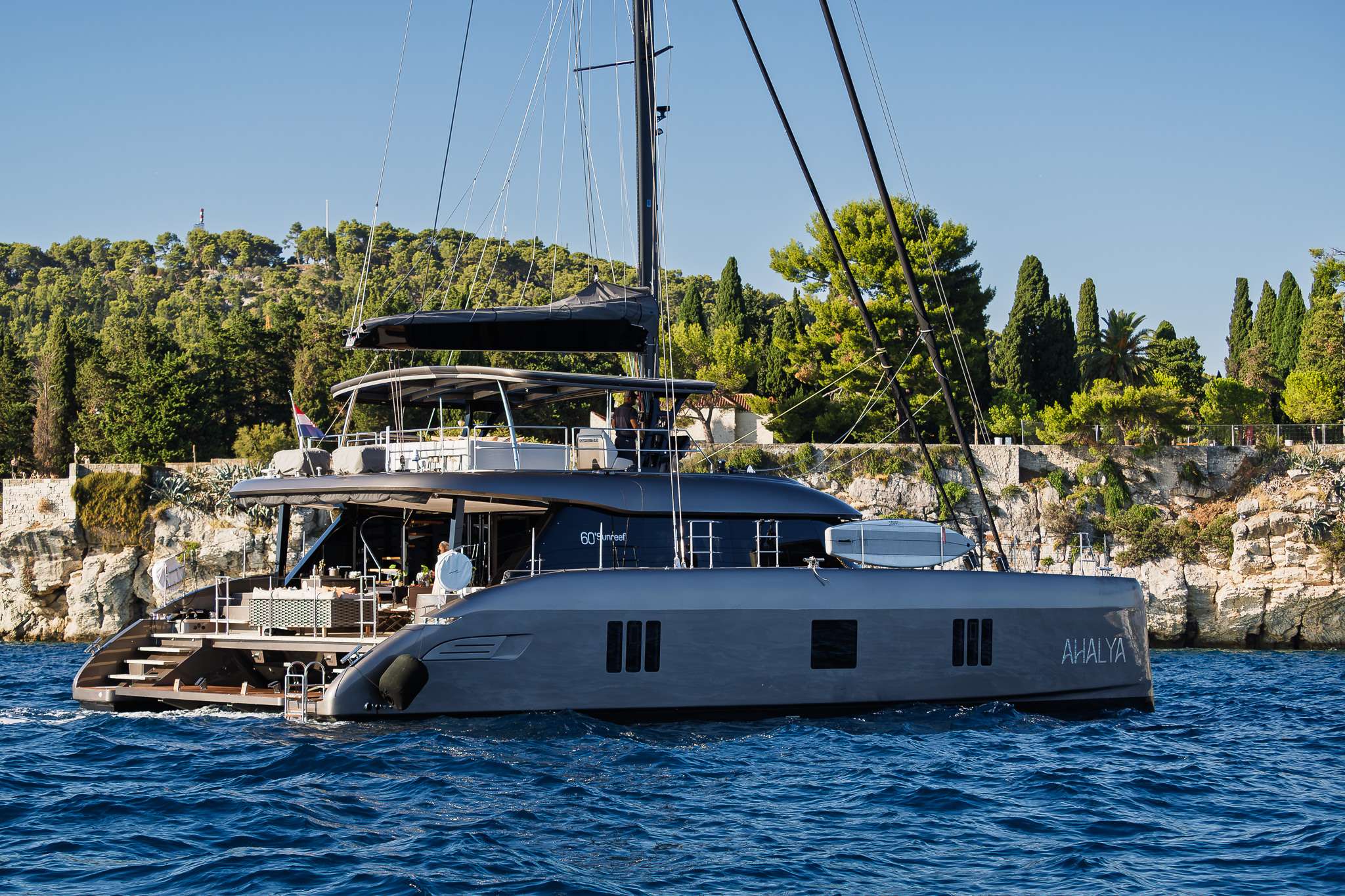
Sunreef catamaran charter under sail in Croatia.
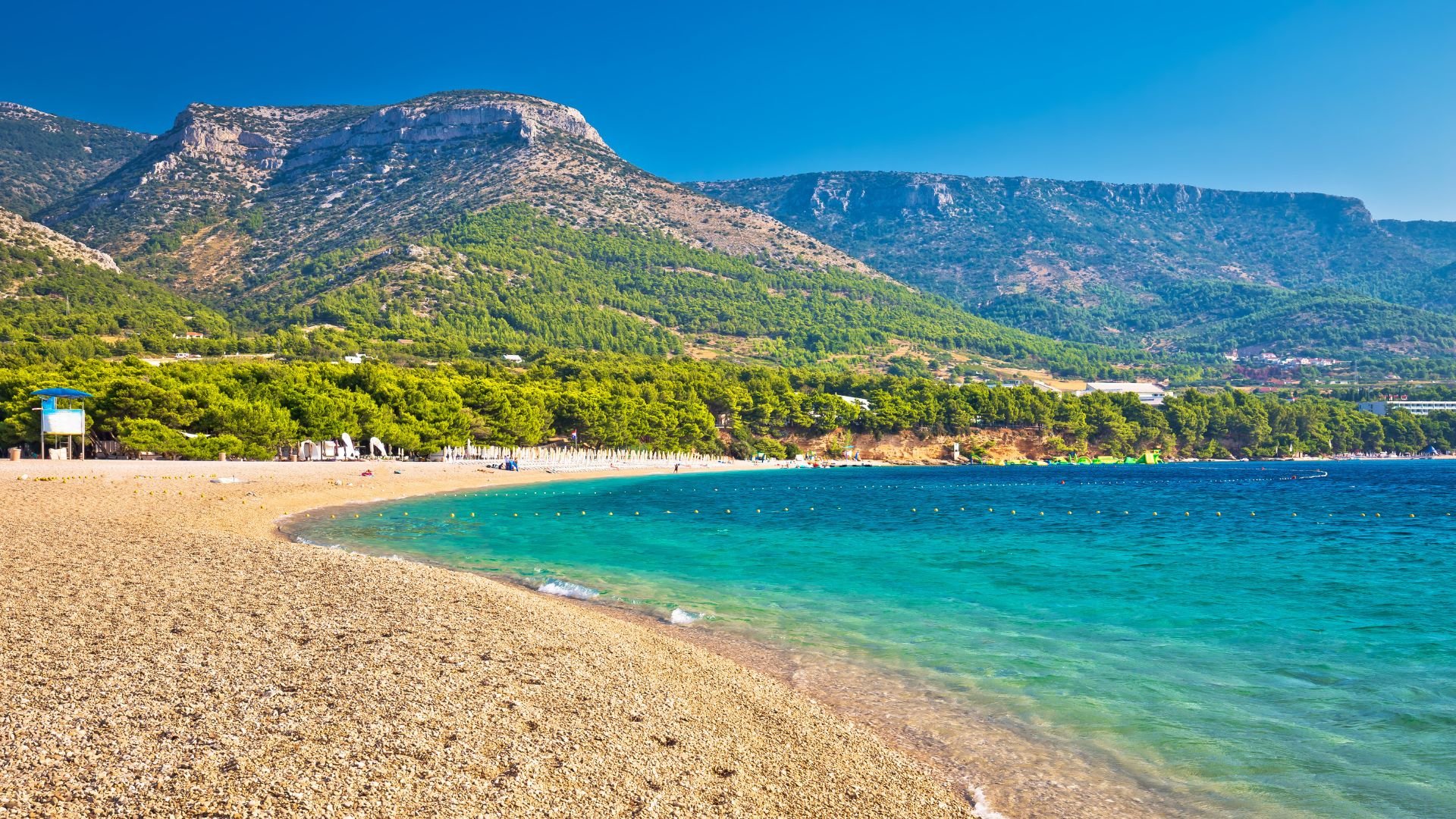
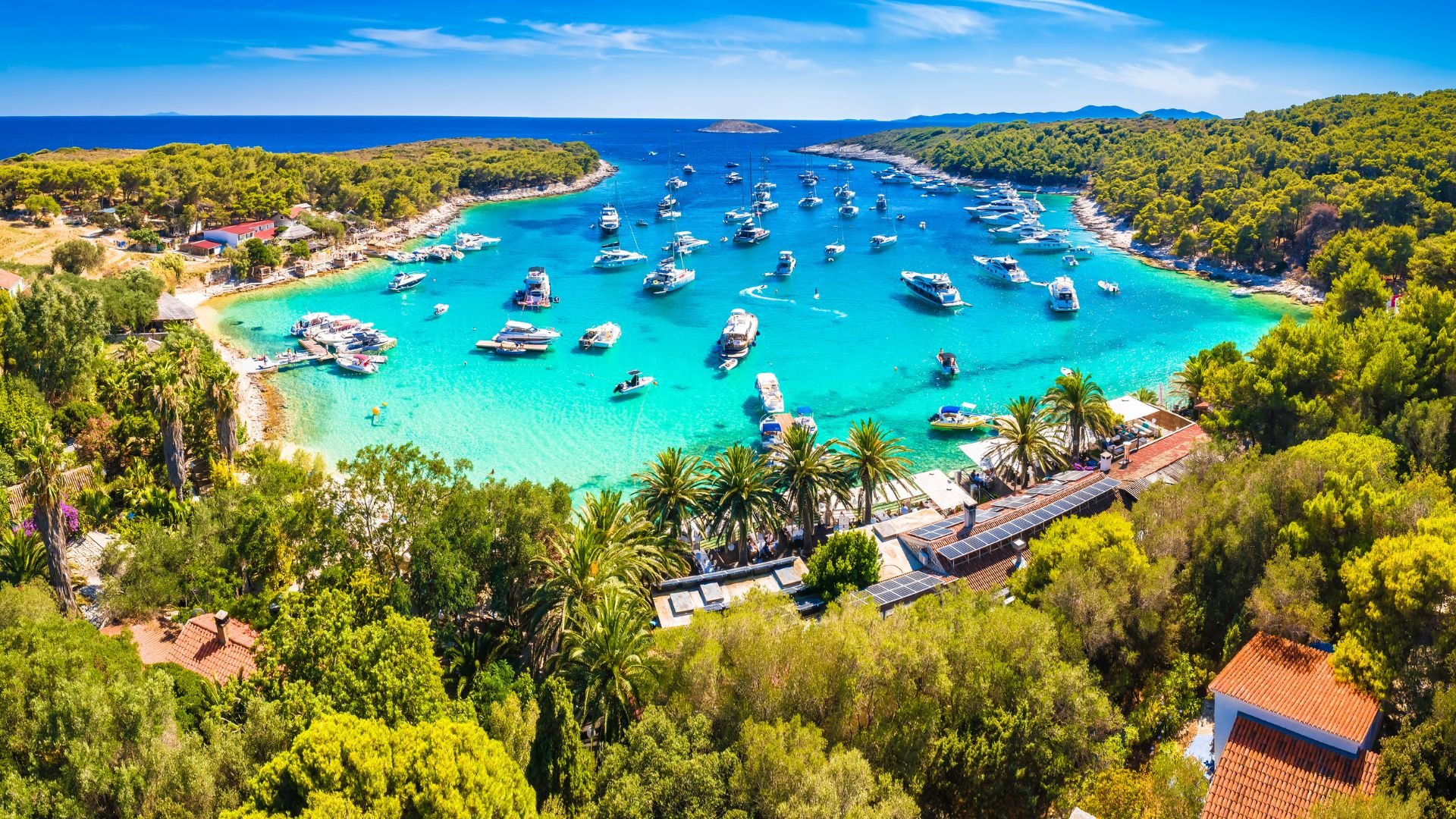
Turquoise Pakleni Islands cove off Hvar.
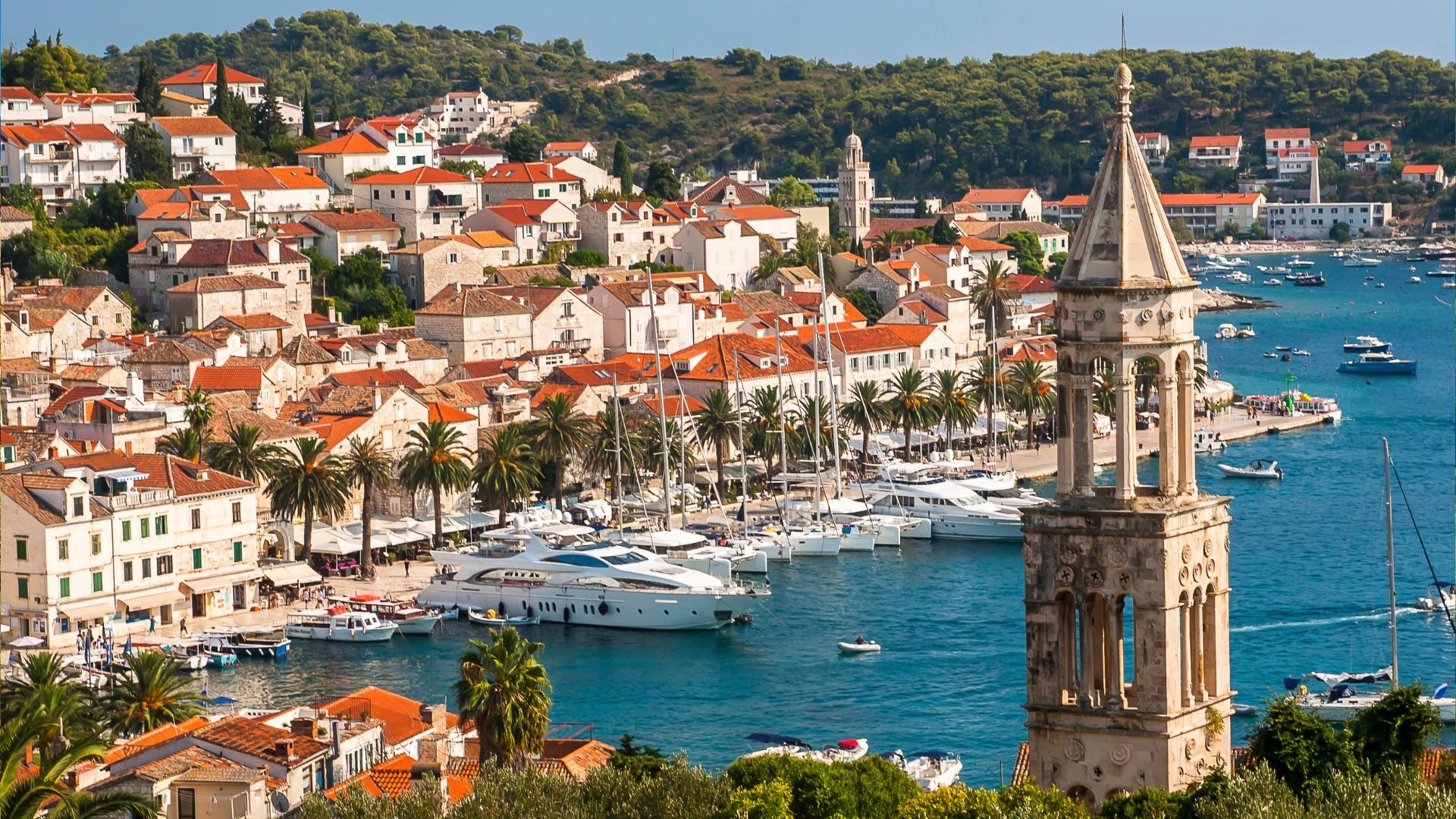
Hvar Town harbor with the Spanish Fortress rising above the rooftops.
Palmižana cove in the Pakleni Islands—pine-covered islets and clear water off Hvar.
The Pakleni archipelago off Hvar Town—a string of pine-covered islets with clear coves built for a long lunch swim.

Day 2: Milna to Hvar Town via a Pakleni Lunch Stop

After a slow breakfast on deck, the captain points the bow south-southeast for the 22-nautical-mile run from Milna to Hvar. The morning typically belongs to gentle airs and glassy water until the Maestral fills in across the Hvar Channel around midday, at which point you'll be reaching in 10 to 15 knots with the long spine of Hvar unfolding to port. It's postcard sailing—consistent, warm, uncomplicated.

Before pushing into Hvar Town, your crew tucks into the Pakleni Islands—a scatter of pine-covered islets a mile off the harbor that locals use for their own long lunches. Anchor in one of the quieter coves, swim in water clear enough to count the anchor chain, and let the chef put out a light board of prosciutto, Paški sir cheese, olives, grilled fish, and a chilled bottle of Plavac Mali. It is the kind of lunch that makes you forget what time it is, which is the entire point.

Late afternoon, the tender runs you into Hvar Town for a walk up to the Spanish Fortress above the harbor—the best view on the island at golden hour, Pakleni silhouettes to the west, the yacht sitting pretty in the bay below. Evening moves to Carpe Diem on the waterfront for sunset cocktails, or later on to Hula Hula for the full Hvar spectacle. Back aboard late for a nightcap on deck with the walls of the old town lit up across the water.

Highlights of Day 2:

  • Reaching sail across the Hvar Channel under the afternoon Maestral.
  • Anchored lunch in a Pakleni cove—prosciutto, grilled fish, Plavac Mali.
  • Walk up to the Spanish Fortress above Hvar Town at golden hour.
  • Sunset cocktails at Carpe Diem, optional Hula Hula after dark.
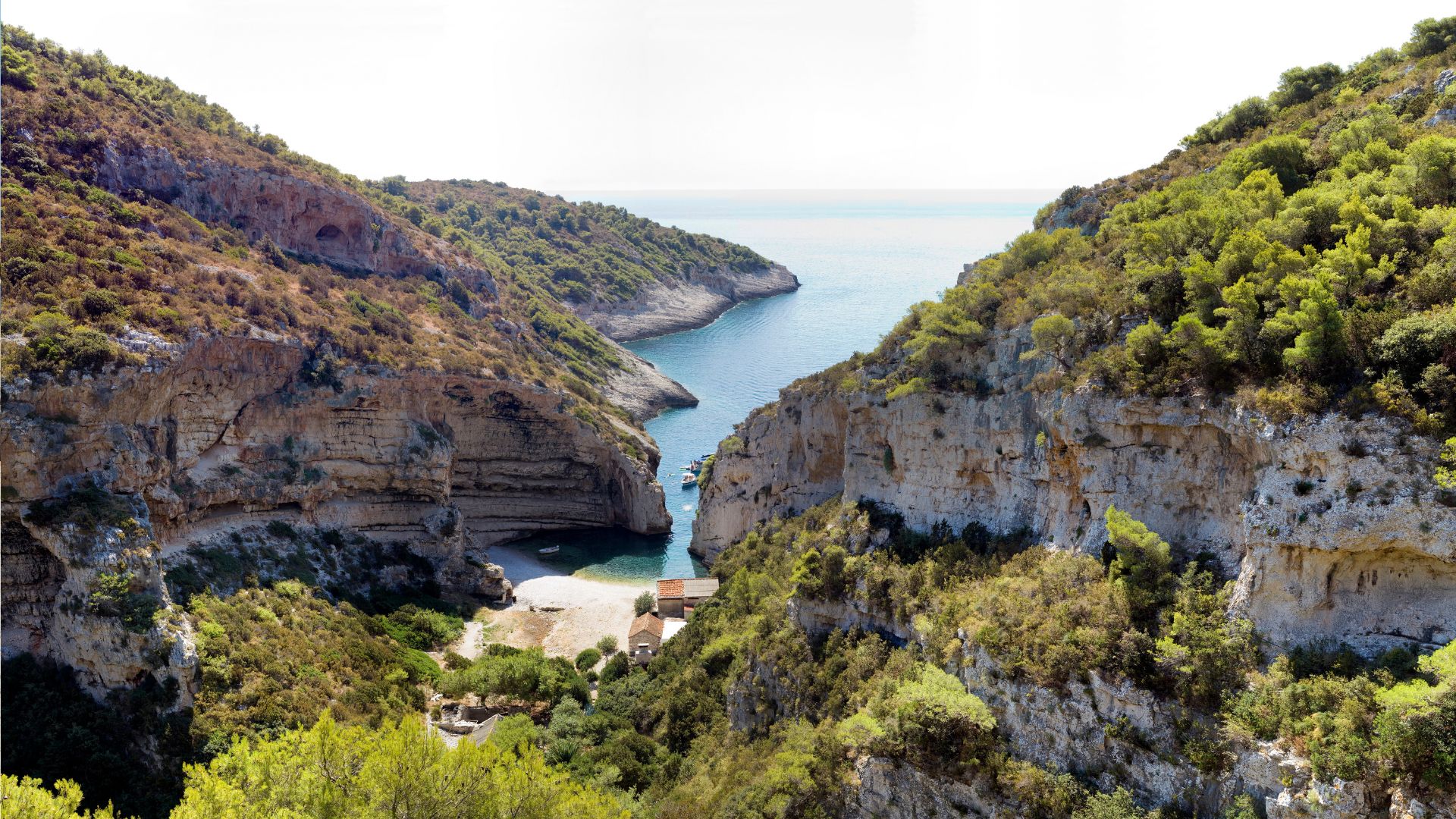
Stiniva Bay on Vis, a narrow cleft between two limestone cliffs opening onto a pebble beach.
Stiniva on the south coast of Vis—two cliff faces parted just enough for a yacht's tender and a long swim inside.

Day 3: Hvar to Vis via a Swim Stop at Stiniva

Today is a 30-nautical-mile push south to Vis, the outermost inhabited island in Dalmatia and the one the Yugoslav military kept closed to foreigners until 1989. That late opening spared it the heavier tourism of Hvar and Brač, and the result is an island that still feels a generation behind in the best possible way—terraced vineyards, empty bays, and fewer boats on the water.

Your captain keeps one eye on the forecast for this leg. A healthy Maestral makes it a long fast reach, but Jugo—the southeasterly that rolls in when a low sits over the Adriatic—can flip the channel into a short, uncomfortable upwind slog. If conditions cooperate, the crew times the approach so you round the southern cape of Vis in the late morning and tuck into Stiniva Bay for a swim stop.

Stiniva is a cleft in the limestone cliffs barely wide enough for a tender to slip through, opening onto a small pebble beach inside a natural amphitheater. Anchor offshore, take the tender or simply swim in, and spend an hour in what might be the most photographed cove in Croatia for good reason. From Stiniva, a short afternoon hop rounds the western end of the island to Komiža, a fishing village on the far side with stone houses stacked up from the quay.

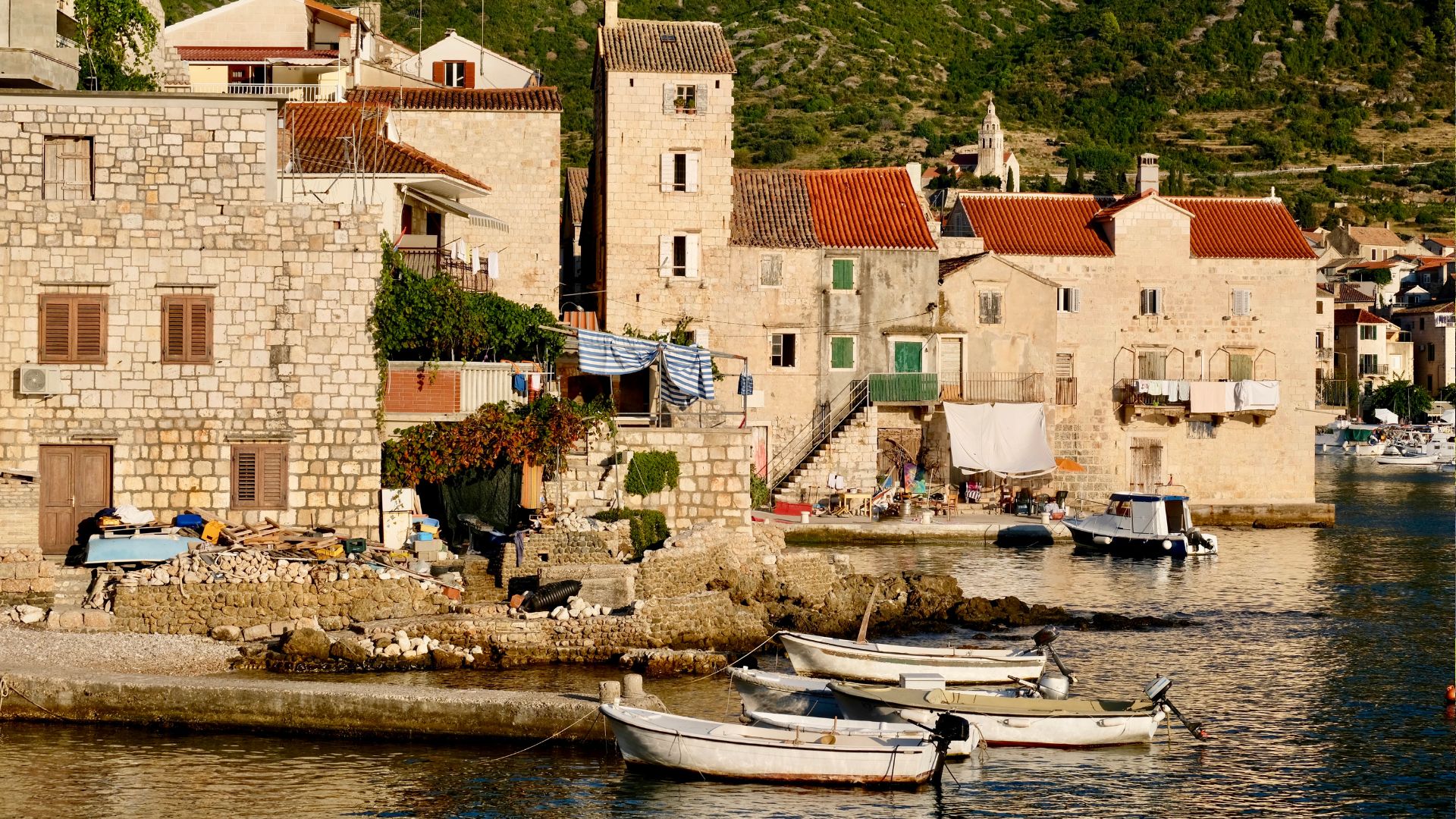
Dinner is at Konoba Jastožera, a restaurant built directly over the water in an old lobster holding pen. The signature is Vis lobster pulled from the tanks under the floor—simply grilled, split, served with local olive oil and a glass of Vugava, the white grape almost no one grows outside this island. This is one of the meals you'll remember from the trip.

Highlights of Day 3:

  • Long southern passage from Hvar to Vis, Maestral or Jugo depending on the day.
  • Swim stop inside Stiniva Bay's cliff-walled amphitheater.
  • Evening in Komiža, the quieter, older side of Vis.
  • Dinner at Konoba Jastožera—lobster straight from the tanks, Vugava in the glass.
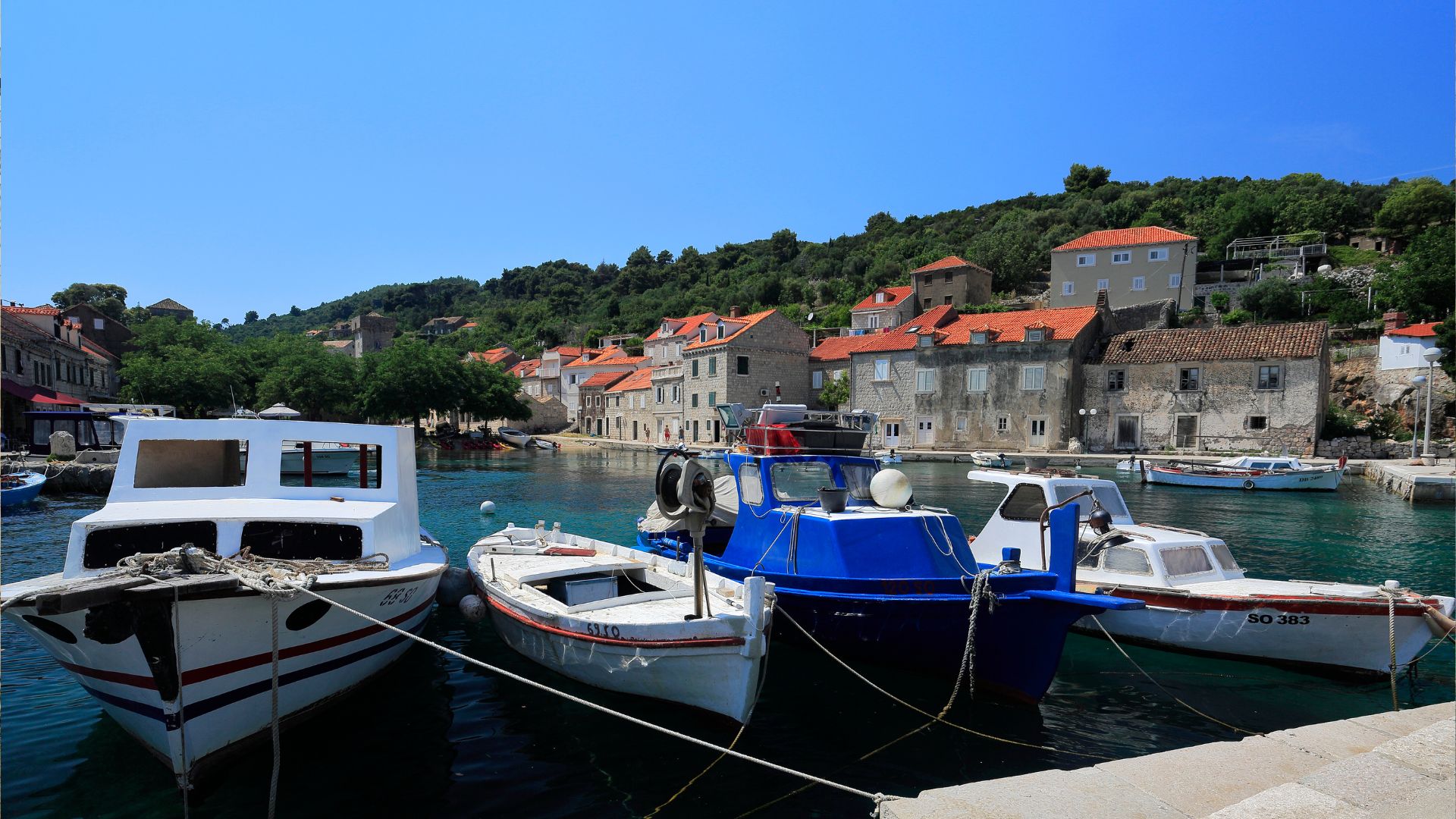
The harbor of Komiža on Vis with stone houses stacked above the quay.
Komiža feels a generation behind the rest of the coast—and that's exactly the appeal. You set the tender down, walk into town for lobster, and come back late.

Day 4: Vis to Korčula Town—The Long Leg

This is the longest sailing day of the week, roughly 40 nautical miles east from Komiža to the walled town of Korčula. It's also the most Maestral-dependent leg on the itinerary. In a healthy northwesterly, it's a fast broad reach with the wind on the quarter and a following sea—the kind of day where your captain sets the autopilot, your chef brings cold rosé on deck, and nobody particularly wants the passage to end. In a Jugo pattern, the call may be a closer stop at Šćedro or Ščedrica to keep the schedule humane; you hired a professional captain so he can make exactly that kind of call.

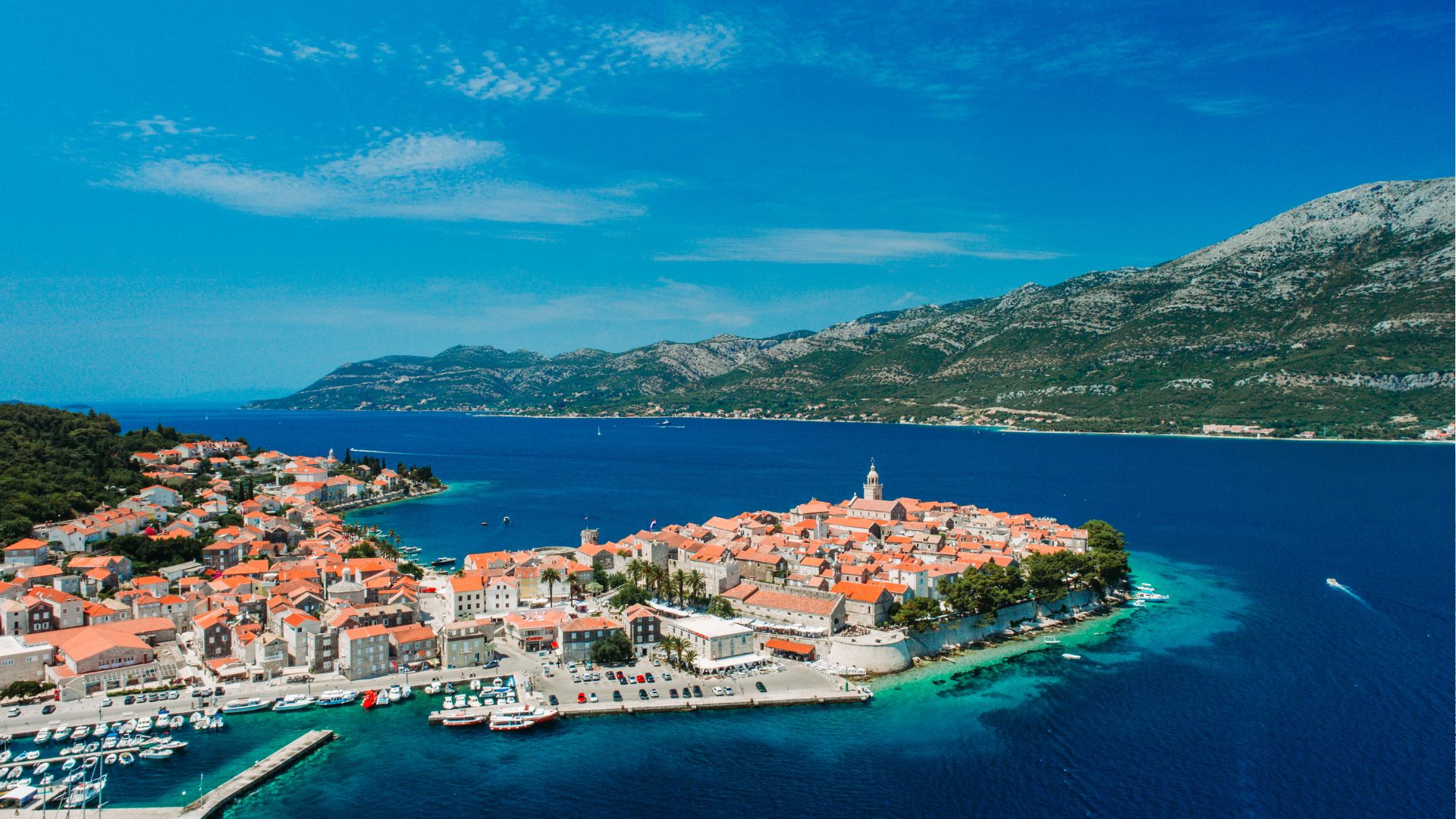
Korčula Town sits on a small peninsula thrusting into the channel between Korčula island and the Pelješac mainland—a miniature walled city with terracotta rooftops stacked inside medieval fortifications. Local tradition has it that Marco Polo was born here in one of the stone houses off the main square; reputedly, because Venice makes the same claim, and the 13th-century record keepers on both sides left just enough ambiguity to keep both tour economies alive. Either way, the Polo house museum is a charming half-hour stop.

If you're sailing in July or August, the bigger draw is the Moreska—a 400-year-old sword dance performed on a stone stage in the old town. Two groups of dancers in full medieval costume fight a choreographed battle with real steel swords for the hand of a veiled bride, and the clash of blades is genuinely startling the first time. Your captain can time dinner ashore so you walk into the square right as it starts.

Dinner ashore at one of the konobas inside the walls, and back aboard late for a chef-prepared nightcap on deck.

Highlights of Day 4:

  • The week's longest passage—broad reach east to Korčula under a good Maestral.
  • Arrival into the walled old town, Marco Polo's reputed birthplace.
  • Summer evenings: the Moreska sword dance performed with real steel.
  • Dinner inside the medieval walls, back aboard for a nightcap on deck.
The walled old town of Korčula on its small peninsula—terracotta rooftops inside medieval fortifications.
Korčula on approach—a walled old town on a small peninsula, terracotta rooftops stacked inside medieval fortifications, Marco Polo's reputed birthplace, and summer home of the Moreska sword dance.
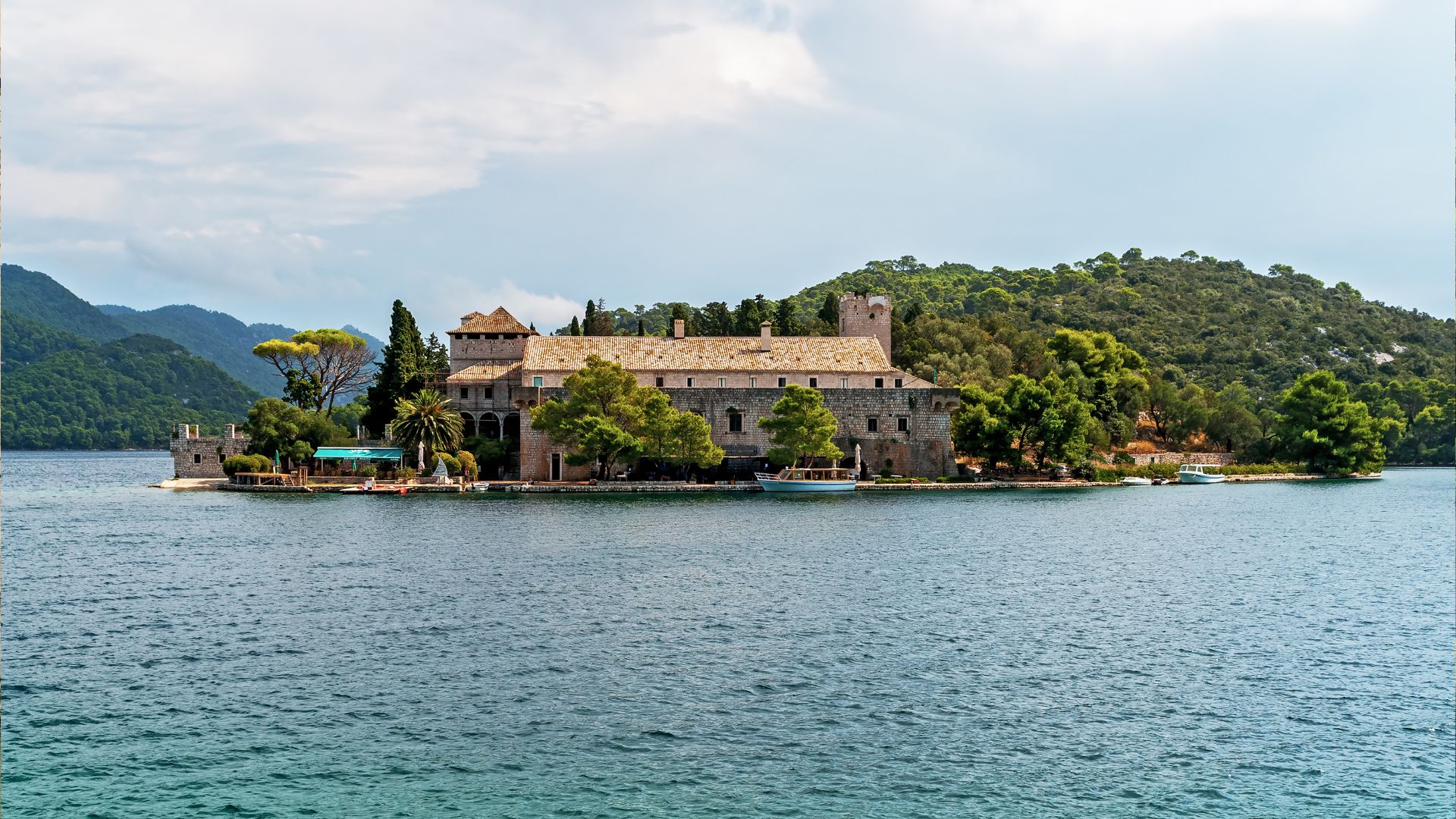
St. Mary's Islet and its Benedictine monastery on the large saltwater lake inside Mljet National Park.
A Benedictine monastery on an island in the middle of a saltwater lake on an island—Mljet has layers. The quietest national park on the Dalmatian coast.

Day 5: Korčula to Mljet National Park

A shorter, easier 18-nautical-mile leg today, southeast from Korčula to the harbor of Pomena on the northwest tip of Mljet. Most days this is a gentle reach with Lastovo dropping off to starboard and the long green flank of Mljet building on the bow—a good morning to hand the wheel to your crew, find a cushion on the foredeck, and settle in with a book.

Mljet National Park covers the western third of the island and it is, quietly, one of the most beautiful and least-visited national parks in the Mediterranean. Most of the yachts in the Adriatic queue up for Hvar and Korčula; Mljet is where you go when you want none of that. Pomena is a small, tidy harbor with a handful of restaurants and a path that leads directly into the park.

The showpiece inside the park is the pair of connected saltwater lakes—Veliko Jezero and Malo Jezero—ringed by pine forest and fed by a narrow channel to the sea. Rent bikes at Pomena and follow the path around the larger lake, or take a park launch from the channel bridge across to the 12th-century Benedictine monastery on St. Mary's Islet, which sits on a small island in the middle of the larger lake. An island on an island on an island. You can swim off the monastery steps in water that's warmer than the sea and just as clear.

Dinner ashore at Konoba Maestral in Pomena—fresh fish off the day's catch, grilled octopus under the peka bell, house rakija at the end. Back aboard for a quiet night at anchor with nothing but the pine forest behind you and the occasional small charter yacht drifting through the bay.

Highlights of Day 5:

  • Easy morning sail from Korčula to Pomena on Mljet.
  • Bikes or park launch around Veliko Jezero, one of the quietest parks in the Med.
  • Swim off the Benedictine monastery on St. Mary's Islet.
  • Dinner at Konoba Maestral, night at anchor in a pine-rimmed harbor.
The car-free stone harbor of Šipan in the Elaphiti Islands.
Šipan is car-free, largely forgotten by the daytripper crowd, and exactly the right speed for Day 6.
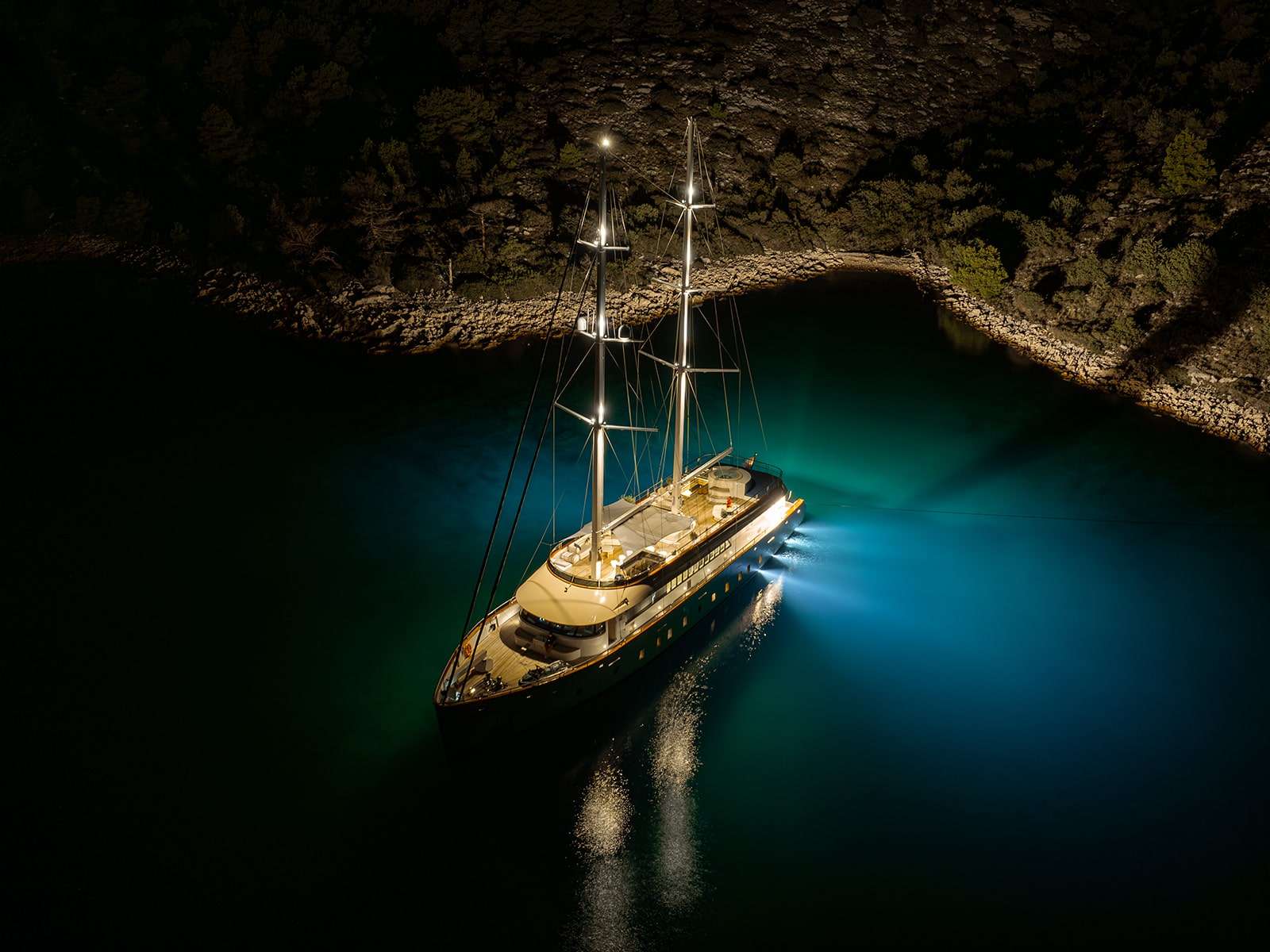
A crewed yacht lit up at night in a quiet Dalmatian harbor.
Nightcap on deck with nothing on the water but a pine-rimmed bay and the occasional light from the village behind you. The best part of a week like this is how little it asks of you in the evenings.

Day 6: Mljet to Šipan in the Elaphiti Islands

Another short 18-nautical-mile day, northeast from Pomena to Šipan—the largest and most inhabited of the Elaphiti Islands, the small archipelago scattered between Mljet and Dubrovnik. The morning sail skirts the north coast of Mljet and crosses the Šipan Channel, usually in a light to moderate Maestral, and drops you into the quiet harbor of Šipanska Luka by early afternoon.

Šipan is car-free, largely ignored by the Dubrovnik day-trip crowd, and home to a few hundred people who fish, make wine, and mind their own business. The pace here is exactly right for the second-to-last day of the trip. Anchor or take a town quay berth, walk the waterfront, swim off the stone steps, and nap somewhere shady.

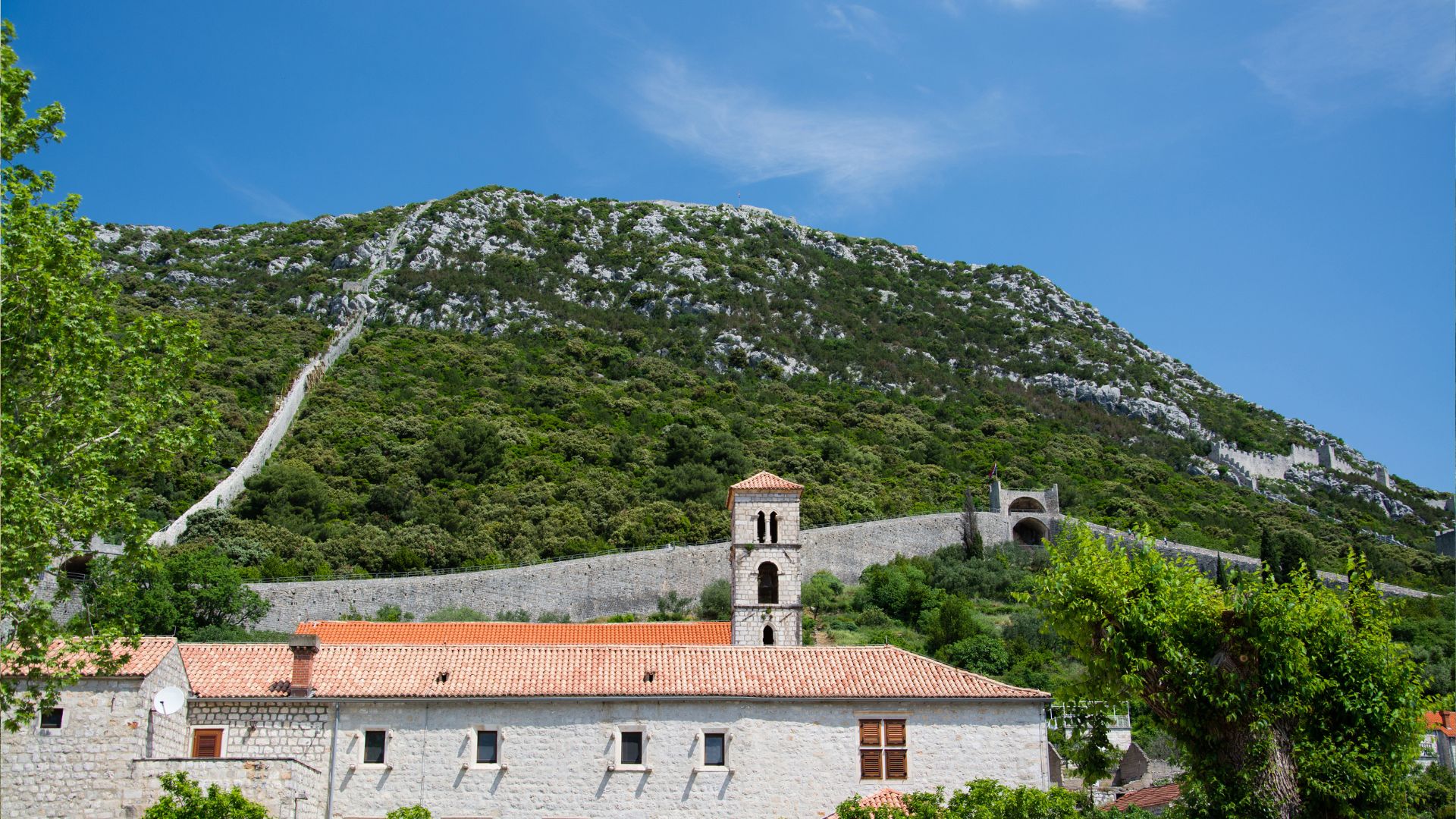
If you have the appetite for a side trip, your captain can arrange a car transfer across the channel to Ston on the Pelješac peninsula—20 minutes by tender to Slano, another 20 by road—for the long lunch Ston is built for. Ston sits at the head of a saltwater bay farmed for oysters since Roman times, and the oysters pulled out of that bay are as good as any in Europe. The town is also famous for the second-longest defensive walls in the world after the Great Wall of China, running four miles across the neck of the peninsula and very much walkable. Oysters, walls, Pelješac red on the table—a worthwhile detour for guests who want it.

Back on Šipan for dinner at Konoba Kod Marka on the harbor—family-run, four tables, whatever came in on the day's boat. Your chef handles a quiet breakfast aboard in the morning before the final leg.

Highlights of Day 6:

  • Short passage from Mljet to Šipan through the Elaphiti channel.
  • Afternoon in a car-free stone harbor—walk, swim, slow down.
  • Optional detour to Ston for oysters and a walk along the salt-pan walls.
  • Dinner at Konoba Kod Marka on Šipan's waterfront.
The fortified walls above the Ston salt pans and oyster-farming bay.
Ston's defensive walls are the second-longest in the world. The oysters out of the bay below them are the real reason people drive across the channel.
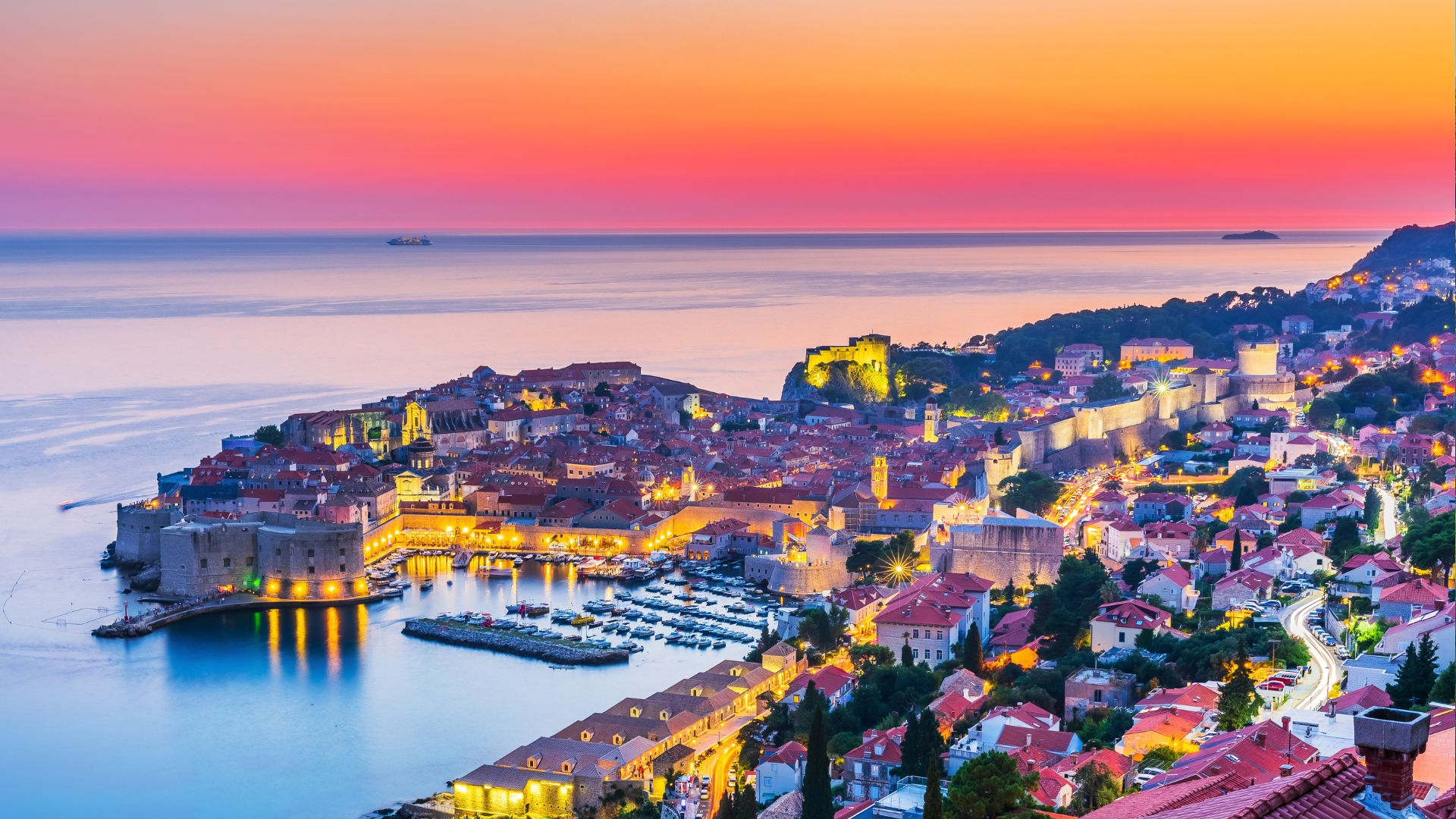
The walls of Dubrovnik glowing at sunset above the Adriatic.
A private walk on the walls at sunset is the single best thing you can do in Dubrovnik. Time your final afternoon for this.

Day 7: Šipan to Dubrovnik—Sail Past the Walls

The final leg is a short, mostly ceremonial 12 nautical miles southeast from Šipan to Dubrovnik, and your captain will plan the morning around one specific experience: a close pass under the walls of the old city from the water. Most visitors to Dubrovnik first see the walls from the top of a bus queue. You'll see them from the deck of your own yacht, under sail, with Lokrum island to port and the fortifications rising 80 feet straight out of the Adriatic on your starboard side. It's the most dramatic approach to any city in the Mediterranean and it's entirely yours.

After the pass, your captain points the bow north into the Rijeka Dubrovačka—the narrow Ombla river fjord that cuts inland behind the city—and berths at ACI Marina Komolac, the calm, well-run base where the trip officially ends. From here, it's a 15-minute transfer into the old town for whatever afternoon you want.

The single best use of that afternoon is the walk around the city walls themselves. The full circuit is about a mile and a quarter, takes two leisurely hours, and is best done in the last two hours of daylight when the stone goes gold and the tour groups thin out. Yacht Warriors can arrange a private guide who knows every tower, every Ottoman-siege story, and every quiet bench with a view—the kind of walk that gives you the history without the noise. Dinner at one of the restaurants inside the walls, a nightcap overlooking the Stradun, and a short ride back to the boat.

Highlights of Day 7:

  • Sail under the walls of Dubrovnik's old city from the water.
  • Arrival at ACI Marina Komolac up the Rijeka Dubrovačka.
  • Private guided walk on the city walls at golden hour.
  • Farewell dinner inside the walls, chef-prepared nightcap back aboard.
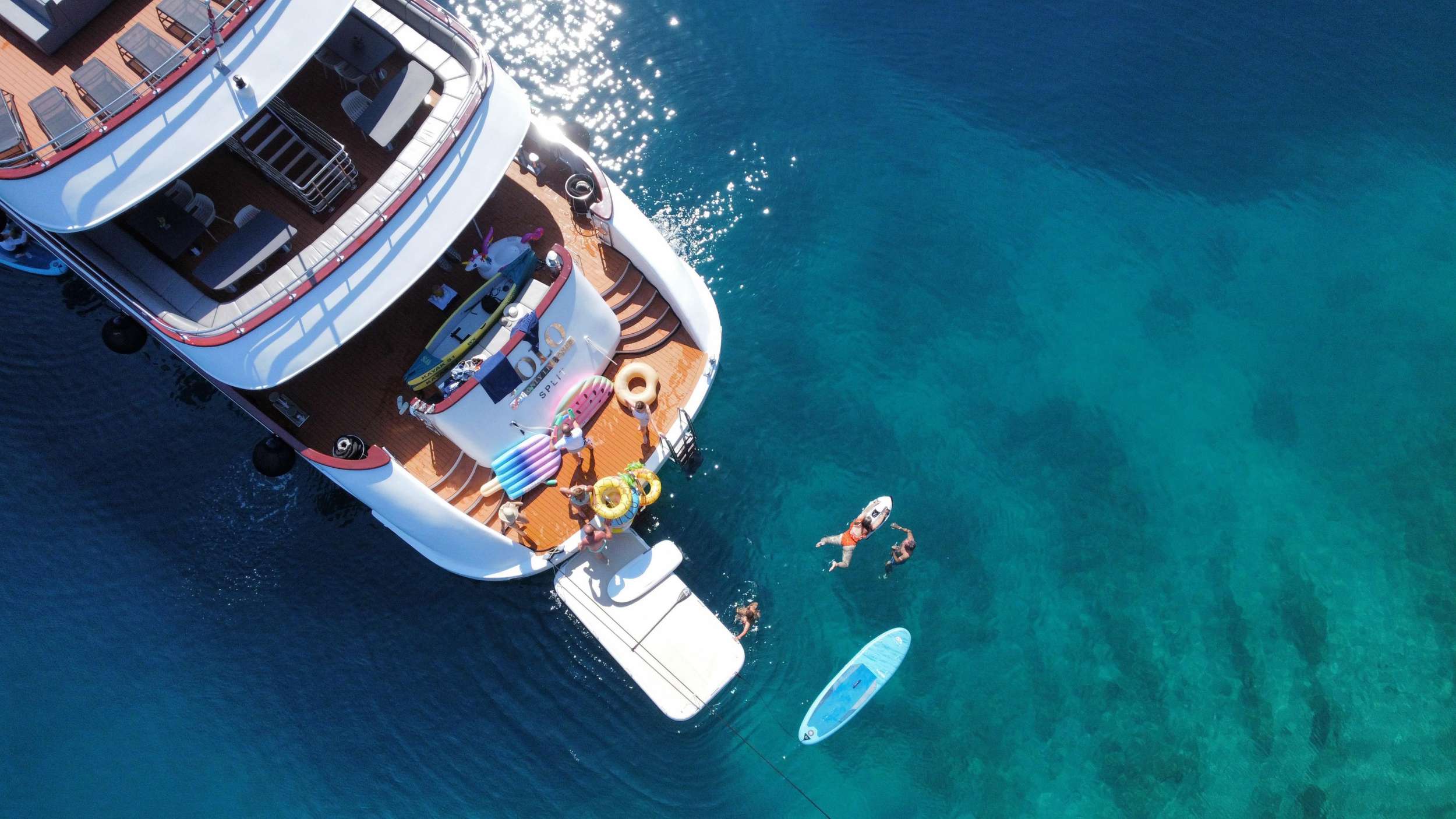
Guests swimming off a crewed charter yacht on the Dalmatian coast.
A last swim off the stern before the Komolac turn-in. A week on the Dalmatian coast is the kind of charter guests come back for.

Day 8: Farewell to the Dalmatian Coast

Enjoy a last slow breakfast on deck at Komolac, a last swim off the stern if you're up for it, and the short transfer your crew arranges straight to Dubrovnik Airport or to your shoreside hotel if you're extending in the city. Your captain and chef will step off the boat already talking about when you're coming back, which is usually how the good ones end.

Prefer a round-trip? Our 7-day Central Dalmatia loop starts and ends at ACI Marina Trogir and keeps you in the heart of the islands—Hvar, Vis, Biševo's Blue Cave—without the one-way logistics.