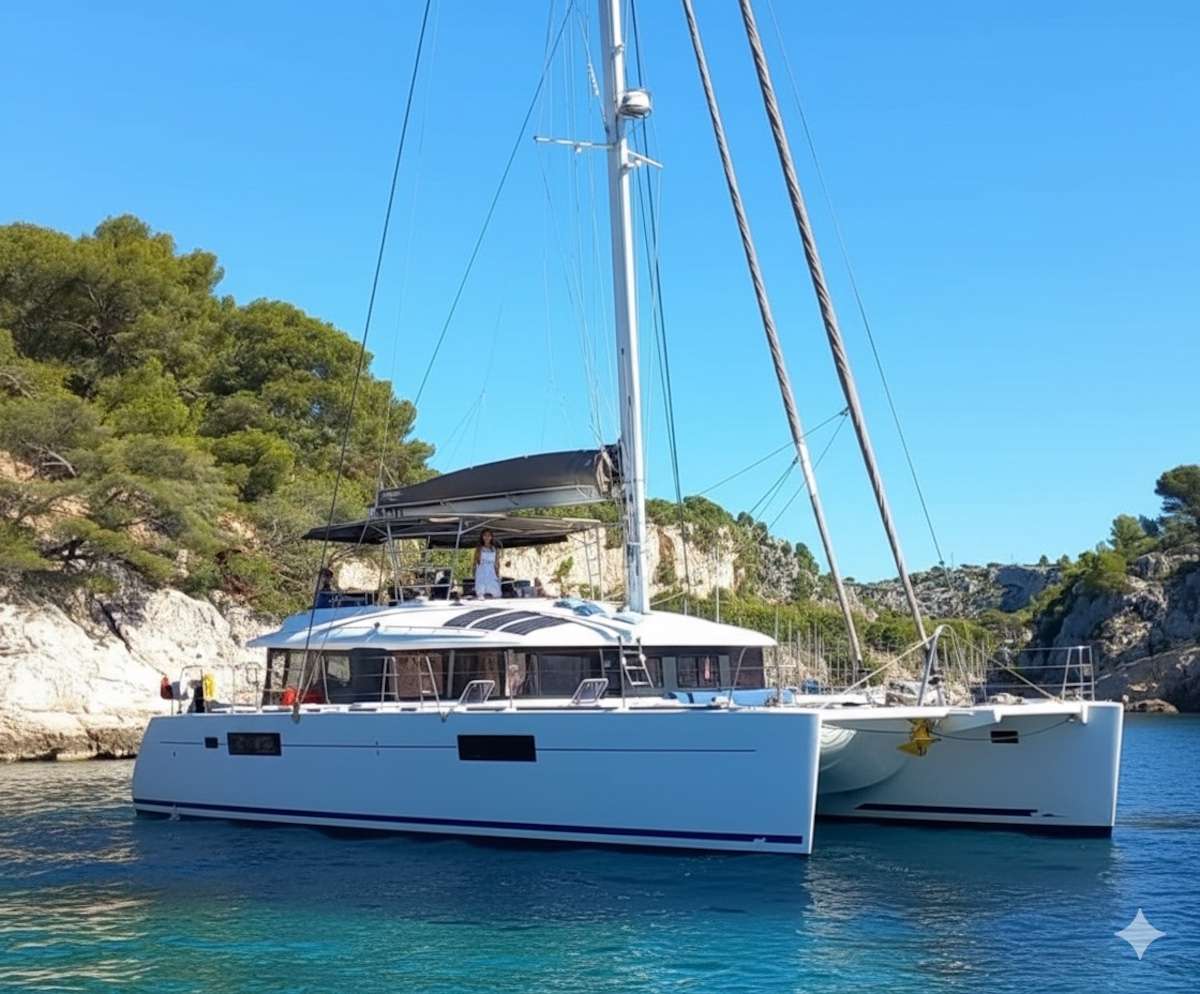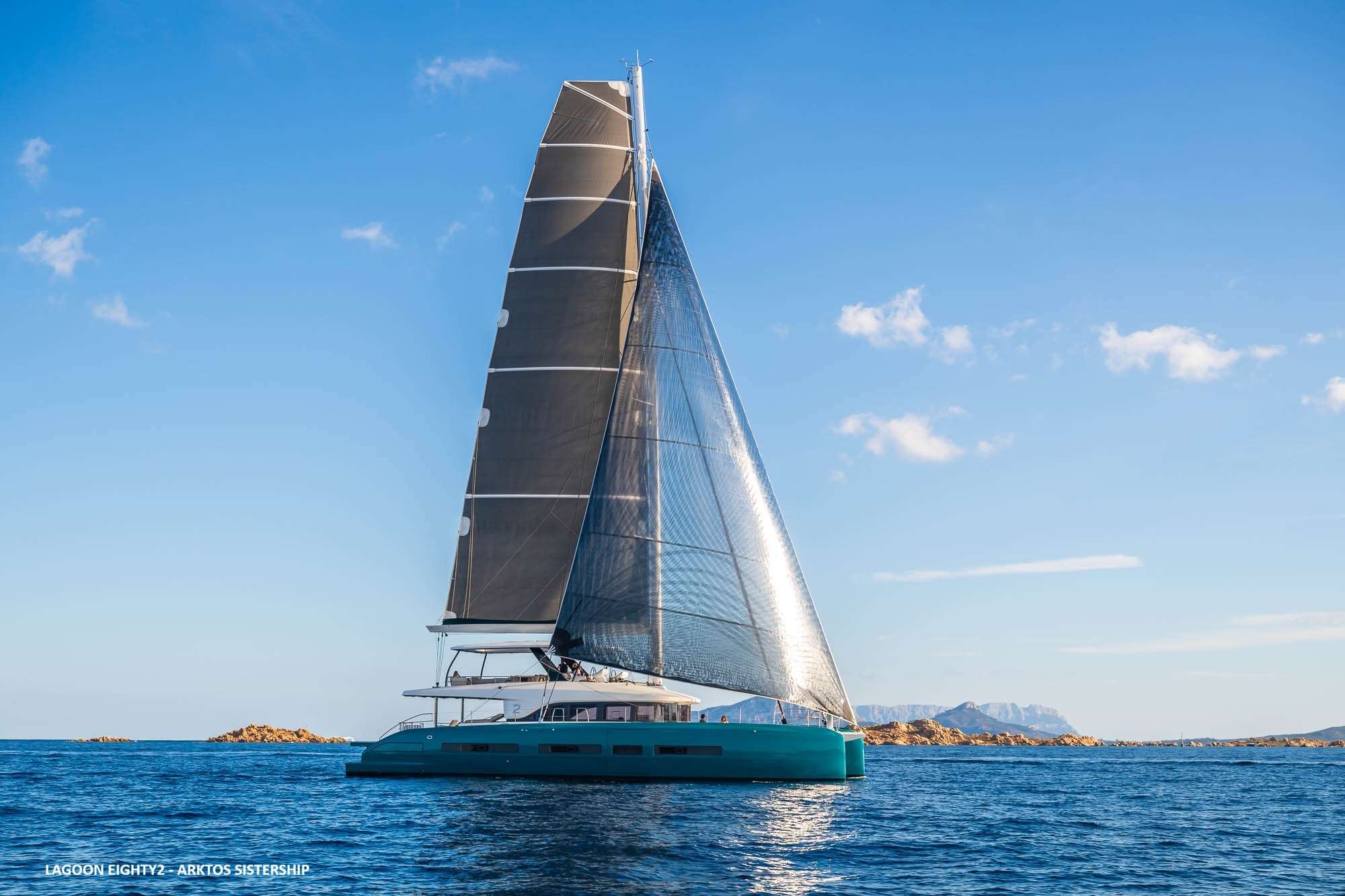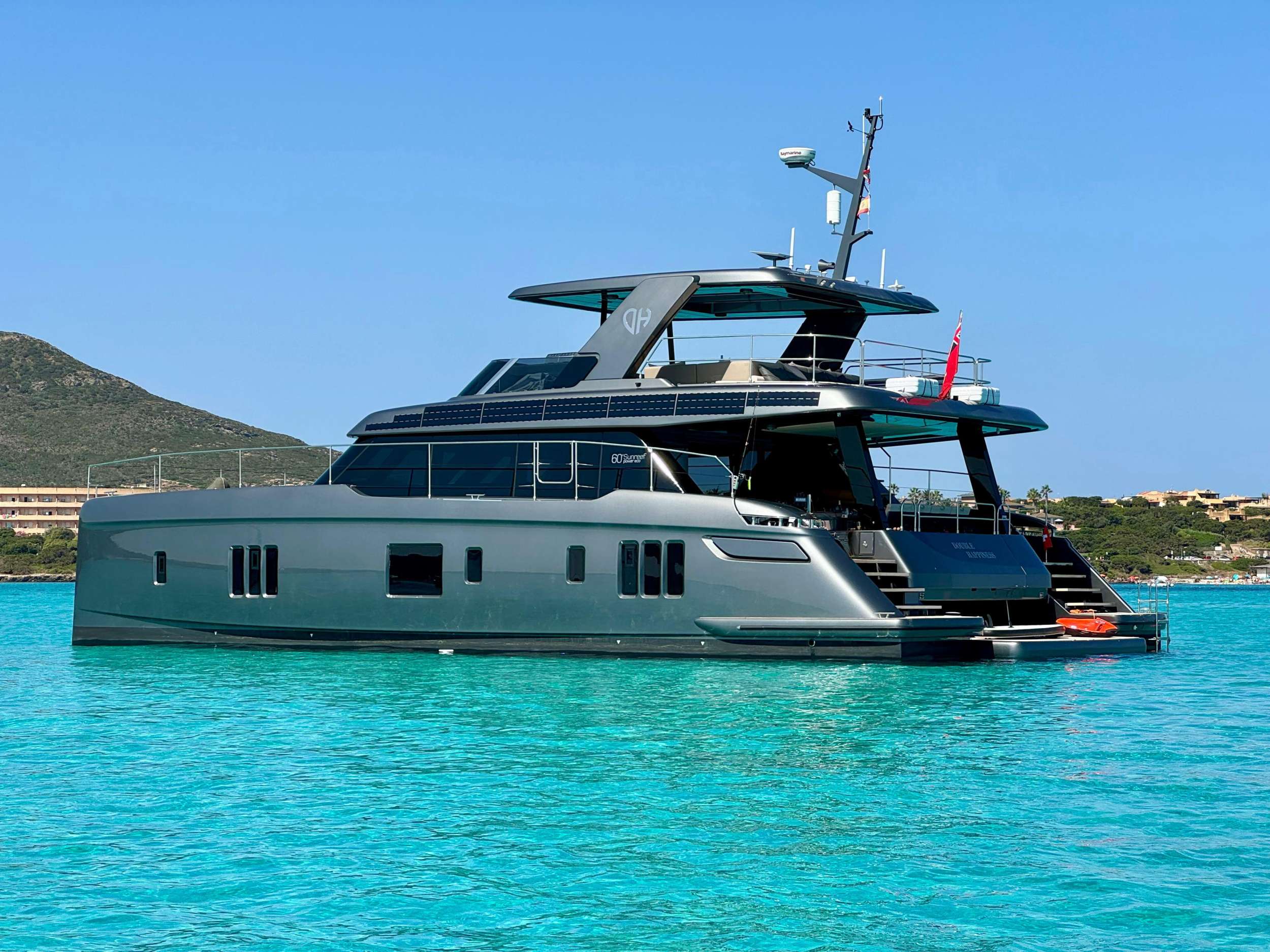

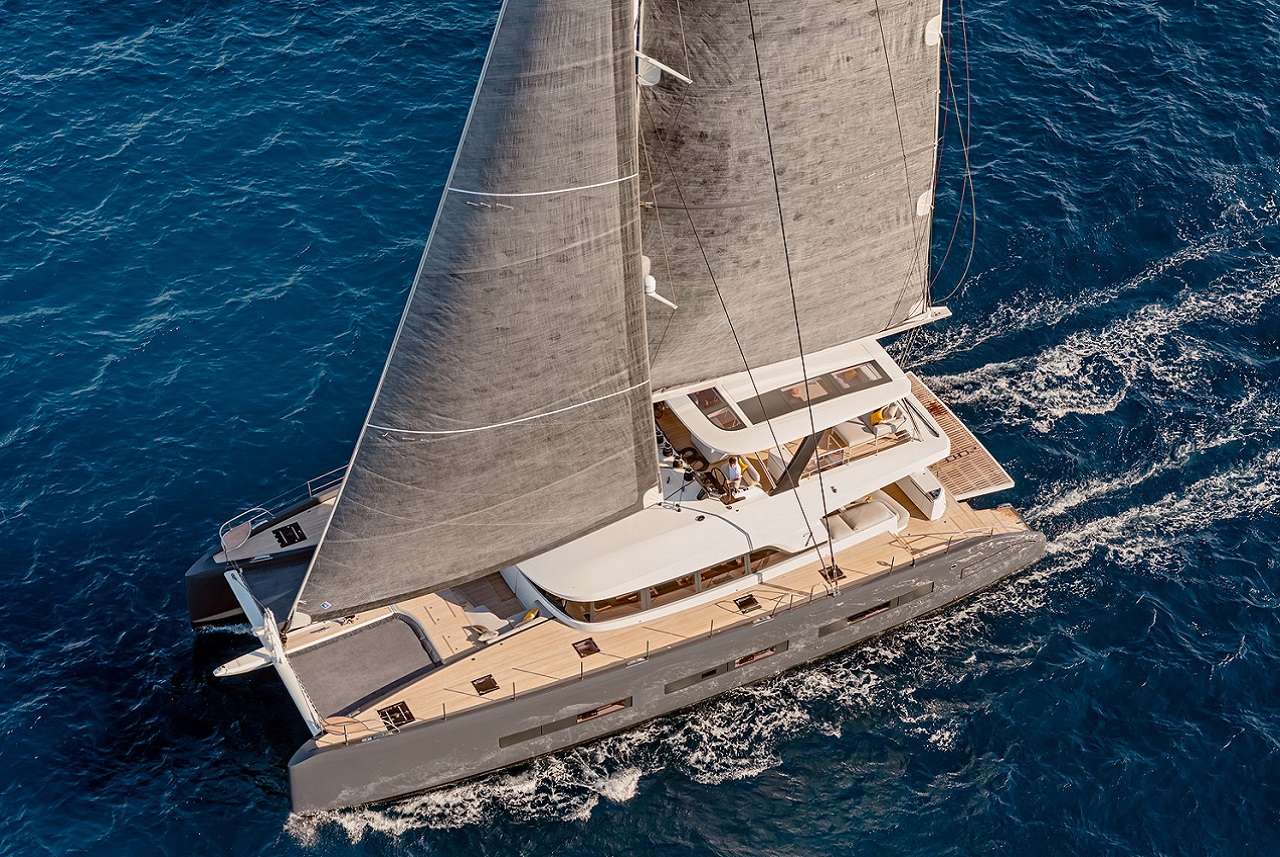
Joy
77FT · SAILING CATAMARAN
Pricing from €50,000/week
8 Guests · 4 Cabins
Caribbean
Eastern Mediterranean
Western Mediterranean
South Pacific
United States
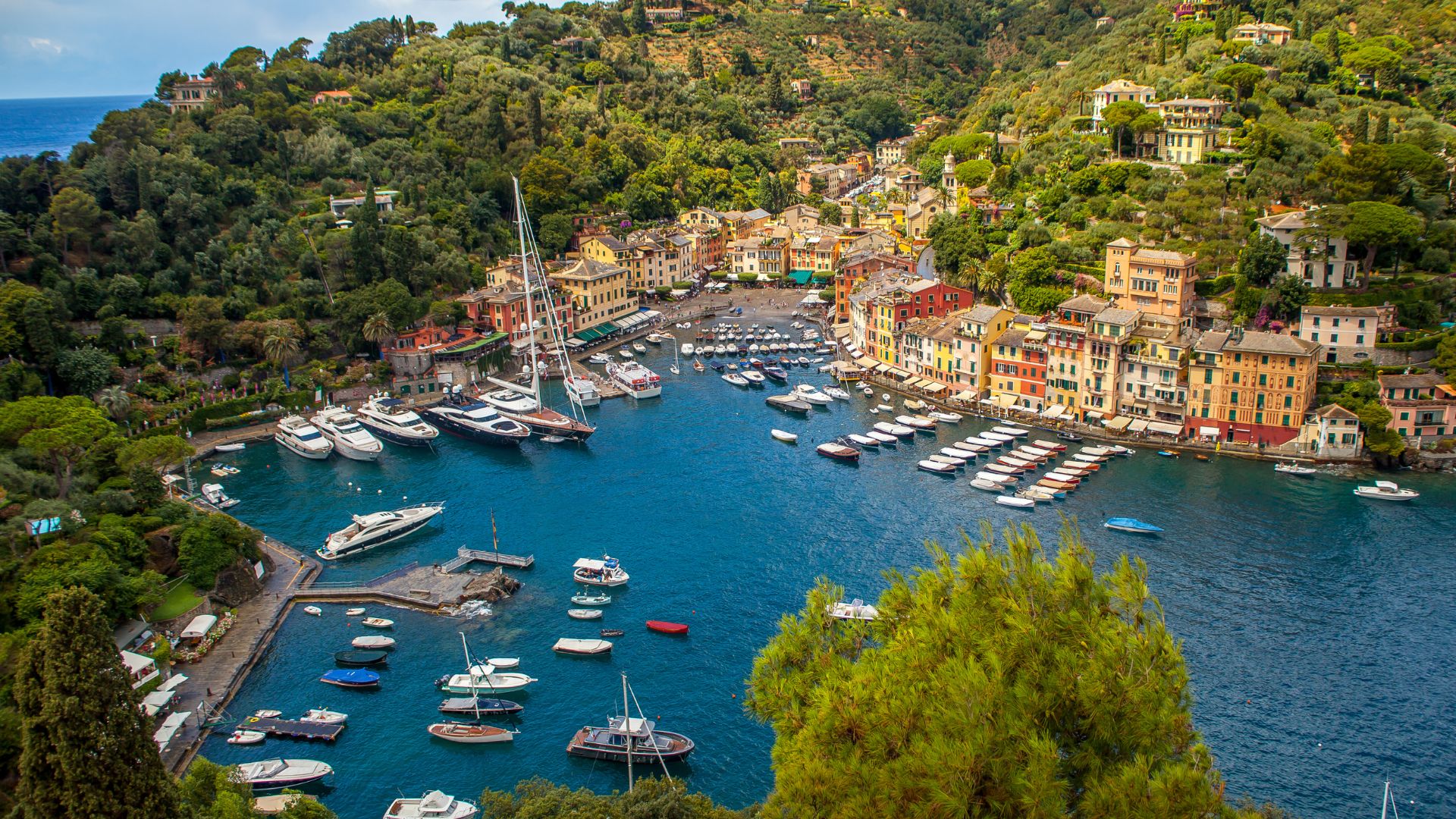
A quieter Italian week than Amalfi or the Côte d'Azur — Portofino's pastel harbor off the aft deck, the Cinque Terre's cliff villages from the anchorage, and Portovenere lit above the bow at the dinner hour. Tuscany's archipelago sits a half-day south for guests who want the extension.
Why the Italian Riviera
The Italian Riviera is the answer for guests who want the Italian summer without Amalfi's August density. The cruising ground runs from the French border south to Tuscany — Portofino and Santa Margherita at the boutique-glamour end, Cinque Terre and Portovenere through the cliff-village middle, Elba and Argentario as the lower-density southern leg. Distances are short. Most weeks settle into a rhythm of three- to four-hour mornings underway, long lunches at anchor, and harbor evenings ashore. The food identity is Ligurian, not generic-Italian: pesto Genovese in the place it was invented, focaccia, anchovies, trofie, and the sciacchetrà made from the terraced vineyards above the sea.
Three voyages cover the cruising ground, and the right one depends on the group and the dates. The Cinque Terre and Portofino classic is the first-time Italian Riviera week — Genoa or Santa Margherita as the base, Portofino and the Tigullio coast, Vernazza and Monterosso from the water, Portovenere as the eastern turn. The Eastern Liguria and Tuscan Archipelago route extends south to Elba, Giglio, and Argentario for a lower-density week with more anchorage and less harbor cadence. The Italian Riviera to Côte d'Azur one-way is the premium crossover into Monaco, and books out earliest because of how it sits inside the western-Mediterranean fleet's seasonal rotation. We walk through the right route before booking.
This is the cruising ground for couples and groups who want Italian cliff villages without the August crush. Motor yachts and catamarans both work; sailing yachts handle the open-coast crossings to Tuscany comfortably. June and September are the strongest weeks. The Italian Riviera paired with the French Riviera is the premium long-trip pairing, and the Tuscan extension south is the quieter alternative on a longer charter — which version is the right one is a conversation we have with guests as yacht and dates come together.
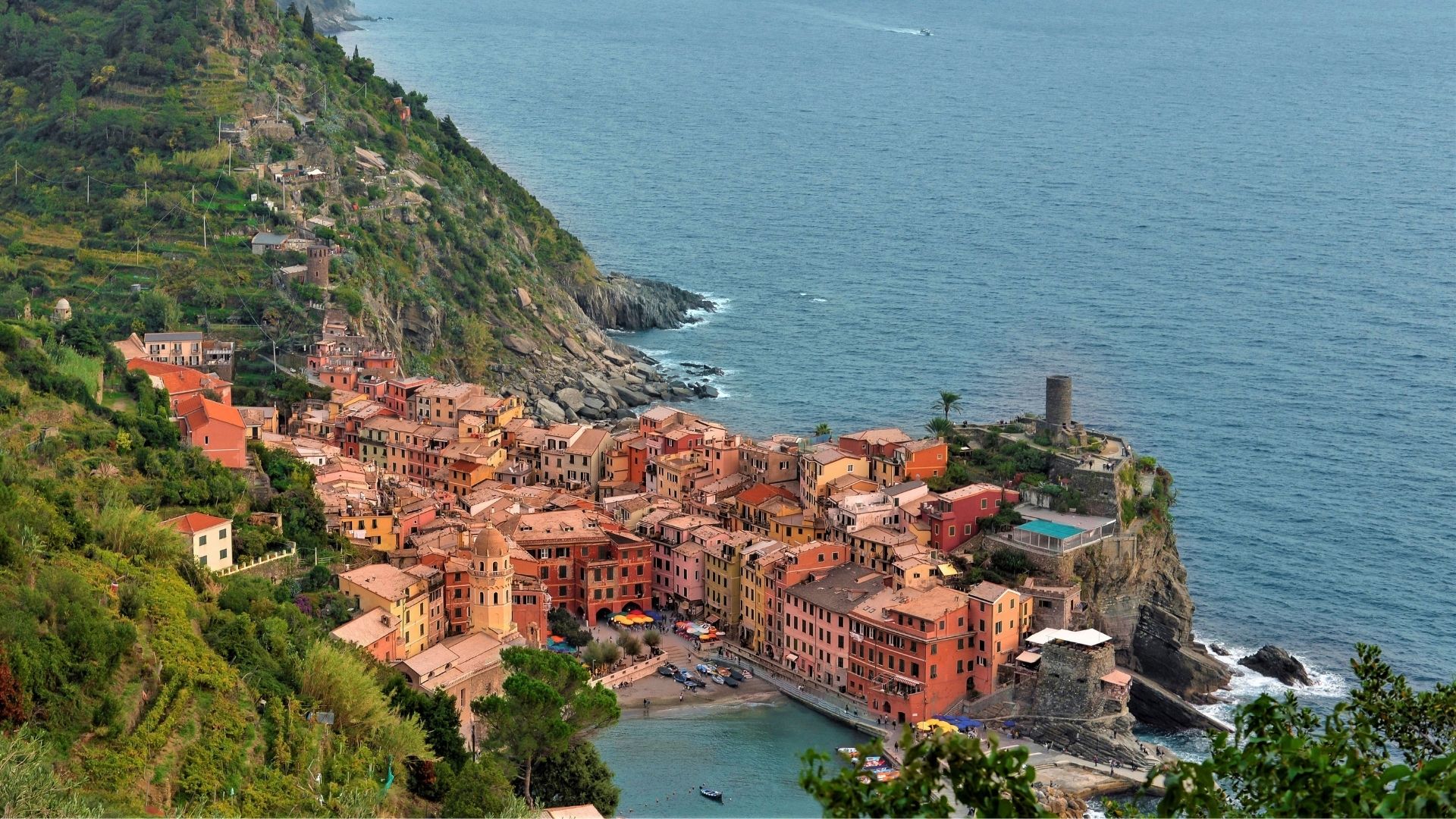
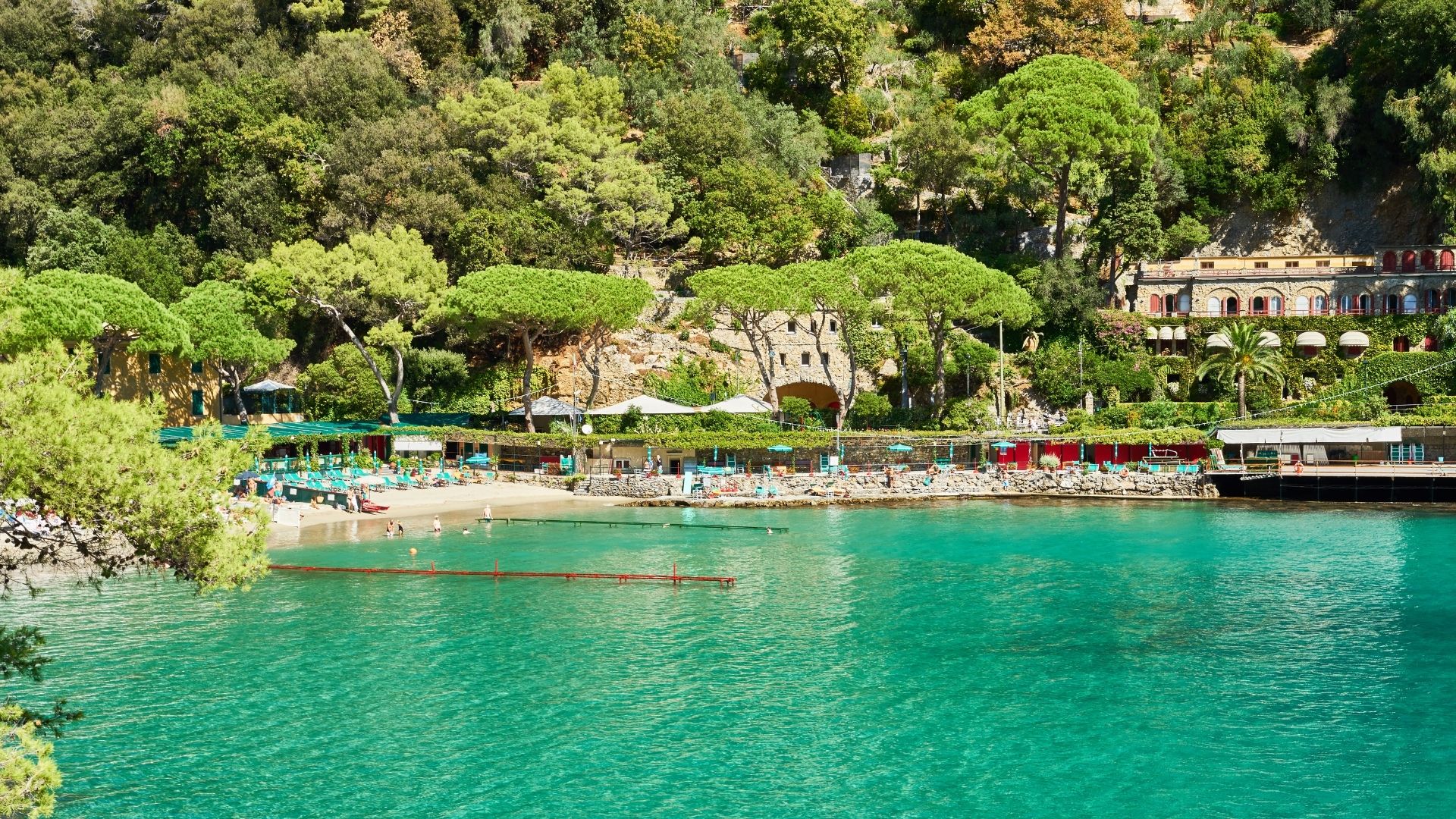
Four characteristics that separate the Ligurian week from the rest of western Italy.
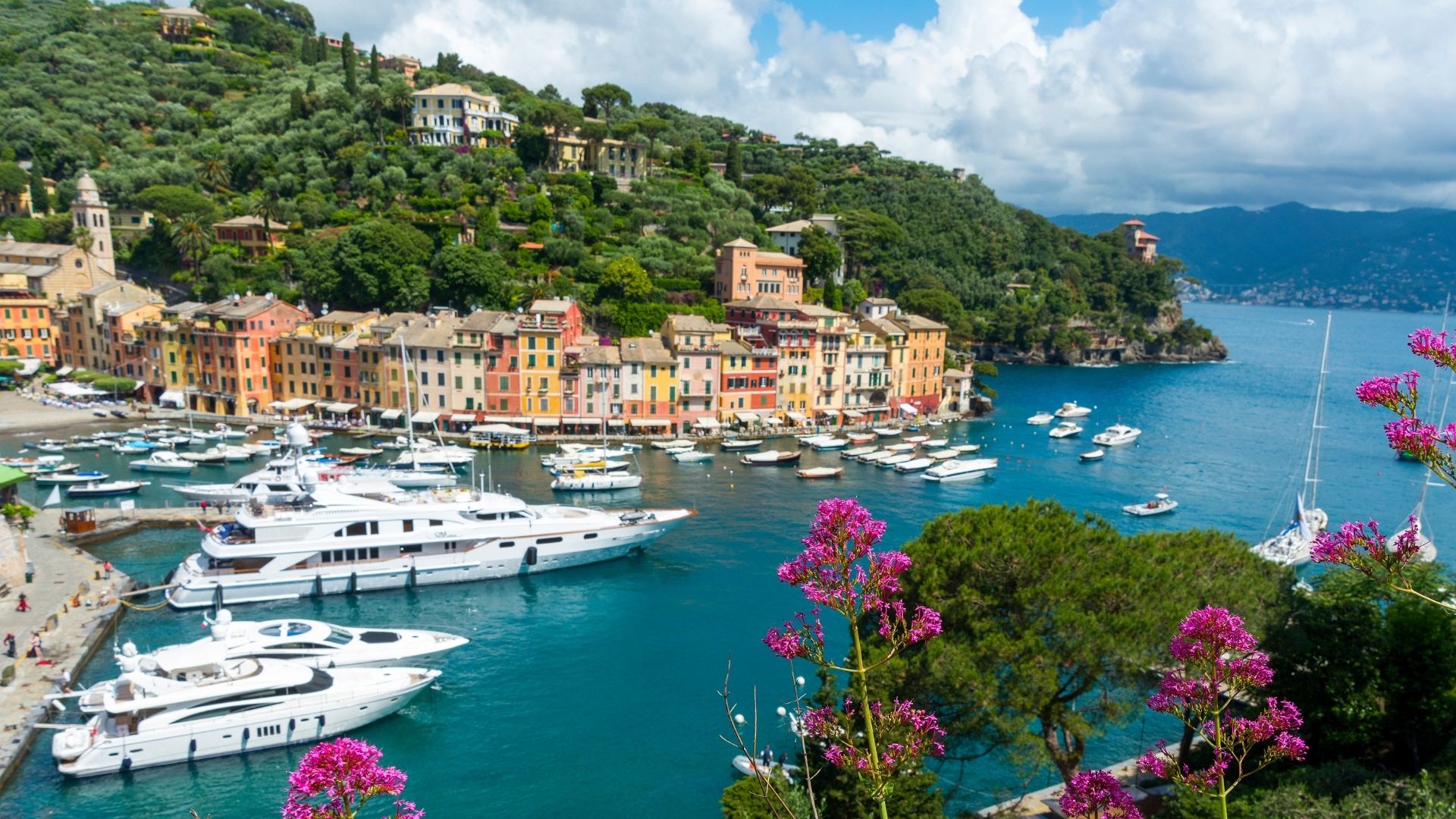
Portofino is the boutique-harbor stop the rest of the coast measures against — pastel facades, a single tight basin, and a piazzetta walkable in five minutes. Santa Margherita and Paraggi sit a short tender ride west, and form the quieter overnight pair when the Portofino pier itself is fully booked. Aperitivo above the harbor, dinner ashore, then a calmer night at anchor.
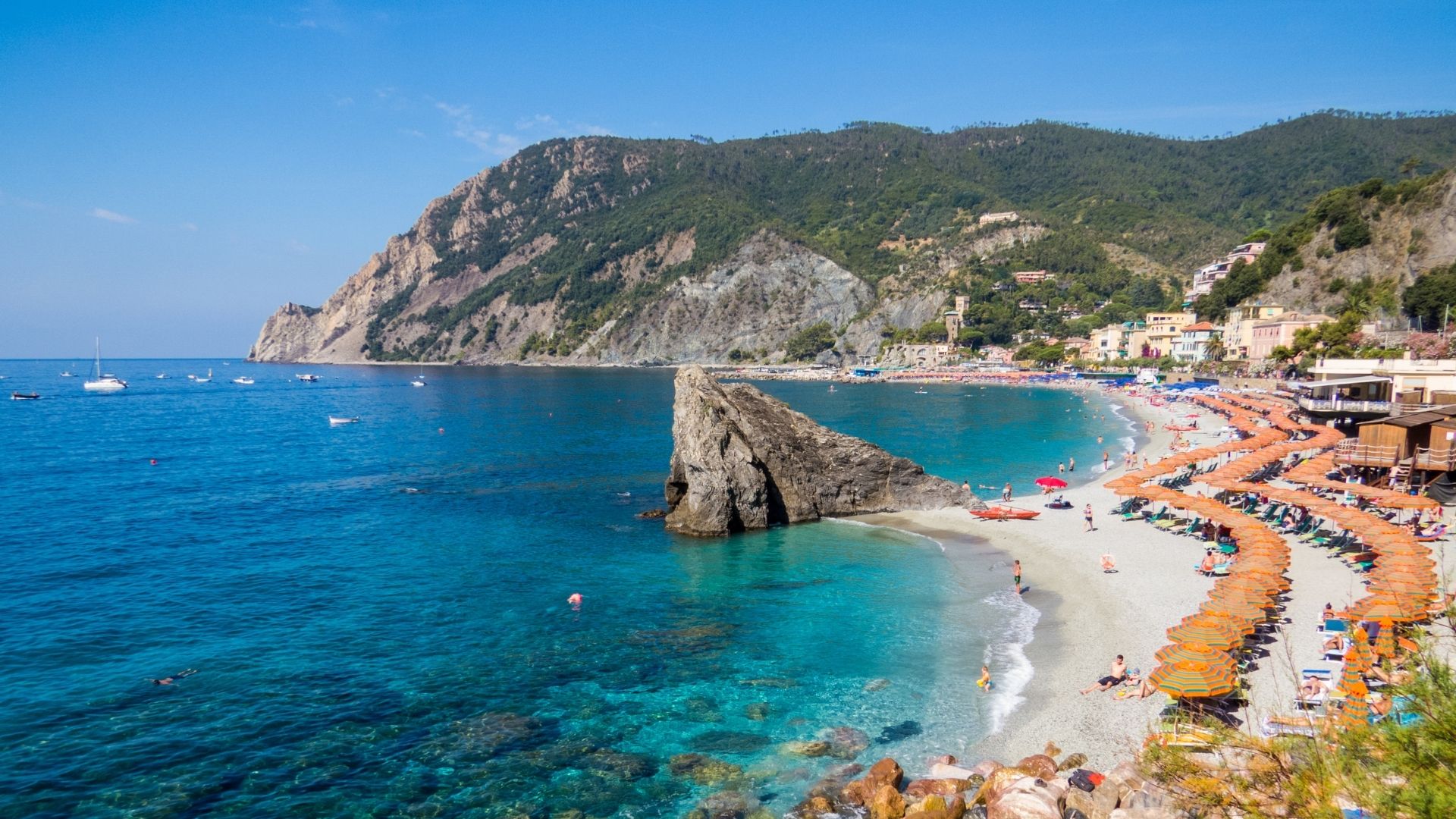
The five Cinque Terre villages are the marquee inland-Italy view of this coast — but from the water they read differently. The yacht anchors off Vernazza or Monterosso, the tender goes in for an espresso or lunch before the trains arrive, and the boat slides off again before the ferry crowds fill the harbor in the afternoon. Yacht-only access is what makes the Cinque Terre register turn from postcard to lived-in.
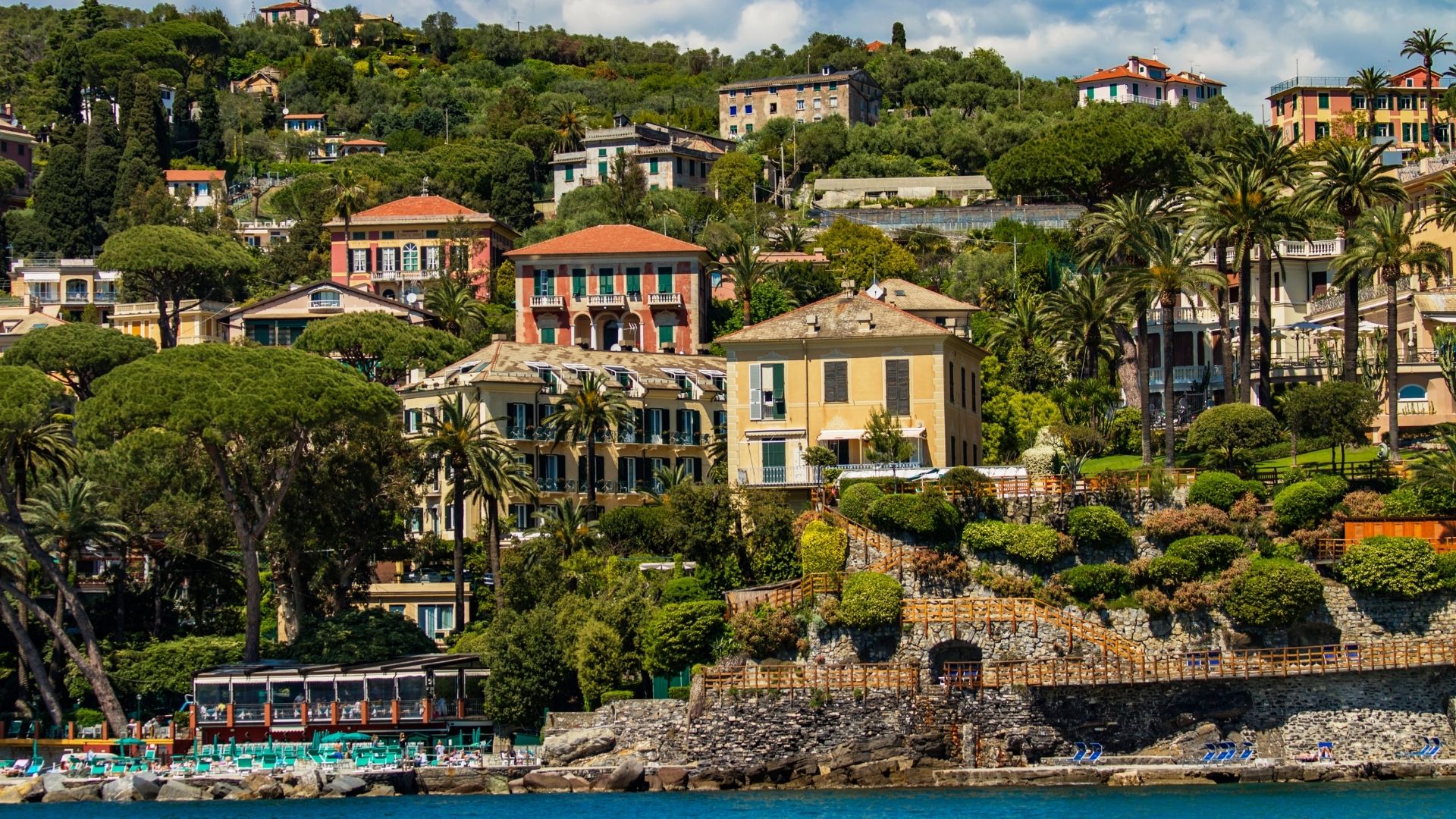
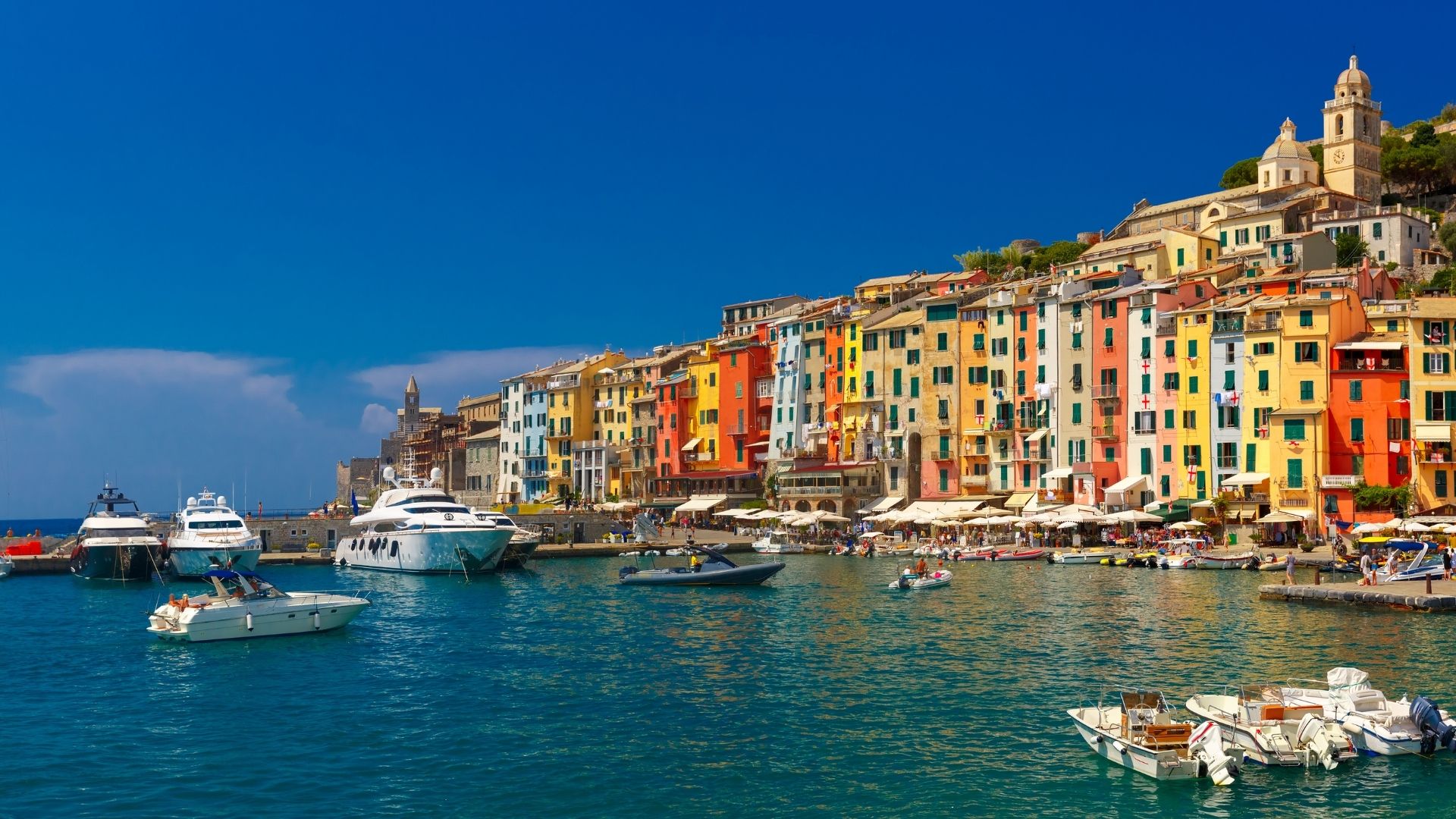
Portovenere closes the eastern end of the Ligurian run — painted facades stacked along a sea-wall, a Genoese church on the rocks at the harbor mouth, and the Gulf of La Spezia opening south. Palmaria and Lerici sit across the bay for the quieter overnight. The harbor is one of the cleanest dinner stops on the coast, and the bay itself was where Shelley and Byron kept boats — the Gulf of Poets is the name that stuck.
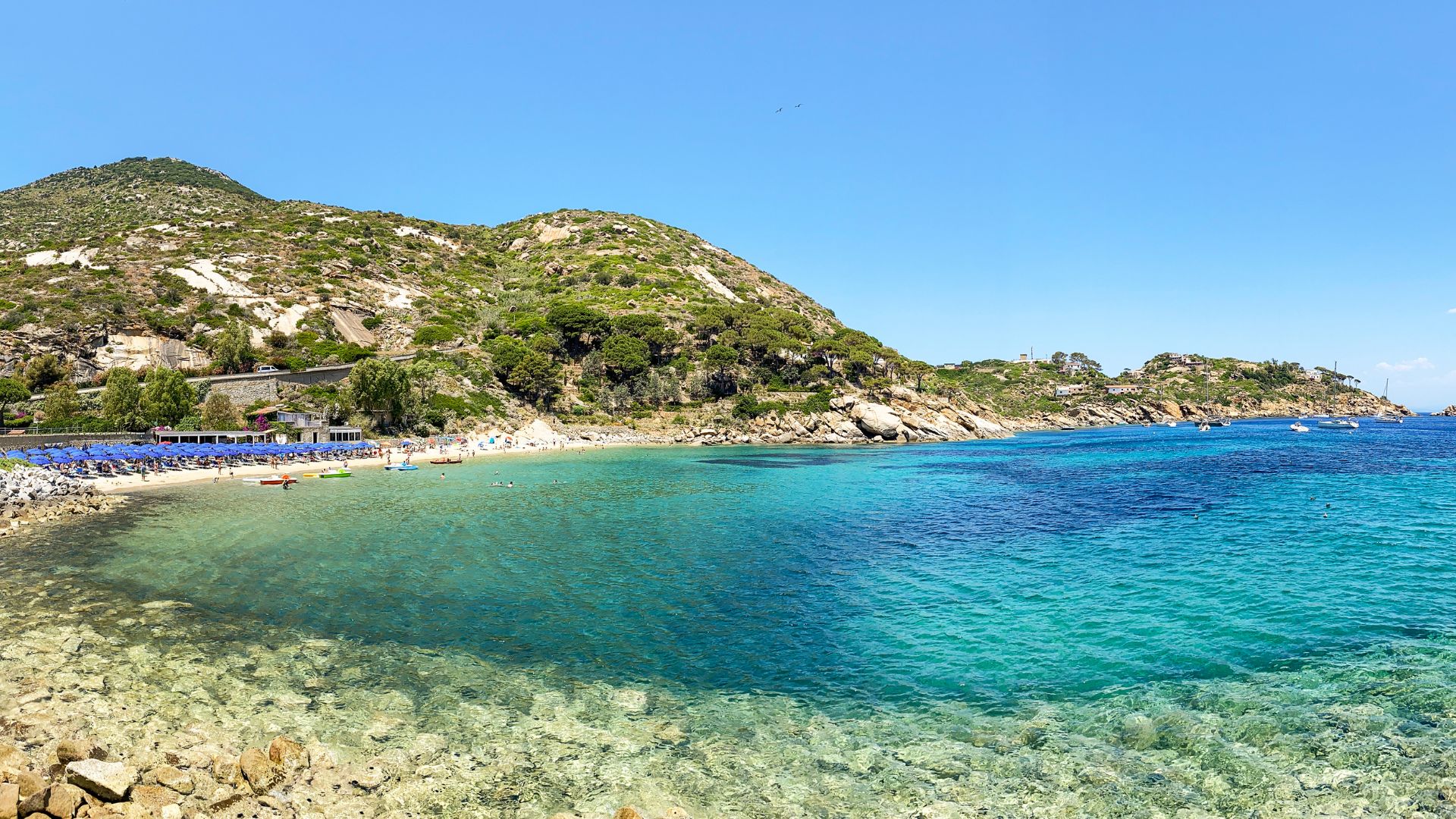
South of La Spezia the coast turns into Tuscany. Elba's coves are the first proof, the Argentario peninsula is the second, and Giglio is the quieter island in between. Distances grow on this leg — half-day passages instead of two-hour hops — and the week's register shifts from harbor villages to swim coves. This is the second-week extension on a longer charter, or the lower-density alternative for a first booking.
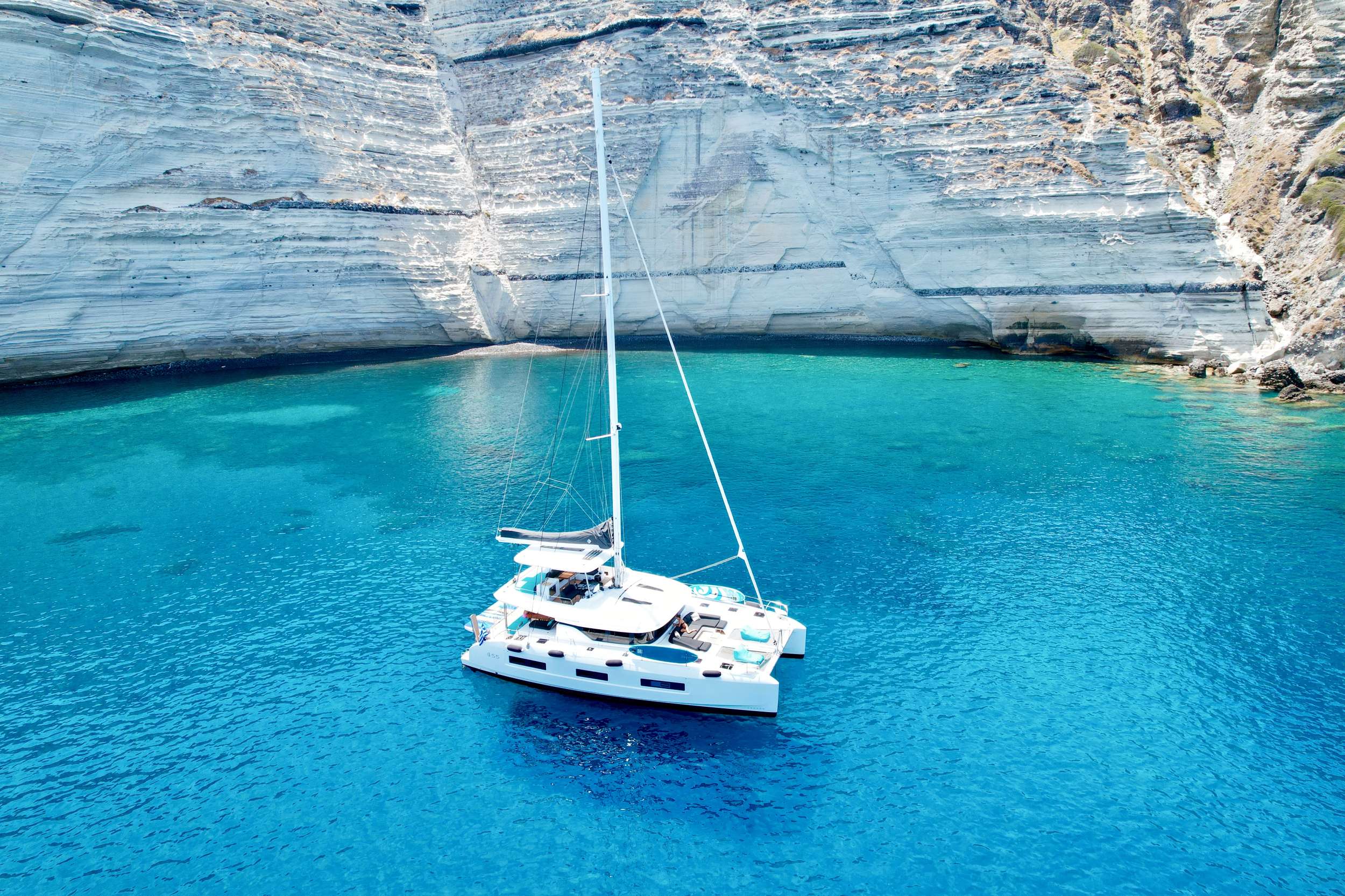
A hand-picked selection of crewed charter yachts for Italian Riviera & Tuscany — yachts and crews we know firsthand.
Your week is shaped around your group's interests, the season, and the conditions on the water — your captain tailors the days as they unfold. Treat these itineraries as starting points for inspiration.
Crewed Itinerary · Italian Riviera & Tuscany
This is the classic Liguria week — a seven-night crewed charter that starts around Genoa, takes in Portofino and Santa Margherita, works east through San Fruttuoso and the Gulf of Tigullio, then settles into the Cinque Terre and Portovenere before turning back. About seventy nautical miles end to end, with no leg longer than twenty-two. The mileage is compact by Mediterranean standards, which is the point. The appeal here is not open-water range; it is a coast where the yacht gives the villages their right rhythm — early access at the harbors before the trains arrive, late evenings on the water once the ferry crowds thin out.
Most groups booking this route are choosing between Amalfi and the Riviera and deciding they want the quieter answer. Portofino brings the boutique-harbor glamour. The Cinque Terre brings the cliff-village register that defines the coast. Portovenere and Lerici close the week without forcing every hour into the streets. Motor yachts and catamarans both work — the cliffs block the prevailing winds, distances are short, and the harbor-stern-to culture suits either type. June and September are the strongest months. July and August work, but the Cinque Terre's shore-side density needs the yacht to set the timing rather than the train schedule.
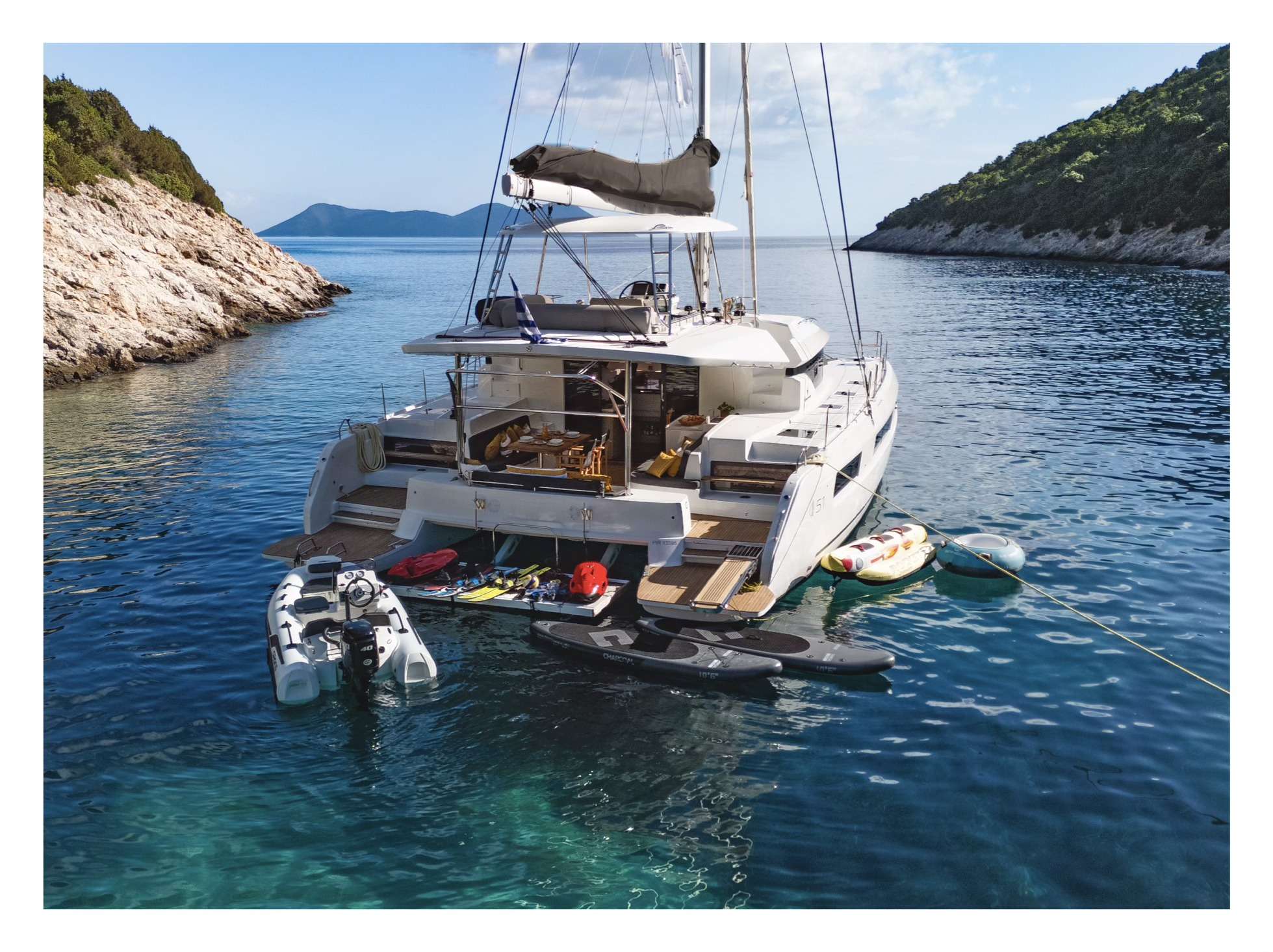
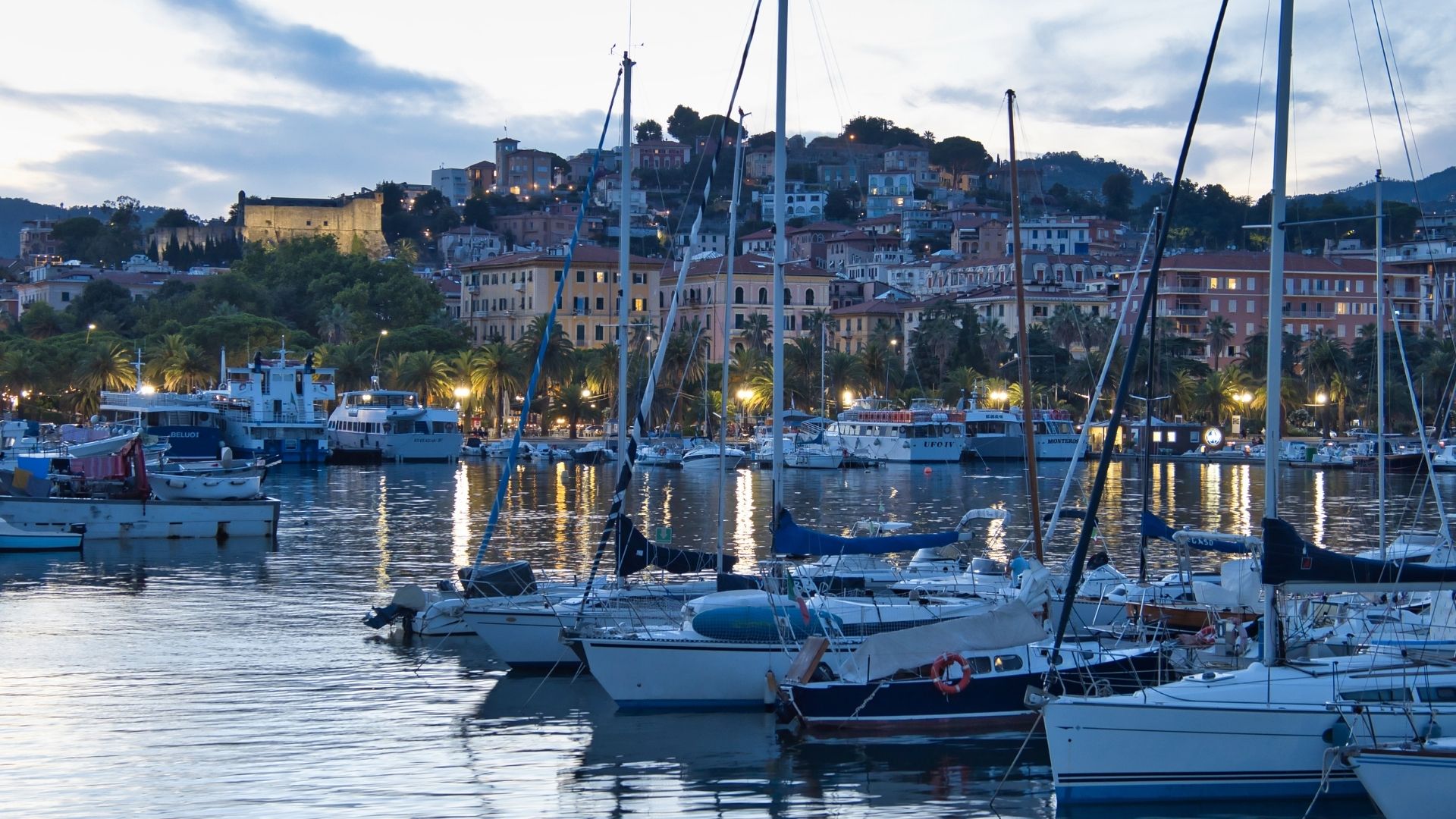
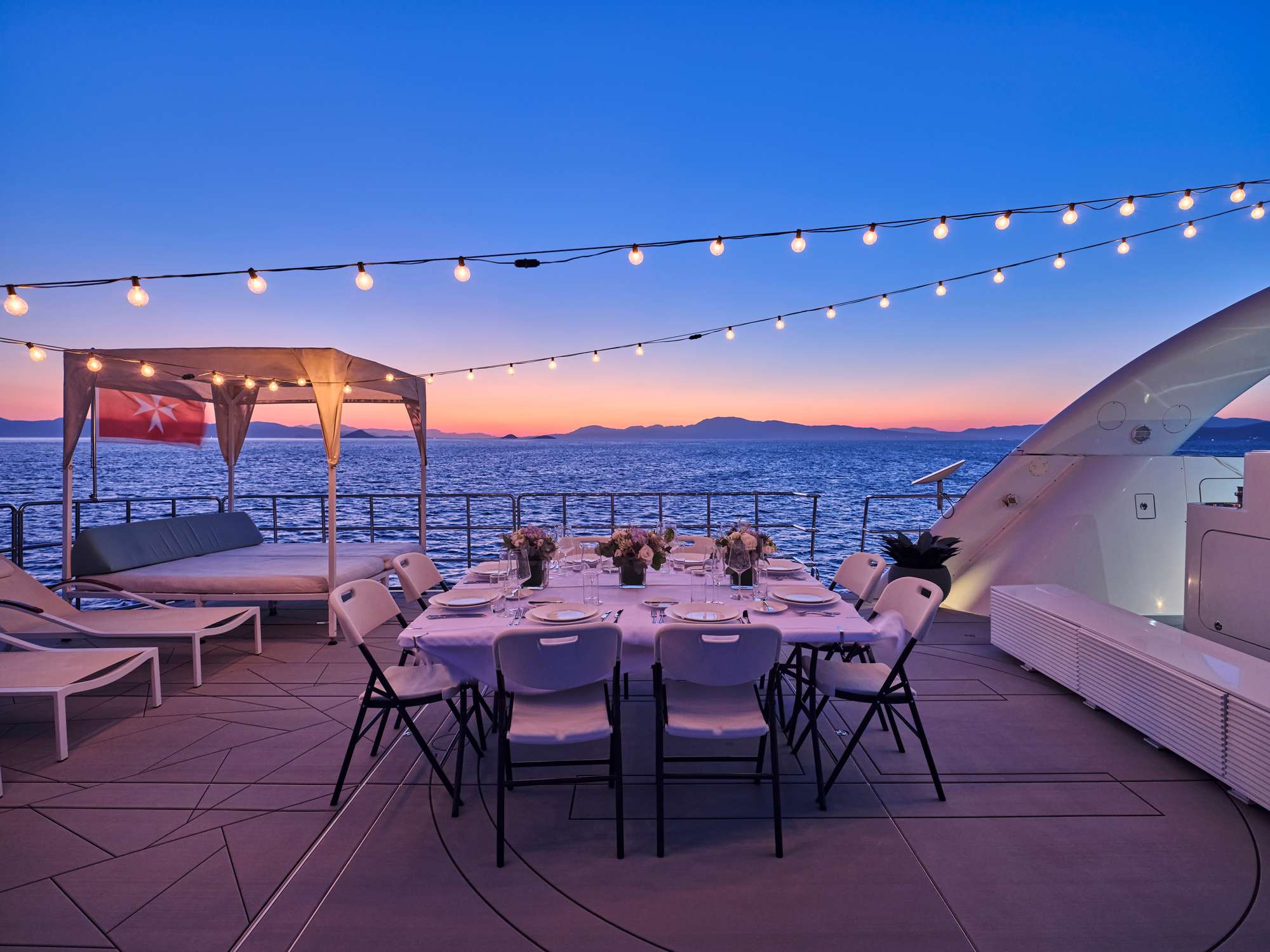
This is the Liguria-first week — Portofino, Santa Margherita, San Fruttuoso, the five Cinque Terre villages, Portovenere, and the Gulf of La Spezia over seven nights. Roughly seventy nautical miles end to end, with no leg long enough to force the day's shape. The yacht is what lets the route breathe: arrive before the trains fill the villages, leave after the ferries thin out, and sleep off the main flow.
It is the best first charter for guests who want the Italian Riviera without forcing Tuscany or Monaco into the same week. If the brief is lower-density anchorages and a southern extension toward Elba, the Tuscan-archipelago route is the stronger fit. If the brief is to finish at Monaco, the one-way westbound route is the right answer. The captain shapes the day-by-day around the group; the structure below is the standard frame.
Day 1 of 7 · Genoa → Portofino
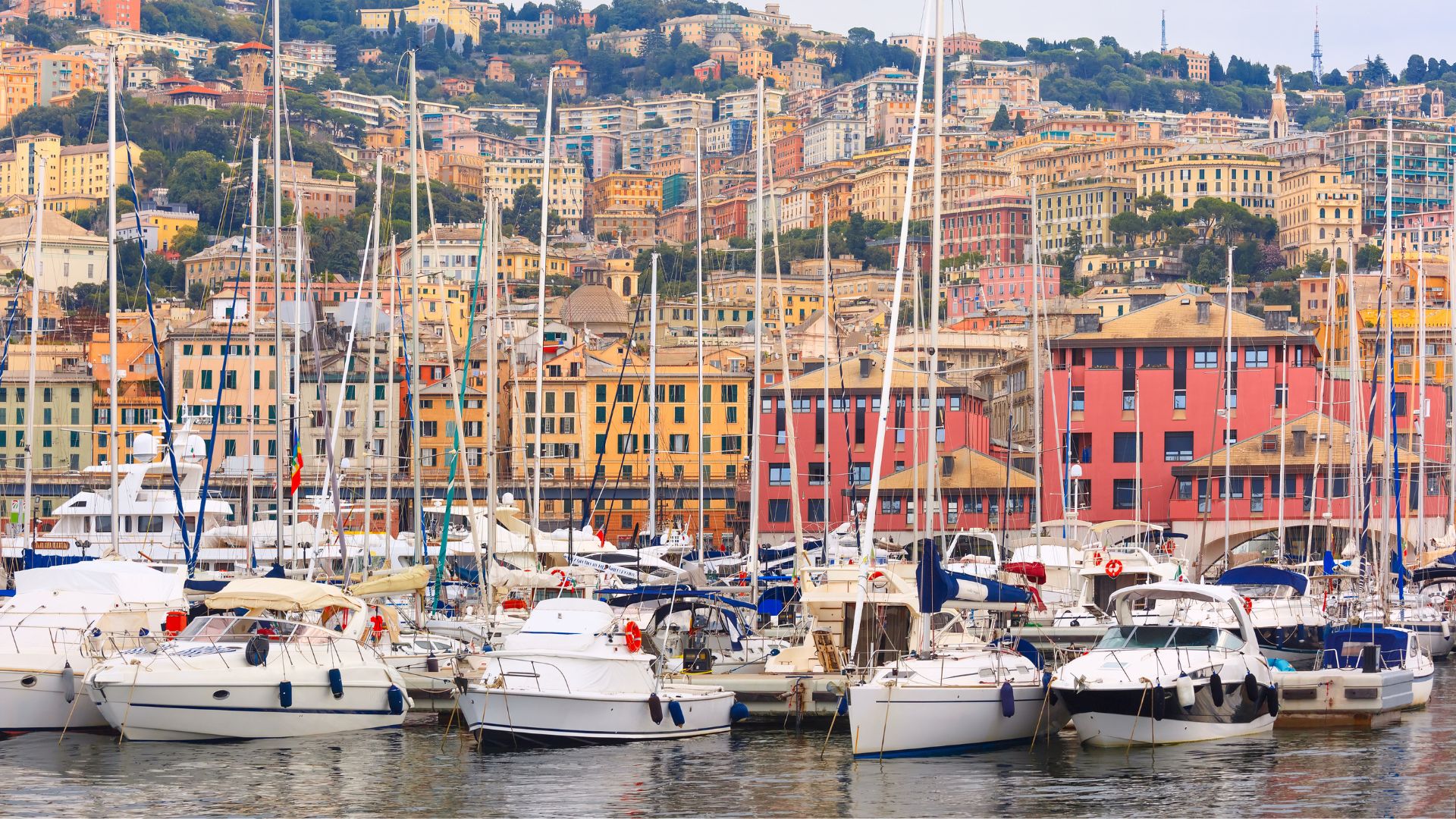
The charter begins in Genoa, the old maritime-republic capital whose harbor still handles the largest commercial port in Italy. Crew meet the group on the quay at Marina Genoa Aeroporto — fifteen minutes by car from GOA — or at Porto Antico in the city itself, depending on the yacht. Provisions are squared away, the chef walks the group through the week's food brief, and the chart for the first run gets covered before lines come off.
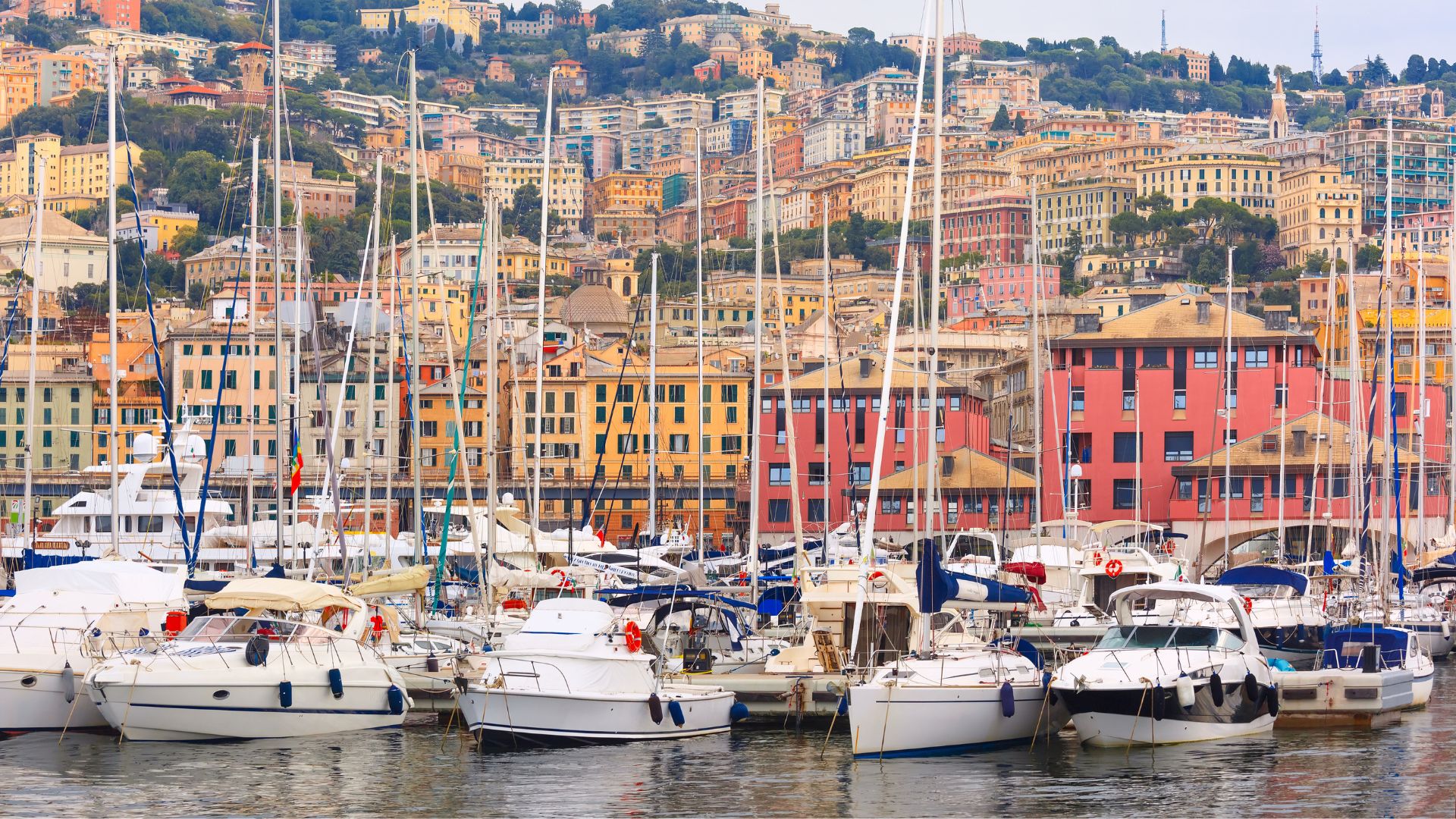
The opening leg east is short by design — sixteen nautical miles around the Portofino promontory and into the harbor on the far side. The coast in between is the Genoese suburbs and a steep wooded ridge; the payoff comes when the yacht clears the headland and Portofino's basin opens up. The harbor itself is tight — about a dozen stern-to slots inside the breakwater — so larger motor yachts and yachts arriving later in the afternoon anchor in Paraggi Bay, the emerald cove a short tender ride west.
Aperitivo ashore is the canonical first-night move. La Gritta American Bar on the harbor terrace runs the most photographed aperitivo on the coast; the Piazzetta restaurants — Puny and Da U Batti the two long-standing names — book a day ahead in season. The Belmond Splendido sits on the cliff above, visible from any seat in the harbor; dinner aboard or in the village both work, and the captain handles the reservation either way.
Day Highlights
Day 2 of 7 · Portofino pocket coast
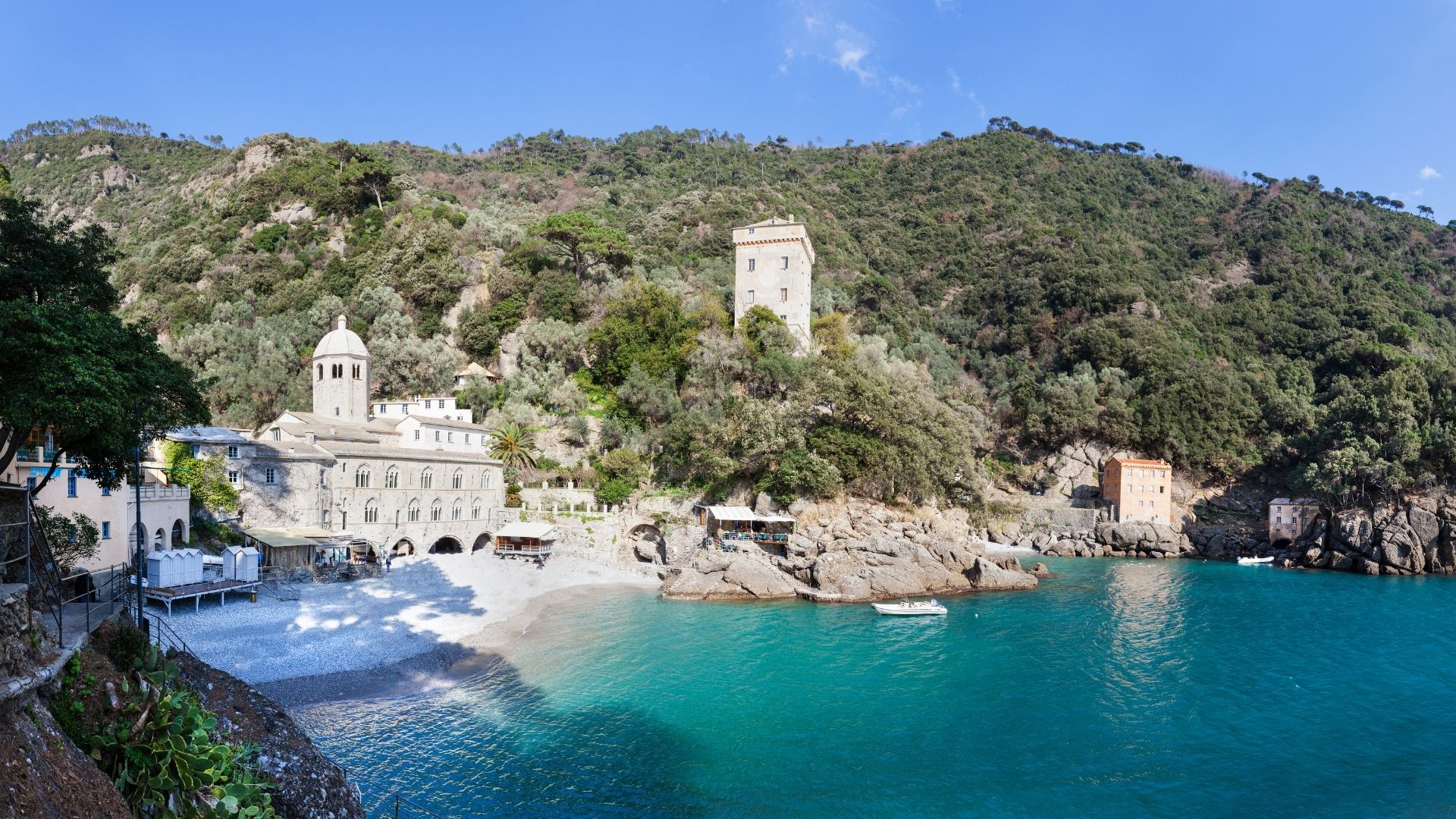
Morning at anchor or on the Portofino quay, breakfast on the aft deck, the chef working on lunch while the crew prepares the tender for the day. Lines off mid-morning for the short hop north around the headland to San Fruttuoso, the abbey cove on the Portofino peninsula's seaward side. The coast in between — Punta Chiappa, Cala dell'Oro — is some of the cleanest swim water on this stretch of Liguria.
Anchor offshore from San Fruttuoso. The abbey itself was built in the tenth century by Benedictine monks; the present structure dates mostly from the thirteenth, with the Doria family's seventeenth-century renovations on top of that. There is no road in — the only access is by boat or by a two-hour hike from Portofino — so the cove holds a few dozen yachts on a hot Saturday and almost nothing else. Tender ashore for the abbey walk, swim along the rocky shore, and an offshore look at the Christ of the Abyss statue, the bronze figure submerged seventeen meters below the surface since 1954 as a memorial to lost divers.
Lunch on board at anchor or tender ashore to Da Giovanni, the small trattoria at the foot of the abbey's wall. Afternoon move three nautical miles south into Santa Margherita Ligure. The harbor is the larger of the two on the Gulf of Tigullio, with the same Ligurian-Belle-Époque facades as Portofino but a working-town rhythm underneath — fishing fleet at the pier, focaccerie on the back streets, the Imperiale Palace on the eastern side of the bay. Dinner ashore at Trattoria dei Pescatori on the harbor or Skipper Bar a block back; the captain handles either.
Day Highlights
Day 3 of 7 · Tigullio → Cinque Terre
The longest leg of the week, and the one that fully turns the route from Ligurian-Belle-Époque harbors into the Cinque Terre register. Morning swim in Paraggi or one of the smaller Tigullio coves — Bagni Fiore is the older terrace above the bay, Langosteria Paraggi the newer beach-club lunch — then lines off mid-morning for the southward push. The coast in between stays Ligurian rather than cliff-village: Rapallo and its waterside Castello sul Mare, Chiavari, and Sestri Levante's Baia del Silenzio (Bay of Silence), the protected eastern cove that is one of the cleanest swim stops on the route if conditions allow.
By mid-afternoon the cliffs steepen and the architecture changes. The five Cinque Terre villages — Monterosso, Vernazza, Corniglia, Manarola, Riomaggiore — sit on a roughly twelve-kilometer stretch of coastline, all part of the Cinque Terre National Park and UNESCO since 1997. The villages are wired into each other by the Sentiero Azzurro hiking trail and the regional train line that runs in tunnels behind them. From the water, what reads first is how steep the terraced vineyards are and how completely the buildings stack onto the rock face.
Monterosso al Mare is the practical first overnight. It is the only one of the five with a proper beach, split between Fegina (the modern side, where the train station and the beach concession sit) and Vecchio (the medieval quarter on the eastern headland). The yacht anchors offshore — there is no harbor large enough for charter yachts — and the tender runs in to the breakwater. Dinner ashore at Miky on the Fegina seafront for the seafood the village is known for, or at L'Ancora della Tortuga on the rocks above the beach for the more theatrical evening; the captain books either.
Day Highlights
Day 4 of 7 · Cinque Terre core day
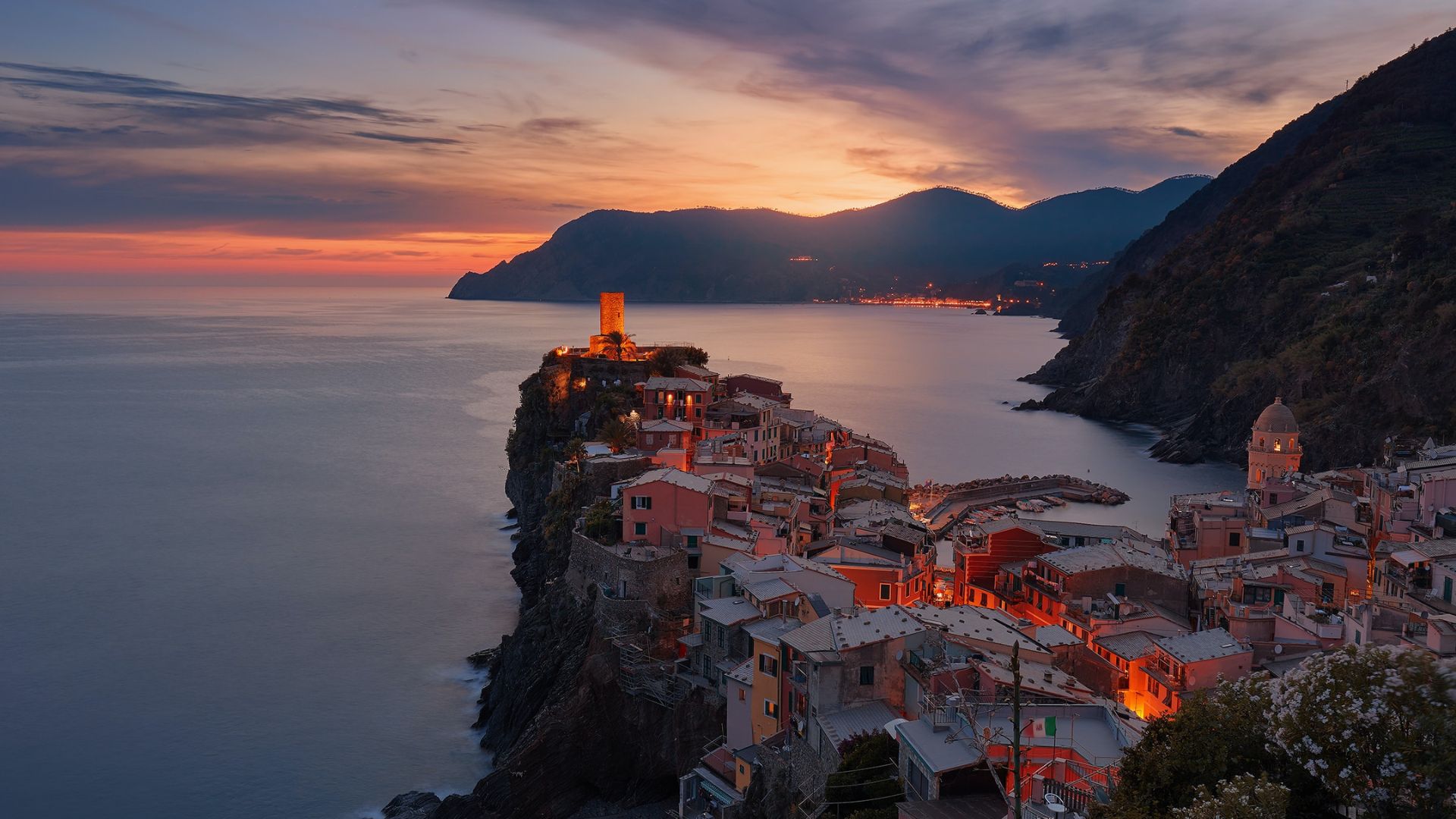
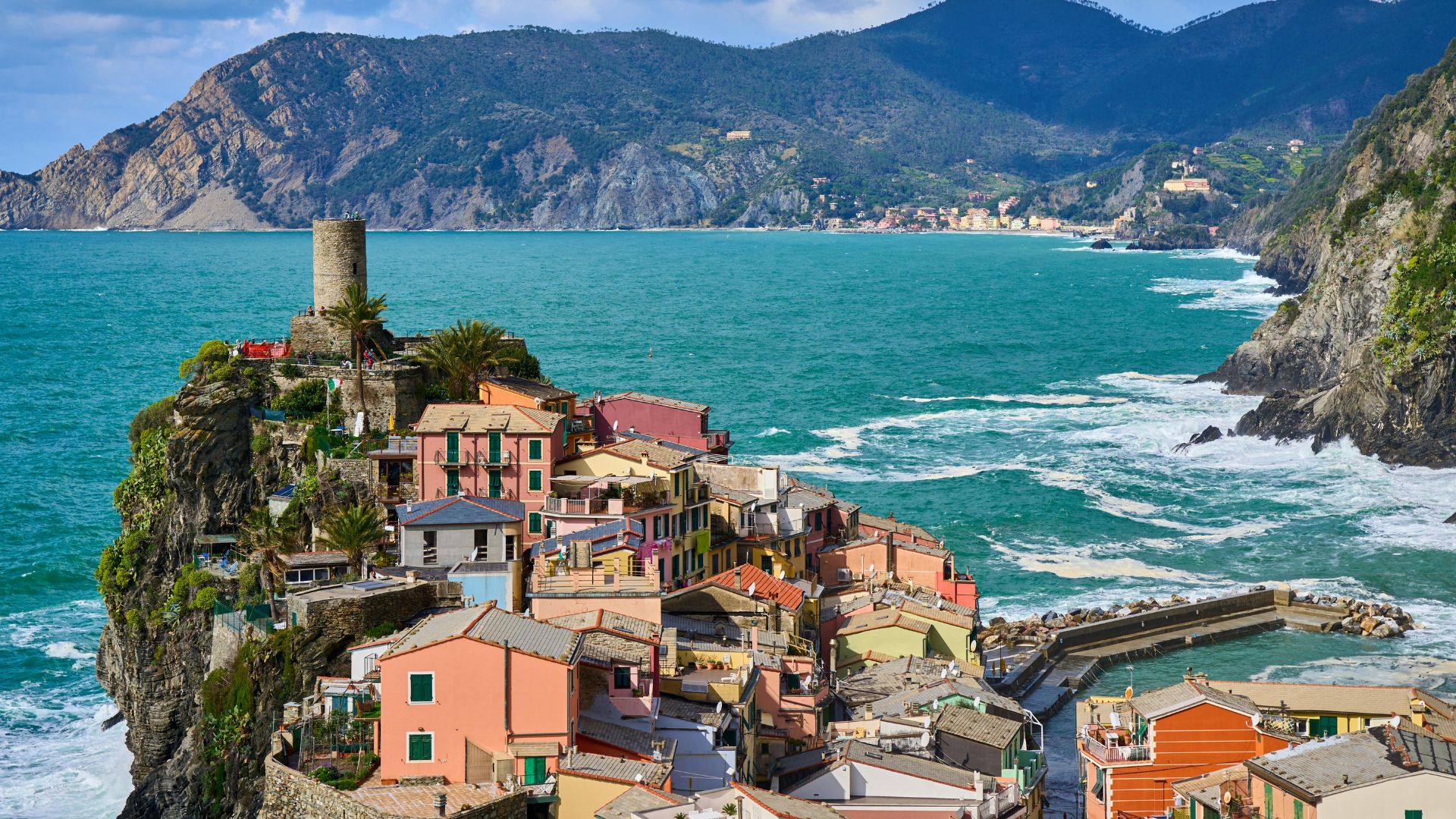
The day is built around timing. Early tender ashore at Vernazza — before the 9am regional trains start landing day-trippers — for an espresso at one of the harbor cafes and a walk up the steps to the Belforte tower for the village's marquee photograph. The Santa Margherita d'Antiochia church on the harbor dates to 1318; the Belforte itself was built in the eleventh century as a Saracen-pirate lookout and is now the village's defining restaurant terrace. By 10am the platforms have filled and the harbor street belongs to day-traffic; the yacht is back at anchor and slipping south.
The run south covers the remaining villages over about six nautical miles. Corniglia is the only one not on the water — it sits 100 meters up on a clifftop, reached from the train station by the Lardarina, a switchback of 33 flights of stairs — so the yacht passes it and most groups skip the village itself. Manarola is the photogenic stern-to next stop, smaller than Vernazza and almost entirely visible from a single tender approach; Riomaggiore is the southernmost village, with the Via dell'Amore footpath to Manarola (partially reopened in 2024 after a long landslide closure). Lunch on board between shore visits — anchorage off Manarola, the chef serving on the aft deck, the village reading like a painting from the water.
Late afternoon back into Vernazza or Manarola for an early-evening shore visit once the trains have thinned out — the villages reset by 6pm. Dinner ashore at Belforte if the booking landed, or aboard at anchor if the captain prefers to stay off the quay for the night. Sciacchetrà — the Cinque Terre's sweet wine, made from grapes dried on cane racks for three months after harvest from terraces above the sea — closes most evenings on this stretch; production is small enough that bottles are usually only available in the villages themselves.
Day Highlights
Day 5 of 7 · Cinque Terre → Portovenere
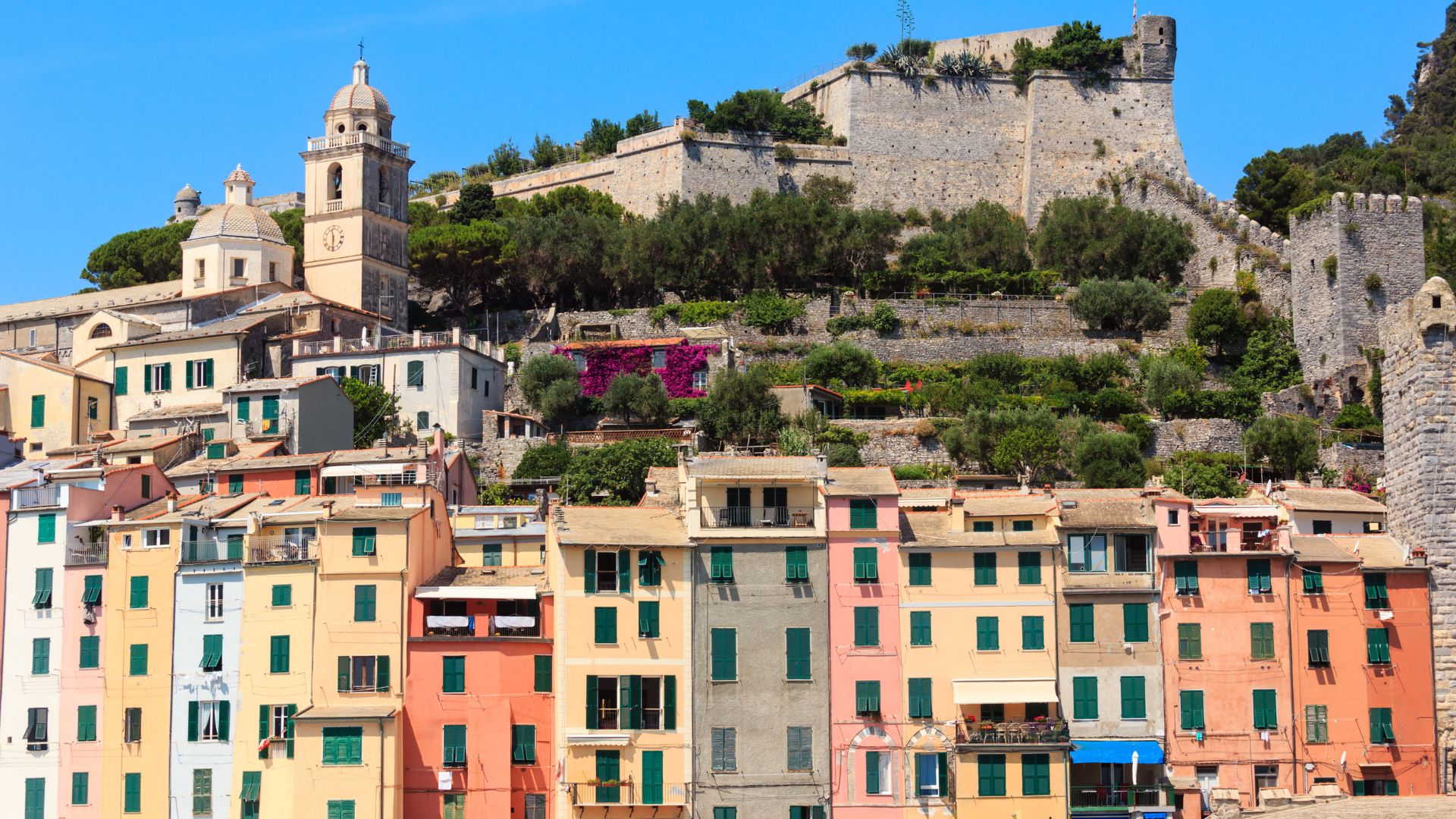
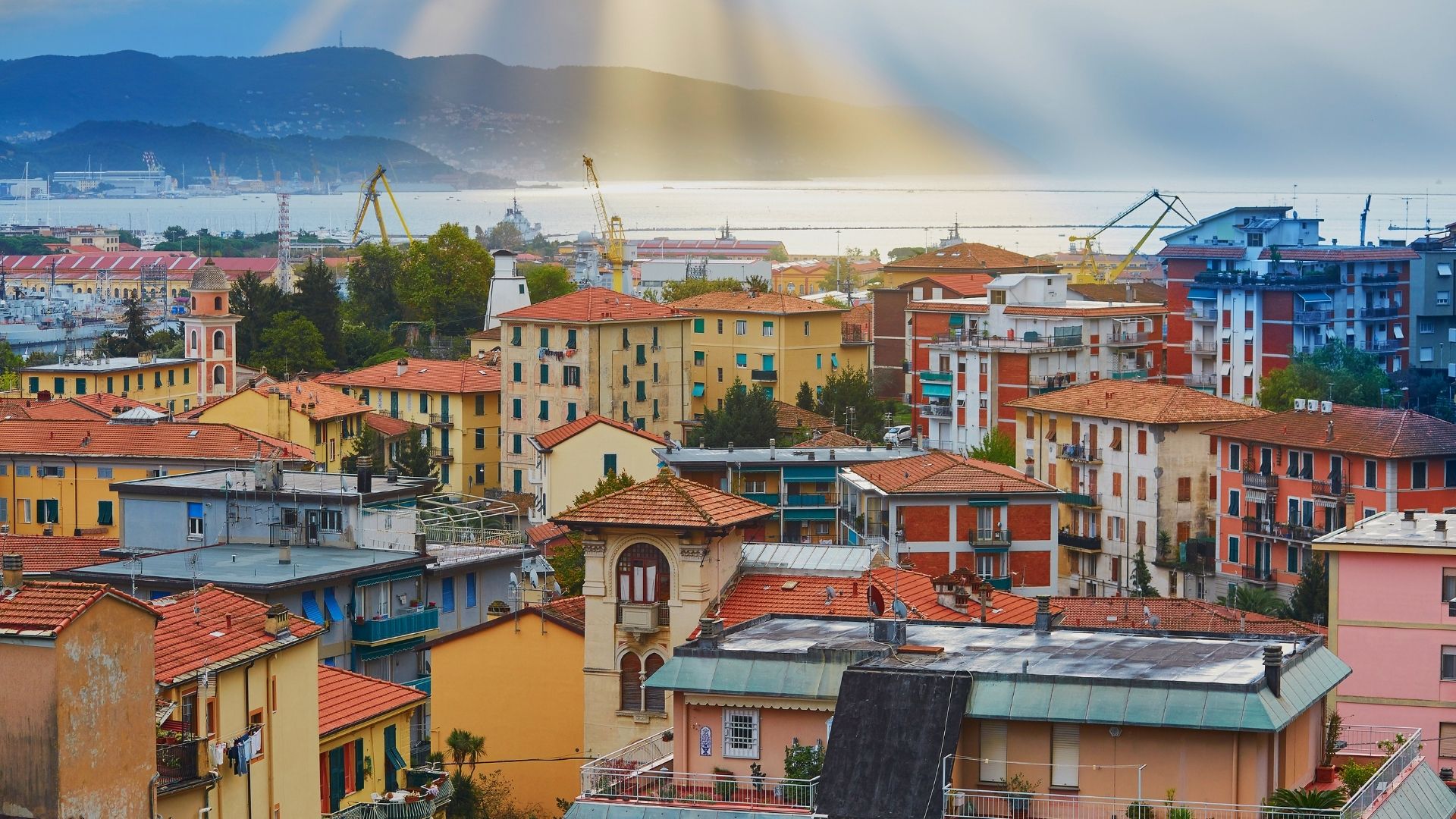
Short hop down from the Cinque Terre — six nautical miles around the headland and into the Gulf of La Spezia. Portovenere closes the eastern end of the Ligurian run, and the change of register is immediate: instead of the Cinque Terre's compressed cliff-village scale, the harbor here opens into a wider bay with a real sea-wall, a quay long enough for stern-to mooring, and one of the cleanest harbor approaches on the coast.
The architecture earns the long stay. The Church of San Pietro sits on the rocky point at the harbor mouth, built in 1198 over a fifth-century basilica that itself replaced a Roman temple to Venus — the village's name, 'Portus Veneris,' goes back that far. The Doria Castle rises above the town in tight switchback streets; the climb takes twenty minutes and the view at the top runs from the Cinque Terre cliffs back behind the yacht to the full Gulf of La Spezia opening south. Byron is the local literary anchor — he swam from here across the gulf to Lerici in 1822, and the cave below San Pietro is called Byron's Grotto because of it. Shelley drowned in the bay the same year; the gulf's nickname dates to that summer.
The yacht stern-to on the Portovenere quay puts the village walking distance from the gangplank. Dinner ashore on the Calata Doria promenade — Antica Osteria del Carugio for the local Ligurian dishes, Iseo on the harbor for the fish boats' day-of-catch, or Locanda Lorena across on Palmaria if the group prefers tender-in dining over a quayside walk. The Locanda's dock is the calmer evening option; the tender ride from the Palmaria anchorage takes five minutes.
Day Highlights
Day 6 of 7 · Gulf of Poets
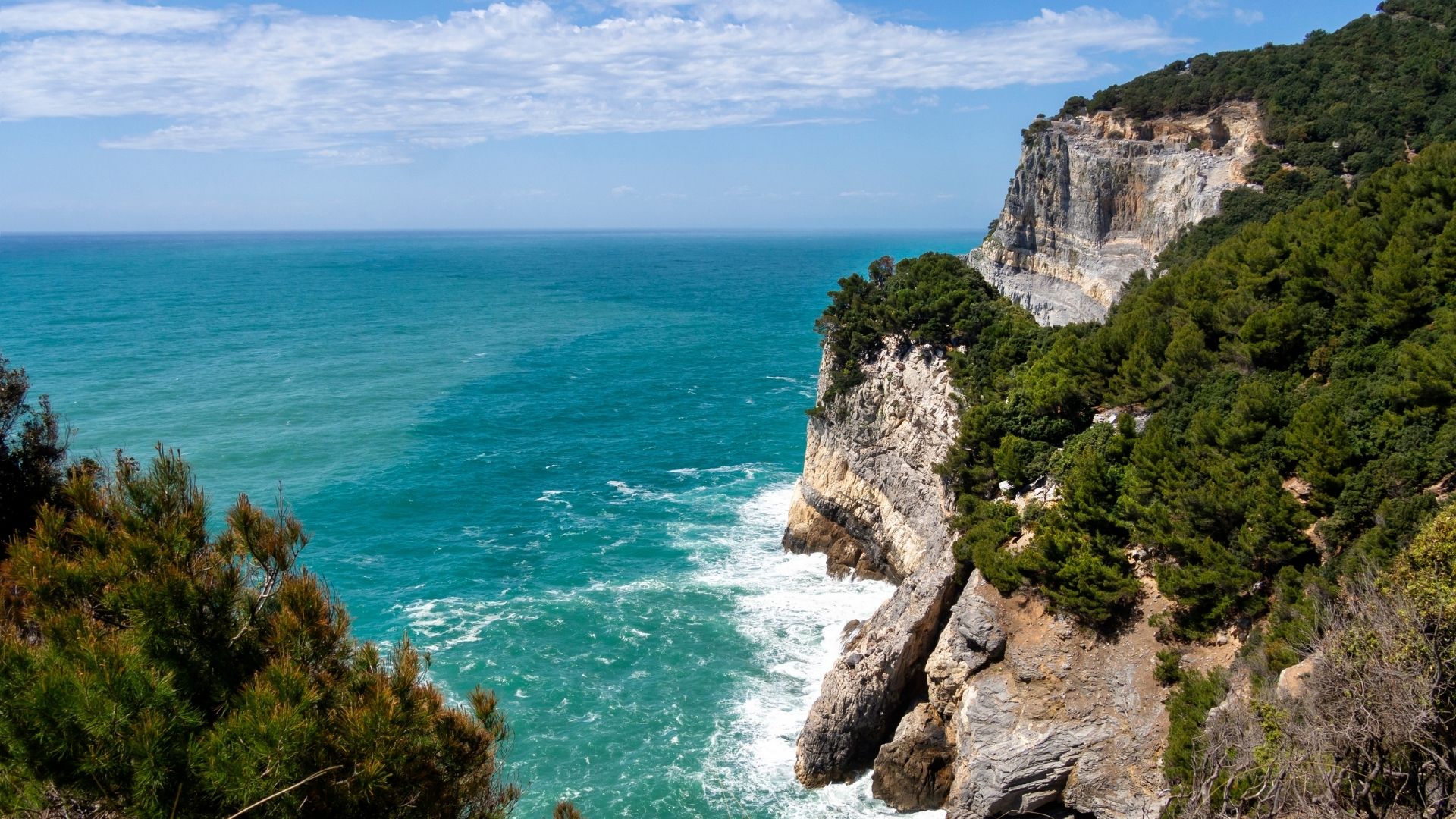
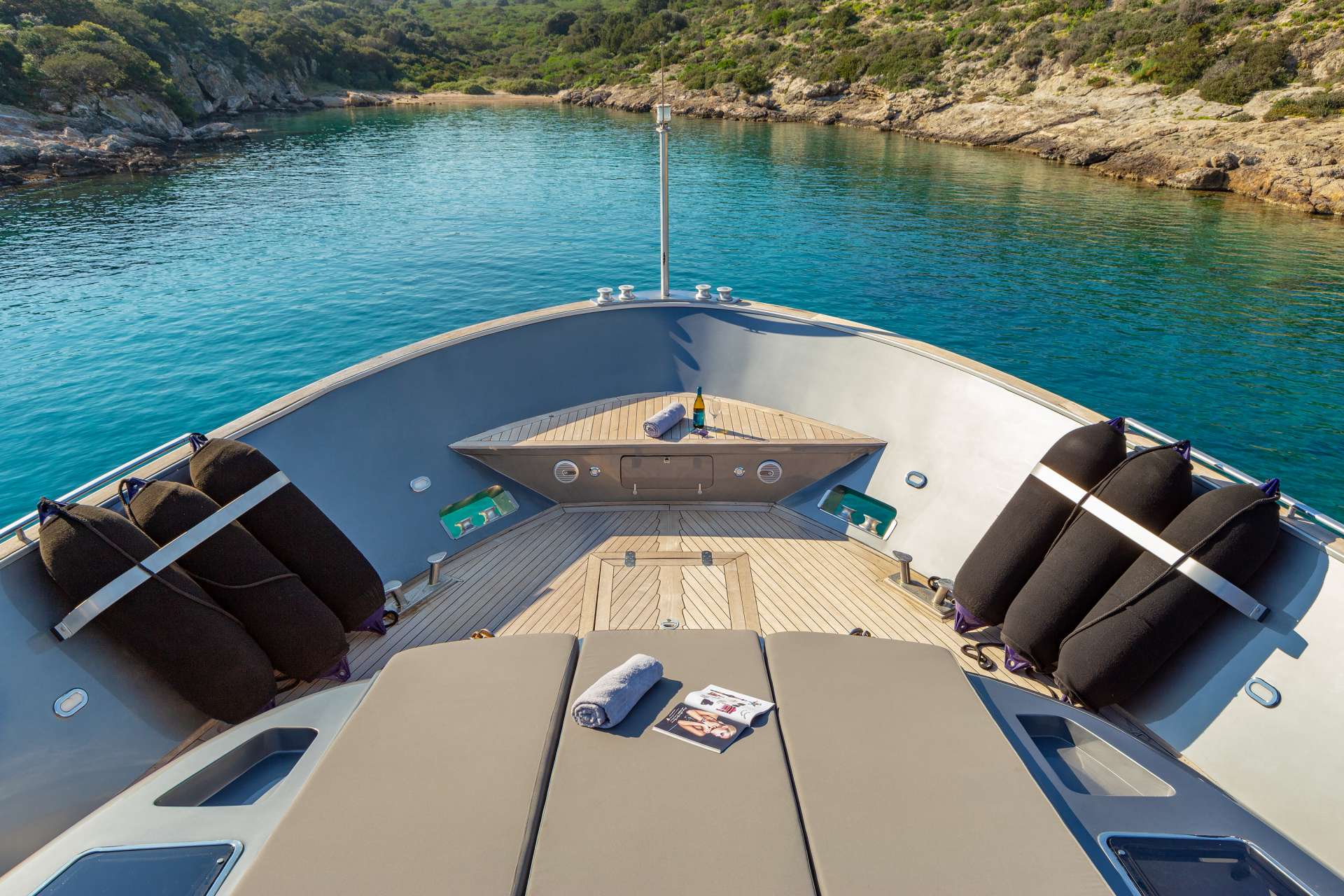
The penultimate day slows the route down on purpose. Morning lift off the Portovenere quay across the narrow channel — Bocche channel, less than a kilometer wide — and into a swim anchorage along Palmaria's eastern coast. The island is the largest of the three at the gulf's mouth, part of the Portovenere Regional Park, and is wired into the same UNESCO inscription that covers the Cinque Terre. The eastern coves hold the cleanest swim water in the bay; the western cliffs still carry the concrete remains of Italian Navy gun batteries from the Second World War, when La Spezia was the country's largest naval base.
Lunch at anchor — paddleboards down, the chef working on Ligurian seafood and a glass of Vermentino from the hills above the gulf — and a slow afternoon before the short crossing to Lerici on the gulf's eastern side. Lerici's harbor is smaller and less famous than Portovenere's but reads as the local-Italian counterweight to it: the Castello di San Giorgio sits above the village on a twelfth-century base, the beach in front of the painted facades is one of the few proper sand beaches on this stretch of coast, and the headland walk to San Terenzo around the bay takes thirty minutes.
Casa Magni — Percy and Mary Shelley's last residence, where they were living when Percy drowned crossing the gulf back from Livorno in July 1822 — sits at San Terenzo's western end, marked but unspectacular. The literary weight is mostly atmospheric; the real value of the Lerici evening is the harbor itself. Dinner ashore at Doi Camin under the castle, Pescarino on the harbor for the fish boats' catch, or Conchiglia at San Terenzo if the captain prefers the quieter side of the bay. Sciacchetrà closes the evening one last time.
Day Highlights
Day 7 of 7 · Westbound return
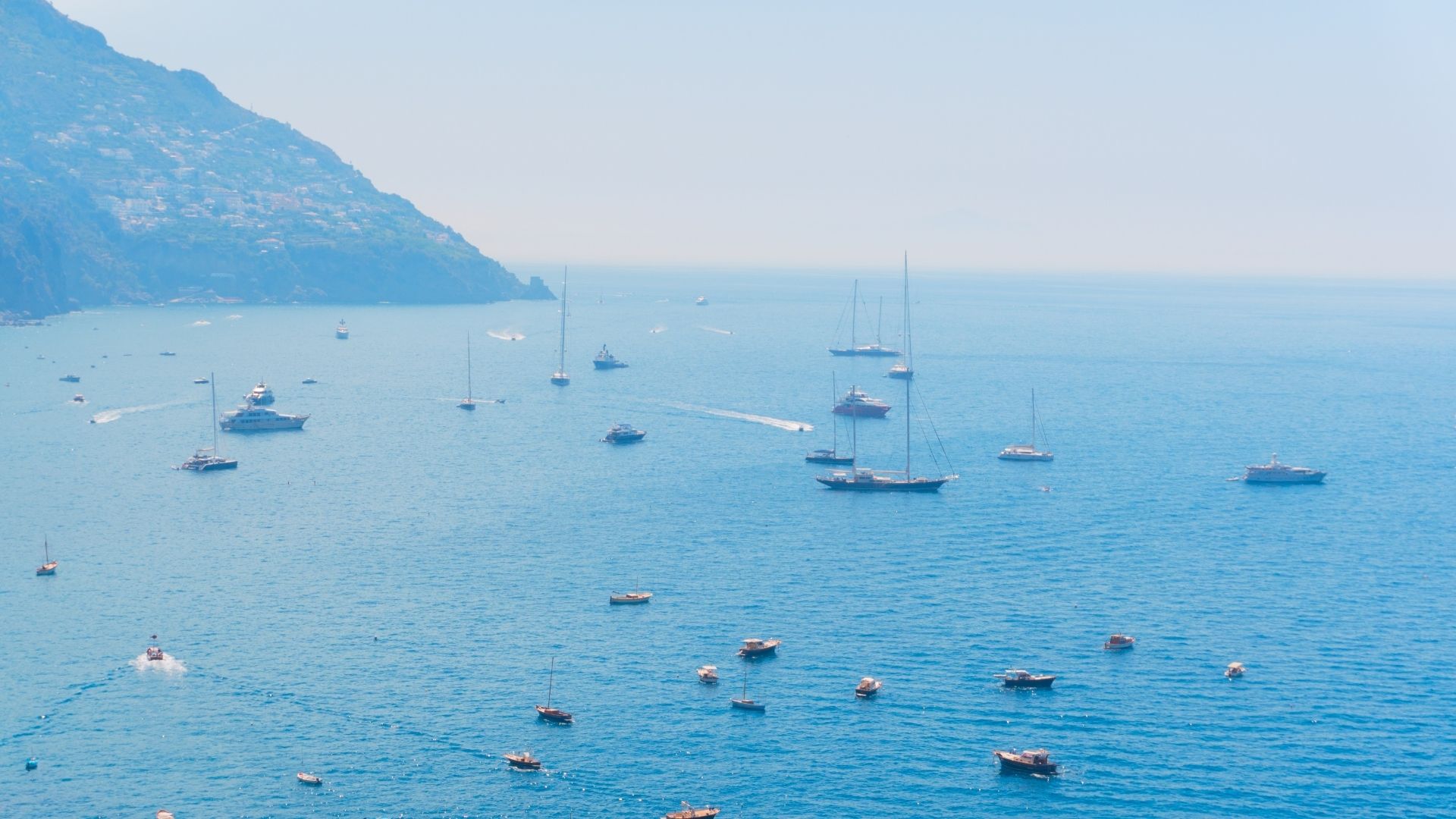
The final full day carries real water under it rather than collapsing into disembark-only logistics. Twenty-five nautical miles back west into the Tigullio — a longer run than the rest of the week, but the only meaningful return mileage on the round-trip itinerary — with a swim stop along the way if the weather cooperates. Sestri Levante's Baia del Silenzio is the standard choice if conditions allow; Punta Manara, the rocky promontory between Sestri and Riva Trigoso, is the alternative.
By late afternoon the yacht is back in the Gulf of Tigullio. Santa Margherita gives the group the calmer overnight; Portofino works if the harbor has slots and the group wants a second pass at the basin. Larger motor yachts unable to fit inside Portofino's breakwater anchor in Paraggi for the final evening. The captain shapes which end of the gulf the night runs out of, based on the morning's departure logistics.
Final-night dinner ashore is the canonical close — Puny in the Portofino piazzetta if the harbor landed it, Trattoria dei Pescatori at Santa Margherita if the night moved west, or one of the Paraggi terraces if the yacht stayed at anchor. One more aperitivo on the aft deck before dinner, one more harbor lit up after sundown, and a last night that still feels like part of the charter rather than its administrative tail.
Day Highlights
Day 8 · Departure
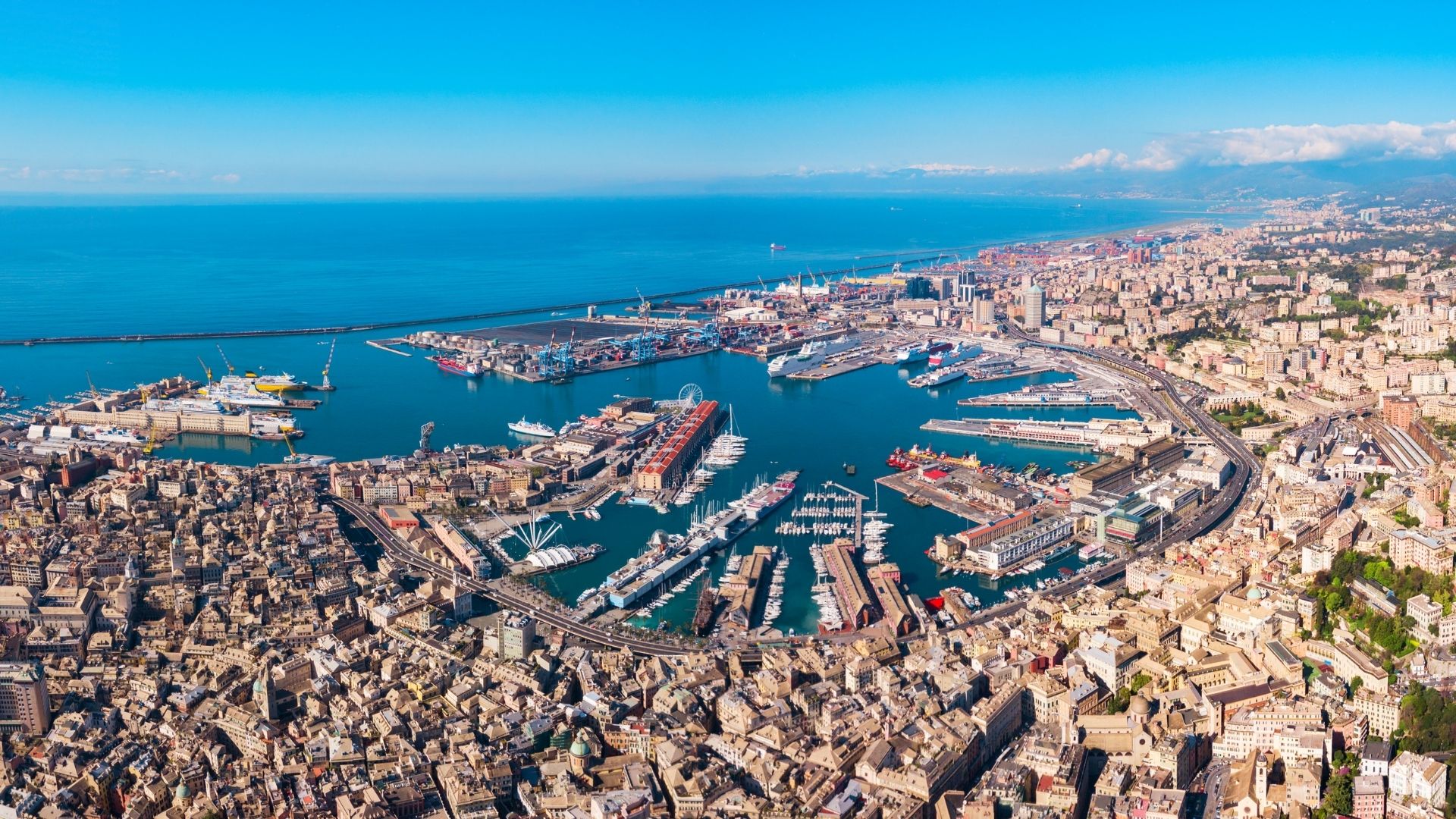
Breakfast aboard, luggage off, and a straightforward transfer to GOA, PSA, or onward rail connections depending on the route and the group's wider Italy plans. From Marina Genoa Aeroporto the airport is fifteen minutes by car. From Santa Margherita or Portofino, the direct train from Santa Margherita-Portofino station reaches Milan in two hours and Rome in five; private transfer to MXP is about three hours by road.
The Italian Riviera week ends the way it usually reads best — compact, polished, and quieter than the larger-name coasts most guests compared it against before booking. Most groups that run this route come back for the Tuscan-archipelago extension on a second trip; the captain and the broker walk through the second-charter options before the group disperses.
Want to share or come back to this voyage later?
Bookmark this voyage →Crewed Itinerary · Italian Riviera & Tuscany
This is the lower-density western-Italy week — less Portofino theater, more Portovenere, Palmaria, Elba, Giglio, and Argentario. The route starts at La Spezia, uses Portovenere and the Gulf of Poets as the hinge out of Liguria, then turns south thirty-plus nautical miles open water into the Tuscan archipelago. About ninety nautical miles end to end, with the trip's only longer passage on day three when the yacht crosses from the mainland to Portoferraio on Elba. By night four the route has fully turned into a Tuscan-islands charter — Napoleon's exile harbor on Elba, the medieval hilltop village of Giglio Castello, the Argentario peninsula closing the southern arc.
It is the version of the coast most repeat-Mediterranean charterers ask for once they know they do not need every headline Cinque Terre stop. Motor yachts and well-found sailing yachts both work — the southern crossings are exposed enough that hull length and stabilization matter, but distances stay manageable. The Tuscan archipelago is a national park (Parco Nazionale dell'Arcipelago Toscano), the largest marine park in Europe, with seven islands and tighter anchoring controls than the Ligurian side; the captain books permits and buoys where required.
Seven nights, roughly ninety nautical miles, from La Spezia through Portovenere and Palmaria into the Tuscan archipelago — Elba, Giglio, and Argentario — and back. The trip-distance mix is different from the Liguria-first week: shorter shore-side village exposure, longer anchorage afternoons, two genuine open-water crossings in the southern leg. The full Tuscan archipelago — Elba, Giglio, Pianosa, Capraia, Gorgona, Montecristo, Giannutri — sits in a hundred-kilometer triangle off the Tuscany coast; this charter covers the three islands that work cleanly inside a week.
It is the right route for guests who want the Italian Riviera's village and harbor register without staying pinned to the Cinque Terre postcard corridor. If the brief is famous cliff villages first, the Portofino route is stronger. If the brief is a premium one-way that finishes inside the Côte d'Azur, the Monaco route is the better fit. Anchoring permits inside the marine reserves around Pianosa and Montecristo (effectively closed to charter yachts), and managed anchoring fields around Giglio's east coast and Argentario, are routine and the captain handles them without involving guests.
Day 1 of 7 · La Spezia → Portovenere
The charter begins at Marina Porto Mirabello at La Spezia — the deepwater marina at the head of the Gulf of La Spezia, capable of handling motor yachts up to about ninety meters. Crew meet the group on the dock, walk through the yacht, stow luggage, and cover the chart for the week. La Spezia itself is the country's largest naval base and not a place guests typically spend time; the marina is segregated from the working port and feels its own thing. Lunch on board at the quay while the chef finishes provisioning.
The opening leg is short by design — five nautical miles across the gulf and through the Bocche channel into Portovenere. The gulf gets called the Gulf of Poets — a name that stuck after Percy Shelley drowned in the bay in 1822 and Byron, Mary Shelley, and the Romantic circle kept villas around its edge — and the run across to Portovenere is the cleanest first hour of the week. By mid-afternoon the yacht is stern-to on the Portovenere quay or at anchor off Palmaria across the narrow channel.
The village earns the long stay. The Church of San Pietro sits on the rocky point at the harbor mouth, built in 1198 over a fifth-century basilica that itself replaced a Roman temple to Venus — the name 'Portus Veneris' goes back that far. The Doria Castle rises above the town in tight switchback streets; the climb takes twenty minutes and the view at the top runs from the Cinque Terre cliffs east to the full Gulf of La Spezia opening south toward the Tuscan crossing the route makes on day three. Dinner ashore at Antica Osteria del Carugio for the Ligurian classics, Iseo on the harbor for the day's fish, or tender across to Locanda Lorena on Palmaria for the quieter option.
Day Highlights
Day 2 of 7 · Gulf of Poets and Cinque Terre preview
Morning lift off the Portovenere quay across the Bocche channel into Palmaria's eastern coves. The crossing takes ten minutes; the swim water on the island's east side is the cleanest in the Gulf of Poets, and the rocky shore holds a handful of small beach concessions that work as tender stops. The Locanda Lorena terrace, on the southern end of the island, runs the most reliable lunch option ashore; the western cliffs above hold concrete remains of Italian Navy gun batteries built in the 1940s, when La Spezia was the country's primary naval base.
Lines off mid-afternoon for a northward pass along the Cinque Terre — eight nautical miles up the coast, in close enough to read the five villages clearly from the water but without committing a full shore day to any of them. The villages are stacked north to south as Monterosso, Vernazza, Corniglia, Manarola, and Riomaggiore. Monterosso has the only proper beach. Vernazza is the marquee photograph, with the Belforte tower on the rock. Corniglia sits 100 meters up on a cliff and is the only village not on the water. Manarola and Riomaggiore close the line — both with cliff-stacked architecture, neither big enough for charter-yacht harbor mooring.
The pass works because this route's center of gravity is south, not north. Forcing a shore-day stop here pushes the week's mileage out of shape for the Elba crossing tomorrow. Yacht stern-to back on the Portovenere quay or at anchor in the channel for the second night — the captain calls the overnight based on the morning forecast for the open crossing south. Dinner ashore at Iseo if the quay landed; otherwise aboard at anchor with a Vermentino from the hills above the gulf.
Day Highlights
Day 3 of 7 · Liguria → Elba
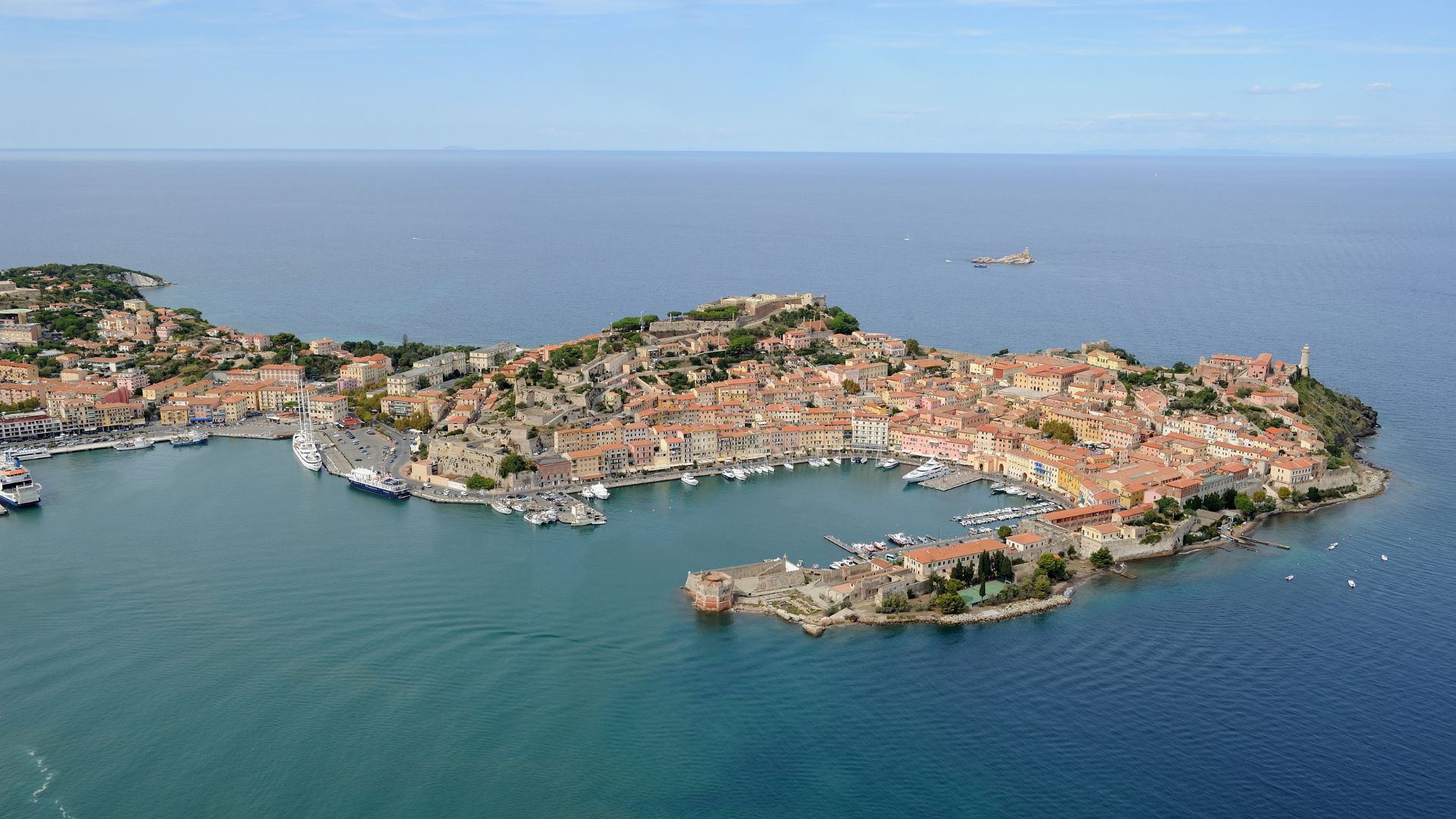
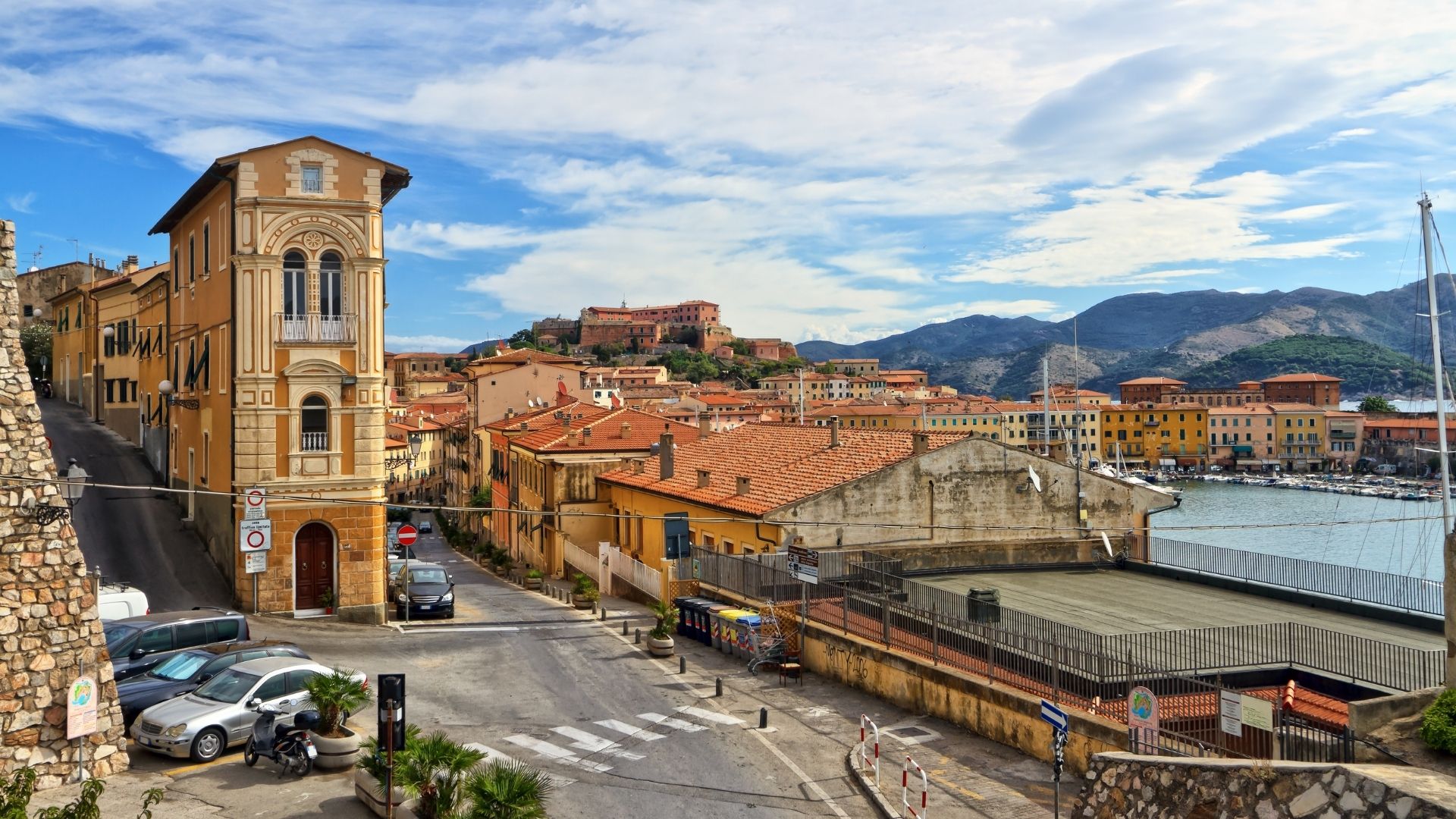
The trip's longest passage and the day that turns the charter into a Tuscan-islands week rather than a Liguria itinerary with a southern footnote. Fifty nautical miles in open Tyrrhenian water from Portovenere to Portoferraio on Elba's north coast, run as a day passage. The captain leaves Portovenere early — the prevailing summer pattern is calm morning seas building into an afternoon thermal — and the crossing takes about five hours on a thirty-knot motor yacht, eight to nine on a sailing yacht with a workable breeze. The chef serves lunch underway; the swim platform stays down at the halfway point if conditions allow.
By mid-afternoon Elba's northern coast comes up — wooded headlands, the granite mass of Capo d'Enfola on the western side of the harbor approach, and Portoferraio itself wedged inside a natural amphitheater harbor. The Medici walls are visible from miles offshore: Cosimo de' Medici fortified the harbor in 1548 with three citadels — Forte Stella, Forte Falcone, and the Linguella tower — that still ring the headland. The town's full name is Cosmopoli on the seventeenth-century maps; the Medici crest is carved above the main gate.
Yacht inside the harbor at Portoferraio for the first night on Elba, or at anchor in one of the south-side coves — Ottone, Bagnaia, Magazzini — if the group prefers a quieter close to a long sailing day. Portoferraio's old town climbs the headland between the two main citadels in switchback streets; the Palazzina dei Mulini at the top is Napoleon's residence from his ten-month exile here in 1814–15, with his personal library and exile correspondence still on display. Dinner ashore at Stella Marina near the ferry pier for the day's catch, or at Osteria Libertaria on the harbor street for the more local register. The captain books either.
Day Highlights
Day 4 of 7 · Elba full day
Elba deserves a full day. The island is the third-largest in Italy after Sicily and Sardinia, with two-hundred kilometers of coastline and the most varied terrain in the Tuscan archipelago — granite peaks above Marciana, iron-ore mines on the east coast (the source of the island's name in antiquity), wooded slopes south of Portoferraio, and a string of beach coves around the southwestern tip. The full day usually splits between a Portoferraio shore morning and a south-coast anchorage afternoon, with the yacht repositioning once.
Morning ashore in Portoferraio — the walk up to the Palazzina dei Mulini for the Napoleon residence (forty-five minutes round trip), or the Villa San Martino on the inland side of town for the Napoleonic country house with its Egyptian-themed Gallery of the Sphinxes. The old town runs the better food in the lower streets: Sotto la Vela for the fish, Da Lido on the harbor for the lunch-hour pasta. Back aboard by early afternoon, lines off, and a short hop around the headland to the south coast.
Anchor for the afternoon at Cavoli or Fetovaia on the southwestern end of the island — both are protected, both have transparent water over sand bottoms, both run a small beach concession ashore. The water here reads more like Sardinia than mainland-Italy coastal; granite slabs underwater, color in the seven-to-ten-meter range. Late afternoon move back north to Marciana Marina for the evening — a working harbor town on the north coast, under the sixteenth-century Forte di San Giacomo, where the dinner options run from Capo Nord (waterfront, fish-of-the-day) to Osteria del Noce inland for the local cuisine. Porto Azzurro on the east coast is the alternative overnight; the captain steers based on the morning crossing toward Giglio.
Day Highlights
Day 5 of 7 · Elba → Giglio
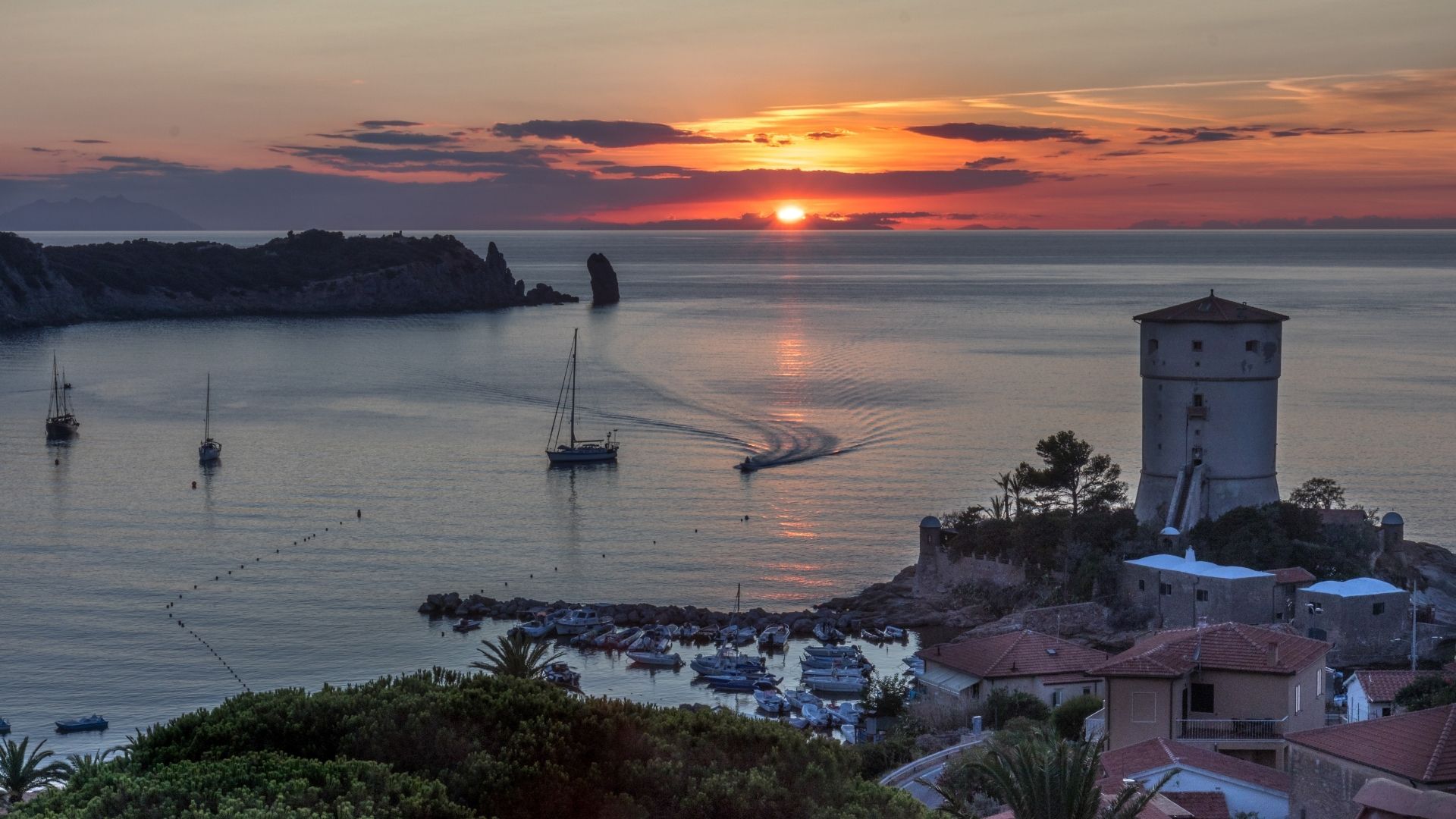
Thirty-nautical-mile open-water leg south from Elba to Giglio. The crossing runs across the open Tyrrhenian — Pianosa and Montecristo are visible on the eastern horizon as the yacht passes the mid-channel, both inside the marine reserve, both effectively closed to charter yachts — and lands at Giglio's east coast in about three to four hours. The captain shapes the timing around the morning's wind forecast; the route works under sail most clean days and is comfortable under power on the rest.
Giglio Porto is a smaller working harbor than Portoferraio — about eight charter-yacht stern-to slots, all of which book early in peak season. Larger motor yachts anchor in Cala delle Cannelle or Cala dell'Allume on the east coast; both are protected, both have transparent water and small beach concessions ashore. The island's geology is granite, not the limestone of mainland Tuscany, and the swim water reads more like Sardinia than the Tyrrhenian average. The Costa Concordia ran aground just north of the harbor in January 2012; the wreck is gone, the shoreline shows almost no trace, and the village has reset around the same fishing and tourism rhythm it ran on before.
The defining shore-side move on Giglio is up. Giglio Castello sits 400 meters above the harbor — the medieval hilltop village fortified by the Aldobrandeschi family in the eleventh century, walled in stone, and walked through in twenty minutes inside the gates. Taxi or rental car up; the road switchbacks for about six kilometers. Dinner ashore in Giglio Castello at Da Maria for the local specialties (panficato, Giglio's dried-fruit cake; rabbit and wild fennel pasta) or back down at the harbor at La Vecchia Pergola for fish on the quay. The night sky from the village above is dark enough that the Tyrrhenian's stars run noticeably brighter than they do over the mainland.
Day Highlights
Day 6 of 7 · Giglio → Argentario
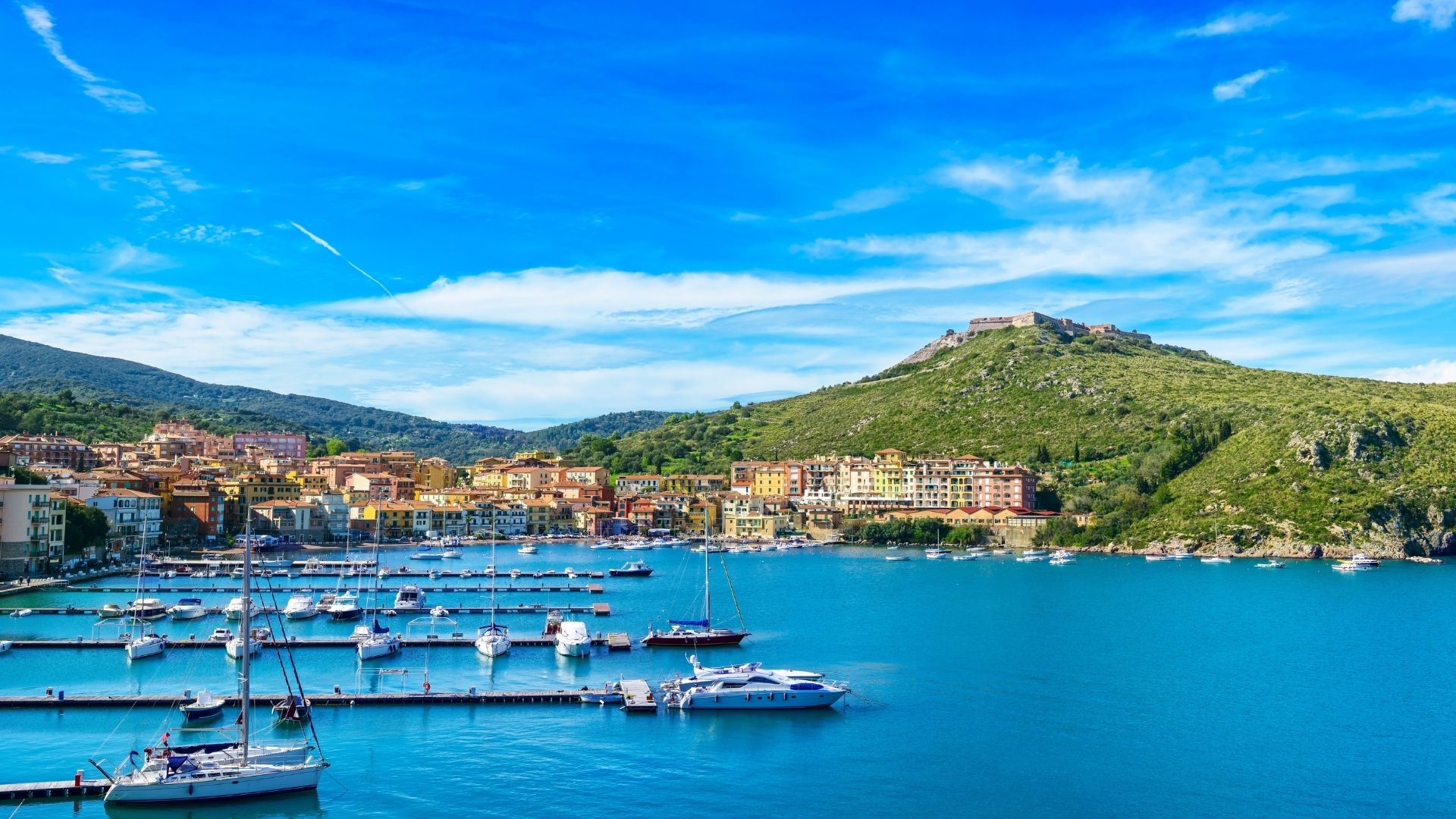
Eleven nautical miles east from Giglio across the channel to the Argentario peninsula, the southern hinge of the cruising ground. The Argentario is geographically a former island connected to the Tuscan mainland by three sand tomboli — Feniglia, Giannella, and the inner causeway through the lagoon of Orbetello — that filled in over a few thousand years of silt deposition; from the water and from the yacht it still reads like an island. The peninsula has two harbor towns on opposite sides: Porto Ercole on the eastern flank, Porto Santo Stefano on the northwestern, with the wooded mass of Monte Argentario rising between them.
Porto Ercole is the more polished of the two and the standard overnight on this route. The Spanish fortified the harbor in the sixteenth century with three forts — Forte Filippo, Forte Stella, and Rocca Aldobrandesca — that still ring the headland; the harbor itself sits below them in a tight basin. Cala Galera, the marina a kilometer south, holds the larger berth slots when Porto Ercole's quay is full. Caravaggio died on this beach in July 1610, having landed sick from a fever after his last journey from Naples; the small church on the harbor street, San Sebastiano, holds the local memorial, and the disputed gravestone sits in the parish cemetery on the hillside above.
Dinner ashore is the canonical close to the Tuscan leg. Il Pellicano sits in its own bay south of Porto Ercole — the hotel restaurant runs two Michelin stars and the reservation needs a week in season — and is the high-register option. La Capannina on Porto Ercole's main street is the working-village option for the day's fish; Osteria dei Nobili Santi a block back from the harbor is the quieter middle. The yacht stays in port for the night; the Argentario's lit-up forts above the harbor close the day better than most anchorages do.
Day Highlights
Day 7 of 7 · Closing day
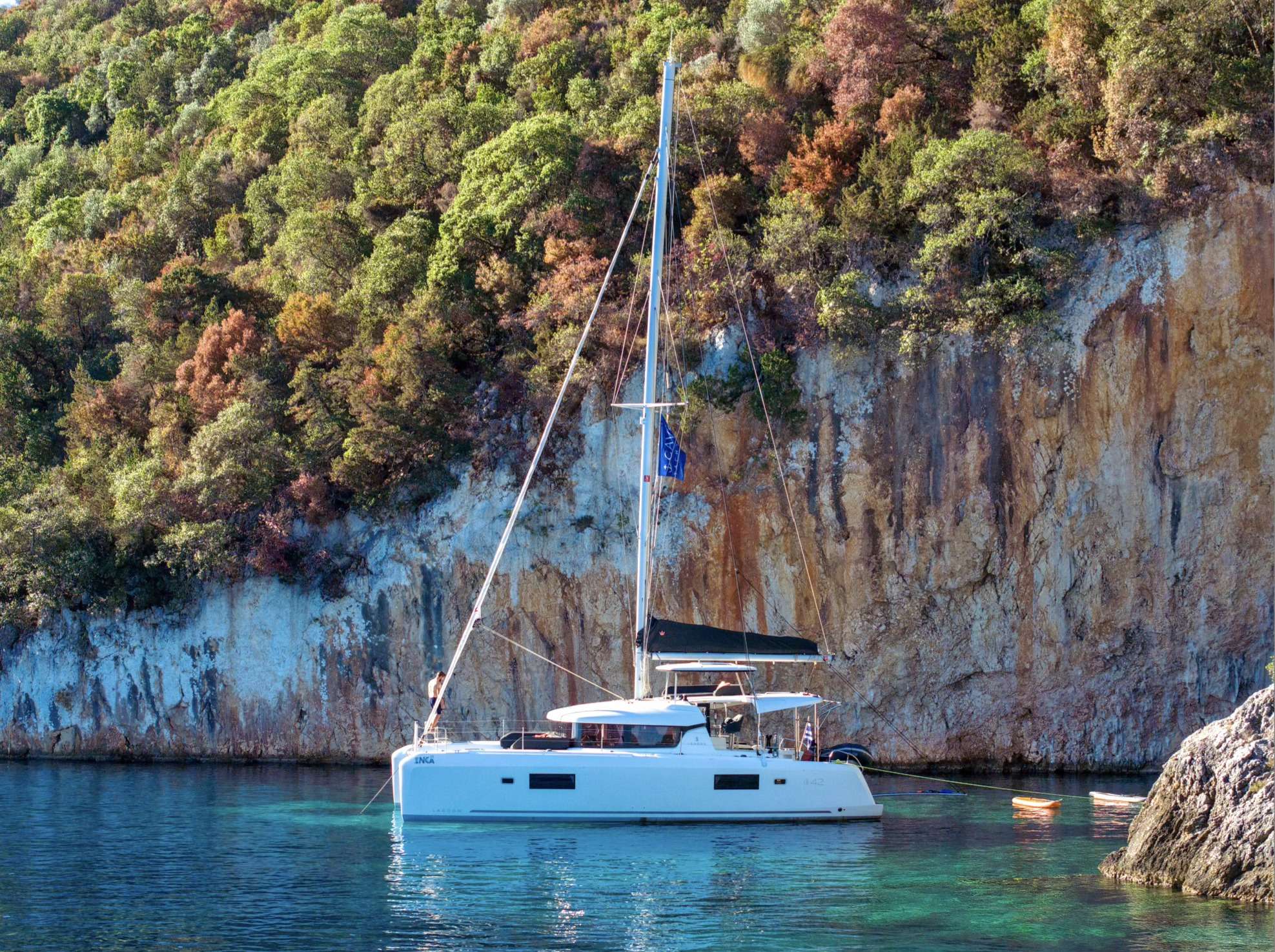
The closing day stays a real charter day rather than collapsing into administrative logistics. Morning move south or east to Giannutri — the southernmost of the Tuscan archipelago's seven islands, about eight nautical miles south of Argentario — for the cleanest swim anchorage of the week. Giannutri is inside the marine reserve, anchoring on seagrass is prohibited, and the captain takes one of the permitted buoys on the western coast. Roman ruins at Cala Maestra (the second-century-AD villa of the Domitia gens) sit a short hike above the cove and are reachable by tender-and-walk if the group wants the history extension; the swim water below is the cleanest stop of the southern leg.
Mid-afternoon lift north toward the disembarkation stage. The route can run back via Giglio or directly north toward Elba and Portoferraio, depending on where the captain has the yacht positioning for the Saturday turnover. Most yachts on this circuit stage their final night at Cala Galera (Argentario), Portoferraio, or back at Marciana Marina on Elba — the closing overnight is shaped by the logistics of the morning transfer to PSA, GOA, or Rome's FCO if the group's onward plans run south.
Final-night dinner ashore at wherever the yacht has staged — Il Pellicano if the night closed back at Argentario, Stella Marina at Portoferraio, or one of the smaller harbors at the captain's discretion. One last aperitivo on the aft deck before dinner, one last harbor lit up after sundown, and a last night that still belongs to the trip. The week's mileage adds up to about ninety nautical miles end to end — modest by Mediterranean standards, and the right answer for a coast that rewards anchorage rhythm and harbor evenings over long passages.
Day Highlights
Day 8 · Departure
Breakfast aboard, luggage off, and a transfer out through La Spezia, Pisa, Genoa, or one of the Tuscan ferry-and-rail combinations depending on where the yacht staged the final night. From Marina Porto Mirabello at La Spezia, PSA is forty-five minutes by car and the direct train to Milan runs about three hours. If the yacht disembarks at Portoferraio on Elba — a working option for some routes — the standard transfer is the one-hour ferry across to Piombino on the Tuscany mainland, then rail or road south to Rome (about three hours) or north to Pisa (one hour).
The route lands exactly where it should — quieter than the Liguria-first week, broader than most guests expect from an 'Italian Riviera' charter, and built around three genuinely-different islands rather than a single Cinque Terre cluster. Most groups that run this version come back for either the Liguria classic on a second trip or the longer chain into the Pontine Islands south of Argentario; the captain and broker walk through the second-charter options before the group disperses.
Want to share or come back to this voyage later?
Bookmark this voyage →Crewed Itinerary · Italian Riviera & Tuscany
This is the premium westbound one-way — Portofino and the Ligurian coast giving way to San Remo, Menton, Cap Ferrat, Villefranche, and Monaco over seven nights, finishing at Port Hercule. About ninety nautical miles end to end, with a clean step-up of register from Italian boutique harbor to the western-Mediterranean's most concentrated megayacht corridor. The charter starts quieter and ends louder by design.
It is a motor-yacht-leaning week. The route is most persuasive when the transitions stay comfortable, the western-Liguria pushes feel like cruising rather than passages, and the finish at Monaco reads effortless rather than hard-won. Modern motor yachts in the 24–60 m range dominate the inventory; larger superyachts work for the second half. Cannes Film Festival (mid-May) and the Monaco Grand Prix (last weekend of May) lock the corridor's berths twelve-plus months out — the captain and broker walk through event-window pricing and berth availability before the date is locked.
The route begins in Liguria and ends in Monaco — Portofino, the Tigullio coast, San Remo, Menton, Cap Ferrat, Villefranche, and Port Hercule over roughly ninety nautical miles. The Italian half carries village character, Ligurian food, and boutique harbor scale. The French half brings the corridor's larger brand-cachet finish — the Belle Époque villas of Cap Ferrat, Villefranche's deep-water royal anchorage, and Monaco itself.
It is the strongest route for guests who know they want the Riviera but are still deciding what kind of Riviera week they mean — and for groups using the charter as a milestone trip where the Monaco arrival is part of the brief. If the brief stays purely Italian, the Portofino round-trip is cleaner. If the brief is full Côte d'Azur from the start, the dedicated French Riviera page is the right entry point. This route's value is the contrast, not the geography alone.
Day 1 of 7 · Genoa → Portofino
Embarkation in Genoa keeps the first day efficient and gives the charter a clean run into Portofino by afternoon. Marina Genoa Aeroporto sits fifteen minutes from GOA airport; Porto Antico in the city is the alternative for groups arriving the day before. Crew meet the group on the quay, walk through the yacht, stow luggage, and cover the chart for the week. The chef finishes provisioning while lunch goes on the aft deck.
Sixteen-nautical-mile opening leg east around the Portofino promontory and into the harbor on the far side. The basin holds about a dozen stern-to slots inside the breakwater; larger motor yachts anchor in Paraggi Bay, the emerald cove a short tender ride west. The first night matters for the rest of the route: this is where the trip establishes what the Italian side of the comparison means before it gives way to the French finish.
Aperitivo ashore at La Gritta American Bar — the harbor terrace and the most photographed first-evening drink on the Italian Riviera — with the Belmond Splendido visible on the cliff west. Dinner in the piazzetta at Puny or Da U Batti, the two long-standing harbor restaurants the village is built around; the captain books either. The yacht is in by 6pm, the village walks in five minutes from the gangplank, and the contrast between Portofino and Monaco gets set from day one.
Day Highlights
Day 2 of 7 · Tigullio pocket coast
The route gives itself one more Ligurian day rather than leaving Portofino as a drive-by symbol. Morning lift around the headland to San Fruttuoso, the abbey cove on the Portofino peninsula's seaward side. The abbey was built by Benedictine monks in the tenth century; the Doria family took it over in the thirteenth and rebuilt the church in its current form. There is no road in — the only access is by boat or by a two-hour hike from Portofino — so the cove holds a few dozen yachts on a hot Saturday and almost nothing else. Tender ashore for the abbey walk, swim along the rocky shore, and an offshore look at the Christ of the Abyss bronze, the figure submerged seventeen meters down since 1954 as a memorial to divers lost at sea.
Lunch on board at anchor or tender ashore to Da Giovanni, the small trattoria at the foot of the abbey wall. Afternoon swim stop at Paraggi — Bagni Fiore's old terrace above the bay or Langosteria Paraggi's beach club at the water's edge — before the short hop into Santa Margherita Ligure for the second overnight. The harbor is the larger of the two on the Gulf of Tigullio, with a working fishing fleet, the Imperiale Palace on the eastern side of the bay, and a real high street of focaccerie and trattorias inland from the quay.
Letting the Italian half feel earned is what makes the French half read as contrast instead of overwrite. Dinner ashore at Trattoria dei Pescatori for the day's fish, Skipper Bar a block back from the harbor for a quieter night, or Da O Vittorio inland for the local Ligurian specialties — pansoti with walnut sauce, the focaccia di Recco that the village above bakes daily, trofie al pesto. The night before the long western push works best as a slower close, not as preparation for the next morning's mileage.
Day Highlights
Day 3 of 7 · Westbound Liguria
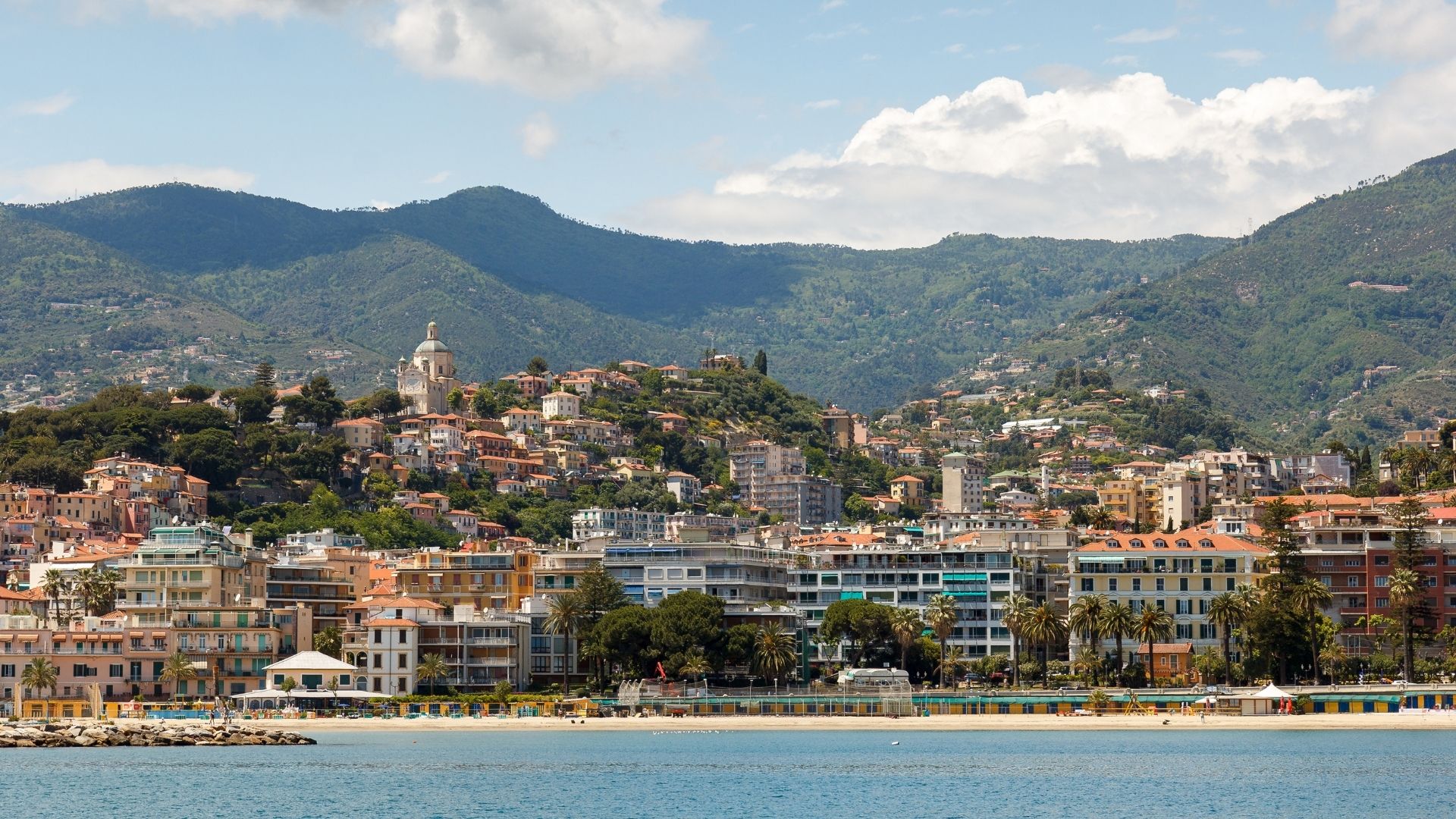
The itinerary's longest leg and the one that pushes the route out of the tight Portofino pocket and into the broader western-Liguria coast. About seventy-five nautical miles from Santa Margherita to San Remo, run as a day passage — the captain leaves Santa Margherita early to clear the open coast before the afternoon southwest thermal builds. On a thirty-knot motor yacht the leg is about three hours of cruising; on a slower yacht it's five to six. Lunch on the aft deck underway; the swim platform comes down at one of the offshore swim stops along the way if the conditions allow.
The coast between Genoa and Imperia is the less-known stretch of Liguria — Cervo, Diano Marina, Alassio, and Imperia itself, all working Italian seaside towns rather than the harbor villages of the eastern half. The route passes them rather than stopping; this is the day that earns the rest of the western finish. By mid-afternoon the yacht is at San Remo, the largest harbor town between Genoa and the French border and the practical hinge between the two Riviera identities.
Portosole is the marina that takes the larger motor yachts; the older Porto Vecchio in the city center holds smaller berths and the local fishing fleet. The Casino di San Remo above the old town opened in 1905 and is still in operation — a Belle Époque survivor with the original gaming rooms and a separate club room for high-stakes baccarat. The medieval quarter, known locally as La Pigna because the streets spiral up the hill in a pine-cone pattern, walks in fifteen minutes from the harbor. Dinner ashore at Pesce Pazzo on the harbor for the day's catch, Da Vittorio above town for the local Ligurian, or Buca di Bacco for the working-village register the harbor still holds.
Day Highlights
Day 4 of 7 · Into France
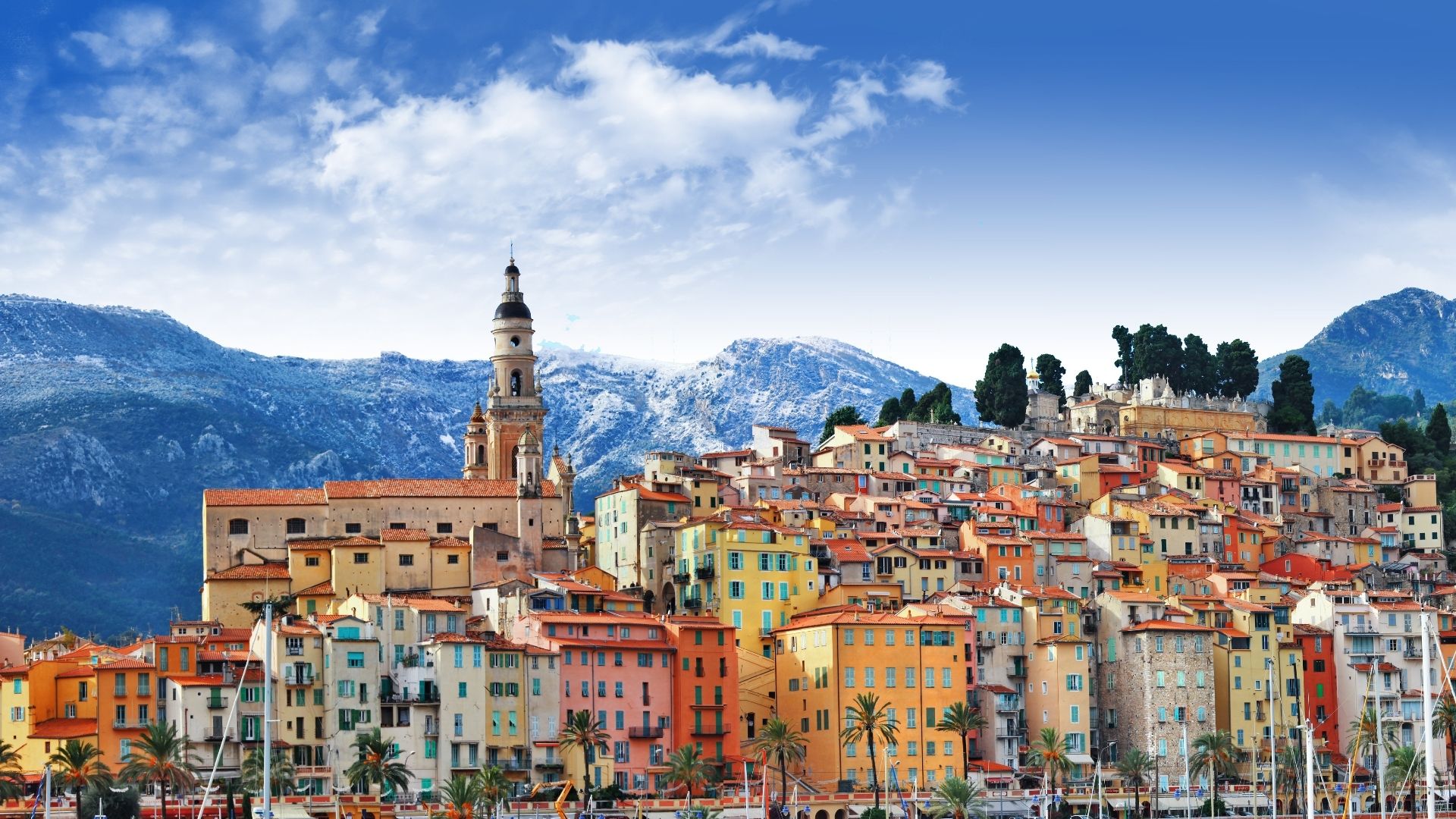
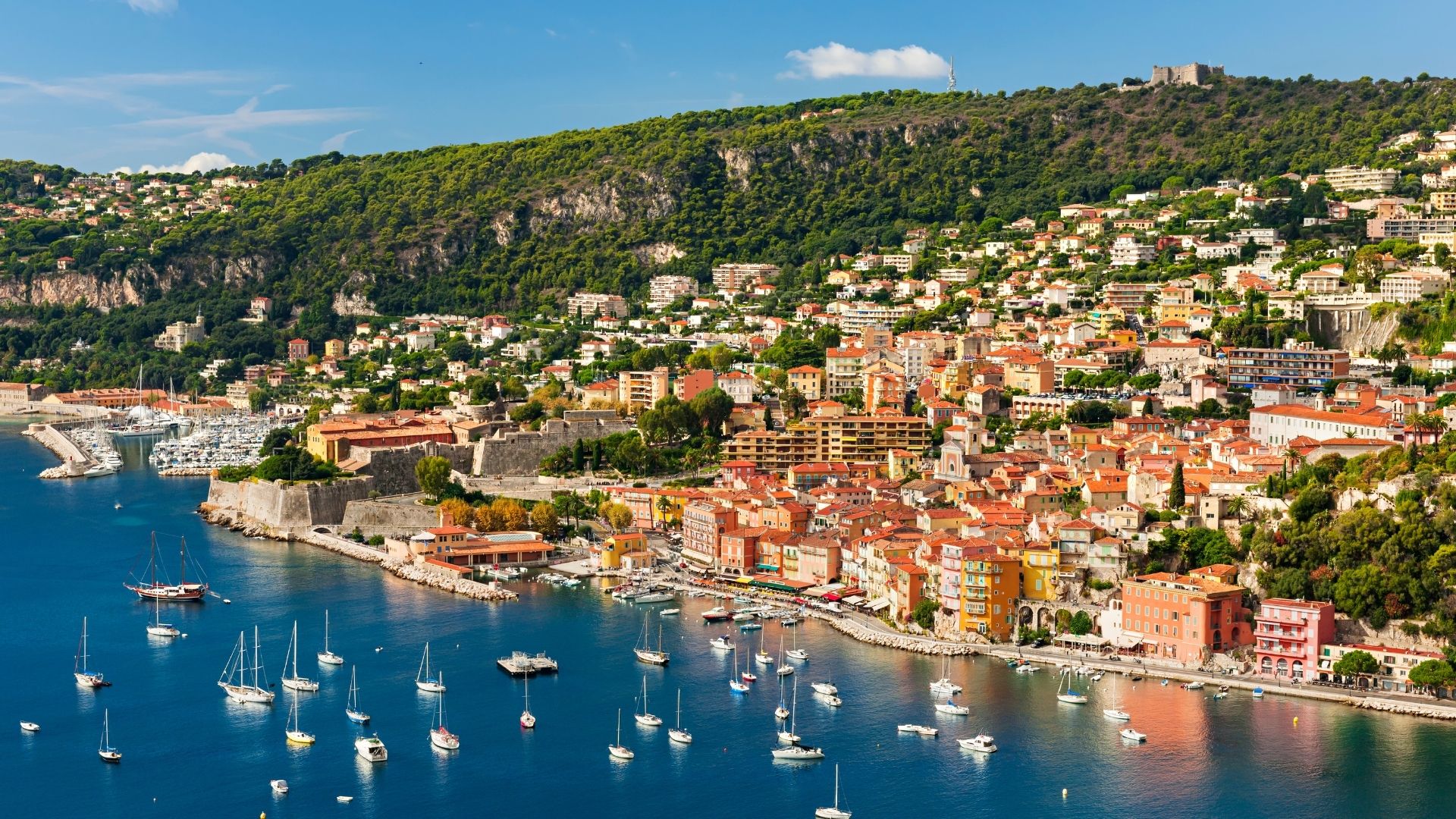
Twelve-nautical-mile crossing from San Remo into France. The maritime border outside Menton is a Schengen internal line for yacht-charter purposes, so there is no customs stop; the captain logs the transit and the yacht slides across. Menton itself is the easternmost French Riviera town and reads as the cleaner first French overnight than jumping straight to Monaco — the architecture shifts visibly to Belle Époque pastel, the language flips to French, the food register turns toward Niçoise (pissaladière, the classic anchovy-onion flatbread; barbajuan, the Monegasque fried-pastry; socca, the chickpea pancake from Nice), and the coastline begins to read explicitly as Côte d'Azur without yet committing to maximum-density glamour.
Yacht inside Menton's Vieux Port or anchored offshore in the Garavan bay east of town. The harbor is small — about thirty berths suitable for charter yachts — so larger motor yachts go to anchor. Cocteau's footprint shapes most of the shoreline: the Bastion on the harbor is the seventeenth-century fortress Cocteau converted into his own museum in 1957, decorated inside and out by his own hand; the Jean Cocteau Museum proper opened on the seafront in 2011 and holds the larger collection. The Salle des Mariages in the town hall — also painted by Cocteau, also walkable from the quay — is the third stop if the schedule allows.
The gardens are the other Menton register. Jardin Serre de la Madone and the Botanic Garden Val Rahmeh both walk reachable from the harbor; the lemon orchards above town are the source of the city's annual Lemon Festival each February. Dinner ashore at Mirazur — Mauro Colagreco's three-Michelin restaurant on the cliff above town, named World's Best Restaurant in 2019 — is the high-register option (reservation needs a month in season); Le Riva on the harbor for the day's fish; A Braijade Meridiounale inland for the local Niçoise grilling. The captain books either.
Day Highlights
Day 5 of 7 · Cap Ferrat coast
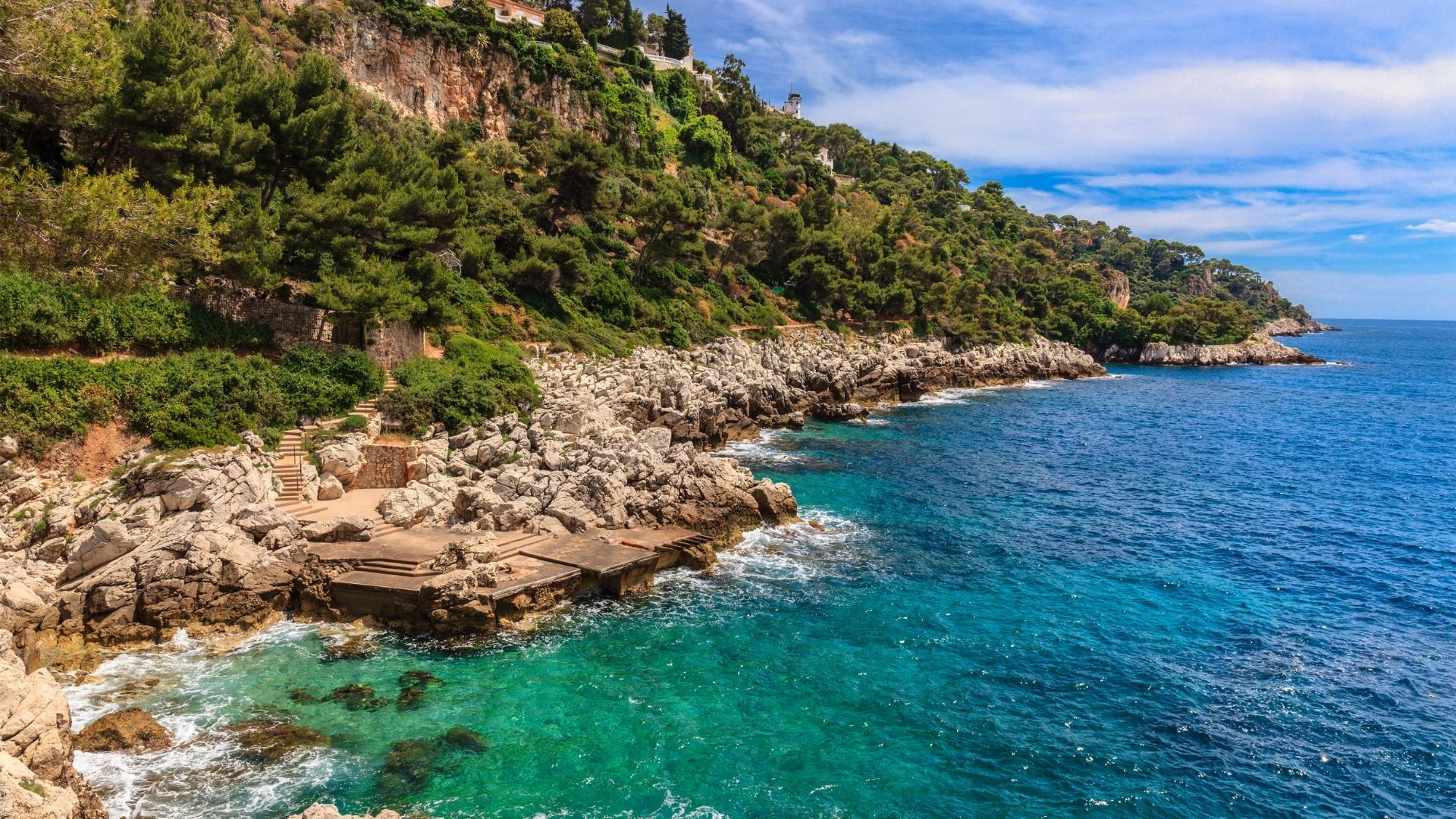
Cap Ferrat is the visual pivot of the itinerary. Fourteen nautical miles west from Menton along the coast, passing Cap Martin (Le Corbusier's modernist cabin, the Cabanon, still on the shore east of Roquebrune) and Monaco's eastern flank without stopping yet. The coast becomes overtly villa-lined and visibly Belle Époque — pink and ochre estates on cliffs above small private coves, most built between 1880 and 1914 when the Riviera was the wintering ground for Russian and British nobility. The Cap Ferrat peninsula juts south between Beaulieu and Villefranche; the cliff road around it is the most concentrated stretch of legacy-money waterfront in France.
Morning visit at Villa Ephrussi de Rothschild — the pink Belle Époque villa built in 1912 by Béatrice de Rothschild on the northern saddle of the peninsula, donated to the Académie des Beaux-Arts in 1934 and open to visitors. Nine themed gardens on the property; the view from the loggia runs east to Beaulieu and west to Villefranche. Lunch ashore at Plage Paloma on the peninsula's south side (the Grand-Hôtel du Cap-Ferrat runs the more polished beach club; Paloma is the smaller cove restaurant) or back on board at anchor in one of the small coves on the peninsula's east coast.
Afternoon move into Villefranche Bay — about three nautical miles further west. The bay is the deep-water anchorage that has hosted naval fleets since the seventeenth century (originally the Russian fleet, later the British, then the US Sixth Fleet through the early 1960s); today it is the yacht-only anchorage of choice between Monaco and Nice. The bay drops to ninety meters fifty meters off the beach, which means even large motor yachts anchor close in. Villefranche-sur-Mer itself runs along the eastern shore; the Chapelle Saint-Pierre on the harbor was painted inside by Cocteau in 1957 (the third Cocteau stop on the route), and the medieval Rue Obscure — a fifteenth-century vaulted passageway under the old town — runs from the church to the citadel. Dinner ashore at La Mère Germaine on the quay or aboard at anchor for the quieter night.
Day Highlights
Day 6 of 7 · Monaco approach day
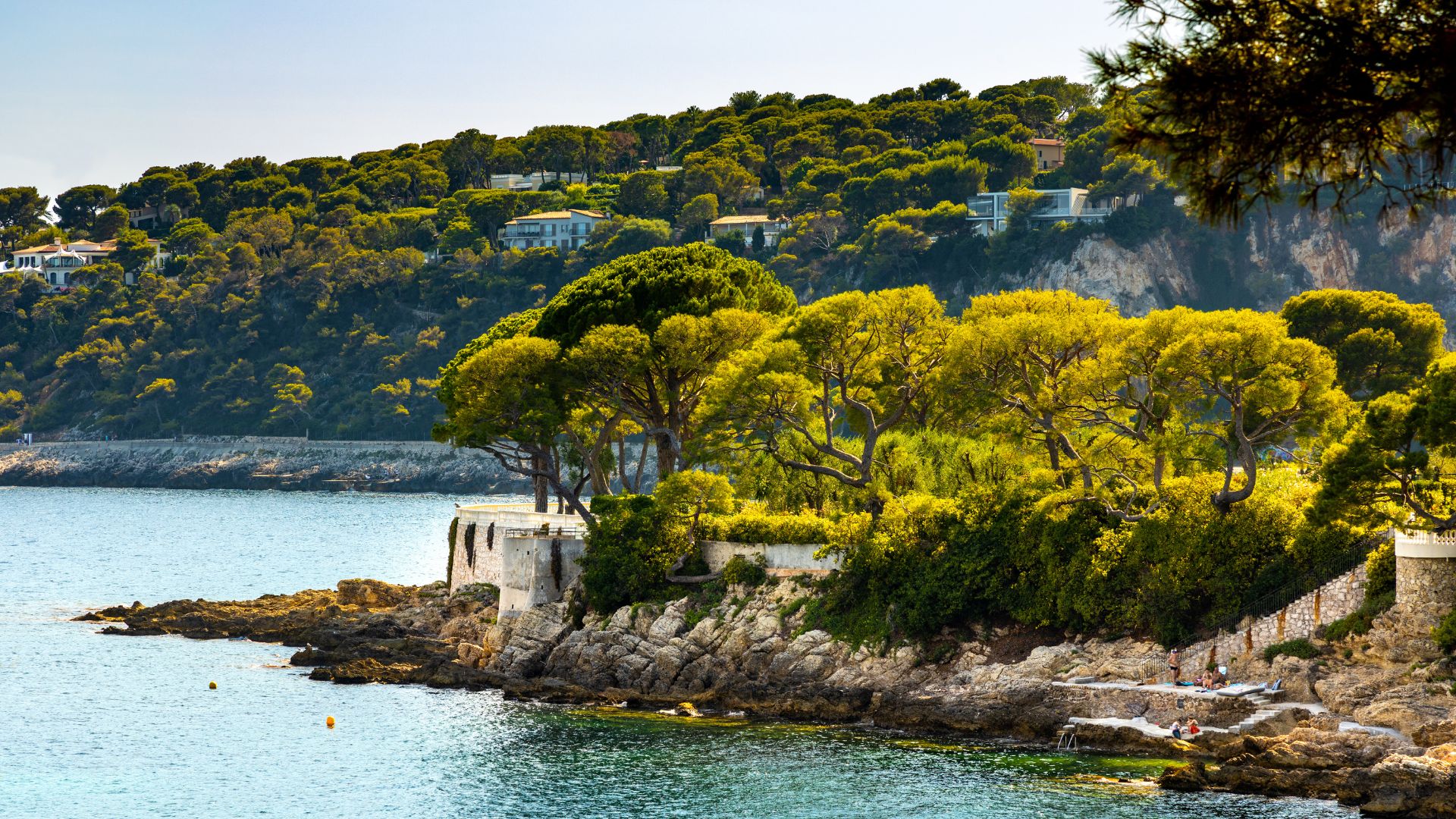
The route's final full cruising day keeps Monaco close without burning the whole day on arrival theater. Eight nautical miles along the coast east of Villefranche covers Beaulieu-sur-Mer, the cliff village of Èze, Cap d'Ail, and the western approaches to Monaco — all of it visible from the deck, none of it requiring a full stop. The captain stages the yacht for the night at anchor off Cap d'Ail, in Beaulieu's small marina if a berth opened up, or at one of the deep-water anchorages along the corniche.
Èze is the headline shore-side move if the group wants one. The medieval perched village sits 425 meters above the water on a cliff face, walked up either by the Nietzsche Path (the philosopher wrote Thus Spoke Zarathustra walking this hill in 1883) from Èze-Bord-de-Mer or by car from the corniche road. The Château de la Chèvre d'Or — a Relais & Châteaux hotel built into the village's medieval walls — runs two Michelin stars and is the high-register lunch option; the Jardin Exotique d'Èze at the village summit holds the cleanest panoramic view between Nice and Monaco. Twenty minutes back down to the yacht when the visit is done.
Late afternoon back at anchor, paddleboards down, the chef working on dinner, the corniche coast on one side and Monaco's high-rises just visible east. Dinner aboard for the most part — the Cap d'Ail and Èze quayside dining is thinner than Villefranche's or Beaulieu's, and the next night belongs to Monaco anyway. The yacht is in position for the short morning approach into Port Hercule, the last leg already short enough that the timing belongs to the group rather than the route.
Day Highlights
Day 7 of 7 · Final arrival
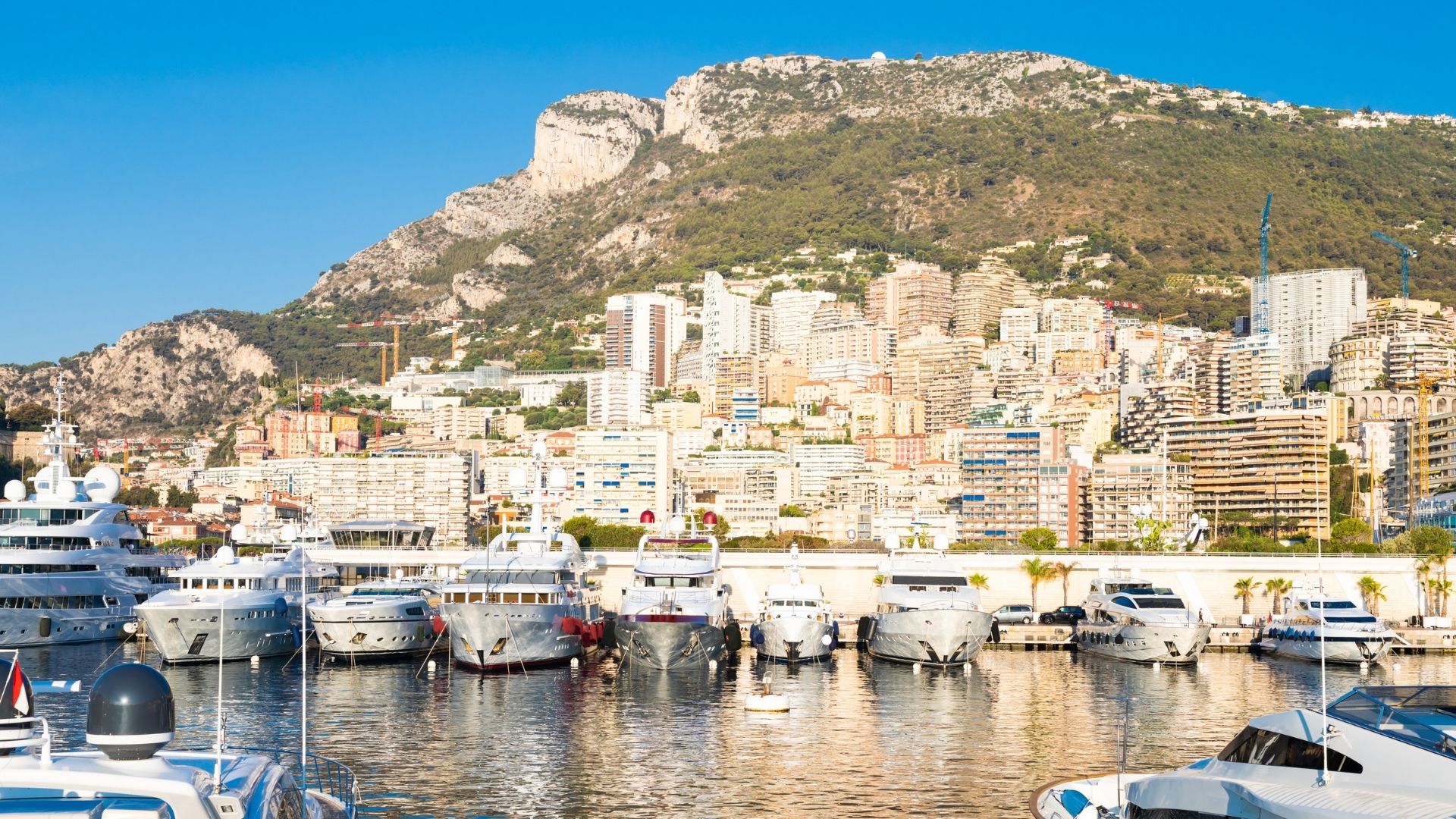
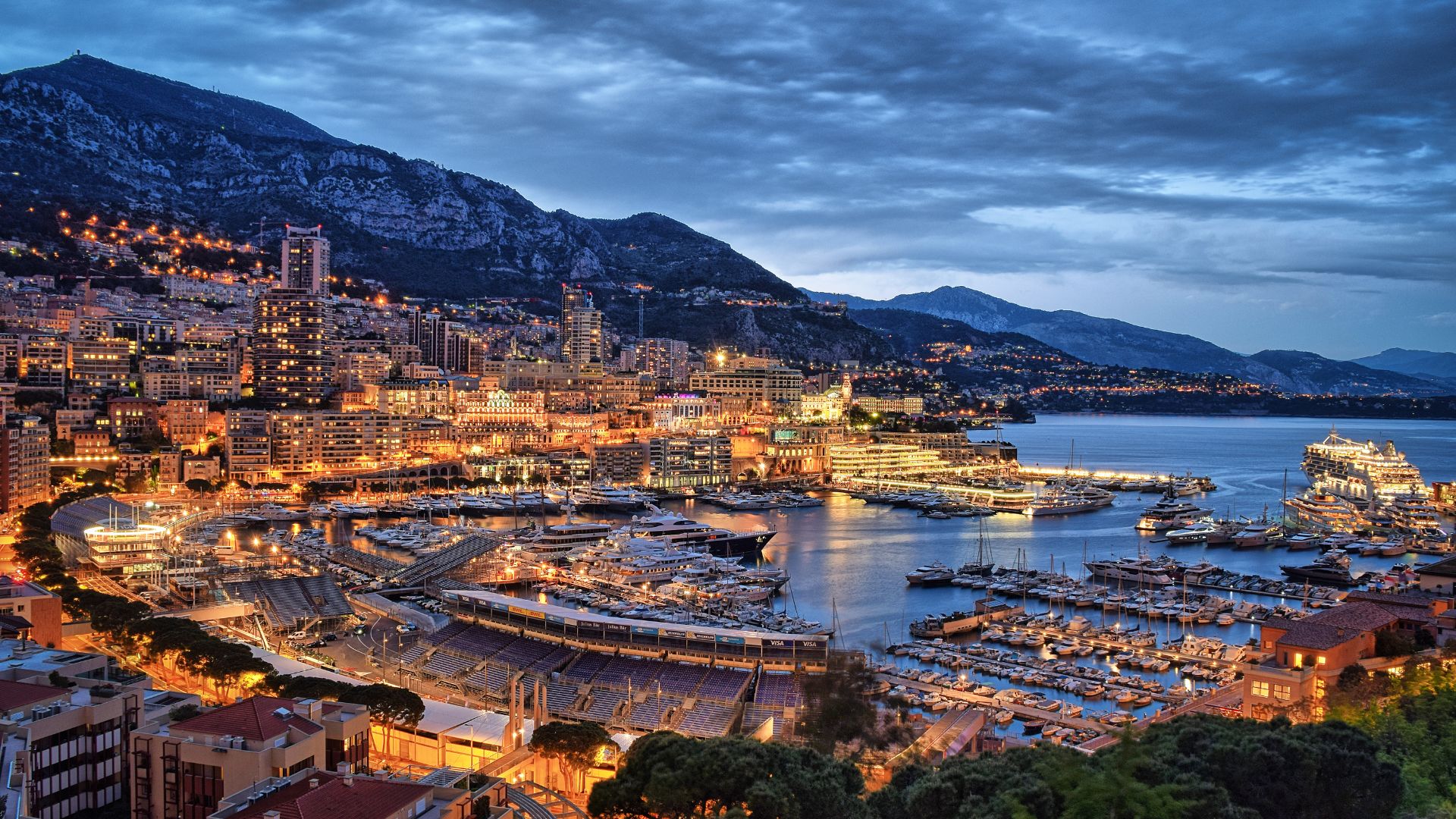
Short five-nautical-mile approach east into Port Hercule. The harbor is Monaco's primary deep-water anchorage and one of the most concentrated megayacht infrastructure points in the Mediterranean — Quai Antoine 1er takes yachts to 110 meters, the digue (the floating concrete breakwater extending the harbor's eastern wall) handles the largest superyachts, and the smaller Quai des États-Unis on the western side takes the 24–60 m motor yacht charters. Berth assignments are tight in season; the broker confirms the slot before arrival. The yacht is in by late morning, the principality walks in three minutes from the gangplank.
The Yacht Club de Monaco — Norman Foster's 2014 building on the harbor's eastern side, with its terraced superstructure modeled on a luxury motor yacht — runs the most concentrated yacht-industry social scene in the world during season. Day visitors can't access the club itself, but the Quai Antoine 1er promenade runs underneath it and is one of the better walks of the week. Lunch at La Marée on Quai des États-Unis (waterfront, fish, classic), Maya Bay (Asian fusion, the lunch-into-cocktail-hour option), or Hôtel de Paris's Le Grill rooftop for the Casino-Square register. Casino de Monte-Carlo, the Hôtel de Paris itself, and the Place du Casino sit ten minutes uphill from the harbor.
Final-night dinner ashore is the canonical close — Le Louis XV at the Hôtel de Paris (Alain Ducasse, three Michelin, the high-register Monaco move; reservation needs a month), Cipriani Monte-Carlo, or Beefbar for the meat-led closing. Aboard at the quay for the quieter final night also works; the harbor lights and the Grand Prix turn-one chicane visible from the aft deck do most of the closing work. The contrast lands here: the trip that started in a Portofino piazzetta walkable in five minutes ends at Port Hercule, where the country itself walks in twenty.
Day Highlights
Day 8 · Departure
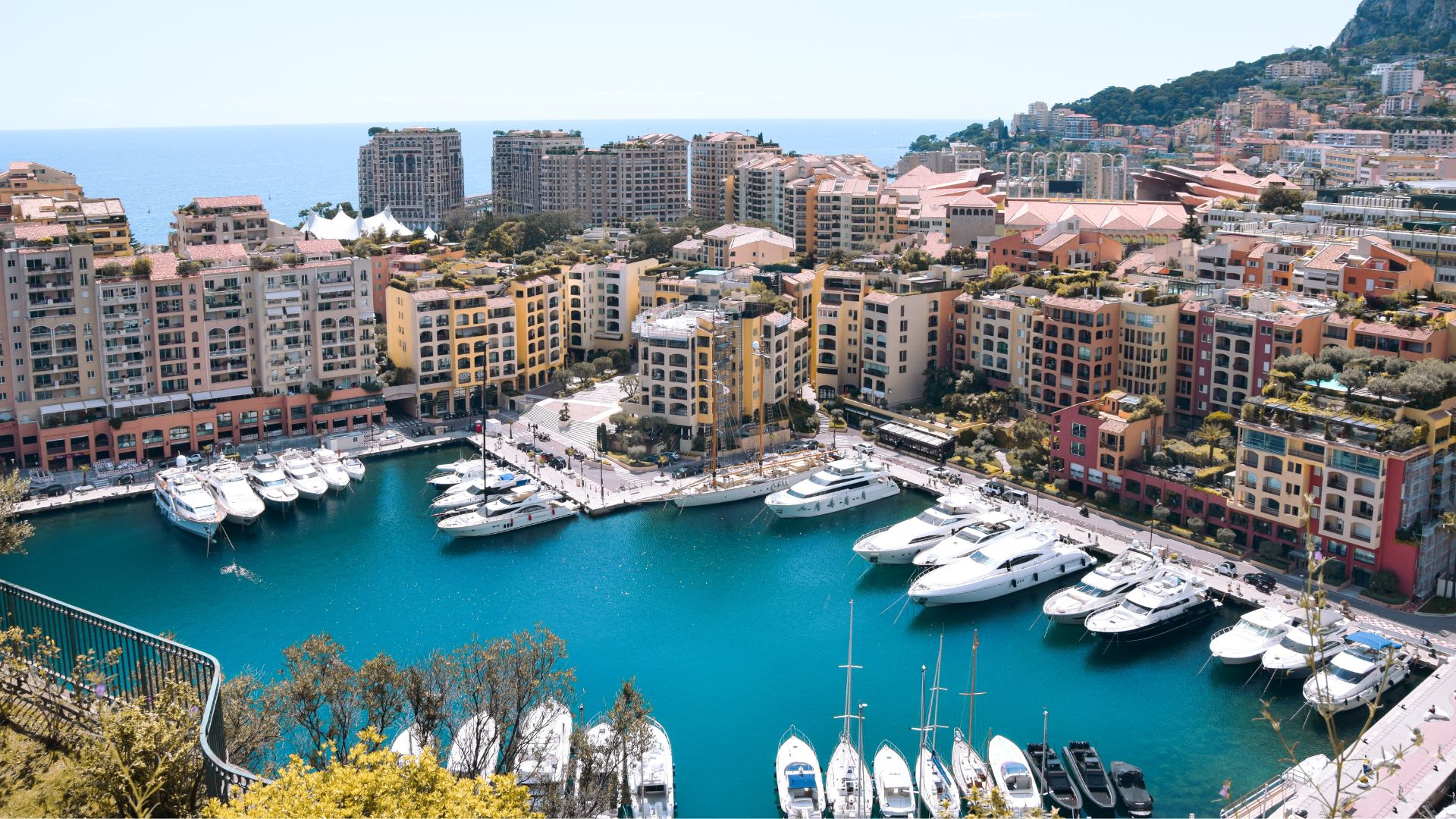
Breakfast aboard at the Port Hercule quay, luggage off, and onward transfer by car or helicopter depending on the group's wider plans. Nice (NCE) is the standard airport for departures — thirty minutes by car along the corniche, six minutes by Monacair helicopter from the Fontvieille heliport on twenty-minute shuttle intervals. Direct trains from Monaco-Monte Carlo station reach Marseille in three hours, Paris by TGV in six. Some groups stay on in Monaco for one or two nights at the Hôtel de Paris, Hôtel Métropole, or Hôtel Hermitage; the captain coordinates the timing with the next guests' embarkation if so.
The route works because it does not ask one coast to impersonate the other. Portofino stays Portofino; Monaco stays Monaco. Each register keeps its own scale and its own food identity, and the yacht is the only thing that connects them. Most groups that run this version come back for either a longer Italian charter on the second trip or a full Côte d'Azur week on the dedicated French Riviera page; the captain and broker walk through the second-charter options before the group disperses.
Want to share or come back to this voyage later?
Bookmark this voyage →
When to go, what it costs, and how to get there — the practical answers guests ask before booking a Italian Riviera & Tuscany crewed yacht charter.
July and August are the busiest weeks of the Italian Riviera season. Air temperatures sit in the high 80s, water temperatures peak in the mid-70s, and the Cinque Terre villages run their highest day-traffic numbers of the year — most arriving by train and ferry. A yacht's value on this coast is most obvious at peak: clean morning access before the day crowds settle in, and quiet evening harbors once the day-trippers thin out. Portofino and Santa Margherita's harbor pier slots book out months ahead at peak. Most days move from morning passages to long afternoons at anchor, with dinner ashore once the ferry crush has eased. Rates run twenty-five to forty percent above the shoulders.
June and September are the strongest weeks of the year for this coast. Air temperatures sit in the high 70s to low 80s, water temperatures are in the mid-70s in June and stay swimmable into early October, and the villages keep their lived-in rhythm without tipping into August density. Rates fall twenty to thirty percent from peak. Late May and early October are workable for guests with calendar flexibility — slightly cooler water, fewer ferries, and quieter restaurants — with one caveat: Cannes Film Festival in mid-May and the Monaco Grand Prix in late May lock the western Mediterranean motor-yacht fleet far in advance for any one-way crossing into the Côte d'Azur.
$30,000–$120,000 per week
Crewed yacht charters on the Italian Riviera typically run from $30,000 to $100,000+ per week base rate, depending on yacht size, build year, and crew. The Riviera fleet skews lower than the Costa Smeralda or Capri ends of Italian inventory — the compact distances and harbor-stern-to culture support catamarans and small-to-mid motor yachts comfortably. The model is plus-expenses, not all-inclusive. Base rate covers the yacht and crew only. Food, beverages, fuel, marina dockage, harbor and port fees, water and electric, and any premium berthing are funded through an Advance Provisioning Allowance (APA), pre-funded at thirty to thirty-five percent of the base rate and reconciled at trip end. Crew gratuities run ten to fifteen percent in the Mediterranean — lower than the Caribbean's fifteen to twenty — paid directly to the captain on disembarkation. Italian charter VAT is twenty-two percent on the base rate (the country's standard rate, in place since November 2020) and is added at booking. Charters run Saturday to Saturday as standard. The Italian Riviera-to-Monaco one-way is taxed under Italian VAT regardless of where the charter ends; tax is calculated where the week begins.
About chartering in the Italian Riviera & Tuscany.
We charter across the Western Mediterranean. Here are some other excellent alternatives.

Four cruising grounds in one country — the Amalfi Coast, Sardinia & Corsica, Sicily and the Aeolian Islands, the Italian Riviera south to Tuscany. The hardest part of an Italy yacht charter is choosing which week to take first.

Cliff-stacked villages and long lunches the tender reaches — the Italian summer the boat makes possible, anchored under the Faraglioni at sundowners and tied up in Amalfi by midnight.

Costa Smeralda granite coves and Bonifacio's white-cliff citadel six miles apart, the Strait between two islands cruised in a single afternoon — the Mediterranean the Italians and French keep mostly for themselves.

Stromboli erupting off the anchorage at Panarea, the Greek theatre at Taormina with Etna smoking behind, and the Cappella Palatina at Palermo's Norman Palace — the Mediterranean's only active-volcano cruising ground and the Italian week most guests book the second time they come.

Monaco's Port Hercule, Cap Ferrat's villa coast, Cannes and Antibes in the central corridor, and Saint-Tropez at the west end. The French Riviera is the western Mediterranean's maximum-glamour yacht week: shorter passages, premium dockage, Michelin density, and the visible harbor theater guests are usually booking on purpose.

Mallorca's mountain coast on one side, Ibiza and Formentera's clearer water and sand-bottomed coves on the other, and the yacht-only Cabrera National Park between them — three weekly itineraries from Palma or Ibiza Town.
Fill out our quick form and we'll dive into your unique preferences — from adventure-packed itineraries to pampered escapes. Whether you're a seasoned voyager or new to charters, we'll tailor recommendations just for you.
With over fifteen years of experience, we'll match you with the yacht that fits your style, group, and itinerary. We work directly with the captains and crews across our list — so the recommendation is built around the right boat-and-crew fit for your week, not whatever's easiest to book.
Once your yacht is booked, we'll take care of logistics: paperwork, reminders, and personalized resources to help you plan. From arrival planning to must-visit spots, we'll make your charter as seamless as it is unforgettable.

What to Expect on a Private, Crewed Yacht Charter
Learn what makes crewed yacht charters extraordinary: personalized service, gourmet dining, and endless opportunities for adventure and relaxation.

How Does the Booking Process Work?
Our team handles every detail of your crewed yacht charter booking, ensuring a seamless experience from your first inquiry to setting sail.

Crewed Yacht Charter Pricing Explained
Understand what a crewed charter costs, the types of pricing, and what is included / not included.

Logistics: Proven Travel Plans for a Stress-Free Start
Plan your journey to your crewed yacht charter with ease. Tips on flights, transfers, and logistics for a stress-free start to your vacation.
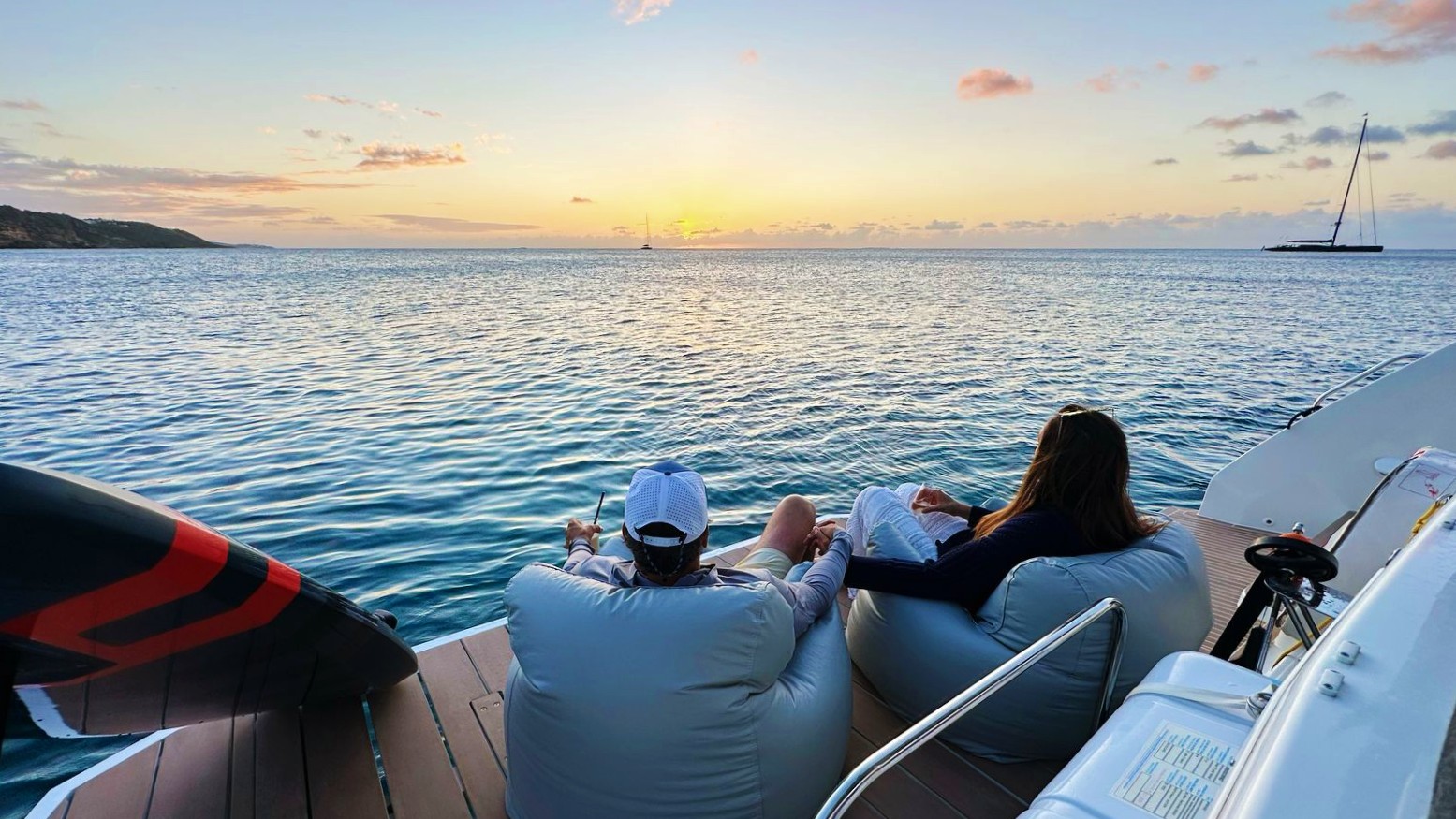
Honeymoon Yacht Charters
Start your marriage on a private yacht. Explore secluded beaches, gourmet dining, and unforgettable sunsets in the Caribbean.
Family Yacht Charters
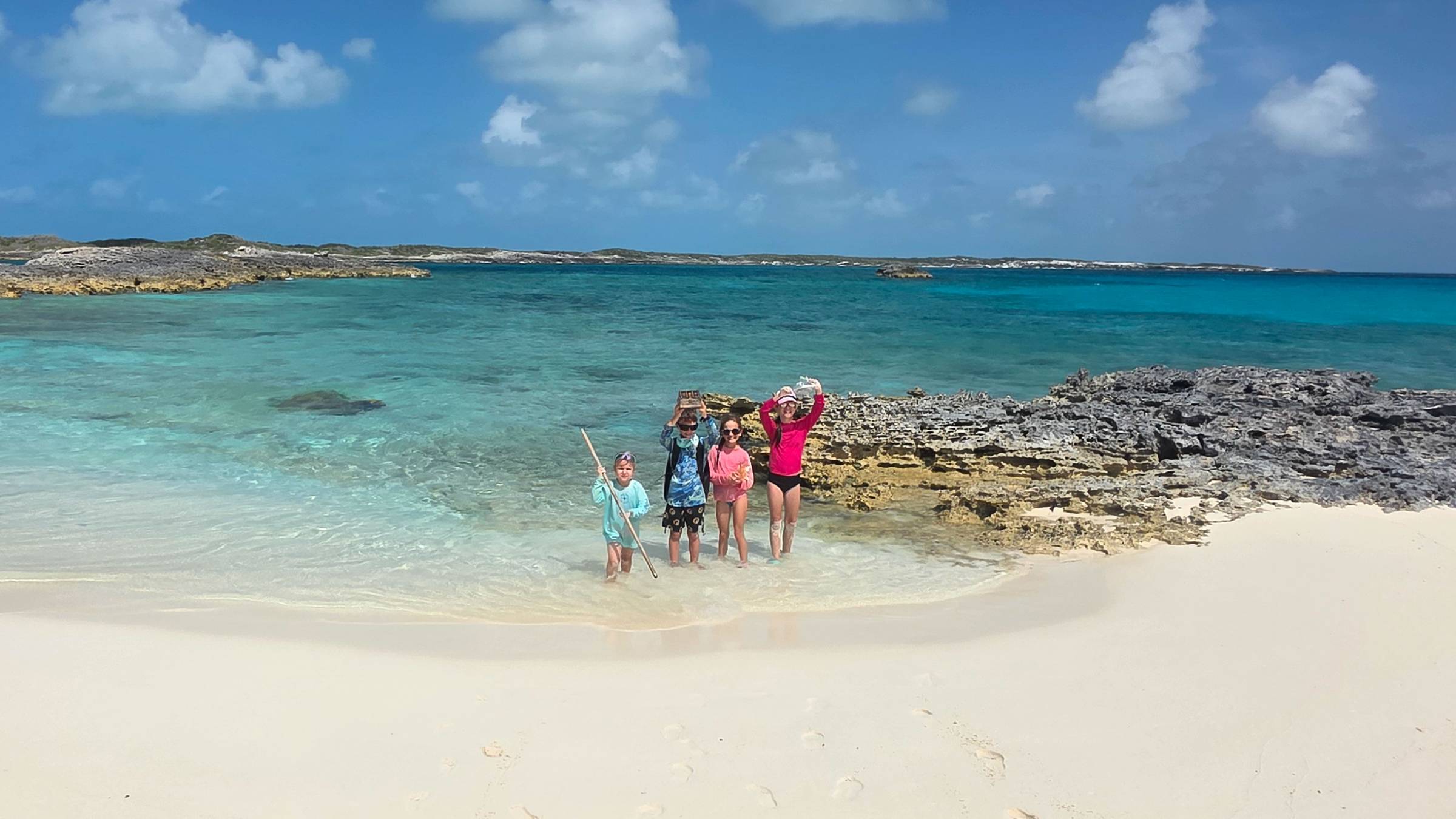
A crewed yacht charter is perfect for families of all ages. Safe, fun, and fully catered — your kids will never forget it.

Crewed Charter FAQ
Get answers to common questions about crewed yacht charters, from pricing and tipping to what's included and what to pack.

BVI Crewed Yacht Charters
The British Virgin Islands are the #1 crewed charter destination in the Caribbean. Short sails, protected waters, and world-class anchorages.

BVI Crewed Charter Guide
Everything you need to know before your BVI crewed catamaran charter — pricing, packing list, sample itinerary, and getting there.
Bahamas Crewed Yacht Charters
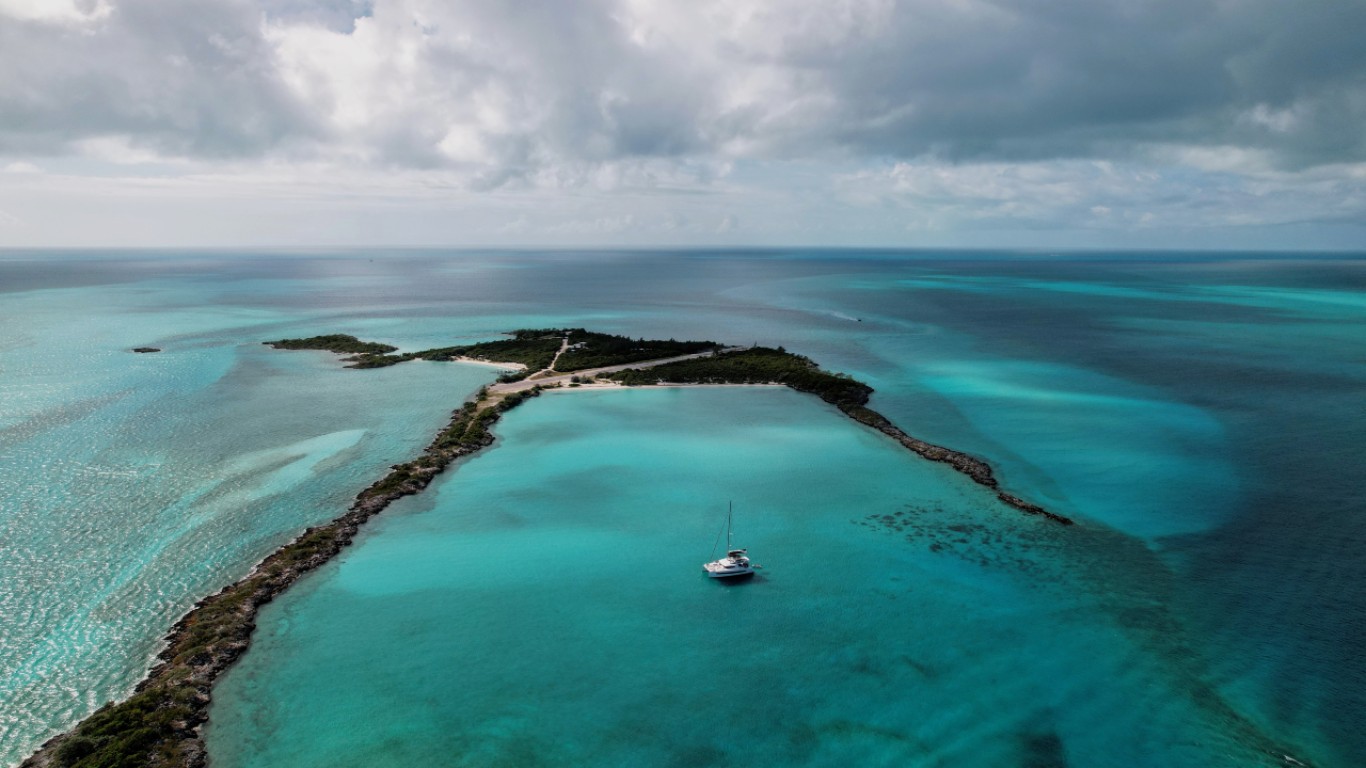
Explore the Exumas on a private crewed yacht. Swimming pigs, sandbars, and some of the clearest water on earth.
Caribbean Crewed Yacht Charters
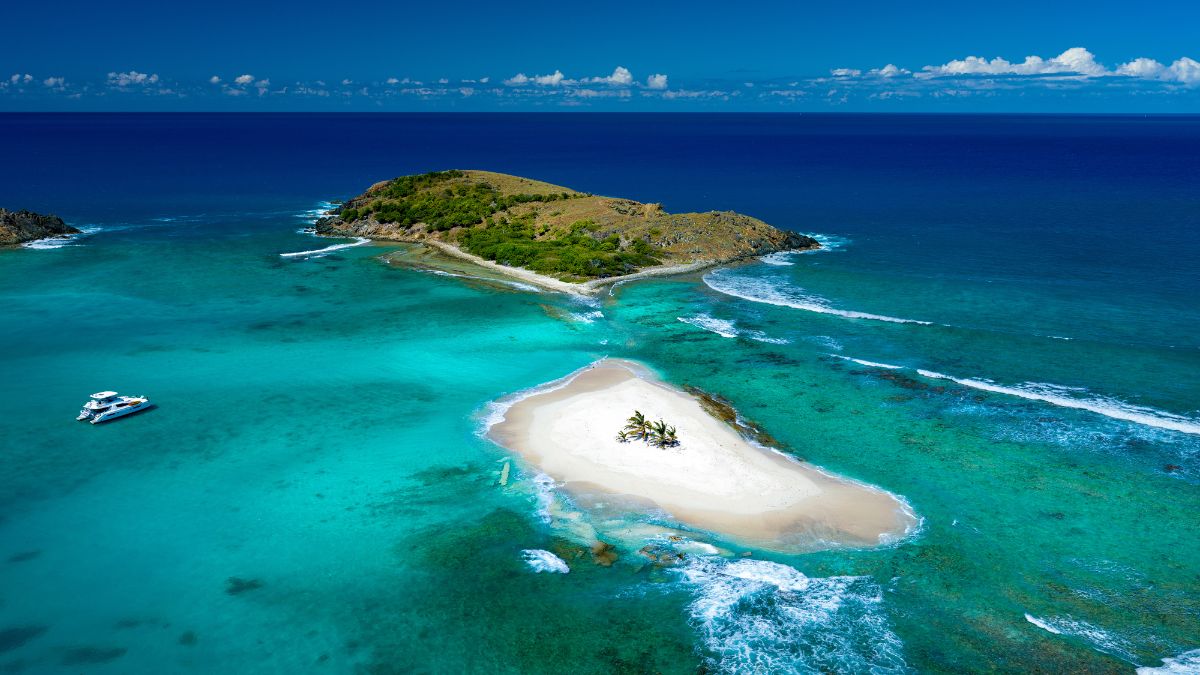
All-inclusive crewed charters across the Caribbean — BVI, Bahamas, USVI, St. Martin, Antigua, and beyond.