Crewed Itinerary · Italian Riviera & Tuscany

Italian Riviera and Tuscan Archipelago Yacht Itinerary

This is the lower-density western-Italy week — less Portofino theater, more Portovenere, Palmaria, Elba, Giglio, and Argentario. The route starts at La Spezia, uses Portovenere and the Gulf of Poets as the hinge out of Liguria, then turns south thirty-plus nautical miles open water into the Tuscan archipelago. About ninety nautical miles end to end, with the trip's only longer passage on day three when the yacht crosses from the mainland to Portoferraio on Elba. By night four the route has fully turned into a Tuscan-islands charter — Napoleon's exile harbor on Elba, the medieval hilltop village of Giglio Castello, the Argentario peninsula closing the southern arc.

It is the version of the coast most repeat-Mediterranean charterers ask for once they know they do not need every headline Cinque Terre stop. Motor yachts and well-found sailing yachts both work — the southern crossings are exposed enough that hull length and stabilization matter, but distances stay manageable. The Tuscan archipelago is a national park (Parco Nazionale dell'Arcipelago Toscano), the largest marine park in Europe, with seven islands and tighter anchoring controls than the Ligurian side; the captain books permits and buoys where required.

Duration
7 nights · Sat–Sat
Base
La Spezia (round-trip or soft one-way)
Plan your Italian Riviera & Tuscany charter Custom-tailored to your dates and group preferences
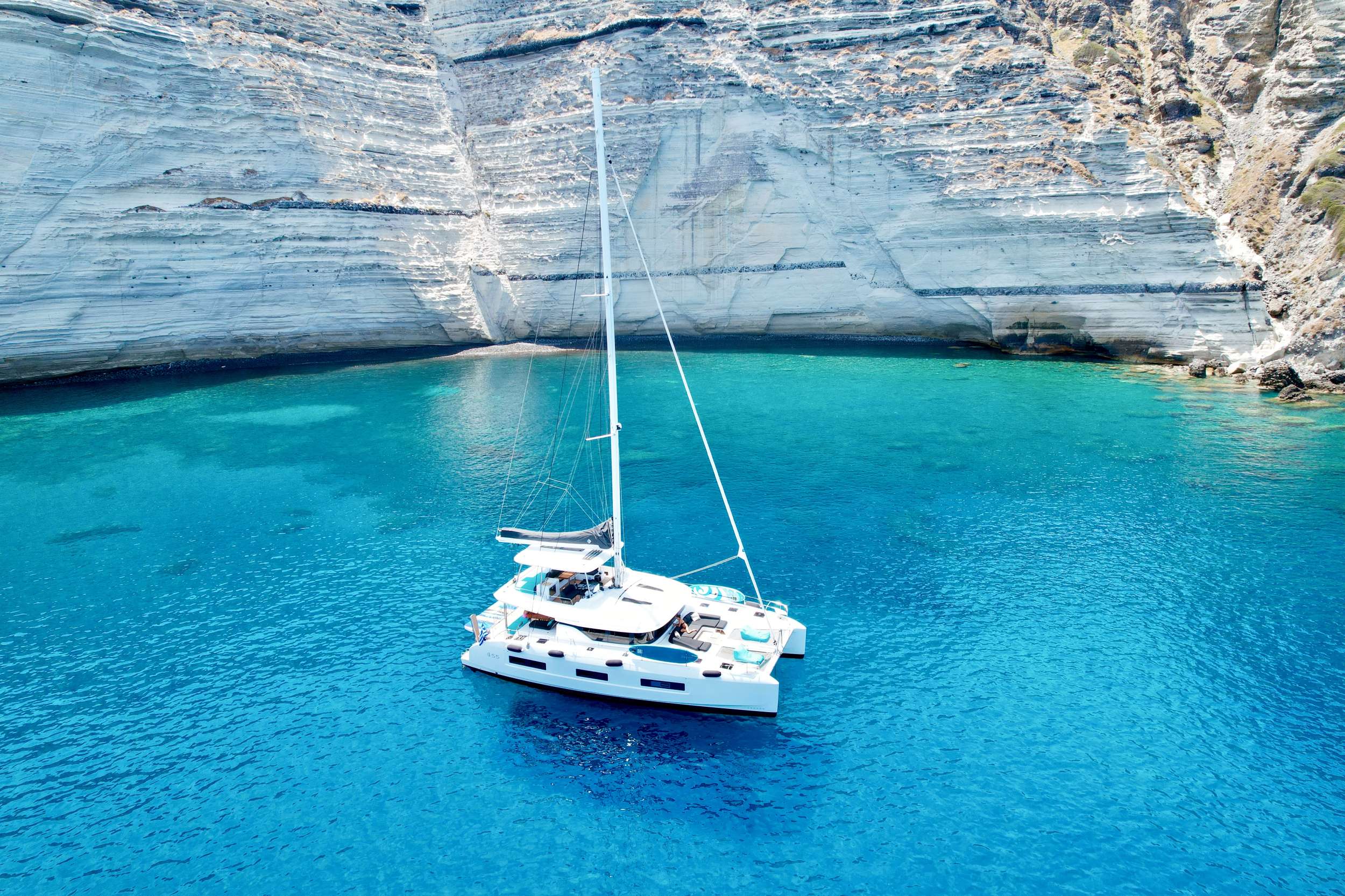
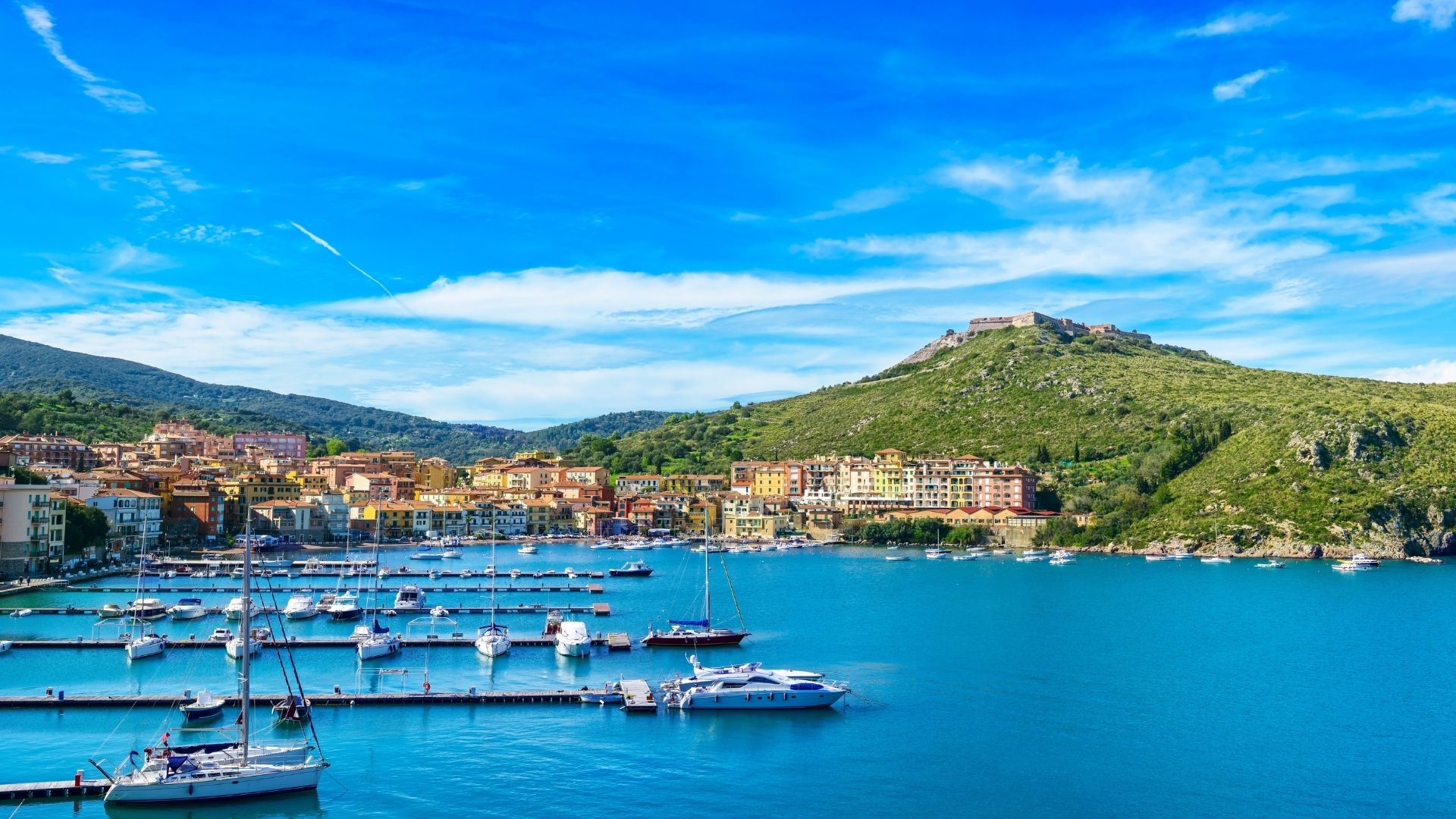
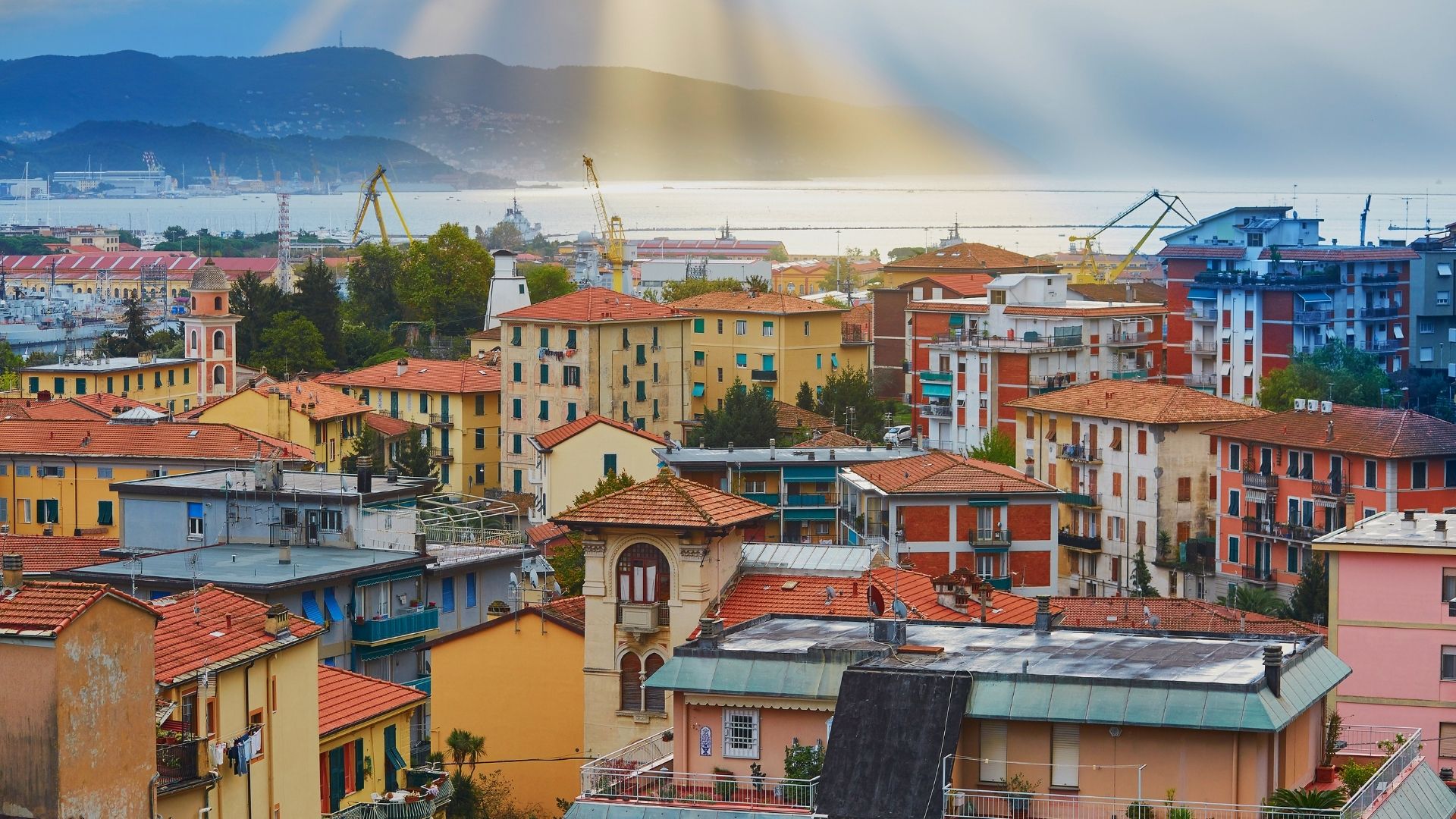
La Spezia's Marina Porto Mirabello — embarkation marina for the eastern Liguria and Tuscan routes.
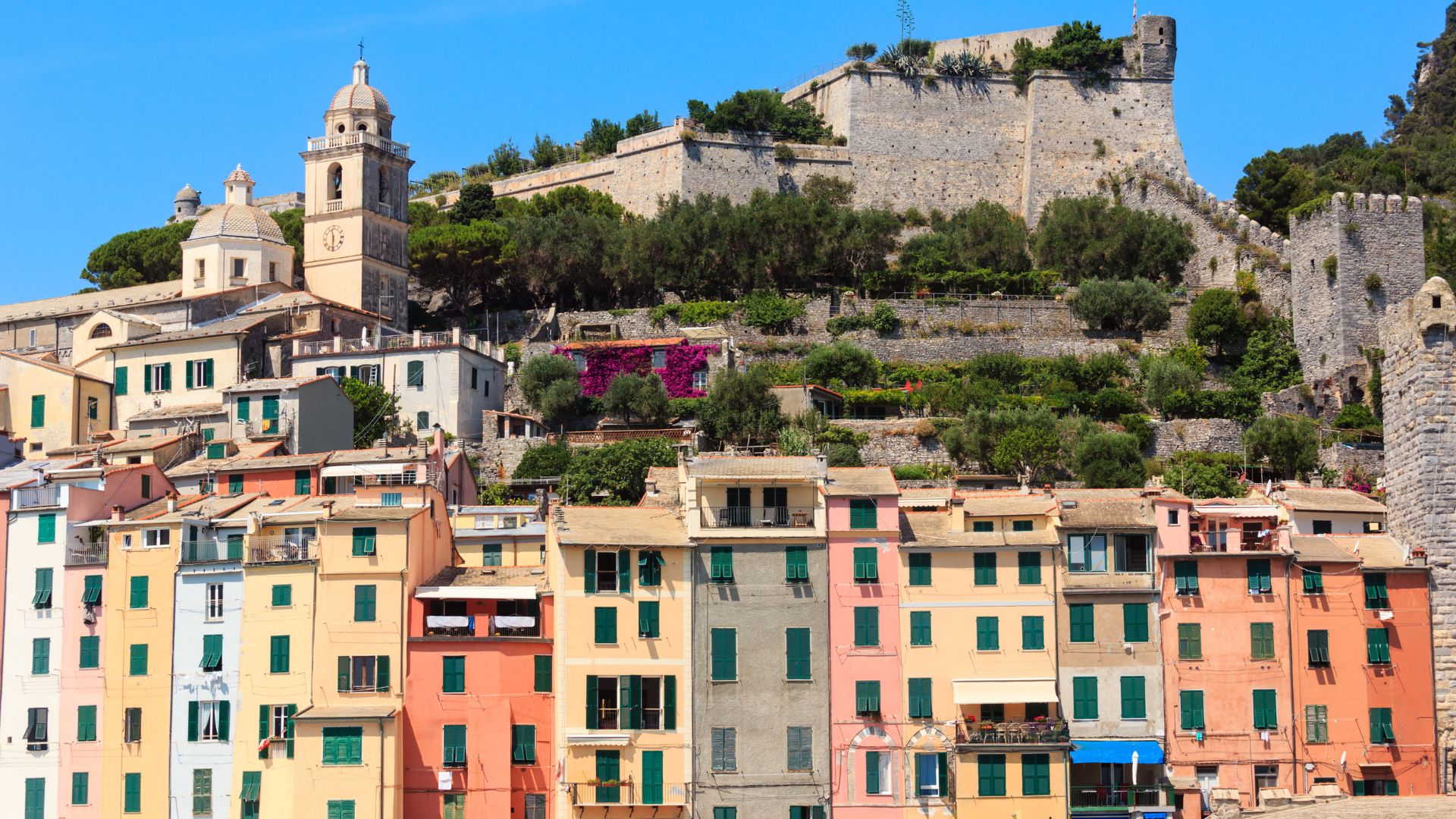
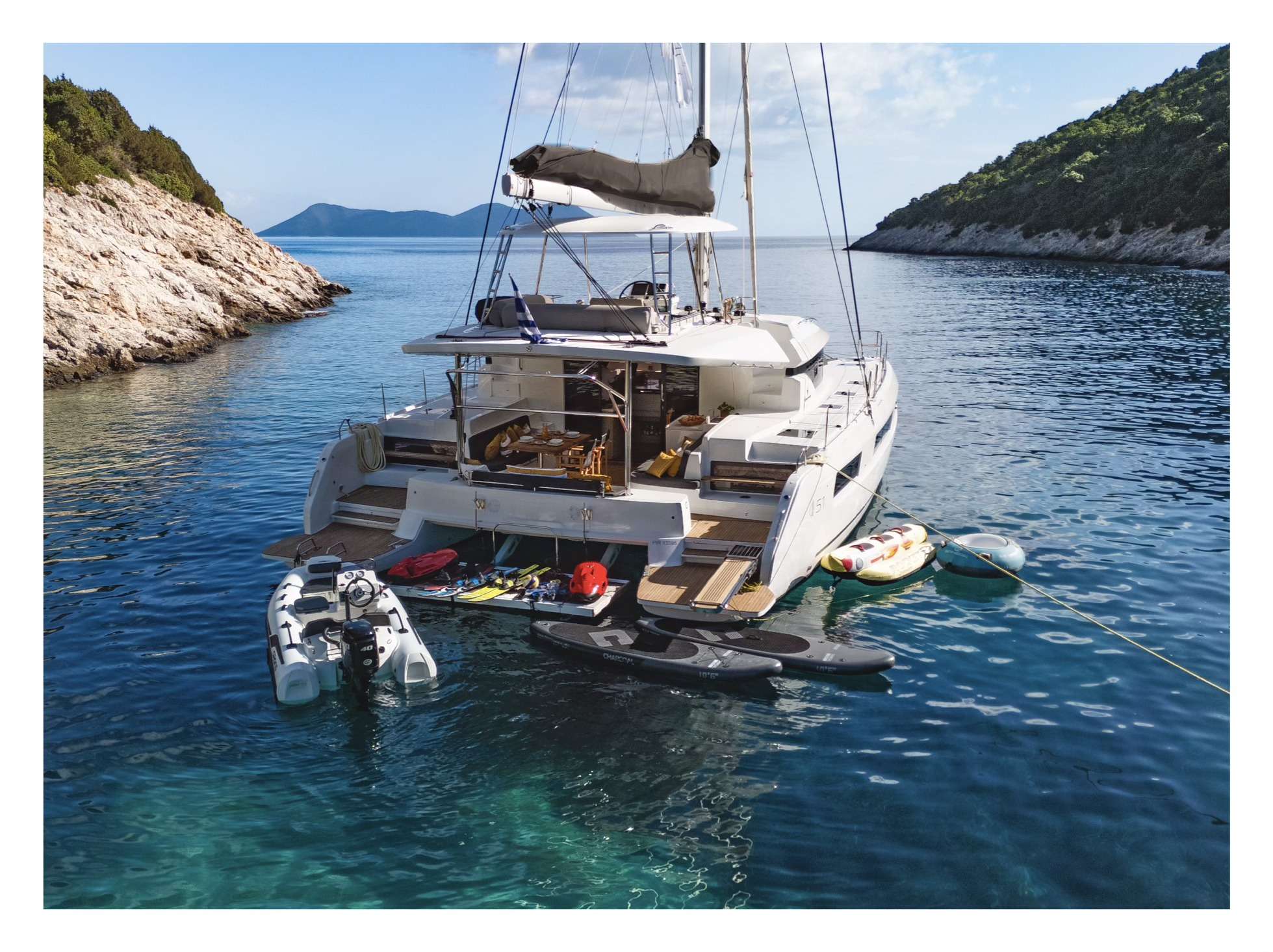
Portovenere and the Gulf of La Spezia from the water, Palmaria across the channel.
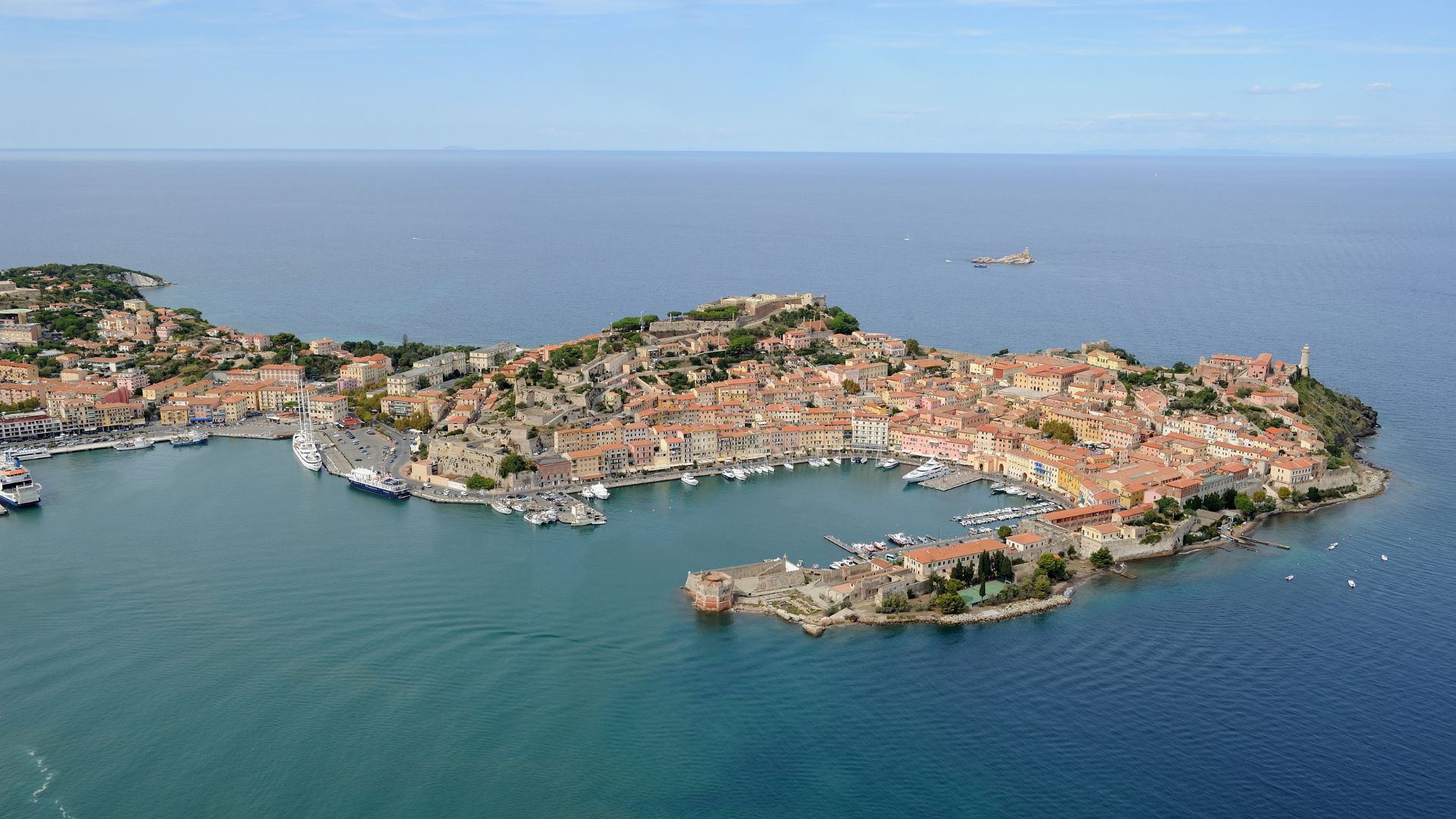
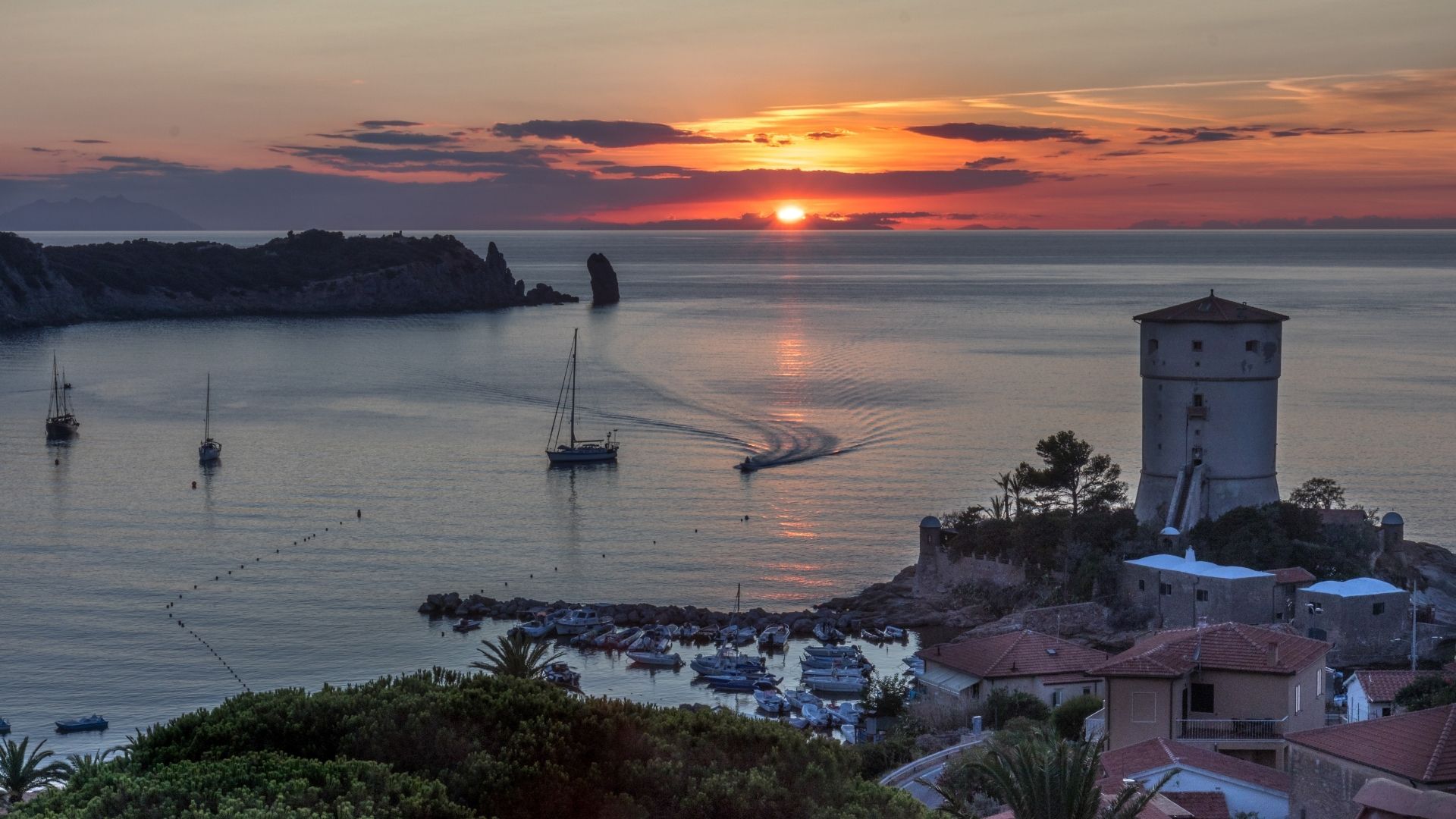
Portoferraio on Elba — the natural amphitheater harbor where Napoleon was exiled in 1814.
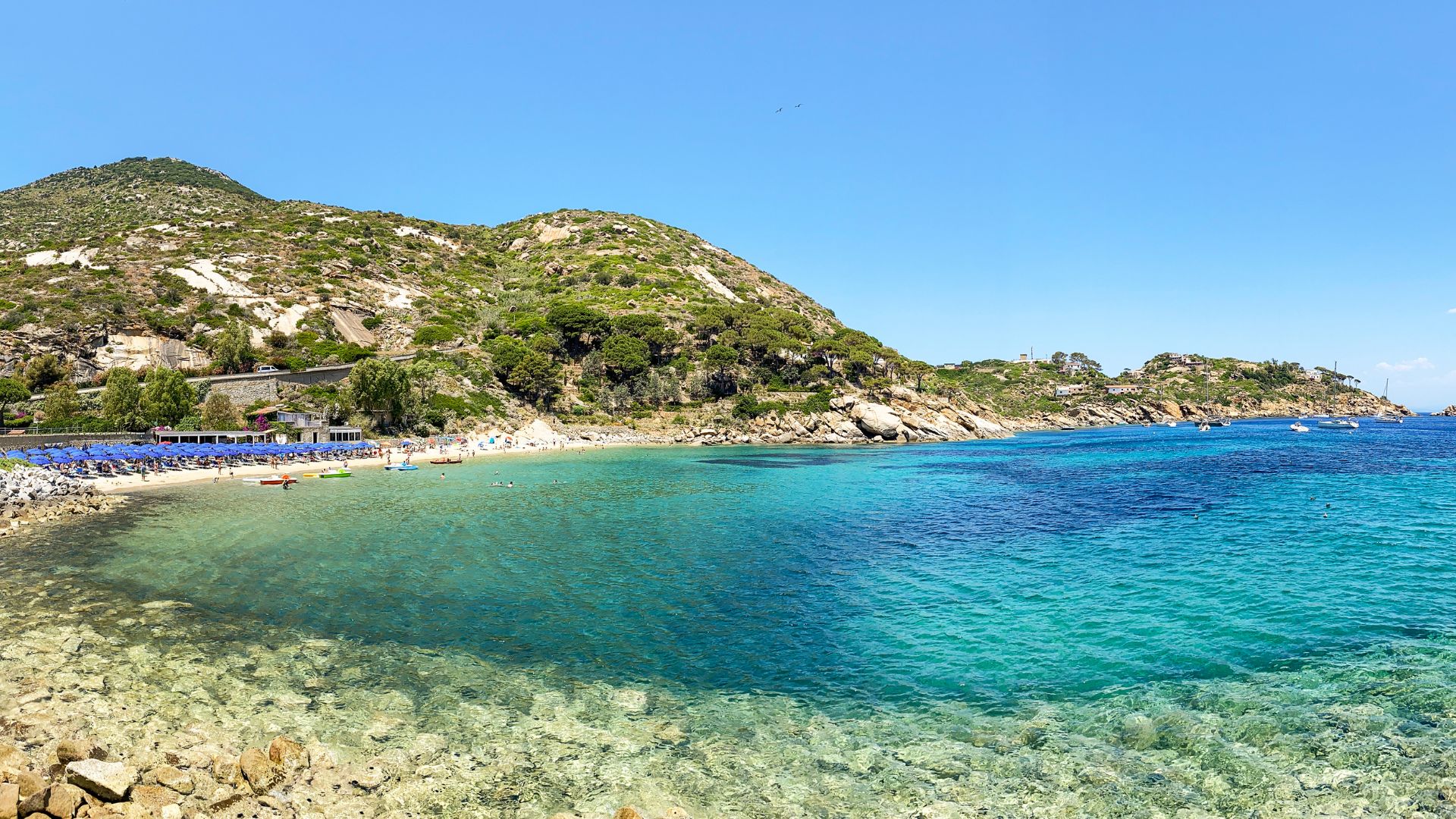
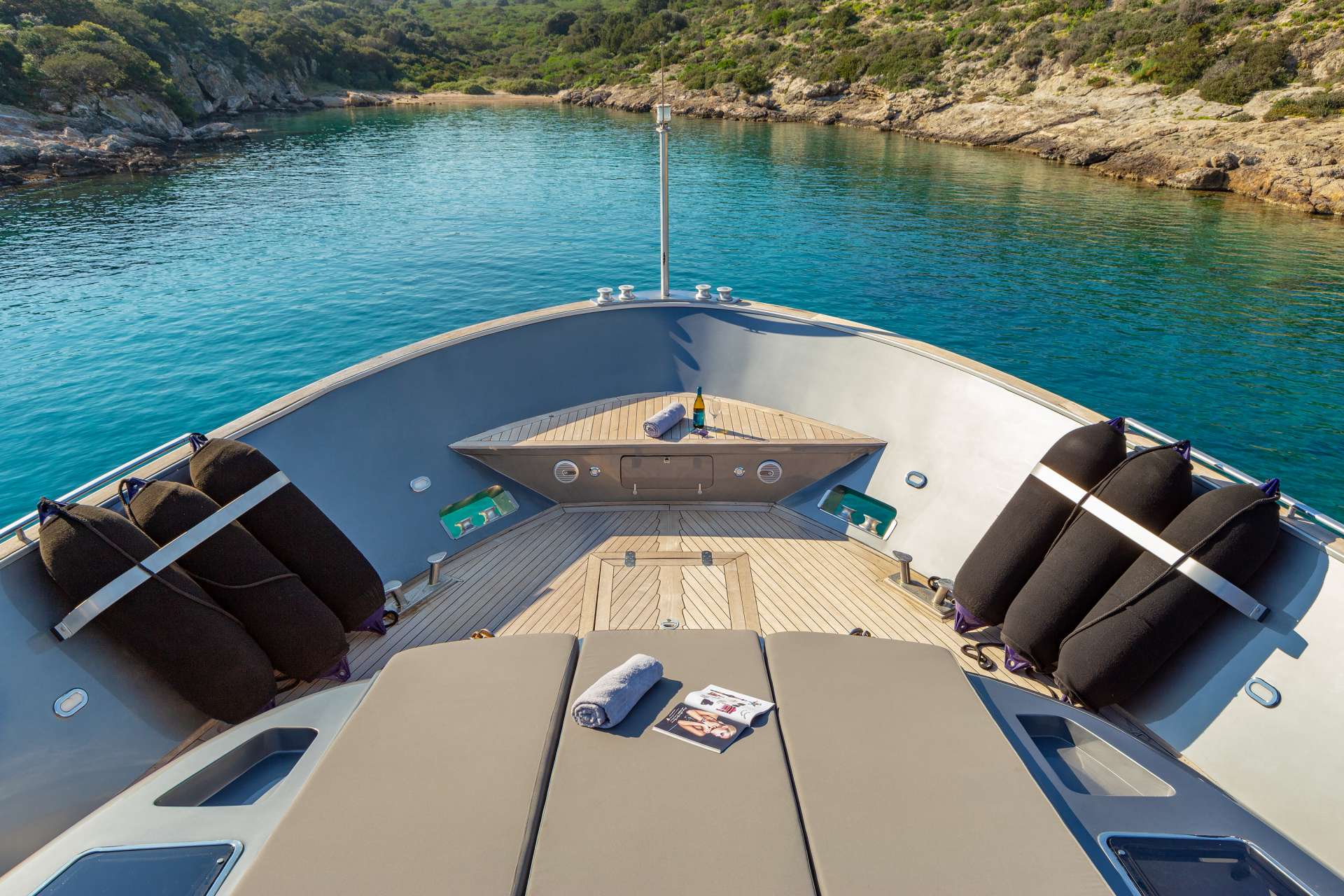
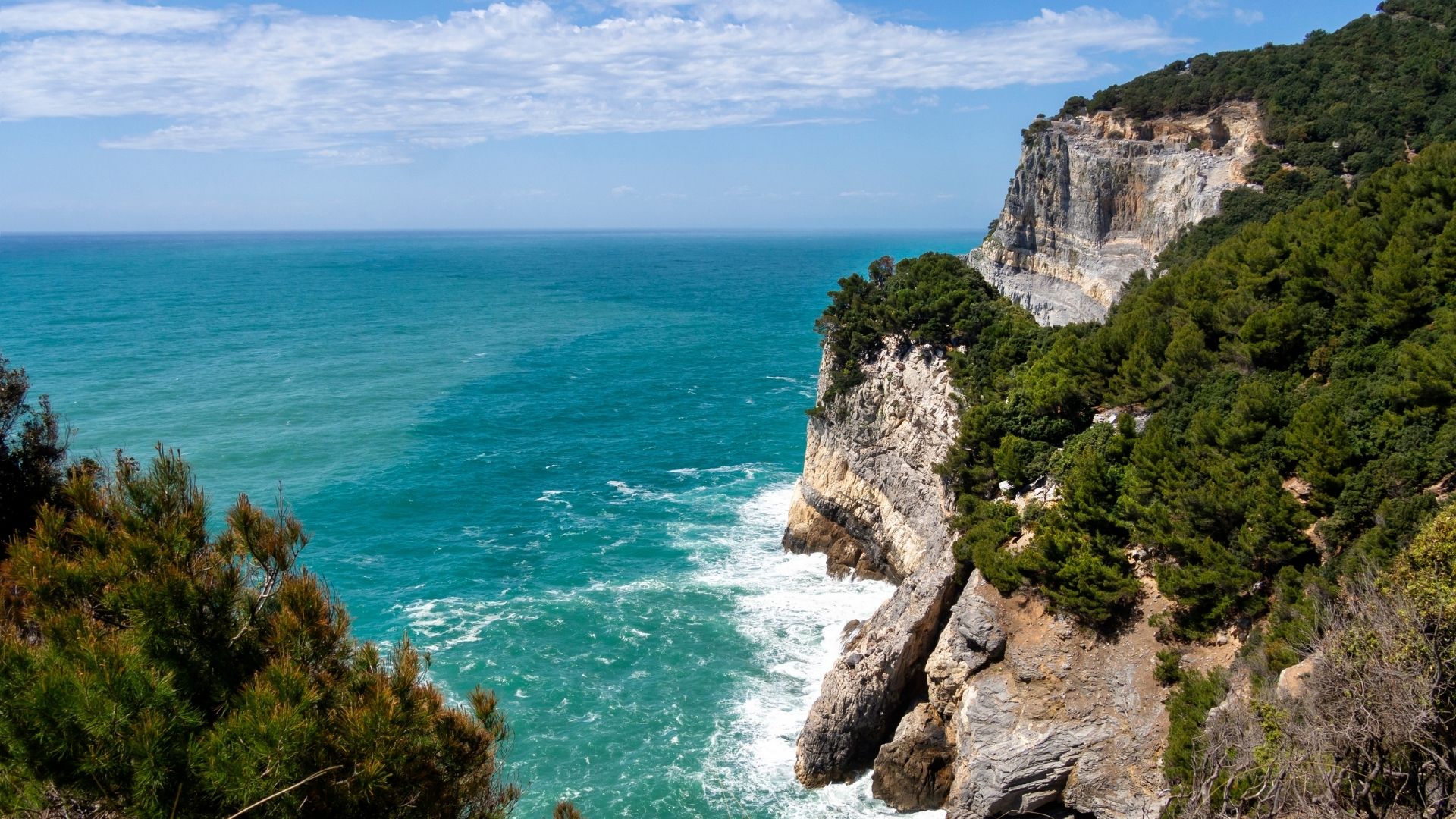
Giglio's east coast above the harbor — coves and Mediterranean macchia.

Why this route justifies the '& Tuscany' on the destination page

Seven nights, roughly ninety nautical miles, from La Spezia through Portovenere and Palmaria into the Tuscan archipelago — Elba, Giglio, and Argentario — and back. The trip-distance mix is different from the Liguria-first week: shorter shore-side village exposure, longer anchorage afternoons, two genuine open-water crossings in the southern leg. The full Tuscan archipelago — Elba, Giglio, Pianosa, Capraia, Gorgona, Montecristo, Giannutri — sits in a hundred-kilometer triangle off the Tuscany coast; this charter covers the three islands that work cleanly inside a week.

It is the right route for guests who want the Italian Riviera's village and harbor register without staying pinned to the Cinque Terre postcard corridor. If the brief is famous cliff villages first, the Portofino route is stronger. If the brief is a premium one-way that finishes inside the Côte d'Azur, the Monaco route is the better fit. Anchoring permits inside the marine reserves around Pianosa and Montecristo (effectively closed to charter yachts), and managed anchoring fields around Giglio's east coast and Argentario, are routine and the captain handles them without involving guests.

1

Day 1 of 7 · La Spezia → Portovenere

Embark at La Spezia and ease into Portovenere
Anchorage: Portovenere quay or Palmaria
Marina Porto Mirabello at La Spezia — the deepwater marina at the head of the gulf and the standard embarkation base for the eastern Liguria and Tuscan-archipelago routes. Forty-five minutes by road from Pisa (PSA), one hour by direct train from Milan (MXP).
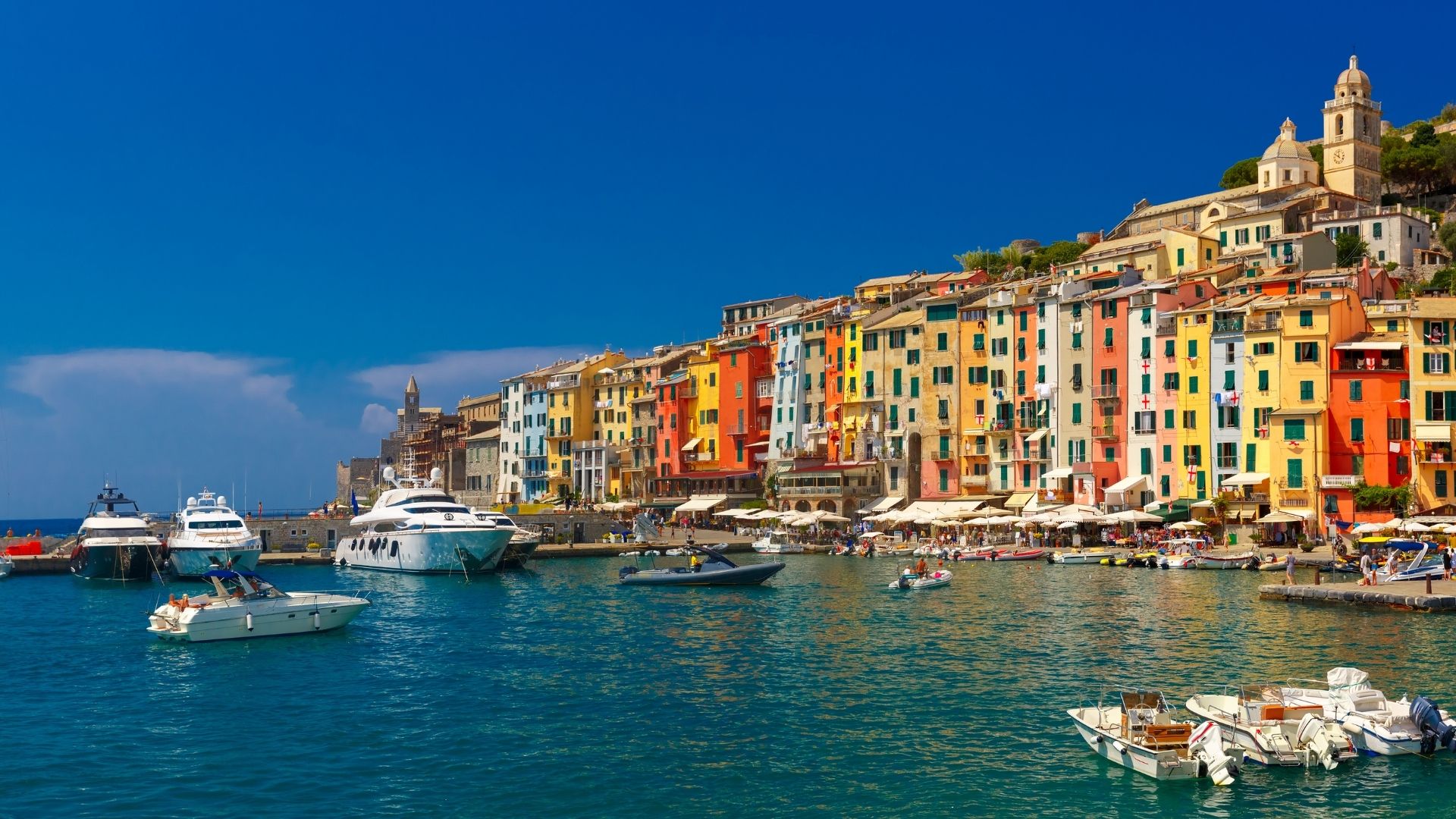
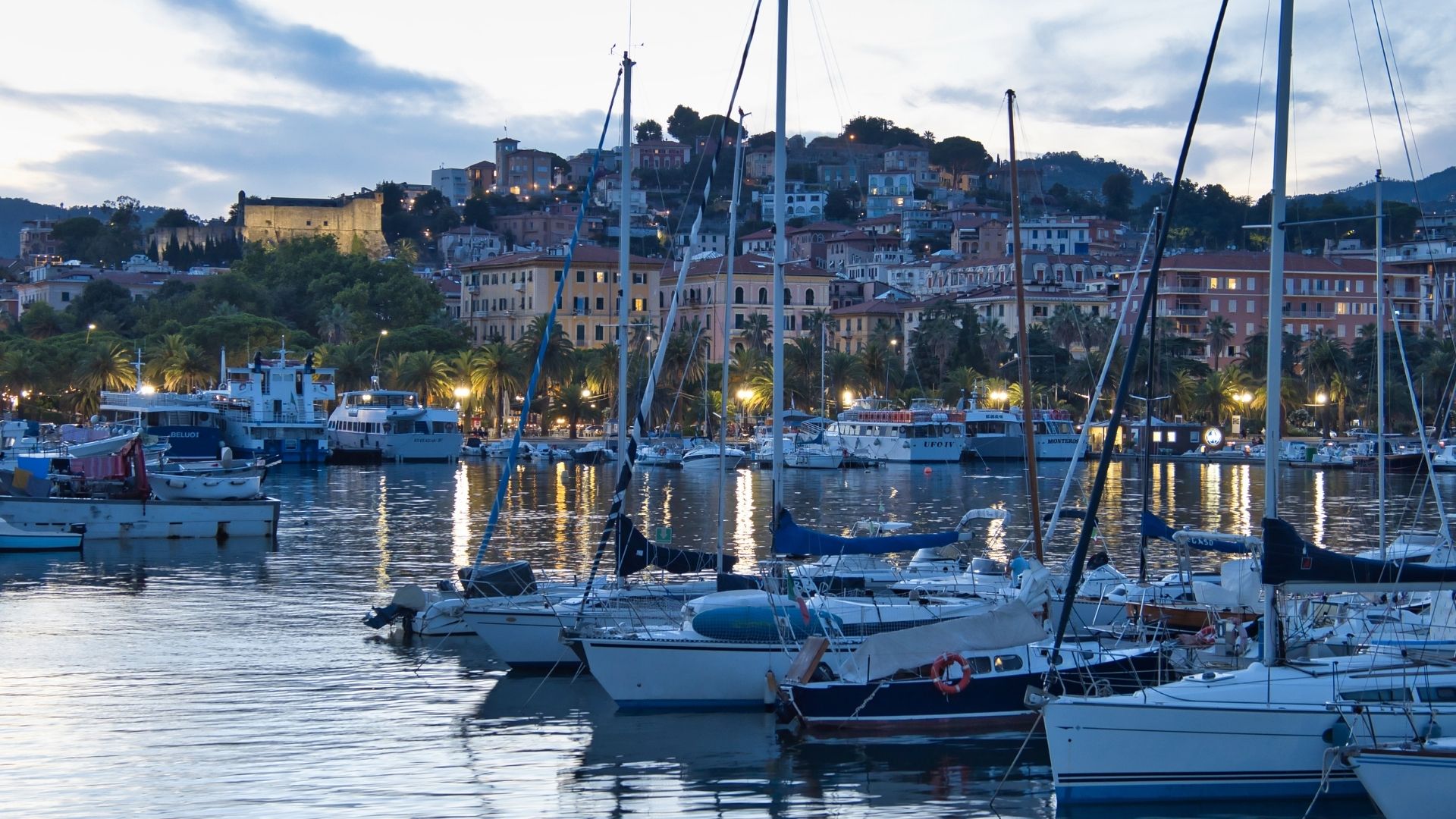
Portovenere — painted facades along the sea-wall, the Doria Castle (12th century) above the town, and the Church of San Pietro (1198) on the rocky point. The easiest first overnight on the route and the cleanest hinge out of the Gulf of La Spezia.

The charter begins at Marina Porto Mirabello at La Spezia — the deepwater marina at the head of the Gulf of La Spezia, capable of handling motor yachts up to about ninety meters. Crew meet the group on the dock, walk through the yacht, stow luggage, and cover the chart for the week. La Spezia itself is the country's largest naval base and not a place guests typically spend time; the marina is segregated from the working port and feels its own thing. Lunch on board at the quay while the chef finishes provisioning.

The opening leg is short by design — five nautical miles across the gulf and through the Bocche channel into Portovenere. The gulf gets called the Gulf of Poets — a name that stuck after Percy Shelley drowned in the bay in 1822 and Byron, Mary Shelley, and the Romantic circle kept villas around its edge — and the run across to Portovenere is the cleanest first hour of the week. By mid-afternoon the yacht is stern-to on the Portovenere quay or at anchor off Palmaria across the narrow channel.

The village earns the long stay. The Church of San Pietro sits on the rocky point at the harbor mouth, built in 1198 over a fifth-century basilica that itself replaced a Roman temple to Venus — the name 'Portus Veneris' goes back that far. The Doria Castle rises above the town in tight switchback streets; the climb takes twenty minutes and the view at the top runs from the Cinque Terre cliffs east to the full Gulf of La Spezia opening south toward the Tuscan crossing the route makes on day three. Dinner ashore at Antica Osteria del Carugio for the Ligurian classics, Iseo on the harbor for the day's fish, or tender across to Locanda Lorena on Palmaria for the quieter option.

Day Highlights

  • Embarkation at Marina Porto Mirabello, La Spezia.
  • Five-nautical-mile crossing of the Gulf of Poets.
  • Stern-to in Portovenere under the Doria Castle.
  • Dinner ashore at Antica Osteria del Carugio or Locanda Lorena on Palmaria.
2

Day 2 of 7 · Gulf of Poets and Cinque Terre preview

Palmaria swim morning, Cinque Terre on the water, Portovenere close

Anchorage: Portovenere or off Riomaggiore
Palmaria's eastern coast — the cleanest swim water in the Gulf of Poets. The island is the largest of three at the gulf's mouth, part of the Portovenere Regional Park, and is wired into the same UNESCO inscription that covers the Cinque Terre. WWII Italian Navy bunkers still line the western cliffs.
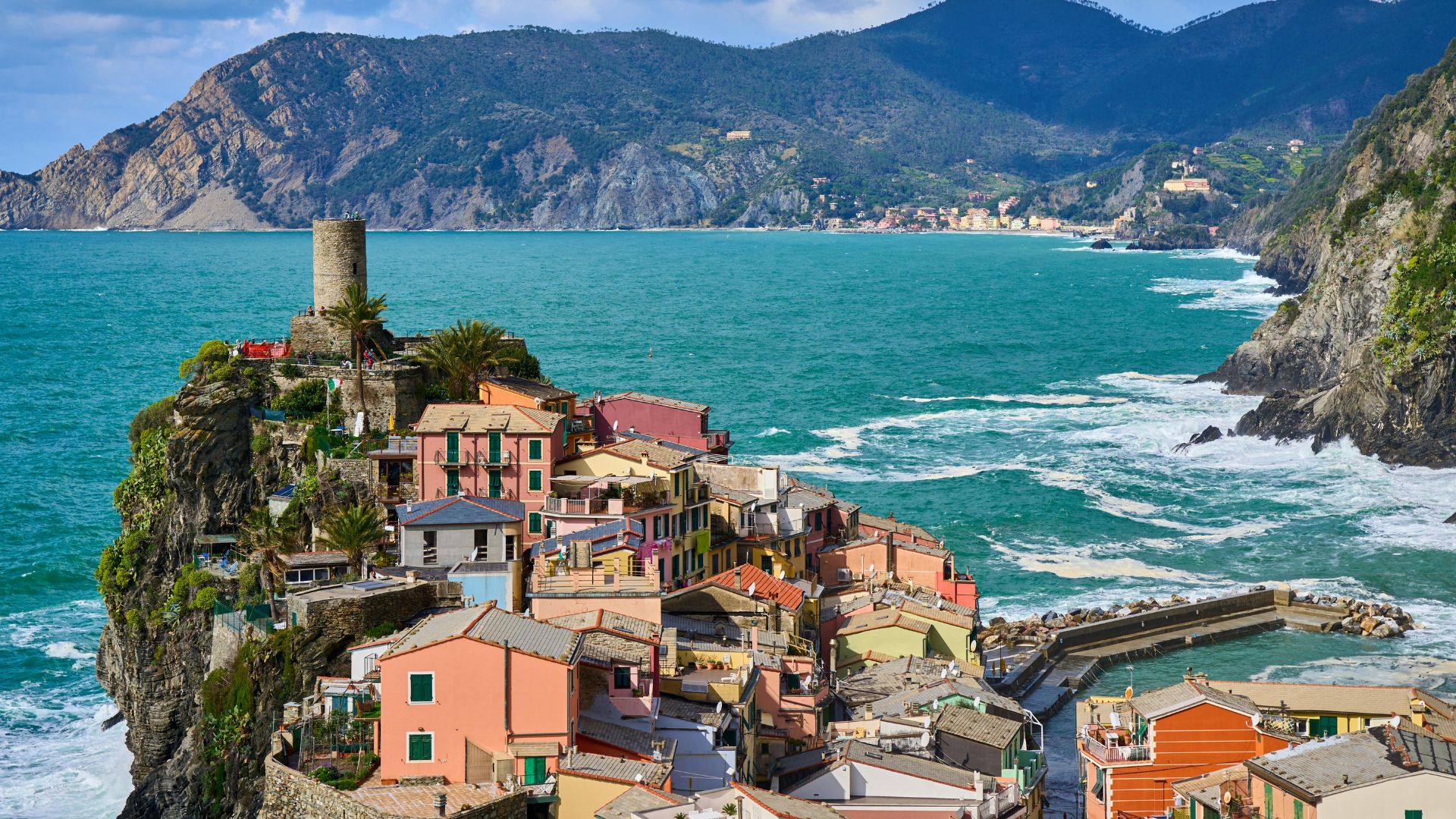
The Cinque Terre on the pass — Monterosso, Vernazza, Corniglia, Manarola, Riomaggiore strung along about twelve kilometers of cliff. This route reads them from the water rather than committing a full day to shore visits; the Liguria-first itinerary is the right pick for groups that want shore-side Cinque Terre time.

Morning lift off the Portovenere quay across the Bocche channel into Palmaria's eastern coves. The crossing takes ten minutes; the swim water on the island's east side is the cleanest in the Gulf of Poets, and the rocky shore holds a handful of small beach concessions that work as tender stops. The Locanda Lorena terrace, on the southern end of the island, runs the most reliable lunch option ashore; the western cliffs above hold concrete remains of Italian Navy gun batteries built in the 1940s, when La Spezia was the country's primary naval base.

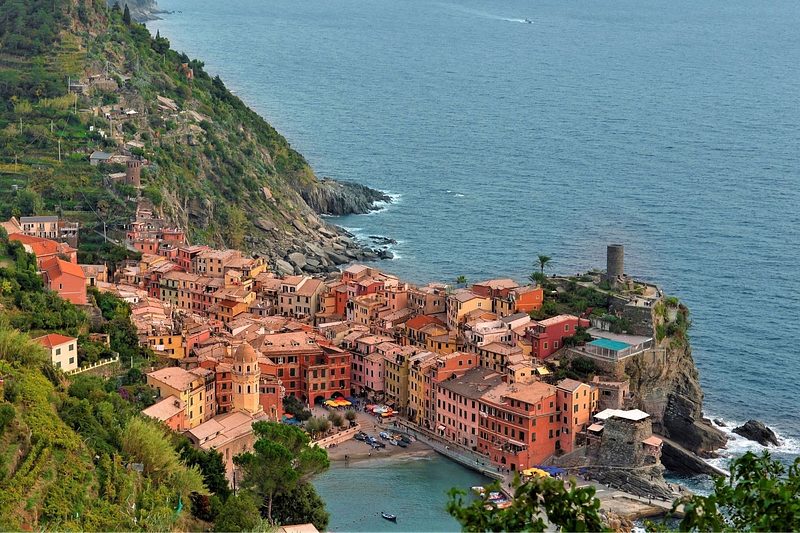
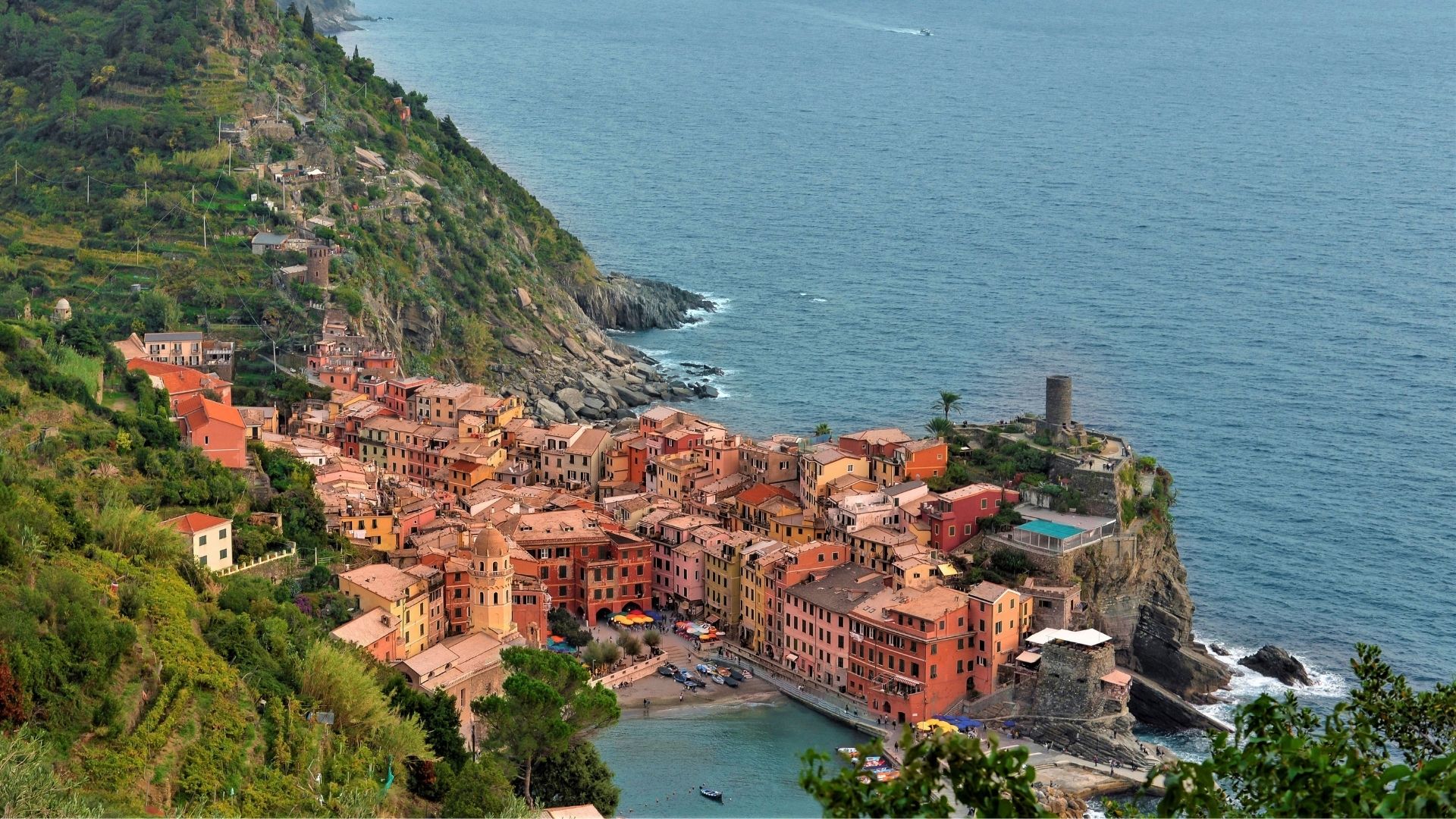
Lines off mid-afternoon for a northward pass along the Cinque Terre — eight nautical miles up the coast, in close enough to read the five villages clearly from the water but without committing a full shore day to any of them. The villages are stacked north to south as Monterosso, Vernazza, Corniglia, Manarola, and Riomaggiore. Monterosso has the only proper beach. Vernazza is the marquee photograph, with the Belforte tower on the rock. Corniglia sits 100 meters up on a cliff and is the only village not on the water. Manarola and Riomaggiore close the line — both with cliff-stacked architecture, neither big enough for charter-yacht harbor mooring.

The pass works because this route's center of gravity is south, not north. Forcing a shore-day stop here pushes the week's mileage out of shape for the Elba crossing tomorrow. Yacht stern-to back on the Portovenere quay or at anchor in the channel for the second night — the captain calls the overnight based on the morning forecast for the open crossing south. Dinner ashore at Iseo if the quay landed; otherwise aboard at anchor with a Vermentino from the hills above the gulf.

Day Highlights

  • Morning swim and lunch ashore on Palmaria's east coast.
  • Northward pass along the five Cinque Terre villages from the water.
  • Vernazza, Manarola, and Riomaggiore read in clean sequence.
  • Second overnight at Portovenere — staging for the Elba crossing.
3

Day 3 of 7 · Liguria → Elba

The open crossing that makes the route a Tuscany week

Anchorage: Portoferraio harbor or south-coast cove
Portoferraio harbor — Elba's capital, named for the iron-rich water that gave the island its name in antiquity. Cosimo de' Medici fortified it in 1548 with three citadels (Forte Stella, Forte Falcone, Linguella) still ringing the headland; Napoleon ran the island from here during his ten months of exile in 1814–15.
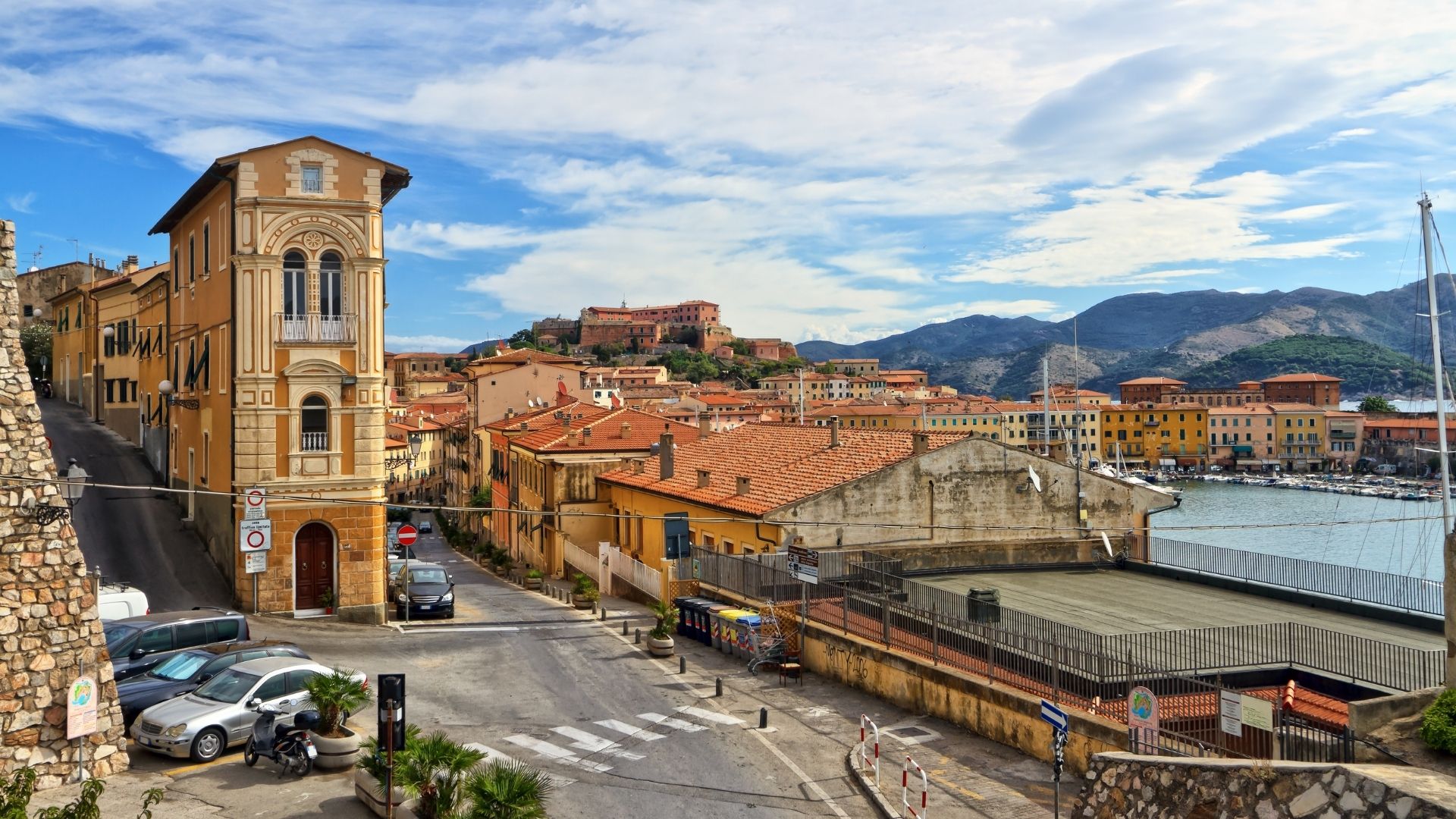
Portoferraio's old town climbs the headland between the two Medici citadels. The Palazzina dei Mulini at the top — Napoleon's residence on Elba — opens to visitors and holds his personal library and exile correspondence.

The trip's longest passage and the day that turns the charter into a Tuscan-islands week rather than a Liguria itinerary with a southern footnote. Fifty nautical miles in open Tyrrhenian water from Portovenere to Portoferraio on Elba's north coast, run as a day passage. The captain leaves Portovenere early — the prevailing summer pattern is calm morning seas building into an afternoon thermal — and the crossing takes about five hours on a thirty-knot motor yacht, eight to nine on a sailing yacht with a workable breeze. The chef serves lunch underway; the swim platform stays down at the halfway point if conditions allow.

By mid-afternoon Elba's northern coast comes up — wooded headlands, the granite mass of Capo d'Enfola on the western side of the harbor approach, and Portoferraio itself wedged inside a natural amphitheater harbor. The Medici walls are visible from miles offshore: Cosimo de' Medici fortified the harbor in 1548 with three citadels — Forte Stella, Forte Falcone, and the Linguella tower — that still ring the headland. The town's full name is Cosmopoli on the seventeenth-century maps; the Medici crest is carved above the main gate.

Yacht inside the harbor at Portoferraio for the first night on Elba, or at anchor in one of the south-side coves — Ottone, Bagnaia, Magazzini — if the group prefers a quieter close to a long sailing day. Portoferraio's old town climbs the headland between the two main citadels in switchback streets; the Palazzina dei Mulini at the top is Napoleon's residence from his ten-month exile here in 1814–15, with his personal library and exile correspondence still on display. Dinner ashore at Stella Marina near the ferry pier for the day's catch, or at Osteria Libertaria on the harbor street for the more local register. The captain books either.

Day Highlights

  • Fifty-nautical-mile open-water crossing from Portovenere to Elba.
  • Capo d'Enfola headland and the Medici fortifications on the harbor approach.
  • Yacht inside Portoferraio harbor or at anchor in Ottone or Bagnaia.
  • Palazzina dei Mulini — Napoleon's Elban residence — open above the old town.
4

Day 4 of 7 · Elba full day

Elba as an island, not just a harbor call

Anchorage: Cavoli, Fetovaia, or Marciana Marina
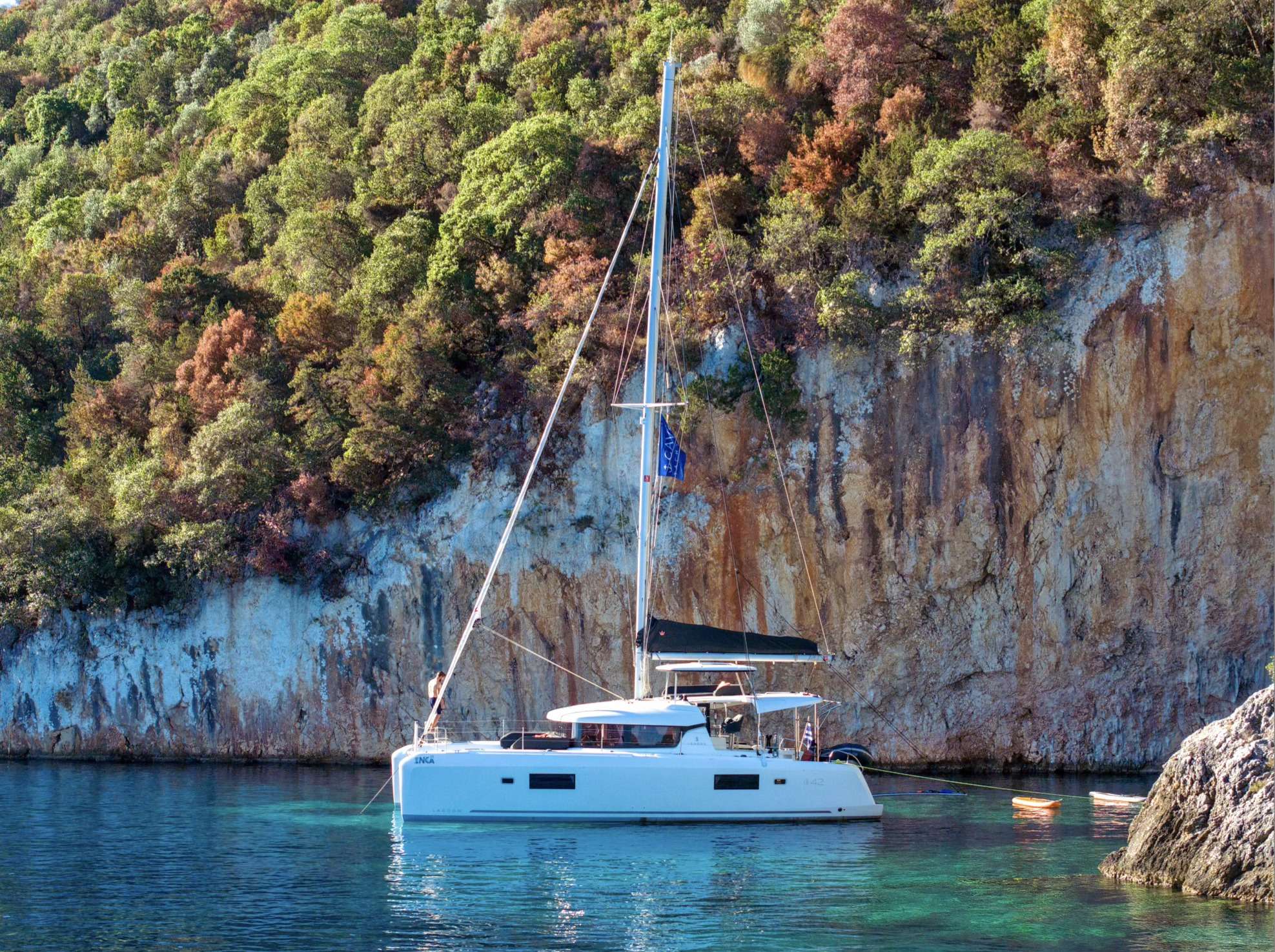
Elba's south coast — protected coves backed by Mediterranean macchia. Cavoli and Fetovaia are the marquee swim anchorages on the southwestern end; Marciana Marina on the north coast is the alternative for groups that prefer a harbor village overnight to a cove.
Paddleboards and water toys off the platform at Cavoli or Fetovaia. Elba's south-coast coves run granite slabs underwater and seven-to-ten-meter visibility most of the season — the cleanest swim afternoon of the week.

Elba deserves a full day. The island is the third-largest in Italy after Sicily and Sardinia, with two-hundred kilometers of coastline and the most varied terrain in the Tuscan archipelago — granite peaks above Marciana, iron-ore mines on the east coast (the source of the island's name in antiquity), wooded slopes south of Portoferraio, and a string of beach coves around the southwestern tip. The full day usually splits between a Portoferraio shore morning and a south-coast anchorage afternoon, with the yacht repositioning once.

Morning ashore in Portoferraio — the walk up to the Palazzina dei Mulini for the Napoleon residence (forty-five minutes round trip), or the Villa San Martino on the inland side of town for the Napoleonic country house with its Egyptian-themed Gallery of the Sphinxes. The old town runs the better food in the lower streets: Sotto la Vela for the fish, Da Lido on the harbor for the lunch-hour pasta. Back aboard by early afternoon, lines off, and a short hop around the headland to the south coast.

Anchor for the afternoon at Cavoli or Fetovaia on the southwestern end of the island — both are protected, both have transparent water over sand bottoms, both run a small beach concession ashore. The water here reads more like Sardinia than mainland-Italy coastal; granite slabs underwater, color in the seven-to-ten-meter range. Late afternoon move back north to Marciana Marina for the evening — a working harbor town on the north coast, under the sixteenth-century Forte di San Giacomo, where the dinner options run from Capo Nord (waterfront, fish-of-the-day) to Osteria del Noce inland for the local cuisine. Porto Azzurro on the east coast is the alternative overnight; the captain steers based on the morning crossing toward Giglio.

Day Highlights

  • Morning walk to the Palazzina dei Mulini or Villa San Martino — Napoleon's Elban residences.
  • Lunch in Portoferraio's old town at Sotto la Vela or Da Lido.
  • South-coast swim afternoon at Cavoli or Fetovaia.
  • Evening repositioning to Marciana Marina or Porto Azzurro.
5

Day 5 of 7 · Elba → Giglio

Giglio Porto and the medieval hilltop above

Anchorage: Giglio Porto or Cala dell'Allume
Giglio Porto and the climb up to Giglio Castello — the medieval hilltop village fortified in the eleventh century by the Aldobrandeschi family. The harbor is small; the village above walks in twenty minutes from end to end inside the Aldobrandeschi walls.
Giglio's east-coast coves — Cala dell'Allume and Cala delle Cannelle the cleanest swim stops, both reachable only by water. The island is granite for its mass and the swim water reads in the seven-to-ten-meter visibility range most of the season.

Thirty-nautical-mile open-water leg south from Elba to Giglio. The crossing runs across the open Tyrrhenian — Pianosa and Montecristo are visible on the eastern horizon as the yacht passes the mid-channel, both inside the marine reserve, both effectively closed to charter yachts — and lands at Giglio's east coast in about three to four hours. The captain shapes the timing around the morning's wind forecast; the route works under sail most clean days and is comfortable under power on the rest.

Giglio Porto is a smaller working harbor than Portoferraio — about eight charter-yacht stern-to slots, all of which book early in peak season. Larger motor yachts anchor in Cala delle Cannelle or Cala dell'Allume on the east coast; both are protected, both have transparent water and small beach concessions ashore. The island's geology is granite, not the limestone of mainland Tuscany, and the swim water reads more like Sardinia than the Tyrrhenian average. The Costa Concordia ran aground just north of the harbor in January 2012; the wreck is gone, the shoreline shows almost no trace, and the village has reset around the same fishing and tourism rhythm it ran on before.

The defining shore-side move on Giglio is up. Giglio Castello sits 400 meters above the harbor — the medieval hilltop village fortified by the Aldobrandeschi family in the eleventh century, walled in stone, and walked through in twenty minutes inside the gates. Taxi or rental car up; the road switchbacks for about six kilometers. Dinner ashore in Giglio Castello at Da Maria for the local specialties (panficato, Giglio's dried-fruit cake; rabbit and wild fennel pasta) or back down at the harbor at La Vecchia Pergola for fish on the quay. The night sky from the village above is dark enough that the Tyrrhenian's stars run noticeably brighter than they do over the mainland.

Day Highlights

  • Thirty-nautical-mile crossing south from Elba.
  • Yacht stern-to in Giglio Porto or at anchor in Cala dell'Allume.
  • Climb up to Giglio Castello — the eleventh-century Aldobrandeschi walled village.
  • Dinner at Da Maria in the village above, or La Vecchia Pergola on the harbor.
6

Day 6 of 7 · Giglio → Argentario

Argentario's two harbor towns and the Caravaggio postscript

Anchorage: Porto Ercole or Cala Galera
Porto Ercole — the eastern of the Argentario peninsula's two harbor towns, fortified by the Spanish in the sixteenth century with three Forts (Filippo, Stella, Rocca) ringing the headland. Caravaggio died here in July 1610; the small church on the harbor street holds the local memorial.
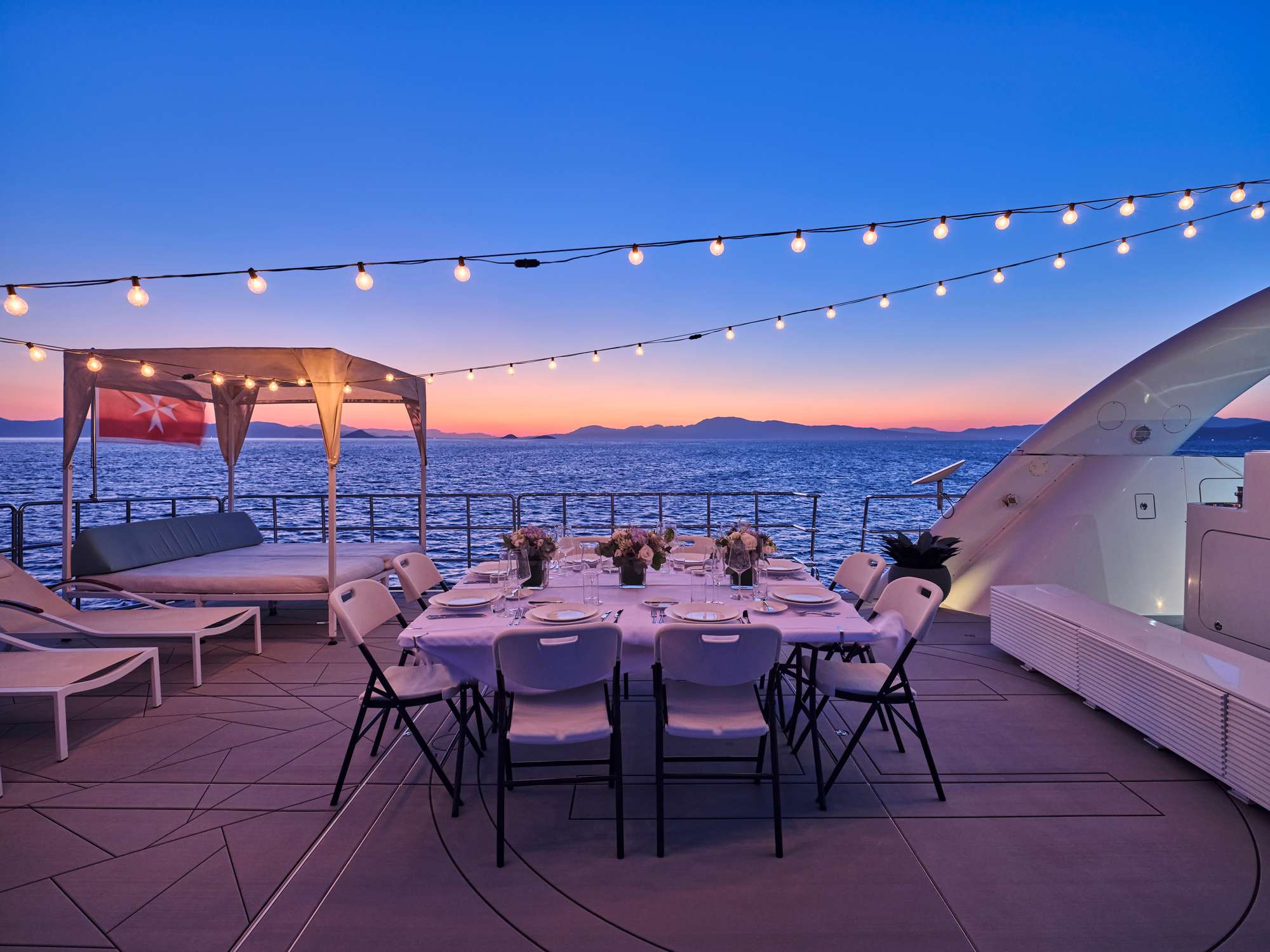
Aperitivo on the aft deck at anchor off Argentario — the southern hinge of the route. The peninsula is connected to the mainland by three sand tomboli; from the water it reads as an island even though it isn't.

Eleven nautical miles east from Giglio across the channel to the Argentario peninsula, the southern hinge of the cruising ground. The Argentario is geographically a former island connected to the Tuscan mainland by three sand tomboli — Feniglia, Giannella, and the inner causeway through the lagoon of Orbetello — that filled in over a few thousand years of silt deposition; from the water and from the yacht it still reads like an island. The peninsula has two harbor towns on opposite sides: Porto Ercole on the eastern flank, Porto Santo Stefano on the northwestern, with the wooded mass of Monte Argentario rising between them.

Porto Ercole is the more polished of the two and the standard overnight on this route. The Spanish fortified the harbor in the sixteenth century with three forts — Forte Filippo, Forte Stella, and Rocca Aldobrandesca — that still ring the headland; the harbor itself sits below them in a tight basin. Cala Galera, the marina a kilometer south, holds the larger berth slots when Porto Ercole's quay is full. Caravaggio died on this beach in July 1610, having landed sick from a fever after his last journey from Naples; the small church on the harbor street, San Sebastiano, holds the local memorial, and the disputed gravestone sits in the parish cemetery on the hillside above.

Dinner ashore is the canonical close to the Tuscan leg. Il Pellicano sits in its own bay south of Porto Ercole — the hotel restaurant runs two Michelin stars and the reservation needs a week in season — and is the high-register option. La Capannina on Porto Ercole's main street is the working-village option for the day's fish; Osteria dei Nobili Santi a block back from the harbor is the quieter middle. The yacht stays in port for the night; the Argentario's lit-up forts above the harbor close the day better than most anchorages do.

Day Highlights

  • Eleven-nautical-mile crossing from Giglio to the Argentario peninsula.
  • Stern-to at Porto Ercole under the Spanish forts (16th century).
  • Caravaggio's death-site at San Sebastiano church on the harbor street.
  • Dinner ashore at Il Pellicano, La Capannina, or Osteria dei Nobili Santi.
7

Day 7 of 7 · Closing day

Giannutri morning, northbound stage afternoon

Anchorage: Giannutri or Elba-side stage
Giannutri — the southernmost of the Tuscan archipelago's seven islands and the smallest with a working anchorage. A morning stop on the way north before the yacht stages for disembarkation. The marine reserve restricts anchoring on seagrass; the captain takes one of the permitted buoys.
Final overnight back at Elba, Giglio, or in Cala Galera at Argentario depending on the morning's departure logistics. The captain shapes the closing night around where the disembarkation transfer needs to start from.

The closing day stays a real charter day rather than collapsing into administrative logistics. Morning move south or east to Giannutri — the southernmost of the Tuscan archipelago's seven islands, about eight nautical miles south of Argentario — for the cleanest swim anchorage of the week. Giannutri is inside the marine reserve, anchoring on seagrass is prohibited, and the captain takes one of the permitted buoys on the western coast. Roman ruins at Cala Maestra (the second-century-AD villa of the Domitia gens) sit a short hike above the cove and are reachable by tender-and-walk if the group wants the history extension; the swim water below is the cleanest stop of the southern leg.

Mid-afternoon lift north toward the disembarkation stage. The route can run back via Giglio or directly north toward Elba and Portoferraio, depending on where the captain has the yacht positioning for the Saturday turnover. Most yachts on this circuit stage their final night at Cala Galera (Argentario), Portoferraio, or back at Marciana Marina on Elba — the closing overnight is shaped by the logistics of the morning transfer to PSA, GOA, or Rome's FCO if the group's onward plans run south.

Final-night dinner ashore at wherever the yacht has staged — Il Pellicano if the night closed back at Argentario, Stella Marina at Portoferraio, or one of the smaller harbors at the captain's discretion. One last aperitivo on the aft deck before dinner, one last harbor lit up after sundown, and a last night that still belongs to the trip. The week's mileage adds up to about ninety nautical miles end to end — modest by Mediterranean standards, and the right answer for a coast that rewards anchorage rhythm and harbor evenings over long passages.

Day Highlights

  • Morning swim at Giannutri inside the marine reserve.
  • Roman ruins at Cala Maestra reachable by short tender-and-walk.
  • Afternoon stage north toward Elba, Giglio, or back to Argentario.
  • Final dinner ashore at Il Pellicano, Stella Marina, or the captain's pick.
8

Day 8 · Departure

Disembarkation and onward transfers

La Spezia for disembarkation if the yacht staged back to the mainland — forty-five minutes by road to PSA, one hour direct train to Milan, four and a half hours to Rome. Some yachts on this route disembark at Portoferraio (Elba) instead, with a ferry connection across to Piombino for onward rail or road.

Breakfast aboard, luggage off, and a transfer out through La Spezia, Pisa, Genoa, or one of the Tuscan ferry-and-rail combinations depending on where the yacht staged the final night. From Marina Porto Mirabello at La Spezia, PSA is forty-five minutes by car and the direct train to Milan runs about three hours. If the yacht disembarks at Portoferraio on Elba — a working option for some routes — the standard transfer is the one-hour ferry across to Piombino on the Tuscany mainland, then rail or road south to Rome (about three hours) or north to Pisa (one hour).

The route lands exactly where it should — quieter than the Liguria-first week, broader than most guests expect from an 'Italian Riviera' charter, and built around three genuinely-different islands rather than a single Cinque Terre cluster. Most groups that run this version come back for either the Liguria classic on a second trip or the longer chain into the Pontine Islands south of Argentario; the captain and broker walk through the second-charter options before the group disperses.

Frequently asked

Does Tuscany really fit into a one-week charter?
Yes, when the route starts from La Spezia and the itinerary is designed around the Tuscan islands rather than forced in after a full Liguria loop. The crossing from Palmaria to Portoferraio on Elba is the trip's defining passage — about fifty nautical miles in open water, run as a day passage in the prevailing morning calm. From Elba south, the inter-island distances are short: Elba to Giglio is roughly thirty nautical miles, Giglio to Argentario is eleven. Forcing a full Cinque Terre loop AND Elba into one week is what makes the Tuscan extension feel like a footnote; building the route around La Spezia–Tuscany is what makes it the actual charter.
Who is this route for?
Repeat-Mediterranean guests who want a quieter coast than Amalfi or the headline Liguria circuit; couples on a longer stay who care more about protected anchorages and an island rhythm than about checking off the famous villages; and groups using a yacht with good open-water comfort — modern motor yachts above forty feet, well-found catamarans, or sailing yachts at home in a thirty-mile day. It is also the right route for guests who have already done the Liguria classic and want to push past it without repeating themselves.
Motor yacht, catamaran, or sailing yacht?
All three work, but yacht-type matters more here than on the Liguria loop. The Palmaria-to-Elba crossing is fifty nautical miles in open Tyrrhenian water — manageable on any well-found charter yacht, but more comfortable above forty feet and with stabilizers if it's a motor yacht. Catamarans handle the crossing cleanly when the morning forecast is settled. Smaller sailing yachts make the crossing under canvas in the right wind window; the captain calls the passage timing based on the day's forecast. Inside the archipelago, distances drop to the Ligurian register — fifteen to thirty nautical miles between islands.
When's the best season for the Tuscan archipelago?
June and September remain the strongest weeks. The water is warm — mid-70s and stays swimmable into October — and the harbors are active without being overrun. The Tuscan islands are quieter than Liguria at the same time of year, especially Giglio outside of August. July and August work fine; Argentario's harbor restaurants book a week ahead at peak, and Porto Ercole's larger berths book months ahead. Ferragosto (August 15) and the surrounding week are the highest density of the Italian summer; the captain steers around the worst of it on the anchorage choices.
What's the deal with the Costa Concordia offshore from Giglio?
The Costa Concordia ran aground and capsized off the eastern coast of Giglio on January 13, 2012 — 32 people died. The wreck sat half-submerged off the town pier for two and a half years before salvage crews refloated her and towed her to Genoa to be scrapped in 2014. The shoreline today shows almost no trace of the event; a small memorial sits at the harbor's edge. The story is part of the village's recent history but not something the captain or chef will dwell on. If guests ask, the crew can point out where the wreck sat; otherwise the visit reads as it should — the harbor, the medieval hilltop village above, and the swim water below.
Can we extend this into a 10- or 14-day charter?
Yes, and the natural extensions are both north and south. Adding three nights at the front of the trip lets the route cover the Tigullio coast — Portofino, Santa Margherita, San Fruttuoso — before turning south through the Cinque Terre into Portovenere. Adding three nights at the back lets the route push further south into the Pontine Islands (Ponza, Palmarola, Ventotene), which run as part of the Lazio coast but slot cleanly onto an Argentario-anchored second week. The fourteen-night version chains both. The captain and broker walk through the logistics before booking.

Ready to set sail between Liguria and the Tuscan archipelago?

Every itinerary we send is custom-tailored. Tell us your dates, the size of your group, and what you want out of your charter—we'll handle the rest.