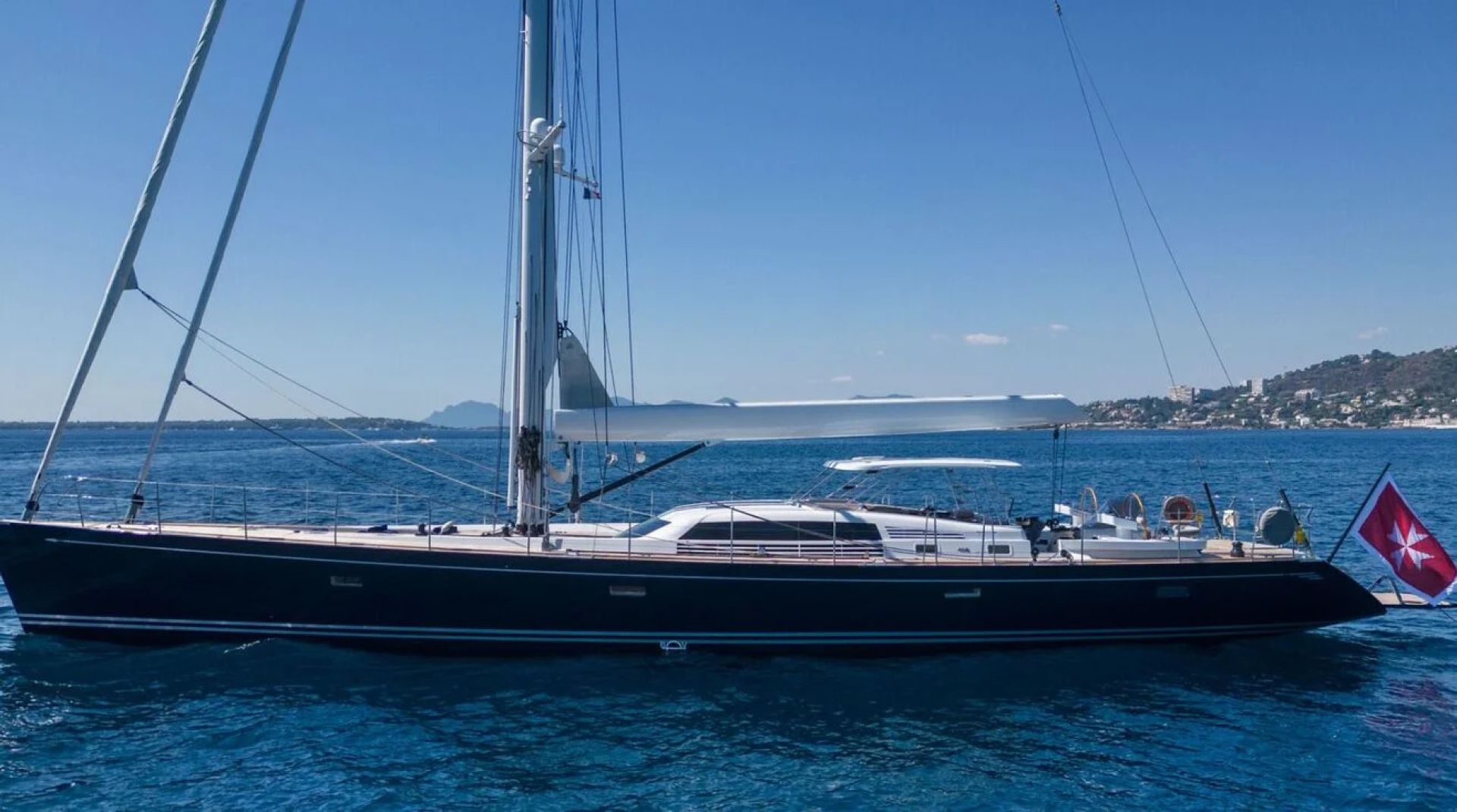

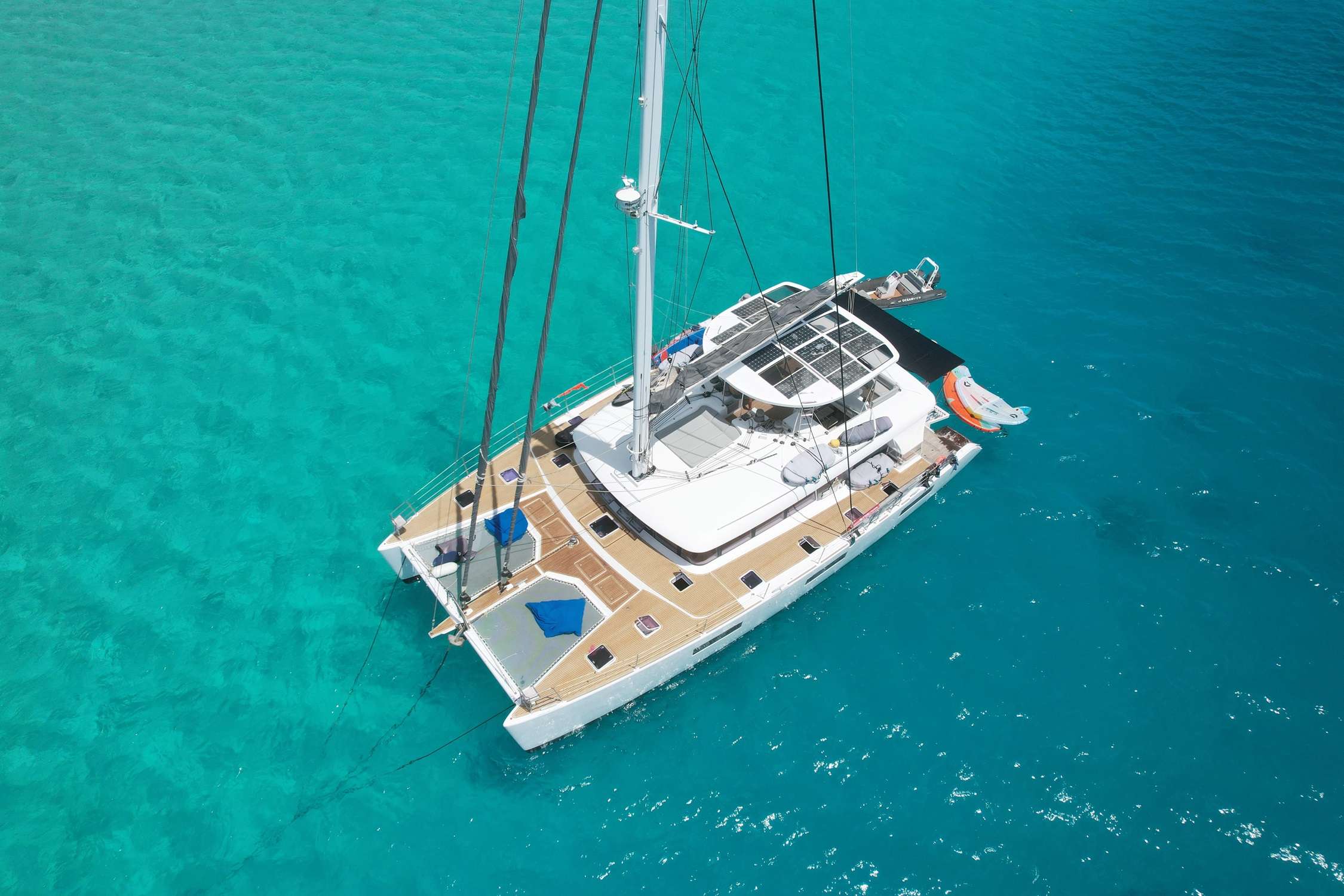
Zen Quest
61FT · SAILING CATAMARAN
Pricing from $29,000/week
6 Guests · 3 Cabins
Caribbean
Eastern Mediterranean
Western Mediterranean
South Pacific
United States
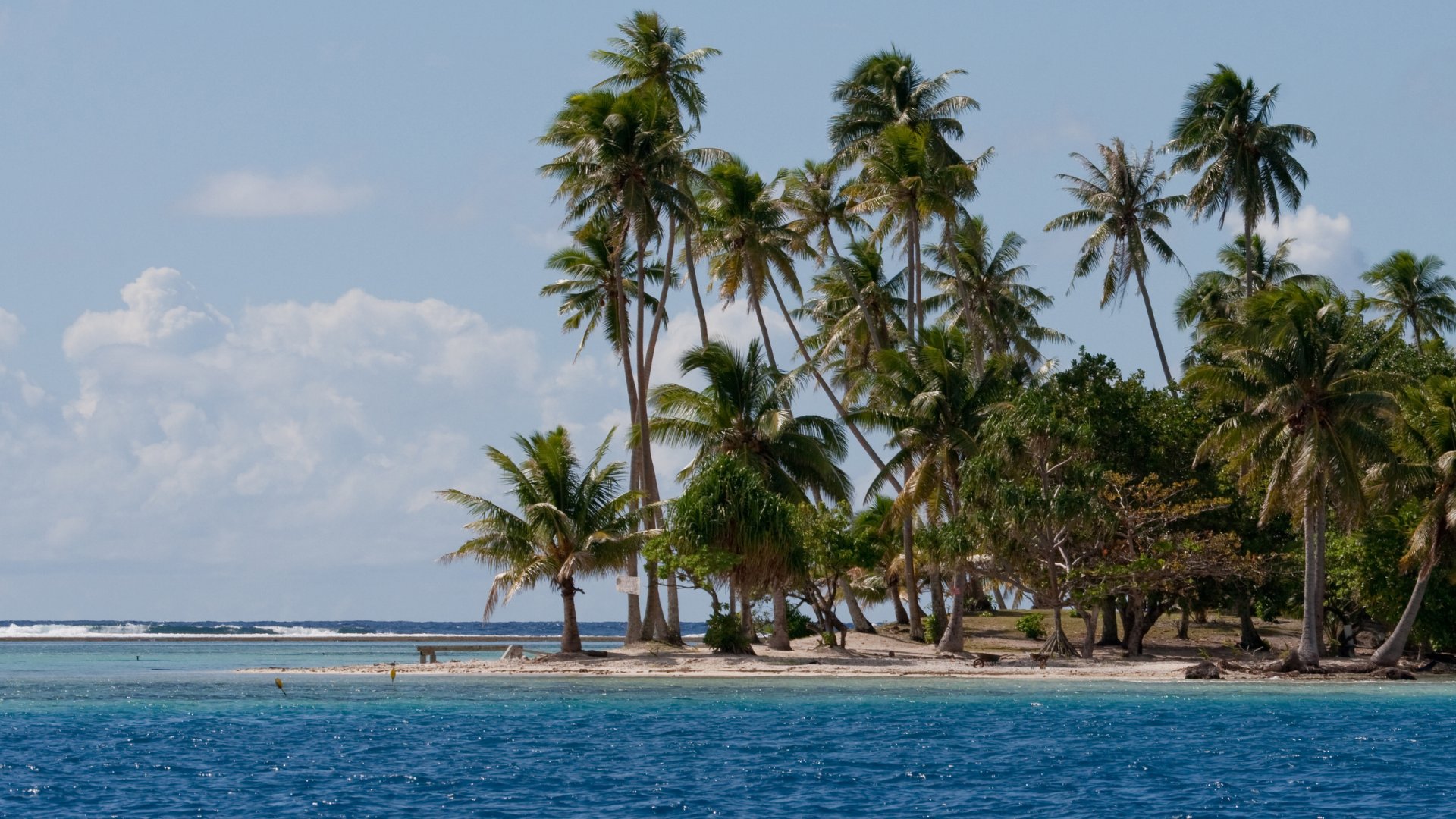
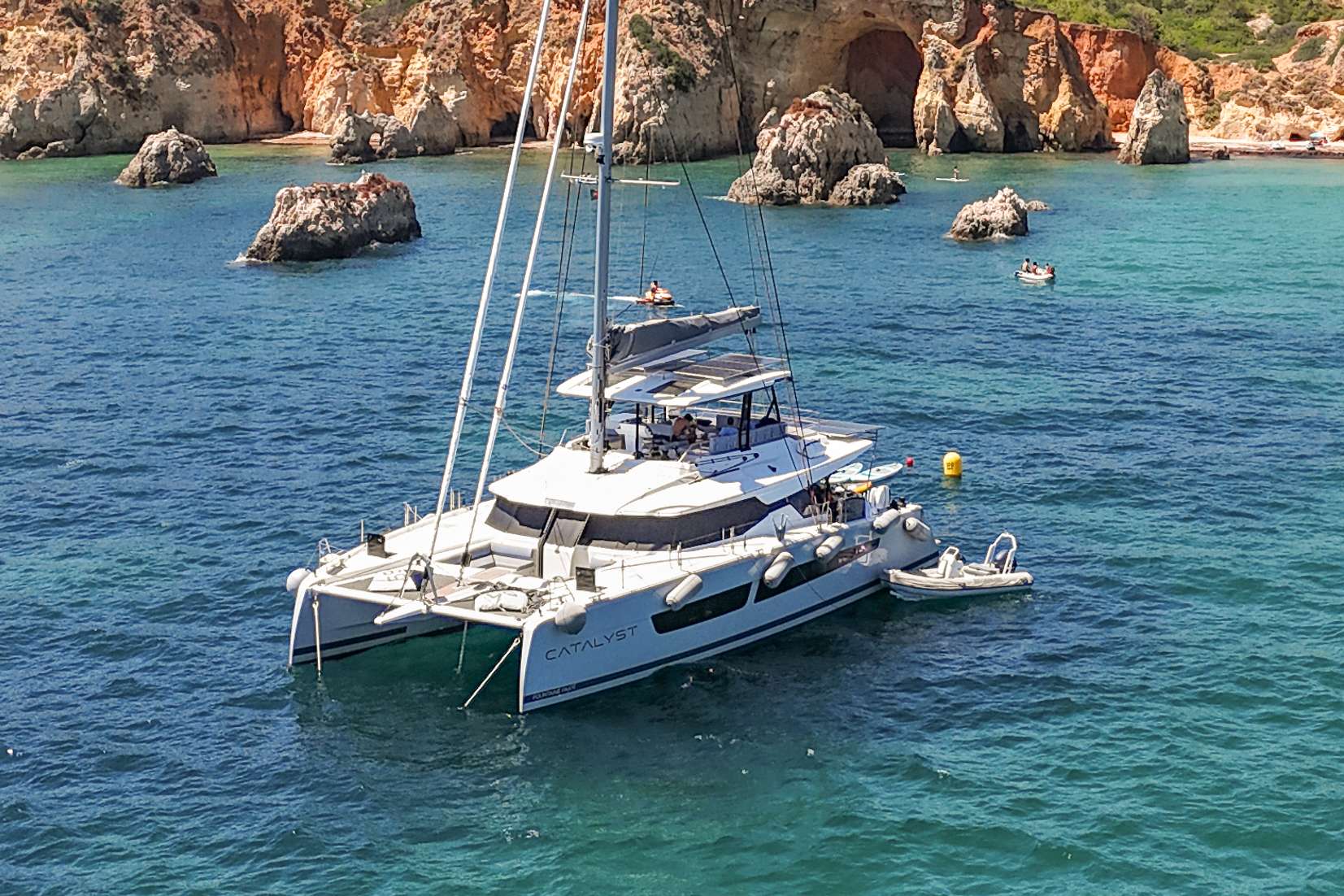
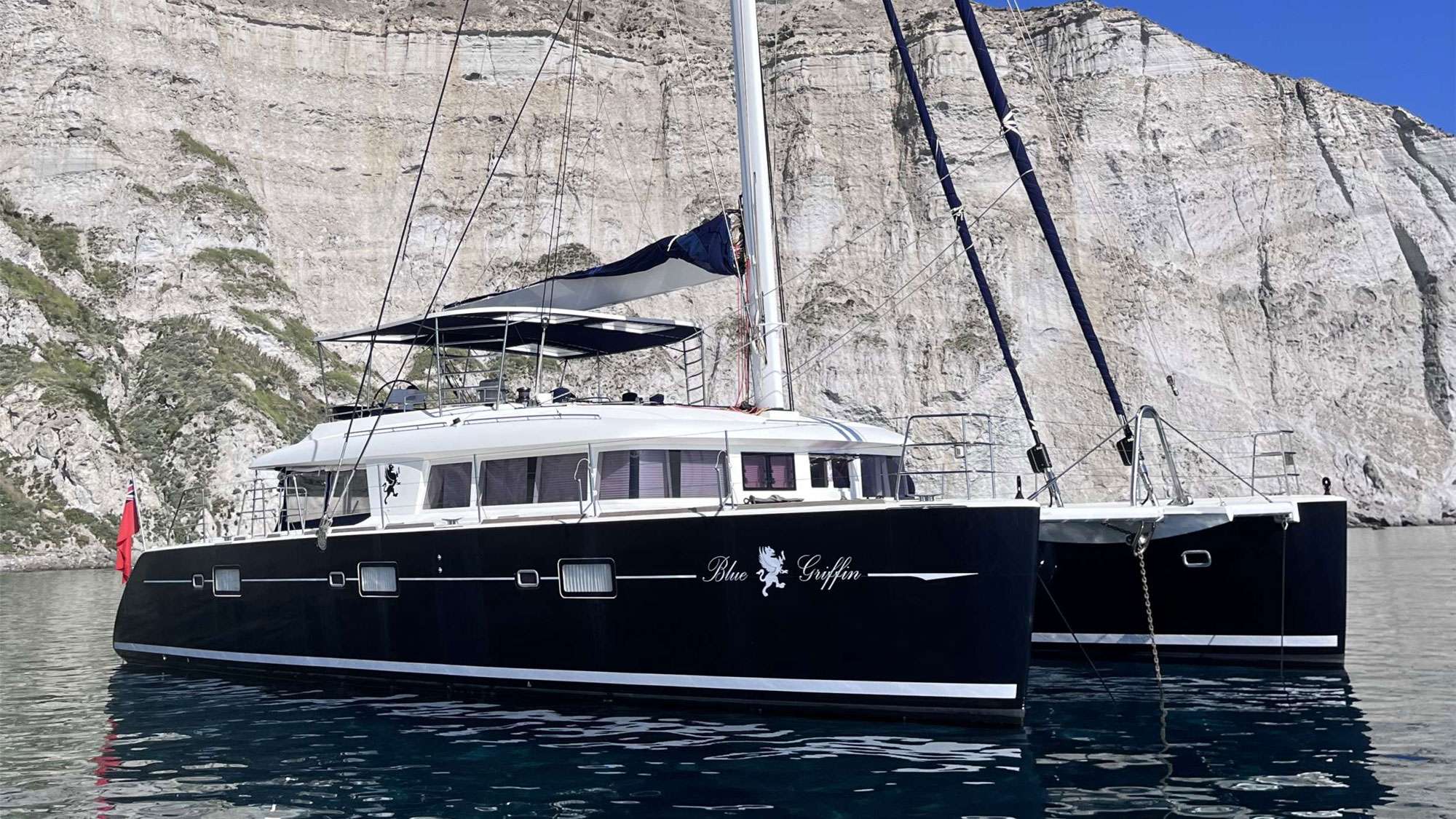
Crewed catamaran and motor yacht charters out of Marina Apooiti, Raiatea — through the Society Islands and into the Tuamotus, with captain and chef on board.
Why French Polynesia
French Polynesia is the trip most guests describe as the one they've thought about for years and finally booked. One hundred eighteen islands and atolls scattered across two million square miles of the South Pacific — the volcanic peaks of the Society Islands rising sharply from turquoise lagoons in the west, the pink-sand atolls of the Tuamotus drifting east toward the Marquesas. The name on the boarding pass is Tahiti, the largest island and the only one with a long-haul airport. The charter happens elsewhere: a 50-minute Air Tahiti flight west drops you in Raiatea, the sailing capital of the Leeward Islands and the embarkation point for the small fleet of crewed yachts that work these waters.
A crewed yacht is the only way to see this part of the world at the pace it deserves. Mornings open at anchor in a sheltered lagoon — coffee on deck, the green wall of an island rising behind the breakfast table, the chef putting out fresh fruit and the makings of poisson cru. The day's sail rarely runs more than three or four hours, so the boat is back at anchor by mid-afternoon for a swim, a paddleboard, or a snorkel through the Coral Garden between two Taha'a motus. Your captain handles the passes, the timing, and the customs at clearance. The only thing in front of you is the day itself.
There are two distinct cruising grounds, and the right one depends on what the group is after. Most charters happen in the Society Islands — Mt. Otemanu in every photograph, basalt peaks rising sharply from sheltered turquoise water, vanilla and black-pearl economies on the small islands, the UNESCO marae of Taputapuātea on Raiatea. Sailing distances are short, anchorages forgiving, and the standard week or ten-day itinerary loops three to five islands at an unhurried pace — manta cleaning stations at Anau Point on Bora Bora, the Coral Garden drift, an afternoon at Matira Beach before sundowners at the Bora Bora Yacht Club. The Tuamotus are a second cruising ground entirely — 78 low coral atolls strung across the South Pacific east of the Societies, where the marine life is the headline: the Tetamanu shark wall at Fakarava's south pass, the bottlenose dolphins of Rangiroa's Tiputa, the manta cleaning station at Tikehau. The fleet working the Tuamotus is small and most weeks require a yacht relocation in advance; we coordinate the repositioning before you book.
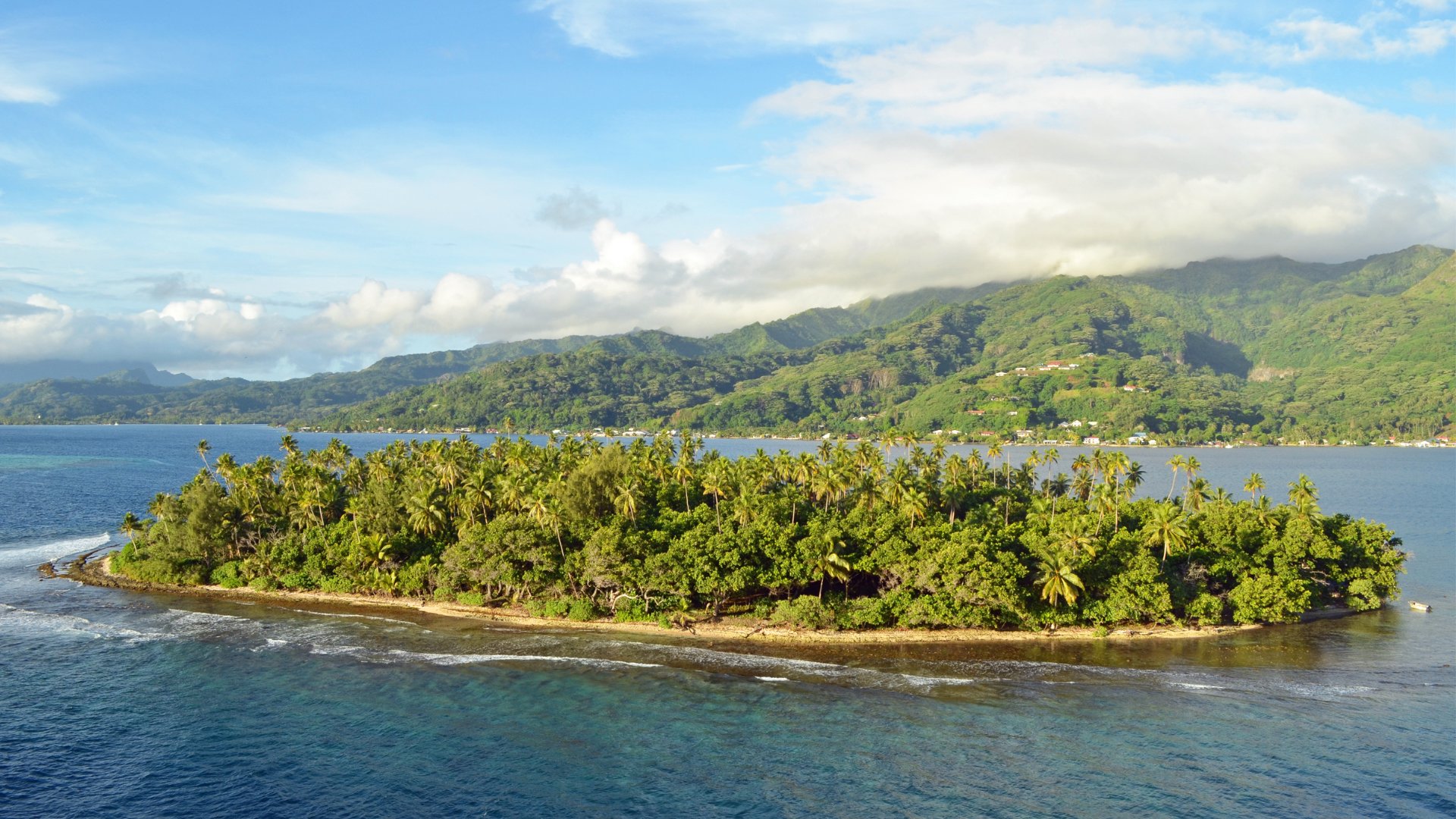
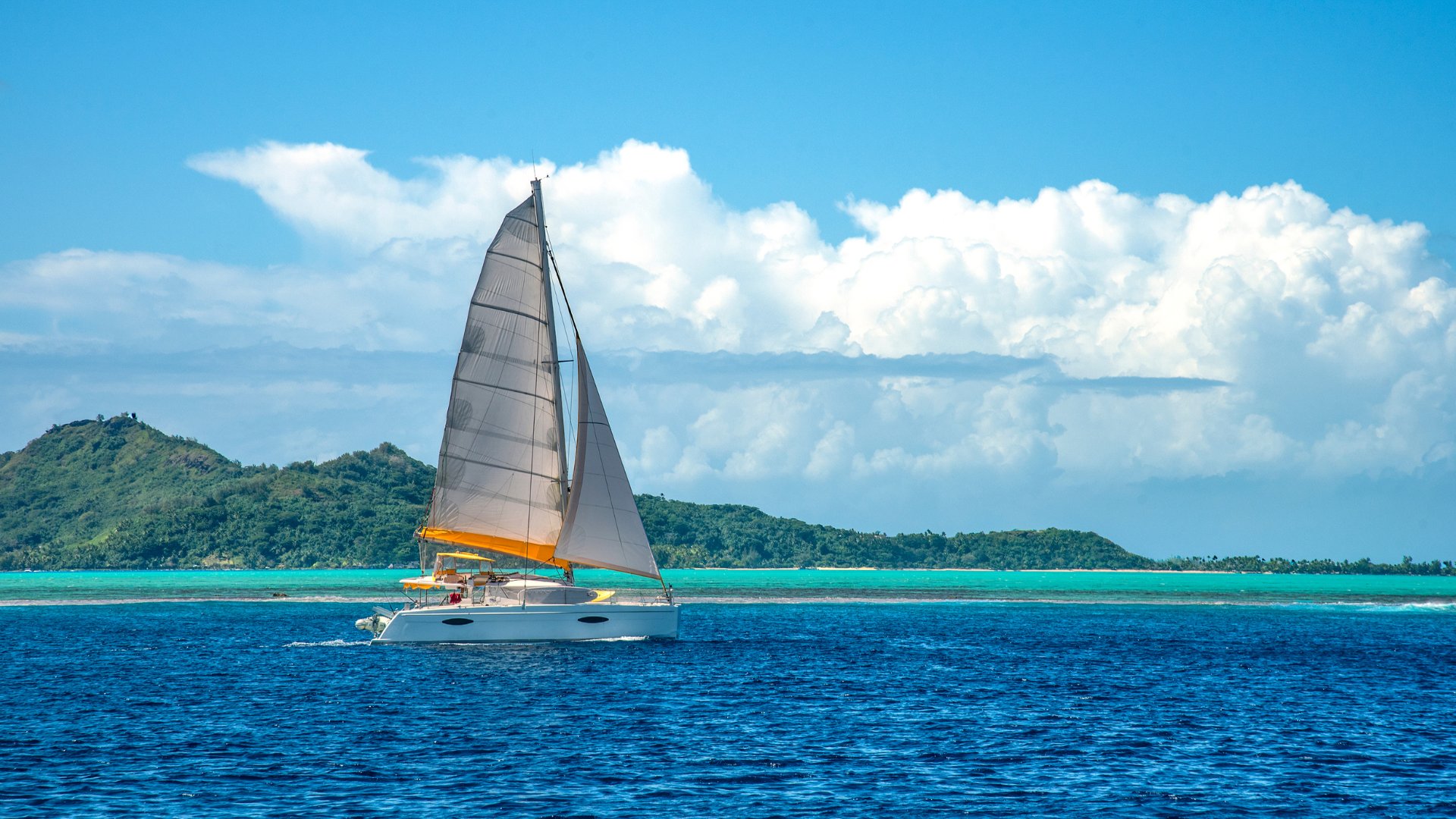
Four characteristics that distinguish French Polynesia from any other crewed-charter destination in the world.
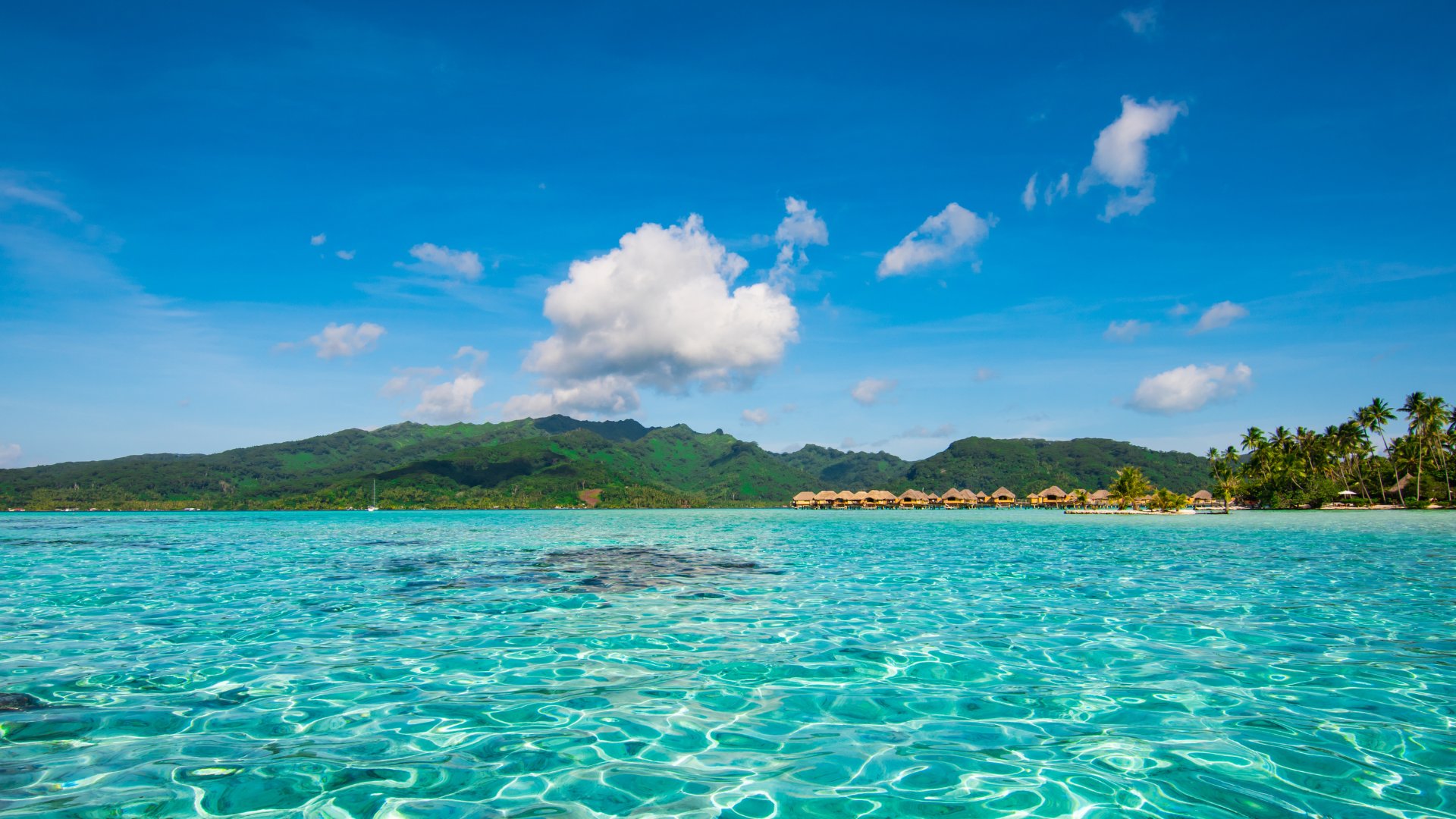
The classic French Polynesia week loops Raiatea, Taha'a, and Bora Bora through the lagoons that share a single barrier reef — sheltered, sailing distances are short, and afternoons end at anchor with time for a swim before dinner. Ten-day itineraries add Huahine to the east — quieter, greener, less photographed — and weather-permitting Maupiti to the west. Most sails run two to four hours; the trade winds favor an unhurried downwind rhythm once the captain points the bow toward Bora Bora.
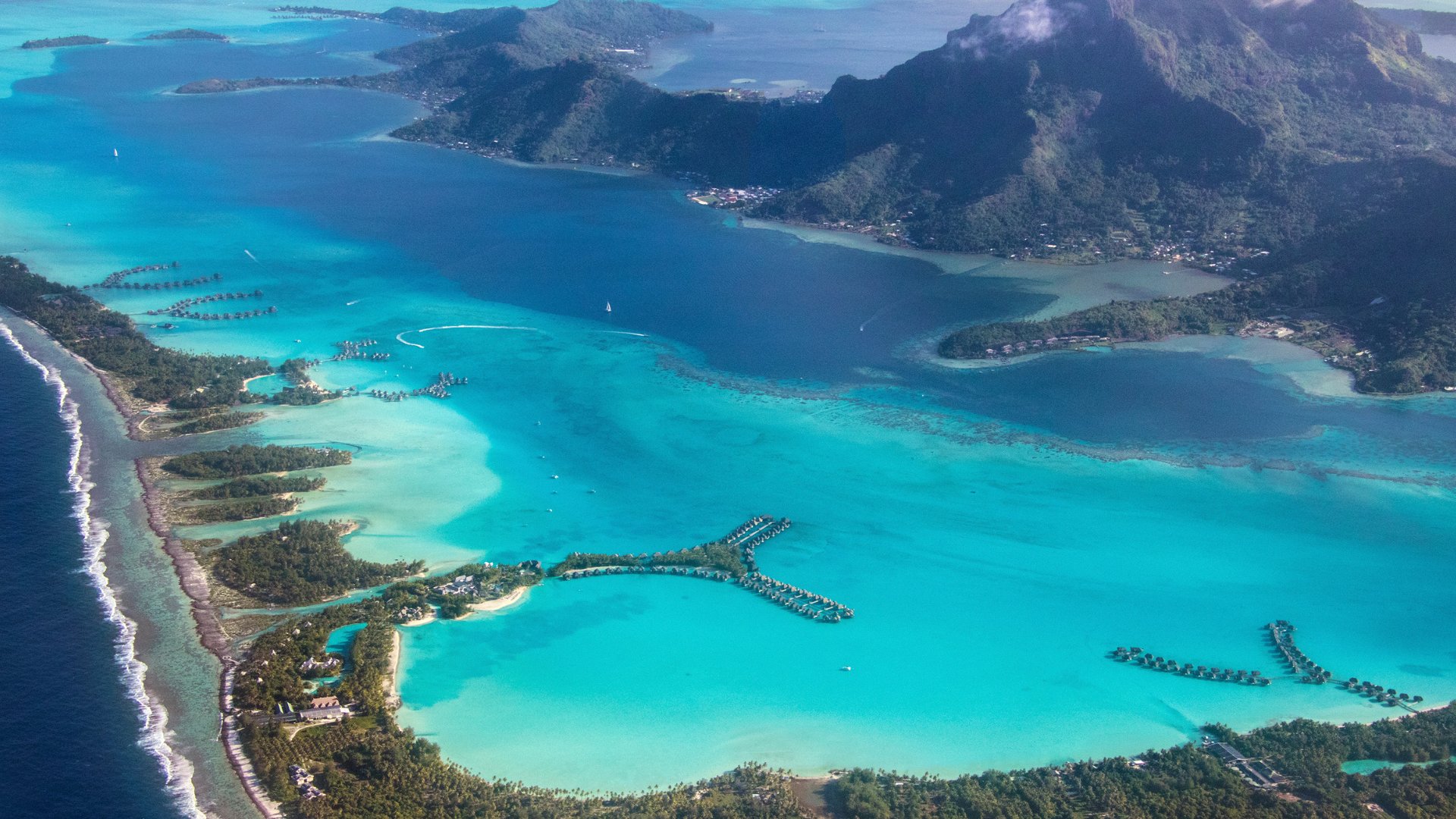
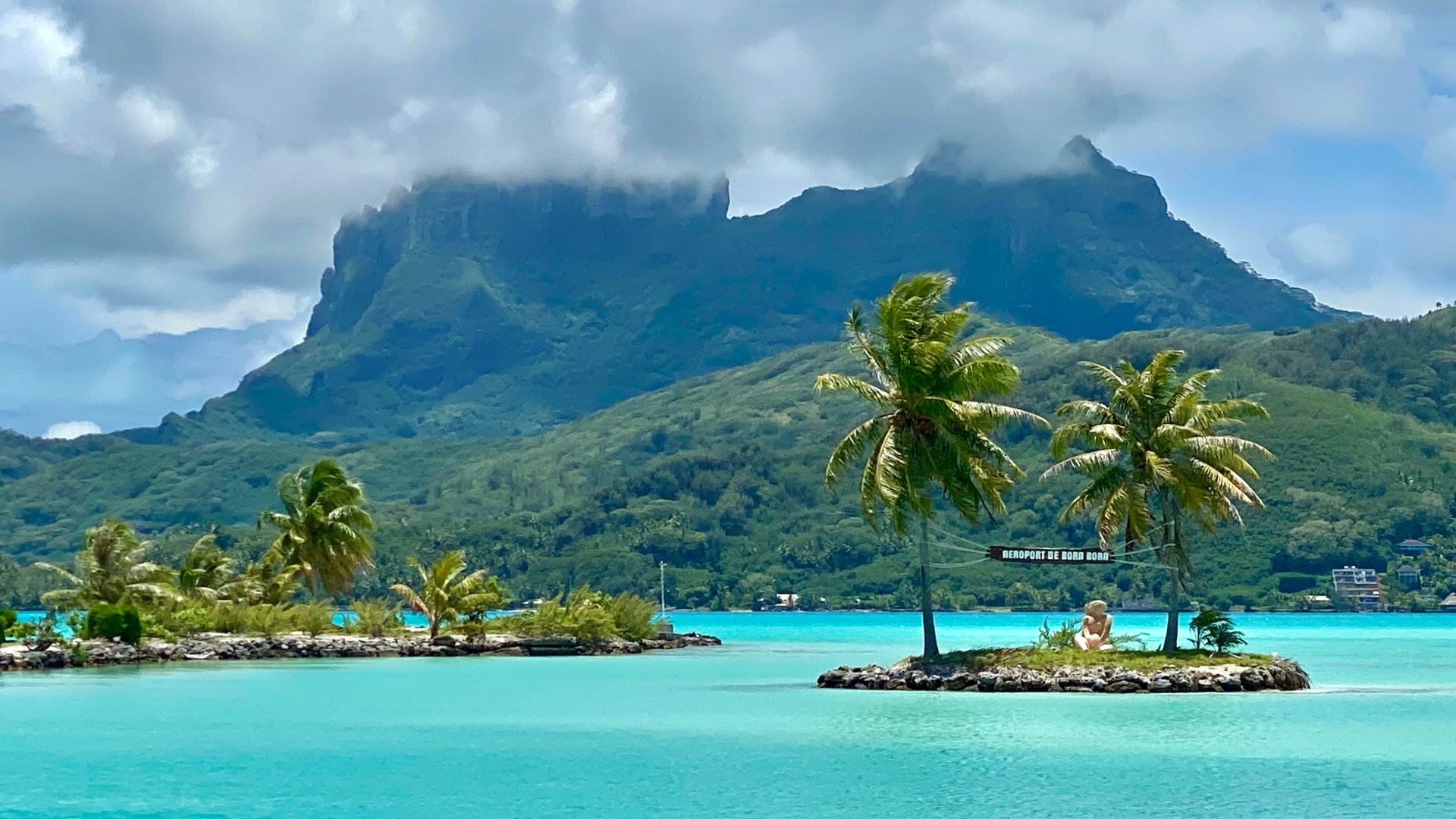
Mt. Otemanu's basalt spire is one of the most photographed silhouettes on earth, and the approach — sailing west from Taha'a as the mountain grows on the horizon — is one of the iconic afternoons in the Pacific. Inside the lagoon, the yacht anchors at Motu Topua, off Matira (Bora Bora's only public beach), or at the Bora Bora Yacht Club, with the peak overhead at every meal. A short tender ride to Anau Point on the east side puts you in the water with reef mantas at one of the most reliable cleaning stations in French Polynesia.
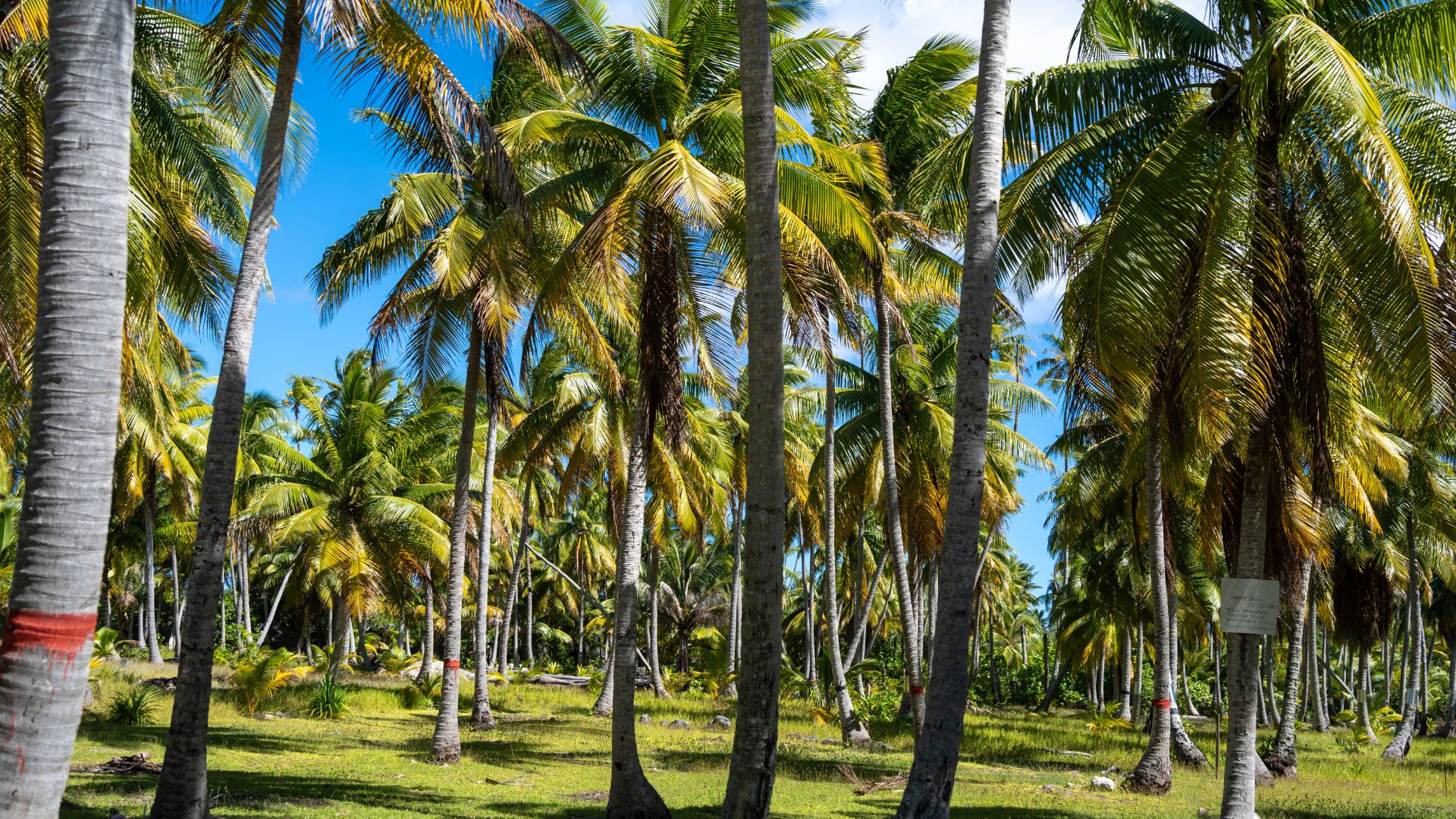
Raiatea was the spiritual and political center of eastern Polynesia for roughly a thousand years; Marae Taputapuātea on the east coast — the temple complex that anchored Polynesian voyaging across the Pacific — was inscribed on the UNESCO World Heritage List in 2017. Taha'a's small economy runs on vanilla orchids hand-pollinated one flower at a time and on black pearl farms where guests can buy loose pearls straight from the oyster. Dinners aboard lean into the islands' flavors — fresh tuna and mahi-mahi from the day's catch, served as poisson cru in coconut milk and lime, the signature dish of French Polynesia.
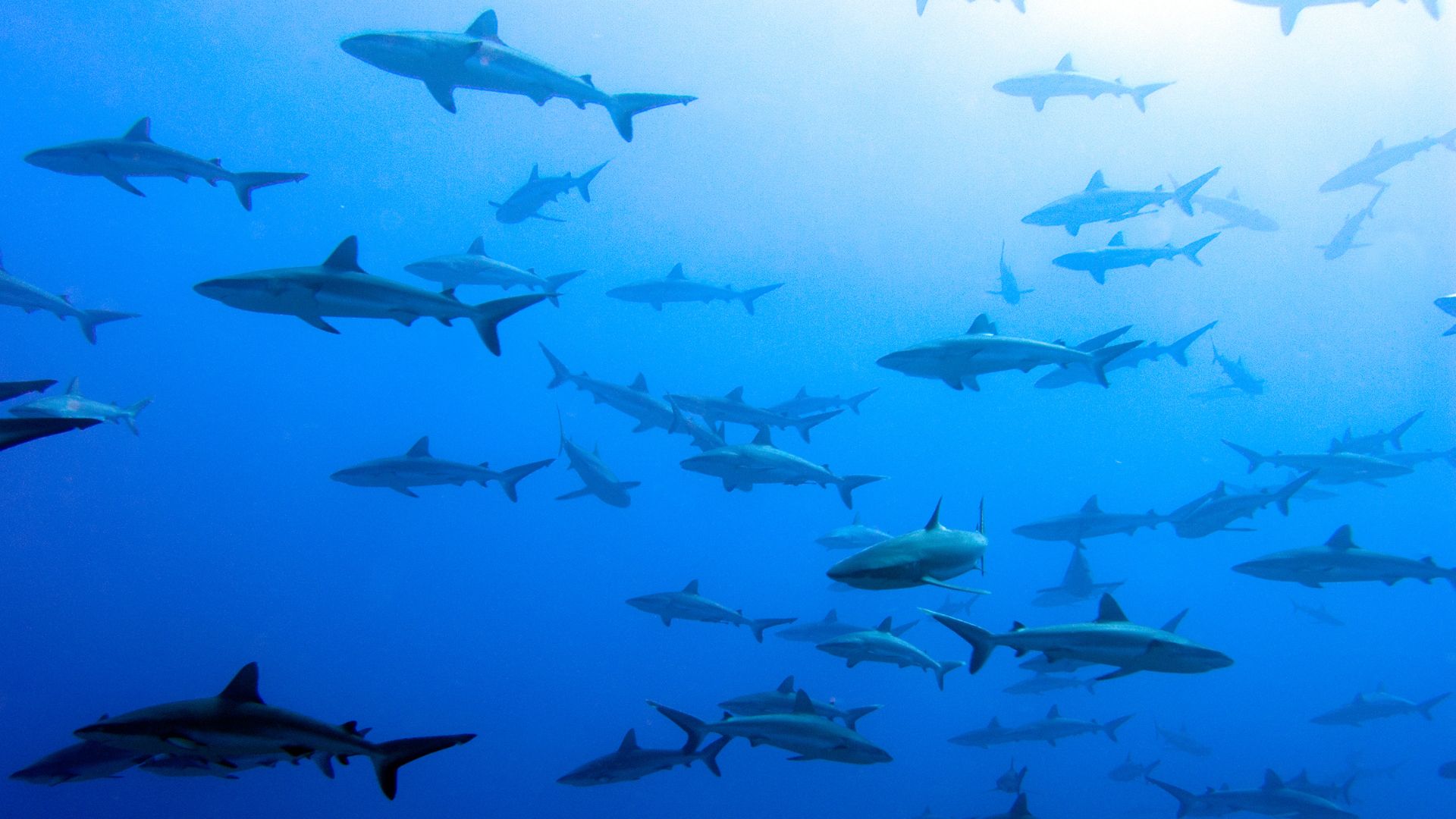
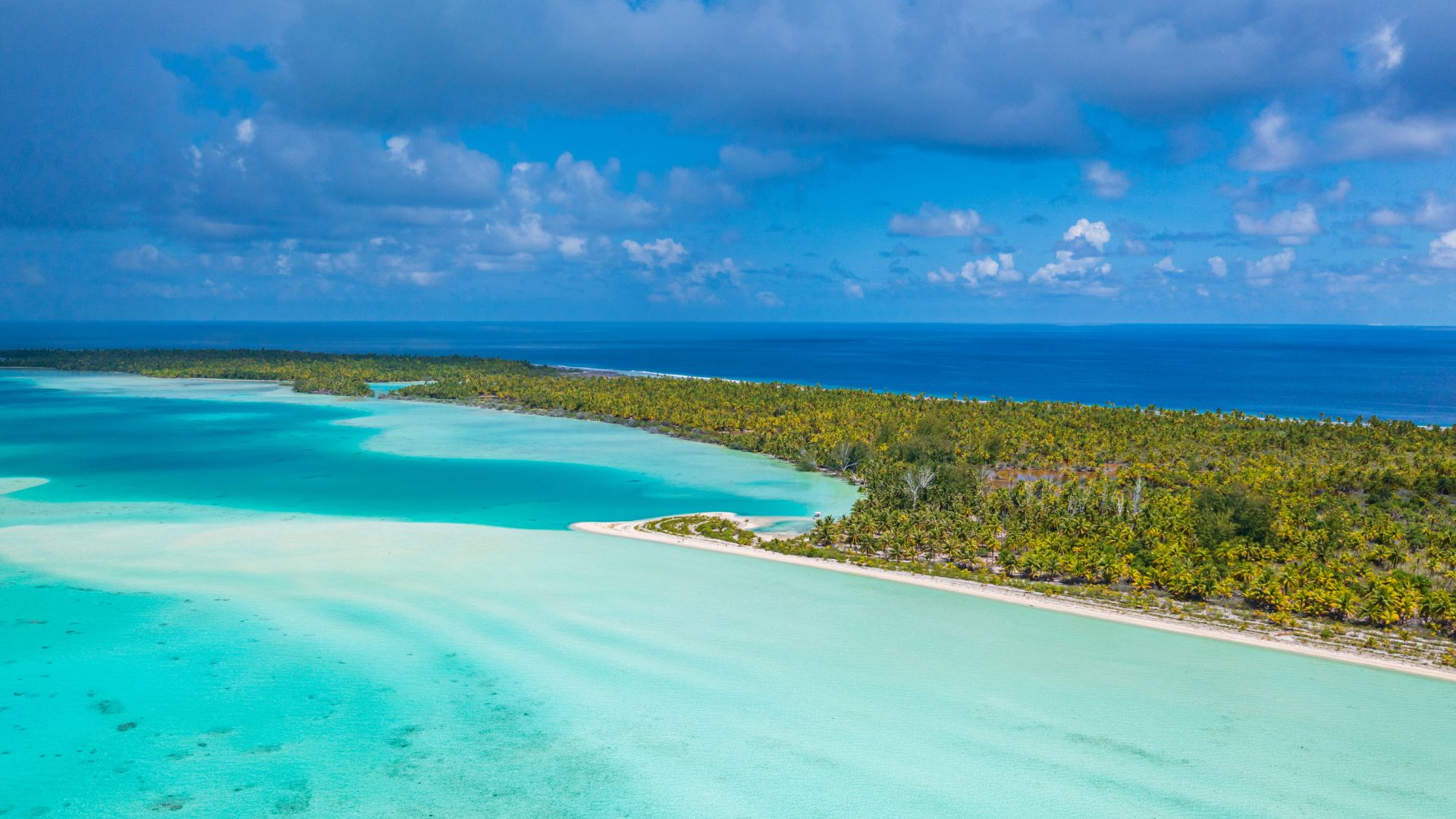
East of the Society Islands lie the Tuamotus — 78 low coral atolls running fifteen hundred kilometers across the South Pacific, the rings of barrier reef left behind when the original volcanic peaks subsided long ago. There are no mountains. The scenery is flat, expansive, and unlike anywhere else: a thin necklace of palm-covered motus around a turquoise lagoon, with the open Pacific on the other side of the reef. The pull is the marine life — the Tetamanu shark wall at Fakarava's south pass, the bottlenose dolphins of Rangiroa's Tiputa, the manta cleaning station at Tikehau, the working pearl farms at Apataki. Off the beaten path, rustic compared to the Societies, and a different kind of trip altogether.
A hand-picked selection of crewed charter yachts for French Polynesia — yachts and crews we know firsthand.
Your week is shaped around your group's interests, the season, and the conditions on the water — your captain tailors the days as they unfold. Treat these itineraries as starting points for inspiration.
Crewed Itinerary · Society Islands, French Polynesia
Ten days is the right amount of time to do the Society Islands justice. Our suggested crewed charter itinerary starts with a seamless arrival at Marina Apooiti and threads all five of French Polynesia's Leeward islands—Raiatea, Huahine, Taha'a, Bora Bora, and weather-permitting Maupiti—before closing the loop back at the base. With a professional captain and private chef handling every detail, all you need to do is step aboard, settle in, and let the trade winds do the rest.
The route itself is deliberate: one upwind passage early to Huahine, then easy downwind and reaching sails the rest of the trip through Taha'a's shared lagoon, Bora Bora's iconic silhouette, and Maupiti's remote Onoiau Pass if conditions cooperate. It's an itinerary designed for the kind of guest who wants real sailing, real culture, and real time to linger over the parts that matter.

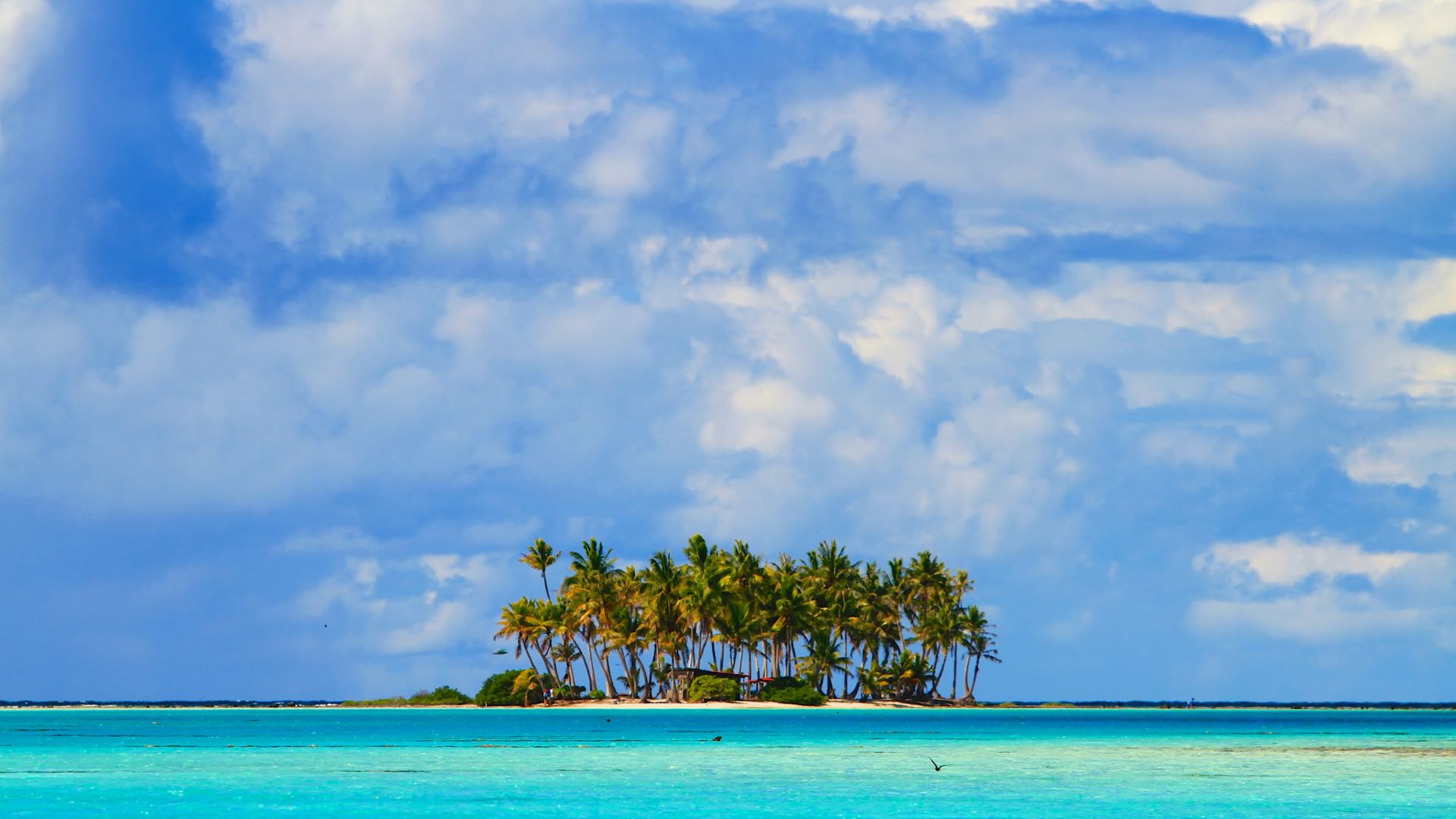
Ten days is the right length for a real Society Islands week — long enough to thread all five of French Polynesia's Leeward islands without rushing. Raiatea (the sailing capital — pickup at Marina Apooiti), Huahine (the early upwind leg, then it's all downwind from here), Taha'a (the vanilla island, the Coral Garden snorkel), Bora Bora (Mt. Otemanu, motu picnics, three nights), and weather-permitting Maupiti (the remote Onoiau Pass, the most photogenic atoll in the chain).
About 140 nautical miles total. The route is built deliberately around the southeasterly trades — one upwind passage early, then easy downwind and reaching sails the rest of the trip. If you can't stretch to ten days, the 7-day French Polynesia itinerary covers Raiatea, Taha'a, and Bora Bora as the tighter version. For a completely different French Polynesia experience, see the 10-day Tuamotus expedition.
Day 1 of 10 · Marina Apooiti
Your journey begins at Marina Apooiti on Raiatea—the sailing capital of French Polynesia and the logical base for any serious exploration of the Leeward Islands. After the short transfer from Raiatea Airport, your professional crew welcomes you aboard with cool refreshments and a warm chart briefing that frames the trip ahead. Settle into your cabin, stow your gear, and take a moment on deck to take in the view of Mount Temehani rising green behind the lagoon.
Once you're ready, the captain slips lines for a short shakedown sail into the protected inner lagoon that Raiatea shares with neighboring Taha'a. This is an easy, sheltered first passage—no open water, no big swell, just the two islands enclosed by a single barrier reef. Drop anchor in a quiet bay, break out the water toys, and shake off the travel miles with a swim in clear, bathwater-warm water.
As the sun drops behind Bora Bora on the western horizon, your private chef will prepare the first gourmet dinner aboard—often a Polynesian take on fresh local fish with tropical fruits and a chilled bottle of something crisp. Cocktails on deck, stars overhead, and the hum of the reef in the distance set the tone for the ten days ahead.
Day Highlights
Day 2 of 10 · Raiatea → Huahine
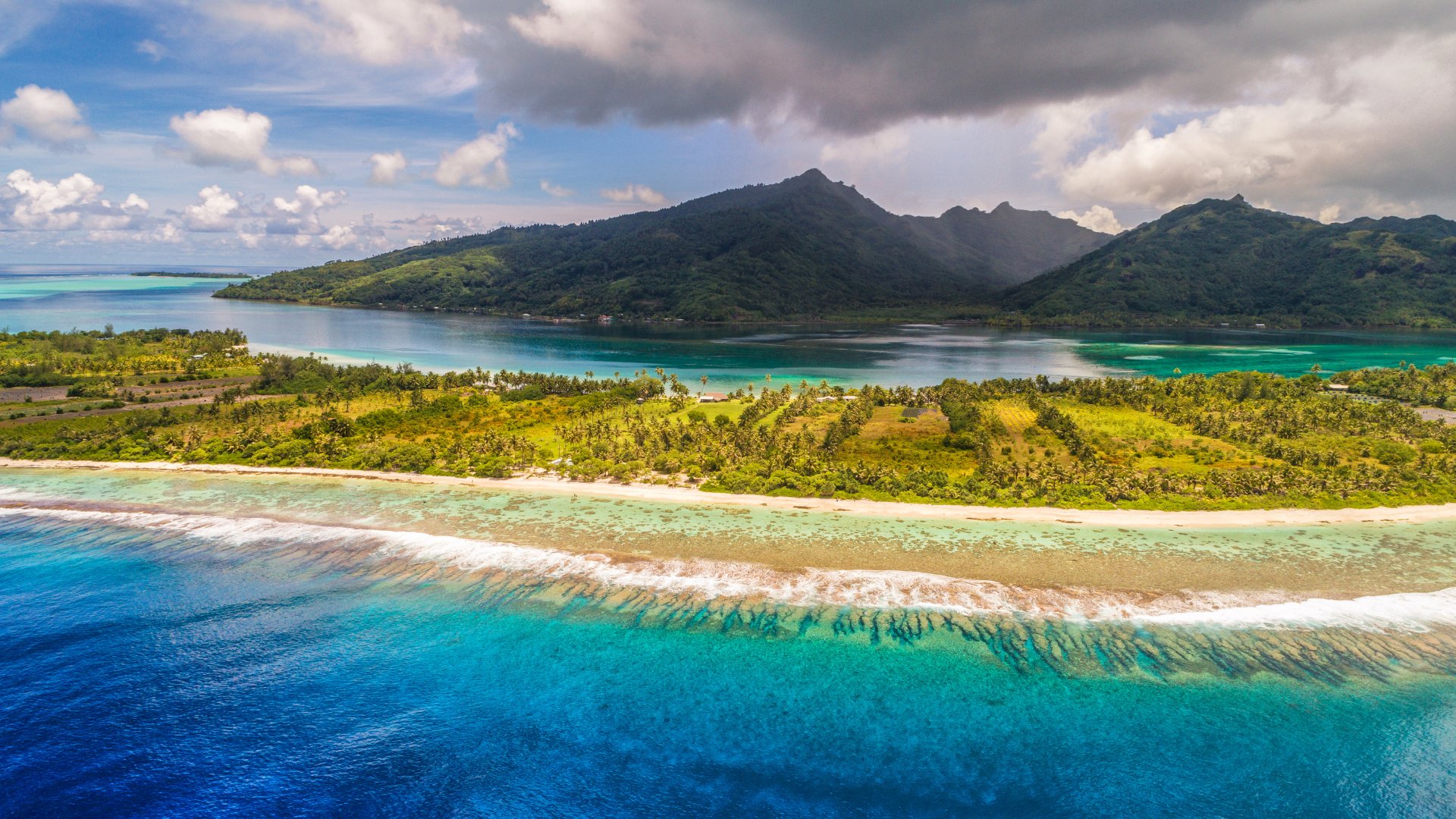
After a leisurely breakfast aboard, your crew points the bow east-northeast for the passage to Huahine—about twenty-five nautical miles directly into the prevailing southeasterly trades. It's the one serious upwind leg of the trip, and we do it early to set the stage for the easier downwind rhythm that defines the days ahead. The sail itself is beautiful, with Raiatea and Taha'a receding astern and Huahine's twin peaks growing on the horizon.
Huahine is often called the wild island, and the label fits. Where Bora Bora is polished and Instagram-ready, Huahine is quieter, greener, and more authentically Polynesian. Your captain will clear the pass and drop anchor in Fare Bay, a short tender ride from Fare village—a handful of low-slung shops, a boulangerie, a few waterfront roulottes for casual lunch, and the slow pace of an island that never really adopted mass tourism.
In the afternoon, the tender takes you across the bay to Faie, home of the sacred blue-eyed eels. These massive freshwater eels live in a shallow stream at the edge of the village and have been considered sacred for generations. You can feed them sardines from the bridge—locals sell them for a few francs—and watch them surface with startling, electric-blue eyes. Back aboard, cocktails on deck, a chef-prepared dinner, and a night in one of the quietest anchorages in the Societies.
Day Highlights
Day 3 of 10 · Huahine
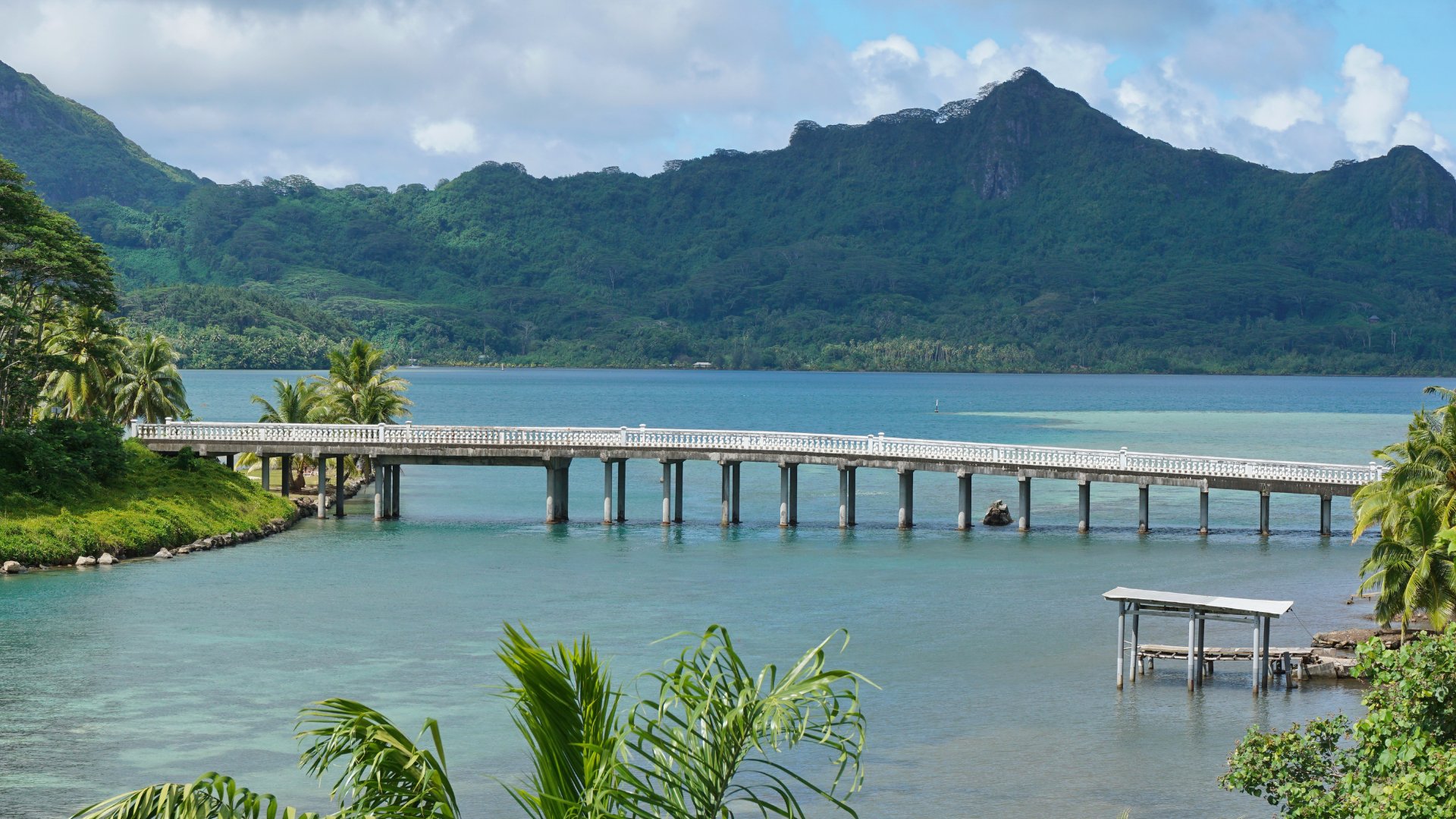
Start the morning with a short tender ride to the ancient village of Maeva on Huahine's north shore—one of the most important archaeological sites in French Polynesia. More than two dozen stone marae (sacred platforms) line the shore and climb the hillside behind the village, along with the remnants of a pre-European fish trap system that's still partially in use today. A local guide can walk you through the history, and the setting alone—banyan trees, basalt stones, the lagoon behind you—is worth the stop.
After lunch aboard, your crew will sail you down Huahine's west coast to Avea Bay on the southern tip of the island. This is one of the most beautiful anchorages in the Societies—a wide, calm crescent with a white-sand bottom, excellent snorkeling along the reef edge, and almost no one else there. Break out the paddleboards, take the tender in to Chez Tara for a drink on the beach, or simply float.
As the afternoon softens, the captain will repoint the bow for tomorrow's downwind passage. Tonight's dinner is a slow, three-course affair on deck, and the anchorage is quiet enough that you'll hear the reef breathing across the bay.
Day Highlights
Day 4 of 10 · Huahine → Taha'a
Today is sailing day. With the trades on your quarter, your captain will set a downwind course roughly thirty nautical miles back across open water to Taha'a, the vanilla island. Unlike the upwind beat to Huahine, this is the kind of passage that writes postcards—fast, steady, and easy enough that you can lie on the foredeck with a book and a cold drink.
Your crew will clear the Toahotu Pass on Taha'a's east side and drop anchor near Motu Mahea, a tiny palm-covered islet perched on the edge of the barrier reef. The snorkeling here is excellent—vibrant coral, reef fish in every color, and the calm water of the inside lagoon. Spend the afternoon in and out of the water, or take the tender ashore to walk the motu.
Dinner aboard tonight, often with fresh-grilled mahi-mahi and a generous pour of something white and chilled. The anchorage is exposed enough that you'll feel the trade wind on deck, but the reef knocks down the swell—ideal conditions for a night under stars.
Day Highlights
Day 5 of 10 · Taha'a
This is the signature Taha'a day, and it deserves the full treatment. Your crew will move the yacht around to the northwest corner of the island, anchoring near Motu Tau Tau for the Coral Garden drift snorkel—arguably the single best in-water experience anywhere in the Societies. You drop into a shallow channel between two motus, let the current carry you over a field of branching coral teeming with tropical fish, and finish on a white-sand beach at the other end. Thirty minutes of pure unplanned magic.
After the drift, the tender will take you to one of Taha'a's vanilla plantations. French Polynesia produces some of the best vanilla in the world, and walking through the orchids—hand-pollinated, one flower at a time—is the kind of quiet, tactile experience the island does well. Most plantations sell fresh beans and extract by the gram; buy the good stuff while you're here.
In the afternoon, your captain will move the yacht into Haamene Bay, one of the longest and deepest inlets in the Societies. A short tender ride up the bay reaches a black pearl farm, where a quick tour explains the two-year grafting process and ends in a showroom where you can buy loose pearls straight from the oyster. Back aboard, sundowners on deck, another chef-prepared dinner, and a night in water so glassy you can see the reef below.
Day Highlights
Day 6 of 10 · Taha'a → Bora Bora
After breakfast, your crew will clear the Papai Pass on Taha'a's west side and set a downwind course for Bora Bora—only about fifteen nautical miles, but it's fifteen of the most scenic miles of sailing anywhere in the Pacific. Mount Otemanu grows steadily on the horizon until it fills the sky in front of you, a basalt tower so distinctive it's been the backdrop of a thousand honeymoon photos for a reason.
Your captain will bring the yacht through the Teavanui Pass—the only navigable entrance to Bora Bora's lagoon, and one of the great sailing gateways in the world. Anchor at Motu Topua, just across the lagoon from the main village of Vaitape, with Otemanu rising directly behind the yacht. Spend the afternoon in the water, on a paddleboard, or simply sitting on the aft deck with the mountain looming directly overhead.
Tonight, the tender takes you ashore to Bloody Mary's—the island's most famous restaurant, sand floors, open-air dining room, the day's catch laid out on ice at the entrance. It's touristy in the best possible way, and worth the visit at least once. Back aboard late, a nightcap on deck, and the lights of the overwater bungalows shimmering across the lagoon.
Day Highlights
Day 7 of 10 · Bora Bora
Start the day early with a short motor to Anau Point on Bora Bora's east side, one of the most reliable manta ray cleaning stations in the lagoon. The rays—often two-meter wingspans, sometimes bigger—hover in shallow water while cleaner wrasses work over their skin. Slip into the water quietly, keep your distance, and let them come to you. A good morning here is the kind of encounter you'll talk about for years.
After lunch aboard, the captain circles the yacht down to the southern end of the island and anchors off Matira Beach, the only public beach on Bora Bora and consistently ranked among the most beautiful in the world. The water is shallow for a long way out, easy to wade, and the light in the late afternoon is exactly what the photographs suggest. Take the tender in for a long walk on the sand or stay aboard and float.
As the sun sets behind Otemanu, sundowners on the aft deck. Your chef will have been to the Vaitape market earlier in the day for fresh poisson cru—raw tuna marinated in coconut milk and lime, the signature dish of French Polynesia—and tonight's dinner leans into the island's flavors.
Day Highlights
Day 8 of 10 · Maupiti — weather permitting
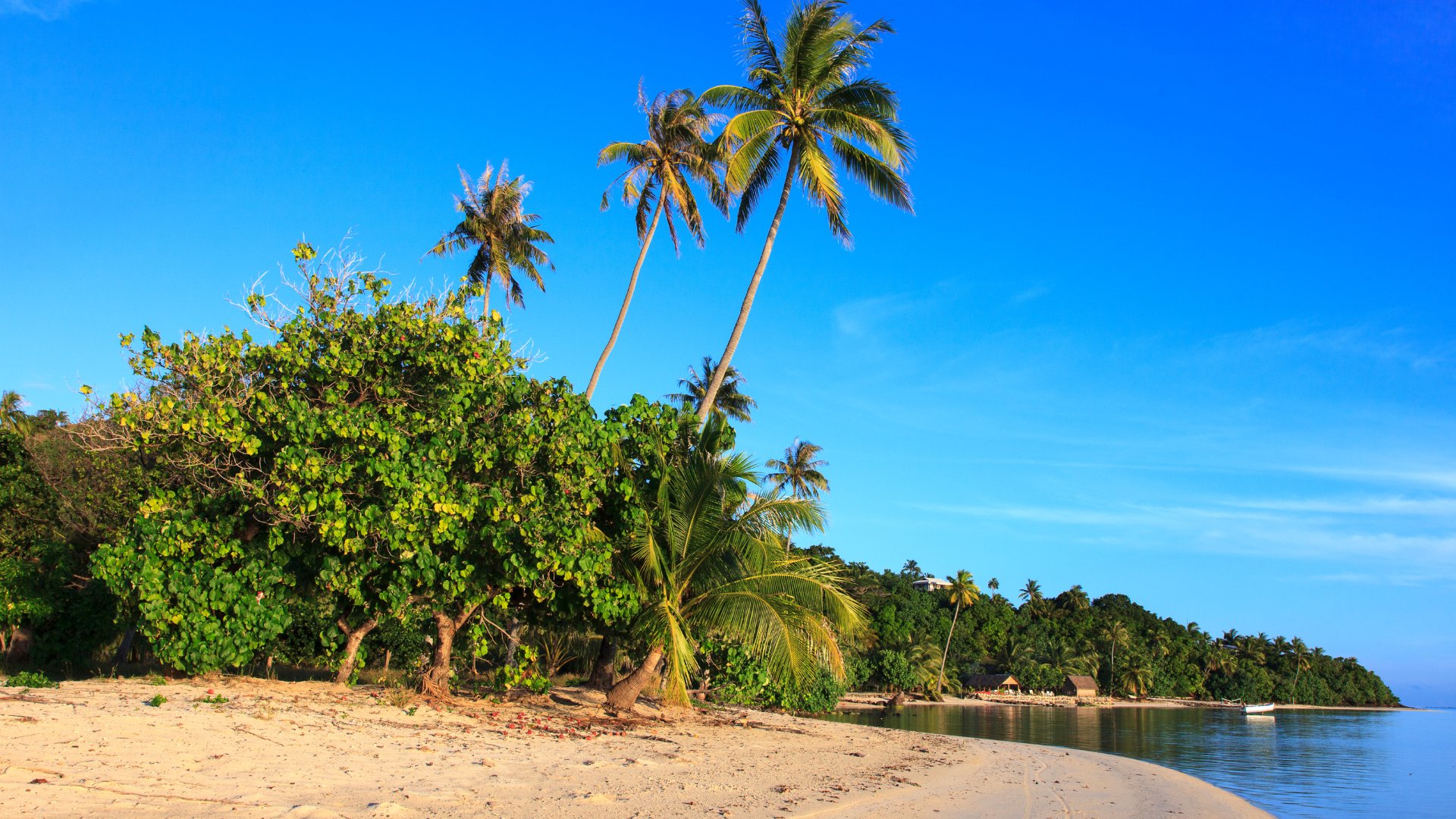
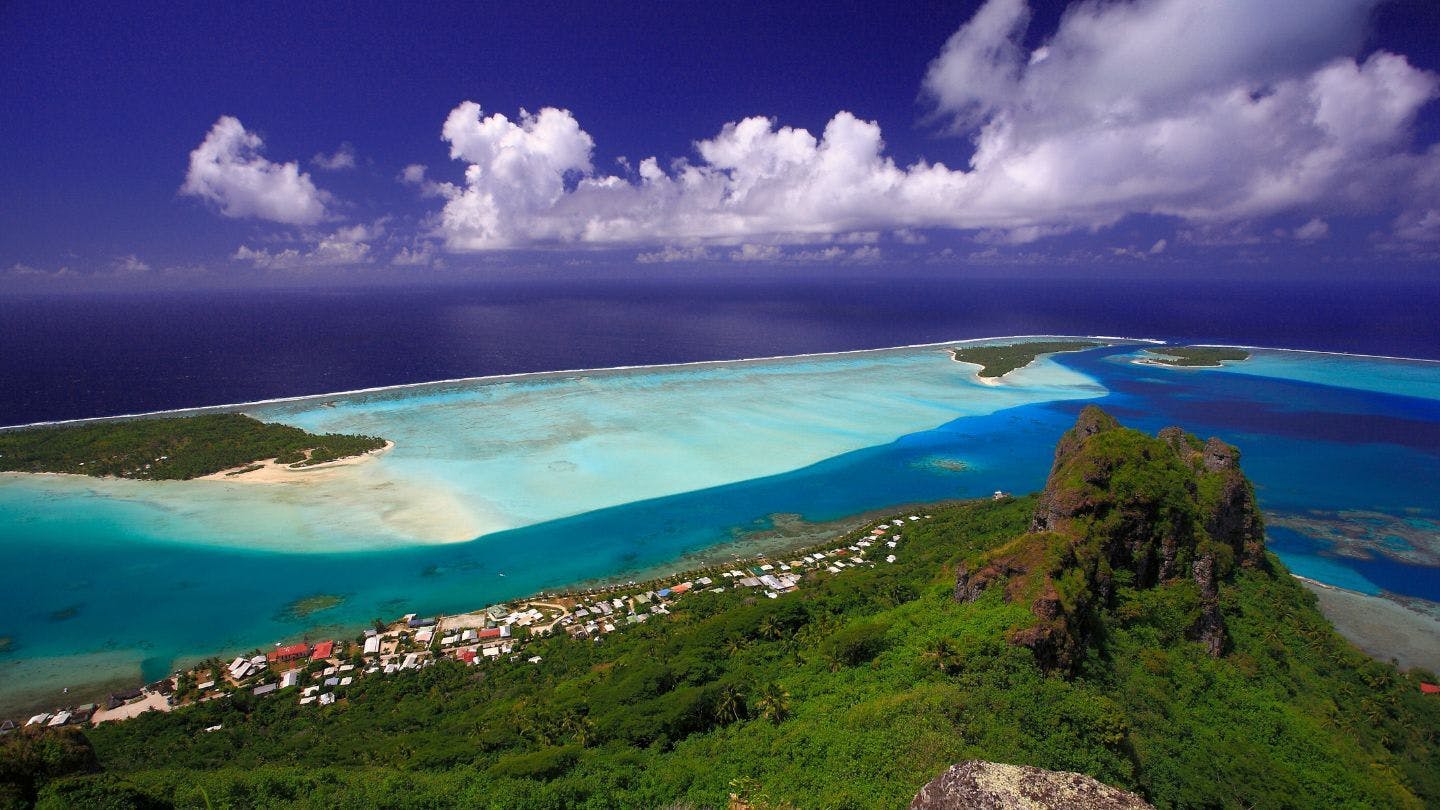
Today is the weather-check day, and your captain makes the call before breakfast. Maupiti is the quiet jewel of the Leewards—a smaller, unrushed version of Bora Bora with no resorts, no overwater bungalows, and an absolute ring of white-sand motus around a turquoise lagoon. The catch is the Onoiau Pass on the south side, the only way in or out. It's narrow, shallow in spots, and completely exposed to southerly swell. In calm conditions, it's straightforward. In anything else, it's a no-go.
If the captain calls a go, you'll make the twenty-eight-mile downwind run west from Bora Bora in the morning, clear the pass at slack, and spend the afternoon in one of the most beautiful anchorages in French Polynesia. Options on the island include a short, steep hike to the summit of Mount Teurafaatiu for a panoramic view that genuinely rivals anything in the Pacific, a bicycle ride around the coastal road, and a quiet afternoon in the village of Vaiea.
If the captain calls a no-go, you stay in Bora Bora and make the most of a second day on the island. The fallback is a visit to the Lagoonarium—a protected section of reef where you can snorkel with reef sharks, sting rays, and sea turtles in shallow water—followed by a motu picnic on one of the outer islets. Either way, the day is a highlight; we just let the weather decide which highlight you get.
Day Highlights
Day 9 of 10 · Bora Bora
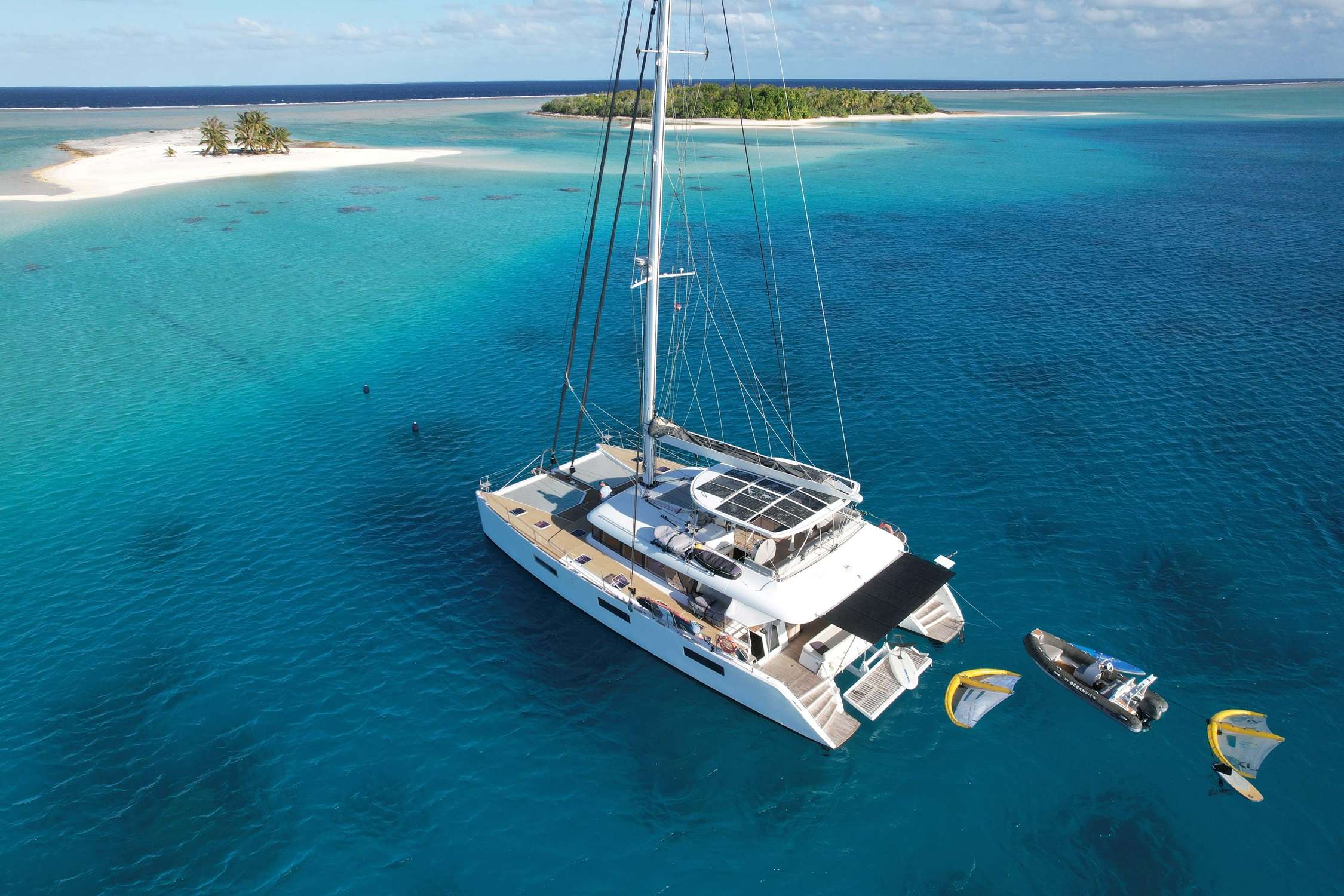
If yesterday was Maupiti, today is the return—an easy upwind leg back through the Teavanui Pass and into the Bora Bora lagoon by mid-afternoon. If yesterday was the Lagoonarium, today picks up whatever you didn't get to: a long paddleboard session across the lagoon, a drift snorkel along the inside of the barrier reef, or a slow afternoon on one of the motus with a picnic.
By late afternoon, the yacht will be moored at the Bora Bora Yacht Club for your last night on the island. The club is relaxed, unpretentious, and has a long history with visiting cruisers—a good place to have a drink at the bar, watch the sun drop behind Otemanu, and trade stories with the captains of the other yachts in the anchorage.
Tonight's dinner is aboard, a three-course farewell prepared by your chef, and something worth lingering over. The lights of the lagoon, the silhouette of the mountain, and the knowledge that tomorrow is the long run home make this the kind of night that earns the word "unforgettable."
Day Highlights
Day 10 of 10 · Bora Bora → Raiatea
Your last full day begins with an early breakfast and the passage back from Bora Bora to Raiatea—about twenty-five nautical miles on a close reach, manageable in the typical trade, and with Taha'a to the north as a visual marker the whole way. Your captain will time the approach to clear the Rautoanui Pass into the shared Raiatea–Taha'a lagoon by midday.
The rest of the day is yours. A strong option is the Faaroa River—the only navigable river in French Polynesia—a slow dinghy or kayak trip up a jungle-lined waterway that cuts into the center of Raiatea. It's quiet, cool under the canopy, and unlike anything else on the trip. Serious history buffs should make time for Marae Taputapuatea, the UNESCO World Heritage site on the east coast that served as the spiritual and political center of Polynesia for a thousand years.
For the final night, your crew will anchor at Motu MiriMiri, a small islet on the south side of the lagoon with exceptional snorkeling and the best sunset view on Raiatea. One last swim, one last sundowner, one last chef-prepared dinner aboard, and the sound of the reef closing out the trip.
Day Highlights
Day 11 · Departure
Enjoy a final slow breakfast aboard, a last swim if you're up for it, and a short sail back to Marina Apooiti for your mid-morning departure. Your crew will handle every logistic—transfer to Raiatea Airport, onward flights to Papeete, a last photo with the yacht in the background. Step off with saltwater in your hair and the sort of memories that tend to pull people back.
Want to share or come back to this voyage later?
Bookmark this voyage →Crewed Itinerary · Society Islands, French Polynesia
A week in the Leeward Islands is enough to do the classic three-island loop justice—Raiatea as the sailing capital, Taha'a for the vanilla and the Coral Garden, and Bora Bora for the silhouette that put French Polynesia on the map. Our suggested crewed charter itinerary starts with a seamless arrival at Marina Apooiti and rides the prevailing southeasterly trades downwind to Bora Bora before looping back. With a professional captain and private chef handling every detail, all you need to do is step aboard, settle in, and let the trade winds do the rest.
It's a tight, indulgent week designed for the kind of guest who wants real sailing, real culture, and enough time in the water to remember why you came. If you can stretch the trip to ten days, add Huahine and Maupiti. Seven days is the minimum that does these islands justice.
Seven days is the minimum that does the Society Islands justice — and this French Polynesia itinerary is the tight version: Raiatea (the sailing capital, pickup at Marina Apooiti), Taha'a (vanilla island, Coral Garden snorkel), and Bora Bora (Mt. Otemanu, three nights). About 80 nautical miles total. The route rides the prevailing southeasterly trades downwind to Bora Bora and loops back.
If your calendar fits, the 10-day Tahiti sailing itinerary adds Huahine (the upwind leg before everything else turns downwind) and weather-permitting Maupiti (the most photogenic atoll in the chain). For a completely different French Polynesia week, the 10-day Tuamotus expedition is the dive-led variant. Seven days is the right length when 10 doesn't fit; do not book less.
Day 1 of 7 · Marina Apooiti
Your journey begins at Marina Apooiti on Raiatea—the sailing capital of French Polynesia and the logical base for any serious exploration of the Leeward Islands. After the short transfer from Raiatea Airport, your professional crew welcomes you aboard with cool refreshments and a warm chart briefing that frames the week ahead. Settle into your cabin, stow your gear, and take a moment on deck to take in the view of Mount Temehani rising green behind the lagoon.
Once you're ready, the captain slips lines for a short sail into the protected inner lagoon that Raiatea shares with neighboring Taha'a. This is an easy, sheltered first passage—no open water, no big swell, just the two islands enclosed by a single barrier reef. Drop anchor in a quiet bay on Taha'a's east side, break out the water toys, and shake off the travel miles with a swim in clear, bathwater-warm water.
As the sun drops behind Bora Bora on the western horizon, your private chef will prepare the first gourmet dinner aboard—often a Polynesian take on fresh local fish with tropical fruits and a chilled bottle of something crisp. Cocktails on deck, stars overhead, and the hum of the reef in the distance set the tone for the week ahead.
Day Highlights
Day 2 of 7 · Taha'a east side
Start the morning with a quiet breakfast at anchor and a swim off the stern. Your crew will move the yacht a short distance within the shared lagoon to Motu Mahea, a tiny palm-covered islet perched on the edge of the barrier reef on Taha'a's east side. The snorkeling here is excellent—vibrant coral, reef fish in every color, and the calm water of the inside lagoon. Spend the morning in and out of the water, or take the tender ashore to walk the motu.
After lunch aboard, the tender will take you to one of Taha'a's vanilla plantations. French Polynesia produces some of the best vanilla in the world, and walking through the orchids—hand-pollinated, one flower at a time—is the kind of quiet, tactile experience the island does well. Most plantations sell fresh beans and extract by the gram; buy the good stuff while you're here.
Back aboard, your captain will reposition to Haamene Bay, one of the longest and deepest inlets in the Societies. Cocktails on deck, chef-prepared dinner, and a night in water so glassy you can see the reef below.
Day Highlights
Day 3 of 7 · Taha'a → Bora Bora
This is the signature Taha'a morning, and it deserves the full treatment. Your crew will move the yacht around to the northwest corner of the island, anchoring near Motu Tau Tau for the Coral Garden drift snorkel—arguably the single best in-water experience anywhere in the Societies. You drop into a shallow channel between two motus, let the current carry you over a field of branching coral teeming with tropical fish, and finish on a white-sand beach at the other end. Thirty minutes of pure unplanned magic.
After the drift, a short tender ride up Haamene Bay reaches a black pearl farm, where a quick tour explains the two-year grafting process and ends in a showroom where you can buy loose pearls straight from the oyster. Lunch aboard, then the captain clears the Papai Pass on Taha'a's west side and sets a downwind course for Bora Bora—only about fifteen nautical miles, but it's fifteen of the most scenic miles of sailing anywhere in the Pacific.
Mount Otemanu grows steadily on the horizon until it fills the sky in front of you. Your captain will bring the yacht through the Teavanui Pass—the only navigable entrance to Bora Bora's lagoon—and anchor at Motu Topua, just across the lagoon from the main village of Vaitape. Sundowners on deck with the mountain rising directly overhead and the lights of the overwater bungalows coming on across the water.
Day Highlights
Day 4 of 7 · Bora Bora
Start the day early with a short motor to Anau Point on Bora Bora's east side, one of the most reliable manta ray cleaning stations in the lagoon. The rays—often two-meter wingspans, sometimes bigger—hover in shallow water while cleaner wrasses work over their skin. Slip into the water quietly, keep your distance, and let them come to you. A good morning here is the kind of encounter you'll talk about for years.
After lunch aboard, the captain circles the yacht down to the southern end of the island and anchors off Matira Beach, the only public beach on Bora Bora and consistently ranked among the most beautiful in the world. The water is shallow for a long way out, easy to wade, and the light in the late afternoon is exactly what the photographs suggest. Take the tender in for a long walk on the sand or stay aboard and float.
Tonight, the tender takes you ashore to Bloody Mary's—Bora Bora's most famous restaurant, sand floors, open-air dining room, the day's catch laid out on ice at the entrance. It's touristy in the best possible way, and worth the visit at least once.
Day Highlights
Day 5 of 7 · Bora Bora
Morning at the Lagoonarium, a protected section of reef where you can snorkel with reef sharks, sting rays, and sea turtles in shallow water. It's the rare in-water experience where the marine life comes to you—gentle, well-managed, and a favorite stop for guests who don't want to commit to a full-day scuba dive but still want the real thing.
After the snorkel, your crew will anchor off one of the outer motus for a long, slow lunch on the sand—table set, chilled wine, fresh poisson cru (raw tuna marinated in coconut milk and lime, the signature dish of French Polynesia), and the island rising across the lagoon. It's the kind of afternoon that earns the phrase "this is why we came."
By late afternoon, the yacht will be moored at the Bora Bora Yacht Club for your last night on the island. The club is relaxed, unpretentious, and has a long history with visiting cruisers—a good place to have a drink at the bar and watch the sun drop behind Otemanu. Tonight's dinner is aboard, a three-course farewell prepared by your chef, and something worth lingering over.
Day Highlights
Day 6 of 7 · Bora Bora → Raiatea
Your last full passage begins with an early breakfast and the close-reach from Bora Bora back to Raiatea—about twenty-five nautical miles in the typical trade, with Taha'a to the north as a visual marker the whole way. Your captain will time the approach to clear the Rautoanui Pass into the shared Raiatea–Taha'a lagoon by midday.
Lunch aboard, then the rest of the day is yours. The strong move is the Faaroa River—the only navigable river in French Polynesia—a slow dinghy or kayak trip up a jungle-lined waterway that cuts into the center of Raiatea. It's quiet, cool under the canopy, and unlike anything else on the trip. Bring a camera.
Back aboard, cocktails on deck and another chef-prepared dinner at anchor. Tonight's anchorage will be somewhere quiet on the Raiatea side of the lagoon, staged for tomorrow's final morning.
Day Highlights
Day 7 of 7 · Raiatea
The final full day leans into Raiatea's deeper history. Serious history buffs should make time for Marae Taputapuatea, the UNESCO World Heritage site on the east coast that served as the spiritual and political center of Polynesia for a thousand years. The stone platforms, the ceremonial ground, and the setting by the lagoon give context to everything else you've seen this week.
For the final night, your crew will anchor at Motu MiriMiri, a small islet on the south side of the lagoon with exceptional snorkeling and the best sunset view on Raiatea. One last swim, one last sundowner, one last chef-prepared dinner aboard, and the sound of the reef closing out the trip.
Day Highlights
Day 8 · Departure
Enjoy a final slow breakfast aboard, a last swim if you're up for it, and a short sail back to Marina Apooiti for your mid-morning departure. Your crew will handle every logistic—transfer to Raiatea Airport, onward flights to Papeete, a last photo with the yacht in the background. Step off with saltwater in your hair and the sort of memories that tend to pull people back.
Want to share or come back to this voyage later?
Bookmark this voyage →Crewed Itinerary · Tuamotus, French Polynesia
This Tuamotus sailing itinerary runs through the second great archipelago of French Polynesia—a string of seventy-eight low coral atolls strung fifteen hundred kilometers northwest to southeast across the South Pacific, sitting between the Society Islands and the Marquesas. Where the Societies are dramatic basalt peaks rising out of the sea, the Tuamotus are the opposite: rings of palm-covered coral barely a few feet above the waterline, enclosing turquoise lagoons big enough to swallow whole islands. They are the South Pacific you've seen on the inside of an in-flight magazine cover, and they are far enough off the standard charter circuit that most guests booking French Polynesia have never heard of them.
This is a ten-day expedition charter aboard a crewed sailing catamaran, designed for guests who want the dive trip of a lifetime—the Tetamanu shark wall at Fakarava south pass, the resident bottlenose dolphins of Tiputa, the manta cleaning station at Tikehau—paired with an equal serving of pink-sand motus, working pearl farms, and the kind of empty anchorages that have basically zero charter traffic. It rewards divers most, but the snorkeling is excellent at every single stop, and the non-diving days at the pearl farms, the bird sanctuaries, the false-pass restaurant at Anse Amyot, and the Hirifa beach lunch keep everyone in the group engaged. With your professional captain handling the pass timing—every atoll entry runs through a tidal cut where the current can hit eight or nine knots, and the entire trip is structured around slack-water windows—you step aboard at Rangiroa, point the bow southeast through the chain, and disembark at Fakarava ten days later with a different definition of what "remote" actually means.
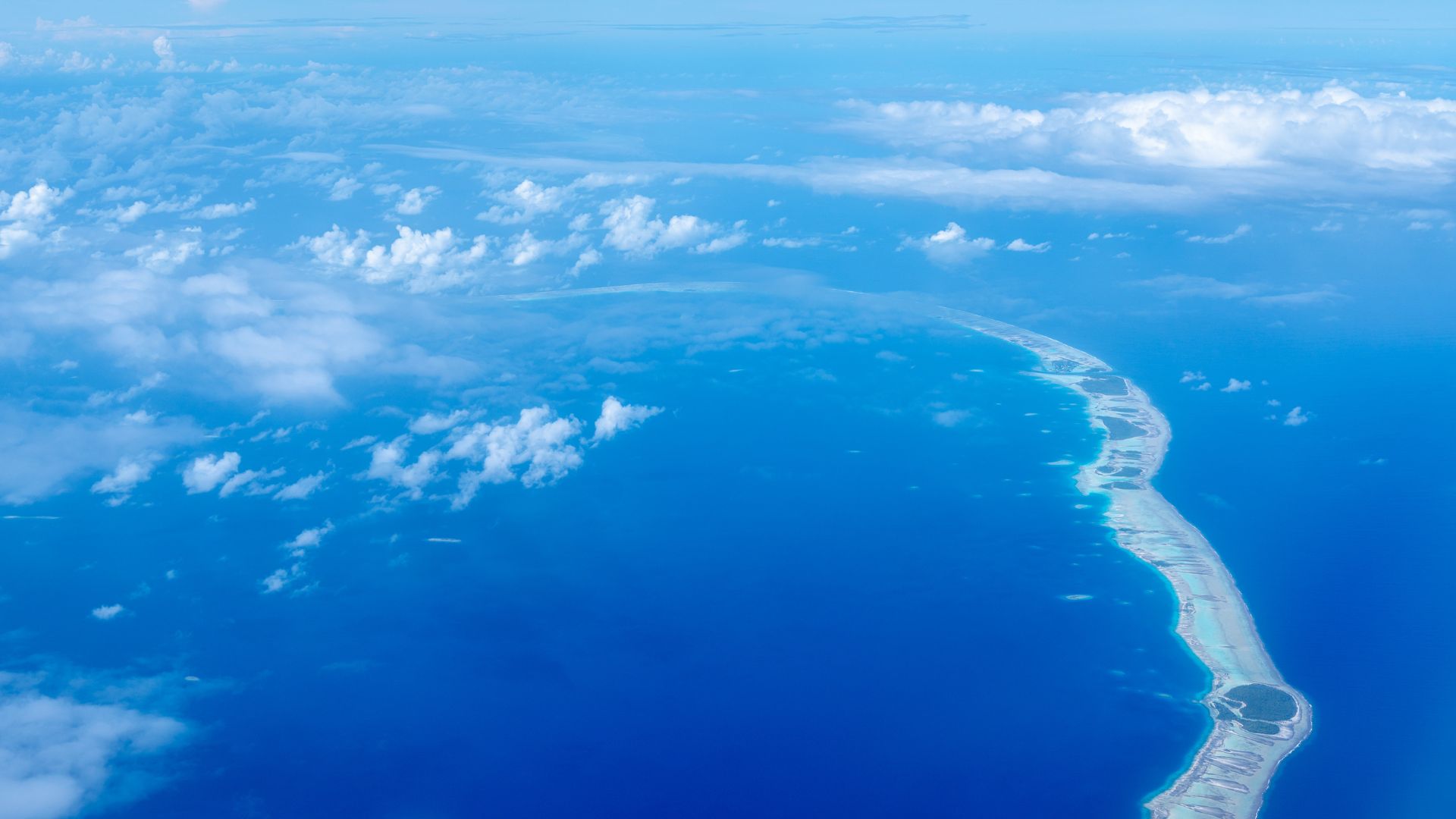
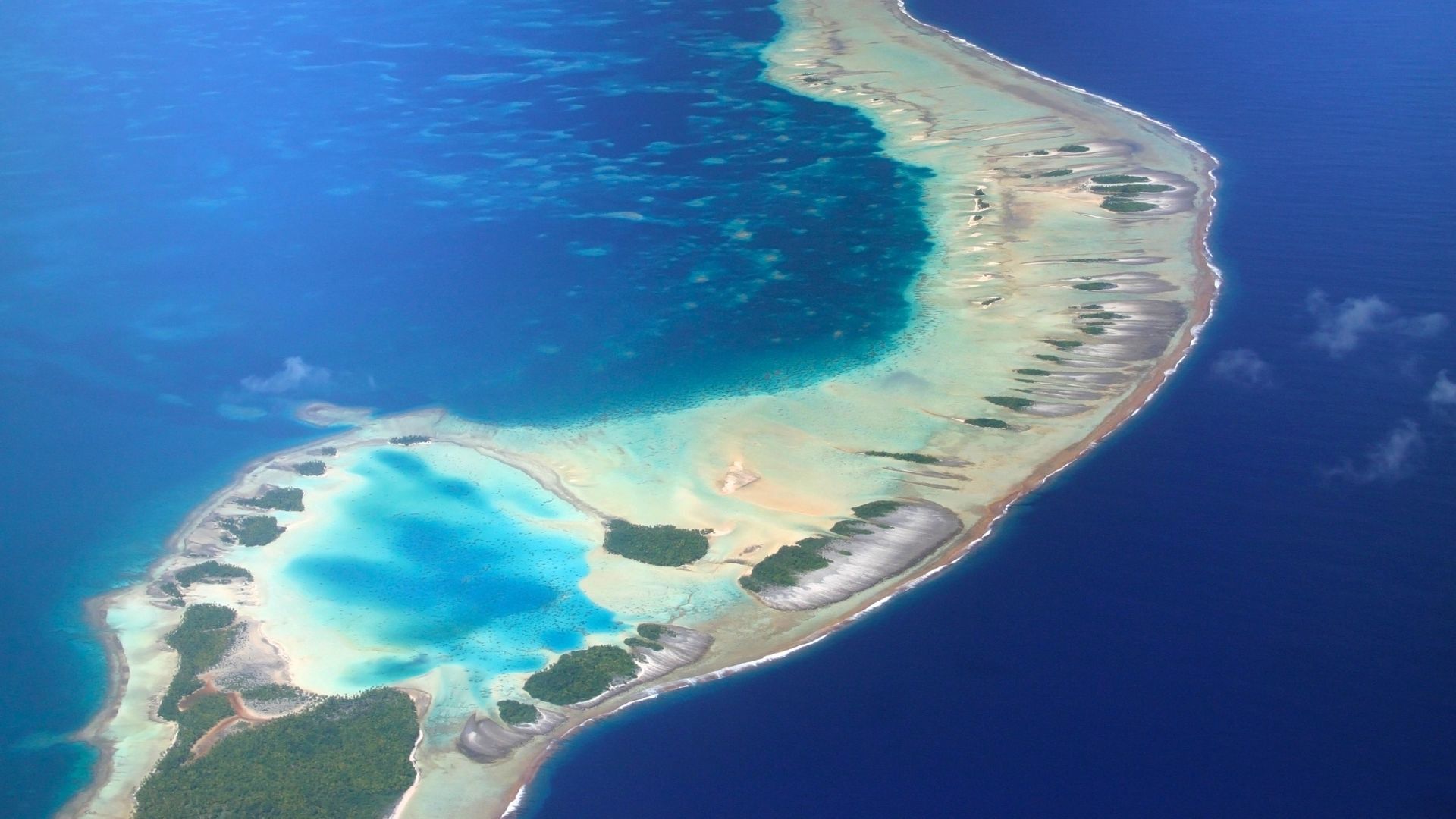
This Tuamotus sailing itinerary skips the Society Islands entirely — a 10-day expedition through the second great archipelago of French Polynesia. Where the Societies are dramatic basalt peaks rising out of the sea, the Tuamotus are the opposite: rings of palm-covered coral barely a few feet above the waterline, enclosing turquoise lagoons big enough to swallow whole islands. About 250 nautical miles total, one-way Rangiroa to Fakarava.
Built for guests who want the dive trip of a lifetime — Tetamanu shark wall at Fakarava south pass, the resident bottlenose dolphins of Tiputa, the manta cleaning station at Tikehau. Every atoll entry runs through a tidal cut where current can hit 8–9 knots; your captain structures the schedule around slack-water windows. If you want classic French Polynesia (Bora Bora silhouette, Mt. Otemanu), book the 10-day Society Islands itinerary instead.
Day 1 of 10 · Arrival at Rangiroa
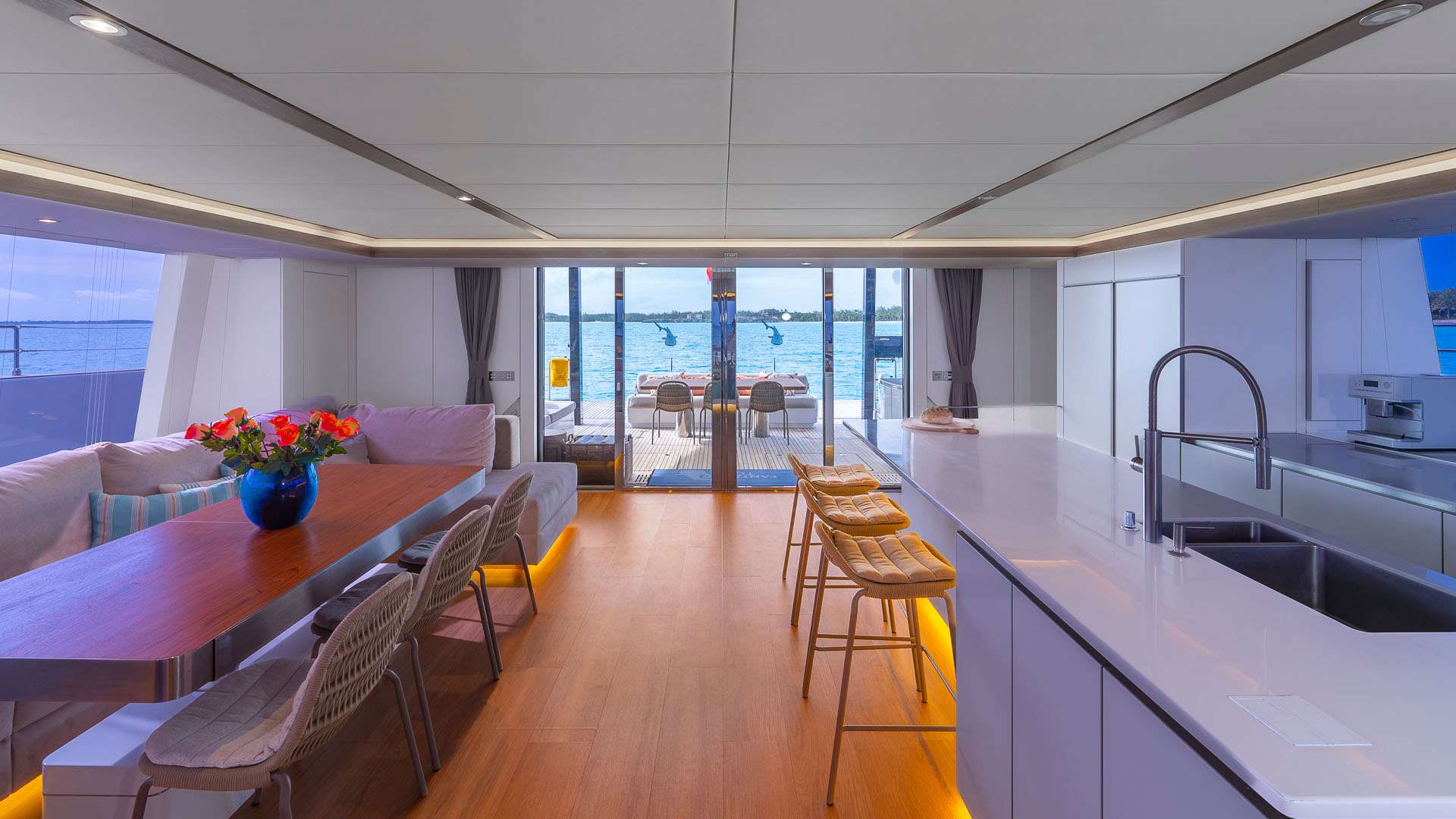
Your charter begins with a one-hour Air Tahiti flight from Papeete to Rangiroa, the largest atoll in the chain and the only one with proper charter infrastructure. Most guests fly into Papeete on an evening international flight, overnight at one of the airport-area hotels (the Intercontinental Tahiti or Le Tahiti by Pearl Resorts both work), and catch the first morning hop out to Rangiroa. Your professional crew meets you at the small Rangiroa airport and runs you fifteen minutes by van to the dock at Avatoru, where the boat will be waiting.
Aboard by lunch. Welcome cold drinks and a chart briefing on the saloon table—your captain walks you through the route, the pass-timing logic that drives the daily schedule, and the dive plan for the week ahead. Your gear gets stowed, the chef finishes the morning's market run from Papeete, and by mid-afternoon the boat is moving the short distance into the inner lagoon for the first night at anchor. The first afternoon is deliberately easy: a swim off the back of the boat, a paddle into one of the small motus, an early sundowner on deck.
Welcome dinner aboard tonight, chef-prepared, the boat sitting flat inside a lagoon big enough to lose other charter traffic in. You sleep on the hook with the reef breaking white in the dark a mile away, and the first realization that you've actually arrived in one of the most remote inhabited atolls in the South Pacific.
Day Highlights
Day 2 of 10 · Tiputa pass
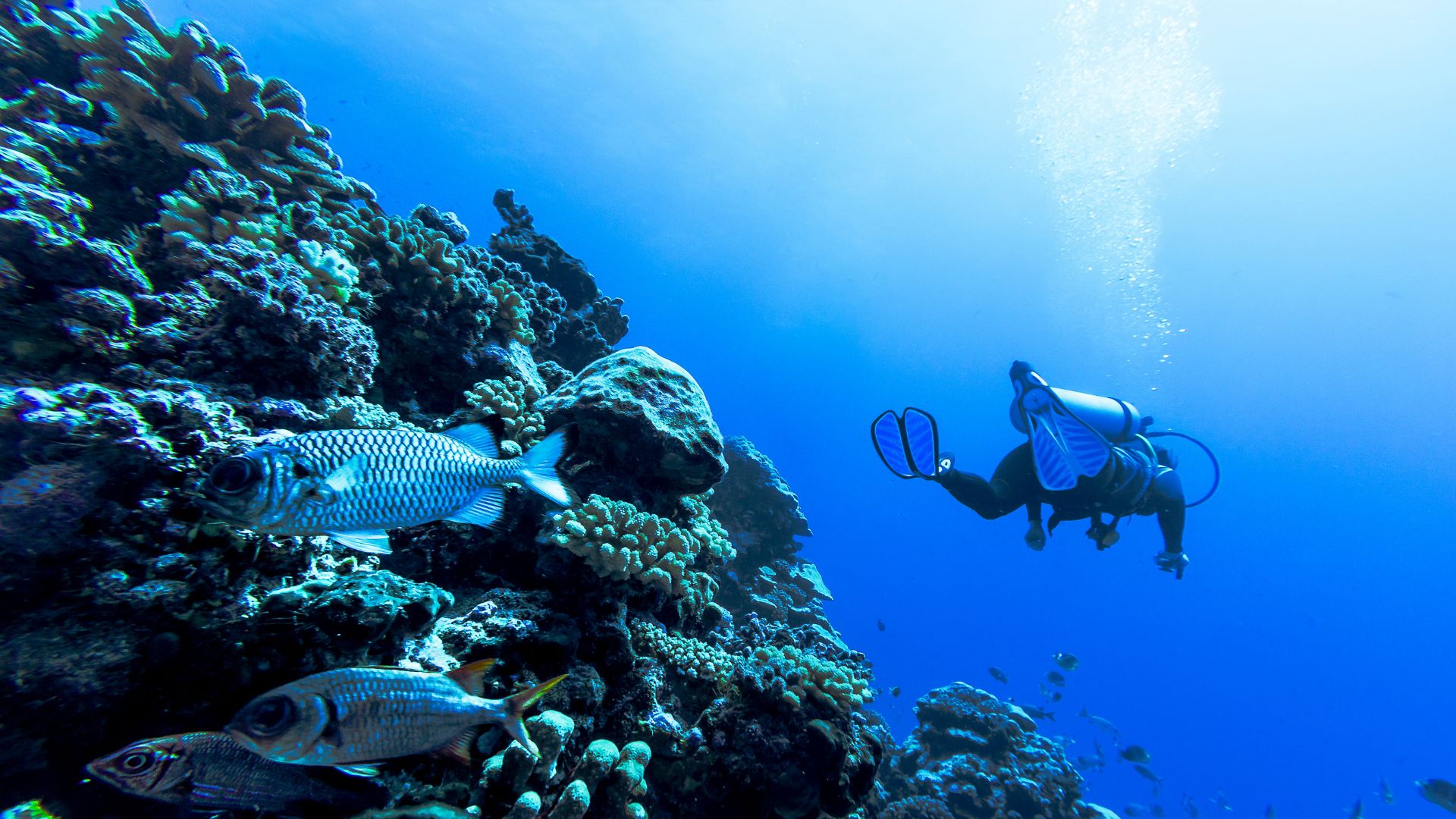
Today is the first marquee dive day of the trip — the dive that anchors any serious Rangiroa diving week. Your captain repositions the boat to the Tiputa pass anchorage on the northeast side of Rangiroa lagoon, drops anchor, and works the morning around the slack-water window. Tiputa is one of the most famous drift dives in the world—a thirty-meter-deep cut between the open Pacific and the inner lagoon, with current that runs four to seven knots when it's pumping and a resident population of sharks, eagle rays, dolphins, and pelagics that work the pass on every tide.
The dive itself is the experience. Your captain coordinates with the local dive operator (most charters use Topdive or Six Passengers Rangiroa); the dive boat picks you up off the swim platform, runs the short trip into the pass mouth, and you drop in at slack as the current starts to flood. From there you drift the wall—grey reef sharks holding in the current at twenty meters, schools of barracuda, the occasional eagle ray cruising past in formation. Tiputa is also the rare drift dive where the resident bottlenose dolphin pod regularly turns up to investigate the divers; some weeks they stay close for the entire dive.
Two-tank morning typically, lunch back aboard, optional second-tank afternoon dive in the lagoon for those who want it, and an evening tender ashore to the Reef Hotel on the pass—the legendary expat sundowner spot in the Tuamotus, with the deck looking straight down into the pass and the sharks visible from the bar railing. Dinner aboard back at the boat, the chef leaning into the day's catch from the village market.
Snorkelers note: the south side of the pass mouth holds a coral garden that sees the fish without the current, and the captain's tender will run snorkelers in for that experience while divers are working the pass proper. Almost everyone on board comes back happy.
Day Highlights
Day 3 of 10 · Blue Lagoon
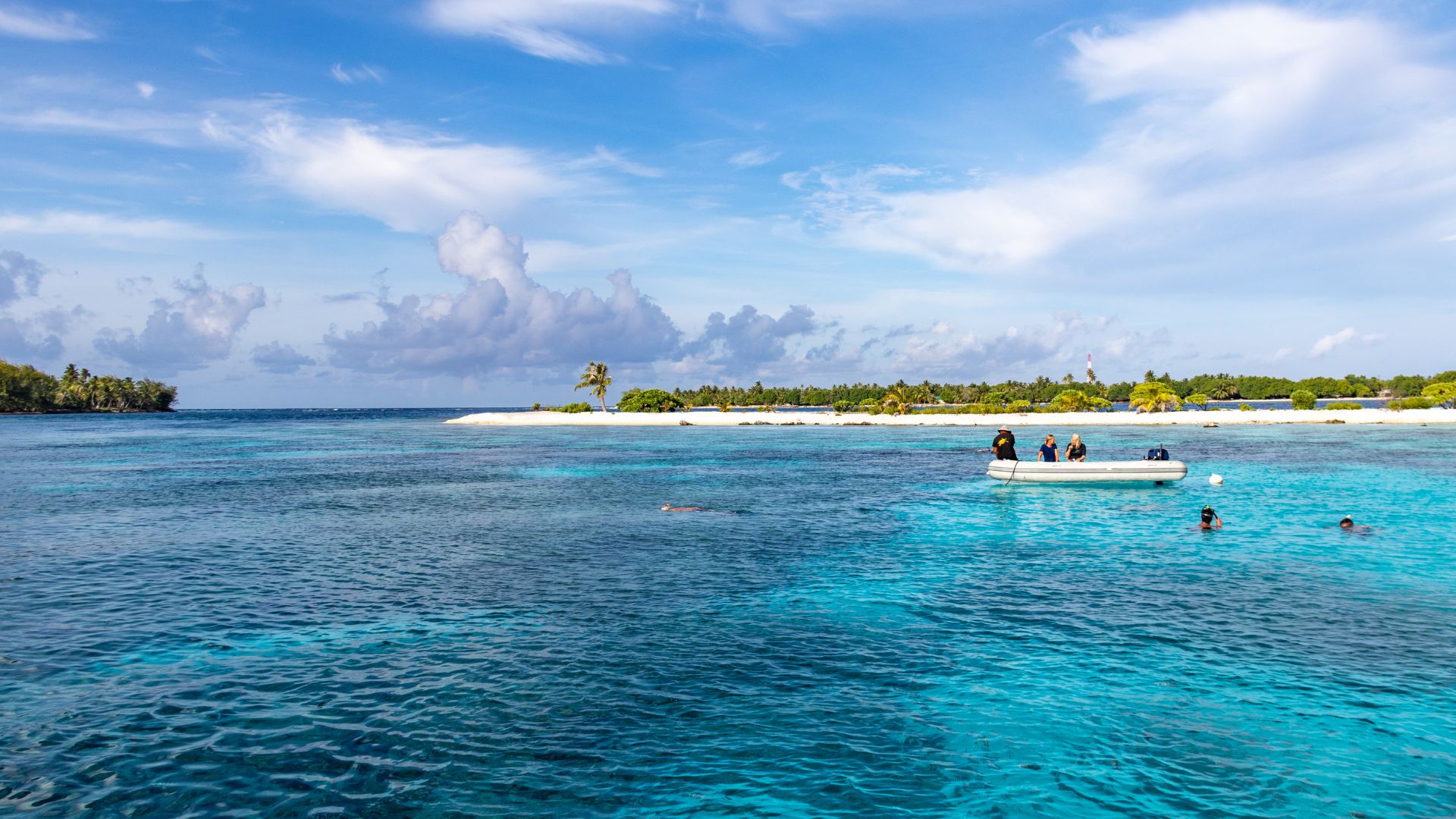
A non-diving day, deliberately. Your captain repositions the boat across the lagoon to the western side of Rangiroa, anchoring within tender range of the Lagon Bleu—the famous "Blue Lagoon" inside the lagoon, a small inner reef-enclosed shallow surrounded by a half-dozen pink-sand motus. The water inside is so shallow and clear that the bottom is visible from twenty feet up, and the color sits somewhere between turquoise and electric blue depending on the angle of the sun.
The day is a long slow water day. The captain runs the tender into the Blue Lagoon proper—the inner reef shelf is too shallow for the catamaran—and your chef sets up a long lunch on the sand of one of the inner motus. Pink-sand beach, palm shade, fresh poisson cru, a chilled bottle of something white from Papeete. Snorkel the inner reef edge for reef sharks (juvenile blacktips work the shallows here, generally harmless to swimmers), wade across to the next motu, paddleboard the calm water inside, or do nothing at all.
Afternoon: tender back to the boat, repositioning to the western anchorage for the night, dinner aboard. This is the breath-day before tomorrow's sail to Tikehau, and the kind of slow afternoon that makes the harder dive days bearable. Sleep on the hook in flat water, breeze blocked by the western reef line.
Day Highlights
Day 4 of 10 · Sail to Tikehau
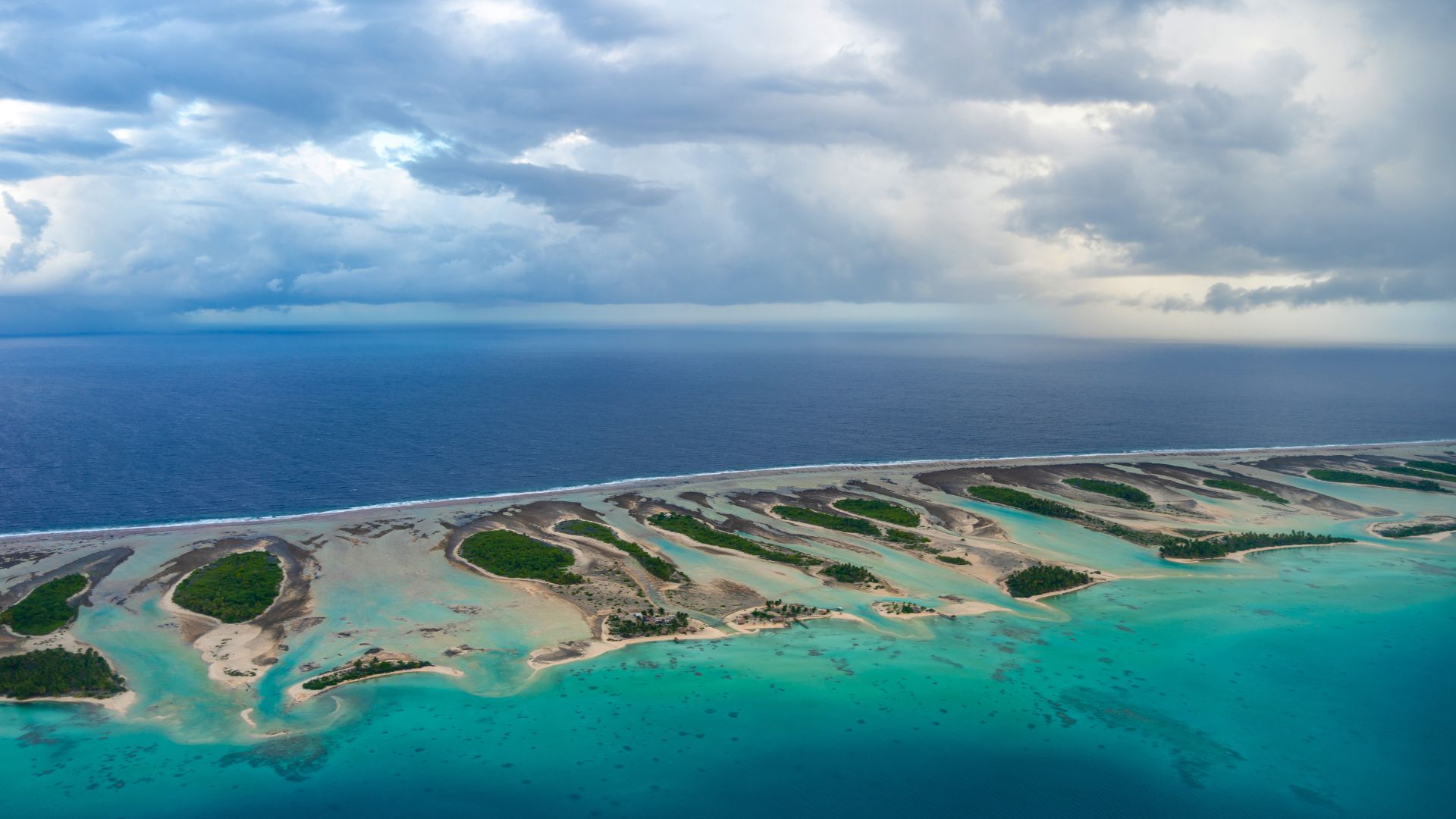
The shortest sailing leg of the trip, and the easiest. Fourteen nautical miles southeast from Rangiroa to Tikehau, with the boat exiting Tiputa or Avatoru pass at slack water in the morning and reaching the Tuheiava pass on Tikehau's west side in time for the afternoon slack-water entry. Two pass transits in one day, both timed by the captain off the morning's tide tables.
The sail itself is the easy half-day downwind reach the route was supposed to look like throughout (the longer days come later). The Tuamotus stretch out astern, the low profile of Tikehau builds slowly on the bow, and the boat moves through the kind of empty Pacific that gets quietly described as "middle of nowhere" in the chart briefings.
Tikehau is the quieter sister to Rangiroa—about a third the population, no proper port, and a reputation among repeat Tuamotus charterers as the prettier of the two. The lagoon is pink sand the entire way around. Your captain anchors near Tuherahera village on the south side of the lagoon, the chef handles dinner aboard tonight, and the boat sits on its hook with the reef line breaking white a half-mile to the south.
Day Highlights
Day 5 of 10 · Manta Point + Eden
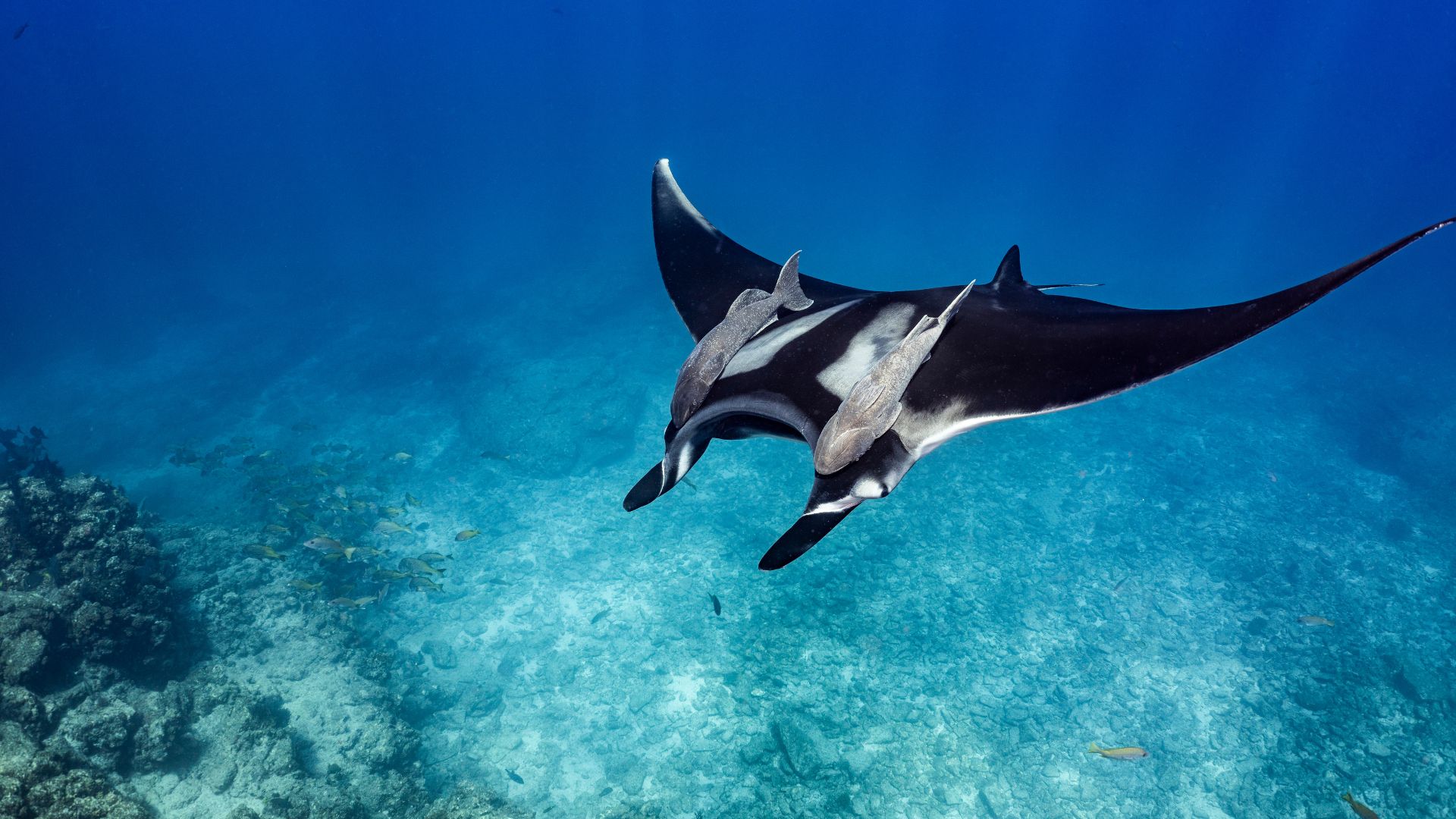
Today is the second marquee in-water day of the trip, and it's snorkel-friendly—you don't need to be a diver to do this one. Your captain repositions to the south end of Tikehau lagoon, anchors near Manta Point—a cleaning station bommie that sits in about ten meters of water—and the day belongs to the manta rays.
Manta Point at Tikehau is one of the most reliable manta encounters in French Polynesia. Reef mantas (smaller than the giant oceanics, but still seven to ten feet across) come in to the bommie to be groomed by cleaner wrasses, and they hold above the cleaning station for ten or fifteen minutes at a time before drifting off and coming back. Snorkelers float above in the clear water; divers can drop down for closer interactions. The captain coordinates with the local Tikehau operator (Tikehau Plongée) for divers; snorkelers go straight off the boat.
Afternoon: tender ride to Eden Island (Île aux Oiseaux), a small uninhabited motu on the south side of the lagoon that has been declared a bird sanctuary. Brown noddies, sooty terns, white terns, and the occasional great frigatebird all nest on the motu in season. A short tour of the island with a quiet observation walk, then back to the boat for a sundowner.
Evening: tender into Tuherahera village if anyone wants a walk through the small Polynesian fishing community on the lagoon's south side. The village runs at the kind of pace that makes Rangiroa feel hectic. Dinner aboard or, if booked ahead, ashore at one of the small family pensions.
Day Highlights
Day 6 of 10 · Long sail east
Today is the longest sailing day of the trip, and it's a real one—roughly eighty nautical miles east-southeast across open Pacific water from Tikehau to Apataki. The trades blow steady south-easterly through the season, which puts the wind on the nose for most of the leg. Your captain has two choices: sail close-hauled for ten or eleven hours, or motorsail and arrive in eight. Most cats running this route motorsail the long days; the comfort gain for the guests on a hard upwind beat is significant.
Earliest start of the trip. The boat clears Tikehau's Tuheiava pass at the morning slack, points the bow east-southeast, and settles into the day. The Tuamotus disappear over the stern; for several hours mid-leg there is nothing on the horizon in any direction except deep blue ocean and the occasional motu sliver of an outlying atoll. Lunch underway, books on the foredeck, the kind of slow ocean day that long charters earn you.
Late afternoon, the long flat profile of Apataki builds on the bow. Your captain works the boat around to the Tehere pass on the north side of the atoll, times the entry at the late-afternoon slack, and brings the boat into Apataki lagoon for the evening. Anchor near the village of Niutahi on the eastern side of the lagoon, dinner aboard, and an early night. The next two atolls—Apataki, Toau, and the run into Fakarava—are the back half of the trip and the expedition's quieter, more remote stretch.
Day Highlights
Day 7 of 10 · Pearl farm day
Apataki is the working pearl-farm atoll of the Tuamotus. The lagoon is dotted with small floating farms—long lines of suspended oyster baskets, tended by a few dozen families who have been growing Tahitian black pearls here for generations. Your captain arranges a half-day visit to one of the operations (Gauguin Pearl Farm is the long-running, most-visited), and a small motorboat from the farm runs you over for the tour.
The tour itself is unexpectedly fascinating, even for guests who didn't think they cared about pearls. The farms graft a small bead into the oyster (the "nucleus"), wait two years while the oyster builds layer after layer of nacre around the bead, then harvest. The colors—iridescent greens, silvers, deep peacocks, the rare gold—are a function of the oyster's lip color and the water's mineral content; no two pearls come out the same. The farm sells loose pearls direct, often at a fraction of the Papeete tourist-shop prices.
Lunch back aboard, then an afternoon swim or paddle in the lagoon. Niutahi village ashore is the kind of small Polynesian fishing community that has changed very little in the last century—a few hundred residents, one church, one small store, an airstrip used mostly for the local flights between atolls. A quiet walk through the village in the late afternoon is enough to see the entire town.
Dinner aboard at anchor, sundowners on deck, and the boat sitting on its hook in a lagoon with maybe one or two other charter yachts visible across the water. The Tuamotus thin out fast once you're past Rangiroa; this is the part of the trip where guests start asking about extending.
Day Highlights
Day 8 of 10 · The legendary Anse Amyot
A short twenty-five-mile southeast hop today to Toau atoll, and into one of the most famous anchorages in the entire South Pacific cruising community. Anse Amyot is a "false pass"—a tidal cut on the northwest side of Toau that opens to the ocean but is closed at the inner end by a coral shelf, which means the lagoon water flows through but boats inside the pass can't continue into the main lagoon. The result is a uniquely safe anchorage: deep enough for catamarans, sheltered from the trade-wind swell by the surrounding reef, and laid out with a half-dozen mooring buoys maintained by the resident pension family.
The pension is the reason every cruising sailor in the South Pacific knows Anse Amyot. Valentine and Gaston have been running a small thatched-roof pension on the motu inside the false pass for decades, and the lobster lunch at the pension's little restaurant has reached genuinely legendary status in cruising circles. Lobster is fresh from Gaston's morning dive, prepared family-style, served at long communal tables with whatever other yachts are in the anchorage that week. Bottle of wine, family-style sides, the lagoon a few feet outside the door.
Afternoon: snorkel the false pass itself (resident reef sharks, schools of grunts, eagle rays), tender into the main lagoon side of the motu for a beach walk, or do nothing at all on the foredeck of the boat. Dinner aboard, sunset over the false pass, and a quiet night on the mooring with maybe two or three other yachts swinging on their own buoys nearby.
Day Highlights
Day 9 of 10 · Into Fakarava
The biggest day of the back half. Roughly fifty miles southeast from Toau to Fakarava's north end, then another thirty miles motoring south down the inside of Fakarava's lagoon to Tetamanu at the south pass. Two passages, two pass transits, and the boat positioned for tomorrow's marquee day at the south wall.
Morning departure from Anse Amyot at slack. Your captain works the boat east-southeast across open water to Fakarava's north end, where the famous Garuae pass cuts through the reef. Garuae is the largest pass in French Polynesia—almost two kilometers wide, deep enough for the largest cruise ships—and the entry is straightforward at slack water. The captain brings the boat through into Fakarava lagoon by mid-afternoon.
Fakarava is a narrow, oblong atoll thirty miles long. Once inside the lagoon, the captain shifts to motoring (the inside of an atoll lagoon is shallow in spots and littered with coral bommies—sailing through it is asking for trouble), and you cover the thirty miles south to Tetamanu in three or four hours. The cruise down the inside of the lagoon is quiet and surreal: pink-sand motus passing on both sides, reef bommies visible in the clear water below, a few small pearl farms suspended on long lines, and almost no other boat traffic.
Late afternoon arrival at Tetamanu Village—a tiny pension and dive operation built on the motu directly above the south pass. Your captain picks up a mooring buoy in the small protected anchorage, the chef handles dinner aboard, and the boat sits on its mooring with the south pass two hundred meters away and the open Pacific breaking white on the reef just beyond. The wall dive happens at sunrise tomorrow.
Day Highlights
Day 10 of 10 · Shark wall + run back north
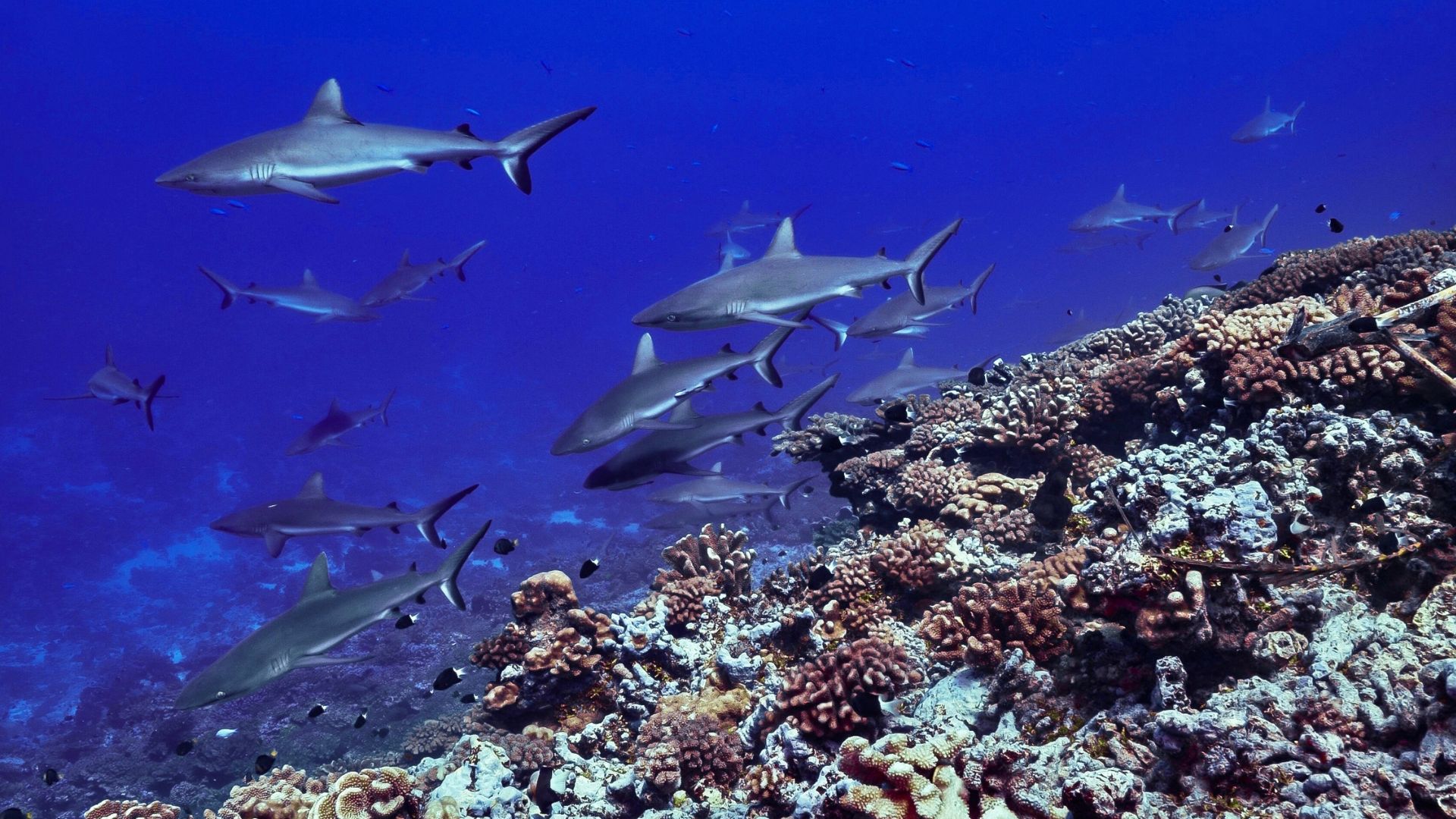
The marquee day, and what most guests come for when Fakarava diving brings them to French Polynesia at all. Tetamanu south pass is one of the great dives anywhere in the world—a narrow tidal cut on the south end of Fakarava that funnels current through a wall of grey reef sharks. Two to seven hundred sharks regularly hold in the pass current; in July and August the count goes higher because the seasonal hammerhead migration adds a layer of bigger predators on the outside of the formation. The dive is a drift-and-hover at slack: you drop in at the outer mouth of the pass, the current carries you slowly through, and the sharks hold around you in numbers that genuinely don't compute the first time you see them.
First light start. Your captain coordinates with Tetamanu Diving (the pension's dive operation, and the long-running operator on the south pass), and the dive boat picks up your divers off the mooring. The first dive of the morning is the showpiece—drifting in with the slack on the incoming tide, hovering at twenty meters as the wall of sharks materializes around you, and rising slowly back toward the surface as the current builds. Forty-five minutes of sustained shark encounter, then back to the boat for breakfast.
Mid-morning second dive for those who want it (most groups do—the south pass rewards repeat visits, and the light shifts the experience), then lunch ashore at Tetamanu Village, or onward by tender to Hirifa beach. Hirifa is a long pink-sand crescent on the southeast corner of Fakarava, deep inside the lagoon, with a small motu pension that runs lobster and grilled fish on a sand-floor terrace under palm shade. Most charters do Hirifa lunch on Day 10—it's the right closing meal of the back half.
Mid-afternoon, the captain points the bow north and motorsails the thirty miles back up the inside of Fakarava lagoon to Rotoava village near Garuae pass. Rotoava is the only town on Fakarava (population ~750), a small grid of streets behind the lagoon waterfront with a couple of small dive shops, a few family pensions, a grocery store, and the small airstrip that flies the Air Tahiti route to Papeete. Anchor or pick up a mooring in Rotoava lagoon, final chef-prepared dinner aboard tonight, and the last night of the trip on the hook with the airstrip lights visible across the water.
Day Highlights
Day 11 · Departure
A last slow breakfast aboard at anchor in Rotoava lagoon, a final swim off the back of the boat, and a short tender to the village dock for the transfer to the small Fakarava airstrip. Air Tahiti runs two to three flights a day from Fakarava to Papeete (Fakarava code FAV, Papeete code PPT, ~1 hour 15 minutes), and your captain coordinates the timing so guests step off the dock straight into the morning's flight. From Papeete, onward connections to Los Angeles, Auckland, and Tokyo connect to most major Pacific Rim hubs, and most international flights leave PPT in the late afternoon or evening — you have time for a quiet day in town if you want it.
Step off the boat with the kind of trip on your camera roll that almost no other charter actually delivers — the south pass shark wall, the resident dolphins of Tiputa, the lobster lunch at Anse Amyot, the manta cleaning station at Tikehau, the pink-sand motu at the Blue Lagoon, the working pearl farms at Apataki — and a different definition of what "remote" actually means in 2026.
Want to share or come back to this voyage later?
Bookmark this voyage →
When to go, what it costs, and how to get there — the practical answers guests ask before booking a French Polynesia crewed yacht charter.
May through October is the dry season — austral winter — and the window we recommend for almost every charter. Trade winds settle from the east-southeast at 15 to 25 knots, daytime highs hold in the upper 70s and low 80s, humidity drops, and rain is rare. The reef passes work consistently, including Maupiti's narrow Onoiau on the south side. French Polynesia sees a fraction of the charter traffic the Caribbean does, and even in the busiest weeks the lagoons feel quiet. The strongest weeks of the year — the August holiday, the late-May European arrivals, Christmas and New Year — book six to twelve months ahead.
April and November sit between the dry season and the cyclone window. Trade winds soften slightly, water temperatures climb, and afternoon showers become more frequent — but the lagoons remain warm, the reefs remain clear, and rates typically run 10 to 20 percent below peak. For guests with flexible calendars, these are excellent weeks.
December through March is the southern Pacific cyclone season. French Polynesia sits at the eastern edge of the cyclone belt and sees far fewer storms than Fiji or Tonga, but the risk is real and most yachts pause or reposition through these months. A handful continue working the Societies; we know which ones, and the trade-off is lower rates against the chance of a weather day or two on the trip. Christmas and New Year weeks book early when they're available.
$25,000–$100,000 per week
Crewed yacht charters in French Polynesia typically start around $25,000 per week and scale well past $100,000+ for larger motor yachts and superyachts, depending on yacht size, build year, and crew. Most catamarans charter all-inclusive — the base weekly rate covers yacht, crew, all meals, a standard bar (beer, wine, spirits), fuel, water sports, and customary fees. Larger motor yachts and select sailing yachts run plus-expenses instead, where food, beverages, fuel, and dockage are paid through an Advance Provisioning Allowance (APA) — a pre-funded allowance set at 25 to 35 percent of the base rate, with itemized accounting and any unused balance refunded at trip end. French Polynesia is more expensive to charter than most Caribbean grounds — the territory imports almost everything, and the base rates and APA percentages reflect that — and a yacht relocation to the Tuamotus typically carries a separate fee on top of the base rate. Long-haul flights to Pape'ete are not included in either pricing model. Crew gratuities, customary at 15 to 20 percent of the base rate, are paid directly to the captain on disembarkation.
About chartering in French Polynesia.
Field-tested guides, itineraries, and tips — written from years of chartering these waters.

Scuba diving yacht charter destinations ranked: the BVI's wrecks, Belize's Great Blue Hole, French Polynesia's shark passes, and the easy reefs of the Exumas.

Kiteboarding yacht charter destinations ranked: Anegada's flats, the Grenadines, the Exumas, Anguilla's boat-only cays, and French Polynesia — plus wind seasons.

Planning a French Polynesia yacht charter? Here's the best time to go for the Society Islands, Tuamotus, whales, diving, fishing, and sailing weather.
We charter across the South Pacific. Here are some other excellent alternatives.
Fill out our quick form and we'll dive into your unique preferences — from adventure-packed itineraries to pampered escapes. Whether you're a seasoned voyager or new to charters, we'll tailor recommendations just for you.
With over fifteen years of experience, we'll match you with the yacht that fits your style, group, and itinerary. We work directly with the captains and crews across our list — so the recommendation is built around the right boat-and-crew fit for your week, not whatever's easiest to book.
Once your yacht is booked, we'll take care of logistics: paperwork, reminders, and personalized resources to help you plan. From arrival planning to must-visit spots, we'll make your charter as seamless as it is unforgettable.

What to Expect on a Private, Crewed Yacht Charter
Learn what makes crewed yacht charters extraordinary: personalized service, gourmet dining, and endless opportunities for adventure and relaxation.

How Does the Booking Process Work?
Our team handles every detail of your crewed yacht charter booking, ensuring a seamless experience from your first inquiry to setting sail.

Crewed Yacht Charter Pricing Explained
Understand what a crewed charter costs, the types of pricing, and what is included / not included.

Logistics: Proven Travel Plans for a Stress-Free Start
Plan your journey to your crewed yacht charter with ease. Tips on flights, transfers, and logistics for a stress-free start to your vacation.
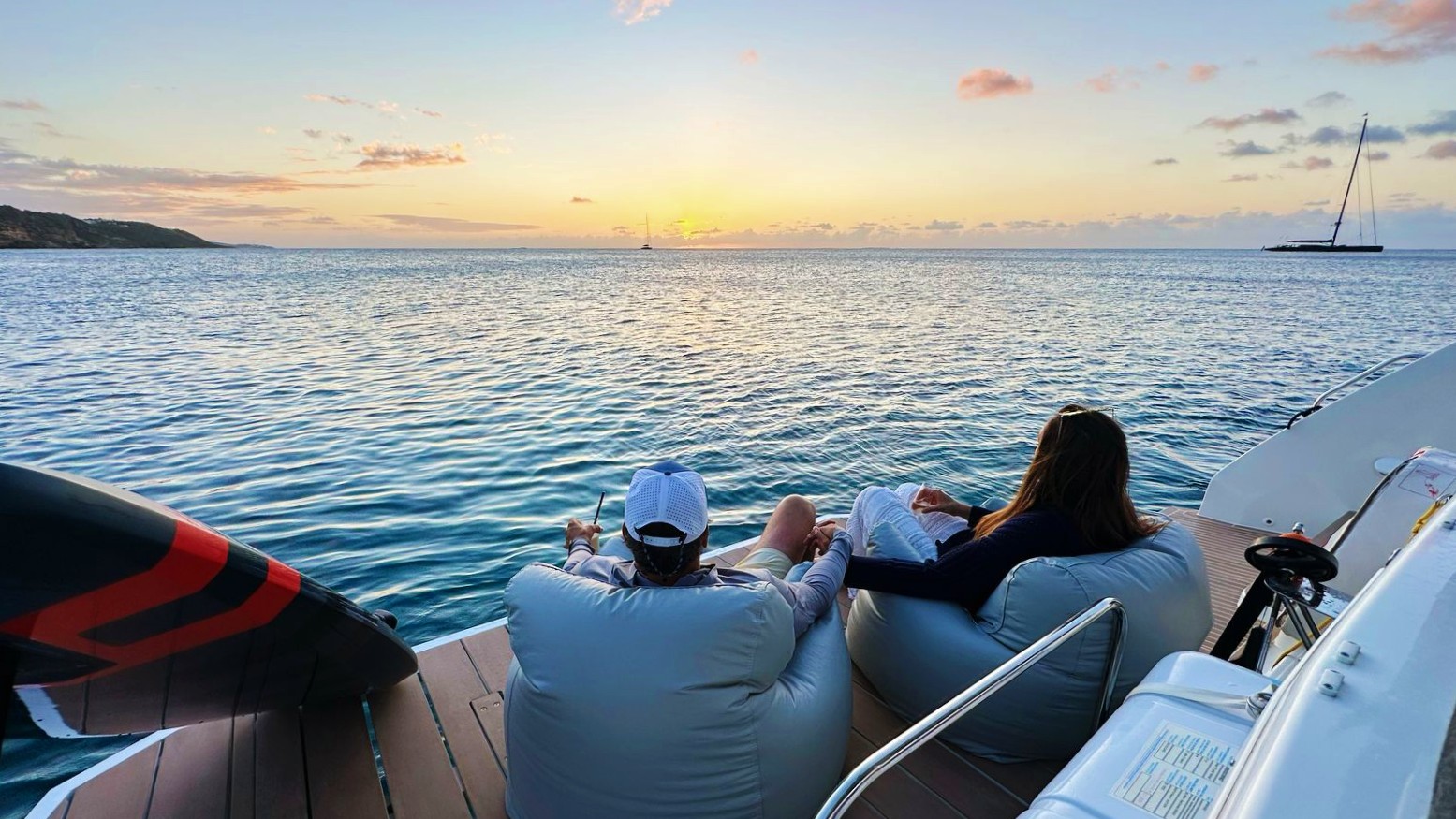
Honeymoon Yacht Charters
Start your marriage on a private yacht. Explore secluded beaches, gourmet dining, and unforgettable sunsets in the Caribbean.
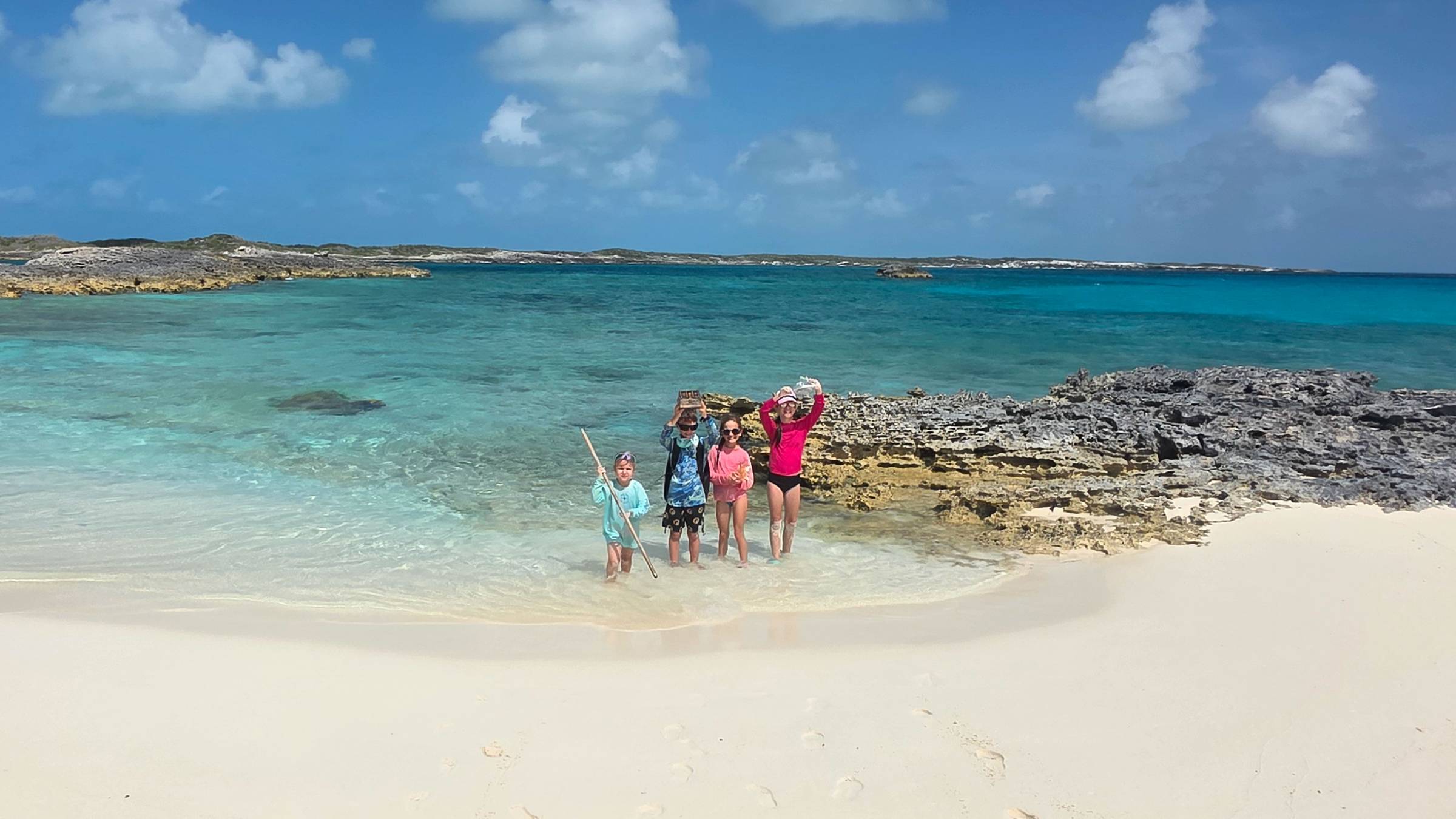
Family Yacht Charters
A crewed yacht charter is perfect for families of all ages. Safe, fun, and fully catered — your kids will never forget it.

Crewed Charter FAQ
Get answers to common questions about crewed yacht charters, from pricing and tipping to what's included and what to pack.

BVI Crewed Yacht Charters
The British Virgin Islands are the #1 crewed charter destination in the Caribbean. Short sails, protected waters, and world-class anchorages.

BVI Crewed Charter Guide
Everything you need to know before your BVI crewed catamaran charter — pricing, packing list, sample itinerary, and getting there.
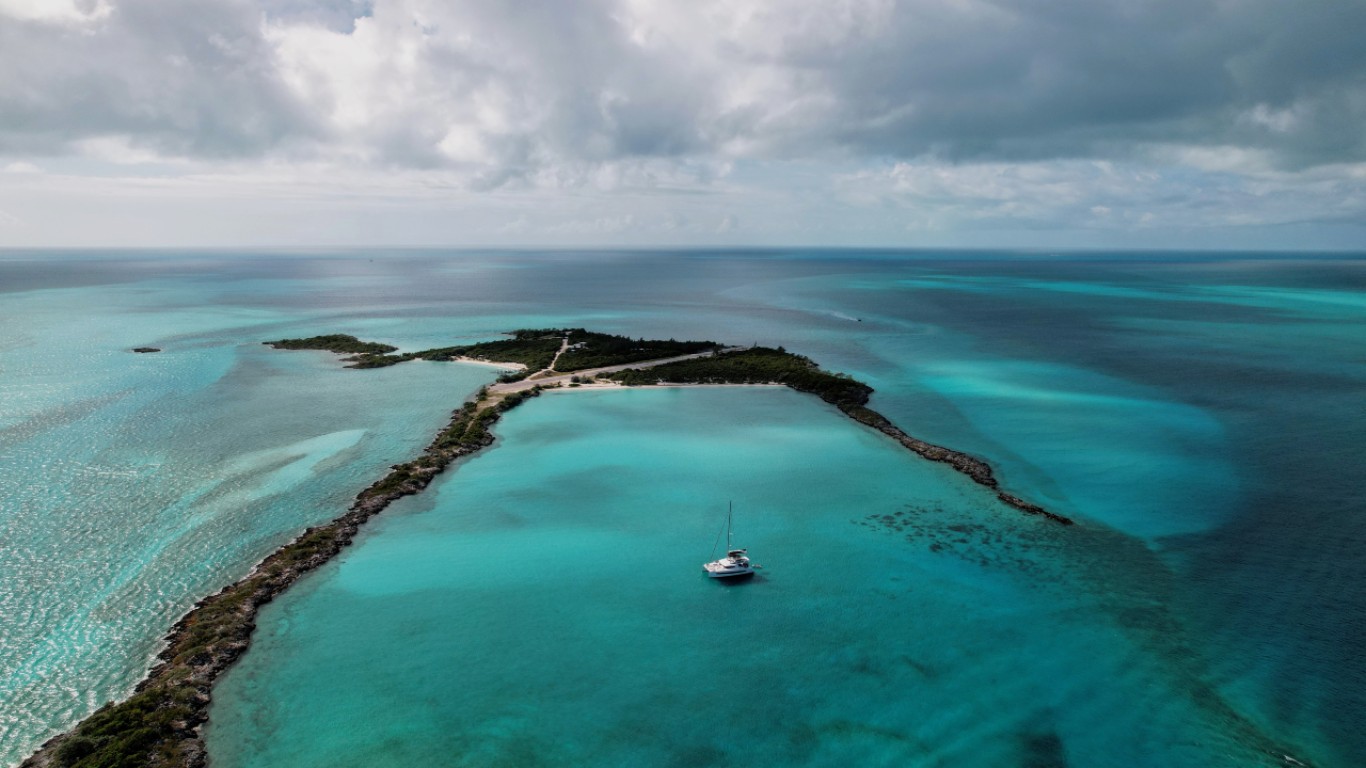
Bahamas Crewed Yacht Charters
Explore the Exumas on a private crewed yacht. Swimming pigs, sandbars, and some of the clearest water on earth.
Caribbean Crewed Yacht Charters
All-inclusive crewed charters across the Caribbean — BVI, Bahamas, USVI, St. Martin, Antigua, and beyond.