


Best Time for a French Polynesia Yacht Charter
Few yacht charter destinations feel as magical as French Polynesia.
This is the trip people dream about for years: volcanic peaks rising out of turquoise lagoons, overwater bungalows glowing at sunset, quiet anchorages tucked behind coral reefs, and water so clear you can watch rays glide beneath the yacht from the aft deck.
But if you're planning a French Polynesia yacht charter, the timing matters.
A lot.
This isn't the kind of destination where you simply pick a random week, book the prettiest yacht, and hope for the best. The month you choose can shape the entire experience: the sailing conditions, the water clarity, the crowds, the chance to see humpback whales, and whether you're better suited for a classic Society Islands itinerary or a more remote Tuamotus adventure.
So let's get into it.
If you're investing in a bucket-list yacht charter in French Polynesia, here's how I'd think about the timing.
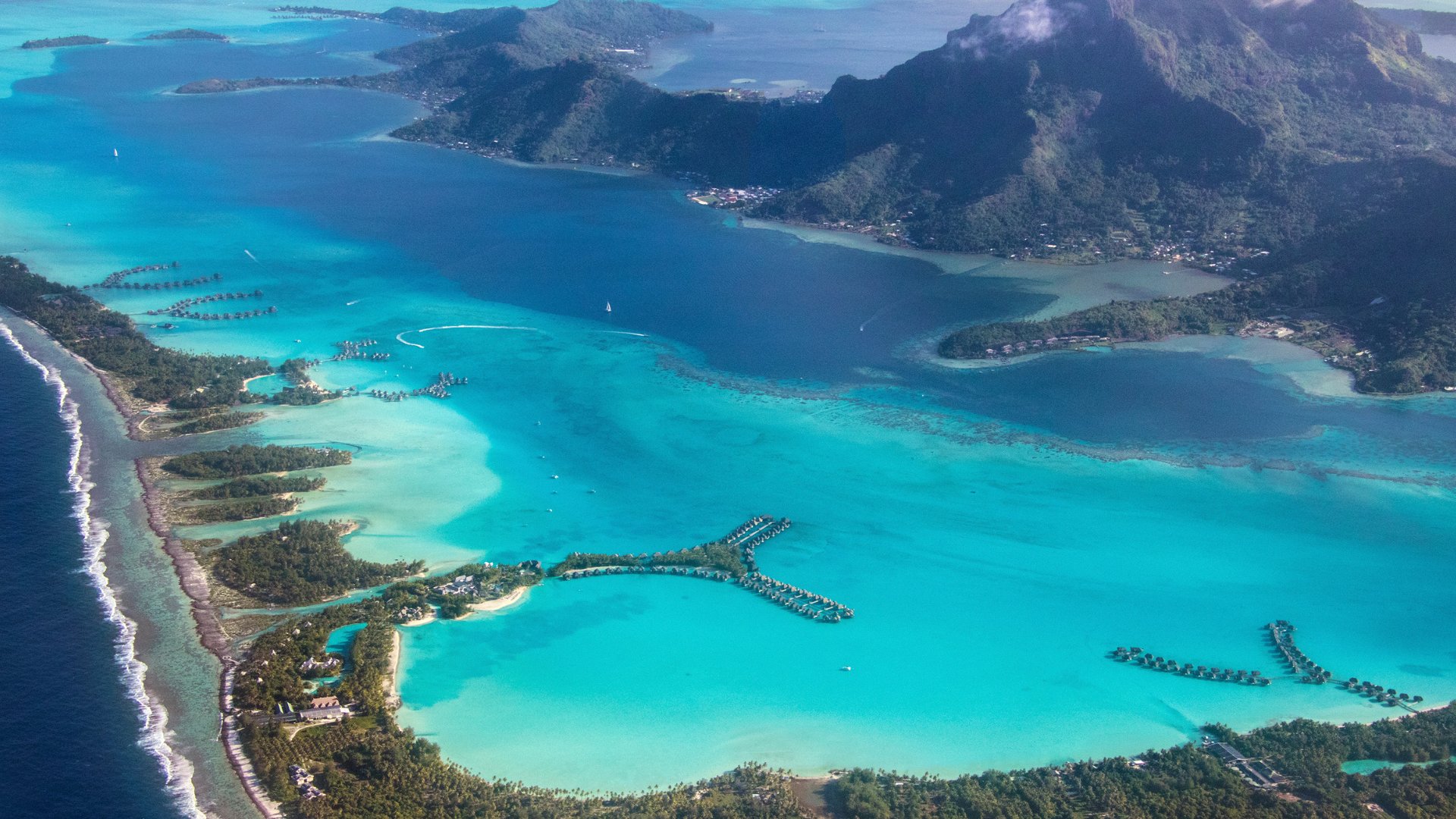
Bora Bora from the air | lagoon, barrier reef, and the overwater bungalows
The quick answer: when is the best time for a French Polynesia yacht charter?
For most guests, the best time for a French Polynesia yacht charter is May through October, during the dry season.
This is when you'll usually find the best combination of comfortable weather, reliable trade winds, lower humidity, and clear water. It's also when French Polynesia feels closest to the postcard version most people have in their heads.
If I had to narrow it down further, I'd look hardest at:
- May for strong weather before the busiest peak-season weeks
- September for dry-season conditions, humpback whales, and fewer crowds
- October for a quieter shoulder-season feel before the wetter months begin
June through August can also be excellent, but those months tend to be busier and more expensive, especially for the best yachts and crews.
If you're flexible, I'd generally avoid January through March unless you have a specific reason to travel then. That's the wetter, hotter stretch of the year and sits in the heart of the South Pacific cyclone season.
Best months depending on the type of charter you want
Not every French Polynesia yacht charter is built around the same goal.
Some guests want the classic Society Islands trip: Raiatea, Taha'a, Bora Bora, Huahine, and sometimes Moorea depending on the itinerary. Others want something wilder and more remote, like the Tuamotus, where the focus shifts toward diving, fishing, shark encounters, and empty atolls.
Here's how I'd break it down:
- Best overall French Polynesia yacht charter: May, September, October
- Best Society Islands charter: May through October
- Best Tuamotus charter: May through October
- Best sailing weather: May through October
- Best time for humpback whales: August and September
- Best time for diving the Tuamotus: May through October
- Fakarava grouper spawn: around the June full moon
- Best value months: April, May, October, November
- Months I'd be cautious with: January through March
That's the simple version.
Now let's talk about what those months actually feel like from the deck of a yacht.
French Polynesia has two main seasons
French Polynesia doesn't really follow the four-season calendar many of us are used to.
Instead, think of it in two broad seasons:
Dry season: May through October. This is the cooler, drier, more comfortable time of year. You'll usually have more reliable southeast trade winds, lower humidity, clearer water, and better overall conditions for a yacht charter.
Wet season: November through April. This is warmer, more humid, and more prone to tropical rain. That doesn't mean it rains all day every day, but the weather is less predictable. You can still have beautiful stretches, especially in the shoulder months, but you're accepting more weather risk.
For a resort stay, that might be a minor inconvenience.
For a yacht charter, it matters more.
You're not just sitting by a pool waiting for clouds to pass. You're moving between islands, anchoring in lagoons, snorkeling reefs, fishing during passages, and spending most of your time outside. The weather sets the tone for the whole trip.
That's why the dry season gets so much attention.
Society Islands vs. Tuamotus: choose the right charter experience
Before choosing your exact dates, it helps to understand the two main types of French Polynesia yacht charters.
For most first-time guests, the Society Islands are the right place to start.
This is the French Polynesia most people picture: lush volcanic islands, dramatic peaks, blue lagoons, coral gardens, reef sharks, rays, Polynesian culture, and iconic stops like Raiatea, Taha'a, Bora Bora, Huahine, and sometimes Moorea.
A Society Islands yacht charter gives you variety without feeling too expeditionary. You can snorkel in the morning, enjoy a beautiful sail in the afternoon, and anchor somewhere spectacular for dinner. It's adventurous, but still comfortable.
The Tuamotus are different.
Instead of volcanic mountains, you'll find low coral atolls, massive lagoons, pink-sand motus, world-class diving, remote anchorages, and a much stronger expedition feel. This is where you go if diving, fishing, sharks, manta rays, and solitude are the main event.
If the Society Islands are the classic French Polynesia yacht charter, the Tuamotus are the wilder, more adventurous version.
Neither is better.
They're just different trips.
The Society Islands — best for most first-time guests, and for couples, families, and luxury crews. Raiatea, Taha'a, Bora Bora, and Huahine: volcanic peaks and lush scenery, more variety ashore, and easier charter logistics.
The Tuamotus — best for adventurous guests, divers, anglers, and repeat visitors. Remote atolls like Fakarava: low coral atolls and huge lagoons, a focus on diving, fishing, and remote beauty, and more expedition-style cruising.
Best time for a Society Islands yacht charter
For a Society Islands yacht charter, I'd focus on May through October.
This is when you get the most reliable weather for the classic French Polynesia route: Raiatea, Taha'a, Bora Bora, Huahine, and sometimes Moorea depending on the yacht, route, and trip length.
The Society Islands are where most guests fall in love with French Polynesia.
You might start in Raiatea, sail inside the shared lagoon with Taha'a, snorkel coral gardens, visit a vanilla farm, then make the passage toward Bora Bora as Mount Otemanu slowly appears on the horizon. A few days later, you could be anchored off Huahine, which feels quieter, greener, and less developed.
This is the version of the trip that balances everything well: scenery, sailing, snorkeling, culture, comfort, and those once-in-a-lifetime lagoon views.
For most guests, I'd look especially hard at May, September, and October.
May gives you the start of the dry season before the busiest months.
September might be the best all-around month because you still have dry-season weather, whales may be active around French Polynesia, and the peak summer rush has usually softened.
October can also be excellent, with a slightly quieter feel before the wetter season begins.
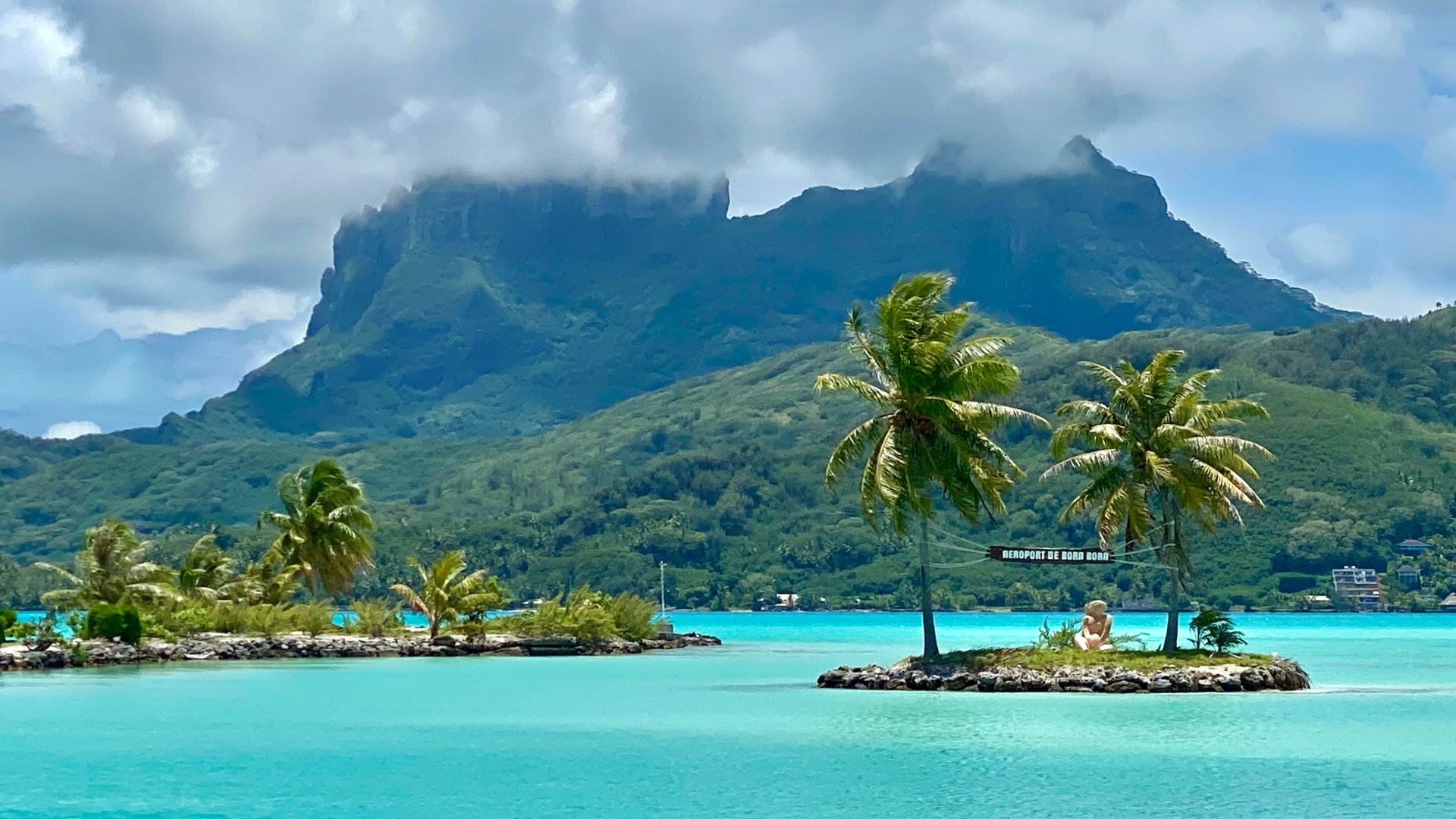
Bora Bora's peaks across the lagoon | the view that gets you on the way in
Best time for a Tuamotus yacht charter
For a Tuamotus yacht charter, I'd also focus on May through October, especially if diving and visibility are priorities.
The Tuamotus are not the same trip as the Society Islands.
This is not lush mountains and dramatic green peaks. This is coral atoll country: enormous lagoons, reef passes, remote motus, bright sand, and some of the clearest water in the Pacific.
The magic here is quieter and more elemental.
You wake up surrounded by nothing but lagoon and sky. You dive with reef sharks. You troll for tuna between atolls. You snorkel passes where the current carries you over coral gardens. You eat fresh fish on deck while the sun drops behind a line of palms.
For the right guests, it's incredible.
But it is not the itinerary I'd recommend for everyone. If this is your first French Polynesia charter and you want the iconic Bora Bora-style scenery, start with the Society Islands.
If you want remote, wild, dive-forward French Polynesia, then the Tuamotus may be exactly what you're looking for.
The most famous underwater event is the Fakarava grouper spawn, which happens around the June full moon. Thousands of groupers gather in the south pass, drawing in hundreds of reef sharks. For divers, it's one of the great natural spectacles in the world.
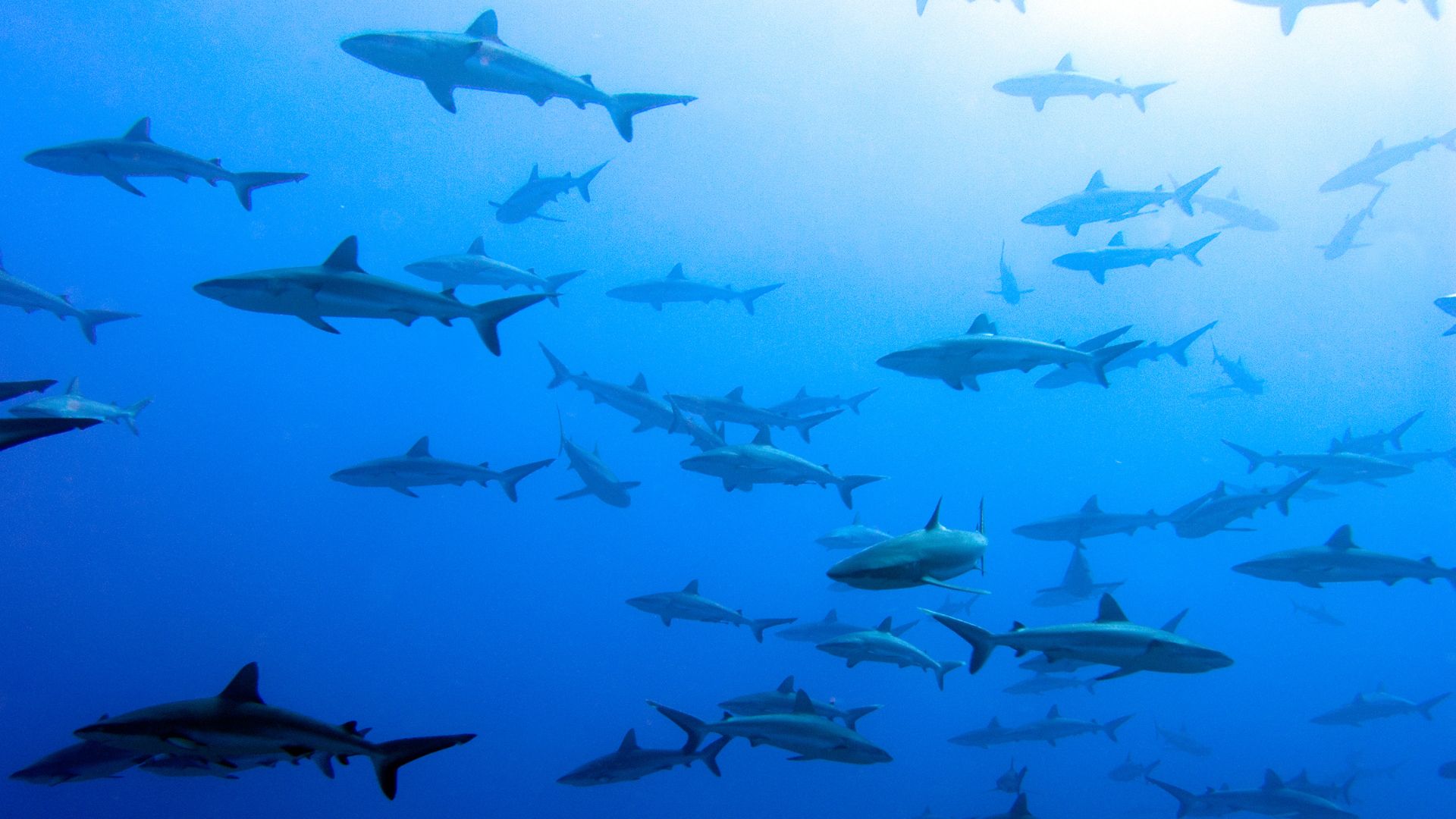
Fakarava's south pass | the grouper spawn and shark wall peak around the June full moon
Best time for humpback whales
If humpback whales are high on your list, target August or September.
This is one of the most memorable experiences French Polynesia can offer. Every year, humpback whales migrate through these waters, and late winter is typically the best window to experience them.
Picture this: you're floating quietly in deep blue water with a licensed guide, watching a humpback mother and calf move beneath you. It's not a theme park experience. It's raw, humbling, and unforgettable.
For many guests, this becomes the defining memory of the trip.
The broader whale season generally runs from July into November, but August and September are the months I'd be most excited about. They line up beautifully with the dry season, which means you can combine whale encounters with excellent charter weather.
If you're trying to build the ultimate French Polynesia yacht charter around wildlife, September is very hard to beat.
Best time for diving and snorkeling
For diving and snorkeling, the dry season is excellent, especially May through October.
In the Society Islands, snorkeling is part of the everyday rhythm of the trip. You'll find coral gardens, rays, reef sharks, and calm lagoon anchorages where guests can swim right from the yacht.
The Tuamotus take it to another level.
Fakarava and the surrounding atolls are known for reef passes, shark encounters, manta rays, and exceptional visibility. This is why I'd separate the Tuamotus from a standard Society Islands trip rather than treating them as a quick add-on.
If diving is the centerpiece of the vacation, build the trip around the Tuamotus.
If snorkeling, scenery, and variety matter more, the Society Islands are probably the better fit.
Best time for sailing between islands
One of the things that makes a French Polynesia yacht charter special is that the sailing itself is part of the experience.
In some destinations, the yacht is mainly a floating hotel.
In French Polynesia, the passages can be part of the magic.
The best sailing conditions are usually during the dry season, from May through October, when the southeast trade winds are more reliable.
For guests, that means more of those invigorating, scenic sails that make you feel like you're truly out in the South Pacific. The kind where everyone eventually finds their spot on deck, the crew trims the sails, the water turns that impossible shade of blue, and the next island slowly rises on the horizon.
In the Society Islands, those passages are manageable and rewarding.
In the Tuamotus, the sailing can feel more remote and adventurous.
Either way, when the trades are working in your favor, the journey becomes part of why you came.
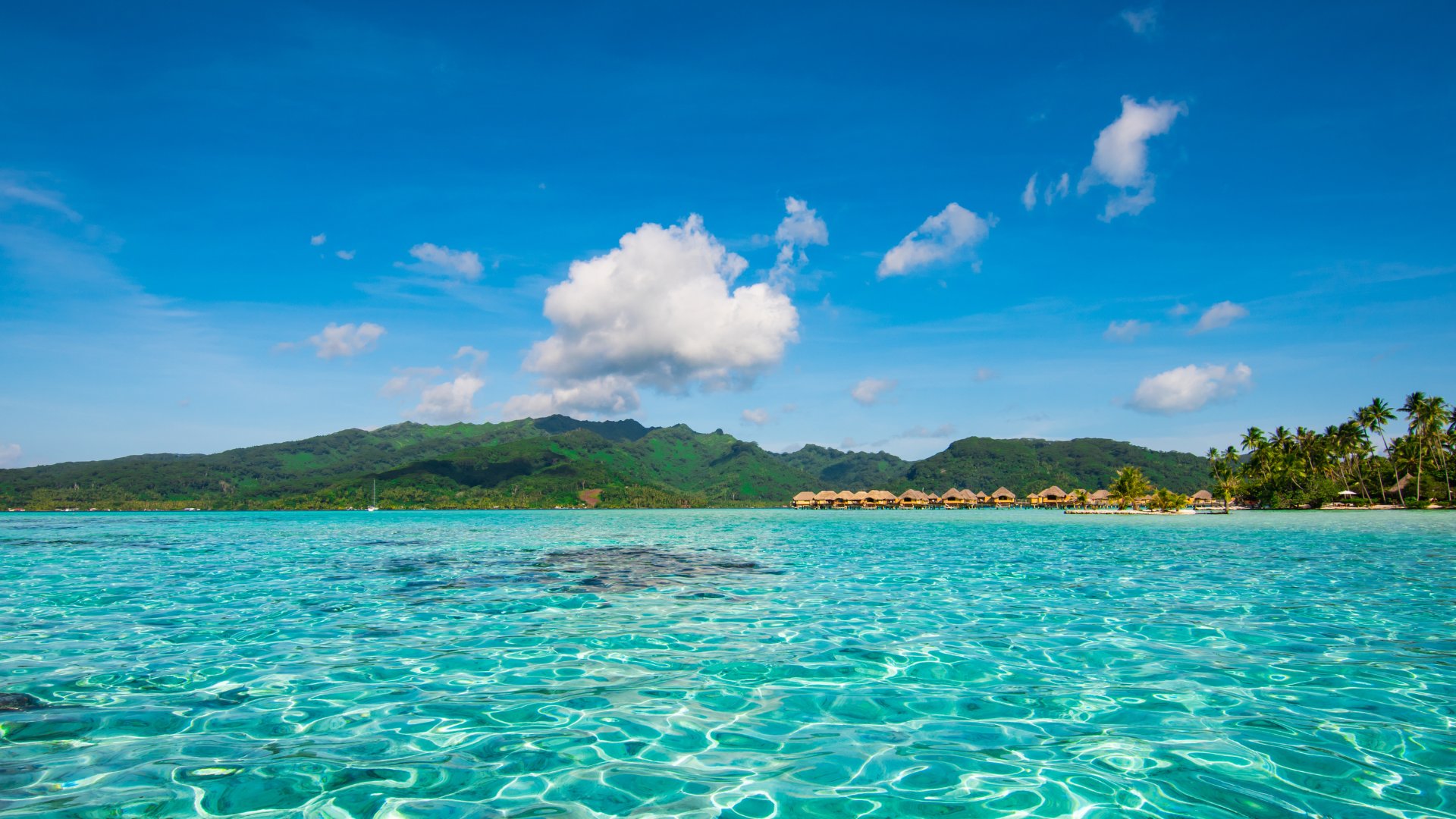
The water really does turn that color | clear lagoon shallows in the Society Islands
Best time for fishing
Fishing can be excellent throughout the year in French Polynesia, but the experience changes by season and cruising area.
If fishing is a major part of the trip, you'll want to talk through the target species and itinerary before choosing dates. French Polynesia can offer opportunities for blue marlin, tuna, mahi-mahi, and wahoo, but different months and regions can favor different types of fishing.
For most guests, I wouldn't choose a French Polynesia yacht charter date based only on fishing unless that's the core purpose of the trip.
But as part of a luxury crewed charter? It's a fantastic bonus.
There's something pretty special about trolling between islands, landing fresh tuna, and having the crew turn it into sashimi or dinner that same evening.
That's the kind of detail people remember.
What about cyclone season?
French Polynesia's cyclone season technically runs from November through April, with the highest-risk period generally falling between January and March.
The good news is that French Polynesia sits on the eastern edge of the South Pacific cyclone belt, so the risk is not the same as places farther west like Fiji, Tonga, or Vanuatu.
But the risk is not zero.
And for a high-end yacht charter, that distinction matters.
If you're spending $30,000, $60,000, or $100,000+ on a once-in-a-lifetime trip, you want to stack the odds in your favor. That's why I'd generally steer most guests away from January through March unless there is a specific reason to travel then.
Could you still have a beautiful trip? Yes.
Would it be my first choice? No.
For most travelers, the better move is to book during the dry season or consider the shoulder months of April and November if you want better value and are comfortable with a little more weather variability.
Is French Polynesia good in the shoulder season?
Yes, the shoulder months can be a smart play.
I'd pay close attention to April, May, October, and November.
May and October are especially appealing because they sit close to the dry-season window while often feeling a bit less crowded than the peak months.
April and November can be more variable, but they can also offer better value and more availability. If you're flexible, these months can make sense, especially if the exact yacht matters more to you than hitting the absolute safest weather window.
For many guests, I'd put it this way:
If you want the best odds of classic French Polynesia weather, choose May through October.
If you want a balance of value, availability, and still-reasonable conditions, look at April, May, October, or November.
If you want whales, look hardest at August and September.
Month-by-month guide to a French Polynesia yacht charter
January
January is part of the wet season and sits in the heart of the South Pacific cyclone window. Expect warmer, more humid weather and a higher chance of rain.
This would not be my first choice for a French Polynesia yacht charter unless your travel dates are fixed or you have a specific reason for going. You may find better availability, but you're accepting more weather risk.
February
February is similar to January: hot, humid, and more unpredictable.
If you're dreaming of dry-season sailing, clear skies, and ideal conditions for a luxury yacht charter, February is not the month I'd recommend first.
March
March can still be wet and humid, though conditions may begin to transition as you get closer to April.
For most charter guests, I'd still be cautious. If this is your one big French Polynesia trip, there are better months to target.
April
April is a shoulder month and can be interesting if you're looking for value.
You're not fully into the dry season yet, so weather can still be mixed, but the transition is beginning. If you have flexibility and want to avoid peak-season pricing, April can be worth considering.
May
May is one of my favorite months to consider for a French Polynesia yacht charter.
You're entering the dry season, the trades become more reliable, humidity drops, and the islands begin to feel more comfortable. It's a great month for guests who want strong overall conditions without the busiest peak-season energy.
For a Society Islands yacht charter, May is a very strong choice.
June
June is excellent for weather and sailing, and it's also a major month for divers interested in Fakarava's grouper spawn.
This is a great time for the Tuamotus if diving is central to the trip. In the Society Islands, June also offers classic dry-season conditions, though demand starts to build as you move deeper into peak season.
July
July is peak dry season.
The weather can be beautiful, the sailing conditions are usually strong, and the islands are firmly in their most popular travel window.
The tradeoff is demand. If you want a July yacht charter in French Polynesia, plan ahead. The best yachts and crews can book early.
August
August is one of the most exciting months in French Polynesia because it combines dry-season weather with humpback whale season.
This is a fantastic month if whales are a priority. It's also still peak season, so availability and pricing can reflect that.
If you want a Society Islands charter with the potential to build around whale experiences, August should be on your shortlist.
September
If I had to pick one month for many French Polynesia yacht charter guests, I'd take a hard look at September.
You can still get beautiful dry-season conditions, the peak summer rush has usually softened, and humpback whales are still a major draw in French Polynesia.
For a high-end charter guest looking for the best blend of weather, wildlife, sailing, and overall experience, September is tough to beat.
October
October is another excellent month to consider.
You're near the end of the dry season, but conditions can still be very good. Crowds are often lighter than the peak June-August period, and the overall feel can be more relaxed.
If May and September are not available, October would be high on my list.
November
November is a shoulder month and the beginning of the wetter season.
This can be a value play, especially if you're flexible and comfortable with a little more weather variability. It would not be my top pick over May, September, or October, but it can still work for the right trip.
December
December moves deeper into the wet season.
The holidays can create demand, but from a pure weather perspective, this is not one of my favorite times for a French Polynesia yacht charter. If you're planning around Christmas or New Year's, I'd be very thoughtful about expectations and itinerary.
So, when should you book?
For most French Polynesia yacht charter guests, I'd recommend May, September, or October.
Those months give you the best mix of dry-season weather, beautiful sailing conditions, clearer water, and a slightly more relaxed feel than the busiest summer weeks.
If whales are a major priority, choose August or September.
If diving the Tuamotus is the dream, look closely at June through October, with special attention to the June full moon if you want to time the Fakarava grouper spawn.
If you're looking for value, consider April, May, October, or November.
And if this is truly a once-in-a-lifetime French Polynesia yacht charter, I'd be cautious with January through March.
Final thoughts
French Polynesia is not a destination I'd rush.
This is a place where the details matter: the month, the itinerary, the yacht, the crew, and the kind of experience you want to have.
Some guests should focus on the Society Islands: Raiatea, Taha'a, Bora Bora, Huahine, and sometimes Moorea. That's the classic French Polynesia yacht charter, and for most first-timers, it's the right place to start.
Others should think bigger and more remote, especially if diving, fishing, and untouched atolls are the draw. That's where the Tuamotus come in.
The right answer depends on what you want the trip to feel like.
Do you want the postcard version of French Polynesia, with Bora Bora glowing in the background from the deck of your yacht?
Do you want to swim with humpback whales?
Do you want to dive with sharks in Fakarava?
Do you want long, beautiful sailing days between volcanic islands?
That's the fun part of planning French Polynesia. The islands give you options.
You just want to choose the right season for the version of the trip you're dreaming about.
Start with the French Polynesia destination guide, and when you're ready, reach out and we'll help you pick the right week.


