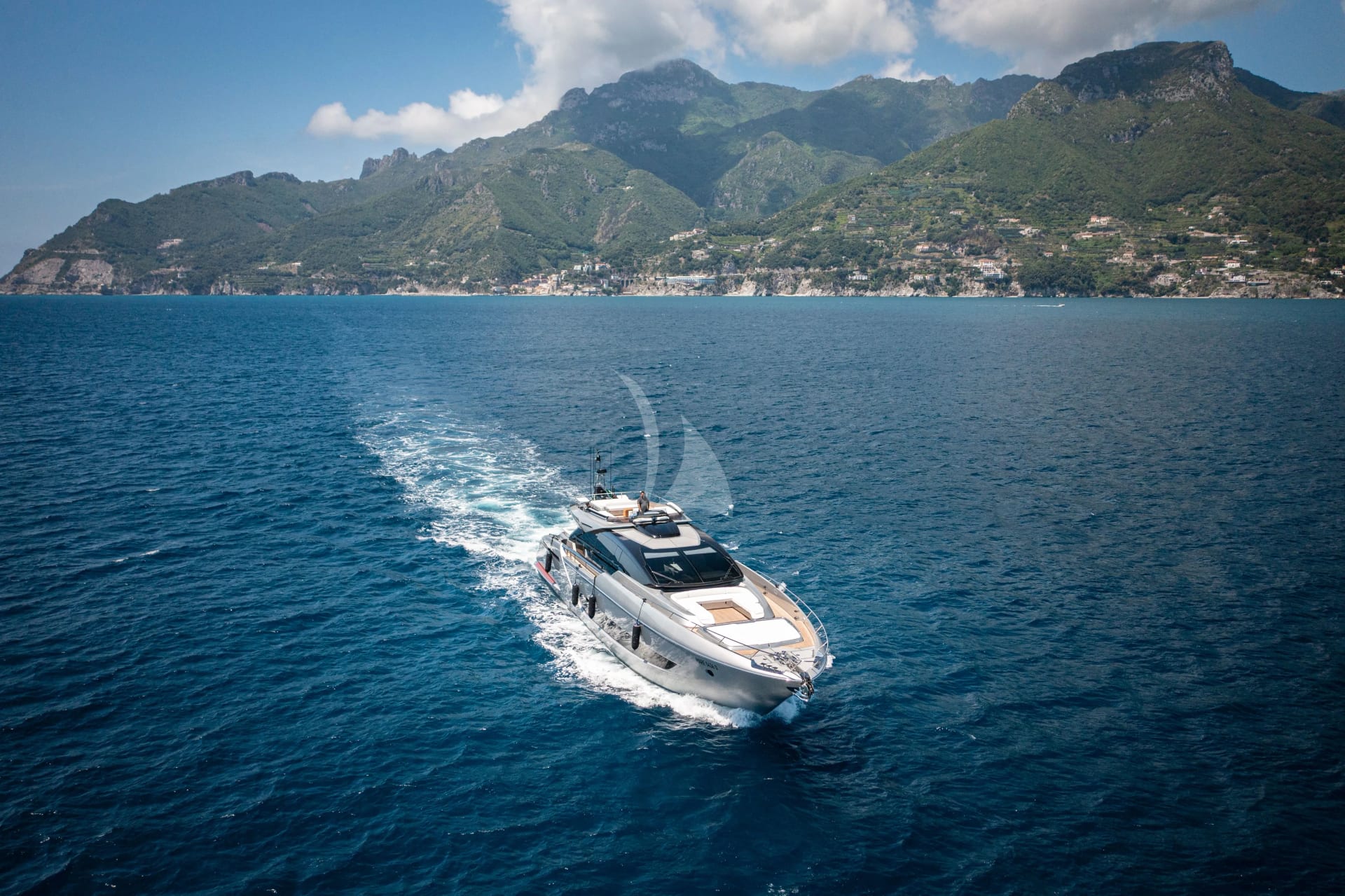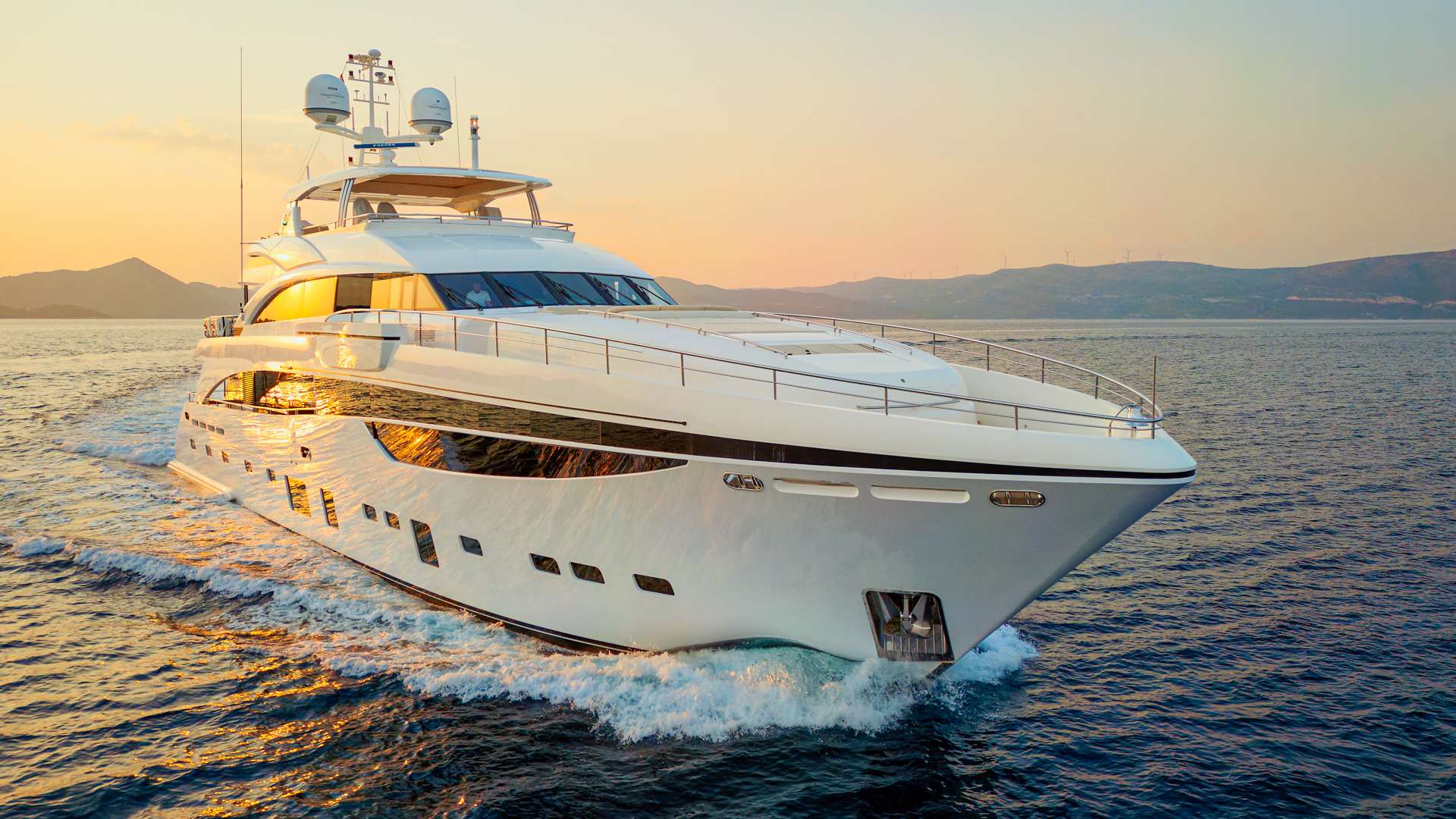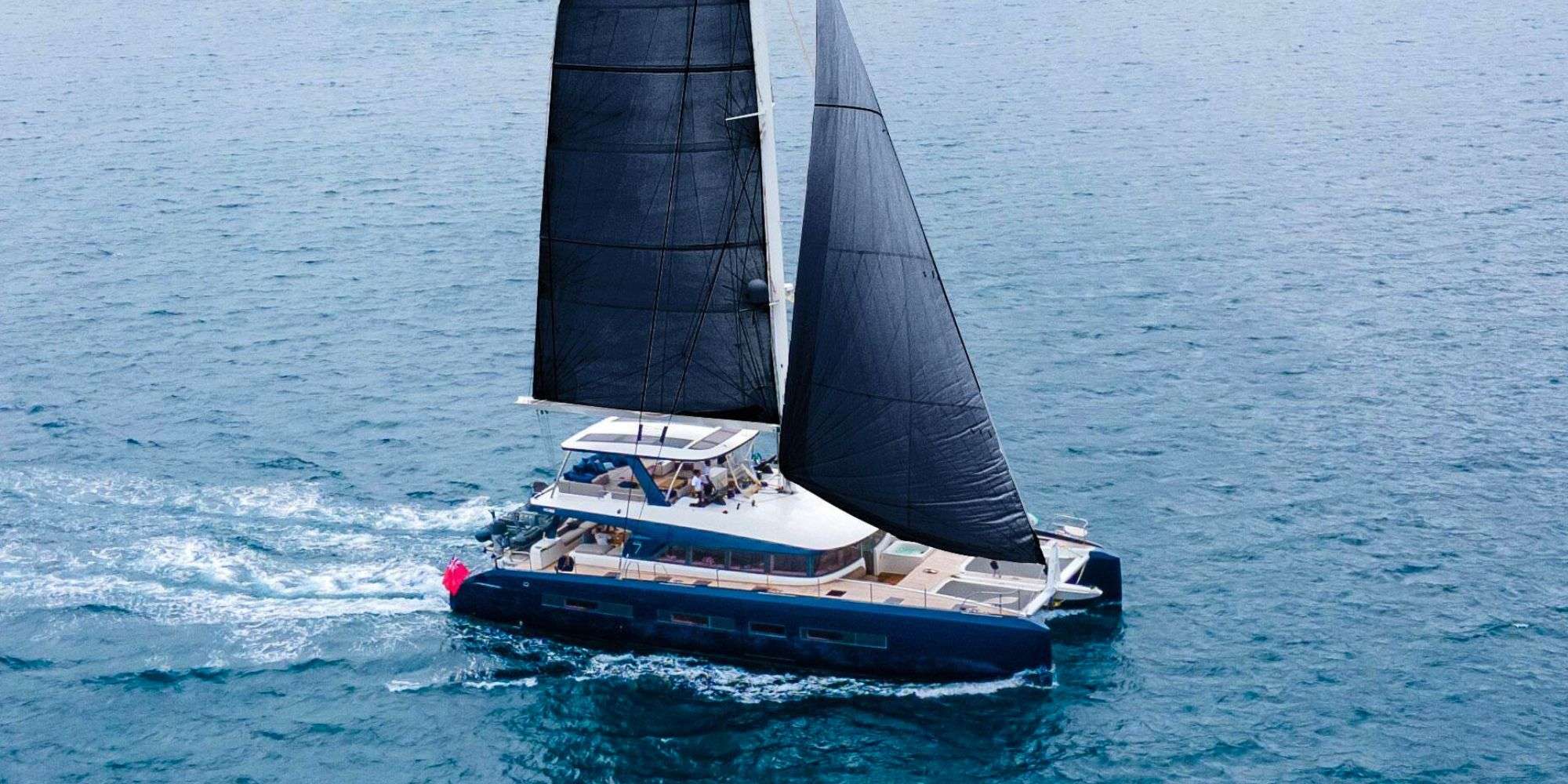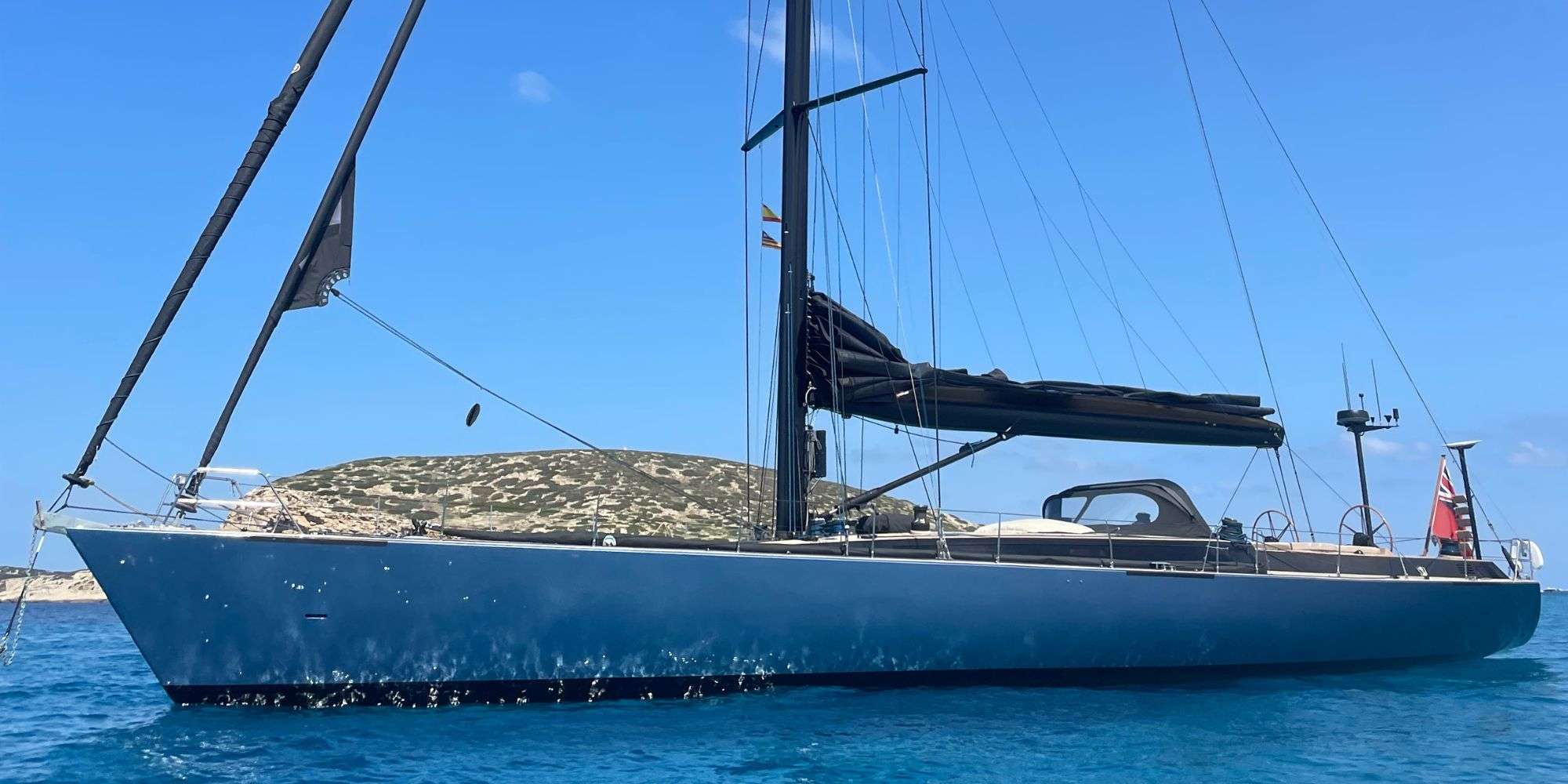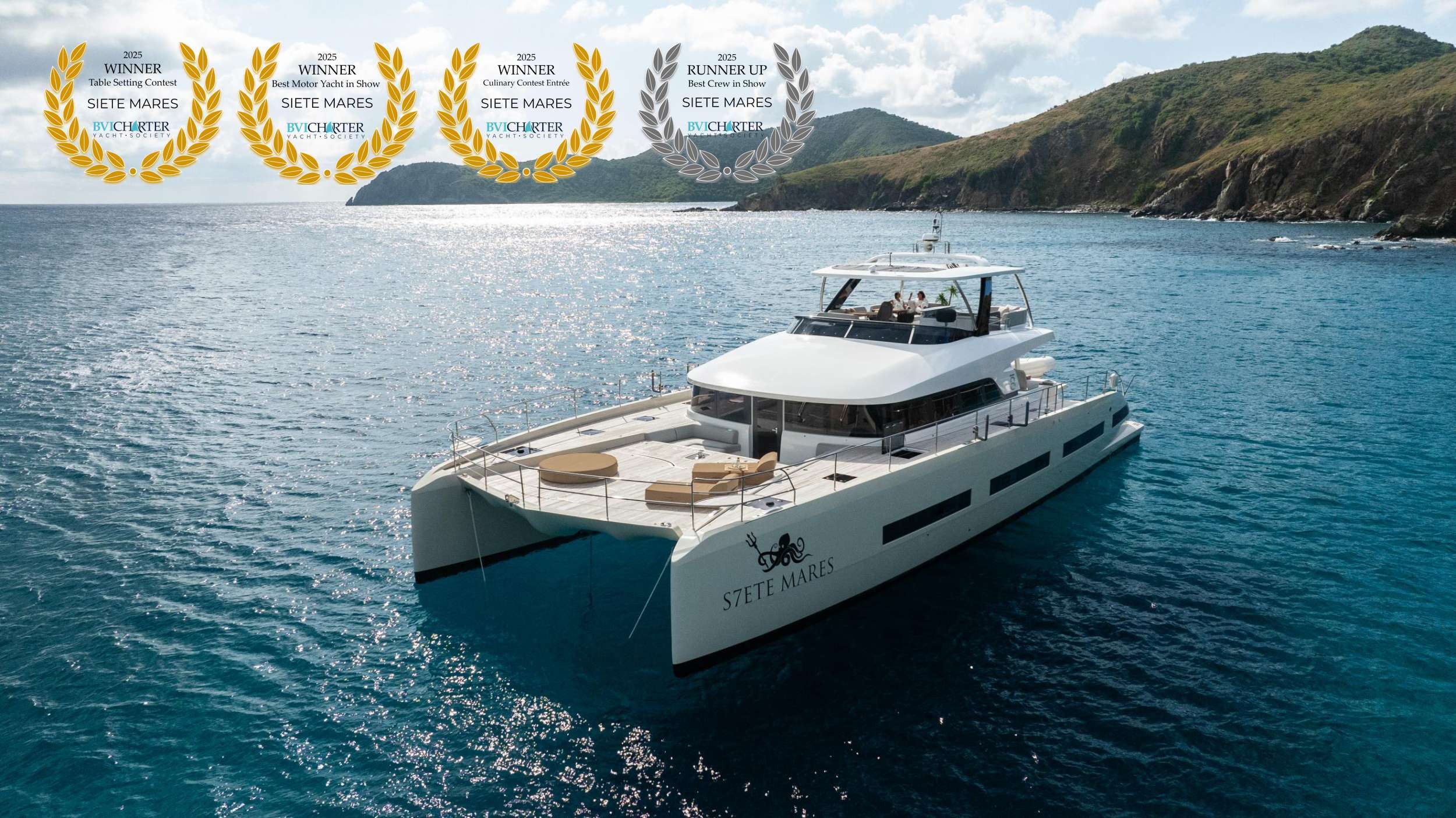

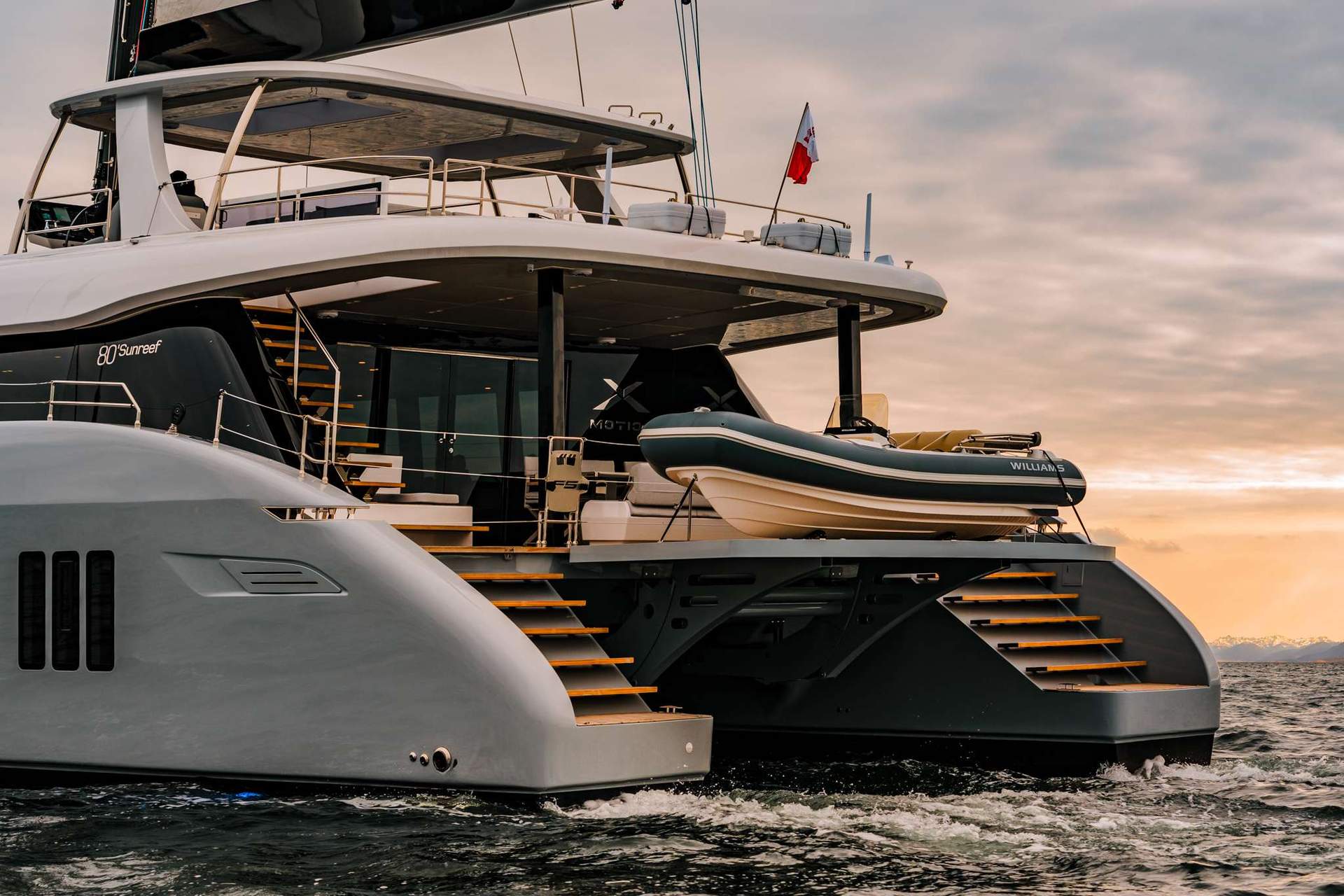
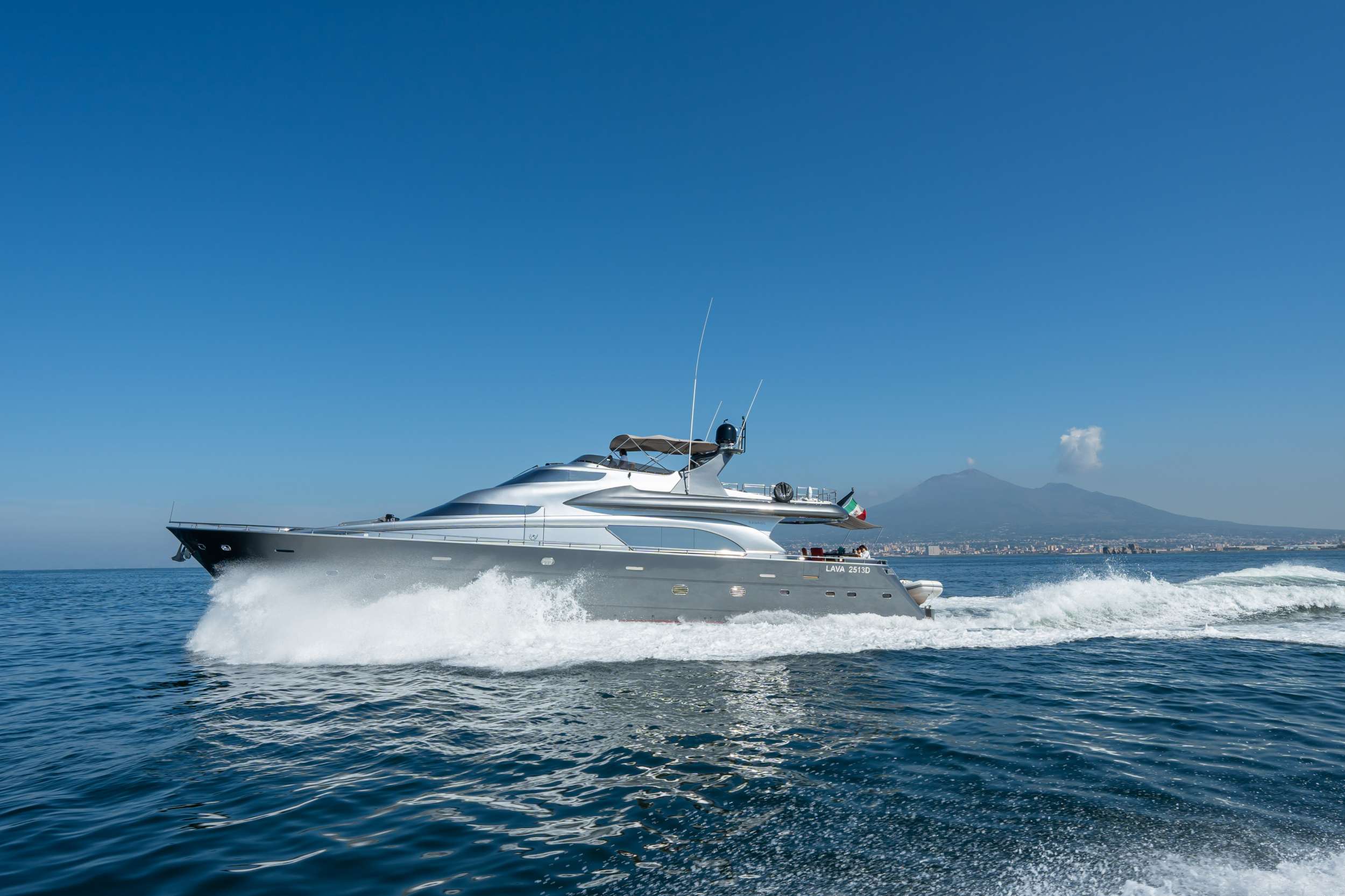
Lady B
85FT · MOTOR YACHT
Pricing from €44,000/week
8 Guests · 4 Cabins
Caribbean
Eastern Mediterranean
Western Mediterranean
South Pacific
United States
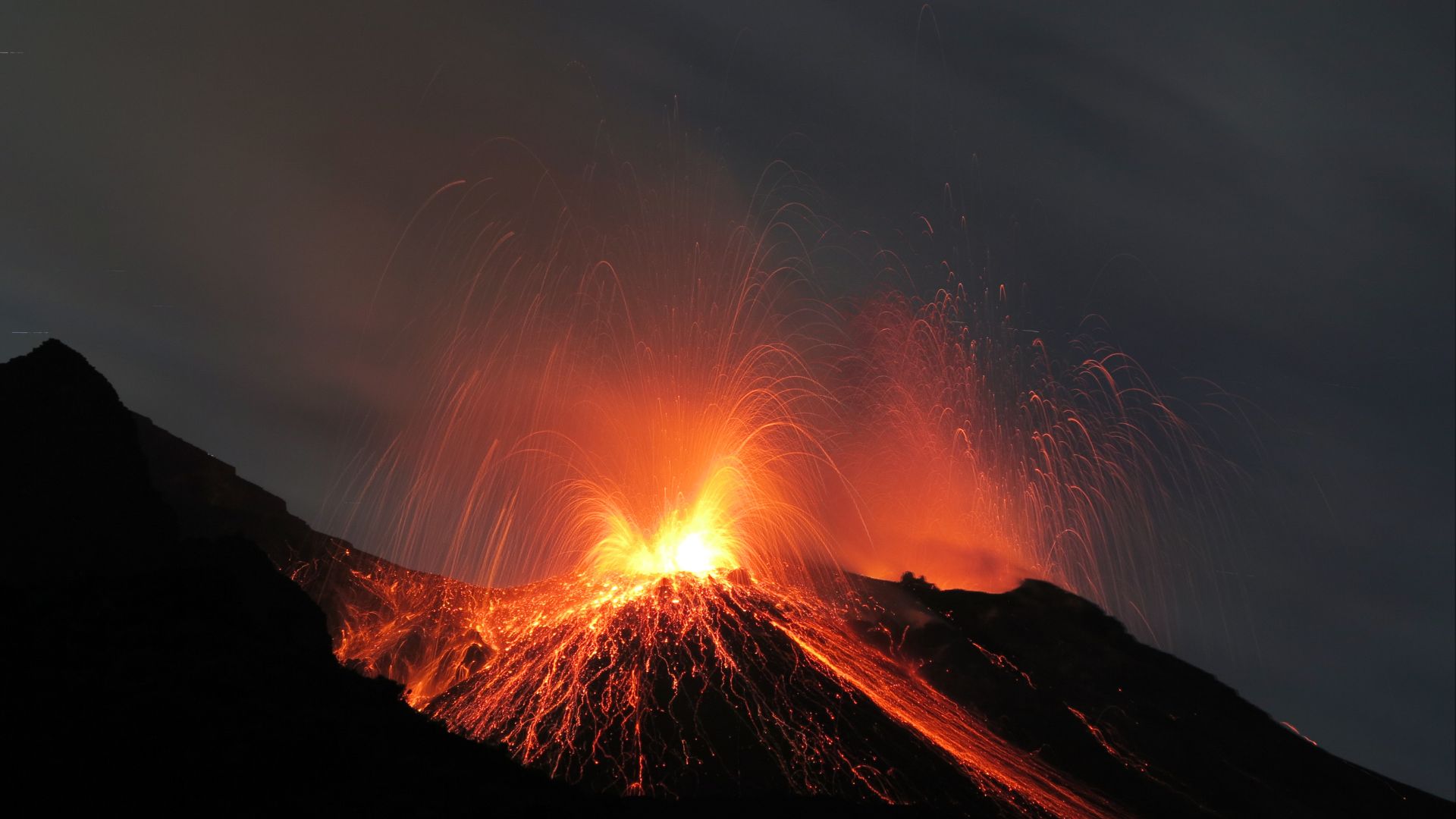
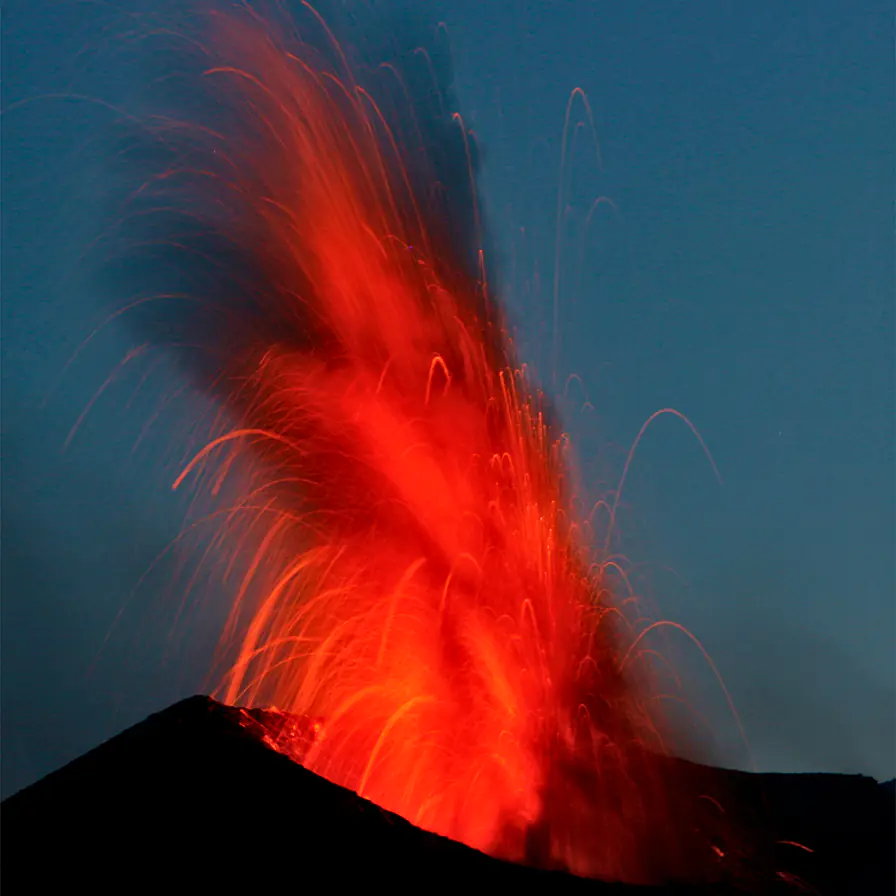
Dinner ends, the deck lights dim, and three miles off your anchorage Stromboli throws lava against the night sky — every fifteen minutes, all night. No other Mediterranean charter has a show like it.
Why Sicily
Sicily and the Aeolian Islands sit at the southern frontier of Italy, closer to Tunis than to Rome. From a yacht at anchor off Panarea, Stromboli's lava arcs against the night sky every fifteen minutes — the only Mediterranean charter route built around an active volcano. From the foredeck at Taormina, the Greek amphitheatre cuts a half-moon into the cliff with Etna smoking behind it. The columns at Agrigento have stood three thousand years. The Italian charter most guests have already done is the Amalfi Coast. This is the one that comes next.
The week takes one of two shapes. From Catania or Milazzo on Sicily's north coast, the route runs the Aeolian chain — Stromboli's eruption from the anchorage at Panarea, then the older volcanic landscape at Lipari and Vulcano. From Palermo on the west, a different week. Greek temples inland; the Norman cathedral at Cefalù on the coast. Dinner ashore in fishing harbors that haven't figured out how to feel like tourist traps. Both weeks end with the realization that nobody else does Italy like this anymore.
What separates a Sicily week from any other Italian charter is what happens after the chef clears the dinner plates. From your foredeck off Panarea, Stromboli puts on the show — orange lava against the night sky on a fifteen-minute cycle, the only competition for light pollution coming from the village three miles back. The next morning opens with espresso above the Greek amphitheatre at Taormina, Etna smoking on the horizon. The contrast inside one week is what guests don't think they'll get from a Mediterranean charter.
Four characteristics that distinguish Sicily from the other Italian charter regions.
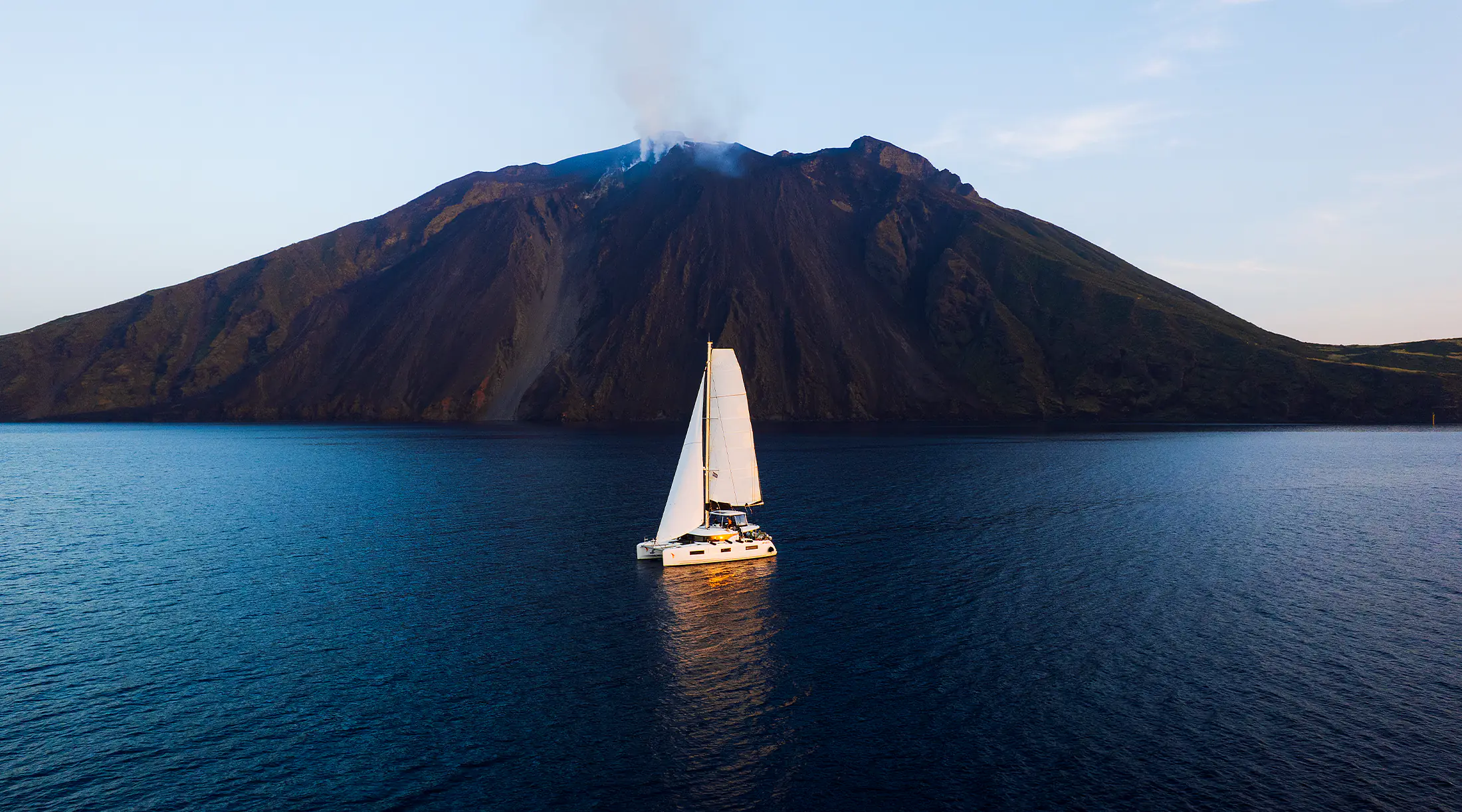
Stromboli's eruption is visible from the anchorage at Panarea three miles across the water — orange lava arcs against the night sky on a fifteen-minute cycle. Vulcano's sulfur smell drifts to the swim platform a quarter-mile offshore. Etna smokes above Taormina on a clear day, the longest-active volcano in Europe. No other Mediterranean week ends with an active eruption in the anchorage.
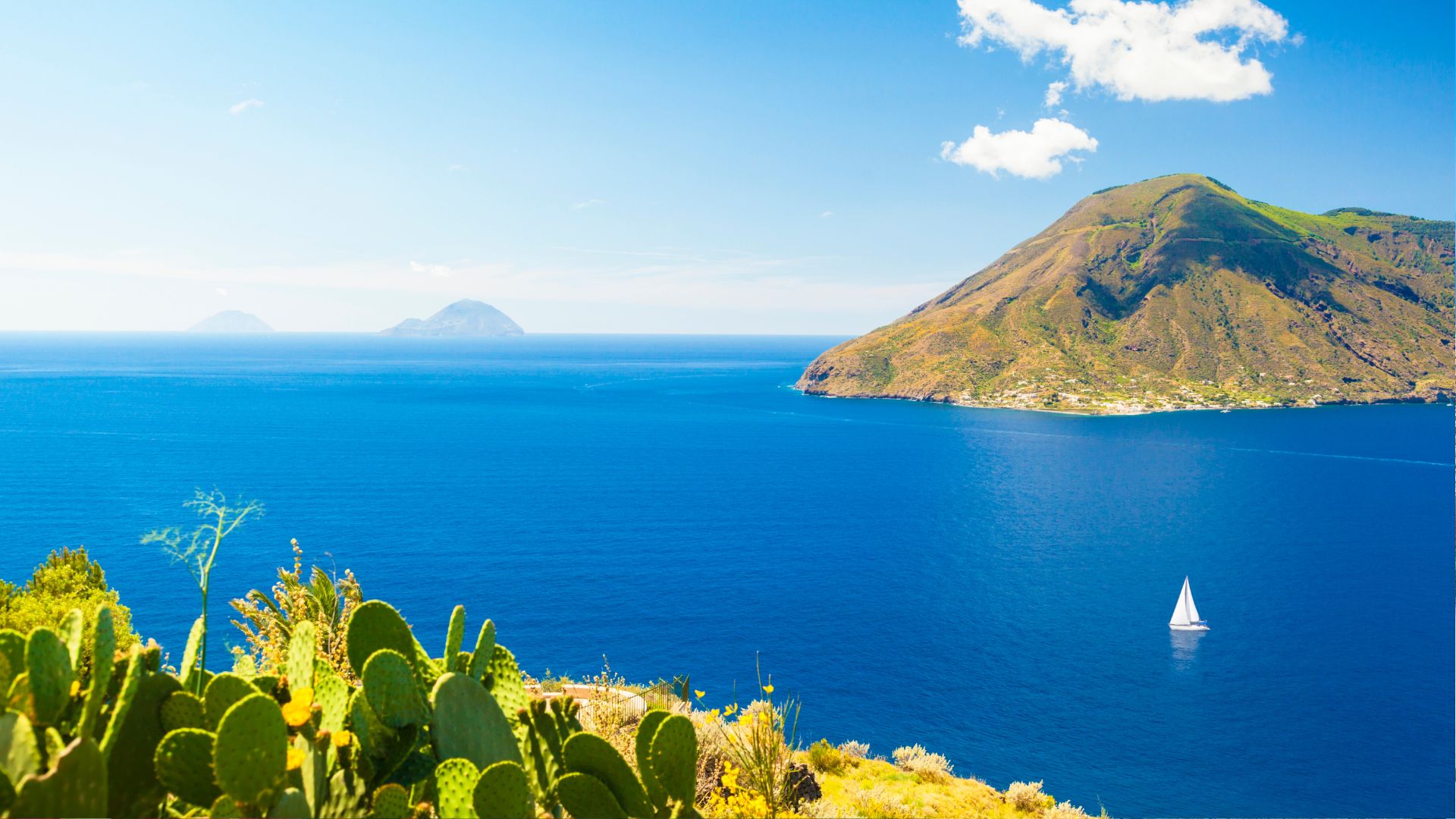
The Aeolian chain sits twenty-five miles off Sicily's north coast — five inhabited volcanic islands cruised on the same week. Panarea's pastel-house harbor is the chic side of the chain — late dinners ashore, tender in by torchlight. Lipari's Norman castle climbs straight from the marina. Salina grows the wild capers the rest of Italy buys. South across the strait, Taormina anchors below the Greek amphitheatre with Etna smoking behind.
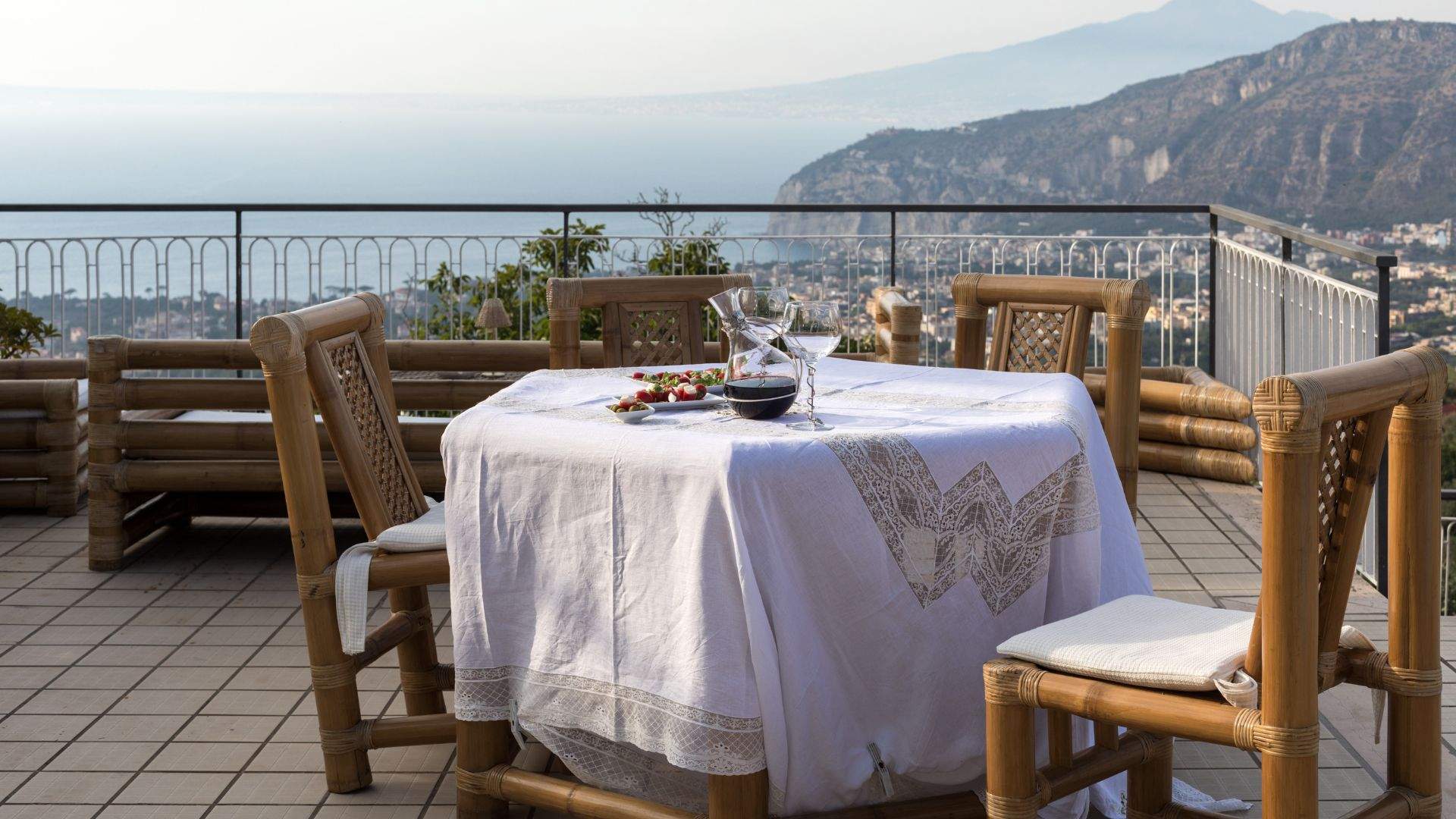
Sicily eats differently from peninsular Italy. Pasta comes with sardines and wild fennel. Breakfast is citrus granita with brioche. Dessert is the pistachio-and-almond cannoli the rest of Italy imitates. Etna wines, grown on the volcano's slope, taste of black pepper and ash. Ashore, the dinner bill runs a third of a Capri equivalent.
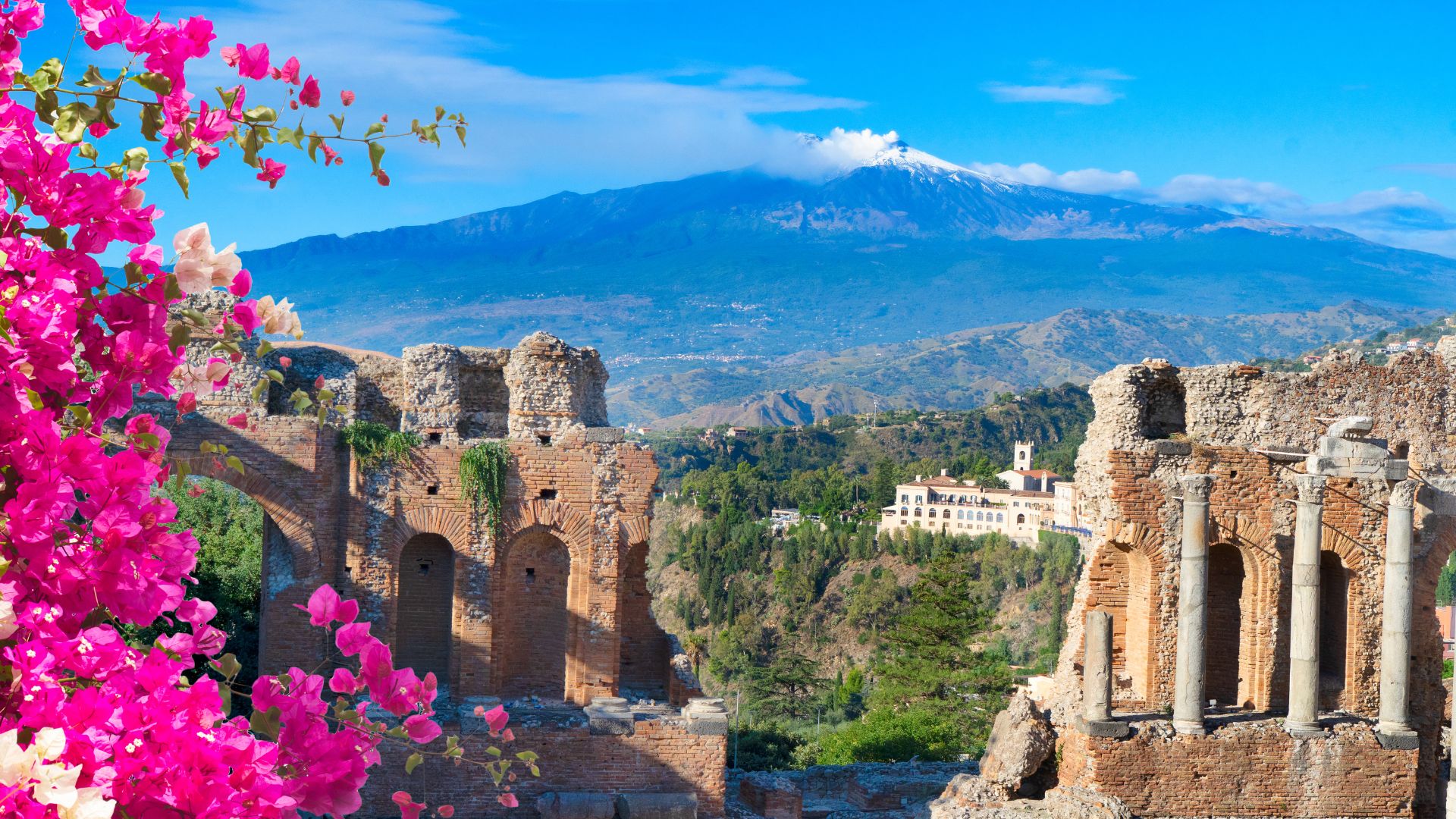
Greek columns at the Valley of the Temples in Agrigento stand on a ridge above the African-facing coast where they were planted twenty-five hundred years ago. Palermo's Norman Palace opens onto a chapel of gold mosaic ceilings and Arab geometric inlay under twelfth-century vaulting. Cefalù repeats the same Arab-Norman fusion in a smaller seaside form. One half-day ashore at any of them belongs in the week.
A hand-picked selection of crewed charter yachts for Sicily & Aeolian Islands — yachts and crews we know firsthand.
Your week is shaped around your group's interests, the season, and the conditions on the water — your captain tailors the days as they unfold. Treat these itineraries as starting points for inspiration.
Crewed Itinerary · Sicily & the Aeolian Islands
Seven nights round-trip from Milazzo, the Italian Tyrrhenian port that sits closest to the Aeolian chain, through five volcanic islands and back. The pace is deliberately slow. The chain is small enough that the captain rarely runs more than fifteen nautical miles between anchorages — every move is short, every afternoon ends on the swim platform, and the marquee scene of the week happens at night, three miles offshore from Panarea, when Stromboli's eruption shows up against the black sky on a fifteen-minute cycle.
The route works cleanly on a crewed catamaran, a sailing yacht, or a small motor yacht. The Tyrrhenian off the Aeolian chain is forgiving in summer — the meltemi runs out before reaching this latitude — and the longest passage on the route is the swing back south from Stromboli at the end of the week. The chef onboard sources at the morning market in Lipari, capers from Salina's hillsides, and Malvasia wine from the volcano-slope vineyards that grow it. Saturday-to-Saturday, plus-expenses, 22% Italian charter VAT on the base rate.
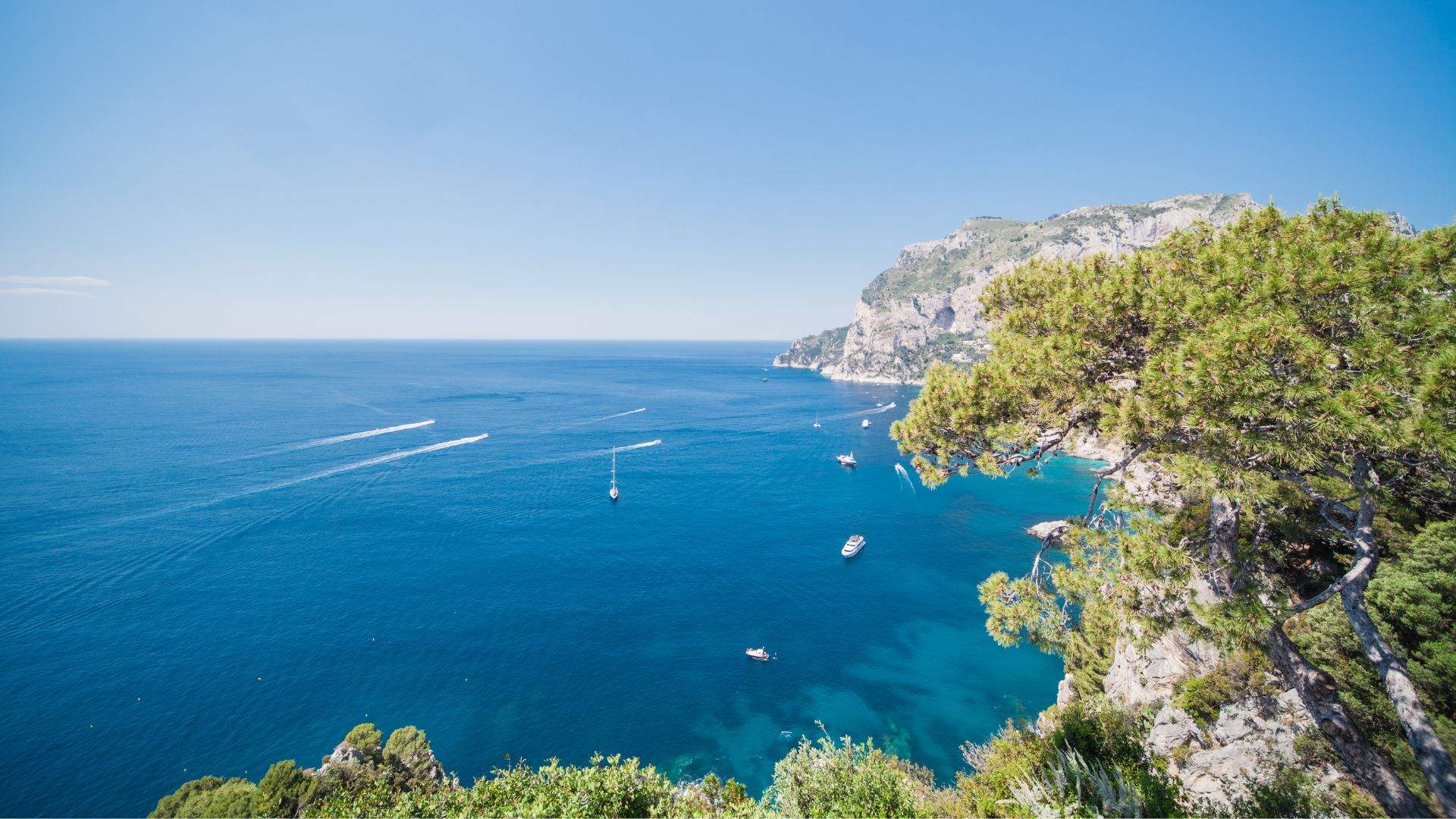
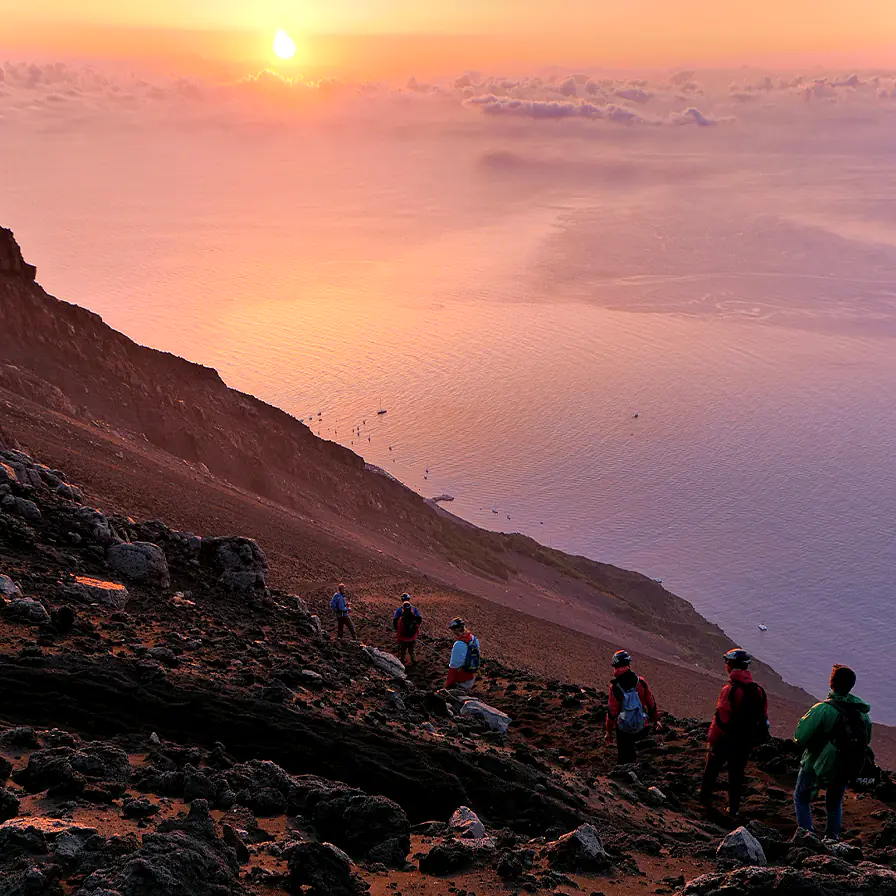
The Aeolian chain has seven islands. The Milazzo round-trip covers the five that anchor a charter week — Vulcano, Lipari, Salina, Panarea, and Stromboli — and leaves Filicudi and Alicudi as optional bench-depth for guests who want a quieter back end. Roughly ninety nautical miles end to end, with no leg longer than the day's appetite. Mornings under canvas or power, afternoons at anchor, evenings ashore in working harbor towns that haven't been retrofitted for cruise-ship tourism.
Milazzo is the embarkation point because the math works. Catania (CTA) is the gateway airport — fifty minutes by car to Marina di Milazzo — and the route starts twenty-two nautical miles from the marina at Vulcano, not eighty nautical miles like a Catania embark. The first night is in a volcanic crater anchorage rather than under the city's harbor lights. For a one-way alternative that adds Taormina and ends in Palermo, see the Sicily End-to-End itinerary.
Day 1 of 7 · Milazzo → Vulcano
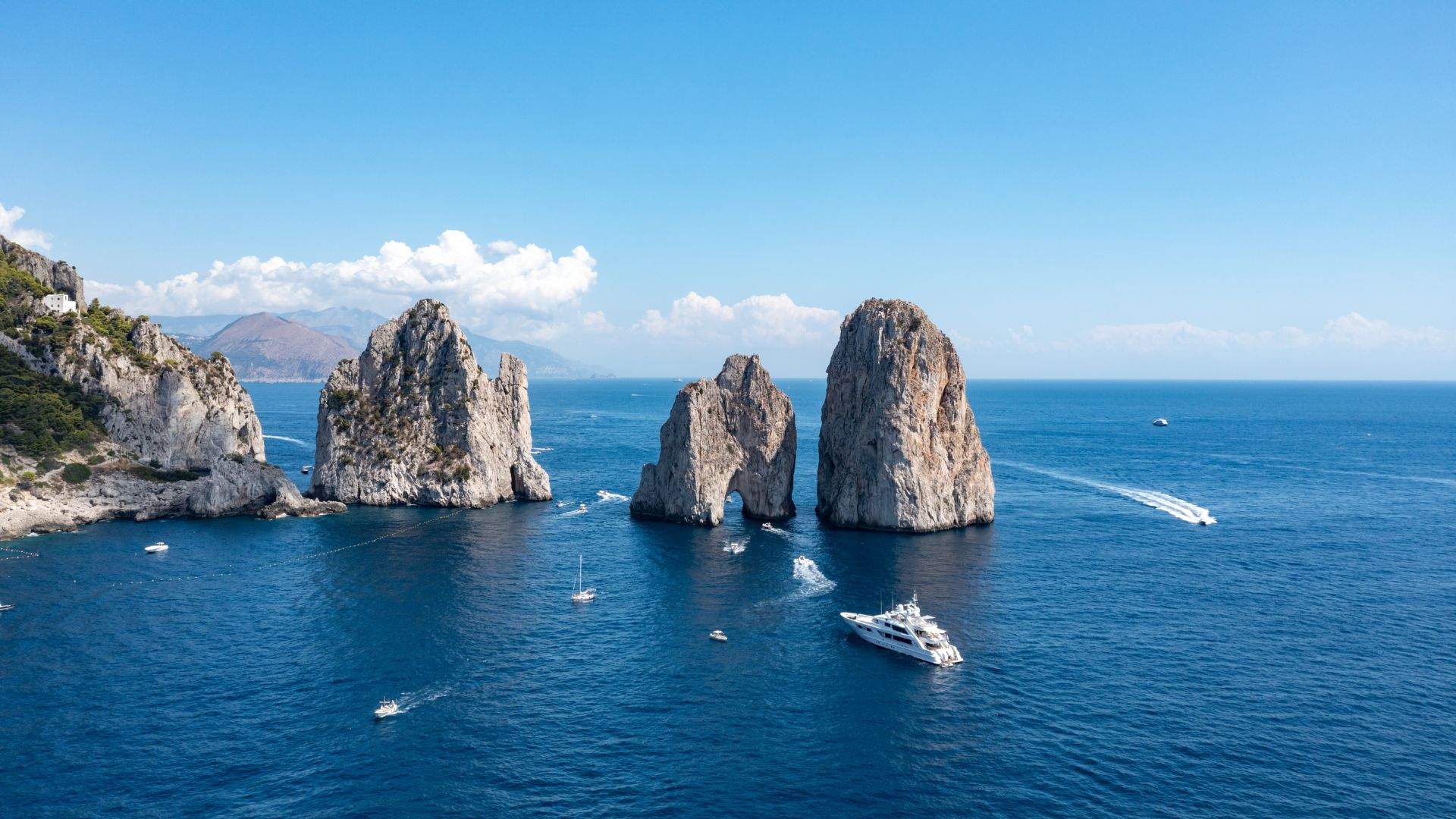
The week starts at Marina di Milazzo, the working Tyrrhenian port that sits at the top of the Sicilian thumb and acts as the everyday charter base for the Aeolian chain. Captain and chef meet the group at the dock, walk through the yacht, stow the luggage, and cover the chart for the route ahead. Early afternoon to settle in, lunch on board at the quay, then lines off for the twenty-two-nautical-mile run north to Vulcano.
Vulcano is the chain's southernmost inhabited island and the first taste of what makes the Aeolian week different from any other Italian charter. The smell arrives before the anchorage does — sulfur on the breeze a half-mile offshore, drifting from the fumarole field on the island's northeast face. Anchor in Porto di Levante on the island's north shore, the bay tucked under the still-active Gran Cratere volcano cone.
Late-afternoon tender ashore for the mud-bath spring — a natural geothermal pool a five-minute walk from the harbor where guests soak in warm sulfur clay (towel, then a long shower). The fumarole field beside it vents steam from the rock. Back on board for dinner from the chef — the kitchen runs on board most nights this week, except the marquee dinners ashore on Lipari and Panarea. The sulfur smell fades by sunset.
Day Highlights
Day 2 of 7 · Vulcano → Lipari
Short hop north this morning — six nautical miles, less than an hour under power — to Lipari, the chain's largest town and the only Aeolian island with a year-round population worth calling a town. The approach reads the way the maps describe it: a Norman castle rising from a basalt acropolis, the medieval citadel walls climbing straight from the harbor, and the working quay below where the morning fish boats land their catch.
Anchor or stern-to at the town quay. The chef provisions at the morning market — swordfish, sardines, capers, the green-skinned local lemons — while the group walks the citadel. The small archaeological museum inside the Norman castle holds the Bronze Age obsidian record of the island: Lipari sat at the center of a Mediterranean-wide obsidian trade three thousand years before Rome, and the volcanic-glass arrowheads recovered from the necropolis are laid out room by room. An hour ashore covers it.
Afternoon at the obsidian beach below Canneto — the black-sand stretch on Lipari's east coast where the volcanic glass washes up against pumice. Swim from the yacht at anchor offshore, then back to town for the evening. Dinner ashore at E Pulera or Filippino — both family-run, both serve the local pasta with sardines and wild fennel that is the dish of the island. Walk back to the boat under the citadel lights.
Day Highlights
Day 3 of 7 · Lipari → Salina
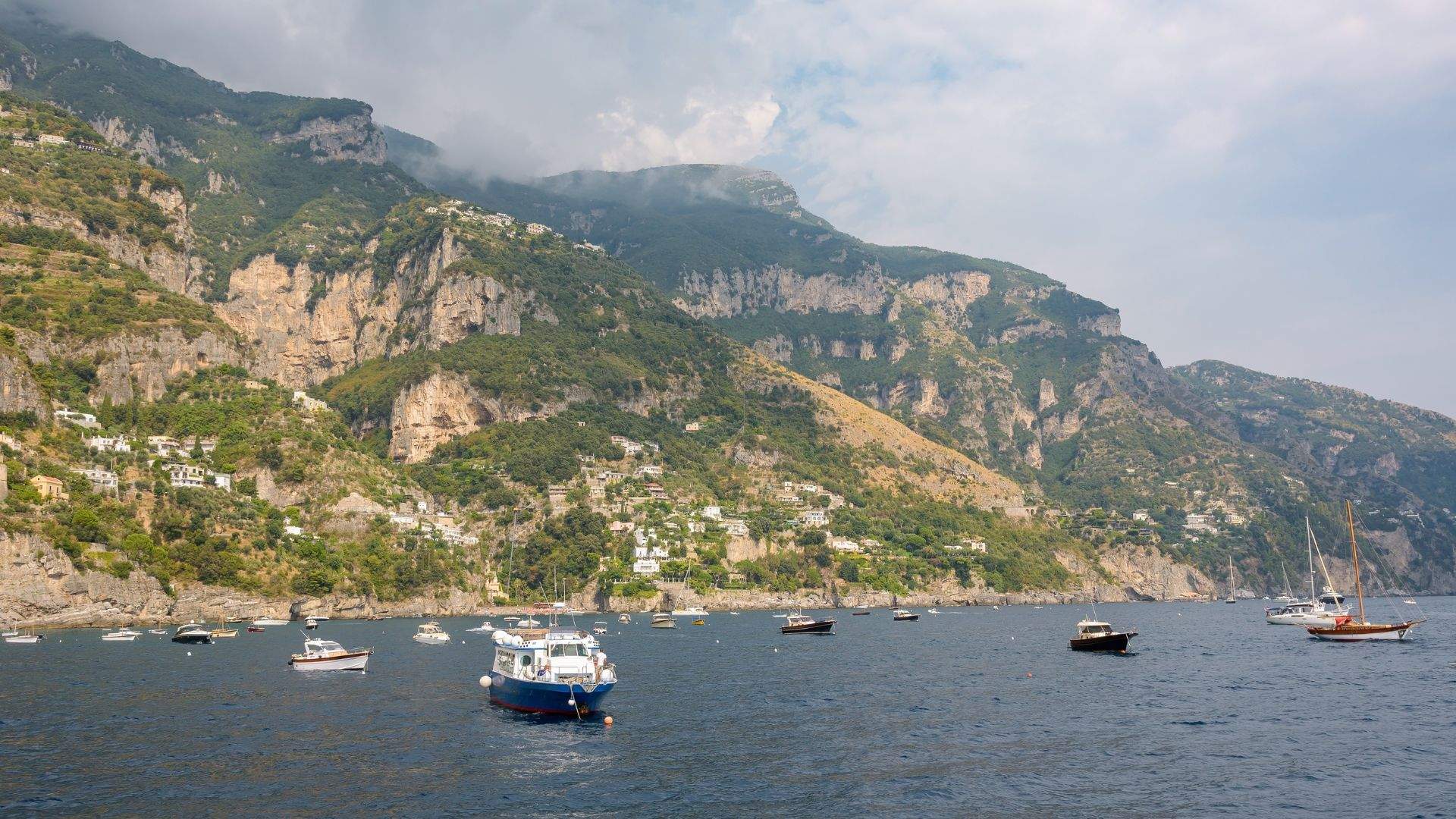
Lines off late morning for the twelve-nautical-mile passage north to Salina, the only island in the chain green enough to make the rest of the Aeolian look black-and-white by comparison. The wind picks up in the afternoon and the run is a pleasant downwind reach for catamarans and sailing yachts. Two volcanic peaks rise from the center of the island — Monte Fossa delle Felci and Monte dei Porri — and the slopes between them grow the Malvasia delle Lipari grapes and the wild caper bushes that supply most of Italy's caper market.
Anchor in Santa Marina Salina on the east coast. The town walks end to end in fifteen minutes. The captain books either Hotel Signum's terrace dining room or A Cannata in Lingua for dinner — both work the volcanic-island cuisine that this island runs on: caper-and-tomato salad, swordfish involtini, granita di limone with brioche at breakfast the next morning. The wine is the local Malvasia, the sweet dessert version from grapes dried in the volcanic-soil vineyards above town.
Afternoon excursion ashore by tender and rental car to the Malfa estates above town — the small family-run caper farms and Malvasia vineyards that the chef has visited that morning. A short tasting at one of them is the right shape for the late afternoon. Back to the yacht for the swim platform before sunset; the bay reflects gold off the volcanic cones at evening light. Salina nights are the quietest of the week.
Day Highlights
Day 4 of 7 · Salina → Panarea
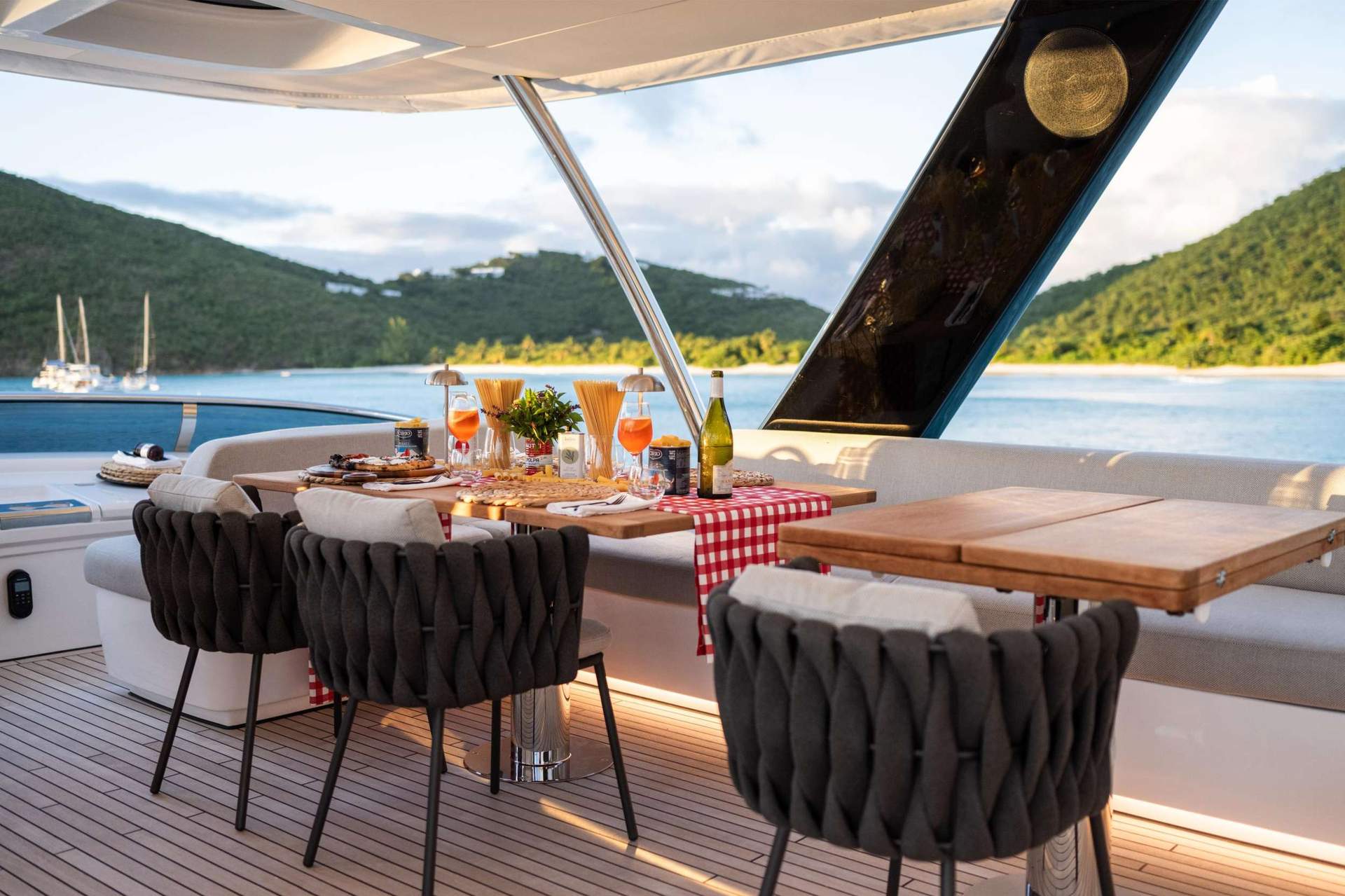
Late-morning run east to Panarea — ten nautical miles across the chain's central pool, the only Aeolian island with no cars and no roads worth the name, only stone footpaths and golf carts. The pastel-house village rises from the harbor; the volcanic cone behind it is dormant, the eastern shore is a string of small swim coves reached by tender, and the late-afternoon scene at Hotel Raya is the polished side of an Aeolian week.
Anchor off San Pietro, the main village on Panarea's eastern shore. The harbor is small and yachts sit on the hook with the swim platform open for the afternoon. Tender ashore for an early evening passeggiata — the village square, the small white-washed church, the two or three shops that stay open through the summer. Hotel Raya's open-air terrace catches sunset and is the right register for an aperitivo before dinner; the captain calls ahead to confirm a table.
Dinner ashore at the harbor — Hyccara on the rocks, Da Francesco on the quay, or the Raya dining room if the booking holds. The yacht stays at anchor through the night. The far horizon to the north holds Stromboli's silhouette, fifteen miles across the water, and the smoke from the active crater is visible at sunset on a clear evening. Tomorrow is the marquee.
Day Highlights
Day 5 of 7 · Panarea → Stromboli
Twelve nautical miles north this morning to Stromboli — the chain's volcanic icon, in continuous eruption for at least two thousand years, and the most reliable active-volcano viewing anchorage in the Mediterranean. The approach reads the way every photograph of the island shows it: a near-perfect cone rising straight from the sea, a thin white plume from the summit crater, and on a clear afternoon the dark scar of the Sciara del Fuoco — the lava-shoot face on the northwest slope — visible from miles offshore.
Anchor late morning at Ginostra on the southwest side — the smallest inhabited village in Italy, no road access, reachable only by sea, a single cluster of white houses around a tiny harbor. Lunch on board, then a tender ashore for the village walk: the lighthouse path, the one restaurant that opens for boat-guests at midday, the path through whitewashed alleys where the residents still draw drinking water from the cistern. Back to the yacht for the swim platform; the water off Ginostra runs deep clean blue under the cliff.
Late afternoon the captain repositions the yacht five miles north and anchors off the Sciara del Fuoco — the active-eruption viewing position. The first explosions are usually audible before they are visible. By full dark the show is at full volume: orange lava arcs against the black sky, the ash plume catching moonlight, the cycle repeating every twelve to twenty minutes through the night. Dinner on board on the aft deck with the volcano in the frame. Nobody on the boat sleeps until late.
Day Highlights
Day 6 of 7 · Stromboli → Filicudi
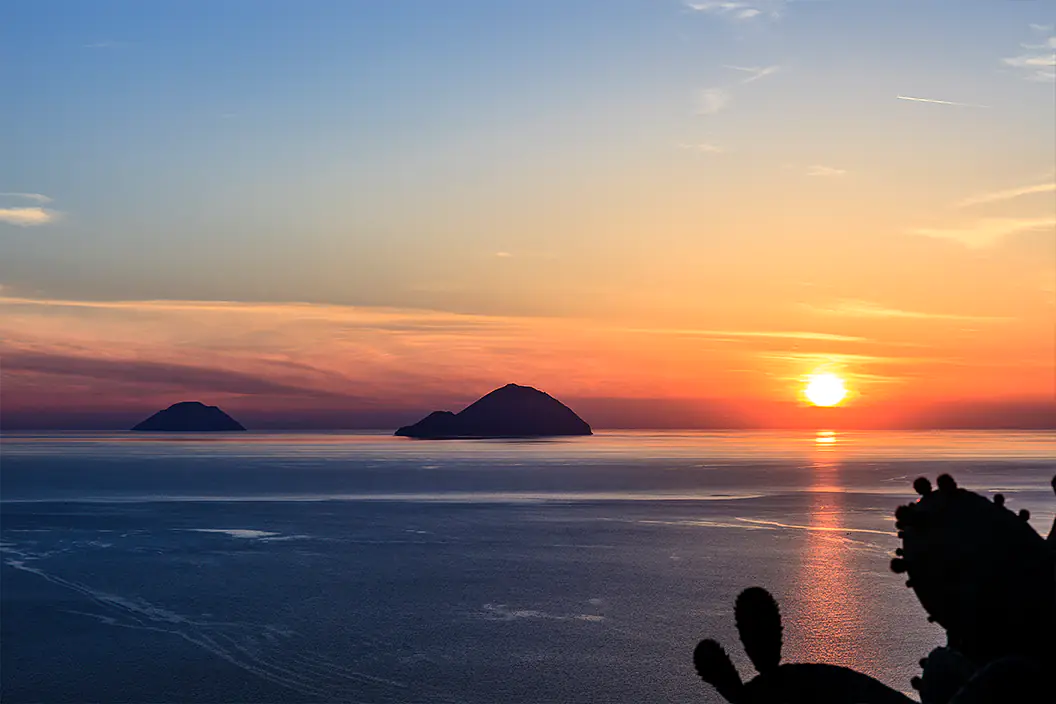
Twenty-two nautical miles southwest this morning to Filicudi, the second-most-remote Aeolian island and the right register for a quiet day after the Stromboli marquee. Filicudi has roughly two hundred year-round residents, one paved road, no cars worth the name, and a coastline of grottoes, basalt sea-stacks, and small swim coves reachable only by tender or by yacht.
Anchor at Pecorini a Mare on the south coast — the small fishing-village quay where the day boats land. Lunch ashore at La Sirena, the family-run trattoria a hundred meters from the dock that has worked the same fish for three generations. The afternoon is for the grotto coast on the island's west side: tender excursion to the Grotta del Bue Marino, the sea-cave on the western cliff where the light turns the water electric blue at midday, and the basalt sea-stack of La Canna offshore — a single vertical pillar rising eighty-five meters out of deep water.
Back to the anchorage at Pecorini for the evening. Dinner on board on the swim platform — the chef puts together what the morning market in Lipari produced, the wine is the Malvasia from Salina, and the only sounds are the swell against the hull and the small village above. The bench-depth alternative is to push further to Alicudi for the night, the chain's most remote island; the captain calls which fits the group.
Day Highlights
Day 7 of 7 · Filicudi → Milazzo: Disembark
Last morning at anchor in Pecorini. Breakfast on the aft deck — granita di limone with brioche, espresso, the swim platform open for one more dive. The captain repositions to the south side of the island for the southbound run back to Sicily — thirty nautical miles to Marina di Milazzo, about three and a half hours under power with the chain falling behind the stern.
Midday repositioning takes the yacht across one of the cleanest stretches of Tyrrhenian water in the Mediterranean. The chef puts together a final lunch from what is left of the Lipari market provisions — pasta with the wild capers from Salina, swordfish from the morning boat, a glass of Malvasia. Stromboli is visible to the north on a clear day. By mid-afternoon the cone of Mount Etna shows up on the southern horizon, dominating the Sicilian coast.
Berth at Marina di Milazzo by late afternoon. Last night aboard with the marina open behind the boat — dinner ashore at the Milazzo waterfront for guests who want a final town walk, or one more chef's table on the aft deck. Saturday morning is the disembark — gratuity envelope to the captain (Mediterranean standard ten to fifteen percent of base, split among the crew), fifty minutes by car to Catania (CTA) or just over an hour to Palermo (PMO). The broker coordinates any pre- or post-charter nights ashore — Belmond Grand Hotel Timeo on Taormina's cliff for the eastward extension, Villa Igiea on Palermo's waterfront for the western.
Day Highlights
Want to share or come back to this voyage later?
Bookmark this voyage →Crewed Itinerary · Western Sicily
Seven nights round-trip from Palermo through the side of Sicily that the rest of Europe has mostly missed. The route runs west along the north coast from Palermo to Ustica, then south through the Egadi Islands at Trapani, and inland by car for the Greek temple at Segesta and the cliff-top town of Erice. Three Greek-built ports, two Phoenician anchorages, an offshore volcanic island, and the quarry on Favignana that produced the limestone for half of Sicily's old cities. Most of the route reads like the Mediterranean did before the tourism industry got organized.
The cruising character is open water and small harbor towns rather than crowded anchorage scenes. Days run twenty to fifty nautical miles between stops; the longer legs sit early in the week when the group is fresh. The chef onboard works the Trapani fish market for tuna and red prawns, the Marsala vineyards for the fortified wine, and the Pantelleria caper farms that supply the local restaurants. Saturday-to-Saturday from Marina Villa Igea, plus-expenses, 22% Italian charter VAT on the base rate.
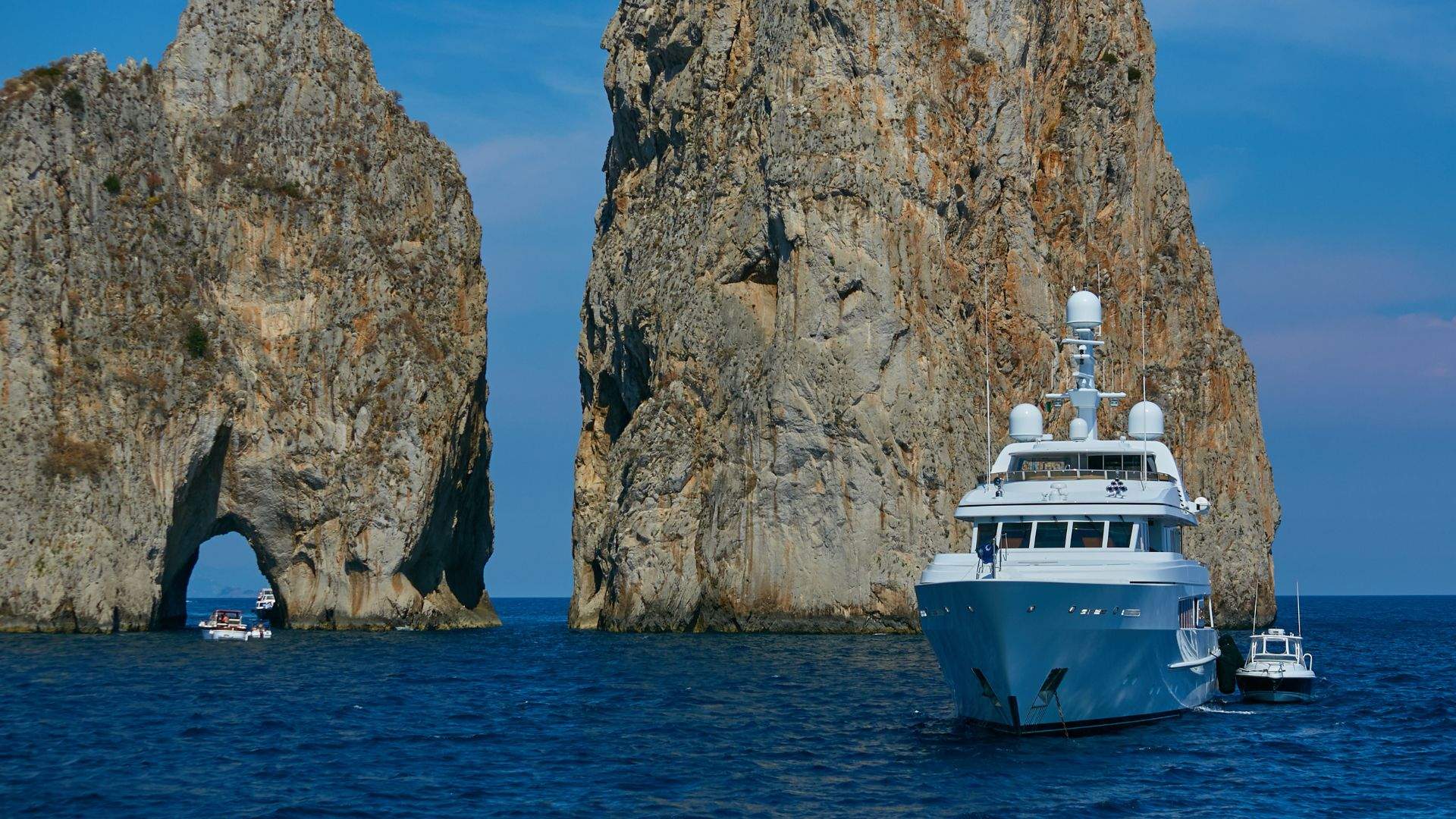
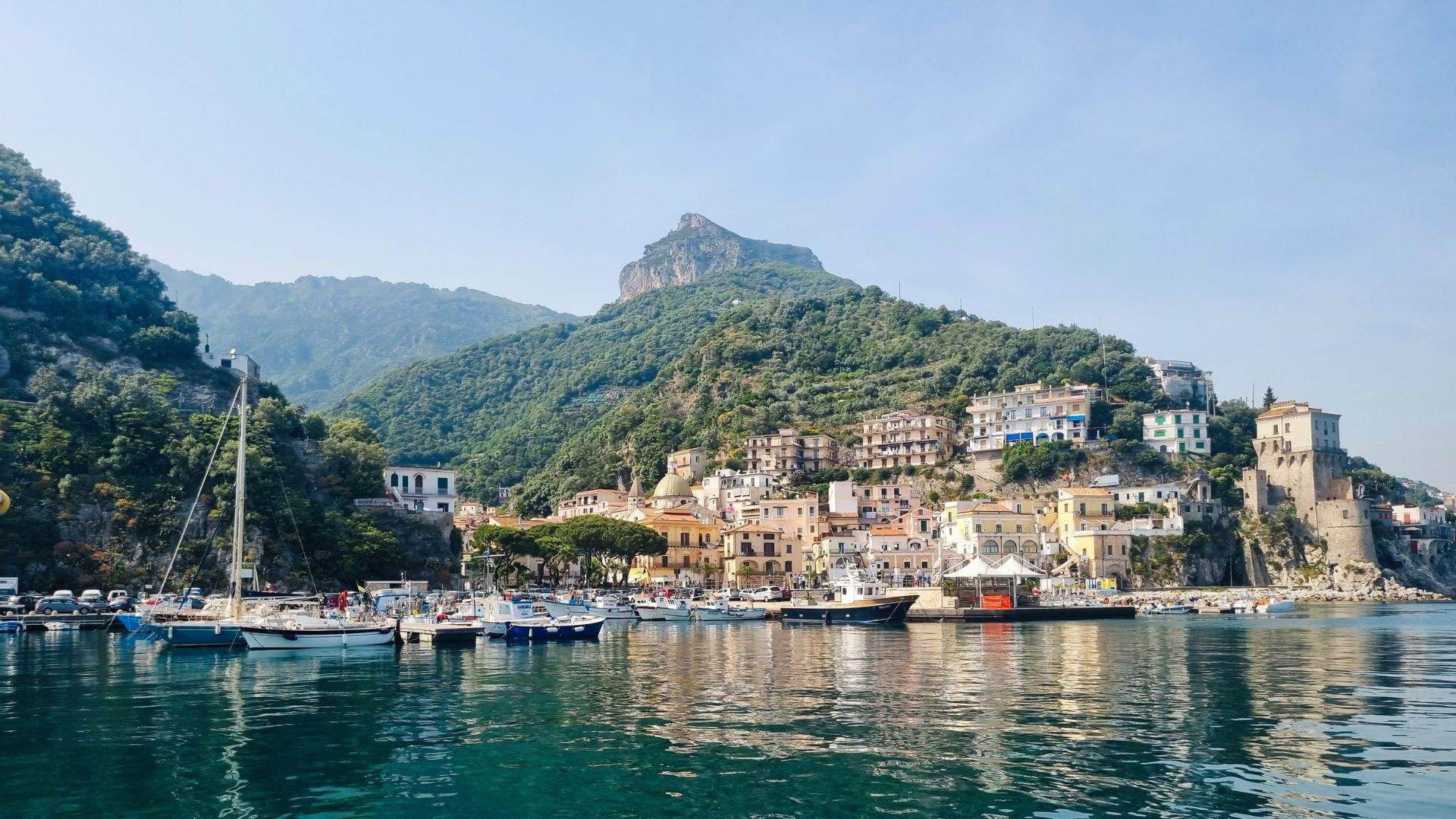
Western Sicily is the culture-and-quiet half of a Sicily charter. The east coast carries the volcanic marquee — Taormina, Stromboli, the Aeolian chain — and the high-density yacht traffic that goes with it. The west coast carries the Phoenician-Greek-Norman archaeological record and a coastline that still belongs mostly to the local fleet. Egadi shore-side dinners run a third of an Amalfi equivalent and the marinas have empty berths in late June.
The week works on either a catamaran or a small-to-mid motor yacht. The Tyrrhenian off the north coast and the Strait of Sicily between the mainland and the Egadi are open water — comfortable in summer, choppier in shoulder season — and the Egadi anchorages are protected. For the eastern alternative covering the volcanic chain, see the Aeolian Chain Round-Trip itinerary. For a one-way that covers both halves of Sicily on a single charter, see the Sicily End-to-End.
Day 1 of 7 · Palermo → Mondello
The week starts at Marina Villa Igea on Palermo's waterfront — thirty-five minutes from Palermo (PMO) airport, ten minutes from the old city. The marina sits at the foot of the namesake Liberty-style Villa Igiea, the 1900 hotel that anchors the harbor and remains one of Palermo's two grand-hotel addresses. Captain and chef meet on the dock, walk through the yacht, stow the luggage, cover the chart.
Late afternoon, lines off for the short six-nautical-mile run to Mondello Bay on the north side of Monte Pellegrino. Mondello is Palermo's local beach village — pastel houses along a curved bay, a Belle Époque white-iron bath-house pavilion on stilts in the middle of the water, a small fleet of fishing boats anchored against the shore. Anchor in the bay for the late afternoon swim platform.
Tender ashore for an early evening at Mondello village — the open-air market on the waterfront, the gelato shops on Piazza Mondello, and dinner at Bye Bye Blues or Charleston Mondello for guests who want a real Sicilian dinner on the first night. Back to the yacht for the night at anchor. The Palermo skyline holds the southern horizon; the city's lights are visible across Monte Pellegrino once dark settles in.
Day Highlights
Day 2 of 7 · Mondello → Ustica
Long passage today — thirty-five nautical miles north into the Tyrrhenian to Ustica, the volcanic island that sits alone offshore from the Sicilian mainland and was the first marine reserve established in Italian waters. Early start under sail or power; the run takes about five hours on a sailing catamaran with the prevailing westerlies on the beam, three on a motor yacht. The island appears as a single dark volcanic cone rising from open water — no other land visible in any direction.
Anchor in Cala Santa Maria on the south coast, the harbor side of the island. The water clarity off Ustica is the cleanest in the western Mediterranean — sixty to eighty feet of visibility on a settled day, no commercial fishing inside the reserve since 1986, and the rock walls of the marine reserve drop straight into deep water with the volcanic substrate covered in seagrass and red coral. Snorkel directly off the swim platform; the rare reef fish that have disappeared from the rest of the Tyrrhenian still live here.
Late afternoon tender ashore for the small village above the harbor — one piazza, two bars, a handful of fishing-boat restaurants. Dinner ashore at Ristorante Giulia or Da Umberto — both serve the local lobster (slipper lobster, smaller and sweeter than spiny lobster), grown in the protected reserve waters. The captain books the table. Back to the yacht for the night at anchor under the island's volcanic ridge.
Day Highlights
Day 3 of 7 · Ustica → Trapani
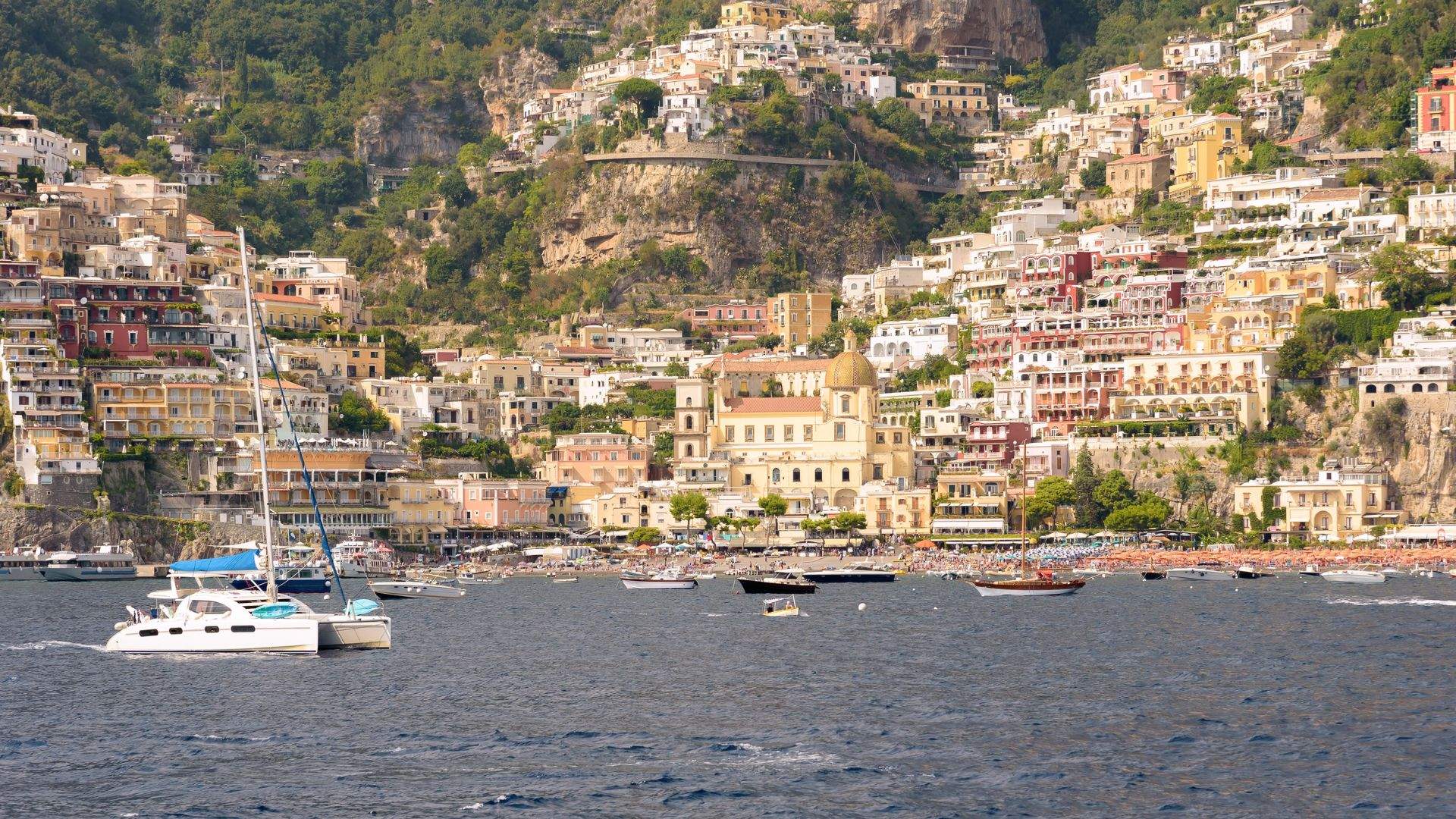
Longest passage of the week — fifty-five nautical miles southwest from Ustica to Trapani along the western Sicilian coast. The route passes Capo San Vito at the tip of Sicily's western thumb and the long Saline di Trapani salt-pans north of the city — a working salt-evaporation field that has produced sea salt continuously since the Phoenicians established the operation here twenty-five hundred years ago. The pyramidal salt piles and the small windmills still in use are visible from the water.
Berth at the Trapani waterfront late afternoon. The captain books a car for the half-hour drive up to Erice — the medieval town built on a Norman fortress site eight hundred meters above the coast, with the Castello di Venere on the summit and stone streets cooled by sea breeze even in August. An hour ashore covers the town; dinner at La Pentolaccia or Monte San Giuliano inside the Erice walls, both serving Sicilian-mountain cuisine that is meaningfully different from the coastal register: lamb, wild fennel, semolina cakes baked in wood-fired ovens.
Back down to the yacht at Trapani for the night. The Trapani fish market opens at dawn on the waterfront a hundred meters from the yacht; the chef walks over in the early morning for the red prawns and the tuna belly that the city's restaurants build their menus around. Trapani is the western port that the rest of Sicily flows through and the cleanest morning provisioning stop on the route.
Day Highlights
Day 4 of 7 · Trapani → Favignana
Short ten-nautical-mile crossing this morning to Favignana, the largest of the three Egadi Islands and the marquee Egadi day. The island shape on the chart is a butterfly — two lobes of low limestone joined by a thin isthmus — and the eastern coast holds the abandoned tufa-stone quarries that supplied the building blocks for half of Sicily's old cities. The quarries were active from the seventeenth century into the early twentieth and were then abandoned and flooded by sea-level rise.
Anchor at Cala Rossa on the northeast coast — the largest of the flooded quarries and the marquee anchorage. Vertical white-rock walls drop twenty meters into turquoise water on three sides; the swim is direct off the swim platform. The water is shallower than it looks from the surface and the bottom is white sand reflecting back up through the column — the color is closer to a Bahamian sandbar than to a Mediterranean cove. Most of the day at anchor here.
Late afternoon repositioning to the Favignana town quay for the evening. The town walks the waterfront end to end in twenty minutes. Dinner ashore at La Bettola or Il Buongustaio — both serve the local Mattanza tuna and the caper-and-tomato salad that is the Egadi version of Sicilian summer. The Florio family tonnara — the historic tuna-trap factory on the waterfront — is now a museum and worth thirty minutes ashore before dinner. Night at anchor or stern-to at the town quay.
Day Highlights
Day 5 of 7 · Favignana → Marettimo
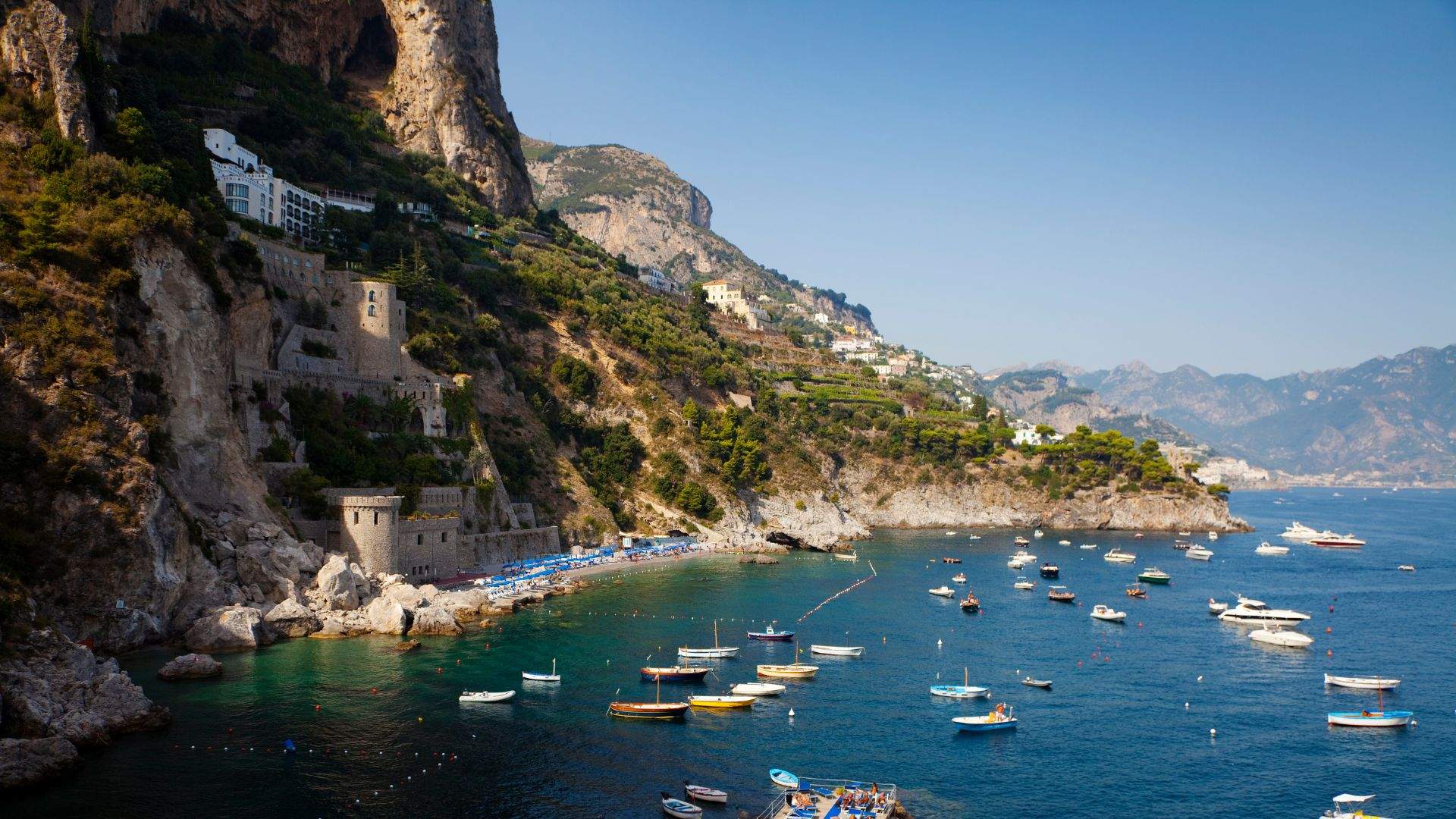
Short morning run to Levanzo, the smallest of the three Egadi Islands and the only one with a Paleolithic-era cave-painting site. Anchor in Cala Dogana, the small harbor on the south coast, then tender ashore for the morning walk to the Grotta del Genovese — the limestone sea-cave on the island's north coast where prehistoric rock art has been preserved for ten thousand years. The cave is reached by a guided land walk; the captain books the visit a day in advance.
Lunch on board at anchor in Cala Minnola off Levanzo's south coast — the cleanest swim cove in the Egadi, pine trees coming down to the water, a small Roman shipwreck visible on the seabed. Then a twelve-nautical-mile run southwest to Marettimo, the smallest and most remote of the three islands. The shape on the chart shows it: a single steep ridge rising out of the sea, no flat ground worth the name, and the western coast a string of vertical cliffs broken by sea-caves.
Anchor at Marettimo town on the east coast — the only inhabited part of the island, about three hundred year-round residents, the harbor village built around a single piazza and a row of fishing-boat houses. Dinner ashore at Il Veliero or Da Lia — both family-run, both serve what the morning boat brought in. Late-evening tender excursion around the western cliffs to the Grotta del Cammello and the Grotta del Tuono — sea-caves only reachable by water, the cleanest of the Egadi grottoes.
Day Highlights
Day 6 of 7 · Marettimo → Castellammare
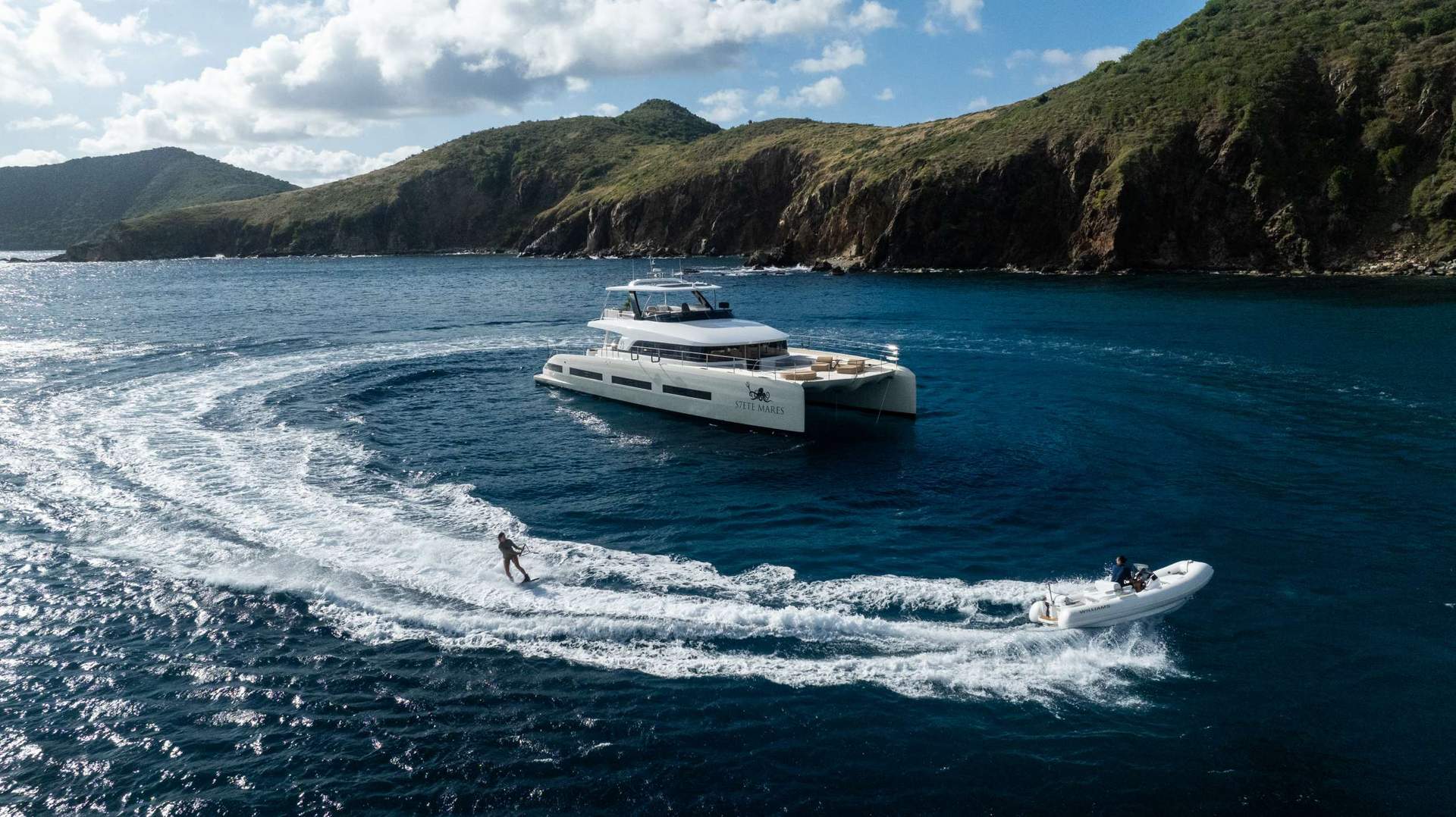
Thirty-nautical-mile northeast run this morning back toward the Sicilian mainland and the long crescent bay of Castellammare del Golfo — the Gulf of Castellammare, three peninsulas wide, with the medieval town of Castellammare on the south shore and the Zingaro Nature Reserve on the western headland. Anchor off the town or stern-to at the marina; the captain calls based on the swell and the harbor traffic.
Midday excursion ashore by car to Segesta — the Doric Greek temple from the fifth century BC that stands alone on a hilltop above the surrounding hills, no town around it, no other ruins visible from the temple platform. The structure is unfinished — the column flutes were never carved and the roof was never built — but the architecture is otherwise as clean a fifth-century-BC temple as Sicily has. The Greek theatre on the adjacent ridge dates from the same period; both are walkable on the half-day ashore.
Back to the yacht for the late afternoon swim in the bay — the Zingaro Reserve coves on the western headland are the cleanest swim coves on this stretch of mainland Sicily, reached by tender from anchor. Dinner ashore at La Forchetta on the Castellammare waterfront or Trattoria del Pescatore on the harbor — both serve the local fish soup and the Sicilian-style swordfish involtini that the town's restaurants build menus around. Night at anchor or marina.
Day Highlights
Day 7 of 7 · Castellammare → Palermo: Disembark
Last full day on the water. Morning run east along the coast — thirty nautical miles back to Palermo, about four hours under power past Capo San Vito and the long Saline di Trapani salt-pans the route passed outbound on Day 3. The captain repositions the yacht to Marina Villa Igea by early afternoon; the marina sits at the foot of Villa Igiea hotel on Palermo's working waterfront.
Afternoon ashore in Palermo — the half-day that gives the route's cultural anchor. The Norman Palace (Palazzo dei Normanni) on the inland edge of the old city holds the Cappella Palatina, the twelfth-century chapel decorated by Arab artisans for Roger II of Sicily: gold mosaic ceilings, Arab geometric inlay in the wooden ceiling vaulting, Byzantine wall mosaics depicting Old Testament scenes from floor to apse. An hour inside is enough; a walk through the surrounding old city covers the Quattro Canti, the Pretoria Fountain, and the Cathedral on the way back to the marina.
Last night aboard at Marina Villa Igea. Dinner on the aft deck with the city lights across the harbor, or ashore at the Villa Igiea hotel terrace — the Belle Époque restaurant where Palermo's old families still eat. Saturday morning is the disembark — gratuity envelope to the captain (Mediterranean standard ten to fifteen percent of base, split among the crew), thirty-five minutes by car to Palermo (PMO) airport. The broker coordinates any pre- or post-charter ashore — the Villa Igiea hotel for the post-charter night, the Casa Florio outside the old city, or the cliff-top Belmond Villa Sant'Andrea on Taormina for guests routing east before flying home.
Day Highlights
Want to share or come back to this voyage later?
Bookmark this voyage →Crewed Itinerary · Sicily End-to-End
Seven nights one-way from Catania to Palermo, the marquee Sicily charter — Taormina under the Greek amphitheatre on the first night, Stromboli erupting from the anchorage on the third, Panarea and Salina in the middle of the chain, and Cefalù and Palermo's Norman Palace as the cultural close. The route covers about two hundred eighty nautical miles end to end and ties every part of the destination page into a single charter: volcanic islands and Greek antiquity, Aeolian cuisine and Phoenician harbors, the active eruption and the gold mosaic ceilings.
Motor-yacht-only — the daily passages are longer than the round-trip itineraries (twenty to fifty nautical miles per day, several legs offshore overnight) and the time-on-route favors yachts that hold a steady twelve to fifteen knots. The chef onboard sources at Taormina's morning fish stalls, the Lipari market on the second pass, and the Palermo Vucciria for the final night. Saturday-to-Saturday, plus-expenses, 22% Italian charter VAT on the base rate, single-yacht repositioning fee bundled into the all-in quote.
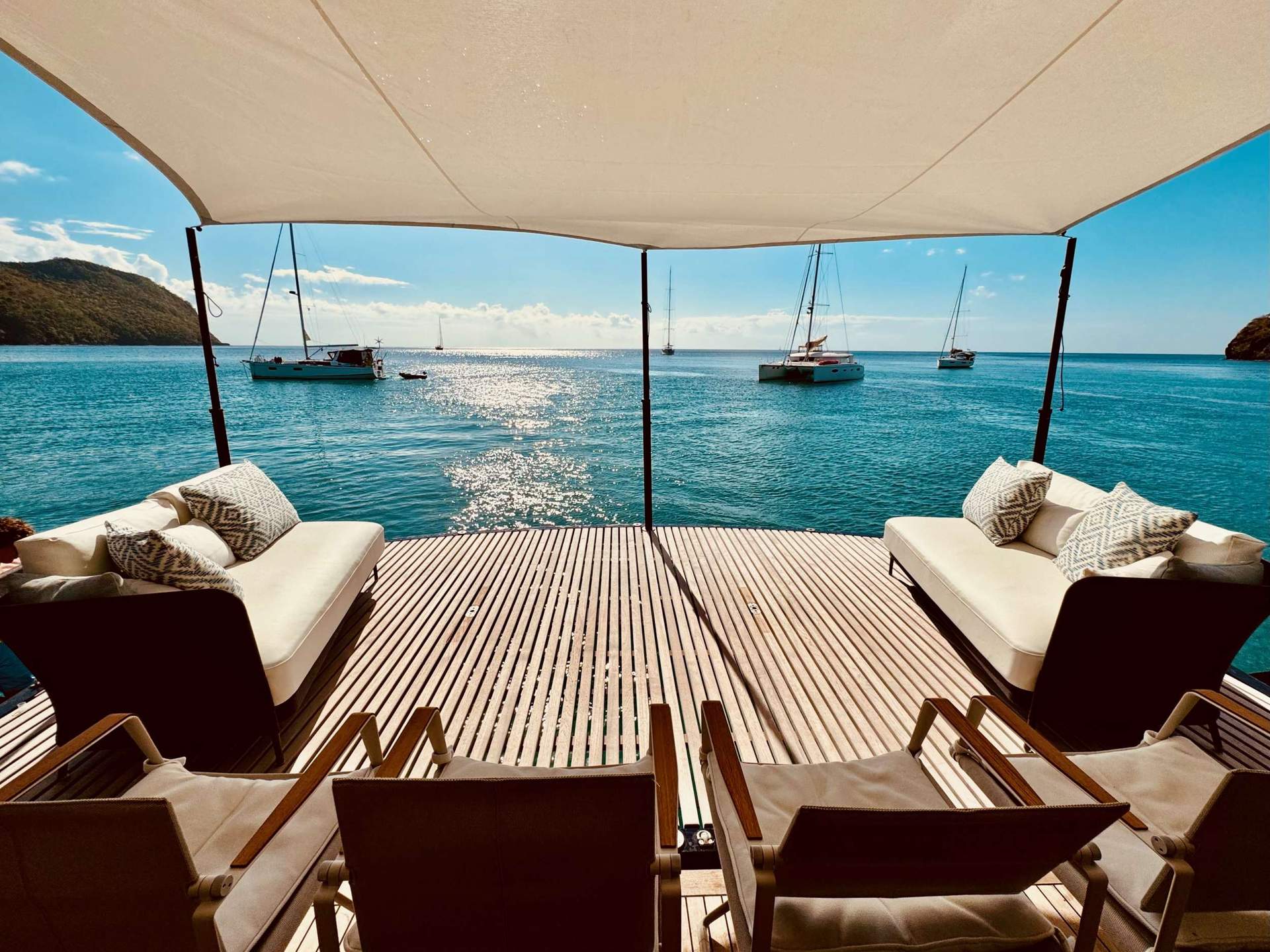
The end-to-end is the Sicily charter for guests who want everything the island has at scale. Eastern volcanic — Etna behind Taormina, Stromboli on the third night, the active fumaroles on Vulcano. Aeolian island life — Panarea's pastel harbor, Salina's capers and Malvasia, the morning market on Lipari. Western cultural — the Arab-Norman Cappella Palatina in Palermo and the Cefalù cathedral on the way in. One charter, three Sicilies, the route reads like a magazine feature rather than a brochure.
The two round-trip alternatives — Milazzo for the Aeolian chain only, Palermo for western Sicily only — work as standalone weeks for guests who want a specific half of the island. The end-to-end is the right answer for first-time Sicily charterers who want the comprehensive picture, repeat Italian-Med charterers who have already done the Amalfi and Sard&Cors weeks, and groups booking a fourteen-day Italian charter (Sicily end-to-end into the Amalfi Coast through the Strait of Messina, or out the other direction into Sardinia).
Day 1 of 7 · Catania → Taormina
The week starts at Marina dell'Etna at Catania — fifteen minutes from Catania (CTA) airport on the Ionian coast, the working east-coast Sicilian port that anchors the embarkation logistics. Captain and chef meet on the dock, walk through the yacht, stow the luggage, cover the chart for the route ahead. The afternoon is for settling in; lunch on board at the quay; lines off mid-afternoon for the thirty-nautical-mile run north to Taormina.
The approach to Taormina reads the way the photographs show it. The town sits on a cliff platform two hundred meters above the sea, the small offshore island of Isola Bella forms a thin causeway in the bay below, and on a clear afternoon Mount Etna's cone fills the inland horizon with a steady plume of volcanic steam. Anchor in Mazzaro Bay on the north side of Isola Bella; the yacht sits in the shadow of the cliff platform with the Greek-Roman amphitheatre visible directly above.
Late afternoon tender ashore for the cable car up to the town. An hour at the Teatro Antico — the third-century-BC Greek theatre rebuilt by the Romans, with the cliff drop and the Etna view framing the stage opening — and dinner ashore at the Belmond Grand Hotel Timeo terrace or Osteria Nero D'Avola in town. Both look out over the bay where the yacht sits. Back down by cable car under cable-car lights; night at anchor in Mazzaro. Etna's volcanic glow is faintly visible to the north after full dark on the right night.
Day Highlights
Day 2 of 7 · Taormina → Stromboli
Long offshore passage today — fifty nautical miles northwest from Taormina across the Strait of Messina and into the southern Tyrrhenian, the longest open-water leg of the week. Early start under power; the run takes about four hours on a motor yacht holding fifteen knots. The Sicilian coast falls behind the stern through the morning; the Aeolian chain rises ahead by late morning. Stromboli's cone is visible from twenty miles out on a clear day.
Mid-day anchor at Ginostra on the southwest side of the island — the smallest inhabited village in Italy, no road access, reachable only by sea, a single cluster of white houses around a tiny harbor. Lunch on board; tender ashore for the village walk: the lighthouse path, the one restaurant that opens at midday for boat-guests, the whitewashed alleys above the harbor. Swim platform open through the early afternoon under the cliff.
Late afternoon the captain repositions five nautical miles north and anchors off the Sciara del Fuoco — the lava-shoot face on the northwest slope, the position from which the active crater faces the sea. The first explosions are usually audible before they are visible. By full dark the show is at full volume: orange lava arcs against the black sky, the ash plume catching moonlight, the cycle repeating every twelve to twenty minutes through the night. Dinner on the aft deck with the volcano in the frame. Nobody on the boat sleeps until late.
Day Highlights
Day 3 of 7 · Stromboli → Panarea
Short morning hop south — twelve nautical miles, an hour under power — to Panarea, the chain's chic island and the polished side of an Aeolian week. The yacht arrives by late morning at the pastel-house village of San Pietro on the eastern shore. No cars on the island, no roads worth the name, only stone footpaths and golf carts; the volcanic cone behind the village is dormant; the eastern shore is a string of small swim coves reached by tender.
Anchor off San Pietro. Lunch on board at anchor or tender ashore to the village quay for a light lunch at Da Francesco or Hyccara on the rocks. The afternoon is for the small coves on the island's east side — Cala Junco, Cala dei Zimmari — reached by tender from the anchorage, the cleanest swim coves in the Aeolian chain. The water is clear enough to see the volcanic sand bottom in six meters.
Late afternoon ashore for the village passeggiata. Hotel Raya's open-air terrace catches sunset and is the polished aperitivo register; the captain books ahead. Dinner ashore at Hyccara, Da Francesco, or the Raya dining room. The yacht stays at anchor through the night. Stromboli's silhouette is visible to the north fifteen miles off and the smoke from the active crater is faintly visible at sunset against the orange sky.
Day Highlights
Day 4 of 7 · Panarea → Salina → Lipari
Two-island day. Lines off mid-morning for the short eight-nautical-mile run west to Salina — the only green island in the Aeolian chain, the one with enough soil to grow grapes and capers. Anchor in Santa Marina Salina for a short morning ashore at one of the Malvasia estates above the town; the chef arranges the visit a day in advance. A quick walk through the small terraced vineyards above the bay, a tasting of the dessert wine, and the wild capers from the surrounding bushes — the actual Salina capers the rest of Italy imports.
Lunch on board at anchor or ashore at A Cannata in Lingua on Salina's south coast — the small family-run trattoria that serves caper-and-tomato salad, swordfish involtini, and the granita di limone with brioche that is the island's breakfast register. Afternoon run south — seven nautical miles to Lipari, the chain's largest town and the cleanest morning-market stop of the route.
Anchor or stern-to at the Lipari town quay. The chef provisions for the rest of the week at the morning market the next day. Walk the Norman castle on the acropolis — the small archaeological museum inside covers the Bronze Age obsidian trade that put Lipari at the center of the Mediterranean three thousand years before Rome. Dinner ashore at E Pulera or Filippino — pasta with sardines and wild fennel, the dish of the island. Night at the quay; the citadel lights stay on past midnight.
Day Highlights
Day 5 of 7 · Lipari → Cefalù
Long passage today — fifty nautical miles southwest from Lipari to Cefalù on the Sicilian north coast. The Aeolian chain falls behind the stern through the morning; the Madonie mountains of mainland Sicily rise ahead by mid-afternoon. The run takes about four hours on a motor yacht. The captain monitors the Tyrrhenian sea-state through the day; the leg is comfortable in summer.
Anchor or stern-to at the Cefalù waterfront late afternoon. The town sits at the foot of a vertical limestone headland called La Rocca, and the Norman cathedral built in the twelfth century rises from the medieval old city against the rock backdrop. An hour ashore covers the cathedral — the Christ Pantocrator mosaic in the apse is one of the finest twelfth-century Byzantine-style works in the Mediterranean, the cloister beside it is small and quiet, and the surrounding old city walks in fifteen minutes.
Dinner ashore at Lo Scoglio Ubriaco or La Botte — both on the waterfront, both serving the local pasta with anchovies and sardines that is the dish of the north coast. Night at anchor or quay. The Madonie mountains hold the southern horizon; the cathedral bell tower marks the town's center against the rock face above.
Day Highlights
Day 6 of 7 · Cefalù → Mondello → Palermo
Last full day on the water — thirty-five nautical miles west from Cefalù to Palermo with a long midday stop at Mondello in between. Lines off after breakfast for the four-hour run; the captain repositions the yacht to Mondello Bay by early afternoon. Anchor in the bay for the swim platform — Mondello is Palermo's local beach village, the white-iron Belle Époque bath-house pavilion sits on stilts mid-bay, and the bay is the cleanest swim cove inside Palermo's metropolitan reach.
Lunch on board at anchor in Mondello; afternoon ashore at the gelato shops on Piazza Mondello or the working market on the waterfront. Late afternoon the captain repositions six nautical miles east around Monte Pellegrino to Marina Villa Igea on Palermo's working waterfront — the marina sits at the foot of the namesake Liberty-style Villa Igiea hotel, thirty-five minutes from PMO airport and ten minutes from the old city.
Dinner ashore at the Villa Igiea hotel terrace or in the old city. Quattro Mani in the Vucciria district and Bisso Bistrot off Piazza Bellini both work the Palermitan street-food register at a sit-down level — pasta con le sarde, sfincione, panelle, the local marsala-glazed sweetbreads. Night at the marina. Tomorrow's the Norman Palace and the disembark.
Day Highlights
Day 7 of 7 · Palermo Cultural Day · Disembark
Last morning on the route. Breakfast on the aft deck at Marina Villa Igea; the marina opens straight onto Palermo's working waterfront and the city's old town walks twenty minutes inland from the dock. The captain organizes the half-day ashore — the Norman Palace and the Cappella Palatina are the cultural anchor of the week and the closing scene the route is built around.
Inside the Palazzo dei Normanni on the western edge of the old city, the Cappella Palatina is the twelfth-century chapel decorated by Arab artisans for Roger II of Sicily. The ceiling is gilded muqarnas — the Arab geometric inlay normally found in mosques — set inside Norman pointed-arch vaulting. The wall mosaics are Byzantine-style — Old Testament scenes from floor to apse, Christ Pantocrator in the apse half-dome. An hour inside covers it. The Cathedral on the way back to the marina holds the tomb of the Hohenstaufen emperor Frederick II.
Last lunch on board at Marina Villa Igea, or ashore at the Villa Igiea hotel terrace for guests who want the Belle Époque close. Disembark mid-afternoon — gratuity envelope to the captain (Mediterranean standard ten to fifteen percent of base, split among the crew), thirty-five minutes by car to Palermo (PMO) airport. The broker coordinates pre- or post-charter ashore — the Villa Igiea hotel for the final night, the cliff-top Belmond Villa Sant'Andrea on Taormina for guests routing east before flying home, or a short overnight in Cefalù for the cathedral mosaic at sunrise.
Day Highlights
Want to share or come back to this voyage later?
Bookmark this voyage →When to go, what it costs, and how to get there — the practical answers guests ask before booking a Sicily & Aeolian Islands crewed yacht charter.
Sicily peaks in late July and August. Daytime highs run in the upper 80s on the coast, mid-90s inland. Sea temperatures sit near 26°C through August. Ferragosto on August 15 is the Italian holiday peak — Catania and Palermo empty for the beaches and the Aeolian chain runs at saturation. Best yachts and crews go nine to twelve months in advance. Rates run 25–35% over the shoulder.
The window most Sicily regulars book. Sea passes 22°C by mid-June and stays swimmable through early October. Daytime highs in the upper 70s. Italian schools restart on September 10; the harbors and Aeolian anchorages clear out after. June and September are the strongest weeks of the year on this coast — comfortable heat, available reservations, rates 20–25% under peak.
$40,000–$200,000 per week
A Sicilian crewed yacht week runs $40,000 to $200,000+ base rate, depending on yacht size, build year, and crew. Italy operates on the Mediterranean plus-expenses model — base rate covers the yacht and crew only. A 10–15% Med gratuity (10% the customary midpoint per MYBA) is paid directly to the captain on disembarkation. 22% Italian charter VAT applies at booking; the rate has been in place since November 2020. A 25–35% APA is pre-funded at signing for food, beverages, fuel, marina dockage, and harbor fees. Premium Aeolian berths at Panarea and Lipari run €350–€600 per night peak season for an 80-foot yacht — an APA line item. Charters run Saturday to Saturday.
About chartering in Sicily & Aeolian Islands.
We charter across the Western Mediterranean. Here are some other excellent alternatives.

Four cruising grounds in one country — the Amalfi Coast, Sardinia & Corsica, Sicily and the Aeolian Islands, the Italian Riviera south to Tuscany. The hardest part of an Italy yacht charter is choosing which week to take first.

Cliff-stacked villages and long lunches the tender reaches — the Italian summer the boat makes possible, anchored under the Faraglioni at sundowners and tied up in Amalfi by midnight.

Costa Smeralda granite coves and Bonifacio's white-cliff citadel six miles apart, the Strait between two islands cruised in a single afternoon — the Mediterranean the Italians and French keep mostly for themselves.

Portofino's harbor amphitheater, the Cinque Terre's cliff villages, Portovenere's painted waterfront, and the Tuscan islands south to Elba and Argentario. The quieter Italian week for guests who want village character, harbor restaurants, and lower-density anchorages without Amalfi's August intensity.

Monaco's Port Hercule, Cap Ferrat's villa coast, Cannes and Antibes in the central corridor, and Saint-Tropez at the west end. The French Riviera is the western Mediterranean's maximum-glamour yacht week: shorter passages, premium dockage, Michelin density, and the visible harbor theater guests are usually booking on purpose.

Mallorca's mountain coast on one side, Ibiza and Formentera's clearer water and sand-bottomed coves on the other, and the yacht-only Cabrera National Park between them — three weekly itineraries from Palma or Ibiza Town.
Fill out our quick form and we'll dive into your unique preferences — from adventure-packed itineraries to pampered escapes. Whether you're a seasoned voyager or new to charters, we'll tailor recommendations just for you.
With over fifteen years of experience, we'll match you with the yacht that fits your style, group, and itinerary. We work directly with the captains and crews across our list — so the recommendation is built around the right boat-and-crew fit for your week, not whatever's easiest to book.
Once your yacht is booked, we'll take care of logistics: paperwork, reminders, and personalized resources to help you plan. From arrival planning to must-visit spots, we'll make your charter as seamless as it is unforgettable.

What to Expect on a Private, Crewed Yacht Charter
Learn what makes crewed yacht charters extraordinary: personalized service, gourmet dining, and endless opportunities for adventure and relaxation.

How Does the Booking Process Work?
Our team handles every detail of your crewed yacht charter booking, ensuring a seamless experience from your first inquiry to setting sail.

Crewed Yacht Charter Pricing Explained
Understand what a crewed charter costs, the types of pricing, and what is included / not included.

Logistics: Proven Travel Plans for a Stress-Free Start
Plan your journey to your crewed yacht charter with ease. Tips on flights, transfers, and logistics for a stress-free start to your vacation.
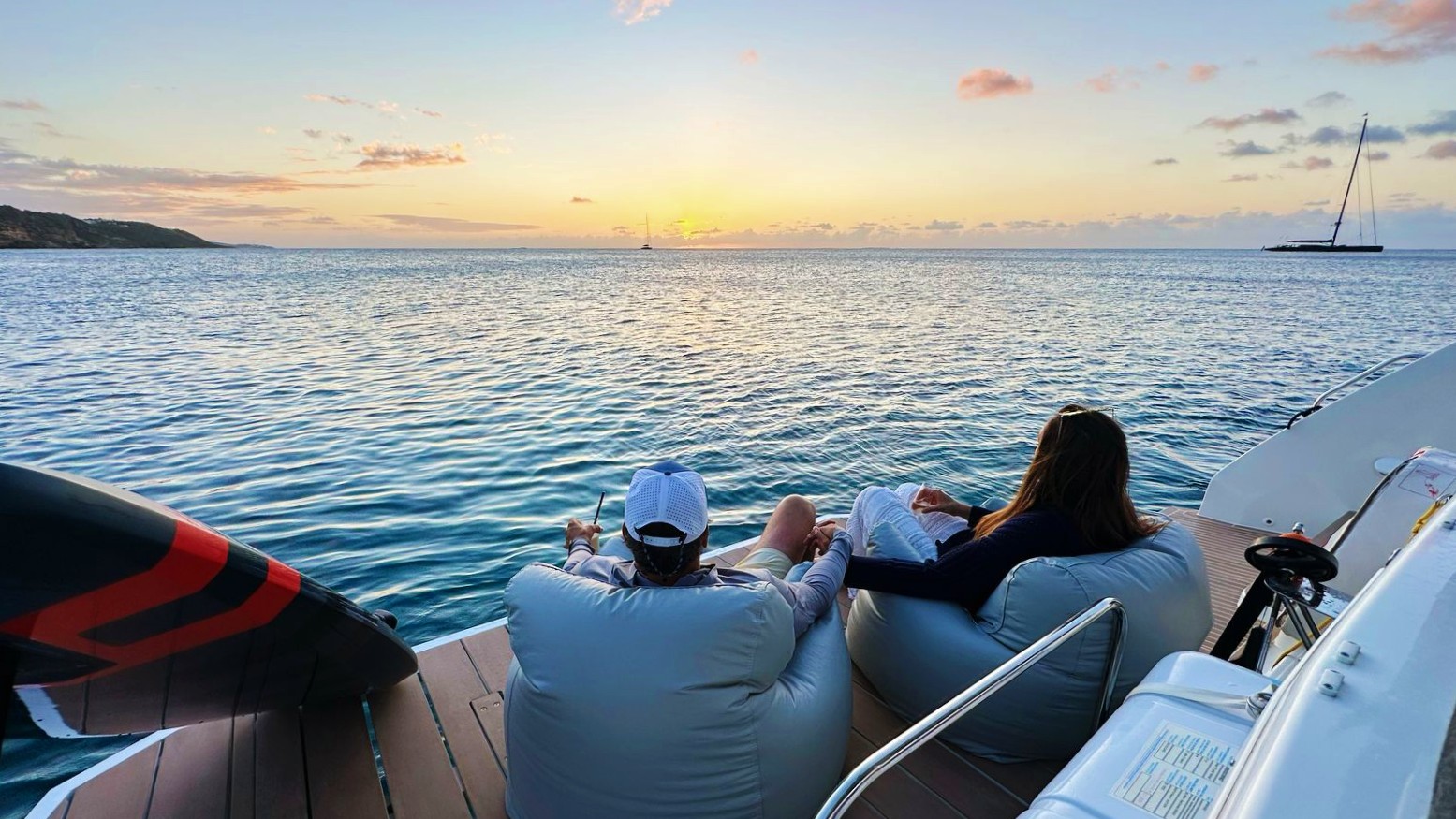
Honeymoon Yacht Charters
Start your marriage on a private yacht. Explore secluded beaches, gourmet dining, and unforgettable sunsets in the Caribbean.
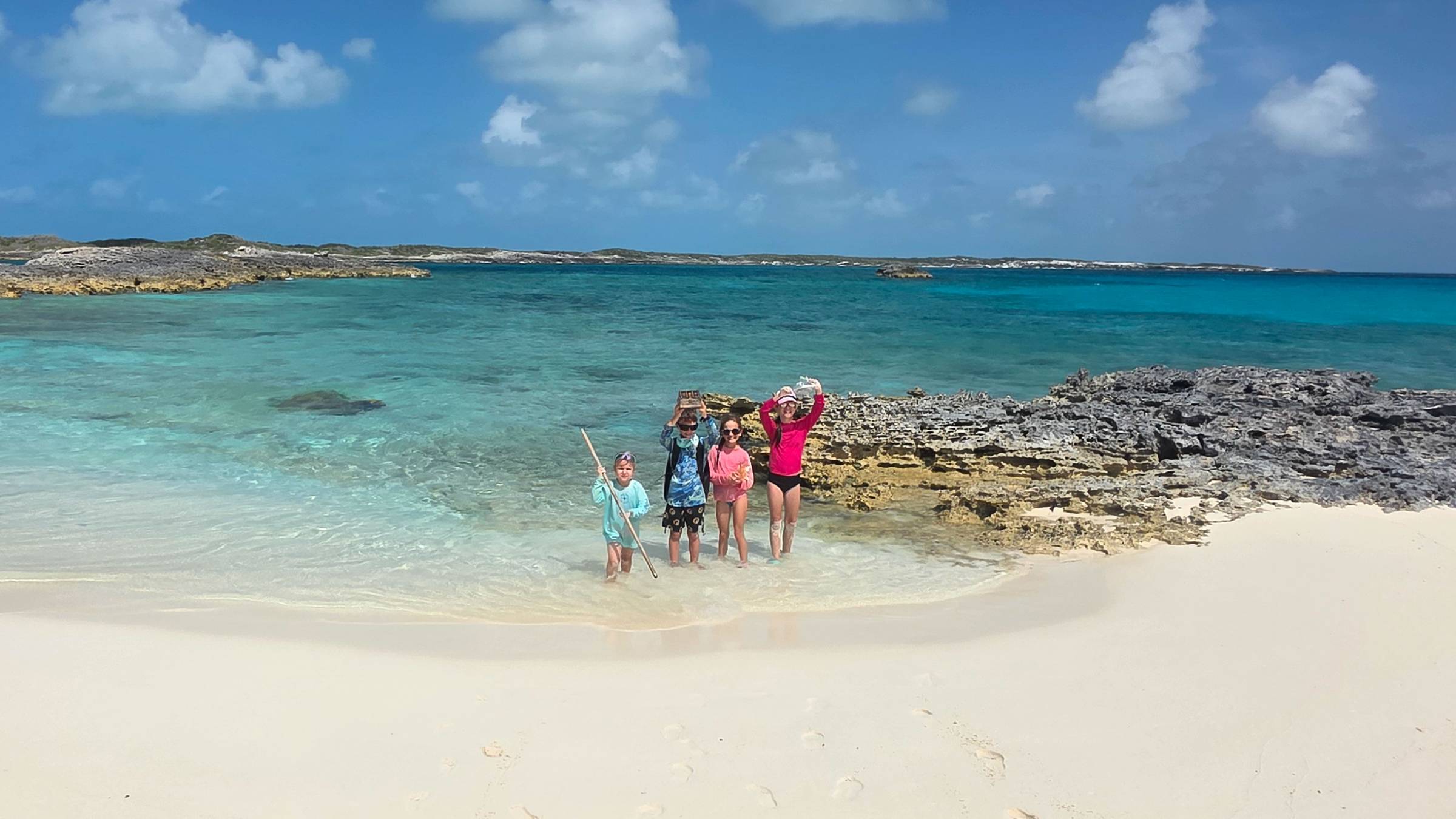
Family Yacht Charters
A crewed yacht charter is perfect for families of all ages. Safe, fun, and fully catered — your kids will never forget it.

Crewed Charter FAQ
Get answers to common questions about crewed yacht charters, from pricing and tipping to what's included and what to pack.

BVI Crewed Yacht Charters
The British Virgin Islands are the #1 crewed charter destination in the Caribbean. Short sails, protected waters, and world-class anchorages.

BVI Crewed Charter Guide
Everything you need to know before your BVI crewed catamaran charter — pricing, packing list, sample itinerary, and getting there.
Bahamas Crewed Yacht Charters
Explore the Exumas on a private crewed yacht. Swimming pigs, sandbars, and some of the clearest water on earth.
Caribbean Crewed Yacht Charters
All-inclusive crewed charters across the Caribbean — BVI, Bahamas, USVI, St. Martin, Antigua, and beyond.