Crewed Itinerary · Sicily & the Aeolian Islands

Sicily Yacht Charter: A 7-Day Aeolian Round-Trip from Milazzo

Seven nights round-trip from Milazzo, the Italian Tyrrhenian port that sits closest to the Aeolian chain, through five volcanic islands and back. The pace is deliberately slow. The chain is small enough that the captain rarely runs more than fifteen nautical miles between anchorages — every move is short, every afternoon ends on the swim platform, and the marquee scene of the week happens at night, three miles offshore from Panarea, when Stromboli's eruption shows up against the black sky on a fifteen-minute cycle.

The route works cleanly on a crewed catamaran, a sailing yacht, or a small motor yacht. The Tyrrhenian off the Aeolian chain is forgiving in summer — the meltemi runs out before reaching this latitude — and the longest passage on the route is the swing back south from Stromboli at the end of the week. The chef onboard sources at the morning market in Lipari, capers from Salina's hillsides, and Malvasia wine from the volcano-slope vineyards that grow it. Saturday-to-Saturday, plus-expenses, 22% Italian charter VAT on the base rate.

Duration
7 nights · Sat-Sat
Base
Marina di Milazzo (round-trip)
Plan your Sicily charter Custom-tailored to your dates and group preferences
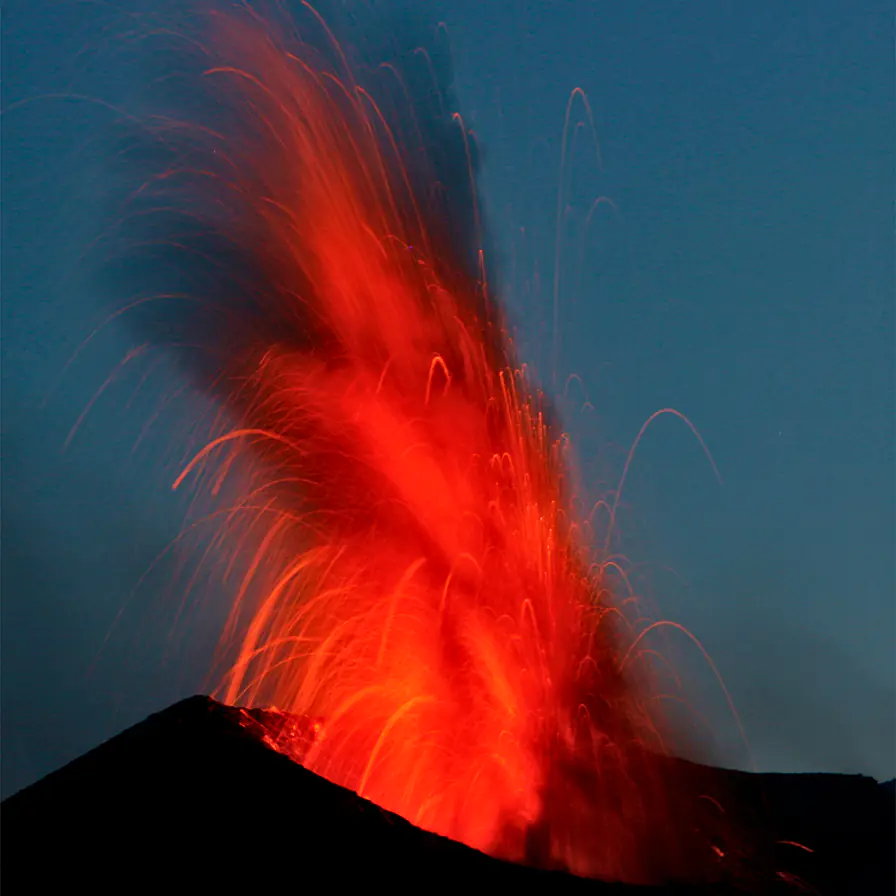
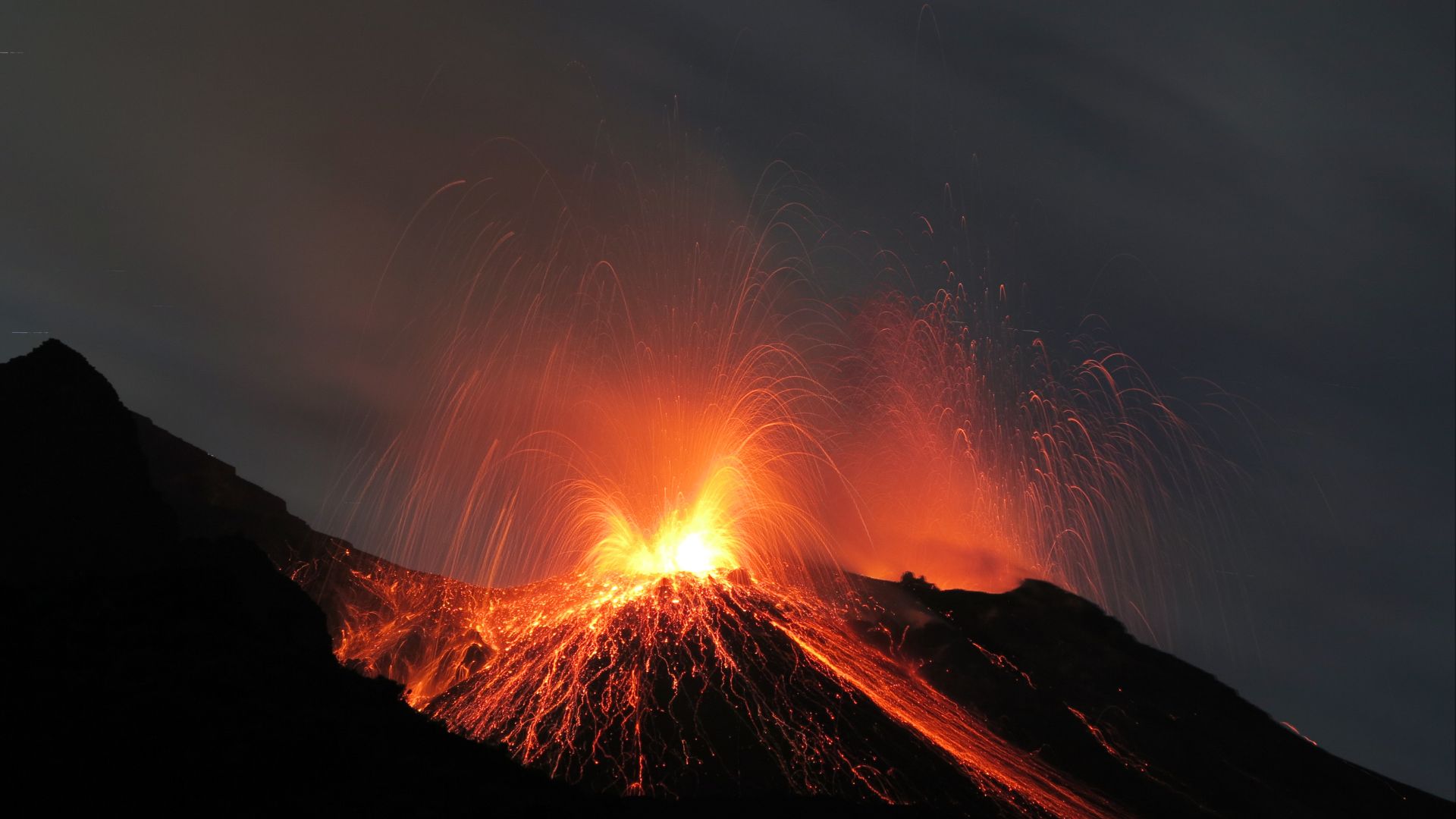
Stromboli erupting at night — Aeolian Islands volcanic chain off Sicily's north coast.
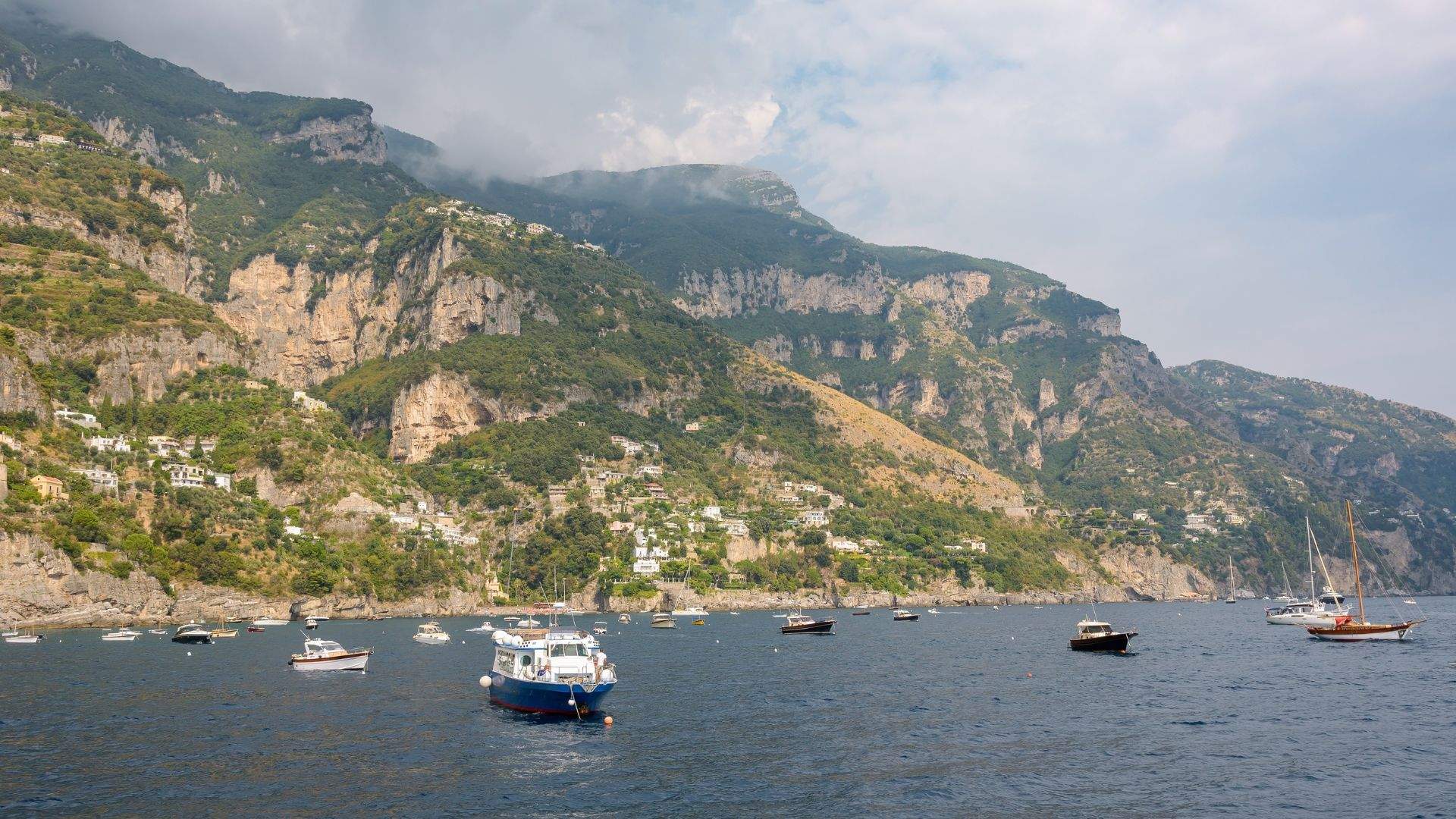
Lipari from the water — the largest of the Aeolian Islands and the chain's working capital.
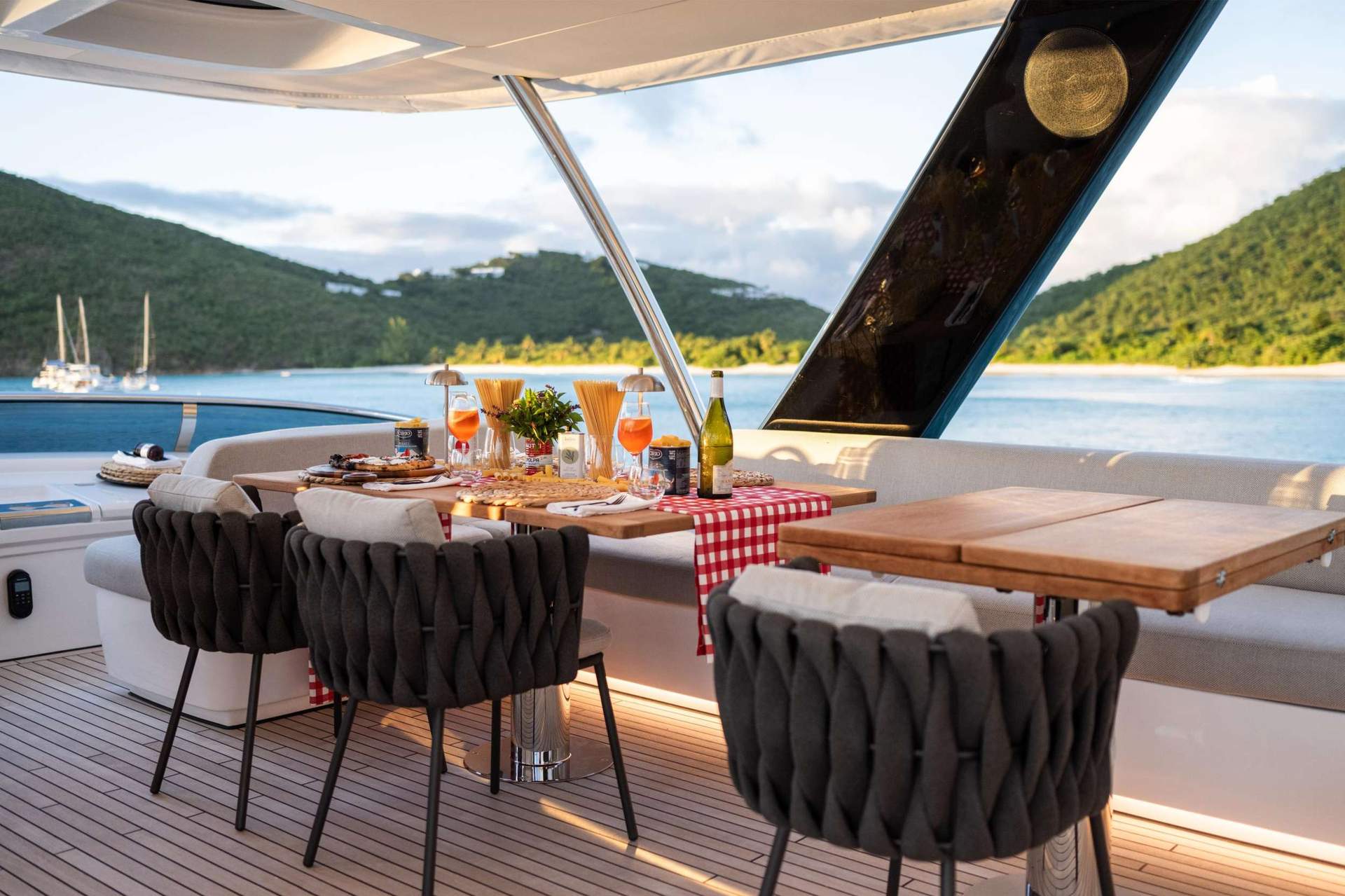
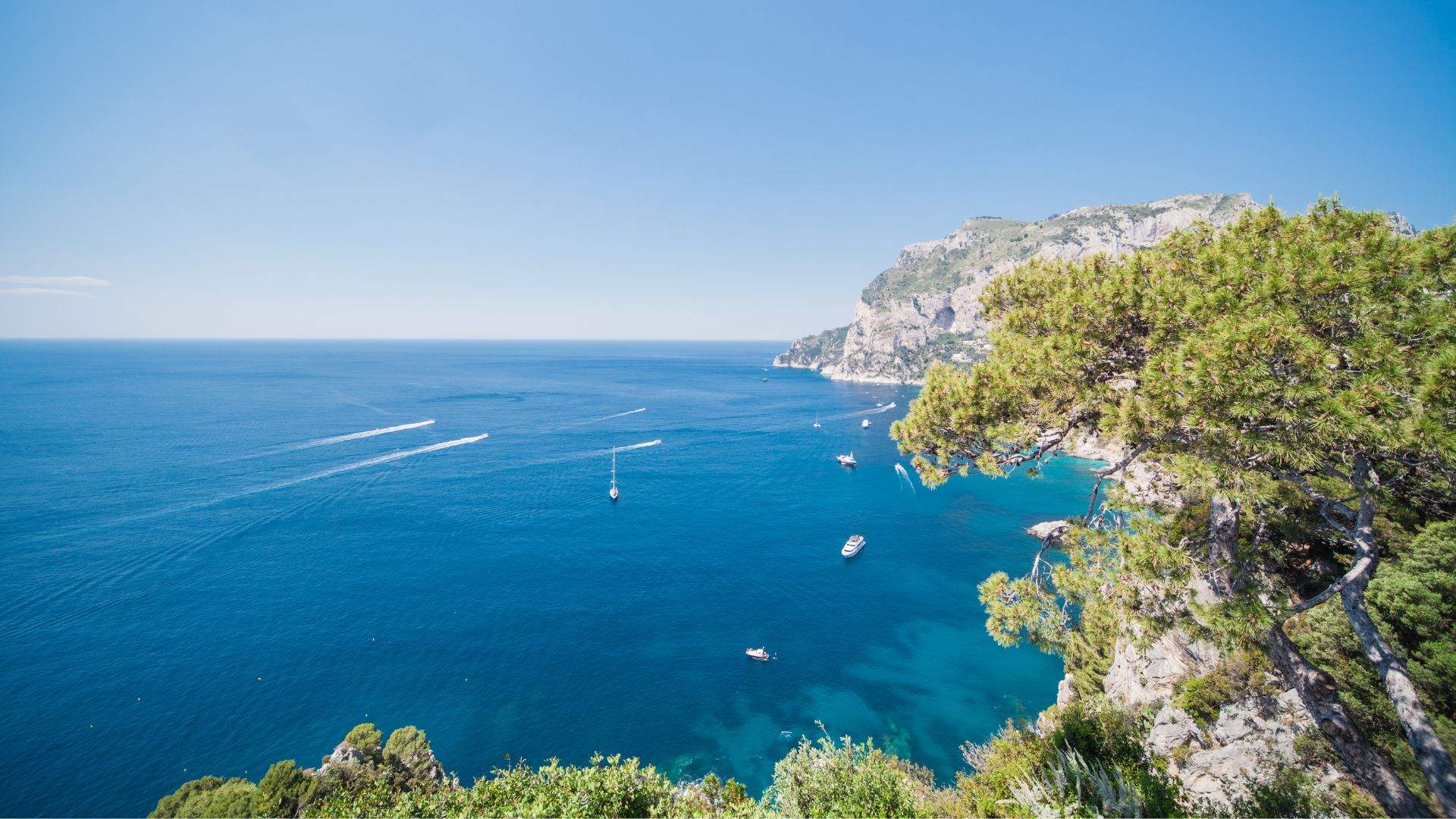
Crewed motor yacht at anchor in a Tyrrhenian cove — Aeolian register.
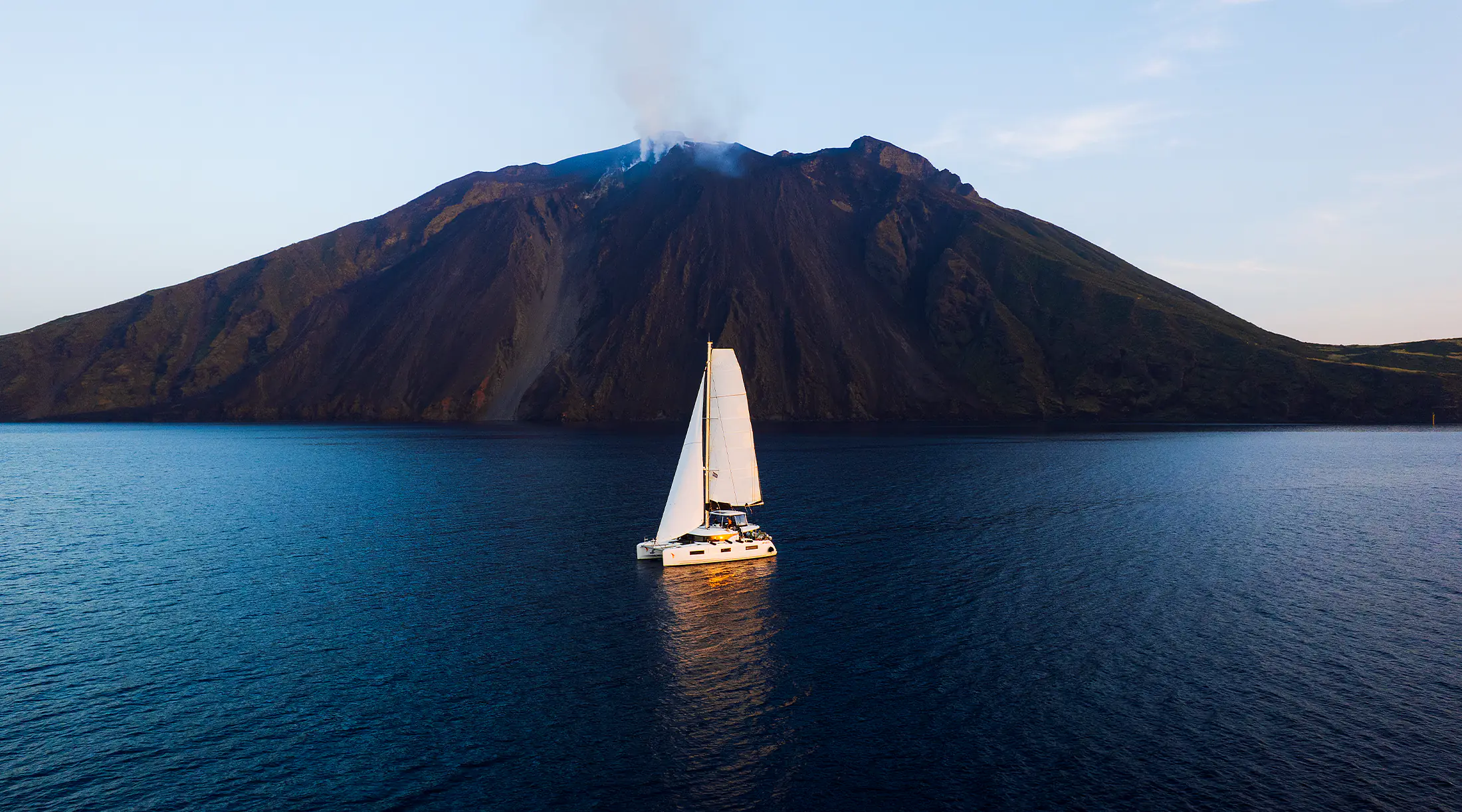
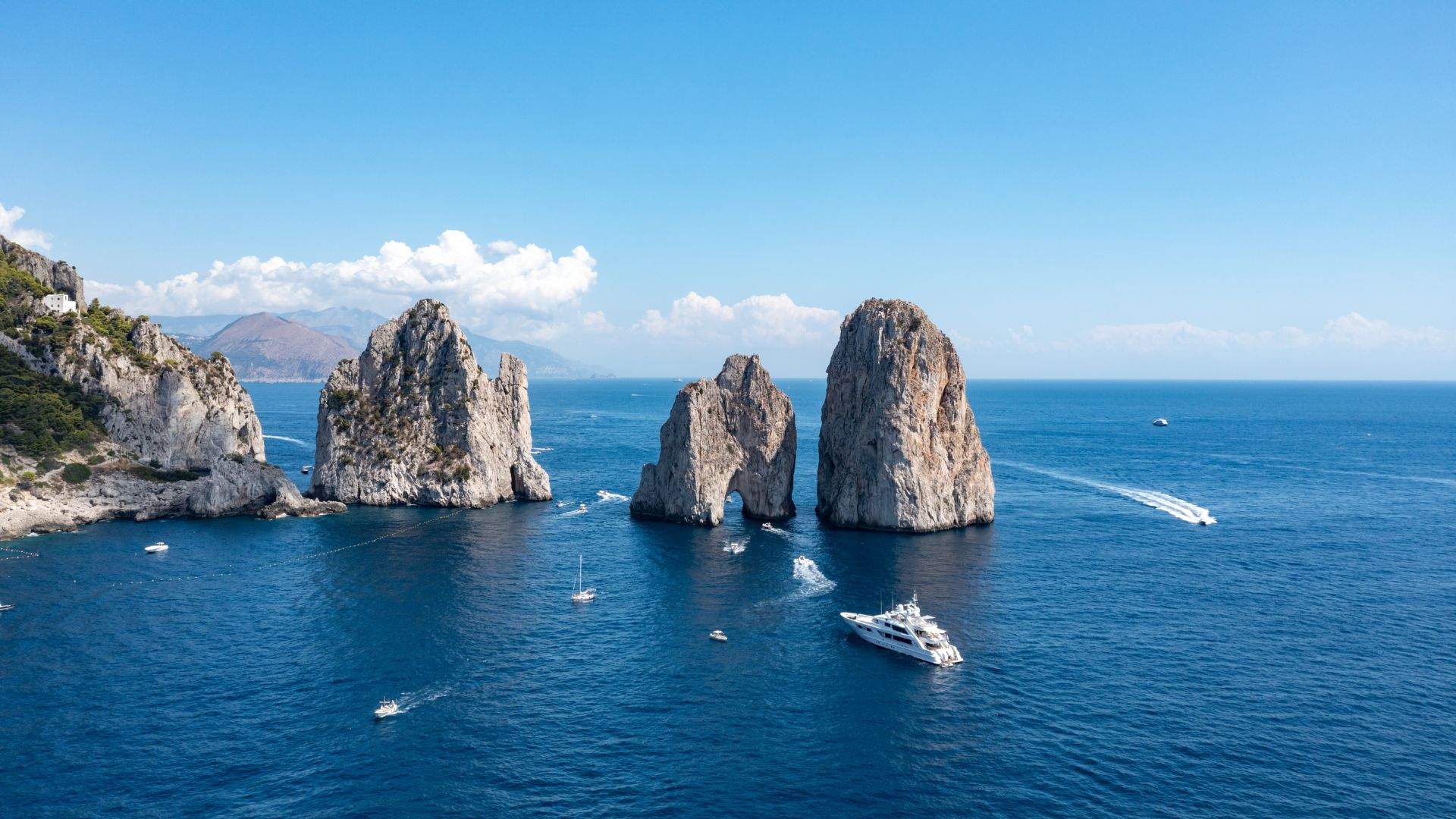
Crewed sailing catamaran under canvas in the Italian Mediterranean.

What a Sicilian Aeolian week looks like — and why Milazzo is the right embark

The Aeolian chain has seven islands. The Milazzo round-trip covers the five that anchor a charter week — Vulcano, Lipari, Salina, Panarea, and Stromboli — and leaves Filicudi and Alicudi as optional bench-depth for guests who want a quieter back end. Roughly ninety nautical miles end to end, with no leg longer than the day's appetite. Mornings under canvas or power, afternoons at anchor, evenings ashore in working harbor towns that haven't been retrofitted for cruise-ship tourism.

Milazzo is the embarkation point because the math works. Catania (CTA) is the gateway airport — fifty minutes by car to Marina di Milazzo — and the route starts twenty-two nautical miles from the marina at Vulcano, not eighty nautical miles like a Catania embark. The first night is in a volcanic crater anchorage rather than under the city's harbor lights. For a one-way alternative that adds Taormina and ends in Palermo, see the Sicily End-to-End itinerary.

1

Day 1 of 7 · Milazzo → Vulcano

The sulfur opening — Marina di Milazzo to Vulcano
Anchorage: Porto di Levante, Vulcano
Boarding day at Marina di Milazzo — fifty minutes by car from Catania (CTA), an hour from Palermo (PMO). Captain and chef meet on the dock; the marina opens straight onto the chain.

The week starts at Marina di Milazzo, the working Tyrrhenian port that sits at the top of the Sicilian thumb and acts as the everyday charter base for the Aeolian chain. Captain and chef meet the group at the dock, walk through the yacht, stow the luggage, and cover the chart for the route ahead. Early afternoon to settle in, lunch on board at the quay, then lines off for the twenty-two-nautical-mile run north to Vulcano.

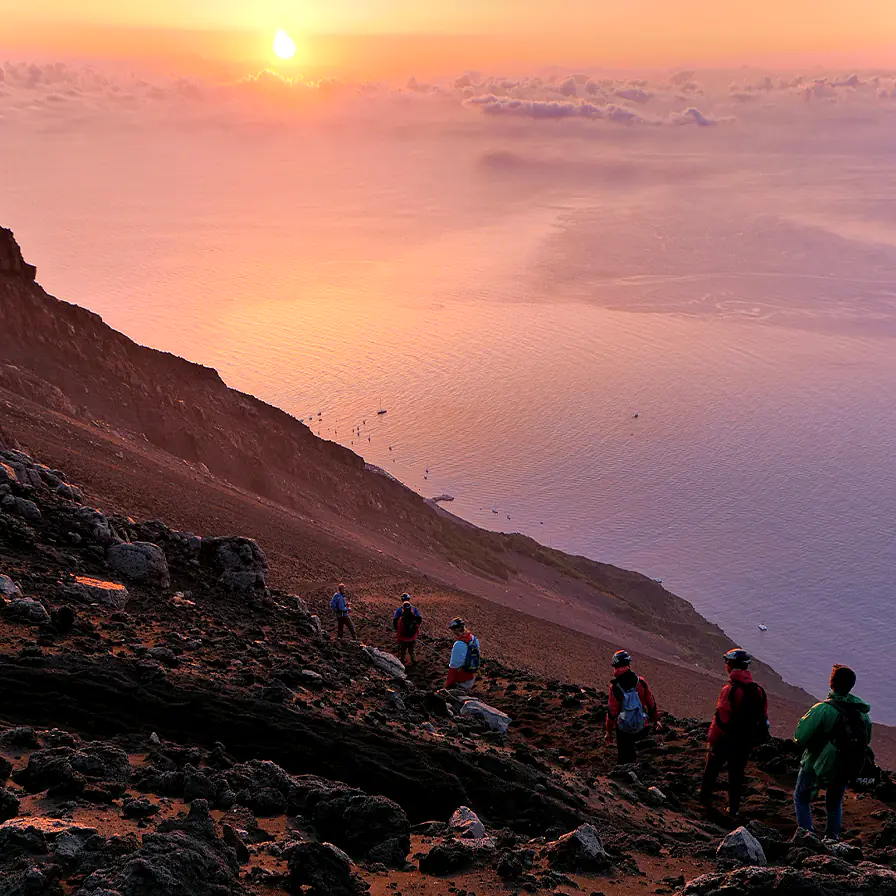
Vulcano is the chain's southernmost inhabited island and the first taste of what makes the Aeolian week different from any other Italian charter. The smell arrives before the anchorage does — sulfur on the breeze a half-mile offshore, drifting from the fumarole field on the island's northeast face. Anchor in Porto di Levante on the island's north shore, the bay tucked under the still-active Gran Cratere volcano cone.

Late-afternoon tender ashore for the mud-bath spring — a natural geothermal pool a five-minute walk from the harbor where guests soak in warm sulfur clay (towel, then a long shower). The fumarole field beside it vents steam from the rock. Back on board for dinner from the chef — the kitchen runs on board most nights this week, except the marquee dinners ashore on Lipari and Panarea. The sulfur smell fades by sunset.

Day Highlights

  • Boarding at Marina di Milazzo — the Aeolian chain's everyday charter base.
  • Twenty-two-nautical-mile opening run north to Vulcano.
  • Anchor in Porto di Levante under the Gran Cratere cone.
  • Tender ashore for the mud-bath spring and fumarole field.
2

Day 2 of 7 · Vulcano → Lipari

The Norman castle and the morning market

Anchorage: Lipari town quay or Marina Lunga
Lipari from the water — the Norman castle on the acropolis above the working harbor. The chain's largest town and the cleanest morning-market stop of the week.

Short hop north this morning — six nautical miles, less than an hour under power — to Lipari, the chain's largest town and the only Aeolian island with a year-round population worth calling a town. The approach reads the way the maps describe it: a Norman castle rising from a basalt acropolis, the medieval citadel walls climbing straight from the harbor, and the working quay below where the morning fish boats land their catch.

Anchor or stern-to at the town quay. The chef provisions at the morning market — swordfish, sardines, capers, the green-skinned local lemons — while the group walks the citadel. The small archaeological museum inside the Norman castle holds the Bronze Age obsidian record of the island: Lipari sat at the center of a Mediterranean-wide obsidian trade three thousand years before Rome, and the volcanic-glass arrowheads recovered from the necropolis are laid out room by room. An hour ashore covers it.

Afternoon at the obsidian beach below Canneto — the black-sand stretch on Lipari's east coast where the volcanic glass washes up against pumice. Swim from the yacht at anchor offshore, then back to town for the evening. Dinner ashore at E Pulera or Filippino — both family-run, both serve the local pasta with sardines and wild fennel that is the dish of the island. Walk back to the boat under the citadel lights.

Day Highlights

  • Short morning hop to Lipari, the chain's working capital.
  • Walk the Norman castle and the small archaeological museum on the acropolis.
  • Swim off the obsidian beach below Canneto.
  • Dinner ashore at E Pulera or Filippino — pasta with sardines and wild fennel.
3

Day 3 of 7 · Lipari → Salina

Capers, Malvasia, and the green island in the middle of the chain

Anchorage: Santa Marina Salina
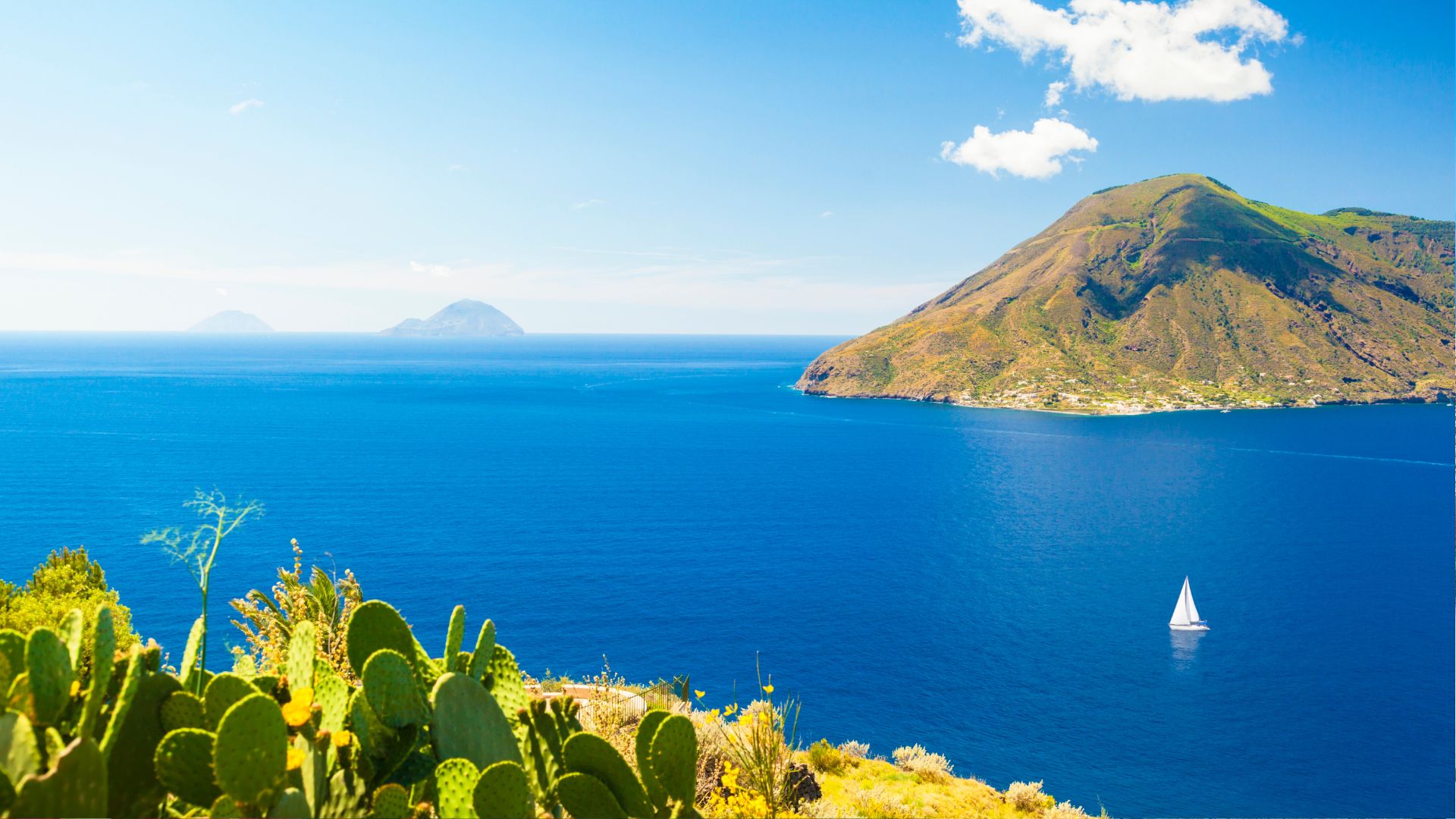
Afternoon passage from Lipari to Salina — twelve nautical miles north, the only Aeolian island green enough to grow grapes.

Lines off late morning for the twelve-nautical-mile passage north to Salina, the only island in the chain green enough to make the rest of the Aeolian look black-and-white by comparison. The wind picks up in the afternoon and the run is a pleasant downwind reach for catamarans and sailing yachts. Two volcanic peaks rise from the center of the island — Monte Fossa delle Felci and Monte dei Porri — and the slopes between them grow the Malvasia delle Lipari grapes and the wild caper bushes that supply most of Italy's caper market.

Anchor in Santa Marina Salina on the east coast. The town walks end to end in fifteen minutes. The captain books either Hotel Signum's terrace dining room or A Cannata in Lingua for dinner — both work the volcanic-island cuisine that this island runs on: caper-and-tomato salad, swordfish involtini, granita di limone with brioche at breakfast the next morning. The wine is the local Malvasia, the sweet dessert version from grapes dried in the volcanic-soil vineyards above town.

Afternoon excursion ashore by tender and rental car to the Malfa estates above town — the small family-run caper farms and Malvasia vineyards that the chef has visited that morning. A short tasting at one of them is the right shape for the late afternoon. Back to the yacht for the swim platform before sunset; the bay reflects gold off the volcanic cones at evening light. Salina nights are the quietest of the week.

Day Highlights

  • Twelve-nautical-mile passage north to Salina.
  • Dinner ashore at Hotel Signum or A Cannata — Aeolian-volcanic cuisine register.
  • Afternoon tasting at a Malvasia vineyard or caper farm above town.
  • Swim platform and quiet anchorage night in Santa Marina Salina.
4

Day 4 of 7 · Salina → Panarea

The chic anchor — Panarea and the pastel harbor

Anchorage: Panarea, San Pietro
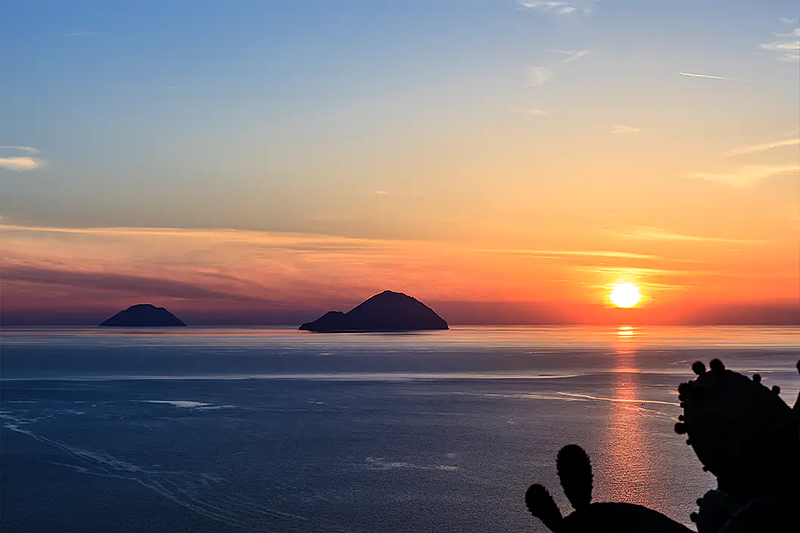
Panarea evening — the chic side of the Aeolian chain. The harbor walks in ten minutes, dinner is ashore, and the night ends with Stromboli's silhouette visible from the foredeck.

Late-morning run east to Panarea — ten nautical miles across the chain's central pool, the only Aeolian island with no cars and no roads worth the name, only stone footpaths and golf carts. The pastel-house village rises from the harbor; the volcanic cone behind it is dormant, the eastern shore is a string of small swim coves reached by tender, and the late-afternoon scene at Hotel Raya is the polished side of an Aeolian week.

Anchor off San Pietro, the main village on Panarea's eastern shore. The harbor is small and yachts sit on the hook with the swim platform open for the afternoon. Tender ashore for an early evening passeggiata — the village square, the small white-washed church, the two or three shops that stay open through the summer. Hotel Raya's open-air terrace catches sunset and is the right register for an aperitivo before dinner; the captain calls ahead to confirm a table.

Dinner ashore at the harbor — Hyccara on the rocks, Da Francesco on the quay, or the Raya dining room if the booking holds. The yacht stays at anchor through the night. The far horizon to the north holds Stromboli's silhouette, fifteen miles across the water, and the smoke from the active crater is visible at sunset on a clear evening. Tomorrow is the marquee.

Day Highlights

  • Ten-nautical-mile crossing east to Panarea.
  • Anchor off San Pietro with the swim platform open through the afternoon.
  • Aperitivo on the Hotel Raya terrace at sunset.
  • Dinner ashore at Hyccara, Da Francesco, or Raya — yacht stays at anchor through the night.
5

Day 5 of 7 · Panarea → Stromboli

The marquee — overnight anchored under an erupting volcano

Anchorage: Stromboli, Ginostra or Sciara del Fuoco
Stromboli at night — the marquee scene of the Aeolian week. The Sciara del Fuoco anchorage on the northwest shore faces the active crater; the eruption is visible from the foredeck on a fifteen-minute cycle.

Twelve nautical miles north this morning to Stromboli — the chain's volcanic icon, in continuous eruption for at least two thousand years, and the most reliable active-volcano viewing anchorage in the Mediterranean. The approach reads the way every photograph of the island shows it: a near-perfect cone rising straight from the sea, a thin white plume from the summit crater, and on a clear afternoon the dark scar of the Sciara del Fuoco — the lava-shoot face on the northwest slope — visible from miles offshore.

Anchor late morning at Ginostra on the southwest side — the smallest inhabited village in Italy, no road access, reachable only by sea, a single cluster of white houses around a tiny harbor. Lunch on board, then a tender ashore for the village walk: the lighthouse path, the one restaurant that opens for boat-guests at midday, the path through whitewashed alleys where the residents still draw drinking water from the cistern. Back to the yacht for the swim platform; the water off Ginostra runs deep clean blue under the cliff.

Late afternoon the captain repositions the yacht five miles north and anchors off the Sciara del Fuoco — the active-eruption viewing position. The first explosions are usually audible before they are visible. By full dark the show is at full volume: orange lava arcs against the black sky, the ash plume catching moonlight, the cycle repeating every twelve to twenty minutes through the night. Dinner on board on the aft deck with the volcano in the frame. Nobody on the boat sleeps until late.

Day Highlights

  • Twelve-nautical-mile run north to Stromboli — the chain's active volcanic cone.
  • Tender ashore at Ginostra — the smallest inhabited village in Italy, sea-access only.
  • Reposition to the Sciara del Fuoco anchorage for the eruption viewing.
  • Dinner on the aft deck with orange lava against the black sky on a fifteen-minute cycle.
6

Day 6 of 7 · Stromboli → Filicudi

The quiet end — Filicudi's grotto coast

Anchorage: Filicudi, Pecorini a Mare
Southwest run to Filicudi — twenty-two nautical miles back across the chain, the quietest island for the week's last night before returning to Milazzo.

Twenty-two nautical miles southwest this morning to Filicudi, the second-most-remote Aeolian island and the right register for a quiet day after the Stromboli marquee. Filicudi has roughly two hundred year-round residents, one paved road, no cars worth the name, and a coastline of grottoes, basalt sea-stacks, and small swim coves reachable only by tender or by yacht.

Anchor at Pecorini a Mare on the south coast — the small fishing-village quay where the day boats land. Lunch ashore at La Sirena, the family-run trattoria a hundred meters from the dock that has worked the same fish for three generations. The afternoon is for the grotto coast on the island's west side: tender excursion to the Grotta del Bue Marino, the sea-cave on the western cliff where the light turns the water electric blue at midday, and the basalt sea-stack of La Canna offshore — a single vertical pillar rising eighty-five meters out of deep water.

Back to the anchorage at Pecorini for the evening. Dinner on board on the swim platform — the chef puts together what the morning market in Lipari produced, the wine is the Malvasia from Salina, and the only sounds are the swell against the hull and the small village above. The bench-depth alternative is to push further to Alicudi for the night, the chain's most remote island; the captain calls which fits the group.

Day Highlights

  • Twenty-two-nautical-mile southwest run to Filicudi.
  • Lunch ashore at La Sirena in Pecorini a Mare.
  • Tender excursion to the Grotta del Bue Marino sea-cave and the La Canna sea-stack.
  • Quiet evening at anchor before the southbound run back to Milazzo.
7

Day 7 of 7 · Filicudi → Milazzo: Disembark

Southbound to Milazzo and the Saturday disembark

Anchorage: Marina di Milazzo
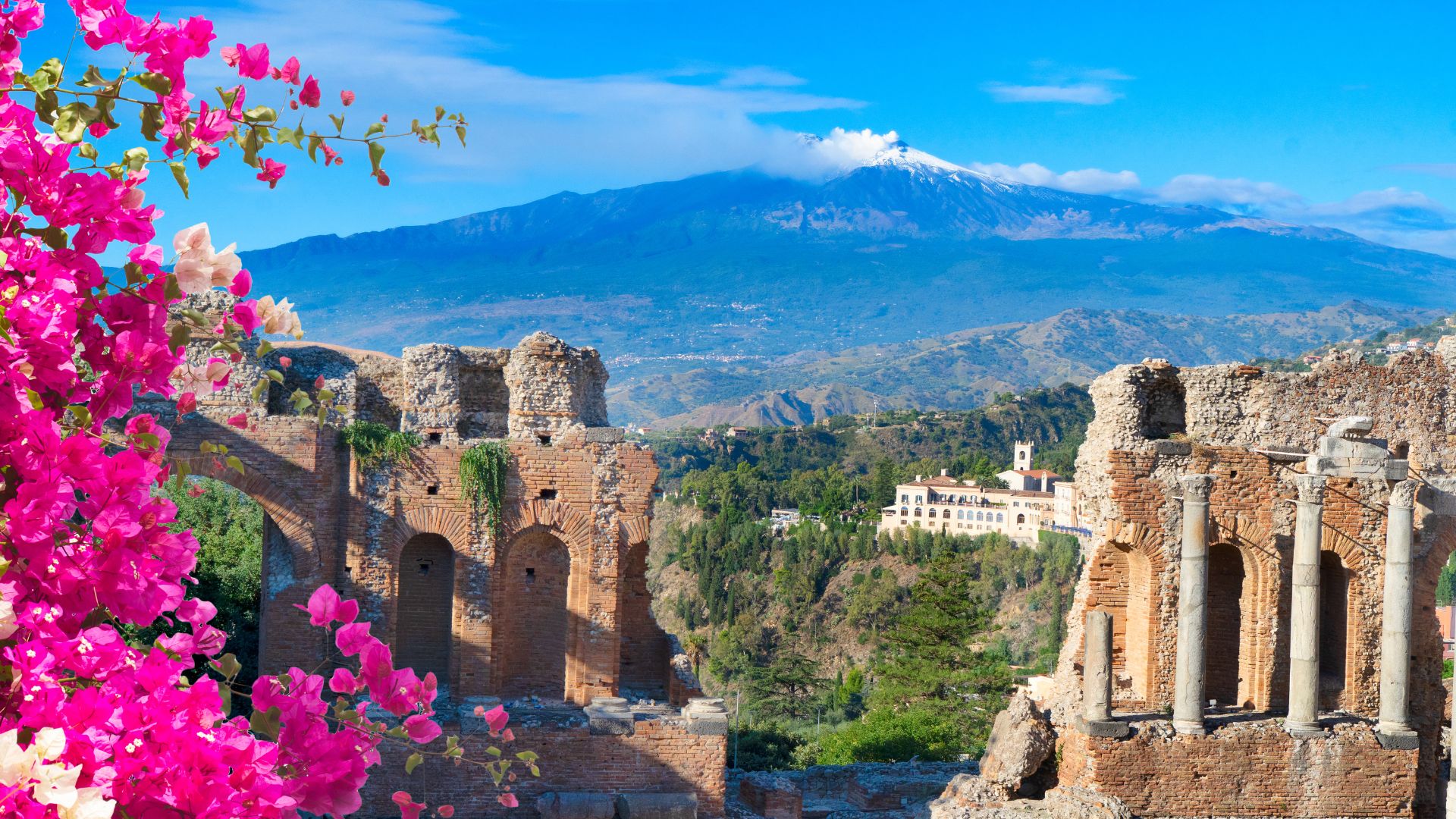
Mount Etna on the southern horizon — the Aeolian chain falls behind the stern and Sicily's mainland rises ahead. The cone dominates the eastern coast on a clear day.

Last morning at anchor in Pecorini. Breakfast on the aft deck — granita di limone with brioche, espresso, the swim platform open for one more dive. The captain repositions to the south side of the island for the southbound run back to Sicily — thirty nautical miles to Marina di Milazzo, about three and a half hours under power with the chain falling behind the stern.

Midday repositioning takes the yacht across one of the cleanest stretches of Tyrrhenian water in the Mediterranean. The chef puts together a final lunch from what is left of the Lipari market provisions — pasta with the wild capers from Salina, swordfish from the morning boat, a glass of Malvasia. Stromboli is visible to the north on a clear day. By mid-afternoon the cone of Mount Etna shows up on the southern horizon, dominating the Sicilian coast.

Berth at Marina di Milazzo by late afternoon. Last night aboard with the marina open behind the boat — dinner ashore at the Milazzo waterfront for guests who want a final town walk, or one more chef's table on the aft deck. Saturday morning is the disembark — gratuity envelope to the captain (Mediterranean standard ten to fifteen percent of base, split among the crew), fifty minutes by car to Catania (CTA) or just over an hour to Palermo (PMO). The broker coordinates any pre- or post-charter nights ashore — Belmond Grand Hotel Timeo on Taormina's cliff for the eastward extension, Villa Igiea on Palermo's waterfront for the western.

Day Highlights

  • Thirty-nautical-mile southbound run from Filicudi back to Marina di Milazzo.
  • Final lunch underway — pasta with Salina capers and a glass of Malvasia.
  • Mount Etna on the southern horizon as the yacht approaches Sicily.
  • Saturday-morning disembark; transfer to CTA (50 min) or PMO (1 hr 10).

Frequently asked

How long is a typical Aeolian Islands yacht charter?
Seven nights is the standard. The chain spreads about thirty-five nautical miles north to south and supports a relaxed week with five inhabited volcanic islands on the route — Vulcano, Lipari, Salina, Panarea, and Stromboli — plus optional time at Filicudi or Alicudi for guests who want a quieter back end. Ten-day variants add a second night at Stromboli or fold in Taormina on the mainland; five-day Aeolian weeks work but mean cutting either Stromboli or the Salina caper-and-Malvasia day.
Is Stromboli actually erupting? Will we see it from the yacht?
Stromboli has been in continuous Strombolian-style eruption for thousands of years — small, regular gas-and-lava bursts on roughly a fifteen-minute cycle. The yacht anchors off the northwest corner of the island where the active crater faces the sea; on a clear night, the lava arcs are visible from the foredeck without a tender ride to shore. Cloud cover and moon phase affect visibility; the captain calls timing on the day. Larger paroxysmal events are rarer but possible — the INGV observatory monitors the volcano continuously, and the captain follows their alert level when planning the anchorage.
Sailing yacht, catamaran, or motor yacht for the Aeolian chain?
All three work. The Tyrrhenian off the Aeolian Islands is the calmest stretch of Italian Med water in summer, and most legs run six to fifteen nautical miles — short enough that yacht speed rarely changes the day's plan. Crewed catamarans (50–65 ft) and sailing yachts get the best of the late-afternoon downwind reaches between islands. Motor yachts (24–40 m) work the marina cadence at Panarea and Lipari and handle the slightly longer southbound passage at the end of the week without trimming an island.
What does ashore-time look like — is there real dining and culture in the Aeolian chain?
Yes, and the dining is one of the reasons to book the week. Hotel Raya on Panarea has been the polished anchor of the chain since 1960; the Lipari town quay opens onto family-run trattorias that have worked the same fish for three generations; Salina is where the Malvasia delle Lipari dessert wine is made and where the wild capers the rest of Italy imports are grown. The cultural layer is volcanic — the small archaeological museum at Lipari covers Bronze Age obsidian trade, and the Vulcano fumaroles and the mud-bath spring belong on the day-card.

Ready to set sail in the Aeolian Islands off Sicily's north coast?

Every itinerary we send is custom-tailored. Tell us your dates, the size of your group, and what you want out of your charter—we'll handle the rest.