Crewed Itinerary · Western Sicily

Sicily Yacht Charter: A 7-Day Western Sicily Round-Trip from Palermo

Seven nights round-trip from Palermo through the side of Sicily that the rest of Europe has mostly missed. The route runs west along the north coast from Palermo to Ustica, then south through the Egadi Islands at Trapani, and inland by car for the Greek temple at Segesta and the cliff-top town of Erice. Three Greek-built ports, two Phoenician anchorages, an offshore volcanic island, and the quarry on Favignana that produced the limestone for half of Sicily's old cities. Most of the route reads like the Mediterranean did before the tourism industry got organized.

The cruising character is open water and small harbor towns rather than crowded anchorage scenes. Days run twenty to fifty nautical miles between stops; the longer legs sit early in the week when the group is fresh. The chef onboard works the Trapani fish market for tuna and red prawns, the Marsala vineyards for the fortified wine, and the Pantelleria caper farms that supply the local restaurants. Saturday-to-Saturday from Marina Villa Igea, plus-expenses, 22% Italian charter VAT on the base rate.

Duration
7 nights · Sat-Sat
Base
Marina Villa Igea, Palermo (round-trip)
Plan your Sicily charter Custom-tailored to your dates and group preferences
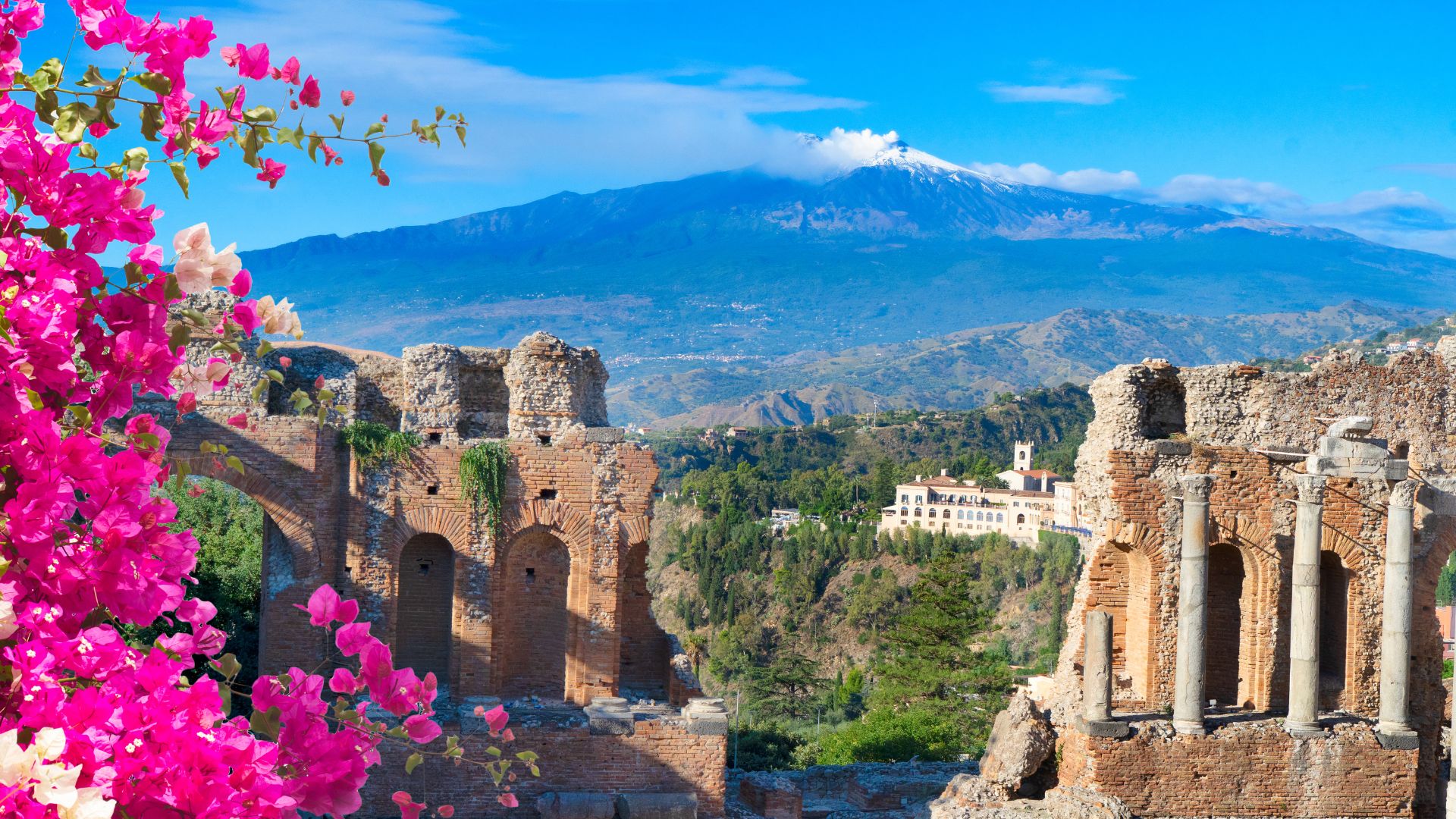
Sicilian coast with Mount Etna in the distance — the volcanic context of any Sicilian charter.
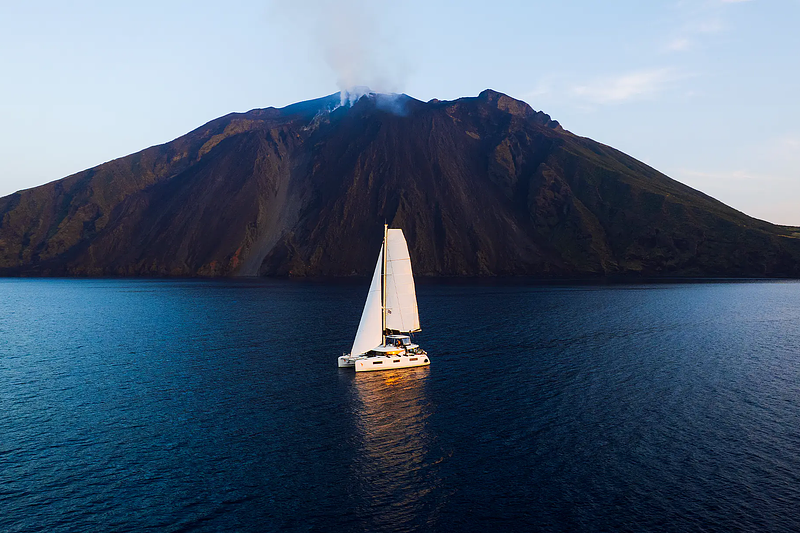
Crewed sailing catamaran under canvas off the Italian coast — western Sicily passage register.
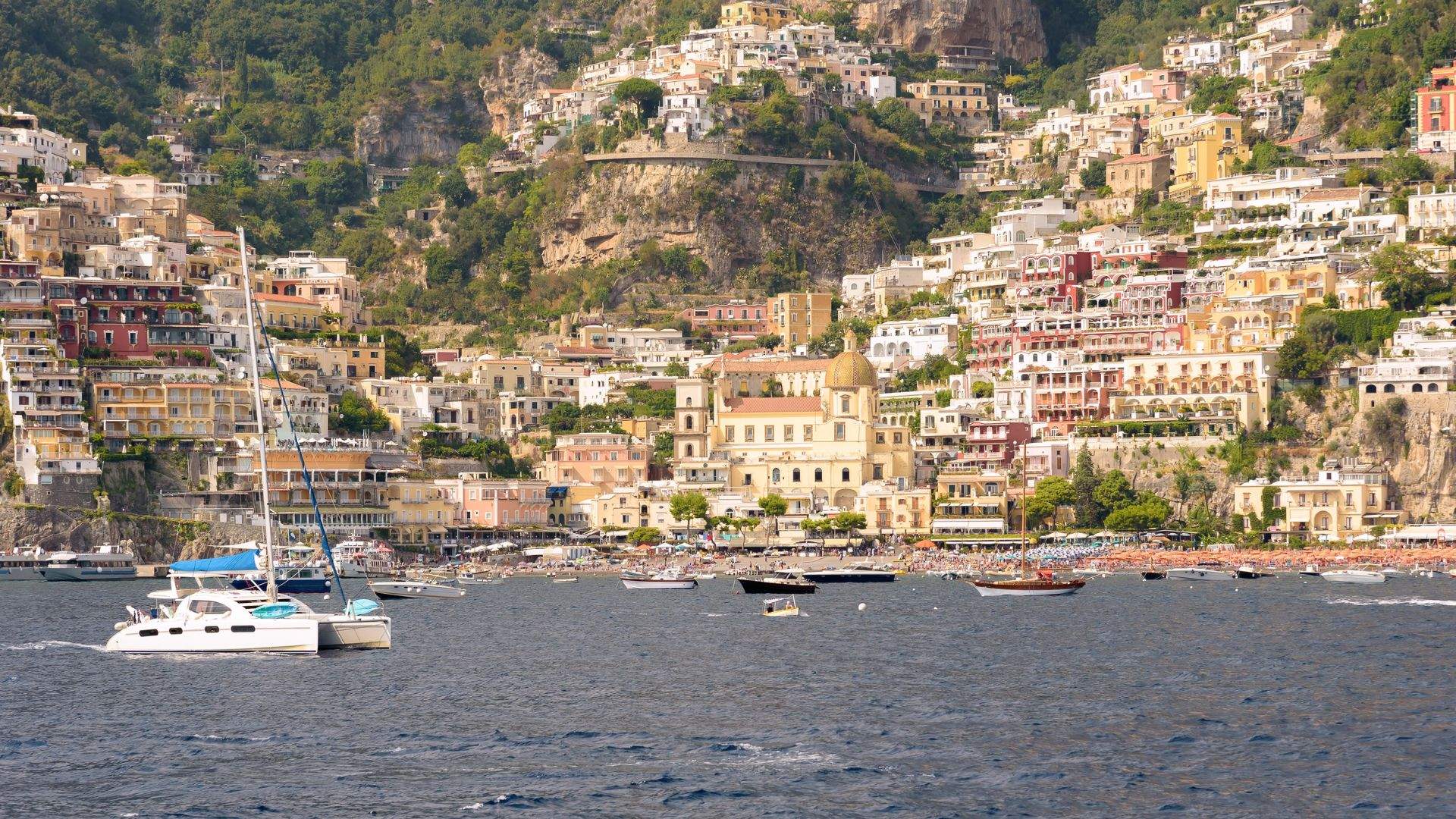
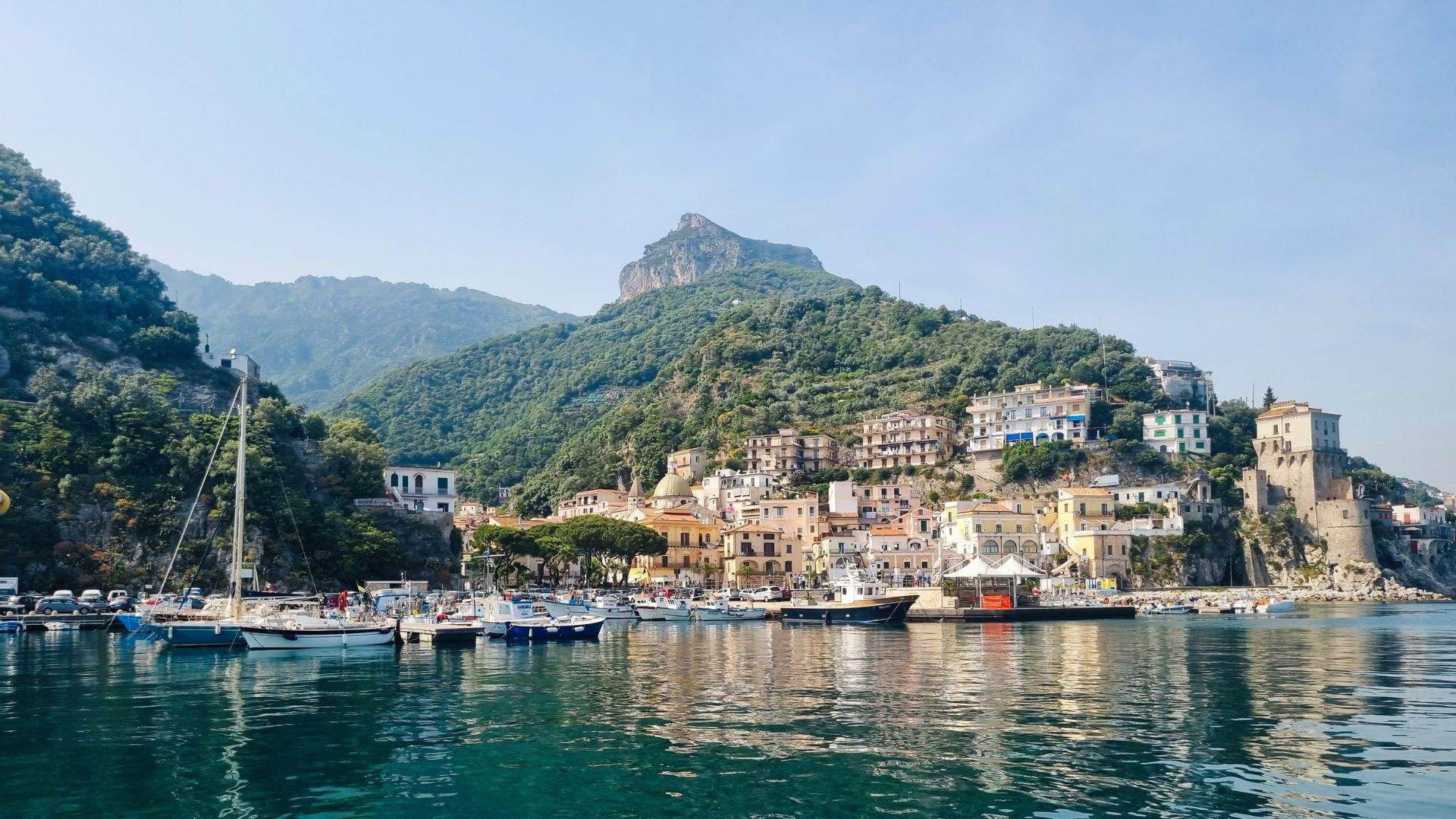
Italian harbor town from sea level — the working-port register of the western Sicily route.
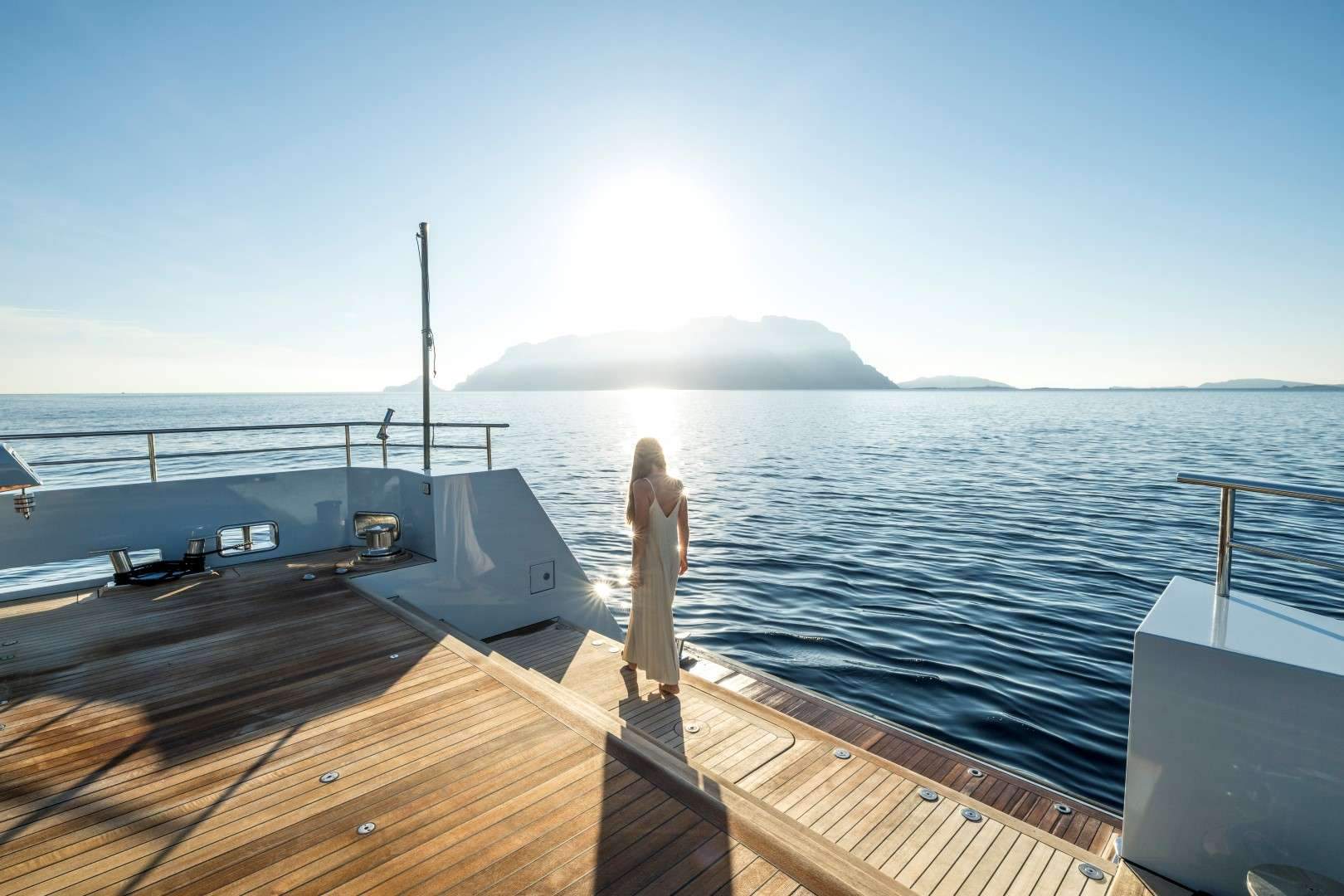
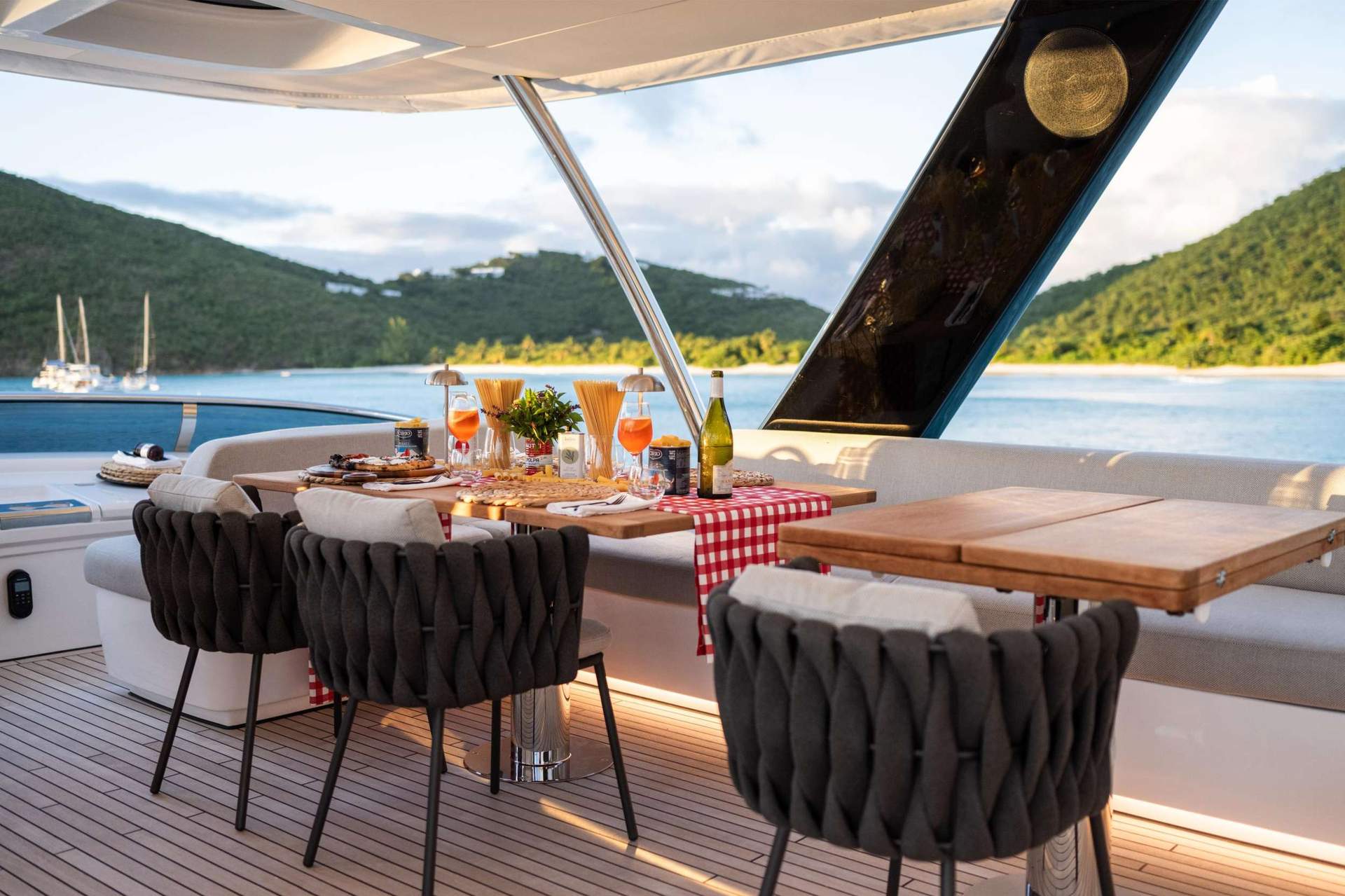
Aft-deck dinner aboard a crewed yacht in the Mediterranean.

Why western Sicily is the other Italian charter — and what guests come for

Western Sicily is the culture-and-quiet half of a Sicily charter. The east coast carries the volcanic marquee — Taormina, Stromboli, the Aeolian chain — and the high-density yacht traffic that goes with it. The west coast carries the Phoenician-Greek-Norman archaeological record and a coastline that still belongs mostly to the local fleet. Egadi shore-side dinners run a third of an Amalfi equivalent and the marinas have empty berths in late June.

The week works on either a catamaran or a small-to-mid motor yacht. The Tyrrhenian off the north coast and the Strait of Sicily between the mainland and the Egadi are open water — comfortable in summer, choppier in shoulder season — and the Egadi anchorages are protected. For the eastern alternative covering the volcanic chain, see the Aeolian Chain Round-Trip itinerary. For a one-way that covers both halves of Sicily on a single charter, see the Sicily End-to-End.

1

Day 1 of 7 · Palermo → Mondello

The shake-down afternoon — Mondello and the city ashore
Anchorage: Mondello Bay
Mondello Bay — the short shake-down afternoon out of Palermo before the longer legs west. The Belle Époque bath-house pavilion sits on a pier in the middle of the bay; the village walks the waterfront in twenty minutes.

The week starts at Marina Villa Igea on Palermo's waterfront — thirty-five minutes from Palermo (PMO) airport, ten minutes from the old city. The marina sits at the foot of the namesake Liberty-style Villa Igiea, the 1900 hotel that anchors the harbor and remains one of Palermo's two grand-hotel addresses. Captain and chef meet on the dock, walk through the yacht, stow the luggage, cover the chart.

Late afternoon, lines off for the short six-nautical-mile run to Mondello Bay on the north side of Monte Pellegrino. Mondello is Palermo's local beach village — pastel houses along a curved bay, a Belle Époque white-iron bath-house pavilion on stilts in the middle of the water, a small fleet of fishing boats anchored against the shore. Anchor in the bay for the late afternoon swim platform.

Tender ashore for an early evening at Mondello village — the open-air market on the waterfront, the gelato shops on Piazza Mondello, and dinner at Bye Bye Blues or Charleston Mondello for guests who want a real Sicilian dinner on the first night. Back to the yacht for the night at anchor. The Palermo skyline holds the southern horizon; the city's lights are visible across Monte Pellegrino once dark settles in.

Day Highlights

  • Boarding at Marina Villa Igea, Palermo — the city's grand-hotel marina.
  • Short six-nautical-mile shake-down to Mondello Bay.
  • Tender ashore for the Belle Époque waterfront and the village.
  • Dinner at Bye Bye Blues or Charleston Mondello; night at anchor.
2

Day 2 of 7 · Mondello → Ustica

Offshore to Ustica and the volcanic atoll snorkel

Anchorage: Cala Santa Maria, Ustica
Thirty-five-nautical-mile offshore run to Ustica — Italy's first marine reserve, declared in 1986, a volcanic atoll thirty-five miles offshore from the Sicilian mainland.

Long passage today — thirty-five nautical miles north into the Tyrrhenian to Ustica, the volcanic island that sits alone offshore from the Sicilian mainland and was the first marine reserve established in Italian waters. Early start under sail or power; the run takes about five hours on a sailing catamaran with the prevailing westerlies on the beam, three on a motor yacht. The island appears as a single dark volcanic cone rising from open water — no other land visible in any direction.

Anchor in Cala Santa Maria on the south coast, the harbor side of the island. The water clarity off Ustica is the cleanest in the western Mediterranean — sixty to eighty feet of visibility on a settled day, no commercial fishing inside the reserve since 1986, and the rock walls of the marine reserve drop straight into deep water with the volcanic substrate covered in seagrass and red coral. Snorkel directly off the swim platform; the rare reef fish that have disappeared from the rest of the Tyrrhenian still live here.

Late afternoon tender ashore for the small village above the harbor — one piazza, two bars, a handful of fishing-boat restaurants. Dinner ashore at Ristorante Giulia or Da Umberto — both serve the local lobster (slipper lobster, smaller and sweeter than spiny lobster), grown in the protected reserve waters. The captain books the table. Back to the yacht for the night at anchor under the island's volcanic ridge.

Day Highlights

  • Thirty-five-nautical-mile offshore passage to Ustica.
  • Anchor in Cala Santa Maria — the first marine reserve in Italian waters.
  • Snorkel from the swim platform in seventy-foot-clear water.
  • Dinner ashore at Ristorante Giulia or Da Umberto for the local slipper lobster.
3

Day 3 of 7 · Ustica → Trapani

The salt-pans coast and the cliff-top town of Erice

Anchorage: Trapani waterfront
Southwest passage to Trapani — fifty-five nautical miles along the western Sicilian coast past Capo San Vito and the salt-pans north of the city, the medieval mountain town of Erice on a peak above the harbor.

Longest passage of the week — fifty-five nautical miles southwest from Ustica to Trapani along the western Sicilian coast. The route passes Capo San Vito at the tip of Sicily's western thumb and the long Saline di Trapani salt-pans north of the city — a working salt-evaporation field that has produced sea salt continuously since the Phoenicians established the operation here twenty-five hundred years ago. The pyramidal salt piles and the small windmills still in use are visible from the water.

Berth at the Trapani waterfront late afternoon. The captain books a car for the half-hour drive up to Erice — the medieval town built on a Norman fortress site eight hundred meters above the coast, with the Castello di Venere on the summit and stone streets cooled by sea breeze even in August. An hour ashore covers the town; dinner at La Pentolaccia or Monte San Giuliano inside the Erice walls, both serving Sicilian-mountain cuisine that is meaningfully different from the coastal register: lamb, wild fennel, semolina cakes baked in wood-fired ovens.

Back down to the yacht at Trapani for the night. The Trapani fish market opens at dawn on the waterfront a hundred meters from the yacht; the chef walks over in the early morning for the red prawns and the tuna belly that the city's restaurants build their menus around. Trapani is the western port that the rest of Sicily flows through and the cleanest morning provisioning stop on the route.

Day Highlights

  • Fifty-five-nautical-mile southwest passage along the western Sicilian coast.
  • Pass the Saline di Trapani salt-pans — Phoenician operations still working.
  • Drive up to Erice for dinner at La Pentolaccia or Monte San Giuliano.
  • Trapani fish market at dawn — red prawns and tuna belly for the chef.
4

Day 4 of 7 · Trapani → Favignana

Cala Rossa — the turquoise quarry on Favignana

Anchorage: Cala Rossa, Favignana
Cala Rossa on Favignana — the abandoned tufa-stone quarry now flooded into a vertical-walled turquoise swimming hole. The marquee anchorage of the Egadi Islands week.

Short ten-nautical-mile crossing this morning to Favignana, the largest of the three Egadi Islands and the marquee Egadi day. The island shape on the chart is a butterfly — two lobes of low limestone joined by a thin isthmus — and the eastern coast holds the abandoned tufa-stone quarries that supplied the building blocks for half of Sicily's old cities. The quarries were active from the seventeenth century into the early twentieth and were then abandoned and flooded by sea-level rise.

Anchor at Cala Rossa on the northeast coast — the largest of the flooded quarries and the marquee anchorage. Vertical white-rock walls drop twenty meters into turquoise water on three sides; the swim is direct off the swim platform. The water is shallower than it looks from the surface and the bottom is white sand reflecting back up through the column — the color is closer to a Bahamian sandbar than to a Mediterranean cove. Most of the day at anchor here.

Late afternoon repositioning to the Favignana town quay for the evening. The town walks the waterfront end to end in twenty minutes. Dinner ashore at La Bettola or Il Buongustaio — both serve the local Mattanza tuna and the caper-and-tomato salad that is the Egadi version of Sicilian summer. The Florio family tonnara — the historic tuna-trap factory on the waterfront — is now a museum and worth thirty minutes ashore before dinner. Night at anchor or stern-to at the town quay.

Day Highlights

  • Short crossing to Favignana — the largest of the Egadi Islands.
  • Anchor at Cala Rossa for most of the day in the flooded quarry.
  • Tour the Florio tonnara — the historic tuna-trap factory museum.
  • Dinner ashore at La Bettola or Il Buongustaio on the waterfront.
5

Day 5 of 7 · Favignana → Marettimo

The Grotto del Genovese and the wild end of the chain

Anchorage: Marettimo town
Sea-caves of Marettimo's western cliffs — the cleanest grottoes in the Egadi, only reachable by water. Late-evening tender excursion when the day-boat traffic has cleared.

Short morning run to Levanzo, the smallest of the three Egadi Islands and the only one with a Paleolithic-era cave-painting site. Anchor in Cala Dogana, the small harbor on the south coast, then tender ashore for the morning walk to the Grotta del Genovese — the limestone sea-cave on the island's north coast where prehistoric rock art has been preserved for ten thousand years. The cave is reached by a guided land walk; the captain books the visit a day in advance.

Lunch on board at anchor in Cala Minnola off Levanzo's south coast — the cleanest swim cove in the Egadi, pine trees coming down to the water, a small Roman shipwreck visible on the seabed. Then a twelve-nautical-mile run southwest to Marettimo, the smallest and most remote of the three islands. The shape on the chart shows it: a single steep ridge rising out of the sea, no flat ground worth the name, and the western coast a string of vertical cliffs broken by sea-caves.

Anchor at Marettimo town on the east coast — the only inhabited part of the island, about three hundred year-round residents, the harbor village built around a single piazza and a row of fishing-boat houses. Dinner ashore at Il Veliero or Da Lia — both family-run, both serve what the morning boat brought in. Late-evening tender excursion around the western cliffs to the Grotta del Cammello and the Grotta del Tuono — sea-caves only reachable by water, the cleanest of the Egadi grottoes.

Day Highlights

  • Morning walk to the Grotta del Genovese cave-paintings on Levanzo.
  • Lunch at anchor in Cala Minnola — Roman shipwreck on the seabed.
  • Twelve-nautical-mile crossing to Marettimo — the wild west end of the chain.
  • Evening tender to the sea-caves of the western Marettimo cliffs.
6

Day 6 of 7 · Marettimo → Castellammare

The Greek temple at Segesta and the long crescent bay

Anchorage: Castellammare del Golfo
Segesta's unfinished Doric temple — the fifth-century-BC structure standing alone on a hilltop with no surrounding town, reached by car from the Castellammare anchorage in about thirty minutes.

Thirty-nautical-mile northeast run this morning back toward the Sicilian mainland and the long crescent bay of Castellammare del Golfo — the Gulf of Castellammare, three peninsulas wide, with the medieval town of Castellammare on the south shore and the Zingaro Nature Reserve on the western headland. Anchor off the town or stern-to at the marina; the captain calls based on the swell and the harbor traffic.

Midday excursion ashore by car to Segesta — the Doric Greek temple from the fifth century BC that stands alone on a hilltop above the surrounding hills, no town around it, no other ruins visible from the temple platform. The structure is unfinished — the column flutes were never carved and the roof was never built — but the architecture is otherwise as clean a fifth-century-BC temple as Sicily has. The Greek theatre on the adjacent ridge dates from the same period; both are walkable on the half-day ashore.

Back to the yacht for the late afternoon swim in the bay — the Zingaro Reserve coves on the western headland are the cleanest swim coves on this stretch of mainland Sicily, reached by tender from anchor. Dinner ashore at La Forchetta on the Castellammare waterfront or Trattoria del Pescatore on the harbor — both serve the local fish soup and the Sicilian-style swordfish involtini that the town's restaurants build menus around. Night at anchor or marina.

Day Highlights

  • Thirty-nautical-mile northeast run from Marettimo to Castellammare del Golfo.
  • Half-day ashore at Segesta — Doric temple and Greek theatre, fifth century BC.
  • Late afternoon swim in the Zingaro Reserve coves off the western headland.
  • Dinner ashore at La Forchetta or Trattoria del Pescatore.
7

Day 7 of 7 · Castellammare → Palermo: Disembark

The Norman Palace and the Saturday return

Anchorage: Marina Villa Igea, Palermo
Last morning aboard — thirty nautical miles back along the north coast to Marina Villa Igea. Half-day ashore at the Norman Palace and the Cappella Palatina before the airport run.

Last full day on the water. Morning run east along the coast — thirty nautical miles back to Palermo, about four hours under power past Capo San Vito and the long Saline di Trapani salt-pans the route passed outbound on Day 3. The captain repositions the yacht to Marina Villa Igea by early afternoon; the marina sits at the foot of Villa Igiea hotel on Palermo's working waterfront.

Afternoon ashore in Palermo — the half-day that gives the route's cultural anchor. The Norman Palace (Palazzo dei Normanni) on the inland edge of the old city holds the Cappella Palatina, the twelfth-century chapel decorated by Arab artisans for Roger II of Sicily: gold mosaic ceilings, Arab geometric inlay in the wooden ceiling vaulting, Byzantine wall mosaics depicting Old Testament scenes from floor to apse. An hour inside is enough; a walk through the surrounding old city covers the Quattro Canti, the Pretoria Fountain, and the Cathedral on the way back to the marina.

Last night aboard at Marina Villa Igea. Dinner on the aft deck with the city lights across the harbor, or ashore at the Villa Igiea hotel terrace — the Belle Époque restaurant where Palermo's old families still eat. Saturday morning is the disembark — gratuity envelope to the captain (Mediterranean standard ten to fifteen percent of base, split among the crew), thirty-five minutes by car to Palermo (PMO) airport. The broker coordinates any pre- or post-charter ashore — the Villa Igiea hotel for the post-charter night, the Casa Florio outside the old city, or the cliff-top Belmond Villa Sant'Andrea on Taormina for guests routing east before flying home.

Day Highlights

  • Thirty-nautical-mile final passage east to Palermo.
  • Half-day ashore at the Norman Palace and the Cappella Palatina.
  • Walk through the Quattro Canti and the Cathedral on the way back.
  • Last night at Marina Villa Igea; Saturday-morning disembark, 35 minutes to PMO.

Frequently asked

How is a Western Sicily charter different from the Aeolian charter?
Different terrain, different daily rhythm, different reasons to book. The Aeolian week is volcanic anchorages, short legs between five inhabited islands, and the Stromboli marquee at the end. The Western Sicily week is open-water passages between Greek-built mainland ports — Palermo, Trapani, the Egadi Islands, Marsala — with the Greek temple at Segesta and the cliff-top medieval town of Erice as the cultural anchors ashore. Both weeks share the Sicilian cuisine register; the Western Sicily week trades active volcanism for archaeological depth.
Are the Egadi Islands worth the passage?
Yes — Favignana, Levanzo, and Marettimo are the cleanest swim anchorages in the western Mediterranean and almost nobody outside Sicily knows them. Cala Rossa on Favignana — the abandoned tufa-stone quarry now flooded into a vertical-walled swimming hole — is the marquee anchorage. Levanzo's prehistoric cave paintings at Grotta del Genovese add a cultural layer; Marettimo's western cliffs and sea-caves give the chain its quiet wild end. The shortest leg from Trapani is six nautical miles. Day-tripper boats run from Trapani but clear off by evening.
What about Segesta and the Greek temples — how does that work from the yacht?
Segesta sits inland from the coast, about thirty minutes by car from the Castellammare del Golfo anchorage or fifty minutes from Trapani. The captain books the driver, the temple is the unfinished fifth-century-BC Doric structure standing alone on a hilltop with no surrounding town, and a half-day ashore covers it cleanly with a stop at the Greek theatre on the adjacent ridge. The Valley of the Temples at Agrigento — the larger archaeological complex on the south coast — is too far for a day-trip from this route; it lives on the Sicily End-to-End itinerary or as a pre-charter night ashore.
Why does western Sicily cost less than the eastern half?
Less inventory pressure, less concentration of premium marinas, and a tourist trade that hasn't been compressed by cruise ships. Marina Villa Igea at Palermo and the Trapani waterfront both take large yachts; Favignana's small harbor takes catamarans and mid-size motor yachts at anchor. Premium berths at Capri, Porto Cervo, and Marina Grande on the east cost two to three times what Palermo and Trapani charge in peak season. The yachts working this route are mostly the same fleet that works the Aeolian east; the difference is dockage, not yacht.

Ready to set sail in western Sicily and the Egadi Islands?

Every itinerary we send is custom-tailored. Tell us your dates, the size of your group, and what you want out of your charter—we'll handle the rest.