Crewed Itinerary · Galapagos · Eastern + Northern Rotation

Eastern & Northern Galapagos: 8 Days, Española & Genovesa

Day three is the bird-and-courtship Galapagos: the Kicker Rock channel snorkel for hammerheads and Galapagos sharks, Punta Suárez's waved albatross colony (April through December only — they nest nowhere else on Earth), Gardner Bay's sea lion nursery on white sand. Day four climbs Bartolomé for Pinnacle Rock at sunrise — the photograph that anchors every Galapagos trip. The week chains Pitt Point's three-booby colony, Cerro Brujo's snorkel cove, Genovesa's red-footed boobies and frigates, North Seymour for the final morning. Eight days from San Cristóbal to Baltra.

Duration
8 days / 7 nights
Base
San Cristóbal (SCY) → Baltra (GPS)
Plan your Galapagos charter Custom-tailored to your dates and group preferences
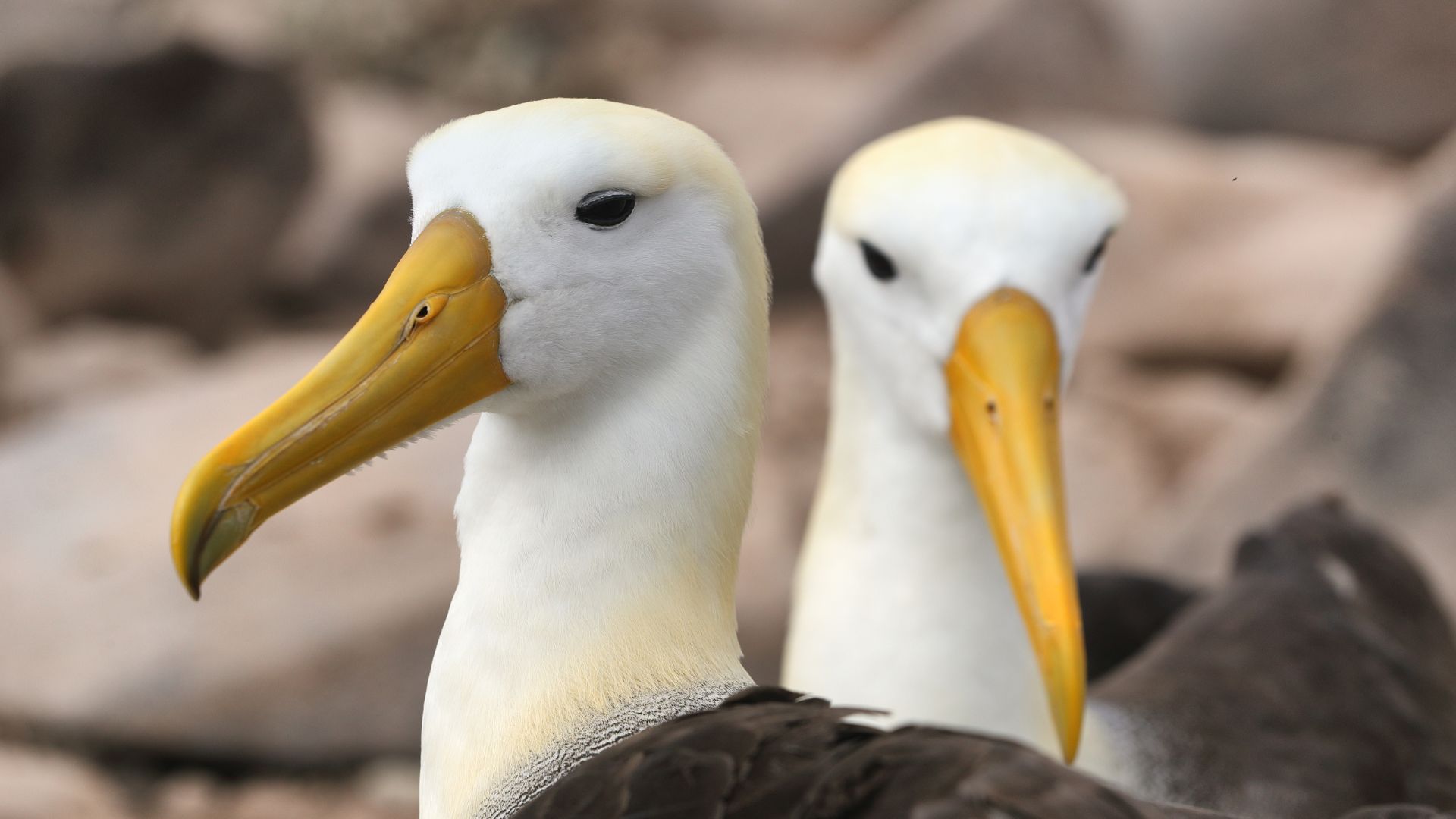
Waved albatrosses on Punta Suárez, Española
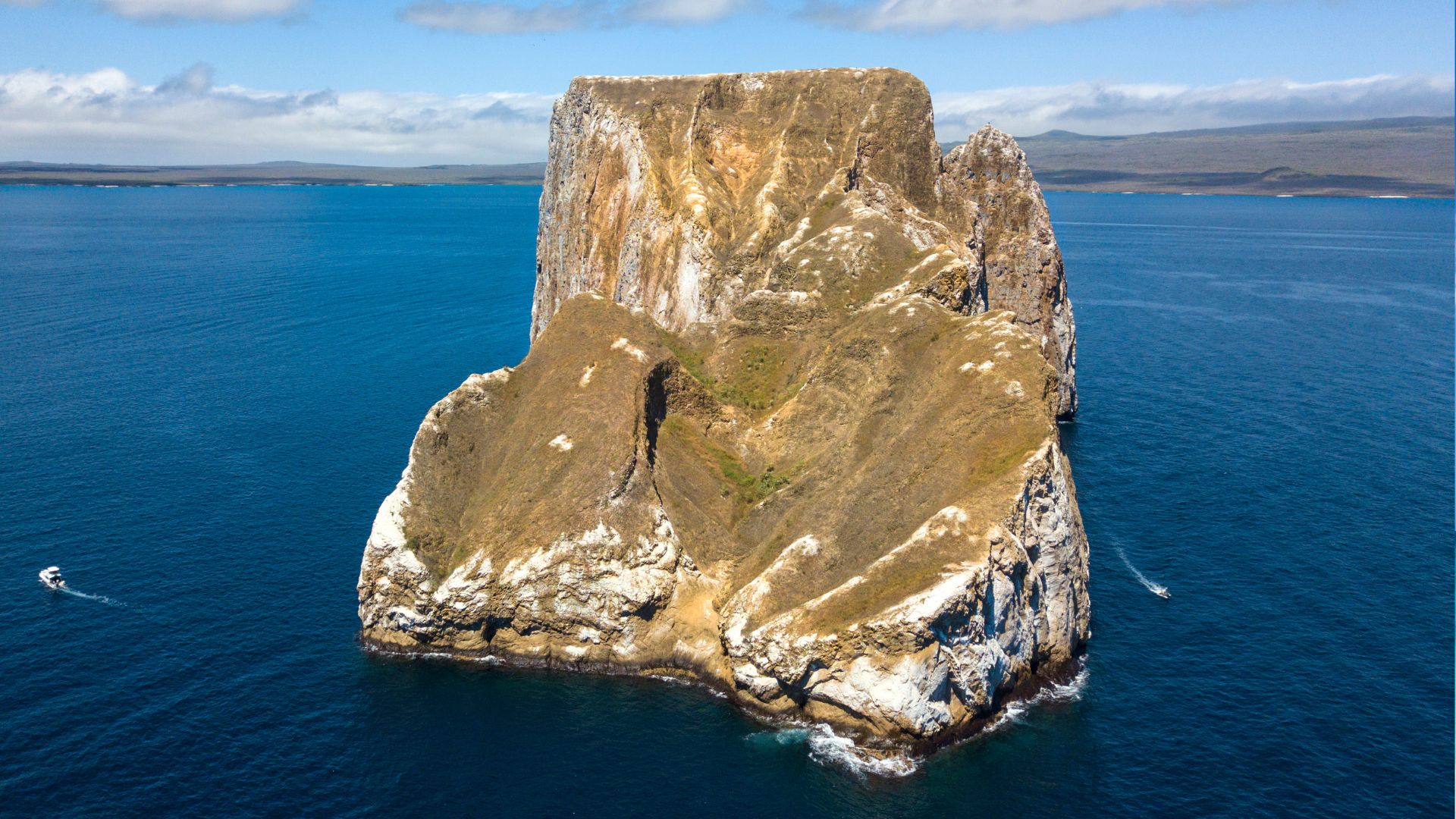
Aerial of Kicker Rock off San Cristóbal
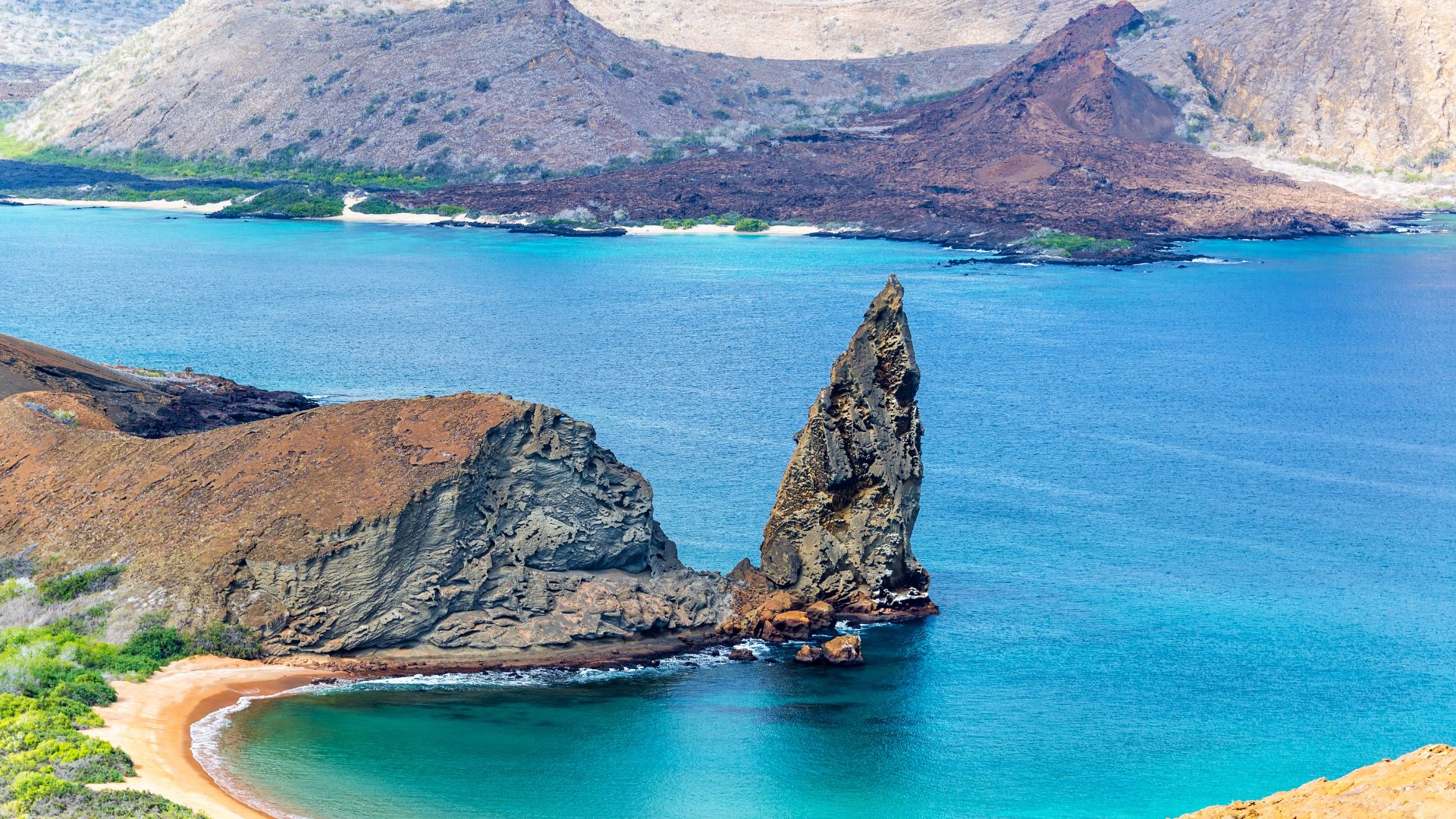
Pinnacle Rock at Bartolomé from a lower angle
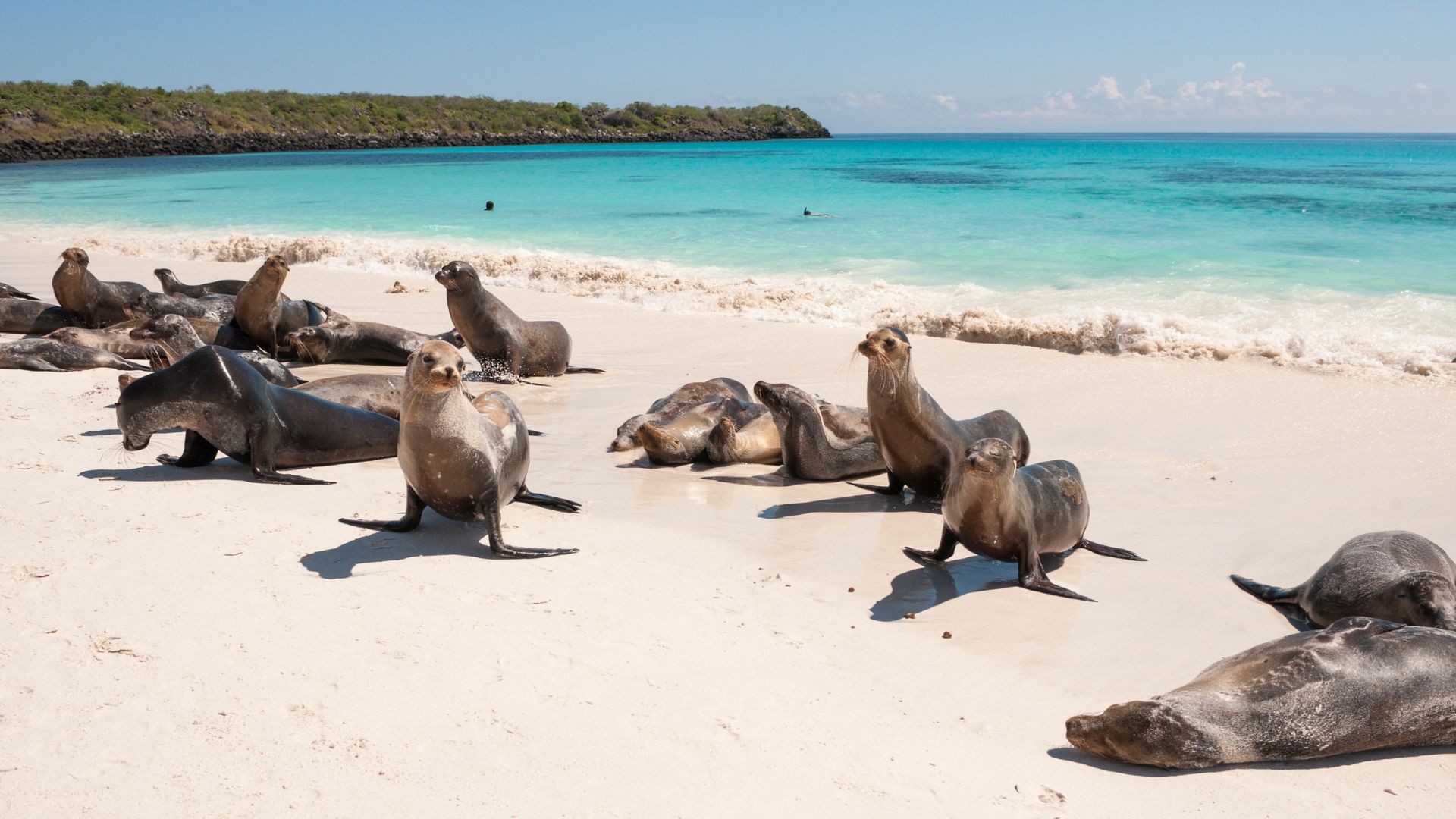
Sea lion colony on Gardner Bay's white sand

The Eastern + Northern rotation — the birding week

This is the rotation where the waved albatross window decides the timing: April through December, Punta Suárez on Española, the only place on Earth they nest. Outside that the boobies, frigates, sea lions, and hammerheads carry the trip. The Western alternate is the marine-iguana-and-volcano counterpart; back-to-back combines them in fifteen nights on the same yacht.

1

Day 1 of 8 · San Cristóbal — David Rodriguez Breeding Center

Embark San Cristóbal and Meet the Captive Tortoises

Anchorage: Puerto Baquerizo Moreno, San Cristóbal
Captive-breeding pair at the David Rodriguez Center, San Cristóbal.

Land at SCY on the morning flight from Quito or Guayaquil. Short transfer to the Puerto Baquerizo Moreno dinghy dock, panga across to the anchored yacht, welcome lunch on the aft deck with the naturalist's daily-program briefing.

Afternoon transfer up to the David Rodriguez Breeding Center on the northern edge of town — the local captive-breeding facility for the San Cristóbal tortoise subspecies (Chelonoidis chathamensis), one of three centers in the islands running similar conservation work. Back to the yacht for an overnight at anchor and an early start.

Day Highlights

  • Welcome at SCY airport, panga transfer to the anchored yacht.
  • Cruise plan filed with the park officer.
  • Visit to the David Rodriguez Breeding Center.
  • Captive-breeding program for the San Cristóbal tortoise.
2

Day 2 of 8 · Pitt Point + Cerro Brujo

Red-Footed Boobies and a White-Sand Snorkel

Anchorage: Off Pitt Point / Cerro Brujo, San Cristóbal
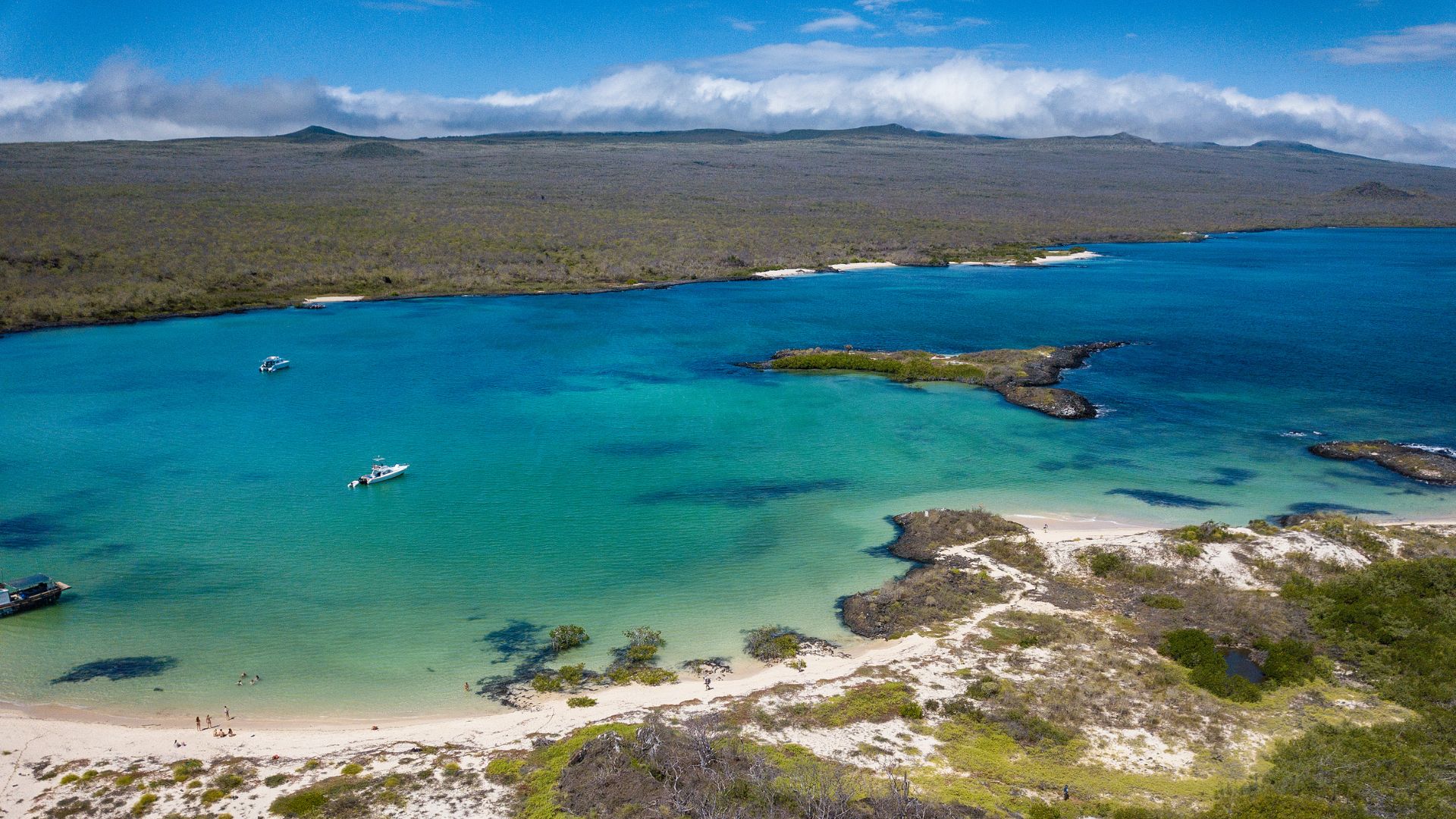
Cerro Brujo's white-sand cove on San Cristóbal — first snorkel of the week.

Morning run north and east to Pitt Point — the only site in the archipelago where all three booby species (blue-footed, red-footed, Nazca) nest in the same area. The trail climbs to a cliff-top viewpoint over the colony; the naturalist works through the species identification (foot color is the obvious tell). Frigate birds patrol the colony for kleptoparasitism.

Afternoon repositioning to Cerro Brujo (Witch Hill) — a long white-sand beach in a sheltered bay, named for the rust-colored volcanic tuff cliff that rises behind it. The first snorkel of the week from the beach: green sea turtles, sea lions on the sand and in the surf, marine iguanas on the rocks. Overnight south for Kicker Rock and Española.

Day Highlights

  • Pitt Point — the only site where all three booby species nest in one area.
  • Cliff-top viewpoint over the colony.
  • Cerro Brujo's white-sand beach.
  • First snorkel of the week — sea turtles, sea lions, marine iguanas.
3

Day 3 of 8 · Kicker Rock + Punta Suárez + Gardner Bay

Hammerheads in the Channel, Albatrosses on the Cliff

Anchorage: Off Gardner Bay, Española
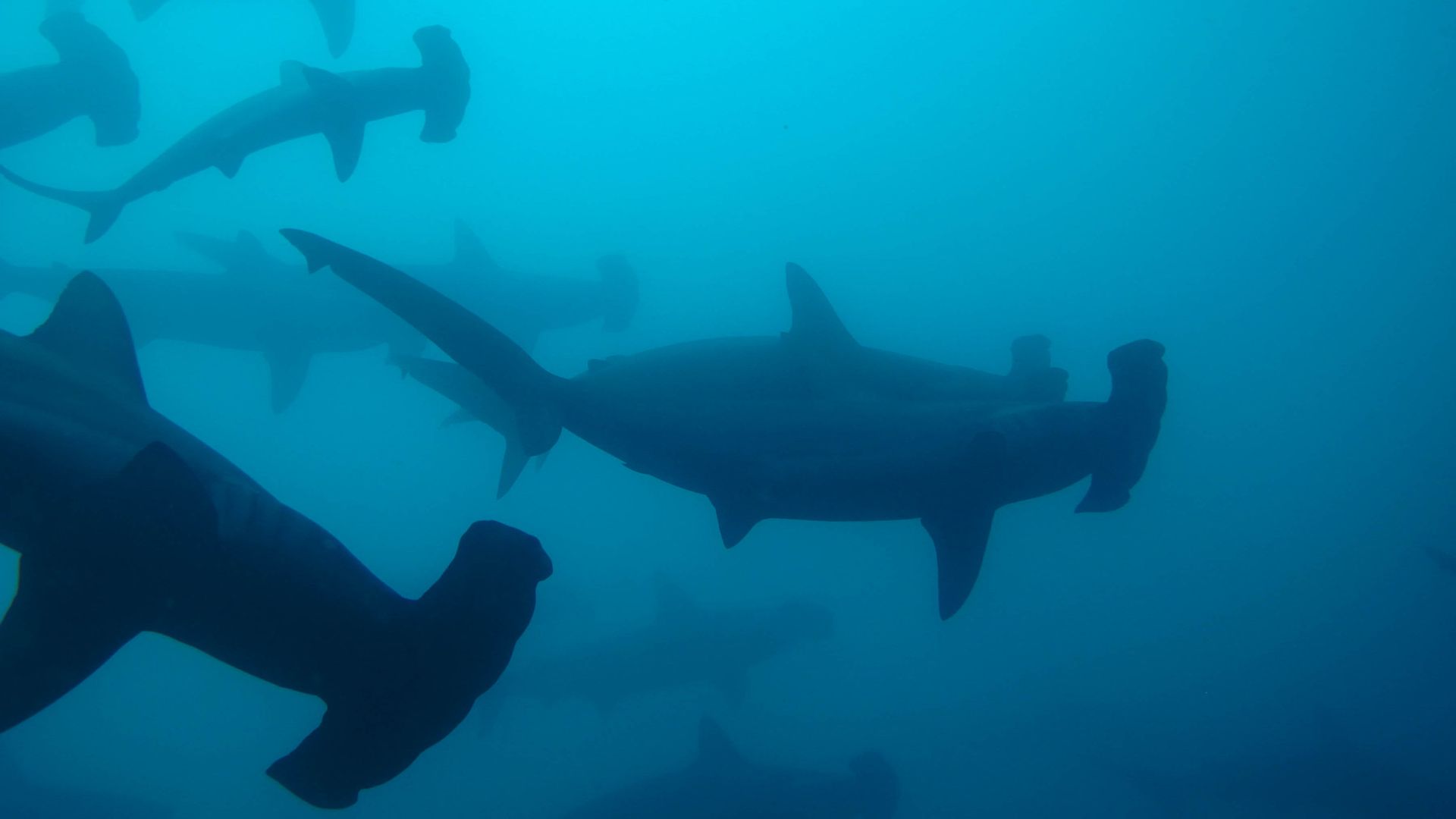
Hammerheads in the Kicker Rock channel — the marquee underwater day.

First light brings the yacht to Kicker Rock — the twin basalt pillars off San Cristóbal's northeast coast. The morning program is the channel snorkel: the panga drops you at the eastern entrance, the current drifts you between the cliffs, the naturalist runs the boat alongside. Scalloped hammerheads in schools below, Galapagos sharks patrolling, sea turtles, eagle rays. Most groups do two passes.

Mid-day transit south to Española — the southernmost and oldest of the major islands. The afternoon landing at Punta Suárez is the bird walk most guests remember from the trip. The trail follows the cliff top past the waved albatross colony (April through December — nowhere else on Earth), the Española mockingbird, Nazca and blue-footed booby nesting sites, and a basalt blowhole that spouts seawater fifty feet up the cliff face.

Late afternoon at Gardner Bay — a half-mile crescent of white sand backed by low scrub and a resident sea lion colony. Sea lion pups follow swimmers; adults sprawl across the sand. The two-meter park-rule distance is enforced from the guest side — the animals themselves don't acknowledge it.

Day Highlights

  • Morning hammerhead snorkel in the Kicker Rock channel.
  • Afternoon at Punta Suárez — waved albatross (Apr-Dec), Española mockingbird, blowhole.
  • Late-afternoon swim at Gardner Bay's sea lion nursery.
  • Three of the marquee Galapagos visitor sites in a single day.
4

Day 4 of 8 · Bachas Beach + Bartolomé Summit

The Pinnacle Rock Climb at Sunrise

Anchorage: Sullivan Bay, off Bartolomé
Pinnacle Rock at Bartolomé — the marquee summit climb.

Overnight northwest — a hundred and ten nautical miles, the longest single leg of the week. Pre-dawn arrival in Sullivan Bay. The naturalist runs the sunrise summit hike — a 372-step wooden staircase from the southern landing climbs the volcanic cone to the lookout at 114 meters. The view from the top is the photograph that anchors every Galapagos trip: Pinnacle Rock, Sullivan Bay's pahoehoe lava across Santiago, the yacht below, the Bolívar Channel opening west.

Late morning shifts to Bachas Beach on the north coast of Santa Cruz — a wide white-sand beach with a brackish lagoon behind it holding flamingos and white-cheeked pintail ducks. ('Bachas' is the local pronunciation of 'barges' — two American Navy barges ran aground here during World War II.) Afternoon snorkel from the beach over sea turtles. Overnight repositioning west for Santiago's landings.

Day Highlights

  • Overnight northwest transit — 110 nm to Sullivan Bay.
  • Sunrise climb to the Bartolomé summit (114m).
  • Pinnacle Rock + Sullivan Bay lava — the marquee Galapagos panorama.
  • Afternoon at Bachas Beach with flamingo lagoon and snorkel from the sand.
5

Day 5 of 8 · Santiago (Egas Port) + Rabida

Fur Seals at Egas Port and a Red-Sand Beach

Anchorage: Off Rabida Island
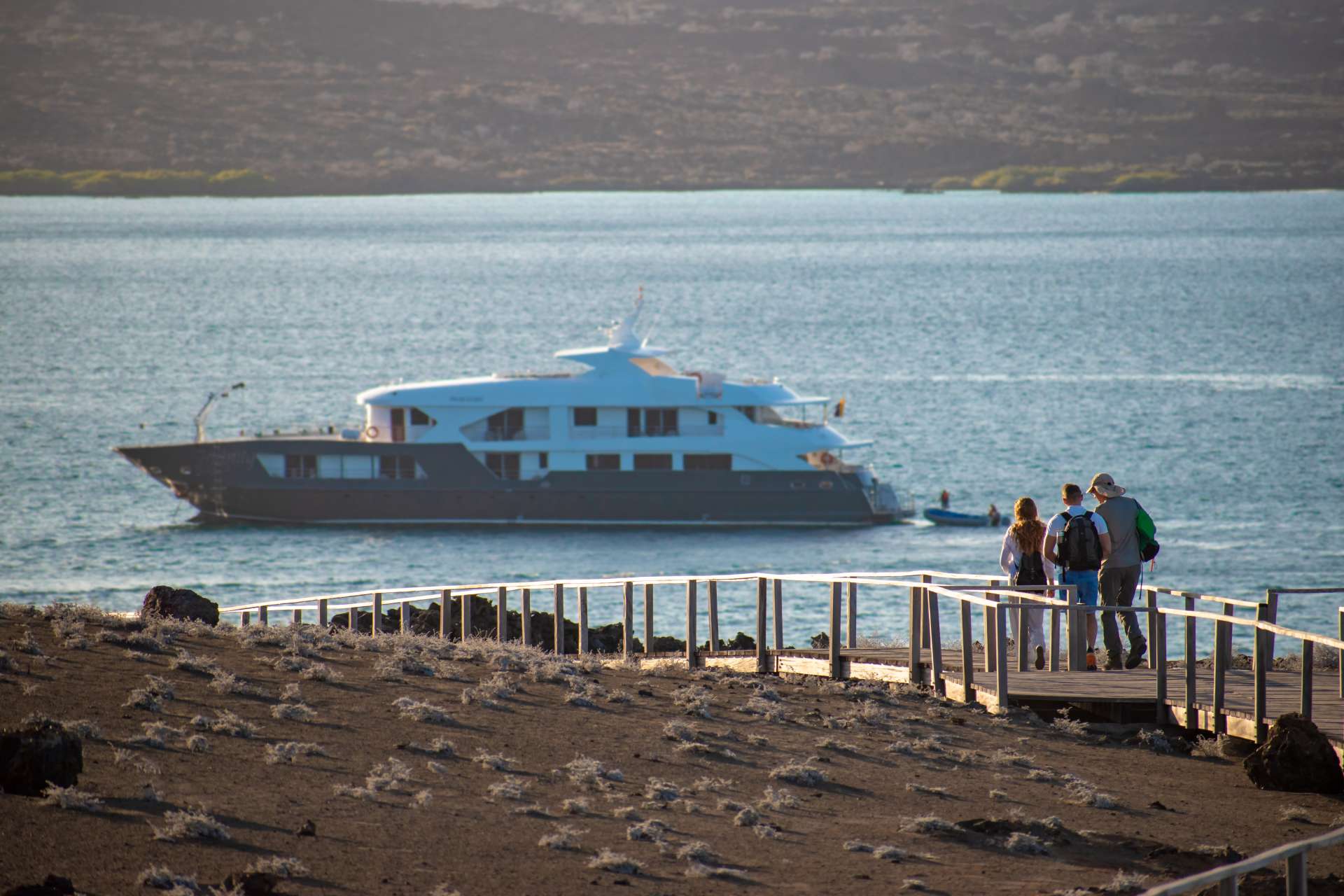
Yacht offshore, guests walking the lava boardwalk — the Egas Port pattern.

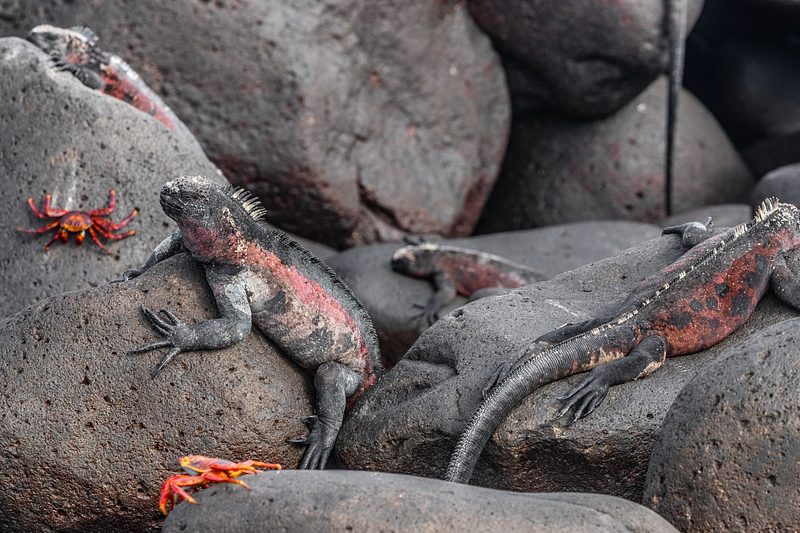
Morning landing at Puerto Egas (James Bay) on Santiago's northwest coast — a long black-lava shore with a fur seal colony in the cliff-base grottos, the densest sally lightfoot crab population in the islands, and a marine iguana population distinct from the western colonies. The trail runs along the lava shore to the grottos where the Galapagos fur seal rests in shaded sea caves.

Mid-day repositioning south to Rabida — distinctive for the iron-oxide-rich volcanic rock that turns the beach a deep red-brown. The trail behind the beach runs to a brackish lagoon with white-cheeked pintail ducks and (in wet season) flamingos. Afternoon snorkel along the cliff base — schools of king angelfish, parrotfish, reef fish in the rocky shallows. Overnight north toward Genovesa.

Day Highlights

  • Egas Port black-lava shore — fur seal colony in the cliff grottos.
  • Sally lightfoot crab density, distinct marine iguana population.
  • Rabida's red-sand beach (iron-oxide volcanic rock).
  • Cliff-base snorkel from the panga.
6

Day 6 of 8 · Genovesa — Darwin Bay + Prince Philip's Steps

The Red-Footed Booby Colony and Prince Philip's Steps

Anchorage: Darwin Bay, Genovesa
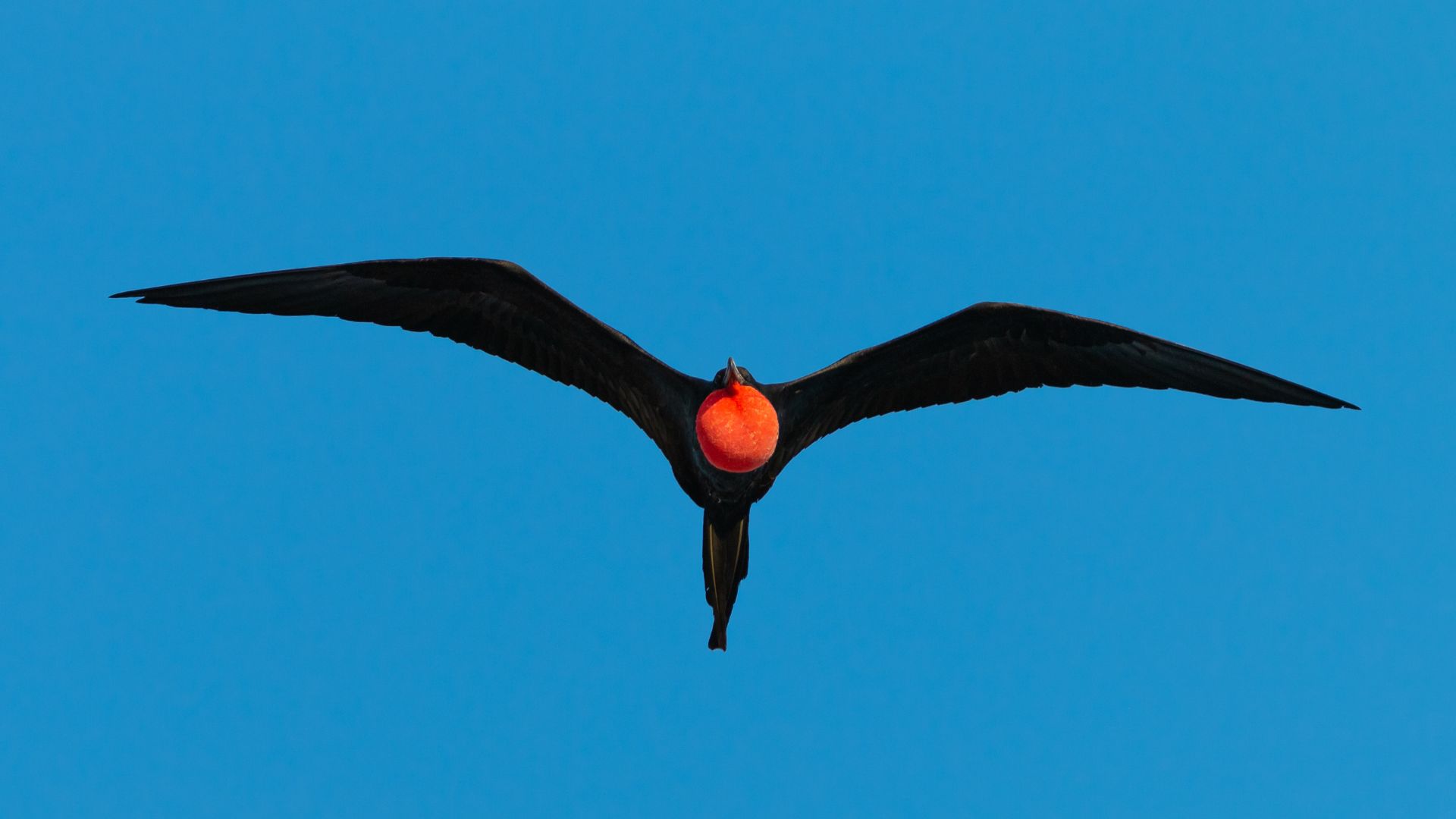
Magnificent frigate bird in courtship — Genovesa's Darwin Bay.

Overnight transit north — 120 nautical miles across open water to Genovesa, a flooded volcanic caldera in the far north of the archipelago. Genovesa is uninhabited and gets no day-boat traffic; only the yachts running an A-route variant reach it. Morning landing at Darwin Bay — a half-moon beach inside the caldera rim, the calmest water of the week. Bird colonies the densest in the islands: the great frigate bird with the inflated red gular sac, the largest red-footed booby colony in the world, the Nazca booby, the swallow-tailed gull, the storm petrels in the lava cracks.

Afternoon landing at Prince Philip's Steps on the east side of the caldera — named for Prince Philip's 1965 visit. A steep climb on wooden and rock-cut steps brings you to a flat plateau on the rim — another concentration of Nazca and red-footed boobies, the storm petrel colony, short-eared owls hunting them at dusk. Overnight south back to the central islands.

Day Highlights

  • Overnight 120-nm transit north to Genovesa.
  • Darwin Bay — largest red-footed booby colony in the world.
  • Great frigate bird courtship-sac displays.
  • Prince Philip's Steps — Nazca booby plateau, storm petrel colony, hunting short-eared owls.
7

Day 7 of 8 · Mosquera Islet + Santa Cruz Highlands

A Final Sea Lion Snorkel and the Wild Tortoise Population

Anchorage: Academy Bay, Puerto Ayora, Santa Cruz
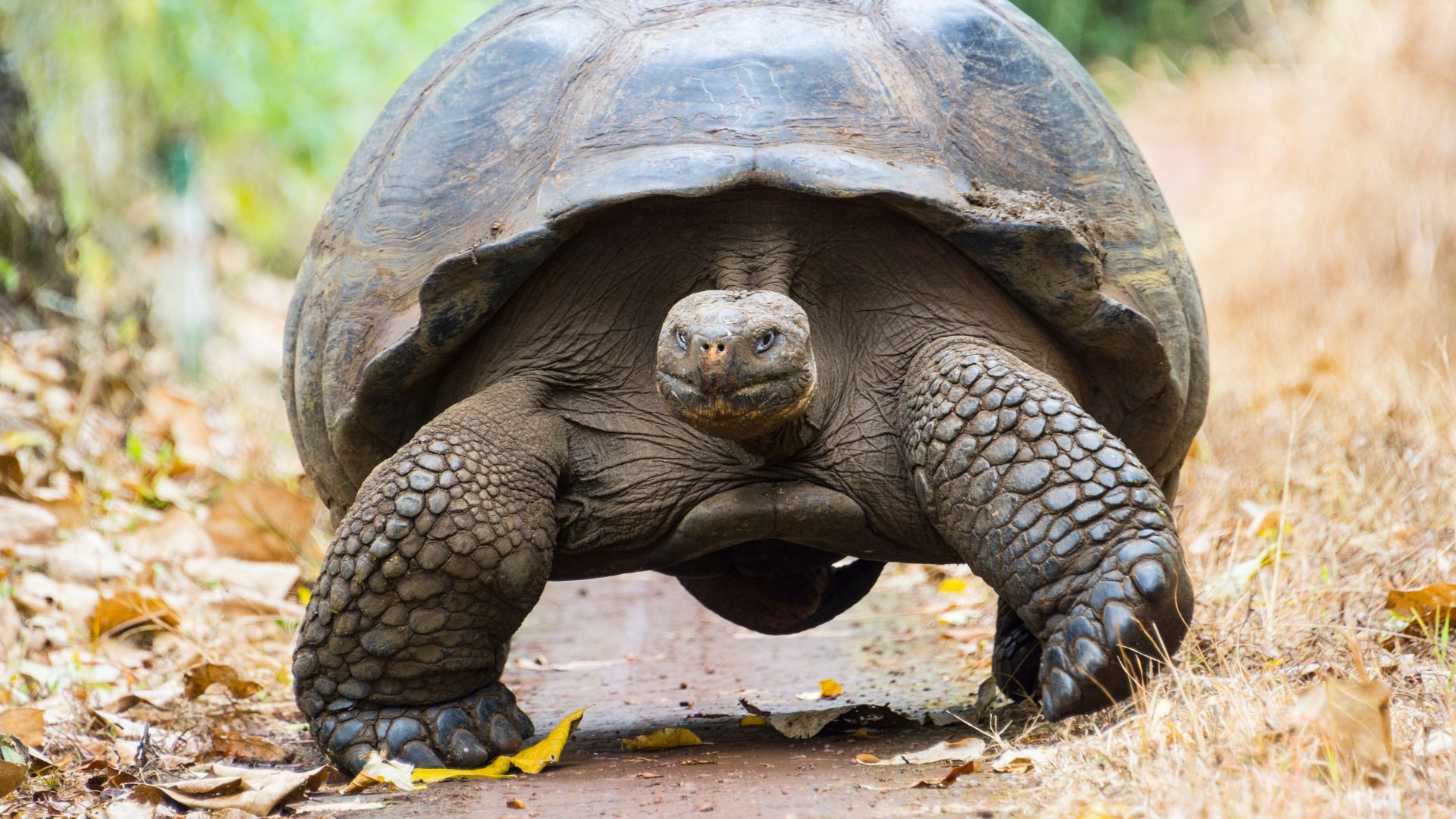
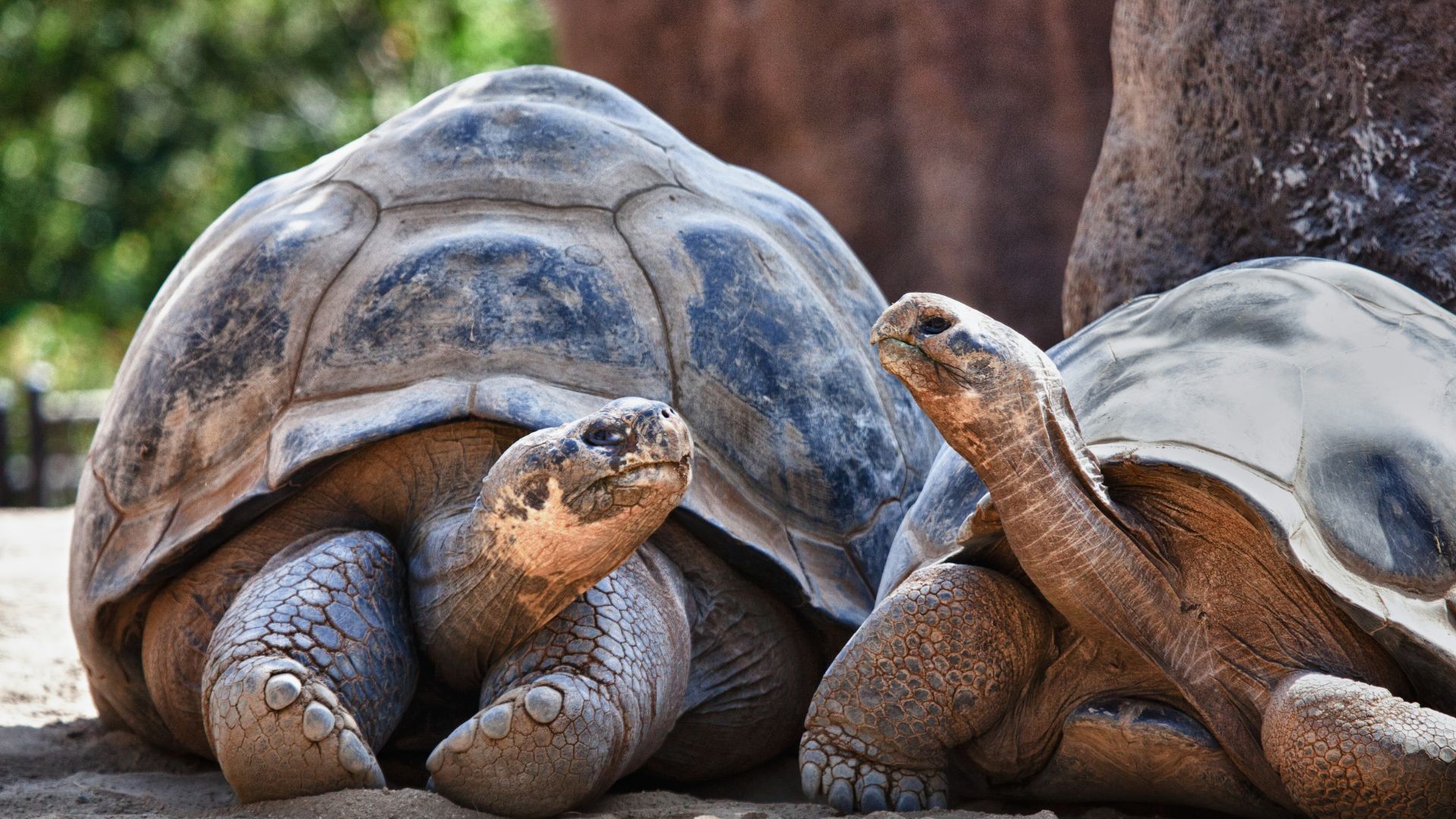
A Galapagos giant tortoise in the Santa Cruz highlands.

Morning landing at Mosquera Islet — a low sand bar between North Seymour and Baltra. A resident sea lion colony lives on the islet; the snorkel from the beach drops you among playing juveniles. Mosquera is the most relaxed landing of the week — short, no climbing, mostly an opportunity to be in the water with the wildlife one more time.

Afternoon transit south to Academy Bay off Puerto Ayora. Private-vehicle transfer up to the highlands — twenty minutes from town, twelve hundred meters of elevation, scalesia forest into Miconia shrubland. El Chato Reserve or Rancho Manzanillo holds wild Galapagos giant tortoise populations grazing in pasture. No barriers; the animals approach as they please. Overnight transit to Baltra.

Day Highlights

  • Morning sea lion snorkel at Mosquera Islet.
  • Afternoon transfer to the Santa Cruz highlands.
  • Wild giant tortoise population at El Chato or Rancho Manzanillo.
  • Scalesia forest and Miconia shrubland.
8

Day 8 of 8 · North Seymour + Baltra disembark

Blue-Footed Boobies on the Final Morning

Anchorage: Off North Seymour / Baltra
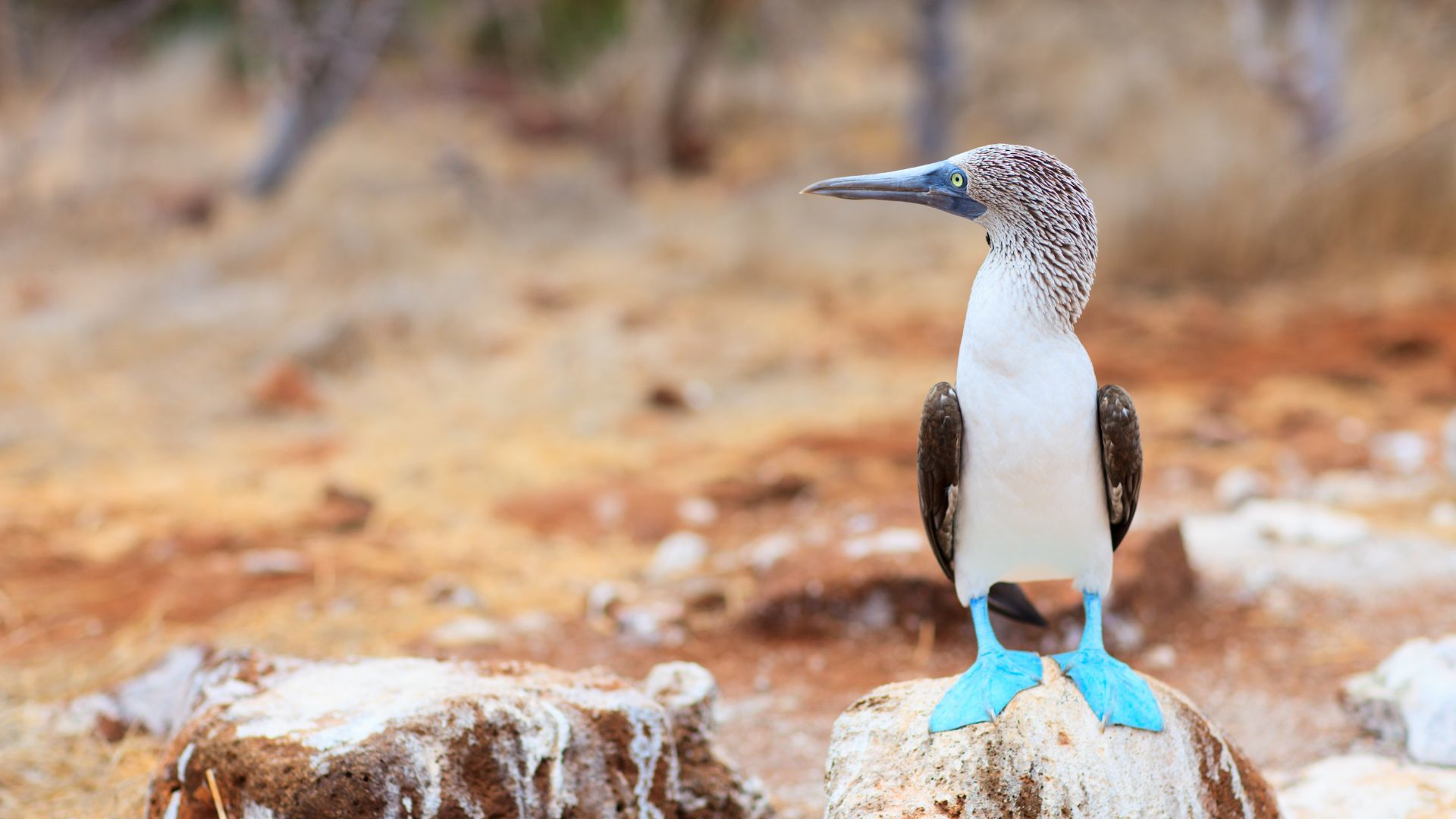
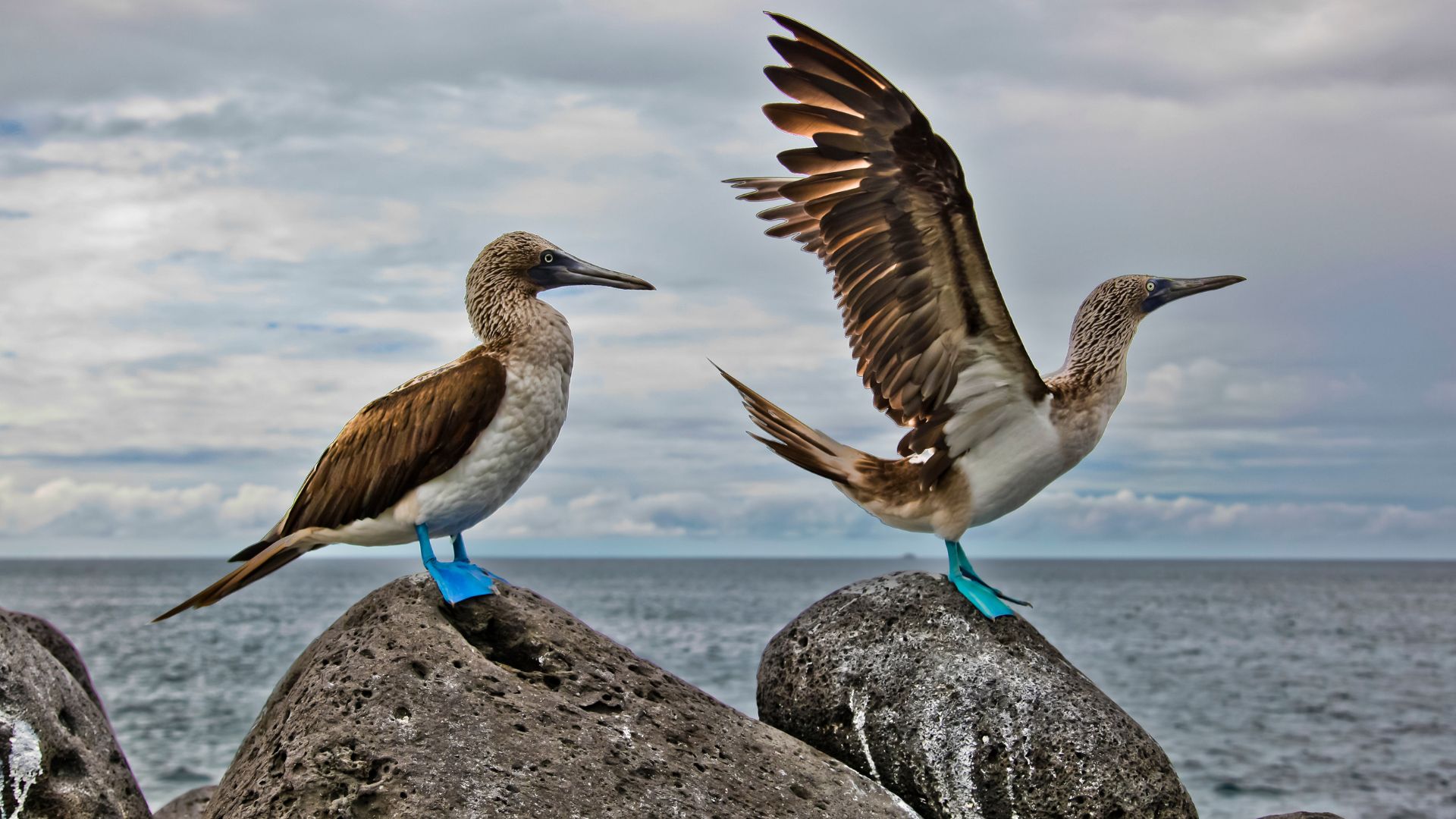
Blue-footed boobies on the final morning's landing — North Seymour.

Pre-dawn run to North Seymour — a small flat island just north of Baltra, formed by tectonic uplift rather than volcanic activity. The sunrise landing brings you onto a low coastal trail past the blue-footed booby colony (the sky-pointing courtship dance performed at close range), the magnificent frigate bird colony (males with the inflated red gular sac), and the resident land iguana population.

Back on board for breakfast and the short transit to Baltra. The crew arranges the transfer to GPS for mid-morning flights direct to Quito and Guayaquil. Guests extending their Latin America trip from here typically connect to Cuzco, Lima, or back to Quito for a night in the old town before flying home.

Day Highlights

  • Sunrise landing at North Seymour — blue-footed boobies and frigates at close range.
  • Mile-long coastal trail past the courtship colonies.
  • Short transit to Baltra, transfer to GPS.
  • Mid-morning flights direct to Quito and Guayaquil.

Frequently asked

When does the waved albatross window run?
April through December at Punta Suárez (Española). The species is the only albatross found north of the equator and the only one that nests on a low-latitude island. Pair-bonds form in April, eggs are laid in May and June, chicks hatch in July, fledging runs through November. By late December the birds leave for the Humboldt current off Peru and don't return until April. A January–March charter still visits Punta Suárez (the blowhole, the booby colonies, the marine iguana population are year-round), but the albatross is at sea.
What's the Kicker Rock snorkel like?
Kicker Rock — León Dormido, 'Sleeping Lion' in Spanish — is the eroded remains of a basalt cliff split into two vertical pillars roughly thirty meters apart. The channel between them runs ninety to a hundred and twenty feet deep and is one of the most reliable hammerhead-shark snorkel sites in the eastern Pacific. The drift through the channel from the panga is the marquee program: scalloped hammerheads in schools below, Galapagos sharks patrolling the deeper edges, sea turtles, eagle rays. Cool-water season (June–November) brings the highest density; warm-water season (December–May) brings the best visibility. The hammerheads are present year-round.
Can the route adjust for a bird-watching focus group?
Limited. The park licenses each vessel to a specific itinerary with set landing times; the captain and naturalist can adjust within a published landing window but cannot extend a landing into another day's schedule. For specialized bird-watching groups, the naturalist runs an extended dawn or sunset program at each colony at no extra cost — Punta Suárez morning runs roughly three hours, Genovesa's Darwin Bay afternoon runs two and a half. Groups requesting the back-to-back fifteen-night A+B charter effectively double the time across the archipelago.
What makes Genovesa different from the central islands?
Genovesa sits a hundred and fifty miles north of the central group — a separate volcanic shield around a flooded caldera, no permanent population, no road access, reached only by yachts running an itinerary that includes it. The bird colonies are the densest in the islands: the great frigate bird with the inflated red gular sac in courtship, the largest red-footed booby colony in the world, the Nazca booby, the swallow-tailed gull, the storm petrels nesting in lava cracks. The trade-off is a long overnight transit north and back. For guests after the rarest birding the islands offer, Genovesa is the reason to take this rotation.

Ready to set sail in the Galapagos?

Every itinerary we send is custom-tailored. Tell us your dates, the size of your group, and what you want out of your charter—we'll handle the rest.