Crewed Itinerary · Galapagos · Western Rotation

Western Galapagos: 8 Days, Isabela & Fernandina

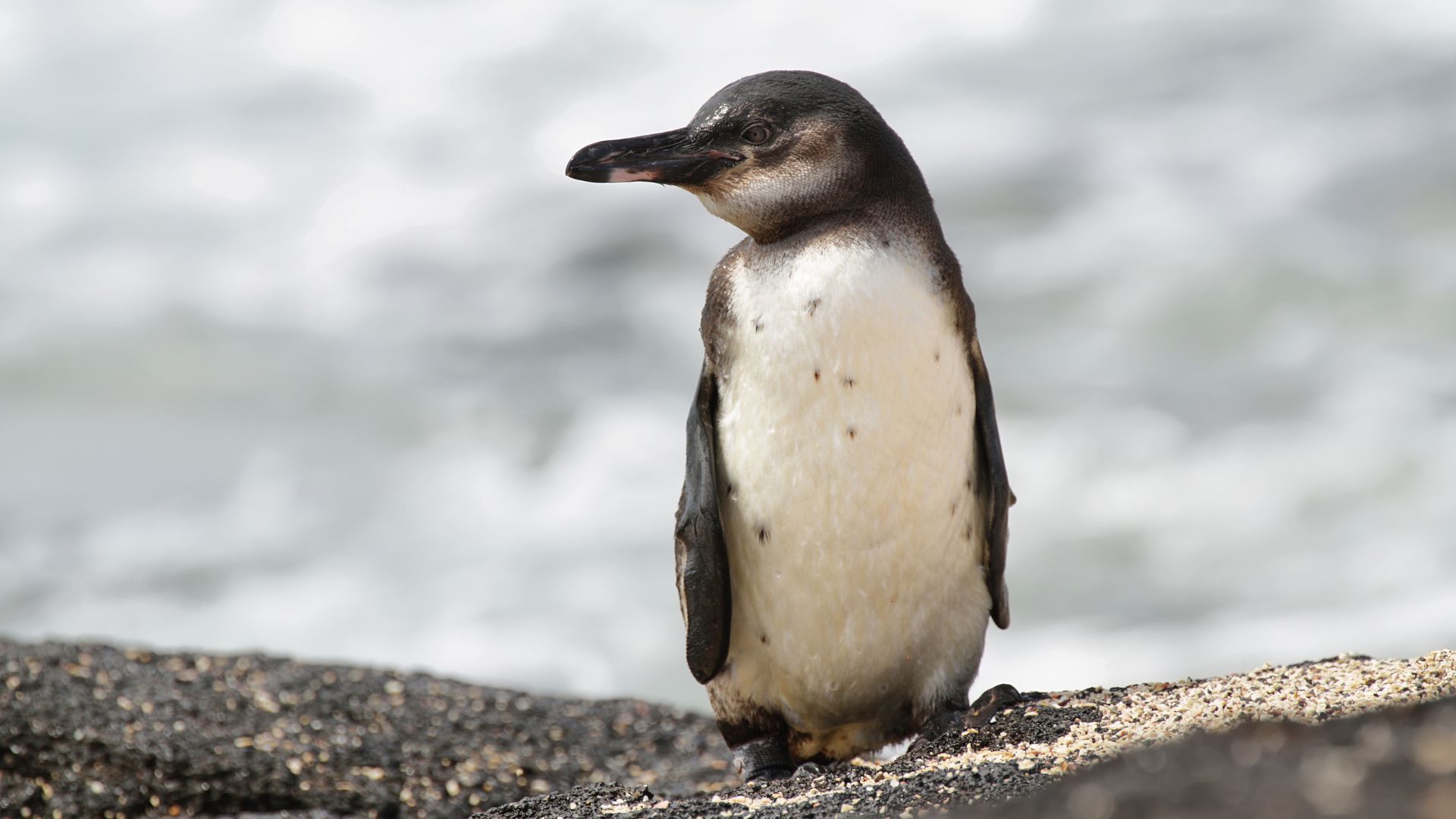
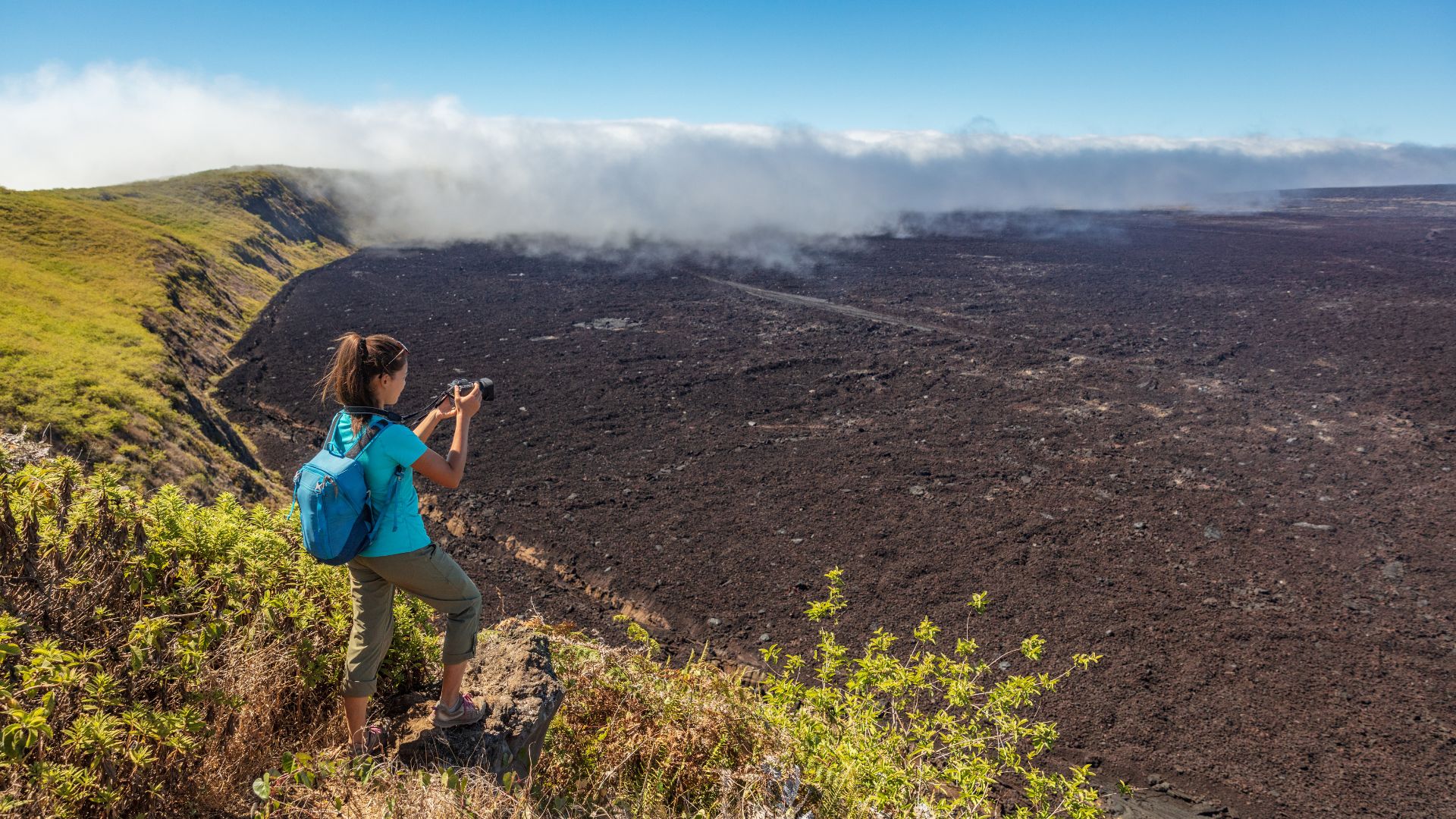
Day one is Sullivan Bay's pahoehoe lava — ropy black rock only a century cooled, the yacht at anchor in the cove. The middle of the week works Isabela's west coast: the largest marine iguana colonies on Earth at Fernandina, the Galapagos penguin and flightless cormorant nowhere else on the planet, the Sierra Negra caldera hikeable from a south-Isabela landing, Tagus Cove's whaler graffiti above a sea-only anchorage. Floreana's Post Office Bay and the central islands close the week. Disembark at San Cristóbal.

Duration
8 days / 7 nights
Base
Baltra (GPS) → San Cristóbal (SCY)
Plan your Galapagos charter Custom-tailored to your dates and group preferences
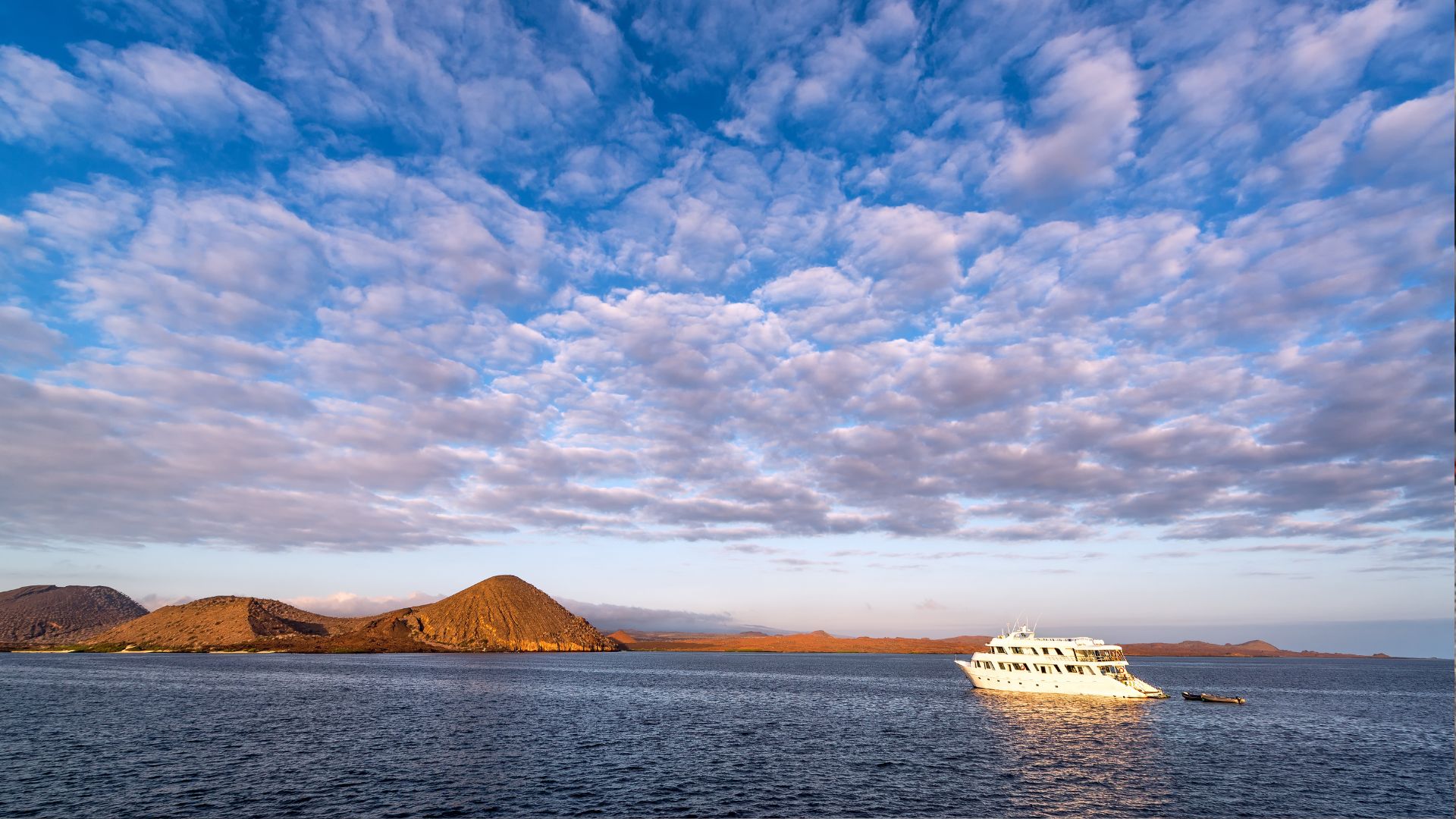
Black volcanic lava in the western Galapagos
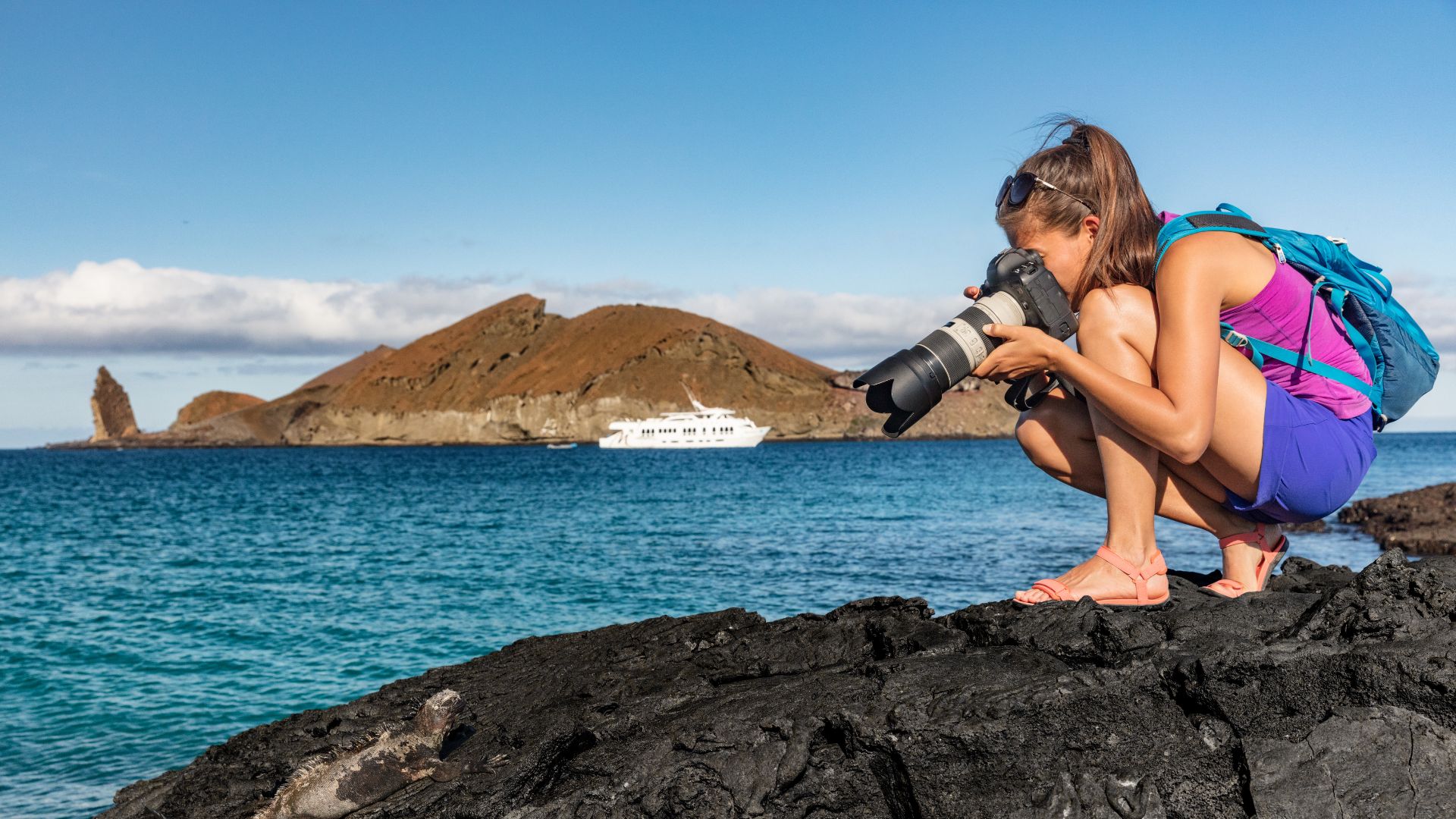
Marine iguana colony on lava rock with a sally lightfoot crab
A hiker on the Sierra Negra crater rim
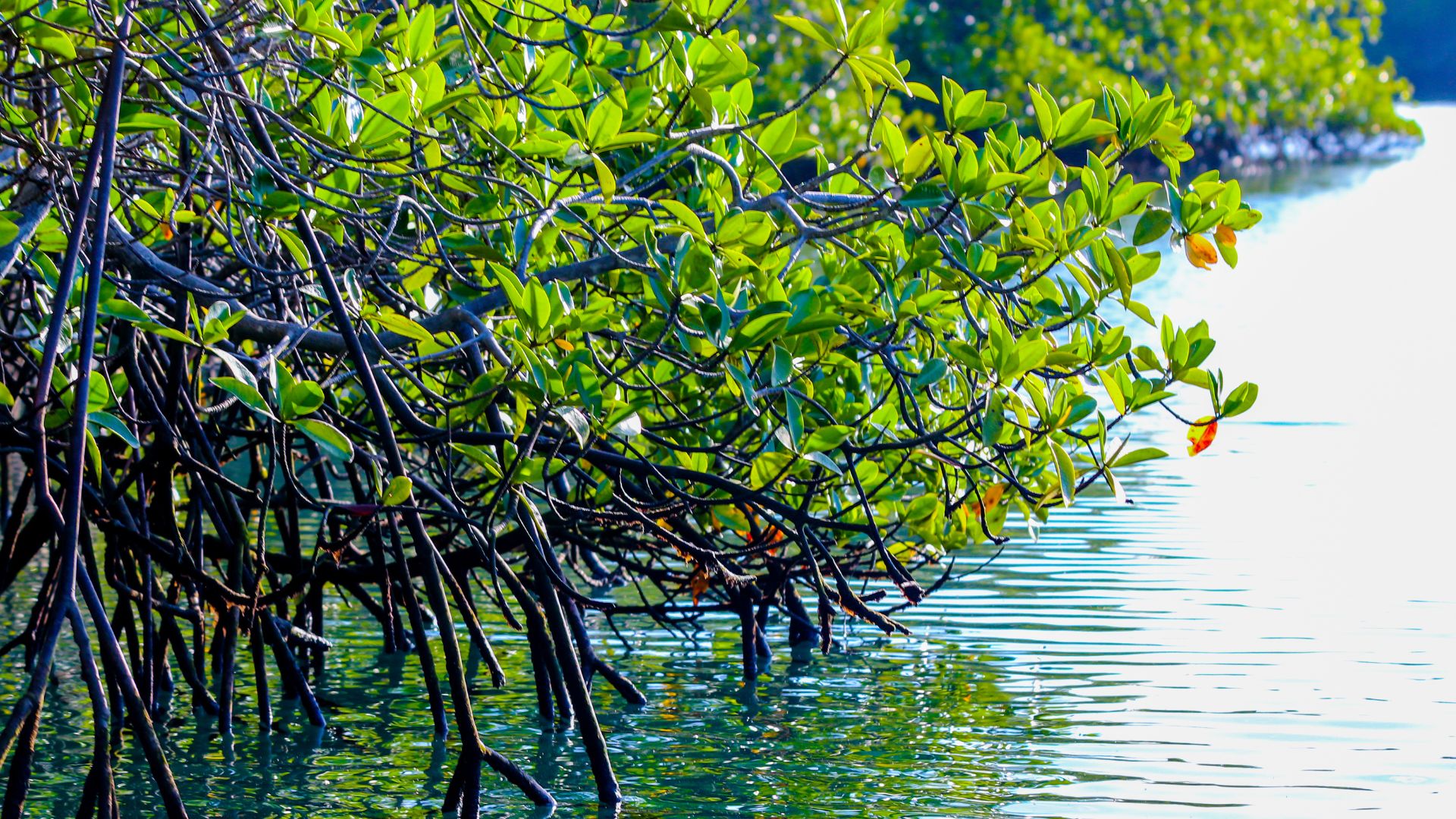
Mangrove leaves at the waterline of a Galapagos lagoon

The Western rotation — the wildest, most-endemic Galapagos

The Western route is what guests describe to friends when they get home — marine iguanas at their largest, penguins on the equator, the geology you can read from the air. Saturday-to-Saturday from Baltra to San Cristóbal on a private full-yacht charter. The alternate Eastern-and-Northern week and a 5-day Western intro run on the same boats; groups with two weeks book back-to-back and see everything.

1

Day 1 of 8 · Baltra → Sullivan Bay

Embark Baltra and Walk a Century-Old Lava Field

Anchorage: Sullivan Bay, Santiago Island
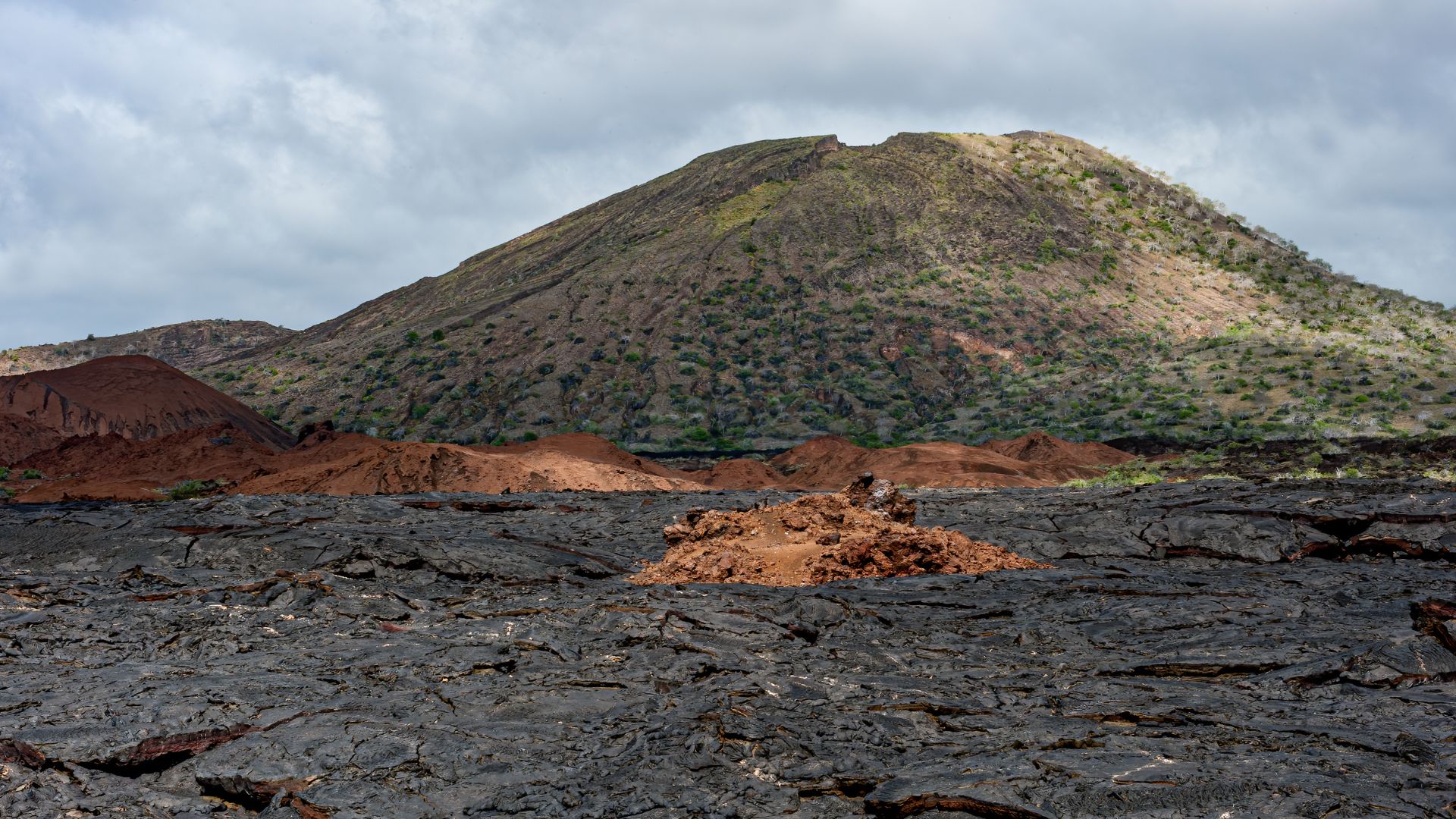
Pahoehoe lava only a century cooled — Sullivan Bay on Santiago.

Land at GPS on the morning flight from Quito or Guayaquil. The captain meets you at the gate, ferries you across the Itabaca channel, and the yacht is at anchor with the chef plating lunch on the aft deck. The naturalist runs the welcome briefing; the crew files the cruise plan with the park officer.

Mid-afternoon the captain points the bow north and east for the fifty-nautical-mile run to Sullivan Bay. By late afternoon the panga lands you on the 1903 pahoehoe — ropy black rock, lava bombs, pioneer plants pushing through cracks. Sundowners and dinner at anchor, the lava silhouetted against the western light.

Day Highlights

  • Welcome at Baltra (GPS), Itabaca channel transfer to the yacht.
  • Cruise plan filed with the park officer.
  • Fifty-nautical-mile afternoon run to Sullivan Bay.
  • Pre-sunset lava walk on 1903 pahoehoe.
2

Day 2 of 8 · Punta Vicente Roca + Punta Espinoza

The Marine Iguana Colony and the Cliffs of Vicente Roca

Anchorage: Off Punta Espinoza, Fernandina
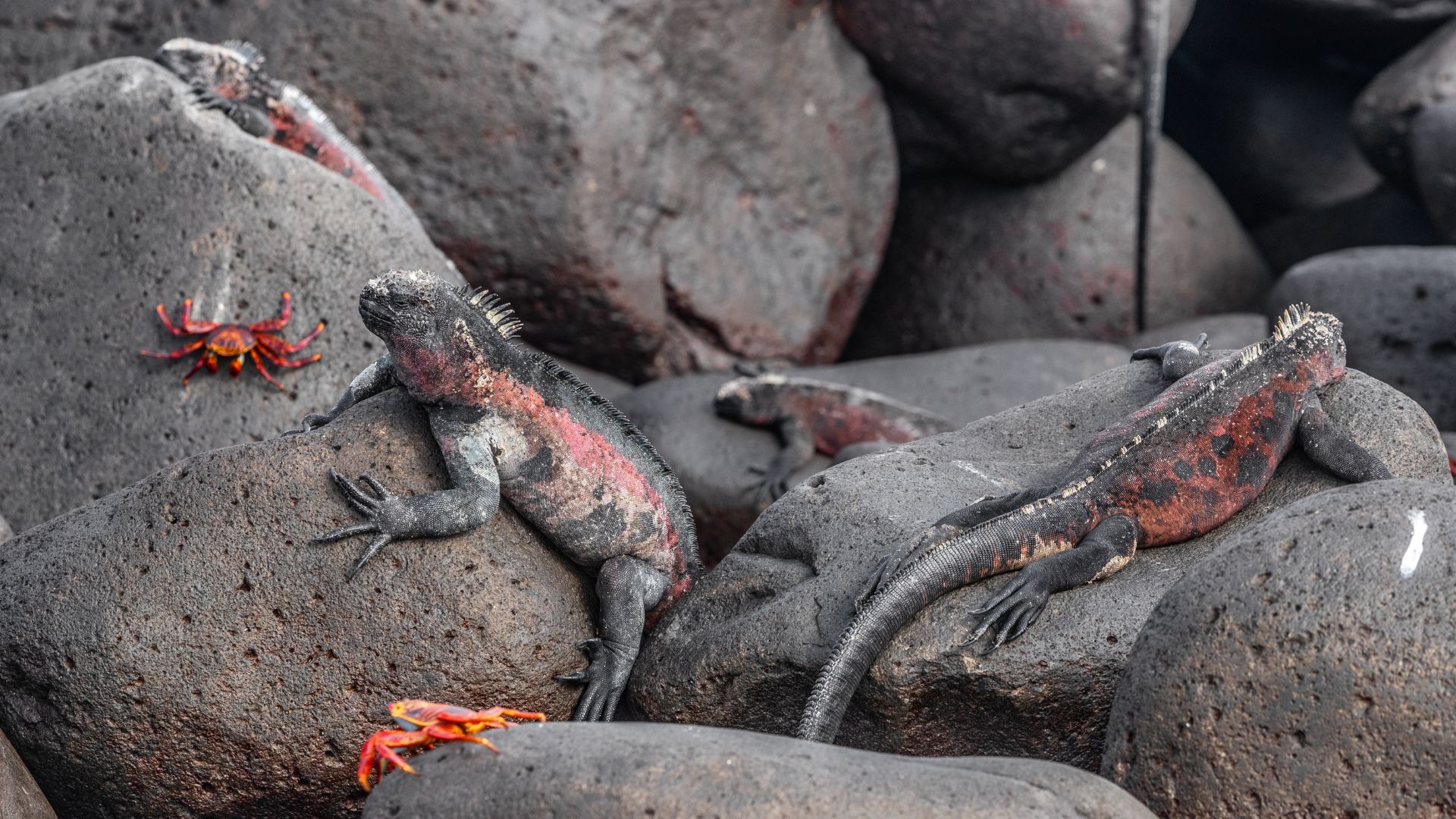
Marine iguanas at Punta Espinoza — the largest colony in the archipelago.

Overnight west into the Bolívar Channel. Morning brings the yacht into Punta Vicente Roca on Isabela's northwest tip — thousand-foot cliffs with seabirds nesting on the ledges, sea turtles surfacing in the channel, Galapagos sharks under the panga. Too current-driven for a swim from the boat; the naturalist runs the species identification from the panga.

Mid-day crossing west to Fernandina. Punta Espinoza is the only visitor site: a lava-flow point with the largest marine iguana colony anywhere on Earth — hundreds piled on bare black rock, the only lizards that forage in the ocean. The flightless cormorant nests at the site as well. Afternoon snorkel from the panga over green sea turtles.

Day Highlights

  • Overnight transit west into the Bolívar Channel.
  • Morning panga cruise along Punta Vicente Roca's nesting cliffs.
  • Afternoon landing at Punta Espinoza — the largest marine iguana colony in the islands.
  • Flightless cormorant nesting site, snorkel from the panga.
3

Day 3 of 8 · Tagus Cove + Urbina Bay

Whaler Graffiti and an Uplifted Reef

Anchorage: Tagus Cove + Urbina Bay, Isabela

Short morning run south to Tagus Cove — a small protected anchorage tucked into the tuff cliffs of a tilted volcanic crater. Whaling crews used it as a watering stop from the 1820s through the 1880s; the cliff face above the anchorage carries their names and dates, the earliest legible from 1836. The naturalist runs a kayak program in Darwin's Lake behind the cove and a panga along the cliff base.

Afternoon repositioning south to Urbina Bay. The trail above the landing crosses dead coral and bleached sea-urchin shells — in 1954 an offshore reef rose four meters above sea level overnight, tied to Alcedo volcano's activity. Land iguanas and giant tortoises forage the area in wet season. Dinner at anchor; overnight repositioning to Elizabeth Bay.

Day Highlights

  • Kayak program in Darwin's Lake behind Tagus Cove.
  • Whaler graffiti on the tuff cliffs — earliest inscription 1836.
  • Trail across the 1954 uplifted reef at Urbina Bay.
  • Wet-season land iguana and giant tortoise sightings.
4

Day 4 of 8 · Elizabeth Bay + Moreno Point

Mangrove Panga and a Lagoon of Brackish Pools

Anchorage: Elizabeth Bay + Moreno Point, Isabela
Elizabeth Bay's mangrove channels — panga-only, sea turtles and rays below.

Morning runs entirely from the panga. Elizabeth Bay is a series of red and black mangrove lagoons — too shallow for the yacht, channels accessible only by panga drift at idle. Green sea turtles in pairs, golden cow-nose rays gliding under the boat, white-tipped reef sharks in deeper pools, Galapagos penguins on the rocks at the channel mouths. The Marielas Islets at the head of the bay hold one of the largest penguin colonies in the archipelago.

Midday south to Moreno Point — a lava-flow promontory between Sierra Negra and Cerro Azul. The landing crosses young pahoehoe to brackish lagoons with flamingos and white-cheeked pintail ducks. Afternoon snorkel from the panga over green sea turtles and Galapagos sharks. Overnight repositioning to Santa Cruz.

Day Highlights

  • Morning mangrove panga drift through Elizabeth Bay.
  • Marielas Islets — one of the largest Galapagos penguin colonies in the islands.
  • Moreno Point trail across young pahoehoe to brackish lagoons.
  • Flamingos and white-cheeked pintail ducks in the lava sinks.
5

Day 5 of 8 · Charles Darwin Research Station + Highlands

Lonesome George and the Highland Tortoises

Anchorage: Academy Bay, Puerto Ayora, Santa Cruz
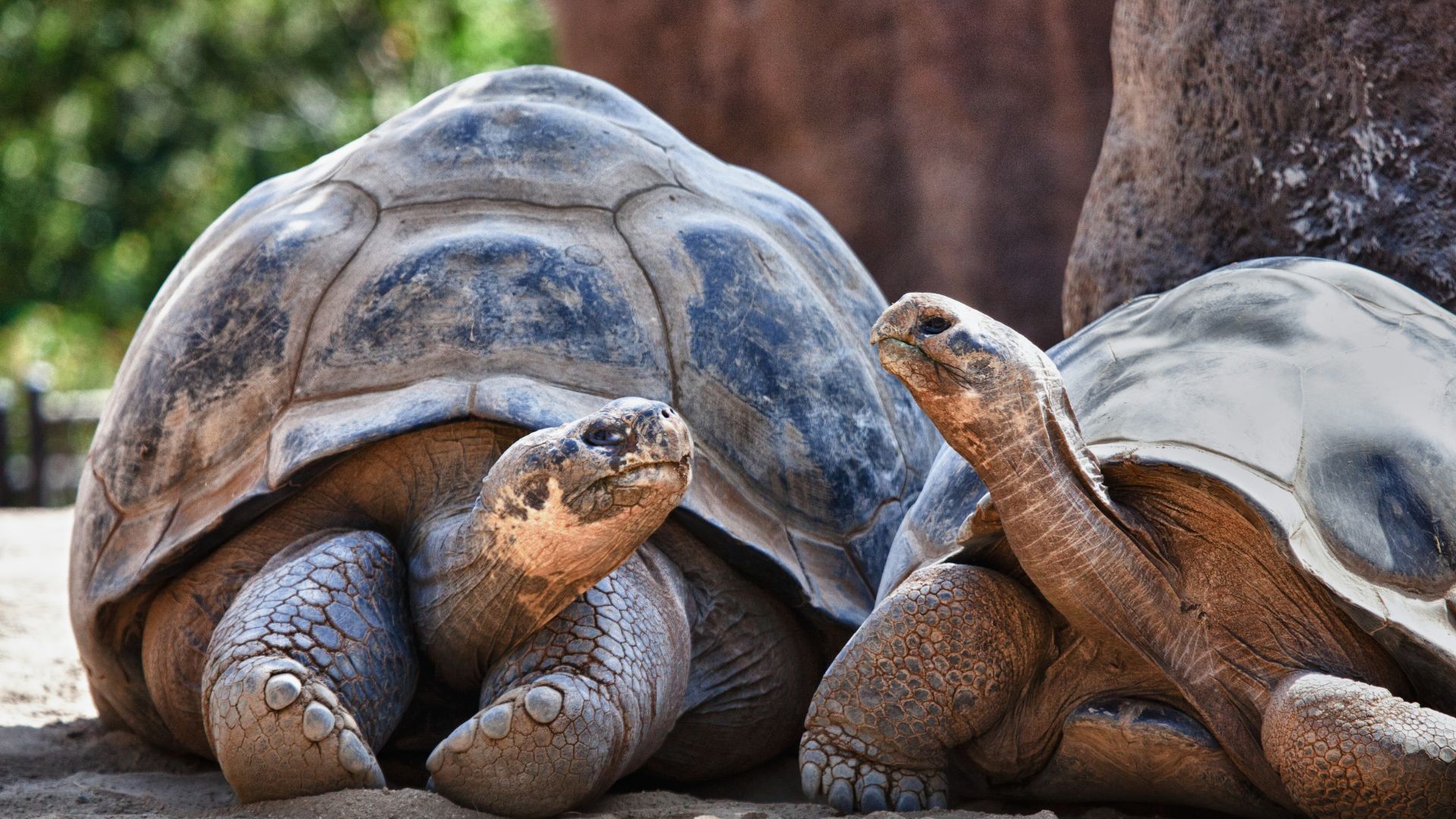
Captive-breeding pair at the Charles Darwin Research Station, Santa Cruz.

Overnight east to Academy Bay off Puerto Ayora. Morning landing at the Charles Darwin Research Station — the captive-breeding program running since 1959, the Lonesome George Memorial (the last Pinta Island tortoise, taxidermied after his 2012 death), interpretive signage on the conservation work.

Midday transfer up to the highlands by private vehicle — twenty minutes from town, twelve hundred meters of elevation gain, scalesia forest and Miconia shrubland, lava tubes you walk through with the naturalist. El Chato Reserve or Rancho Manzanillo hold wild Galapagos giant tortoise populations grazing in pasture. No barriers; the animals approach as they please. Overnight repositioning south to Floreana.

Day Highlights

  • Charles Darwin Research Station — captive breeding, Lonesome George Memorial.
  • Private-vehicle transfer to the Santa Cruz highlands.
  • Wild giant tortoise population at El Chato or Rancho Manzanillo.
  • Scalesia forest and lava tubes — the endemic highland habitats.
6

Day 6 of 8 · Floreana — Post Office Bay + Devil's Crown

A 250-Year-Old Mail Barrel and the Best Snorkel in the Archipelago

Anchorage: Post Office Bay + Cormorant Point, Floreana

Overnight south to Floreana — the smallest of the four populated islands, the first settled in 1832, the densest in stories. Morning lands at Post Office Bay: the wooden mail barrel that British whalers installed in 1793 still works exactly as designed. Visitors leave stamped postcards inside; later visitors take any addressed to their home city and hand-deliver them on return. The longest-running unbroken postal tradition in the Pacific.

Afternoon repositioning to Devil's Crown — a partially submerged volcanic caldera ring a few hundred meters offshore. Snorkel from the panga inside the ring and along the outside: green sea turtles, white-tipped reef sharks on the sand, Galapagos sharks on the deeper edges, schools of king angelfish. The current pulls through on a tide cycle. Cormorant Point caps the day — green olivine-sand beach, flamingo lagoon, sea turtle nesting site.

Day Highlights

  • Post Office Bay — drop and collect postcards from the 1793 wooden barrel.
  • Devil's Crown snorkel — partially submerged volcanic caldera ring.
  • Cormorant Point — green olivine-sand beach and flamingo lagoon.
  • Floreana's settlement history reaches back to 1832.
7

Day 7 of 8 · Santa Fe + South Plaza

Endemic Land Iguanas and a Sea Lion Nursery

Anchorage: Off Santa Fe / Plaza Sur

Overnight north to Santa Fe — one of the oldest islands in the archipelago at roughly four million years, home to the endemic Santa Fe land iguana (a species found nowhere else). The landing at Barrington Bay brings you onto a long white-sand beach with a resident sea lion colony. Inland trail through a dense Opuntia cactus forest where the Santa Fe iguanas graze on the fruit.

Midday repositioning to South Plaza — a half-mile islet east of Santa Cruz with the densest Galapagos land iguana population in the archipelago, golden against red Sesuvium ground cover in dry season. The trail follows the cliff edge above a swallow-tailed gull colony. Afternoon snorkel from the panga over sea lions and Galapagos sharks. Overnight north to San Cristóbal.

Day Highlights

  • Santa Fe Island — endemic land iguanas, found nowhere else.
  • Barrington Bay white-sand beach with resident sea lion colony.
  • South Plaza — densest land iguana population in the islands.
  • Swallow-tailed gull colony along the cliff edge.
8

Day 8 of 8 · San Cristóbal disembark

Final Morning at Lobos Islet and Fly Out

Anchorage: Puerto Baquerizo Moreno, San Cristóbal
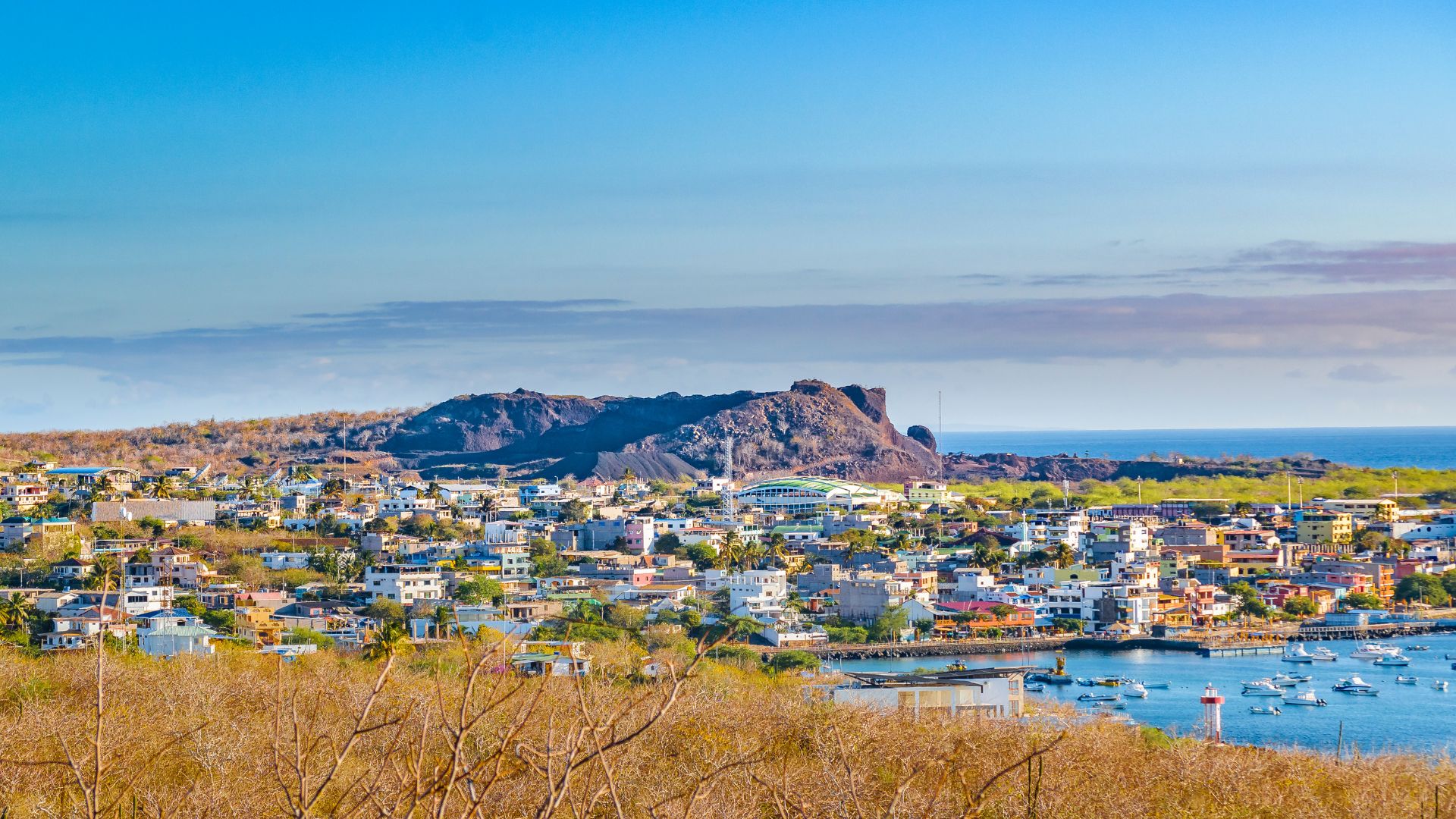
Puerto Baquerizo Moreno — the eastern disembarkation port on San Cristóbal.

The yacht arrives off Puerto Baquerizo Moreno overnight. A final morning snorkel at Lobos Islet — a small islet a half-mile offshore named for the sea lion colony that lives on it. The naturalist runs a panga ride past blue-footed boobies nesting on the islet's south side and a final snorkel over juvenile sea lions in the channel. Farewell breakfast on the aft deck with the captain and naturalist.

Disembarkation at the dinghy dock by mid-morning. Short transfer to SCY for mid-morning flights direct to Quito and Guayaquil. Guests extending their Latin America trip from here typically connect to Cuzco (via UIO or GYE) or back to Quito for a night in the old town before flying home.

Day Highlights

  • Final morning snorkel at Lobos Islet.
  • Sea lion colony and blue-footed booby nesting site.
  • Disembarkation at the Puerto Baquerizo Moreno dinghy dock.
  • Short transfer to SCY for mid-morning flights to Quito and Guayaquil.

Frequently asked

Why start with the Western route?
Wildlife density is highest in the west. The marine iguanas at Fernandina's Punta Espinoza are the largest in the archipelago. The Galapagos penguin and the flightless cormorant exist only on Fernandina and Isabela's west coast — nowhere else on Earth. Sierra Negra on Isabela is the second-largest active volcanic caldera on the planet, ten kilometers across, hikable in a morning from a south-Isabela landing. Sullivan Bay's pahoehoe lava is the youngest accessible volcanic surface in the islands. Western is the Galapagos guests describe to their friends when they get home.
Is the Western route available year-round?
Yes — Saturday-to-Saturday across the full annual calendar. Two seasons read different: December through May is warm-and-wet with mid-to-high seventies water, calm seas, and no wetsuit needed; June through November is cool-and-dry with high-sixties to low-seventies water from Humboldt upwelling and the highest marine biomass of the year. Snorkelers in the cool season want a 3mm wetsuit.
Can we customize the route or skip an island?
No — and this is the structural difference from a Caribbean or Mediterranean charter. Galapagos National Park licenses each vessel to a specific pre-approved itinerary. The cruise plan is filed with the park before the charter starts; the naturalist clears each landing with the park officer at every stop. Guests choose between the published rotations (8-day Western, 8-day Eastern + Northern, 5-day Western intro on this vessel) but cannot deviate from the licensed route on any single charter.
What's included in this week?
The base rate covers the entire yacht for your party — eight cabins, sixteen to twenty guests — with captain and crew, a Class III licensed naturalist guide, all meals and a full open bar, panga tenders, snorkel gear and wetsuits, kayaks, paddleboards, and the licensed itinerary fees. Park entry, the Galapagos Transit Control Card, hyperbaric chamber contribution, and airport-to-yacht ferry transfers are itemized at booking and paid separately. Crew gratuity is customary at ten to fifteen percent of the base rate.

Ready to set sail in the Galapagos?

Every itinerary we send is custom-tailored. Tell us your dates, the size of your group, and what you want out of your charter—we'll handle the rest.