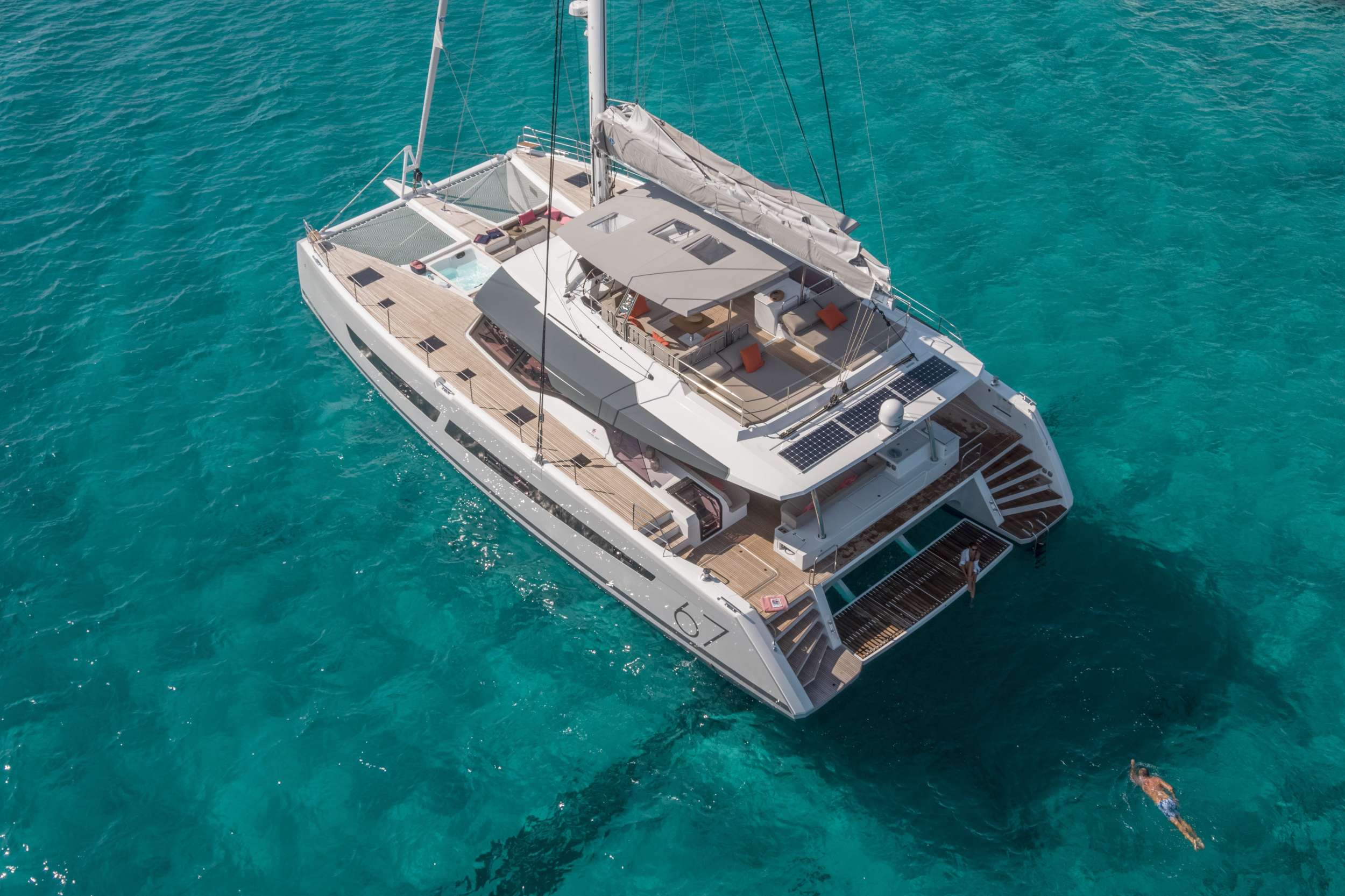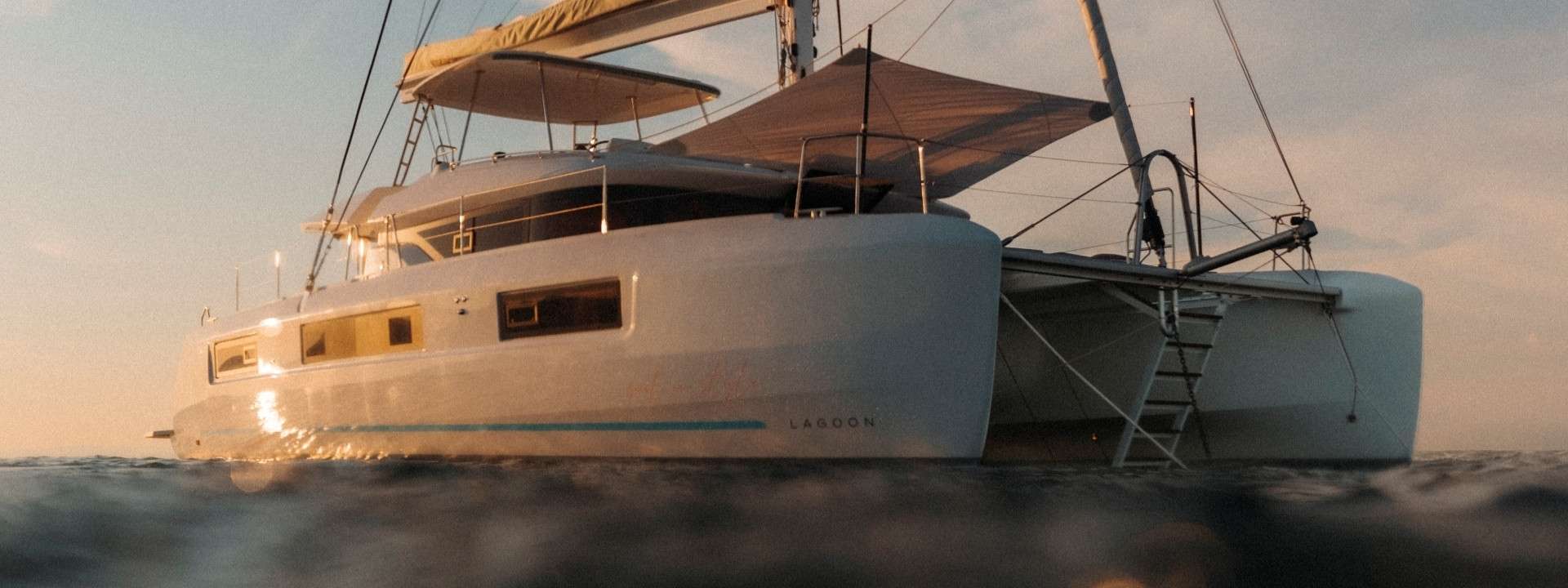

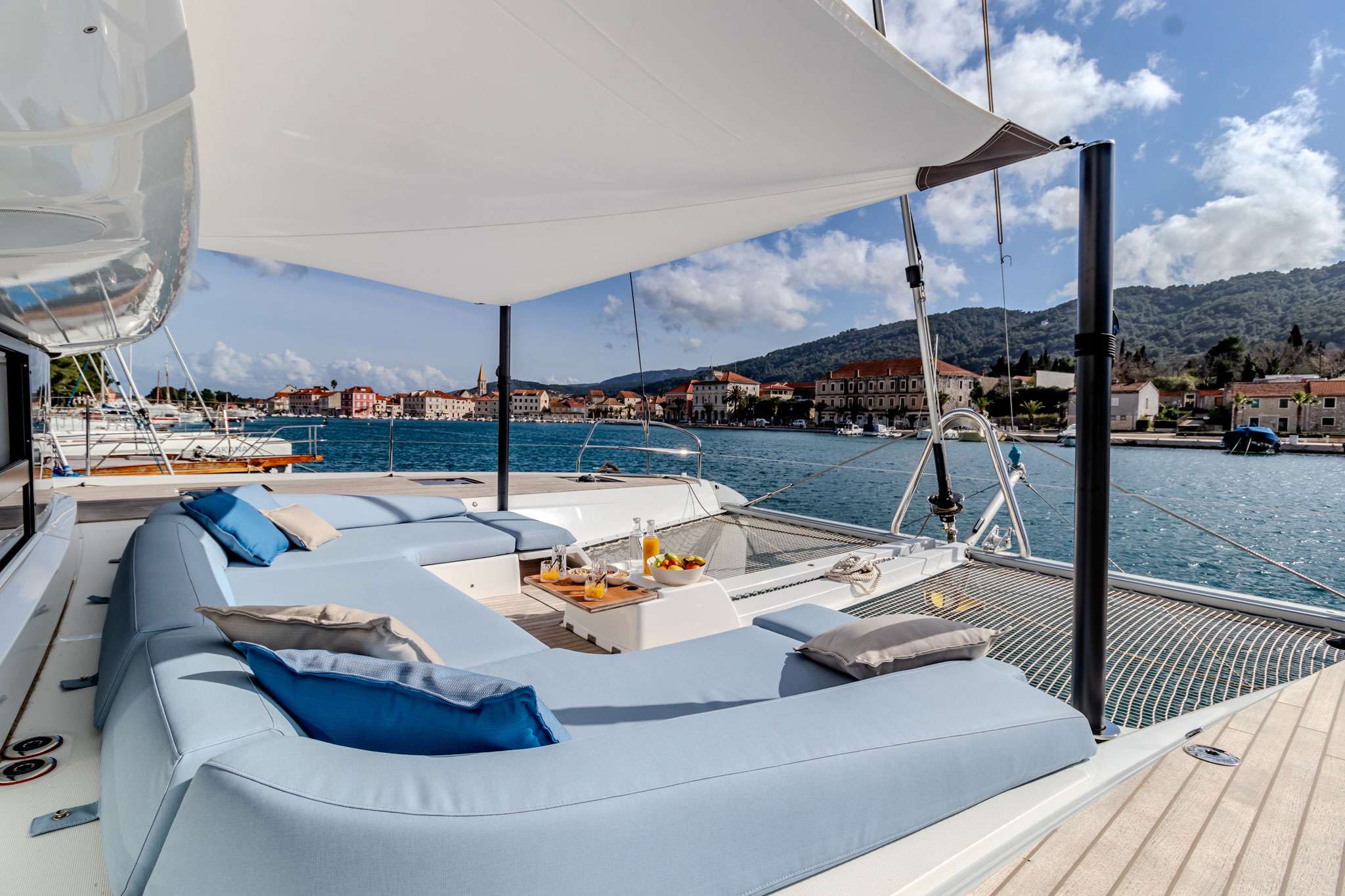
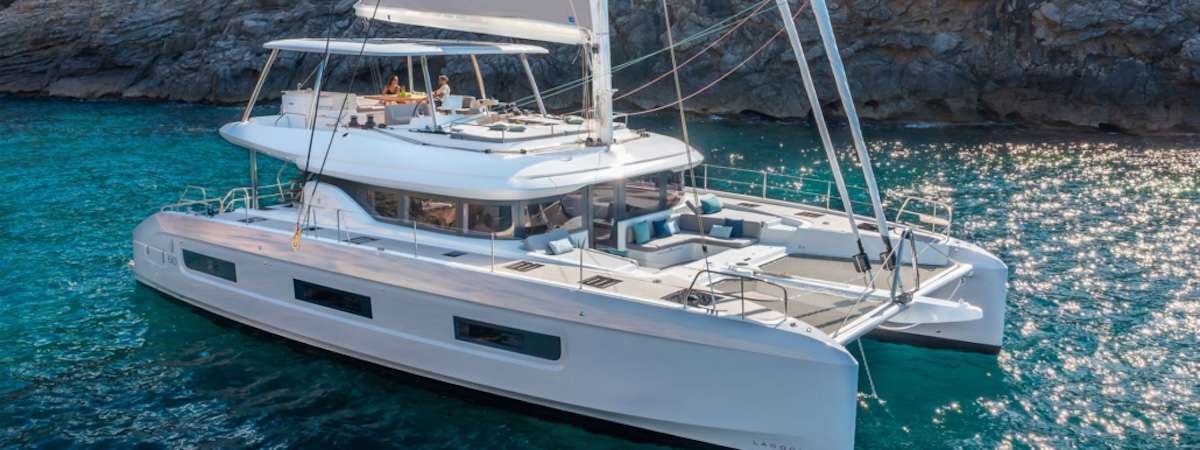
CATWALK I
64FT · SAILING CATAMARAN
Pricing from €23,000/week
8 Guests · 4 Cabins · 3 Crew
Caribbean
Western Mediterranean
Eastern Mediterranean
South Pacific
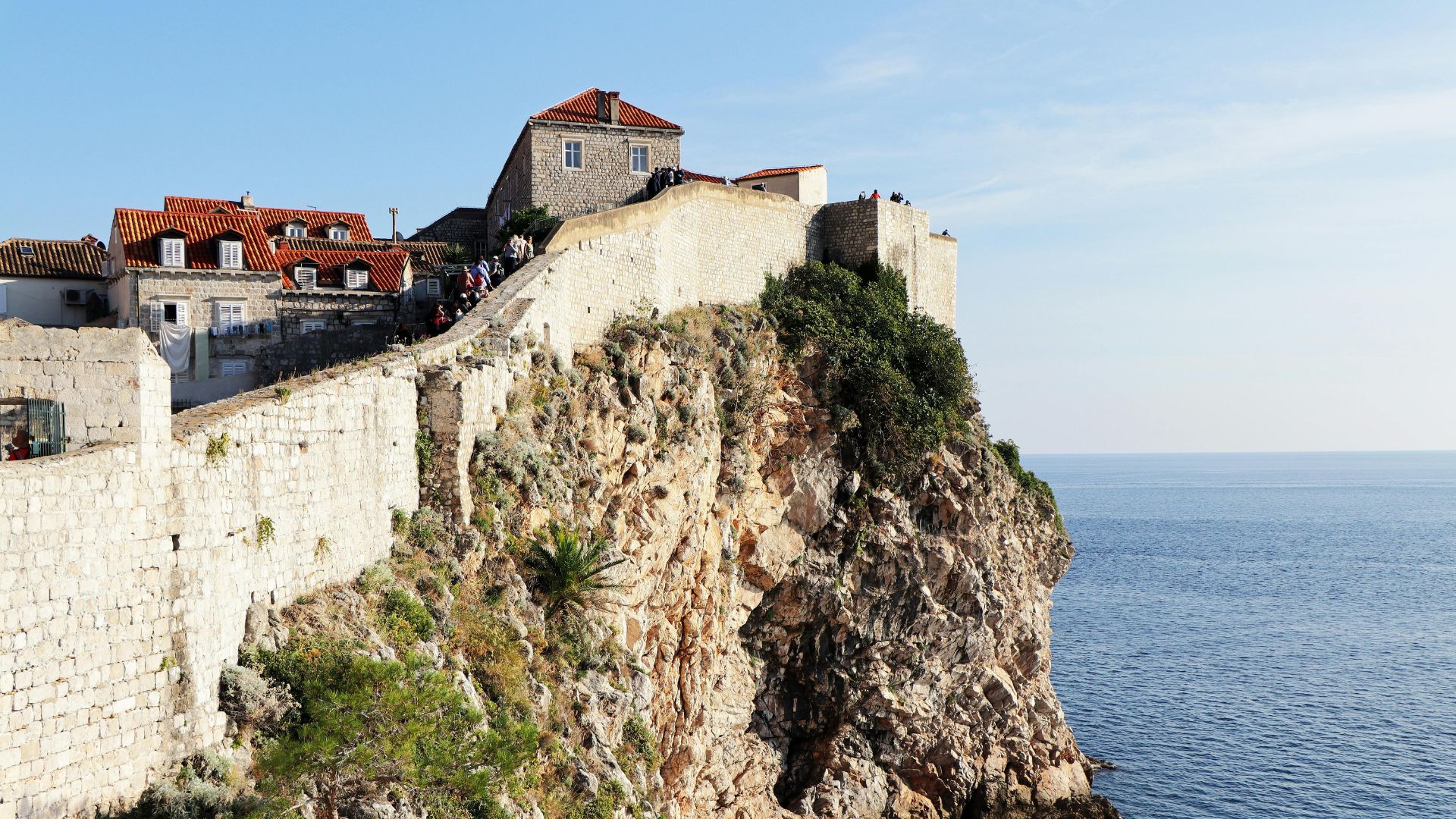
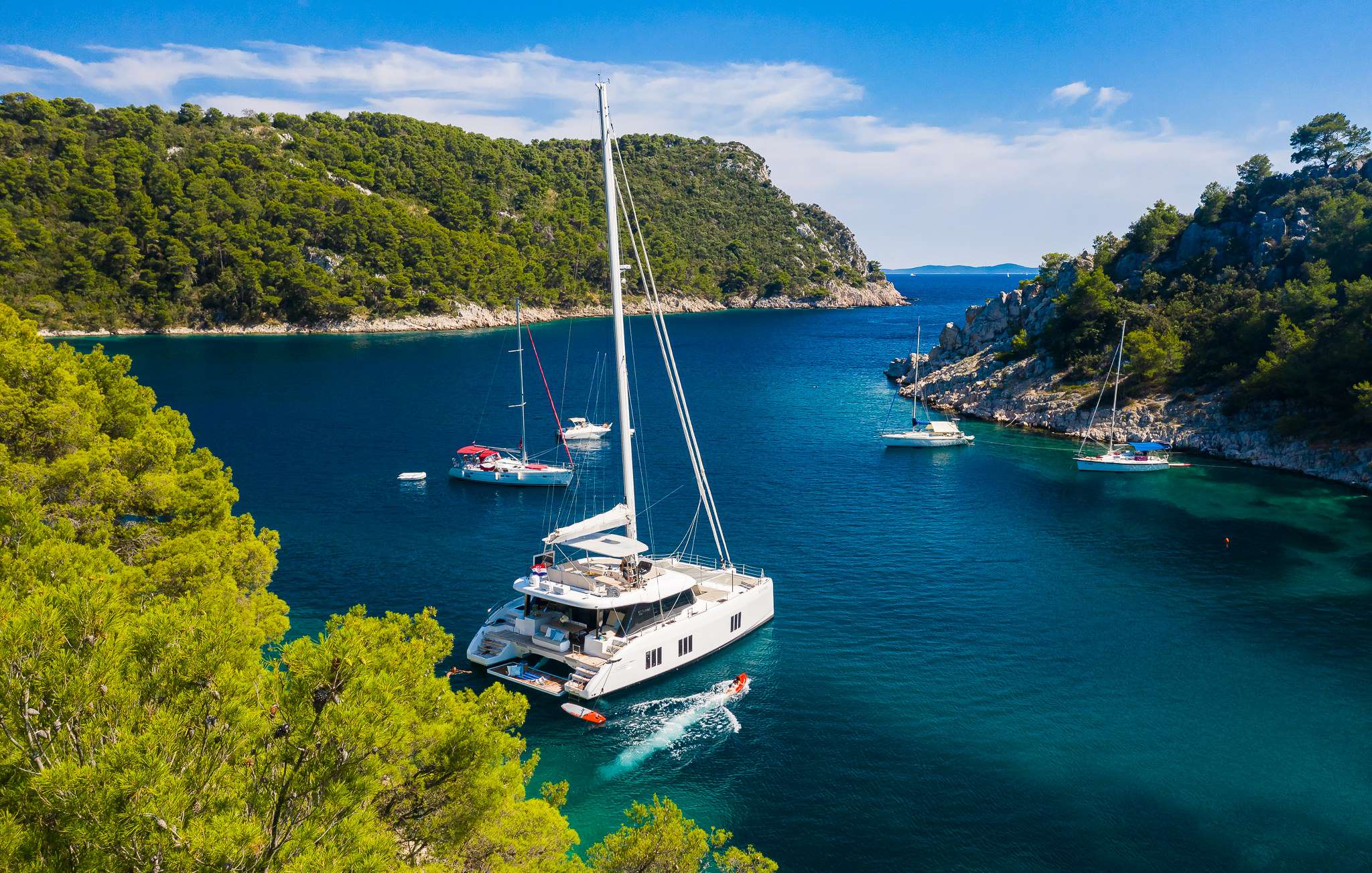
Crewed catamaran and motor yacht charters along the Dalmatian Coast — medieval walled cities, hidden coves, and the densest island cruising in the Mediterranean.
Why Croatia
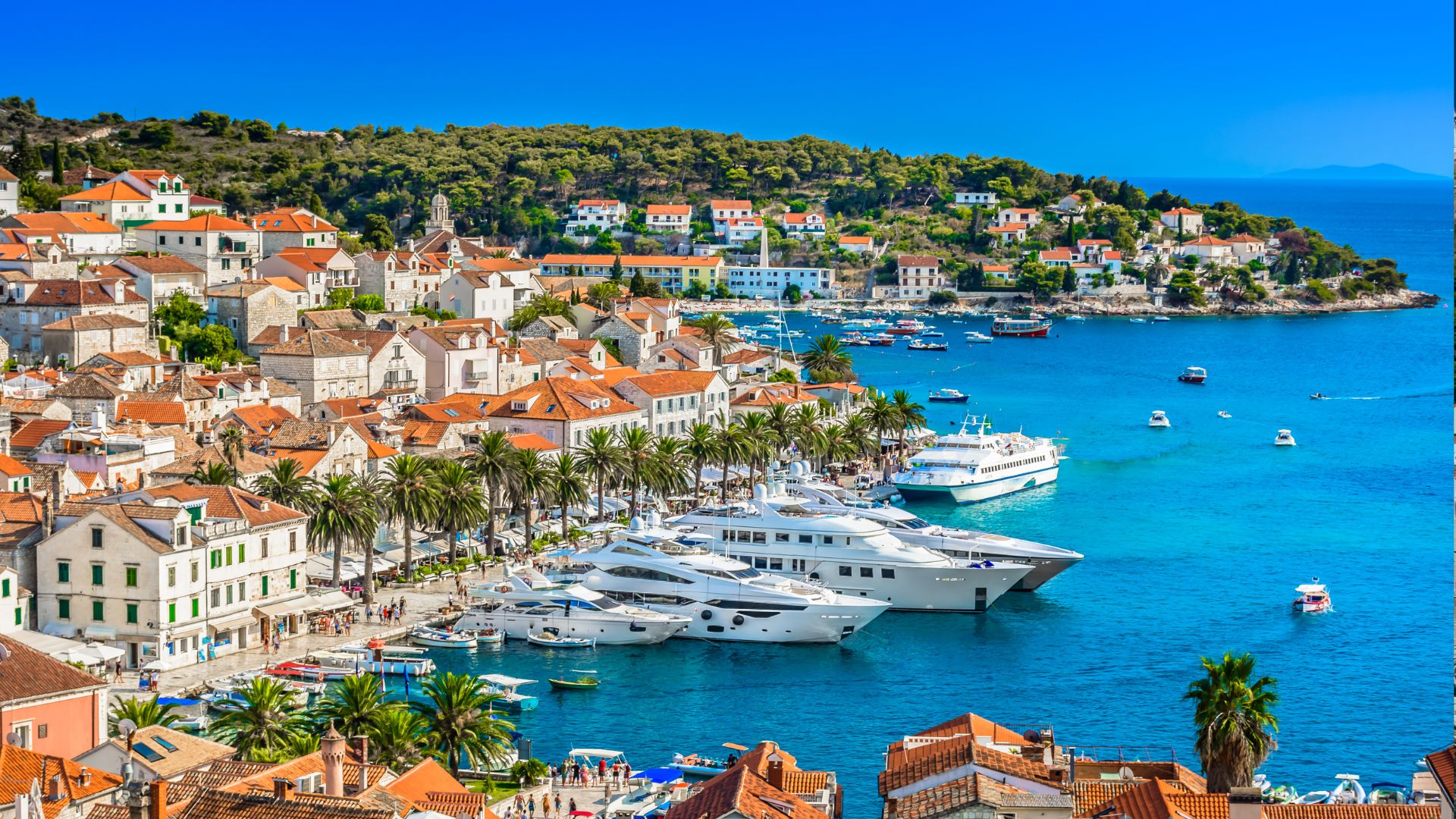
Croatia's Dalmatian Coast is the Mediterranean at its most concentrated. The country counts more than a thousand islands in total, but the cruising ground a typical charter actually covers — Brač, Hvar, Vis, Korčula, Mljet, and the smaller cays in between — runs roughly 130 nautical miles between Trogir and Dubrovnik, with the next anchorage almost always within ten nautical miles of the last. Inside the chain, the cruising water stays sheltered from the open Adriatic, the afternoon Maestral fills in on cue most summer days, and the islands are close enough together that a typical charter spends more time at anchor than at sea.
What sets Croatia apart from the better-known Mediterranean charter grounds is the combination of medieval architecture, distinct regional cuisine, and density of cruising stops. Walled cities — Dubrovnik, Korčula, Trogir, Hvar's Spanish Fortress — sit on the same week-long route as quiet fishing harbors like Maslinica and Komiža. Konobas (traditional Dalmatian taverns) on every island serve peka under the bell, fresh-caught fish, and local wines — Plavac Mali, Pošip from Korčula, Vugava from Vis — that are almost impossible to taste outside the country. Compared to Greece's longer passages, Italy's higher costs, and the French Riviera's resort register, Croatia delivers more variety per nautical mile at a noticeably lower price.
Two distinct charter routes operate out of Croatia. The round-trip from Split covers Central Dalmatia — Brač, Hvar, Vis, the Pakleni Islands, often a Komiža and Stiniva day on Vis — and returns to the same airport at week's end. The one-way from Split to Dubrovnik trades that simplicity for the south's signature stops — Korčula's walled old town, Mljet National Park, the Elaphiti Islands, and a final sail under Dubrovnik's city walls (the Game of Thrones King's Landing) — but adds a relocation fee and requires guests to fly into one airport and out of another. Most first-time guests choose the round-trip; return charterers and guests doing a Croatia tour tend to choose the one-way. We walk through which fits before booking.
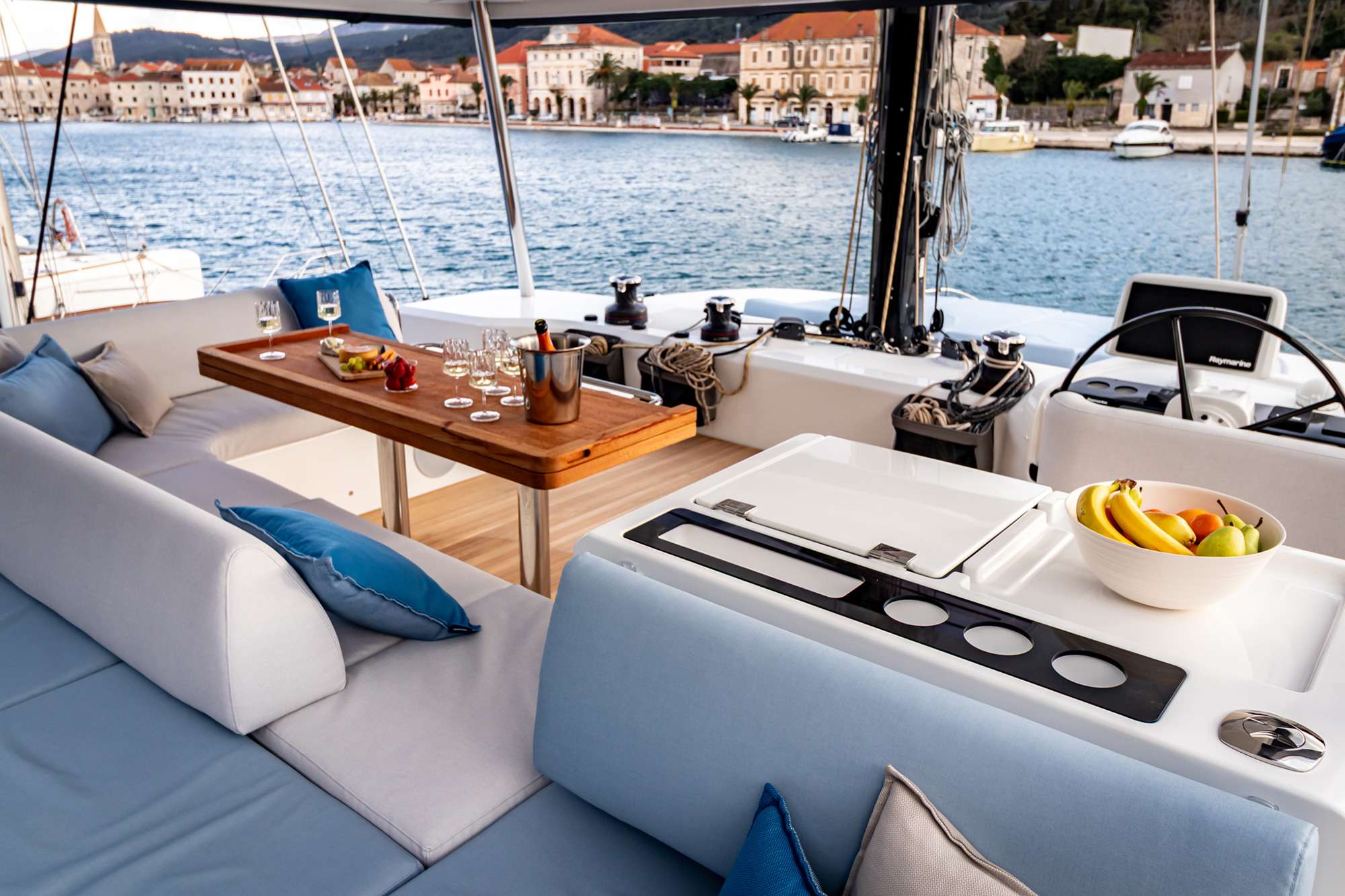
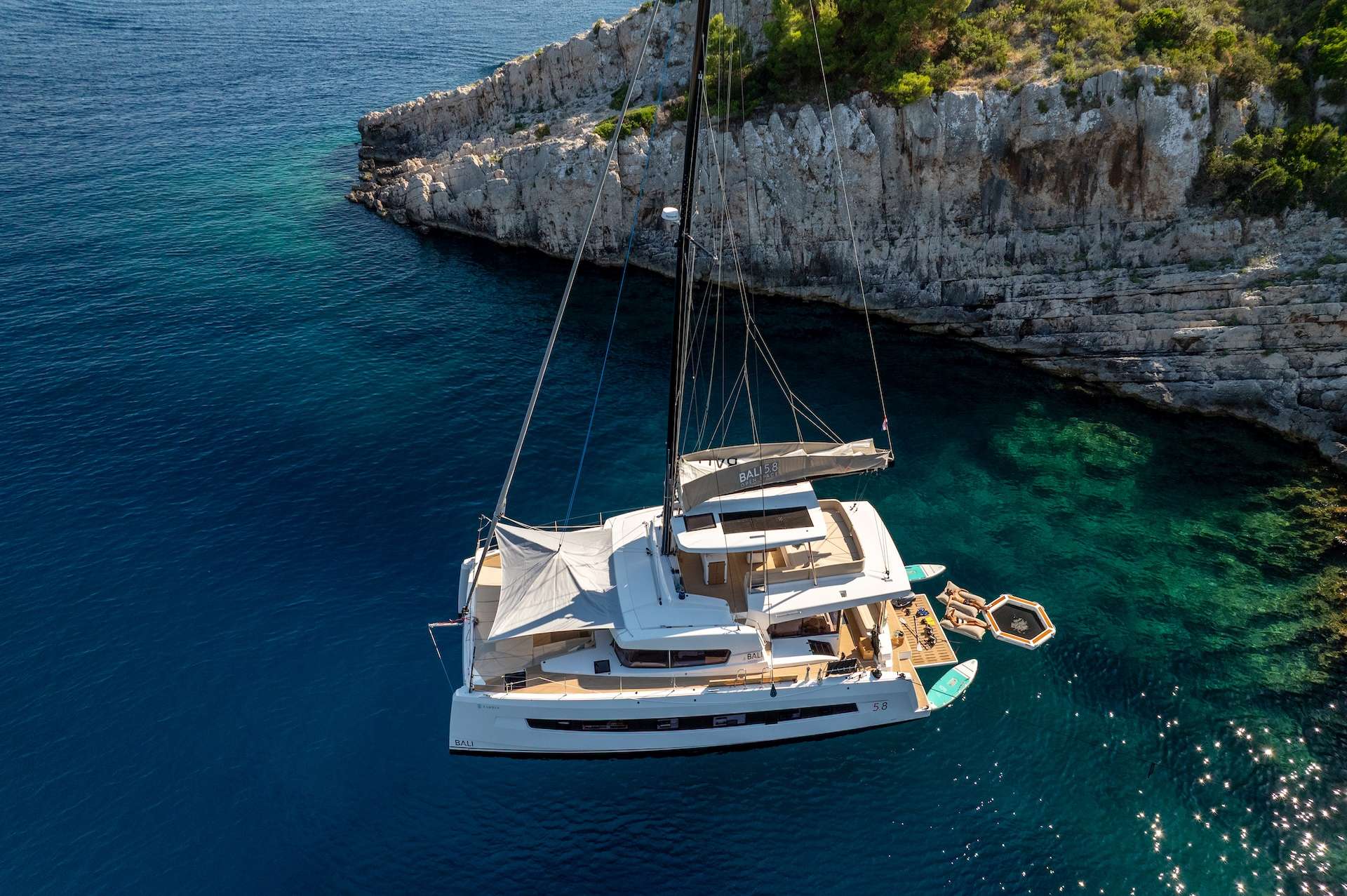
Four characteristics that distinguish the Dalmatian Coast from other Mediterranean charter grounds.
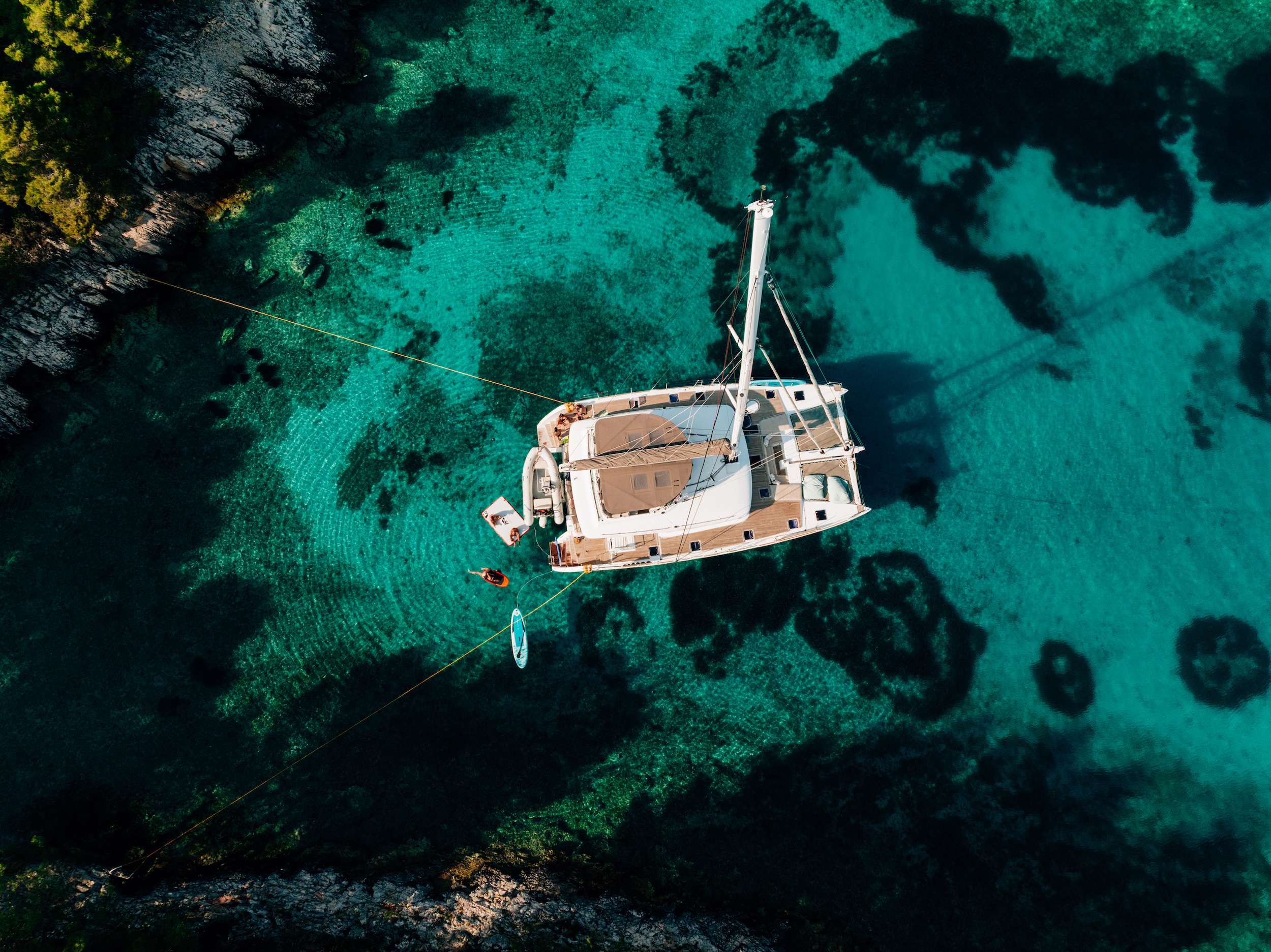
The Dalmatian archipelago is the most densely packed cruising ground in the Mediterranean. Brač sits seven nautical miles off Split. Hvar is six miles past Brač. Vis is twenty miles further. The next anchorage is almost always within an afternoon's reach, which means a typical week is built around long lunches at anchor and short afternoon repositions, not multi-day open-water passages. The reliable summer Maestral — a NW thermal that fills in around midday and dies at sunset — handles most of the sailing.
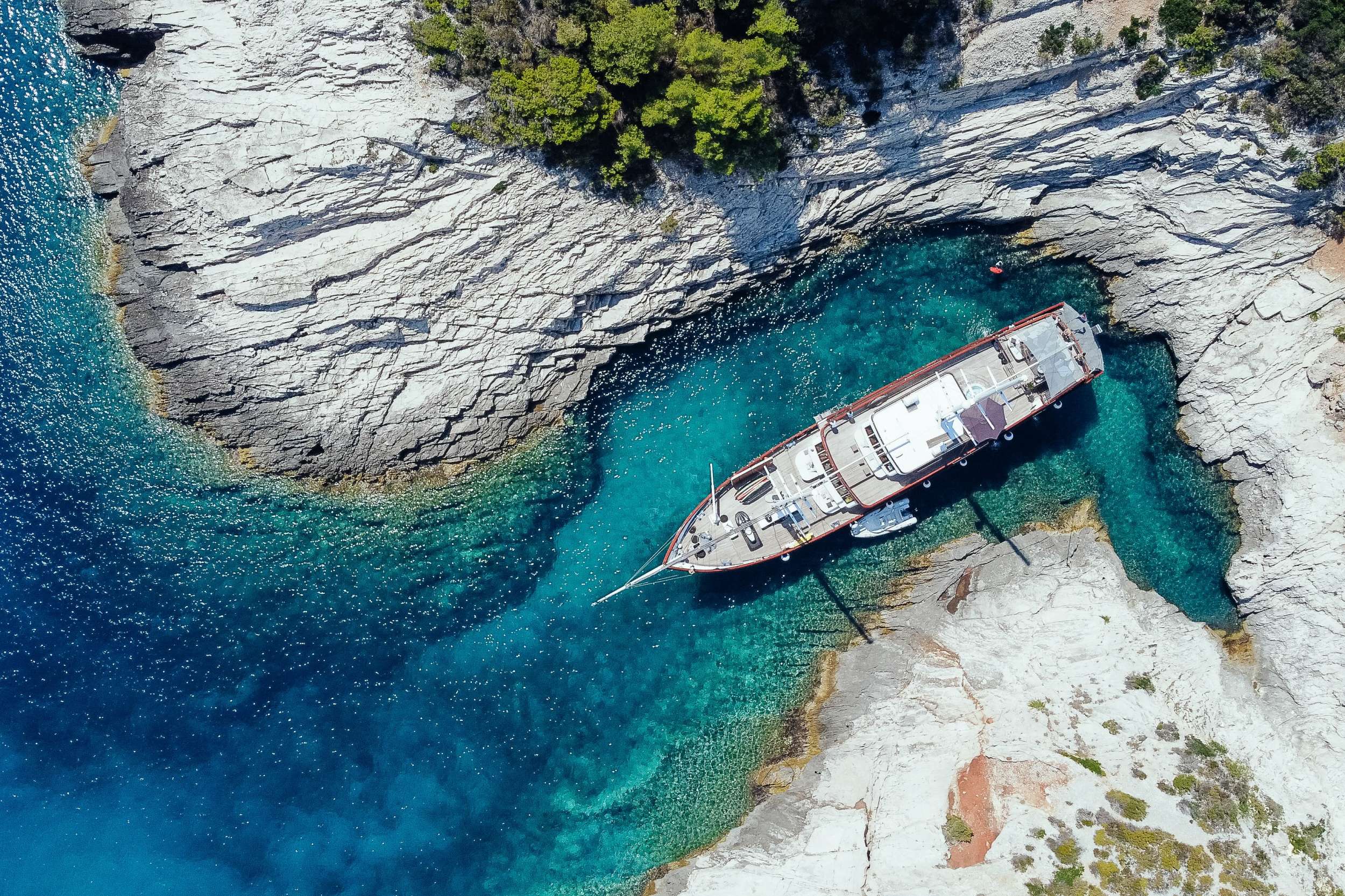
Croatia's coastline holds two distinct anchorage types. Stone-quayed harbors built into Venetian-era fishing villages — Milna on Brač, Vis Town, Komiža on Vis's western tip, Maslinica on Šolta — where you tie stern-to the town wall a hundred yards from a seafront restaurant. And cliff-walled coves accessible only from the water — Stiniva Bay on Vis, the Pakleni Islands' pine-shaded inlets, the back side of Hvar — where the only anchor near you tonight is yours. Most week-long itineraries alternate between the two.
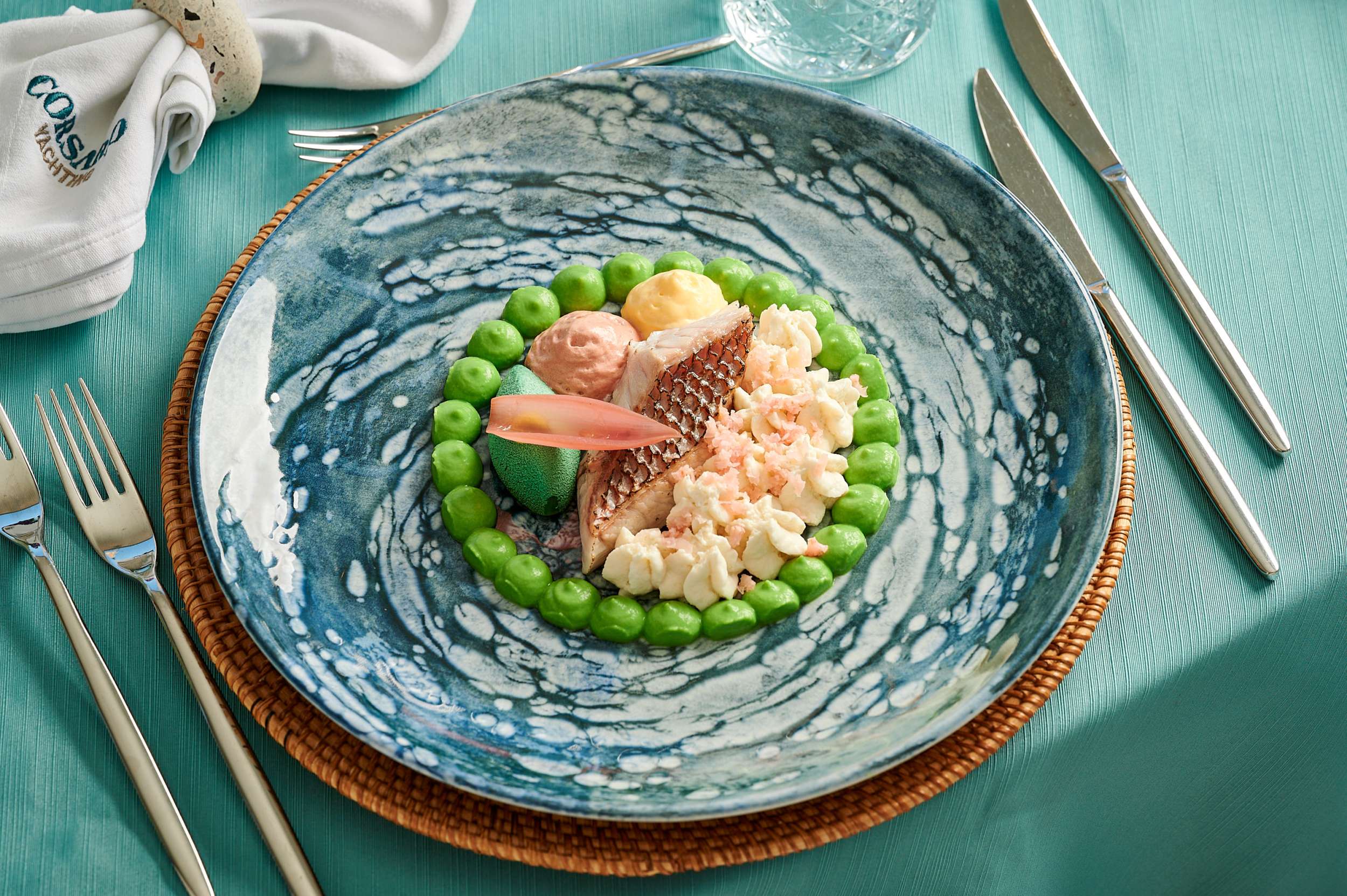
Dalmatia treats food and wine as cultural infrastructure. Konobas — traditional stone-walled taverns, usually family-run, often built into converted olive mills or fishermen's cottages — serve peka (lamb or octopus slow-cooked under a bell), fresh-caught fish off the day's boat, prosciutto from the Pelješac peninsula, oysters from Ston, and local wines that don't travel: Plavac Mali (red, Pelješac and Hvar), Pošip (white, Korčula), Vugava (white, Vis only), and rakija to finish. A typical charter mixes chef-prepared meals on board with several konoba dinners ashore — the captain books ahead because the good ones fill weeks in advance.
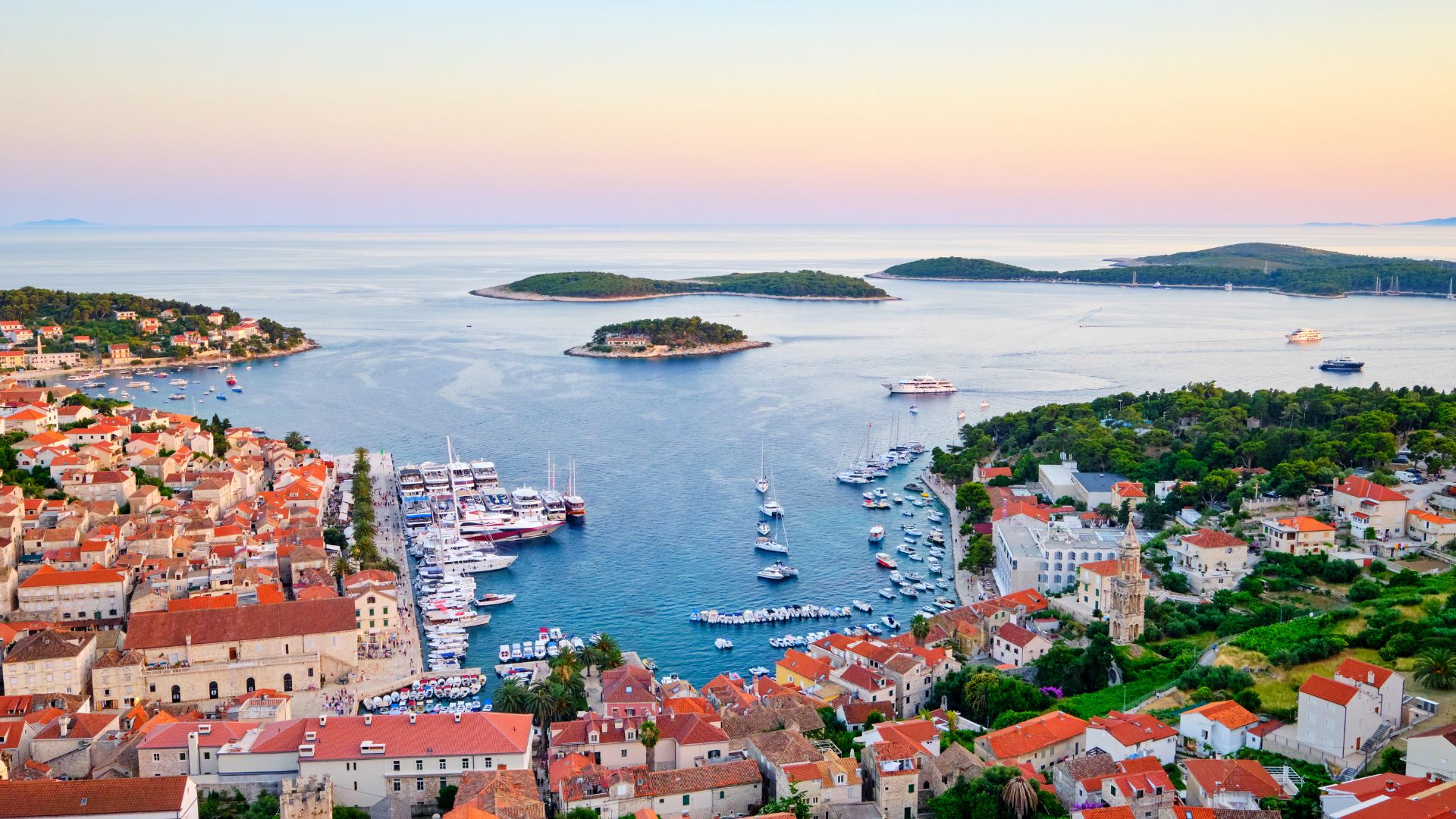
Six destinations on a typical Croatia charter are walled cities or fortified historic towns reached most photogenically by yacht: Trogir (UNESCO, the embarkation old town), Hvar Town (Spanish Fortress and Pjaca), Korčula (Marco Polo's reputed birthplace), Dubrovnik (King's Landing), Ston (5 km of medieval salt-pan walls, the second-longest defensive wall in Europe), and Šibenik. Sailing into the harbor of a walled town from the water — rather than approaching by tour bus — is the central experience the Dalmatian Coast offers, and it's why Game of Thrones filmed half of King's Landing here.
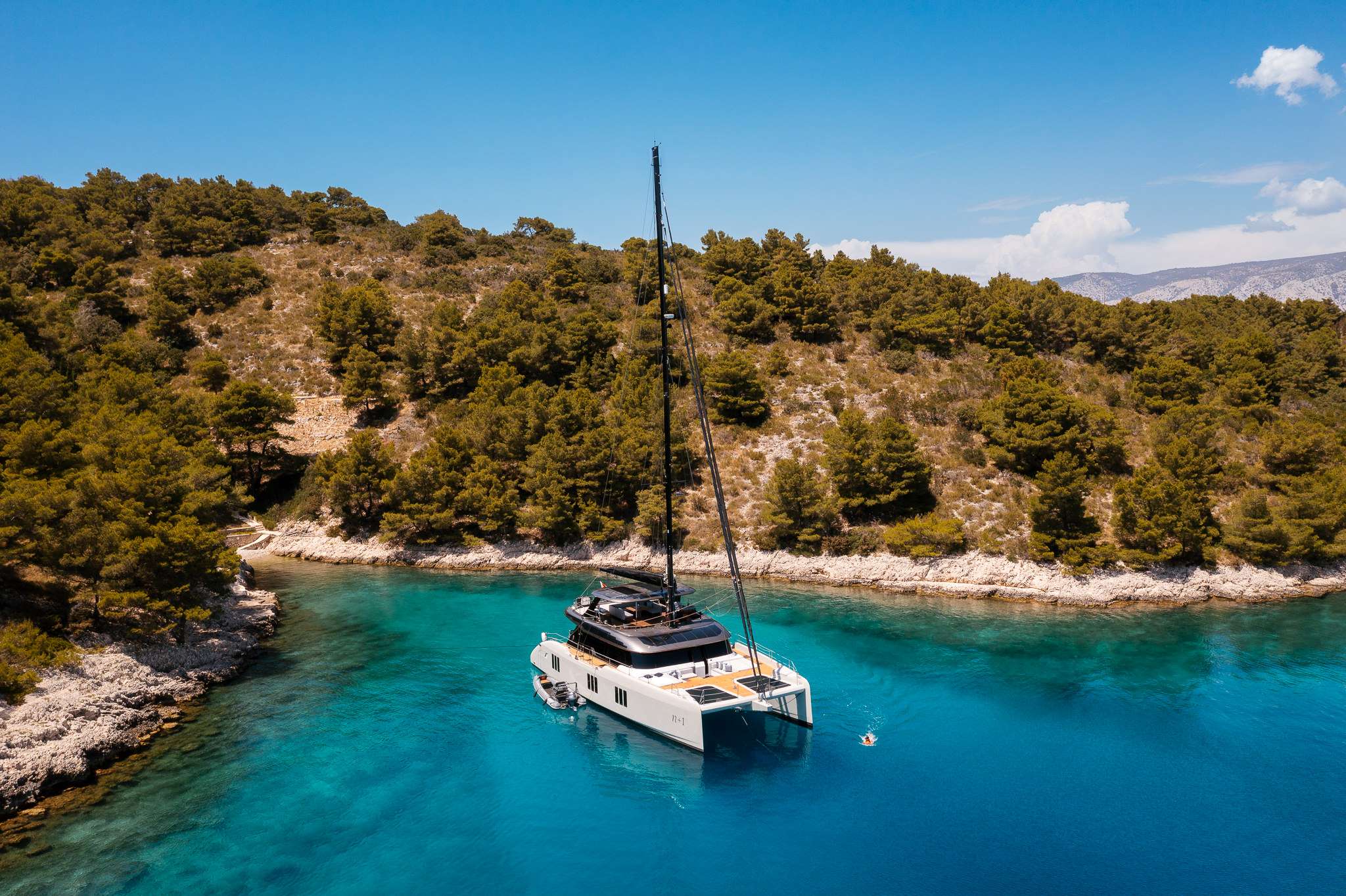
A hand-picked selection of crewed charter yachts for Croatia — yachts and crews we know firsthand.
Your week is shaped around your group's interests, the season, and the conditions on the water — your captain tailors the days as they unfold. Treat these itineraries as starting points for inspiration.
Crewed Itinerary · Croatia
Seven days is the right amount of time to sail Central Dalmatia properly. Our suggested crewed charter itinerary begins and ends at ACI Marina Trogir, just outside Split, and threads the four islands that define this stretch of the Adriatic—Brač, Hvar, Vis, and Šolta—with the Pakleni archipelago and the Biševo Blue Cave folded in as highlights. With your professional captain and private chef running the boat, the only job on your list is to step aboard, pour something cold, and let the Dalmatian coast unfold.
The route is built around the Maestral, the reliable afternoon thermal wind that fills in from the northwest most summer days. It makes for easy reaching between islands, short passages rather than long ones, and plenty of time for lunch at anchor, an afternoon swim in a pine-shaded cove, or an unhurried dinner ashore in a stone-walled konoba. Roughly one hundred sixty nautical miles total over the week, nothing forced, nothing skipped.
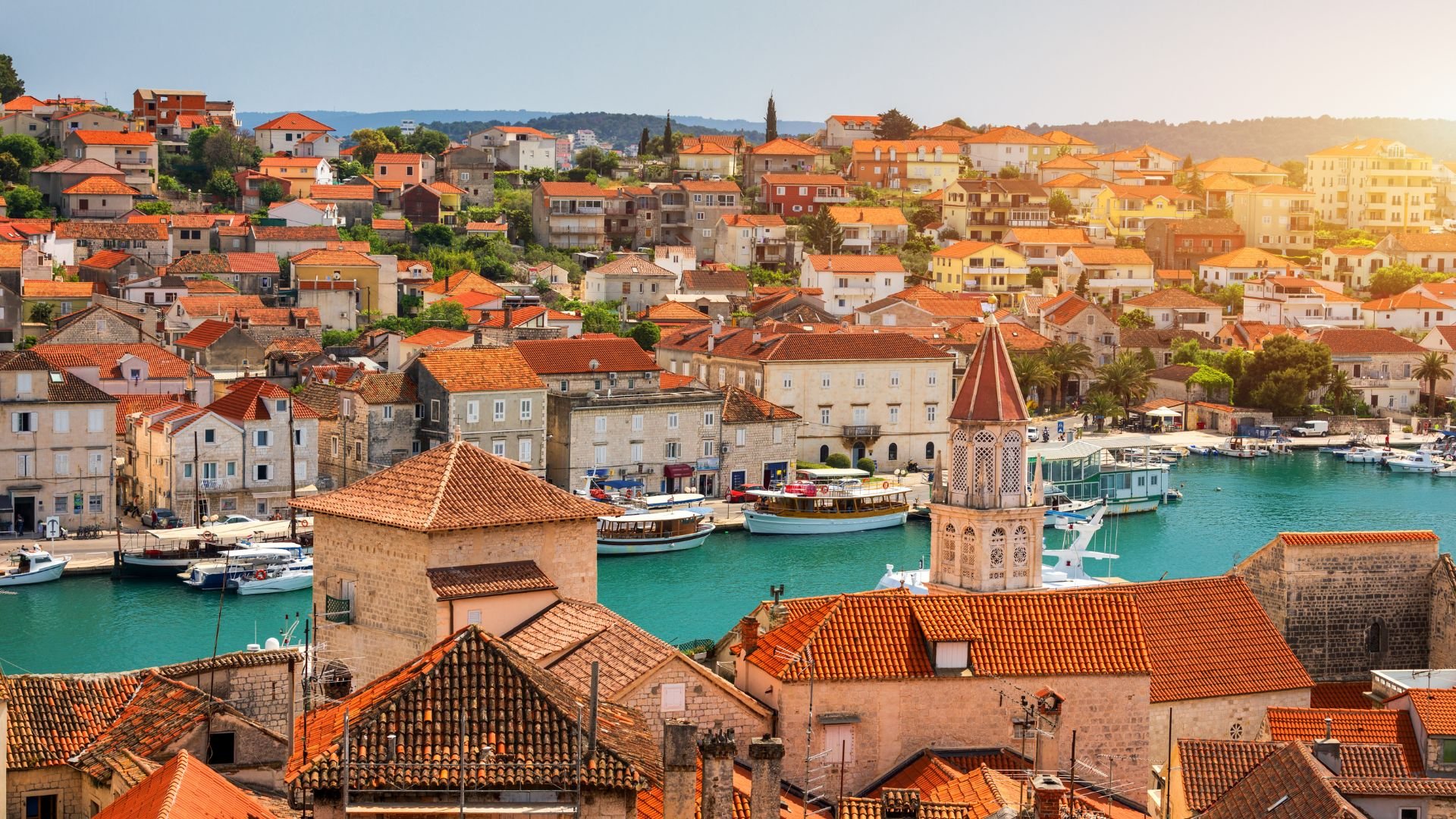
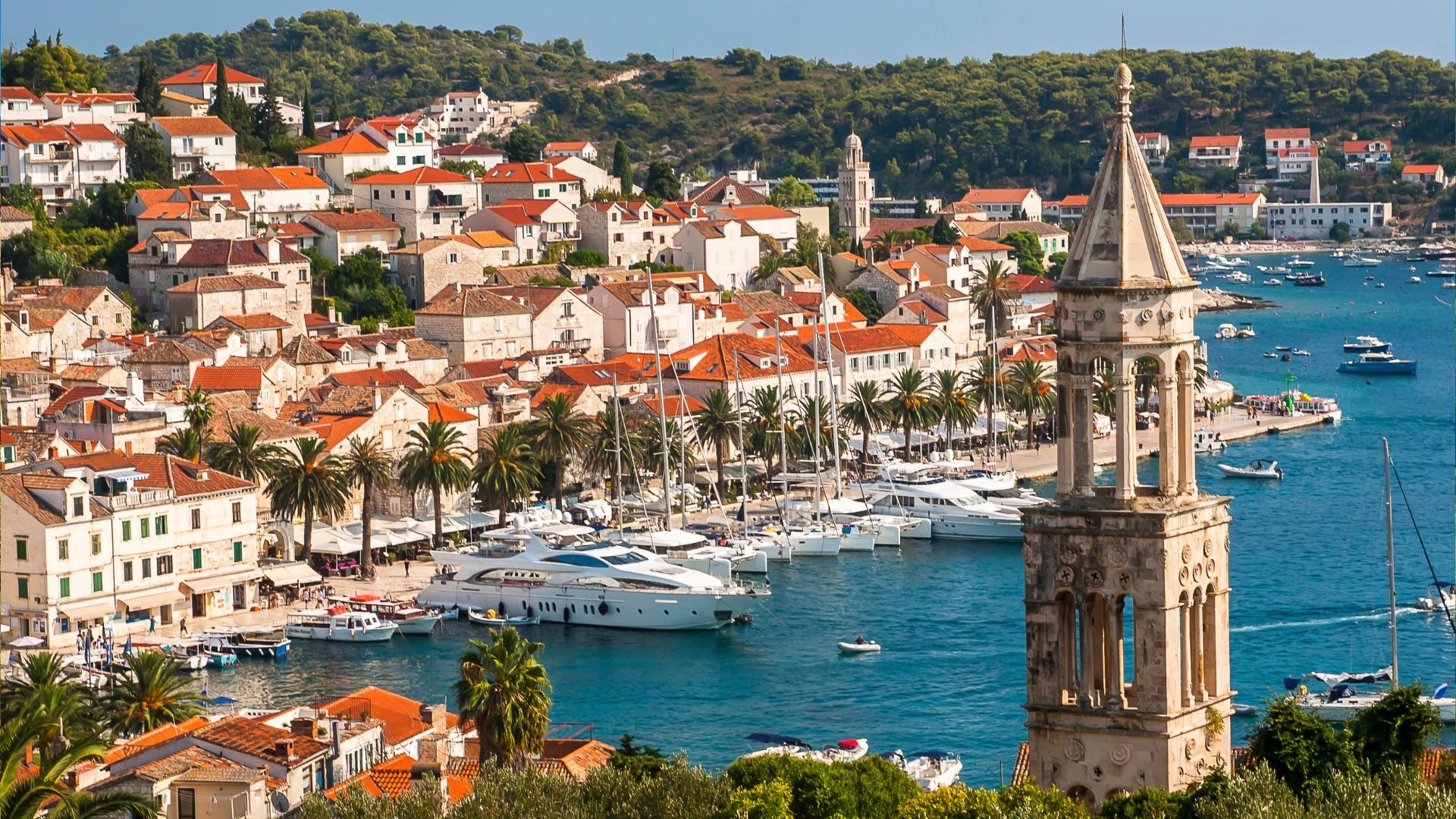
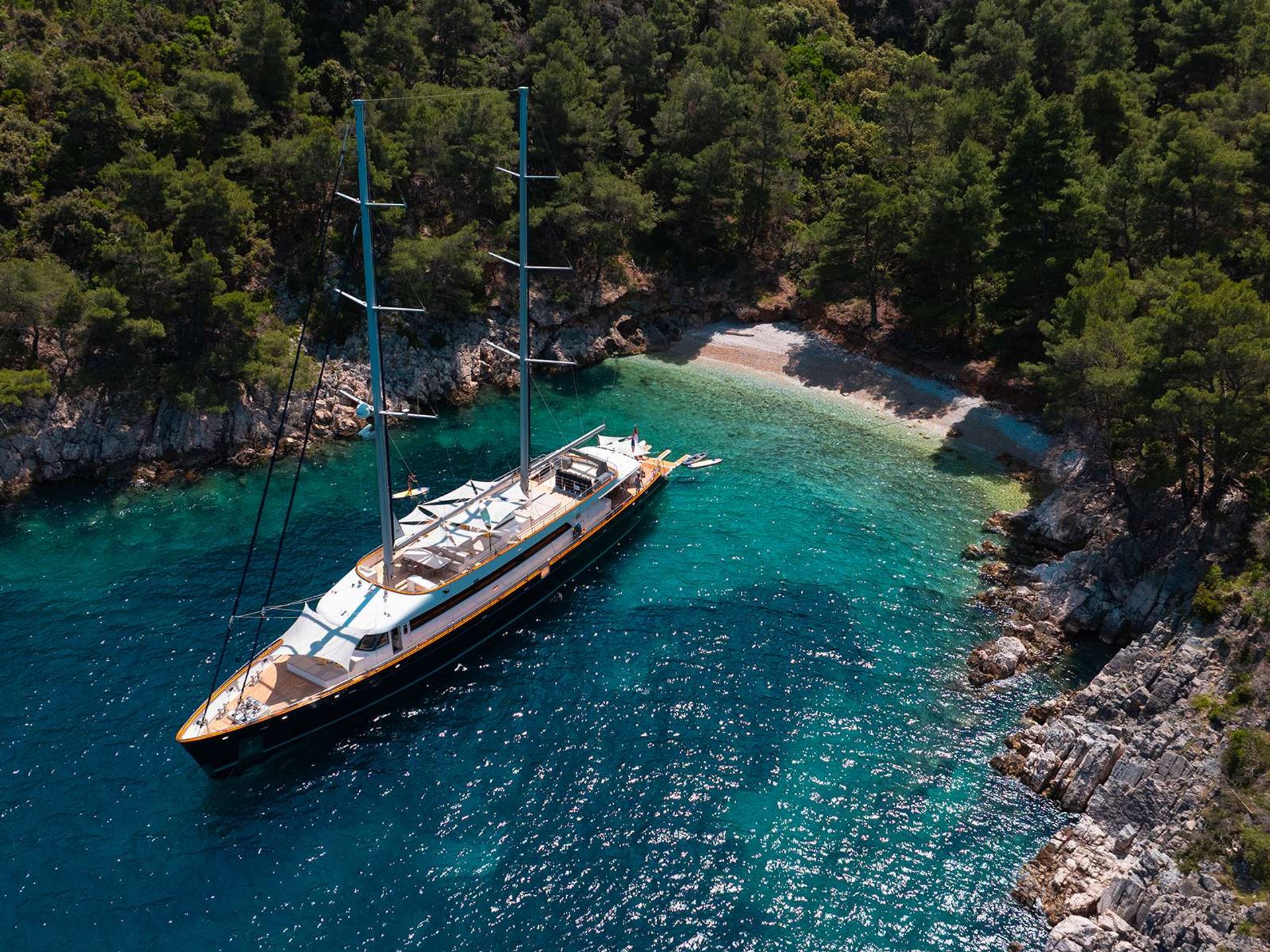
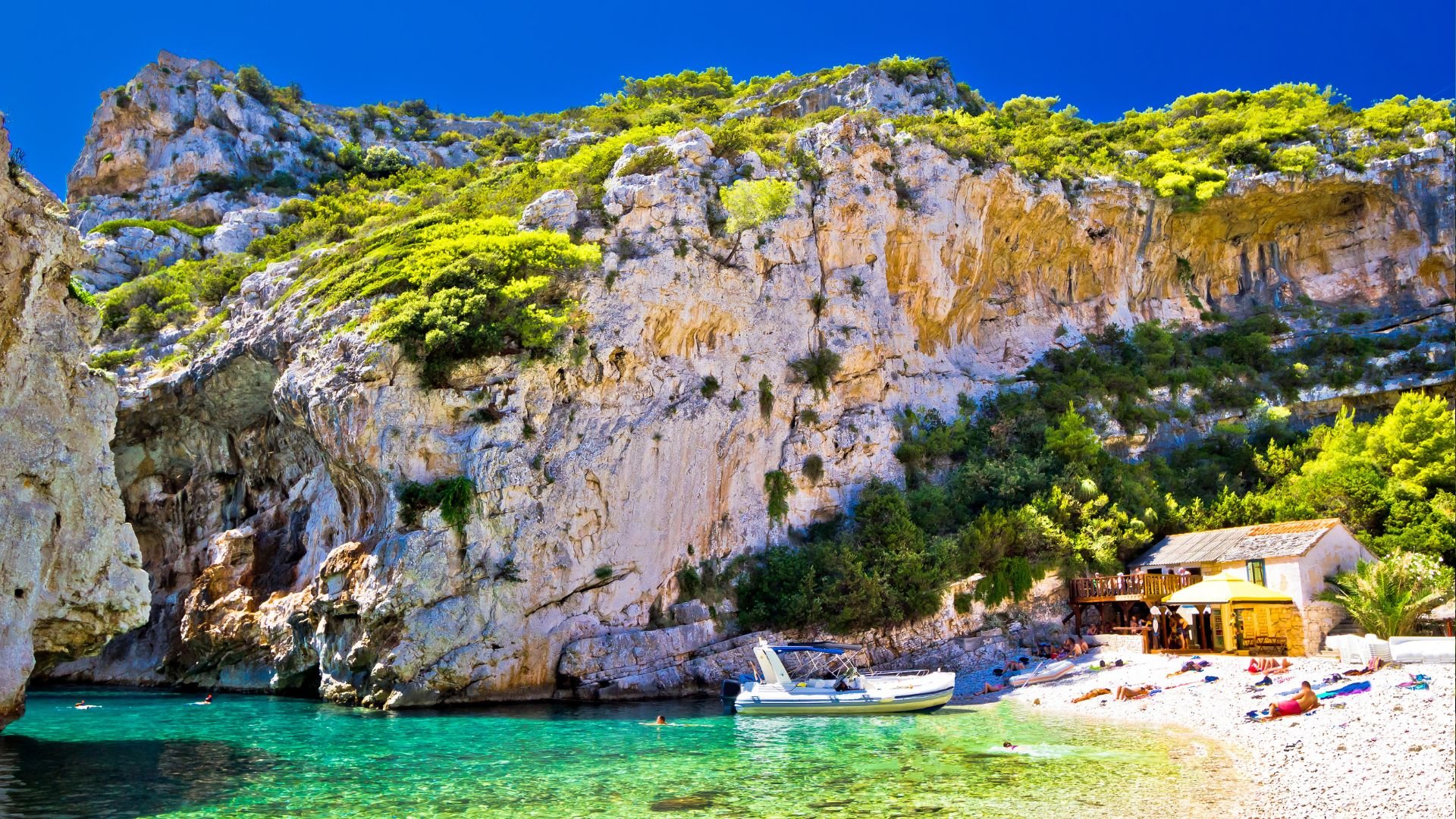
Central Dalmatia is the densest stretch of cruising water in the Mediterranean — four islands (Brač, Hvar, Vis, Šolta), the Pakleni archipelago, and the Biševo Blue Cave all within a 30-mile radius of the Split base. This Croatia itinerary makes a 7-day round-trip from ACI Marina Trogir that hits every one of them: lunch at the Pakleni's Palmižana, an afternoon swim at Stiniva on Vis, dinner at Komiža, the Blue Cave on a calm morning, Hvar Town's Spanish Fortress at golden hour.
The week is shaped around the Maestral — the reliable northwesterly thermal that fills in most afternoons from late May through September — so the boat reaches between islands instead of slogging upwind. About 160 nautical miles total. If a one-way Split-to-Dubrovnik suits the calendar better, we have that as a separate Croatia sailing itinerary. Every charter we send is custom-tailored to your group's pace.
Day 1 of 7 · Trogir → Milna
Your week begins at ACI Marina Trogir, a short transfer from Split airport and one of the cleanest, best-run marinas on the Dalmatian coast. Your professional crew welcomes you at the passerelle with cold drinks and a proper chart briefing, walks you through the boat, and gets your gear stowed while you take a first look at the old town of Trogir a few hundred meters across the channel—medieval stone, a fortified waterfront, and the kind of quiet that Split traded away long ago.
Once lines are off, your captain points the bow south across the Split Channel for Milna on the western tip of Brač—about fifteen nautical miles on an easy beam reach as the Maestral fills in through the afternoon. It's the ideal shakedown leg: enough sailing to feel the boat move under you, short enough that there's no pressure to rush. Milna itself is a proper sailor's harbor, a deep notch cut into the limestone with a pine-lined waterfront and a handful of stone houses that haven't changed much in a hundred years.
Tonight you eat ashore. Konoba Mlin, a converted olive mill at the head of the bay, is the kind of place that does one thing and does it properly—grilled fish off the day's catch, peka lamb if you order ahead, local Plavac Mali by the carafe. Walk back along the quay, a nightcap on deck with the lights of the harbor reflecting in the water, and the first full night aboard.
Day Highlights
Day 2 of 7 · Milna → Bol
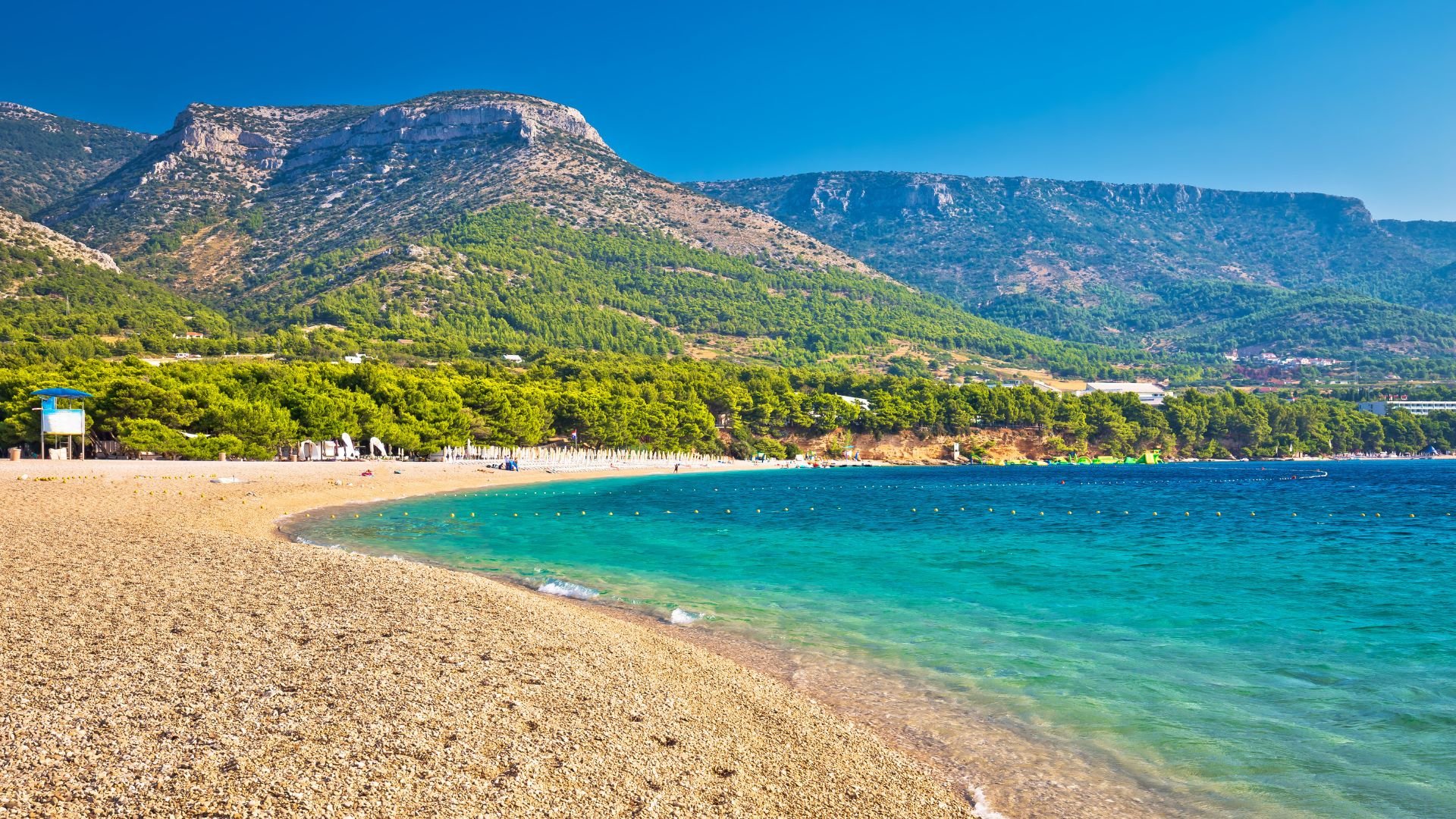
After breakfast aboard, your crew clears Milna and works east along the south shore of Brač toward Bol—about eighteen nautical miles, most of it a comfortable reach once the Maestral fills in around late morning. The south side of Brač has almost no harbors and very few anchorages, so the coast runs by uninterrupted: white limestone cliffs, dark pine forests tumbling down to the water, the occasional fisherman's chapel perched above a cove. You'll see almost no boats until Bol comes into view.
Bol is best known for Zlatni Rat, the sand-and-pebble spit that juts out from the coast like a horn and bends one way or the other depending on the day's wind and current. You've seen it on every Croatia postcard ever printed. Your captain will drop anchor in the bay just west of the beach, well off the pedestrian crowd ashore, and the rest of the afternoon is a swim, a paddleboard, and a long lunch prepared by your chef under the sun awning.
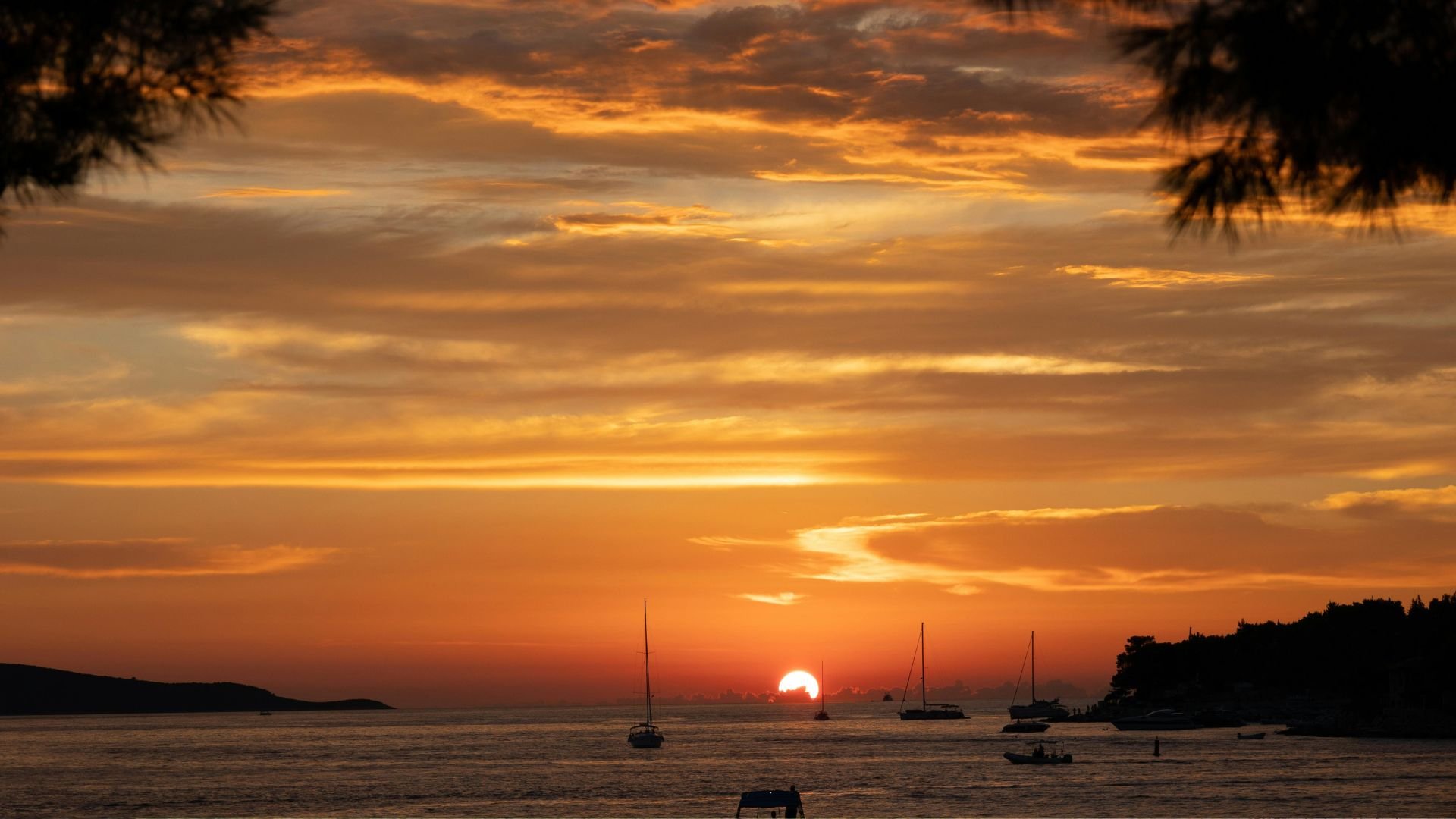
Late afternoon is the window. The day-trip boats from Split pull out by four, the beach quiets down, and a tender ride in gets you a walk out to the tip of the horn with the water going coral-pink as the sun drops behind Šolta. Back aboard for sundowners, a chef-prepared dinner on deck, and a night at anchor in what is, in the summer, one of the more photographed stretches of coastline in Europe.
Day Highlights
Day 3 of 7 · Bol → Stari Grad
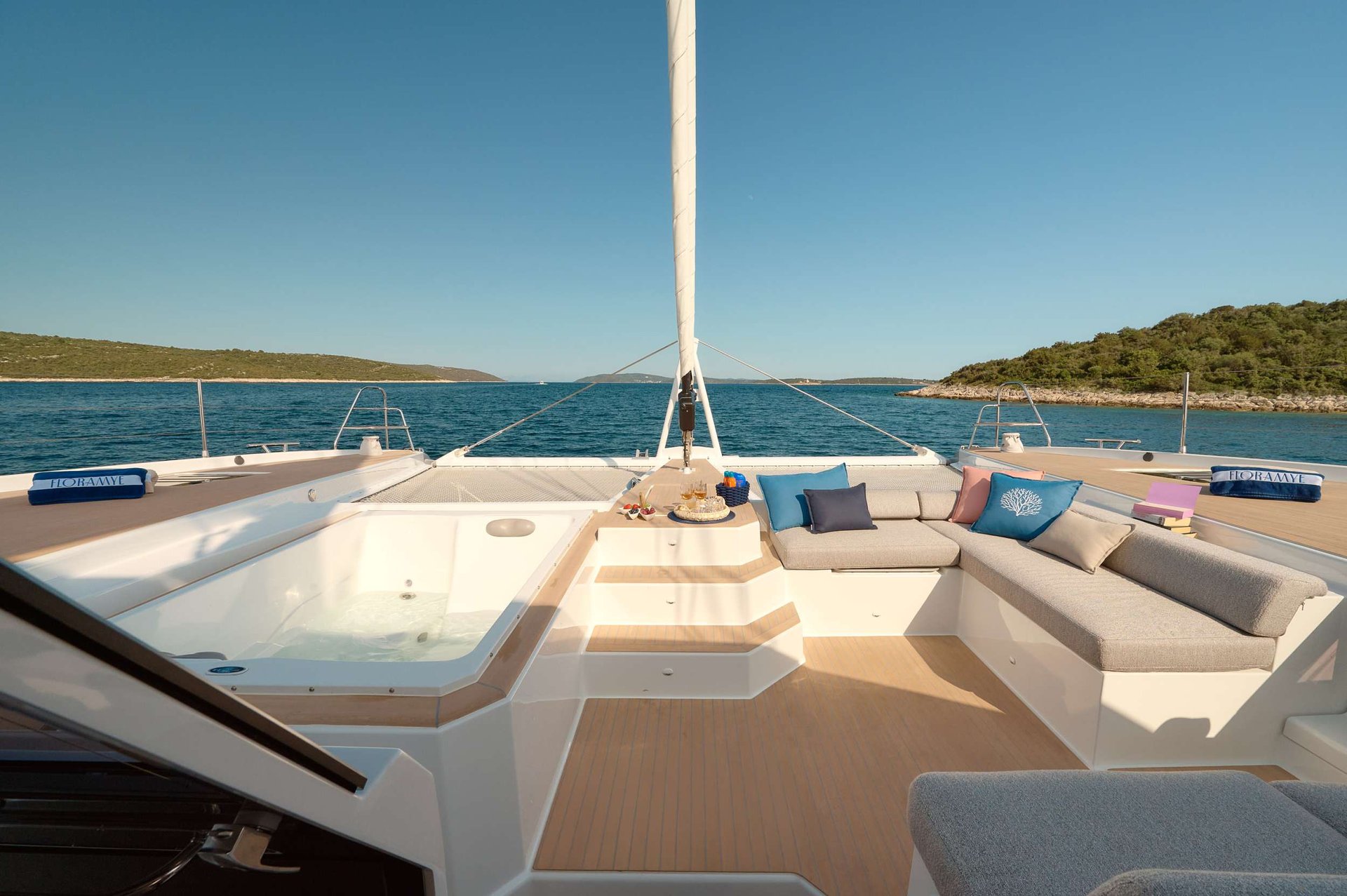
Today is the longest day of the week at roughly twenty-five nautical miles, but it's broken in half by a proper lunch stop. Your captain lifts anchor early and sails south across the Hvar Channel toward the Pakleni Islands—the small archipelago that shelters the front of Hvar Town. Rather than fighting for space in the main Pakleni anchorages, you'll tuck into one of the quieter coves on the back side—Vinogradišće or Stari Stani—where the water runs deep blue, the pines reach down to the waterline, and there's almost always room to swing on the hook.
Your chef sets out a long lunch aboard while the swim ladder comes down and the water toys come out. This is the kind of midday stop the Adriatic was built for—shaded by pine, glass-still water, and nowhere else to be. Mid-afternoon, as the Maestral picks up, your captain points the bow around the eastern end of Hvar for the short run into Stari Grad Bay on the island's north side.
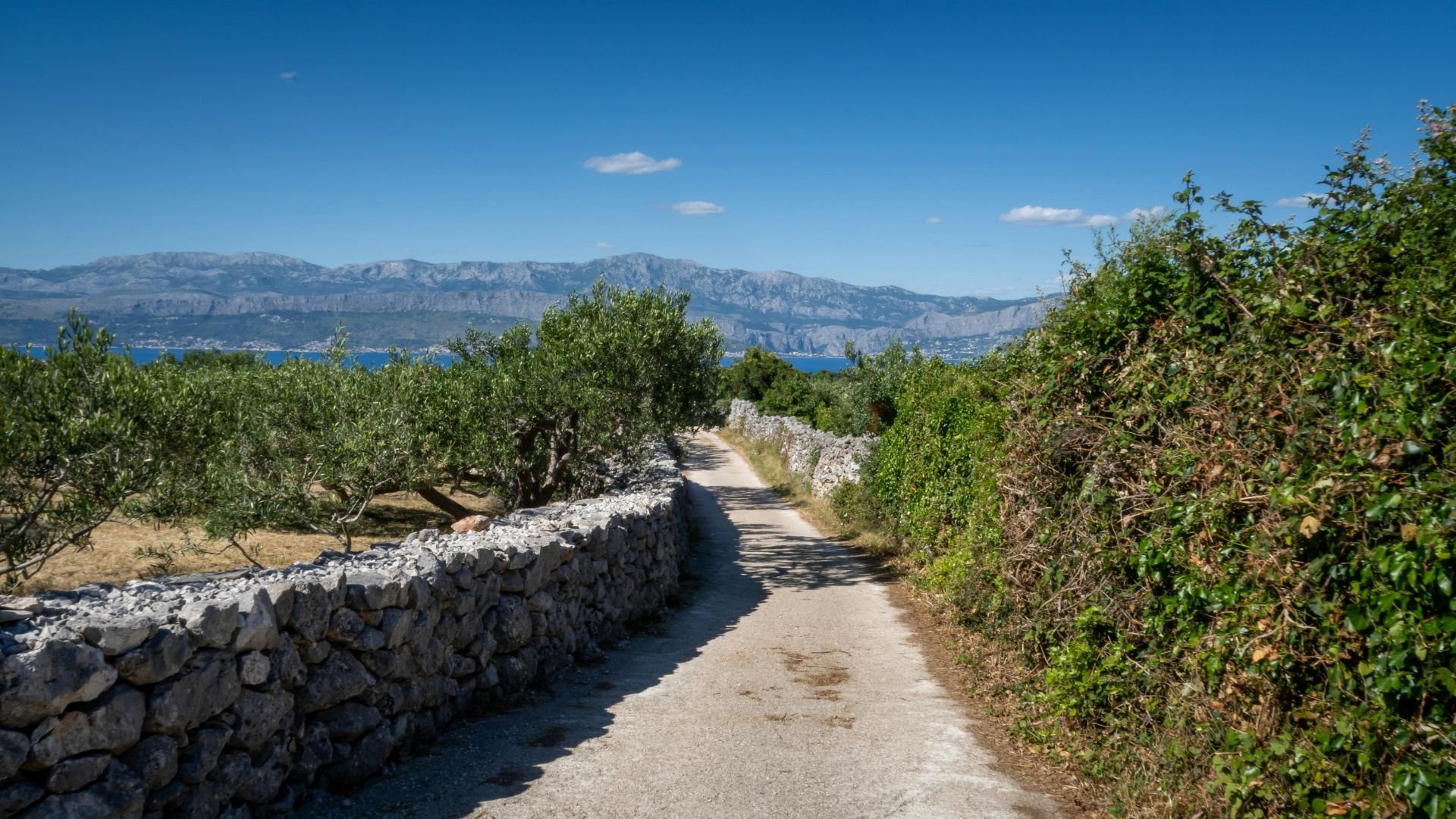
Stari Grad is the oldest town in Croatia and the quieter, older sibling to Hvar Town on the south coast. The harbor is calm, the waterfront is all polished stone and pale yellow façades, and behind the town the UNESCO-listed Stari Grad Plain still runs on the grid the Greeks drew in the 4th century BC—dry-stone walls, olive groves, small vineyards, still producing the Plavac Mali and olive oil that end up on your table. Walk the plain in the late light, dinner ashore at Kod Damira or Jurin Podrum, and back to the boat well-fed.
Day Highlights
Day 4 of 7 · Stari Grad → Vis
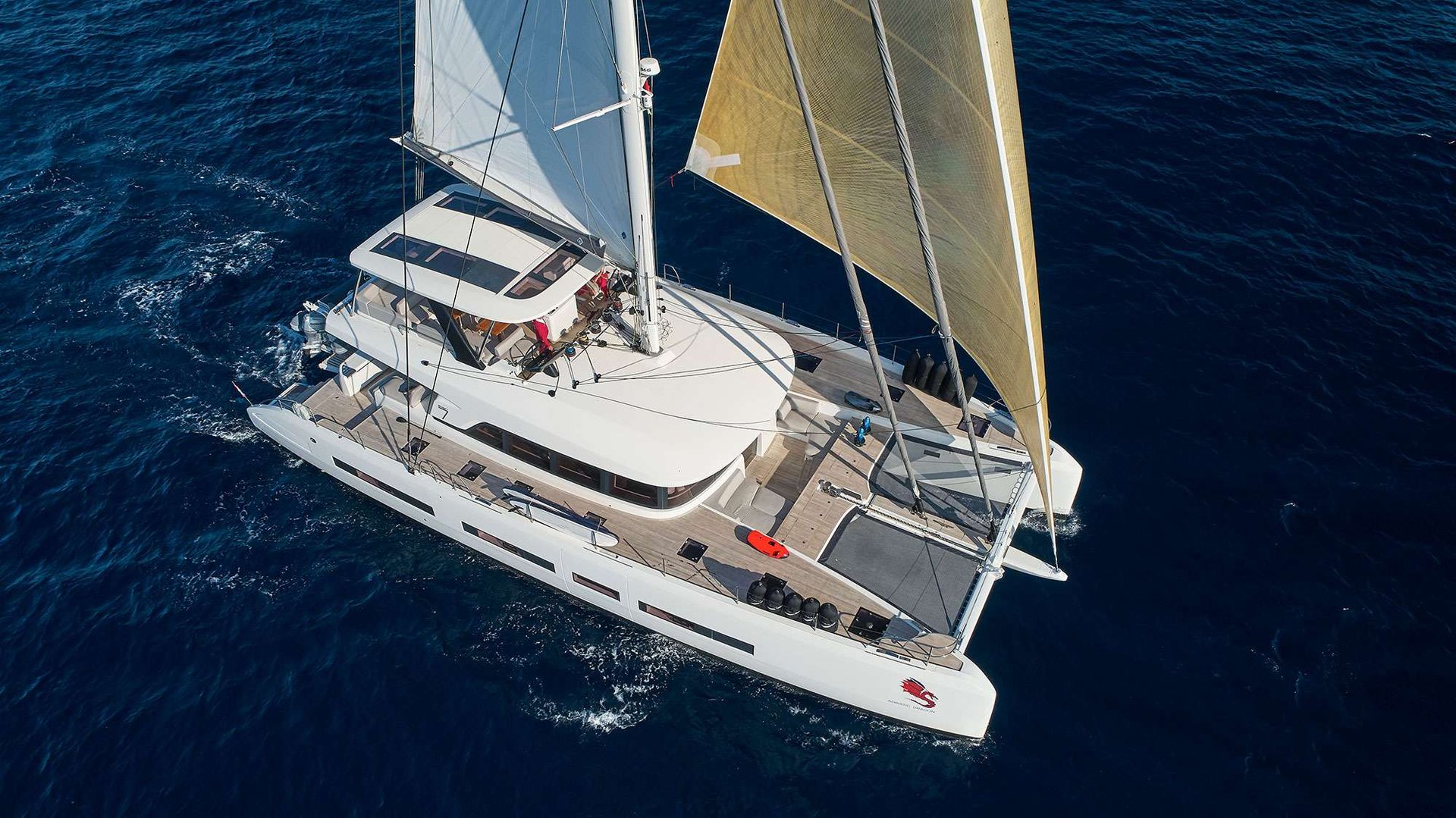
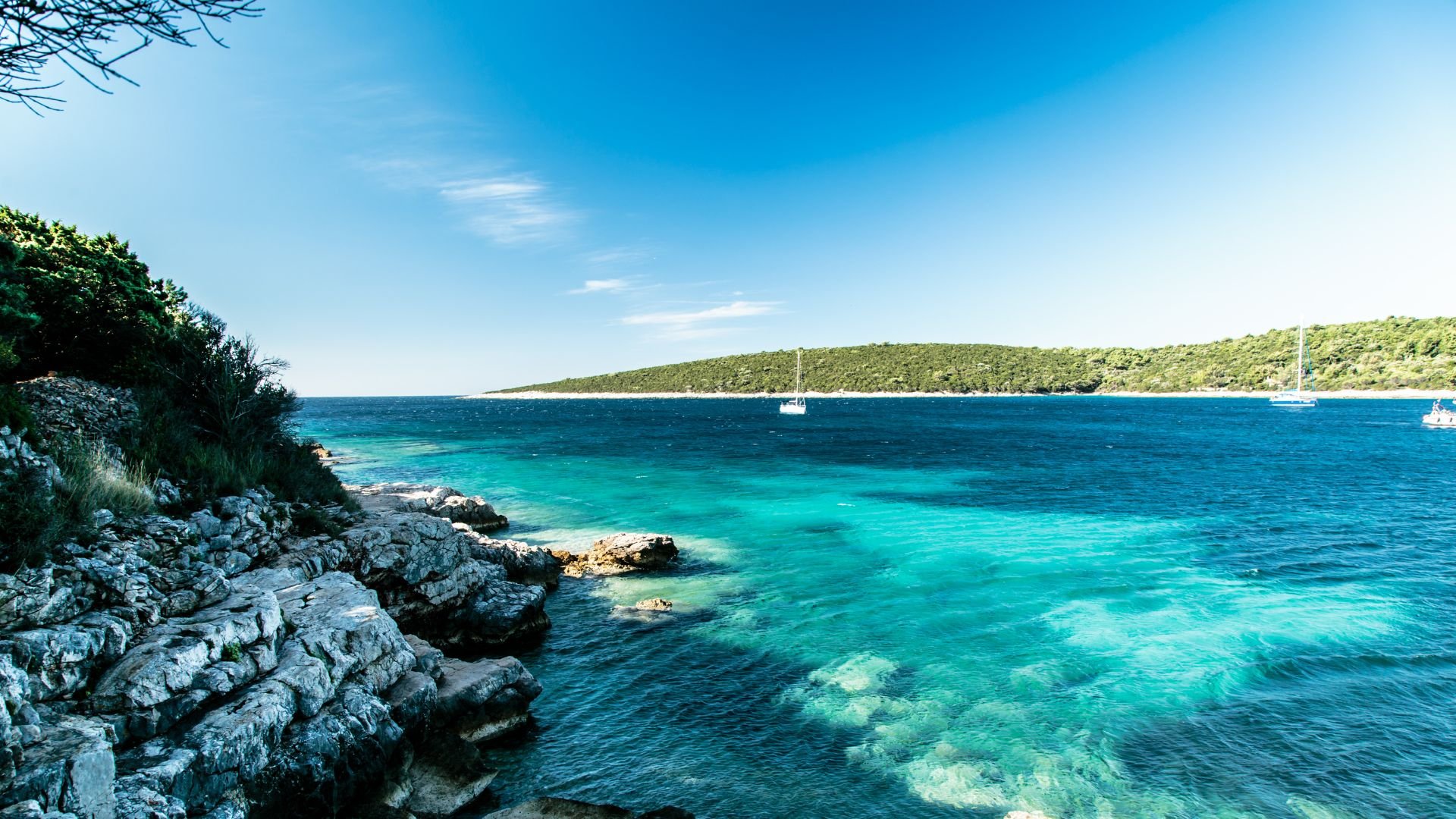
Morning breakfast on deck in the flat water of Stari Grad Bay, then your crew clears the bay and points west-southwest for Vis—about twenty-two nautical miles along Hvar's north coast and then across the open channel to Vis Island. The Maestral typically makes this a reach rather than a beat, and the north shore of Hvar rolls past to port with small coves, a handful of fishing villages, and the long limestone spine of the island rising above.
Vis is the outpost of the route. It sat behind a Yugoslav military quarantine until 1989 and didn't open fully to foreign visitors until the mid-nineties, which is why it still feels a generation behind the rest of the Dalmatian islands. Your captain brings the yacht into Vis town harbor, on the north shore of the island, and takes a berth on the town quay—a working waterfront with a Venetian bell tower at one end and a fish market at the other.
Tonight you eat inland, and you eat well. Book a car up to Konoba Roki's, a family-run peka restaurant tucked into a hilltop village in what was once a restricted military zone on the interior of the island. Peka is lamb, veal, or octopus cooked for hours under an iron bell buried in hot coals, and Roki's does it as well as anyone on the Adriatic—served on long wooden tables, with their own wine, in a cold stone room that feels more like a cellar than a dining room. Order it when you book the table; the bell takes three hours.
Day Highlights
Day 5 of 7 · Vis → Komiža
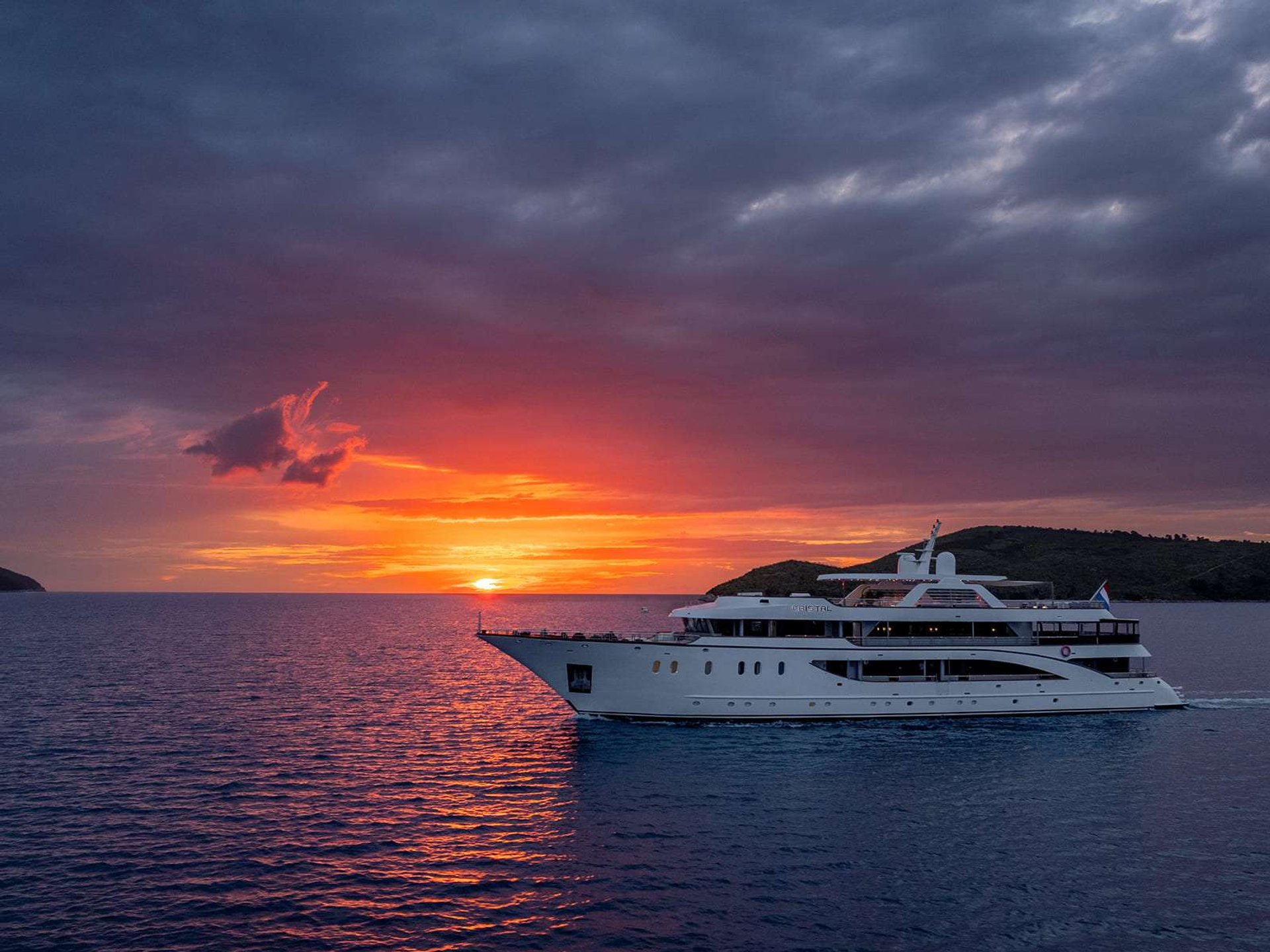
This is the day the week is built around, and it starts early. The Blue Cave on the island of Biševo, a few miles off Vis, has a narrow south-facing entrance that only admits direct sunlight for about an hour around midday—roughly 11 AM to noon, depending on the season—at which point refraction through the underwater opening lights the entire interior a deep, electric blue. The problem is that every tour boat on the Dalmatian coast knows this, and the line to get in during the light window can run an hour and a half. The move is to arrive at dawn.
Your captain leaves Vis before first light, covers the short run to Biševo, and has you on the tender and inside the cave as the light comes up. You get the cave almost to yourselves, the blue isn't quite at its peak but it's close, and—critically—you're already back aboard and moving by the time the first tour boats round the point. The rest of the day belongs to you.
From Biševo, the captain works back up the south coast of Vis and drops anchor off Stiniva, a bay that sits behind a thirty-foot slot between two limestone cliffs. You swim in, or tender in, and spend a long, slow lunch at anchor with your chef setting out something light on deck. By late afternoon, the yacht eases around the west end of the island into Komiža, the old fishing town on Vis's south shore. Dinner ashore at Pojoda or Jastožera—simple, excellent, all local fish—and a quiet night in the harbor.
Day Highlights
Day 6 of 7 · Komiža → Palmižana
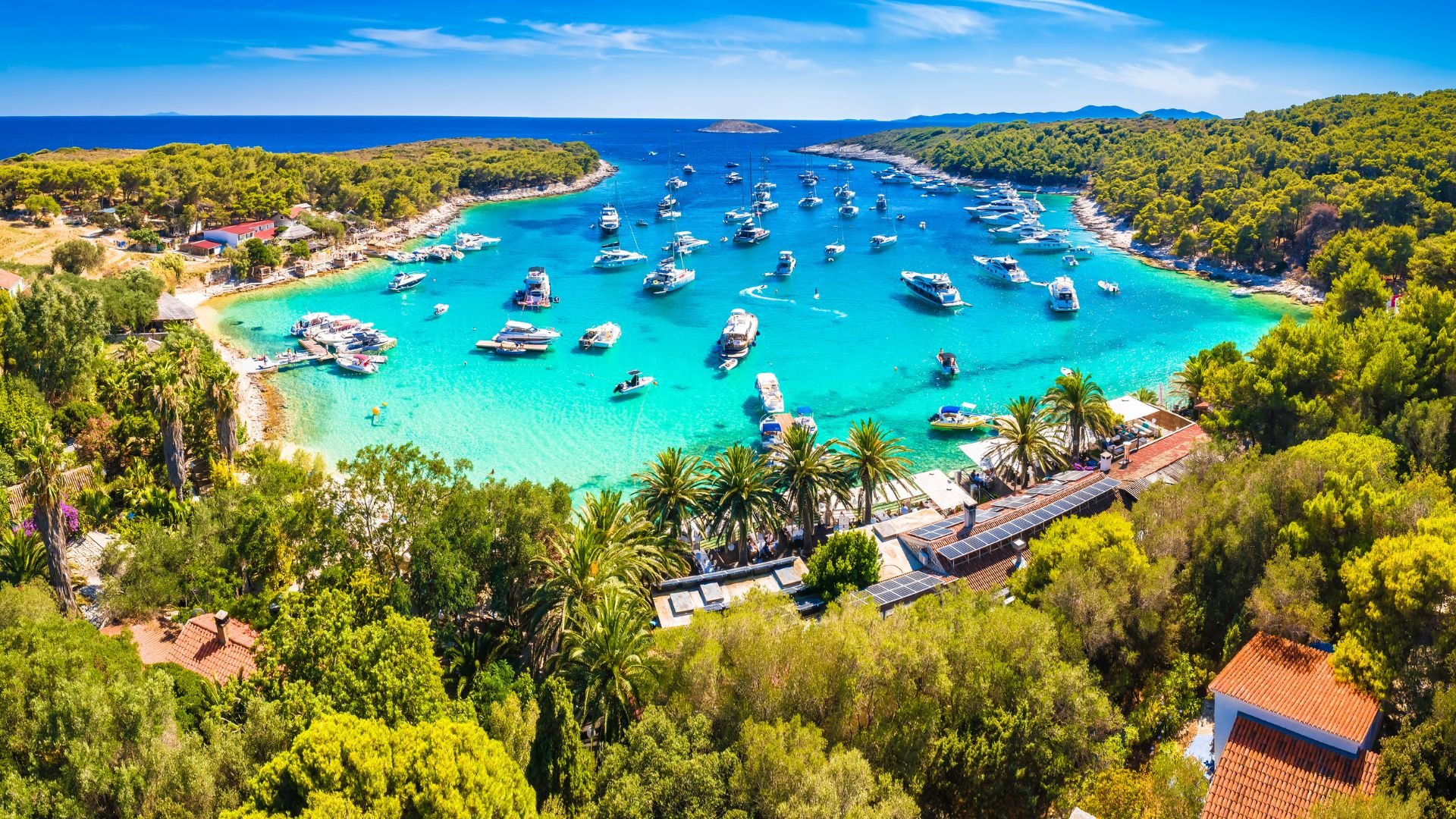
After breakfast aboard, your captain clears Komiža and sets a northeast course back across the Vis Channel toward the Pakleni Islands—about twenty-eight nautical miles, a good steady reach as the Maestral builds through late morning. This is the longest sail of the back half of the week, but it's also one of the prettiest stretches: open water in front, Hvar's limestone spine growing on the horizon, the Pakleni islets appearing last as you close with the Hvar Channel.
Your destination is Palmižana, the main bay on the island of Sveti Klement and the social center of the Pakleni archipelago. Pick up a mooring ball in the cove, and the tender runs you five minutes across to lunch at Toto's or Meneghello—both are family-run, both sit on the hill above the bay, and both have been doing Dalmatian seafood at a very high level for decades. Meneghello in particular comes with its own botanical garden and art; this is not a beach shack.
Afternoon for swimming, paddleboarding, and napping off lunch. As the sun drops, the tender runs the short crossing to Hvar Town on the main island. This is the one night of the week that leans into the scene: sundowners at Carpe Diem on the waterfront, a move up to Hula Hula bar on the cliffside for the actual sunset, dinner at Konoba Menego in the old town—a three-room stone konoba up the hill, no electricity, all local, every course brought out slowly. Tender back to Palmižana late, and the boat is quiet when you step aboard.
Day Highlights
Day 7 of 7 · Palmižana → Trogir
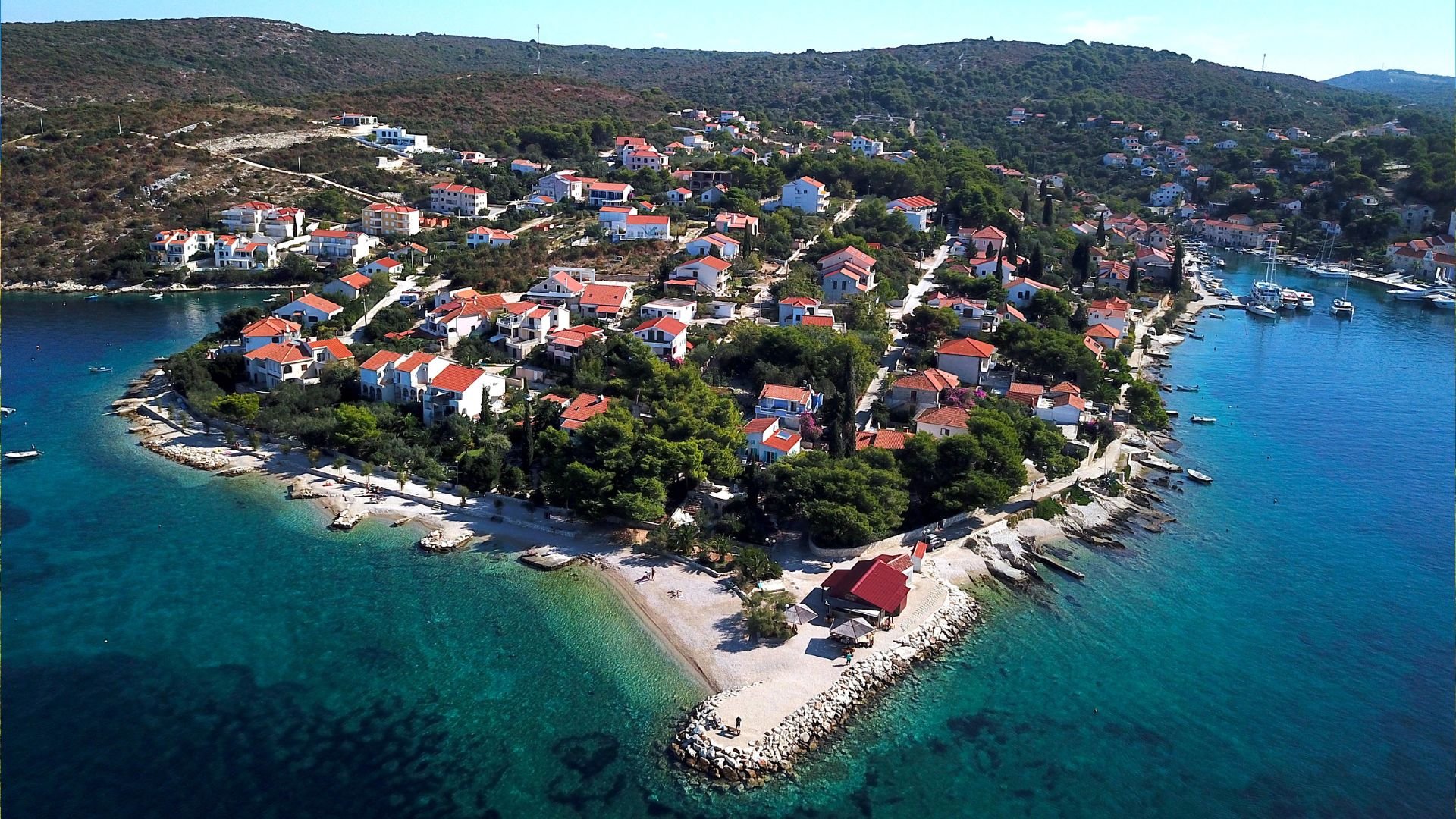
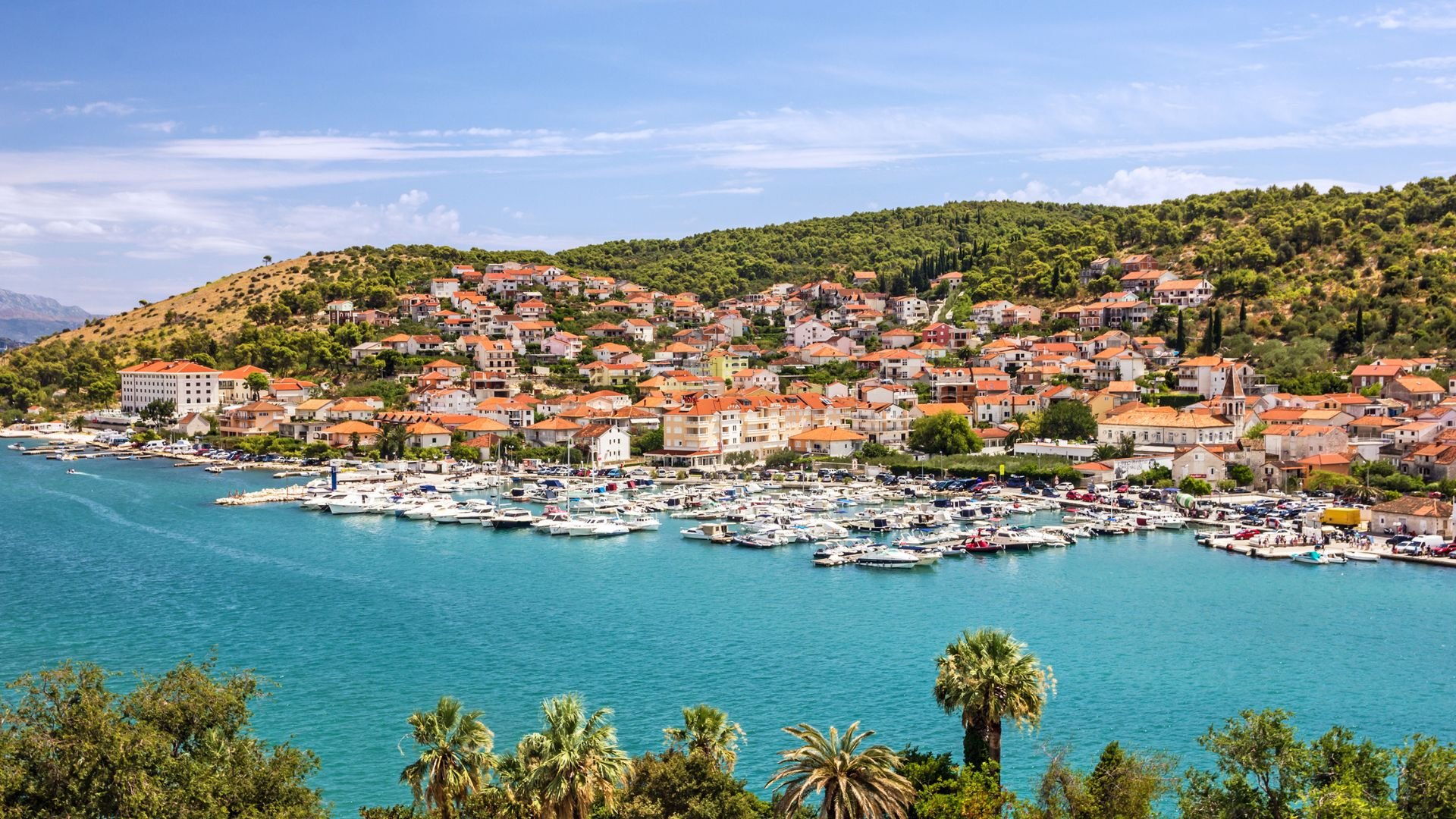
The last full day threads north through the islands back toward the base—about thirty nautical miles total, broken in half by a lunch stop on Šolta, the quietest of the islands on the route. Your captain clears Palmižana in the morning, crosses the Hvar Channel, and works up the south coast of Šolta toward Maslinica on the island's western tip.
Maslinica is a small, still-working fishing harbor with seven small islets strung across the mouth of the bay—good swimming on the hook, almost no charter traffic, and the kind of pace that makes the week's accumulated miles finally catch up to you in a good way. Lunch ashore at Martinis Marchi, a restored 18th-century castle at the head of the harbor, or aboard with your chef if you'd rather not move. Either way, it's a long, slow lunch; there's no reason to rush.
Mid-afternoon, the captain lifts anchor for the final leg back across the Split Channel to Trogir—about fifteen miles, usually a quick reach as the Maestral runs you home. Your crew handles the approach to ACI Marina Trogir, ties up on the same berth you left from a week ago, and tonight's dinner is aboard—a farewell meal from your chef, the last bottle of something Dalmatian, and time to sit with a week's worth of anchorages without rushing the last evening.
Day Highlights
Day 8 · Departure
A slow breakfast aboard, one last coffee on the aft deck, and a short transfer to Split airport with your crew handling every logistic from the dock. Step off with salt still in your hair, a week of Dalmatian anchorages in your camera, and a pretty good idea of when you're coming back.
Want to share or come back to this voyage later?
Bookmark this voyage →Crewed Itinerary · Croatia
A one-way passage from Split to Dubrovnik is the most satisfying week of sailing in the Mediterranean, and it isn't particularly close. You get the bookends of two UNESCO old towns—Diocletian's Palace in Split, the city walls of Dubrovnik—strung together by roughly 170 nautical miles of island-hopping through the heart of the Dalmatian coast. With a professional captain and private chef running the yacht, the only real decisions you need to make are which konoba you want a table at and how long you'd like to linger over lunch.
The route is built around the rhythm of the Maestral—the reliable northwesterly thermal that fills in most afternoons from late spring through September—and it's deliberately weighted toward short, scenic legs with one longer offshore day in the middle. You'll stop for lunch at the Pakleni Islands, swim inside the cliffs of Stiniva on Vis, eat lobster in Komiža, watch the Moreska sword dance in Korčula, drift between the saltwater lakes of Mljet, and sail into Dubrovnik past the old city walls on the final morning. It's an itinerary designed for guests who want real sailing, real food, and real time on the kind of islands that reward slowing down.
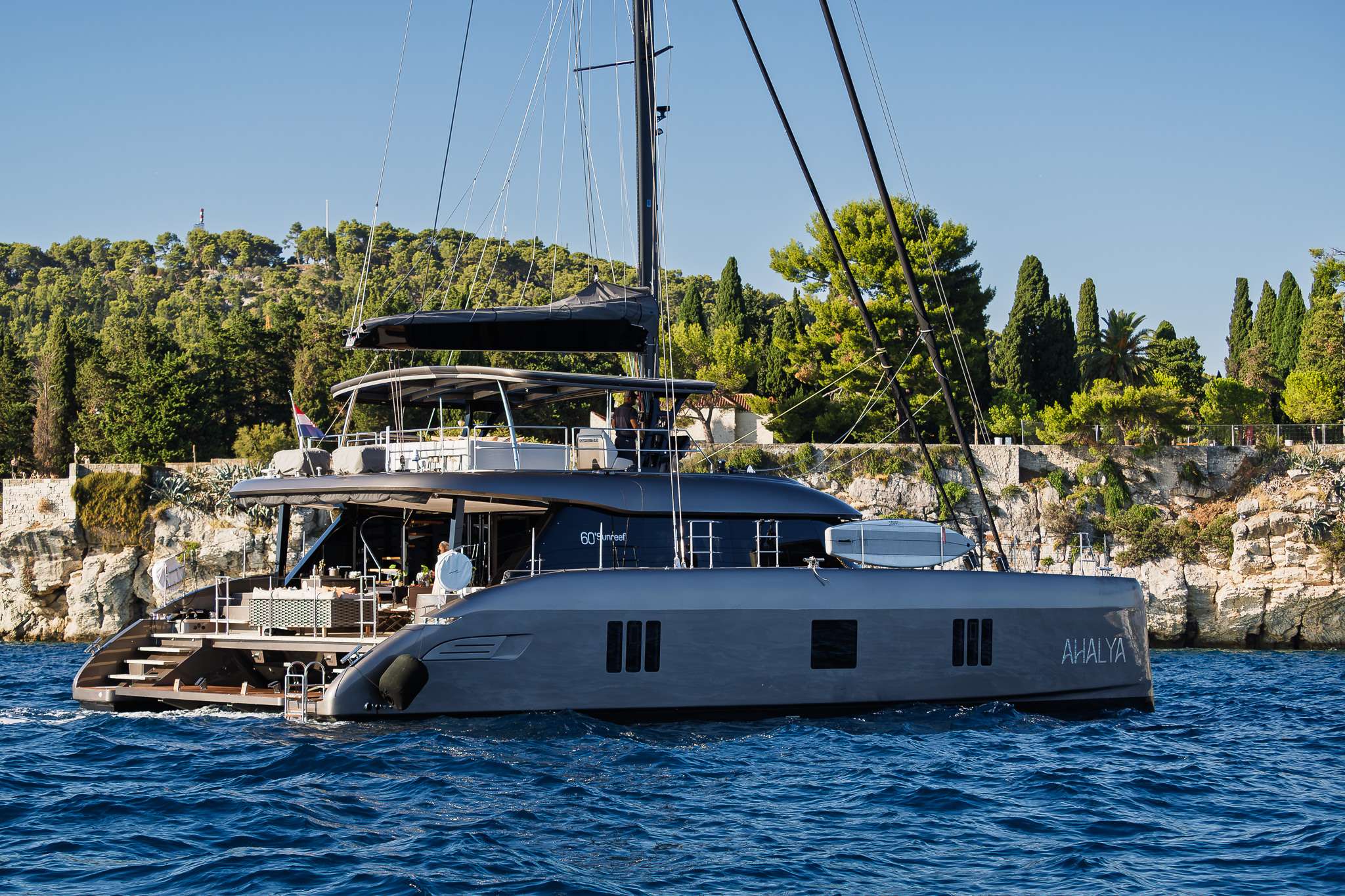
Split to Dubrovnik is the highest-volume search term in the entire Mediterranean charter market, and there's a reason: two UNESCO old towns as bookends, six island stops in between (Hvar, Vis, Komiža, Korčula, Mljet, Šipan), and a one-way route that means you never repeat a harbor. Pickup at ACI Split, drop-off at ACI Komolac near Dubrovnik, and 170 nautical miles of Maestral-shaped island-hopping in between.
This Croatia sailing itinerary is built deliberately around short scenic legs (10–25 nm typical) with one longer offshore day in the middle for the Vis-to-Korčula crossing. Lunch at the Pakleni Islands, the Stiniva cliffs on Vis, lobster in Komiža, the Moreska sword dance in Korčula, the saltwater lakes of Mljet, dinner on Šipan, and into Dubrovnik past the city walls on the final morning. We typically build this charter for groups who want real sailing, real food, and real time on islands that reward slowing down.
Day 1 of 7 · Split → Milna
Your week begins at ACI Marina Split, tucked on the west side of the city harbor with Diocletian's Palace a ten-minute walk across the promenade. Your professional crew meets you at the slip with cold drinks and a chart briefing that frames the week ahead, then gives you time to settle into your cabin before a short walk through the palace—a living 1,700-year-old Roman complex where you can eat dinner inside walls built for an emperor. Get that walk in; you'll be looking back at the Marjan peninsula from the water in a couple of hours.
Around mid-afternoon, the captain slips lines for a gentle 15-nautical-mile shakedown sail across the Split Channel to Milna on the western tip of Brač. If the Maestral fills in on cue, you'll be reaching on flat water with the Riva shrinking behind you and the limestone of Brač growing on the bow—the kind of first afternoon that resets your nervous system inside an hour.
Milna is a small, U-shaped harbor with a Baroque church, a handful of stone konobas, and enough room for a boat like yours to tuck up against the town quay. Your private chef handles the first dinner aboard—likely something off the day's market run in Split, fresh fish on the grill, a bottle of Pošip from Korčula to set the tone for the wines you'll drink the rest of the week.
Day Highlights
Day 2 of 7 · Milna → Hvar
After a slow breakfast on deck, the captain points the bow south-southeast for the 22-nautical-mile run from Milna to Hvar. The morning typically belongs to gentle airs and glassy water until the Maestral fills in across the Hvar Channel around midday, at which point you'll be reaching in 10 to 15 knots with the long spine of Hvar unfolding to port. It's postcard sailing—consistent, warm, uncomplicated.
Before pushing into Hvar Town, your crew tucks into the Pakleni Islands—a scatter of pine-covered islets a mile off the harbor that locals use for their own long lunches. Anchor in one of the quieter coves, swim in water clear enough to count the anchor chain, and let the chef put out a light board of prosciutto, Paški sir cheese, olives, grilled fish, and a chilled bottle of Plavac Mali. It is the kind of lunch that makes you forget what time it is, which is the entire point.
Late afternoon, the tender runs you into Hvar Town for a walk up to the Spanish Fortress above the harbor—the best view on the island at golden hour, Pakleni silhouettes to the west, the yacht sitting pretty in the bay below. Evening moves to Carpe Diem on the waterfront for sunset cocktails, or later on to Hula Hula for the full Hvar spectacle. Back aboard late for a nightcap on deck with the walls of the old town lit up across the water.
Day Highlights
Day 3 of 7 · Hvar → Vis
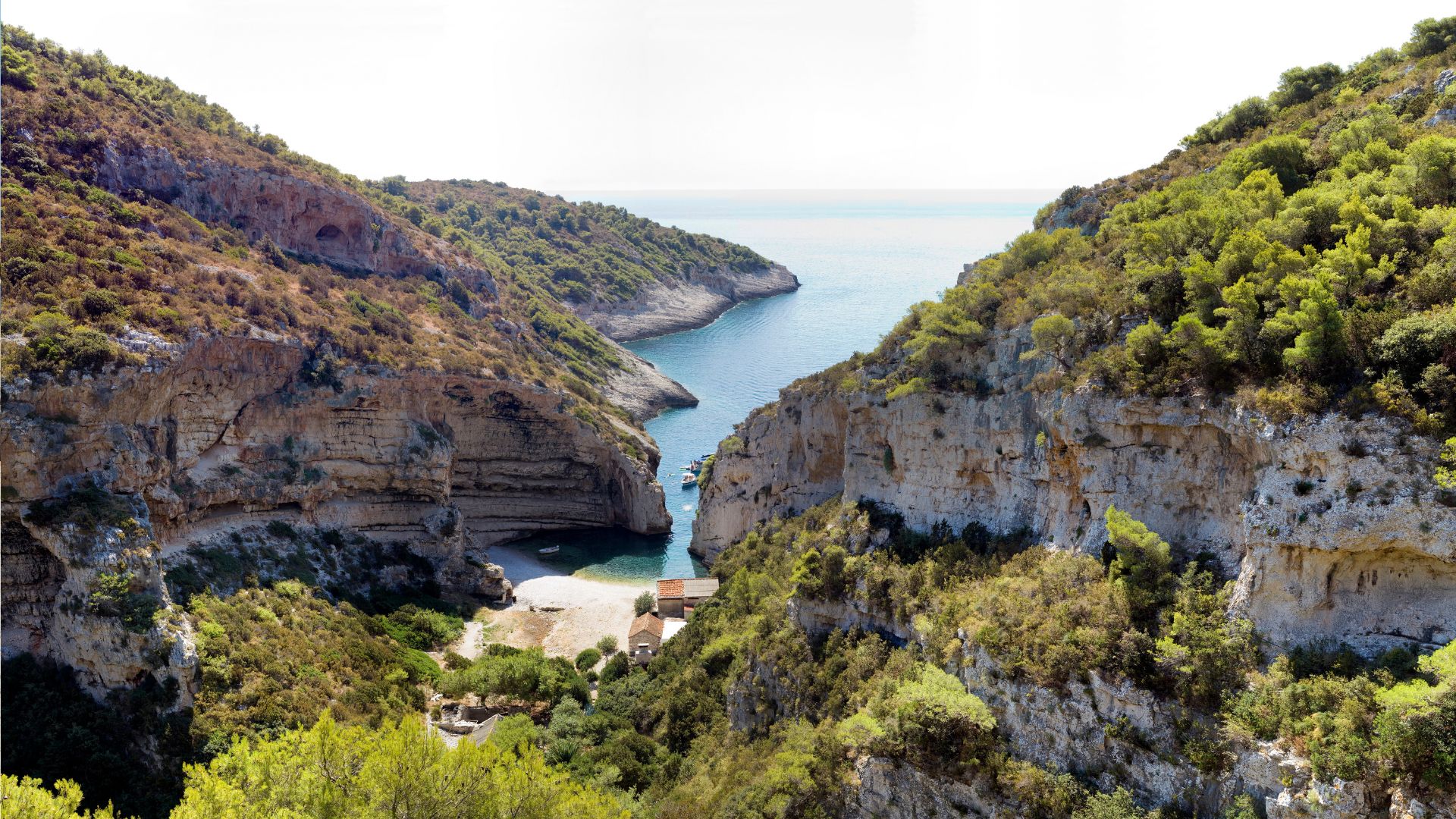
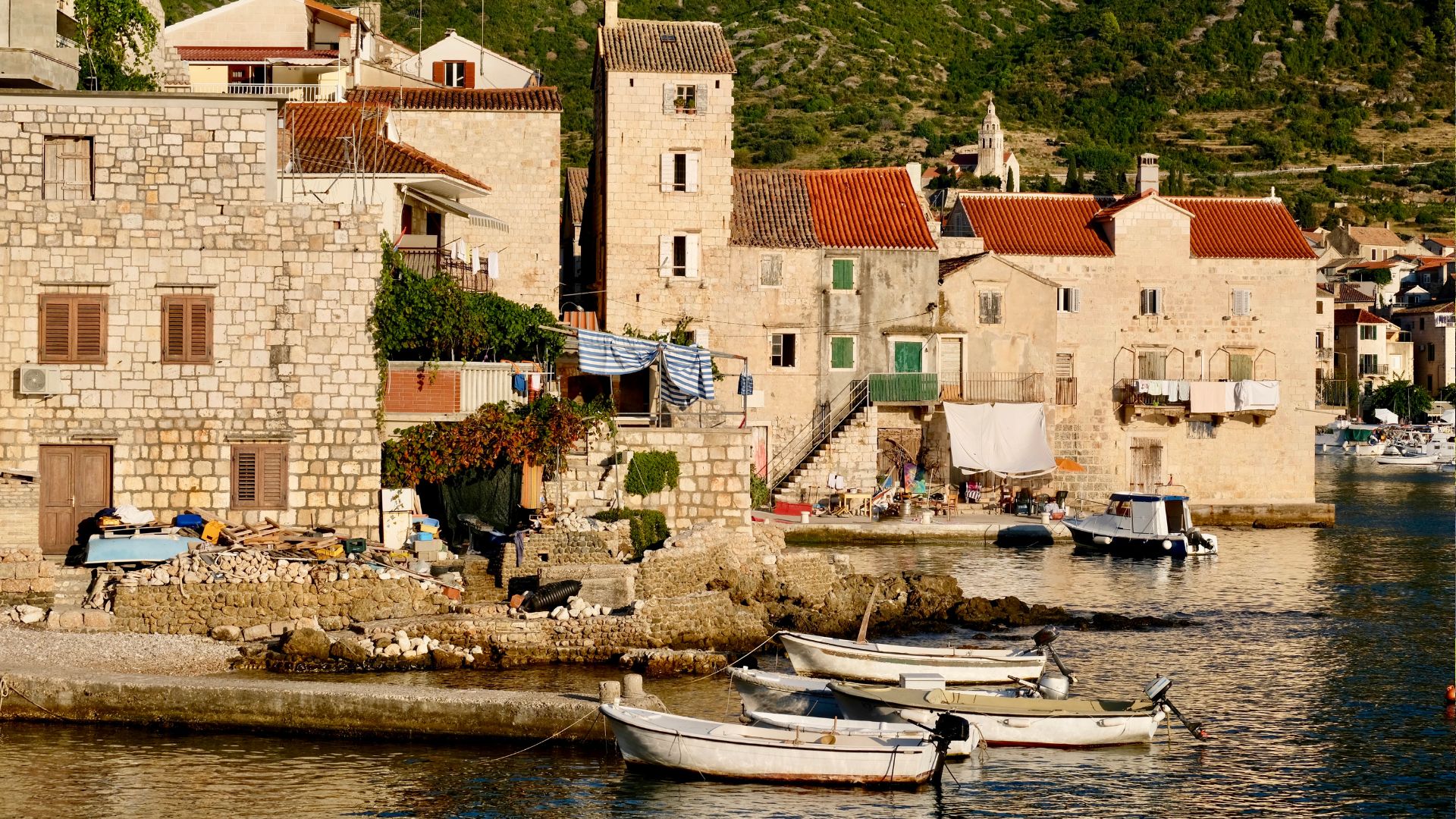
Today is a 30-nautical-mile push south to Vis, the outermost inhabited island in Dalmatia and the one the Yugoslav military kept closed to foreigners until 1989. That late opening spared it the heavier tourism of Hvar and Brač, and the result is an island that still feels a generation behind in the best possible way—terraced vineyards, empty bays, and fewer boats on the water.
Your captain keeps one eye on the forecast for this leg. A healthy Maestral makes it a long fast reach, but Jugo—the southeasterly that rolls in when a low sits over the Adriatic—can flip the channel into a short, uncomfortable upwind slog. If conditions cooperate, the crew times the approach so you round the southern cape of Vis in the late morning and tuck into Stiniva Bay for a swim stop.
Stiniva is a cleft in the limestone cliffs barely wide enough for a tender to slip through, opening onto a small pebble beach inside a natural amphitheater. Anchor offshore, take the tender or simply swim in, and spend an hour in what might be the most photographed cove in Croatia for good reason. From Stiniva, a short afternoon hop rounds the western end of the island to Komiža, a fishing village on the far side with stone houses stacked up from the quay.
Dinner is at Konoba Jastožera, a restaurant built directly over the water in an old lobster holding pen. The signature is Vis lobster pulled from the tanks under the floor—simply grilled, split, served with local olive oil and a glass of Vugava, the white grape almost no one grows outside this island. This is one of the meals you'll remember from the trip.
Day Highlights
Day 4 of 7 · Vis → Korčula
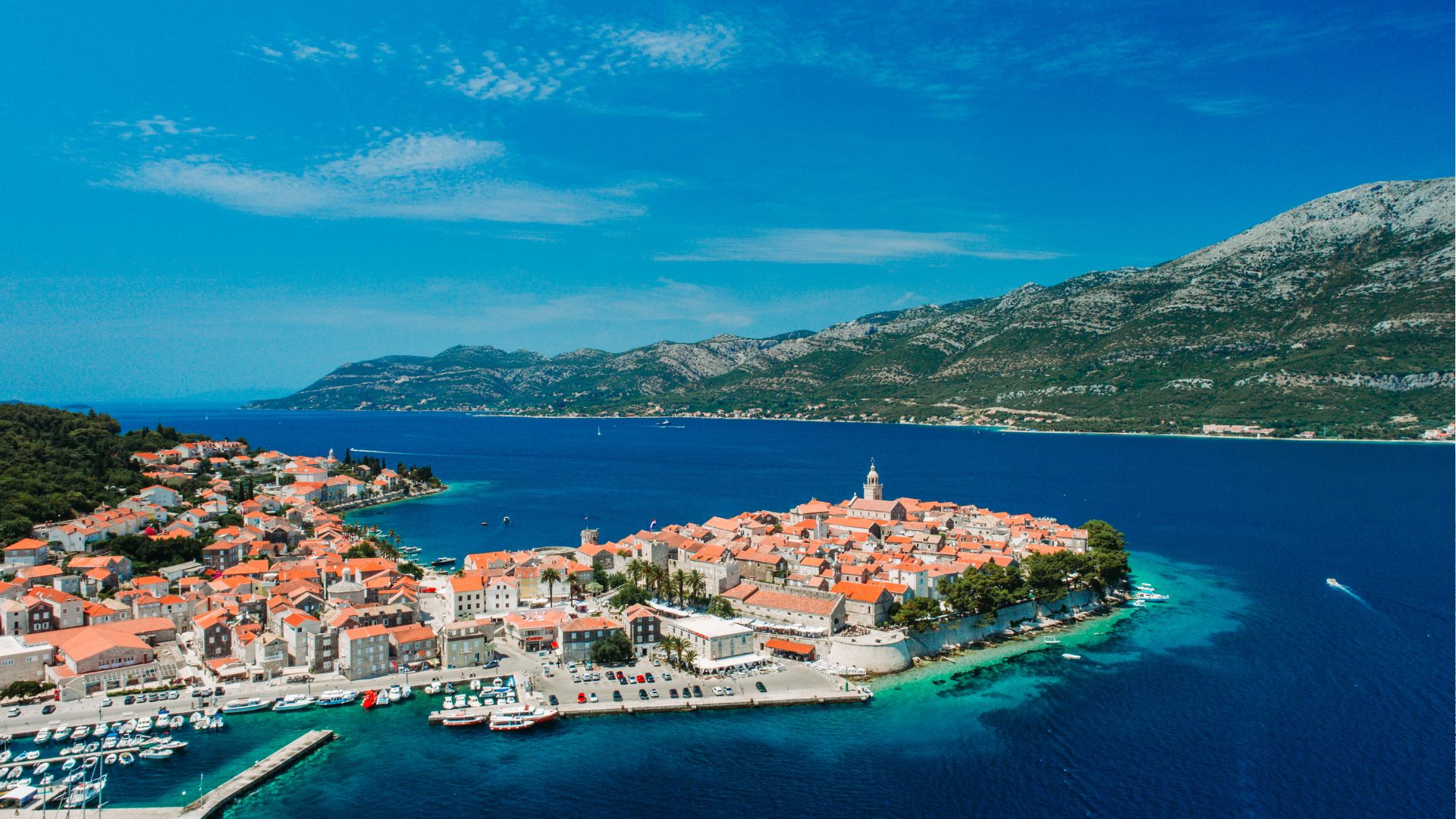
This is the longest sailing day of the week, roughly 40 nautical miles east from Komiža to the walled town of Korčula. It's also the most Maestral-dependent leg on the itinerary. In a healthy northwesterly, it's a fast broad reach with the wind on the quarter and a following sea—the kind of day where your captain sets the autopilot, your chef brings cold rosé on deck, and nobody particularly wants the passage to end. In a Jugo pattern, the call may be a closer stop at Šćedro or Ščedrica to keep the schedule humane; you hired a professional captain so he can make exactly that kind of call.
Korčula Town sits on a small peninsula thrusting into the channel between Korčula island and the Pelješac mainland—a miniature walled city with terracotta rooftops stacked inside medieval fortifications. Local tradition has it that Marco Polo was born here in one of the stone houses off the main square; reputedly, because Venice makes the same claim, and the 13th-century record keepers on both sides left just enough ambiguity to keep both tour economies alive. Either way, the Polo house museum is a charming half-hour stop.
If you're sailing in July or August, the bigger draw is the Moreska—a 400-year-old sword dance performed on a stone stage in the old town. Two groups of dancers in full medieval costume fight a choreographed battle with real steel swords for the hand of a veiled bride, and the clash of blades is genuinely startling the first time. Your captain can time dinner ashore so you walk into the square right as it starts.
Dinner ashore at one of the konobas inside the walls, and back aboard late for a chef-prepared nightcap on deck.
Day Highlights
Day 5 of 7 · Korčula → Mljet
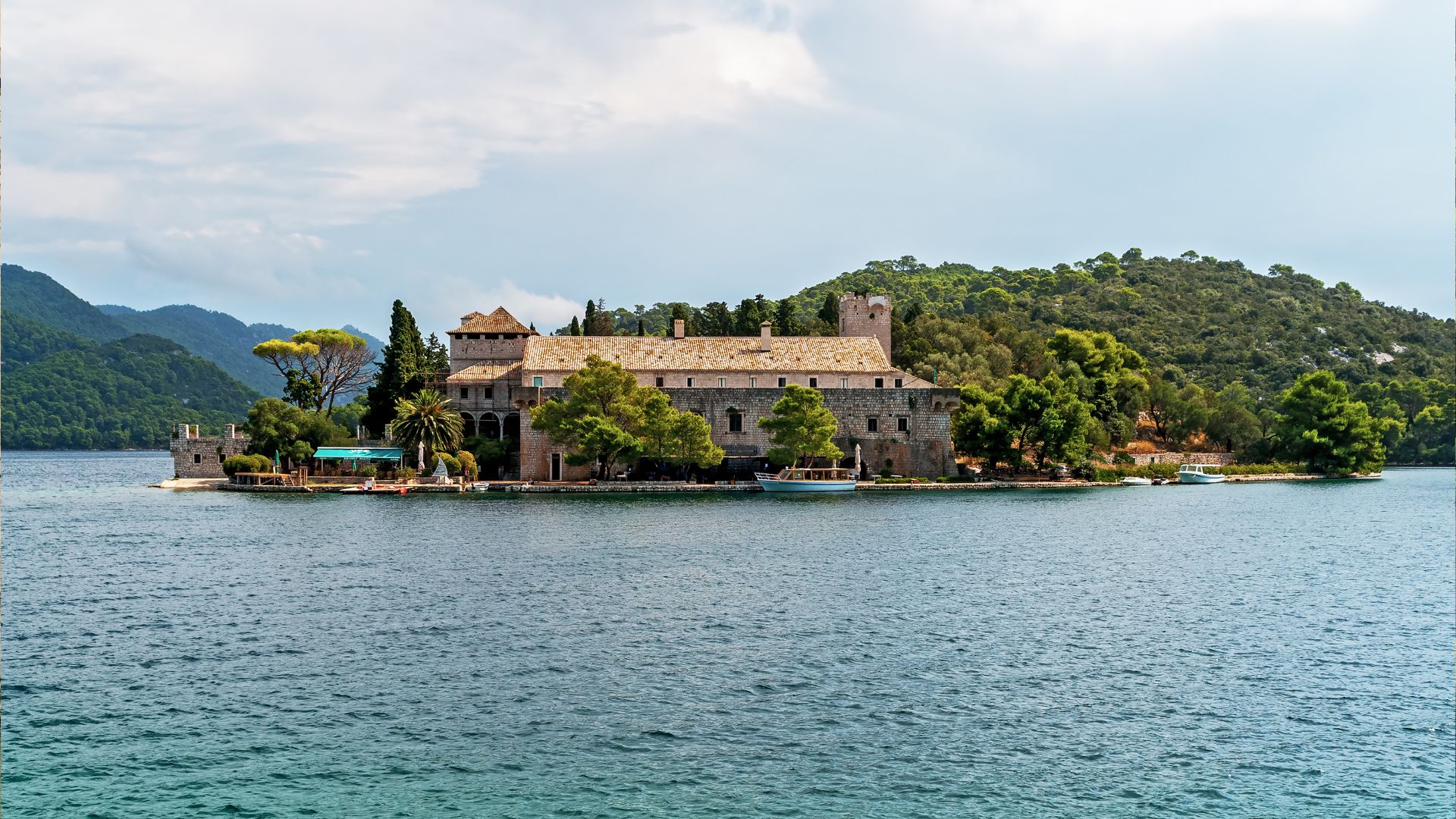
A shorter, easier 18-nautical-mile leg today, southeast from Korčula to the harbor of Pomena on the northwest tip of Mljet. Most days this is a gentle reach with Lastovo dropping off to starboard and the long green flank of Mljet building on the bow—a good morning to hand the wheel to your crew, find a cushion on the foredeck, and settle in with a book.
Mljet National Park covers the western third of the island and it is, quietly, one of the most beautiful and least-visited national parks in the Mediterranean. Most of the yachts in the Adriatic queue up for Hvar and Korčula; Mljet is where you go when you want none of that. Pomena is a small, tidy harbor with a handful of restaurants and a path that leads directly into the park.
The showpiece inside the park is the pair of connected saltwater lakes—Veliko Jezero and Malo Jezero—ringed by pine forest and fed by a narrow channel to the sea. Rent bikes at Pomena and follow the path around the larger lake, or take a park launch from the channel bridge across to the 12th-century Benedictine monastery on St. Mary's Islet, which sits on a small island in the middle of the larger lake. An island on an island on an island. You can swim off the monastery steps in water that's warmer than the sea and just as clear.
Dinner ashore at Konoba Maestral in Pomena—fresh fish off the day's catch, grilled octopus under the peka bell, house rakija at the end. Back aboard for a quiet night at anchor with nothing but the pine forest behind you and the occasional small charter yacht drifting through the bay.
Day Highlights
Day 6 of 7 · Mljet → Šipan
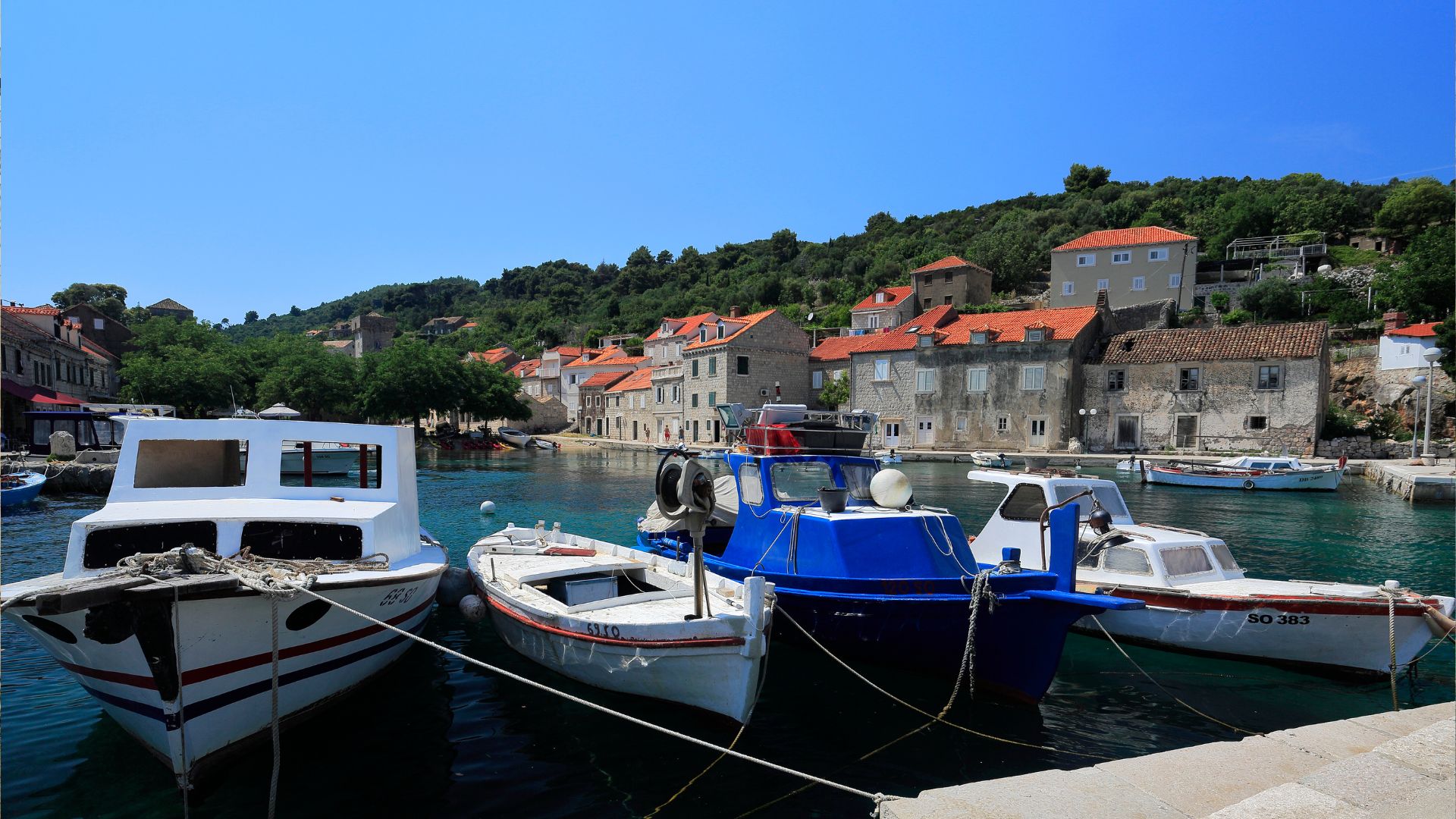
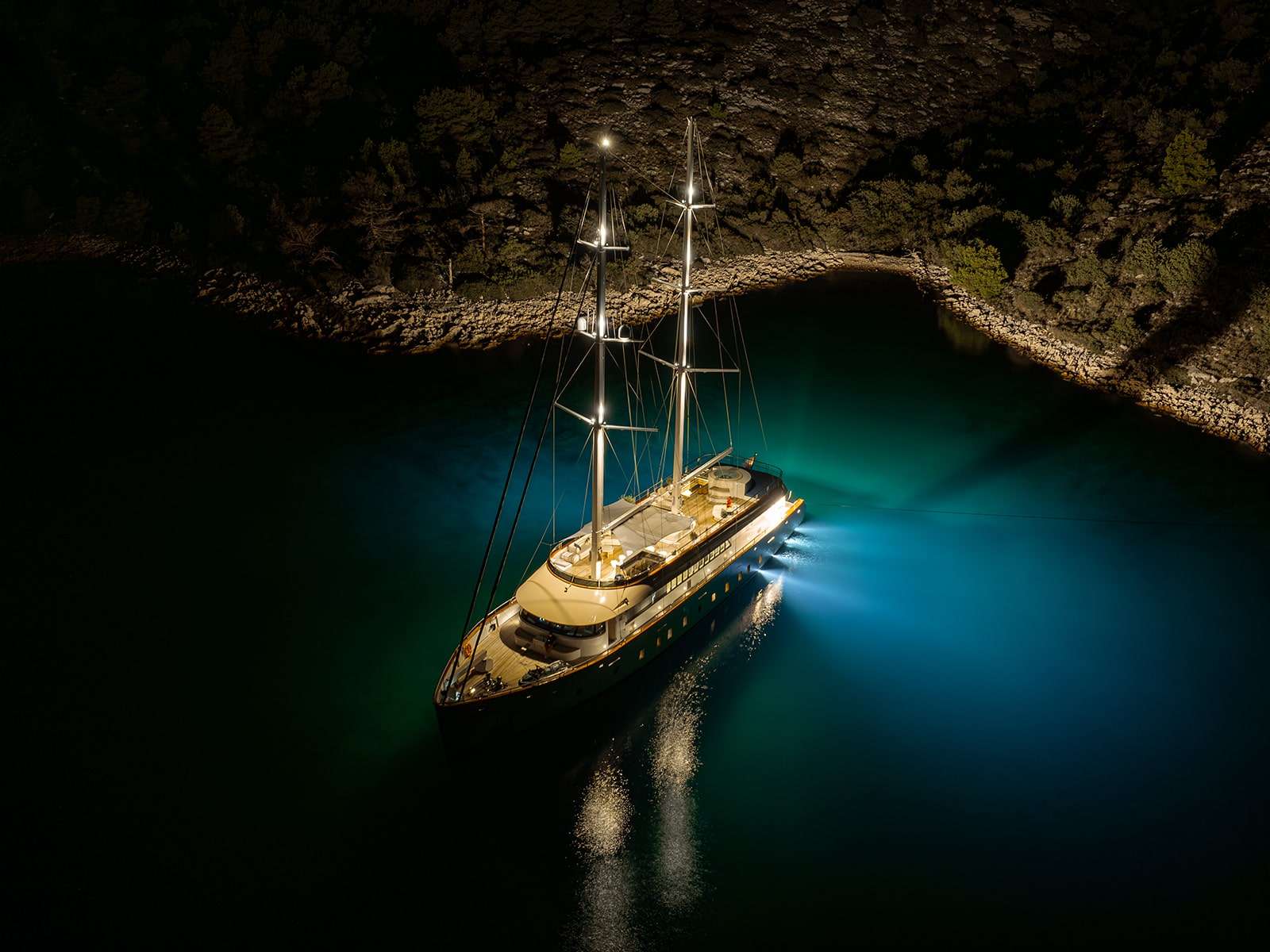
Another short 18-nautical-mile day, northeast from Pomena to Šipan—the largest and most inhabited of the Elaphiti Islands, the small archipelago scattered between Mljet and Dubrovnik. The morning sail skirts the north coast of Mljet and crosses the Šipan Channel, usually in a light to moderate Maestral, and drops you into the quiet harbor of Šipanska Luka by early afternoon.
Šipan is car-free, largely ignored by the Dubrovnik day-trip crowd, and home to a few hundred people who fish, make wine, and mind their own business. The pace here is exactly right for the second-to-last day of the trip. Anchor or take a town quay berth, walk the waterfront, swim off the stone steps, and nap somewhere shady.
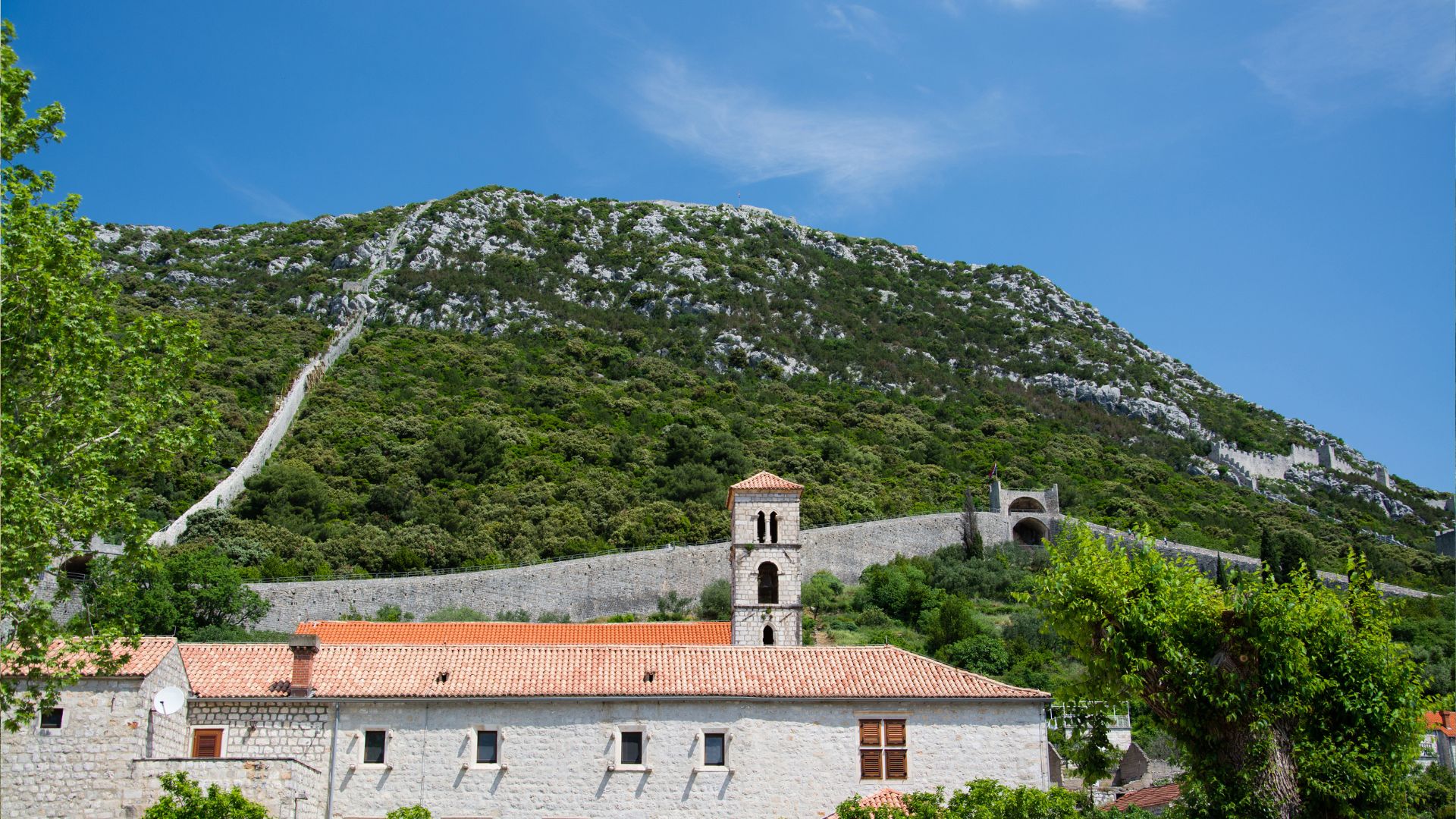
If you have the appetite for a side trip, your captain can arrange a car transfer across the channel to Ston on the Pelješac peninsula—20 minutes by tender to Slano, another 20 by road—for the long lunch Ston is built for. Ston sits at the head of a saltwater bay farmed for oysters since Roman times, and the oysters pulled out of that bay are as good as any in Europe. The town is also famous for the second-longest defensive walls in the world after the Great Wall of China, running four miles across the neck of the peninsula and very much walkable. Oysters, walls, Pelješac red on the table—a worthwhile detour for guests who want it.
Back on Šipan for dinner at Konoba Kod Marka on the harbor—family-run, four tables, whatever came in on the day's boat. Your chef handles a quiet breakfast aboard in the morning before the final leg.
Day Highlights
Day 7 of 7 · Šipan → Dubrovnik
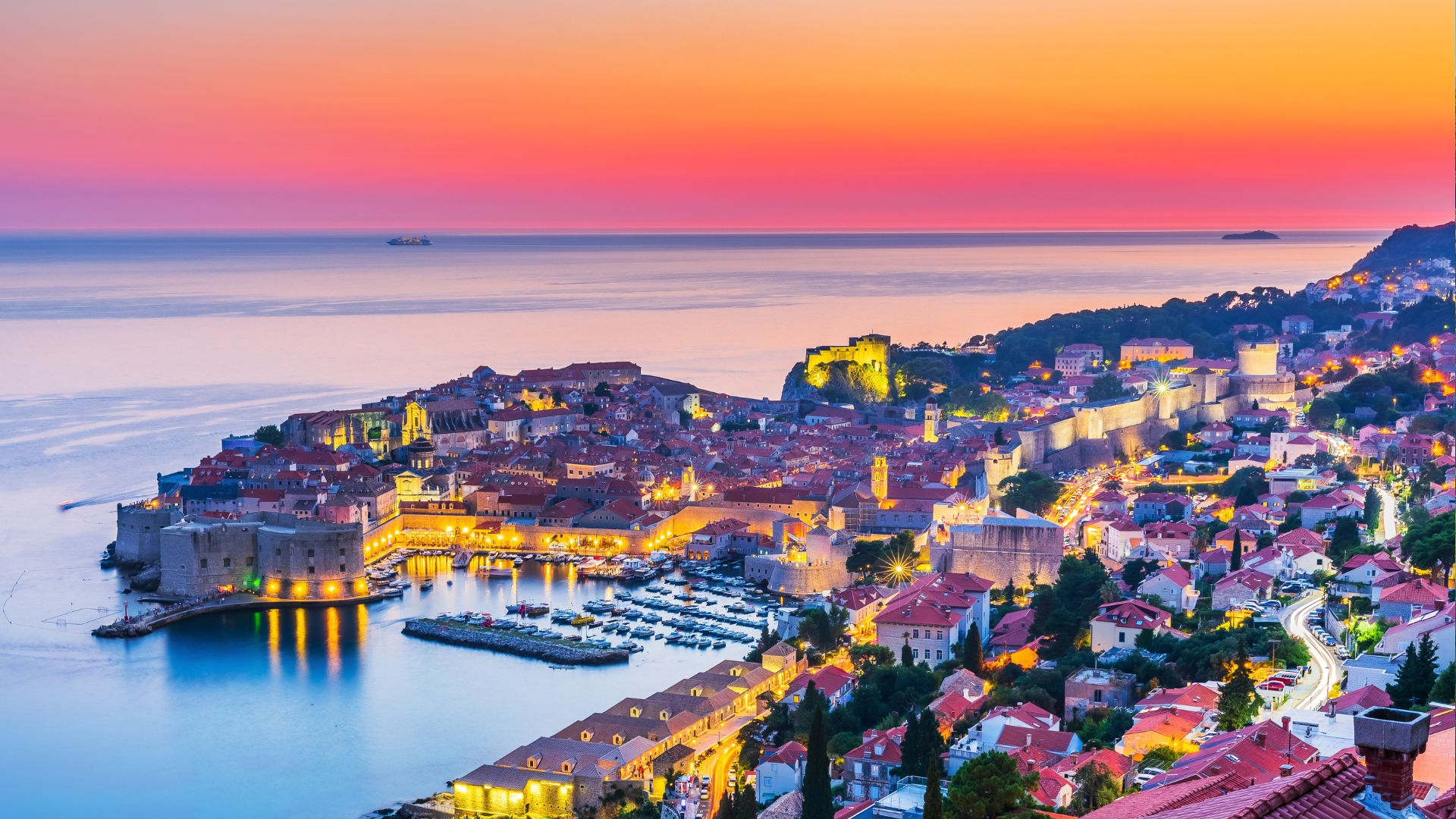
The final leg is a short, mostly ceremonial 12 nautical miles southeast from Šipan to Dubrovnik, and your captain will plan the morning around one specific experience: a close pass under the walls of the old city from the water. Most visitors to Dubrovnik first see the walls from the top of a bus queue. You'll see them from the deck of your own yacht, under sail, with Lokrum island to port and the fortifications rising 80 feet straight out of the Adriatic on your starboard side. It's the most dramatic approach to any city in the Mediterranean and it's entirely yours.
After the pass, your captain points the bow north into the Rijeka Dubrovačka—the narrow Ombla river fjord that cuts inland behind the city—and berths at ACI Marina Komolac, the calm, well-run base where the trip officially ends. From here, it's a 15-minute transfer into the old town for whatever afternoon you want.
The single best use of that afternoon is the walk around the city walls themselves. The full circuit is about a mile and a quarter, takes two leisurely hours, and is best done in the last two hours of daylight when the stone goes gold and the tour groups thin out. Yacht Warriors can arrange a private guide who knows every tower, every Ottoman-siege story, and every quiet bench with a view—the kind of walk that gives you the history without the noise. Dinner at one of the restaurants inside the walls, a nightcap overlooking the Stradun, and a short ride back to the boat.
Day Highlights
Day 8 · Departure
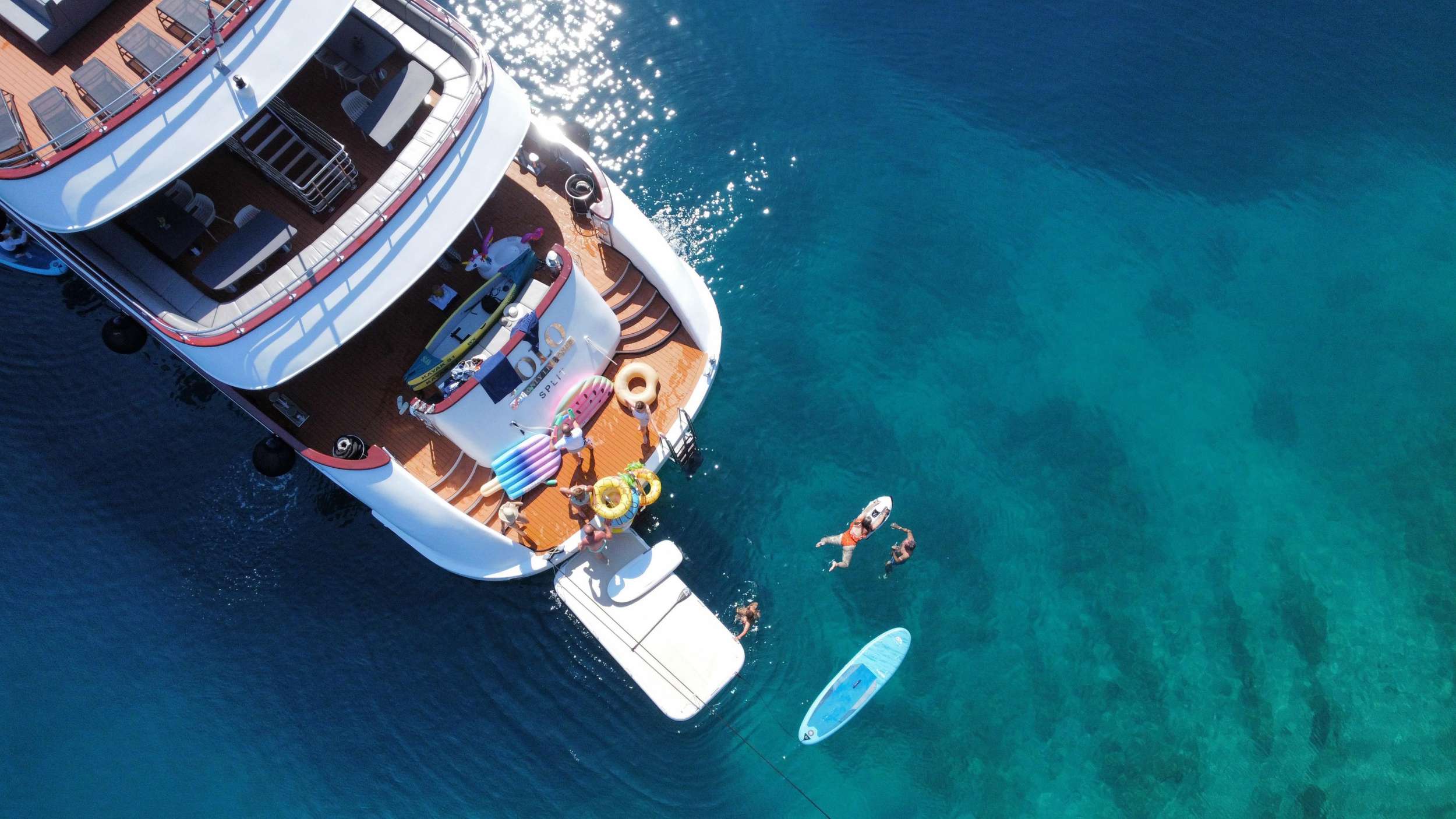
Enjoy a last slow breakfast on deck at Komolac, a last swim off the stern if you're up for it, and the short transfer your crew arranges straight to Dubrovnik Airport or to your shoreside hotel if you're extending in the city. Your captain and chef will step off the boat already talking about when you're coming back, which is usually how the good ones end.
Want to share or come back to this voyage later?
Bookmark this voyage →Croatia and Montenegro
A meaningful share of Croatia yacht charter guests end up asking the same follow-on question: should the week stay entirely on the Dalmatian Coast, or should it continue south into Montenegro. The practical answer is that Croatia is the broader cruising ground — more islands, more harbors, more restaurant depth — while Montenegro is the sharper contrast piece at the end: the Bay of Kotor, Porto Montenegro, and the Sveti Stefan offshore day.
If the goal is a clean one-country charter, Croatia is still the first answer. If the group wants a one-way with a real cross-border story, the Dubrovnik to Kotor route is the natural extension. It's the itinerary that covers both countries in one week without trying to force Montenegro into the middle of a Split round-trip.
We wrote the broader comparison at Montenegro vs Croatia — towns, food, cost, crowds, and the non-charter version of the trip — and the charter-specific route lives at The Adriatic Crossing: Dubrovnik to Kotor. If you're deciding between a Croatia yacht charter and a Montenegro yacht charter, start there.
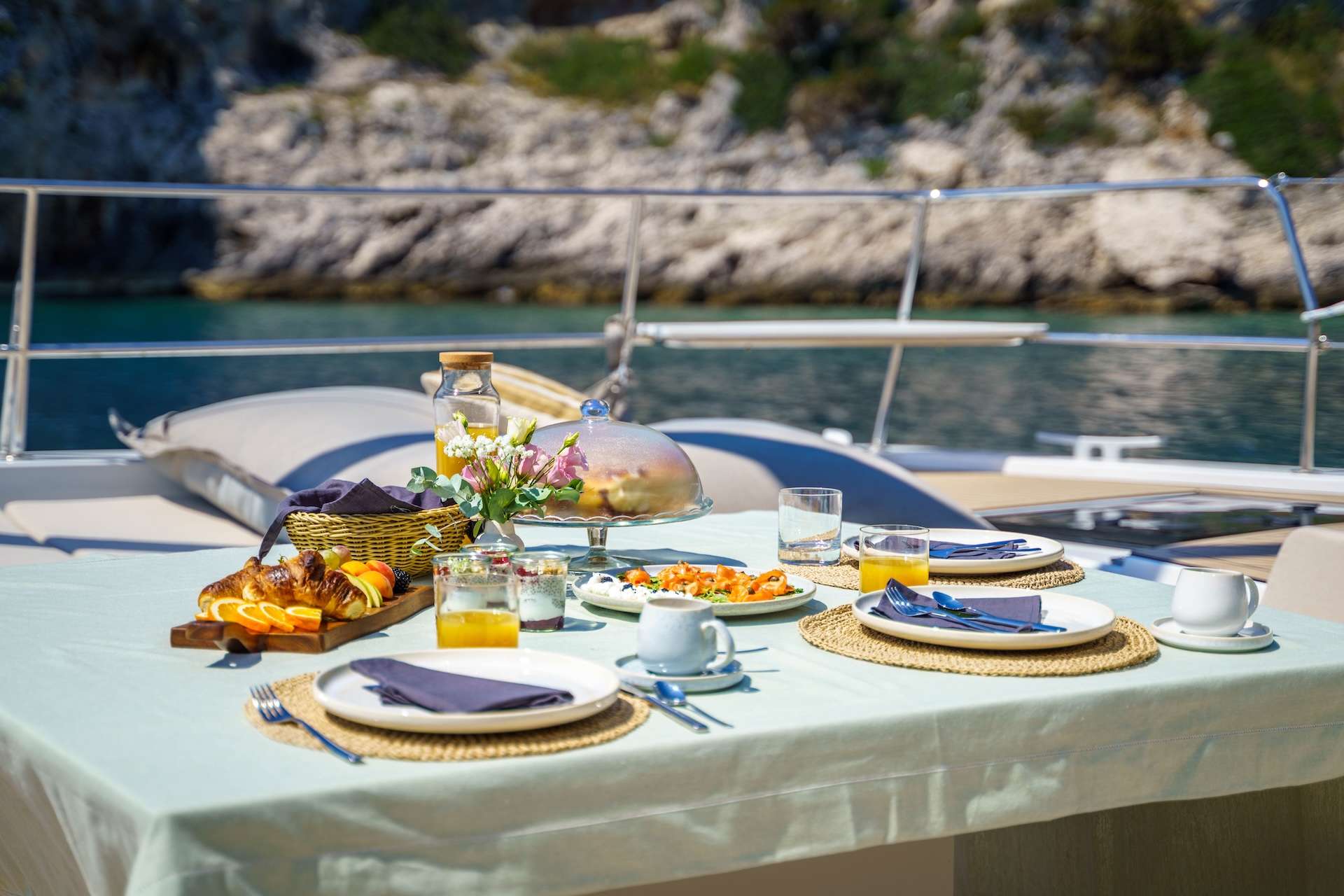
When to go, what it costs, and how to get there — the practical answers guests ask before booking a Croatia crewed yacht charter.
July and August are the highest-volume booking weeks of the Mediterranean season. Daytime temperatures sit in the high 80s to low 90s, the Maestral fills in reliably most afternoons, water temperatures peak in the high 70s, and the islands are at their busiest — Hvar Town's quay fills with megayachts, the konobas book weeks ahead, and the Pakleni anchorages can hold a hundred yachts on the right Saturday. The best yachts and crews go 9–12 months in advance for these weeks, and rates run 25–40% higher than the shoulders. Charterers who want the energy of the Adriatic at full season pay for it; charterers who want quieter water and easier reservations book the windows on either side.
June and September are the best balance of the year. Trade winds remain steady, water temperatures sit in the mid-70s (warm enough to swim daily), the konobas have tables, the islands feel local again, and rates fall 20–30% from peak. September particularly is when many Adriatic regulars charter — the heat softens, the Maestral remains, and the day-trip boats begin to thin out. Late May and early October are also workable for guests who can travel before the school calendar kicks in or after it ends — slightly cooler water, lower rates, occasional Jugo (the southeasterly that brings squalls and shifts the channel) but the captain plans the route around it.
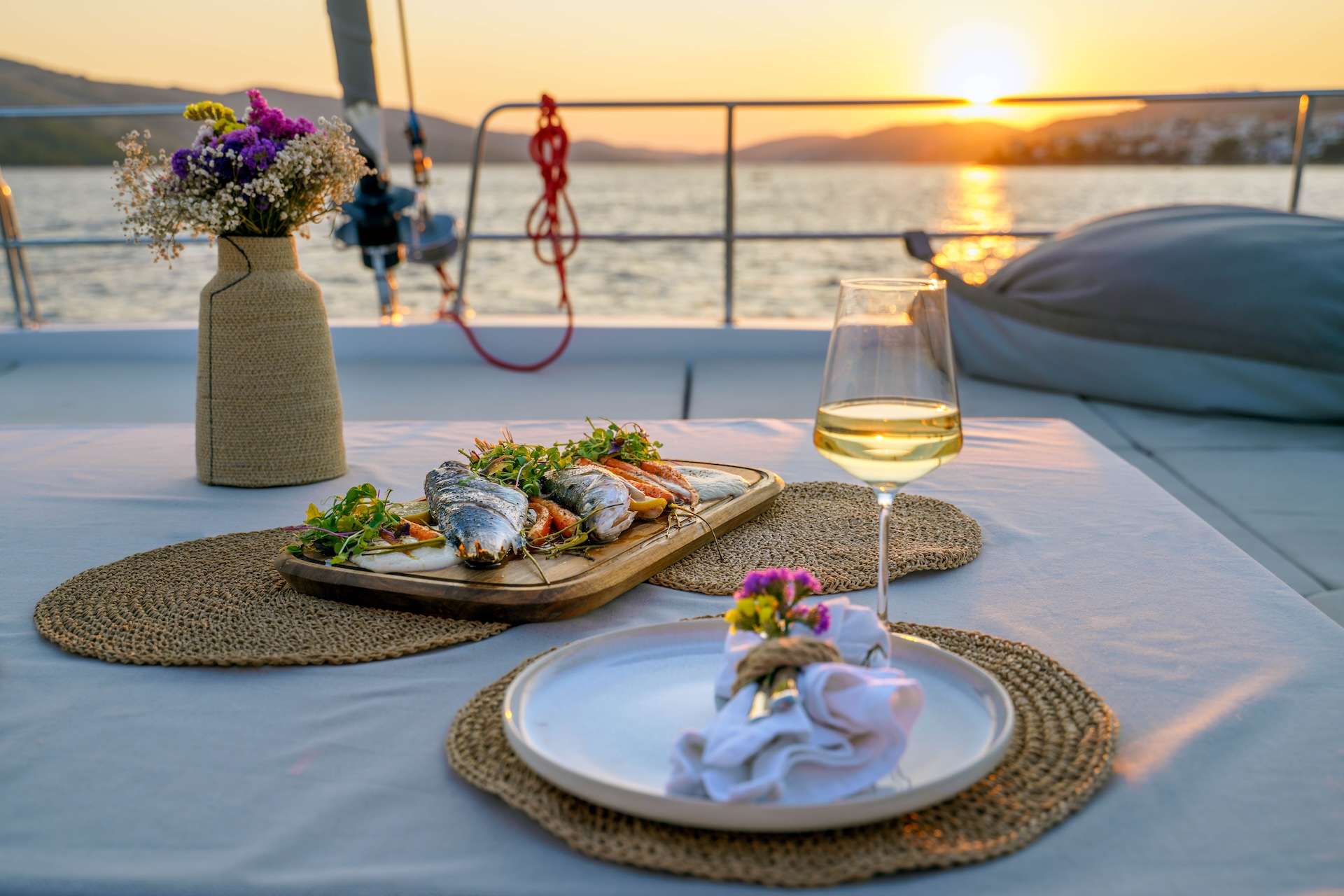
$25,000–$100,000 per week
Crewed yacht charters in Croatia typically run from $25,000 to $100,000+ per week base rate, depending on yacht size, build year, and crew. Croatia operates on the Mediterranean plus-expenses model — not the all-inclusive default of the Caribbean. The base rate covers the yacht and crew only. Food, beverages, fuel, marina dockage, harbor fees, transit logs, water and electric, and tourist tax are paid through an Advance Provisioning Allowance (APA) pre-funded at 30–35% of the base rate and reconciled at trip end. Croatian charter VAT is 13% (a reduced rate on yacht charters, separate from the 25% standard VAT) and is added to the base rate at booking. Crew gratuities run 10–15% in the Mediterranean — lower than the Caribbean's 15–20% — paid directly to the captain on disembarkation. Charters in Croatia run Saturday to Saturday as standard; the seven-day week is built around the country's consolidated turnaround day, and weekday start dates are rare.
About chartering in Croatia.
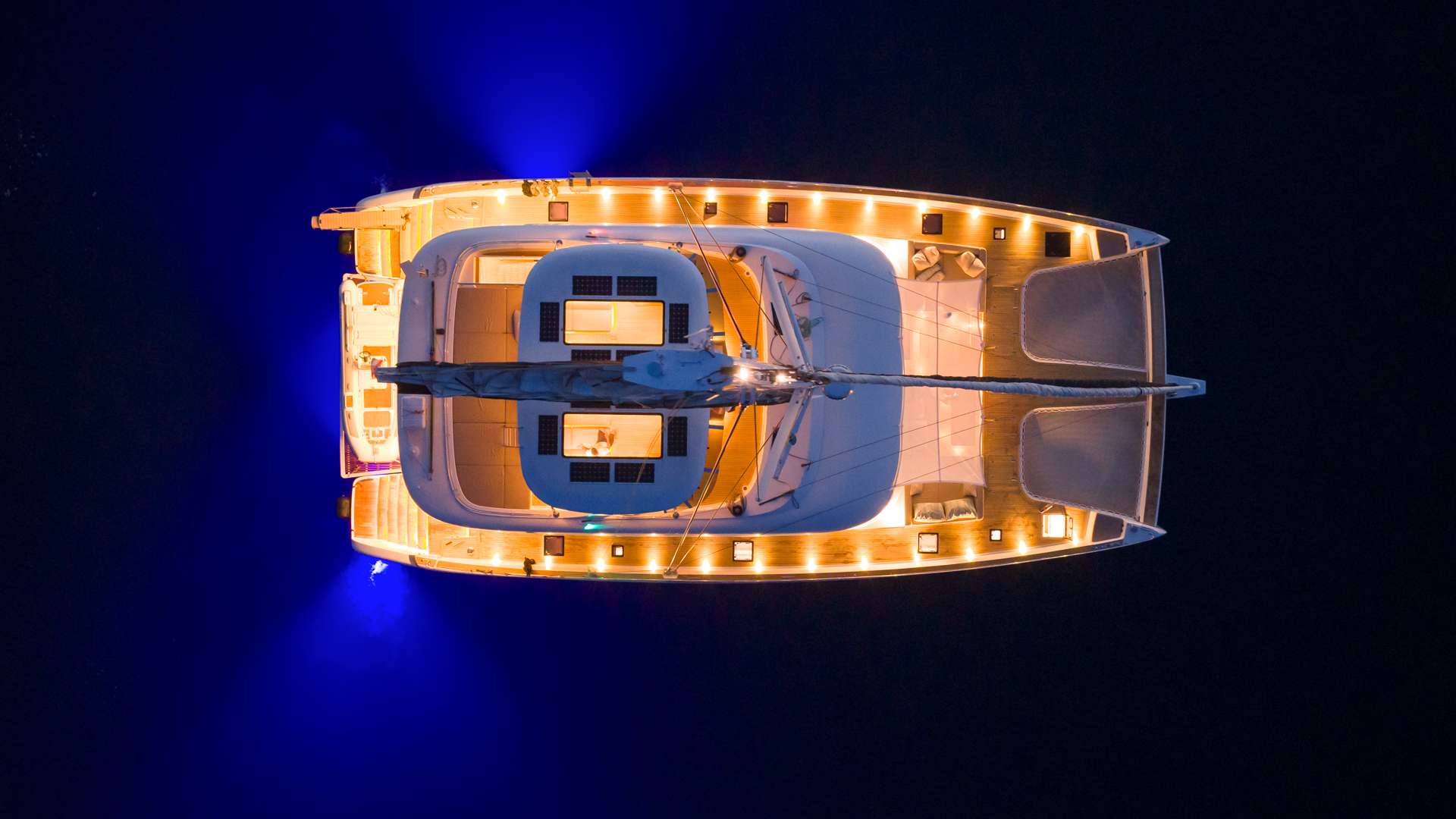
Field-tested guides, itineraries, and tips — written from years of chartering these waters.

Greece or Croatia? Compare destinations, sailing style, and pricing to choose the right Mediterranean charter for your trip.
We charter across the Eastern Mediterranean. Here are some other excellent alternatives.

Embark on a Greece yacht charter to experience timeless beauty, crystal-clear waters, ancient ruins, and charming islands offering endless exploration.

The Mediterranean week that looks like nowhere else in Europe — medieval walls dropping straight into the water, a baroque church on an island made from sunken ships, and the Sveti Stefan silhouette at the offshore anchor. The Adriatic week most guests book the second time they come.

Yalıkavak's celebrity-chef quay, Maçakizi's pontoon at sundown, Kekova where the sunken city of Simena sits below your anchor — the Mediterranean the Turks have mostly kept for themselves, and the lowest charter VAT in the Med.
Fill out our quick form and we'll dive into your unique preferences — from adventure-packed itineraries to pampered escapes. Whether you're a seasoned voyager or new to charters, we'll tailor recommendations just for you.
With over fifteen years of experience, we'll match you with the yacht that fits your style, group, and itinerary. We work directly with the captains and crews across our list — so the recommendation is built around the right boat-and-crew fit for your week, not whatever's easiest to book.
Once your yacht is booked, we'll take care of logistics: paperwork, reminders, and personalized resources to help you plan. From arrival planning to must-visit spots, we'll make your charter as seamless as it is unforgettable.

What to Expect on a Private, Crewed Yacht Charter
Learn what makes crewed yacht charters extraordinary: personalized service, gourmet dining, and endless opportunities for adventure and relaxation.

How Does the Booking Process Work?
Our team handles every detail of your crewed yacht charter booking, ensuring a seamless experience from your first inquiry to setting sail.

Crewed Yacht Charter Pricing Explained
Understand what a crewed charter costs, the types of pricing, and what is included / not included.

Logistics: Proven Travel Plans for a Stress-Free Start
Plan your journey to your crewed yacht charter with ease. Tips on flights, transfers, and logistics for a stress-free start to your vacation.
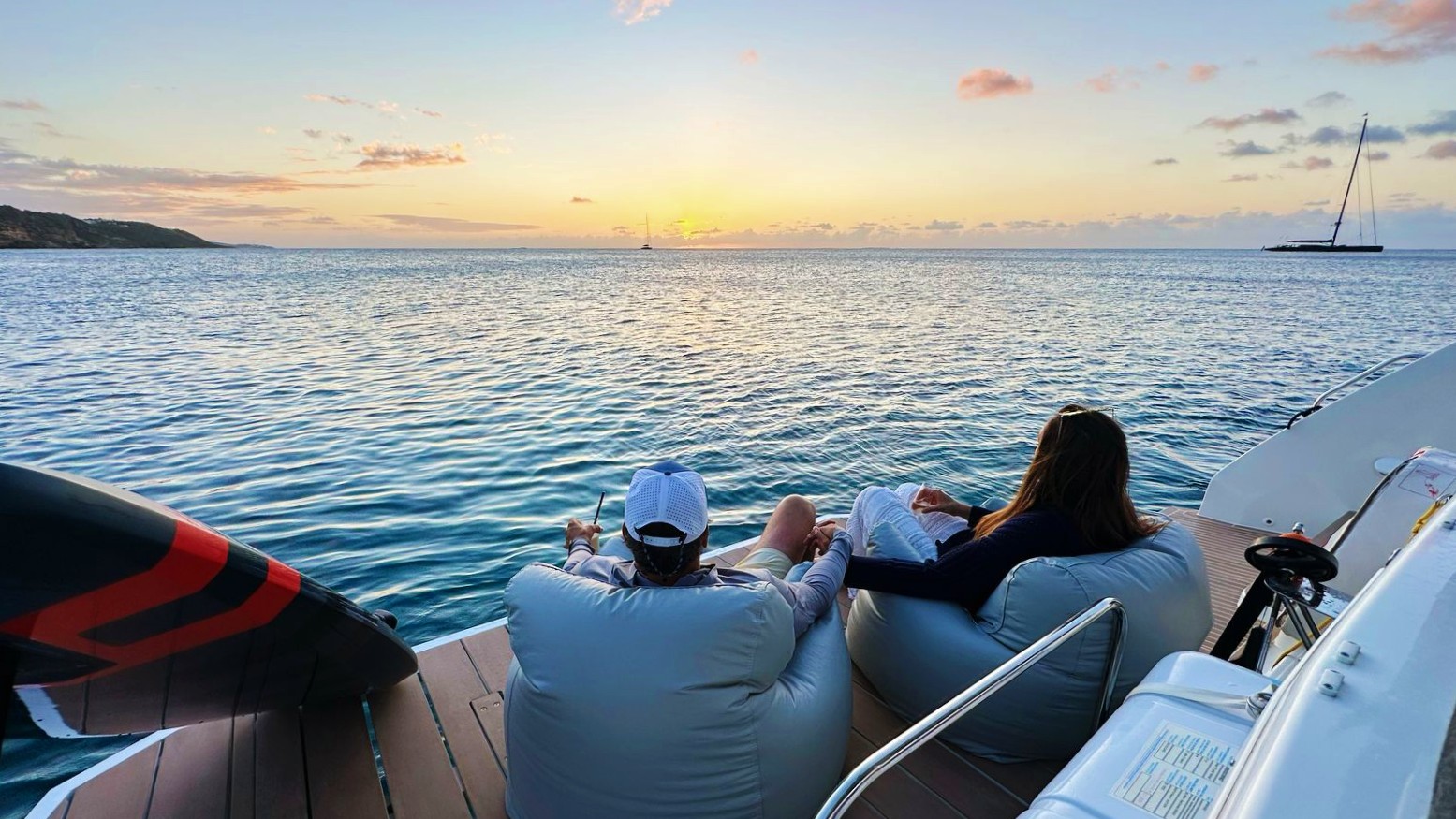
Honeymoon Yacht Charters
Start your marriage on a private yacht. Explore secluded beaches, gourmet dining, and unforgettable sunsets in the Caribbean.
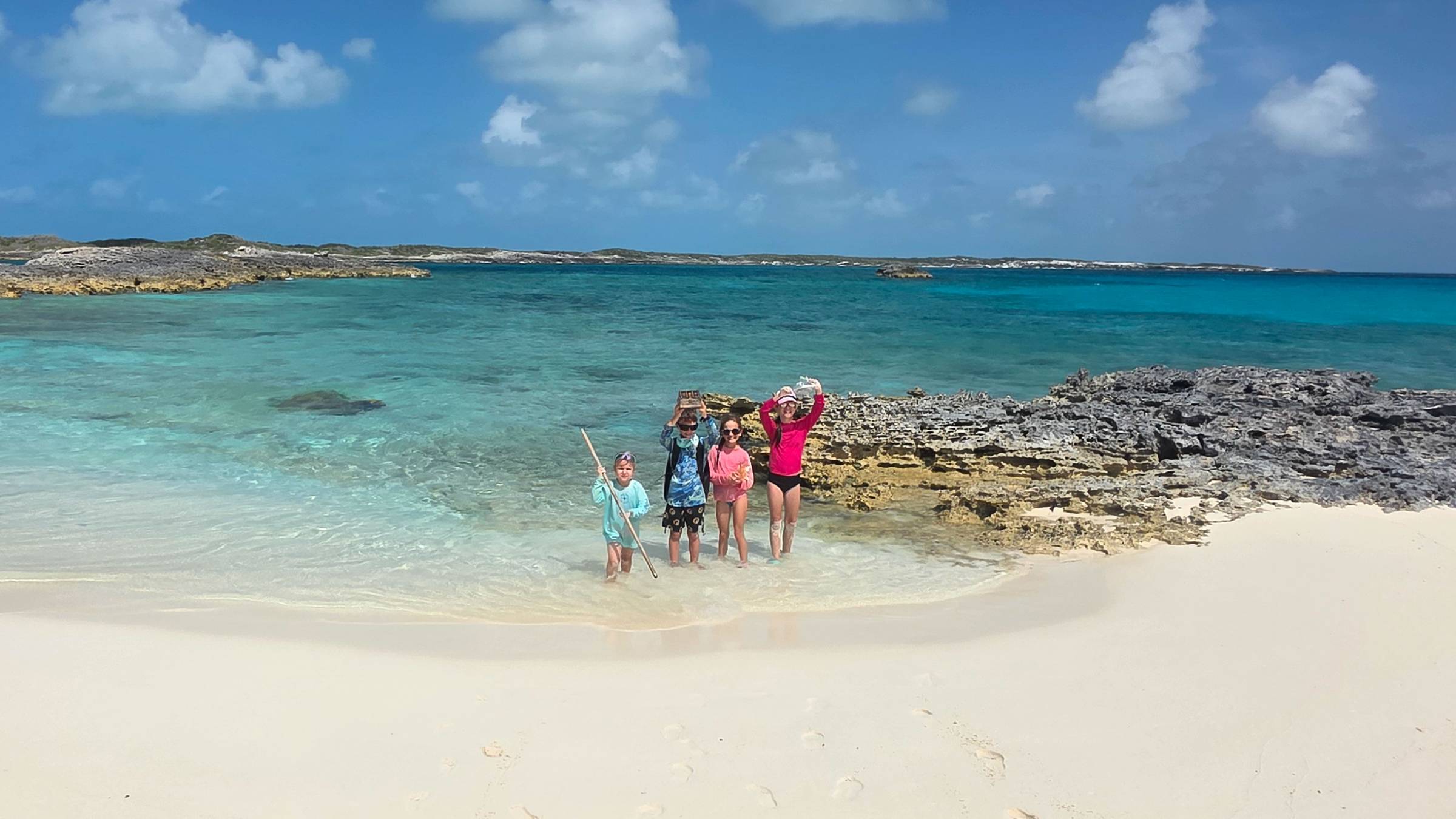
Family Yacht Charters
A crewed yacht charter is perfect for families of all ages. Safe, fun, and fully catered — your kids will never forget it.

Crewed Charter FAQ
Get answers to common questions about crewed yacht charters, from pricing and tipping to what's included and what to pack.

BVI Crewed Yacht Charters
The British Virgin Islands are the #1 crewed charter destination in the Caribbean. Short sails, protected waters, and world-class anchorages.

BVI Crewed Charter Guide
Everything you need to know before your BVI crewed catamaran charter — pricing, packing list, sample itinerary, and getting there.
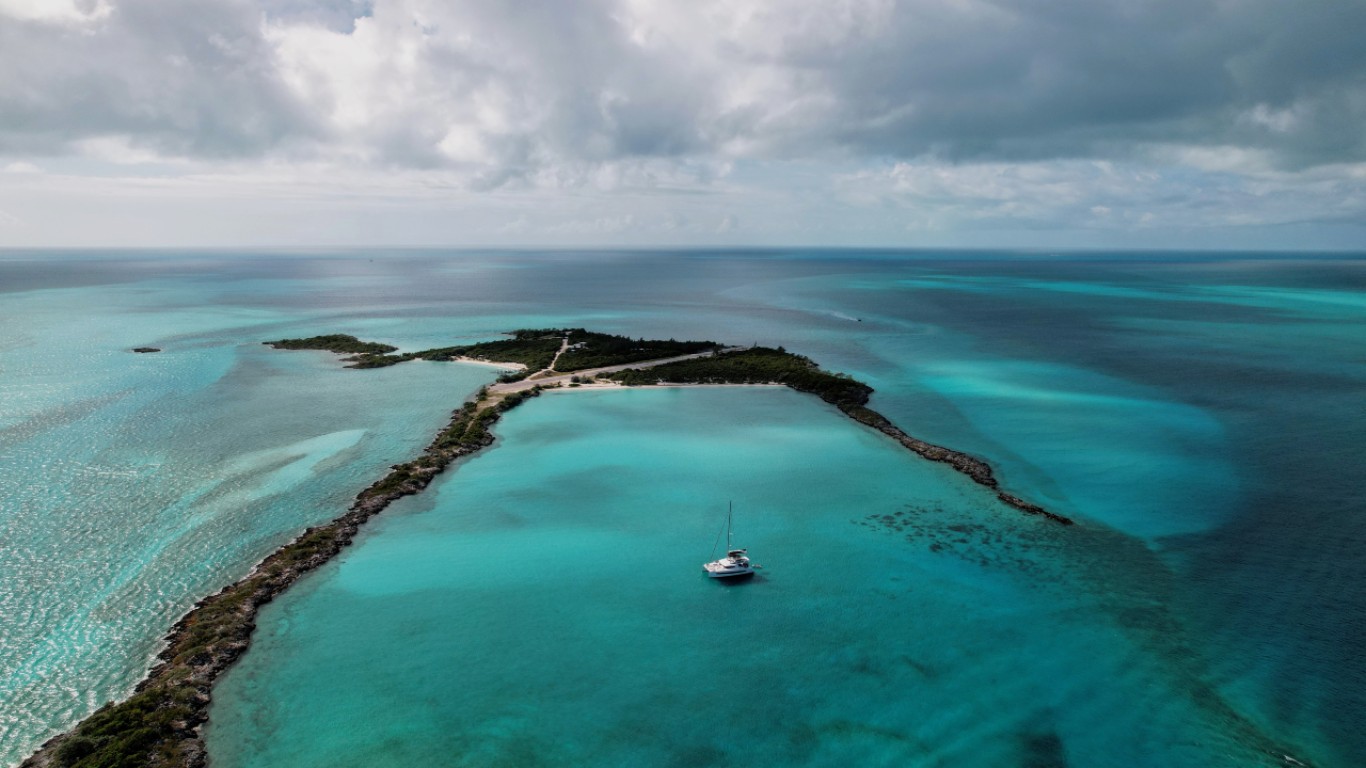
Bahamas Crewed Yacht Charters
Explore the Exumas on a private crewed yacht. Swimming pigs, sandbars, and some of the clearest water on earth.
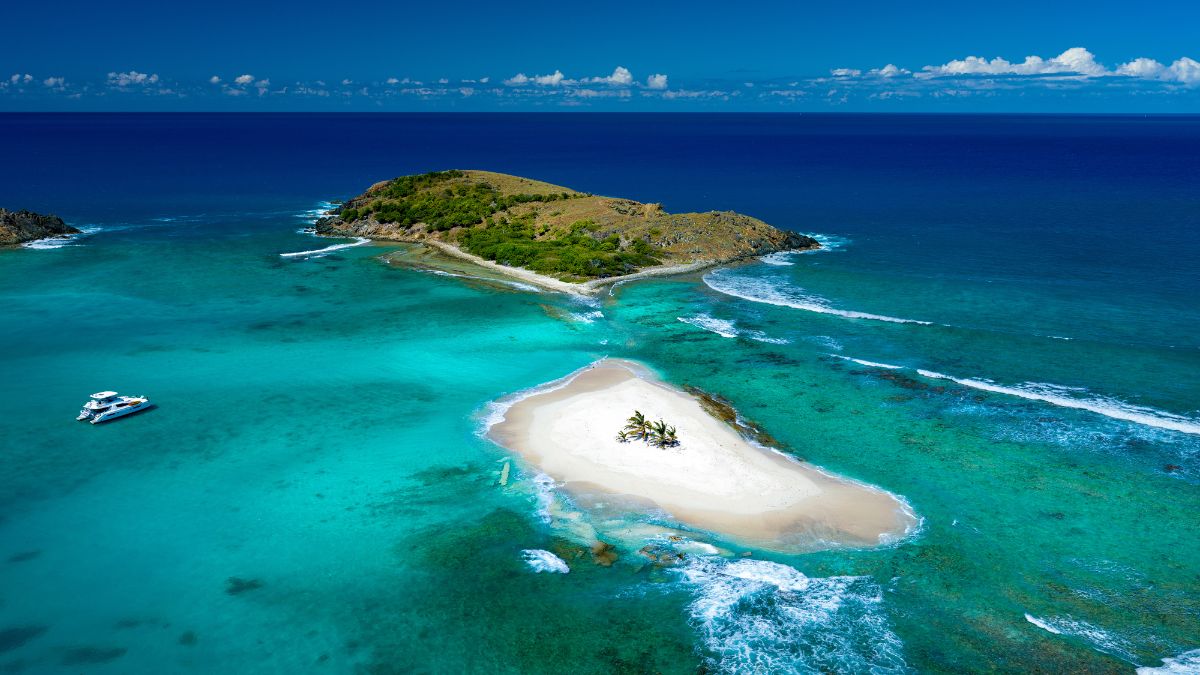
Caribbean Crewed Yacht Charters
All-inclusive crewed charters across the Caribbean — BVI, Bahamas, USVI, St. Martin, Antigua, and beyond.