Crewed Itinerary · Sardinia & Corsica

Corsica Itinerary: A 7-Day West Coast Sailing Week from Ajaccio

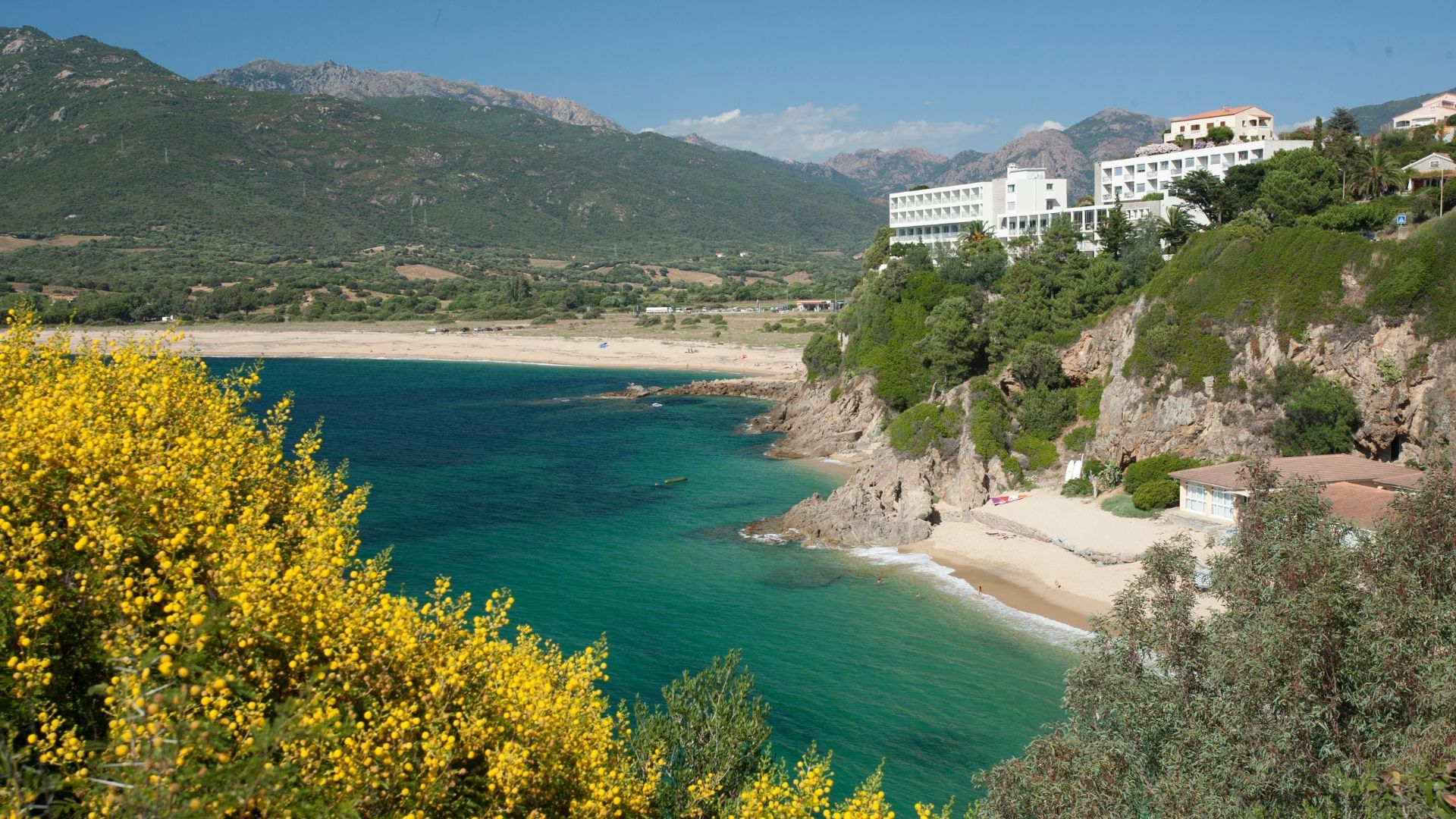
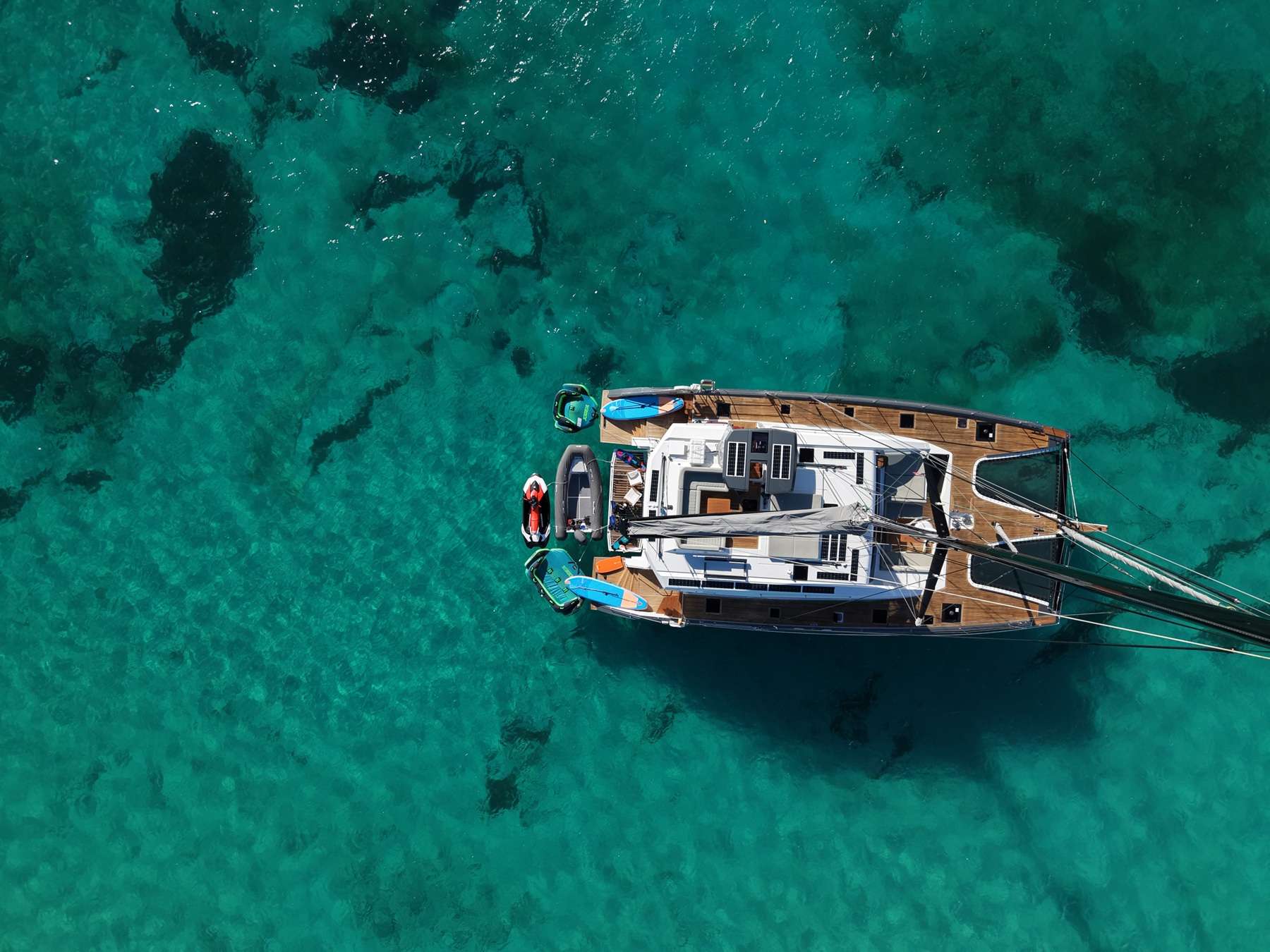
This is the wilder side of the Sardinia & Corsica cruising ground — a seven-day round trip from Ajaccio that runs the full west coast of Corsica, with the UNESCO red-cliff coast of Scandola in the middle of the week, the medieval citadel of Calvi at the northern turn, and a return south through Patrimonio's vineyards on Cap Corse. Roughly a hundred and fifty nautical miles end to end, with a Saint-Florent option for guests who want to push around the cape. The route works on a sailing yacht or a motor yacht; the open-coast headlands at Capo Rosso and the Scandola entrance can throw swell when the maestrale is up, and the captain reads the morning's forecast at first light.

Most groups who book this route over the cross-strait version are guests who've already done the Italian week or who want a more rugged Corsican cruising character: less polished anchorage culture, more village-walk fishing harbors, and the only UNESCO World Heritage marine reserve in the western Mediterranean. The food and wine register changes too — Corsican charcuterie, brocciu cheese, pulenta, and Patrimonio rosé from the chalk-soil vineyards on Cap Corse. Your professional captain and private chef handle the rest.

Duration
7 days / 8 nights
Base
Marina d'Ajaccio (round-trip)
Plan your Sardinia & Corsica charter Custom-tailored to your dates and group preferences
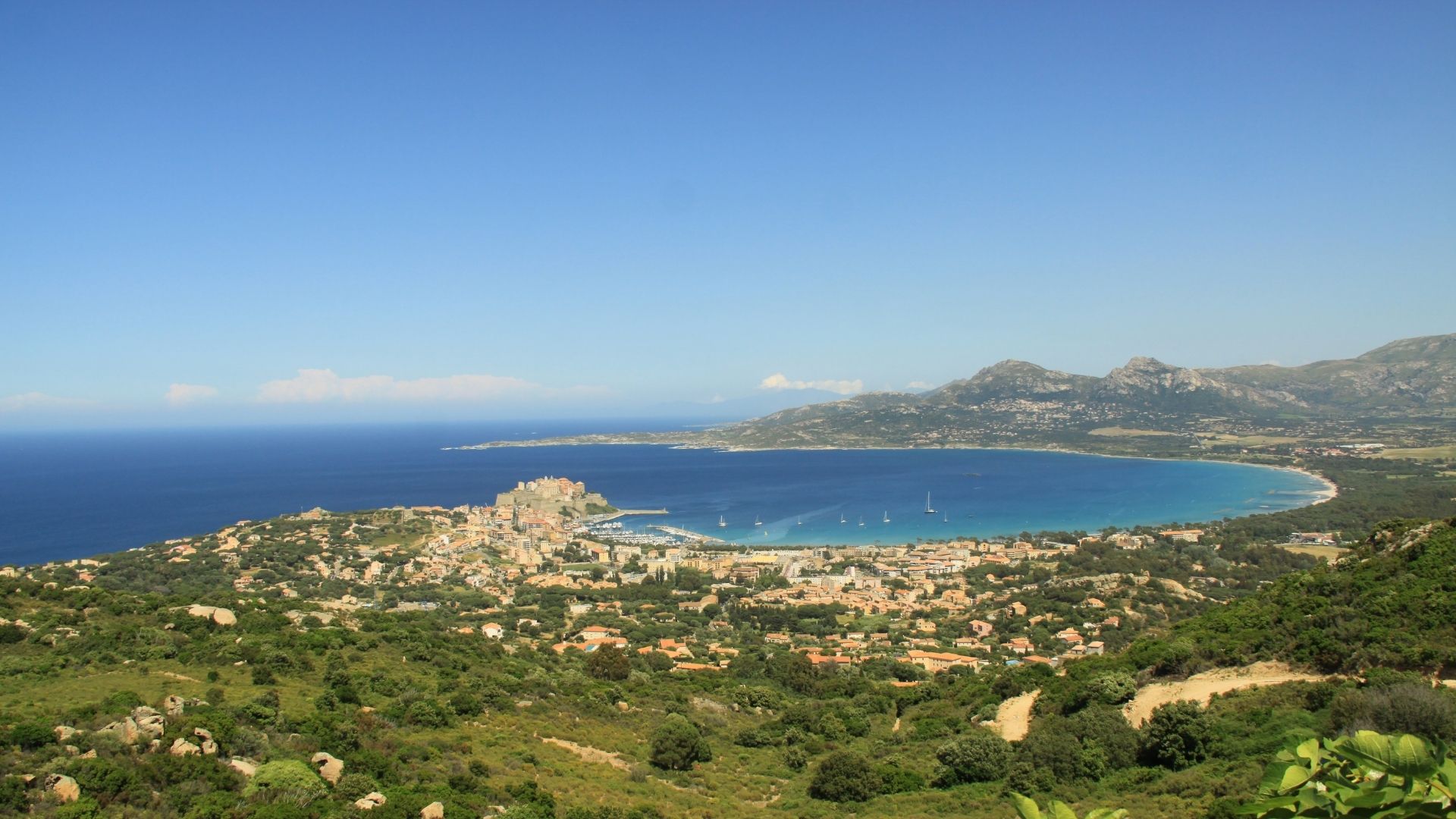
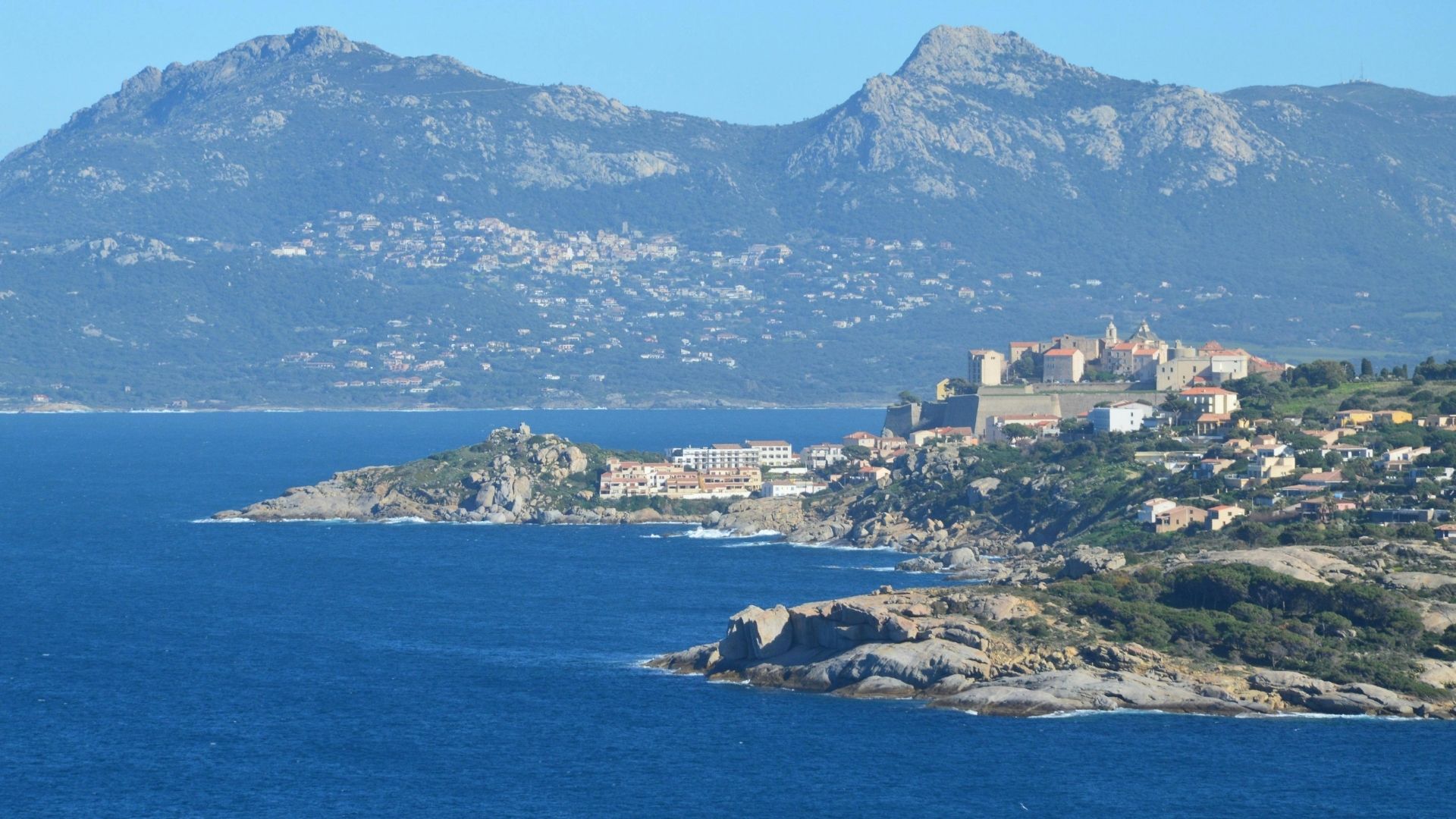
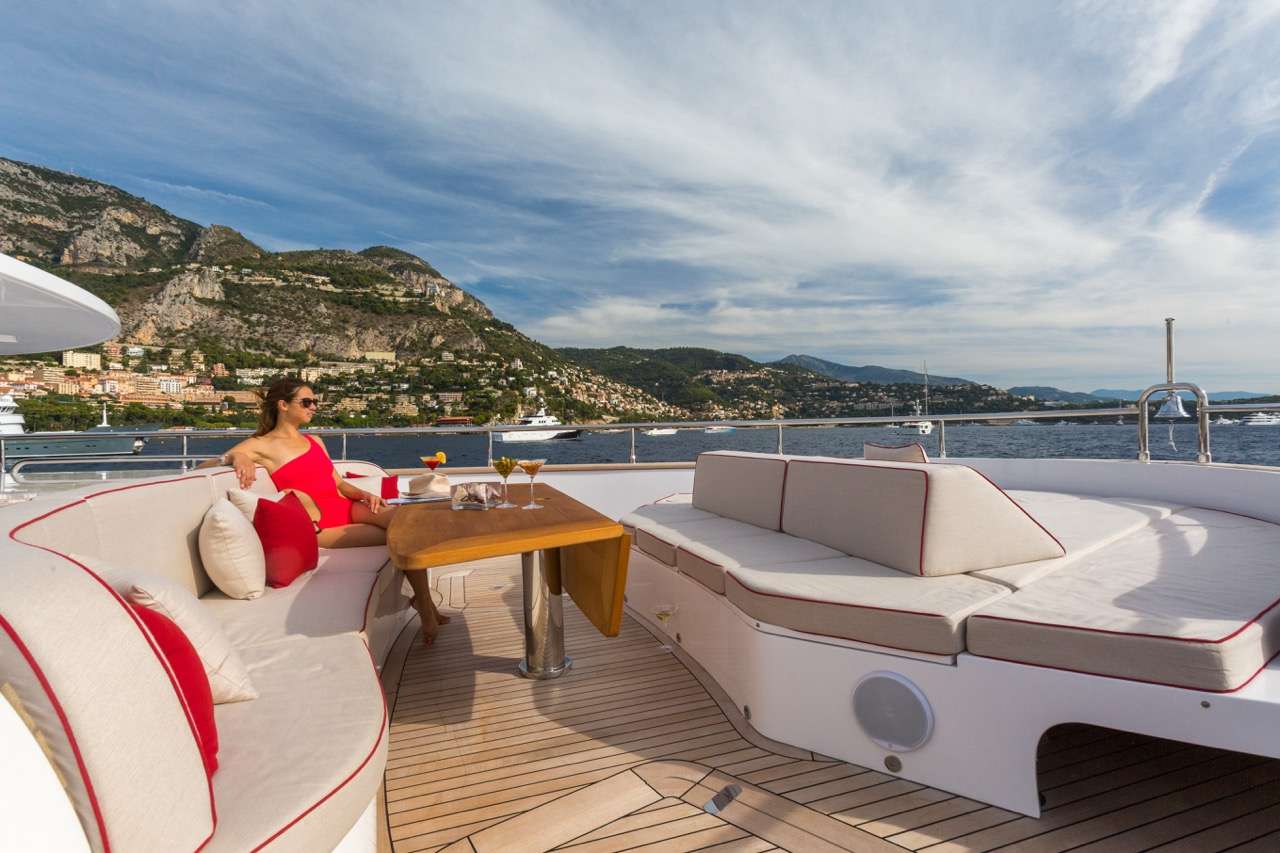
Calvi's Genoese citadel rising above the marina, with the five-mile beach and snow-capped mountains in the distance.
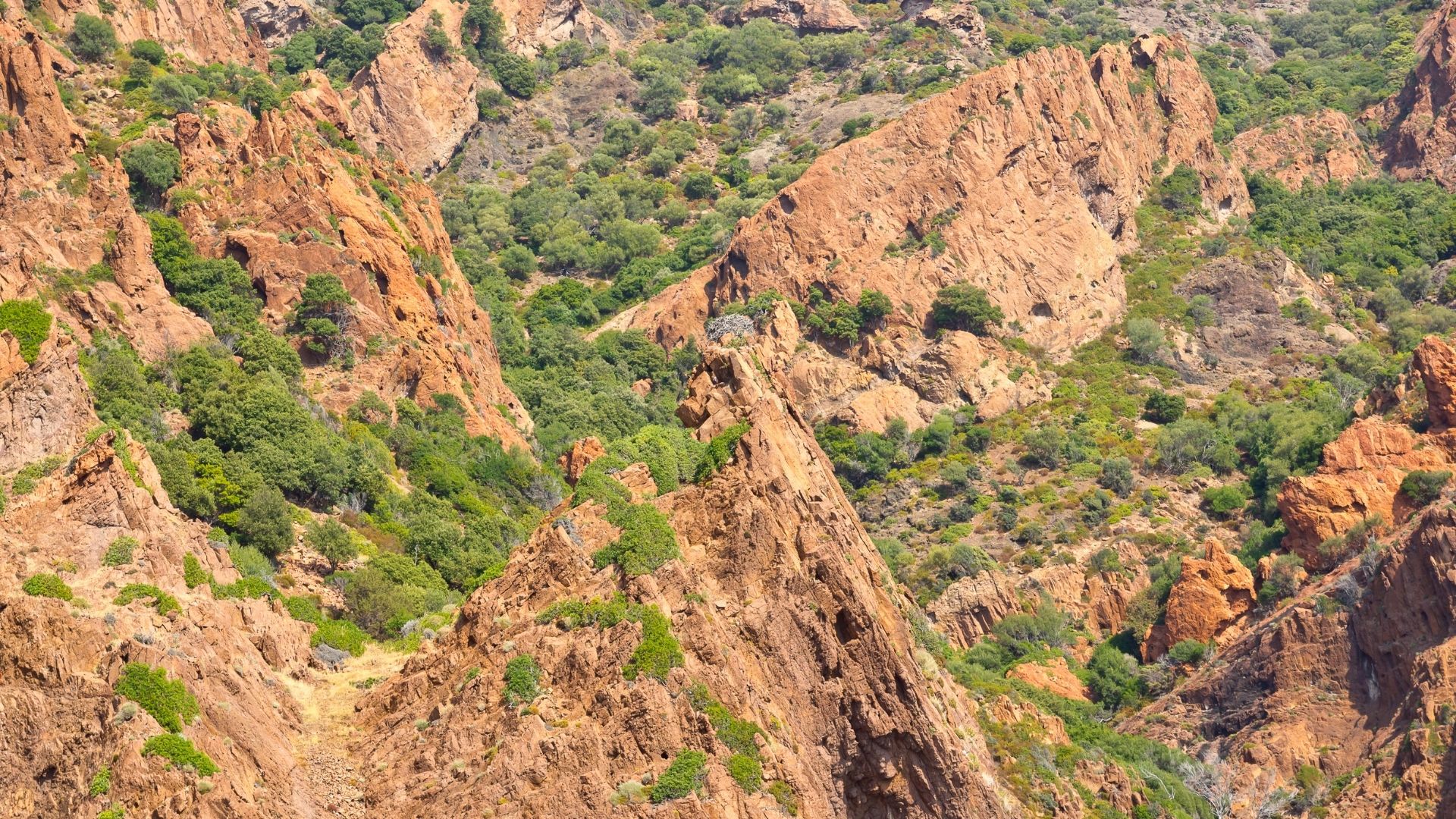
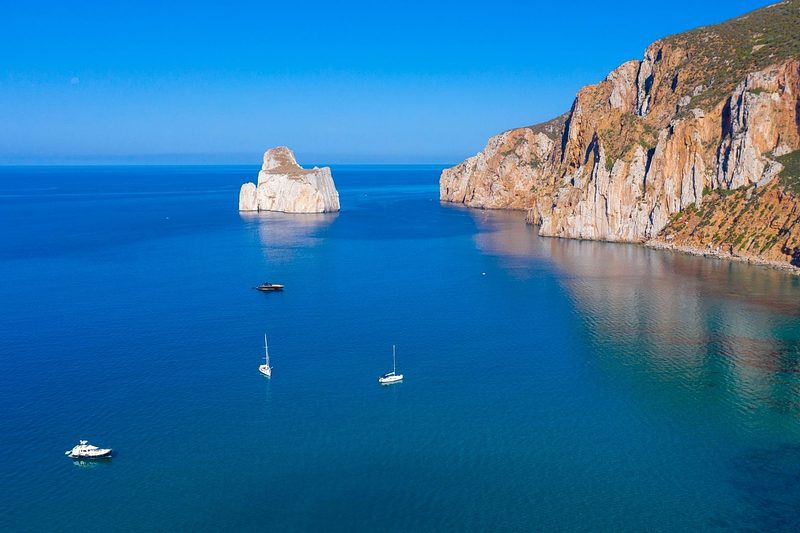
The red porphyry cliffs of the Scandola Nature Reserve — UNESCO World Heritage on Corsica's west coast.
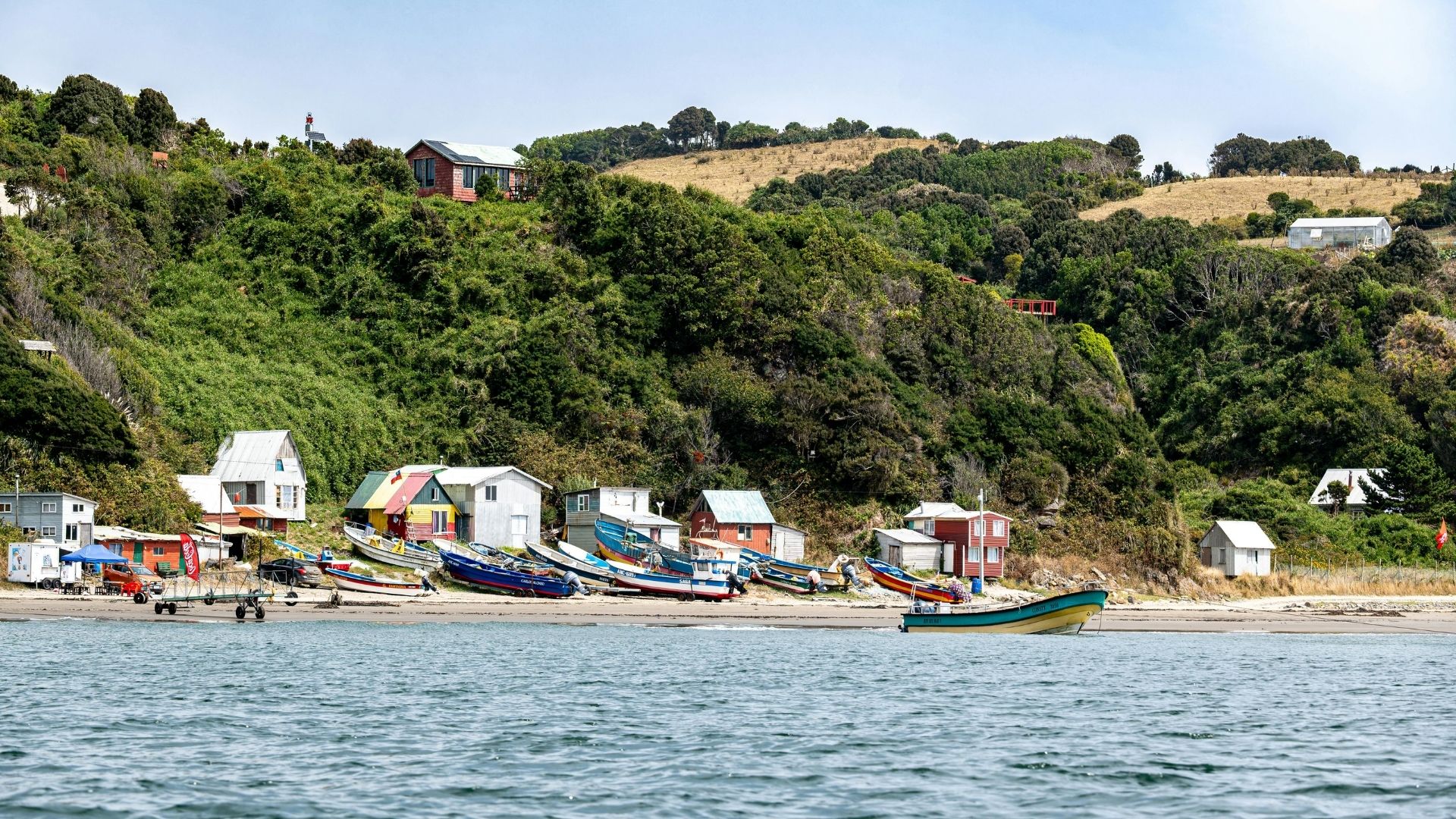
Girolata — a fishing village in the Gulf of Porto reachable only from the sea or by a four-hour hiking trail.
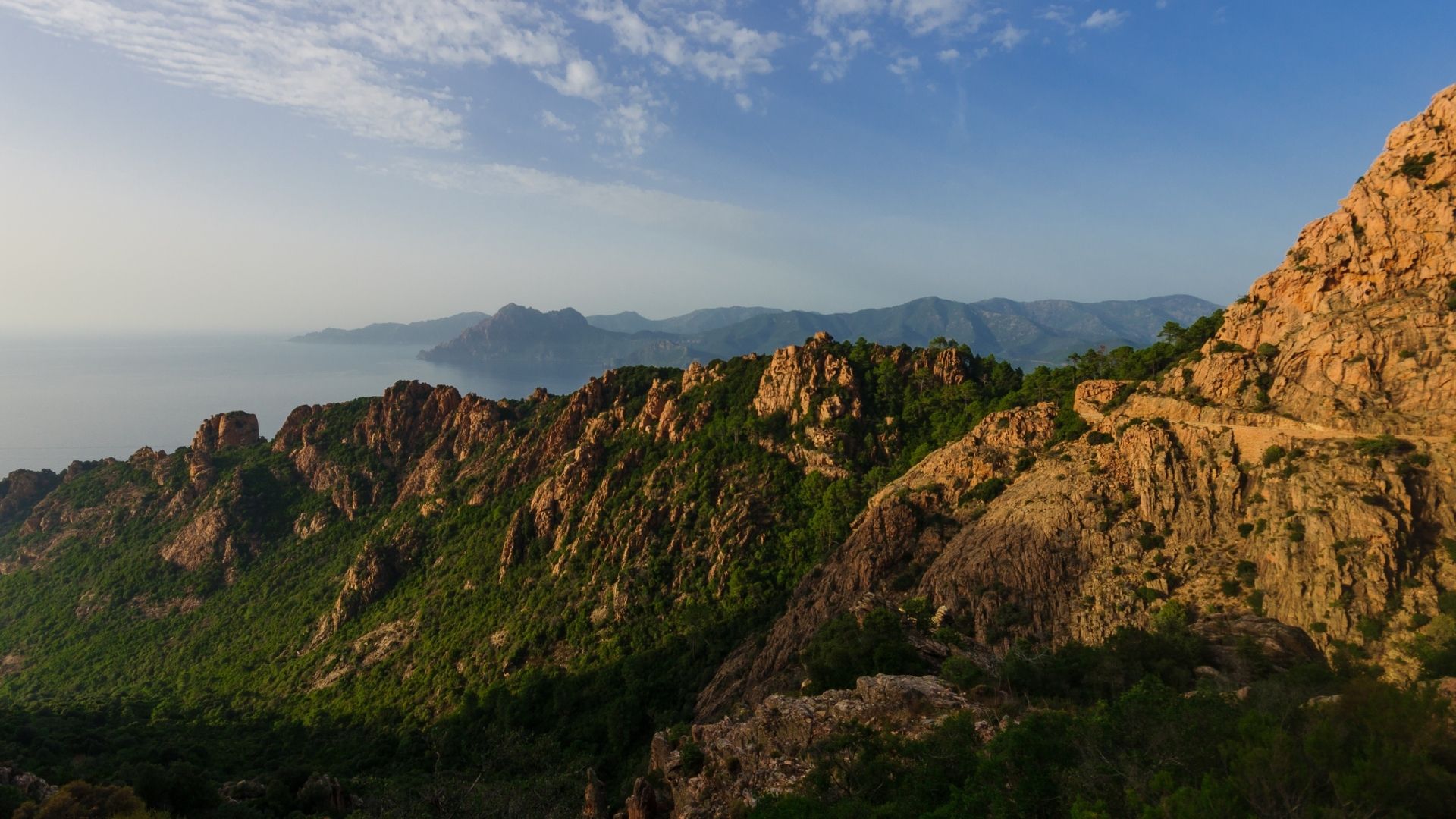
The Calanques de Piana — UNESCO red-rock cliffs on the southern entrance to the Gulf of Porto.

Why this Corsica itinerary works the wilder west coast

This is the wilder side of the Sardinia & Corsica cruising ground — a 7-day round-trip from Ajaccio that runs the full west coast of Corsica. UNESCO Scandola in the middle of the week (the only UNESCO World Heritage marine reserve in the western Mediterranean), the medieval citadel of Calvi at the northern turn, and a return south through the chalk-soil Patrimonio vineyards on Cap Corse. About 150 nautical miles total — meaningfully more ground than the Italian-waters loop, with payoff at every anchorage.

Most groups who book this Corsica itinerary over the Sardinia loop are guests who've already done the Italian week or who want a more rugged cruising character — less polished anchorage culture, more fishing-harbor villages, the Calanques de Piana red cliffs, and Girolata (a fishing village reachable only from the sea). The food register shifts too: Corsican charcuterie, brocciu cheese, pulenta, and Patrimonio rosé.

1

Day 1 of 7 · Ajaccio → Sanguinaires

Marina d'Ajaccio to the Sanguinaires Islands
Anchorage: Sanguinaires anchorage
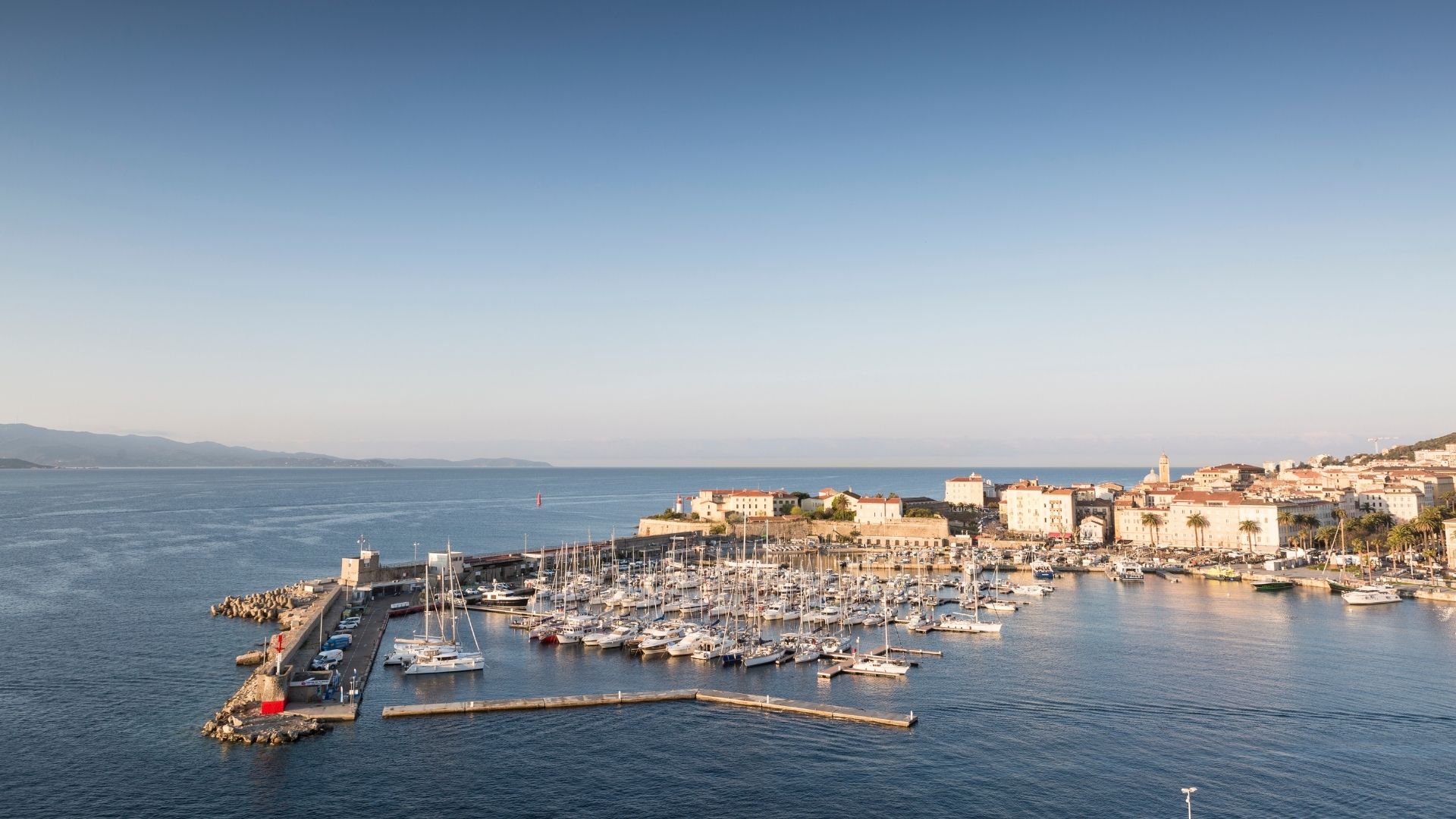
Marina d'Ajaccio sits at the head of the Gulf of Ajaccio — a ten-minute taxi from AJA airport and the embarkation point for the west-coast route.
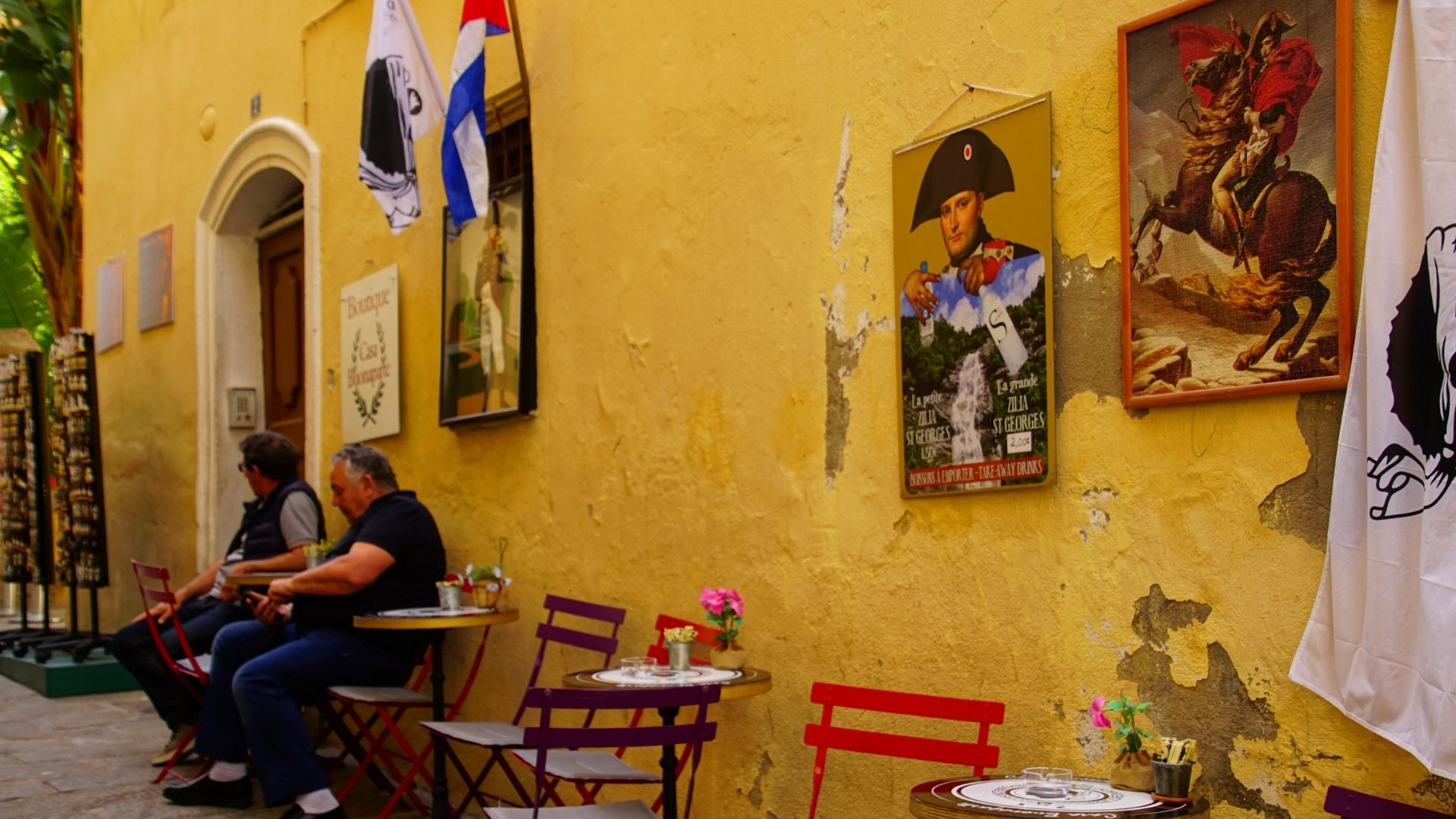
Napoleon was born in Ajaccio in 1769; the family house in the old town is preserved as a museum and is a fifteen-minute walk from the marina.
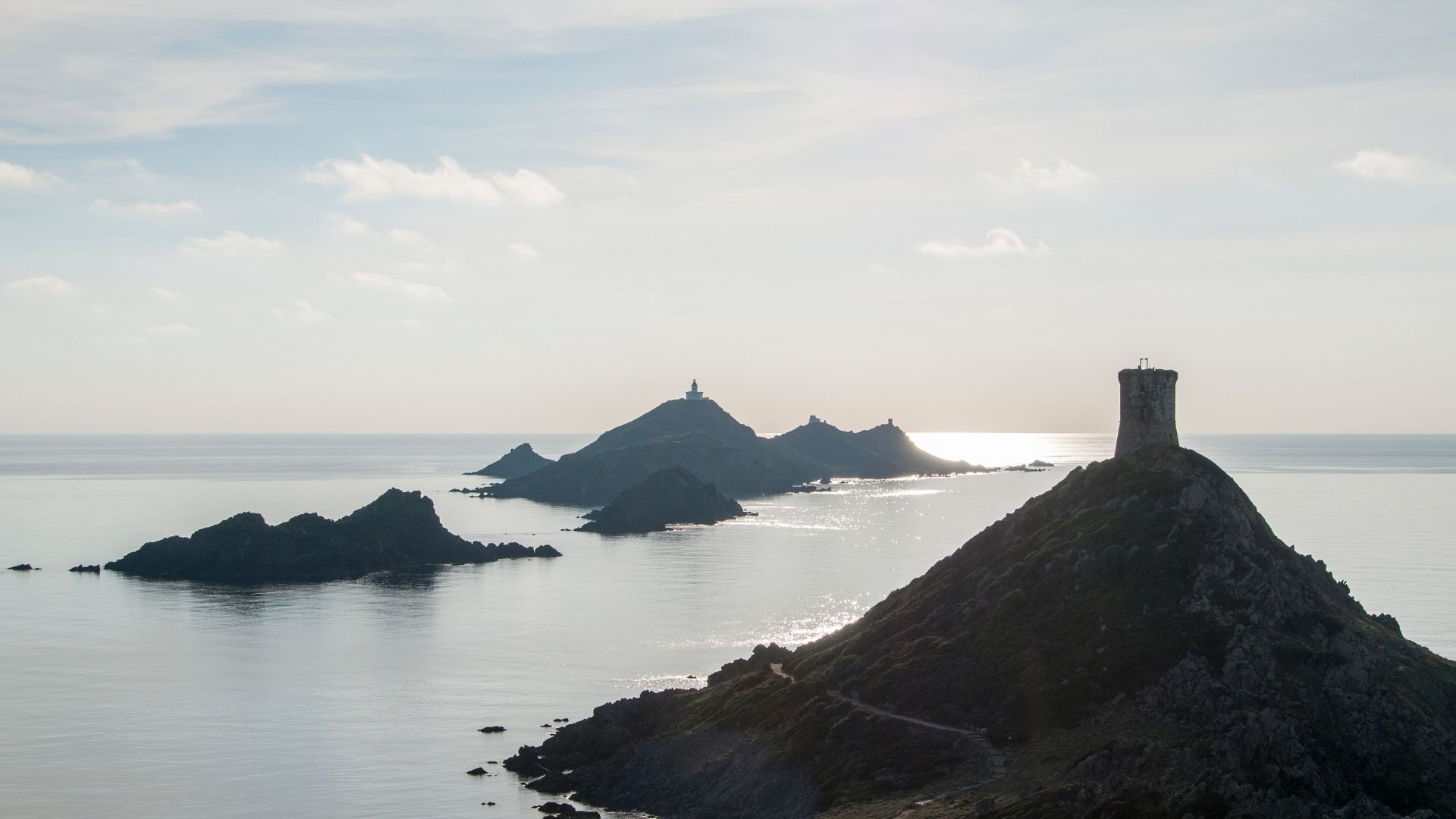
Les Sanguinaires — "the bloody ones" — sit at the mouth of the Gulf of Ajaccio and turn deep red at sunset, the source of the name.

Your charter begins at Marina d'Ajaccio, a ten-minute taxi ride from Ajaccio (AJA) airport on Corsica's west coast. Your captain and chef meet you on the dock, walk you through the yacht, stow the luggage, and cover the chart for the days ahead. If you arrive early, Napoleon's birthplace house is a fifteen-minute walk through the old town, and the citadel above the harbor adds another half-hour if you're inclined.

By early afternoon, lines off for the short ten-nautical-mile run out of the gulf to the Sanguinaires Islands — a chain of red-rock outcrops at the mouth of the bay, designated as a nature reserve and home to a population of Audouin's gulls. The islands take their name ("the bloody ones") from the way they turn deep red at sunset; the anchorage on the lee side holds in any westerly wind and the swimming off the back of the boat is the standard first-afternoon entry point.

First night at anchor in the lee of the Sanguinaires. Chef-prepared welcome dinner aboard — Corsican charcuterie to start, fresh-grilled fish off the day's boat, a glass of Patrimonio rosé from the vineyards on Cap Corse. The lights of Ajaccio glow back across the gulf as the sun drops behind the islands.

Day Highlights

  • Boarding at Marina d'Ajaccio, ten minutes from AJA airport.
  • Optional Napoleon's-birthplace walk in the Ajaccio old town.
  • Ten-mile sail out of the gulf to the Sanguinaires Islands.
  • Welcome dinner aboard with Corsican charcuterie and Patrimonio rosé.
2

Day 2 of 7 · Sanguinaires → Gulf of Porto

Cargèse's Greek-Orthodox church and the Calanques de Piana

Anchorage: Porto / inside the Gulf of Porto
Girolata sits inside the Gulf of Porto with no road access — twenty houses, a small Genoese fort, and a fishing harbor. Cargèse is a tender visit south for its Greek-Orthodox church, the legacy of a seventeenth-century Maniot resettlement still part of the local identity.
The Calanques de Piana — wind-eroded red porphyry cliffs at the southern entrance to the Gulf of Porto, designated UNESCO World Heritage in 1983.

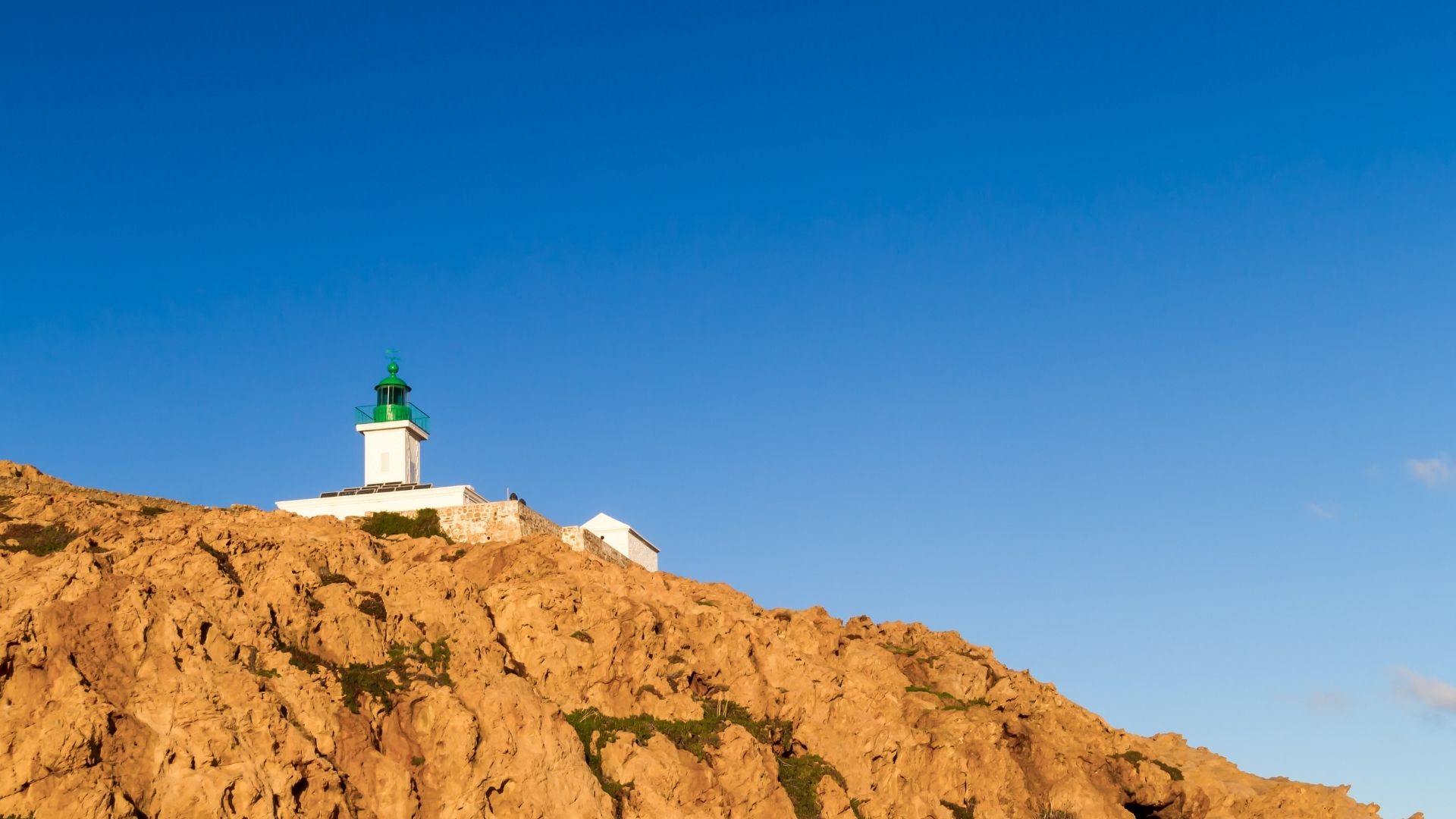
Slow morning at the Sanguinaires — swim, breakfast on deck, optional tender into the small lighthouse on the largest of the islands. By mid-morning, lines off for the twenty-five-nautical-mile northbound run up the west coast to Cargèse and the southern entrance of the Gulf of Porto.

Cargèse is a working coastal village with an unusual religious history: in the seventeenth century, a group of Greek Maniots fleeing Ottoman rule were granted land here by the Genoese authorities, and the village's two churches — Greek-Orthodox and Catholic — still sit opposite each other across the village square. Lunch ashore at one of the harbor restaurants is the standard mid-day stop. From Cargèse the captain works the run further north past Capo Rosso and into the Gulf of Porto.

Late afternoon, settle into an anchorage inside the gulf — the Calanques de Piana sit on the southern shore of the gulf entrance, a stretch of wind-eroded red porphyry cliffs designated UNESCO World Heritage in 1983. The cliffs catch the late-afternoon sun and turn the color of the desert. Dinner aboard tonight in the lee of the calanques.

Day Highlights

  • Twenty-five-mile northbound run up the west coast.
  • Cargèse village stop — Greek-Orthodox + Catholic churches across the square.
  • Calanques de Piana — UNESCO red porphyry cliffs at the gulf entrance.
  • Dinner aboard inside the Gulf of Porto.
3

Day 3 of 7 · Scandola UNESCO + Girolata

The UNESCO red-cliff coast and the roadless village

Anchorage: Girolata
Scandola was designated a UNESCO World Heritage Site in 1975 — red porphyry cliffs that drop into the water, sea caves, and the densest population of nesting ospreys on the western Mediterranean. Accessible only from the water.
Girolata is reachable only by boat or by a four-hour hiking trail. Twenty houses, a fishing harbor, and a small fort overlooking the bay; the population is under fifty year-round.

Today is the marquee day. Mid-morning lines off for the short ten-nautical-mile run north along Corsica's west coast and into the Scandola Nature Reserve — designated a UNESCO World Heritage Site in 1975 and accessible only from the water. The reserve runs nine kilometers of coast: red porphyry cliffs that drop straight into the sea, sea caves carved into the rock, and the densest population of nesting ospreys on the western Mediterranean. There is no shore access, no road, and no village; the protection is strict, and the captain follows the marked anchoring restrictions and minimum-distance rules at the cliff faces.

From Scandola a short tender or daysail brings you into Girolata, a fishing village on the southern shore of the gulf that's reachable only by boat or by a four-hour hiking trail through the Scandola hinterland. Twenty houses, a fishing harbor, a small Genoese fort overlooking the bay, and a population under fifty year-round. Lunch ashore at one of the two harbor restaurants — the catch is whatever came up that morning, and the bread is local — and a slow afternoon at anchor in the bay.

Dinner aboard tonight at Girolata. The lights of the village come up after sunset; the bay is sheltered in any direction the maestrale might be blowing; and there's no road noise because there's no road.

Day Highlights

  • Scandola UNESCO Nature Reserve — accessible only from the water.
  • Densest osprey population on the western Mediterranean.
  • Lunch ashore at Girolata — twenty houses, no road in.
  • Sheltered overnight at Girolata in any wind direction.
4

Day 4 of 7 · Girolata → Calvi

North to the Genoese citadel at Calvi

Anchorage: Calvi marina or anchorage in the bay
Calvi's bay holds a five-mile sand beach, with the Genoese citadel on the western headland and the snow-capped Monte Cinto range on the horizon inland.
Calvi citadel — built by the Genoese in the thirteenth century, taken by Nelson in 1794 (where he lost his right eye), and home to the legend that Christopher Columbus was born here.

Slow morning at Girolata, second tender ride into the village if anyone wants one. By mid-morning, lines off for the twenty-five-nautical-mile run north up the coast to Calvi. The leg passes the open coast at Capo Rosso (the maestrale can throw swell here in the afternoon, which is why captains run it in the morning) and the long sand beaches of the Désert des Agriates — Corsica's only desert, a fifty-square-mile granite-and-scrub wilderness that backs onto the western coast.

By early afternoon you're rounding the western headland of Calvi Bay and into the marina or the bay itself. Calvi sits at the head of a five-mile crescent of fine sand backed by snow-capped mountains — the Monte Cinto range, Corsica's highest, sits inland and holds snow into June most years. The Genoese citadel rises above the marina on the western headland: built in the thirteenth century, occupied by the British Navy under Nelson in 1794 (where he lost his right eye to a French mortar shell), and home to the local legend that Christopher Columbus was born inside its walls.

Afternoon ashore. Walk the citadel (forty minutes around the perimeter), down through the lower town to the waterfront cafés, and along the beach if the group wants the long version. Dinner ashore tonight at one of the harbor restaurants or aboard with the citadel lit up across the bay — the captain has the booking either way.

Day Highlights

  • Twenty-five-mile northbound run past the Désert des Agriates.
  • Calvi's five-mile sand beach with snow-capped Monte Cinto behind.
  • Genoese citadel walk — Nelson lost his eye here in 1794.
  • Dinner ashore in the harbor town or aboard with the citadel lit up.
5

Day 5 of 7 · Calvi → Saint-Florent

Île Rousse pink granite and the Patrimonio vineyards

Anchorage: Saint-Florent
Île Rousse takes its name from the small reddish-granite islets that sit offshore. A working ferry harbor that runs the daily Marseille service, plus a small charter-friendly anchorage on the lee side.
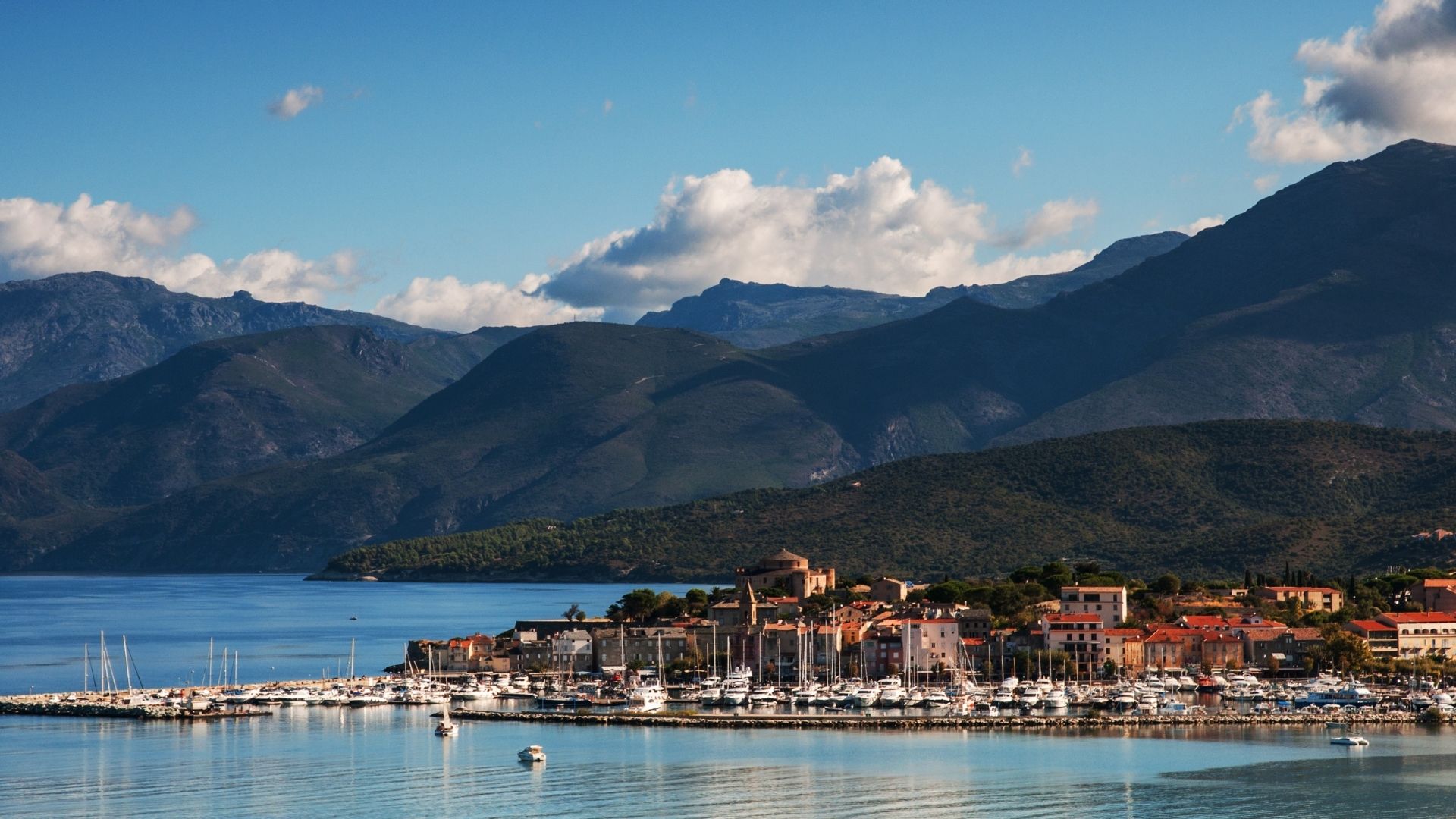
Saint-Florent sits at the southern base of Cap Corse — a working yacht harbor, a Genoese citadel, and the gateway to the Patrimonio vineyards a few kilometers inland.
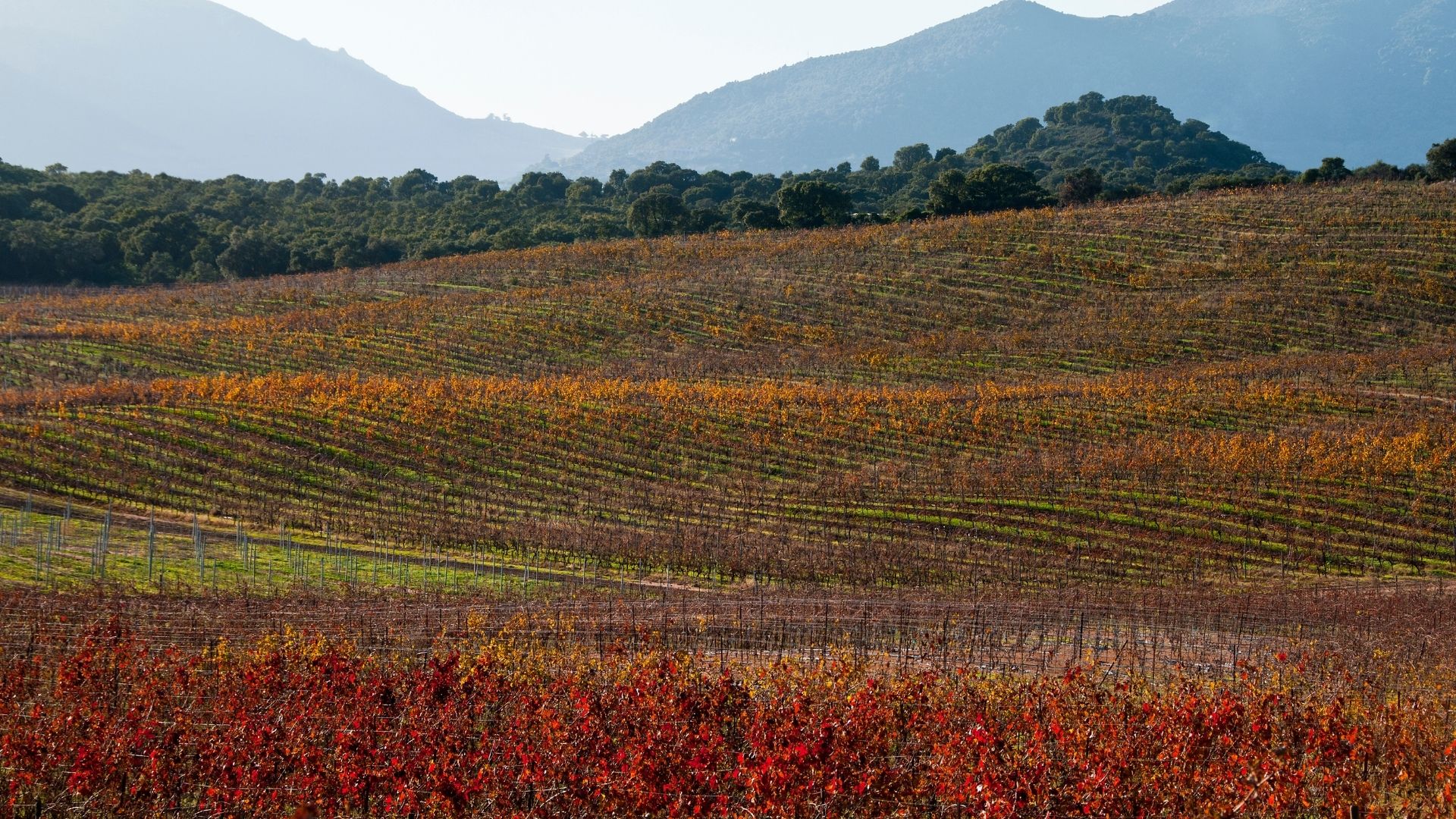
Patrimonio's chalk-soil vineyards sit a few kilometers inland from Saint-Florent. The rosé is the regional headline; the malvasia and muscat dessert wines are harder to find outside the island.

Mid-morning lines off for the thirty-nautical-mile run east along the Balagne coast — the most fertile stretch of Corsica, with olive groves and chestnut orchards visible from the water. Mid-day stop at Île Rousse: the village takes its name from the small reddish-granite islets that sit offshore, and the harbor runs the daily Marseille ferry. Lunch ashore at one of the harbor cafés or back aboard.

Afternoon, the captain works the longer leg eastbound around the western base of Cap Corse and into Saint-Florent. The peninsula of Cap Corse sticks forty kilometers north into the Mediterranean from the rest of the island, with the Patrimonio vineyards on its western base — Corsica's best-known wine appellation, growing rosé and malvasia on chalk-soil terraces a few kilometers inland from Saint-Florent. Optional shore excursion to the vineyards in the late afternoon (the captain books the visit ahead).

Dinner aboard tonight at Saint-Florent or ashore at one of the harbor restaurants. The Genoese citadel above the harbor lights up after sunset; the village is small enough to walk in twenty minutes.

Day Highlights

  • Thirty-mile eastbound run along the Balagne olive-grove coast.
  • Île Rousse mid-day stop — pink-granite islets, working ferry harbor.
  • Saint-Florent at the base of Cap Corse — Genoese citadel, walking village.
  • Optional Patrimonio vineyard visit — rosé, malvasia, chalk-soil terraces.
6

Day 6 of 7 · Cap Corse + return

Nonza's black-rock village and the southbound run

Anchorage: Anchorage TBD per route
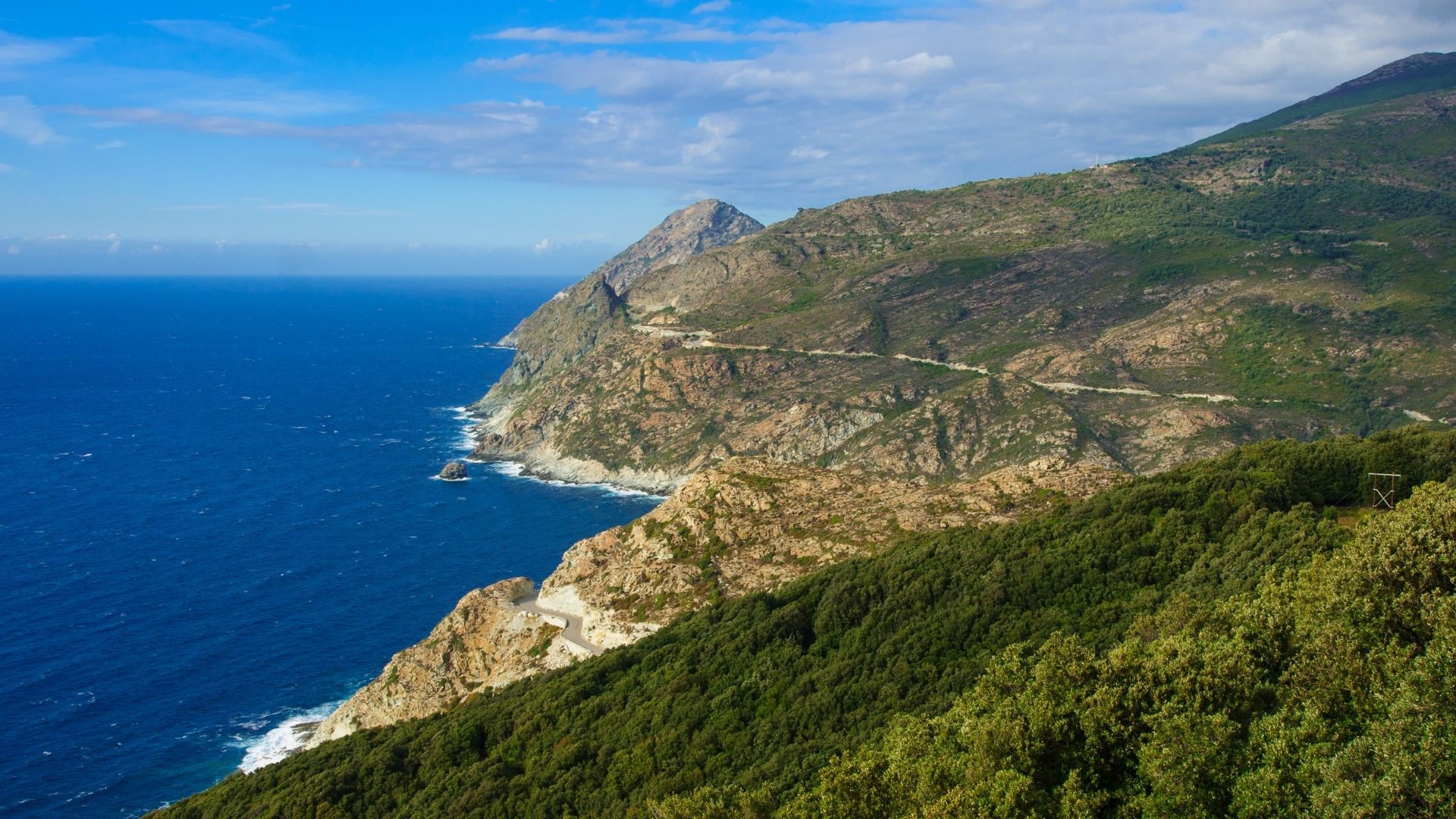
Cap Corse — forty kilometers of rugged west-coast cliffs with terraced villages cut into the headlands. Quieter than the Calvi-Saint-Florent stretch and rarely visited by charter traffic.
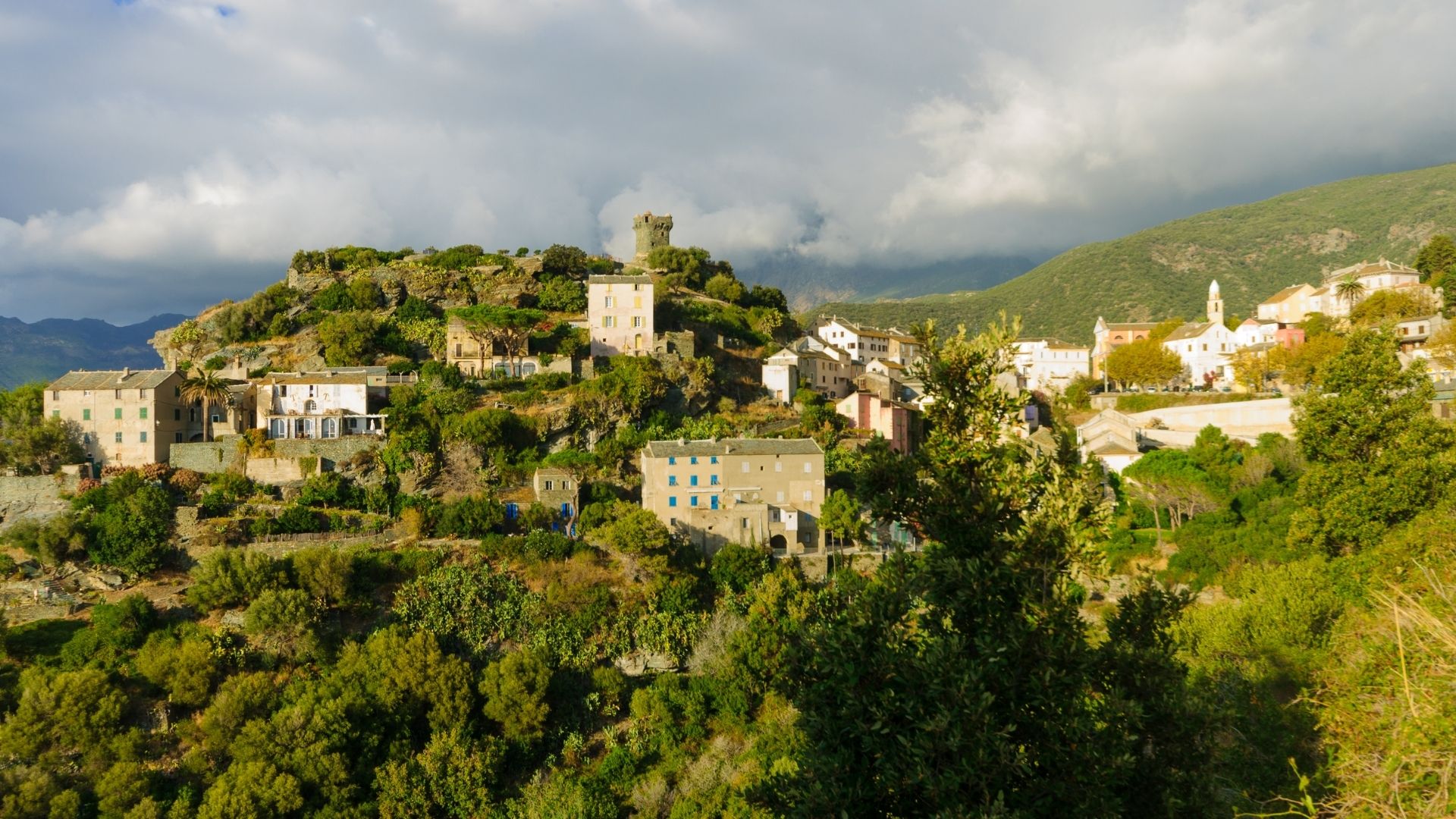
Nonza's beach is black volcanic rock — leftover from a former asbestos quarry that closed in the 1960s. The village above it sits on a clifftop with a single Genoese tower and a vertical-ladder access to the beach.

Slow Saint-Florent morning. Optional walk into the village for coffee, a final tender into the Patrimonio side if anyone missed the vineyard visit. By mid-morning, the captain calls the day's route based on weather: the maestrale-up option is a direct return southwest along the Balagne coast back toward the Gulf of Porto; the maestrale-settled option is a twenty-five-mile loop up the west coast of Cap Corse to Nonza and a few of the smaller terraced villages, and back south.

If the Cap Corse loop runs, Nonza is the marquee stop. The village sits on a clifftop with a single Genoese watchtower and a black-volcanic-rock beach below — a leftover from a former asbestos quarry that closed in the 1960s and is now a striking shoreline texture you don't see anywhere else on the cruising ground. A vertical-ladder access drops from the village to the beach for guests who want to walk down. Lunch aboard mid-day, slow afternoon at anchor in one of the smaller coves on the southwest side of Cap Corse.

Late afternoon, the captain works the southbound run back toward the Calvi area or further south depending on how many miles are left for the final return day. Dinner aboard tonight, anchored in the lee of the maestrale wherever the day ended.

Day Highlights

  • Captain's call between Cap Corse loop and direct southbound return.
  • Nonza village — clifftop perch, black volcanic-rock beach, Genoese tower.
  • Slow afternoon at anchor in a Cap Corse cove.
  • Dinner aboard in the lee of the maestrale.
7

Day 7 of 7 · Final return south

Propriano stop and the slow return to Ajaccio

Anchorage: Marina d'Ajaccio
Propriano sits at the head of the Gulf of Valinco — an optional final-day stop for guests who want a sand-beach lunch on the southwest coast before the Ajaccio return.
Final dinner aboard at Marina d'Ajaccio — chef-prepared on the aft deck, the kind of slow last-night that the trip is built around.

Last full day at anchor. Slow morning swim and breakfast on deck. Mid-morning lines off for the twenty-five-nautical-mile southbound run along the western coast to a final stop at Propriano — the head of the Gulf of Valinco, with sand beaches on the south side and a working harbor at the village. Lunch ashore at one of the harbor cafés or back aboard.

Afternoon, the captain works the final fifteen miles south around the Punta di Senetosa and into the Gulf of Ajaccio. Settle into Marina d'Ajaccio in the early evening. Walk into Ajaccio's old town if you have the energy — the central pedestrian streets are small enough to cover in an hour, and a final lunch or aperitif at one of the seafront restaurants is the unhurried close most groups take.

Final chef-prepared dinner aboard tonight, anchored in the marina with the day's last light over the gulf. Pack at your own pace; your captain has the morning's transfer logistics already squared away.

Day Highlights

  • Twenty-five-mile southbound return along Corsica's southwest coast.
  • Optional Propriano lunch ashore — sand beaches, working harbor.
  • Ajaccio old-town walk in the early evening.
  • Farewell chef-prepared dinner aboard at Marina d'Ajaccio.
8

Day 8 · Departure

Disembarkation and transfer to AJA

A last slow breakfast aboard at Marina d'Ajaccio, a final swim off the stern if the harbor allows, and disembarkation by mid-morning. Your crew handles the transfer logistics: AJA is ten minutes by taxi, with direct summer flights to Paris, Marseille, Nice, Lyon, London, and a handful of additional European hubs. From the US, most guests connect through Paris-Charles de Gaulle. Step off with a UNESCO World Heritage marine reserve, a Genoese citadel, a Greek-Orthodox church, and a bottle of Patrimonio rosé behind you, and the kind of week that makes most Mediterranean charter guests come back for the cross-strait route the next year.

Frequently asked

Why pick Corsica over Sardinia?
Corsica is the wilder, less polished side of the same cruising ground. UNESCO Scandola, the Calanques de Piana red cliffs, Girolata (a roadless fishing village), and Calvi's Genoese citadel — all of which Sardinia's loop doesn't touch. The food culture shifts: more charcuterie and brocciu cheese, less Costa Smeralda polish. We send this to repeat Med charterers.
Is the open-coast sailing harder than the Sardinia loop?
Sometimes. The Capo Rosso headland and the Scandola entrance can throw swell when the maestrale is up. Your captain reads the morning forecast at first light and adjusts the day around it. Most weeks it's a non-issue; in a high-pressure event, you might shift the Scandola day a day later.
Sailing yacht or motor yacht for Corsica?
Either works. Sailing yachts handle the open-coast legs well and the Mediterranean Mistral on the quarter. Motor yachts dodge weather windows easier, especially around the Capo Rosso and Scandola entrance. For groups that want the most rugged Corsican vibe, a sailing catamaran is the right call.
When's the best time for a Corsica yacht charter?
June through September. Late June and early September are sweet spots — Mistral moderated, water warm, fishing harbors not yet at peak. July–August is busy in Calvi and Saint-Florent but the open west coast (Scandola, Girolata, Capo Rosso) is never crowded. May/October shoulder is viable with a watch on the maestrale.

Ready to set sail along the west coast of Corsica?

Every itinerary we send is custom-tailored. Tell us your dates, the size of your group, and what you want out of your charter—we'll handle the rest.