Crewed Itinerary · Greece

Greek Islands Itinerary: A 7-Day Saronic Gulf Week for First-Timers

If this is your first Greek charter, this is the Greek islands itinerary to book. The Saronic Gulf is Greece without the chaos—sheltered from the Meltemi by the Peloponnese mainland, dense with cultural marquee stops, and just 15 to 20 nautical miles between anchorages. From Alimos Marina you'll be at a 2,500-year-old Doric temple by lunchtime on Day 1, drop the hook in a car-free National Heritage town for the afternoon, and watch a play in a 4th-century BC UNESCO theatre under the stars before the week is out. With your professional captain and private chef running the yacht, the only real decisions you need to make are how long to linger over a shaded lunch in Hydra and which taverna gets dinner.

Most guests who book the Saronic are first-timers in Greece, families with kids, or multigenerational groups picking the trip the eight-year-olds and the seventy-year-olds will both remember. The gentle daily mileage, the lee-shore anchoring, and the proximity to Athens (fifteen minutes from the airport to the boat) make this the Greek week to start with. The route is a 7-day round trip of roughly 140 nautical miles, and prime season runs May through October with the shoulder months very much viable.

Duration
7 days / 8 nights
Base
Alimos Marina, Athens
Plan your Greece charter Custom-tailored to your dates and group preferences
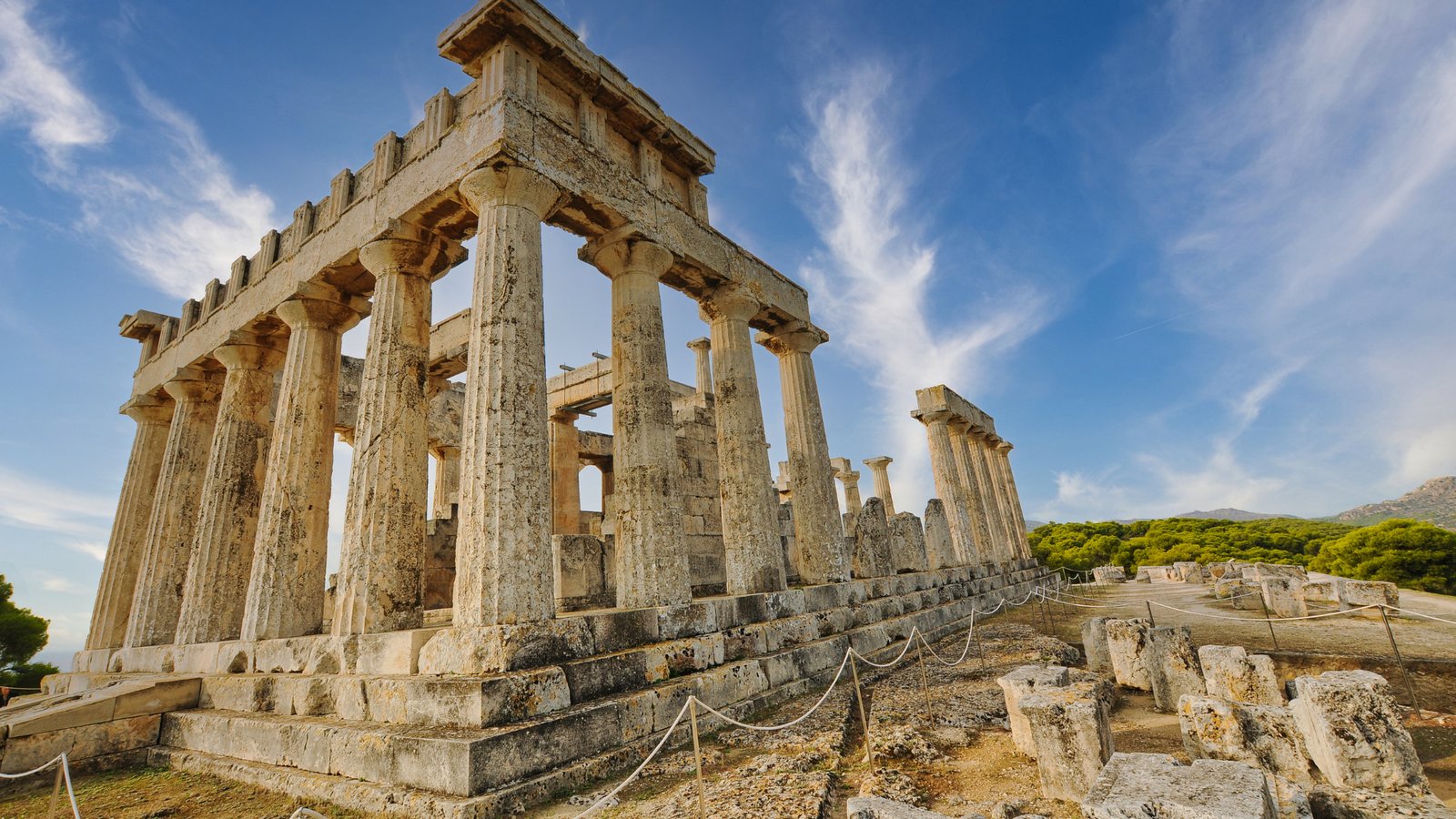
Doric temple ruins on a hillside above Aegina.
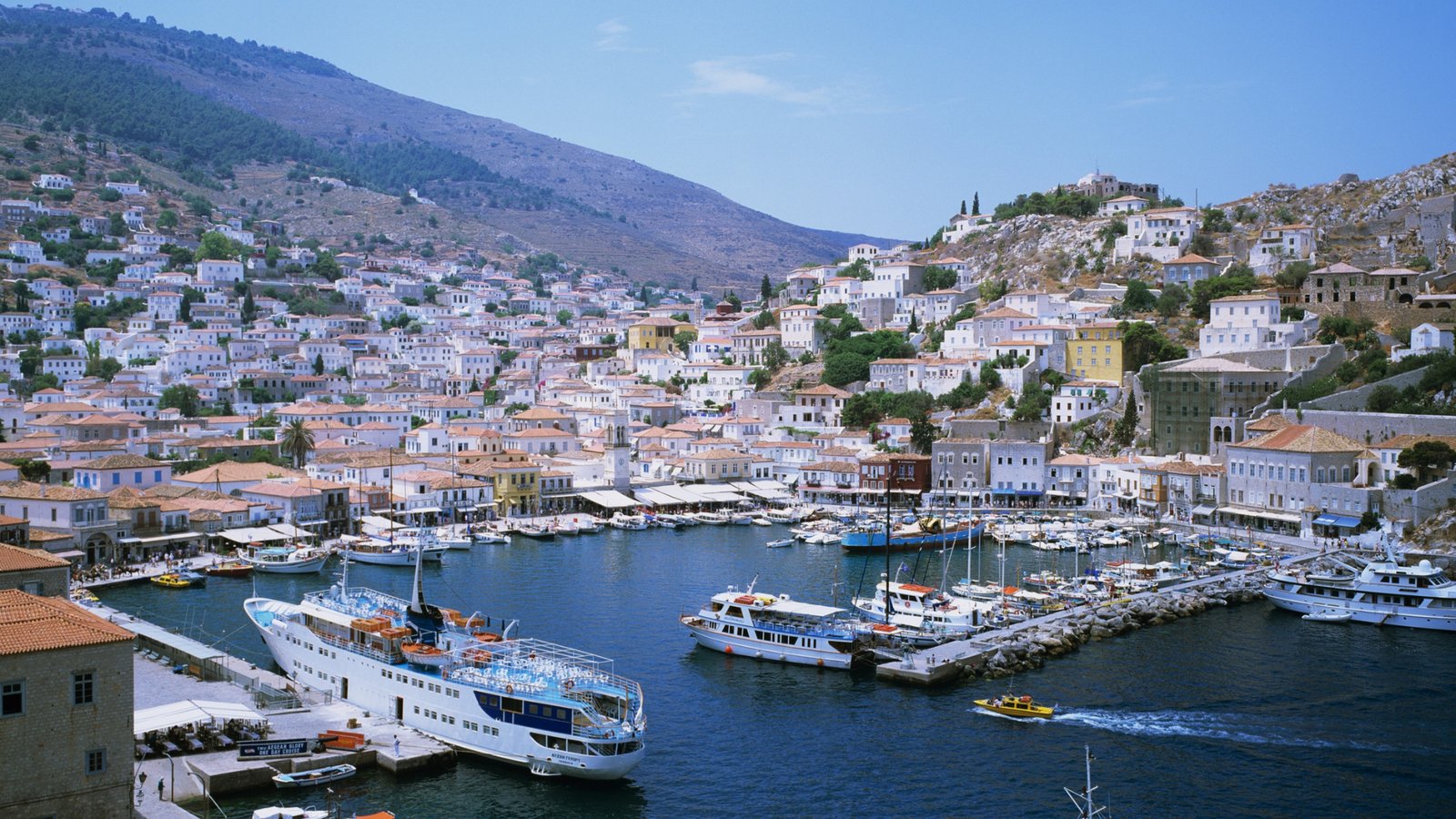
The car-free stone harbor of Hydra at midday.
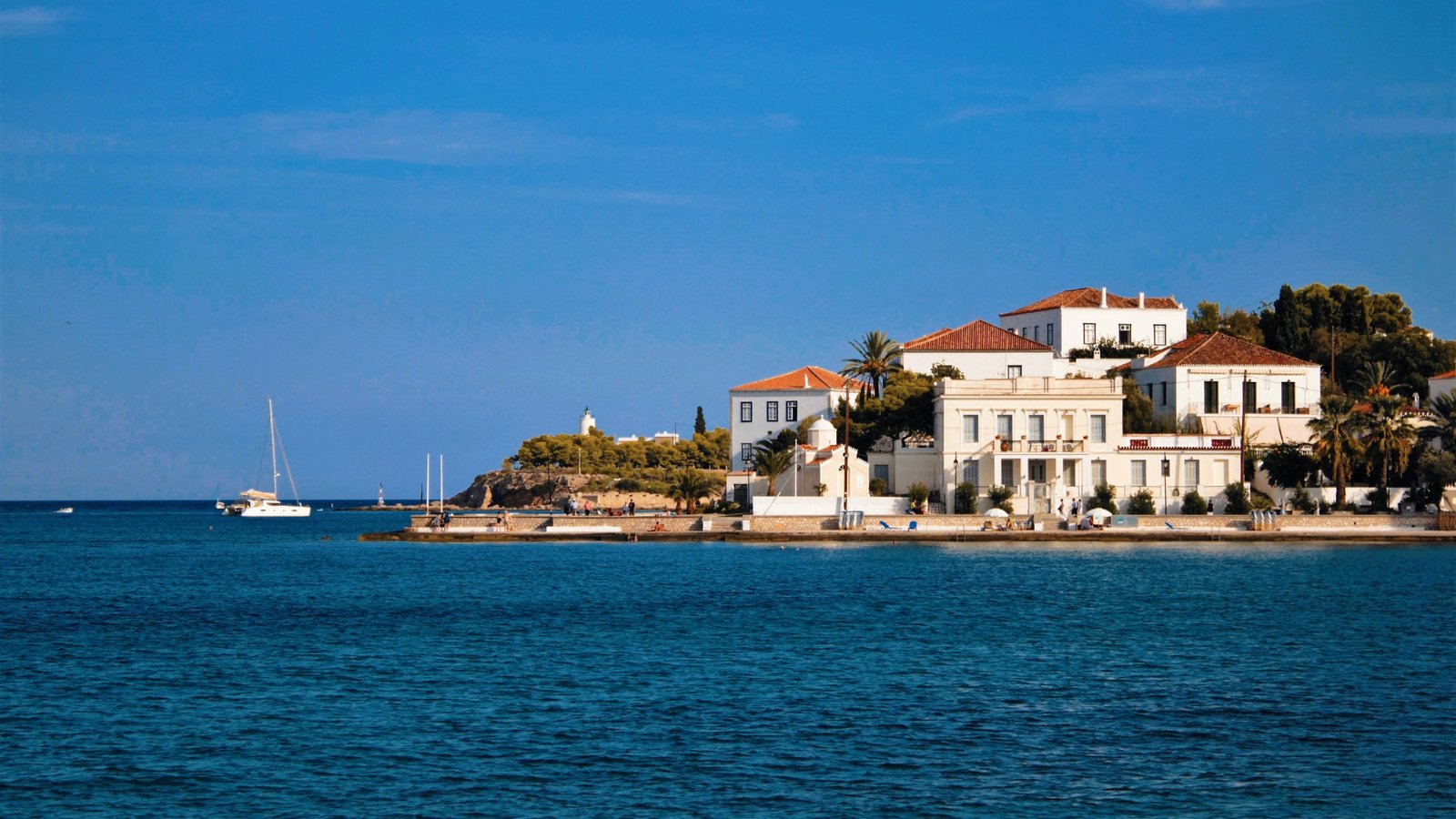
Spetses Old Harbor with the Poseidonion above the waterfront.
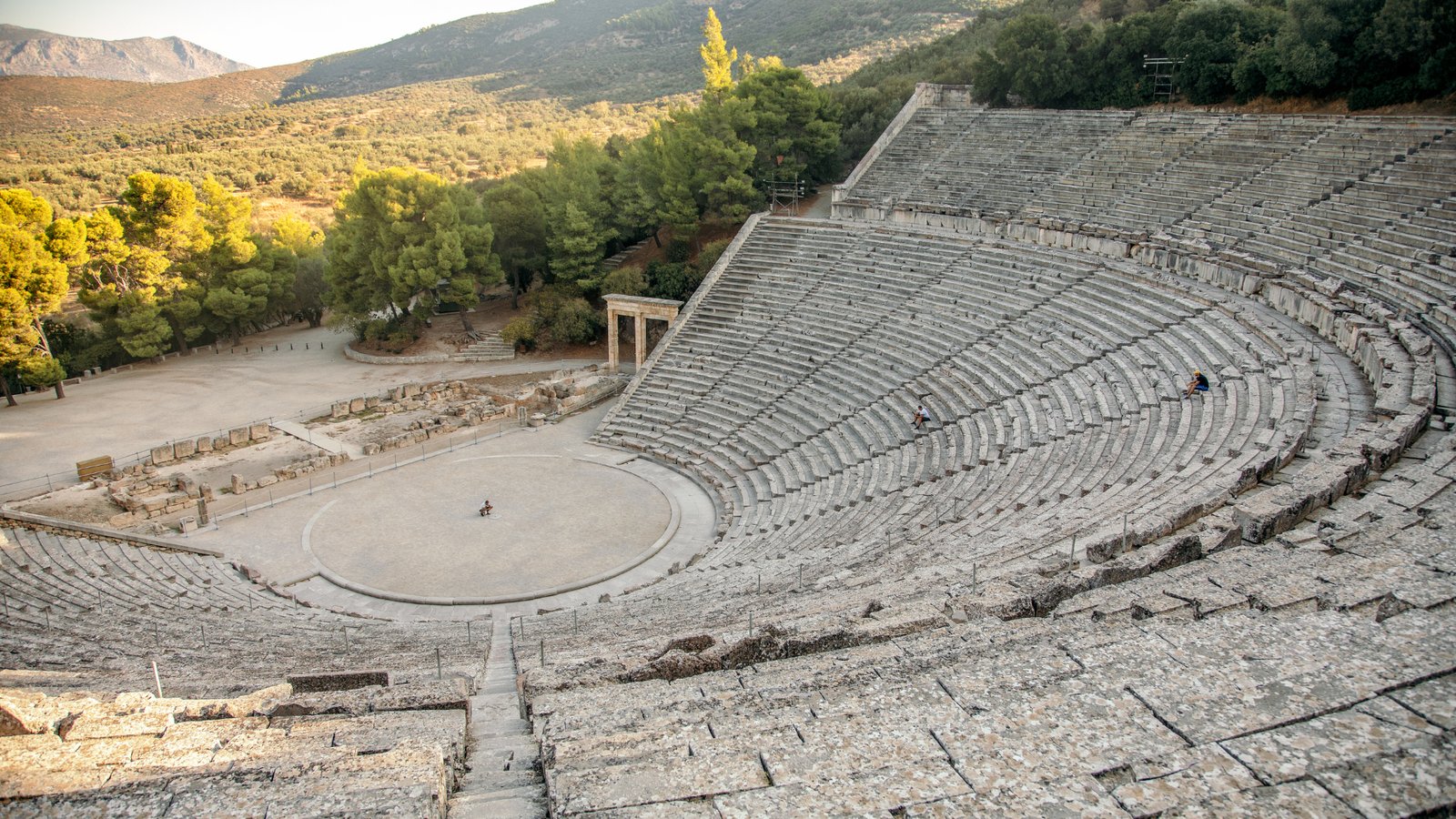
The stone amphitheater at Epidaurus carved into the hillside.

Why the Saronic is the Greek islands itinerary first-timers should book

The Saronic Gulf is sheltered from the Meltemi by the Peloponnese mainland — that's the one geographic fact that reshapes everything. No 35-knot Aegean gusts, no pinned-down days waiting for the wind to drop, no 50-mile slogs. This Greek islands itinerary covers Aegina (Doric temple by Day 1 lunch), Poros, Hydra (car-free National Heritage town, donkey transport only), Spetses, the UNESCO theatre at Epidaurus, and Ermioni — all within 15-20 nm of each other.

About 140 nautical miles round-trip from Alimos Marina (15 minutes from Athens airport). The Saronic is the Greek charter we send first-timers, families with young kids, and multigenerational groups — same logic as the Ionian, but with denser cultural stops and shorter delivery legs from Athens. Crewed yacht with captain + chef so the wine list and the tavernas are both somebody else's job.

1

Day 1 of 7 · Alimos → Aegina

Alimos Marina to Aegina and the Temple of Aphaia
Anchorage: Aegina
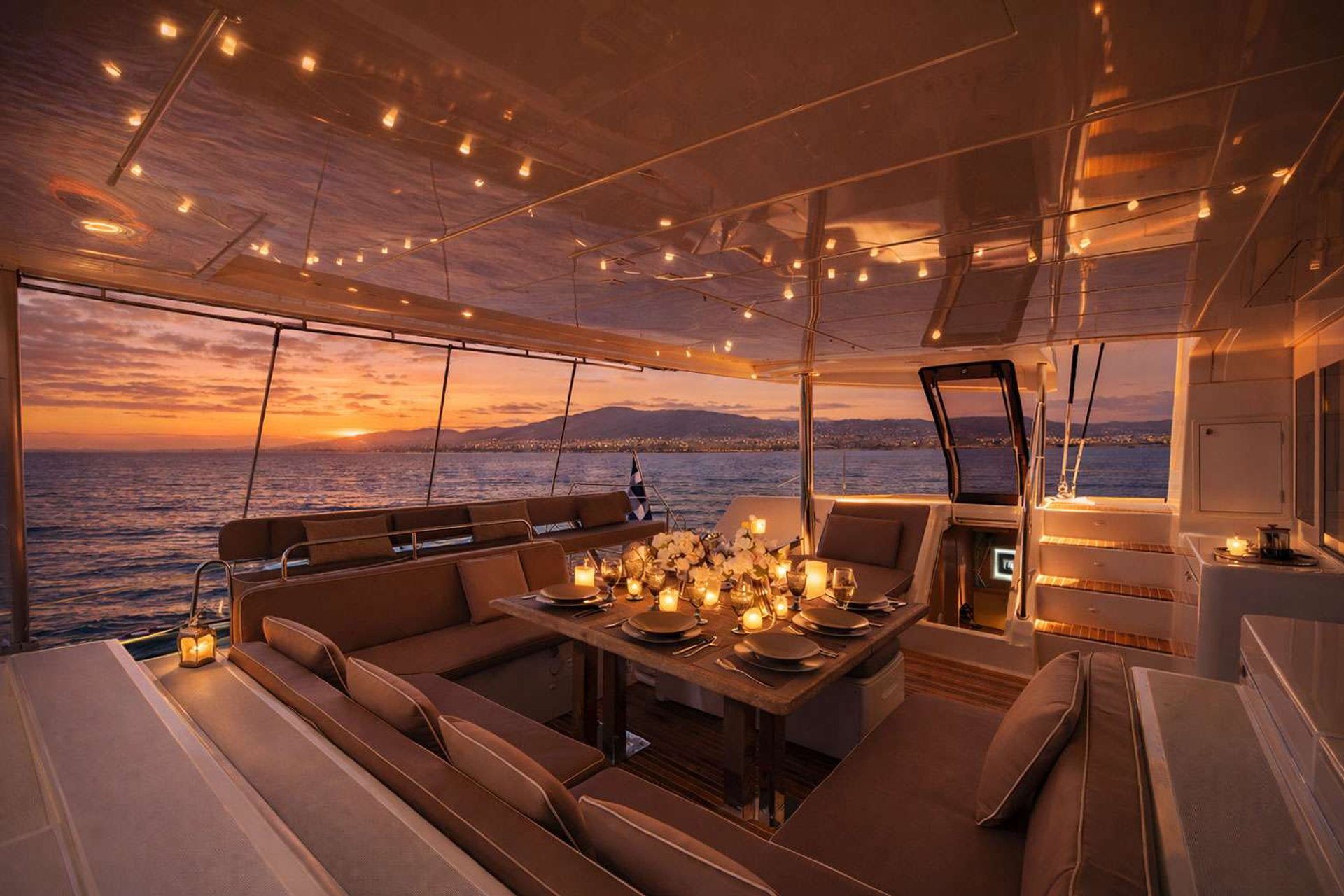
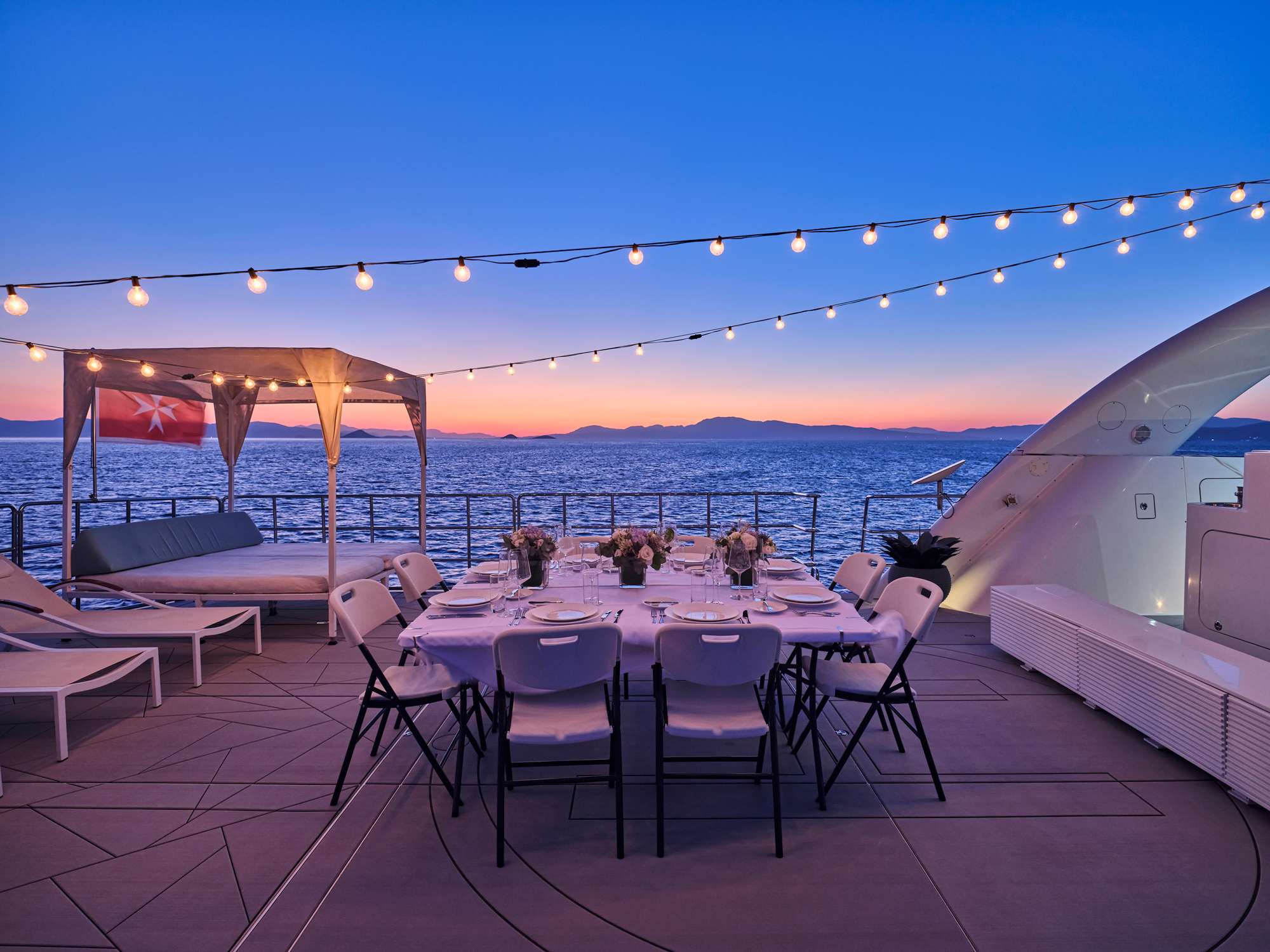
First dinner at anchor off Aegina.

Your week begins at Alimos Marina on the Athens Riviera, the largest charter base in Greece and a 25-minute transfer from the airport. Your professional crew meets you at the slip with cold drinks and a chart briefing that frames the week ahead, settles your bags into cabins, and walks you through the boat while the chef finishes provisioning. By late morning the captain is slipping lines for the gentle 17-nautical-mile southwest hop to Aegina—the closest of the Saronic islands and the place most Athenians go for a long weekend.

The first afternoon belongs to a quiet upwind reach across the gulf with the silhouette of the Acropolis falling off the stern and the dome of Aegina's Agios Nikolaos church growing on the bow. It's the kind of opening leg that resets your nervous system inside an hour—warm air, blue water, the city already gone.

Aegina is famous for two things: pistachios, which grow in groves on the dry hillsides above town and end up in everything from pastries to the local liqueur, and the Temple of Aphaia—one of the best-preserved Doric temples in Greece, built around 500 BC and predating the Parthenon by a generation. Your captain can arrange a short taxi up to the temple in the late afternoon, in time to watch the limestone catch the last of the sun. Dinner is harborside at Skotadis, a fish taverna that has been on the Aegina quay since 1958, where the catch comes in off the boats next door.

Day Highlights

  • Seamless welcome and chart briefing at Alimos Marina, Athens.
  • Gentle shakedown reach across the Saronic Gulf to Aegina.
  • Late-afternoon visit to the Temple of Aphaia, older than the Parthenon.
  • Welcome dinner at Skotadis, harborside since 1958.
2

Day 2 of 7 · Aegina → Poros

Aegina to Poros and the Methana Channel

Anchorage: Poros town quay
Poros — town quay to taverna in fifty steps.

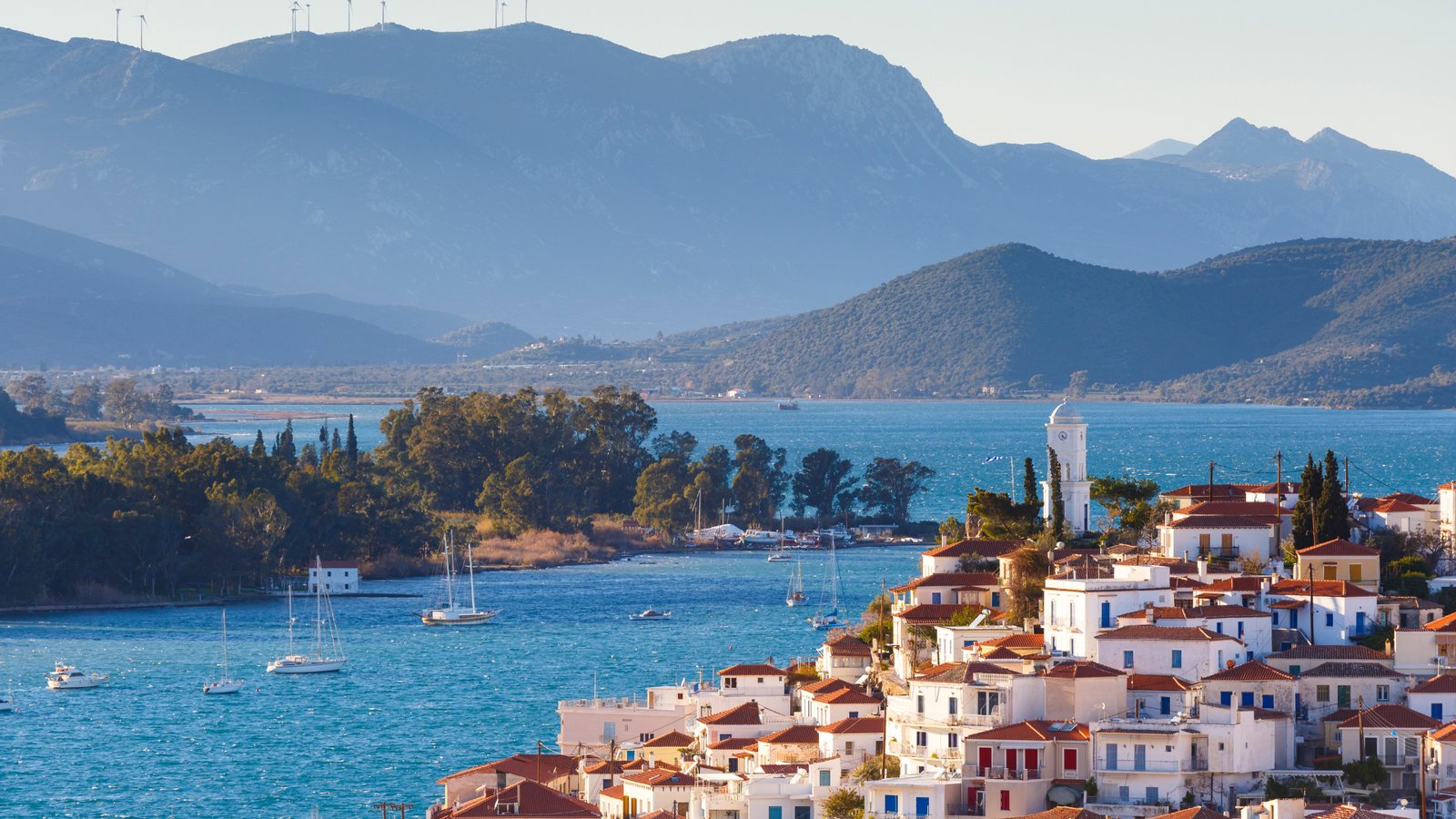
A short 15-nautical-mile run south takes you from Aegina to Poros, the second of the Saronic islands. The morning is usually a slow reach in light air, with Methana's volcanic peninsula building off the starboard bow and the long green flank of Poros opening to port. By early afternoon the captain is threading the narrow channel between Poros and the Peloponnese mainland—two pieces of land barely 200 meters apart, with whitewashed houses on one side and pine forest on the other.

Poros Town stacks up the hill from the waterfront, capped by the white clock tower that's been the island's calling card for a hundred and fifty years. The walk up takes 20 minutes and gives you the best view of the channel from above—worth doing at golden hour with a chilled drink waiting at a kafeneio on the way back down. The harbor itself is one of the most sheltered berths in the gulf, and the town is small enough that everything is on foot.

Dinner is a choice. Karavolos, tucked off the main waterfront in a stone alley, is the local secret for the slow-cooked rabbit and a long list of Greek wines you won't see on a Mykonos menu. Or the seafront table at Taverna Platanos, set under the giant plane tree that gives the place its name—simpler food, bigger view, exactly the right speed for a second-night dinner.

Day Highlights

  • Easy passage south through the Methana channel to Poros.
  • Walk up to the Clock Tower above town for the best view of the channel.
  • Dinner at Karavolos for slow-cooked rabbit, or Taverna Platanos under the plane tree.
  • Sheltered overnight on a town quay berth in the heart of Poros.
3

Day 3 of 7 · Poros → Hydra

Hydra — The Car-Free Heritage Town

Anchorage: Hydra Town / Mandraki

Today is the marquee day on the Saronic islands themselves: a 20-nautical-mile run south to Hydra. Your captain leaves Poros early for one specific reason. Hydra is the most-visited island day-trip from Athens—four ferries a day in summer, each one delivering a wave of camera-ready tourists into the small harbor—and the trick to enjoying the place is to arrive ahead of them. The crew aims to drop the hook off Mandraki or Hydra Town by mid-morning, while the harbor is still quiet and the donkeys are shuffling cargo up the lanes in the cool air.

Hydra is the only Greek island where motor vehicles are banned—not just in town, but on the whole island. Donkeys carry the luggage, mules carry the building materials, and the entire town is a National Heritage site of preserved 18th-century captains' mansions stacked up the rocky amphitheater of the harbor. There's no concrete blight, no hotel high-rise, no scooter noise. The result is a place that looks the way an Aegean port is supposed to look, and very nearly nowhere else still does.

The plan from your crew: a long lunch swim at Bisti Bay or Mandraki, then the tender into Hydra Town in the late afternoon once the day-tripper ferries have gone. Walk up the lanes to the cannons above the harbor, past the captains' mansions of the Boudouris and Tombazis families, both of whom funded warships for the Greek Revolution and built the houses on the proceeds. Drink a cold one at Sunset Bar (literally the name) on the rocks west of town, and stay aboard for a chef-prepared dinner under stars in the bay—or take a table at Omilos for one of the better dinners on the island.

Either way, you wake up the next morning still tied to the Heritage town, with the donkeys back at work and the day-trippers still on the ferry from Piraeus. That is the whole reason a crewed yacht wins on Hydra: most visitors get four hours and a sunburn. Guests staying aboard get the early morning when the harbor is silent and the late evening when the lanes are lit by café spill rather than camera flashes.

Day Highlights

  • Early arrival into Hydra ahead of the day-trip ferries from Athens.
  • Long lunch swim at Bisti Bay or Mandraki, anchored off the pine slopes.
  • Walk through the only car-free Heritage town in the Aegean.
  • Sunset Bar above the harbor, dinner at Omilos or chef-prepared aboard.
4

Day 4 of 7 · Hydra → Spetses

Spetses — Belle Époque on the Argolic Side

Anchorage: Spetses Old Harbor
Same view as the taverna across the harbor — none of the crowd.
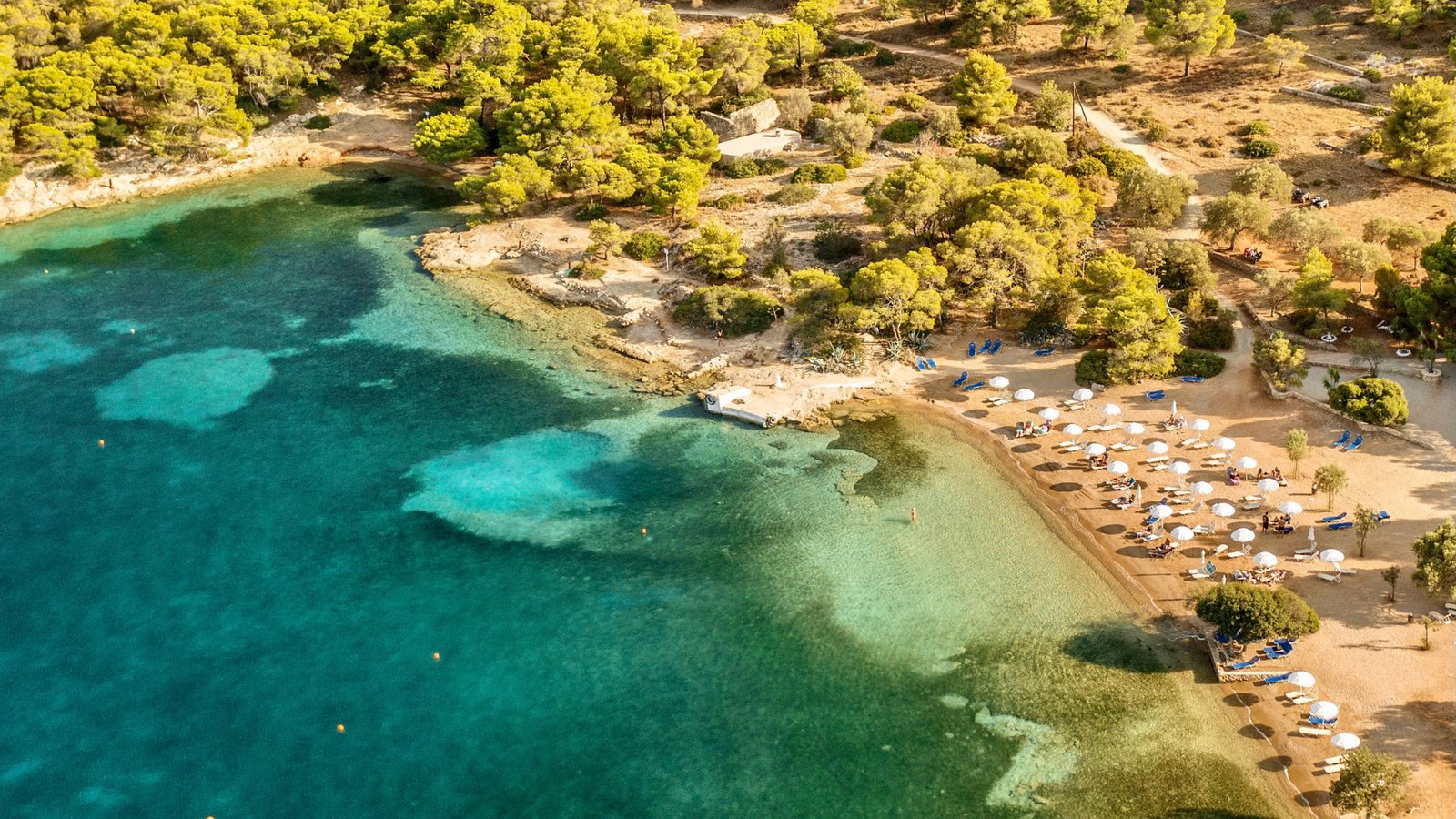
Zogeria — where the locals on Spetses swim.

A 15-nautical-mile southwest leg today takes you from Hydra to Spetses, the most chic of the Saronic islands and the southernmost stop on this round trip. The morning sail rounds the western tip of Hydra and crosses to the Argolic side of the gulf, usually in a clean afternoon breeze that gives the captain a proper reach with the wind on the quarter. Before pushing into Spetses Town, the crew tucks the boat into Zogeria Bay on the northwest coast—a deep, pine-rimmed cove that's the locals' beach and one of the best lunch swims on the route. Anchor in clear water, swim ashore, and let the chef put out a long lunch on deck.

Spetses Town has a different feel from Hydra. Where Hydra is austere and stone-grey and very nearly silent after dark, Spetses is genteel—tree-lined streets, neoclassical mansions in pastel ochres, the Belle Époque grandeur of the Poseidonion Grand Hotel above the Old Harbor. There are no cars in the town center either, but here the substitute is horse-drawn carriages clopping along the seafront. The island is small enough that an afternoon walk gets you the full circuit—Dapia square, the Old Harbor, Bouboulina's House (a small museum dedicated to Laskarina Bouboulina, a heroine of the 1821 Greek War of Independence who funded her own warship), and a long stretch of waterfront tavernas.

Dinner is on the water at Patralis on the western edge of town—a fish taverna that has been pulling lobster, sea bream, and the day's red mullet straight off the local boats for three generations. Or Akrogialia closer to the Old Harbor, with the same approach and a slightly livelier crowd. Both are the kind of waterfront table where the bottle of Assyrtiko stays cold and the meal lasts past dark.

Day Highlights

  • Reaching sail across to the Argolic side of the gulf.
  • Anchored lunch swim at Zogeria, the locals' bay on Spetses.
  • Afternoon walk through Dapia, the Old Harbor, and Bouboulina's House.
  • Waterfront dinner at Patralis or Akrogialia, fish straight off the local boats.
5

Day 5 of 7 · The quiet day

Spetses to Ermioni on the Peloponnese

Anchorage: Ermioni
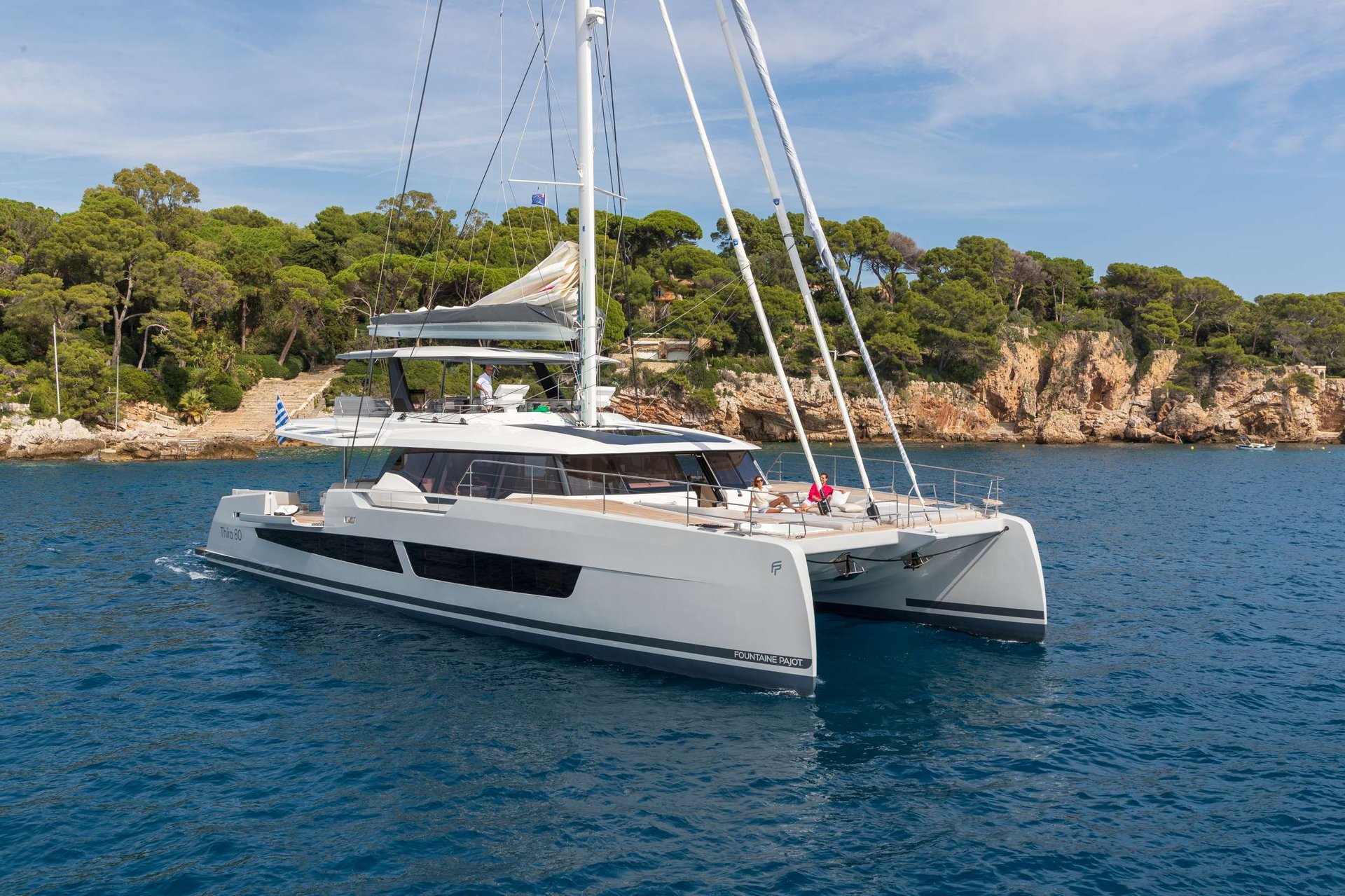
The Saronic — sheltered from the Meltemi by the Peloponnese.
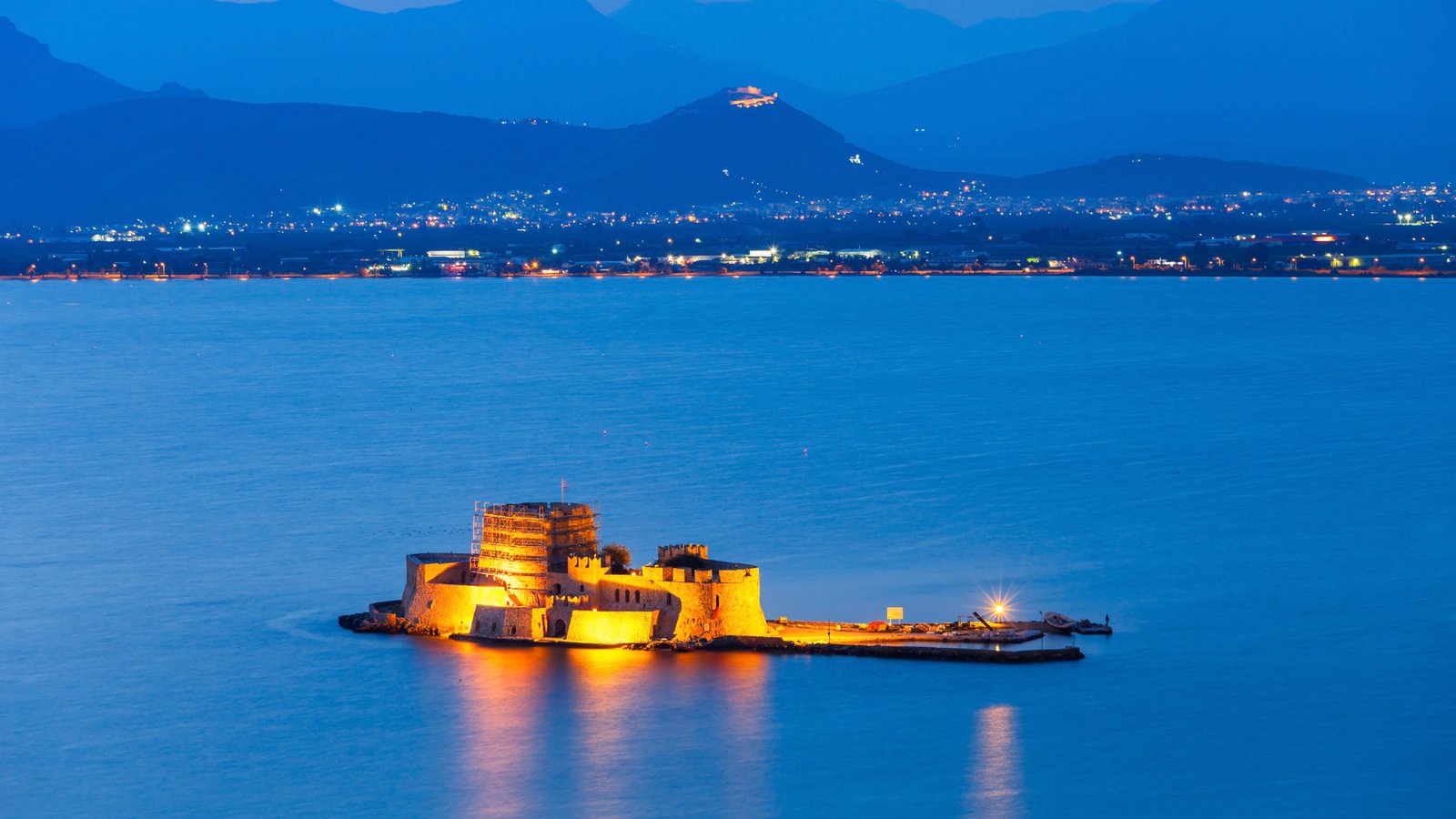
Bourtzi islet off Ermioni.

A short 10-nautical-mile hop north today crosses the channel onto the Peloponnese mainland, to the small fishing town of Ermioni. After three days of island stops, this is the deliberate quiet day on the route—a place most charter itineraries skip in favor of another night on Hydra or Spetses, and exactly the better call once you've already had those.

Ermioni sits on a narrow peninsula with a working harbor on one side and a pine-shaded promenade on the other. The town has a small set of tavernas, a few cafés, and a couple of bakeries, all walking distance from the quay. Once the boat is tied up, the crew can run the dinghy out to Bourtzi—a small islet just off the harbor entrance—for a swim in clear water that's a few degrees cooler than the inner anchorage.

Dinner is ashore at one of the harbor tavernas, where the menu is whatever came in that day and the wine is whatever the owner is pouring out of the back room. There is no Carpe Diem on Ermioni, no rooftop nightclub, and that's the point. After three days of island energy, a quiet evening with cicadas in the pines and a chef-prepared breakfast on deck the next morning is exactly what the rest of the week is built around.

Day Highlights

  • Short crossing to Ermioni on the Peloponnese mainland.
  • Dinghy run out to Bourtzi islet for a quiet swim.
  • Walk along the pine-shaded promenade between the two harbors.
  • Dinner at a small local taverna, slow night at anchor.
6

Day 6 of 7 · The marquee day

The UNESCO Theatre of Epidaurus

Anchorage: Palea Epidavros

This is the longest leg of the week and the centerpiece of the trip: roughly 25 nautical miles north along the Peloponnese coast to Palea Epidavros, the small port town that sits below the Ancient Theatre of Epidaurus. The captain has the option of a swim stop at Korfos halfway up—a deep bite of a bay with clear water and a small pine-back hamlet for an anchored lunch—or pushing straight through if the breeze is making for a fast morning. Either way the crew has you anchored off Palea Epidavros by mid-afternoon.

From the quay it's a 20-minute drive up into the hills to the Sanctuary of Asklepios and the theatre itself—a UNESCO World Heritage site, built in the 4th century BC and famously regarded as the most acoustically perfect ancient theatre still standing. A coin dropped on the round stone stage is heard from the back row, more than 50 meters away, with no microphones and no electronics. Guides will demonstrate it on a daytime visit, and the demonstration never gets old.

If you sail in July or August, the bigger draw is the Epidaurus Festival. The theatre still hosts performances of classical Greek drama—Sophocles, Euripides, Aeschylus—performed in the original ancient Greek, on the same stones audiences sat on in the 4th century BC. Your captain can arrange tickets in advance and the transfer up from the boat. Dinner ashore at the small taverna on the Palea Epidavros quay before the evening performance, then a slow walk to your seat under the stars. It is the rare crewed-charter experience where the marquee moment is not a beach or a sunset but a 2,500-year-old play in a 2,400-year-old theatre.

A note on logistics: the festival schedule is published in the spring for the summer ahead, performances are weekend-weighted, and tickets do sell out for the marquee productions. If a Greek-drama evening is a priority for your charter, build the trip around the calendar—your broker can sequence the week so that Day 6 lands on a performance night, and your captain takes care of the tickets, the transfers, and the timing of dinner before the curtain.

Day Highlights

  • Longest leg of the week up the Peloponnese coast to Palea Epidavros.
  • Optional swim stop at Korfos for an anchored lunch.
  • Visit to the UNESCO Theatre of Epidaurus, the world's most acoustically perfect.
  • Summer evenings: ancient Greek drama performed on the original stage.
7

Day 7 of 7 · Final reach

Cross the Gulf Back Toward Athens

Anchorage: Aegina or Vouliagmeni
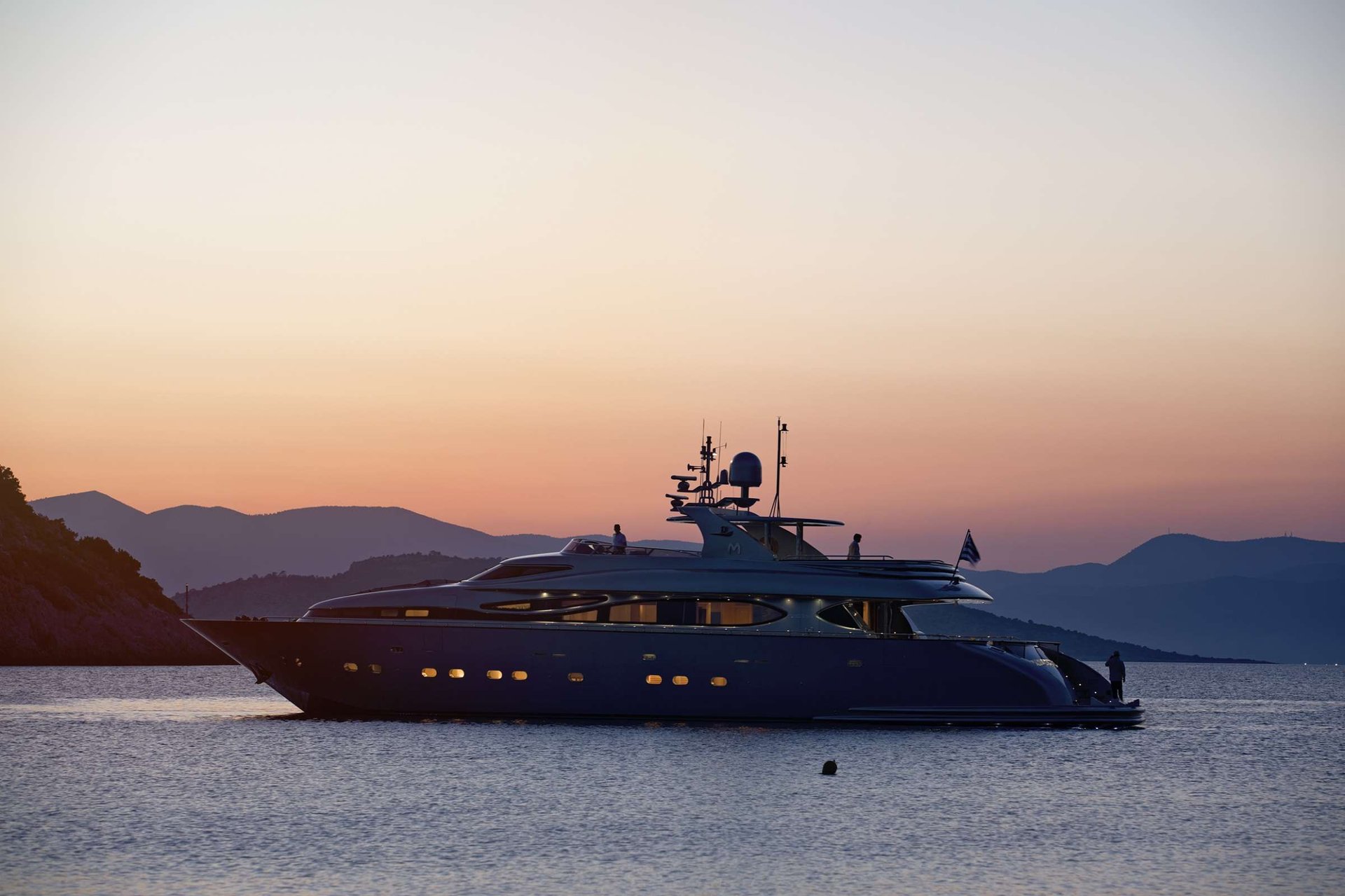
Last evening — Athens lights across the gulf.

The last full day is a 25-nautical-mile reach northeast back across the Saronic, a passage that closes the loop the week opened on day one. The Acropolis comes back into view on the bow somewhere around mid-afternoon. If a Meltemi has filled in, it's a fast, tail-on-the-quarter sail; in lighter air the captain takes the long way around to keep the boat moving and stretch the day on the water as long as guests want it.

There is one optional detour worth flagging. The Methana peninsula, which the boat passes on the morning's outbound leg, is one of the few volcanic landscapes in the Aegean and it has a small thermal spa fed by sulfur-rich hot springs at sea level. The water is warmer than the surrounding gulf and the chemistry is unmistakable—not for everyone, but for guests who like the curiosity of swimming in a hot spring at the edge of the sea, the captain can drop the anchor for an hour.

The crew aims to have the boat anchored either off the north coast of Aegina or in the bay of Vouliagmeni on the Athens Riviera by sundown, in time for a chef-prepared farewell dinner on deck and a quiet last night at anchor. Vouliagmeni is the tighter call for an early disembarkation: the bay sits 15 minutes from Alimos by water, and you wake up close enough to the marina that breakfast aboard runs late without anyone having to rush.

Day Highlights

  • Final reach across the Saronic with Athens building on the bow.
  • Optional swim stop at the Methana volcanic hot springs.
  • Last anchor either off Aegina or in Vouliagmeni Bay close to base.
  • Chef-prepared farewell dinner on deck under stars.
8

Day 8 · Departure

Farewell to the Saronic Gulf

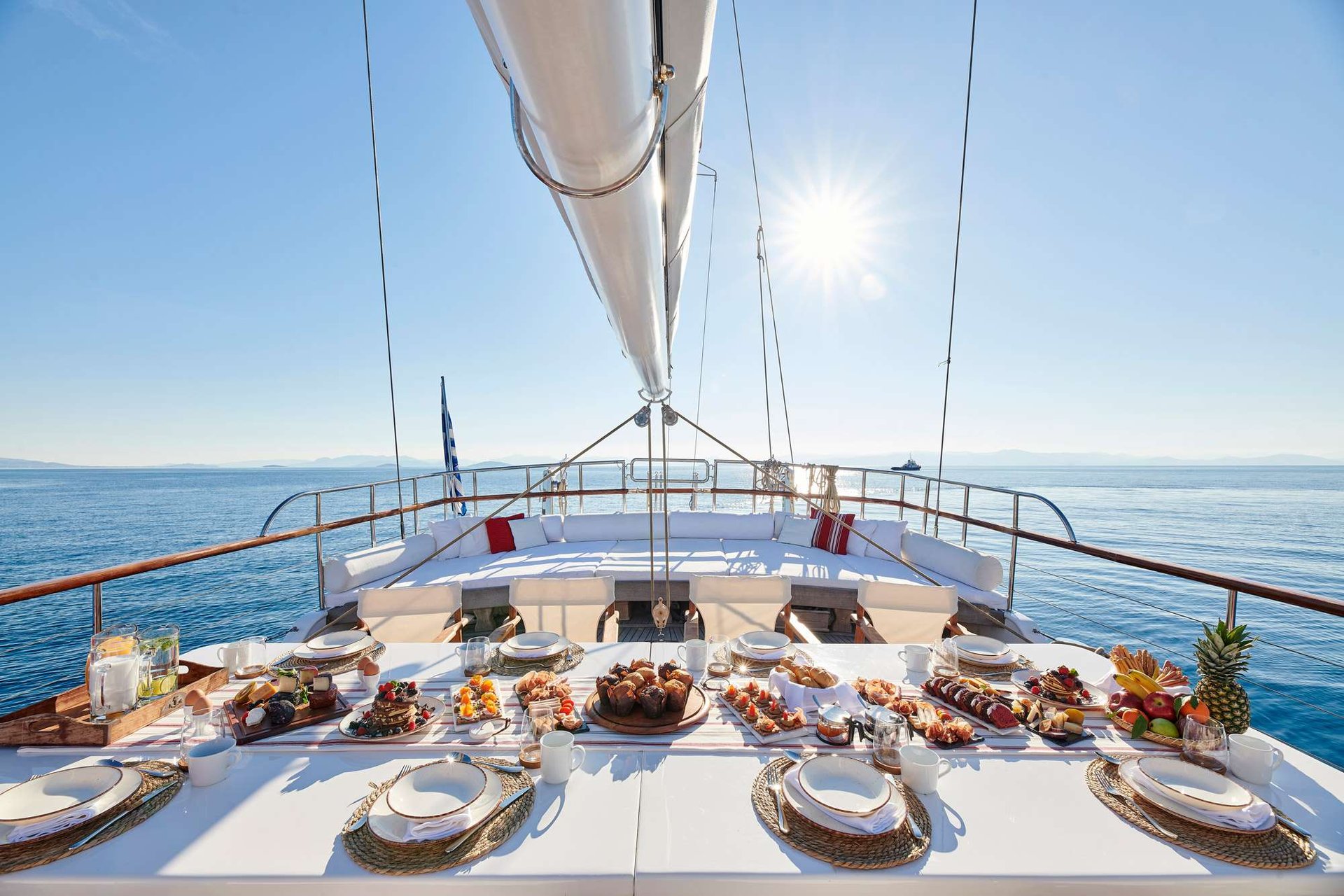
Last morning at anchor.

A last slow breakfast on deck at anchor, a final swim off the stern if the morning is warm enough, and the short transfer your crew arranges straight to Athens International Airport or to a shoreside hotel if you're extending in the city—the Acropolis and the Plaka are an easy half-day from Alimos. Your captain and chef will step off the boat already talking about when you're coming back, which is usually how the good ones end.

Frequently asked

Is the Saronic Gulf good for first-time Greek charters?
It's the single best first-time Greek charter. Three reasons: (1) sheltered from the Meltemi, so afternoons are 10–15 knot thermals not 35 knot gusts; (2) short legs (15–20 nm typical) so kids and grandparents aren't on the boat 6 hours; (3) 15 minutes from Athens airport to the dock — no inter-island flight or ferry to start the trip.
What cultural stops does this Saronic itinerary include?
Aegina's Temple of Aphaia (a Doric temple older than the Parthenon), Hydra (car-free National Heritage town — donkey transport only), Spetses (Old Harbor with the Poseidonion above), and the 4th-century BC UNESCO theatre at Epidaurus where you can sometimes catch an evening performance under the stars.
When's the best time of year for a Saronic charter?
May through October. The Saronic's season is longer than the Cyclades because there's no Meltemi to time around. June and September are the sweet spots — water's warm, tavernas are open, route isn't crowded. May and October are cooler but still excellent. July–August is peak family season; book early.
How does the Saronic compare to the Cyclades or Ionian?
Saronic = closest to Athens, shortest legs, most cultural depth, no Meltemi. Cyclades = the postcard photo (Mykonos, Santorini), real Aegean sailing, more weather risk. Ionian = the calmest week, taverna villages, family-friendly but on the opposite coast (fly into Corfu instead of Athens). All three are great; the Saronic is the safest first pick.

Ready to set sail in Greece?

Every itinerary we send is custom-tailored. Tell us your dates, the size of your group, and what you want out of your charter—we'll handle the rest.