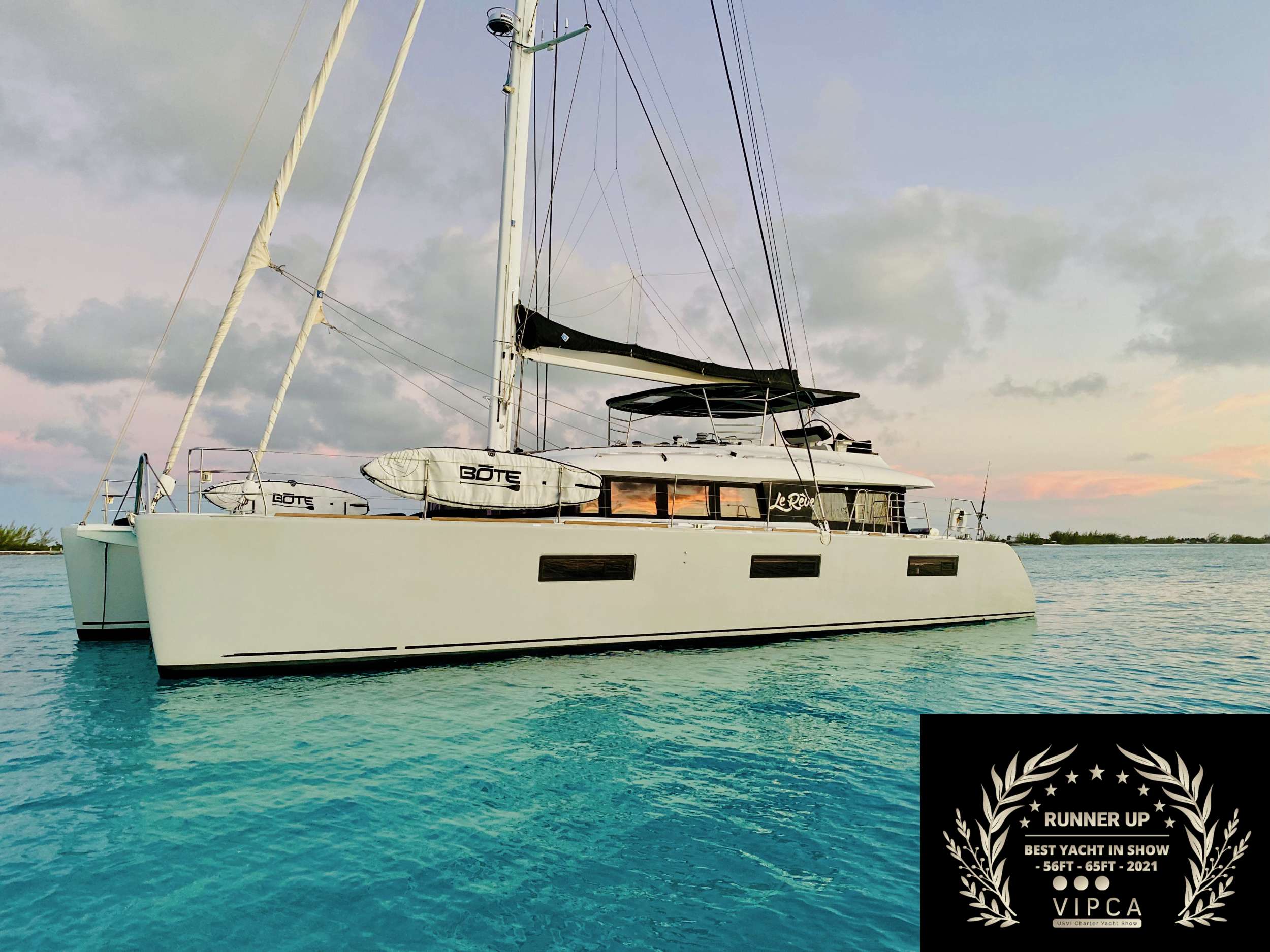

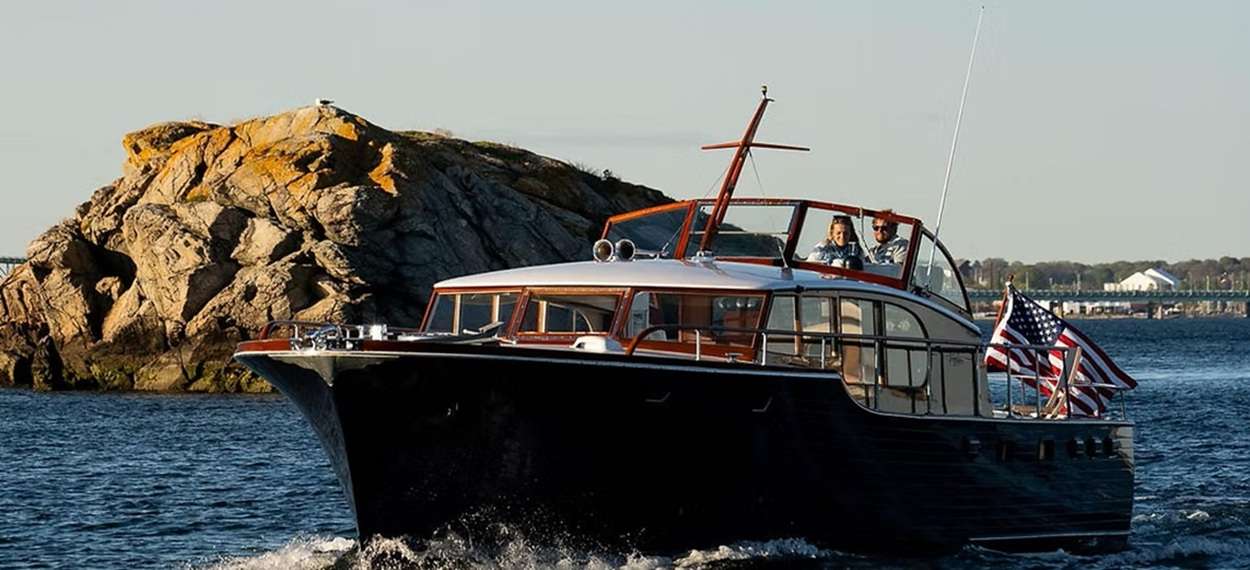
North Star
42FT · MOTOR YACHT
Pricing from $45,000/week
4 Guests · 3 Cabins
Caribbean
Eastern Mediterranean
Western Mediterranean
South Pacific
United States
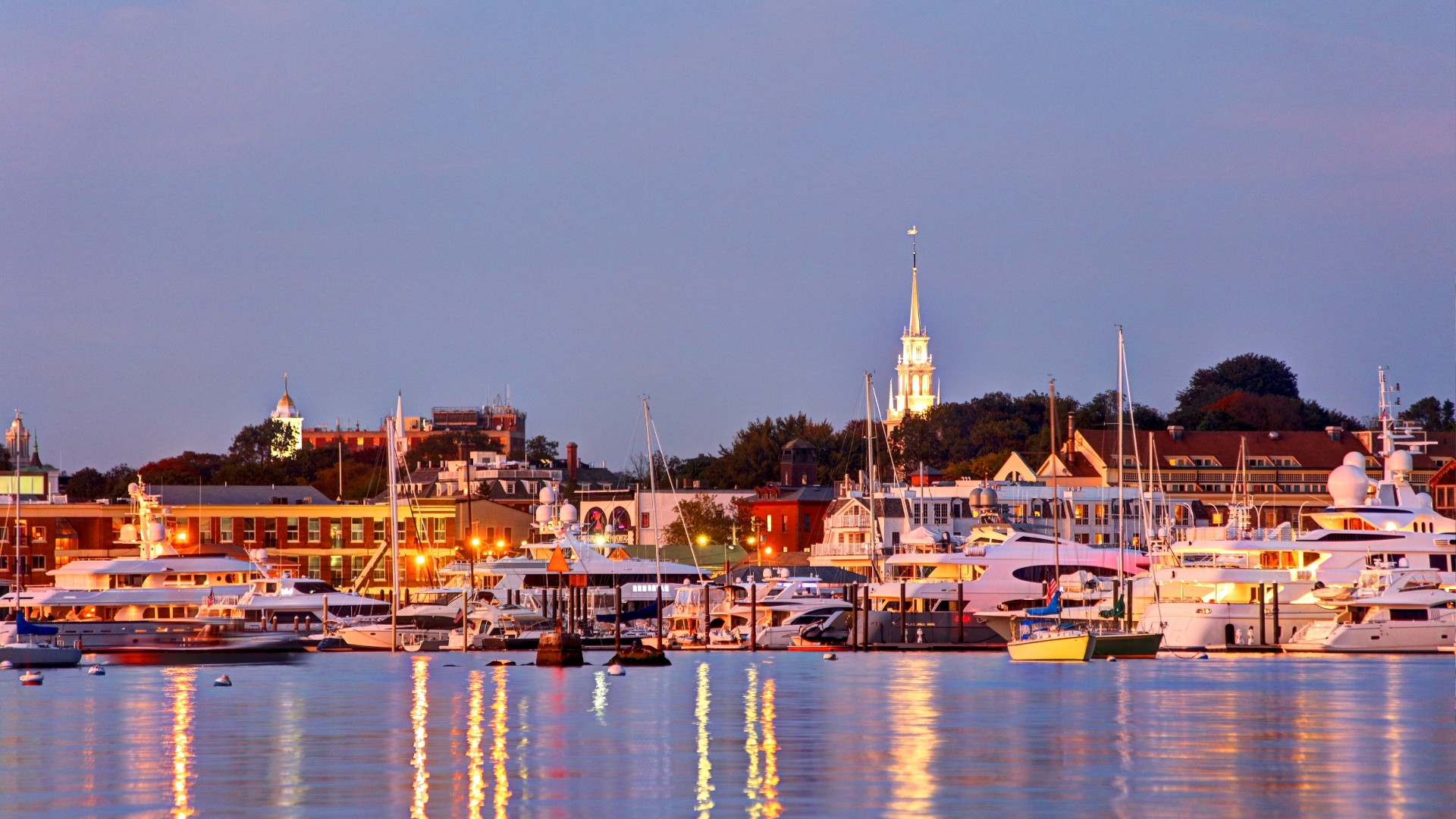
The classic American summer, taken from the water — Newport's Gilded Age mansions filling the view off the aft deck, Nantucket's grey-shingled lanes a short tender ride from the anchorage, and a Maine lobster dinner served on deck the day it came out of the bay.
Why New England
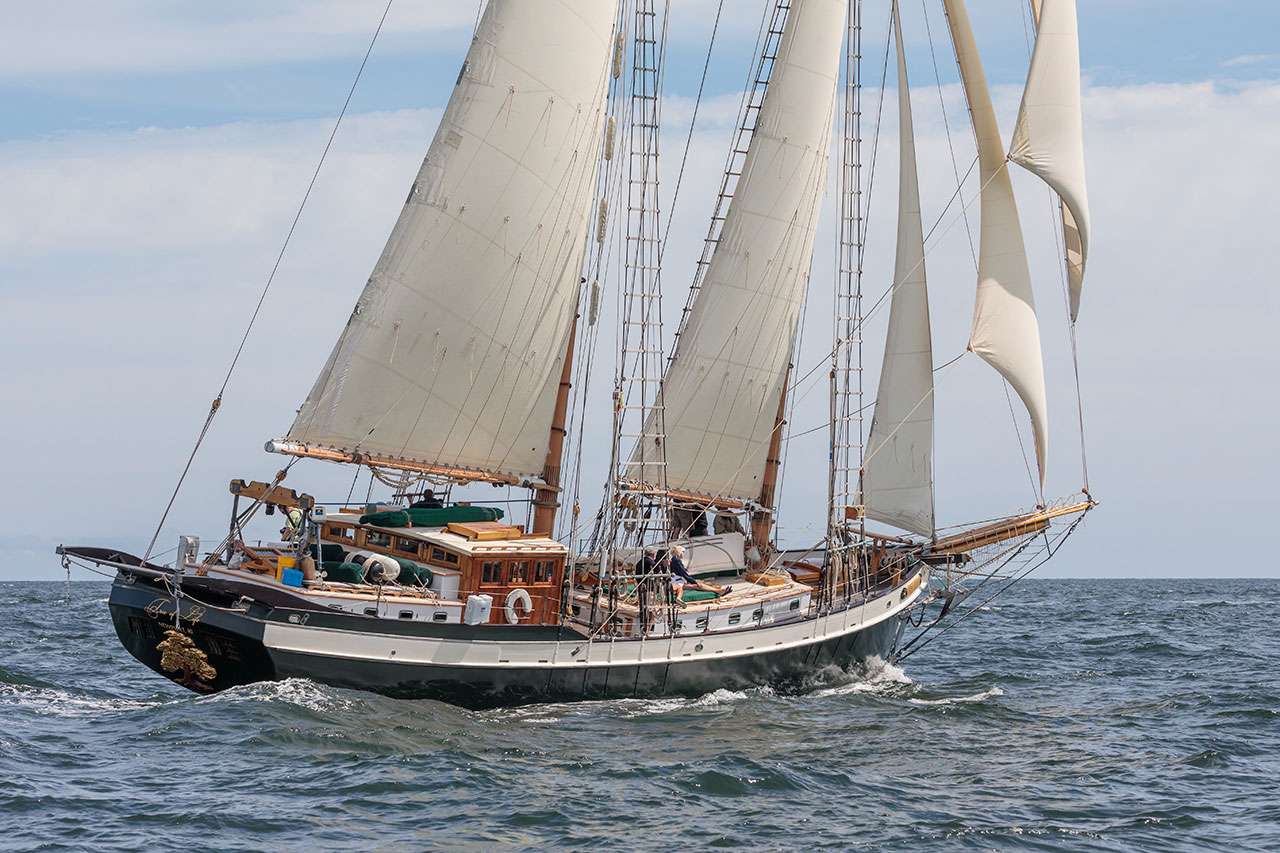
There's a version of the American summer you've seen in photographs — the mansions, the grey-shingled lanes, the schooners off Camden — and there's the version you see from the water, which is the one the photographs were taken from. The fleet that works this coast is unlike anywhere else we book: big motor yachts alongside classic sailing yachts and schooners, the boats Newport's harbor was built around. Days are short hops between towns that have hosted summer people for a century and a half. The water is cooler than the Caribbean; the shore is the payoff — dinner is ashore as often as aboard, and the towns are half the reason to come.
Three genuinely different weeks. If it's your first New England charter, we'd book Newport and Narragansett Bay — the Gilded Age harbor as the base, Block Island and Cuttyhunk as the escapes. The island week — Martha's Vineyard, Nantucket, Cape Cod at the turn — is the one for beach-and-town groups. And the Maine one-way, Portland to Bar Harbor, is what we recommend once you've done the classics: granite, spruce, and harbors that still work for a living. We'll tell you which fits your group before you book.
This is the charter for groups who summer on this coast — or always meant to. Flights are domestic, you board the same day you leave home, and there's no charter VAT — a Mediterranean-scale week without the Mediterranean's overhead or jet lag. Much of this fleet spends winter in the Caribbean waters we work year-round: we know these boats, and New England is what we recommend when guests ask where the good ones go in summer.
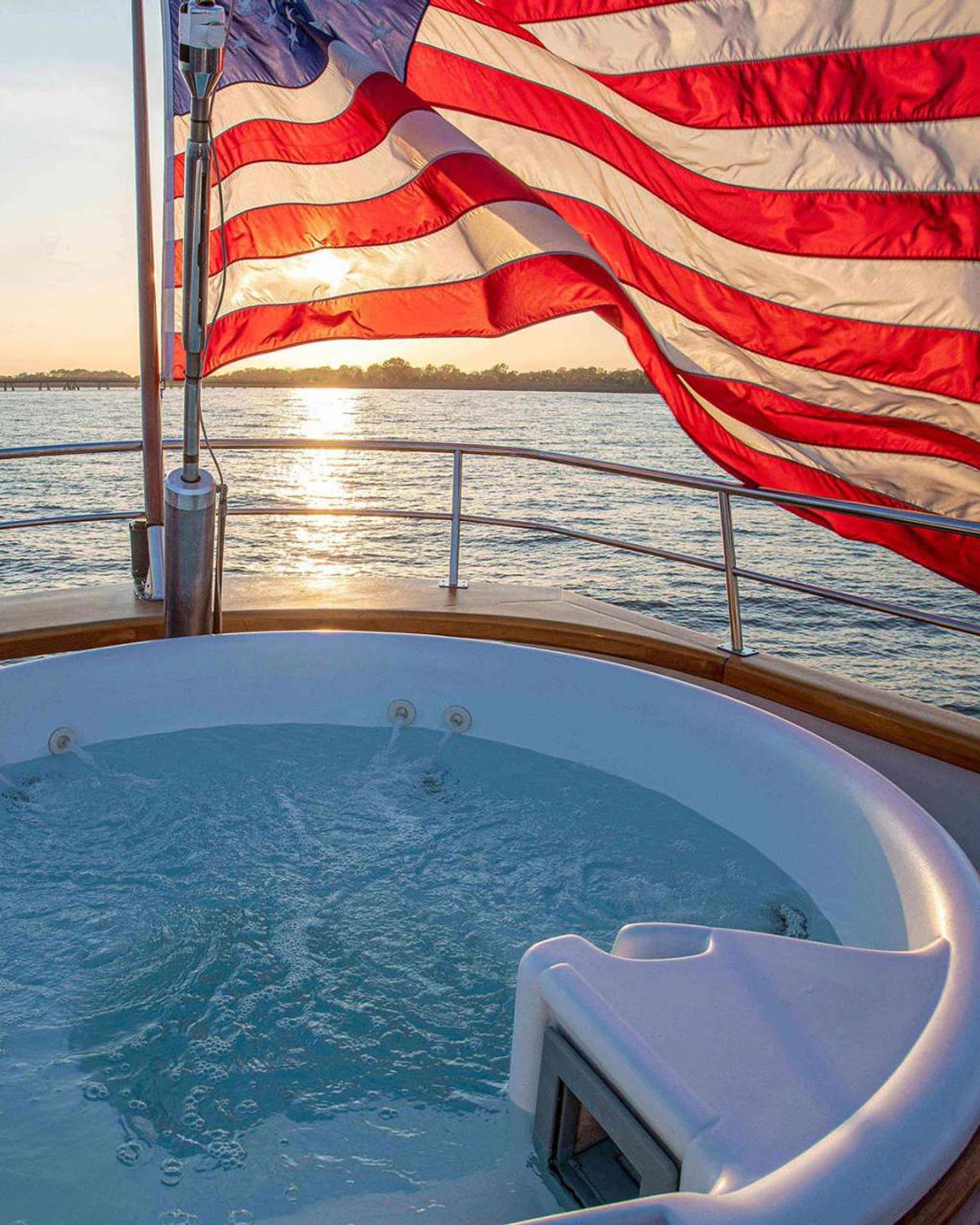
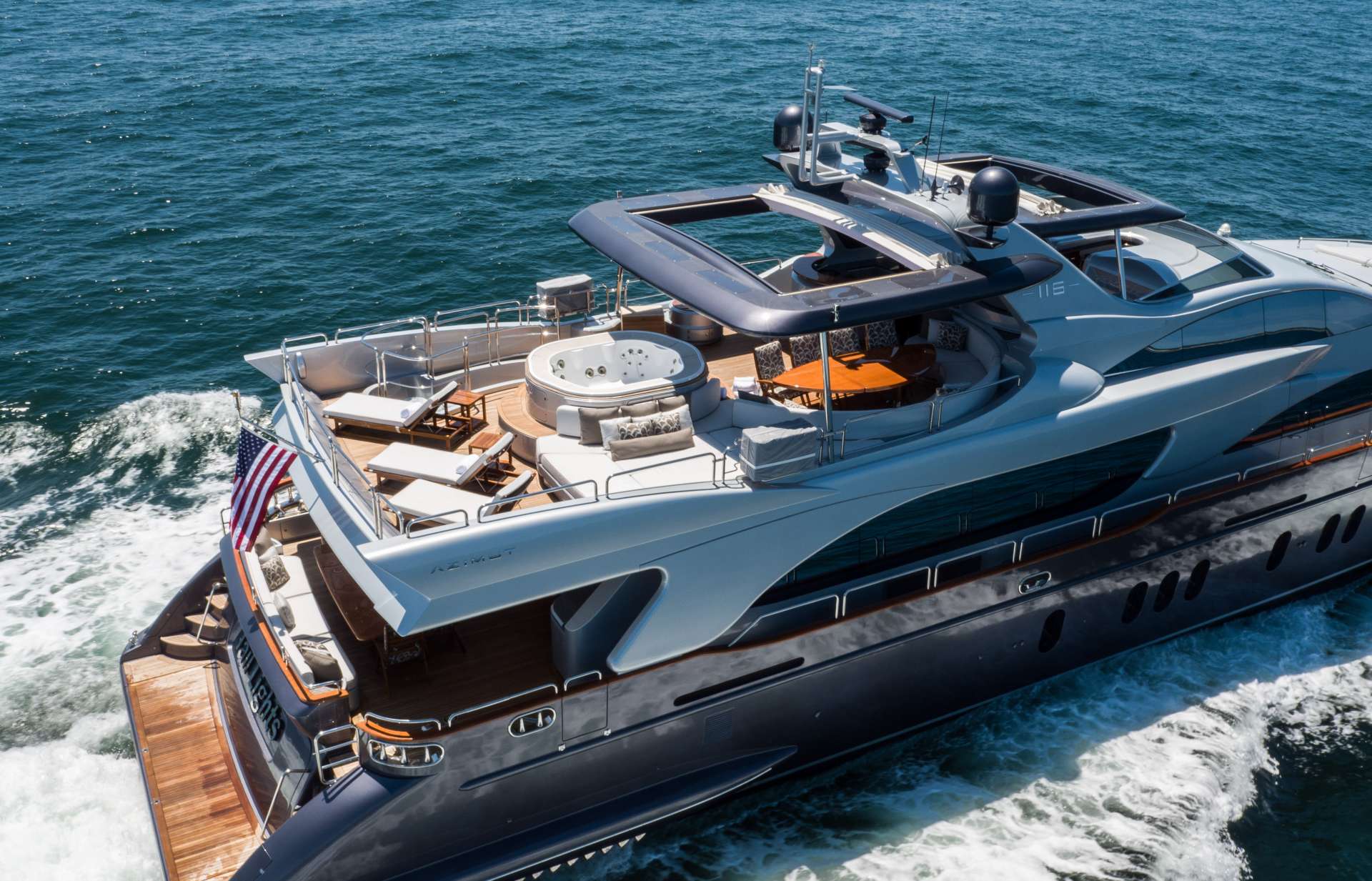
Three cruising grounds inside one coastline — Newport, the Islands, and Down East Maine.
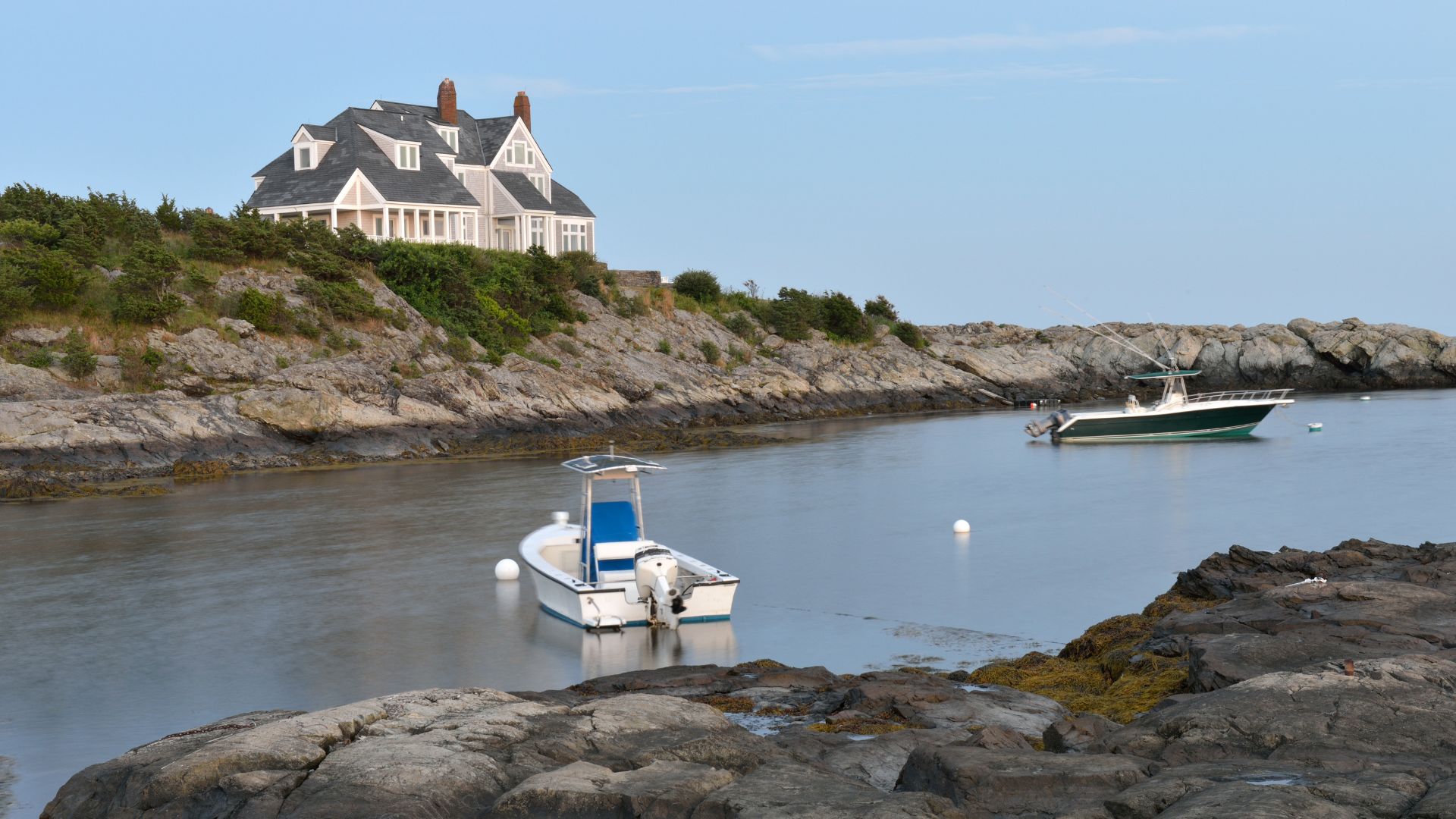
Newport is where American yachting keeps its history — the harbor that defended the America's Cup for fifty years, ringed by the Gilded Age mansions of Bellevue Avenue. The yacht anchors inside the story: Castle Hill at golden hour, the Cliff Walk ashore, and a classic America's Cup yacht under sail across the bay most summer afternoons.
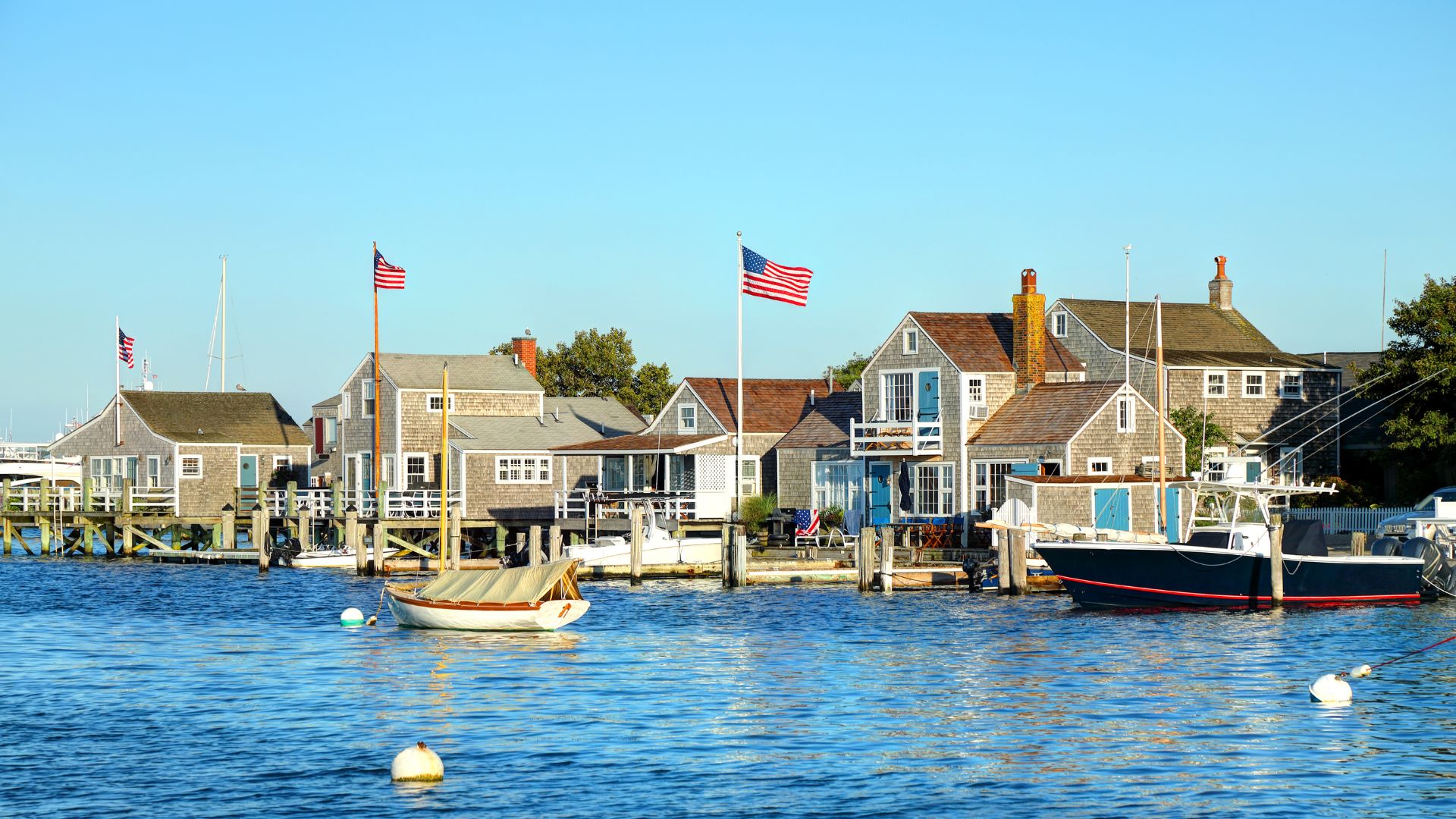
Martha's Vineyard and Nantucket are the summer towns the rest of the country measures against. Edgartown's white captains' houses face the harbor; Nantucket's cobblestones run down to the wharf. From the anchorage, the ferry schedules stop mattering — the yacht arrives on its own time and leaves before the day crowds do.
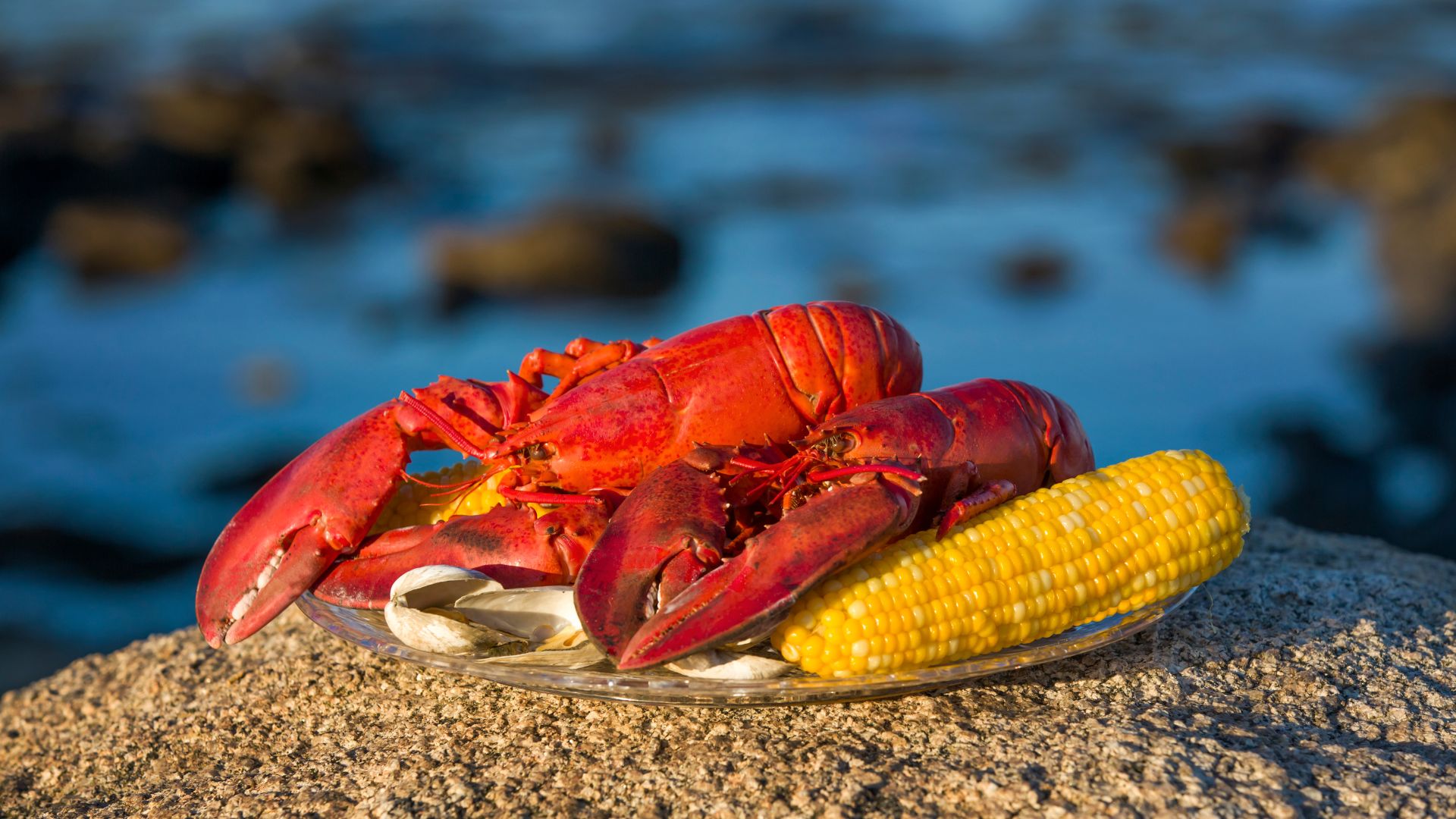
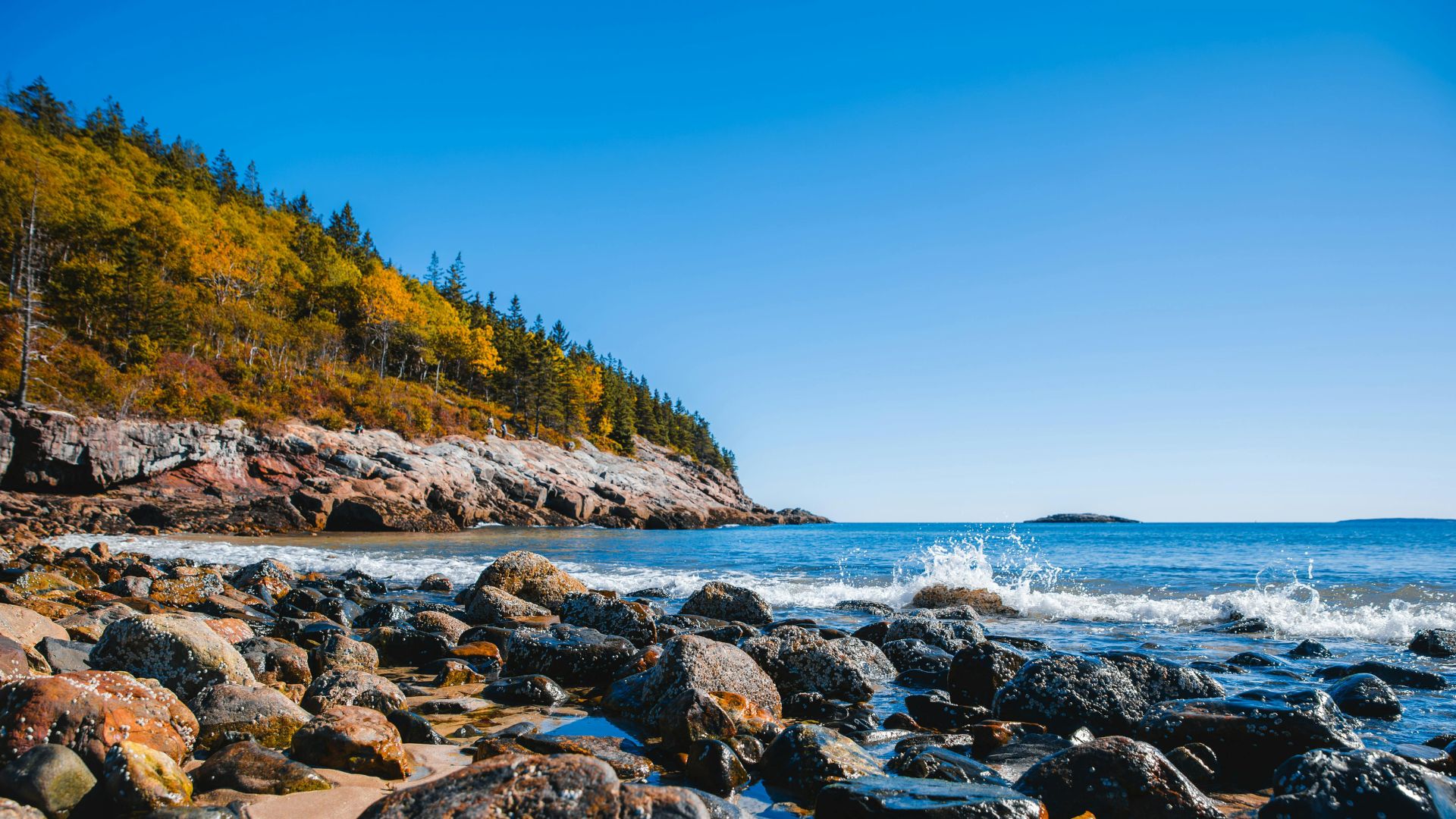
Down East Maine is the quiet end of the coast — spruce islands and granite shorelines, harbors that still work for a living. Camden keeps a fleet of windjammer schooners under Mount Battie; Acadia's mountains meet the sea at Somes Sound. Lobster comes off the boat at the dock and onto the yacht's grill the same evening.
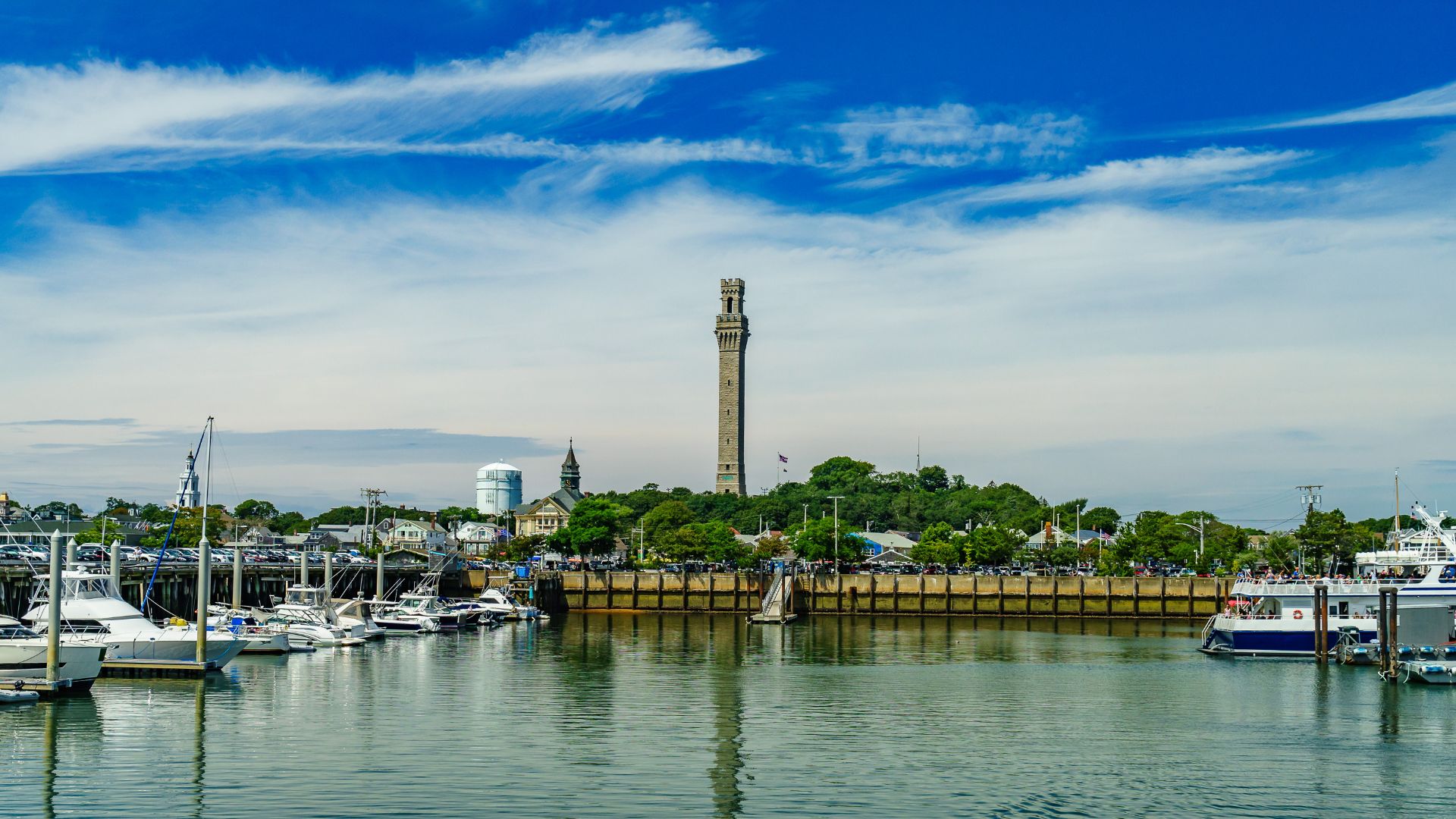
Block Island sits twelve miles off the mainland, Mohegan Bluffs at its south end and the Great Salt Pond as the anchorage. Cuttyhunk, at the tail of the Elizabeth Islands, is a working village of a few dozen year-rounders — a skiff delivers raw-bar oysters to the cockpit at six. Provincetown closes the Cape with the season's liveliest harbor.
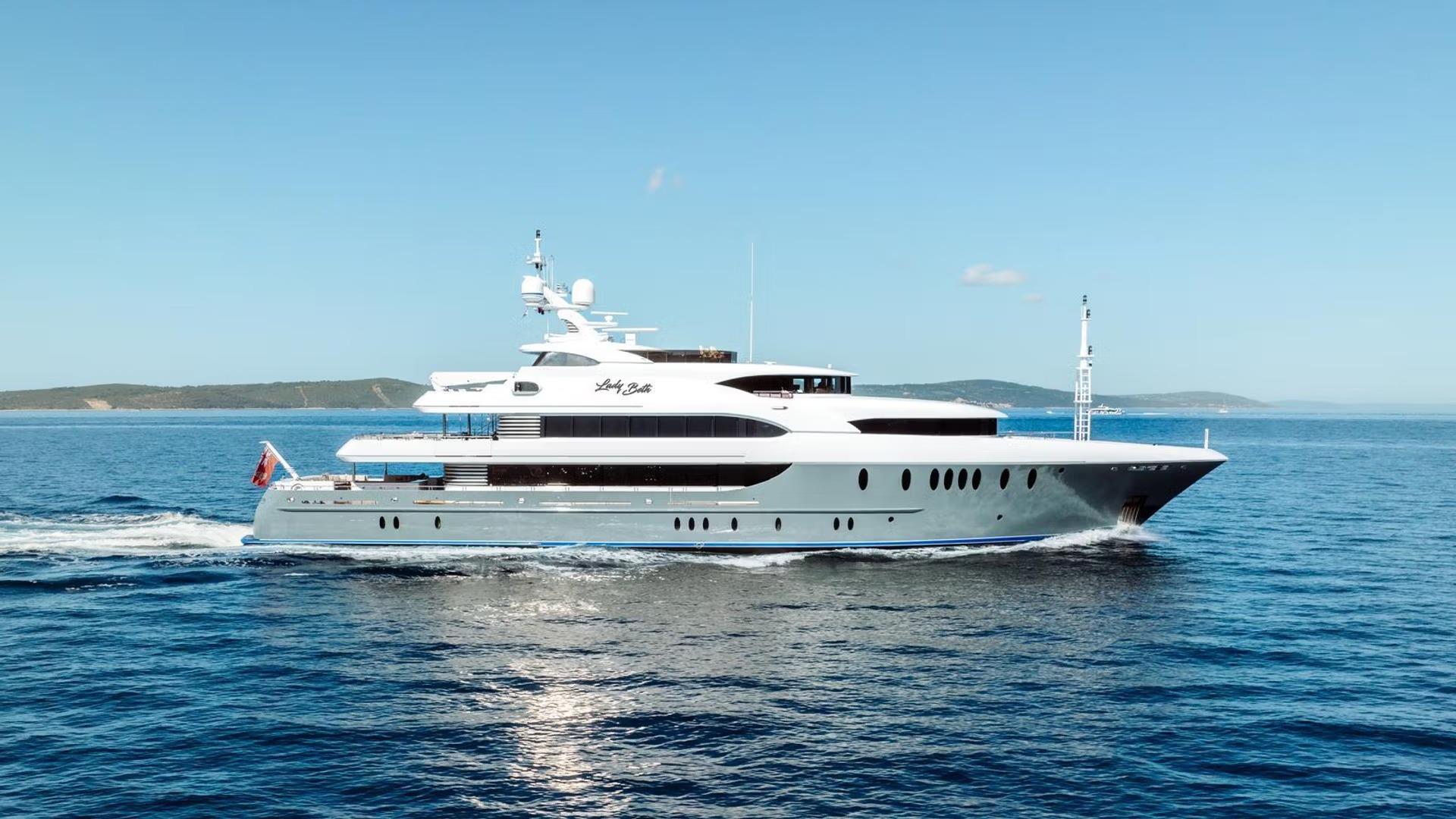
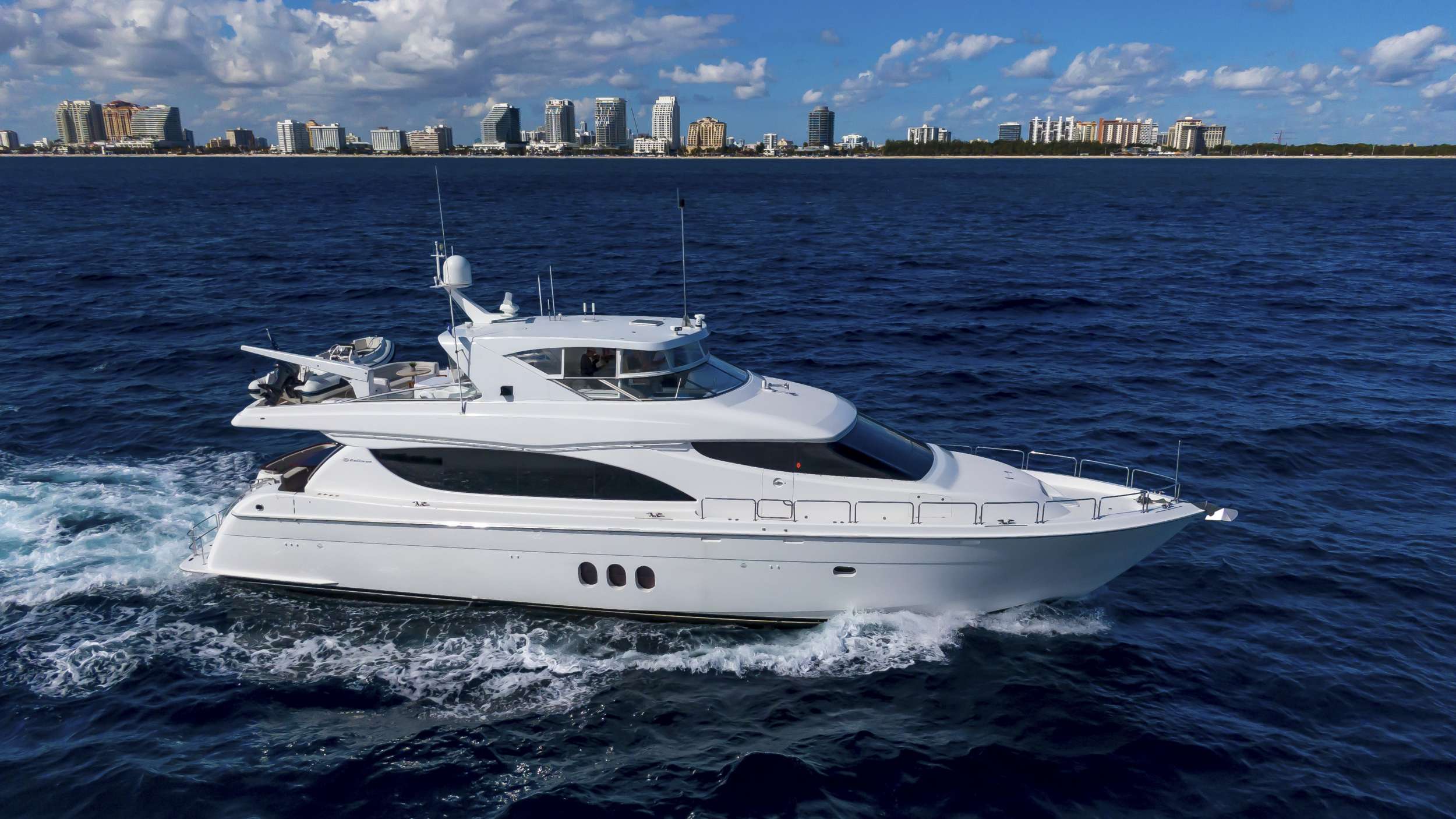
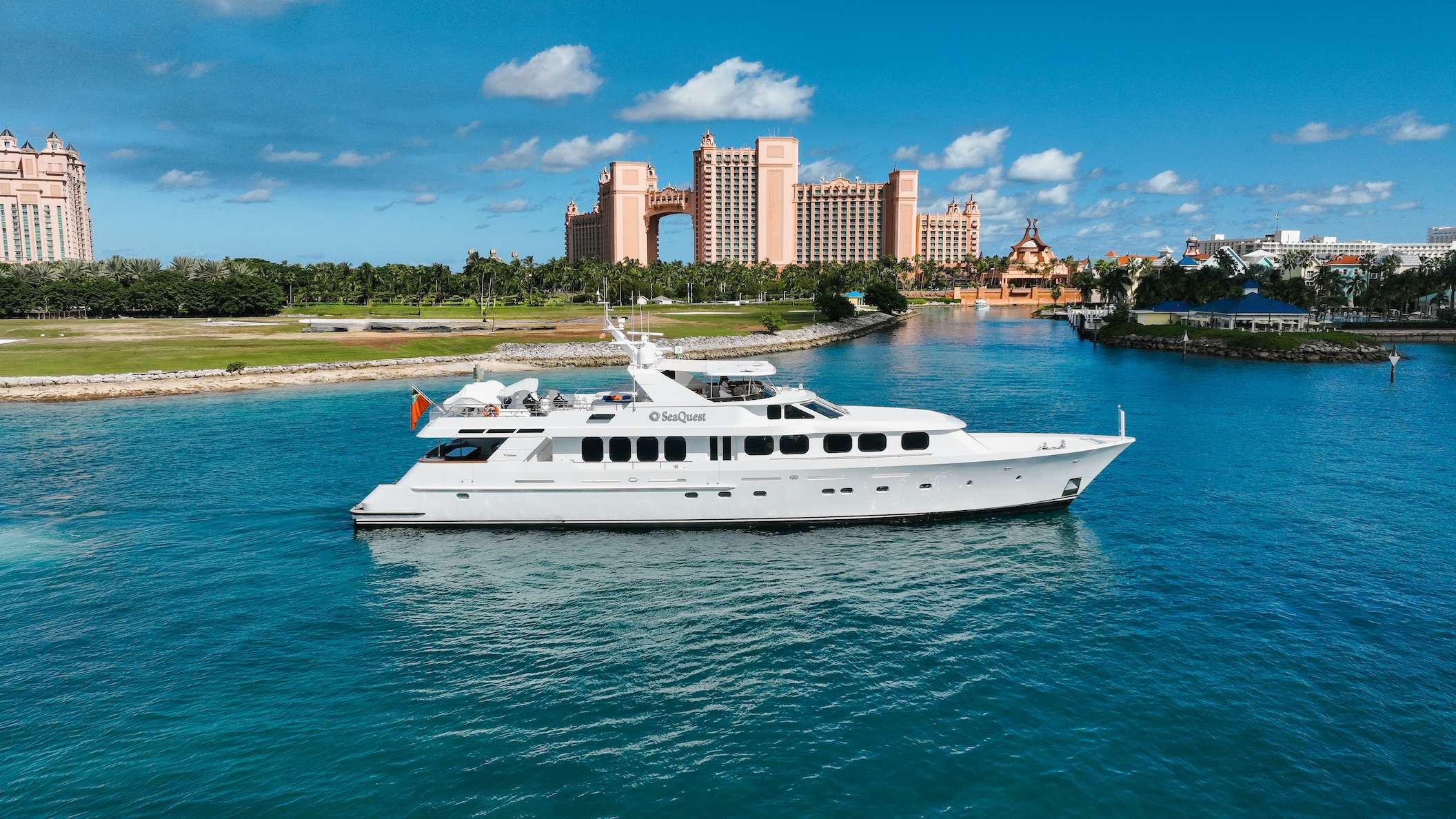
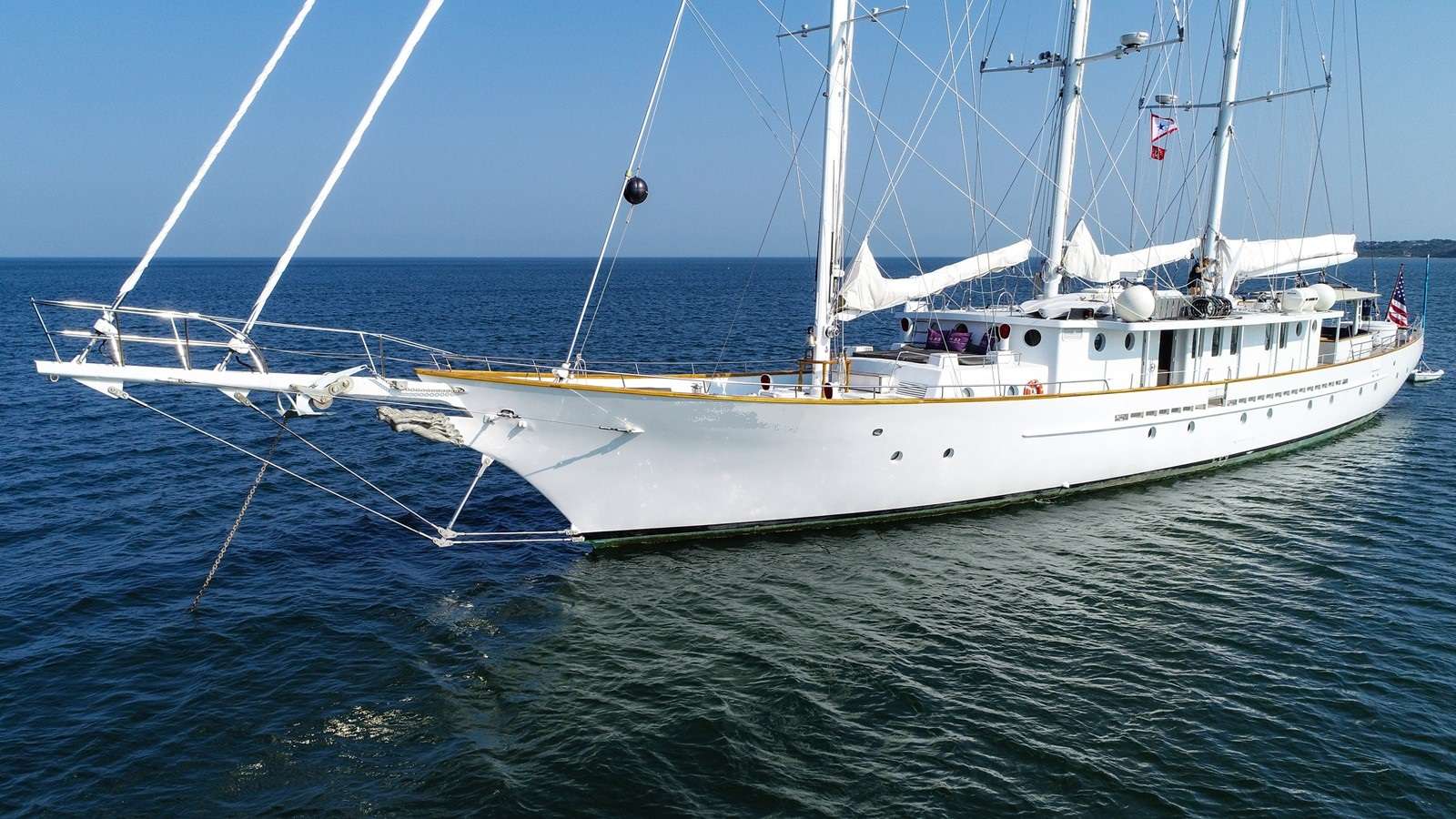
A hand-picked selection of crewed charter yachts for New England — yachts and crews we know firsthand.
Your week is shaped around your group's interests, the season, and the conditions on the water — your captain tailors the days as they unfold. Treat these itineraries as starting points for inspiration.
Crewed Itinerary · New England
This is the New England charter you picture before you know the coast — and if it's your first week up here, it's the one we'd book. Seven nights out of Newport: the Gilded Age mansions filling the view from the aft deck, Block Island's bluffs, Cuttyhunk's six-o'clock oyster skiff delivering to the cockpit, and the final nights back in the harbor where American yachting grew up. Roughly a hundred and ten easy miles, no leg longer than twenty-five.
The route suits every yacht type in the New England fleet. Motor yachts run each leg in under two hours and spend the day at anchor; the classic sailing yachts and schooners that summer in Newport turn the same legs into the sailing itself — Narragansett Bay is where American yachting grew up, and a week aboard a classic here puts you inside that story rather than watching it from shore. Your professional captain and private chef handle the rest.
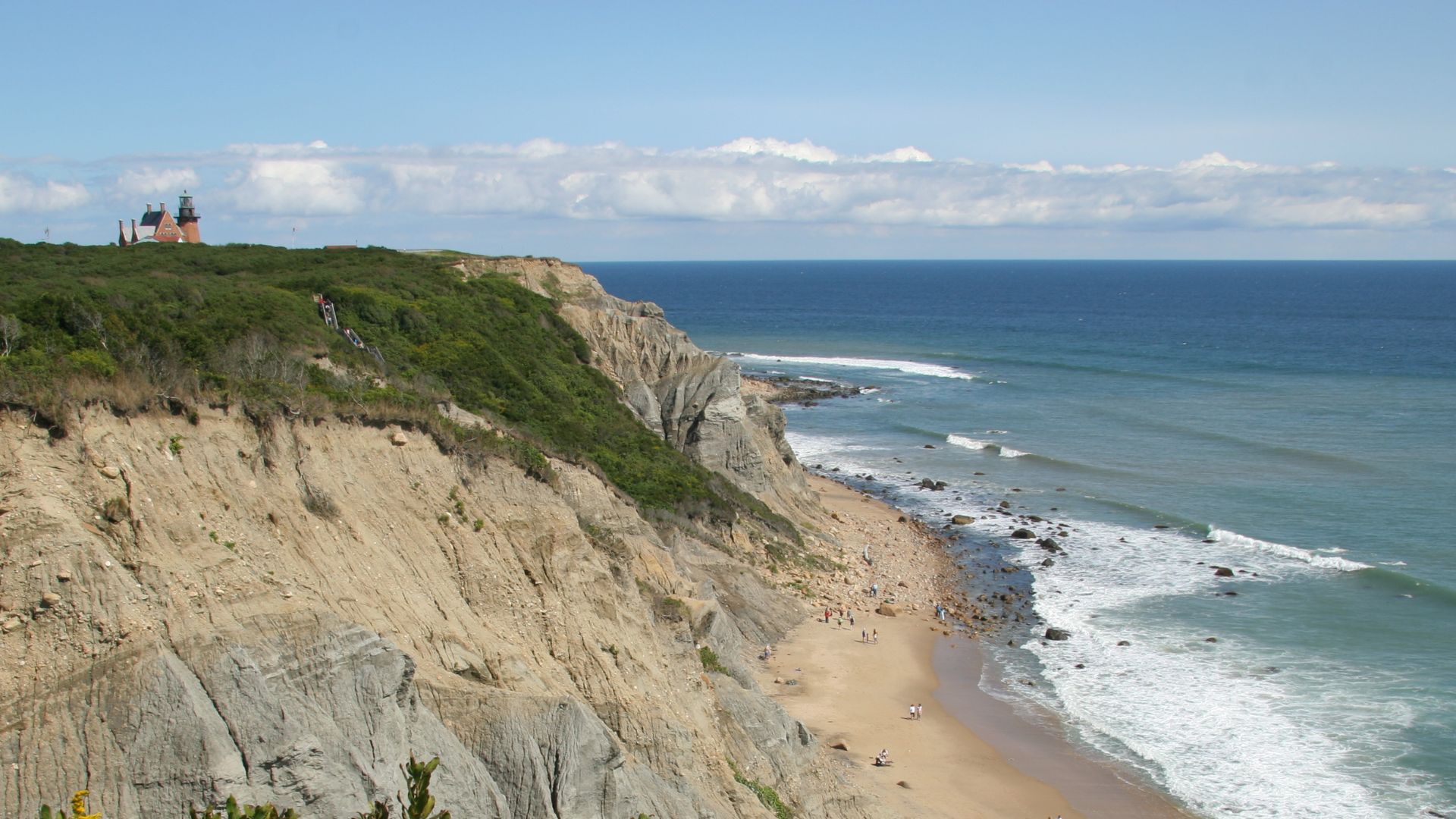
Newport is the base, but the week is bigger than the harbor. The route covers three registers in seven nights: the Gilded Age harbor itself — mansions above the anchorage, the Cliff Walk ashore, a classic America's Cup yacht under sail most afternoons; Block Island's clay bluffs and the boat-filled Great Salt Pond twelve miles offshore; and Cuttyhunk, a working island village of a few dozen year-rounders where a skiff delivers raw-bar oysters to the cockpit at six o'clock.
About 110 nautical miles round-trip, no leg over 25 nm — short mornings under way, long afternoons at anchor. The finish runs through the quiet upper bay to Bristol, home of the Herreshoff yard that built five straight America's Cup defenders, before the last Newport night. Every mile is protected or near-coastal water; the captain has options in any forecast.
Day 1 of 7 · Newport → Jamestown
The charter begins in Newport — boarding at Newport Shipyard or by tender from a harbor mooring, depending on the yacht. Providence (PVD) is forty minutes by car; Boston (BOS) about ninety. The captain and chef meet you at the dock, stow the luggage, and walk the group through the yacht and the week's chart while the harbor does what Newport Harbor does: launches running, a 12 Metre ghosting past the moorings, the church spires and shingled waterfront stacked behind Bowen's Wharf.
There is no reason to rush off. Newport rewards the first afternoon — a walk down Thames Street and the wharves, a chowder at The Black Pearl on Bannister's Wharf, or nothing at all beyond the aft deck and the harbor traffic. Late in the day, lines come off for the shortest leg of the week: five nautical miles across the East Passage to Conanicut Island and the quiet side of the bay.
The first night sets the register. Dutch Harbor on Jamestown's west side is a working mooring field with a sunset over the West Passage; Mackerel Cove, a sand-bottomed notch on the island's south end, is the at-anchor alternative when the wind agrees. The chef serves the welcome dinner aboard — local seafood, and it will not be the last time — with Newport's glow across the water and almost none of its noise.
Day Highlights
Day 2 of 7 · Out to Block Island
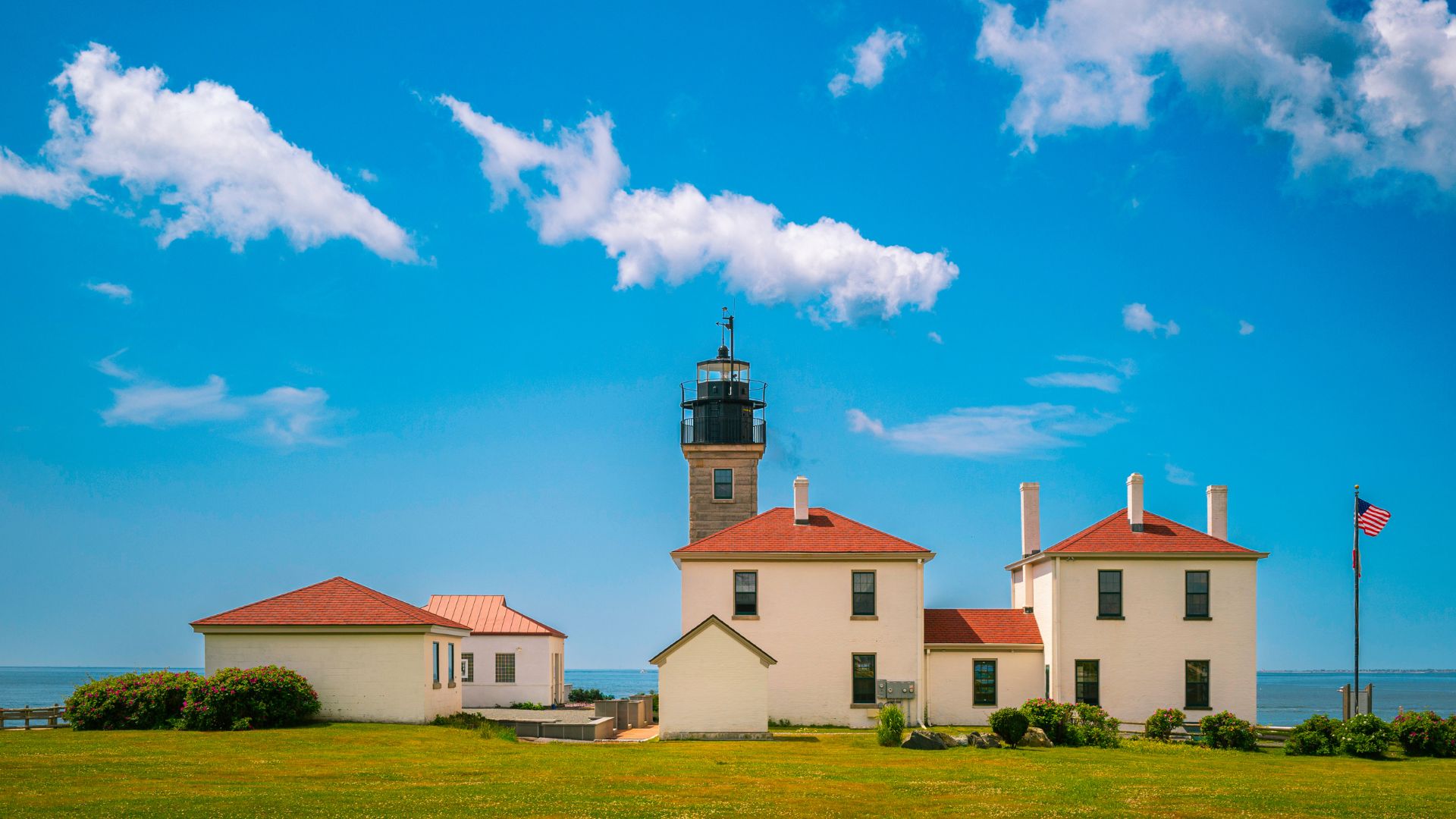
The morning run rounds Beavertail Light at the southern tip of Conanicut Island — the third-oldest lighthouse site in the country — and points offshore. Block Island sits about twelve miles off the Rhode Island coast, and the twenty-two-mile leg from Jamestown is the week's first taste of open Atlantic water. The captain times it for the morning calm; motor yachts make it inside two hours, and on a sailing yacht it is a proper passage with the island growing on the horizon.
The entrance to the Great Salt Pond is a narrow cut on the island's west side, and the pond inside is one of the best natural harbors on the East Coast — a mile-wide bowl of protected water known locally as New Harbor. The afternoon belongs to the island: the tender runs guests in for rented bikes or a taxi south to Mohegan Bluffs, where a wooden staircase drops a hundred and fifty feet of clay cliff to the beach below and the 1875 Southeast Light stands where erosion forced it to be moved bodily inland in 1993.
Evenings in the pond are their own tradition. The Oar overlooks the mooring field with several hundred boat oars nailed to its ceiling, and a dark-and-stormy there while the launch traffic winds down is the standard first-night move. Dinner is the chef's aboard, or ashore in the Old Harbor village on the island's east side — a fifteen-minute taxi across the island.
Day Highlights
Day 3 of 7 · Block Island lay day
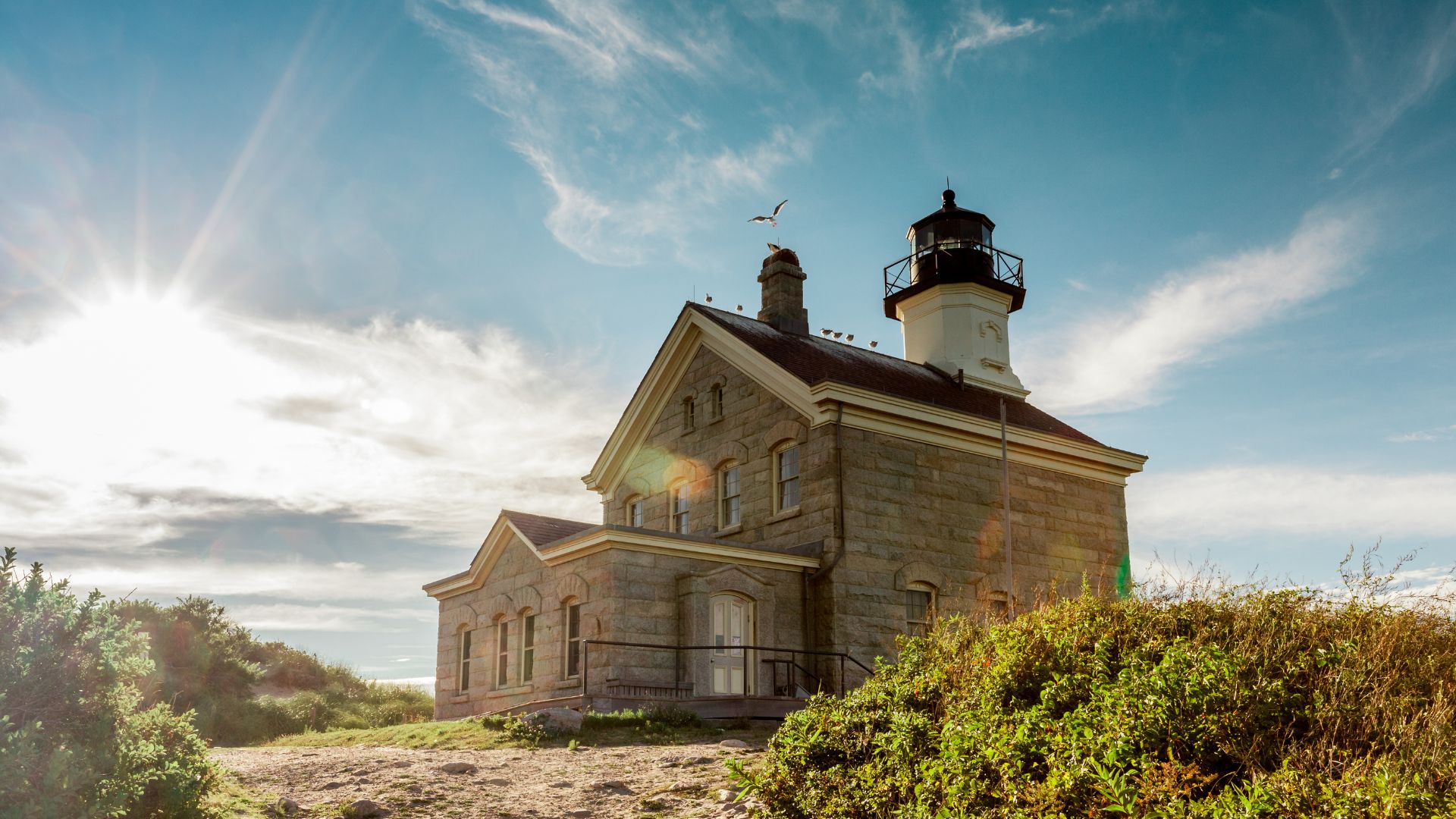
The lay day is why Block Island earns two nights. Nearly half the island is conservation land — the Nature Conservancy counted it among its 'last great places' in the Western Hemisphere — and the distances are bicycle-scale. The standard loop runs south past Painted Rock to the bluffs, east through the Victorian hotels of Old Harbor, and north along Corn Neck Road to the stone North Light at Sandy Point, with farm stands and stone walls the whole way.
The beaches are the other half of the day. Crescent Beach runs two-plus miles of clean sand up the island's east side within walking distance of Old Harbor; Mansion Beach at its north end is the quieter stretch with the ruins of a Gilded Age foundation in the dunes behind it. The water in late summer runs warmer than most first-timers expect — low seventies in August — and the chef packs the tender for a beach afternoon whenever the group wants one.
For the evening, Payne's Dock in the pond sells its famous sugared donuts as the sun drops, and Dead Eye Dick's serves a proper swordfish a short walk from the dinghy dock. Guests who want the full island dinner take the taxi to Old Harbor; guests who have found their rhythm stay aboard, where the chef's raw bar and the mooring-field lights do the work. Both answers are correct.
Day Highlights
Day 4 of 7 · East to the Elizabeth Islands
The week's longest leg crosses Rhode Island Sound eastward — about twenty-five nautical miles from the Great Salt Pond to the tail of the Elizabeth Islands, the chain that runs southwest off Cape Cod between Buzzards Bay and Vineyard Sound. The captain runs it in the morning; by lunch the yacht is closing on Cuttyhunk, an island Bartholomew Gosnold landed on in 1602, decades before the Pilgrims saw the Cape.
Cuttyhunk is the anti-Newport, and that is exactly why it is on the route. A few dozen people live here year-round. There is one small store, a church, a one-room schoolhouse, and a grass-strip of a town where golf carts outnumber cars. The walk up Lookout Hill takes fifteen minutes and pays out a 360-degree view — the Vineyard east, Buzzards Bay north, the open Atlantic south — from old WWII bunker mounts at the top.
The evening is the island's signature moment: the raw-bar skiff from the Cuttyhunk shellfish farm motors through the anchorage around six, pulling alongside to shuck oysters and littlenecks straight into the cockpit. The chef builds dinner around what comes over the rail. There is no nightlife and no reservation to make — the anchorage goes quiet early, and after Block Island at peak, that is the point.
Day Highlights
Day 5 of 7 · Back west to the Gilded Age
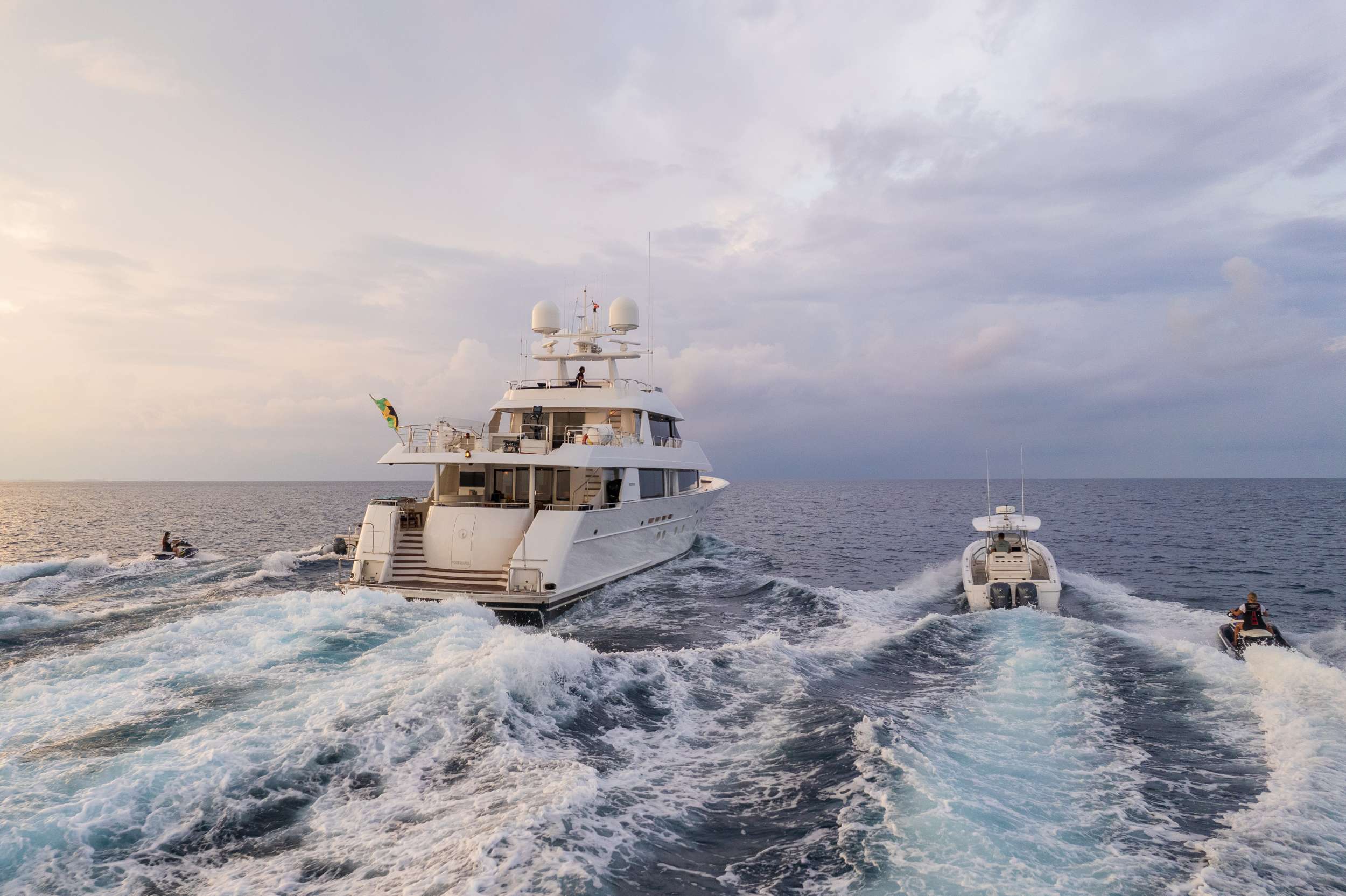
A morning run back west across the sound, and by early afternoon the yacht is standing in past Castle Hill Light — the small 1890 lighthouse on the rocks below the Castle Hill Inn — and into Newport Harbor. The approach from seaward is the way the harbor was always meant to be seen: Fort Adams to port, the mansion rooflines along the Cliff Walk to starboard, and the mooring field opening up behind Goat Island.
The afternoon is for the Gilded Age. The Breakers — the Vanderbilts' seventy-room Italian Renaissance palace above the Cliff Walk — anchors the Bellevue Avenue mansion row, with Marble House and Rosecliff a walk or short drive apart. Guests who prefer the water's view of it all walk the Cliff Walk itself: three and a half miles between the mansions' back lawns and the surf. The crew arranges cars and timing so nobody thinks about either.
Newport dinner reservations are worth having, and the crew books ahead. The Clarke Cooke House on Bannister's Wharf has fed the sailing crowd since before the Cup left town; the White Horse Tavern has been pouring since 1673 and calls itself the oldest operating restaurant in the country; Castle Hill Inn does the special-occasion table above the harbor entrance. The night ends back aboard on the mooring, the harbor lights doing what they have done for a century and a half.
Day Highlights
Day 6 of 7 · Up the bay to the Herreshoff yard
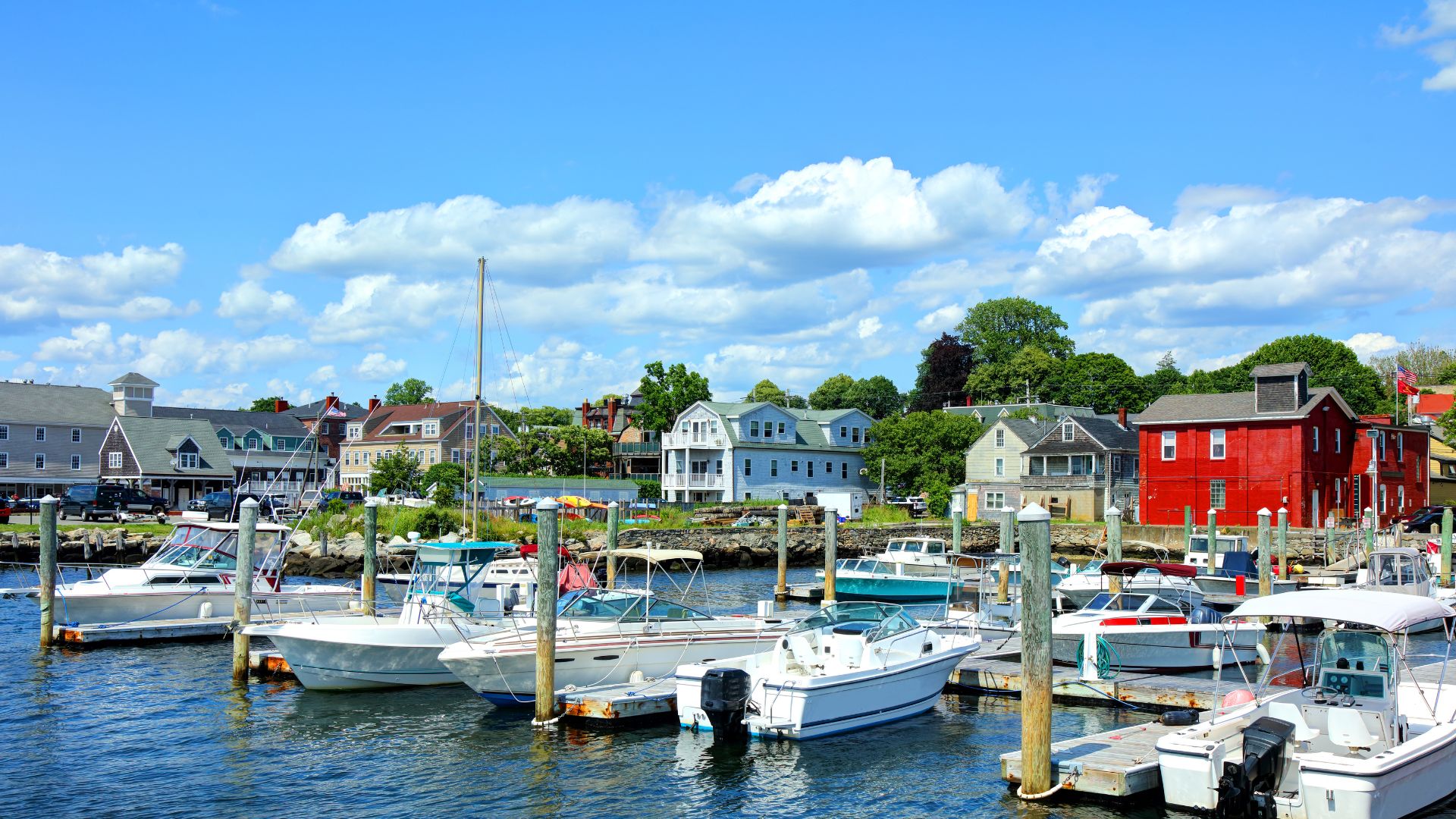
The bay north of Newport is the stretch most visitors never see, and it is some of the easiest cruising of the week — twelve miles of protected water past Prudence Island's conservation shoreline to Bristol, a colonial harbor town that has run its Fourth of July parade every year since 1785, the country's oldest.
Bristol's claim on this route is the Herreshoff Marine Museum, on the site of the family yard that built five consecutive America's Cup defenders between 1893 and 1920 and effectively invented the modern racing yacht. The museum's hall of boats — and the America's Cup Hall of Fame inside it — is a half-day for anyone who cares about why Newport matters to sailing, and a good hour even for guests who don't. Hope Street's colonial houses and small storefronts fill the rest of an easy afternoon ashore.
The evening stays simple: a lobster dinner in town at the harbor's long-standing spots, or the chef's version aboard with the anchorage nearly to yourselves. Colt State Park's shoreline lawns catch the sunset just north of the mooring field. After the season's crowds further south, Bristol feels like being let in on something.
Day Highlights
Day 7 of 7 · The Newport finale
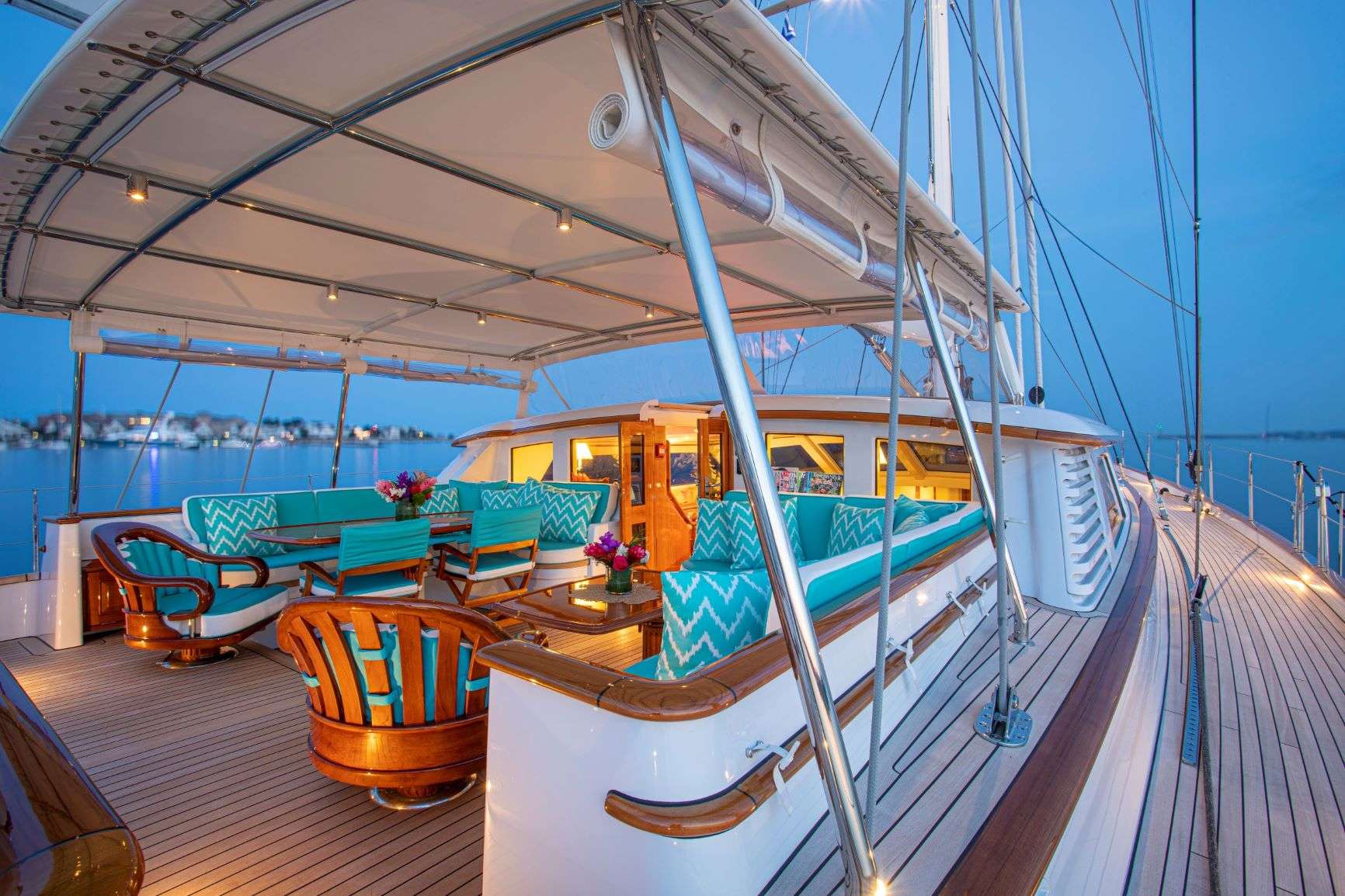
A short morning run returns the yacht to Newport for the week's finale, and the last full day is built around the harbor itself. This is the day to sail aboard a 12 Metre — several of the America's Cup boats that raced off Newport still day-sail and match-race out of the harbor all season, and the crew can have the group aboard one by late morning. Two hours of grinding winches (or declining to) on a Cup boat in Rhode Island Sound is the single most Newport thing it is possible to do.
The afternoon fills itself. Fort Adams — the harbor's massive 19th-century fortress point, home of the Newport Folk and Jazz Festivals — is a tender-accessible walk; the shops and galleries off Thames Street and the sailing-hardware windows of Bannister's Wharf absorb the rest. Guests with energy left for one more house tour take Marble House or Rosecliff; guests without settle onto the aft deck and watch the harbor's evening shift change.
The chef cooks the farewell dinner aboard — New England's version of the greatest-hits menu, lobster included — as the mooring field lights come up. The week ends where it started, which was always the design: Newport read differently after Block Island's bluffs, Cuttyhunk's silence, and Bristol's boatbuilding history than it did on boarding day.
Day Highlights
Day 8 · Departure
A slow last breakfast aboard, and disembarkation by mid-morning at Newport Shipyard or the town dock. Providence (PVD) is forty minutes by car and Boston (BOS) about ninety — the crew arranges the transfer, and guests connecting through Boston are at the gate by early afternoon. Step off with the Gilded Age harbor, Block Island's clay bluffs, a raw bar delivered to the cockpit at Cuttyhunk, and the yard that built the Cup defenders all inside one week — and no passport used at any point.
Want to share or come back to this voyage later?
Bookmark this voyage →Crewed Itinerary · New England
This route is what the summer ferry crowds do in reverse — without the lines, the schedules, or the four o'clock rush. Seven nights from Newport out to Martha's Vineyard, across to Nantucket, and up to Cape Cod: you anchor off the beaches the ferries can't reach, walk Edgartown and the cobblestones on your own clock, and leave each harbor just as the day boats pour in. One longer homeward run the captain times around the forecast; every other leg under thirty miles.
The route is what the summer ferry crowds do in reverse and without the lines. Edgartown, Oak Bluffs, Nantucket, and the outer Cape all fill with day visitors on a schedule set by the boats from Woods Hole and Hyannis; a charter arrives on its own time, anchors off the beach the ferries can't reach, and leaves before the four o'clock rush. Motor yachts fit the schedule best; a fast sailing yacht handles it comfortably with an attentive eye on the Nantucket Sound shoals, which is what your professional captain is for.
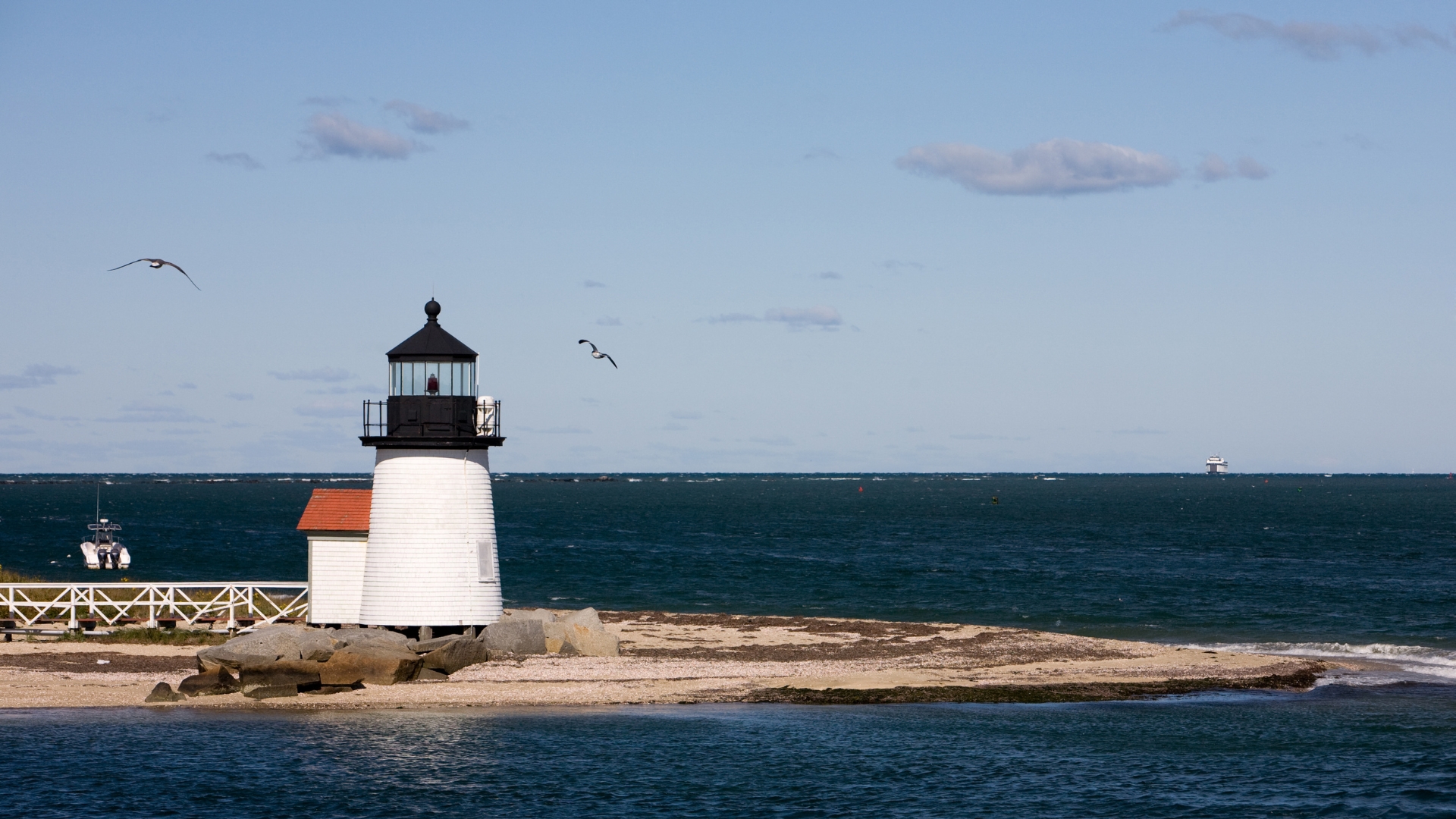
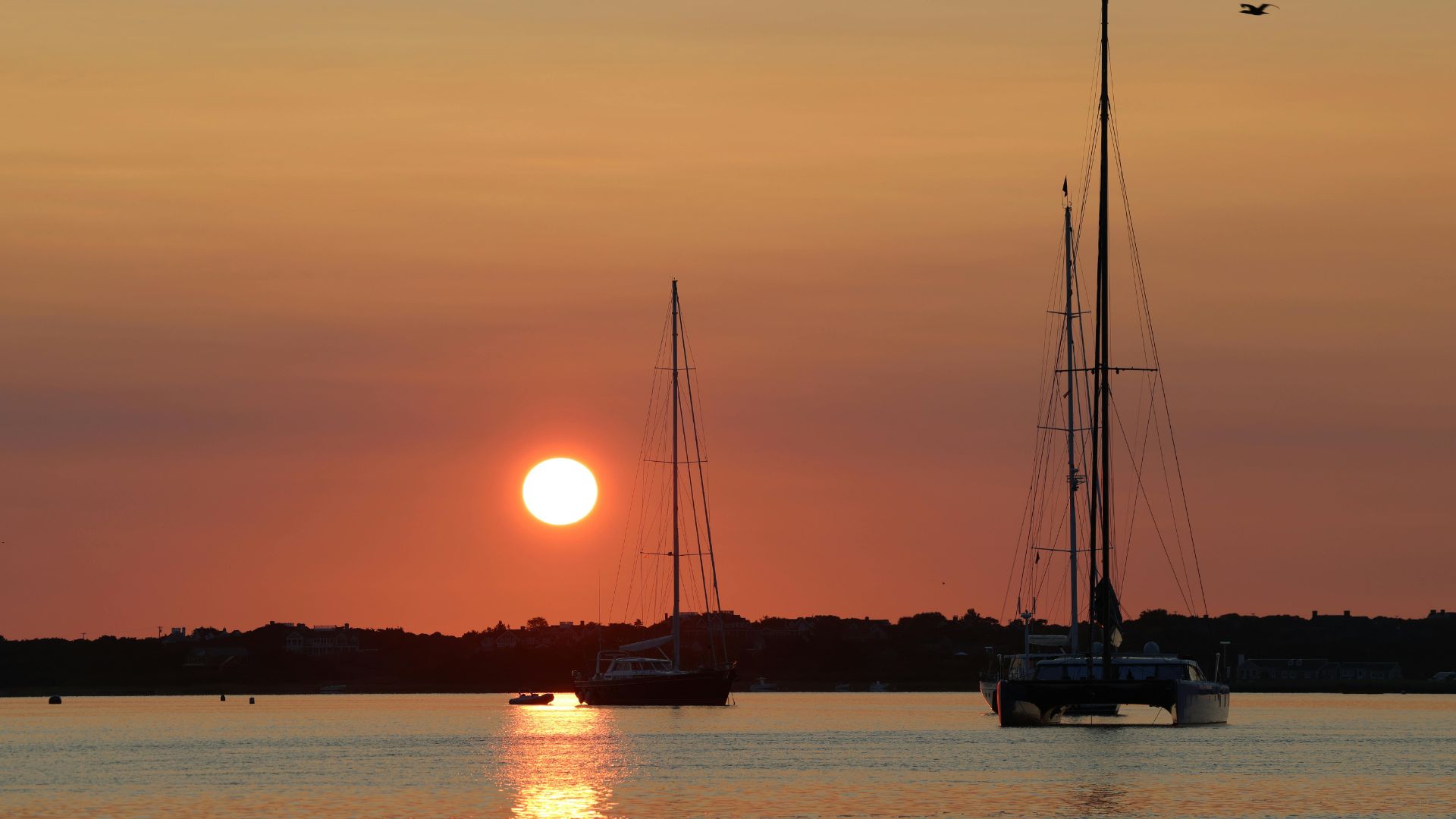
Three islands and the Cape in seven nights: Cuttyhunk's thirty-person quiet on night one, two full days on Martha's Vineyard — Edgartown's whaling-captain houses, Oak Bluffs' gingerbread cottages, the Aquinnah clay cliffs — two on Nantucket with its cobblestoned Main Street and Great Point's seal-crowded spit, and a Cape Cod finale at Chatham or Provincetown before the run home. About 190 nm total.
The islands read differently from a yacht. Moorings in Edgartown and Nantucket book out weeks ahead in season — the crew holds them — while the anchorages off Chappaquiddick, Great Point, and Cape Pogue belong to whoever sails in. The week is built around that private access: beach lunches off the tender where the road ends, town evenings when the day boats have gone.
Day 1 of 7 · Newport → the Elizabeth Islands
Boarding is in Newport — Newport Shipyard or by tender from the harbor — with Providence forty minutes away and Boston about ninety. The captain and chef meet the group at the dock, run the welcome briefing, and get under way by early afternoon for the twenty-four-mile run east across Rhode Island Sound to the tail of the Elizabeth Islands, the chain Bartholomew Gosnold charted in 1602 before the Pilgrims ever raised the Cape.
Cuttyhunk is the deliberate opening move: a village of a few dozen year-round residents, one store, golf carts for traffic, and a fifteen-minute walk up Lookout Hill to a 360-degree view spanning the week ahead — the Vineyard filling the eastern horizon, Buzzards Bay north, open Atlantic south. It is the least famous stop on the route and, for many groups by Friday, the one they talk about most.
At six, the island's raw-bar skiff works the anchorage, shucking farm oysters and littlenecks straight over the rail — the chef builds the first dinner around whatever comes aboard. The anchorage goes dark and silent early. Tomorrow the week gets busier by design; tonight is the baseline the islands get measured against.
Day Highlights
Day 2 of 7 · Into Edgartown
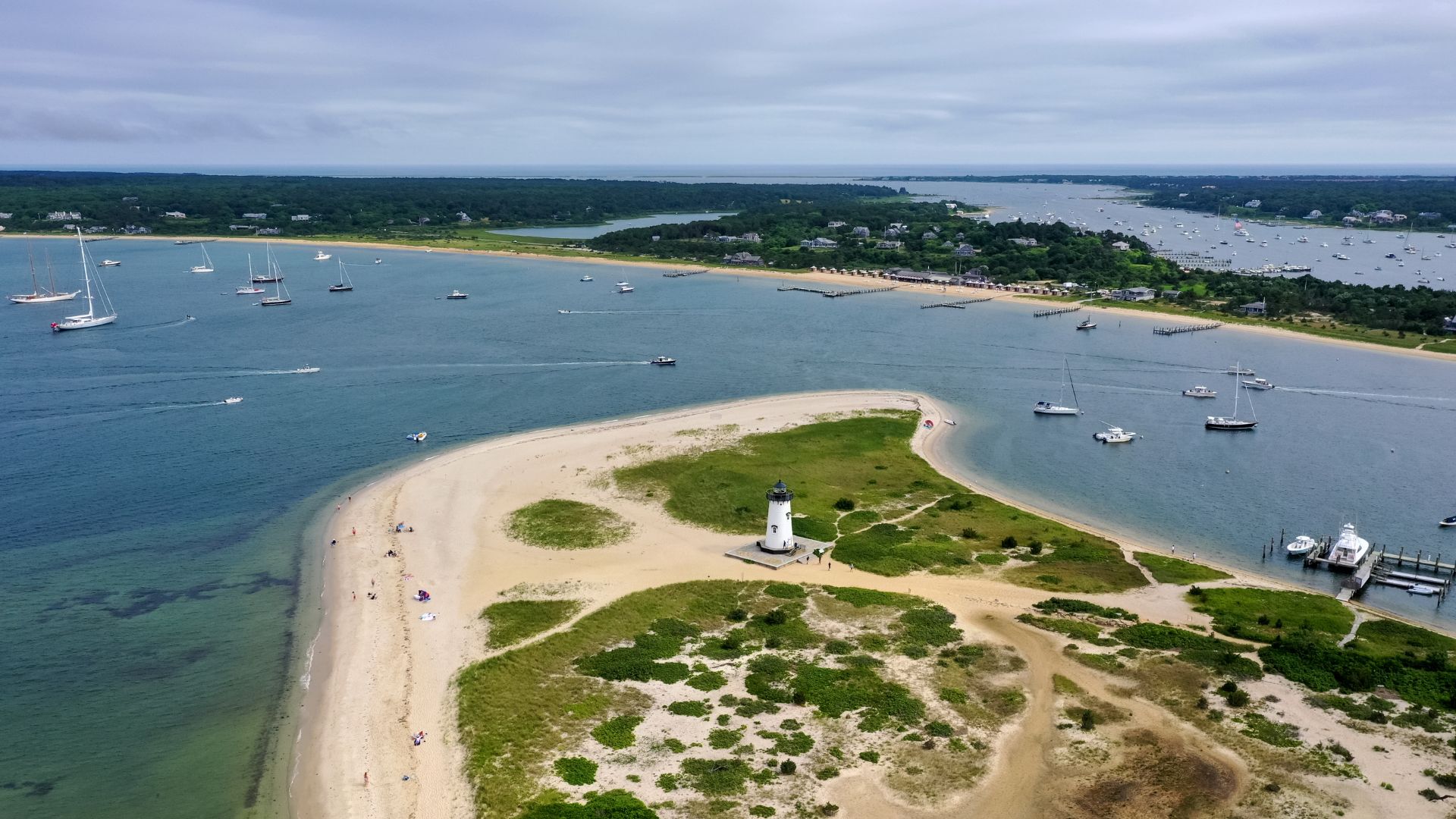
A morning run down Vineyard Sound with the current under the keel — the captain times the tide, which runs hard enough here to matter — and by midday the yacht is picking up its held mooring inside Edgartown Harbor, with the Edgartown Light on its sand spit to port and Chappaquiddick a stone's throw across the channel where the three-car On Time ferry shuttles back and forth all day.
Edgartown is the Vineyard at its most polished: the Greek Revival captains' houses along North Water Street built on whaling money in the 1840s, the Old Whaling Church's massive columns a block inland, and a walkable grid of galleries, bookshops, and bars between them. The afternoon ashore covers it easily, with a stop at the rooftop above the harbor or the 1742 Newes from America pub depending on the group's register.
The evening choice sets up the Vineyard's range. Dinner ashore in Edgartown runs from clam shacks to l'étoile's tasting menu; dinner aboard comes with the harbor's mooring-field glow and the lighthouse blinking at the entrance. Either way, the tender is five minutes from the dock, which is the entire logistical footprint of the day.
Day Highlights
Day 3 of 7 · Vineyard lay day
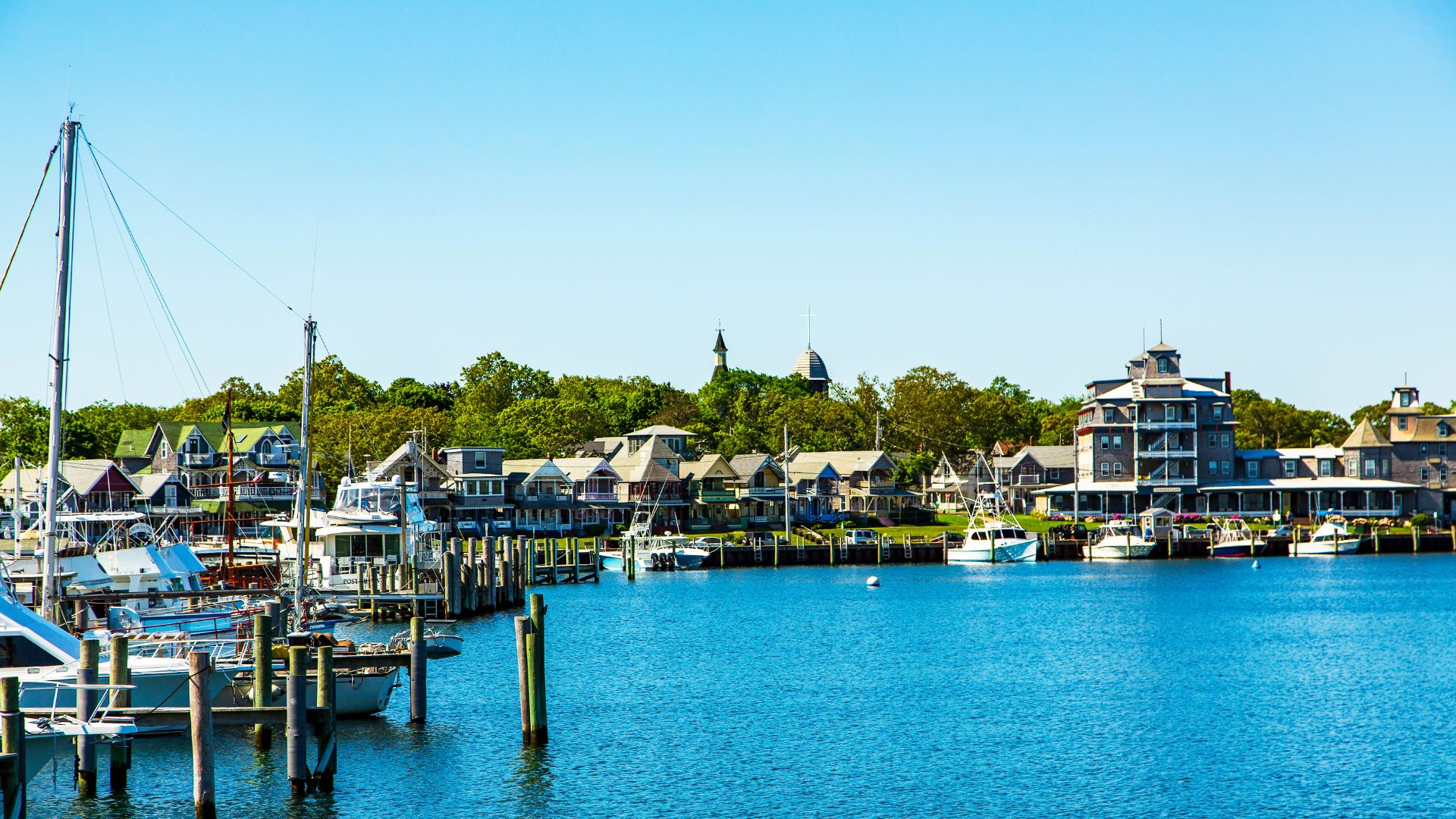
The lay day covers the island the harbor town can't. Oak Bluffs, a short hop up-island, is Edgartown's Victorian opposite: three hundred–plus painted gingerbread cottages ringed around the old Methodist campground, the 1876 Flying Horses — the country's oldest operating platform carousel — and Circuit Avenue's bars running at full July volume. The contrast with North Water Street's white clapboard is the whole point of seeing both.
The island's west end is the wild end. A car out through West Tisbury and Chilmark reaches Aquinnah, where the Gay Head cliffs stack a hundred feet of rust-and-ochre clay under the 1856 brick lighthouse — sacred ground to the Wampanoag tribe that still holds it. On the way back, Menemsha is the fishing village the movies borrowed: lobster boats unloading at the dock, Larsen's Fish Market selling off the boats, and a beach where the whole harbor turns out to applaud the sunset.
Groups that would rather stay on the water point the tender at Cape Pogue and the outer beaches of Chappaquiddick instead — miles of barrier sand with nobody on them, the chef's beach lunch in the shade of an umbrella line the crew set before the group arrived. Both versions of the day end back in Edgartown; the second one ends saltier.
Day Highlights
Day 4 of 7 · Across to Nantucket
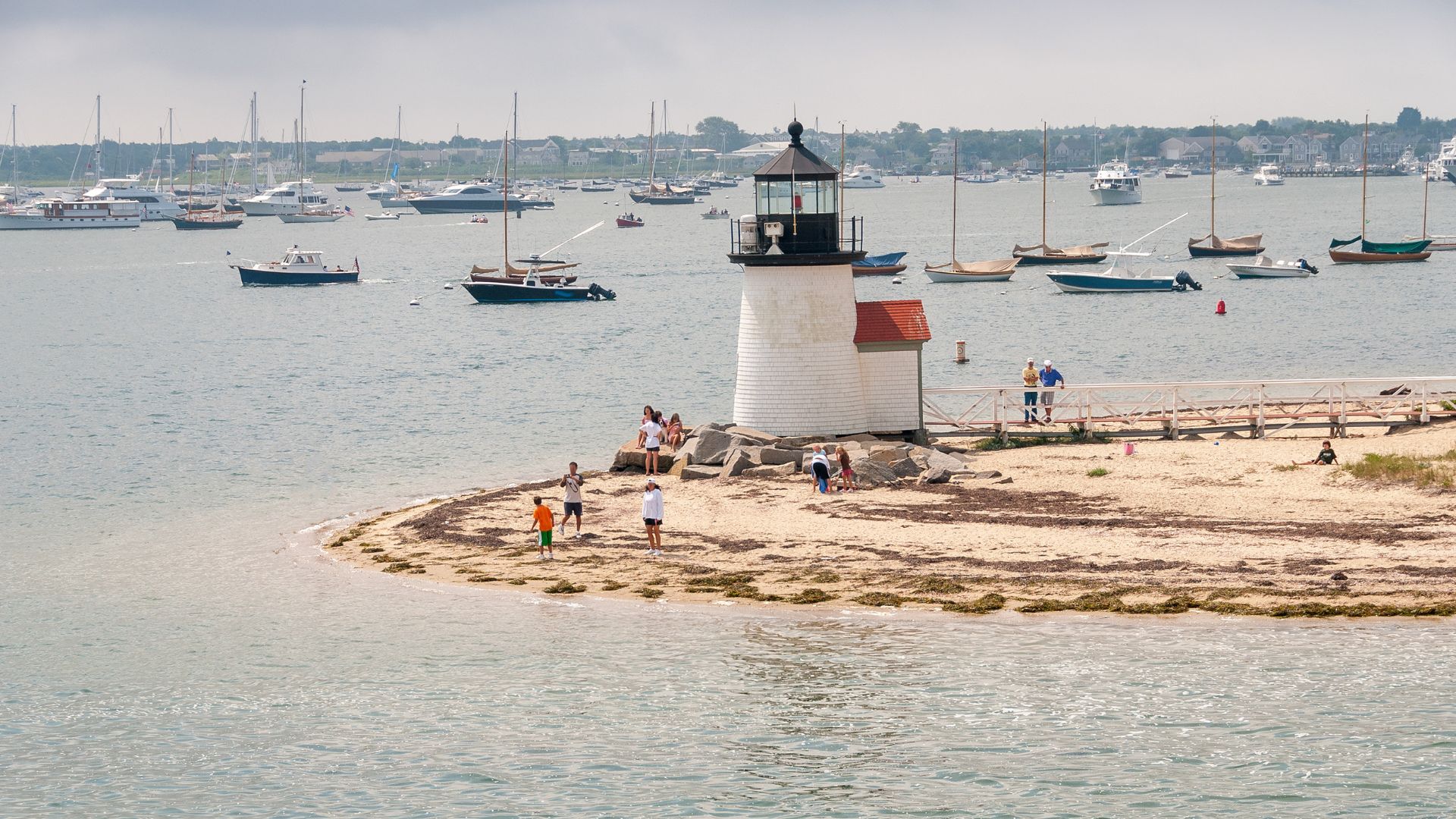
The morning crossing runs the shoal water of Nantucket Sound — twenty-five miles of strong tide and sandbars that made this some of the most heavily piloted water of the nineteenth century, when Nantucket whaleships came home around these banks from four-year voyages. The modern version is easier: the captain rides the current, the group rides the flybridge, and Brant Point Light comes up on the bow by early afternoon.
Nantucket town is the country's best-preserved whaling port — the whole island is a National Historic Landmark district — and the first afternoon belongs to it. Cobblestoned Main Street climbs from Straight Wharf between brick merchant houses; the Whaling Museum, built into an 1847 spermaceti candle factory, hangs a forty-six-foot sperm whale skeleton over the story of the island's rise and near-collapse; and the wharf lanes are all galleries, oysters, and boat traffic.
Evenings here run on reservations, which the crew has already made. Cru at the end of Straight Wharf does the waterfront oyster-and-champagne register; Straight Wharf Restaurant next door has anchored the harbor's dinner scene for fifty years; and the Nautilus takes the group's livelier nights. The mooring field at night — Brant Point blinking, the last ferry gone — is its own closing argument.
Day Highlights
Day 5 of 7 · Nantucket lay day
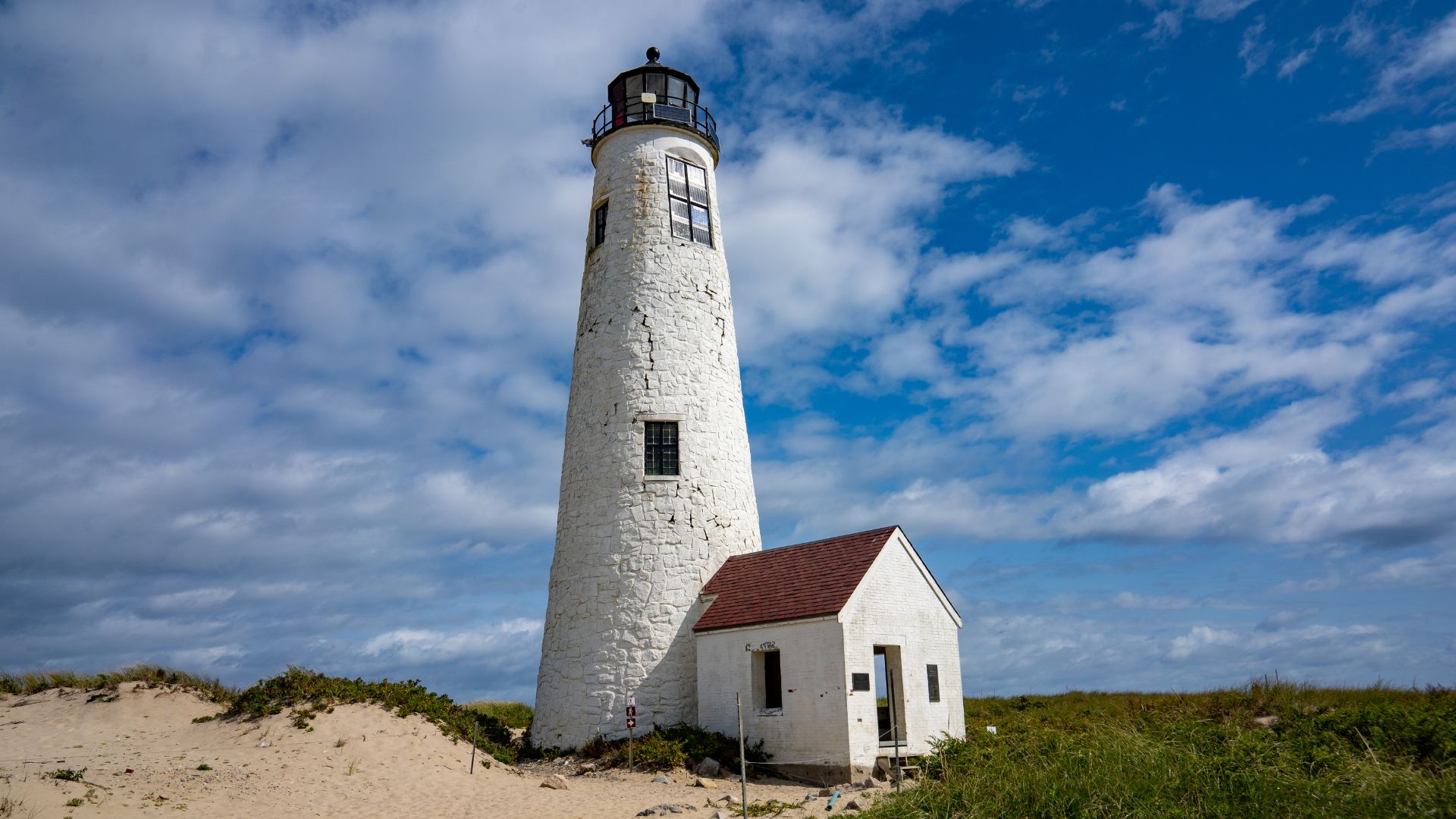
Day five stretches the island to its corners. The signature move is Great Point by tender or four-wheel-drive: seven miles of bare barrier sand running to a solitary 1818-lineage lighthouse, with grey seals hauled out in the hundreds along the rip where Nantucket Sound meets the open Atlantic. It is the emptiest place on one of the busiest summer islands in America, and most visitors never see it.
The island's east side answers with Sconset (Siasconset on the chart) — a village of rose-covered fishermen's cottages above the surf, connected by the Bluff Walk, a public footpath running along the cliff edge through the village's front gardens toward Sankaty Head Light. The route back to town passes the cranberry bogs and the moors that turn red in fall; guests who want one purely local stop add Cisco Brewers' yard, the island's brewery-distillery-winery compound with food trucks and live music most summer afternoons.
The chef's day peaks tonight. Nantucket's day-boat scallops, bluefish, and farm stands stock the galley, and the second Nantucket evening is the one most groups spend aboard — the town seen from the mooring, dinner built from the morning's dock buying, and nothing on the schedule before tomorrow's Cape crossing. A Topper's-at-the-Wauwinet table up-harbor is the ashore alternative, tender-accessible at high water.
Day Highlights
Day 6 of 7 · North to Cape Cod
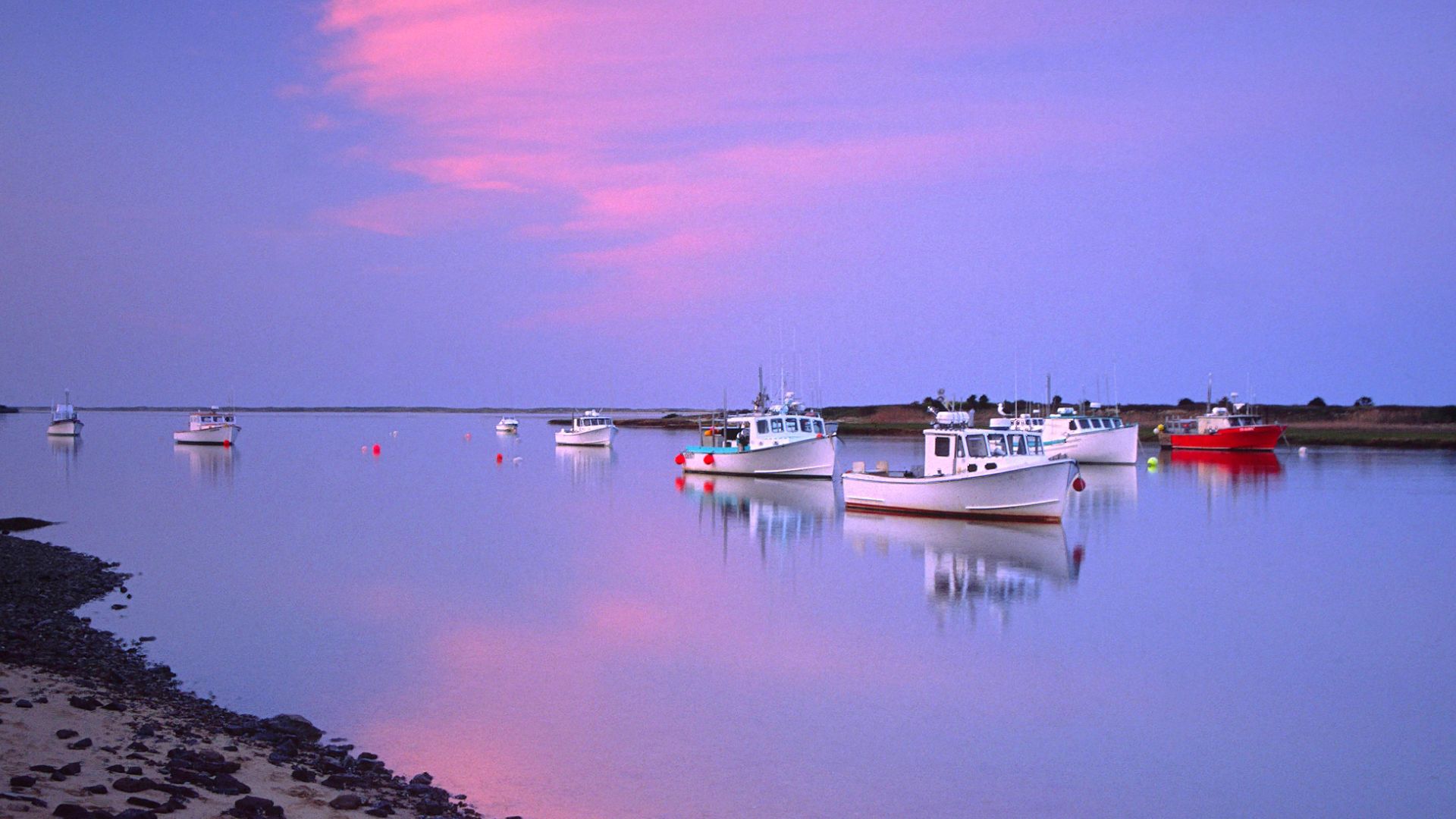
The route turns north for its Cape Cod night, and the harbor is the captain's call with the group. Chatham, thirty miles up, is the Cape at its most shingled: the fish pier's afternoon offload draws a crowd of grey seals waiting on scraps, the 1877 lighthouse watches the break in the barrier beach, and Main Street runs to a proper dinner — Chatham Bars Inn's verandah above the fleet being the classic.
Provincetown, at the Cape's fist another two hours on, is the louder finale. The Mayflower anchored here first — five weeks in November 1620 before the move to Plymouth, commemorated by the 252-foot granite Pilgrim Monument over the harbor — and the town has since become the Cape's arts capital, its whale-watch port, and its best people-watching, all compressed onto Commercial Street. The harbor is deep, the moorings are protected, and the sunset over the moored fleet with the monument lit is a legitimate rival to anything the islands offered.
Either version ends the same way: the last full dinner of the loop, ashore at the chosen harbor or aboard, with the homeward crossing on tomorrow's tide. Whale-watch-minded groups note that Stellwagen Bank — the humpback feeding ground — sits just north of Provincetown, and a dawn detour before the run home is a real option in season.
Day Highlights
Day 7 of 7 · The run home
The longest leg of the week runs home to Newport — fifty-five to seventy nautical miles depending on the Cape harbor, and the captain leaves early to carry the fair tide down Vineyard and Rhode Island Sounds. On a motor yacht it is a morning; on a sailing yacht it is the week's one proper passage day, which for sailing-minded groups is a feature. Either way the miles pass with the chef's long breakfast and the islands of the past week sliding by to port.
By mid-afternoon the yacht is standing in past Castle Hill Light into Newport Harbor, and the arrival lands differently after a week among the islands — the mansion rooflines, the fleet, the 12 Metres drifting home from their afternoon races. The evening is Newport's to close: a walk through Bannister's Wharf, drinks at the Clarke Cooke House where the Cup crews used to celebrate, or the Cliff Walk at golden hour for the group's last shore excursion.
The farewell dinner is the chef's — the New England greatest-hits table, lobster and day-boat fish and whatever Nantucket's farm stands sent along — served on the aft deck as the harbor settles. Seven nights, three islands, the Cape, and about a hundred ninety miles of the best-known summer water in America, with the whole coast run on domestic flights and zero customs stops.
Day Highlights
Day 8 · Departure
Breakfast aboard, luggage handled by the crew, and disembarkation by mid-morning. Providence (PVD) is forty minutes by car, Boston (BOS) about ninety, and guests joining or leaving mid-island can note for next time that Nantucket (ACK) and Martha's Vineyard (MVY) both take seasonal direct flights from the Northeast. Step off with Cuttyhunk's raw bar, Edgartown's captains' houses, Great Point's seals, and the Pilgrim Monument all behind you — the island summer the ferry crowds queue for, run on the yacht's schedule instead.
Want to share or come back to this voyage later?
Bookmark this voyage →Crewed Itinerary · New England
One-way is the honest way to do Maine — the coast runs northeast in a sequence of bay, headland, bay, and doubling back would waste two days of your seven retracing water. So you board at Portland's working waterfront and step off at Bar Harbor inside Acadia National Park, with Boothbay, Camden's schooner fleet, the islands of Penobscot Bay, and the wooded corridor of Eggemoggin Reach in between. No leg longer than a relaxed morning; every day new water.
One-way is the honest way to do Maine. The coast runs northeast in a sequence — bay, headland, bay — and a round-trip from Portland would spend two days retracing the same water to get home. Boarding in Portland and stepping off in Bar Harbor keeps every day new and finishes the week inside the national park. The route works for every yacht type in the fleet; the schooner-rich waters of Penobscot Bay make a particular case for the classics. Your professional captain and private chef handle the rest.
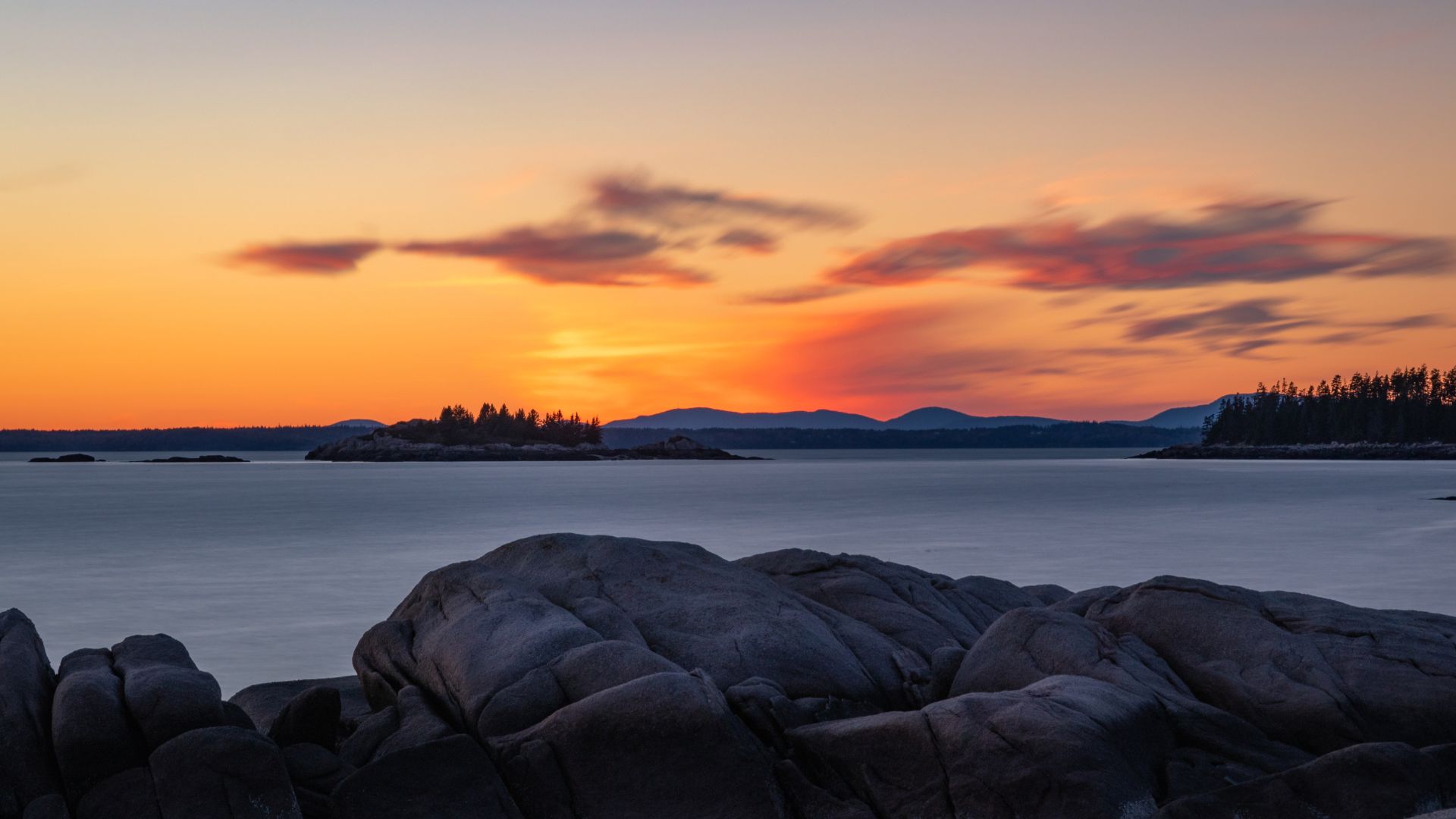
Maine is the New England week for guests who want scenery first. The southern coast's beaches give way past Casco Bay to the drowned-valley coast — spruce islands by the hundred, granite shorelines, lighthouses on nearly every headland — and the towns are working harbors before they are resorts: lobster boats at Boothbay, the windjammer fleet at Camden, granite-and-fishing Stonington on Deer Isle.
The 120-mile route reads: Portland and Casco Bay → Boothbay Harbor → Camden under Mount Battie → Pulpit Harbor on North Haven → Eggemoggin Reach and the WoodenBoat waters at Brooklin → Somes Sound, the East Coast's only fjord-like inlet → Bar Harbor and Acadia. Lobster comes off the dock daily, the fog burns off by mid-morning more days than it doesn't, and the anchorages from Penobscot Bay east are as close to private as the Eastern Seaboard offers in August.
Day 1 of 7 · Portland embarkation
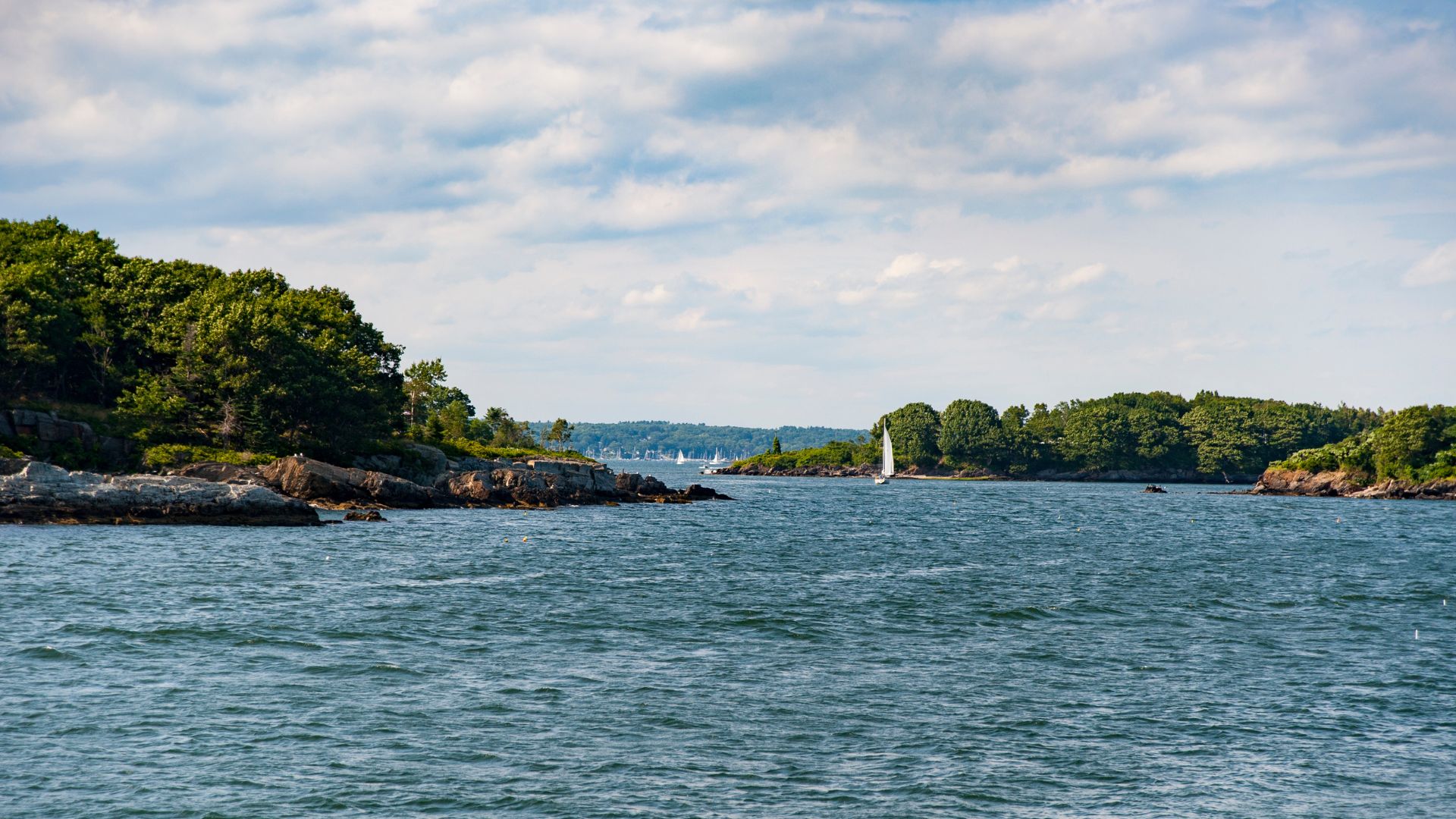
The charter boards on Portland's working waterfront — the Old Port's brick streets and fish piers are the departure lounge, and Portland (PWM) is fifteen minutes away. Groups arriving early eat well: Portland has one of the best small-city food scenes in the country, and a lunch at Eventide Oyster Co. — home of the brown-butter lobster roll — or a first-night table at Fore Street's wood-fired room are the kind of openings that set a tone. The captain and chef meet the group dockside and run the week's chart over the first drinks aboard.
The afternoon leg is short on purpose. The yacht clears the harbor past Portland Head Light — commissioned by George Washington, first lit in 1791, and still the most photographed lighthouse in the country — and turns into Casco Bay, whose islands were sold to mapmakers as the Calendar Islands on the claim there was one for every day of the year. The real number is around two hundred, which is still plenty.
The first night anchors among them — a quiet cove off the fort-crowned islands of the inner bay, or further in toward The Basin's landlocked pool on the New Meadows River when the forecast argues for it. Dinner is the chef's welcome table: the first lobster of the week, bought off the dock hours earlier, eaten at anchor with the city glow far enough astern to ignore.
Day Highlights
Day 2 of 7 · The midcoast begins
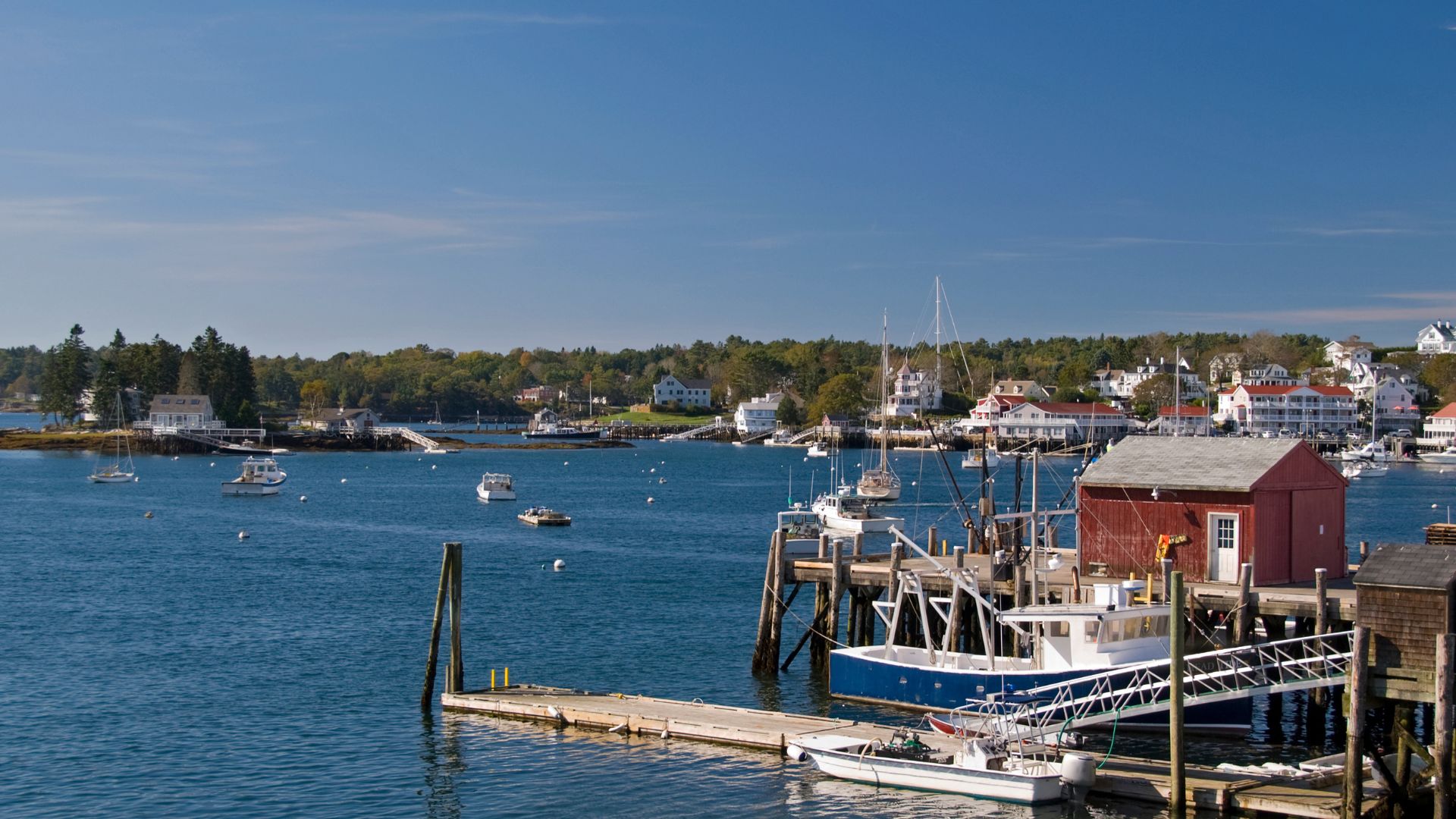
The fog lifts, the coffee lands, and the yacht runs northeast across the mouths of the midcoast rivers — twenty miles past headlands and ledges to the Cuckolds Light off Southport Island and the turn into Boothbay Harbor. This is where the drowned-valley coast begins in earnest: long fingers of water reaching miles inland, spruce down to the tide line, and a lobster buoy every boat-length to keep the helm honest.
Boothbay is a working harbor that happens to be beautiful — boatyards on the east side, the moored fleet filling the bowl, and a footbridge across the inner harbor built in 1901. The afternoon offers two very different shore moves: the Coastal Maine Botanical Gardens, three hundred acres ranked among the best public gardens in the country (the troll sculptures alone justify the visit for any group with kids), or the tender out to Burnt Island's lighthouse station, restored as a living museum of keeper life.
The classic Boothbay evening is a clambake — Cabbage Island has run its famous version for generations, or the chef stages a private one aboard: lobsters, steamers, corn, and drawn butter in courses that require the roll of paper towels the galley planned for. The harbor's mooring field settles early, and the week's rhythm — run in the morning, explore in the afternoon, eat like Maine at night — is now fully installed.
Day Highlights
Day 3 of 7 · Into Penobscot Bay
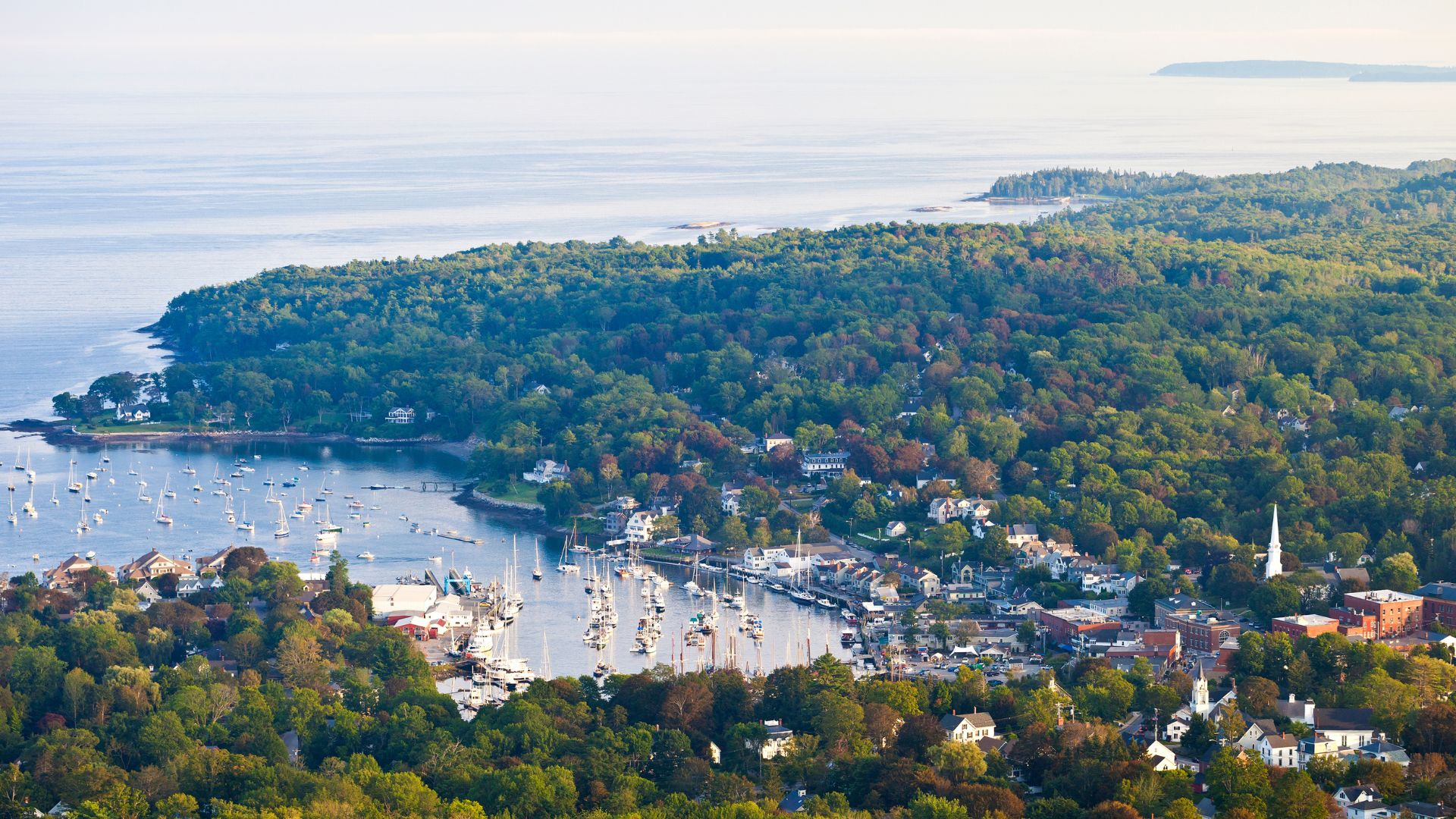
The morning run rounds Pemaquid Point and crosses Muscongus Bay's island scatter into West Penobscot Bay — the heart of the Maine coast and, by most sailors' accounting, the best cruising water on the Eastern Seaboard. By early afternoon the yacht is standing into Camden, where the Camden Hills drop straight to the harbor and the windjammer fleet — gaff-rigged schooners, several of them National Historic Landmarks — works in and out under sail as it has since the trade was cargo instead of guests.
Camden's afternoon is a two-part classic. Part one: the drive or the hour's hike up Mount Battie in Camden Hills State Park, where the stone tower's view over the harbor, the bay, and the islands is the postcard every Maine calendar reprints — Edna St. Vincent Millay wrote 'Renascence' about exactly this view. Part two: the town itself, compact and shipshape, with the Camden Yacht Club's launch traffic, bookshops, and the falls of the Megunticook River dropping into the harbor's head behind the library lawn.
Dinner splits the difference between town and table. Natalie's at the Camden Harbour Inn is the coast's white-tablecloth benchmark; Peter Ott's on the Water keeps it dockside and easy. Aboard, the chef has Penobscot Bay's full pantry now — day-boat scallops, crab, and the oysters this bay has gotten famous for. The harbor at night, schooner rigging against Mount Battie's dark shoulder, is the image the week was booked on.
Day Highlights
Day 4 of 7 · The island bay
Ten miles across the bay lie the Fox Islands — North Haven and Vinalhaven — and one of the most beloved anchorages in America: Pulpit Harbor, whose narrow entrance is marked by a rock stack crowned with an osprey nest that island lore says has been continuously occupied for more than a hundred and fifty years. Inside, the harbor opens into a protected pool ringed by meadow and spruce, with the Camden Hills stacked across the bay to the west for the sunset.
The day is unstructured on purpose — this is the anchorage the kayaks and paddleboards were brought for. The tender runs explorers through the Fox Islands Thorofare, the boat-busy channel between the two islands, to North Haven village's few galleries and the seasonal shops, or south to Vinalhaven, where granite from the quarries built the Brooklyn Bridge's towers and the harbor still runs one of the state's biggest lobster fleets. Swimmers — the committed kind — get their Maine plunge in the quarries' fresh water rather than the fifty-eight-degree bay.
Evening is Nebo Lodge's farm dinner in the village if the group wants a shore table — the island inn's restaurant runs on North Haven's own farms — or the chef's aboard as the osprey works the entrance and the light goes long across the meadow. Anchor lights in Pulpit Harbor outnumber street lights on the whole island, which is the statistic that explains the stop.
Day Highlights
Day 5 of 7 · The wooden-boat corridor
The route threads north around Islesboro toward the head of the bay, with a late-morning stop at Castine — a point of land that changed hands among the French, British, Dutch, and Americans for two centuries and keeps the earthworks of Fort George and streets of Federal houses to show for it. Today it is home to Maine Maritime Academy, whose five-hundred-foot training ship dominates the town dock, and to exactly the kind of unhurried walk — elms, white clapboard, the Dyce Head lighthouse at the point — that a charter morning is for.
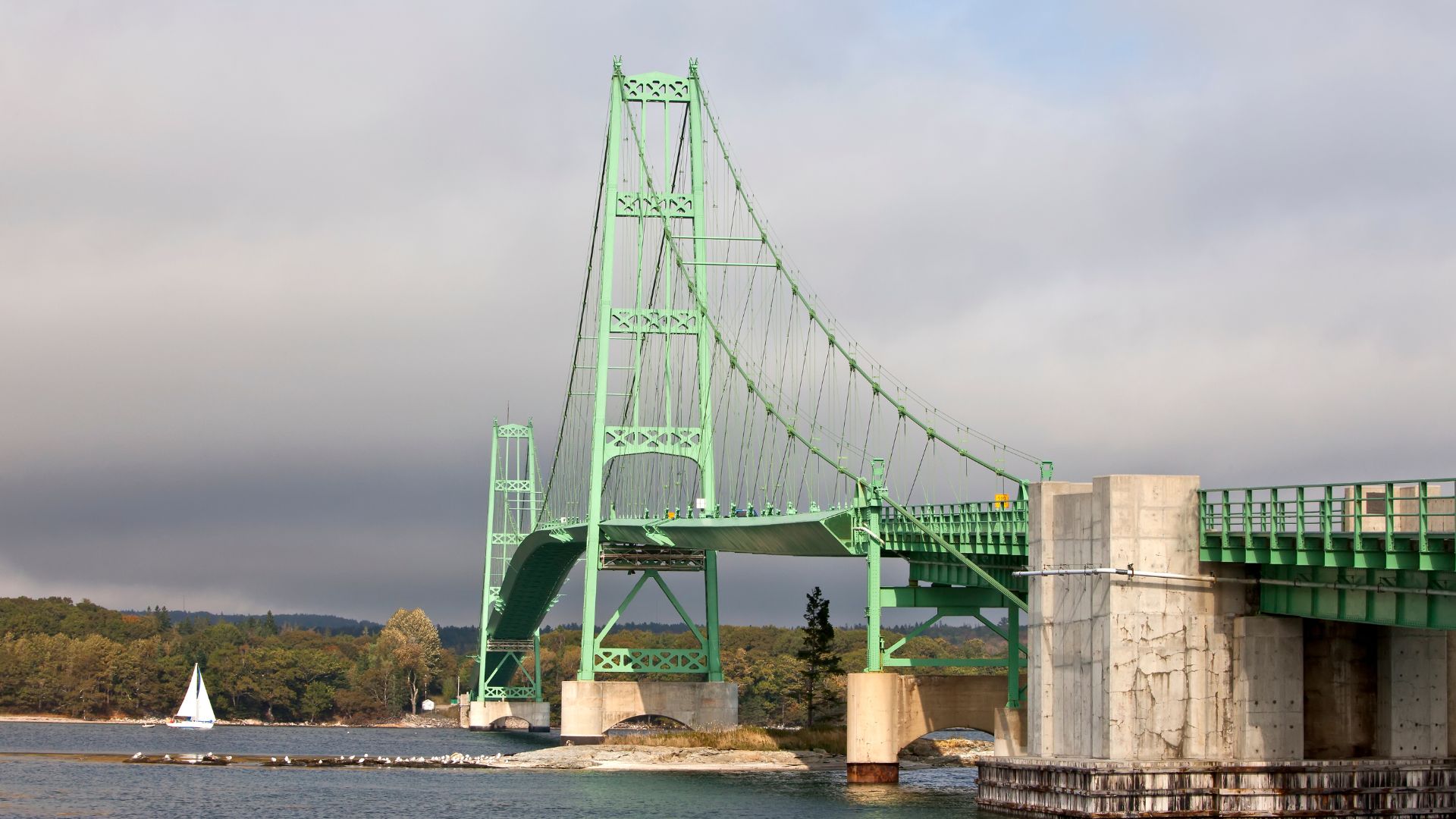
The afternoon run turns southeast into Eggemoggin Reach, the eight-mile wooded channel between the mainland and Deer Isle, crossed at mid-length by the 1939 suspension bridge that makes every arrival photograph look staged. This is the sacred water of the American wooden-boat revival: Brooklin, at the Reach's eastern end, is home to WoodenBoat magazine and its school, and on a summer afternoon the Reach fills with gaff rigs, Herreshoff replicas, and lovingly kept dayboats out of Center Harbor — the densest concentration of classic sail in the country.
The night is spent at the Reach's pace: Center Harbor's mooring field among the classics, or Buck's Harbor around the corner — the tiny bowl of an anchorage that generations of children know as the setting of 'One Morning in Maine.' Dinner aboard tonight; the nearest thing to a scene out here is the yacht's own deck, which was rather the point of coming Down East.
Day Highlights
Day 6 of 7 · Mount Desert Island
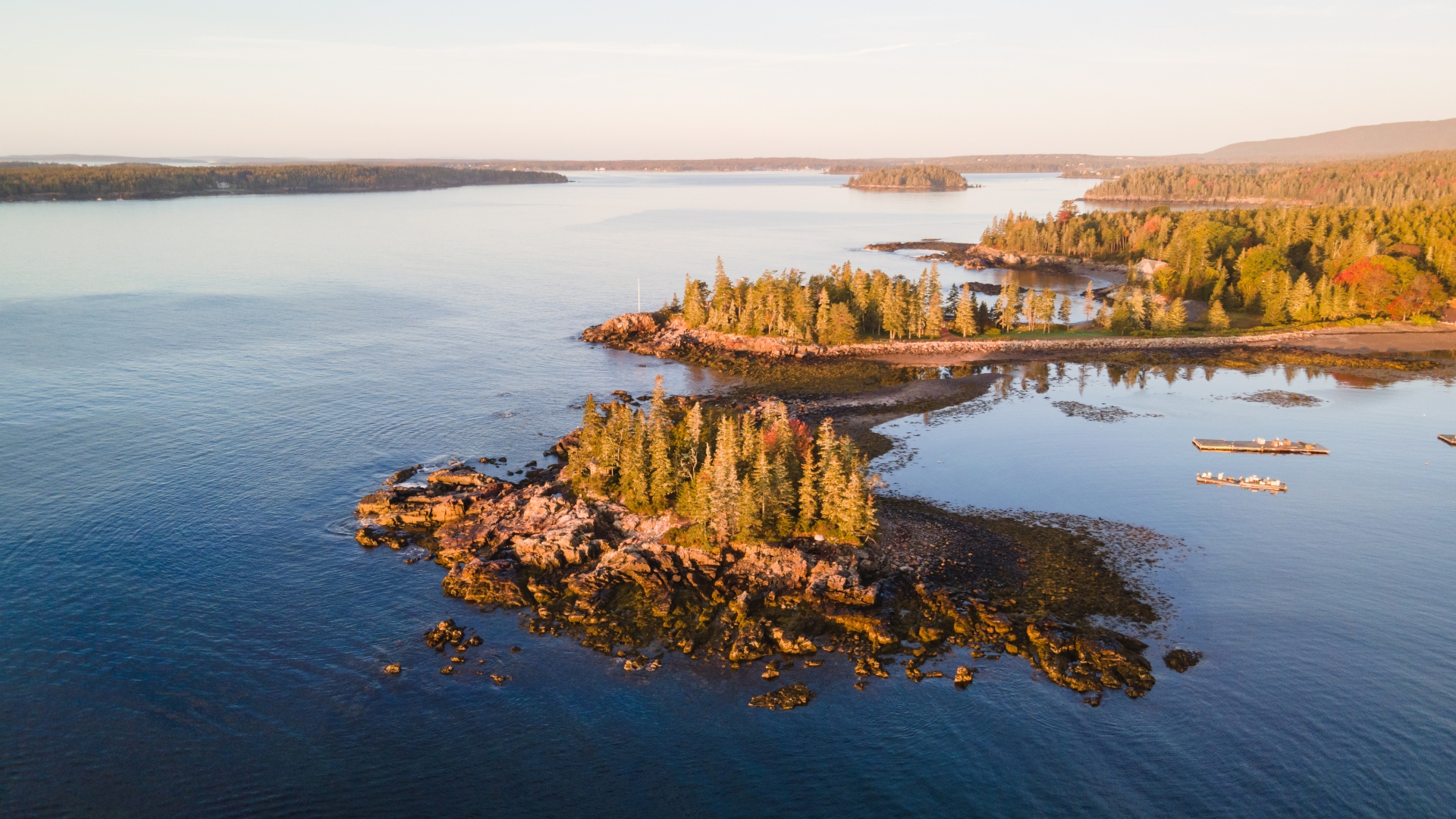
The last passage day crosses Blue Hill Bay to Mount Desert Island — Acadia's island — with a lunch stop worth planning the tide around: Thurston's Lobster Pound at Bass Harbor, where the lobster comes across the dock from the boats tied alongside and the picnic tables hang over the water. It is the version of Maine every visitor is looking for, run by people for whom it is simply the family business.
The afternoon delivers the route's geological finale. Somes Sound cuts five miles into the island between granite shoulders — the only fjord-like inlet on the East Coast of the United States — and the yacht runs its length to anchor under the cliffs at Valley Cove, where peregrines nest on the rock face and Acadia's carriage-road country rises directly from the waterline. Hikers take the tender ashore for Flying Mountain's short summit scramble; everyone else takes the view from the deck, which concedes nothing.
The evening option set is Mount Desert's quiet side: swing around to Northeast Harbor, the old-money village whose hillside Asticou and Thuya gardens terrace down toward the water, for a shore dinner and a walk among serious sailboats — or hold the Valley Cove anchorage, one of the most dramatic on the entire route, and let the chef close out the last-full-night table under the cliffs.
Day Highlights
Day 7 of 7 · Acadia finale
A final short hop rounds the island's eastern shore into Frenchman Bay, past the humped Porcupine Islands, to Bar Harbor — Acadia's front porch and the week's finish line. The yacht anchors or takes a mooring off the town, with the bay's whale-watch and schooner traffic for company; at low tide, the sand bar that names the town emerges to connect it with Bar Island, and walking it is the local rite.
The day belongs to Acadia National Park. The classics stack cleanly into an afternoon with a car and driver arranged by the crew: the Park Loop Road past Thunder Hole's wave-boom and Sand Beach; tea and popovers on the lawn at Jordan Pond House, a tradition since the 1890s, with the twin Bubbles mountains across the pond; and the summit road up Cadillac Mountain — the highest point on the US Atlantic coast, and from early October through early March the first place in the country to see the sunrise. Ambitious groups swap the car for a carriage-road bike loop on Rockefeller's crushed-stone network.
The farewell table lands back aboard on Frenchman Bay — the chef's full Down East send-off, lobster given its final and definitive appearance — with Cadillac's dark ridge above the anchor light. A hundred and twenty miles from Portland Head, and every one of them was new water.
Day Highlights
Day 8 · Departure
A slow breakfast on the bay, the tender in to the town dock, and disembarkation by mid-morning. Bar Harbor (BHB) is ten minutes away with seasonal service through Boston; Bangor (BGR) is under an hour with year-round connections. Guests extending the trip note that some of the country's best lodges and inns sit within the park's reach — and that the same yacht runs this route in reverse for groups who would rather end the week in Portland's restaurant rows. Step off with the windjammers of Camden, Pulpit Harbor's osprey, the Reach's wooden boats, and Acadia's granite behind you — the American coast at its wildest end, no passport required.
Want to share or come back to this voyage later?
Bookmark this voyage →
When to go, what it costs, and how to get there — the practical answers guests ask before booking a New England crewed yacht charter.
July and August are the heart of the New England season. Air temperatures run the low 80s, the water south of Cape Cod warms into the low 70s, and the afternoon sea breeze fills in at ten to fifteen knots most days — steady, predictable, and handled entirely by the captain. Harbors are at their liveliest, Edgartown and Nantucket moorings book out well ahead, and the best yachts go months in advance. Rates peak with the demand.
September is the coast's best-kept secret — the ocean is at its warmest of the year, the anchorages empty out after Labor Day, and the weather holds through the month more years than not. Late June runs a close second: long daylight, harbors fully awake, rates below peak. Both windows book comfortably closer-in than July and August.
The season's quiet coda. Foliage starts along the Maine coast in late September, the summer fleet begins its run south, and a handful of yachts stay on for fall charters — cool, clear days and harbors returned to the locals. Availability is thin and worth asking about early; by mid-October the fleet has gone south for the Caribbean season.
$25,000–$200,000 per week
Crewed yacht charters in New England typically run from $25,000 to $200,000+ per week base rate, depending on yacht size, age, and crew. The fleet is motor-yacht led, with a strong bench of classic sailing yachts and schooners that have summered here for decades. Most charters run plus-expenses: the base rate covers the yacht and crew, while food, beverages, fuel, dockage, and mooring fees are funded through an Advance Provisioning Allowance (APA), typically thirty to thirty-five percent of the base rate and reconciled at the end of the trip. Crew gratuities run fifteen to twenty percent, paid to the captain at disembarkation. There is no charter VAT in the United States — a meaningful difference from a Mediterranean summer, where tax alone adds twelve to twenty-two percent to the base rate. When we send options, we'll show the real trip cost and what separates a $40,000 week from a $150,000 one on this coast — it's usually the boat's pedigree and crew, not the itinerary.
About chartering in New England.
We charter across the United States. Here are some other excellent alternatives.

Glacier-fronting anchorages in Tracy Arm, humpback bubble-nets in Frederick Sound, brown bears at the salmon run, and a thousand-foot-waterfall coast in Misty Fjords — the Inside Passage run at twelve knots with a captain who plans the next anchorage around the weather. The crewed-charter version of an Alaska summer — a small fleet of explorer motor yachts runs it, and almost nobody knows.
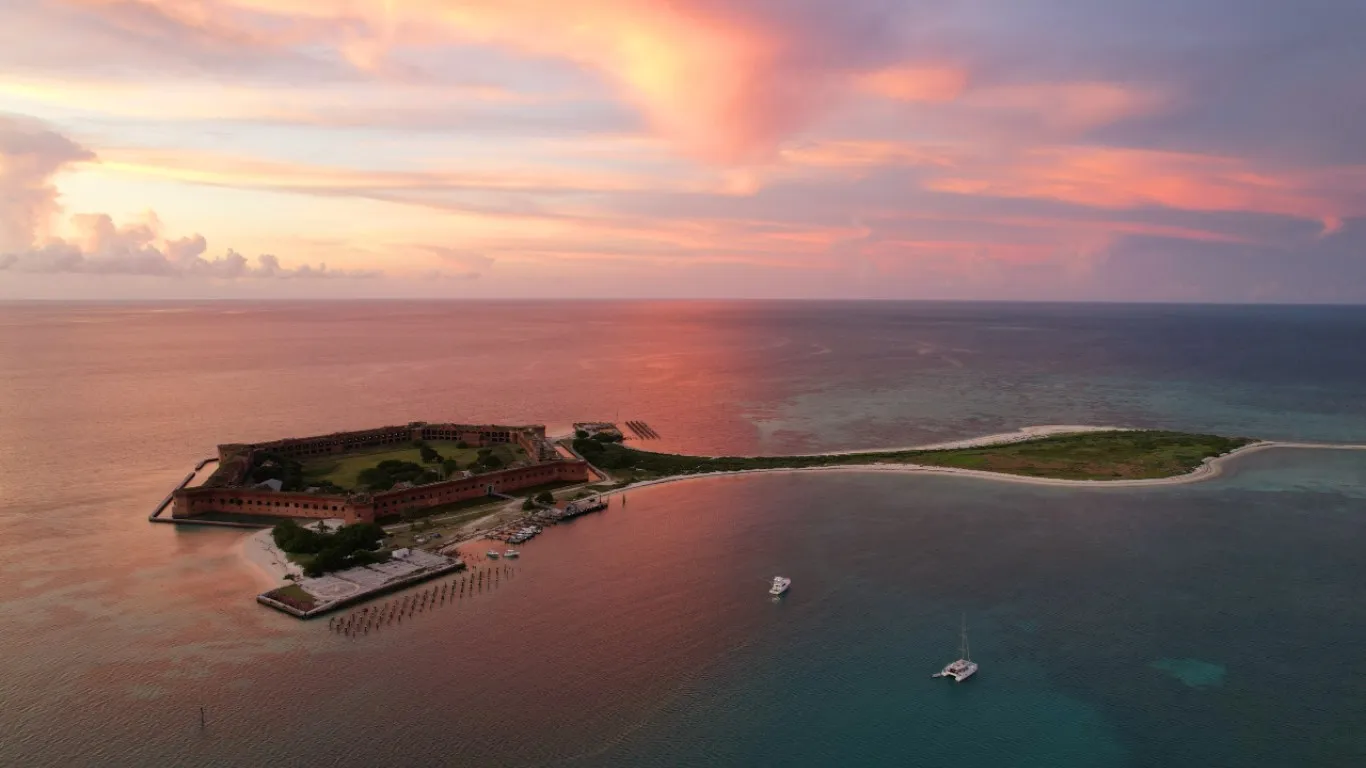
Fort Jefferson going gold as the last ferry leaves, mahi lines working every transit, Key West's bar-light waterfront, and a marina-to-marina chain that never needs a passport — America's island run, Miami to the Dry Tortugas, built for motor yachts.
Fill out our quick form and we'll dive into your unique preferences — from adventure-packed itineraries to pampered escapes. Whether you're a seasoned voyager or new to charters, we'll tailor recommendations just for you.
With over fifteen years of experience, we'll match you with the yacht that fits your style, group, and itinerary. We work directly with the captains and crews across our list — so the recommendation is built around the right boat-and-crew fit for your week, not whatever's easiest to book.
Once your yacht is booked, we'll take care of logistics: paperwork, reminders, and personalized resources to help you plan. From arrival planning to must-visit spots, we'll make your charter as seamless as it is unforgettable.