Crewed Itinerary · New England

Newport & Narragansett Bay Itinerary: The Classic New England Charter Week

This is the New England charter most guests picture before they know the coast — a seven-night round-trip from Newport, Rhode Island through Narragansett Bay, out to Block Island, along the Elizabeth Islands to Cuttyhunk, and back through the upper bay to Bristol before the final Newport nights. Roughly a hundred and ten nautical miles all-in, with no leg longer than twenty-five.

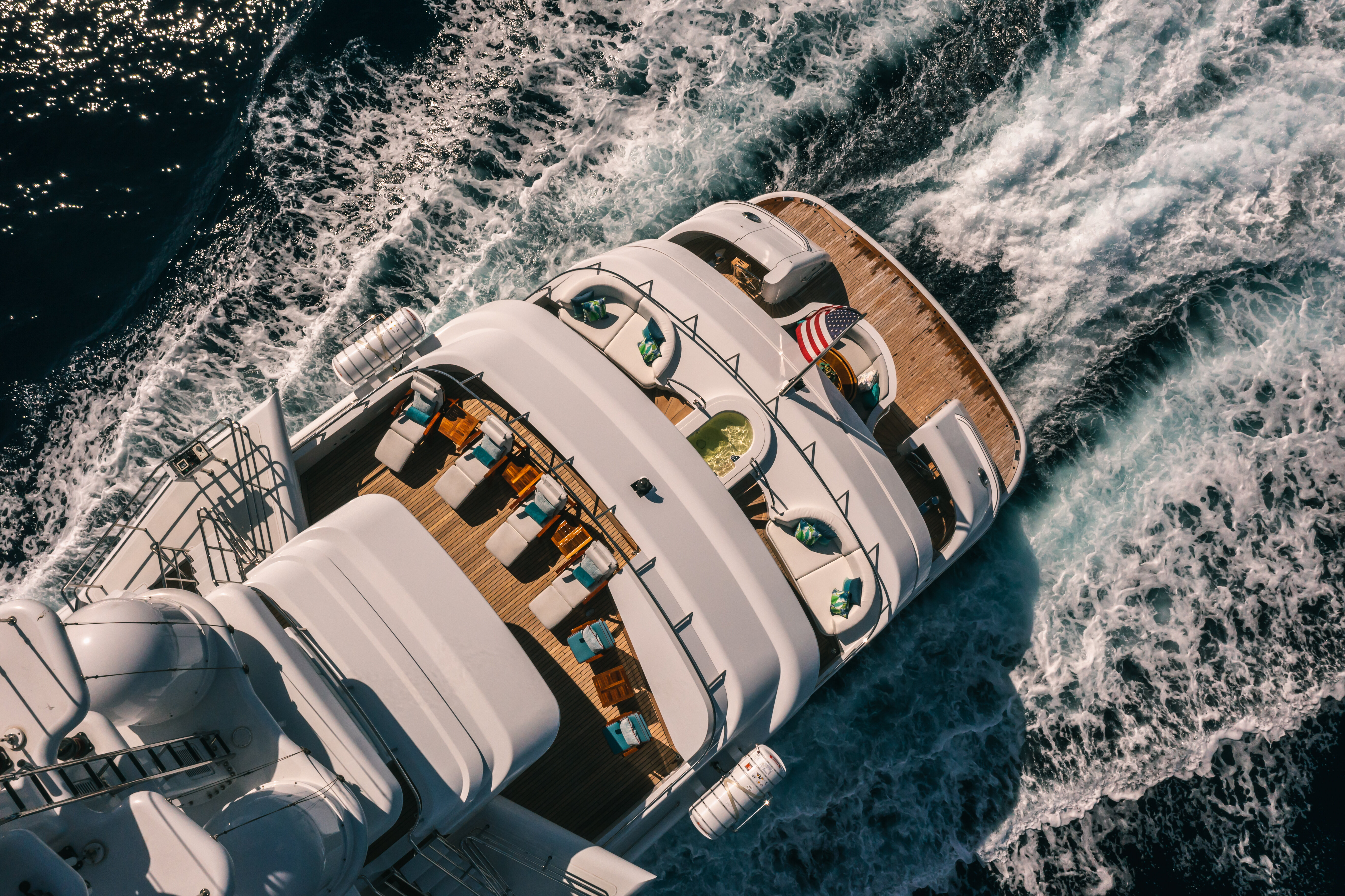
The route suits every yacht type in the New England fleet. Motor yachts run each leg in under two hours and spend the day at anchor; the classic sailing yachts and schooners that summer in Newport turn the same legs into the sailing itself — Narragansett Bay is where American yachting grew up, and a week aboard a classic here puts you inside that story rather than watching it from shore. Your professional captain and private chef handle the rest.

Duration
7 nights / 8 days
Base
Newport, RI (round-trip)
Plan your New England charter Custom-tailored to your dates and group preferences
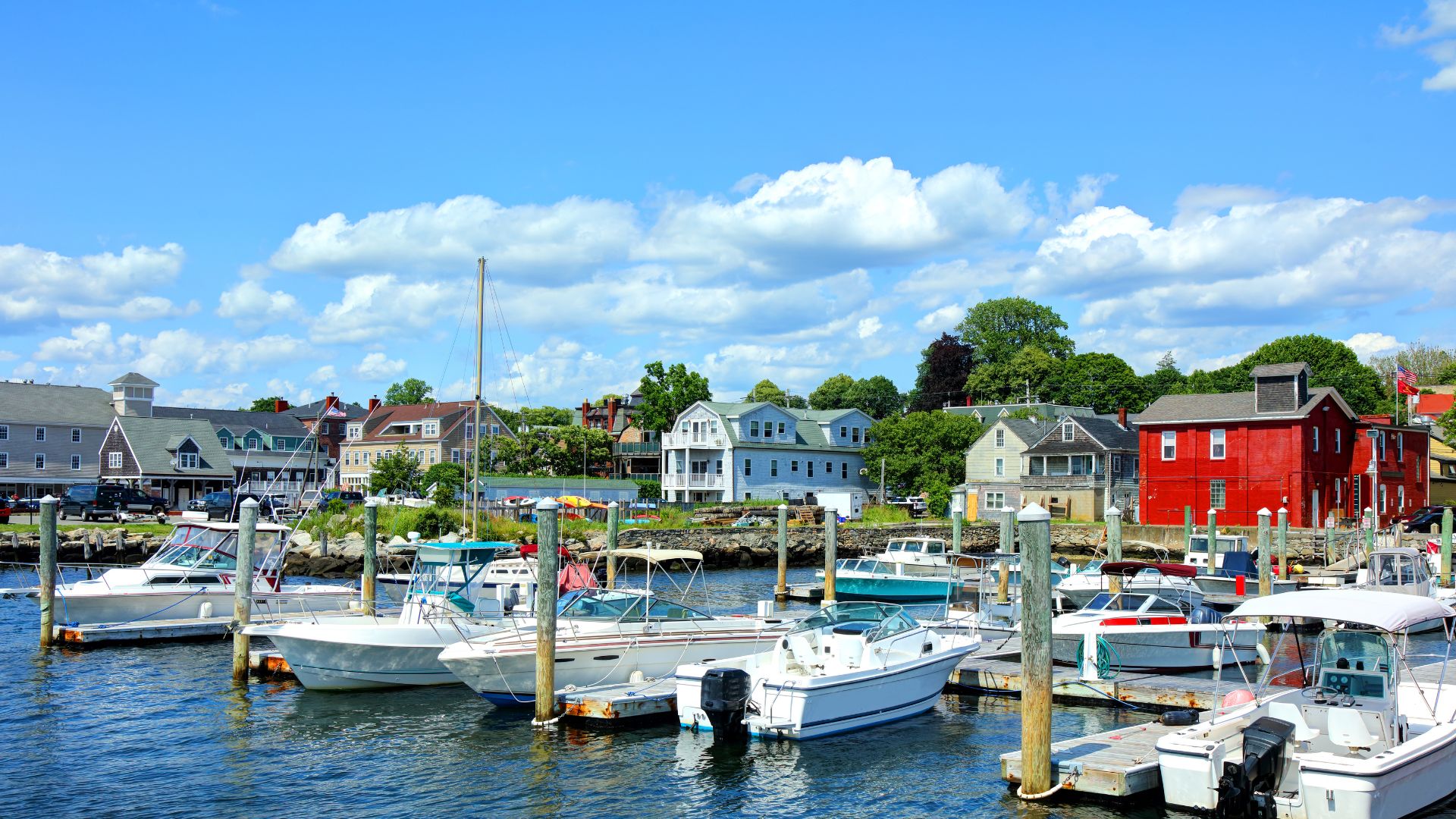
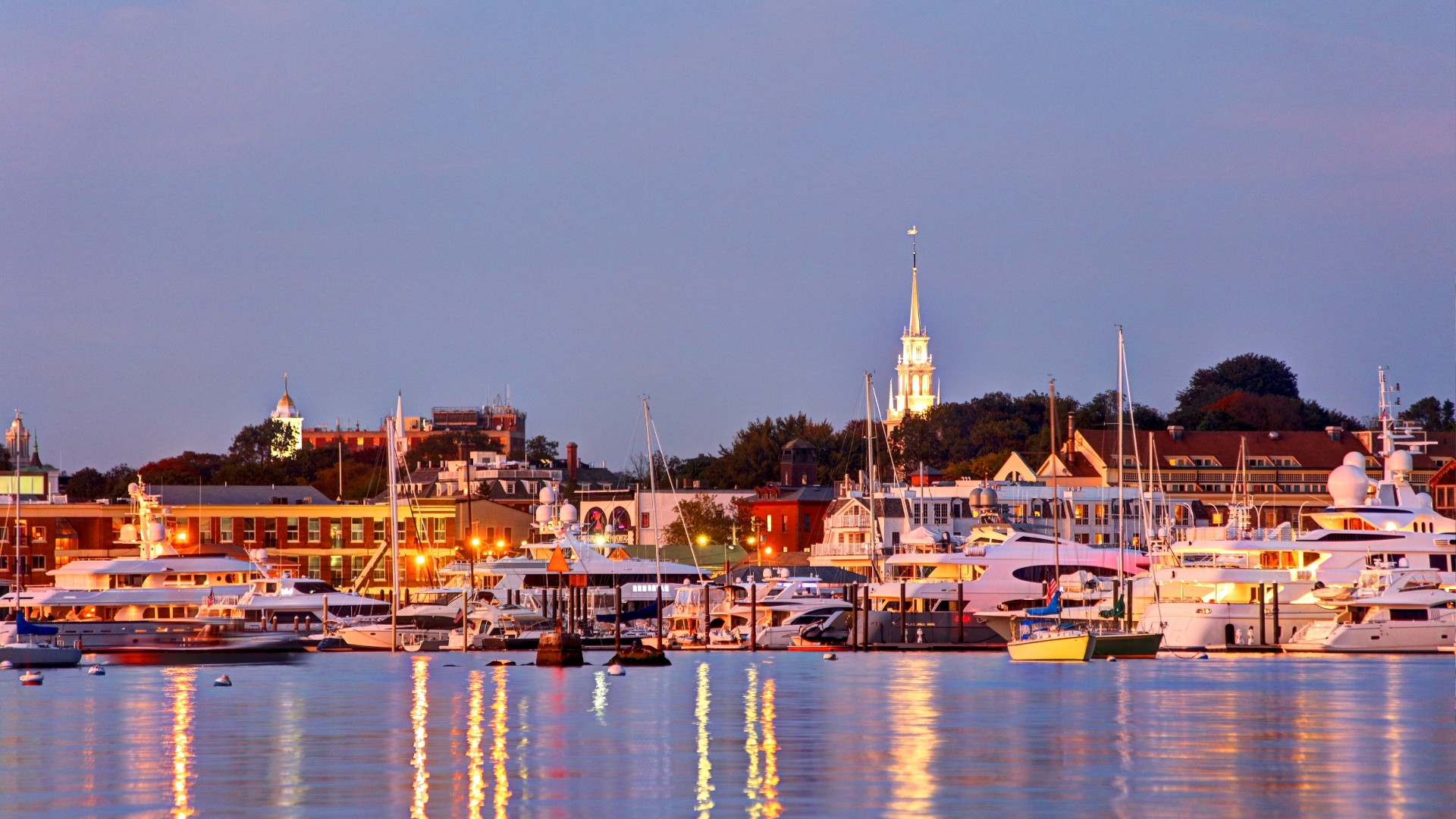
Newport Harbor from the water, Gilded Age mansions along the shoreline behind the anchorage.
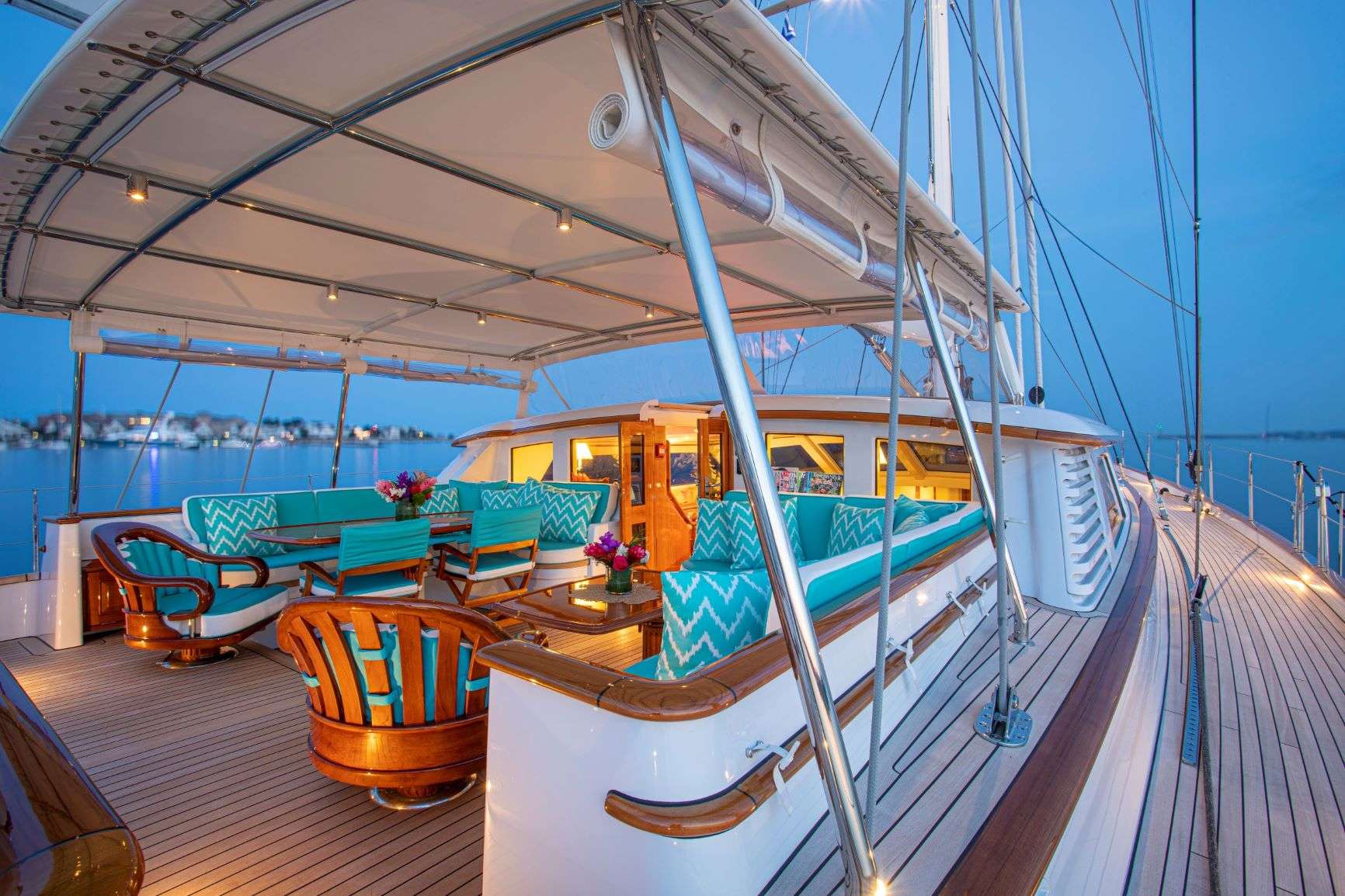
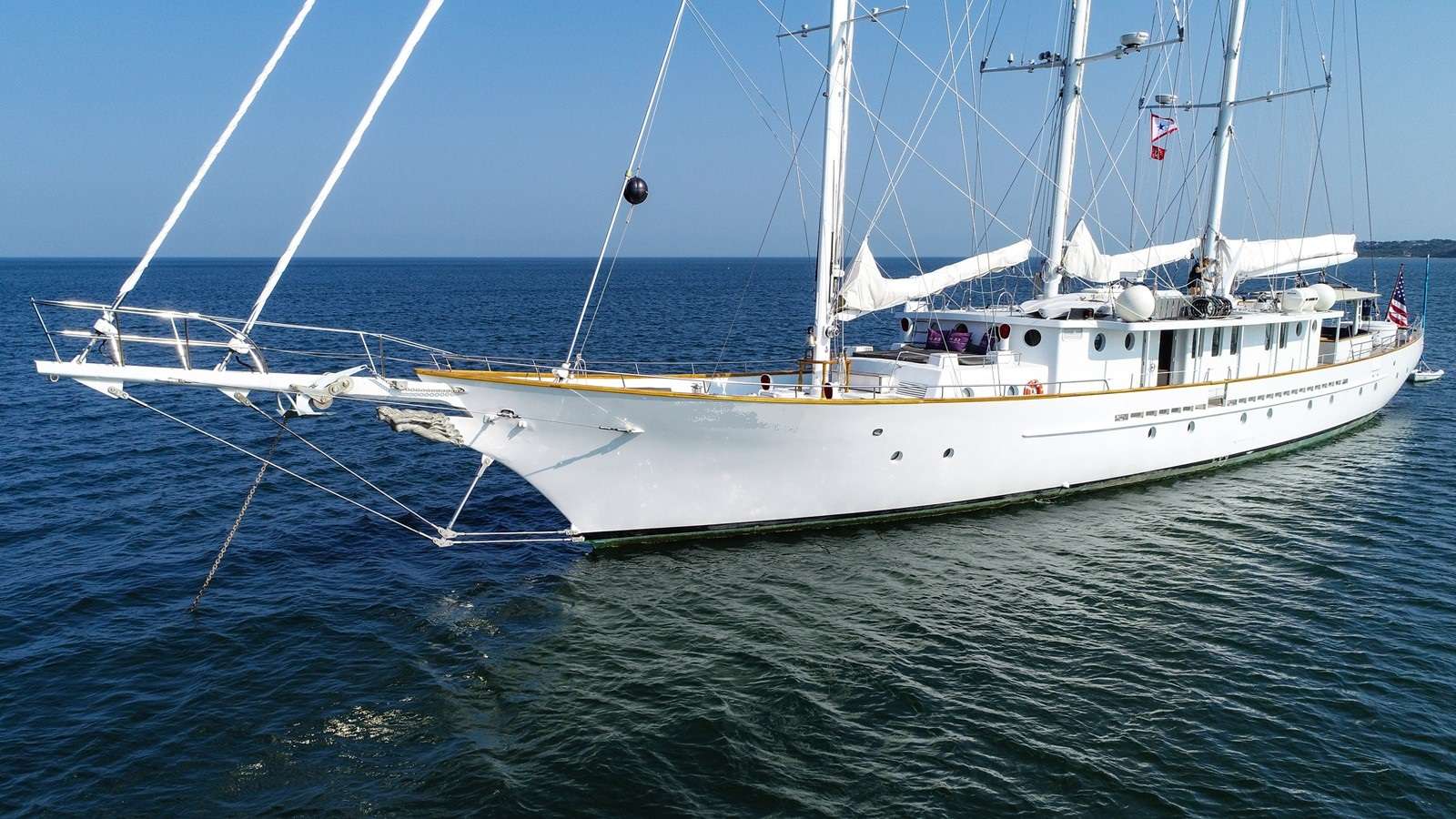
Classic sailing yacht under sail in Narragansett Bay off Newport.
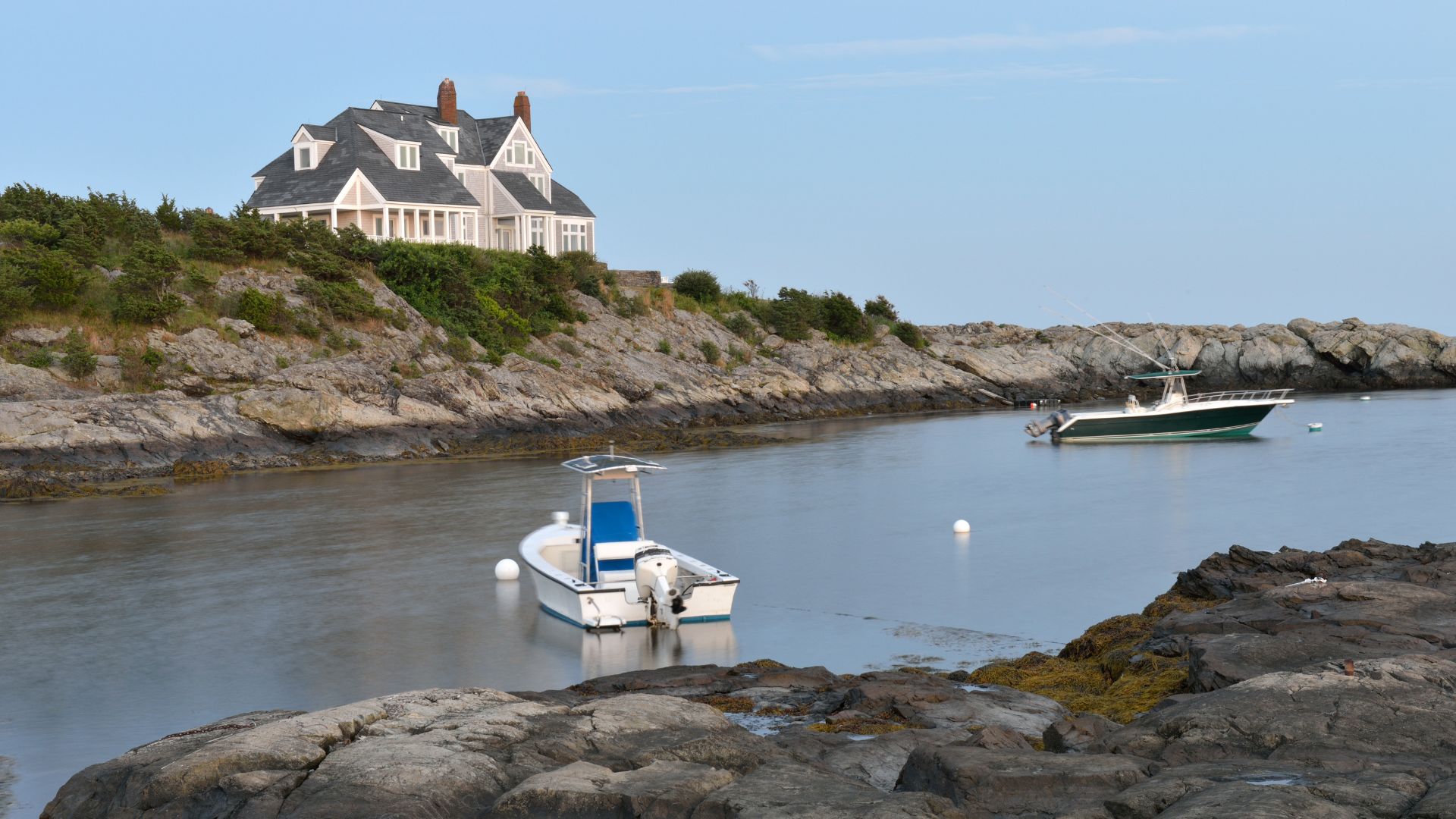
The Breakers and the Bellevue Avenue mansion row above the Cliff Walk, Newport.
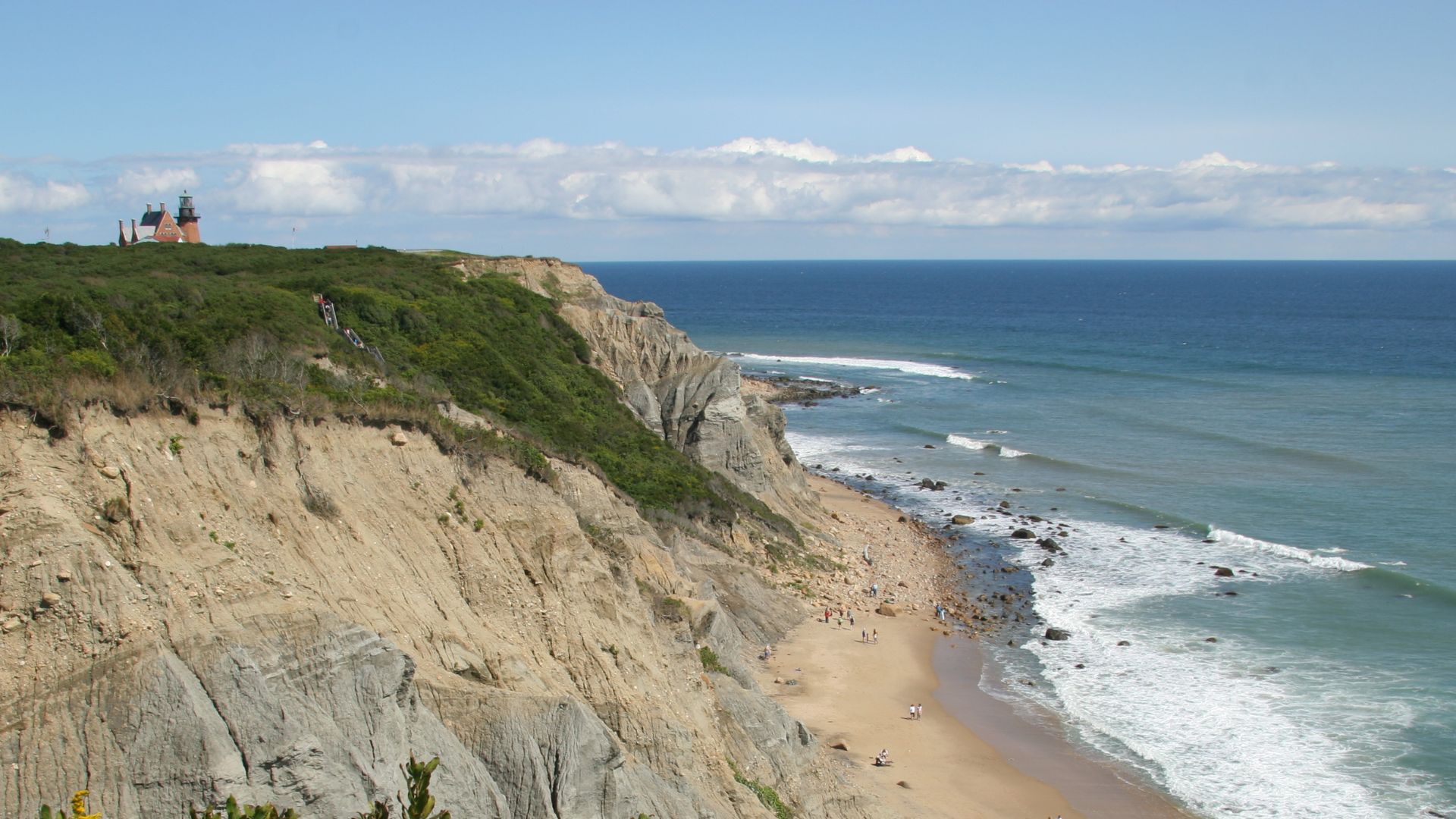
Mohegan Bluffs on Block Island's south shore — 150-foot clay cliffs above the beach.

Why this Newport itinerary is the classic New England week

Newport is the base, but the week is bigger than the harbor. The route covers three registers in seven nights: the Gilded Age harbor itself — mansions above the anchorage, the Cliff Walk ashore, a classic America's Cup yacht under sail most afternoons; Block Island's clay bluffs and the boat-filled Great Salt Pond twelve miles offshore; and Cuttyhunk, a working island village of a few dozen year-rounders where a skiff delivers raw-bar oysters to the cockpit at six o'clock.

About 110 nautical miles round-trip, no leg over 25 nm — short mornings under way, long afternoons at anchor. The finish runs through the quiet upper bay to Bristol, home of the Herreshoff yard that built five straight America's Cup defenders, before the last Newport night. Every mile is protected or near-coastal water; the captain has options in any forecast.

1

Day 1 of 7 · Newport → Jamestown

Boarding in Newport and the first night across the bay
Anchorage: Dutch Harbor or Mackerel Cove, Conanicut Island
Newport Harbor on a summer evening — the boarding point for most New England charters.
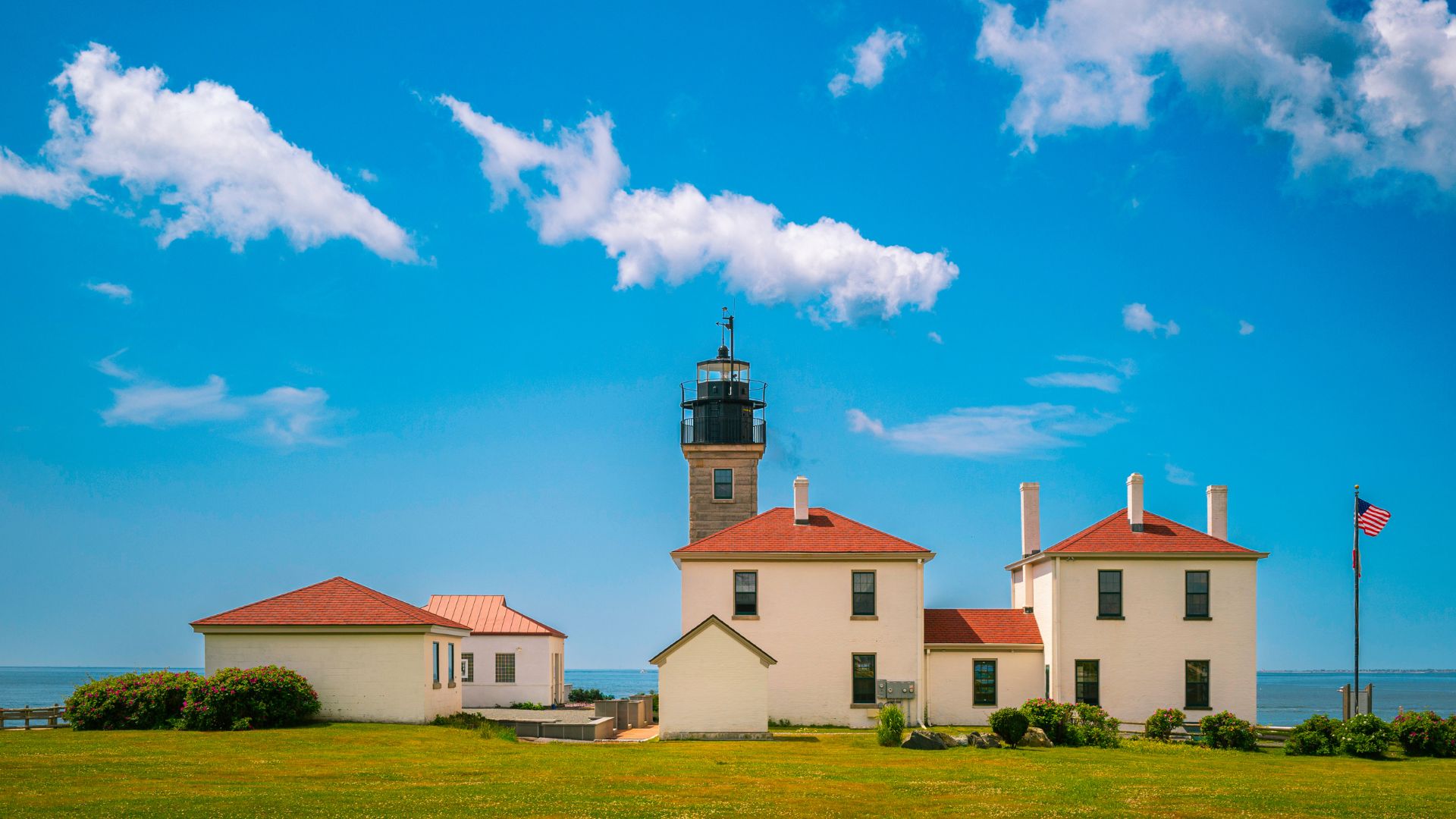
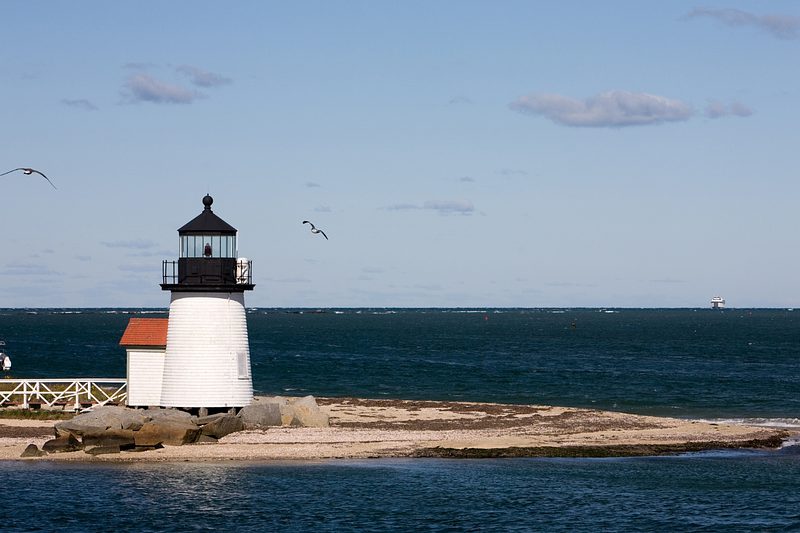
Beavertail Light, guarding the West Passage since the 1850s — the first landmark of the week, twenty minutes from the Newport docks.

The charter begins in Newport — boarding at Newport Shipyard or by tender from a harbor mooring, depending on the yacht. Providence (PVD) is forty minutes by car; Boston (BOS) about ninety. The captain and chef meet you at the dock, stow the luggage, and walk the group through the yacht and the week's chart while the harbor does what Newport Harbor does: launches running, a 12 Metre ghosting past the moorings, the church spires and shingled waterfront stacked behind Bowen's Wharf.

There is no reason to rush off. Newport rewards the first afternoon — a walk down Thames Street and the wharves, a chowder at The Black Pearl on Bannister's Wharf, or nothing at all beyond the aft deck and the harbor traffic. Late in the day, lines come off for the shortest leg of the week: five nautical miles across the East Passage to Conanicut Island and the quiet side of the bay.

The first night sets the register. Dutch Harbor on Jamestown's west side is a working mooring field with a sunset over the West Passage; Mackerel Cove, a sand-bottomed notch on the island's south end, is the at-anchor alternative when the wind agrees. The chef serves the welcome dinner aboard — local seafood, and it will not be the last time — with Newport's glow across the water and almost none of its noise.

Day Highlights

  • Boarding at Newport Shipyard or by tender from a harbor mooring.
  • First afternoon in Newport — Thames Street, Bannister's Wharf, the harbor itself.
  • Five-mile evening hop across the East Passage to Jamestown.
  • Welcome dinner aboard in Dutch Harbor or Mackerel Cove.
2

Day 2 of 7 · Out to Block Island

Past Beavertail and offshore to the Great Salt Pond

Anchorage: Great Salt Pond (New Harbor), Block Island
At anchor in the Great Salt Pond — Block Island's protected inner harbor holds hundreds of boats in season and still finds room.

The morning run rounds Beavertail Light at the southern tip of Conanicut Island — the third-oldest lighthouse site in the country — and points offshore. Block Island sits about twelve miles off the Rhode Island coast, and the twenty-two-mile leg from Jamestown is the week's first taste of open Atlantic water. The captain times it for the morning calm; motor yachts make it inside two hours, and on a sailing yacht it is a proper passage with the island growing on the horizon.

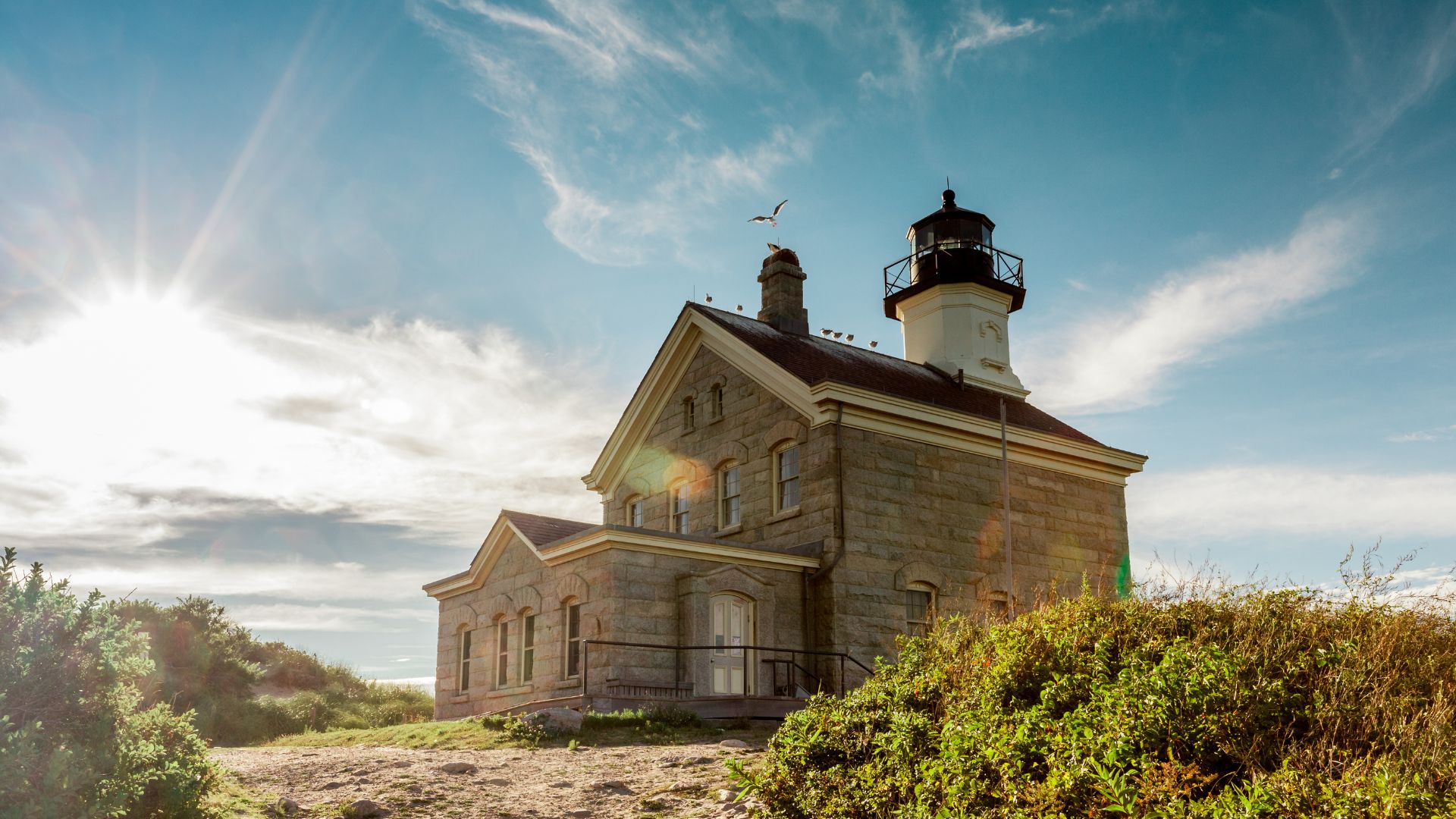
The entrance to the Great Salt Pond is a narrow cut on the island's west side, and the pond inside is one of the best natural harbors on the East Coast — a mile-wide bowl of protected water known locally as New Harbor. The afternoon belongs to the island: the tender runs guests in for rented bikes or a taxi south to Mohegan Bluffs, where a wooden staircase drops a hundred and fifty feet of clay cliff to the beach below and the 1875 Southeast Light stands where erosion forced it to be moved bodily inland in 1993.

Evenings in the pond are their own tradition. The Oar overlooks the mooring field with several hundred boat oars nailed to its ceiling, and a dark-and-stormy there while the launch traffic winds down is the standard first-night move. Dinner is the chef's aboard, or ashore in the Old Harbor village on the island's east side — a fifteen-minute taxi across the island.

Day Highlights

  • Rounding Beavertail Light into open Atlantic water.
  • The narrow cut into the Great Salt Pond — New Harbor's mile-wide anchorage.
  • Mohegan Bluffs and the relocated 1875 Southeast Light.
  • A dark-and-stormy at The Oar above the mooring field.
3

Day 3 of 7 · Block Island lay day

A full day on the island the Nature Conservancy calls one of the last great places

Anchorage: Great Salt Pond (New Harbor), Block Island
The quiet end of the Great Salt Pond. Nearly half of Block Island is protected conservation land.

The lay day is why Block Island earns two nights. Nearly half the island is conservation land — the Nature Conservancy counted it among its 'last great places' in the Western Hemisphere — and the distances are bicycle-scale. The standard loop runs south past Painted Rock to the bluffs, east through the Victorian hotels of Old Harbor, and north along Corn Neck Road to the stone North Light at Sandy Point, with farm stands and stone walls the whole way.

The beaches are the other half of the day. Crescent Beach runs two-plus miles of clean sand up the island's east side within walking distance of Old Harbor; Mansion Beach at its north end is the quieter stretch with the ruins of a Gilded Age foundation in the dunes behind it. The water in late summer runs warmer than most first-timers expect — low seventies in August — and the chef packs the tender for a beach afternoon whenever the group wants one.

For the evening, Payne's Dock in the pond sells its famous sugared donuts as the sun drops, and Dead Eye Dick's serves a proper swordfish a short walk from the dinghy dock. Guests who want the full island dinner take the taxi to Old Harbor; guests who have found their rhythm stay aboard, where the chef's raw bar and the mooring-field lights do the work. Both answers are correct.

Day Highlights

  • Bike loop — Mohegan Bluffs, Old Harbor's Victorian hotels, the North Light.
  • Crescent and Mansion Beach afternoons off the tender.
  • Payne's Dock donuts at sunset.
  • Dinner ashore at Dead Eye Dick's or the chef's raw bar aboard.
4

Day 4 of 7 · East to the Elizabeth Islands

The longest leg, to a village of thirty year-rounders

Anchorage: Cuttyhunk Pond or the outer anchorage
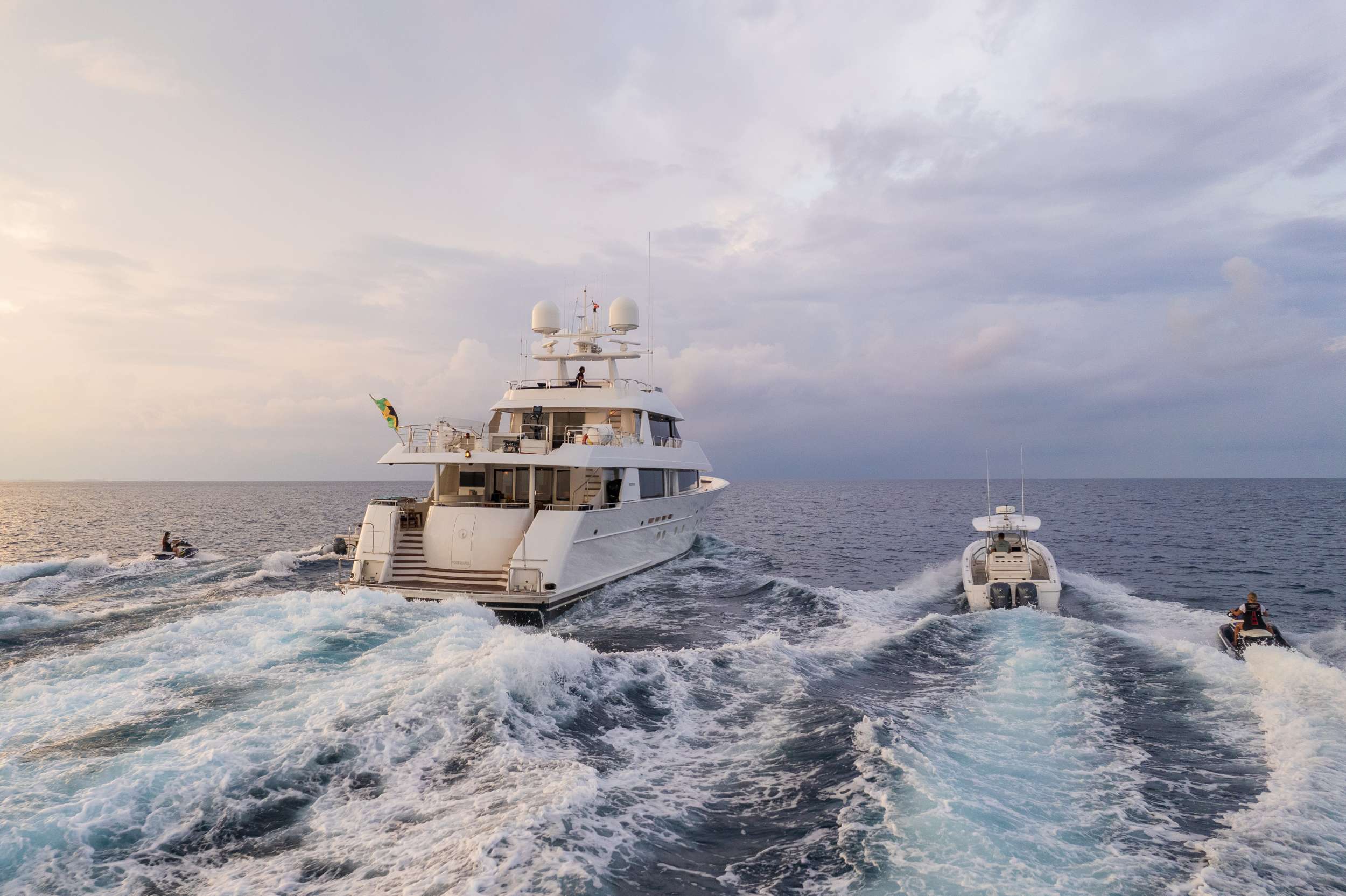
The morning crossing — twenty-five miles over Rhode Island Sound is the week's longest leg, and the deck is the place to spend it.

The week's longest leg crosses Rhode Island Sound eastward — about twenty-five nautical miles from the Great Salt Pond to the tail of the Elizabeth Islands, the chain that runs southwest off Cape Cod between Buzzards Bay and Vineyard Sound. The captain runs it in the morning; by lunch the yacht is closing on Cuttyhunk, an island Bartholomew Gosnold landed on in 1602, decades before the Pilgrims saw the Cape.

Cuttyhunk is the anti-Newport, and that is exactly why it is on the route. A few dozen people live here year-round. There is one small store, a church, a one-room schoolhouse, and a grass-strip of a town where golf carts outnumber cars. The walk up Lookout Hill takes fifteen minutes and pays out a 360-degree view — the Vineyard east, Buzzards Bay north, the open Atlantic south — from old WWII bunker mounts at the top.

The evening is the island's signature moment: the raw-bar skiff from the Cuttyhunk shellfish farm motors through the anchorage around six, pulling alongside to shuck oysters and littlenecks straight into the cockpit. The chef builds dinner around what comes over the rail. There is no nightlife and no reservation to make — the anchorage goes quiet early, and after Block Island at peak, that is the point.

Day Highlights

  • Twenty-five-mile morning crossing of Rhode Island Sound.
  • Lookout Hill's 360-degree view from the WWII bunker mounts.
  • The raw-bar skiff shucking oysters at the cockpit rail.
  • The quietest anchorage of the week.
5

Day 5 of 7 · Back west to the Gilded Age

Return to Newport and an afternoon among the mansions

Anchorage: Newport Harbor mooring or Brenton Cove
Westbound across Rhode Island Sound — the return leg runs outside the bay with Newport's Castle Hill Light marking the turn home.

A morning run back west across the sound, and by early afternoon the yacht is standing in past Castle Hill Light — the small 1890 lighthouse on the rocks below the Castle Hill Inn — and into Newport Harbor. The approach from seaward is the way the harbor was always meant to be seen: Fort Adams to port, the mansion rooflines along the Cliff Walk to starboard, and the mooring field opening up behind Goat Island.

The afternoon is for the Gilded Age. The Breakers — the Vanderbilts' seventy-room Italian Renaissance palace above the Cliff Walk — anchors the Bellevue Avenue mansion row, with Marble House and Rosecliff a walk or short drive apart. Guests who prefer the water's view of it all walk the Cliff Walk itself: three and a half miles between the mansions' back lawns and the surf. The crew arranges cars and timing so nobody thinks about either.

Newport dinner reservations are worth having, and the crew books ahead. The Clarke Cooke House on Bannister's Wharf has fed the sailing crowd since before the Cup left town; the White Horse Tavern has been pouring since 1673 and calls itself the oldest operating restaurant in the country; Castle Hill Inn does the special-occasion table above the harbor entrance. The night ends back aboard on the mooring, the harbor lights doing what they have done for a century and a half.

Day Highlights

  • The seaward approach past Castle Hill Light into Newport Harbor.
  • The Breakers and the Bellevue Avenue mansion row.
  • The Cliff Walk between the mansions and the surf.
  • Dinner ashore — Clarke Cooke House, White Horse Tavern, or Castle Hill Inn.
6

Day 6 of 7 · Up the bay to the Herreshoff yard

The quiet upper bay and the birthplace of the Cup defenders

Anchorage: Bristol Harbor
Bristol Harbor still works for a living — the Herreshoff yard here built five consecutive America's Cup defenders between 1893 and 1920.

The bay north of Newport is the stretch most visitors never see, and it is some of the easiest cruising of the week — twelve miles of protected water past Prudence Island's conservation shoreline to Bristol, a colonial harbor town that has run its Fourth of July parade every year since 1785, the country's oldest.

Bristol's claim on this route is the Herreshoff Marine Museum, on the site of the family yard that built five consecutive America's Cup defenders between 1893 and 1920 and effectively invented the modern racing yacht. The museum's hall of boats — and the America's Cup Hall of Fame inside it — is a half-day for anyone who cares about why Newport matters to sailing, and a good hour even for guests who don't. Hope Street's colonial houses and small storefronts fill the rest of an easy afternoon ashore.

The evening stays simple: a lobster dinner in town at the harbor's long-standing spots, or the chef's version aboard with the anchorage nearly to yourselves. Colt State Park's shoreline lawns catch the sunset just north of the mooring field. After the season's crowds further south, Bristol feels like being let in on something.

Day Highlights

  • Twelve protected miles up the bay past Prudence Island.
  • The Herreshoff Marine Museum and America's Cup Hall of Fame.
  • Hope Street's colonial storefronts.
  • A near-private anchorage sunset over Colt State Park.
7

Day 7 of 7 · The Newport finale

A harbor day in the sailing capital

Anchorage: Newport Harbor mooring or Brenton Cove
Last full evening aboard in Newport Harbor — the week closes where American yachting keeps its history.

A short morning run returns the yacht to Newport for the week's finale, and the last full day is built around the harbor itself. This is the day to sail aboard a 12 Metre — several of the America's Cup boats that raced off Newport still day-sail and match-race out of the harbor all season, and the crew can have the group aboard one by late morning. Two hours of grinding winches (or declining to) on a Cup boat in Rhode Island Sound is the single most Newport thing it is possible to do.

The afternoon fills itself. Fort Adams — the harbor's massive 19th-century fortress point, home of the Newport Folk and Jazz Festivals — is a tender-accessible walk; the shops and galleries off Thames Street and the sailing-hardware windows of Bannister's Wharf absorb the rest. Guests with energy left for one more house tour take Marble House or Rosecliff; guests without settle onto the aft deck and watch the harbor's evening shift change.

The chef cooks the farewell dinner aboard — New England's version of the greatest-hits menu, lobster included — as the mooring field lights come up. The week ends where it started, which was always the design: Newport read differently after Block Island's bluffs, Cuttyhunk's silence, and Bristol's boatbuilding history than it did on boarding day.

Day Highlights

  • An afternoon sailing aboard an America's Cup 12 Metre.
  • Fort Adams and the Thames Street wharves.
  • One last mansion — Marble House or Rosecliff.
  • Farewell lobster dinner aboard as the harbor lights come up.
8

Day 8 · Departure

Disembarkation in Newport

A slow last breakfast aboard, and disembarkation by mid-morning at Newport Shipyard or the town dock. Providence (PVD) is forty minutes by car and Boston (BOS) about ninety — the crew arranges the transfer, and guests connecting through Boston are at the gate by early afternoon. Step off with the Gilded Age harbor, Block Island's clay bluffs, a raw bar delivered to the cockpit at Cuttyhunk, and the yard that built the Cup defenders all inside one week — and no passport used at any point.

Frequently asked

Why start a New England charter in Newport?
Logistics and fleet. Newport is where the New England charter fleet actually sits — Newport Shipyard and the harbor moorings are the region's boarding point, Providence (PVD) is forty minutes away, and Boston (BOS) about ninety. It is also the only US harbor where chartering a classic America's Cup-lineage sailing yacht is a normal thing to do.
Is this week better on a motor yacht or a sailing yacht?
Both genuinely work — this is the one New England route where the classic sailing yachts shine. Legs are short (the longest is about 25 nm), so a schooner or classic sloop sails them comfortably inside a morning. Motor yachts trade the sailing for more deck space and faster hops. Groups picking Newport for the yachting history usually go classic sail; groups prioritizing space and pace go motor.
How busy does this route get in July and August?
Newport Harbor and Block Island's Great Salt Pond are lively at peak — that's part of the point — but the crowds are boats, not cruise ships. Cuttyhunk and the upper bay stay quiet all season. September runs the same route with the water at its warmest and the harbors half-empty.
Can we watch or sail aboard a 12 Metre while in Newport?
Yes. Several America's Cup 12 Metres still sail out of Newport daily in season, and an afternoon racing or day-sailing aboard one is an easy add the crew can arrange. It pairs naturally with the final full day of this route, which is built around Newport Harbor.

Ready to set sail in Newport and Narragansett Bay?

Every itinerary we send is custom-tailored. Tell us your dates, the size of your group, and what you want out of your charter—we'll handle the rest.