Crewed Itinerary · Greece

Rhodes Itinerary: A 7-Day Dodecanese Yacht Week from Kos

If you've already done Mykonos and Santorini and want depth instead of spectacle, this is the Rhodes itinerary to book next. The Dodecanese strings out along the Turkish coast in the eastern Aegean, with two thousand years of layered history between the daily swims—a UNESCO hilltop monastery where John wrote Revelation, an active volcano you can walk into, the most photographed harbor in Greece, and the largest intact medieval walled city in Europe. It's a cultural week with the Aegean delivering the in-between sailing. Roughly 240 nautical miles round-trip from Kos with a one-way drop-off at Rhodes Airport.

The route is built around a Kos round trip with a final-day arrival into Rhodes—the practical move, since most charter guests want to fly home from Rhodes Airport rather than backtrack to Kos. Your professional captain and private chef handle the logistics of customs paperwork, harbor berths, and the inevitable schedule tweaks the Aegean weather will hand you. The Meltemi blows here in summer, but it's more spread out and less concentrated than in the Cyclades, and the Dodecanese sits far enough south to extend the season comfortably from May into October. The longer charter window, the cultural depth, and the sheer variety of what you sail through in a single week is why guests who've already done the Cyclades come back for this.

Duration
7 days / 8 nights
Base
Kos → Rhodes (one-way)
Plan your Greece charter Custom-tailored to your dates and group preferences
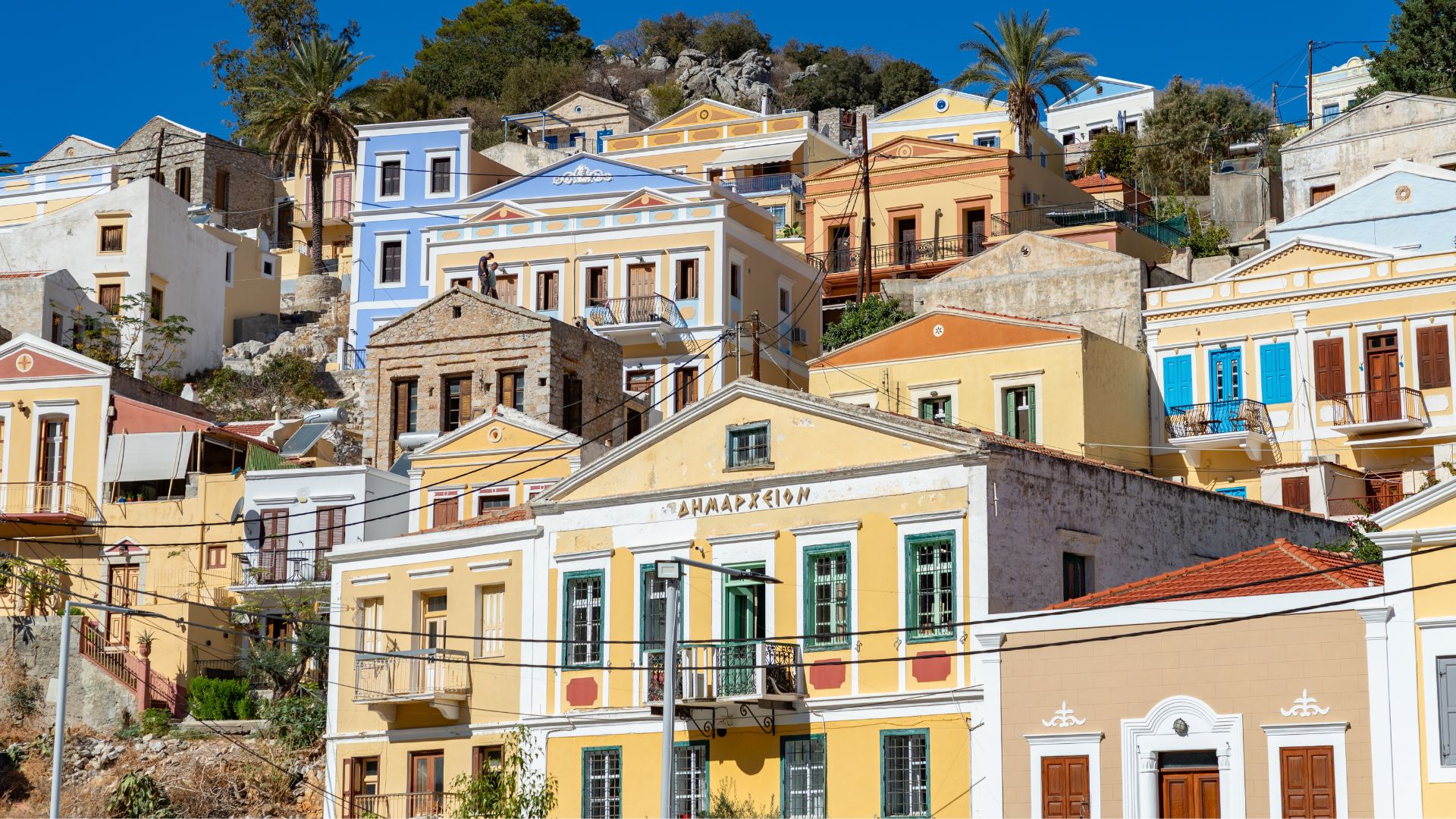
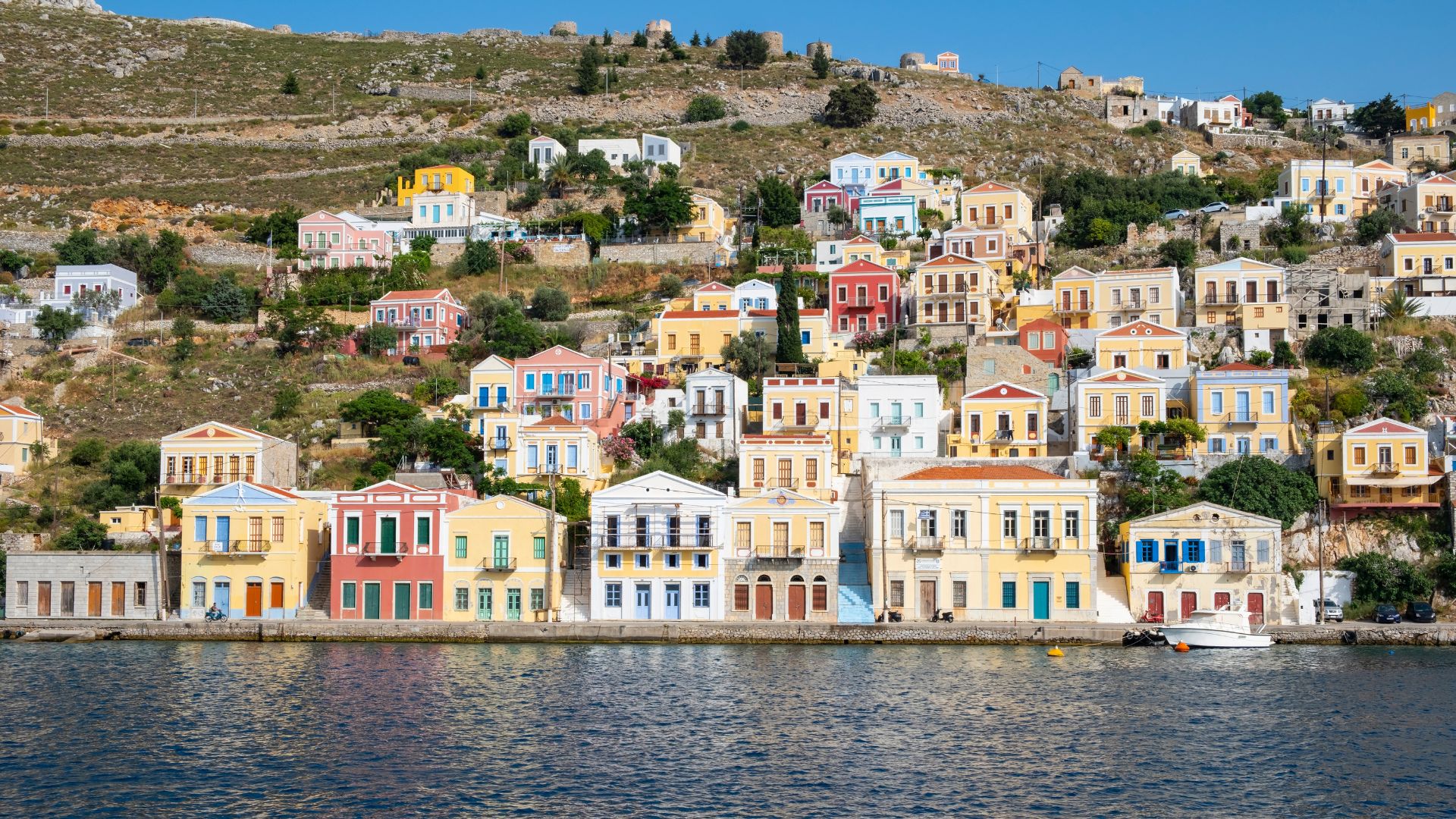
The pastel neoclassical houses of Symi's Yialos harbor stacked up the hillsides.
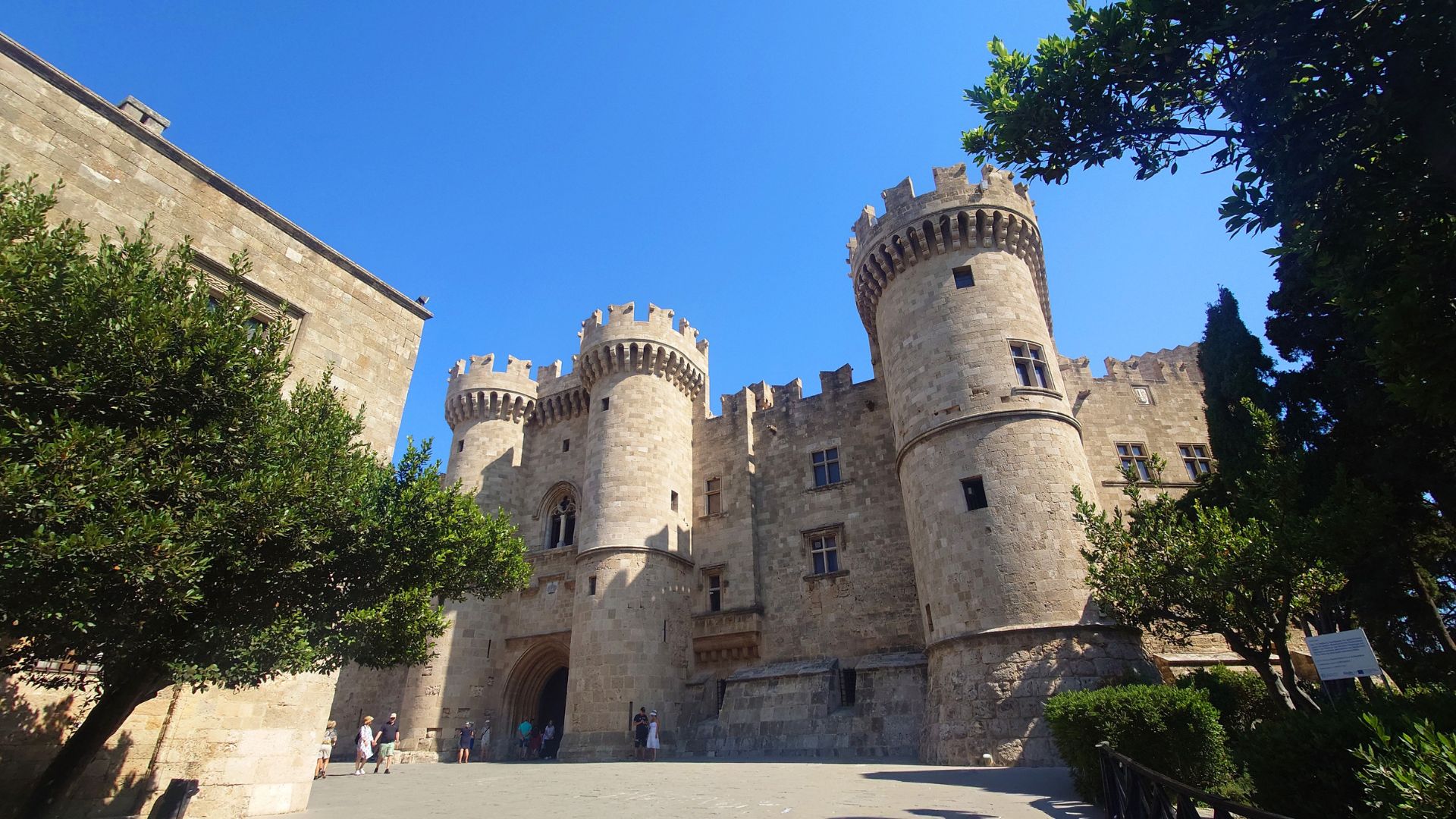
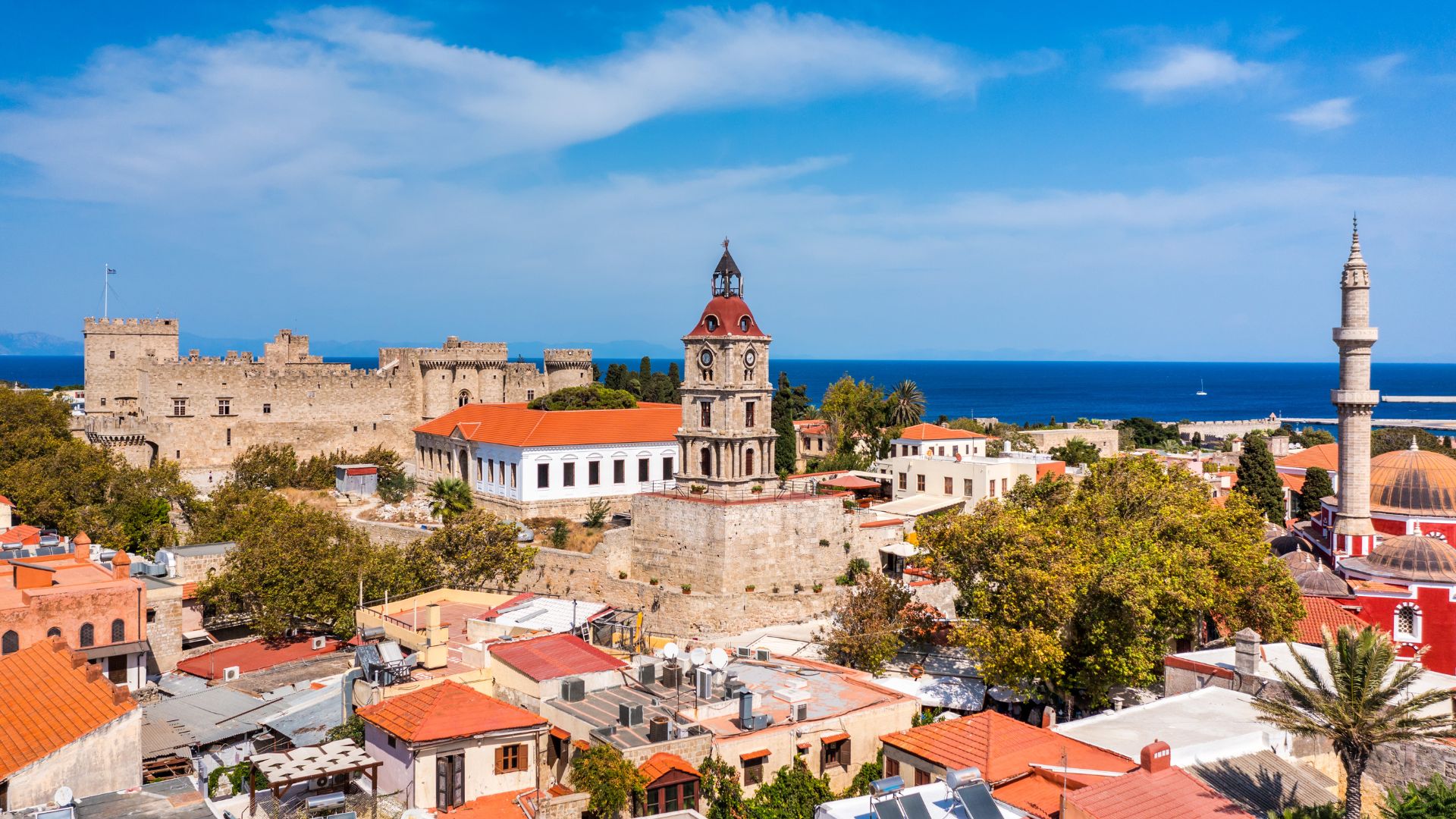
The medieval walled city of Rhodes Old Town from above.
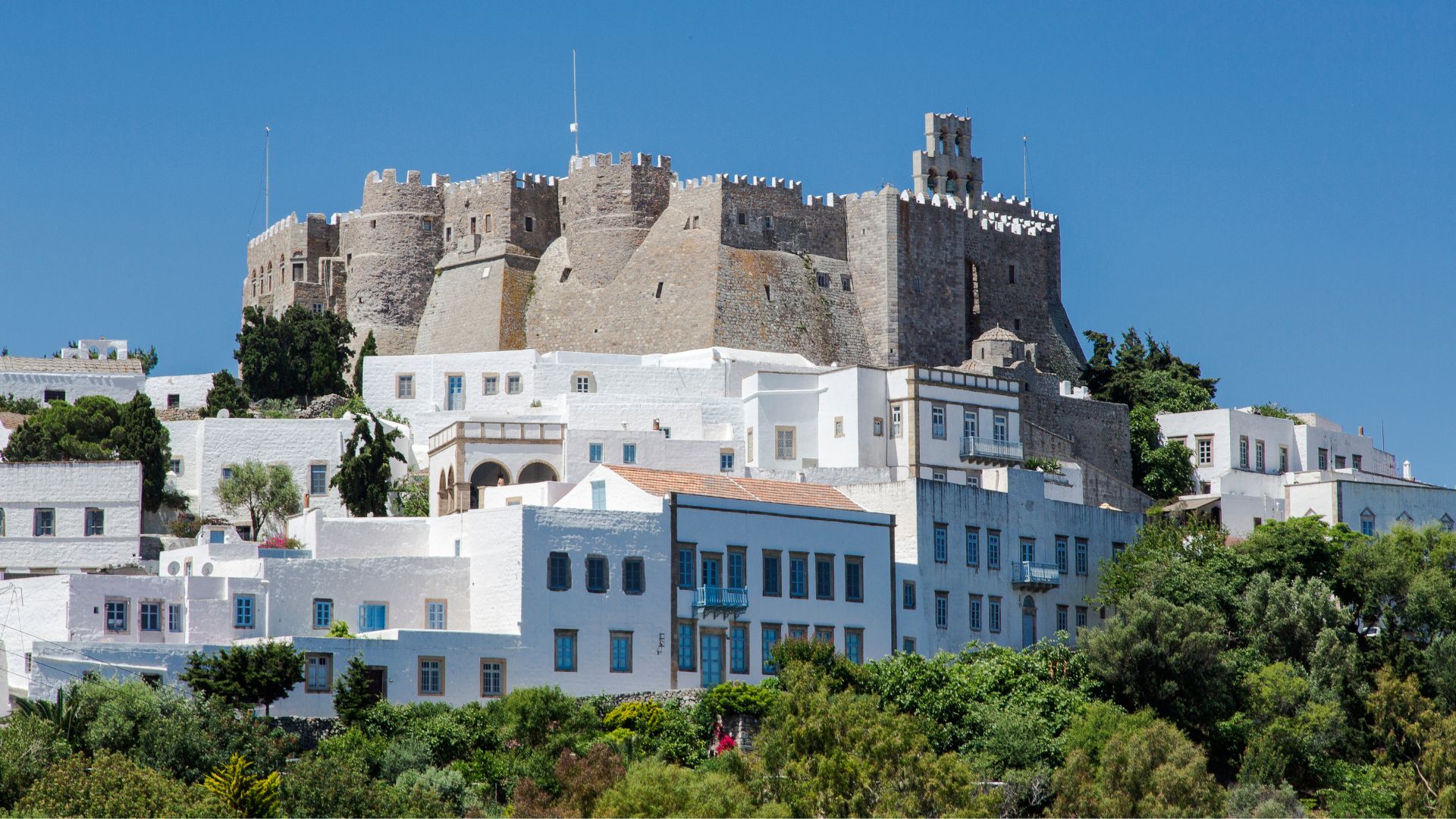
The hilltop Monastery of St. John on Patmos above the Aegean.
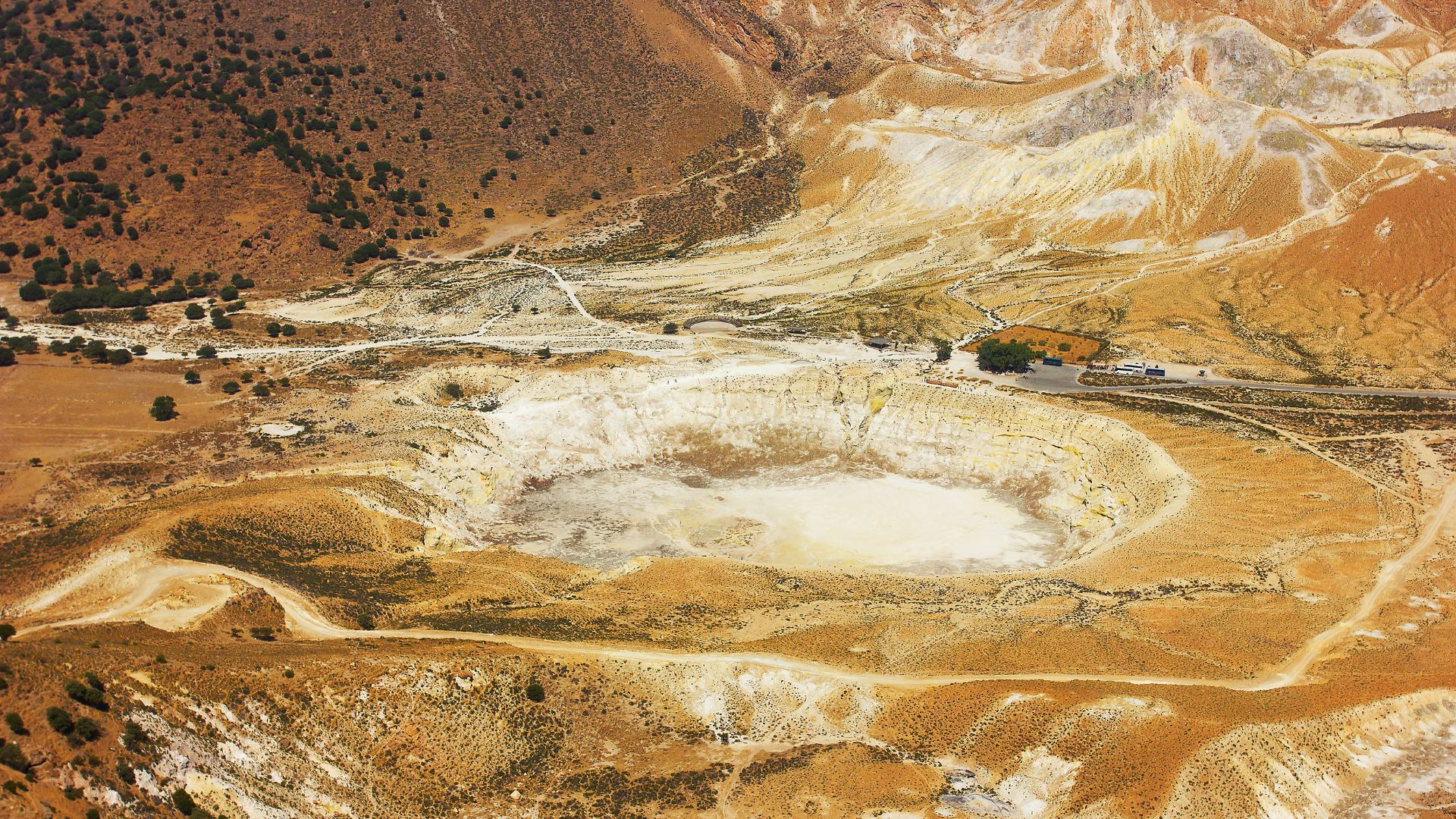
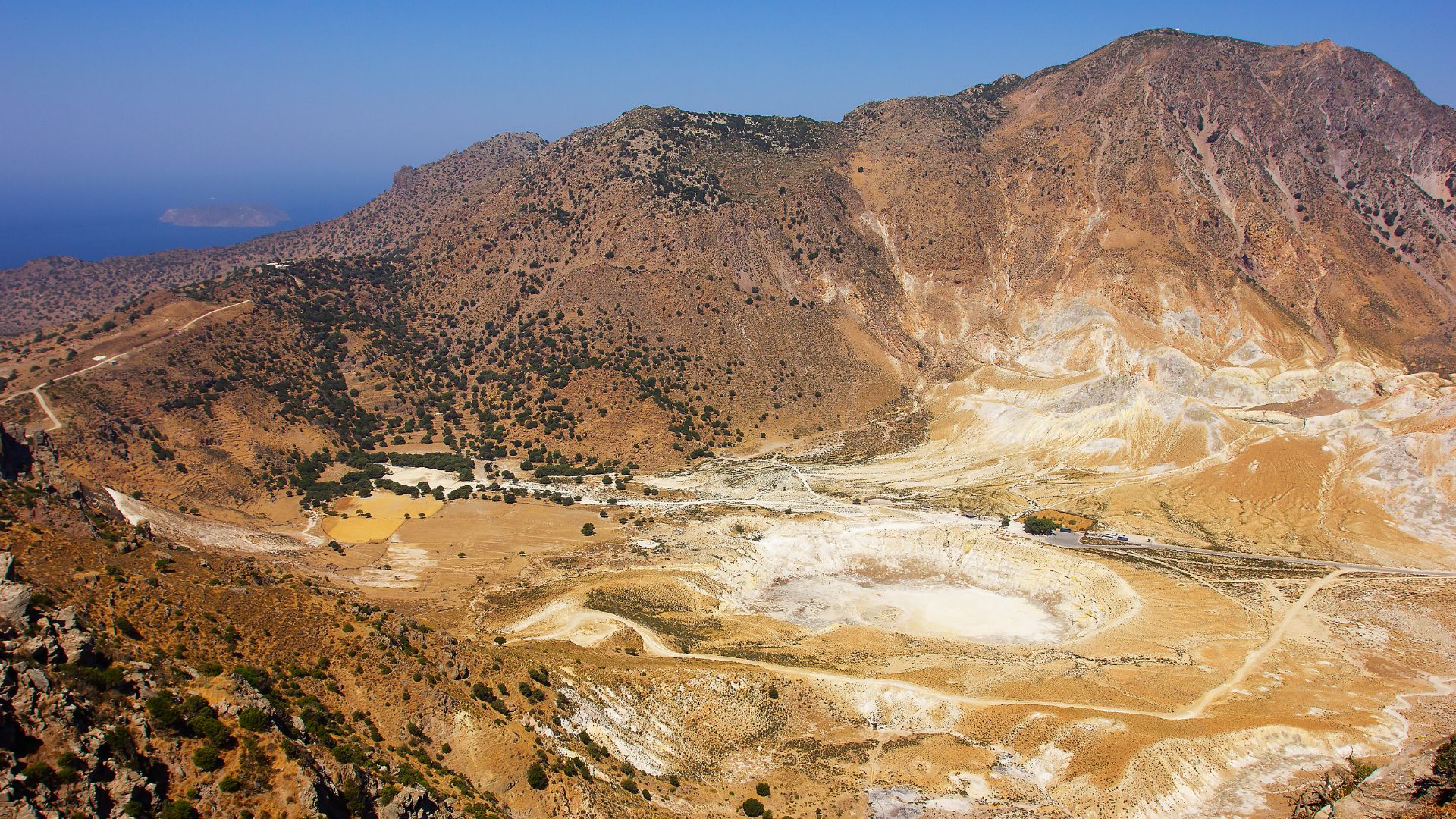
The steaming caldera of the active volcano on Nisyros.

Why this Rhodes itinerary is the Greek islands week for repeat charterers

The Dodecanese is what guests book after they've done Mykonos and Santorini and want depth instead of postcards. UNESCO monasteries (Patmos — where John wrote Revelation), an active volcano you can walk into the caldera of (Nisyros), the most photographed harbor in Greece (Symi), and the largest intact medieval walled city in Europe (Rhodes). Two thousand years of layered Greek/Italian/Ottoman history between the daily swims.

About 240 nautical miles across the week — Kos pickup, Patmos, Lipsi, Leros, Kalymnos, Nisyros, Symi, with a one-way drop-off at Rhodes (most guests fly home from Rhodes rather than backtrack to Kos). The Meltemi blows here in summer but it's more spread out than in the Cyclades, so the season extends comfortably May through October. The Dodecanese is the Greek islands itinerary for charterers who want the cultural week.

1

Day 1 of 7 · Kos → Pserimos

Kos Marina to Pserimos
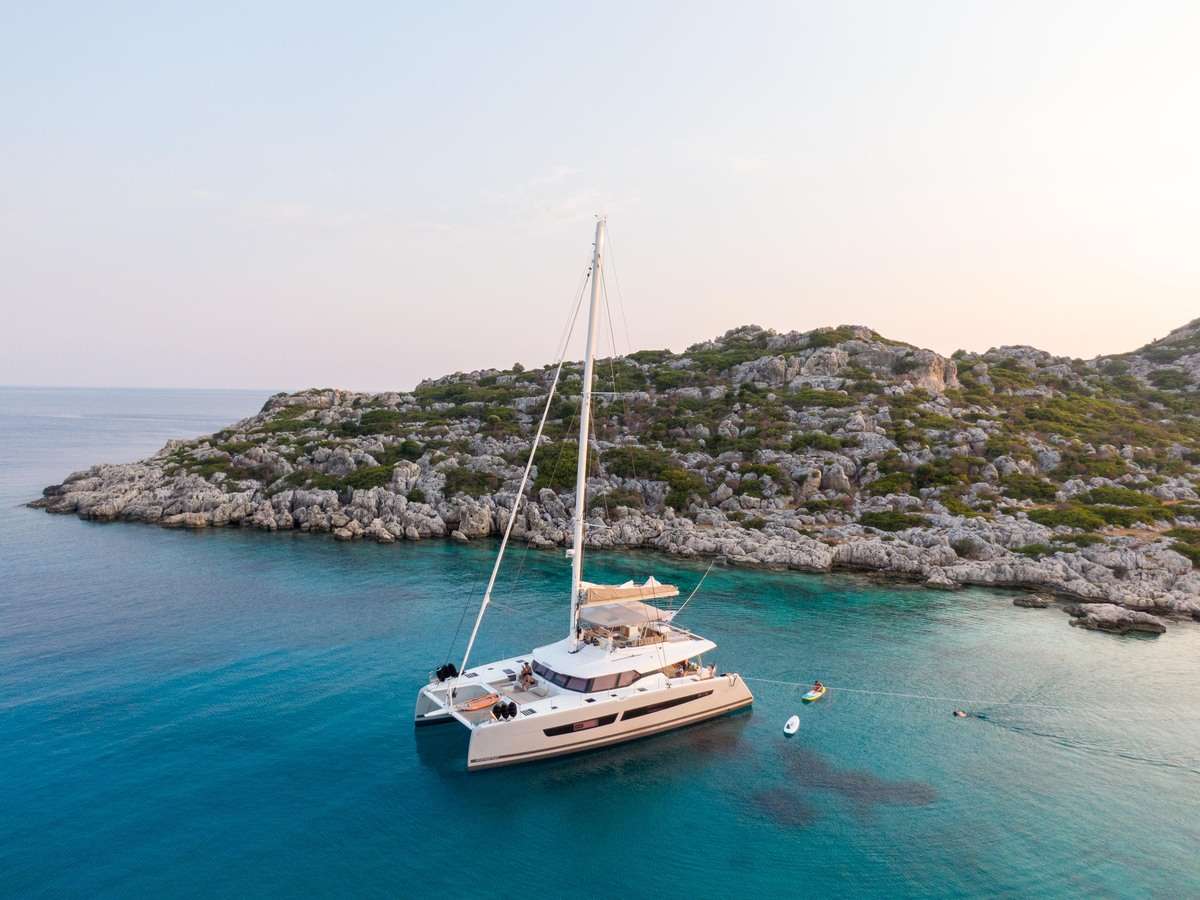
Anchorage: Pserimos
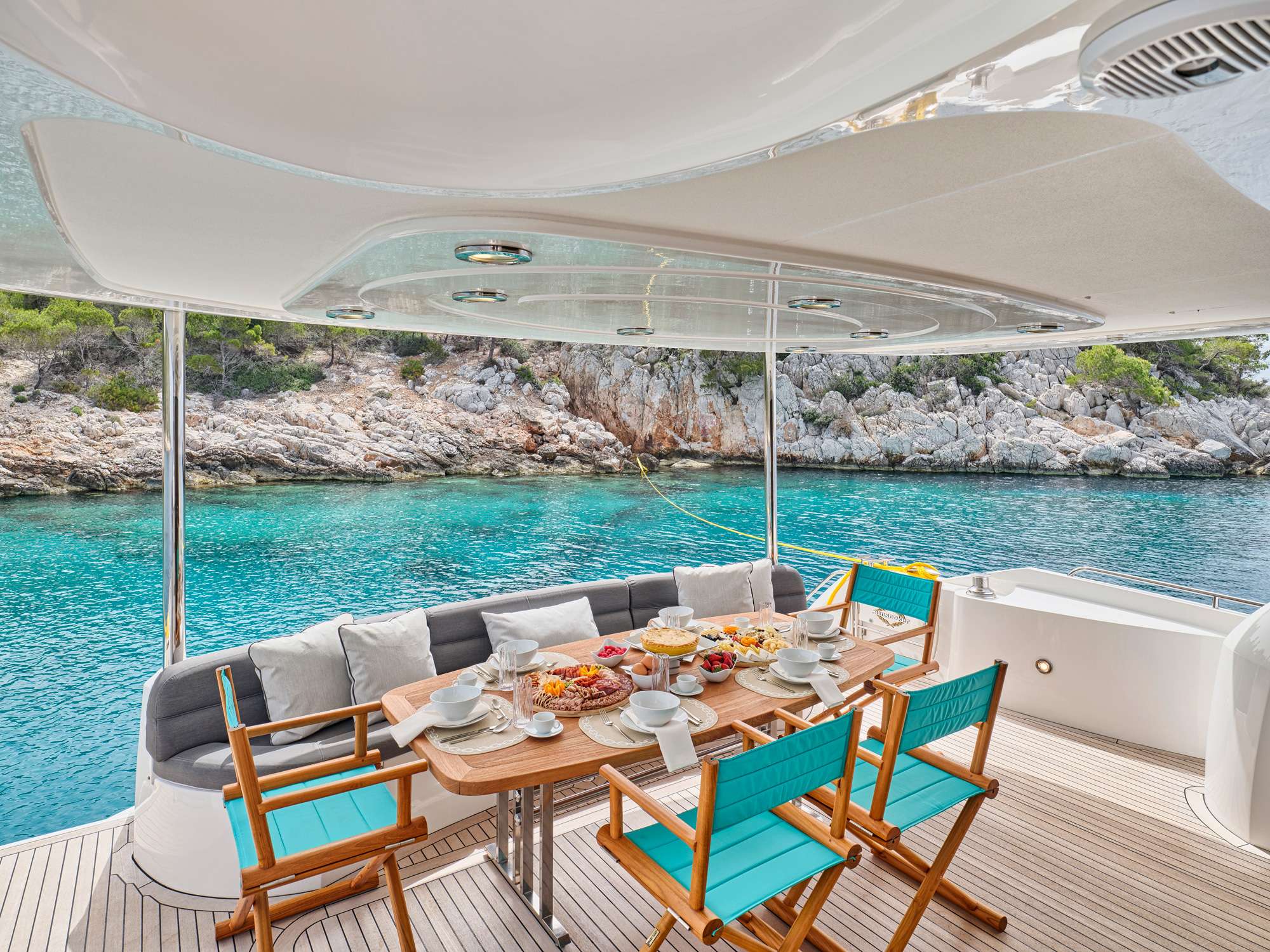
First night on the hook at Pserimos.

Your charter begins at Kos Marina on the eastern edge of Kos Town—a short transfer from Kos International and the main crewed base for the central Dodecanese. Your captain and chef meet you on the dock, walk you through the yacht, stow the luggage, and pour the first cold drink while they cover the route ahead. The Turkish mainland sits four miles off the bow on a clear afternoon, close enough that Bodrum's castle is visible across the strait. It is a useful reminder, on day one, of how close this corner of Greece is to Asia Minor and how much that proximity has shaped everything you're about to see.

Once everyone's settled, the captain slips lines for a short ten-nautical-mile shakedown north to Pserimos—a small island tucked between Kos and Kalymnos with a wide sandy bay, three or four tavernas along the waterfront, and almost nothing else. It's an easy first overnight, deliberately understated, designed to let the family find the quiet rhythm of the boat before the bigger days.

Dinner is aboard the first night, chef-prepared, while the day-trip boats from Kos clear out and the bay empties. Grilled fish off the morning's market, a Greek salad with Santorini tomatoes, a chilled bottle of Assyrtiko, and the lights of the village glowing a few hundred meters off the stern.

Day Highlights

  • Seamless welcome and chart briefing at Kos Marina.
  • Easy shakedown north to Pserimos—the quiet first overnight.
  • Empty sandy bay once the day boats clear out.
  • Chef-prepared welcome dinner aboard with the village off the stern.
2

Day 2 of 7 · Pserimos → Patmos

Pserimos to Patmos and the UNESCO Monastery of St. John

Anchorage: Skala, Patmos
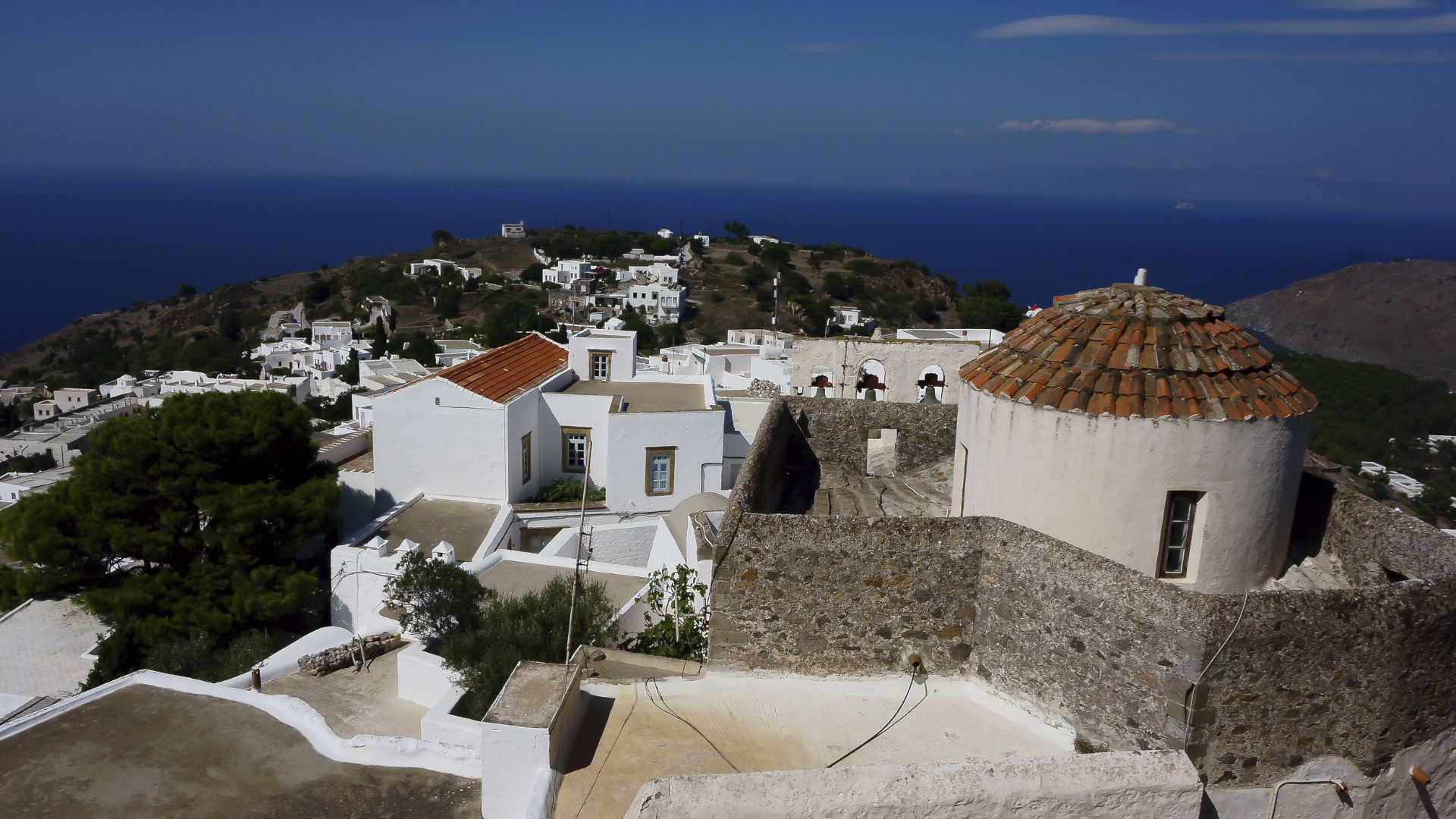
Patmos Chora — the UNESCO monastery on the ridge above Skala.

A thirty-nautical-mile run north to Patmos this morning—about three hours on a displacement motor yacht, less on a planing one—and the longest leg of the early week. The Aegean is usually friendly enough on this stretch in the morning, with the Meltemi yet to fill in, and the long flank of Leros builds slowly to port as the captain works north.

Patmos is the religious one. In a cave on the hillside above what is now Skala harbor, the apostle John is said to have written the Book of Revelation in the year 95. A monastery built around that cave became the nucleus of the village above—the Chora—and in the 11th century the larger Monastery of St. John was raised on the highest point of the island, walled like a fortress against the pirates that worked these waters for the next several hundred years. The whole hilltop complex is a UNESCO World Heritage Site, and a half-day ashore is enough to walk through both the monastery and the cave with a guide.

Your captain berths at Skala or anchors off, depending on the August traffic, and your chef builds the afternoon around a long lunch aboard before the climb up to Chora. Late afternoon is the right time to walk the monastery—the heat off the limestone has dropped, the cruise-ship visitors are mostly back on their tenders, and the light turns the Aegean below to pewter. Dinner ashore at one of the harborfront tavernas in Skala on the way back to the boat.

Day Highlights

  • Morning passage north to Patmos under usually-friendly Aegean conditions.
  • UNESCO Monastery of St. John and the Cave of the Apocalypse.
  • Late-afternoon walk through Chora when the heat and the crowds drop.
  • Dinner ashore at Skala harbor, back aboard for a quiet night at anchor.
3

Day 3 of 7 · Patmos → Lipsi

Patmos to Lipsi — The Slow Day

Anchorage: Lipsi
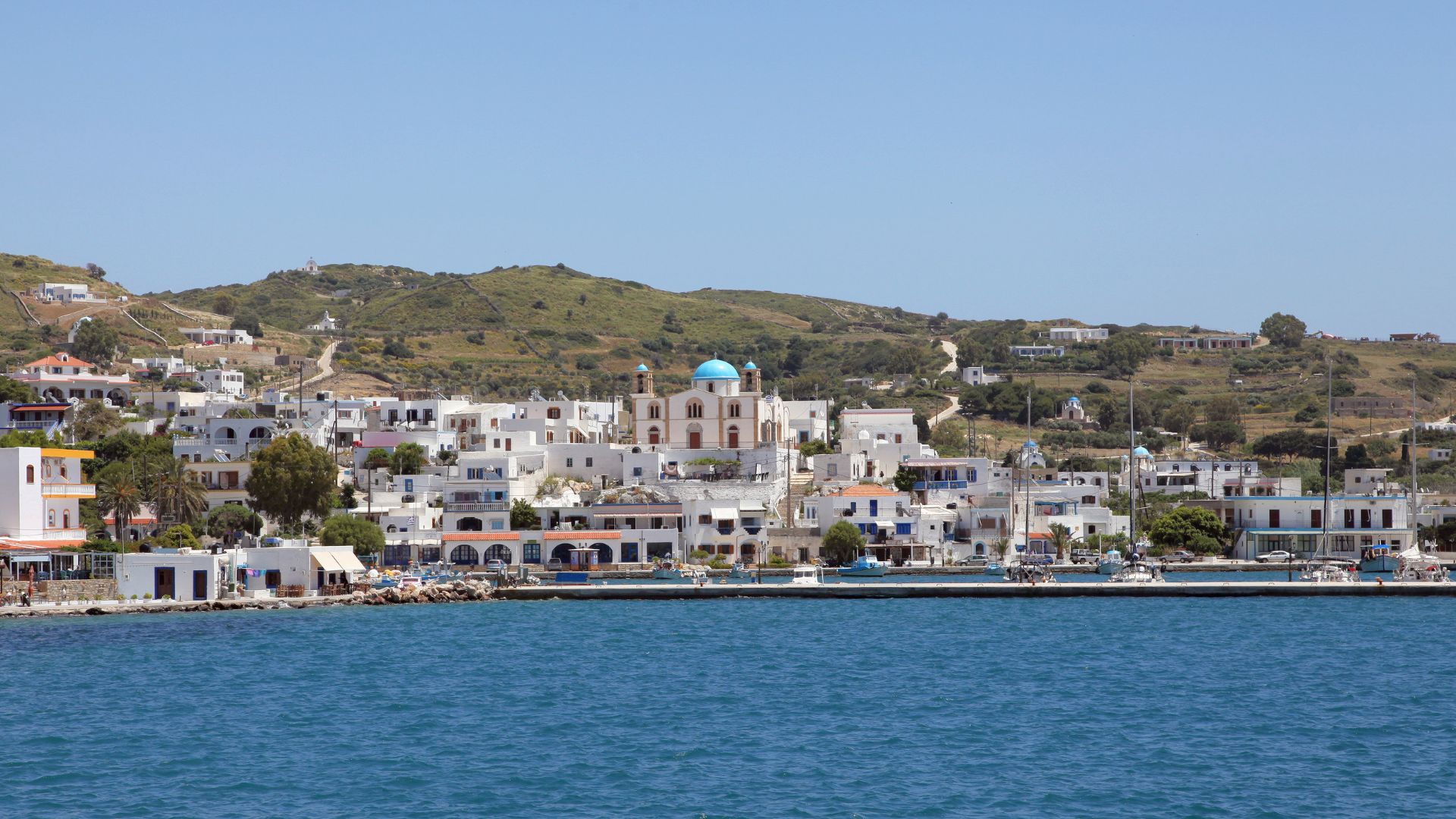
Lipsi — the Cycladic look without the Cycladic crowds.
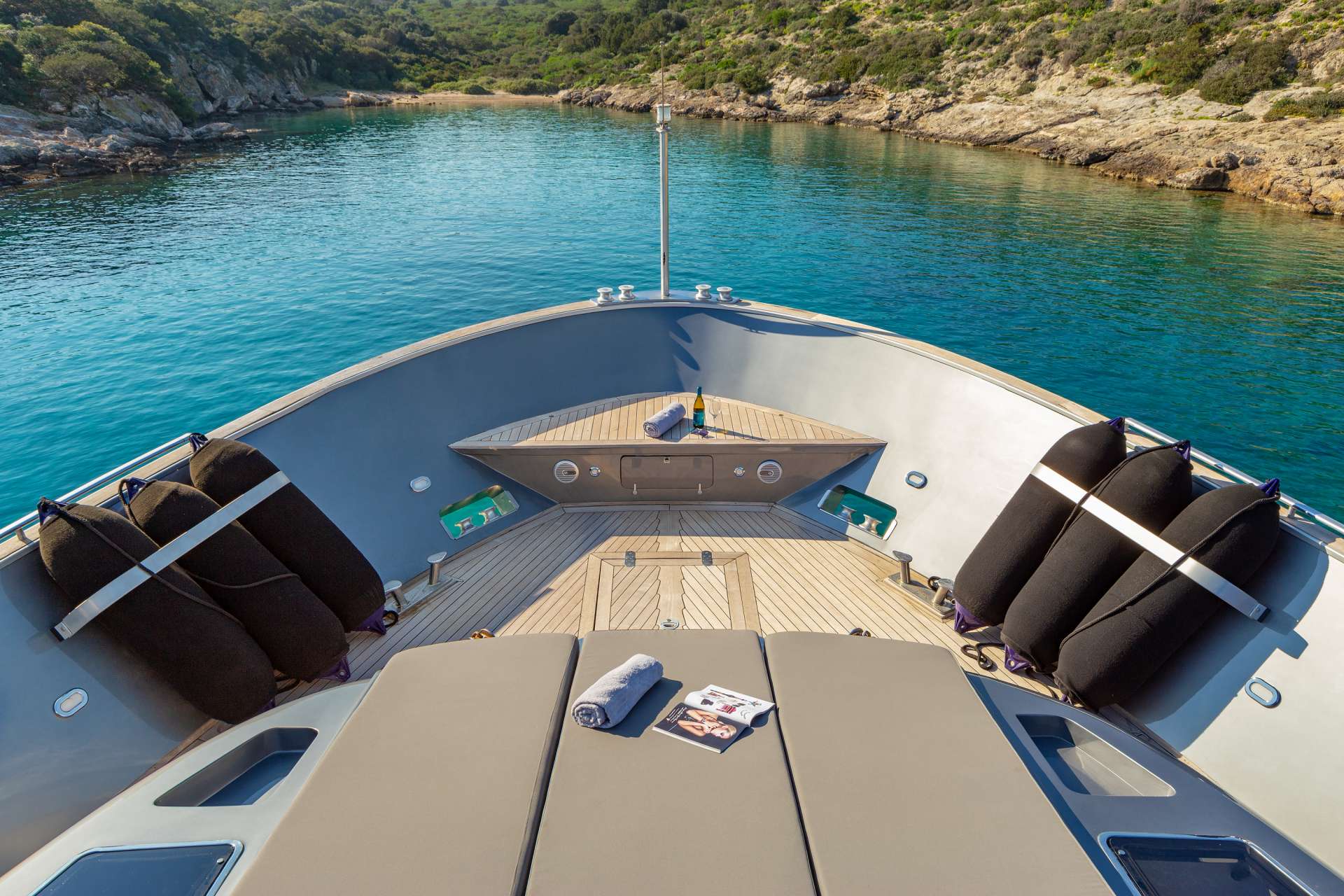
Slow-down day on the foredeck.

A short ten-nautical-mile hop south to Lipsi today—an hour or less under power, and the kind of leg you take after a slow breakfast on deck. Lipsi is small, undeveloped, and almost entirely overlooked by the bigger charter routes, which is why it earns a day on this one. The architecture is the white-and-blue Cycladic look most guests come to Greece expecting; the difference is the village isn't drowning in cruise tenders.

The captain anchors off Lipsi village in the morning and the day belongs to the water. Lunch aboard, then the tender runs you a few minutes around the headland to Plati Gialos—a shallow, sandy, almost lagoon-clear bay on the west side of the island that is the most photographed swim spot on Lipsi for a reason. The water is warm enough to stay in for an hour at a time, and the ridge line behind the beach is empty.

Dinner ashore in Lipsi village. Manolis is the longtime local pick—family-run, on the harbor, the kind of place where the menu is whatever came in on the day's boats. There are a half-dozen other tavernas along the waterfront if Manolis is full, all of them honest. The walk back to the dinghy at the end of the night is about a hundred meters past the fishing boats.

Day Highlights

  • Easy ten-mile hop south to Lipsi—the deliberate slow-down day.
  • Long lunch swim at Plati Gialos on the west side of the island.
  • Dinner at Manolis on the harborfront, family-run, day-boat menu.
  • A village quiet enough to remind you what the Aegean used to be.
4

Day 4 of 7 · Lipsi → Leros → Kalymnos

Italian Rationalism on Leros, Sponges and Climbing on Kalymnos

Anchorage: Pothia, Kalymnos
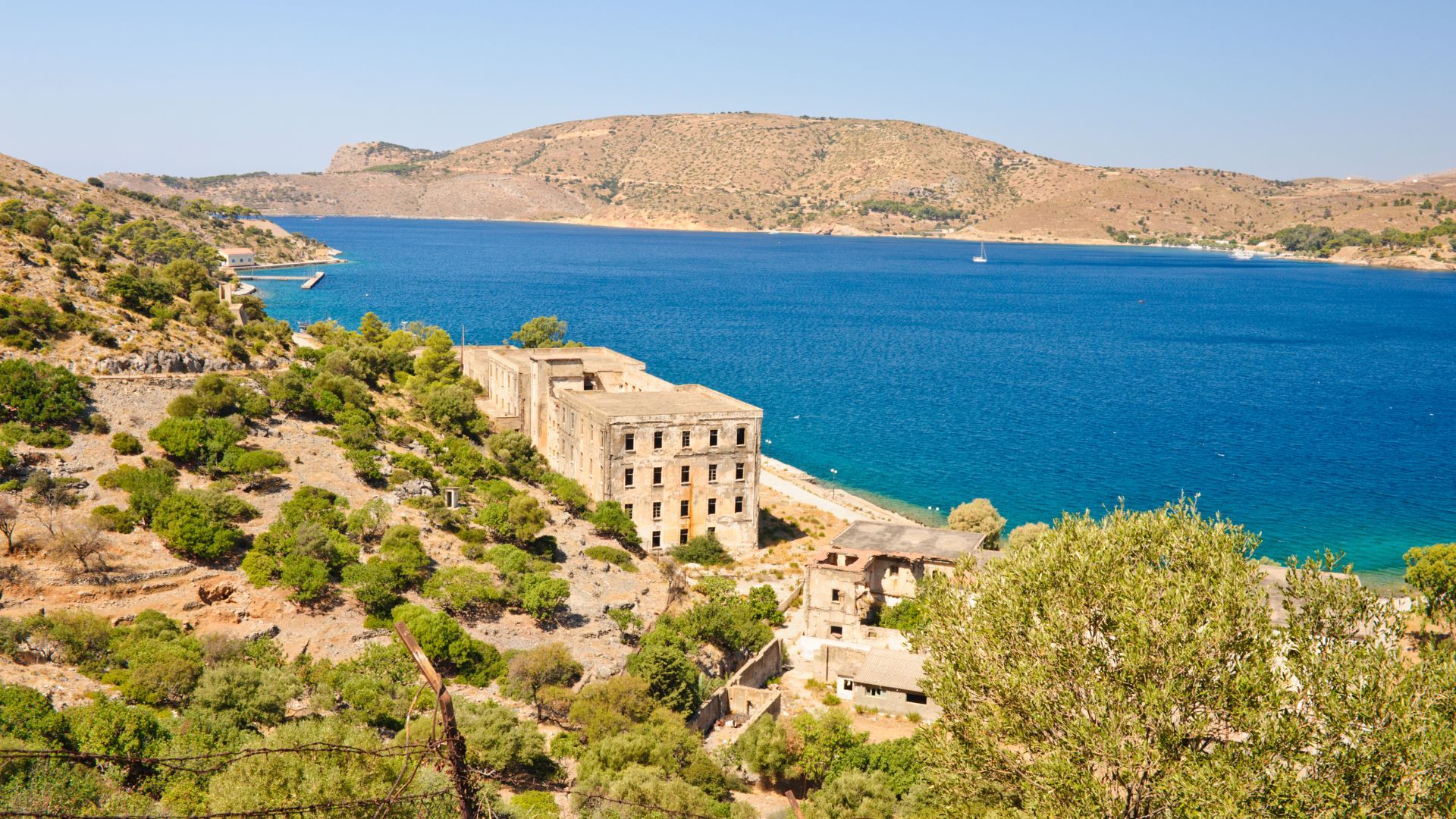
Lakki, Leros — Italian rationalist architecture, 1930s.

A two-stop day, roughly thirty miles total, with a midday break at Leros that almost nobody on a fast charter manages to fit in. The Italians ruled the Dodecanese from 1912 until the end of World War II, and Leros was their main naval base in the eastern Aegean. In the 1930s, under Mussolini, Italian architects laid out the port town of Lakki as a model rationalist city—broad straight avenues, an Art Deco market hall, a planned naval cinema, all of it built in stripped-down white concrete that was meant to project the new fascist order. The order didn't last. The architecture did.

Your captain ties up at Lakki for a couple of hours and your guide walks you through it. It's strange and quietly beautiful, and it's also the easiest way to make the layered colonial history of the Dodecanese suddenly legible—the Knights of St. John, the Ottomans, the Italians, the British, modern Greece, all of them having held this stretch of water in turn.

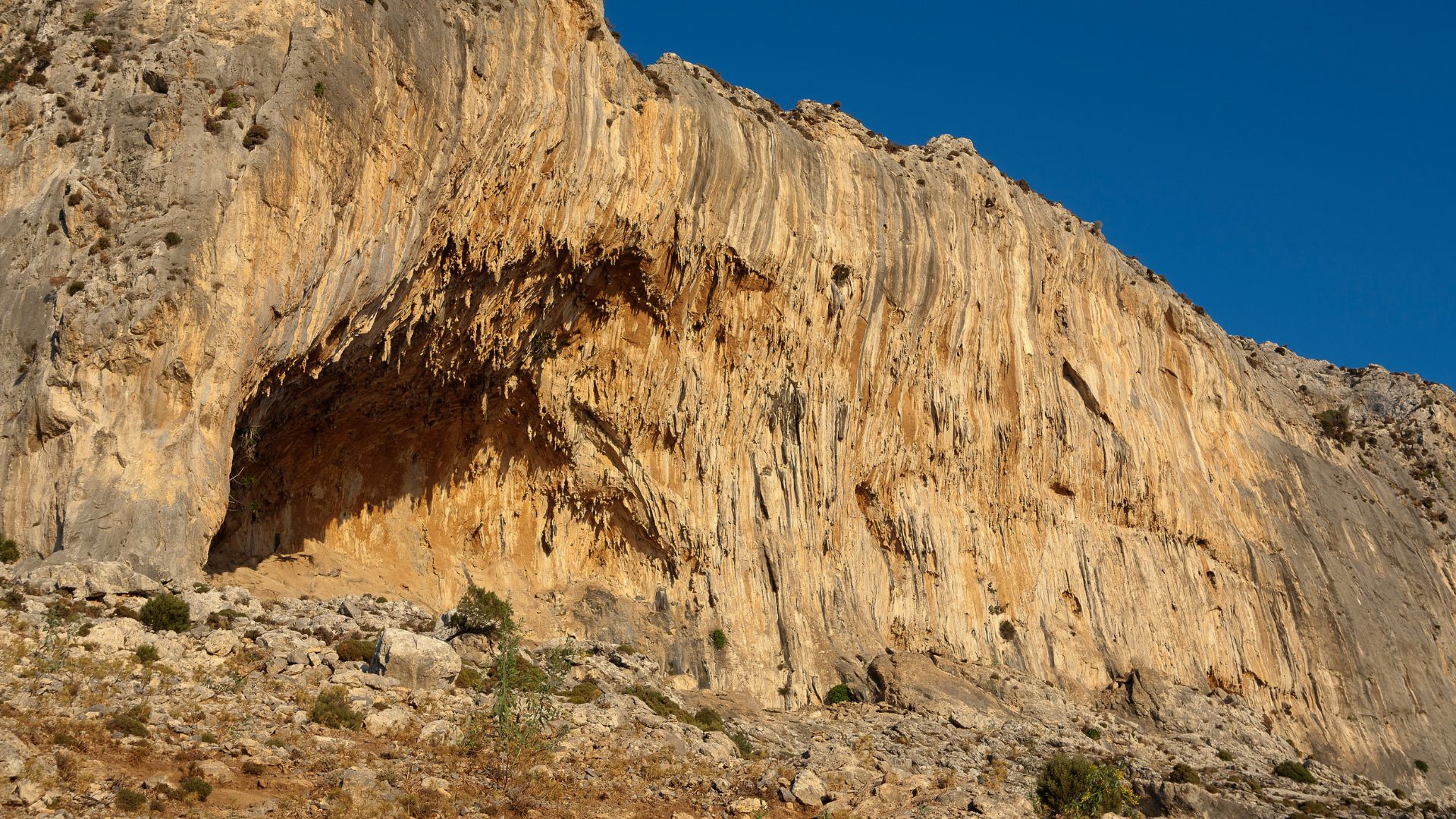
Late afternoon, lines off again for the fifteen-mile run south to Pothia harbor on Kalymnos. Kalymnos is the sponge-diving capital of Greece—divers from this island worked the eastern Mediterranean for centuries, and the trade is still part of the local identity even though the modern sponge fleet is a fraction of what it was. Today the bigger draw for outside visitors is the limestone: Kalymnos's vertical west-coast cliffs are some of the best sport-climbing rock in Europe, and the climbing season pulls a quiet international crowd from March through November. Anchor at Pothia, walk the waterfront promenade past the sponge shops, and have dinner ashore at one of the family-run tavernas above the harbor.

Day Highlights

  • Midday stop at Lakki on Leros—1930s Italian rationalist architecture.
  • A short walking tour that frames the entire colonial history of the Dodecanese.
  • Afternoon run south to Pothia, Kalymnos—Greece's sponge-diving capital.
  • Limestone cliffs above town that draw climbers from March through November.
5

Day 5 of 7 · Kalymnos → Kos → Nisyros

The Asklepion at Kos and the Active Volcano of Nisyros

Anchorage: Mandraki, Nisyros
Kalymnos limestone — among the best sport-climbing rock in Europe.
Inside the Nisyros crater.
Evening reach to Mandraki.

A flexible day of roughly forty miles total, structured around a half-day ashore in Kos Town and an evening arrival at Nisyros. Your captain leaves Pothia after breakfast for the short fifteen-mile run south to Kos, ties up at Kos Marina, and you head ashore with a guide for the morning. The headline stop is the Asklepion—the ruined ancient healing center on a hillside three miles outside town, the largest of its kind in Greece, and the place where a young Hippocrates was said to have studied medicine before founding the practice that takes his name. Down in town there is a plane tree in the central square that local tradition calls the Hippocratic plane—almost certainly not the actual tree he taught under, but ancient enough to make you not particularly want to argue the point.

Lunch back aboard, then the captain points the bow southeast for the twenty-five-mile run to Nisyros. Nisyros is an active volcano that happens to also be an inhabited island—the entire interior of the island is a walk-in caldera, the floor of which is dry, cracked, hot to the touch in places, and visibly venting steam from yellow-rimmed fumaroles along the edges. There is a path that drops you straight down into the crater on foot. It is one of the few places anywhere in the Mediterranean where the geology is doing its work loudly enough that you can stand inside it.

Anchor or take a quay berth at Mandraki, the small port on the northwest side of the island, and your guide arranges the late-afternoon transfer up to the caldera rim. The descent into the crater takes twenty minutes; an hour inside is enough. Dinner back aboard at Mandraki, with the lights of the village climbing the volcanic ridge above the harbor.

Day Highlights

  • Morning at the ancient Asklepion, the largest healing site in Greece.
  • The Hippocratic plane tree in the center of Kos Town.
  • Afternoon passage to Nisyros and the active volcanic caldera.
  • A walk down into the crater floor among the steam vents.
6

Day 6 of 7 · Nisyros → Symi

Symi — The Most Photographed Harbor in Greece

Anchorage: Yialos, Symi
Symi — built by 19th-century sponge merchants and preserved by accident.

Twenty-five miles southeast from Nisyros to Symi, and this is the postcard day of the trip. Symi's harbor at Yialos is the most photographed harbor in Greece, and unlike a lot of things that get described that way, it earns it the moment you round the headland and the village comes into view: a tight horseshoe bay walled on three sides by hillsides absolutely crowded with pastel neoclassical houses—yellow, pink, ochre, blue, washed in honey-colored light at any time of day that isn't midday. The houses date to the 1800s, when Symi's sponge fleet was one of the wealthiest commercial operations in the Aegean. The merchants built like merchants. The result has been preserved by accident—the sponge trade collapsed early in the 20th century, the population dropped by ninety percent, and there was never enough money on the island to tear anything down.

Your captain anchors in the harbor or takes a quay berth in the inner basin, depending on the day's traffic, and the boat sits inside the photograph for the rest of the afternoon. Lunch ashore at Tholos or Sea Star, both on the water at the south end of the bay, both reliable for grilled octopus and a long bottle of white in the shade. The afternoon is for swimming, walking up the steps to the Kali Strata—the long stone staircase that climbs from the harbor to the upper village of Chorio—and getting the obligatory photographs from the top.

Sundowners at Roloi, the bar at the base of the clock tower on the north side of the harbor, with the bay turning gold and the lights coming up across the water. Dinner ashore at Manos or Mythos, both small, both family-run, both the kind of place that pulls the night-fishing boats' catch directly off the dock. Back aboard late.

Day Highlights

  • Arrival into Yialos harbor—the most photographed harbor in Greece.
  • Long lunch at Tholos or Sea Star on the south side of the bay.
  • Sundowners at Roloi under the clock tower.
  • Dinner at Manos or Mythos with the night-boat catch on the table.
7

Day 7 of 7 · Symi → Rhodes

The Walls of Rhodes Old Town

Anchorage: Mandraki Marina, Rhodes
The Palace of the Grand Master, Rhodes — seat of the Knights from 1309 to 1522.
Final dinner aboard, Mandraki Marina.

The final leg is twenty-five miles southeast from Symi to Rhodes, and your captain plans the arrival around an early-afternoon tie-up at Mandraki Marina or Kolona Harbour, both inside the old commercial port at the foot of the medieval city. The approach itself is the appetizer—the city walls of Rhodes Old Town climb out of the sea on the bow as you close the harbor entrance, and you get the same view that crusaders, Ottoman fleets, and Venetian galleys all pulled up to in turn.

Rhodes Old Town is the largest continuously inhabited medieval town in Europe, and the entire walled city is a UNESCO World Heritage Site. The Knights of St. John ruled from here from 1309 until Suleiman the Magnificent's six-month siege in 1522 finally broke the walls; the Ottomans then ran Rhodes for nearly four hundred years, then the Italians for thirty more, before the island returned to Greece in 1947. The layers stack up against each other inside the walls in a way that rewards walking with a guide. The Street of the Knights, the Palace of the Grand Master at the top of it, the Süleymaniye Mosque a few blocks over, the old Jewish quarter with its 16th-century Kahal Shalom synagogue—all of it is inside a fifteen-minute walk.

Final dinner ashore at Marco Polo Mansion or one of the courtyard restaurants tucked into the old-town side streets, where the tables are set under fig trees inside what used to be Ottoman-era family compounds. Back to the boat for a nightcap on deck under the lit-up walls.

Day Highlights

  • Arrival into Rhodes harbor at the foot of the medieval walls.
  • Guided walk through the largest medieval walled city in Europe.
  • Layers of history—the Knights of St. John, the Ottomans, the Italians.
  • Final dinner at Marco Polo Mansion or an old-town courtyard restaurant.
8

Day 8 · Departure

Disembark Rhodes

A last slow breakfast aboard at the marina, a short transfer to Rhodes International, and home. The Rhodes-end disembarkation is the practical move on this route—Rhodes has more flights than Kos and shorter connections to Athens and the major European hubs—and your captain will have lined up the airport timing days in advance.

A practical note on Turkey. Bodrum sits four miles off Kos and is a tempting day stop—it has its own castle, bazaar, and seafood scene—but a charter crossing requires Turkish customs paperwork and a formal entry at the Bodrum harbormaster, plus a return clearance back into Greek waters. Your captain handles the full process if you want it added to the route. Most charters skip Turkey on a seven-day window and save Bodrum for a separate Turkish charter; that is the easier call. Either way, the Greek-side itinerary alone is more than enough to fill the week.

Frequently asked

Why pick the Dodecanese over the Cyclades?
Three reasons: (1) cultural depth — UNESCO monastery on Patmos, medieval Rhodes, Italian rationalist Leros, active volcano on Nisyros; (2) longer season — May to October vs. the Cyclades' June-September Meltemi peak; (3) less crowded — most charter guests still pick the Cyclades for the Mykonos/Santorini photos.
What's the best Dodecanese island for first-time visitors?
Symi for the harbor (pastel neoclassical houses stacked up the hillsides), Patmos for the UNESCO Cave of the Apocalypse, and Rhodes for the medieval walled city. Nisyros is the wildcard — you walk down into an active volcano caldera that's still steaming. Kalymnos is the climbing destination if anyone in the group climbs.
When's the best time for a Dodecanese sailing charter?
Late May through mid-October. The Meltemi here is gentler than in the Cyclades and the season extends well into October. Sweet spots: late May, June, and September — water's warm, sites aren't crowded, and the Meltemi is at its most predictable. July–August works but Rhodes harbor in midsummer is dense.
How does the Kos-to-Rhodes one-way work logistically?
Fly into Kos (KGS), board at Kos Marina. Disembark Day 8 at Rhodes harbor, fly home from Rhodes (RHO). Both airports have good seasonal direct service from western European hubs (Athens connects best from the US). One-way is the right call here — backtracking to Kos costs you a full day at sea and the route is geographically built for it.

Ready to set sail in Greece?

Every itinerary we send is custom-tailored. Tell us your dates, the size of your group, and what you want out of your charter—we'll handle the rest.