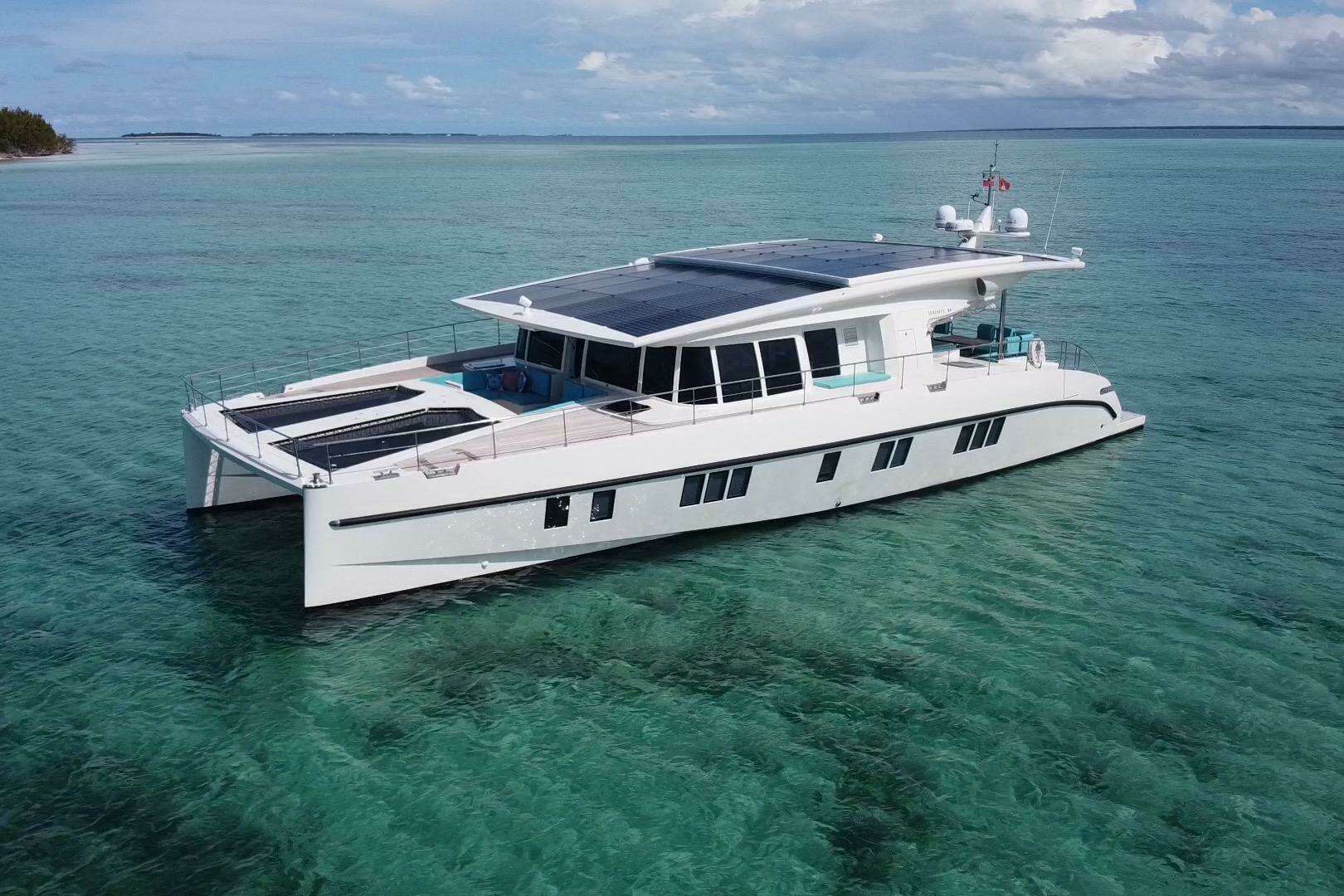

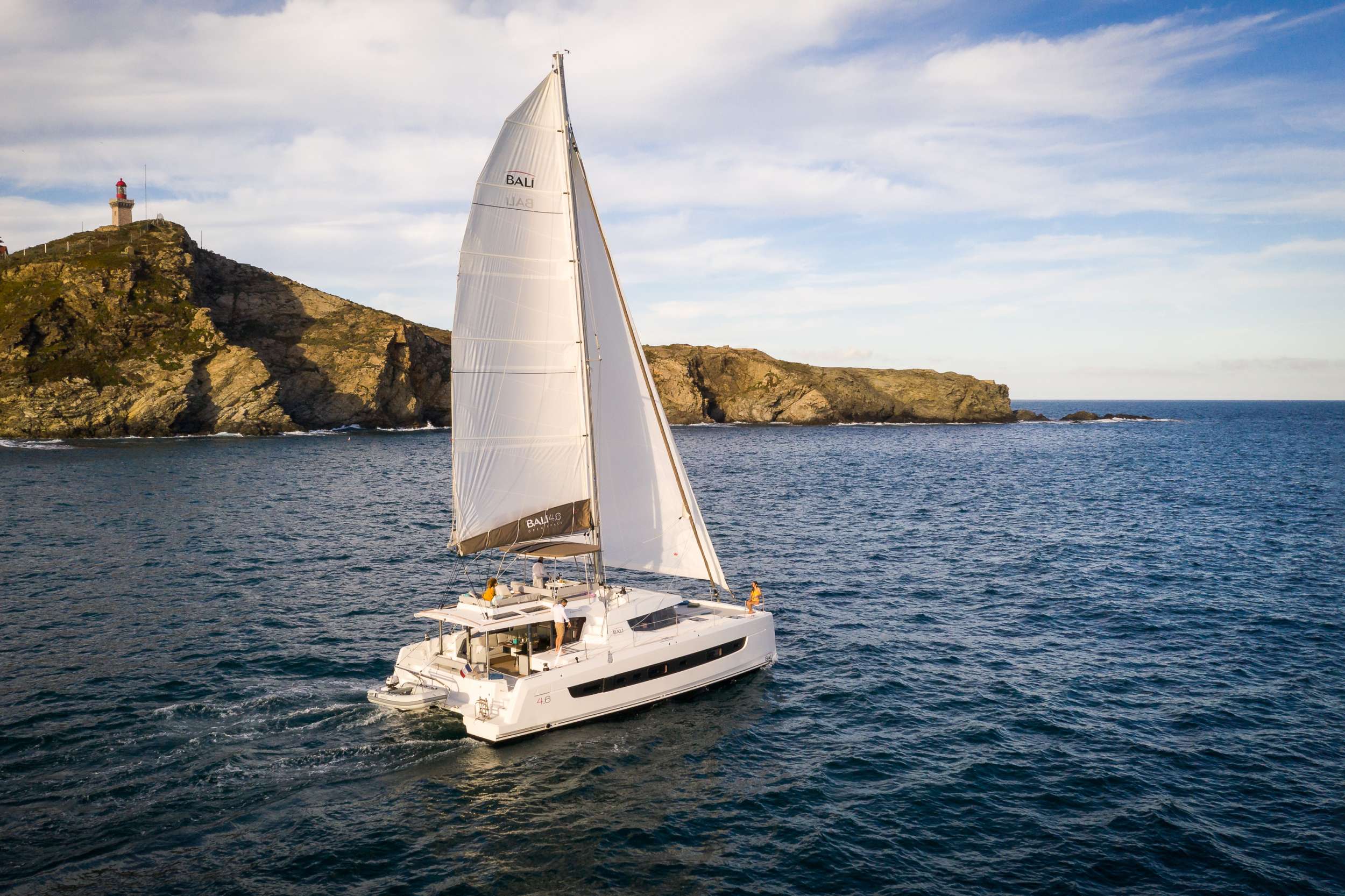
Disfruton
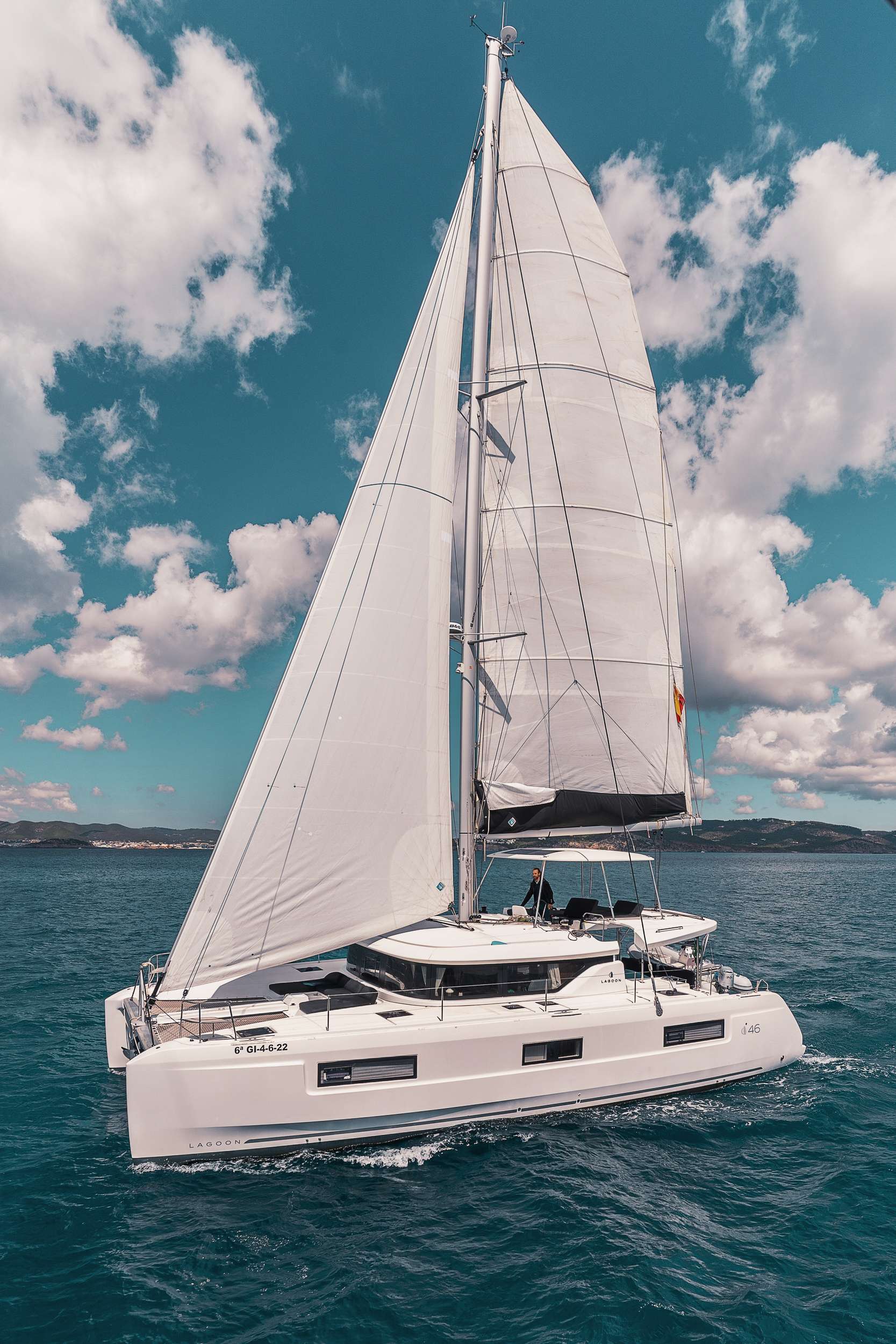
47FT · SAILING CATAMARAN
Desde €16,500/semana
10 Guests · 5 Cabins
Caribbean
Eastern Mediterranean
Western Mediterranean
South Pacific
United States
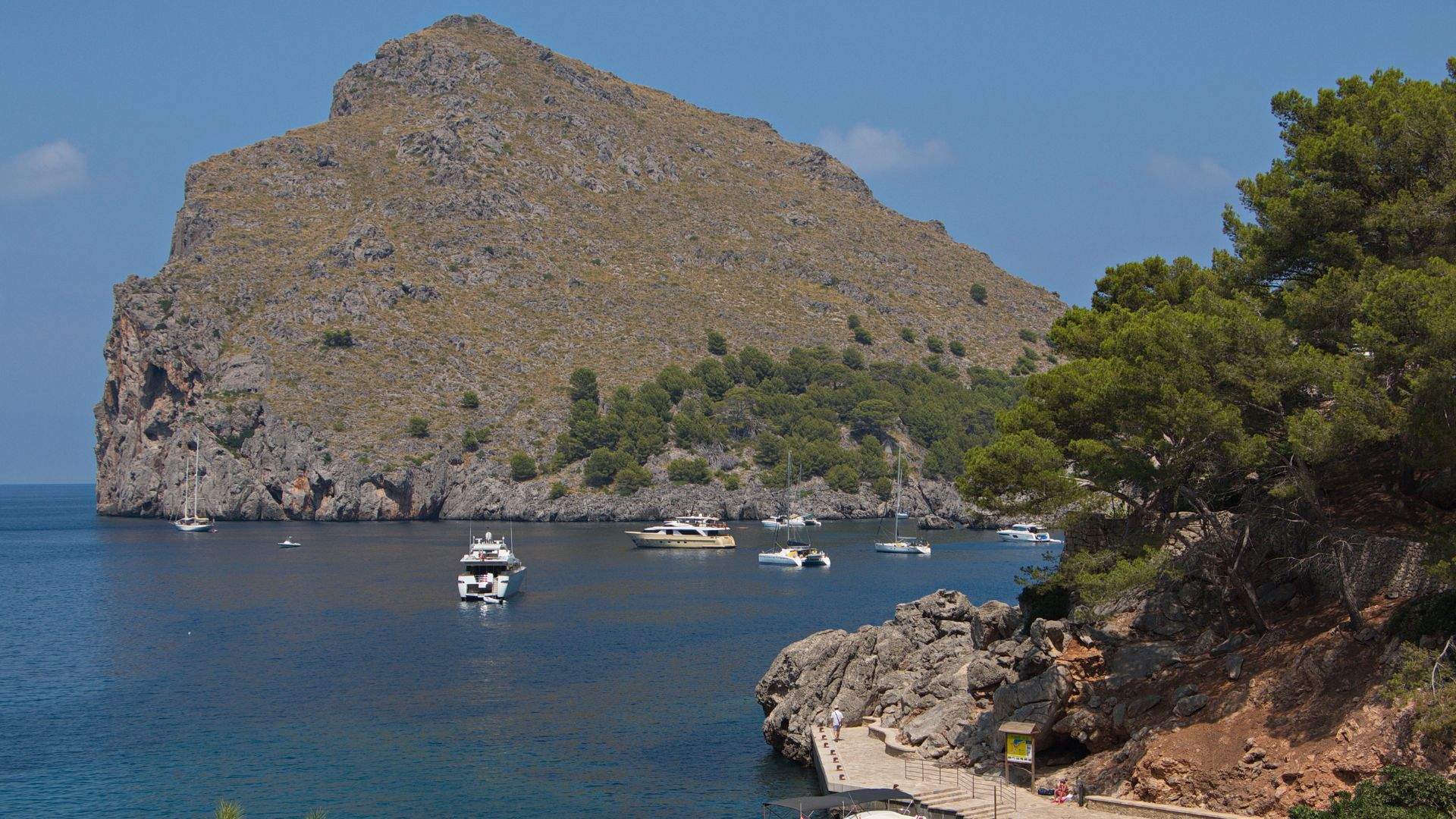
Yates con tripulación — catamarán y lancha motora — por Mallorca, Ibiza y Formentera: el único viaje en yate del Mediterráneo occidental con dos costas en una semana, con la bahía de acceso restringido del Parque Nacional de Cabrera como jornada estrella.
Por qué las Baleares
Las Islas Baleares se encuentran a ciento cincuenta kilómetros de la costa oriental de España — cuatro islas agrupadas con la suficiente proximidad como para recorrerlas en una sola semana. Lo que las distingue del resto del mapa de viajes en yate del mediterráneo es su variedad. La costa oeste de Mallorca es agreste: las montañas caen directamente al mar, y las mejores bahías no son accesibles desde ninguna carretera. Ibiza y Formentera, a una hora al sur en barco, son todo lo contrario. El agua clara se vuelve poco profunda sobre arena blanca. Puertos en activo que aún recuerdan al sur de Francia de 1985. La cena es en tierra, no a bordo.
La semana alterna entre dos ritmos diarios muy distintos. Los días en Mallorca son días de mar abierto — el barco fondeado bajo acantilados marinos, la carretera de la costa trescientos metros más arriba. El almuerzo es en un restaurante sobre los acantilados, al que se llega en lancha auxiliar desde el yate. Los días en Ibiza y Formentera son más tranquilos. El agua poco profunda es de una transparencia de piscina. Los trayectos entre calas duran treinta minutos. La cena es en tierra, en un restaurante de puerto en activo, casi todas las noches. A mitad de semana está Cabrera, un parque nacional exclusivo para yates donde el barco fondea bajo una atalaya medieval. Sin carretera de acceso. Sin pueblo. Sin combustible.
Las Baleares son para quienes ya han hecho un viaje en yate por el Mediterráneo y buscan más variedad la próxima vez. No es la semana indicada para grupos que esperan la vida nocturna de la Costa Azul. Sí es la semana perfecta para grupos de cuatro a doce personas que prefieren amanecer fondeados antes que amarrados en un puerto deportivo. Los viajes en yate se realizan de sábado a sábado desde finales de mayo hasta principios de octubre.
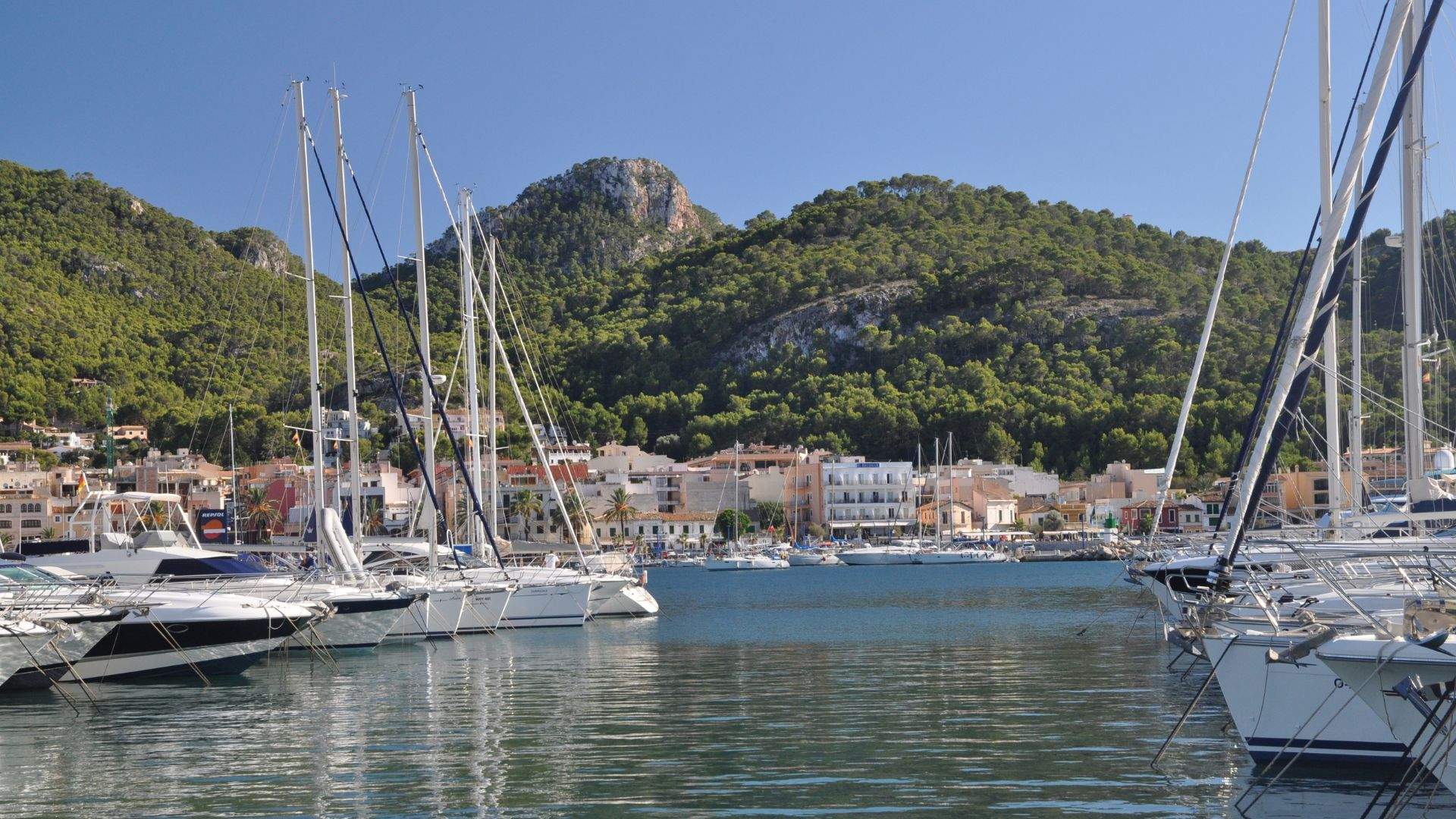
Cuatro razones por las que una semana en las Baleares no se parece a cualquier otra semana mediterránea.
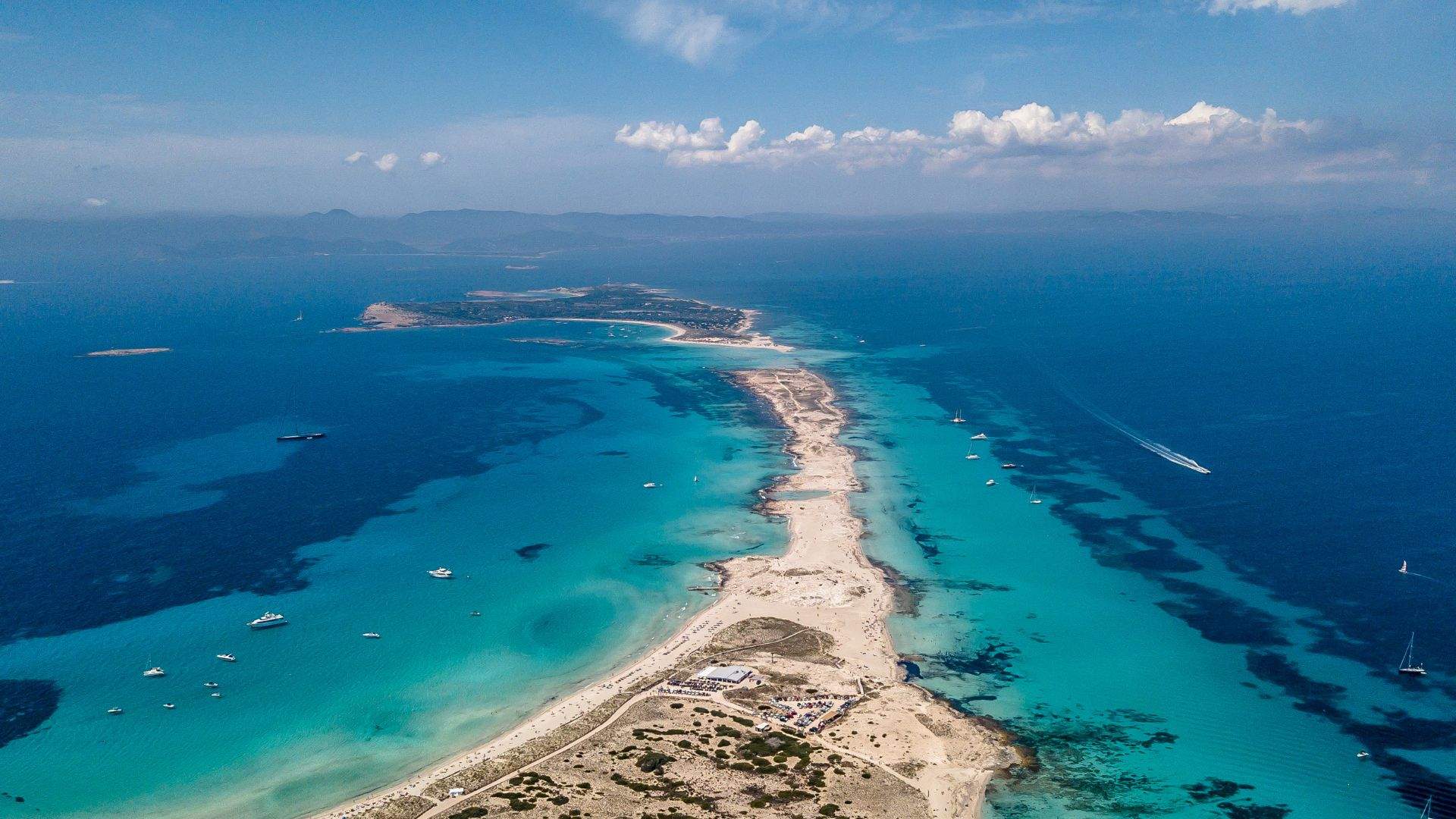
Dos costas en una sola semana — la costa oeste agreste de Mallorca el lunes, las aguas más claras de Ibiza el miércoles. La travesía intermedia es la navegación más larga de la semana. Dentro de cada isla, los trayectos son cortos — media hora entre la mayoría de las bahías.
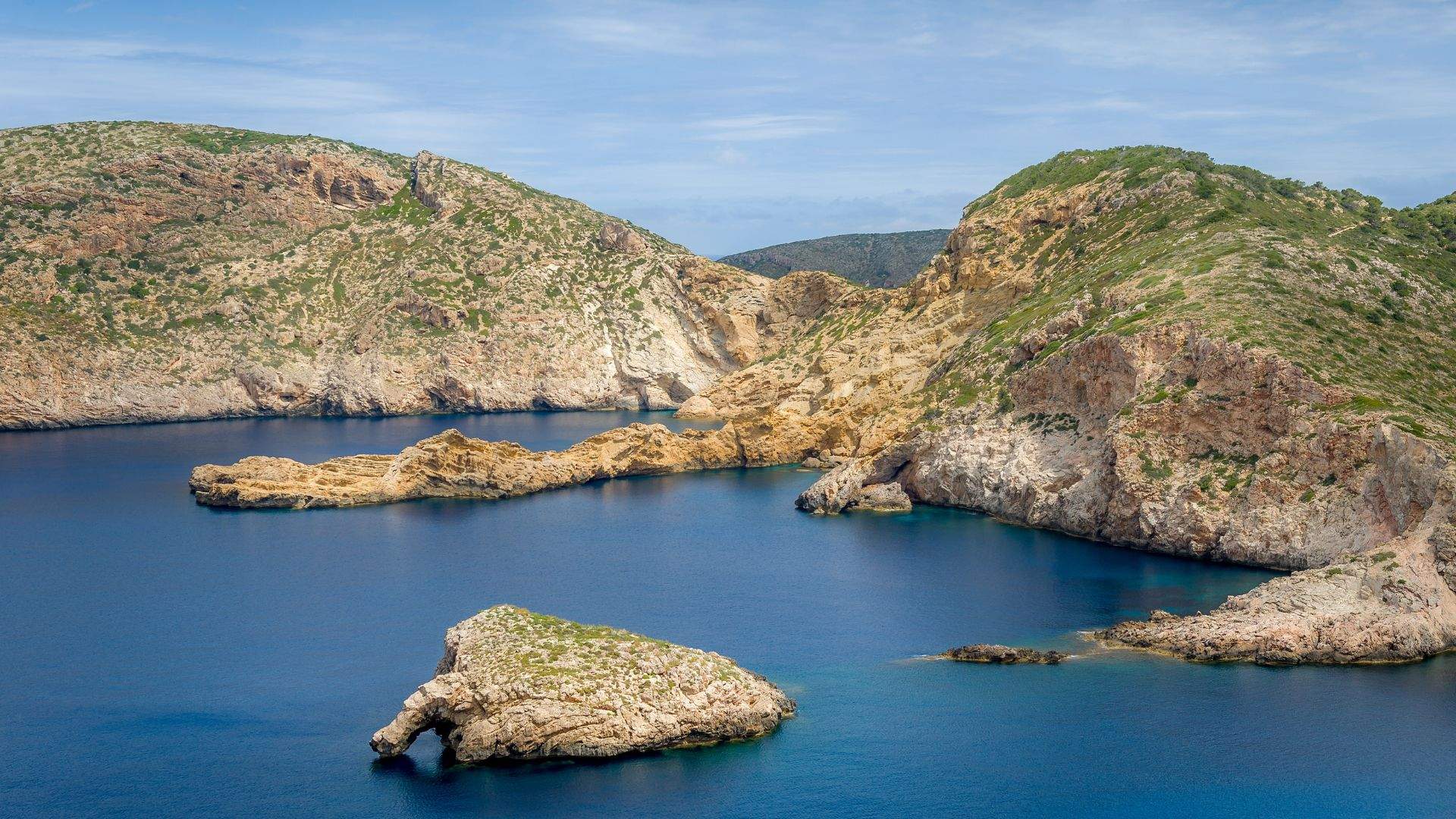
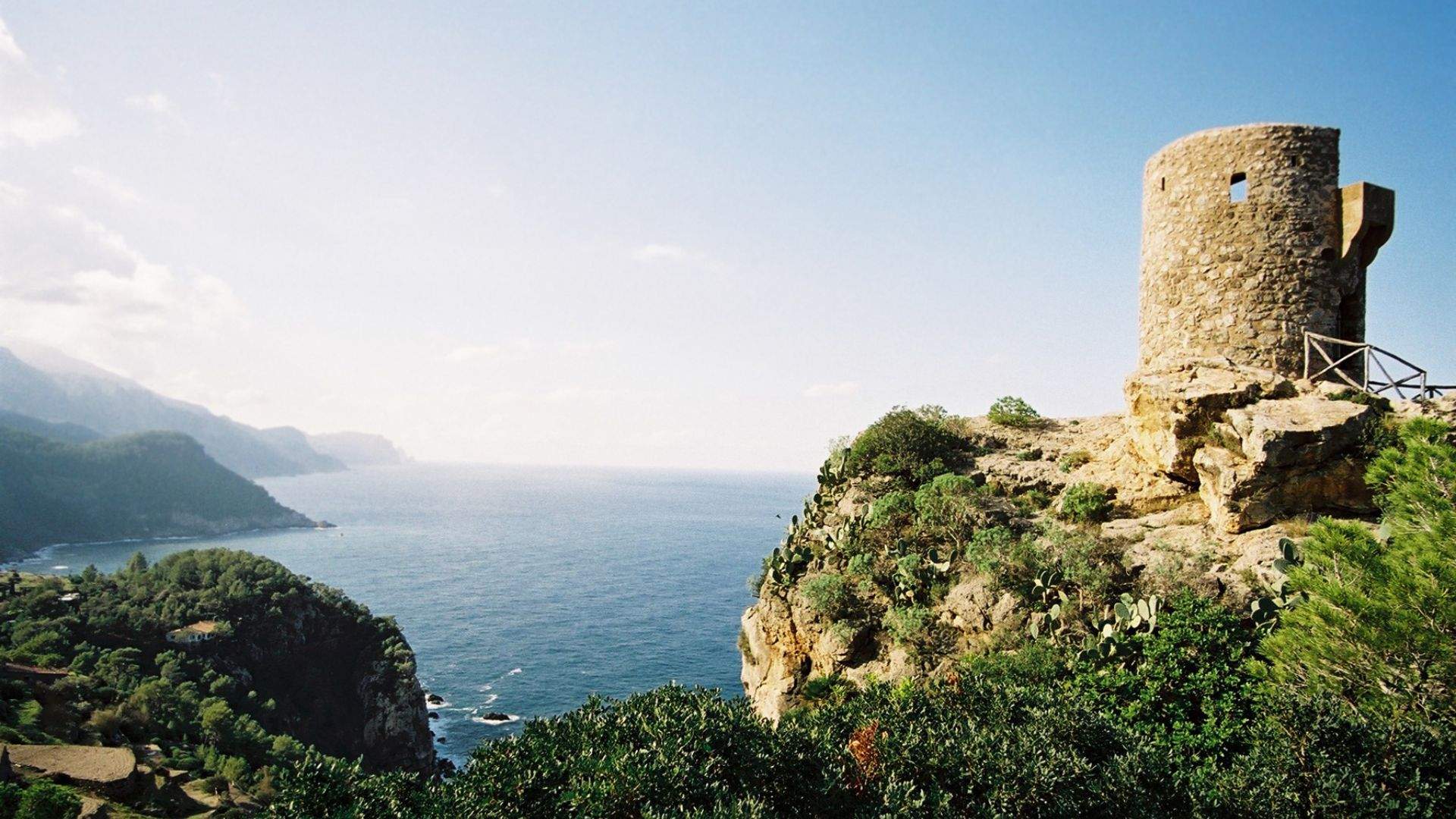
Cabrera está a once kilómetros de la costa sur de Mallorca — un parque nacional sin carretera, sin pueblo, sin combustible. El camino que sube desde el puerto lleva a una atalaya medieval. El baño que hay debajo es como era el Mediterráneo hace cincuenta años.
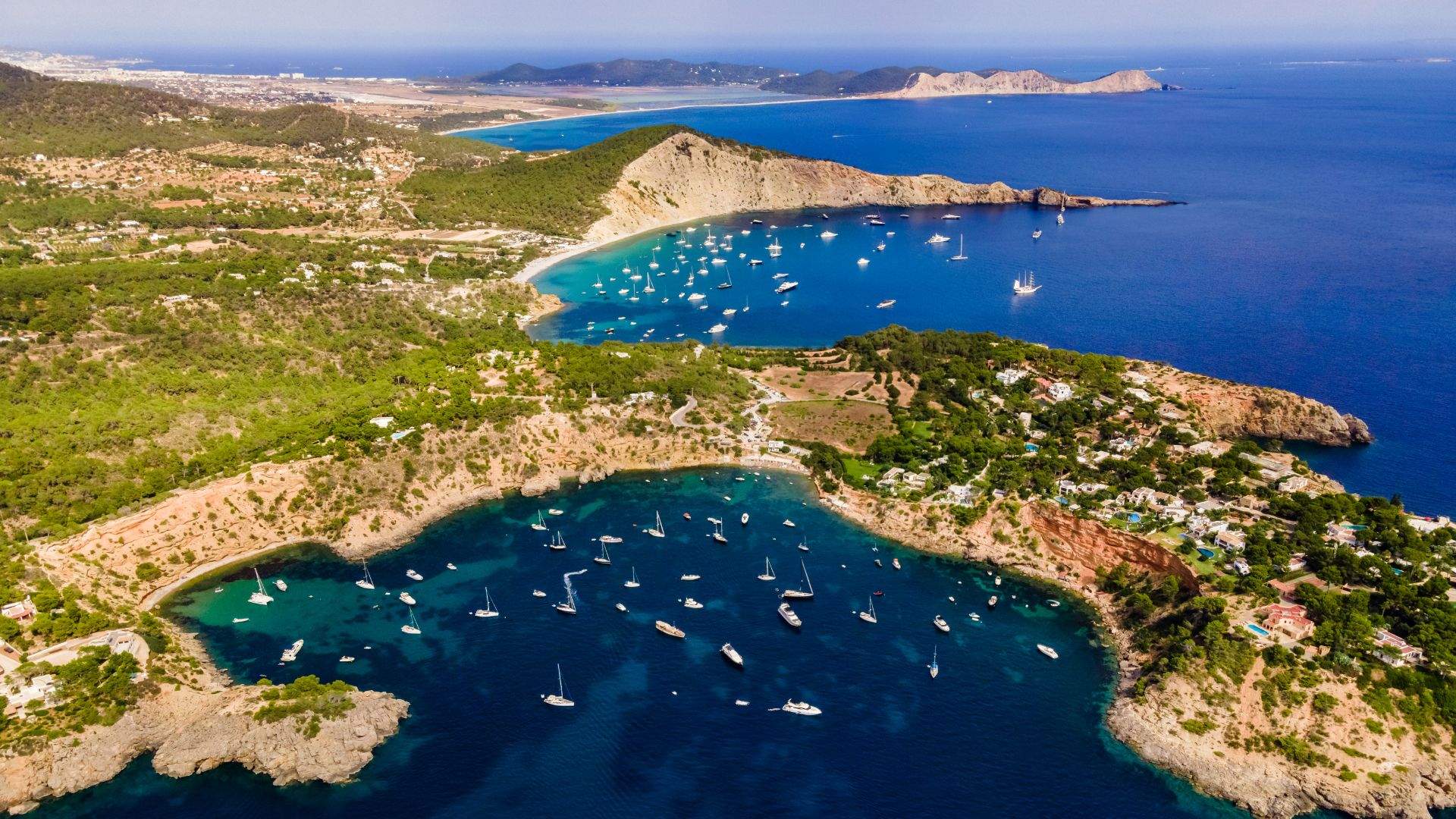
El lado ibicenco de este viaje en yate es de cenas en tierra, no de circuito de discotecas. Almuerzo en un beach club de la costa sur, llegando en lancha auxiliar desde el yate fondeado en la cala. El atardecer llega sobre el agua desde la popa. La cena es en el pueblo.
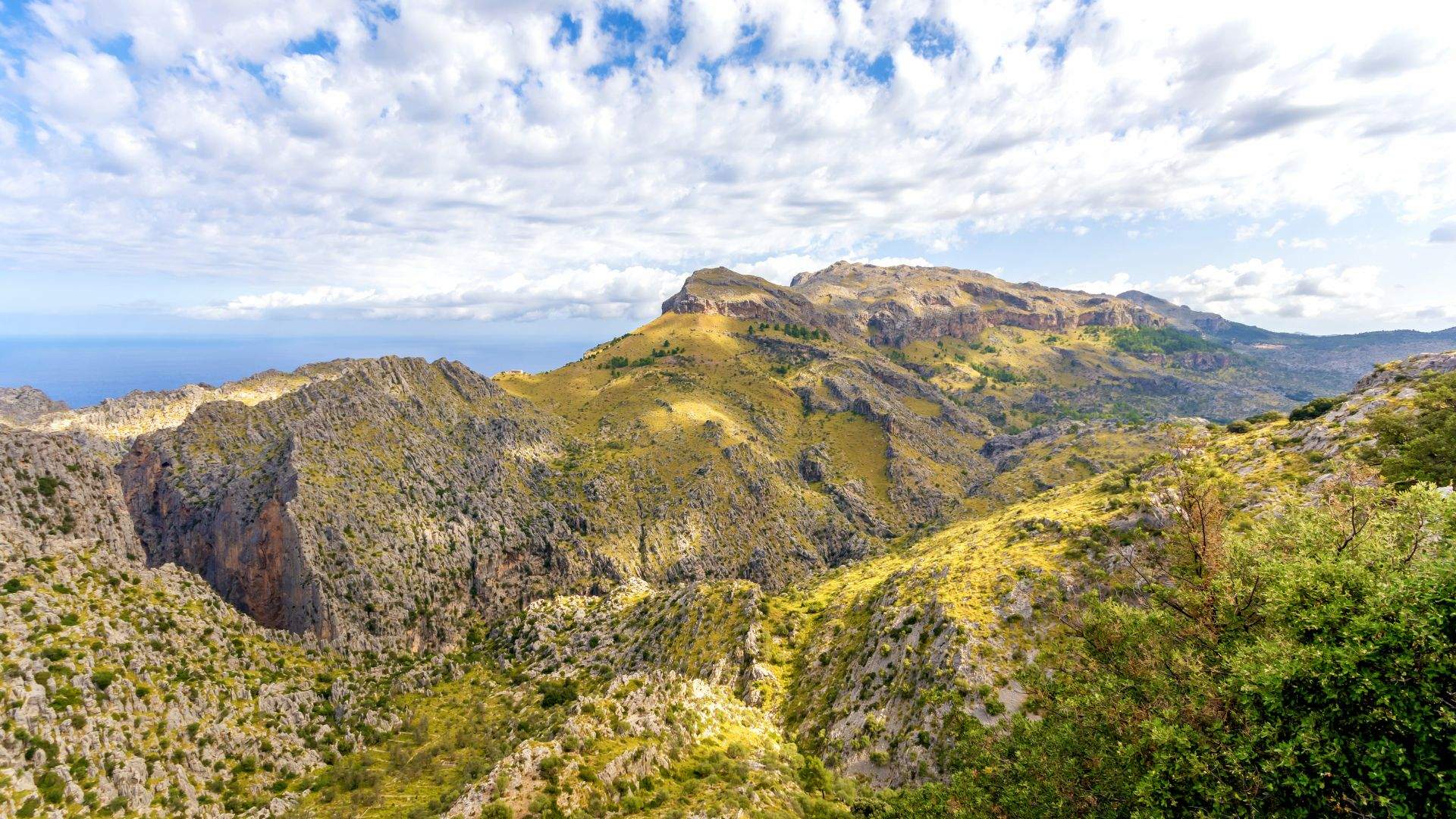
La costa oeste de Mallorca es Mediterráneo de montaña. Acantilados de seiscientos metros caen directamente hasta el barco fondeado abajo. La famosa carretera de cornisa discurre trescientos metros más arriba, pero se adentra tierra adentro en cada cala que merece la pena. Los acantilados solo se aprecian en toda su magnitud desde el mar.
A hand-picked selection of crewed charter yachts for Balearic Islands — yachts and crews we know firsthand.
Your week is shaped around your group's interests, the season, and the conditions on the water — your captain tailors the days as they unfold. Treat these itineraries as starting points for inspiration.
Itinerario con tripulación · Islas Baleares · Mallorca
La mayoría de los viajes en yate por el Mediterráneo se quedan en el lado sur, más fácil, de Mallorca. Este no. La semana va al oeste y al norte por la escarpada costa de la Tramuntana. Montañas de granito caen a plomo al agua. A los mejores fondeaderos no se llega desde ninguna carretera. Los puertos pesqueros no han cambiado de carácter desde los años veinte. El Parque Nacional de Cabrera cierra la semana, al sur de Mallorca y accesible solo en yate.
La ruta es un viaje de ida y vuelta de 180 millas náuticas desde Palma. Tanto los yates de vela como los catamaranes modernos la recorren bien; los yates a motor cubren los tramos más largos de la Tramuntana en menos tiempo. El embarque es en Palma, a quince minutos del aeropuerto. La temporada alta va de finales de mayo a principios de octubre.
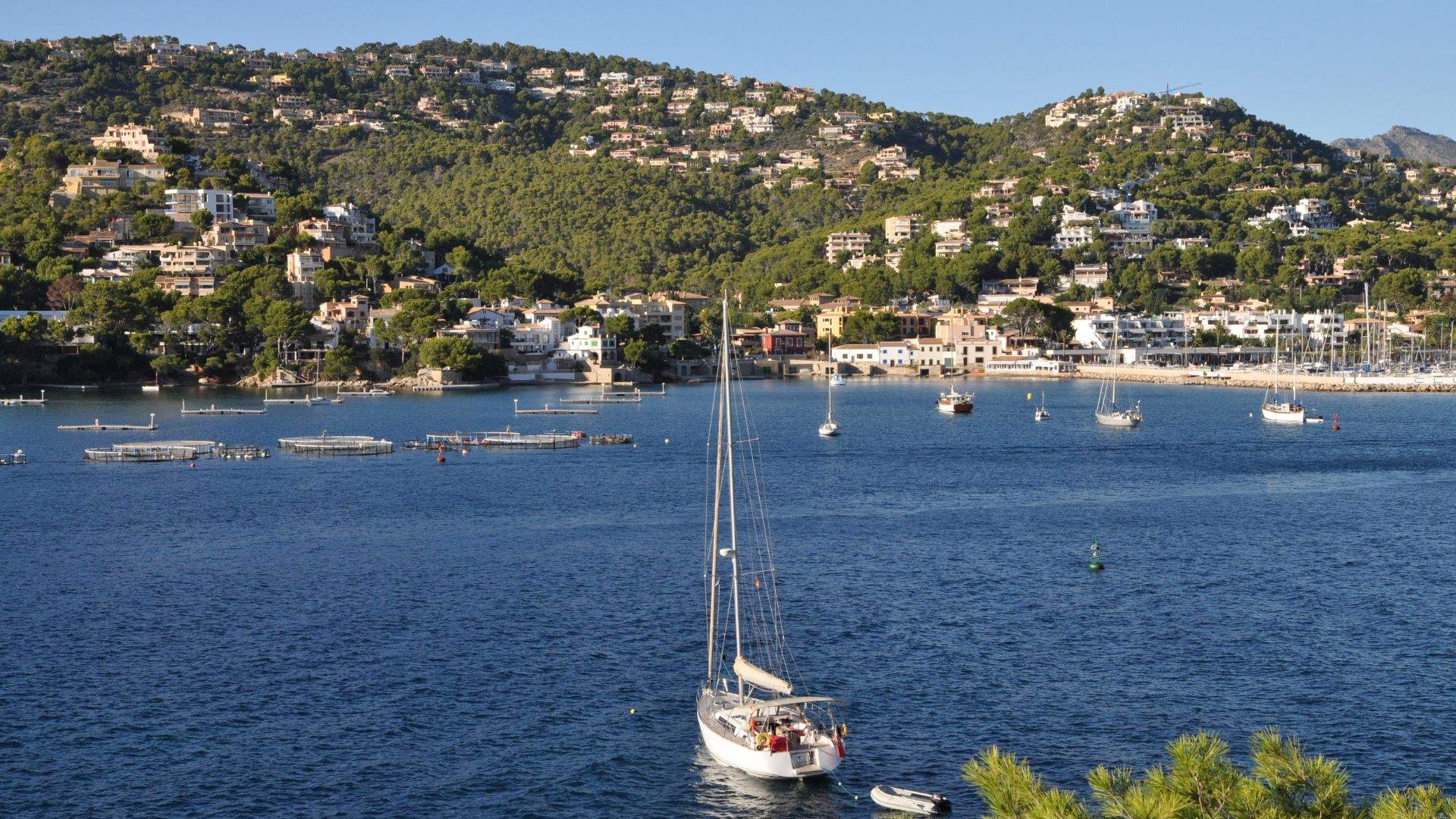
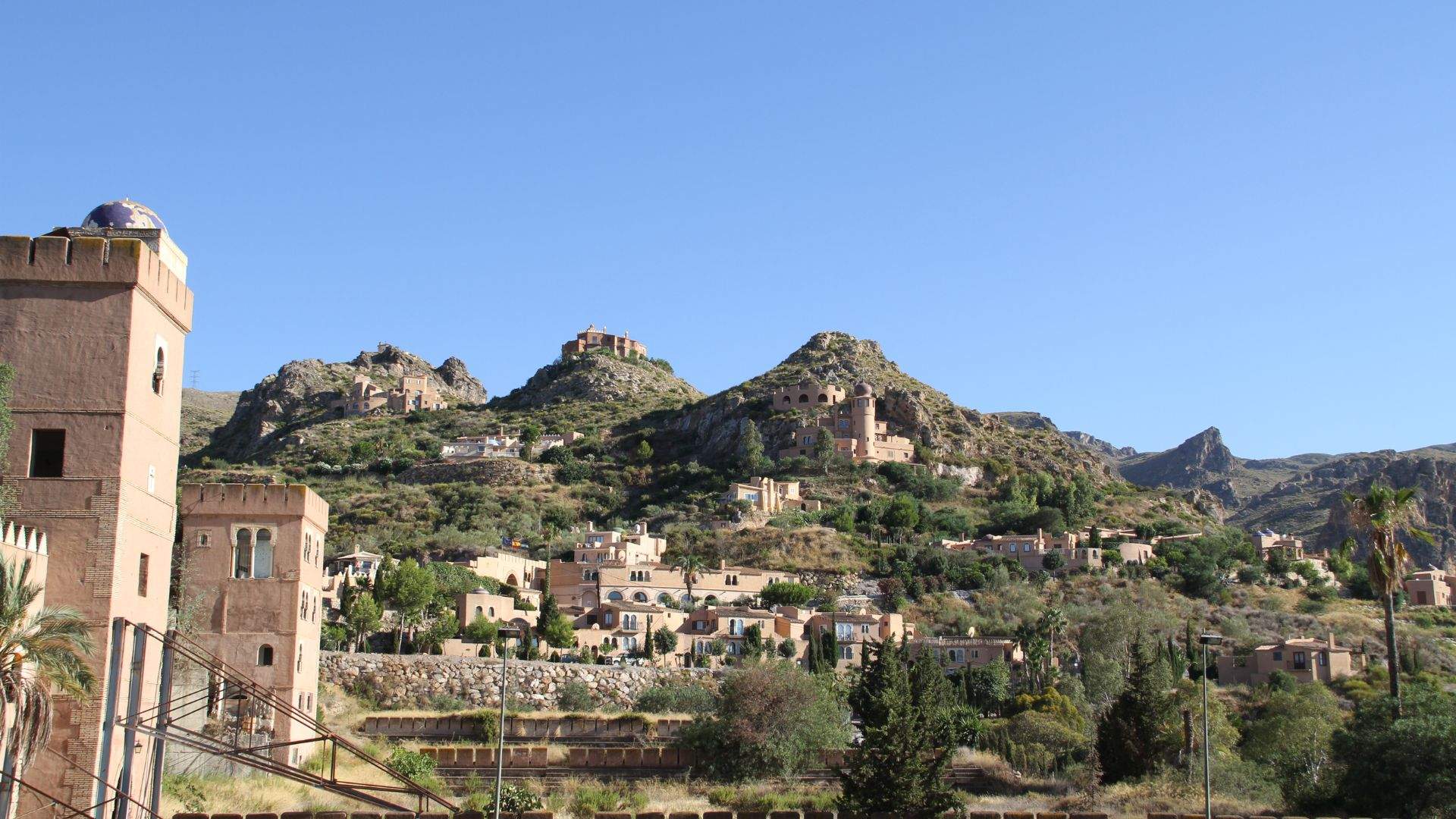
La semana de Mallorca se queda en el lado oeste de la isla: la Tramuntana, la costa montañosa de Mallorca. Acantilados de granito caen a plomo al agua. La famosa carretera de la costa recorre la parte alta, pero gira tierra adentro en cada cala que importa. A los mejores fondeaderos del oeste solo se llega desde el mar. Un puñado de puertos pesqueros en activo acogen las noches a lo largo del camino.
La semana empieza en Palma y va al oeste hasta el puerto de un pueblo pesquero para la primera noche, y luego gira al norte por la costa de acantilados. El almuerzo llega en lancha a un restaurante de pescado al borde del acantilado. Le sigue una noche en el único puerto natural de la Tramuntana. Un día bajo la montaña más alta de Mallorca fondea en una cala de cañón estrecho. Después al norte, hasta la punta de la isla, y por último al sur, al Parque Nacional de Cabrera —el día estrella solo accesible en yate— antes de la travesía de regreso a Palma.
Otras dos semanas baleares corren junto a esta. El viaje de ida y vuelta de Ibiza y Formentera es la mitad más ligera de la misma zona de yates: aguas más claras, fondos de arena, cena en tierra casi todas las noches. El trayecto solo ida por todas las Baleares recorre ambas costas en siete noches, con la travesía en mar abierto en medio. La semana de Mallorca es la opción acertada para grupos que quieren la costa de acantilados, no la costa de los clubes.
Día 1 de 7 · Palma → Port d'Andratx
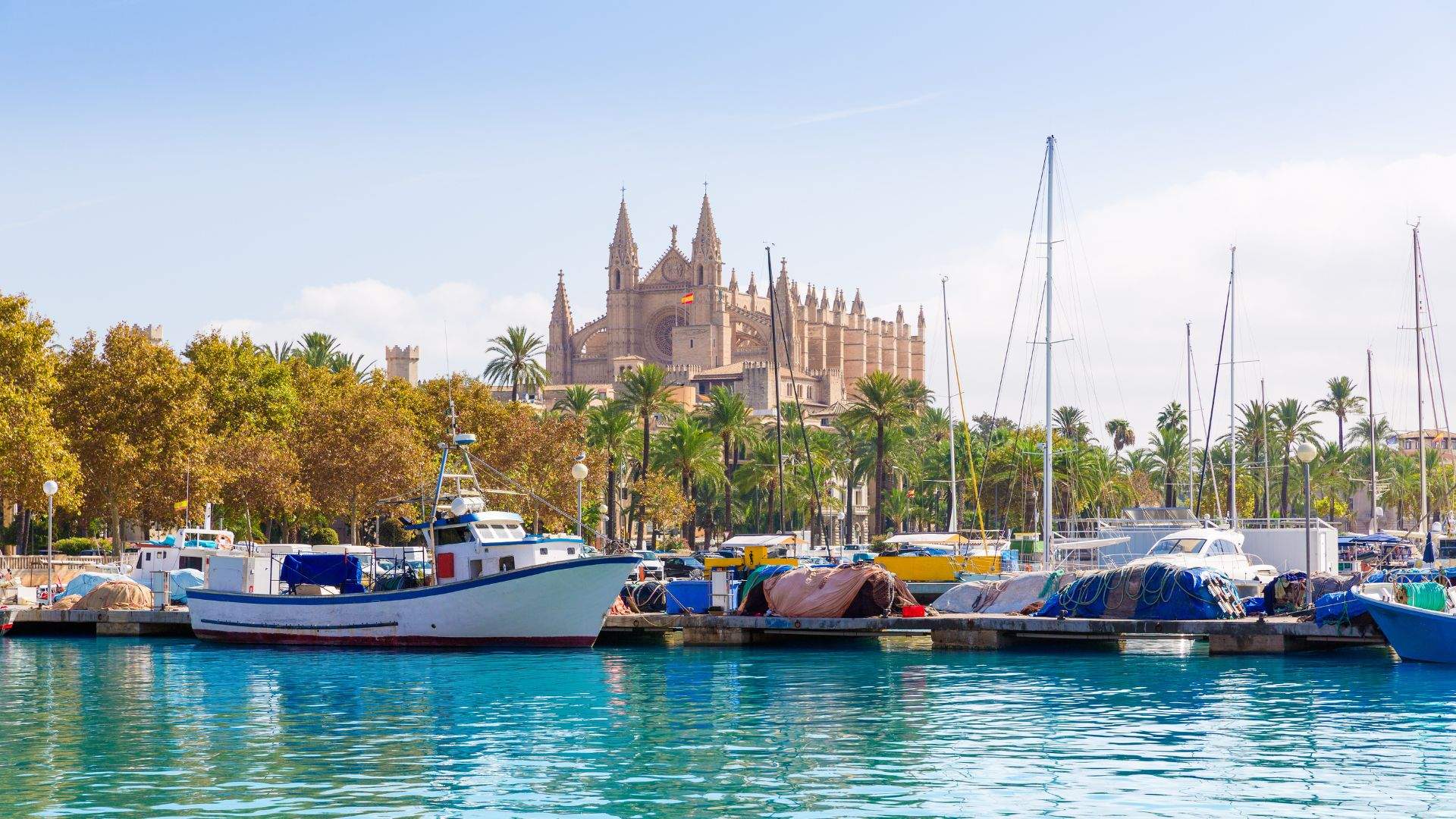
La semana empieza en Palma. A quince minutos por carretera del aeropuerto de PMI, las tres principales instalaciones náuticas de la ciudad —Marina Port de Mallorca, Real Club Náutico de Palma y STP— se sitúan a lo largo del arco oeste de la bahía de Palma, bajo la Catedral de La Seu. Tu tripulación te recibe en el atraque con bebidas frías y la sesión informativa sobre la carta. La cocina ya está aprovisionada, el mayordomo acomoda tu equipaje en los camarotes y el chef te presenta el plato de bienvenida mientras el capitán prepara el barco para salir.
A media tarde, el capitán larga amarras. Una travesía de veintidós millas náuticas al oeste rodeando el promontorio, pasando Magaluf y Santa Ponsa hasta Port d'Andratx, el puerto pesquero en activo del extremo oeste de Mallorca, el puerto base de cualquier semana por la Tramuntana. El fondeadero frente al puerto está en 8 a 15 metros de arena; el capitán fondea mar adentro o coge un amarre de popa dentro del puerto según la disponibilidad. Lancha a tierra para cenar: los restaurantes del muelle a lo largo del paseo marítimo de Andratx van desde parrillas de marineros de trabajo hasta la gastronomía del Restaurante Layn, al final del espigón. La primera noche la decide el capitán; el ritmo de la semana arranca aquí.
Day Highlights
Día 2 de 7 · Port d'Andratx → Sa Dragonera → Sa Foradada
Una mañana de navegación al oeste hasta Sa Dragonera, el islote deshabitado que es Parque Natural. El aforo de visitantes en la isla es de unos 150 a la vez; los grupos de yates desembarcan en lancha en el muelle oficial de Cala Lladó para caminar hasta el Far de Llebeig —el faro del suroeste, en un sendero de ida y vuelta de cuatro kilómetros— o simplemente para bañarse en el estrecho entre el islote y la costa de Mallorca. Sa Dragonera debe su nombre a la silueta: desde tierra firme el islote parece un dragón dormido en el horizonte.
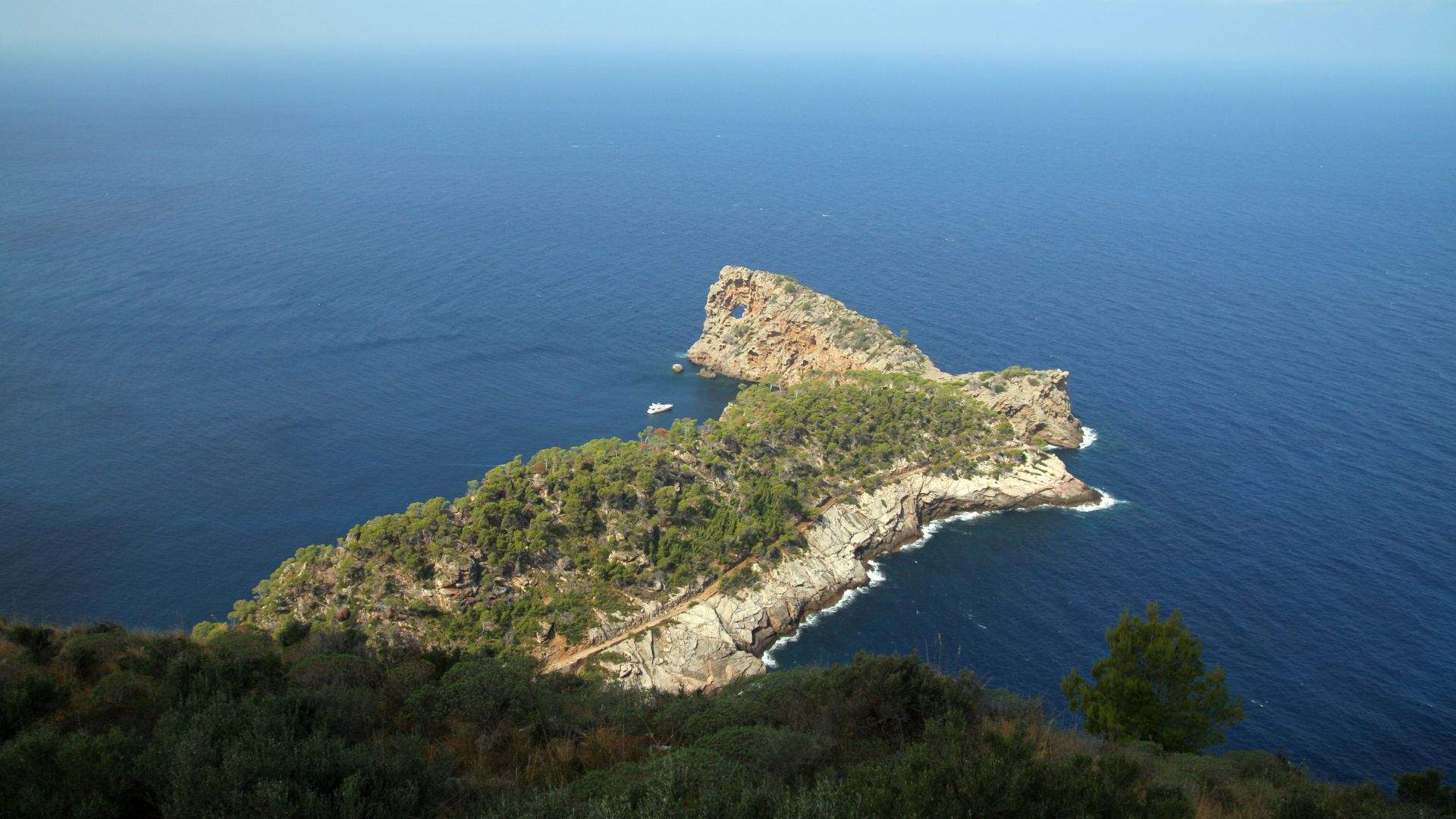
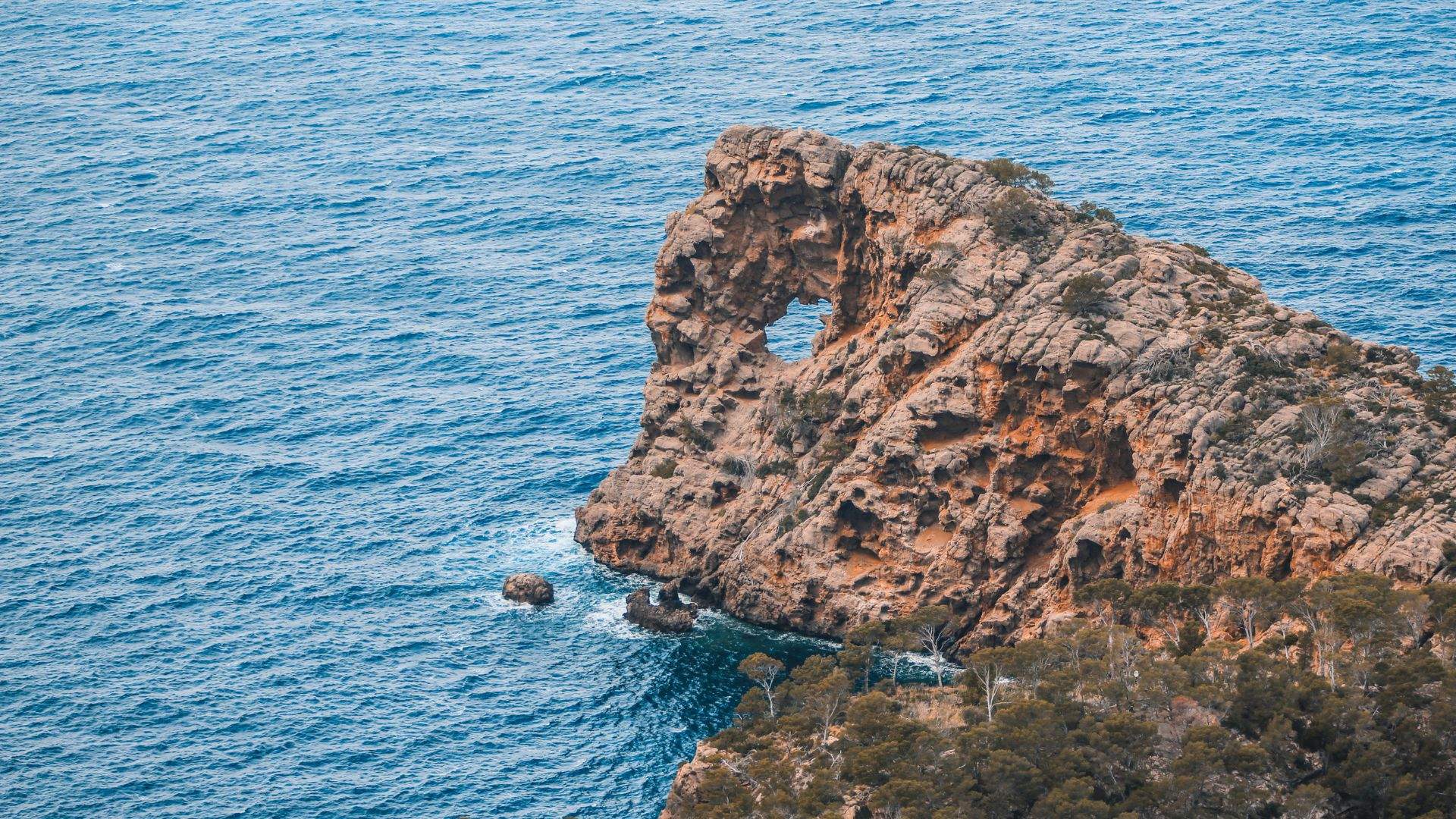
A media tarde, el capitán pone la proa al norte por la costa de la Tramuntana: veinticinco millas náuticas de acantilados de granito y caliza que caen seiscientos metros al agua bajo el Puig Major. Los acantilados son la costa montañosa protegida; verlos desde el agua es la mitad de Mallorca que la mayoría de los visitantes no llega a ver. Sa Foradada está más o menos a mitad de camino: la península en forma de L con su famoso orificio pasante cerca de la punta, el restaurante de paella al aire libre sobre el acantilado (su estado operativo varía; confírmalo con tu capitán antes de contar con la cena en tierra ese día), accesible en lancha desde la cala o en una caminata de cuarenta y cinco minutos hasta la carretera de la costa Ma-10. Fondea en la cala, báñate bajo el orificio pasante, cena en tierra o a bordo según lo que el capitán encuentre abierto.
Day Highlights
Día 3 de 7 · Sa Foradada → Port de Sóller (vía Cala Deià)
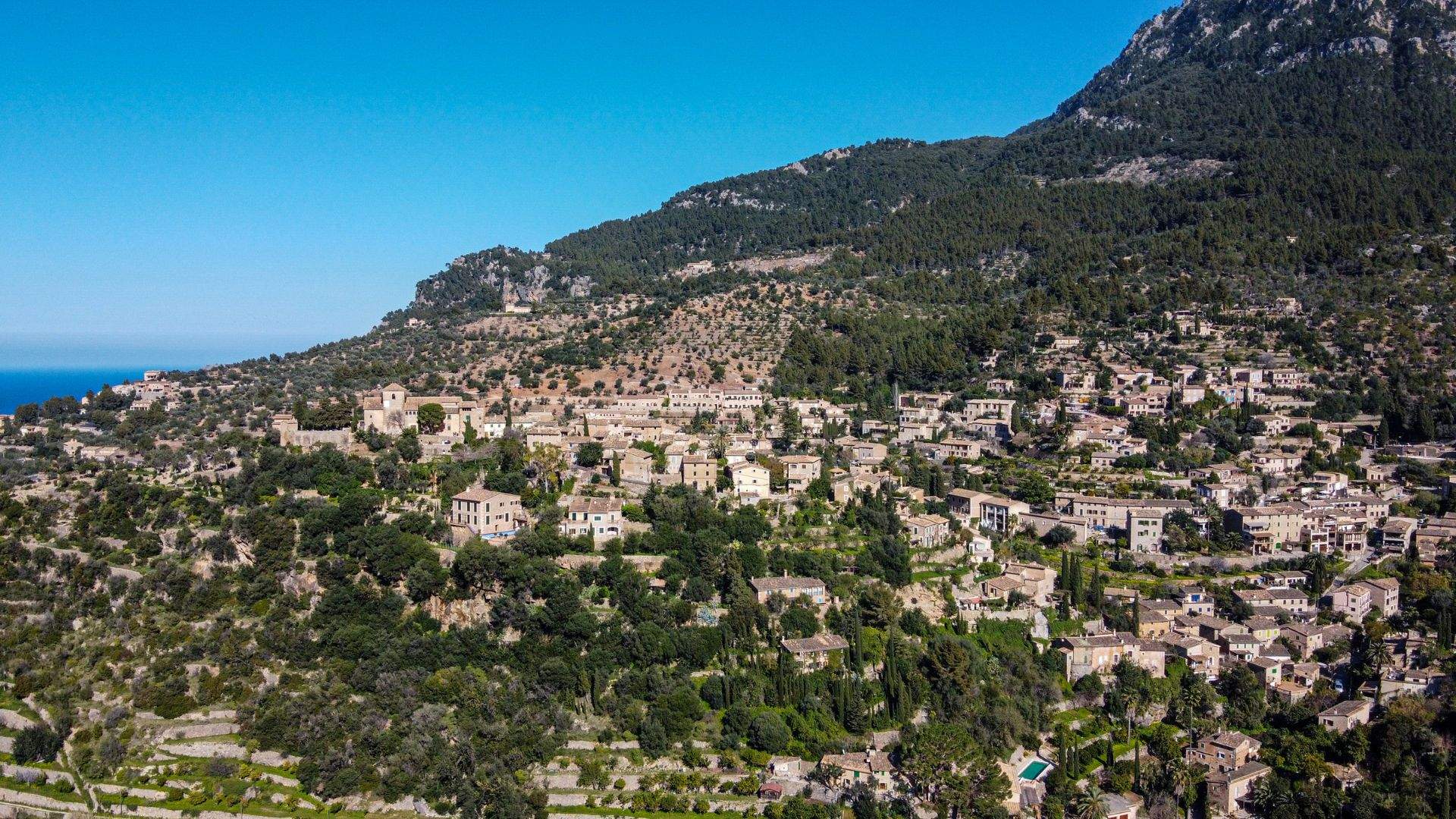
Una corta travesía al norte y al este hasta Cala Deià, la cala rocosa bajo el pueblo de Deià, donde vivió Robert Graves y se asentó el círculo literario de expatriados de los años sesenta. Fondea en la cala (el capitán lee el oleaje: la cala está expuesta al noroeste, así que solo en días tranquilos); lancha a tierra para almorzar en Ca's Patró March, el restaurante al borde del acantilado que la misma familia lleva desde hace tres generaciones. El pescado del día sube directamente de la barca de pesca amarrada abajo; las mesas se sitúan al borde del acantilado bajo toldos; el capitán reserva la mesa la mañana de la llegada.
A media tarde, el capitán reposiciona el yate diez millas náuticas al norte, a Port de Sóller, el único puerto natural de toda la costa de la Tramuntana, con 605 amarres y el Tren de Sóller (de madera) subiendo hasta la plaza del pueblo entre los naranjales. De popa en la marina o fondeado en la bahía exterior. La plaza de Sóller no ha cambiado de carácter desde los años veinte; la cena es en uno de los restaurantes del muelle o arriba, en el pueblo. El pueblo es la base operativa de toda la semana por la Tramuntana; el capitán reposta y reaprovisiona si hace falta antes de la travesía al norte del día siguiente.
Day Highlights
Día 4 de 7 · Port de Sóller → Sa Calobra → Cala Tuent
Una travesía de doce millas náuticas al este-noreste bajo el tramo más alto de la Tramuntana: la cumbre de 1.445 metros del Puig Major (zona militar cerrada) y el pico accesible de 1.364 metros del Puig de Massanella, ambos alzándose directamente sobre la proa. Sa Calobra está al pie de los acantilados: la cala de piedra y arena donde el barranco del Torrent de Pareis desemboca en el mar. El barranco es Monumento Natural de España desde 2003, tres kilómetros de garganta de caliza a través de la Tramuntana, que se recorre a pie desde la playa (trepando y a veces vadeando) para quienes lo quieran.
A media tarde, el capitán reposiciona un corto salto al oeste hasta Cala Tuent, la cala hermana más tranquila al otro lado del promontorio del Morro de sa Vaca, resguardada del oleaje del noroeste, con aguas más profundas para fondear (8 a 11 metros sobre un fondo de roca y arena). Cala Tuent tiene una pequeña capilla sobre la cala (la Ermita de Sant Llorenç, fundada en 1230) a la que se llega en una caminata de media hora desde la playa. La cena es a bordo: no hay taberna en Cala Tuent, ni muelle, ni pueblo, solo la cala, los acantilados y lo que el chef haya preparado con la parada matutina en el mercado de Sóller.
Day Highlights
Día 5 de 7 · Cala Tuent → Cap de Formentor → Pollença
Una travesía de treinta millas náuticas al este por la costa de la Tramuntana hasta el Cap de Formentor: el punto más al norte de Mallorca, con el faro construido en 1863, el extremo este de la Serra de Tramuntana. El cabo se proyecta hacia el Mediterráneo abierto como un cuchillo; la vista de los acantilados desde el agua es genuinamente distinta de la famosa vista desde la carretera del mirador, arriba. El capitán lee las condiciones antes de comprometerse: el Cap de Formentor recibe toda la fuerza de cualquier tiempo del norte, y la cara de sotavento en Cala Figuera (la pequeña cala protegida en la cara suroeste) es la noche estándar en cualquier condición que no sea de calma absoluta.
Cala Figuera, bajo el cabo, es un fondeadero profundo y espectacular rodeado de acantilados, en 15 a 30 metros de agua: el tipo de bahía donde el yate bornea sobre una larga cadena y los baños son directos desde la plataforma de baño a un azul muy profundo. Noche aquí en días tranquilos; como alternativa, el capitán navega otras seis millas náuticas hasta la bahía de Pollença, al fondeadero resguardado más grande del Port de Pollença, con restaurantes de muelle en el pueblo y una salida más fácil a primera hora para la travesía al sur del día siguiente.
Day Highlights
Día 6 de 7 · Pollença → Cabrera
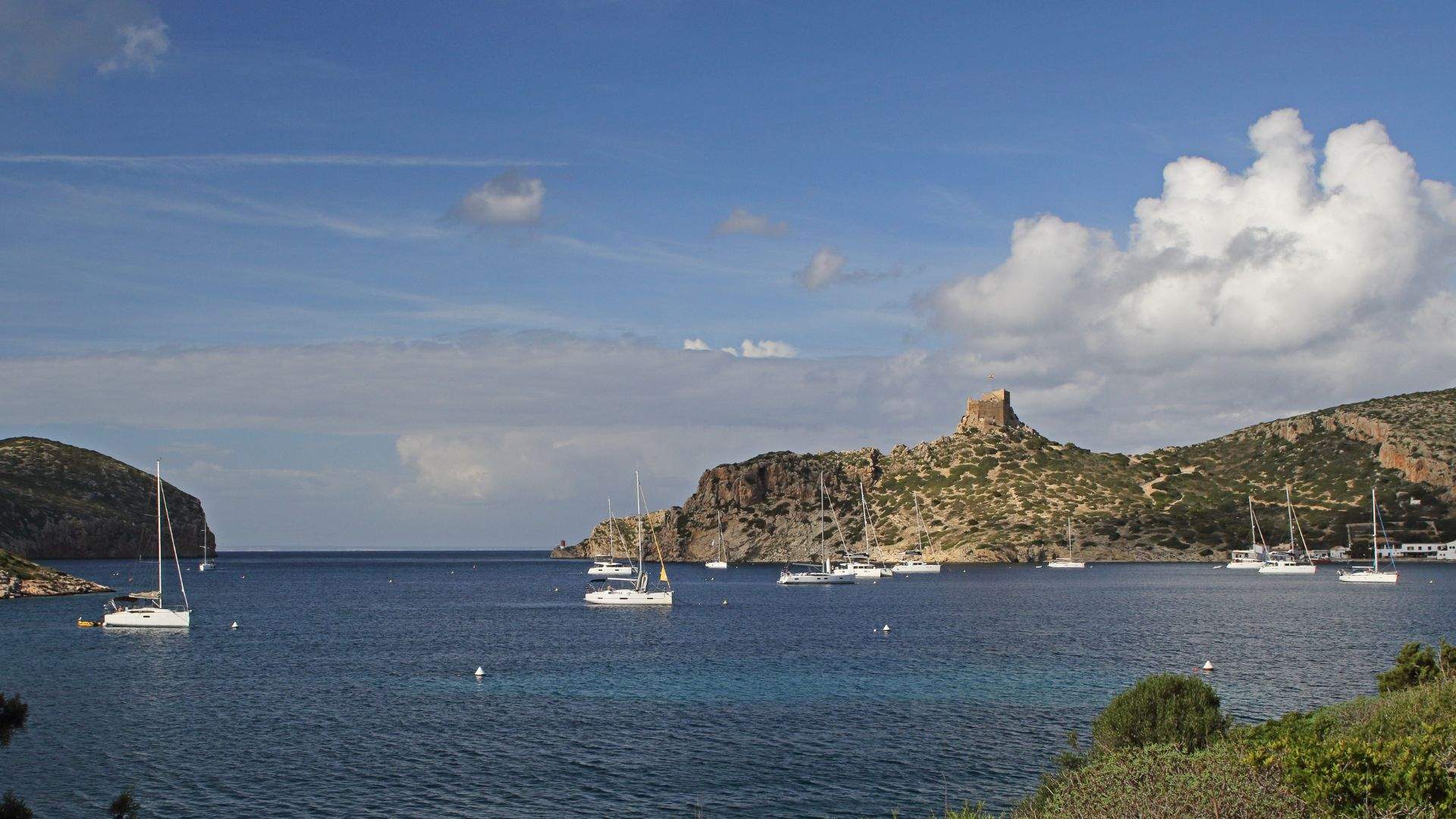
El día más largo de la semana. Una travesía de cincuenta y cinco millas náuticas al sur, bajando por la costa este de Mallorca: el capitán lee el viento de la mañana y decide si rodear la costa por dentro o saltar mar adentro. El Parque Nacional de Cabrera está a siete millas náuticas al sur de la costa sur de Mallorca; el fondeadero con permiso abre a las 18:00 del día de llegada y el capitán ha reservado la boya con veinte días de antelación a través de https://www.caib.es/rescabfront/. El sistema de reservas limita a cincuenta barcos al día en los tres campos de boyas de Port de Cabrera, Es Burrí y Sa Coveta Roja, y el parque hace cumplir un cupo limitado para yates cuando hay sobredemanda: los sábados de máxima de julio y agosto llevan en la práctica una lista de espera de veinte barcos.
La tarde en Cabrera es el momento estrella de acceso solo en yate de la semana. Lancha a tierra hasta el muelle del puerto, y luego un corto paseo hasta la torre de vigía medieval en el promontorio este: gratuita, autoguiada, que se sube por la vista panorámica. Báñate en la dársena del puerto en un agua que parece la del Mediterráneo de hace cincuenta años. La cena es a bordo, al ancla. La isla no tiene tiendas, ni combustible, ni restaurantes. La silueta de Cabrera bajo las estrellas es el tipo de vista que se queda con la gente.
Day Highlights
Día 7 de 7 · Cabrera → Cova Blava → Palma
Un arranque temprano. El capitán suelta la boya antes del desayuno y lleva la lancha o reposiciona el yate nodriza tres millas náuticas al norte hasta la Cova Blava, la cueva marina de cuarenta metros en la costa oeste de Cabrera, la imagen estrella de cualquier yate balear. La entrada de la cueva mide seis metros de alto; dentro, el arco natural sube hasta los veinte metros y la luz del mediodía entra por la abertura volviendo el agua de un azul eléctrico. Las ventanas de visita suelen ser antes de las 11:00 para adelantarse a la avalancha de barcos comerciales de día desde la Colònia de Sant Jordi.
A media mañana, el capitán pone la proa al norte para la travesía de cuarenta y cinco millas náuticas de regreso a Palma. La tarde es la larga y pausada vuelta a la bahía: la Catedral de La Seu creciendo desde el horizonte, la marina recibiendo el barco en el atraque a media tarde. El desembarco suele ser a las 09:00 del sábado por la mañana, pero los huéspedes que quieran una noche más a bordo pueden ampliar al ancla en la bahía de Palma, con el capitán devolviendo el barco a la marina la mañana de la salida. La semana termina con el último plato del chef y una copa final al atardecer en la cubierta de popa, sobre la bahía sur de Mallorca.
Day Highlights
Want to share or come back to this voyage later?
Bookmark this voyage →Itinerario con tripulación · Islas Baleares · Ibiza
Ibiza no es la foto de las discotecas. Casi toda la isla es pinar y calas tranquilas; el lado del viaje en yate transcurre por aguas más claras y fondeaderos de fondo de arena, con el famoso islote de roca mar adentro para el atardecer. Formentera está a tres millas náuticas al sur. El agua es más somera. Las playas son más anchas. La semana alterna entre calas durante el día y cenas en tierra, en el pueblo.
La ruta es un viaje de ida y vuelta de 90 millas náuticas desde la ciudad de Ibiza. Tanto los yates a motor como los catamaranes modernos la recorren bien: saltos cortos entre calas, donde el acceso en lancha a los beach clubs y restaurantes importa más que el rendimiento a vela. El embarque es en Marina Botafoch o Marina Ibiza, a quince minutos del aeropuerto. La temporada alta va de finales de mayo a principios de octubre.
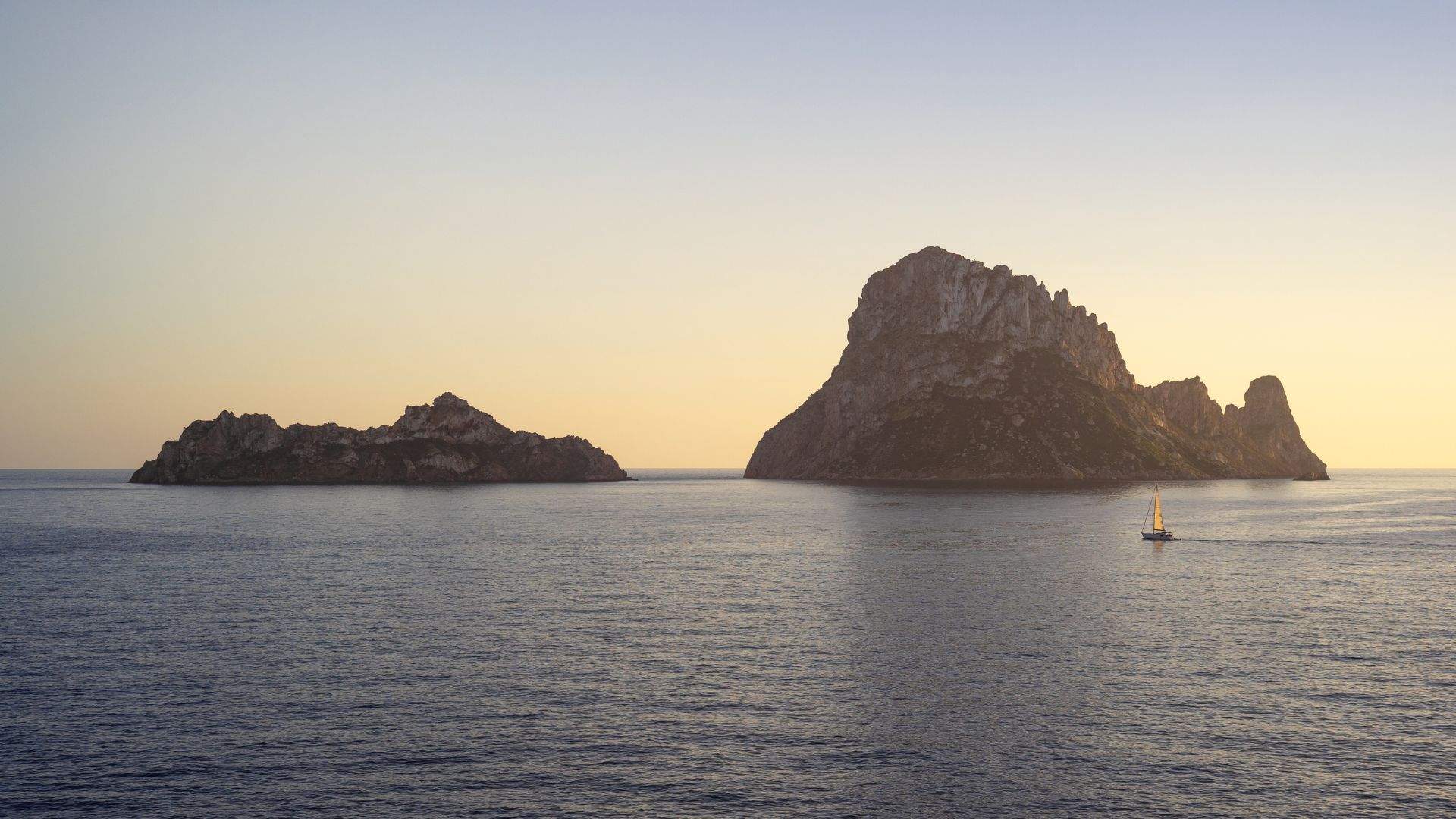
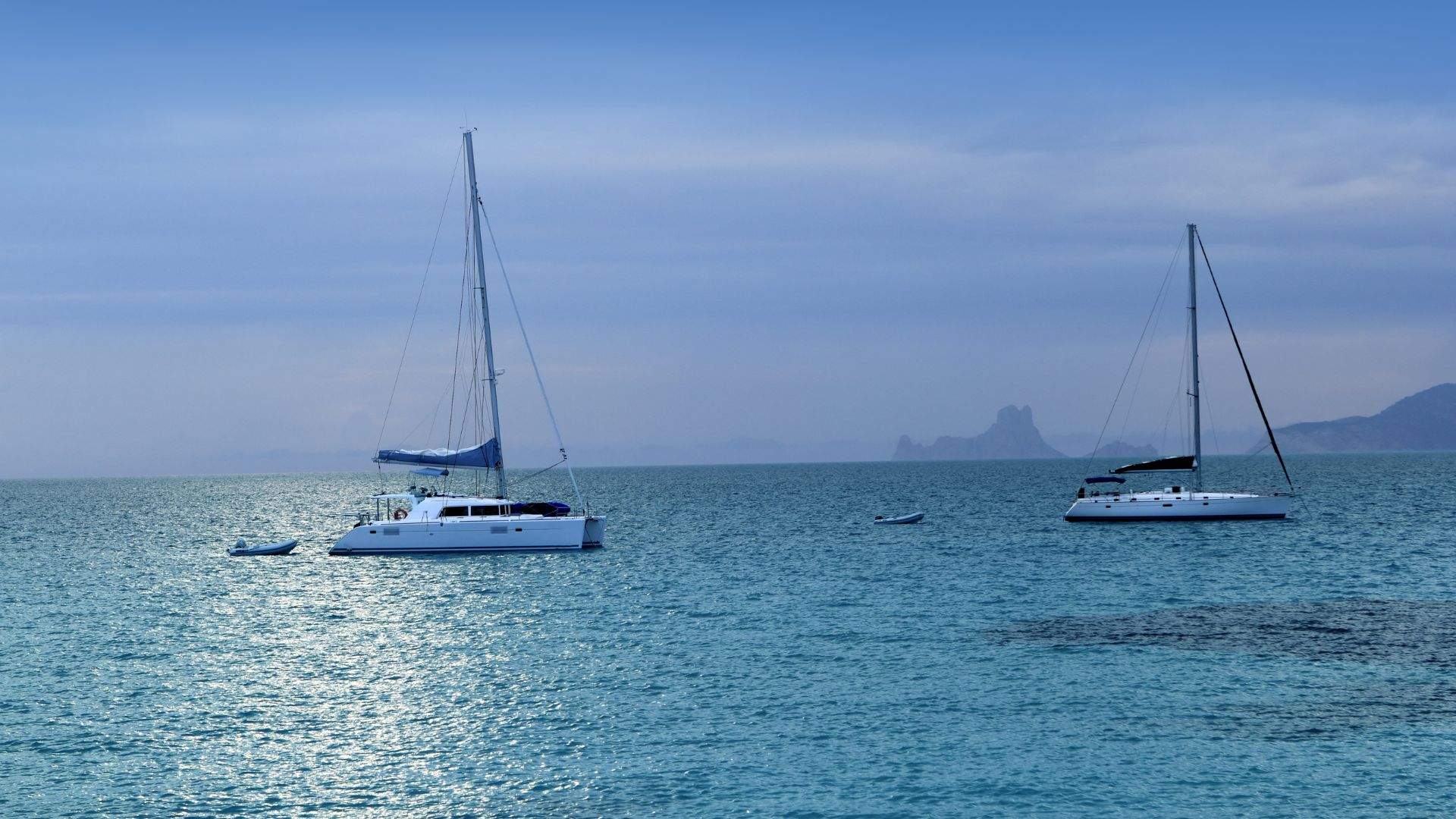
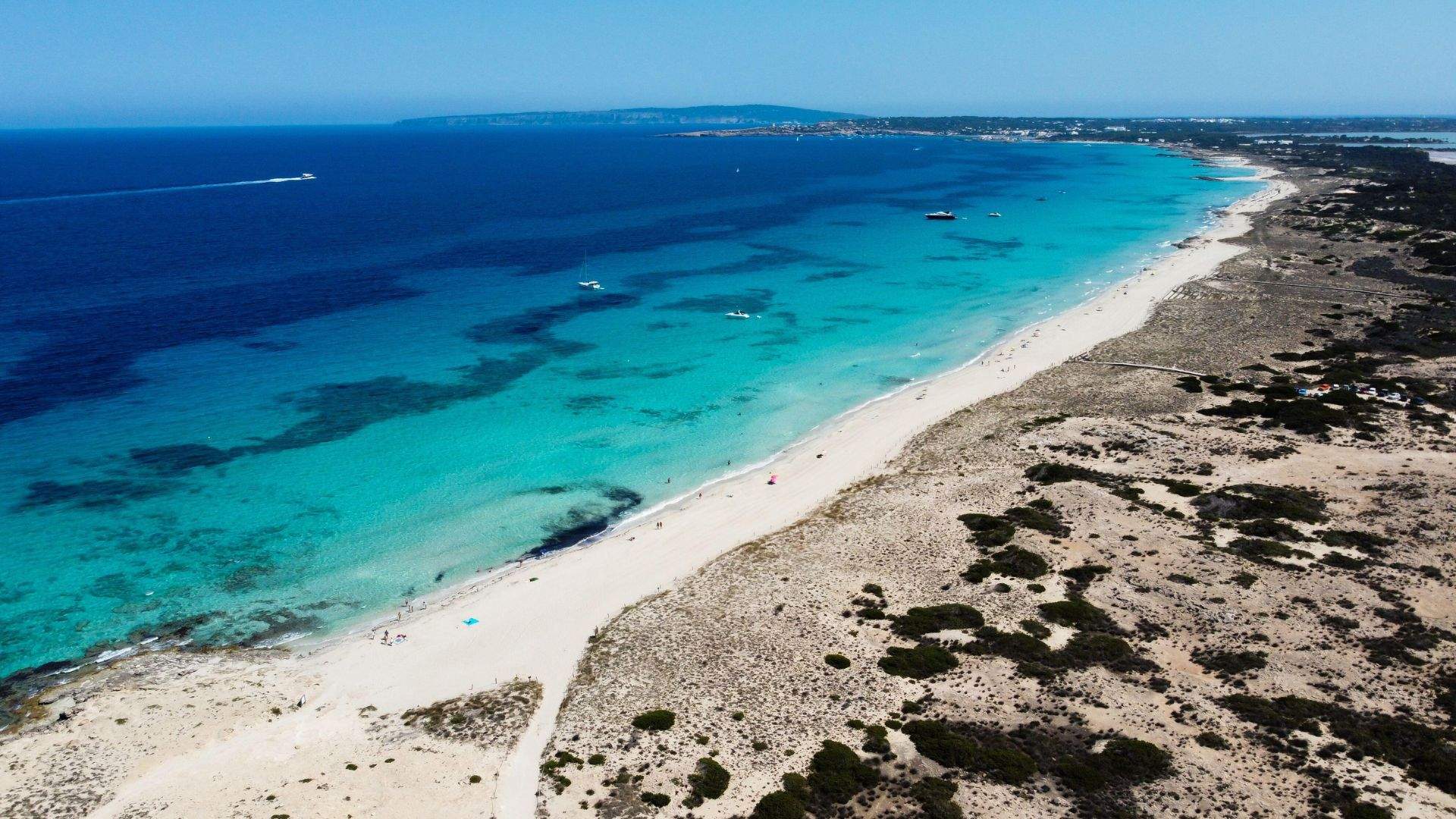
La semana de Ibiza y Formentera se mantiene ligera y tranquila. El agua se aclara a medida que el barco baja al sur por debajo de Ibiza. Las calas se vuelven más someras. Las playas crecen hasta convertirse en amplios arenales blancos en Formentera. El famoso islote de roca mar adentro se asienta frente a la esquina suroeste de Ibiza para la puesta de sol que la mayoría de los huéspedes de yates se llevan a casa como la imagen que define el viaje.
La semana empieza en la ciudad de Ibiza, bajo la ciudad amurallada vieja. Una primera noche en tierra para cenar en el pueblo; por la mañana, el barco rodea la costa sur para un almuerzo de beach club y el fondeadero del atardecer frente al islote de roca. La corta travesía al sur del día siguiente llega a Formentera: fondeaderos de fondo de arena, almuerzo en un restaurante de puerto de trabajo, y un reposicionamiento vespertino al oeste para la puesta de sol. Los días restantes hacen un circuito al este por calas más tranquilas antes de la travesía de regreso a la ciudad de Ibiza para el desembarco del sábado.
Otras dos semanas baleares corren junto a esta. El ida y vuelta por Mallorca recorre el lado escarpado de las islas: fondeaderos de acantilado, puertos pesqueros de trabajo y un día de cierre en el parque nacional solo accesible en yate. El trayecto solo ida por todas las Baleares recorre ambas costas en siete noches, con la travesía en mar abierto en medio. La semana de Ibiza y Formentera es la opción acertada para grupos que quieren la mitad más fácil: aguas más someras, días más ligeros y cena en tierra casi todas las noches.
Día 1 de 7 · Embarque en la ciudad de Ibiza
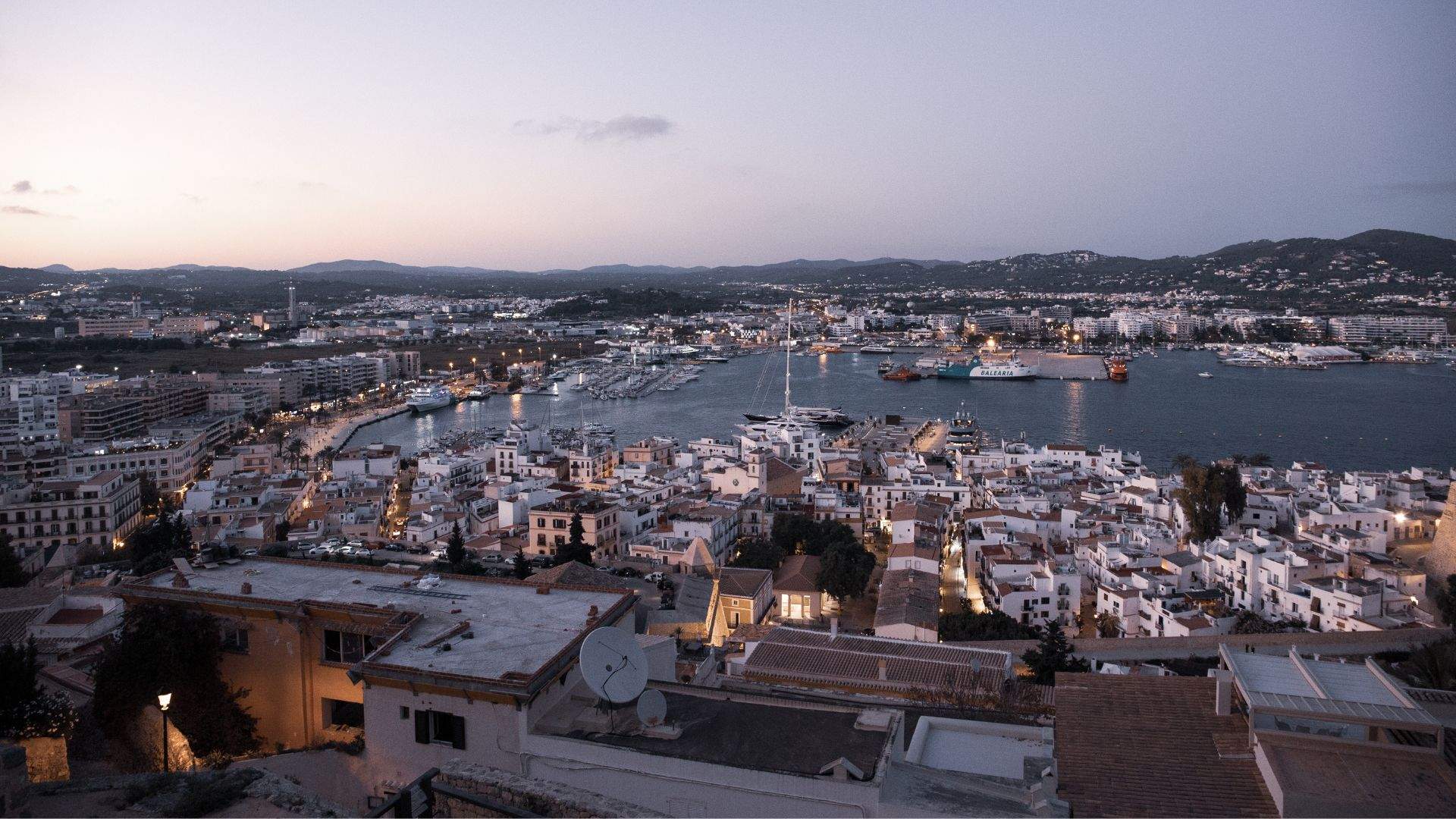
La semana empieza en la ciudad de Ibiza. A quince minutos por carretera del aeropuerto de IBZ, el puerto se divide en dos marinas a ambos lados de la bahía: Marina Ibiza en el lado sur (425 amarres, yates de hasta 110 metros, el hub de superyates del lado de la ciudad con la vista del barrio histórico) y Marina Botafoch en el lado norte (428 amarres, yates de hasta 30 metros, el amarre de categoría boutique y cercano a la restauración). Tu capitán ha reservado uno de ellos según el tamaño de tu yate; si tu yate está fondeado mar adentro durante el día, ambas marinas ofrecen acceso en lancha.
La tripulación te recibe en el atraque con bebidas frías y la sesión informativa sobre la carta. La cocina está aprovisionada, el mayordomo acomoda el equipaje en los camarotes y el chef te presenta el plato de bienvenida mientras la ciudad amurallada vieja se asienta al otro lado del puerto.
La cena es en tierra. El capitán reserva en uno de los restaurantes de Marina Botafoch o arriba, en las colinas: cocinas mediterráneas que se prolongan hasta bien entrada la noche. La primera noche la decide el capitán según las ganas del grupo; el ritmo de la semana arranca aquí.
Day Highlights
Día 2 de 7 · Ciudad de Ibiza → Cala Jondal
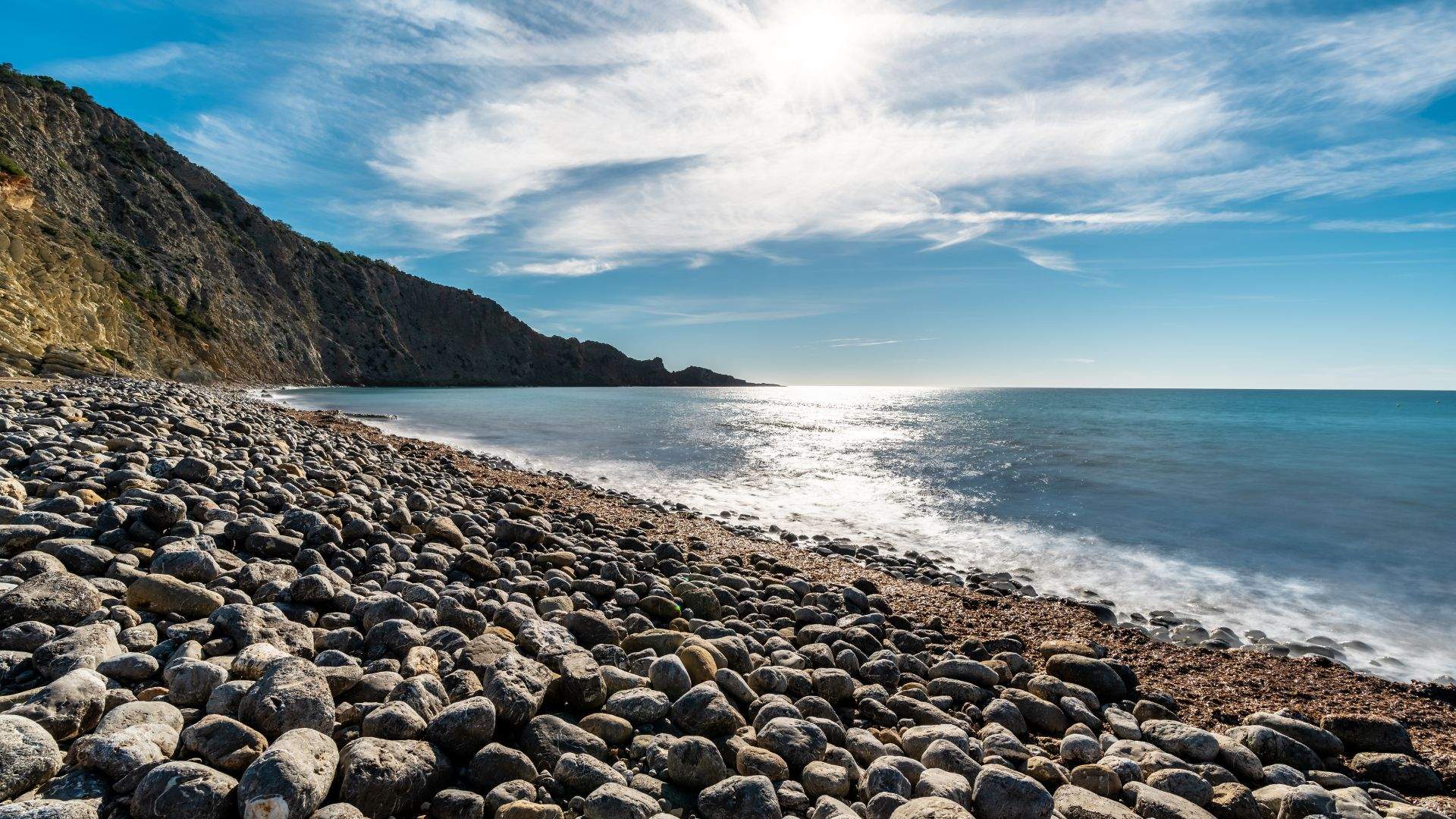
Una travesía matutina de doce millas náuticas al oeste y al sur, rodeando Es Cubells, hasta Cala Jondal, el fondeadero de beach club de referencia de la costa sur. La cala tiene de 8 a 15 metros de agua sobre arena y el capitán fondea mar adentro; lancha directa a la playa, donde las hamacas de Blue Marlin Ibiza van desde cabañas a nivel de arena hasta terrazas VIP elevadas. La cocina es mediterránea: pescado fresco, pasta de trufa fresca en temporada, las mariscadas que casan con lo que sale del mercado de Ibiza esa mañana.
Las hamacas llevan los consumos mínimos típicos de los beach clubs de alta gama. Las sesiones del DJ van subiendo a lo largo de la tarde y alcanzan su pico a la hora de las copas al atardecer. Los huéspedes vuelven en lancha al yate para la última hora de luz de la plataforma de baño. La cena es a bordo, al ancla; la cala mantiene el ambiente de atardecer a medida que el día se va aligerando.
Una alternativa —o un fondeadero para la segunda noche— es el Cala Bassa Beach Club, en la costa oeste de Ibiza: una cala más tranquila con fondeo de fondo de arena y un día menos marcado por el DJ. Los capitanes reservan cualquiera de los dos según el viento de la semana y la preferencia del grupo.
Day Highlights
Día 3 de 7 · Cala Jondal → Cala d'Hort
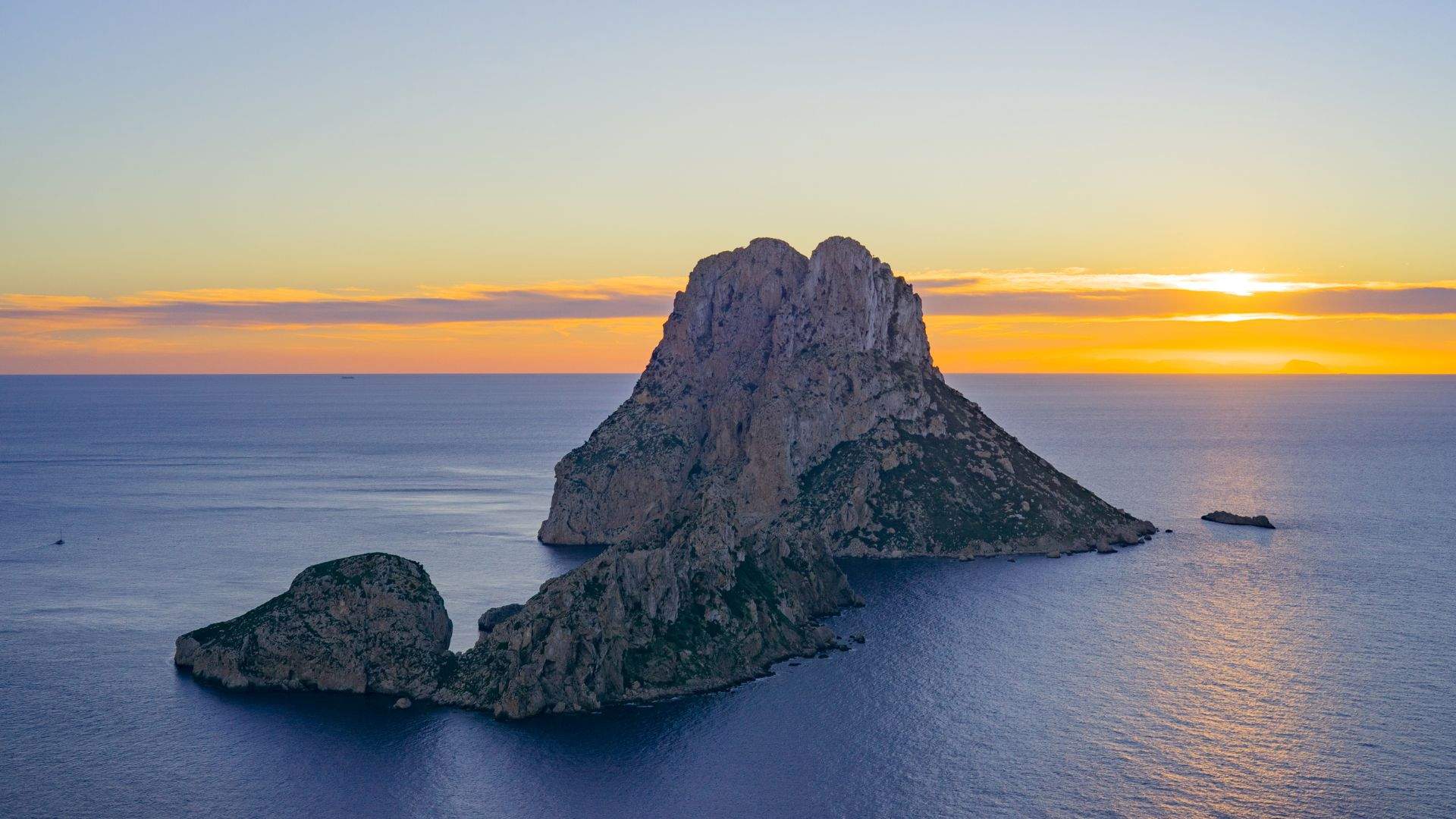
Un corto salto de diez millas náuticas al oeste y al sur desde Cala Jondal, rodeando el Cap Llentrisca, hasta Cala d'Hort. La tarde es pausada: un baño desde la plataforma de baño en el agua azul profunda entre Cala d'Hort y Es Vedrà, el islote de roca de caliza de 413 metros que es la imagen icónica de Ibiza desde los años setenta. El islote está deshabitado y forma parte de la reserva natural de Cala d'Hort; el folclore local le atribuye anomalías magnéticas y mitos de diosas fenicias, nada de lo cual es demostrable pero todo lo cual es color local.
A última hora de la tarde, el capitán ha posicionado el yate para la puesta de sol: el sol cae tras Es Vedrà hacia las 21:00 en julio y agosto, hacia las 20:00 en septiembre, iluminando el islote contra el cielo del suroeste durante la media hora previa. Cena a bordo, al ancla, con la silueta de Es Vedrà por la proa sosteniendo el cielo hasta el anochecer total.
Una opción alternativa de cena en tierra es el Elixir Shore Club, en la vecina Cala Codolar: fondeo de fondo de arena, lancha desde el yate, el único beach club con vistas directas a Es Vedrà desde sus mesas. El capitán reserva según si el grupo quiere el islote desde el yate o desde una mesa de playa con los pies en la arena.
Day Highlights
Día 4 de 7 · Cala d'Hort → Formentera
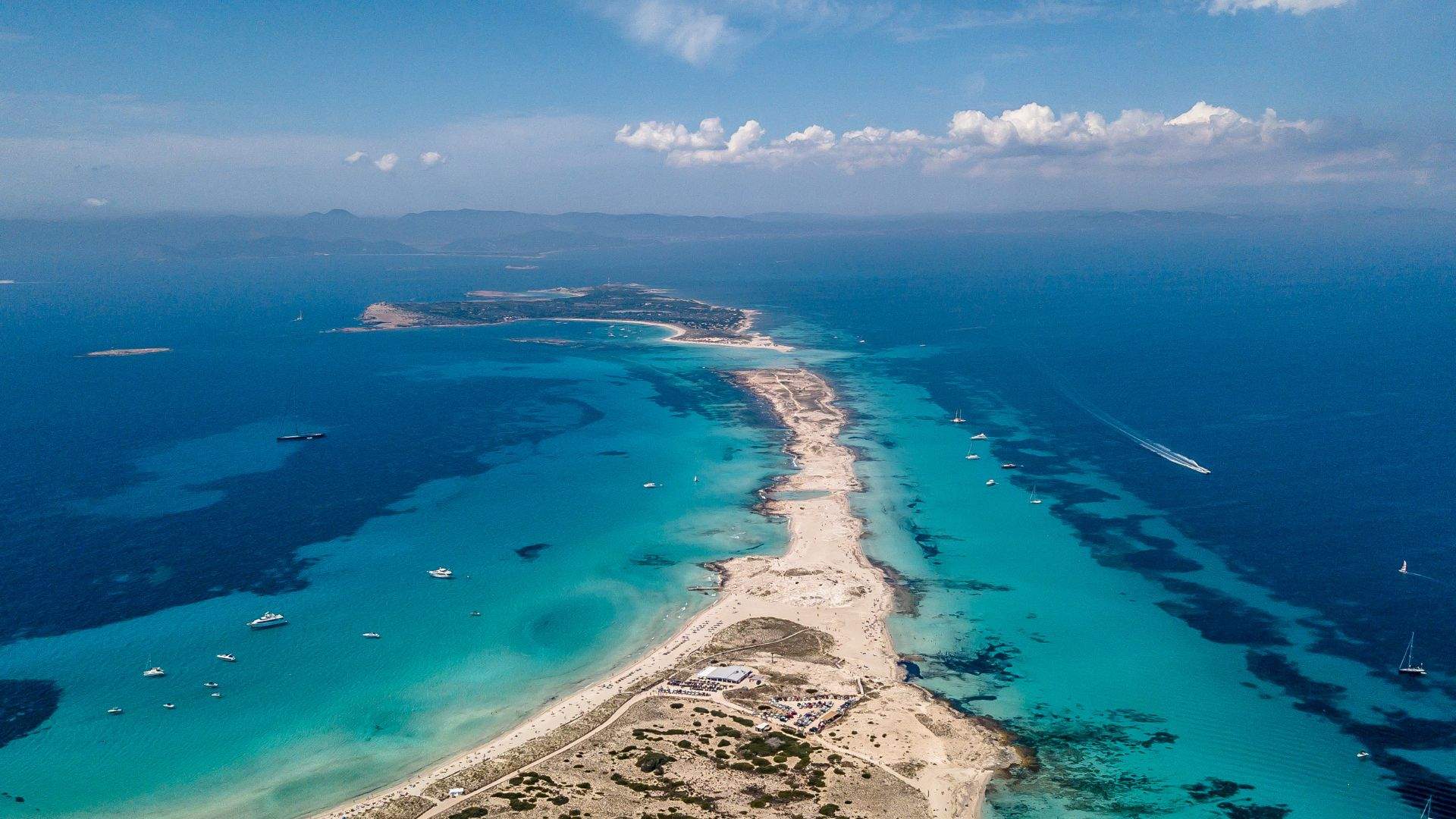
Una travesía matutina al este y al sur cruzando el estrecho de Es Freus entre Ibiza y Formentera: tres millas náuticas de agua turquesa y somera sobre praderas de posidonia protegidas (protegidas como reserva marina). El capitán fondea en la zona regulada frente a Espalmador o Ses Illetes; la reserva marina de Formentera requiere reservas de boya con permiso en temporada, que el capitán hace con antelación, similares a las de Cabrera pero menos estrictas.
El almuerzo es en la larga lengua de arena de Formentera, en el restaurante de paella que el capitán reserva con antelación. No hay muelle en la playa: la lancha del restaurante recoge a los huéspedes desde el fondeo del yate y los lleva a tierra para el largo almuerzo mediterráneo hasta última hora de la tarde.
La tarde es para bañarse desde la plataforma de baño: el agua de Ses Illetes es la más cálida para el baño del Mediterráneo occidental en julio y agosto, y el fondo de arena mantiene el agua clara hasta bien entrada la tarde. El Beso Beach Formentera, en la Playa de Cavall d'en Borràs del lado de Illetes, es la alternativa u opción de cena (temporada abierta el 30 de abril de 2026, de mayo a octubre; solo almuerzo hasta las 18:00, picoteo de 19:00 al cierre). Noche al ancla en Espalmador o reposicionado a sotavento de Ses Illetes según el viento de la tarde.
Day Highlights
Día 5 de 7 · Formentera → costa norte de Ibiza
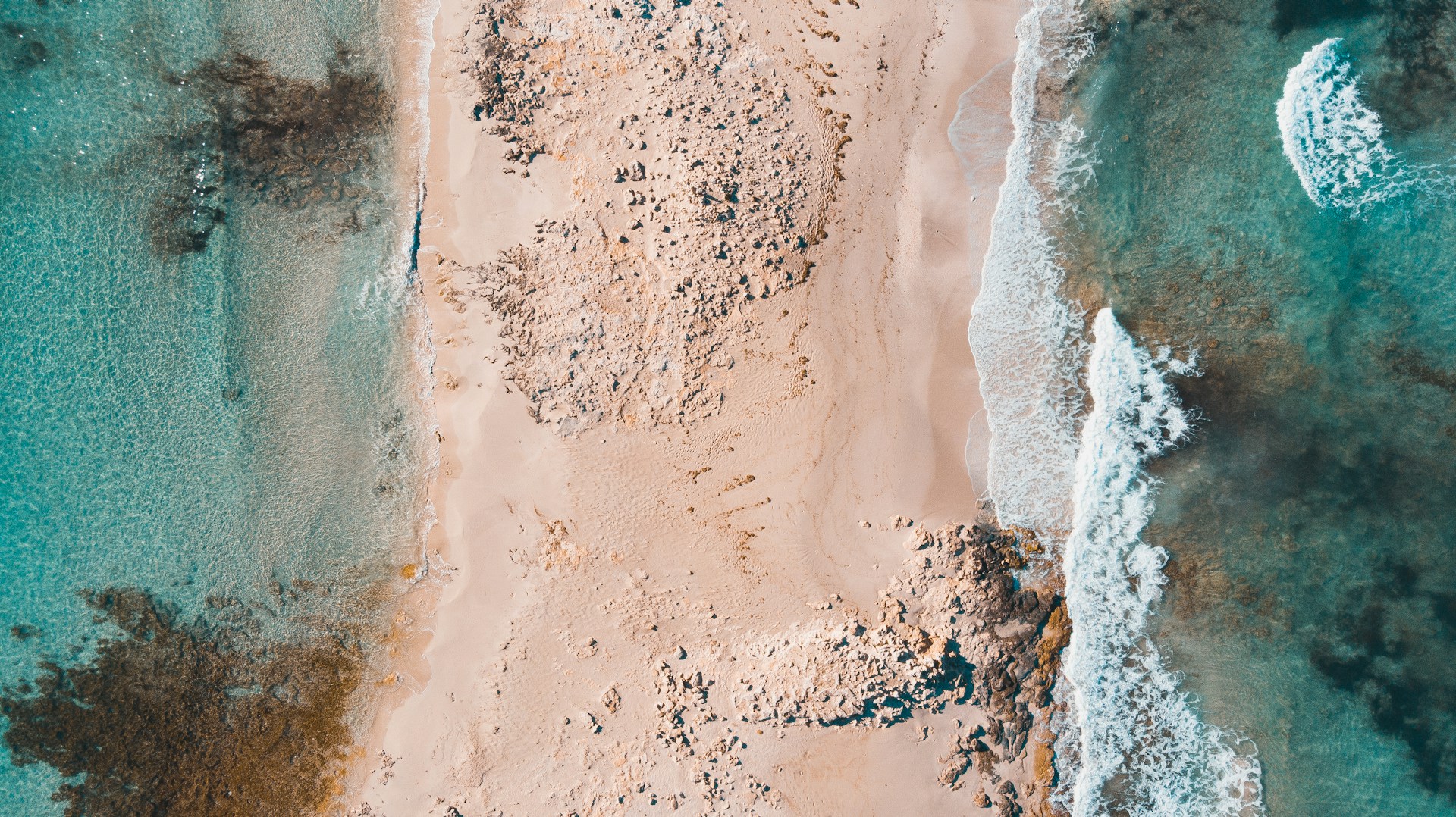
Una pausada travesía de una hora al oeste por Formentera hasta Cala Saona, la bahía de arena resguardada de la costa oeste de Formentera, el fondeadero del atardecer que complementa la mañana de Espalmador. Cala Saona tiene de 8 a 12 metros de agua sobre arena, fácil de fondear con cualquier viento que no sea un fuerte poniente. El hotel del mismo nombre sobre la cala lleva un bar de playa en el que el capitán puede reservar mesa para un almuerzo o unas copas al atardecer, llegando a nado o en lancha.
A media tarde, el capitán reposiciona veinte millas náuticas al norte y al este cruzando Es Freus y rodeando la esquina suroeste de Ibiza hasta Cala Salada, la cala de la costa norte que es el fondeadero de llegada estándar para el cierre de la semana del lado de Ibiza. Cala Salada tiene un pequeño restaurante de embarcadero de madera sobre la cala (rústico, familiar, el recurso del capitán para una cena honesta del norte de Ibiza) y fondeo de fondo de arena en 8 a 15 metros. Los días restantes recorren la costa este y norte: Cala Benirràs el domingo por la tradición del círculo de tambores, en lancha desde el yate, y Santa Eulària para una noche más tranquila.
Day Highlights
Día 6 de 7 · Circuito por el norte de Ibiza
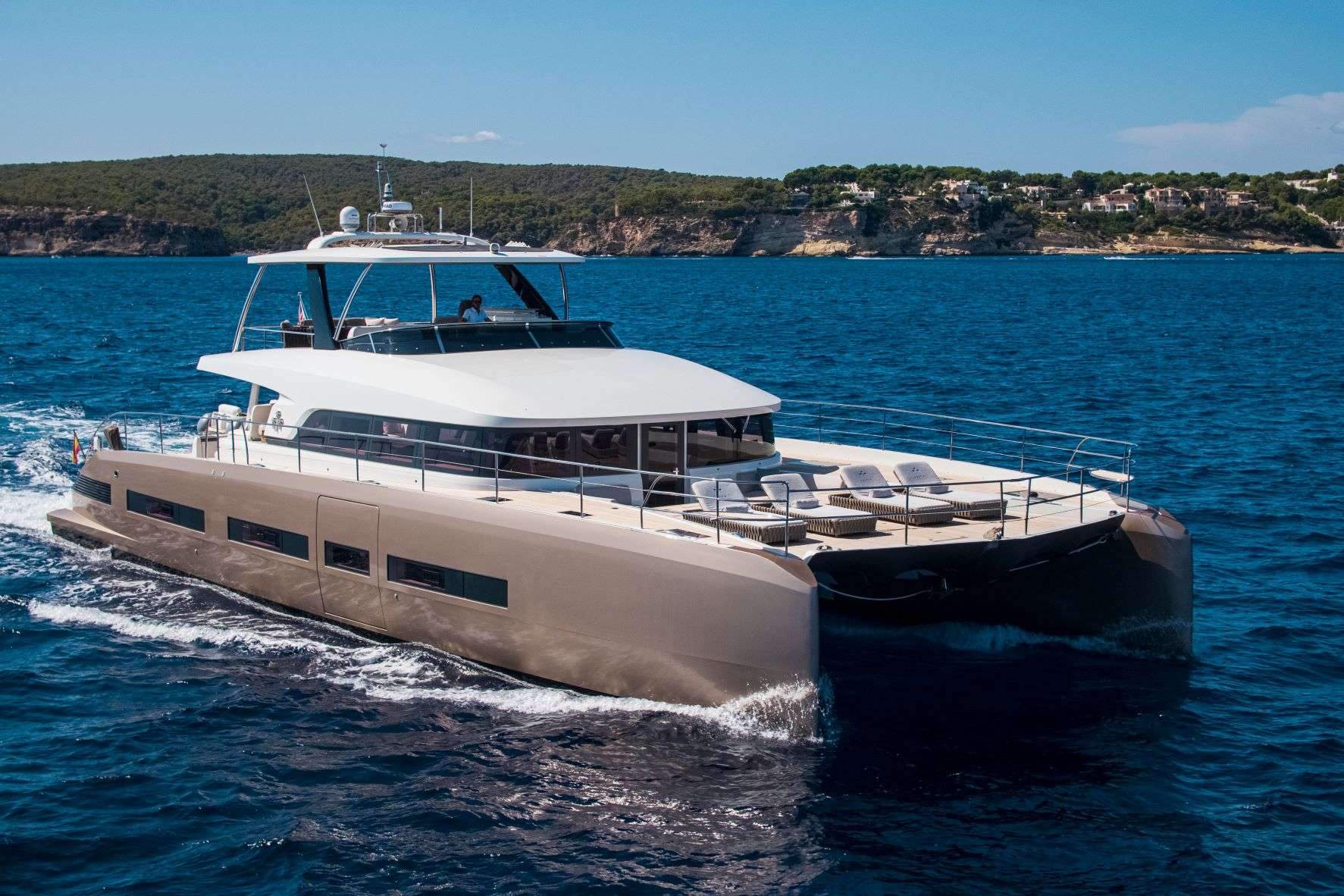
Una corta travesía al este por la costa norte de Ibiza hasta una pequeña isla-villa de propiedad privada justo mar adentro. El yate fondea en el agua profunda entre la isla y la tierra firme de Ibiza; la tarde es para bañarse desde la plataforma de baño.
A media tarde, el capitán reposiciona de vuelta por la costa norte. Santa Eulària es la noche más tranquila: un pequeño pueblo con marina, con una iglesia antigua sobre el río y restaurantes de muelle a lo largo del paseo junto al río. Cala Benirràs es la opción del domingo: una veterana tradición de puesta de sol con círculo de tambores tiene lugar cada domingo de junio a septiembre, a la que se llega en lancha desde el fondeo.
La cena es en tierra. Santa Eulària ofrece una velada mediterránea boutique: el capitán reserva en uno de los pequeños restaurantes familiares del paseo junto al río. Cala Benirràs es más relajada: unas copas al atardecer en el bar del final del embarcadero de la cala, con el círculo de tambores como banda sonora.
Day Highlights
Día 7 de 7 · Travesía de regreso a la ciudad de Ibiza
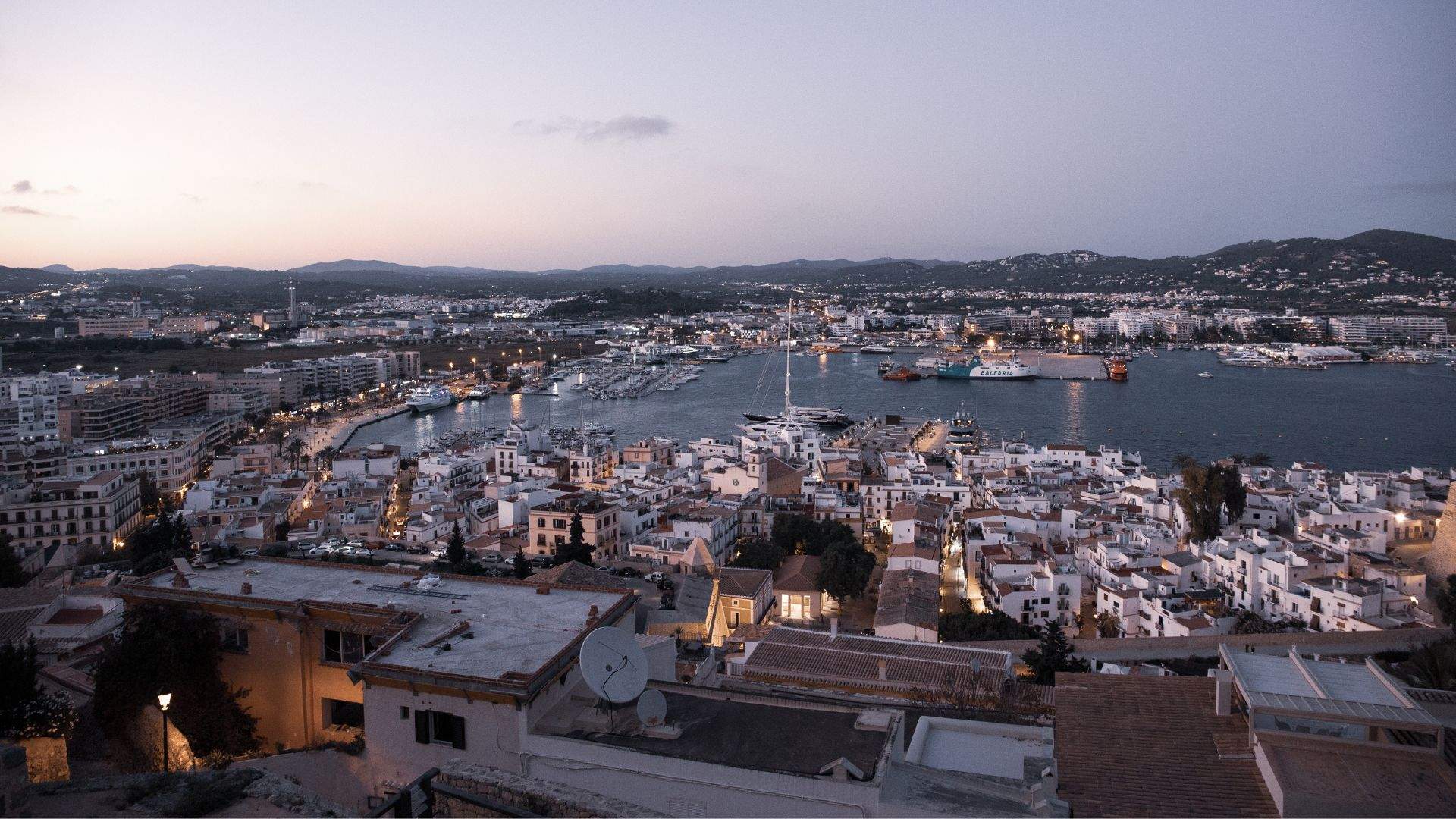
Un arranque temprano. El capitán leva el ancla y cubre las últimas diez millas náuticas al sur por la costa este de vuelta a la ciudad de Ibiza. La tarde es la larga y pausada vuelta al puerto: los muros de Dalt Vila creciendo por el lado sur, Marina Ibiza o Marina Botafoch recibiendo el barco en el atraque a media tarde. El último plato del chef se sirve durante el almuerzo al ancla o en la pausada travesía de regreso; una copa final en la cubierta de popa al atardecer mientras el yate vuelve a la marina.
El desembarco suele ser a las 09:00 del sábado por la mañana, pero los huéspedes que quieran una noche más a bordo pueden ampliar al ancla en el puerto de la ciudad de Ibiza o de vuelta en Cala Salada, con el capitán devolviendo el barco a la marina la mañana de la salida. Desde la ciudad de Ibiza son quince minutos al aeropuerto de IBZ, donde hay conexiones directas a Madrid, Barcelona, Londres, Ámsterdam y los principales hubs europeos durante la tarde y la noche del sábado. Los huéspedes de EEUU conectan vía MAD o BCN; el capitán reserva el traslado de la marina al aeropuerto.
Day Highlights
Want to share or come back to this voyage later?
Bookmark this voyage →Crewed Itinerary · Balearic Islands · One-Way
The one-way week puts both sides of the Balearics into a single charter. The first half runs Mallorca's rugged Tramuntana coast: granite mountains drop straight to the water, and the working fishing harbors along the way haven't changed character in a century. Cabrera National Park, the yacht-only anchorage south of Mallorca, is the marquee day in the middle of the week. After the open-water crossing the boat reaches Ibiza, where the water turns clearer and the coves shallower. Dinner the rest of the week is ashore in working port towns. The week ends in Ibiza Town's harbor under the old walled city.
The route is a 150-nautical-mile one-way from Palma to Ibiza Town. Motor yachts and modern catamarans both work it well, with both staging cleanly across the open-water crossing. Embarkation is at Palma; disembarkation Saturday morning at Ibiza Town. Prime season runs late May through early October.
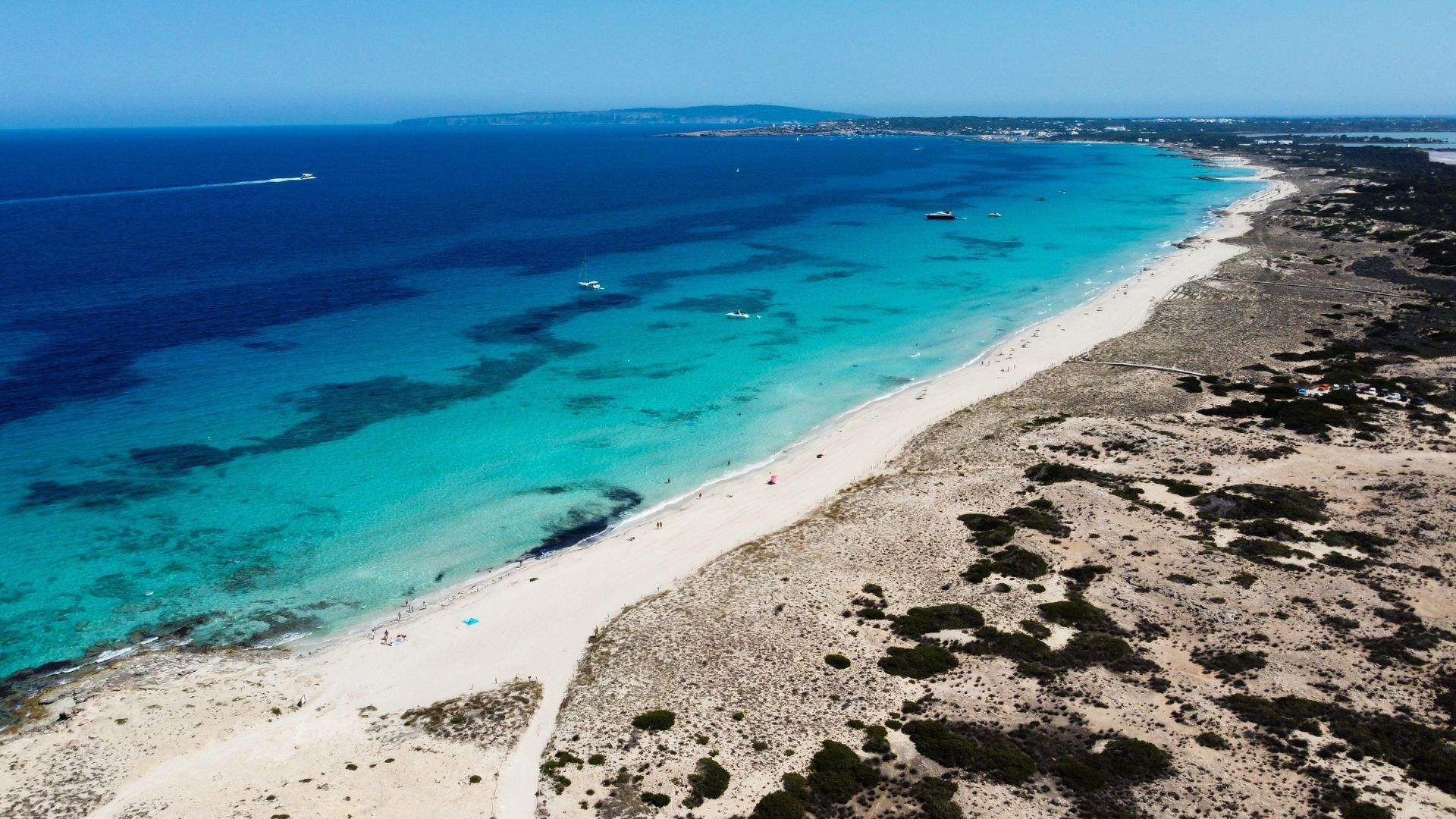
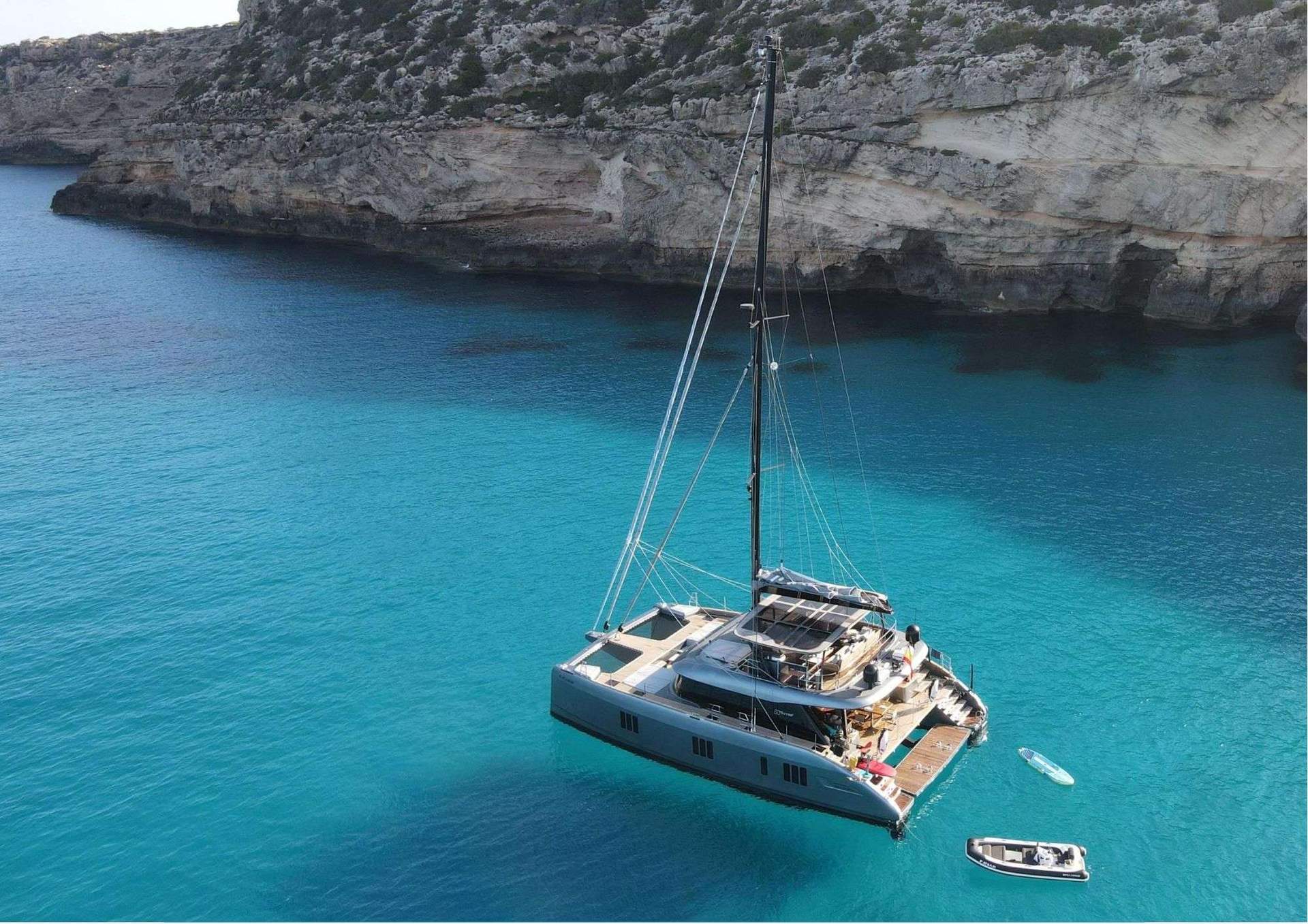
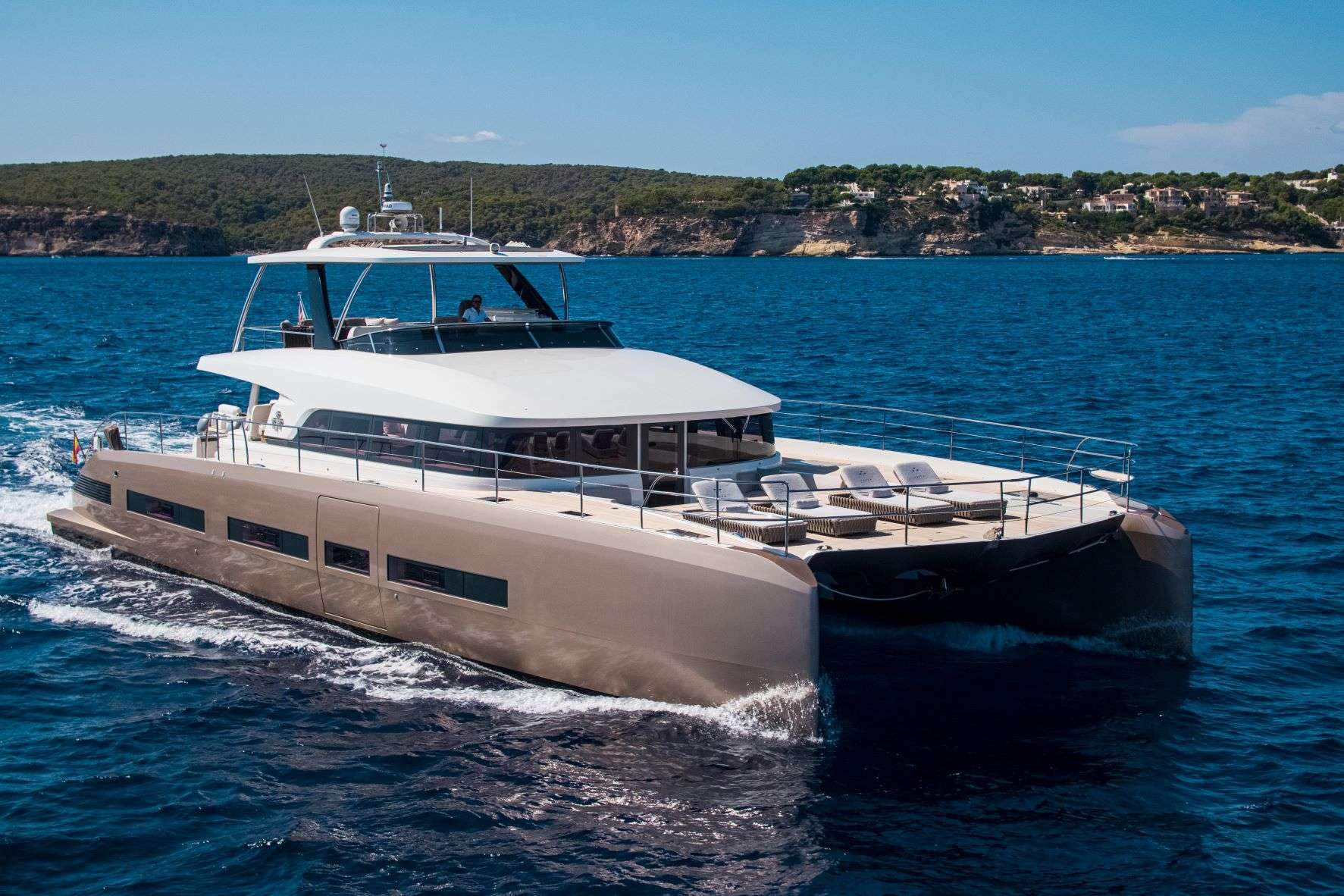
The one-way week puts both halves of the Balearics into a single charter. The first half runs the rugged Mallorca coast — mountains above the boat at anchor, working fishing harbors, and the yacht-only national park as the marquee day. The open-water crossing in the middle of the week brings the boat south to Ibiza, where the water clears and the coves shallow. The second half ends in Ibiza Town's harbor under the old walled city.
The week starts in Palma. The first two days run east and south along Mallorca's coast — first an easy-water beach day, then the yacht-only national park overnight with its medieval watchtower above the harbor. Day three is the crossing — fifty to eighty miles to Ibiza's north coast depending on weather. The remaining days run the lighter half: the famous offshore cliff-stack for sunset, Formentera's sand-bottom anchorages for lunch, and a final night under the walled town of Ibiza.
Two other Balearic weeks run alongside this one. The Mallorca round-trip stays on the rugged side, returning to Palma at the end of the week. The Ibiza-and-Formentera round-trip stays on the lighter side, starting and ending in Ibiza Town. The full-Balearics one-way is the right call for groups who want the broadest single week the Balearics deliver — both coasts inside seven nights, with the boat repositioning from Palma to Ibiza along the way.
Day 1 of 7 · Palma → Es Trenc
The week starts in Palma. Fifteen minutes by road from PMI airport, the city's three main yacht facilities — Marina Port de Mallorca, Real Club Náutico de Palma, and STP — sit along the western arc of Palma Bay. Crew meet you at the slip with cold drinks and the chart briefing; the galley is stocked, luggage settled into cabins.
By midafternoon the captain is slipping lines. A twenty-two-nautical-mile run east and south along Mallorca's south coast to Es Trenc — the three-kilometer unbuilt white-sand beach that's the south coast's iconic anchorage. Sand-bottom anchorage in 5 to 10 meters of water; the captain anchors offshore in the protected zone. Late-afternoon swim, dinner on board at anchor as the sun sets behind the western tip of the island. Es Trenc is a national park since 2017 — protected by Spain's Llei d'Espais Naturals legislation, which is why the beach remains unbuilt three decades after every other south-Mallorca beach was developed.
Day Highlights
Day 2 of 7 · Es Trenc → Cabrera
A short twelve-nautical-mile run south from Es Trenc to Cabrera. The captain has booked the buoy twenty days in advance through the CAIB reservation system at https://www.caib.es/rescabfront/ — the buoy is issued at one of three mooring fields (Port de Cabrera, Es Burrí, or Sa Coveta Roja). Cabrera caps fifty boats per day across the three fields and enforces a limited charter quota when oversubscribed; peak July/August Saturdays carry a twenty-boat waitlist in practice.
The afternoon at Cabrera is the marquee yacht-only-access moment of the week. Tender ashore to the dock at the harbor, then a fifteen-minute walk up to the medieval watchtower on the eastern headland — free, self-guided, climbed for the panoramic view. Swim in the harbor basin in water that looks like the Mediterranean did fifty years ago. The island has no shops, no fuel, no restaurants.
Dinner aboard at anchor. The 1-to-2-night stay limit in peak summer (July/August) is enforced; in shoulder season the captain can stretch to up to seven nights for guests who want the deeper Cabrera experience. Cabrera under stars from the swim platform is the kind of view you don't forget.
Day Highlights
Day 3 of 7 · Cabrera → Ibiza (the crossing day)
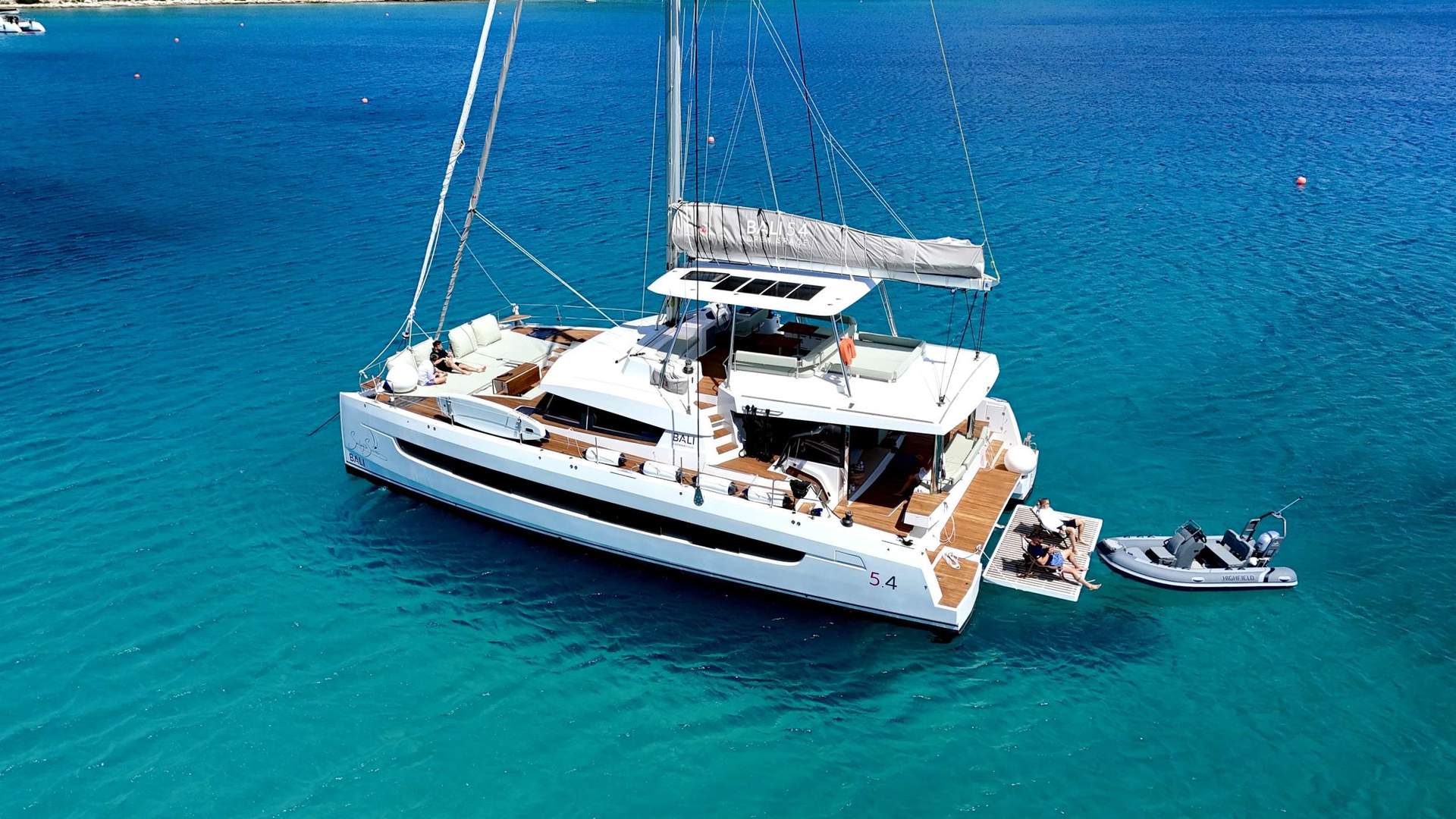
An early start. The captain pulls the Cabrera buoy before sunrise and runs three nautical miles north to Cova Blava — the forty-meter sea-cave on Cabrera's west coast. Tender from the yacht into the cave (the entrance is 6 meters high and the natural arch climbs to 20 meters inside); the noon-hour light comes in through the opening to turn the water electric blue. Visit before 11:00 to beat the commercial day-boat surge from Colònia de Sant Jordi.
By midmorning the captain points the bow west for the longest leg of the week — sixty-five nautical miles open-water across to Ibiza's north coast. From Cabrera the bearing is roughly 270°; from Es Trenc/Sa Ràpita the bearing flattens. The captain has read the morning's conditions before committing — on a settled day with the prevailing summer SE thermals a sailing yacht runs the leg under canvas, a catamaran reaches across, a motor yacht covers it in five to seven hours under power. The mid-passage view is open water in every direction — Mallorca receding behind, Ibiza appearing as a slow blue silhouette on the western horizon by mid-afternoon.
Arrival at Cala Salada or Portinatx on Ibiza's north coast — quieter coves than the south-coast circuit, sand-bottom anchorage in 8 to 15 meters, the wooden-pier restaurants that define the old-Ibiza dinner. The captain books the table on the way in; dinner ashore as the day's run settles into evening.
Day Highlights
Day 4 of 7 · Ibiza north → Ibiza west
A morning's slow run south along Ibiza's west coast. Cala Bassa for lunch — the sand-bottom beach club anchorage on the west coast, lower-key than Cala Jondal's south-coast, lunch at the cove's beach club ashore with tender straight from the anchored yacht. The afternoon swims off the swim platform; the captain repositions further south to Cala d'Hort by midafternoon.
Cala d'Hort sits at Ibiza's southwest tip across the channel from the Es Vedrà nature reserve. The 413-meter limestone cliff-stack is uninhabited and part of the marine reserve; the cliff catches the southwest sun for the half-hour before sundown. The captain positions the yacht for the sunset around 20:00 in September, around 21:00 in July and August. Dinner aboard at anchor, the silhouette of Es Vedrà off the bow holding the sky until full dark.
Day Highlights
Day 5 of 7 · Cala d'Hort → Formentera
A morning's run east and south to Espalmador — the small uninhabited island between Ibiza and Formentera. The Freus strait between them is three nautical miles of shallow turquoise water over protected seagrass meadows. The captain anchors in the regulated marine reserve zone — Formentera requires permit-buoy reservations in season similar to Cabrera but less strict — and tenders across to Ses Illetes for the day's marquee lunch.
Lunch is on Formentera's long sand spit, at the paella restaurant the captain books in advance. There's no dock at the beach — the restaurant's tender picks guests up from the yacht's anchor and runs them ashore for the long Mediterranean lunch into late afternoon.
The afternoon swims off the swim platform — Ses Illetes water is the warmest swimming water in the western Mediterranean in July and August, and the sand bottom holds the water clear well into the evening. Overnight at anchor or repositioned to the lee side of Ses Illetes depending on the evening wind.
Day Highlights
Day 6 of 7 · Formentera → east Ibiza
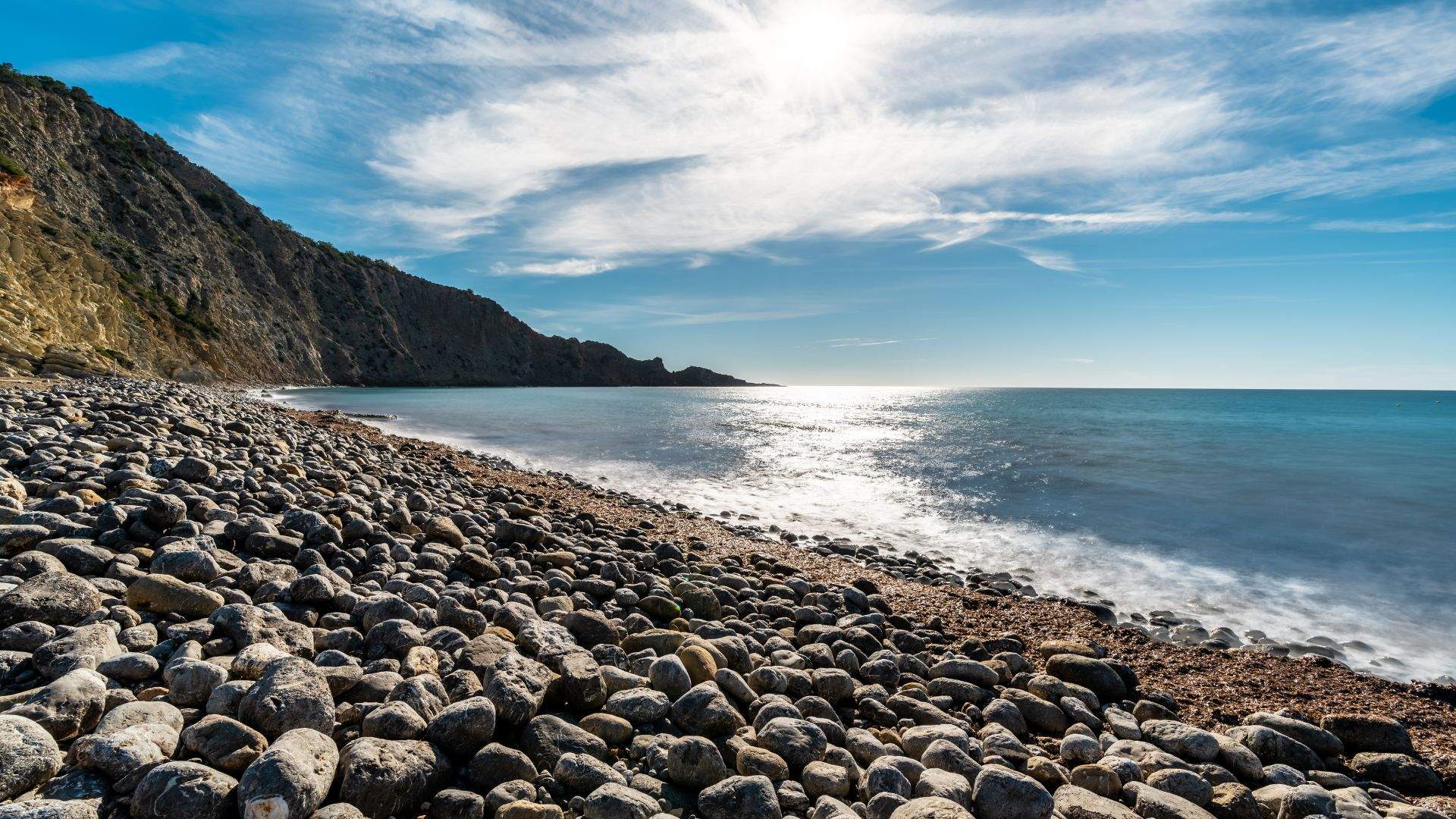
A short run north and east up Ibiza's east coast to a small privately-owned villa-island just offshore. The yacht anchors in the deep water between the island and Ibiza's mainland; the afternoon swims off the swim platform.
By midafternoon the captain repositions back south to Santa Eulària — a small marina town with quay-side restaurants and an old church above the river. Dinner is at one of the small-family restaurants along the riverside walk; the captain has booked the table earlier in the day. Overnight at the marina or anchored offshore.
Day Highlights
Day 7 of 7 · Run to Ibiza Town and disembark
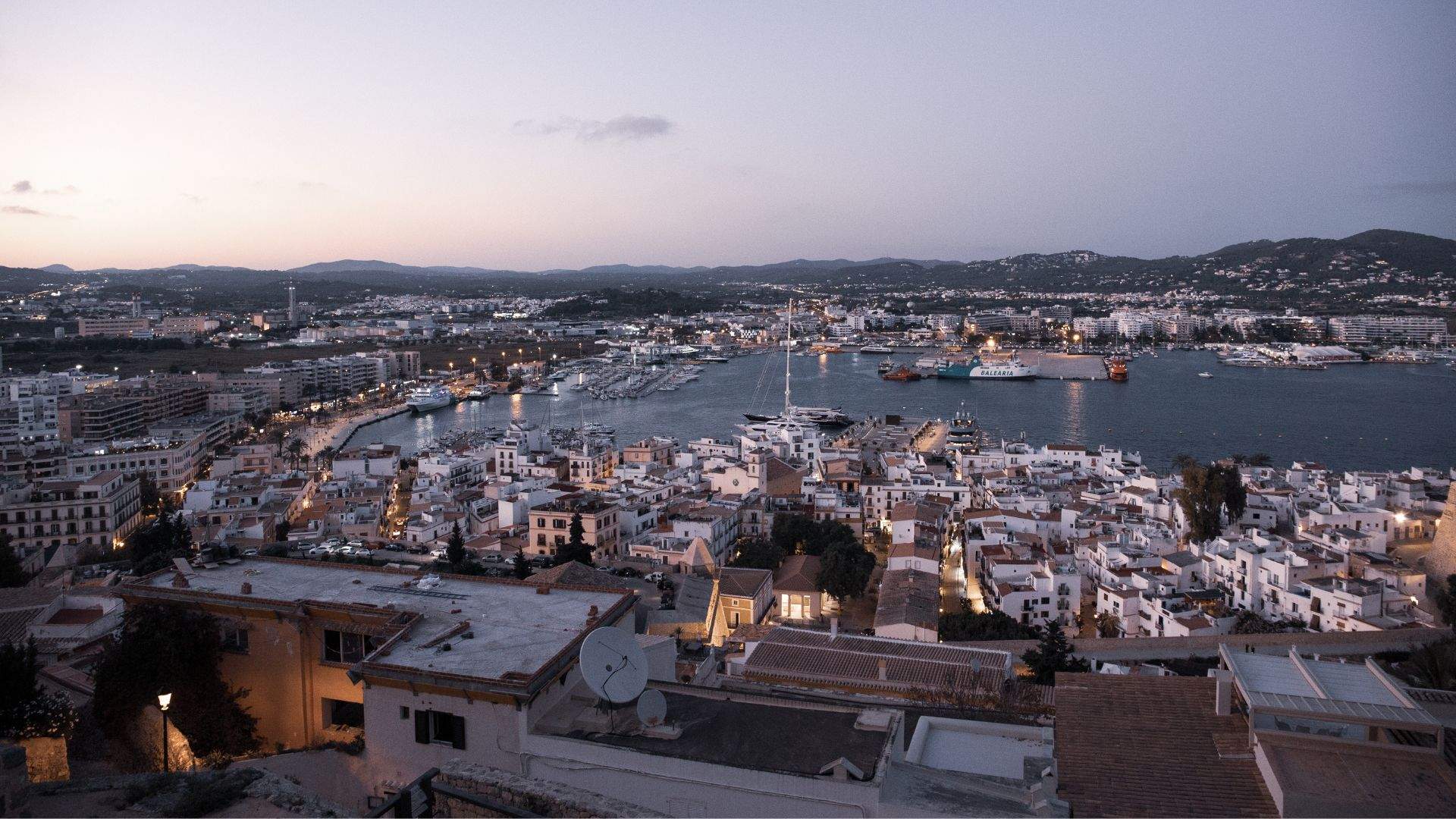
An early start. A short ten-nautical-mile run south down Ibiza's east coast back to Ibiza Town. The afternoon is the long, slow re-entry into the harbor — Dalt Vila's walls growing along the south side, Marina Ibiza (for yachts up to 110m) or Marina Botafoch (for yachts up to 30m) taking the boat back at the slip by midafternoon. The chef's last plate runs over lunch at anchor or on the slow run home; an aft-deck final sundowner runs as the yacht works back to the marina.
Disembarkation is typically 09:00 Saturday morning. Guests who want one more night on board can extend at anchor in Ibiza Town's harbor with the captain returning the boat to the marina the morning of departure. From Ibiza Town it's fifteen minutes to IBZ airport, where Saturday afternoon and evening have the most outbound European connections — direct flights to Madrid, Barcelona, London, Amsterdam, and major European hubs. US guests connect through Madrid or Barcelona; the captain books the marina-to-airport transfer.
Day Highlights
Want to share or come back to this voyage later?
Bookmark this voyage →
When to go, what it costs, and how to get there — the practical answers guests ask before booking a Balearic Islands crewed yacht charter.
Julio y agosto. Máximas diurnas de unos 32 °C, temperatura del mar rozando los 26 °C a finales de agosto. Una brisa térmica marina llena la bahía la mayoría de las tardes a 10–15 nudos desde el sur. Ibiza está en su momento más animado. Los beach clubs de la costa sur tienen listas de espera de seis meses para sus tumbonas. El famoso circuito de clubs del lado oeste de la isla alcanza su punto álgido a lo largo de agosto. La costa de la Tramuntana en Mallorca se mantiene comparativamente más tranquila. Los yates de gama premium en Marina Ibiza se reservan con seis a nueve meses de antelación a tarifas de temporada alta.
De finales de mayo a junio, y de septiembre a principios de octubre. El agua se mantiene entre 22 y 24 °C, con máximas diurnas de unos 27 °C. La brisa térmica marina sigue llegando casi todas las tardes. Septiembre es el mes más destacado del año. Para entonces, el frenesí del agosto europeo ya se ha disipado. La intensidad de Ibiza baja a un nivel más llevadero, y los capitanes están más relajados. Los permisos para Cabrera son más fáciles de conseguir en temporada baja. Principios de octubre es ideal para quienes buscan las aguas más tranquilas — antes de que la flota se traslade a Antibes o empiece la travesía atlántica hacia el Caribe. Las tarifas bajan entre un quince y un veinticinco por ciento respecto a la temporada alta.
$25,000–$100,000 per week
Una semana en yate con tripulación por las Baleares oscila entre $25,000 y más de $100,000, según el tamaño del yate, el año de construcción y la tripulación. Se aplica el modelo mediterráneo de gastos adicionales: la tarifa base cubre únicamente el yate y la tripulación. Todo lo demás — comida, bebidas, combustible, amarre y tasas portuarias — se gestiona a través de una APA (Asignación Anticipada de Provisiones) prefinanciada al 30–35% de la base. La propina, del 10 al 15%, se entrega directamente al capitán en el desembarque. El IVA del yate en España es del 21% sobre la tarifa base. Los viajes en yate se realizan de sábado a sábado desde Palma o Ibiza Town.
About chartering in the Balearic Islands.
We charter across the Western Mediterranean. Here are some other excellent alternatives.

Four cruising grounds in one country — the Amalfi Coast, Sardinia & Corsica, Sicily and the Aeolian Islands, the Italian Riviera south to Tuscany. The hardest part of an Italy yacht charter is choosing which week to take first.

Cliff-stacked villages and long lunches the tender reaches — the Italian summer the boat makes possible, anchored under the Faraglioni at sundowners and tied up in Amalfi by midnight.

Costa Smeralda granite coves and Bonifacio's white-cliff citadel six miles apart, the Strait between two islands cruised in a single afternoon — the Mediterranean the Italians and French keep mostly for themselves.

Stromboli erupting off the anchorage at Panarea, the Greek theatre at Taormina with Etna smoking behind, and the Cappella Palatina at Palermo's Norman Palace — the Mediterranean's only active-volcano cruising ground and the Italian week most guests book the second time they come.

Portofino's harbor amphitheater, the Cinque Terre's cliff villages, Portovenere's painted waterfront, and the Tuscan islands south to Elba and Argentario. The quieter Italian week for guests who want village character, harbor restaurants, and lower-density anchorages without Amalfi's August intensity.

Monaco's Port Hercule, Cap Ferrat's villa coast, Cannes and Antibes in the central corridor, and Saint-Tropez at the west end. The French Riviera is the western Mediterranean's maximum-glamour yacht week: shorter passages, premium dockage, Michelin density, and the visible harbor theater guests are usually booking on purpose.
Fill out our quick form and we'll dive into your unique preferences — from adventure-packed itineraries to pampered escapes. Whether you're a seasoned voyager or new to charters, we'll tailor recommendations just for you.
With over fifteen years of experience, we'll match you with the yacht that fits your style, group, and itinerary. We work directly with the captains and crews across our list — so the recommendation is built around the right boat-and-crew fit for your week, not whatever's easiest to book.
Once your yacht is booked, we'll take care of logistics: paperwork, reminders, and personalized resources to help you plan. From arrival planning to must-visit spots, we'll make your charter as seamless as it is unforgettable.

¿Qué esperar de un alquiler de yate privado con tripulación?
Conocé qué hace únicos a estos viajes en yate: servicio personalizado, gastronomía gourmet y un sinfín de aventuras y momentos de relax.

¿Cómo es el proceso de reserva?
Nuestro equipo se encarga de todo: desde tu primer consulta hasta que zarpás. Todo fluye de forma simple.

¿Cuánto cuesta un alquiler de yate con tripulación?
Entendé los distintos tipos de precios, lo que está incluido y lo que no.

Logística: planes probados para un inicio sin estrés
Planificá tu llegada con facilidad. Te damos tips sobre vuelos, traslados y todo lo necesario para arrancar relajado.
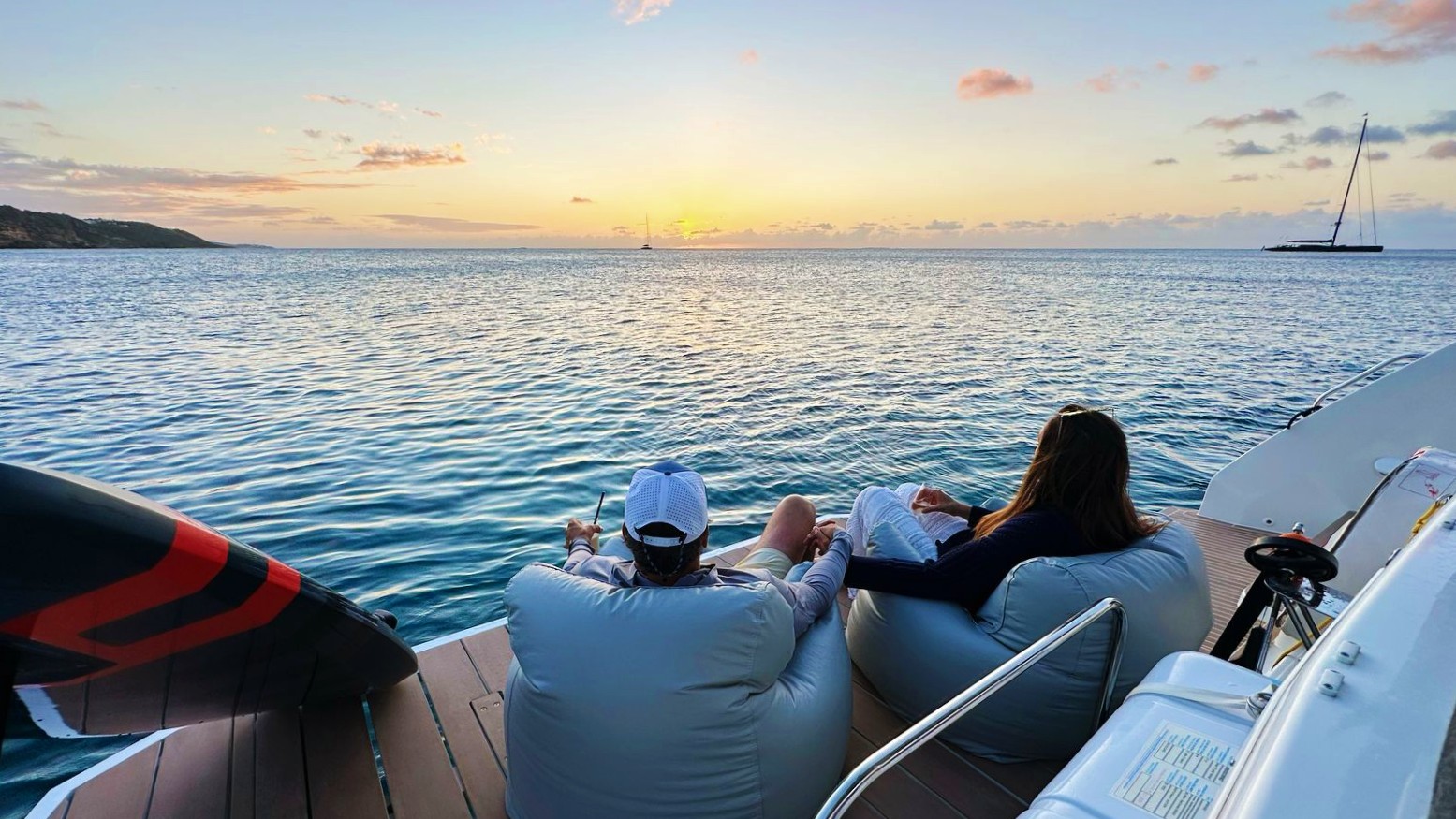
Alquiler de yate de luna de miel
Comience su matrimonio en un yate privado. Explore playas solitarias, gastronomía gourmet y atardeceres inolvidables en el Caribe.
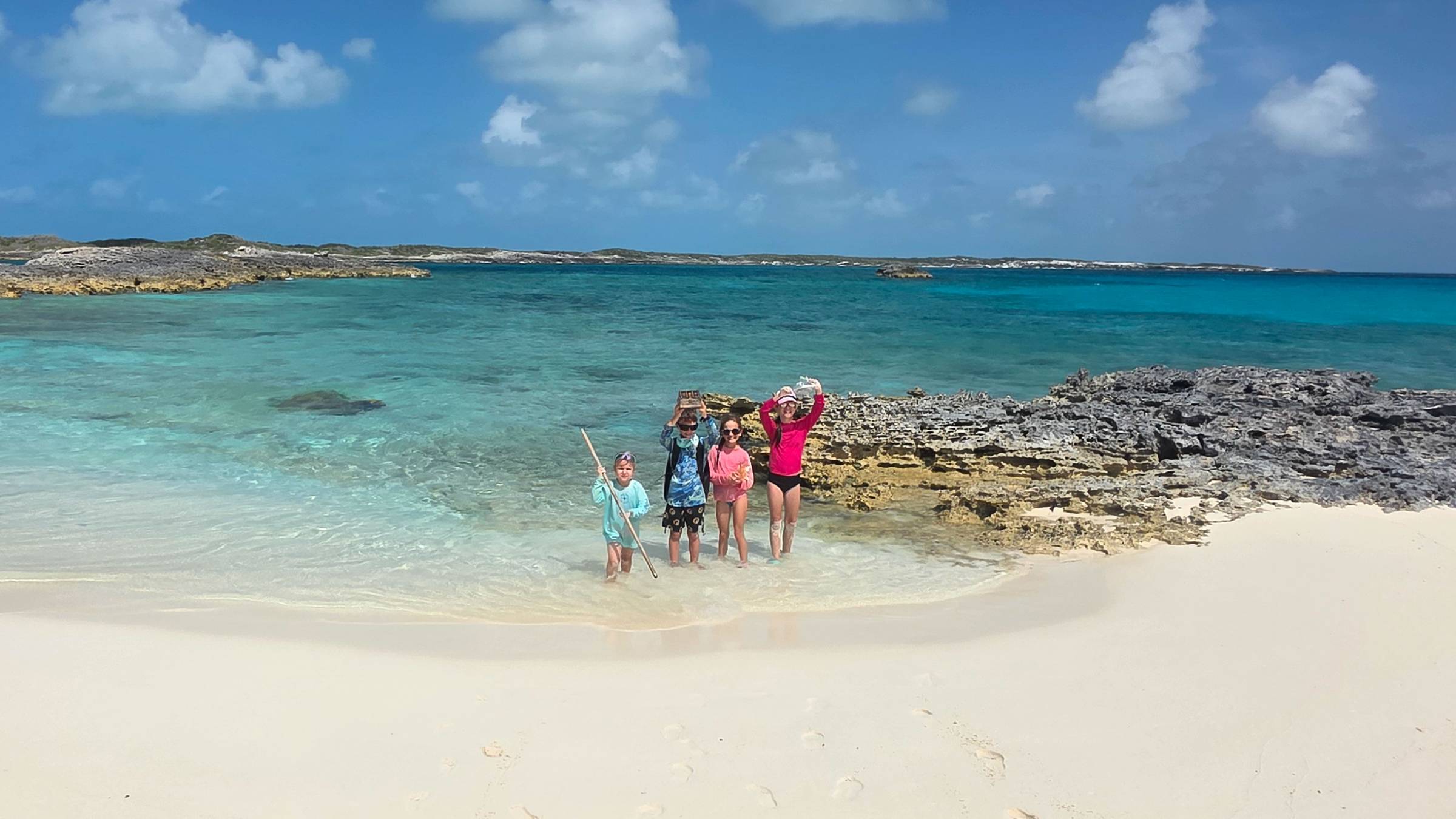
Alquiler de yate familiares
Un alquiler de yate con tripulación es perfecto para familias de todas las edades. Seguro, divertido y con servicio completo — sus hijos nunca lo olvidarán.

Preguntas frecuentes sobre alquileres de yate con tripulación
Obtenga respuestas a las preguntas más comunes sobre alquiler de yate con tripulación, desde precios y propinas hasta qué incluye y qué llevar.

Alquiler de yate con tripulación en las Islas Vírgenes Británicas
Las Islas Vírgenes Británicas son el destino #1 de alquiler de yate con tripulación en el Caribe. Navegaciones cortas, aguas protegidas y bahías de clase mundial.

Guía de Alquiler de Yate con Tripulación en Islas Vírgenes Británicas
Todo lo que necesitás saber antes de tu viaje en yate con tripulación en las Islas Vírgenes Británicas — precios, lista de equipaje, itinerario y cómo llegar.
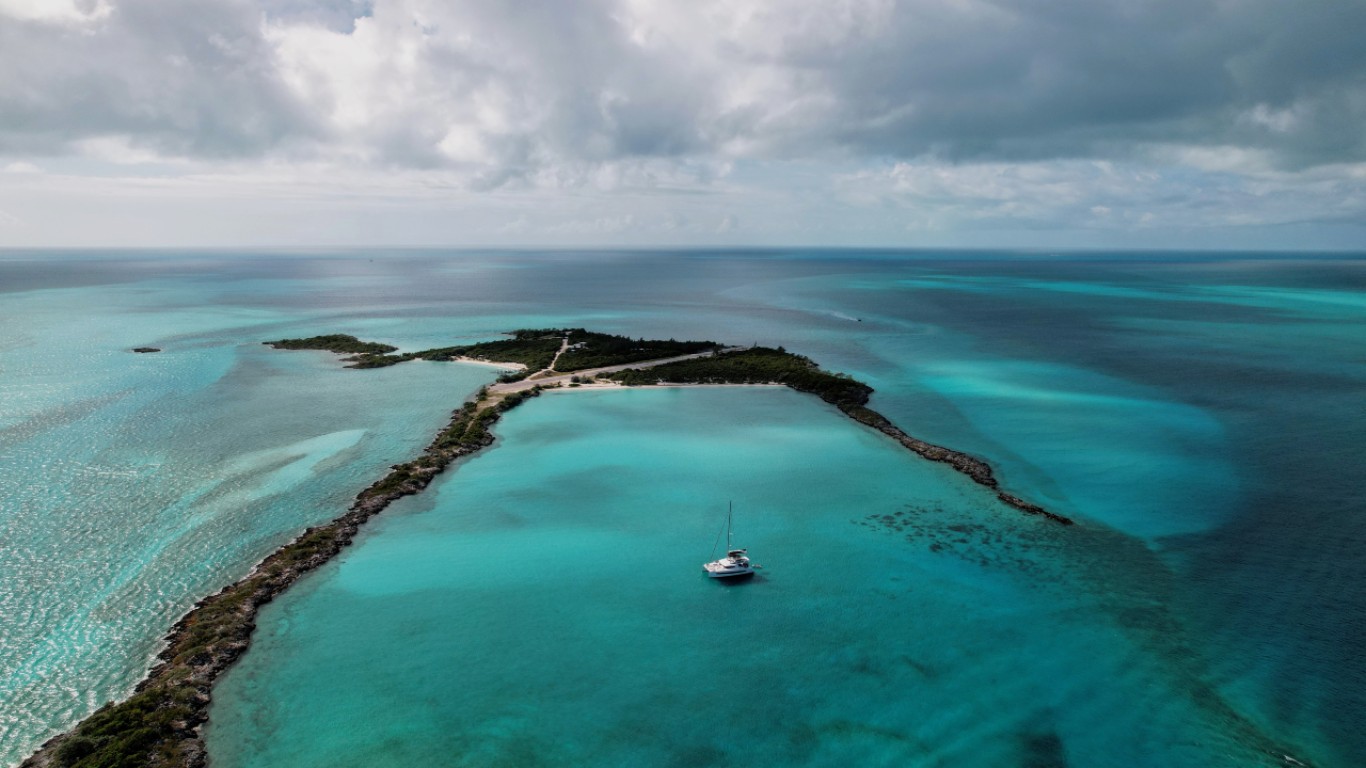
Alquiler de yate con tripulación en las Bahamas
Explore las Exumas en un yate privado con tripulación. Cerdos nadadores, bancos de arena y algunas de las aguas más cristalinas del mundo.
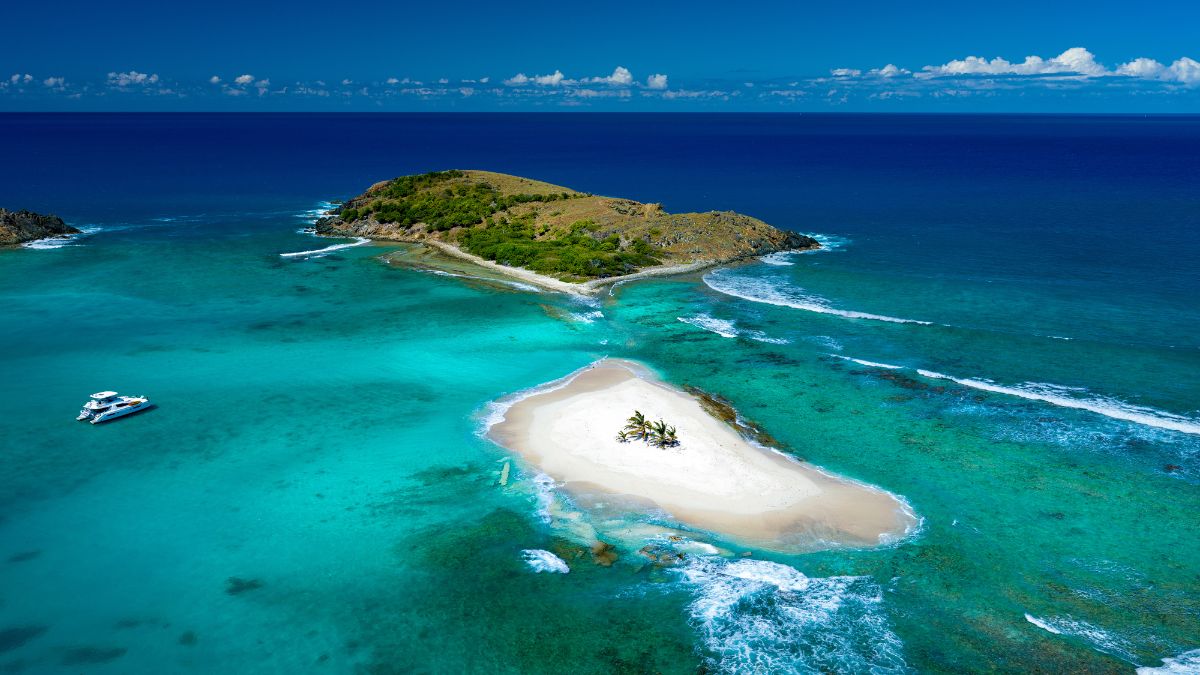
Alquiler de yate con tripulación en el Caribe
Alquiler de yate todo incluido con tripulación en todo el Caribe — Islas Vírgenes Británicas, Bahamas, Islas Vírgenes de EEUU, St. Martin, Antigua y más.