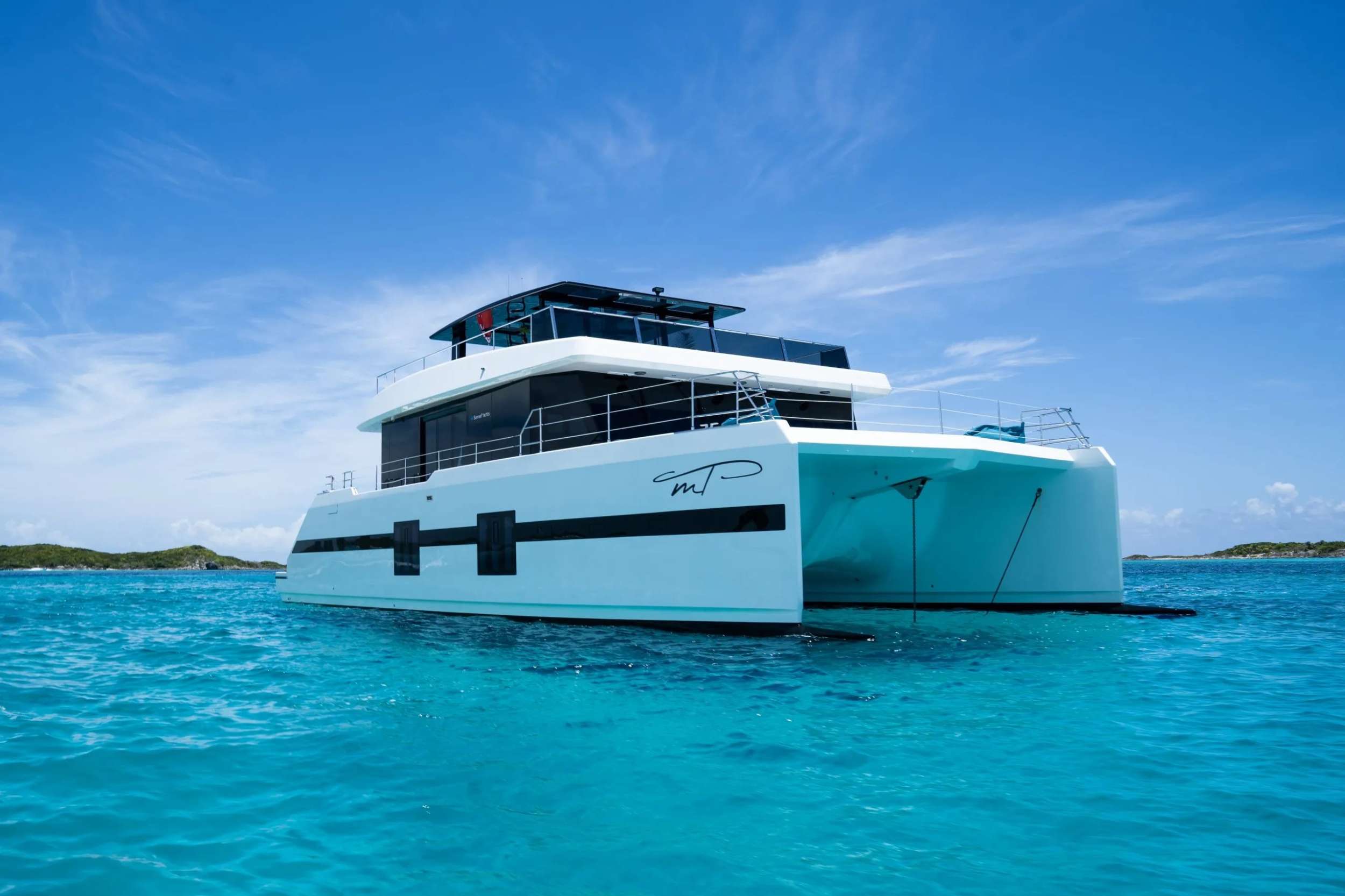

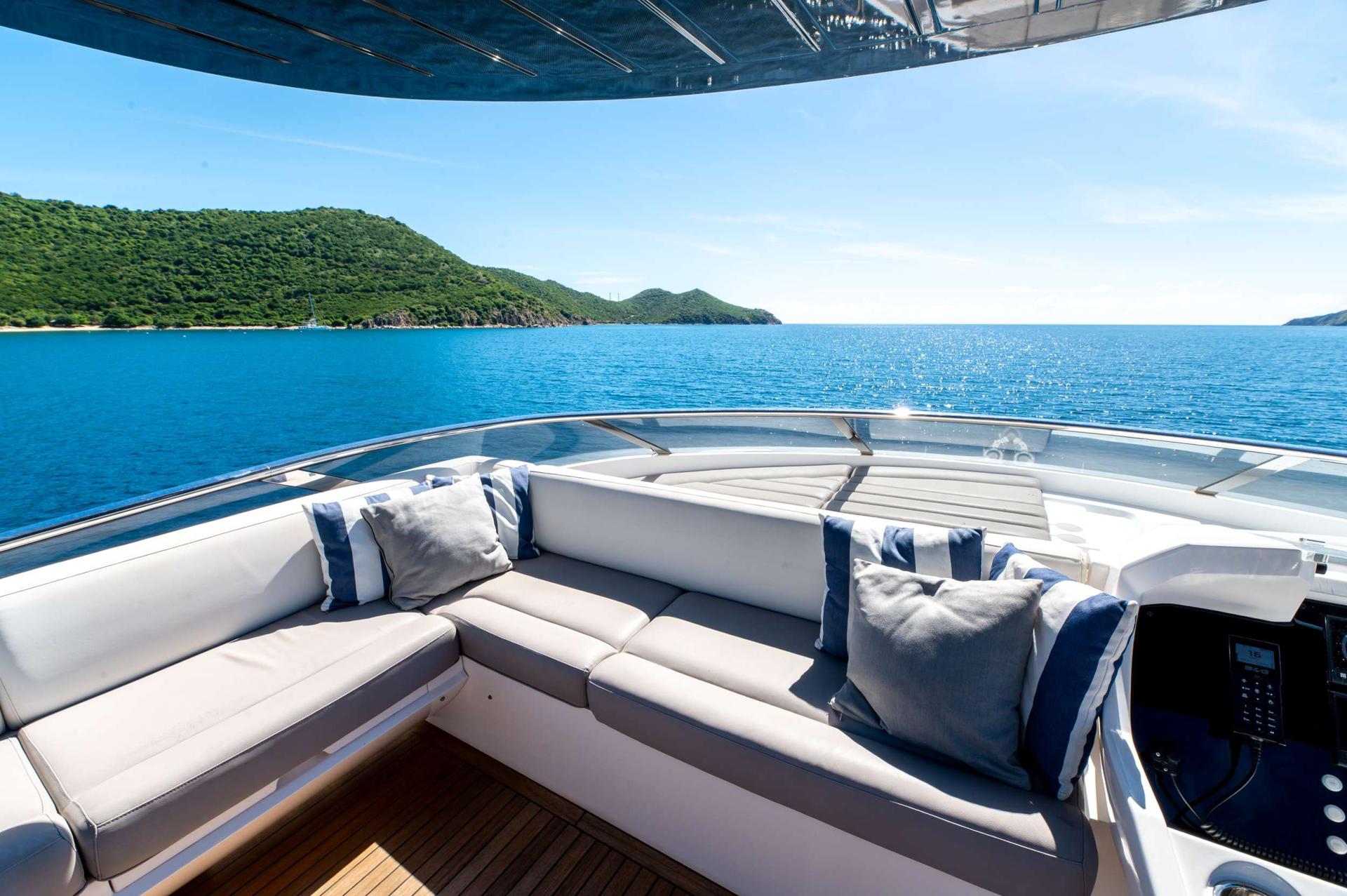
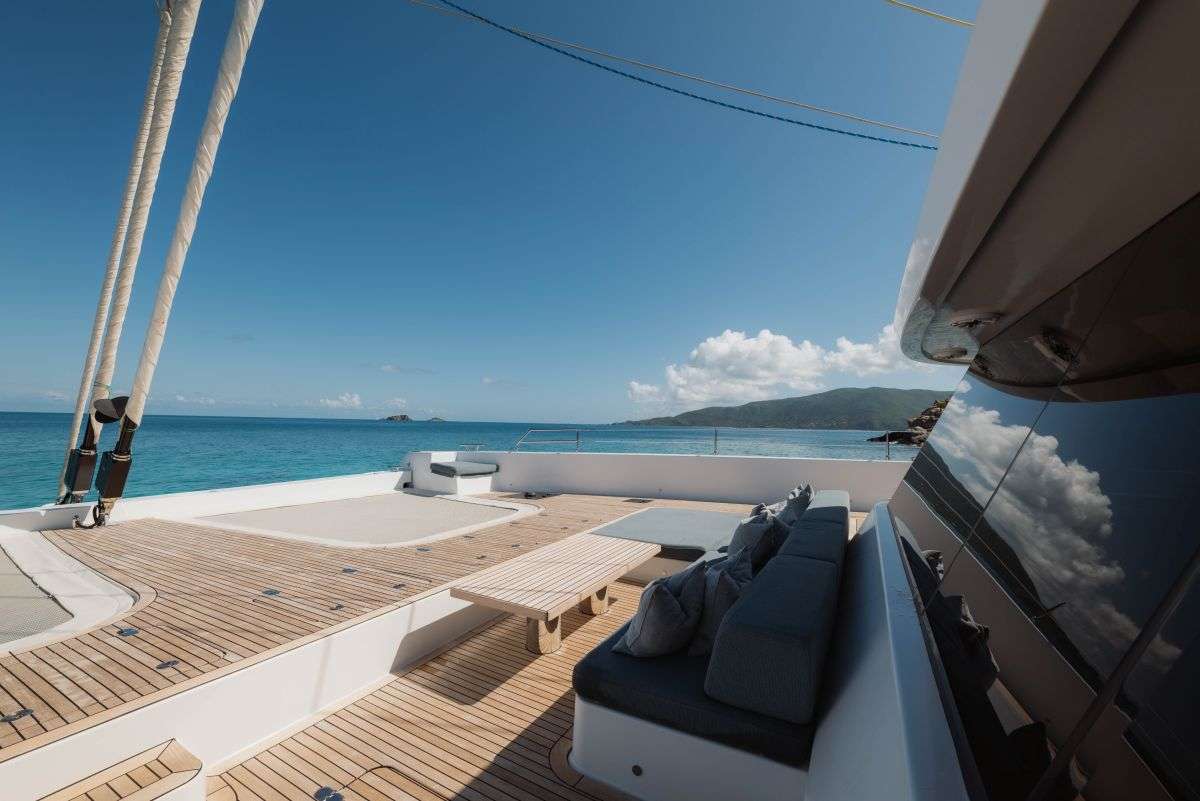
Sapphire
67FT · SAILING CATAMARAN
Desde $58,000/semana
8 Guests · 4 Cabins
Caribbean
Eastern Mediterranean
Western Mediterranean
South Pacific
United States
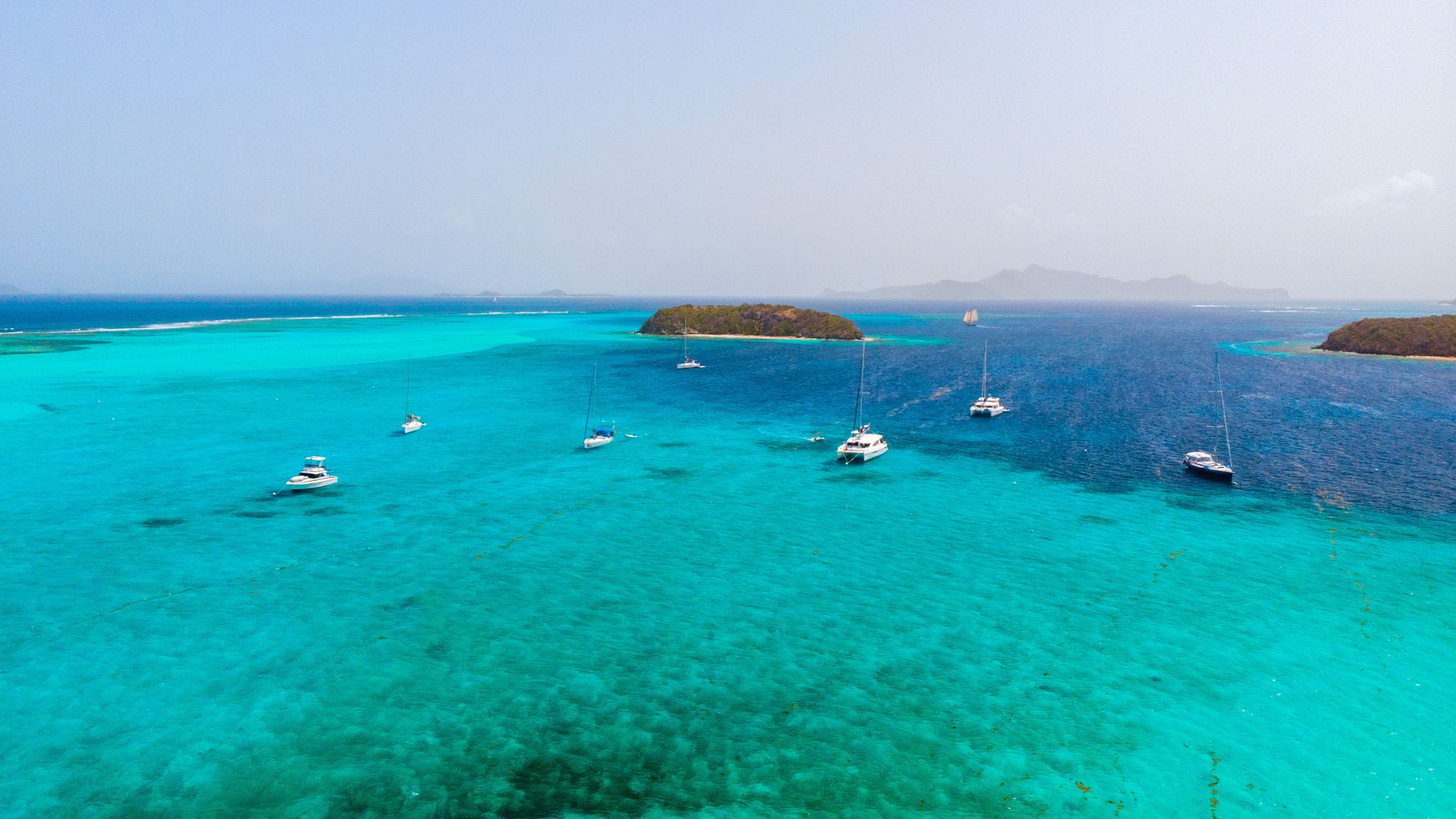
Alquiler de catamaranes y yates a motor con tripulación por las Granadinas — Bequia, Mustique, los Tobago Cays, Mayreau y las islas del sur — con salida desde Argyle International (SVD).
Por qué las Granadinas
San Vicente y las Granadinas es una nación insular independiente al sur de Santa Lucía y al norte de Granada, anclada en la isla volcánica principal de St. Vincent y en una cadena de islas más pequeñas —las Granadinas— que se extienden 60 millas náuticas hacia el sur. Esta cadena es el destino de navegación más fotografiado del Caribe oriental: cayos de arena blanca, arrecifes bordeados de granito y una columna de agua alimentada por el Atlántico, notablemente más clara que la de los fondos más cerrados del norte.
Un yate con tripulación es la manera más práctica de recorrerlas. Las Granadinas no cuentan con una red de ferris digna de ese nombre, las pistas de aterrizaje de Bequia, Canouan, Mustique y Union Island solo sirven vuelos inter-islas, y las bahías más fotografiadas —el arrecife en herradura de los Tobago Cays, Salt Whistle Bay en Mayreau, Petite Tabac frente a Union— solo son accesibles desde el agua. El capitán se encarga de los trayectos entre islas, el chef hace el aprovisionamiento en Bequia o Canouan, y los huéspedes desembarcan en islas privadas o restaurantes de playa sin preocuparse por la logística.
Lo que distingue a las Granadinas de los destinos de viaje en yate más conocidos del Caribe es la extraordinaria variedad de personalidades que ofrece en una sola semana. Bequia tiene un puerto de trabajo con constructores de barcos y regatistas de la Easter Regatta. Mustique es una isla privada con 100 villas donde Mick Jagger y David Bowie pasaban sus inviernos. Canouan alberga la marina de superyates más grande del Caribe oriental en Glossy Bay, junto a un resort Mandarin Oriental. Mayreau es la Granadina habitada más pequeña — una sola franja de palmeras entre dos playas. Pocos destinos de navegación en el Caribe concentran tanta variedad en 60 millas náuticas.
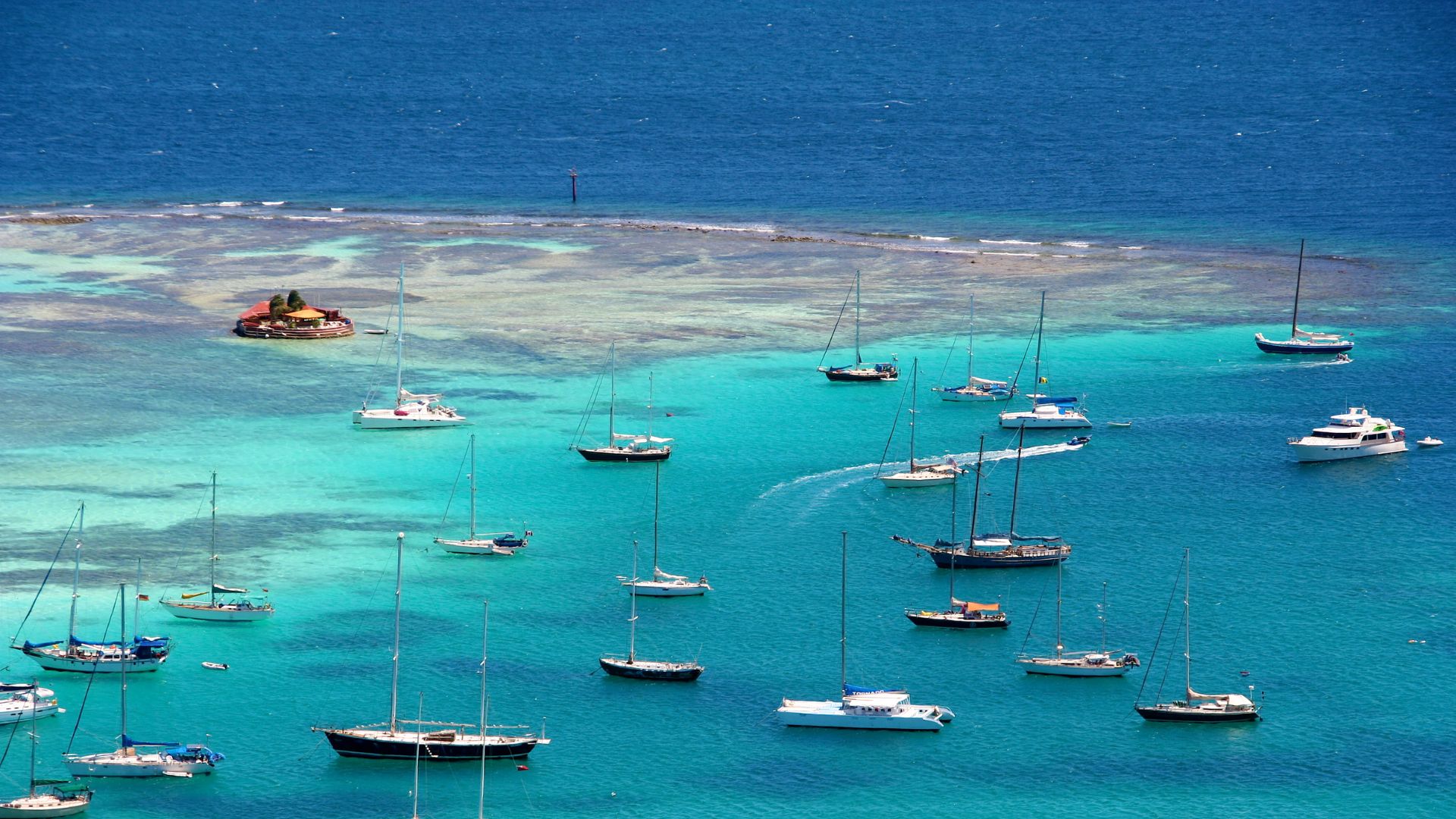
Cuatro características que distinguen a las Granadinas de otros destinos de viajes en yate en el Caribe.
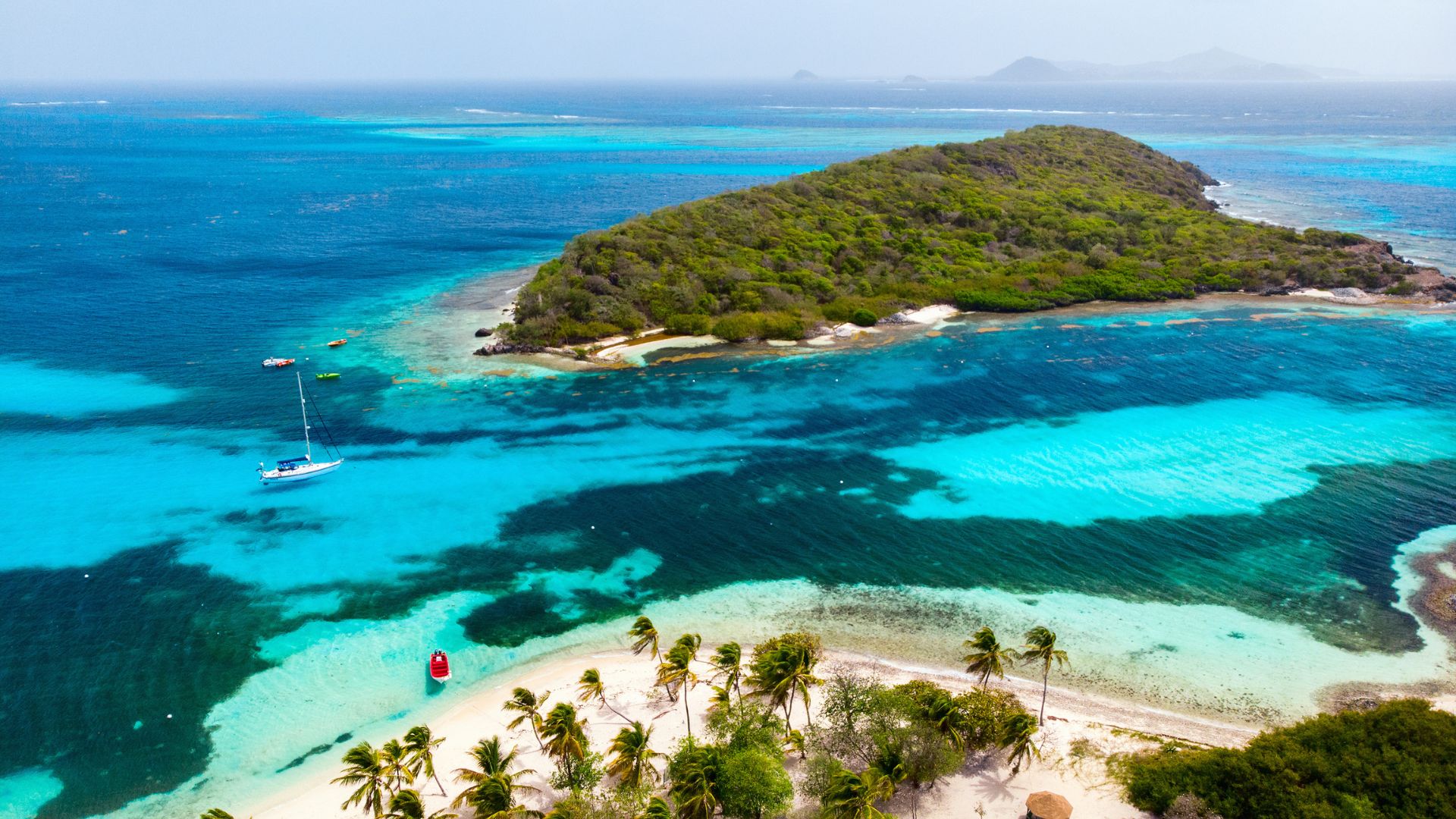
Cinco cayos deshabitados dentro de una reserva marina protegida, rodeados por el Horseshoe Reef. La visibilidad para buceo con snorkel alcanza entre 15 y 21 metros. Las tortugas marinas se alimentan en las praderas de seagrass dentro de la laguna en cada marea, y el arrecife se mantiene en mejor estado que la mayoría de los del Caribe — sin urbanización costera, campos de boyas de amarre limitados y una Autoridad de Parques Nacionales que gestiona activamente el acceso. La bahía más fotografiada del Caribe oriental.
Britannia Bay frente a Mustique se llena con los yates más reconocibles de la temporada antes de Año Nuevo, y se vacía con la misma rapidez al terminar las fiestas. A cuarenta y cinco millas náuticas al sur, las bahías frente a Petite Tabac, Mopion y los extremos meridionales de los Tobago Cays a menudo reciben solo uno o dos yates durante toda una tarde. La cadena lo admite todo — un sundowner en Basil's Bar una noche y un almuerzo en un banco de arena al día siguiente.
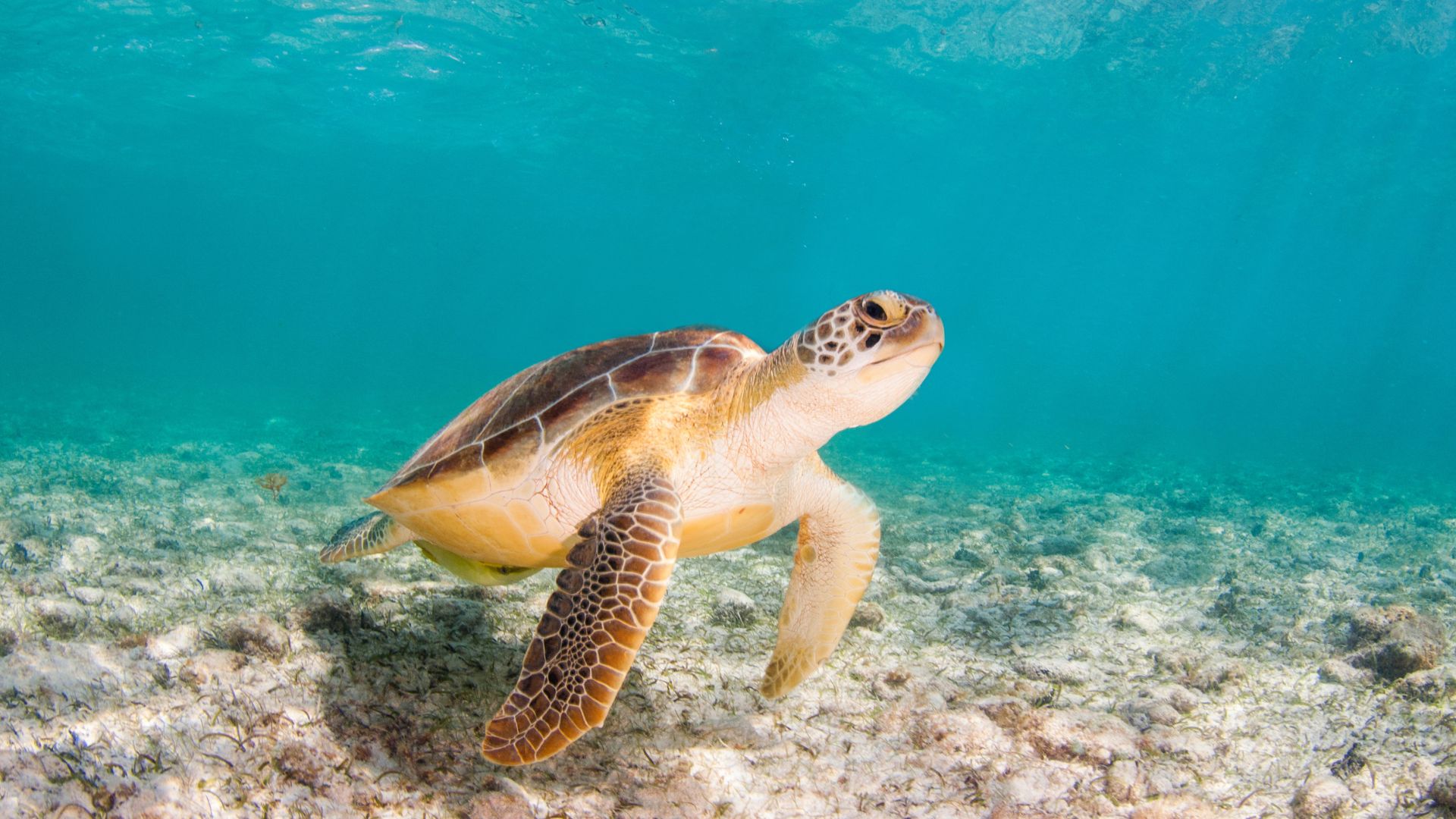
El Parque Marino de los Tobago Cays es uno de los lugares más seguros del Caribe para nadar con tortugas carey y tortugas verdes — un grupo protegido se alimenta en los pastos marinos frente a Baradal Cay durante todo el año. El buceo con snorkel en el arrecife mantiene el mismo nivel alrededor de Mayreau Gardens, World's End Reef frente a Union y el tramo de Petit Nevis. Las ballenas jorobadas migran por la cadena de enero a abril; las Granadinas son uno de los pocos destinos del Caribe donde se avistan de forma habitual desde un yate.
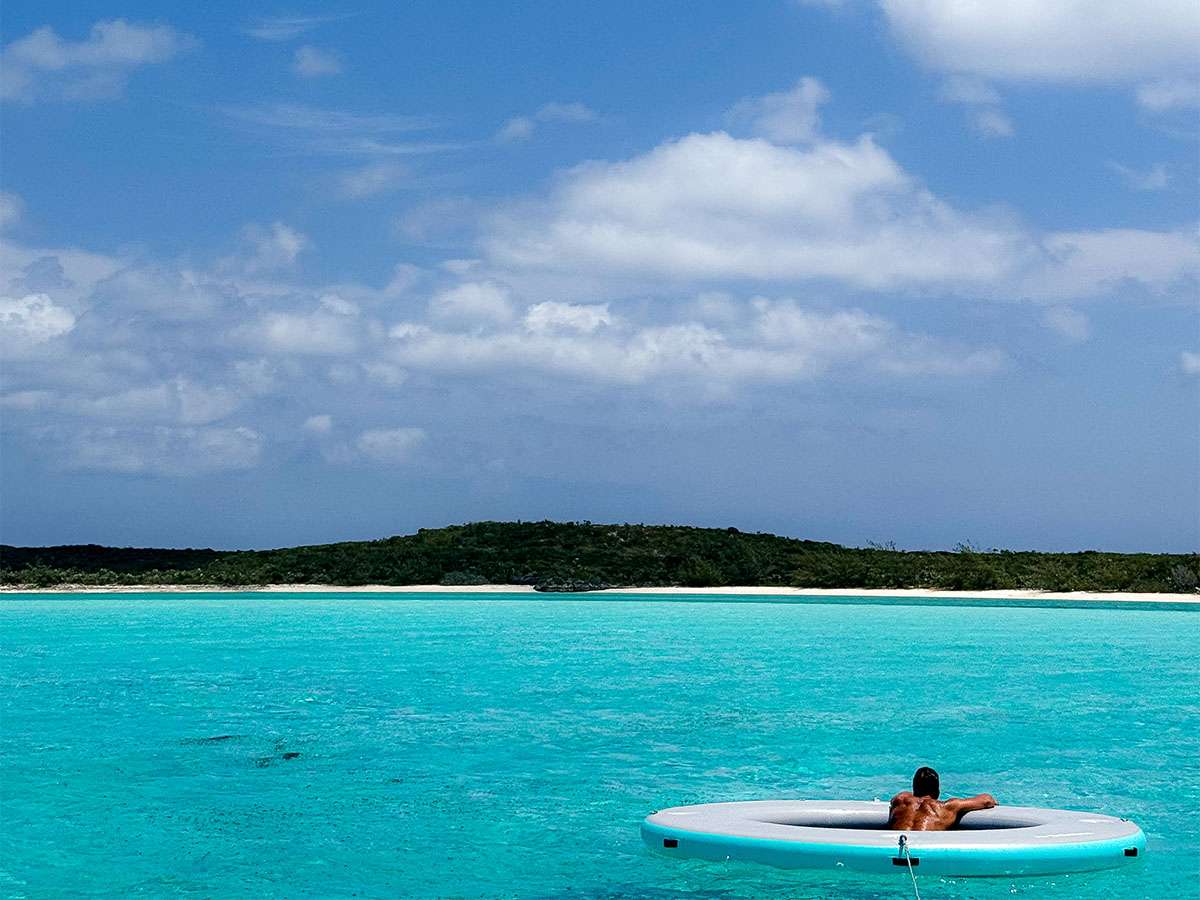
Macaroni Beach en Mustique es media milla de arena fina como el azúcar con un solo restaurante como telón de fondo. Mopion — un banco de arena de treinta metros con una sola sombrilla de paja — se encuentra en el mar entre Petit St. Vincent y Petit Martinique, y es la fotografía de rigor para cualquier huésped que la visita. Salt Whistle Bay en Mayreau es el plano más emblemático de la cadena: una estrecha franja de palmeras entre una playa atlántica y una playa de sotavento. Princess Margaret Beach en Bequia cierra el círculo con el ambiente auténtico de una isla viva, a un paseo en lancha auxiliar del pueblo.
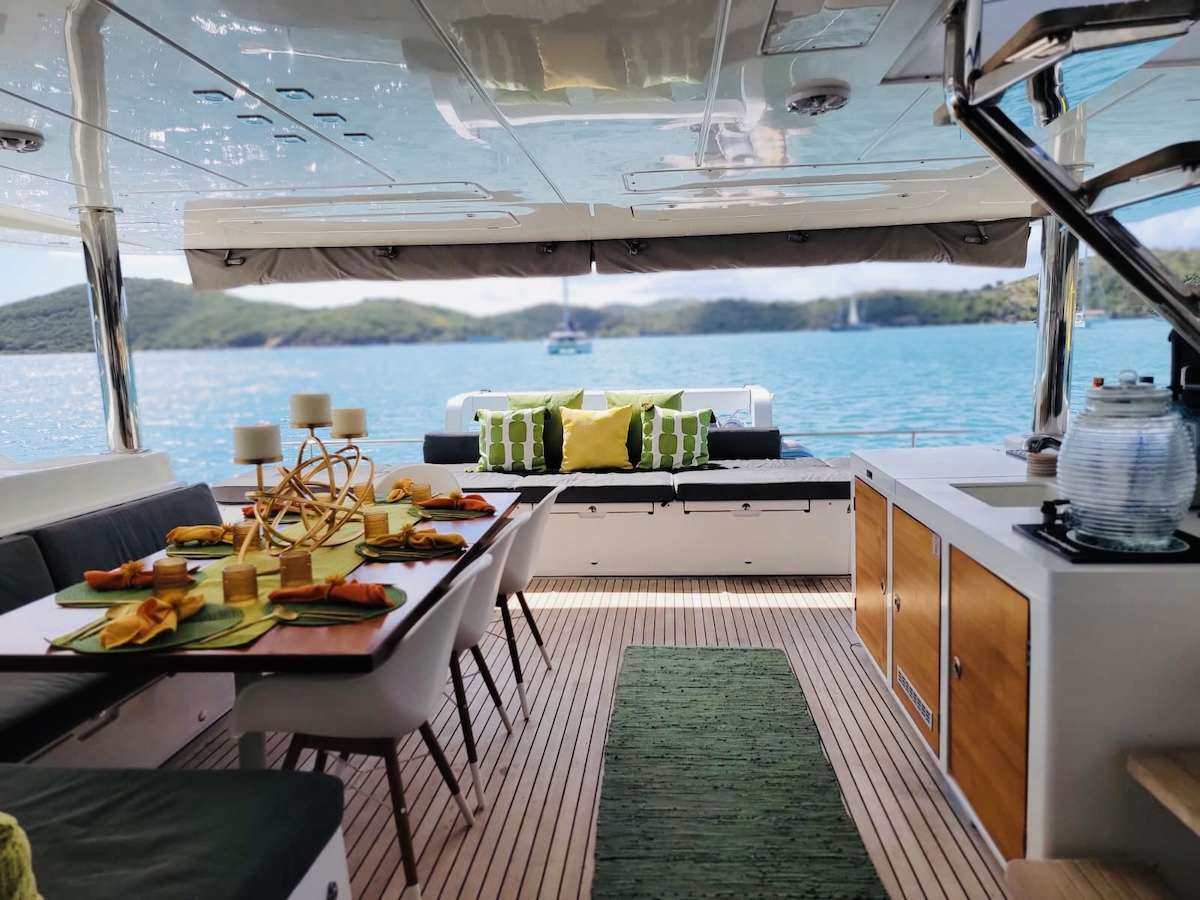
A hand-picked selection of crewed charter yachts for St. Vincent and the Grenadines — yachts and crews we know firsthand.
Your week is shaped around your group's interests, the season, and the conditions on the water — your captain tailors the days as they unfold. Treat these itineraries as starting points for inspiration.
Itinerario con tripulación · San Vicente y las Granadinas
Si el Caribe tiene un viaje en yate que supera de forma constante a su reputación, son las Granadinas. La cadena baja al sur desde San Vicente como un conjunto de piedras de paso —Bequia, Mustique, Canouan, Mayreau, los Tobago Cays, Union, Petit St. Vincent, Palm Island—, cada una lo bastante pequeña para recorrerla a pie, cada una su propia clase de postal. Los vientos alisios soplan de forma constante del este-noreste durante la temporada alta, las islas están separadas de 10 a 25 millas náuticas, y el Parque Marino de los Tobago Cays es una de las grandes experiencias acuáticas del hemisferio occidental. La mayoría de los huéspedes que reservan este viaje en yate vuelven preguntándose por qué alguien va a otra parte.
Nuestro itinerario de siete días empieza en Blue Lagoon Marina, en San Vicente, y trabaja hacia el sur por la cadena hasta Petit St. Vincent antes de regresar hacia arriba. Unas 125 millas náuticas en total a lo largo de la semana, sin ninguna etapa de más de 32 millas y la mayoría de los días entre 10 y 25. Con tu capitán profesional y tu chef privado llevando el barco, las únicas decisiones reales que necesitas tomar son en qué playa almorzar y cuánto demorarte con una copa al atardecer en Basil's. La ruta está estructurada en torno a los alisios dominantes —con viento de popa al sur la primera mitad, regresos más fáciles hacia el norte la segunda— así que el barco siempre va apuntado en la dirección correcta para lo que sea que haga el viento.
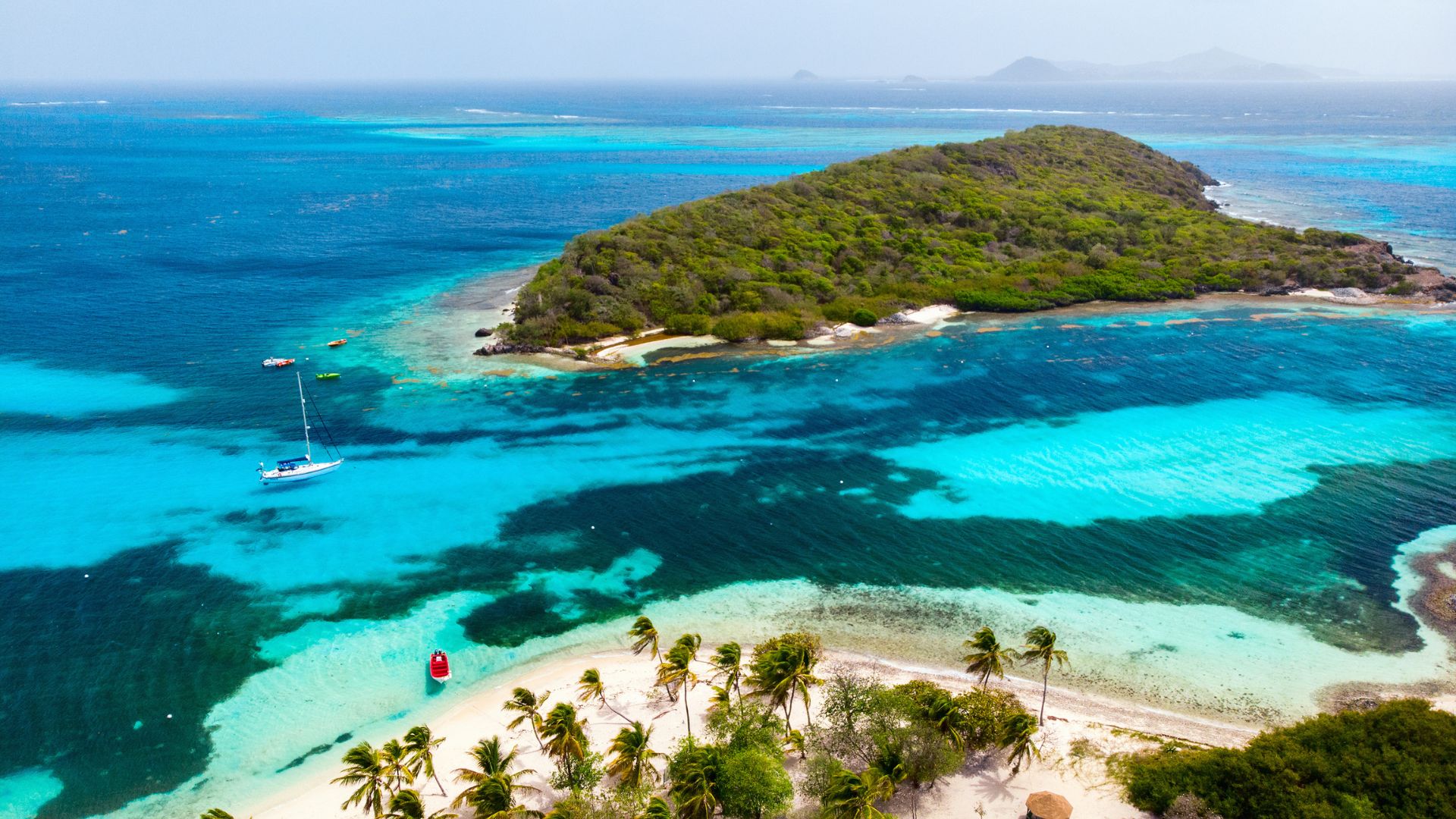
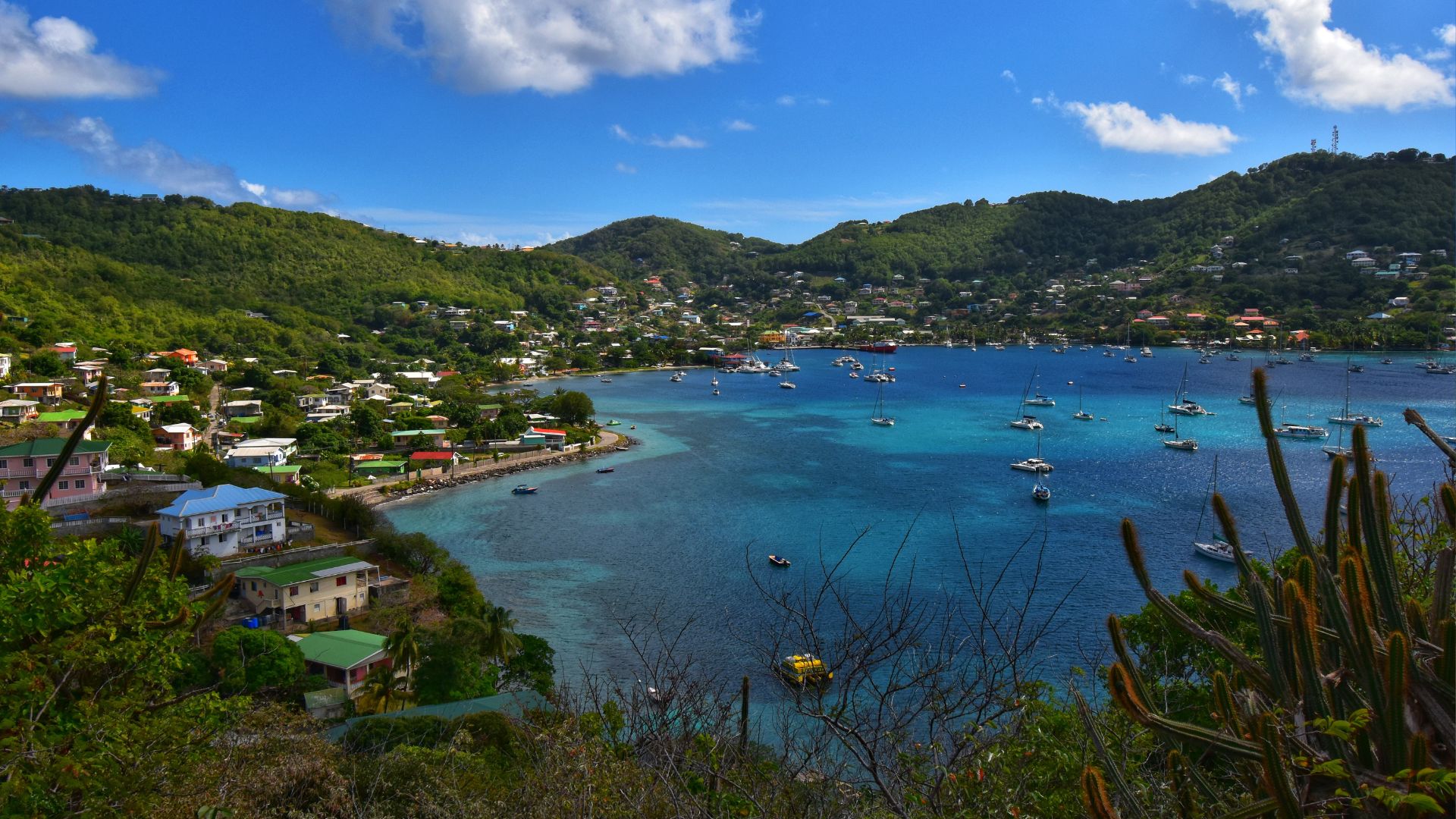
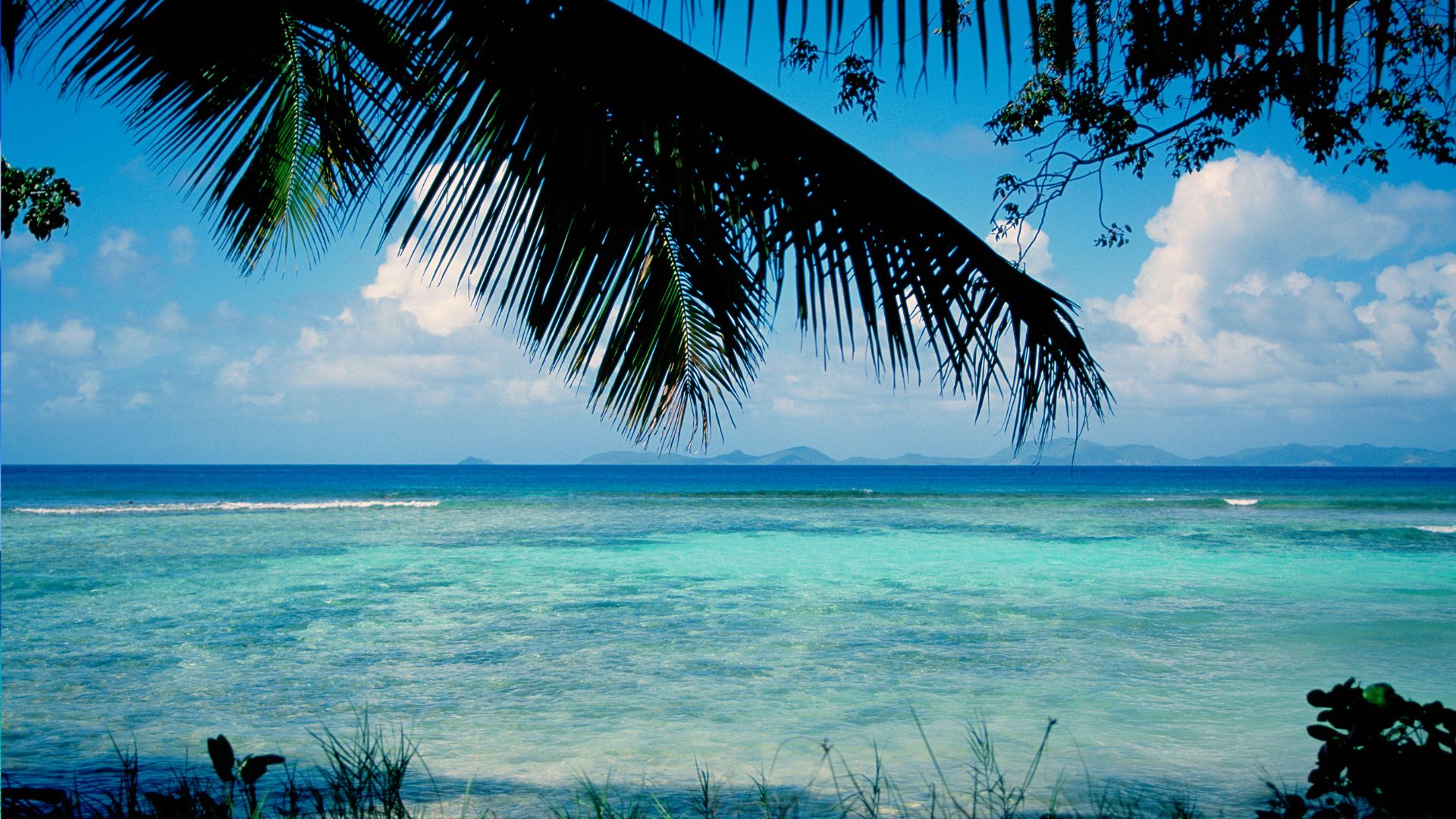
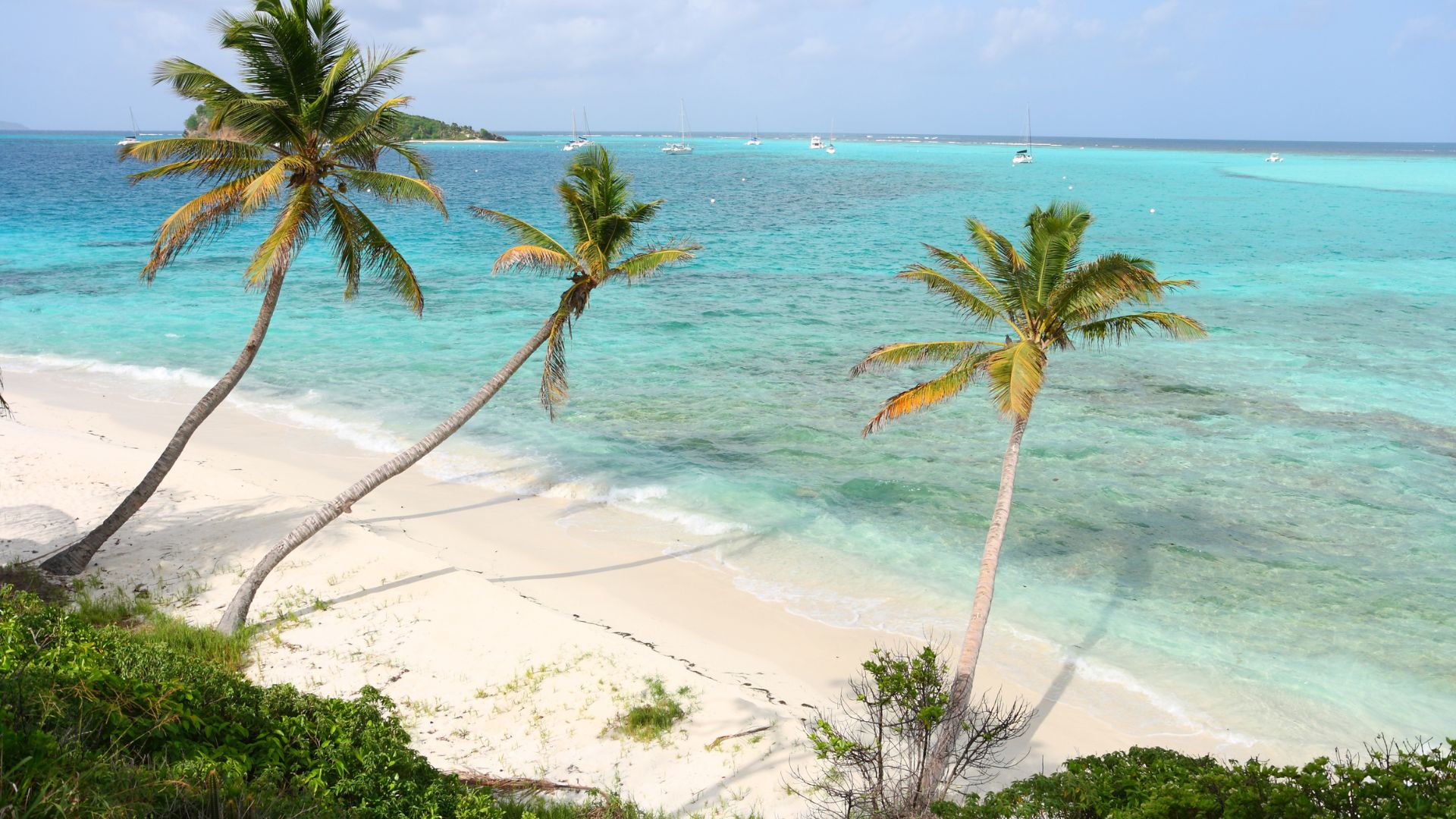
Las Granadinas son el secreto de viaje en yate mejor guardado del Caribe. Bequia (el puerto de escala fácil de recorrer a pie), Mustique (parada de día en isla privada, almuerzo en el club de playa de Basil's), Mayreau y el Parque Marino de los Tobago Cays (el momento acuático estrella del viaje: tortugas, tiburones de arrecife, el fondeadero del Horseshoe Reef), Union, Petit St. Vincent, y Canouan a la vuelta. Vientos alisios de 15 a 20 nudos, agua cercana a los 26 °C, sin meltemi ni preocupación por el corredor de huracanes en temporada.
Unas 125 millas náuticas a lo largo de la semana, con la etapa más larga en torno a las 32 mn y la mayoría de los días entre 10 y 25. La ruta está modelada en torno a los alisios dominantes: con viento de popa al sur la primera mitad, regreso de ceñida más fácil la segunda. Cada viaje en yate por las Granadinas que enviamos se personaliza: más tiempo en los Tobago Cays, más rato en Petit St. Vincent, una parada más corta en Mustique; tu capitán moldea los días en torno a tu grupo.
Día 1 de 7 · Blue Lagoon → Bequia
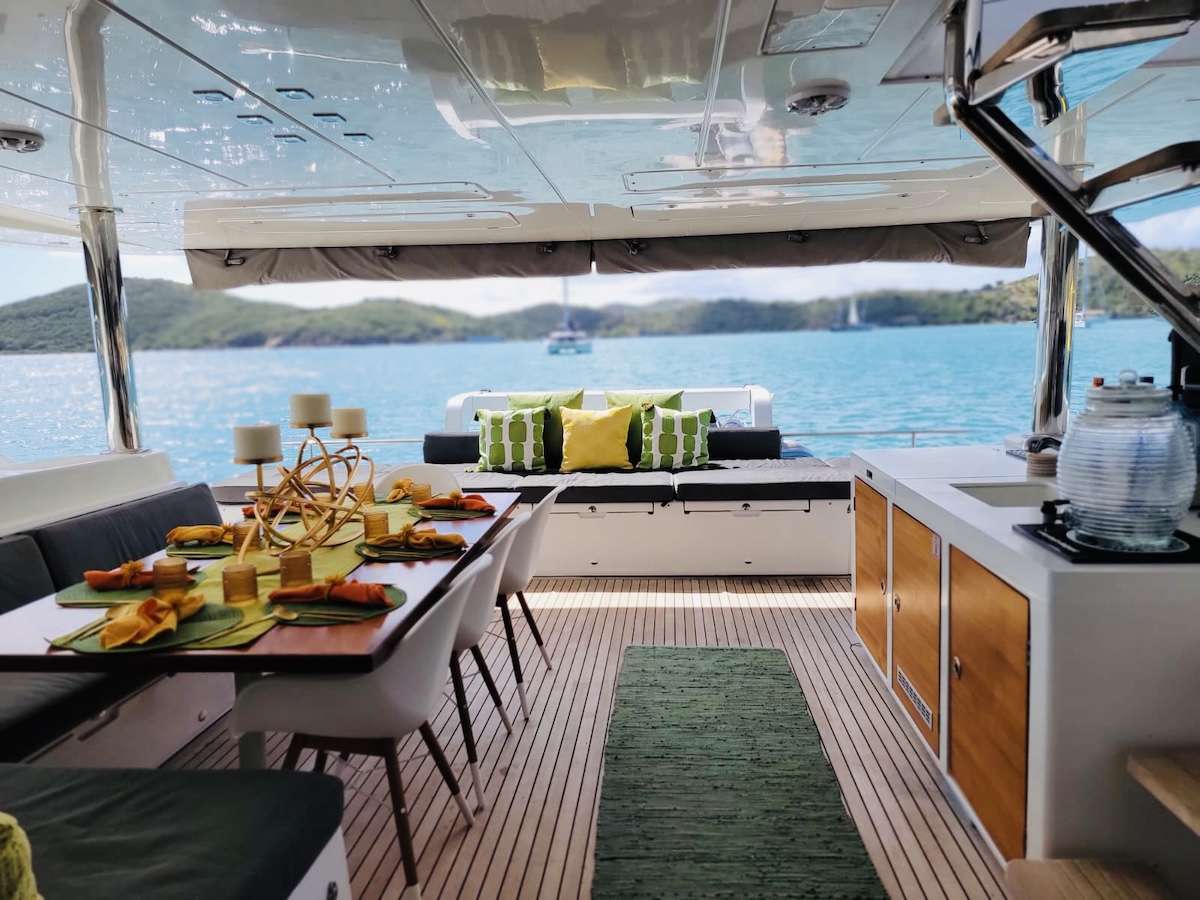
Tu semana empieza en Blue Lagoon Marina, en la costa suroeste de San Vicente, a un corto traslado del aeropuerto de Argyle International. Tu tripulación profesional te recibe en el amarre con bebidas frías y un repaso de la carta náutica que enmarca la ruta que viene, te enseña el barco, y guarda tu equipaje. La marina se asienta dentro de una laguna protegida por arrecife con un estrecho corte al Caribe abierto: un punto de partida en calma antes de la primera navegación.
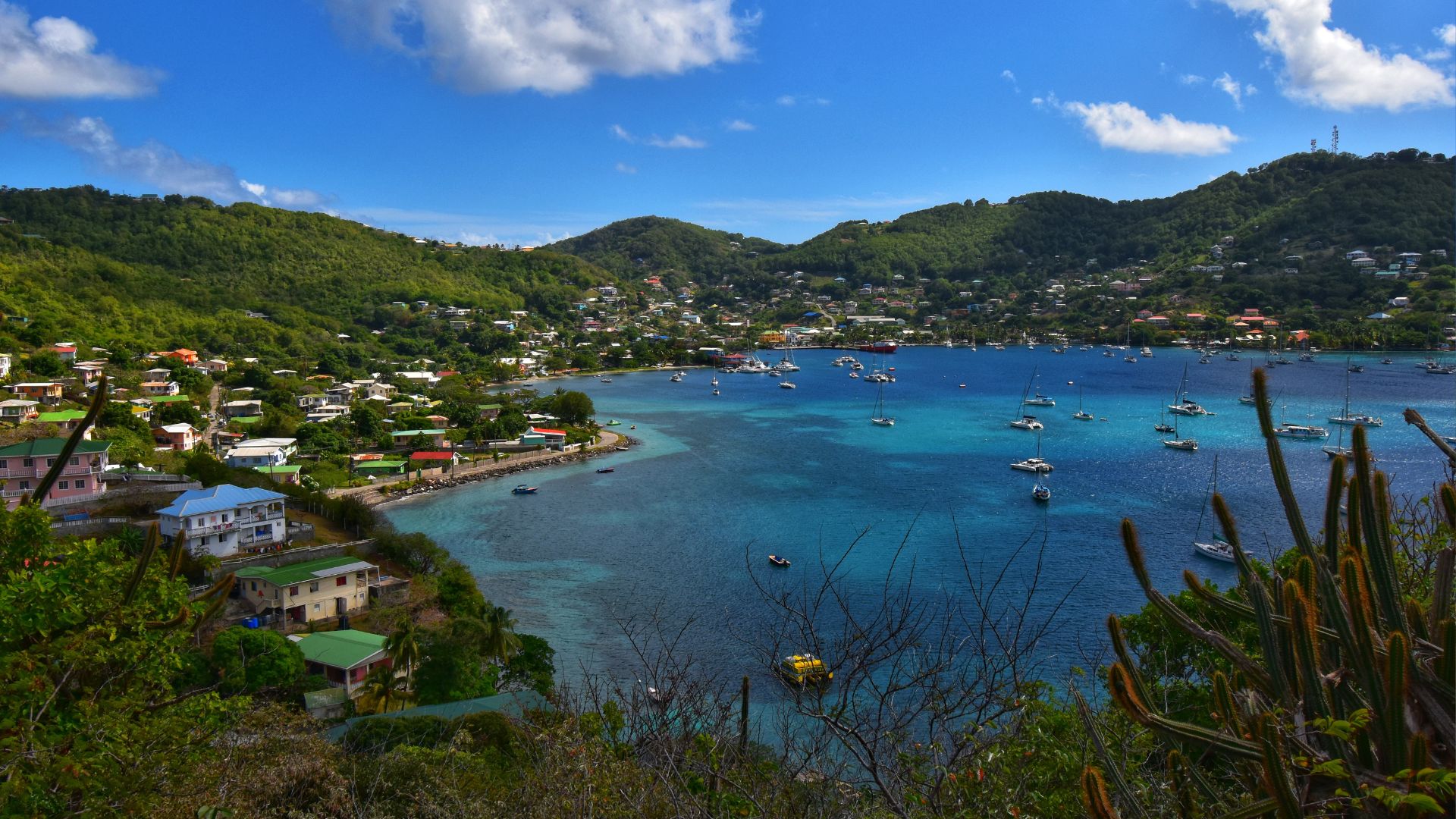
Hacia media mañana, fuera amarras para el fácil través de nueve millas náuticas al sur hasta Bequia. Es la etapa más suave de la semana, deliberadamente corta para que todos cojan las piernas de mar sin comprometerse a una larga travesía el primer día. La costa suroeste de San Vicente se desliza por babor, luego el canal abierto a Bequia, luego Admiralty Bay se abre en la proa: una herradura profunda y bien protegida con veleros al ancla repartidos por la bahía y los edificios pastel de Port Elizabeth envolviendo el paseo marítimo.
Acércate en lancha auxiliar a tierra a última hora de la tarde para un paseo por el Belmont Walkway, el paseo marítimo que enhebra las boutiques, las tiendas de ron y los bares al aire libre de Port Elizabeth. Bequia es la más amistosa y auténticamente caribeña de las Granadinas: una comunidad marinera de trabajo que construyó goletas a mano en la playa hasta bien entrados los años ochenta, y que aún tiene más sal en su carácter que cualquier otra isla de la cadena. Cena a bordo esta noche —tu chef se apoya en la captura local de la lonja de pescado de la mañana— o en tierra en Mac's Pizzeria, arriba en el cerro, por la pizza de langosta que lleva cuarenta años en la carta.
Day Highlights
Día 2 de 7 · Bequia → Mustique
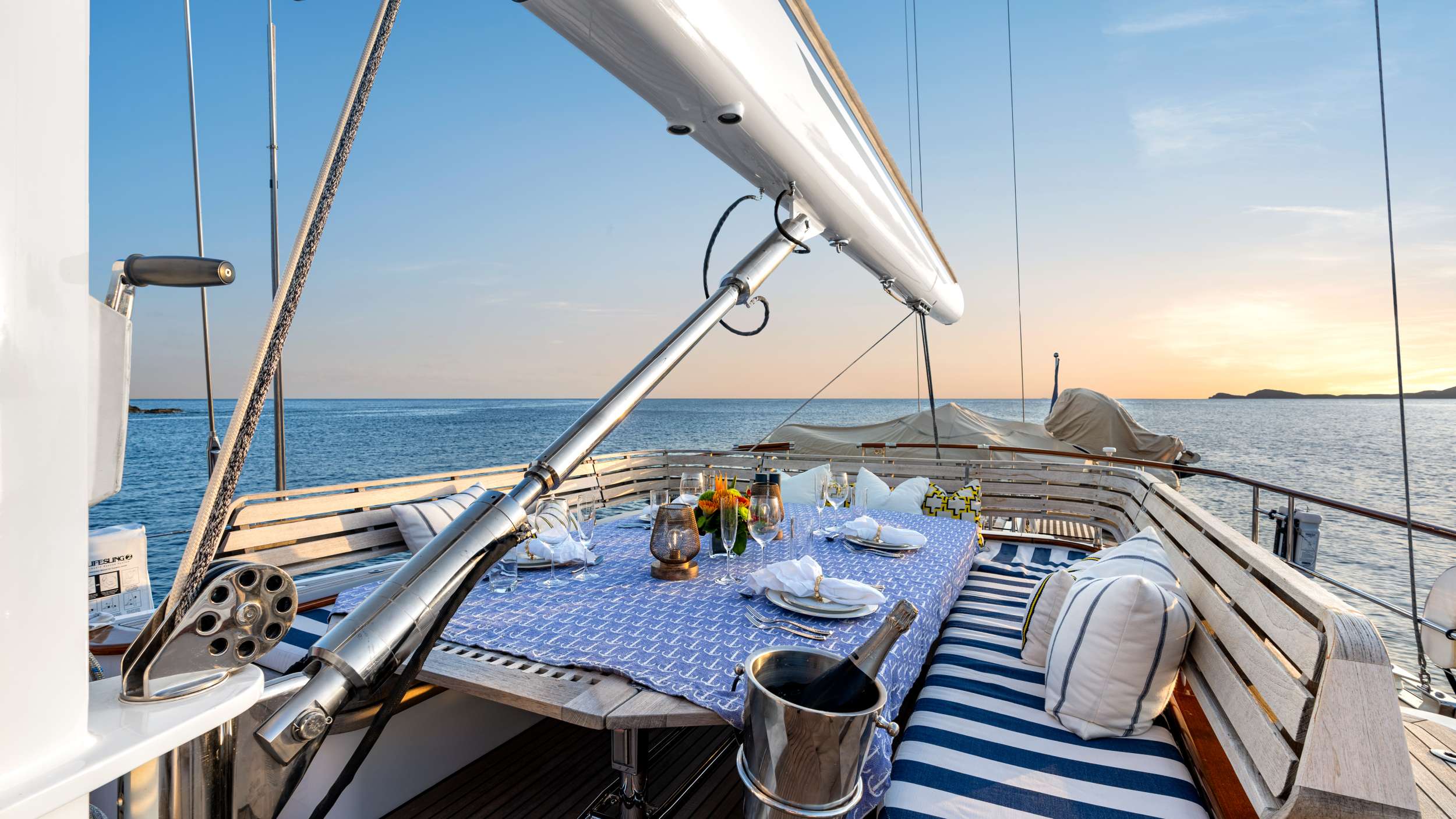
Tras un pausado desayuno a bordo, tu capitán sale de Admiralty Bay para la bajada de dieciséis millas náuticas al sureste hasta Mustique. Los alisios entran a media mañana, y el barco va de través cómodamente por el canal abierto con Bequia quedando atrás y el bajo perfil verde de Mustique creciendo en la proa. Pasarás casi toda la mañana en la cubierta de proa o al timón si quieres un turno a la rueda.
Tu tripulación coge una boya de muerto en Britannia Bay, en la costa oeste de Mustique: el único fondeadero legal de la isla, gestionado por la Mustique Company, que es la dueña del lugar desde 1958. Mustique es la isla privada que la princesa Margarita puso en el mapa y que la pandilla de Mick Jagger / David Bowie / Mark Knopfler mantuvo allí. No hay resorts en el sentido convencional; la isla es una finca privada de unas cien villas y unos pocos edificios de infraestructura de buen gusto, mantenida deliberadamente tranquila. La mayoría de los huéspedes alquila un Kawasaki Mule en la oficina de la compañía en el muelle y pasa la tarde recorriendo la carretera del perímetro: Macaroni Beach en el lado atlántico, el santuario de tortugas en L'Ansecoy Bay, los espectaculares acantilados de barlovento en Endeavor.
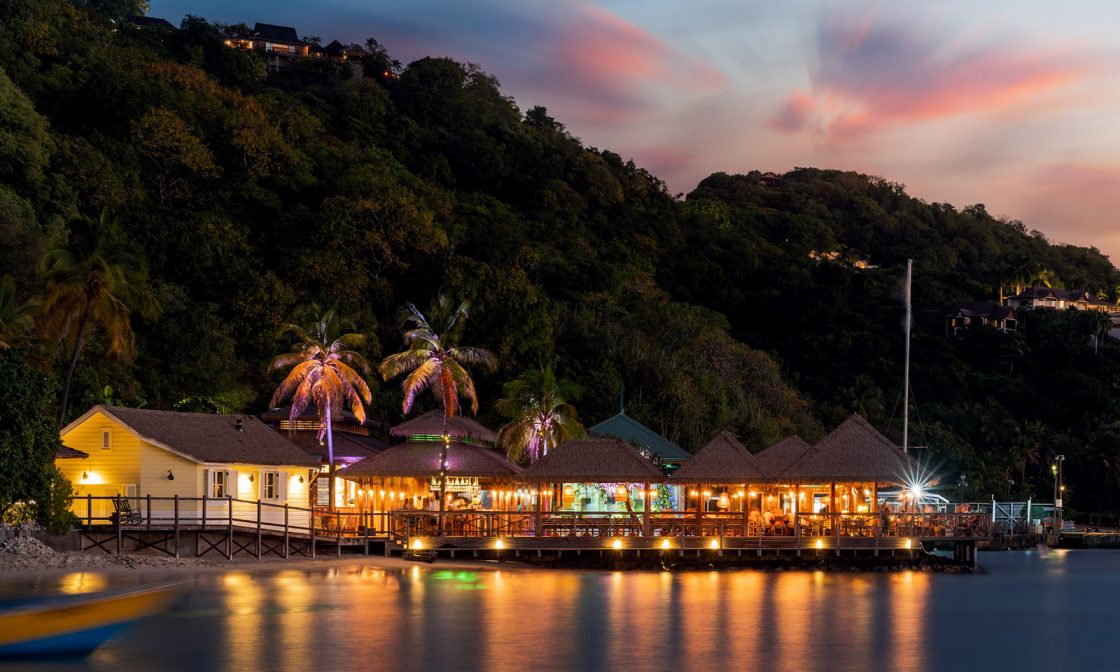
La cena es el titular. Basil's Bar, en Britannia Bay: al aire libre, sobre pilotes en el agua, techo de paja, el bar de playa más famoso del Caribe. El bar recibió un impacto directo del huracán Beryl en julio de 2024 y quedó completamente arrasado; Mick Jagger financió personalmente la reconstrucción, y reabrió a finales de 2024 mejor que antes. El miércoles es la veterana noche de Jump Up, cuando la banda en vivo toca hasta tarde y los inquilinos de las villas de la isla y las tripulaciones de los yates acaban bailando en la misma pista. Las otras noches son más tranquilas, pero la comida es excelente en cualquiera de ellas. Vuelta al barco en lancha auxiliar bajo un cielo caribeño cargado de estrellas.
Day Highlights
Día 3 de 7 · Mustique → Mayreau
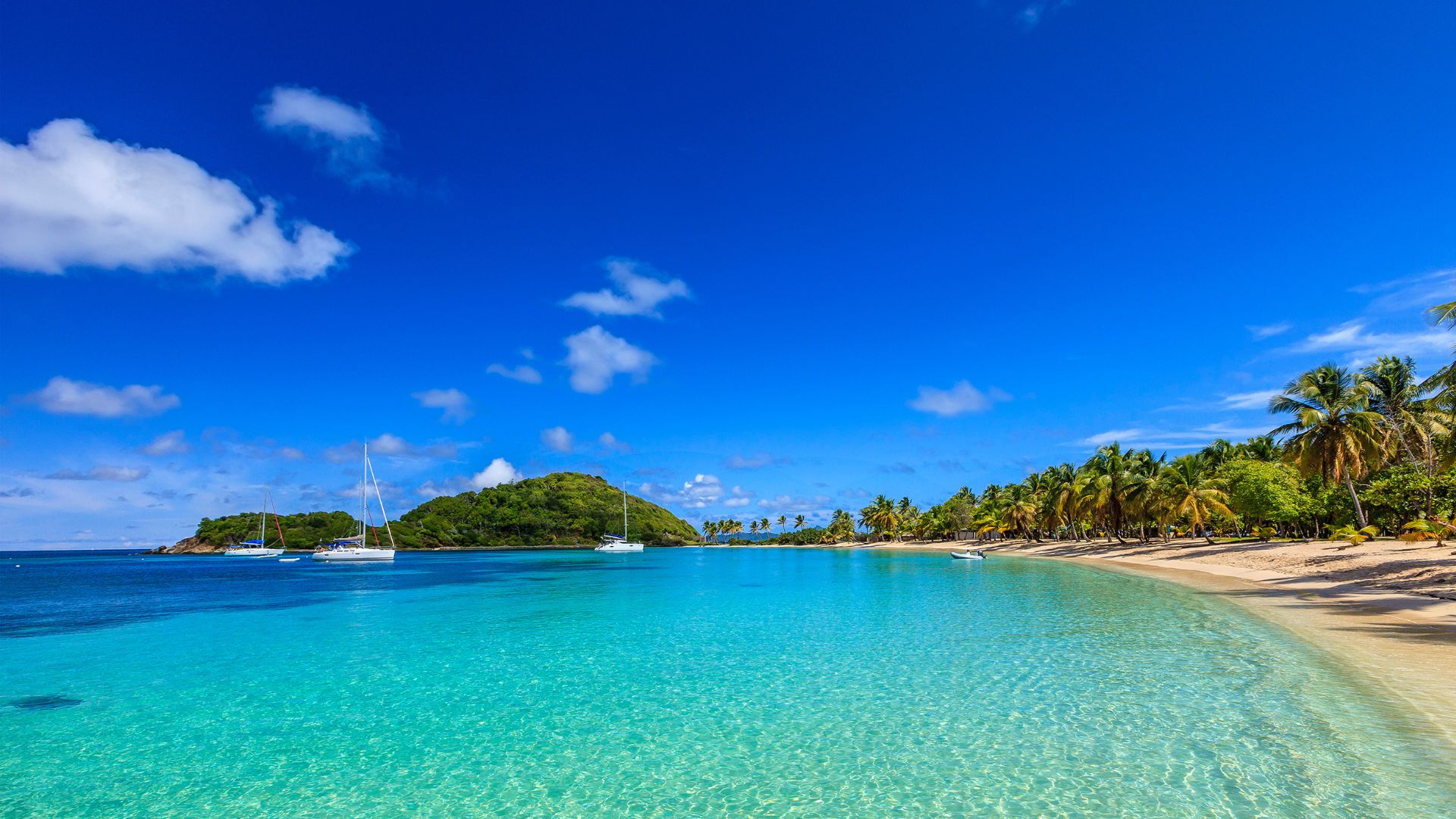
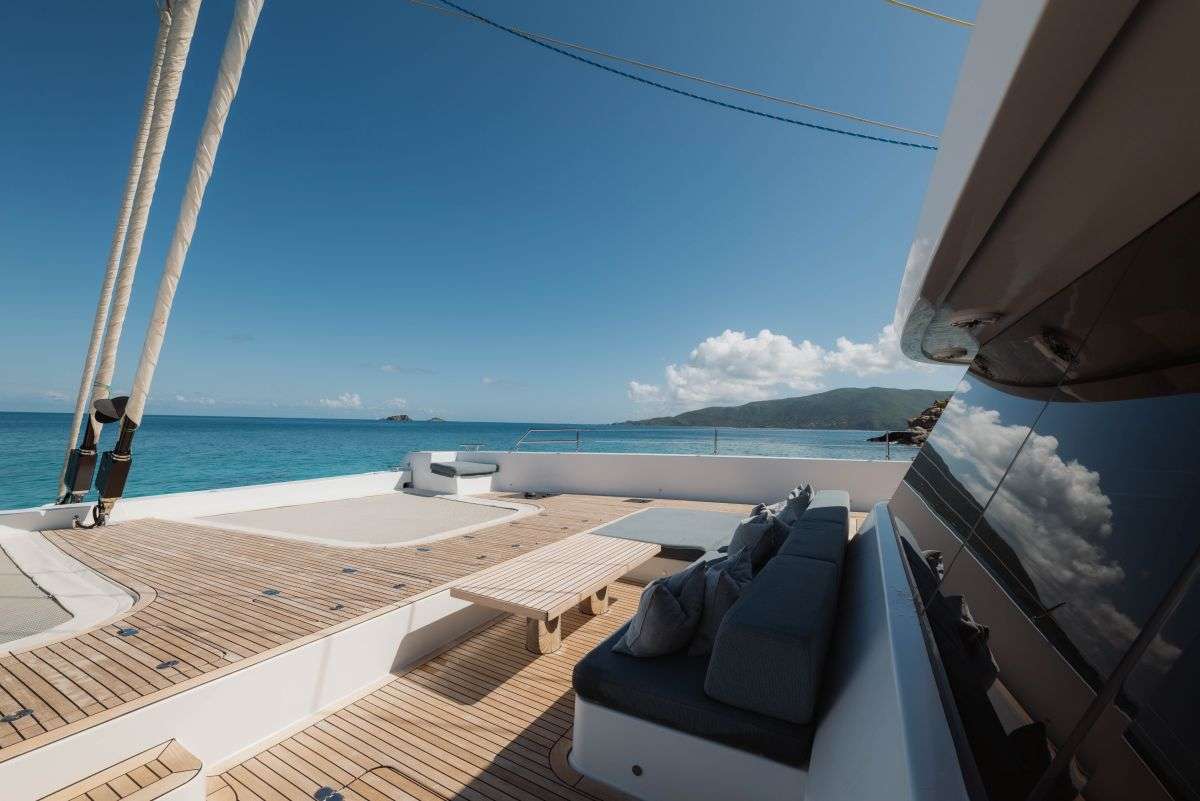
Hoy es el día en que la cadena se abre de verdad. Un través de veinticinco millas con viento de popa al sur te lleva pasando Canouan —una parada que harás a la vuelta— directo hasta Mayreau, la isla habitada más pequeña de las Granadinas y la que alberga el fondeadero individual más bonito de la cadena. La mañana es un largo y fácil través con los alisios firmes por la aleta, las islas de las Granadinas pasando a tu lado por el través de babor como una secuencia de postales.
Salt Whistle Bay se asienta en la punta noroeste de Mayreau: un estrecho cuello de arena bordeada de palmeras de apenas cien metros de ancho, con el Caribe a un lado y el Atlántico abierto al otro. Fondeas en el lado de sotavento y el barco queda en agua plana, clara y de fondo de arena con las palmeras a un tiro de piedra de la proa. La playa en sí es el mejor sitio de baño de la cadena después de los Tobago Cays: poco profunda durante un buen trecho, sin corriente, y lo bastante tranquila como para que algunas tardes la tengas para ti.
Almuerzo al ancla, una tarde nadando y haciendo paddleboard, y un tardío desembarco en lancha auxiliar para un tranquilo paseo al atardecer por la arena. Hay un pequeño pueblo (Old Wall) a unos quince minutos a pie cuesta arriba en el lado sur de la isla si quieres subir hasta la iglesia por la vista hacia los Tobago Cays en los que navegarás mañana. Cena a bordo esta noche, preparada por el chef, el barco apenas moviéndose en su cadena. Este es el día de descanso antes del día estrella.
Day Highlights
Día 4 de 7 · Tobago Cays — día completo
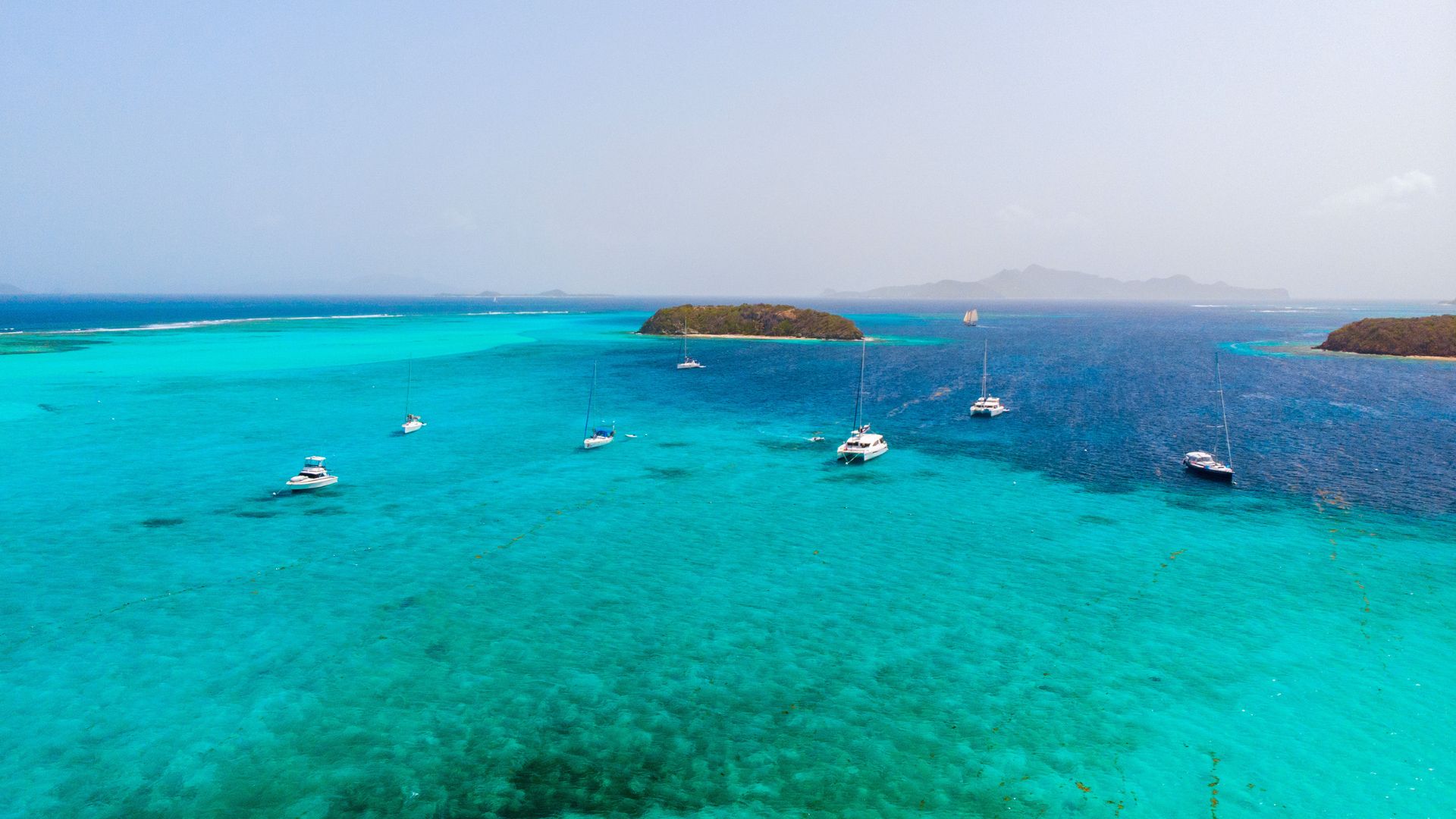
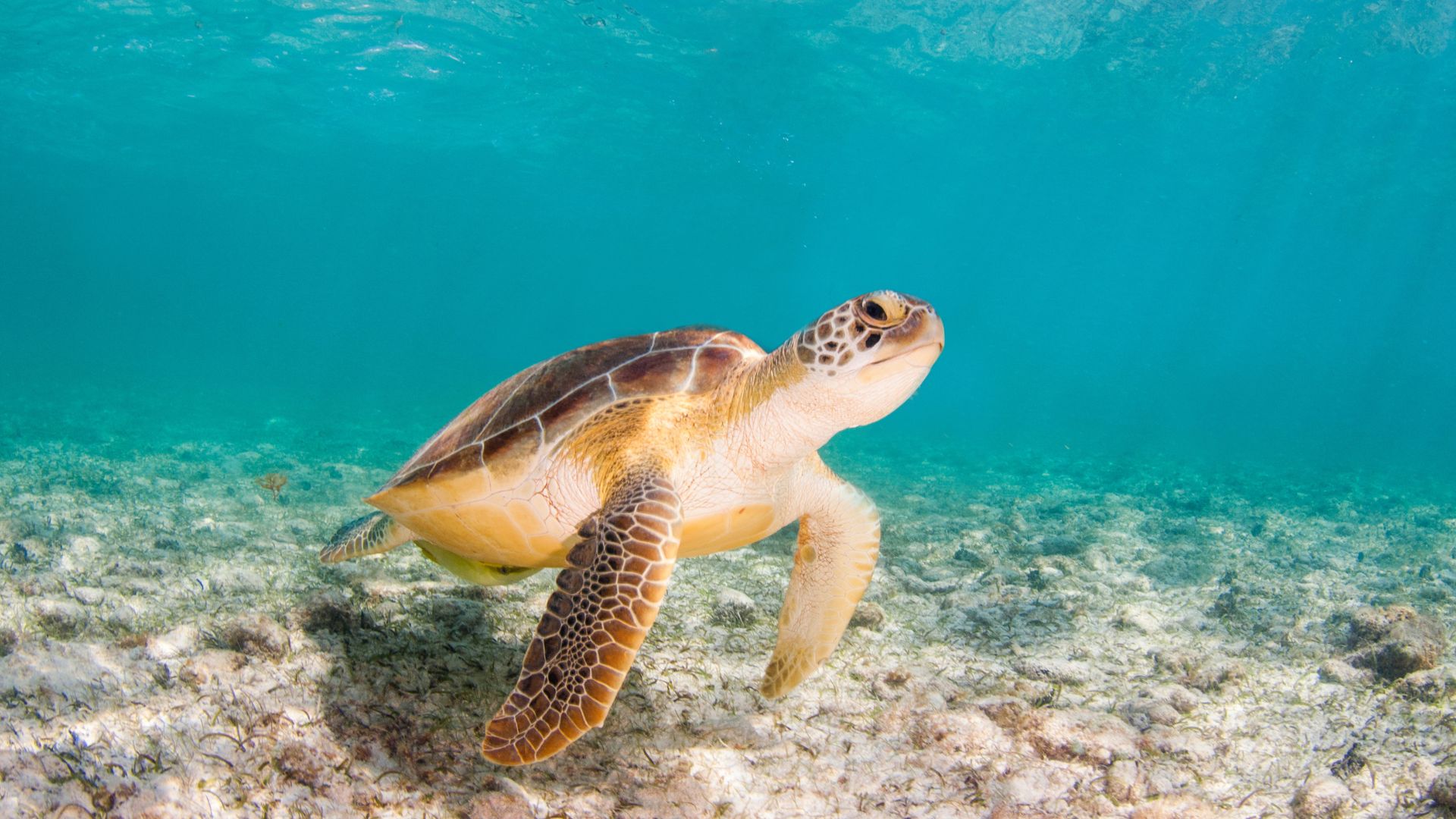
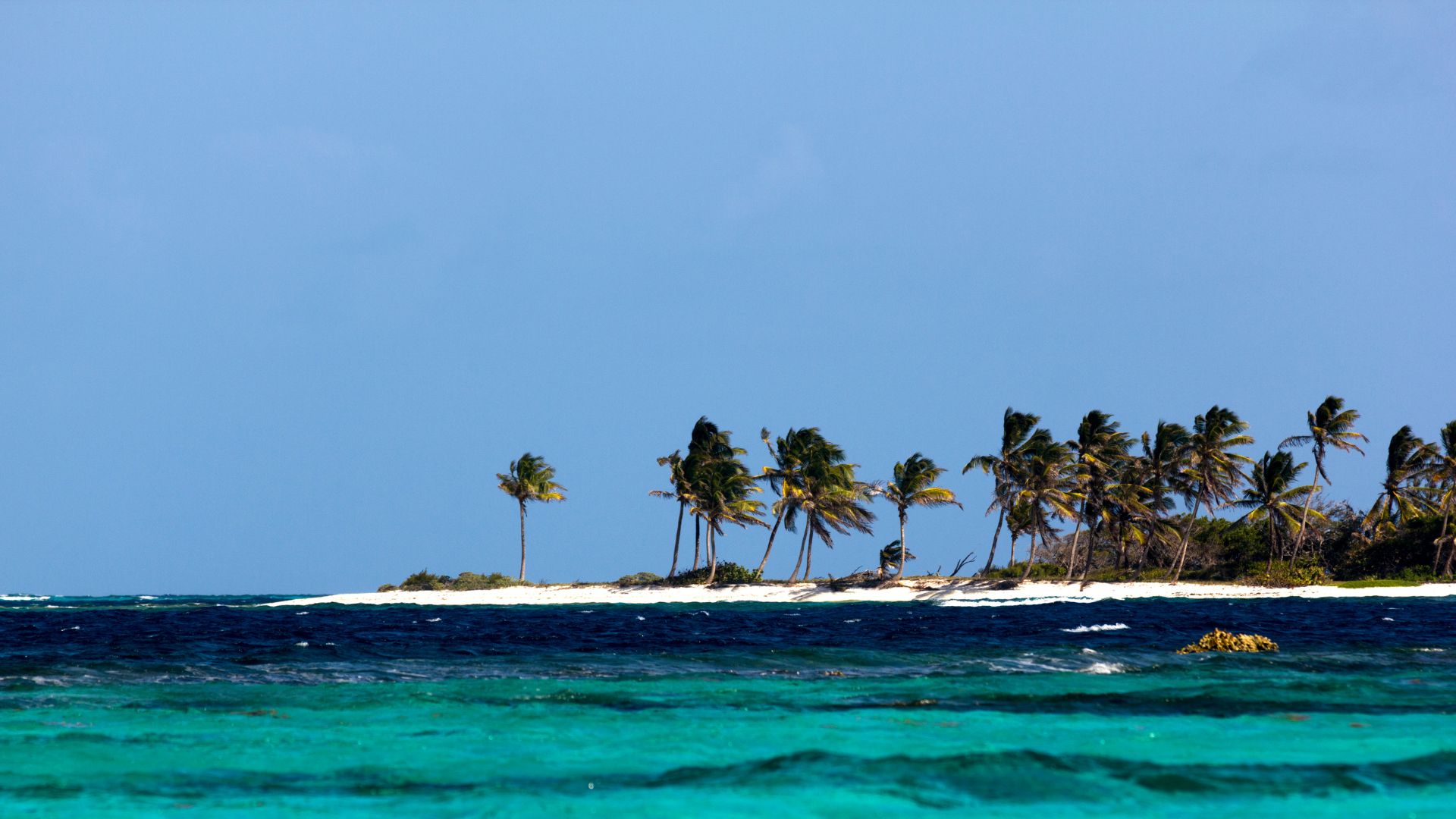
Un corto reposicionamiento de tres millas esta mañana te lleva al Parque Marino de los Tobago Cays: la pieza central de todo el charter por las Granadinas y una de las grandes experiencias acuáticas de cualquier parte del Caribe. Cinco pequeñas islas deshabitadas —Petit Rameau, Petit Bateau, Baradal, Petit Tabac y Jamesby— se asientan dentro de un arrecife barrera en forma de herradura que rompe el oleaje atlántico en su borde oriental. Fondeas dentro del arrecife en cinco metros de agua imposiblemente clara, con el océano abierto a cien metros a tu espalda y los cayos repartidos por la mitad oeste de tu vista.
El parque marino es una zona protegida de extracción nula desde 2006, y el resultado es una población de peces y una población de tortugas que se han recuperado hasta una densidad notable. Los lechos de hierba marina entre Baradal y Petit Bateau son uno de los sitios de avistamiento de tortugas verdes más fiables del Caribe: te metes al agua desde la plataforma de baño, nadas cien metros, y habrá tortugas. Las normas del parque son estrictas y bien aplicadas (no perseguir, no tocar, esnórquel desde arriba), que es exactamente por lo que la población está sana. Una excursión guiada en lancha auxiliar con uno de los guardas marinos del parque hace la mañana: saben en qué parcelas están trabajando las tortugas esa semana.
El almuerzo es una barbacoa de playa en Petit Bateau o Baradal, organizada a través de uno de los boat boys locales que montará una mesa en la arena, asará la langosta (capturada esa mañana, viva en un cesto junto a la mesa hasta que pides), servirá el ponche de ron, y recogerá después. Es la comida más gratificante del viaje y una de las experiencias más quintaesencialmente granadinas: comes con los pies en la arena, el barco al ancla a cien metros de la orilla, el arrecife rompiendo blanco en el horizonte.
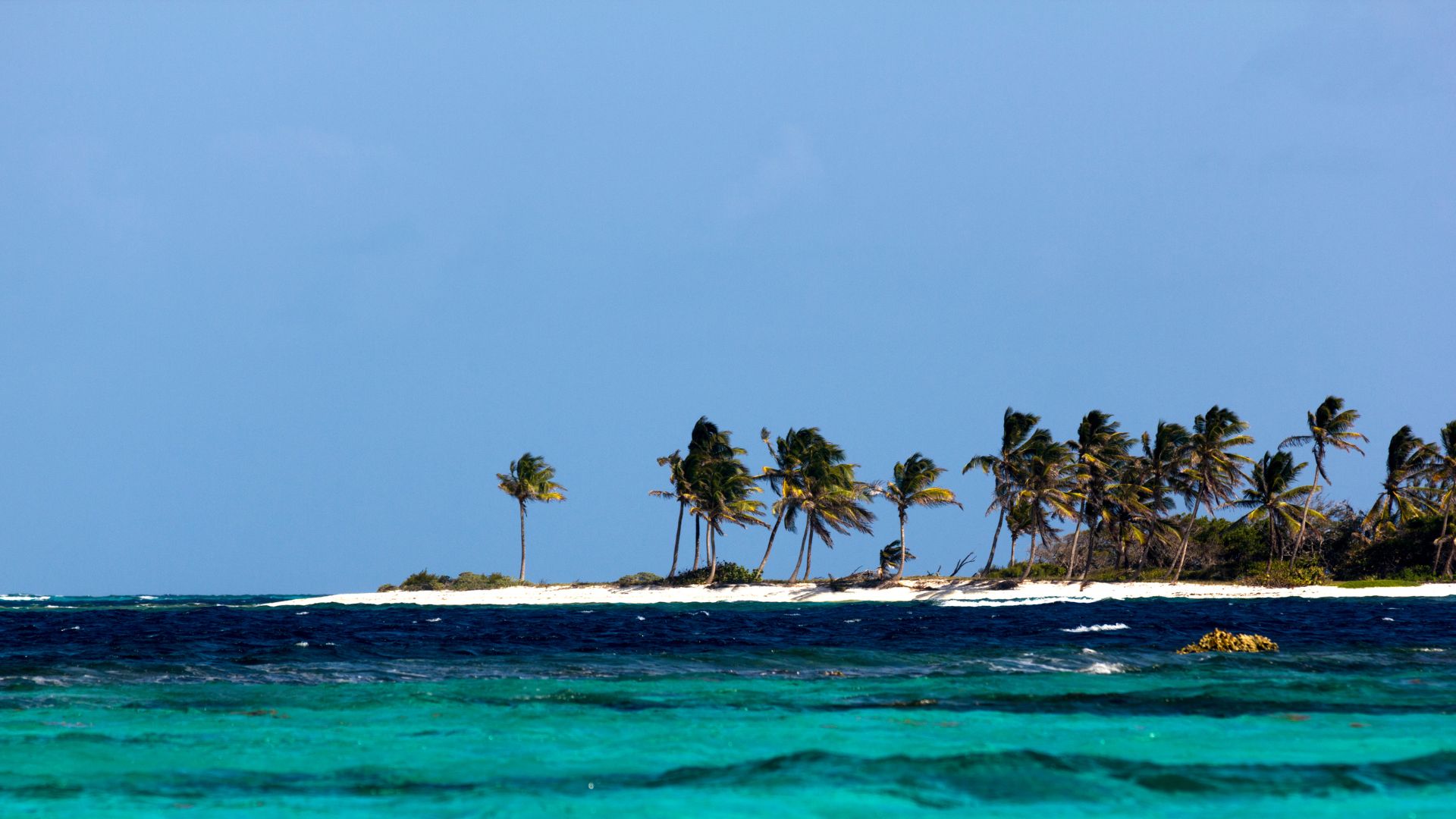
La tarde es un trayecto en lancha auxiliar hasta Petit Tabac: el pequeño islote orlado de palmeras del lado atlántico del arrecife donde el capitán Jack Sparrow queda abandonado en la primera película de Piratas del Caribe. Es la lengua de arena más fotografiada del Caribe oriental. De vuelta a bordo para las copas del atardecer, cena a bordo esta noche al ancla, y una noche durmiendo dentro del parque marino con el arrecife rompiendo blanco en la oscuridad.
Day Highlights
Día 5 de 7 · Tobago Cays → PSV
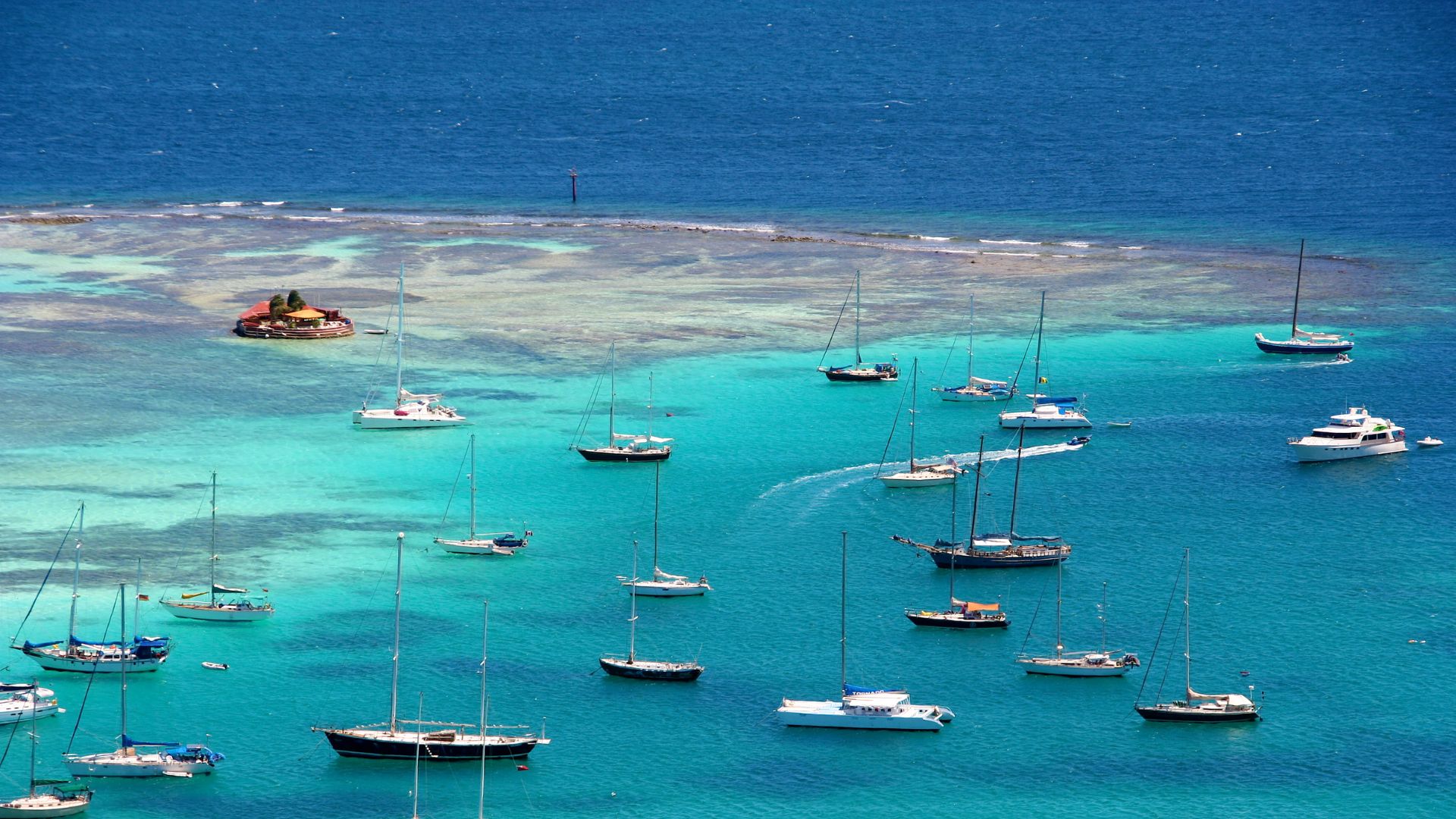
Tras un pausado baño matinal desde la popa del barco en los Cays, fuera amarras para la corta bajada de doce millas al suroeste hasta Petit St. Vincent. La ruta enhebra pasando Mayreau y entra en Clifton Harbour, en Union Island, donde tu capitán despacha el papeleo de salida (Union tiene la única oficina de aduanas de las Granadinas del sur) y tienes tiempo en tierra una hora o dos.
La razón para parar en Clifton, más allá del papeleo, es Happy Island: un pequeño bar que se asienta sobre una isla artificial en medio del arrecife del puerto. Janti Ramage construyó la isla él mismo, a mano, apilando conchas de caracola vacías que rescató de los pescadores locales, luego vertió una capa de hormigón encima, luego construyó un bar de paja sobre ella. La cosa entera es del tamaño de una pista de tenis. La bebida es el ponche de ron, y la experiencia de sentarte en un bar construido con conchas de mar con los barcos de Clifton fondeados a tu alrededor es un momento de las Granadinas que no existe realmente en ninguna otra parte.
A media tarde, tu capitán apunta la proa al este para el corto salto cruzando el canal hasta Petit St. Vincent y Palm Island, los dos cayos más al sur de la cadena. PSV es un resort de isla privada que permite a los huéspedes de yates en la playa y en el bar; Palm Island es el mismo montaje. Ambos están orlados de arrecife, cubiertos de palmeras, y tranquilos: la clase de fondeadero de última parada que reinicia el viaje tras la energía social de Mustique y la energía estrella de los Cays. Fondea frente al lado de sotavento de PSV, báñate hasta la orilla, pasea por la playa, y tómate una copa al atardecer en el bar de playa del resort. Cena a bordo esta noche, preparada por el chef, el barco al ancla con las luces de Carriacou (Granada) veinte millas al sur.
Day Highlights
Día 6 de 7 · PSV → Canouan
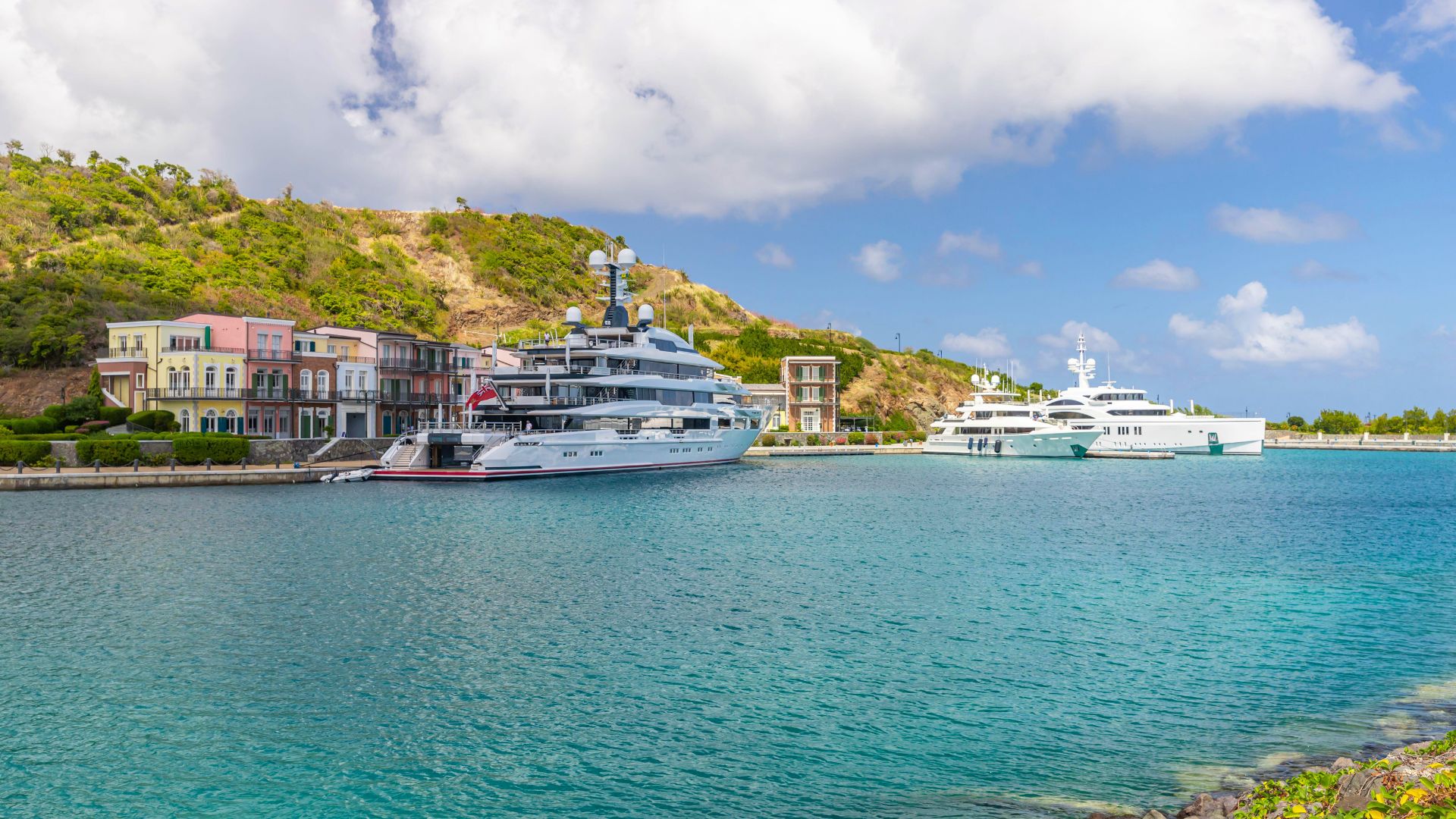
La primera etapa del regreso a casa: veinticinco millas al norte de vuelta por la cadena hasta Canouan. Con los alisios por la aleta, este es un través rápido y seco en la típica ventana de yates de diciembre a mayo, y tu capitán tiene la opción de navegar la línea de rumbo o desviarse hacia una bordada más amplia para alargar el día en el agua. La mayoría de los grupos votan por lo que sea que ponga el barco en el muelle a media tarde.
Canouan es la parada tapada de la cadena. Más pequeña que Bequia, más tranquila que Mustique, y hogar de la marina del Sandy Lane Yacht Club en el extremo sur: una de las instalaciones de megayates más pulidas de cualquier parte del Caribe y la razón por la que un sector concreto de la élite mundial de grandísimo patrimonio ha hecho discretamente de Canouan su parada preferida en las Granadinas. No tienes que meterte en esa escena para disfrutar de la isla. Glossy Bay, la playa pública sobre la marina, es preciosa. El club de playa Soho House Canouan está abierto sin reserva para el almuerzo. Hay un campo de golf diseñado por Jim Fazio en las alturas sobre la marina si alguien del grupo quiere jugar. O simplemente fondeas en Charlestown Bay, en el lado de sotavento, nadas, haces paddleboard, y miras los barcos entrando y saliendo del canal.
La cena es decisión tuya. Los restaurantes de la marina son la apuesta más segura para una velada pulida; las tabernas del pueblo sobre Charlestown Bay son la opción local. De un modo u otro, el barco está a un corto trayecto en lancha auxiliar del muelle y una noche tranquila al ancla.
Day Highlights
Día 7 de 7 · Canouan → Bequia
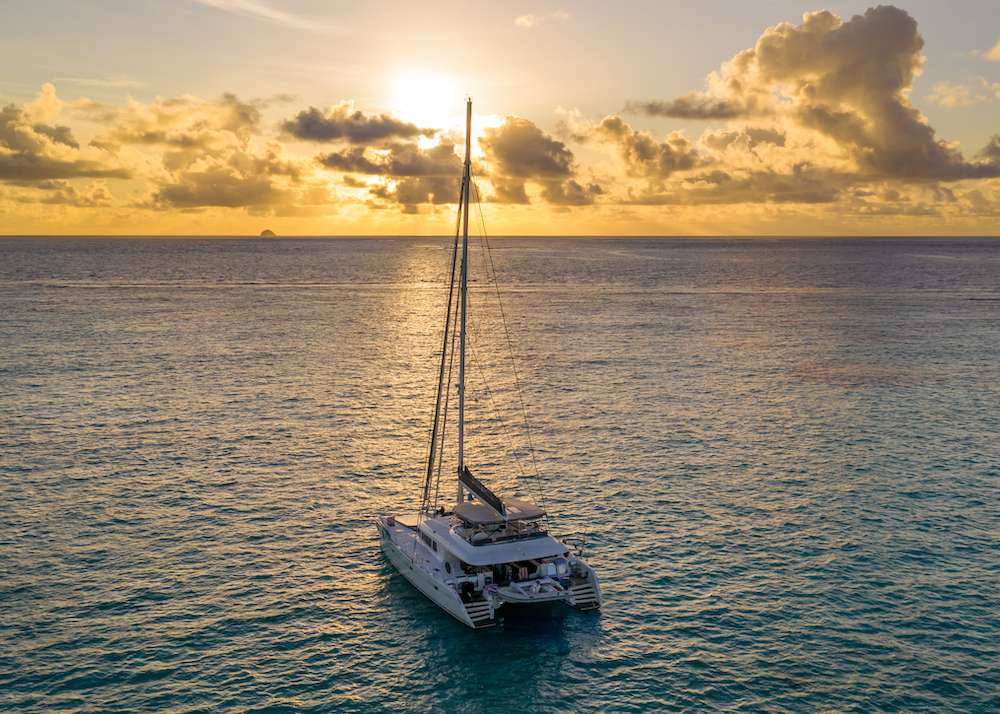
La etapa más larga del regreso a casa, pero es un través con viento por la aleta con los alisios haciendo casi todo el trabajo: unas treinta y dos millas de vuelta al norte pasando Mustique y hasta Bequia. Tu capitán elige la hora de salida en torno a cuándo entra la brisa, y el barco cabalga a casa por la aleta durante casi toda la mañana. Tiempo de sobra al timón o en la cubierta de proa si alguien lo quiere.
A última hora de la tarde, estás de vuelta dentro de Admiralty Bay donde empezó el viaje, y la bahía hace por ti el trabajo de cerrar el círculo: el mismo fondeadero, la misma vista de Port Elizabeth, los mismos barcos amarrados a lo largo de la curva, pero ahora has navegado la cadena y sabes cómo es cada isla camino abajo. Hay algo silenciosamente satisfactorio en eso.
Esta noche es la cena de despedida. Dos opciones potentes: en tierra en Mac's Pizzeria por la pizza de langosta y la vista hacia abajo sobre el puerto, o a bordo con tu chef echando el resto en un emplatado de tres platos en la cubierta de popa. Cualquiera es la opción correcta. Vuelta en lancha auxiliar ya tarde, una última copa en cubierta, y la última noche al ancla en las Granadinas.
Day Highlights
Día 8 · Salida
Un último desayuno pausado a bordo al ancla en Admiralty Bay, un último baño desde la popa del barco, y una corta navegación matinal de vuelta cruzando el canal hasta Blue Lagoon Marina, en San Vicente: la misma etapa de nueve millas con la que abriste el viaje, a la inversa. Tu tripulación se encarga de cada logística desde el amarre: traslado a Argyle International, conexiones de continuación a Barbados o vuelos directos a Miami y la Costa Este, una última foto con el barco al fondo. Bájate con sal en el pelo, una semana de las Granadinas a tu espalda, y una idea bastante clara de cuándo vas a volver.
Want to share or come back to this voyage later?
Bookmark this voyage →Crewed Itinerary · St. Lucia · The Grenadines · Grenada
This is the sailing trip. One-way from St. Lucia south through St. Vincent and the Grenadines to Grenada, ten days down the eastern edge of the Caribbean with the trade winds on the quarter and real blue water under the keel. The Grenadines round-trips are the deservedly famous postcard week; this is the route for the group that wants to actually sail it end to end — open channels, a few long passages, the best trolling water in the eastern Caribbean, and an island chain that changes character every twenty miles. You start under the Pitons and you finish in the spice harbor of St. George's, and in between you cross three countries without ever pointing the bow the wrong way for the wind.
Embarkation at Rodney Bay on St. Lucia's northwest coast, a transfer from Hewanorra International (UVF). Disembarkation at Port Louis Marina in St. George's, Grenada, a short hop from Maurice Bishop International (GND) on Day 11. Roughly a hundred and fifty nautical miles of cruising across ten days, built around two marquee passages — the St. Lucia Channel down past St. Vincent to Bequia, and the run from Carriacou across the open water to mainland Grenada — with the Grenadines strung out between them. A night moored beneath the Pitons. The turtles and the Horseshoe Reef anchorage at the Tobago Cays. Sandy Island off Carriacou. The underwater sculpture park at Molinère. This is the one for people who came to go sailing.
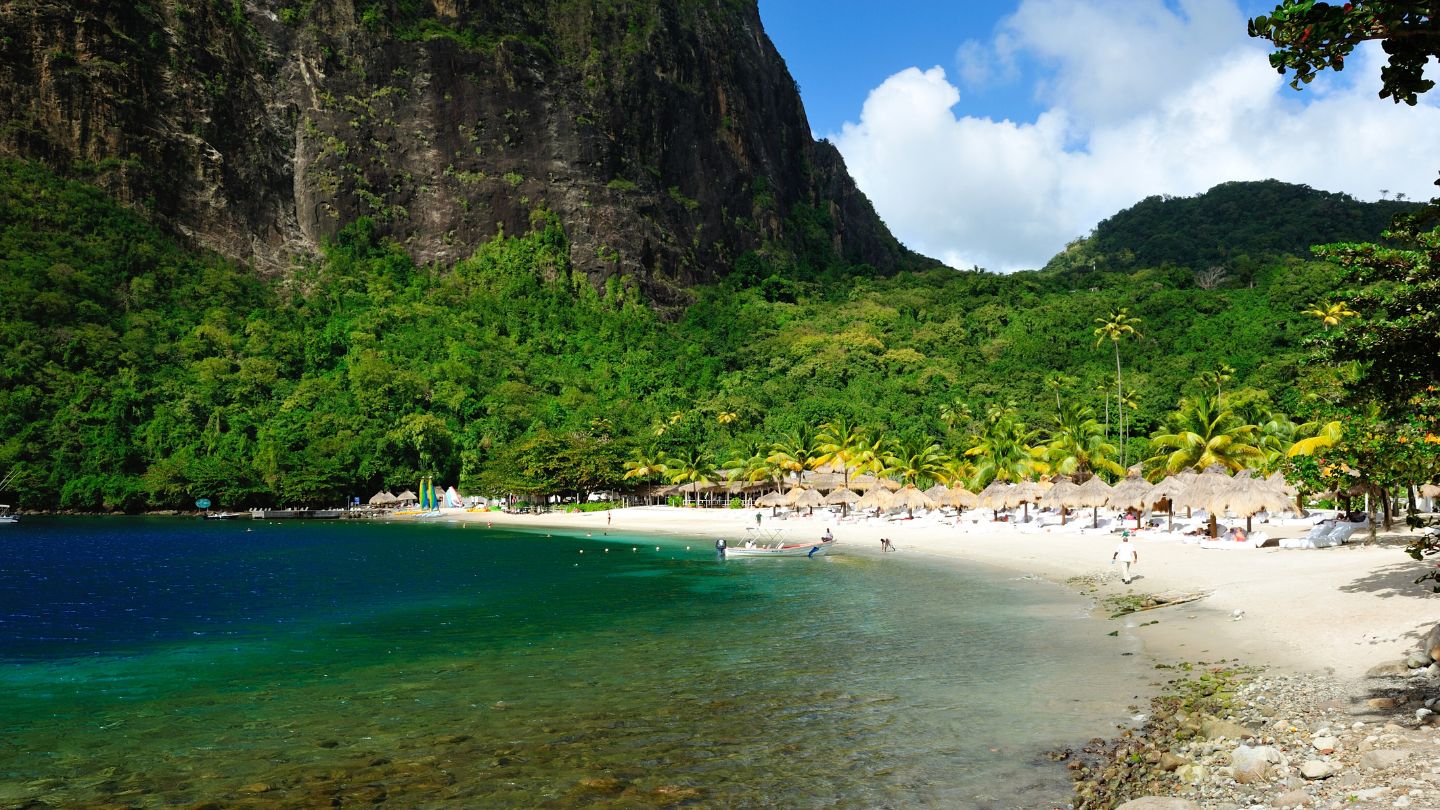
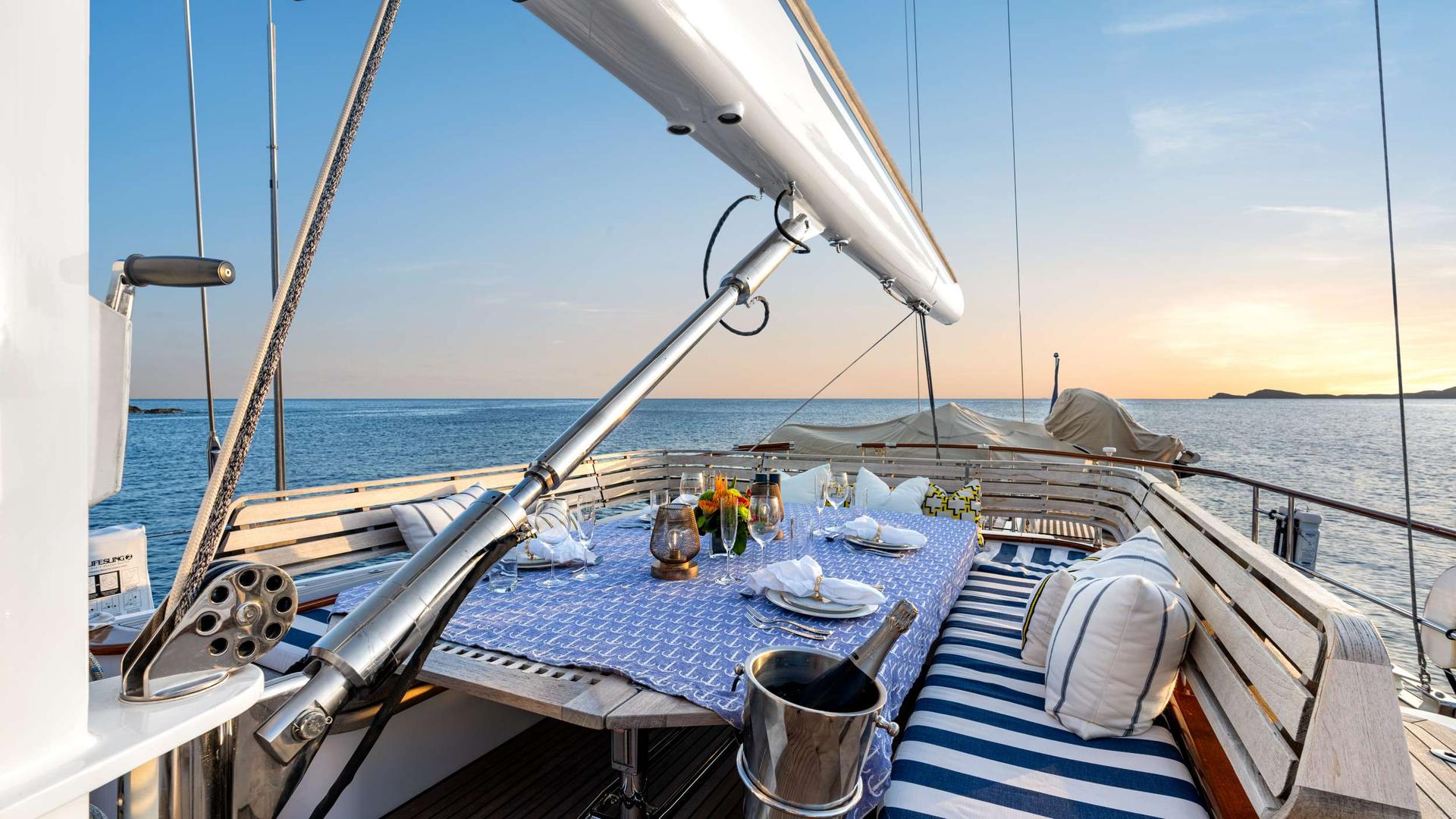
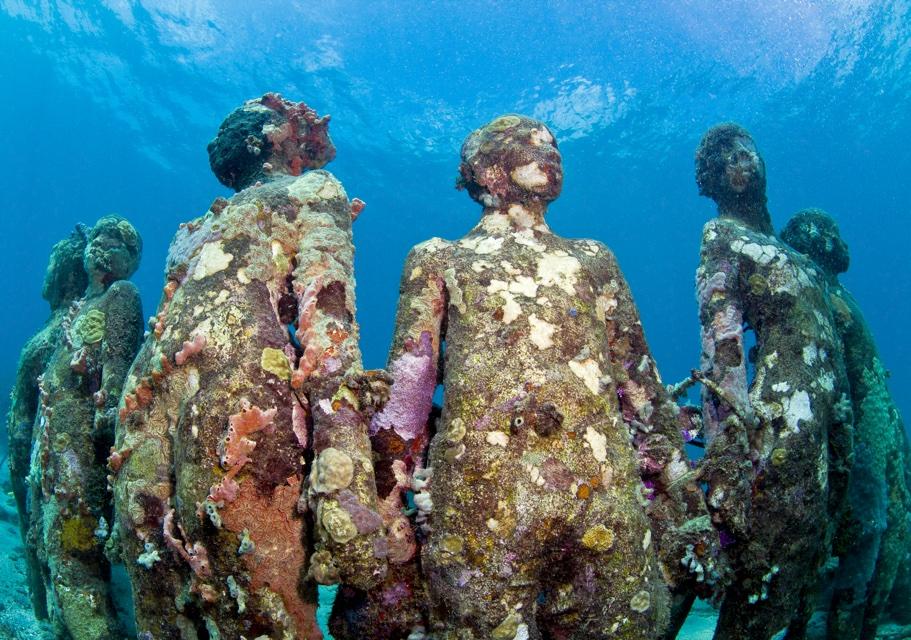
Three countries on one keel — St. Lucia, St. Vincent and the Grenadines, and Grenada — sailed north to south with the prevailing east-northeast trades behind the beam. The pacing is built around the wind, not against it: the long open-water legs (the St. Lucia Channel on Day 2, the Carriacou-to-Grenada passage on Day 8) are reaches with the swell on the quarter, and the short Grenadines hops in the middle are three-to-twelve-mile sails between anchorages. The headline natural sites are intact and world-class: the Pitons, the Tobago Cays Marine Park, Sandy Island's protected reef off Carriacou, and Molinère, the world's first underwater sculpture park, off Grenada's west coast.
Best for groups who have done a charter or two and want the sailing to be the point — open passages, deepwater trolling for mahi-mahi and wahoo, and the satisfaction of having actually moved the boat down an island chain rather than circling one anchorage. Ten days is what the one-way needs; the route deliberately doesn't double back, so every mile is new water. Strongest fit for sailing catamarans and performance monohulls where the downwind-south routing pays off, and for travelers who'd rather earn the next anchorage than be parked in the same bay for a week. December through May is the season — steady trades, dry air, and a track that runs along the southern edge of the hurricane belt.
Day 1 of 10 · Rodney Bay embark → the Pitons
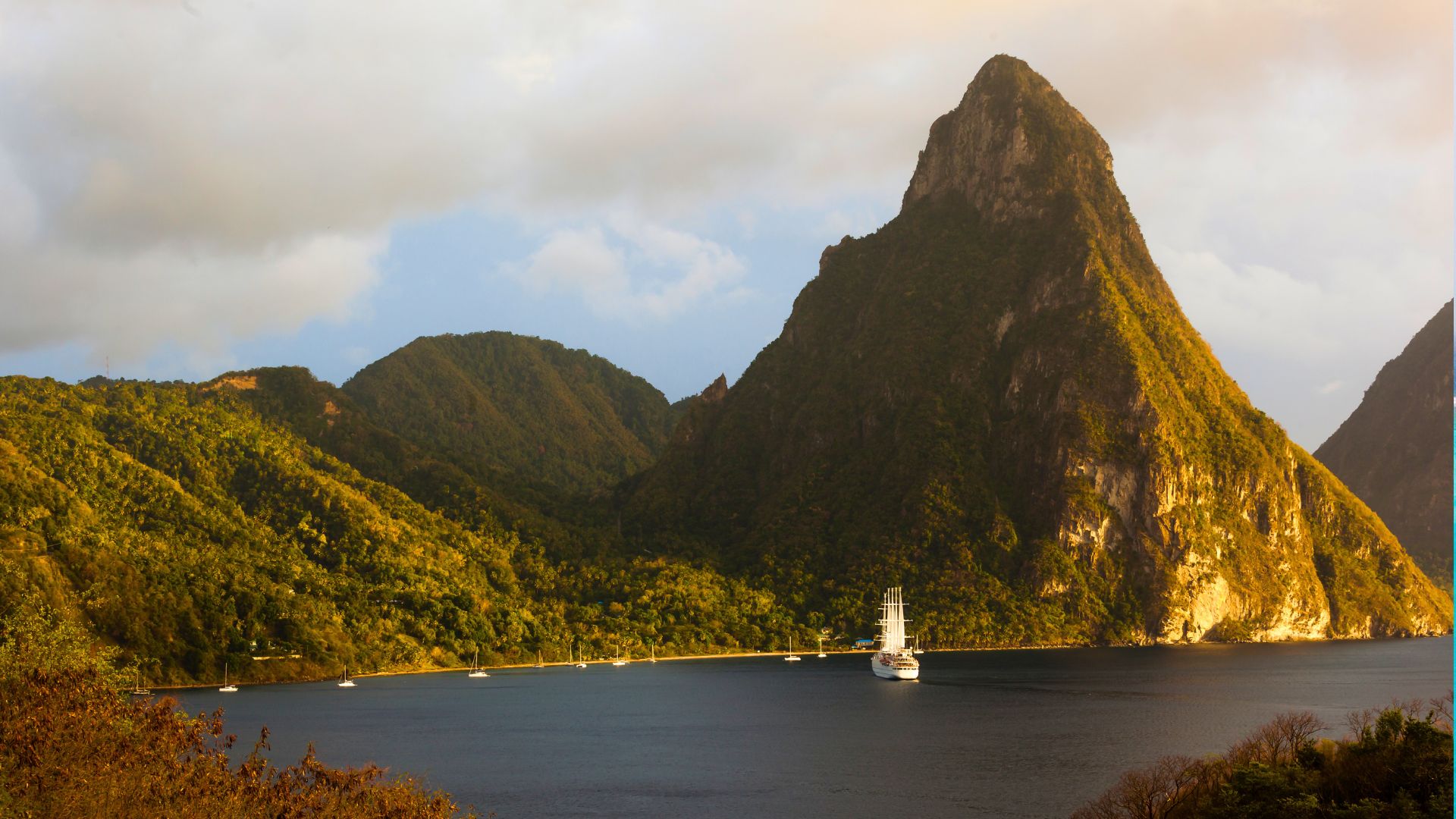
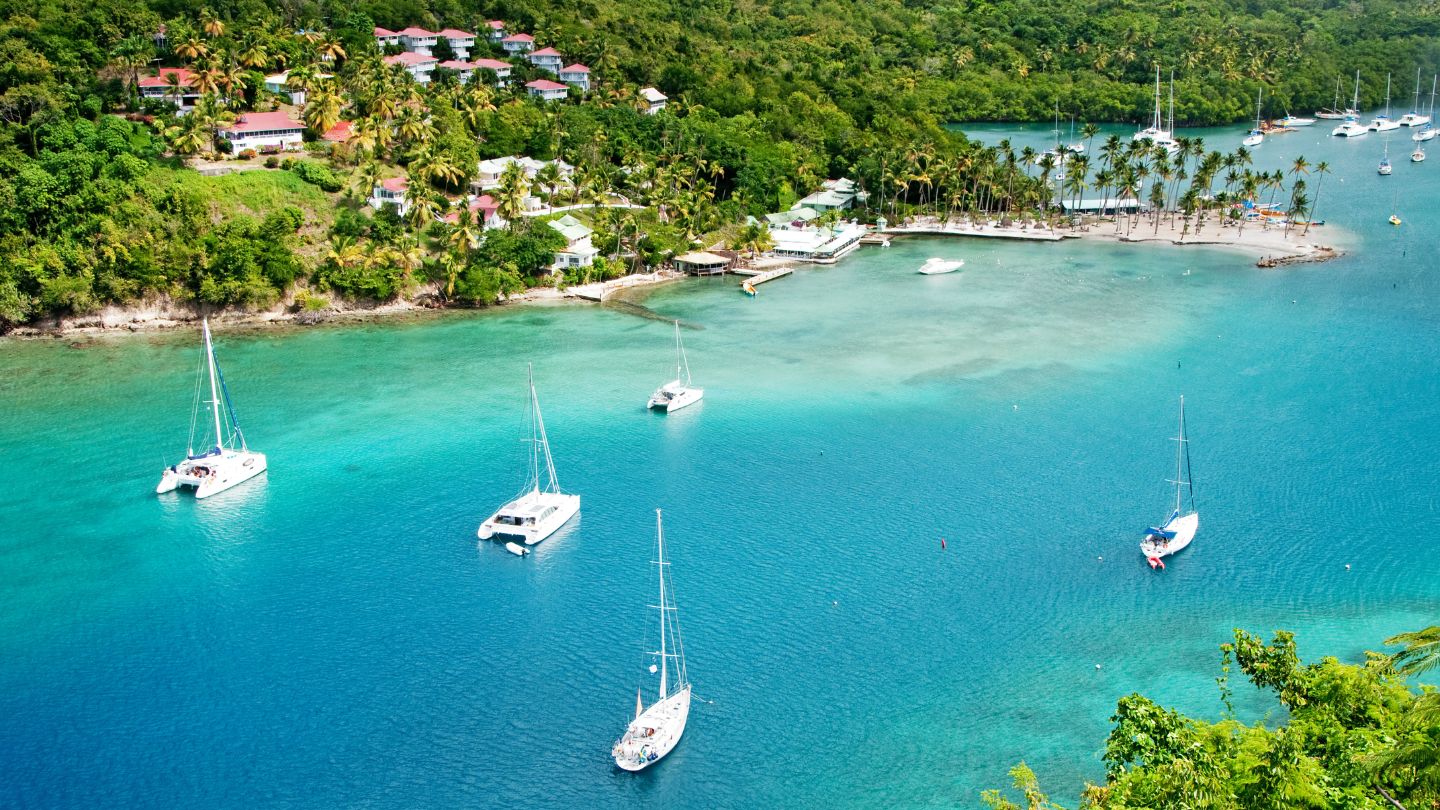
The flight into Hewanorra (UVF) lands on St. Lucia's southern tip; the transfer runs up the island to Rodney Bay on the northwest coast, where your crew meets you at the slip with cold drinks and a chart briefing that lays out the ten days south. Rodney Bay is St. Lucia's full-service yachting hub — fuel, provisioning, and the customs office that clears you out of the country are all here — so the boat is stored, fueled, and cleared while you settle in.
By late morning, lines off and south down St. Lucia's leeward coast. The mountains block the trades on this side, so the first few hours are a quiet motor-sail through the wind shadows with the breeze funneling down the valleys, the green volcanic ridge sliding by to port. You pass Marigot Bay — the hurricane-hole cove where the original Doctor Dolittle was filmed — and then, in the last few miles, the Pitons announce themselves: two sheer volcanic plugs rising straight out of the sea, Gros Piton and Petit Piton, the most photographed silhouette in the Caribbean and a UNESCO World Heritage Site.
There's no anchoring here — the Soufrière Marine Management Area protects the reefs, and the water drops away too deep to set a hook anyway — so your captain picks up one of the park moorings at Anse des Pitons, in the saddle of water directly between the two peaks, with Sugar Beach in the notch behind you. The afternoon is a snorkel on the reef off Anse Chastanet or the drift along Petit Piton's base, a swim off the back of the boat, and then the light goes gold on the spires and you have dinner aboard with the two mountains filling the whole sky. It's a hard first night to beat, and the trip has barely started.
Day Highlights
Day 2 of 10 · The Pitons → Bequia
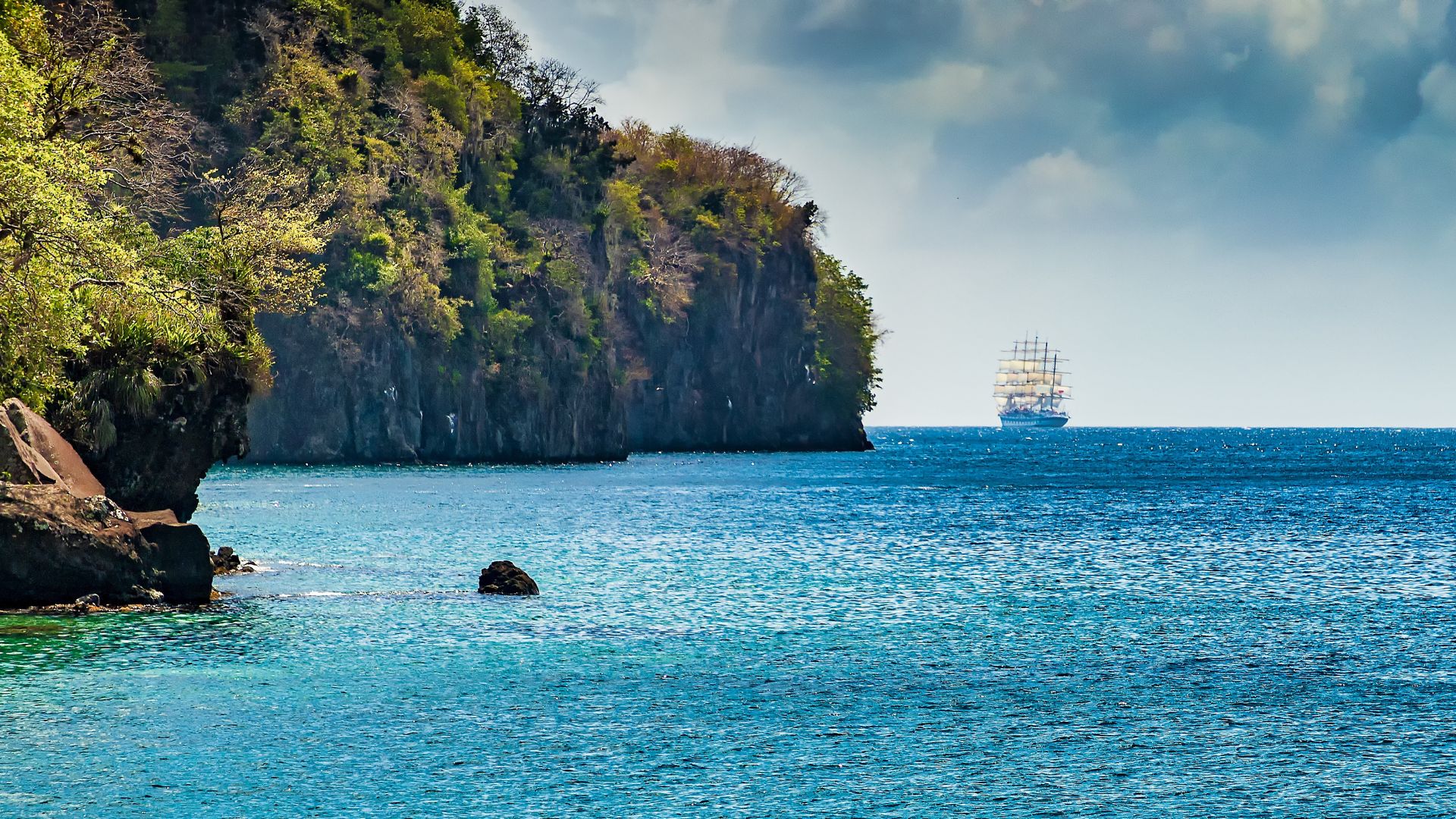
This is the day the trip earns its name. Your captain watches the forecast and picks a start time around when the breeze fills, because there's real water to cover — roughly fifty miles from the Pitons to Bequia, the longest single passage of the charter. Clear of St. Lucia's wind shadow, the boat hardens up into the open St. Lucia Channel: twenty-five-plus miles of blue water with the east-northeast trades and the Atlantic swell on the beam, a fast, lively reach that is exactly why this route exists. Lines go out the back as soon as you're in deep water — this channel is prime trolling ground, and mahi-mahi and wahoo are the signature catch.
Mid-passage, the high green wall of St. Vincent rises ahead and the boat slips into its lee. The wind drops behind the mountains and the water goes flat, and for a couple of hours St. Vincent is simply the scenery — the La Soufrière volcano (which last erupted in 2021) towering into the cloud, the deep cuts of Cumberland Bay, and Wallilabou, the cove where the first Pirates of the Caribbean built its Port Royal set and left the dock pilings standing. This itinerary doesn't overnight on the mainland; the play is to keep the boat moving and let the coast roll by, which is its own kind of pleasure after a morning of open water.
Out of St. Vincent's lee, the breeze returns for the last nine miles across the Bequia Channel, and Admiralty Bay opens on the bow — a deep, well-protected horseshoe full of moored sailboats, with the pastel waterfront of Port Elizabeth wrapped around it. Bequia is the friendliest and most authentically salty of the Grenadines, a working boat-building island where the Sargeant brothers still carve model schooners by hand near the ferry dock. Tender ashore for a walk along the Belmont Walkway, a cold Hairoun at a waterfront bar, and dinner aboard or up the hill at Mac's Pizzeria for the lobster pizza. You've earned the chair.
Day Highlights
Day 3 of 10 · Bequia → Mustique
A slow Bequia morning first — coffee on deck, a last walk through Port Elizabeth's fish market, maybe a stop at the model-boat shop — and then lines off mid-morning for the sixteen-mile reach southeast to Mustique. The trades fill in across the open channel and the boat sails comfortably with Bequia receding astern and Mustique's low green profile growing on the bow. If anyone wants a turn at the helm, this is an easy, forgiving leg to take it.
Your captain picks up a mooring in Britannia Bay on Mustique's west coast — the only legal anchorage on the island, run by the Mustique Company that has owned the place since 1958. There are no resorts here in the usual sense; Mustique is a private estate of about a hundred villas, the island Princess Margaret put on the map and the Mick Jagger and David Bowie crowd kept quiet. Most guests rent a Kawasaki Mule from the company office and spend the afternoon driving the perimeter road — Macaroni Beach on the Atlantic side, the windward cliffs, the turtle sanctuary at the north end.
Dinner is the headline. Basil's Bar at Britannia Bay — open-air, on stilts over the water, thatched roof — founded in 1976 by Basil Charles and reimagined by the designer Philippe Starck a few years back. Basil also started the Mustique Blues Festival, which fills the bar every January and February. Wednesday is the long-running Jump Up night when the band plays late and villa renters and yacht crews end up on the same dance floor; any other night is quieter and the food is excellent regardless. Tender back to the boat under a sky absolutely loaded with stars.
Day Highlights
Day 4 of 10 · Mustique → Mayreau
A twenty-mile run south down the heart of the chain, past Canouan on the way. Canouan is the polished island these days — the Sandy Lane Yacht Club marina on its south end is one of the most exclusive megayacht facilities in the Caribbean, and there's a Soho House on the beach — but it's largely a private, gated world, so most crewed charters cruise past its leeward coast and press on to the smaller islands. With the trades on the quarter, this is a fast, easy reach with the Grenadines stepping past on the port beam.
Mayreau is the smallest inhabited island in the chain and it holds the prettiest single anchorage in the Grenadines: Salt Whistle Bay, a narrow palm-lined neck of sand on the island's northwest tip, with the calm Caribbean on one side and the Atlantic surf a hundred feet away on the other. You anchor in the lee and the boat sits in flat, clear, sand-bottomed water with the beach a stone's throw off the bow. Hurricane Beryl came through hard here in 2024 and stripped the palms; they're coming back, and the bay's natural shape — the swim, the water, the setting — is exactly as good as it always was.
Lunch on the hook, an afternoon swimming and paddleboarding off the back, and a late tender ashore for a quiet sunset walk on the sand. There's a small hilltop village a fifteen-minute climb up the south side if you want the view across to the Tobago Cays you'll sail into tomorrow — from the church terrace you can see the whole marine park laid out below. Dinner aboard tonight, the boat barely moving on its chain. This is the deep-breath day before the headliner.
Day Highlights
Day 5 of 10 · Tobago Cays — full day
A short three-mile reposition this morning brings you into the Tobago Cays Marine Park — the centerpiece of the Grenadines and one of the great in-water experiences anywhere in the Caribbean. Five small uninhabited islands sit inside a horseshoe-shaped barrier reef that takes the full Atlantic swell on its eastern edge; you anchor inside the reef in fifteen feet of staggeringly clear water, the open ocean breaking white a hundred yards behind you and the cays spread across the western half of the view. The park came through Hurricane Beryl in good shape — the reef and the turtle grounds are intact, and it remains the strongest single stop in the southern Grenadines.
The seagrass beds off Baradal are a protected turtle-watching reserve and one of the most reliable green-sea-turtle snorkels in the Caribbean. You swim out from the swim platform and they're there, grazing the grass; park rules are strict and well enforced — snorkel from above, no chasing, no touching — which is exactly why the population is so healthy. A guided dinghy tour with one of the park rangers makes the morning, because they know which patches the turtles are working that week.
Lunch is a beach barbecue on Petit Bateau, arranged through one of the local boat boys who sets a table on the sand, grills the lobster (caught that morning, alive in a basket by the table until you order), pours the rum punch, and clears it all afterward. It's the most quintessentially Grenadines meal of the trip — feet in the sand, the boat on the hook a hundred meters offshore. The afternoon is a tender ride out to Petit Tabac, the palm-fringed spit on the Atlantic side where the first Pirates of the Caribbean marooned Jack Sparrow, then sundowners back aboard and a night sleeping inside the marine park with the reef breaking in the dark.
Day Highlights
Day 6 of 10 · Tobago Cays → Union Island
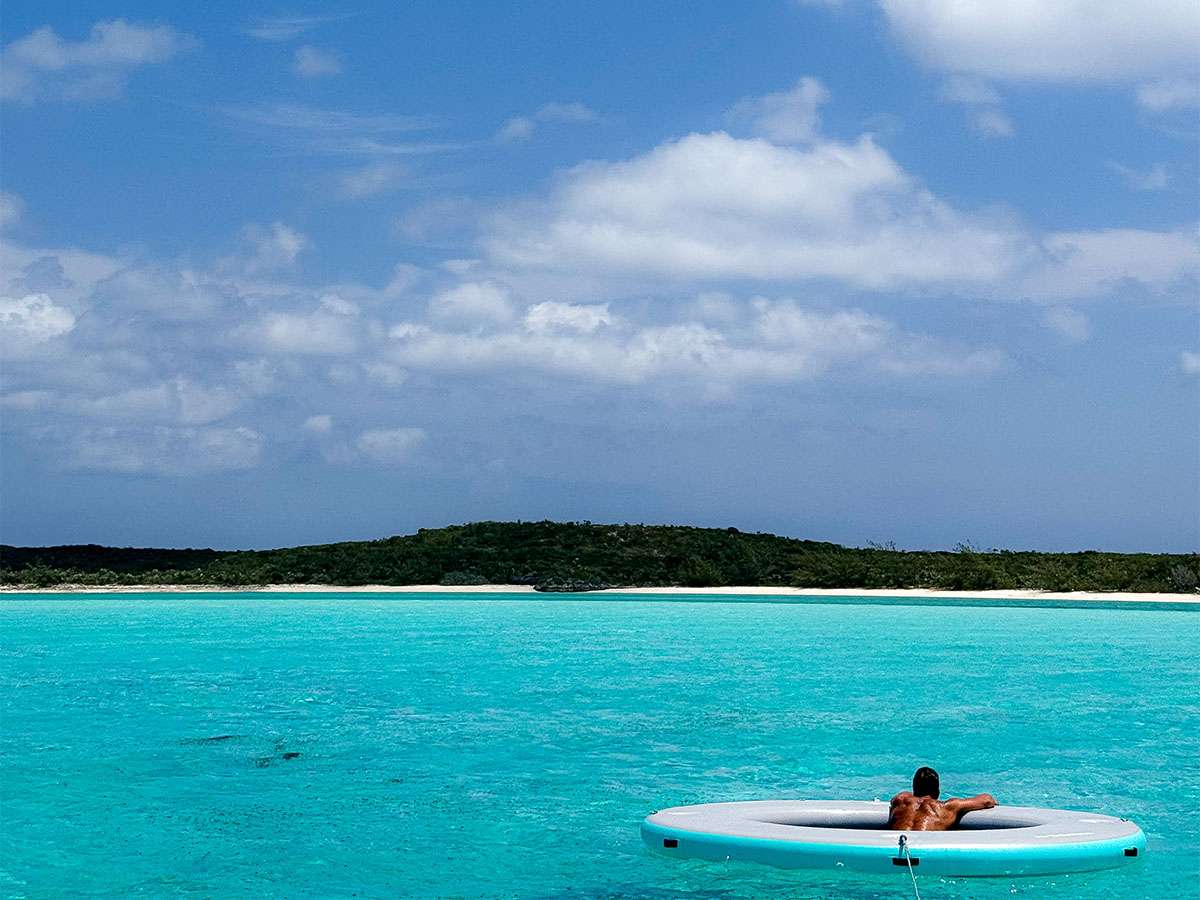
A short six-mile hop out of the Cays brings you to Union Island, the last of the Grenadines before the border. Union is the dramatic one — a jagged volcanic ridge that looks like a small Tahiti rising out of the sea — and it carries the southern customs office for St. Vincent and the Grenadines. Your captain ducks into Clifton Harbour, tucked behind its barrier reef on the windward side, to clear the boat outbound while you have an hour ashore in the most genuinely local town on the route.
Union took a hard, direct hit from Hurricane Beryl in 2024 and the town has been rebuilding ever since; the yacht services, the grocery, and the clearance office are all back up and running, and the place has a resilient, getting-on-with-it energy that's worth seeing. With the paperwork done, your captain rounds the island to Chatham Bay on the secluded west coast — a deep, quiet anchorage backed by a long empty beach, where a handful of rustic beach shacks are slowly coming back to life serving grilled fish and lobster in the sand.
The afternoon is yours in the lee: swimming and paddleboarding in the calm water, a walk down the empty beach, snorkeling the rocky ends of the bay. Chatham is the kind of anchorage that resets the trip after the social energy of Mustique and the marquee of the Cays — there's nothing to do and nowhere to be, which is precisely the point. Sundowners on the aft deck, dinner aboard or ashore at one of the beach grills, and a quiet last night in St. Vincent and the Grenadines.
Day Highlights
Day 7 of 10 · Union → Carriacou (clear into Grenada)
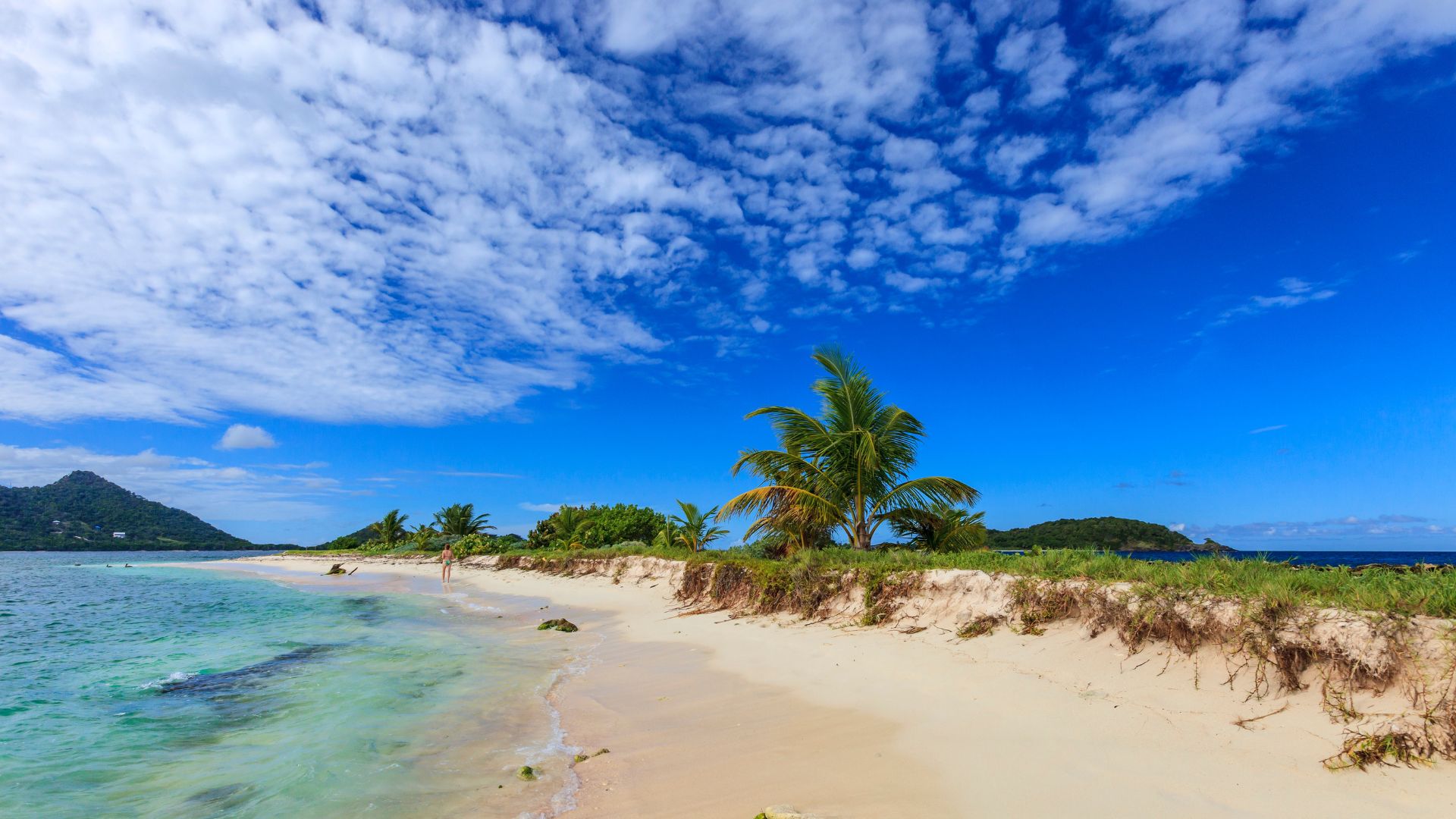
A ten-mile sail across the border this morning takes you from St. Vincent and the Grenadines into Grenada — and into one of the quietest, most under-the-radar corners of the eastern Caribbean. Your captain makes for Tyrrel Bay on Carriacou, a deep, well-sheltered horseshoe with a purpose-built customs and immigration office at the marina, and clears the boat into the country while you settle into the new water.
Carriacou is the largest of Grenada's offshore islands and a genuine boat-building community — they still lay down wooden sloops on the beach at Windward, by eye, the way the Scots shipwrights who settled here taught them to. The island was very near the eye of Hurricane Beryl in 2024 and took serious damage; what's striking now is how green it has come back and how far the recovery has come, with businesses reopened and the harbor working again. It is, refreshingly, an island almost no charter guests ever see.
The afternoon's prize is Sandy Island — a tiny deserted sandbar with a fringe of palms, a mile off Carriacou's west coast, sitting inside the island's protected marine park. The reef around it is the best snorkeling on this end of Grenada, and the islet itself is a barefoot, no-footprints-but-yours kind of place. Anchor off, swim the reef, lay out on the sand, and tender across to the long calm sweep of Paradise Beach on the main island for a cold drink. Back aboard for the first Grenadian sunset, the big mainland passage on the chart for tomorrow.
Day Highlights
Day 8 of 10 · Carriacou → mainland Grenada
The second marquee passage. Roughly thirty-three miles of open water separate Carriacou from mainland Grenada, and the rhumb line runs more into the trades than the easy reaches up north, so your captain may angle the course to keep the boat sailing and time the start around the morning breeze. Lines go out the back early — the banks and drop-offs along this stretch hold mahi-mahi, wahoo, and tuna, and it's the best fishing of the trip after the St. Lucia Channel.
The passage threads past some genuinely wild water. Isle de Ronde and the rock cluster known as the Sisters break up the horizon, and a couple of miles off the route lies Kick 'em Jenny — an active submarine volcano with a marine exclusion zone the authorities adjust based on its activity. Your captain checks the current advisory before departure and gives it the required berth; from the deck it's simply open ocean, but it's a good reminder that this whole island chain is the rim of a very much living volcanic arc.
By mid-afternoon Grenada's green northwest coast fills the bow and the boat slips into the lee for the run down to the anchorages at Dragon Bay and Molinère. The reason to be here is the Molinère Underwater Sculpture Park — the world's first, created by the artist Jason deCaires Taylor in 2006, a field of cast-concrete human figures arranged on the sandy bottom in fifteen feet of clear water, now half-claimed by coral and fish. You snorkel it straight off the boat in the late-afternoon light. Dinner aboard on the hook, the lights of St. George's glowing a few miles south.
Day Highlights
Day 9 of 10 · West coast → St. George's
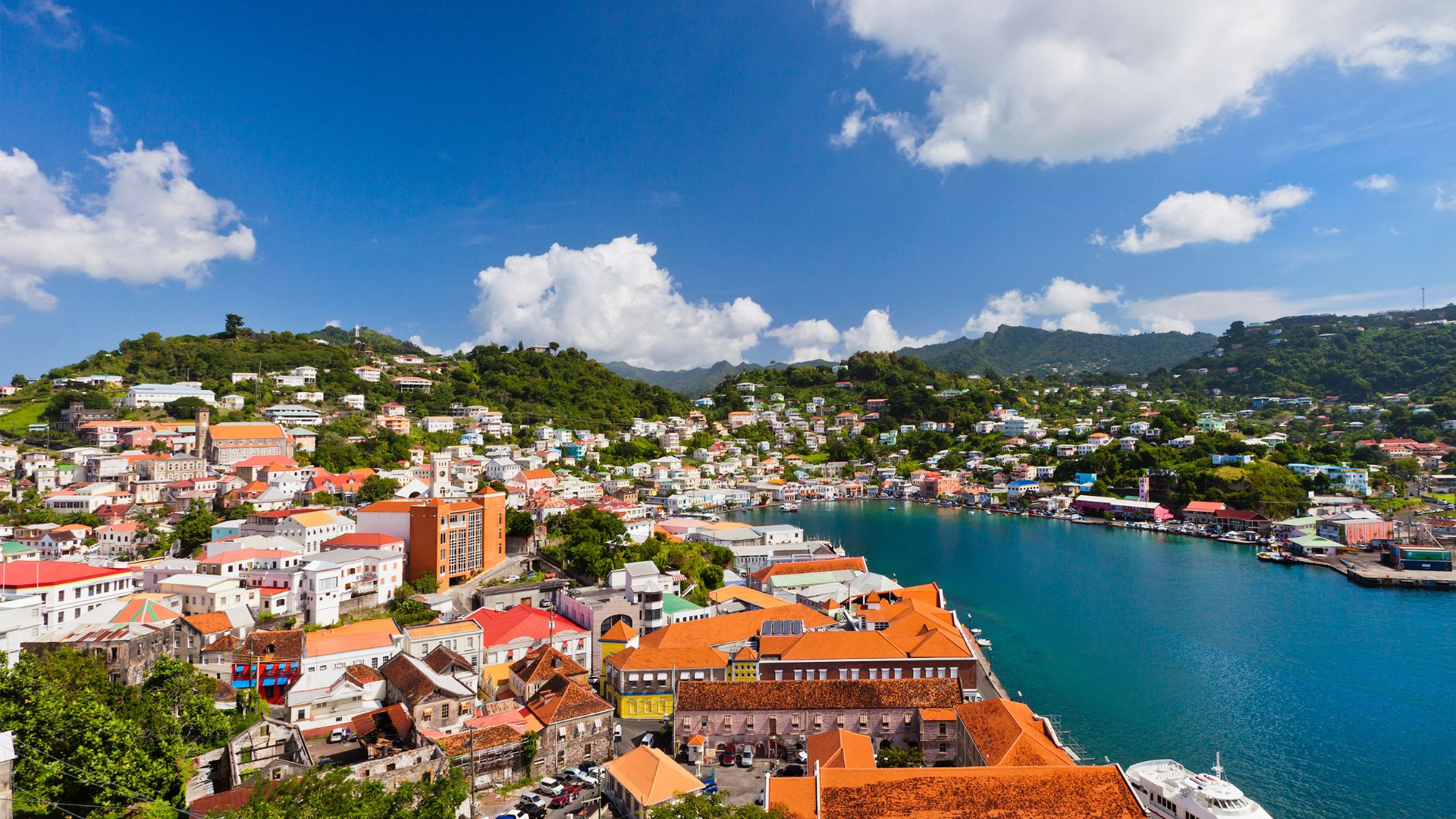
A short morning sail down the coast drops you into St. George's, the capital and, by wide agreement, the prettiest harbor town in the Caribbean. The Carenage — the horseshoe inner harbor — is ringed by pastel Georgian warehouses with red-tile roofs that climb the hillside beneath Fort George, the French-built fort that has watched over the harbor since the seventeenth century. Your captain berths the boat at Port Louis Marina in the Lagoon, the modern yachting basin a short walk from town.
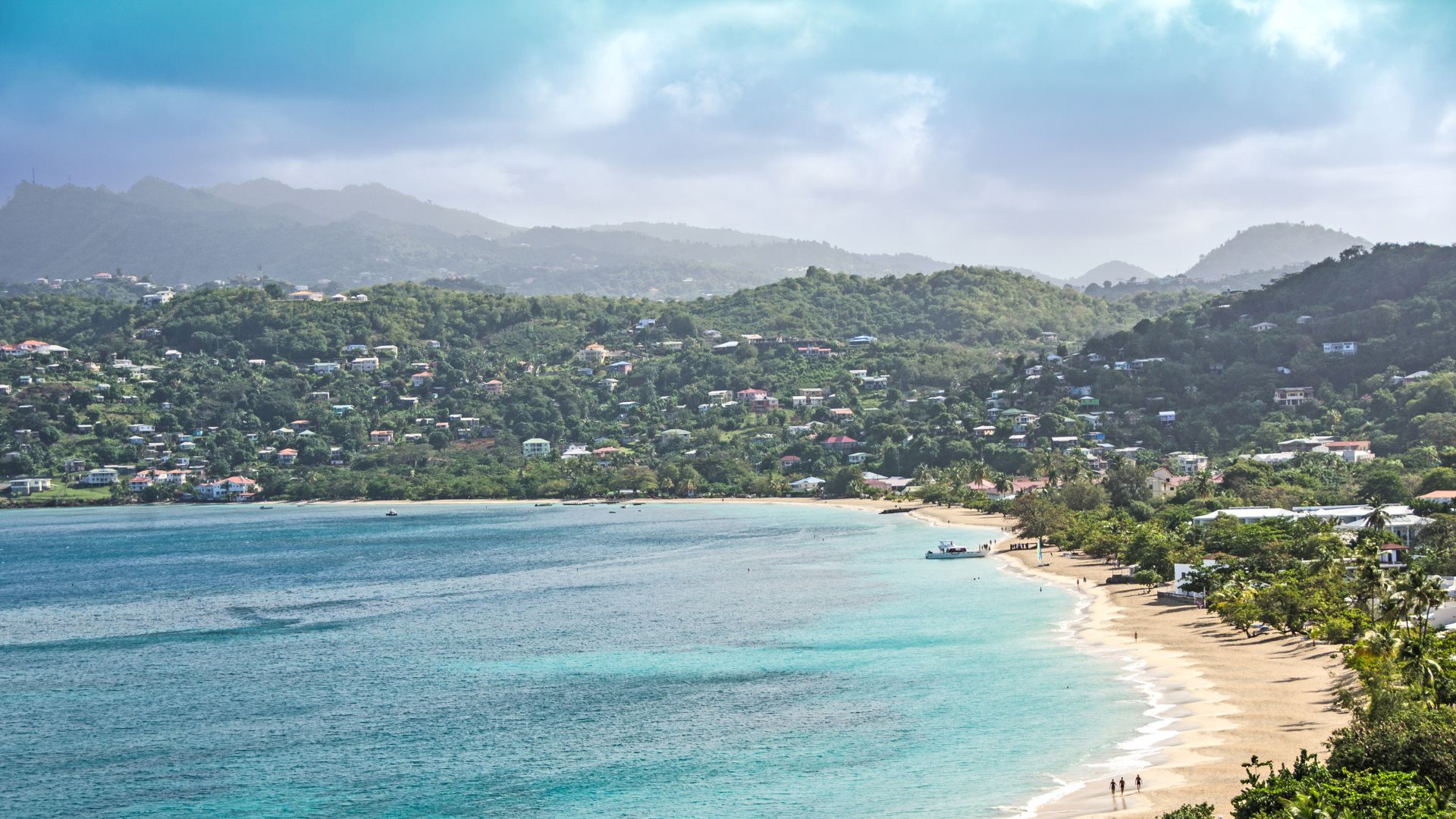
Grenada is the Isle of Spice, and St. George's is where you understand why: the market square is a wall of nutmeg, mace, cinnamon, and cocoa, the air smells like a baking cupboard, and nutmeg is the only spice to appear on a national flag. Spend the morning in town — the market, the fort with its view over the harbor and its weight of recent history, the waterfront — and the afternoon at Grand Anse, the two-mile sweep of white sand and calm water just south of the capital that is one of the great swimming beaches in the region.
Tonight is the proper dinner ashore. St. George's has the best restaurant scene on the whole route, from the marina's waterfront tables to the local spots serving oildown — the national one-pot of breadfruit, salt meat, dumplings, and callaloo simmered down in coconut milk. Or the chef pulls out the stops aboard with the trip's running list of catches reduced to one plated set. Either way, it's a celebration of a charter that has covered real ground.
Day Highlights
Day 10 of 10 · St. George's → the south coast
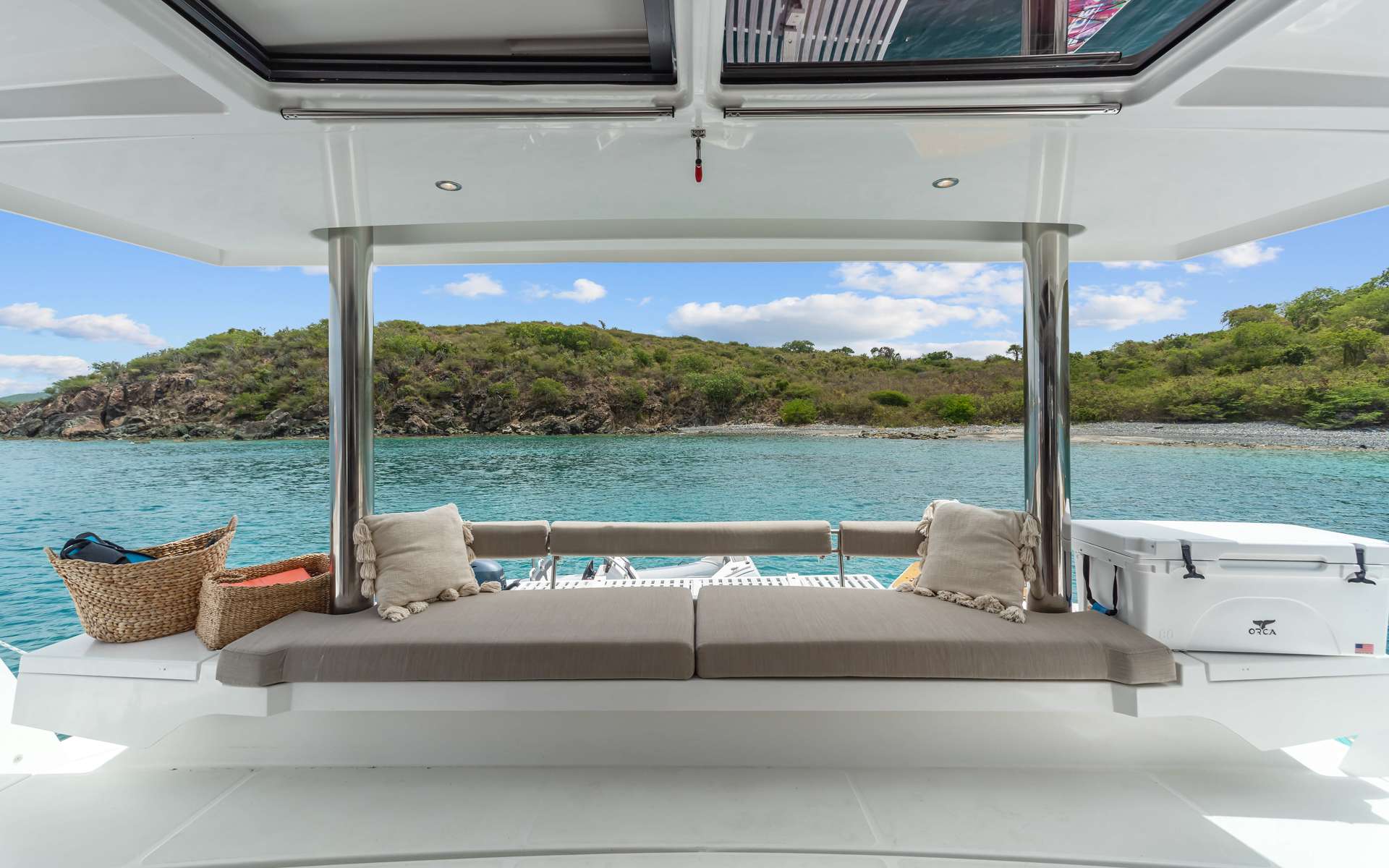
The last full day works its way around Grenada's south coast, a different world from the open windward passages — a maze of reef-protected bays, mangrove inlets, and quiet anchorages tucked behind the headlands. Your captain rounds Point Salines past the airport and into the lee, with options that shape the day around what the group wants for a finish.
Hog Island is the classic call: a low, undeveloped island off the south coast with a calm anchorage and Roger's Bar, a bamboo-and-driftwood shack on the beach that throws the most famous Sunday gathering in Grenada — live music, rum punch, and a barbecue that draws every cruiser in the area. Even on a quiet weekday the anchorage is a gem. For a more active last day, your captain can set up an inland run from Prickly Bay — Annandale Falls, a nutmeg plantation, or the River Antoine distillery, the oldest working rum distillery in the Caribbean, still driven by a waterwheel.
Or the group simply spends the day on the water — a last snorkel, the full slate of toys off the transom, a long lunch on the aft deck — and lets the trip wind down at anchor. Tonight is the farewell dinner: the chef's best, paired wines from the cellar, and a toast to a charter that started under the Pitons and ran the whole eastern edge of the Caribbean to get here. Last night aboard on the south coast of the Isle of Spice.
Day Highlights
Day 11 · Disembarkation
A last slow breakfast aboard, a final swim off the back of the boat, and a short morning run back to Port Louis Marina in St. George's for check-out. Your crew handles every logistic from the dock — the transfer to Maurice Bishop International (GND) is fifteen minutes, and most groups schedule the flight for mid-afternoon or later to keep the morning unhurried. Step off with salt in your hair, three countries' worth of sailing behind you, and the rare satisfaction of having actually gone somewhere.
Want to share or come back to this voyage later?
Bookmark this voyage →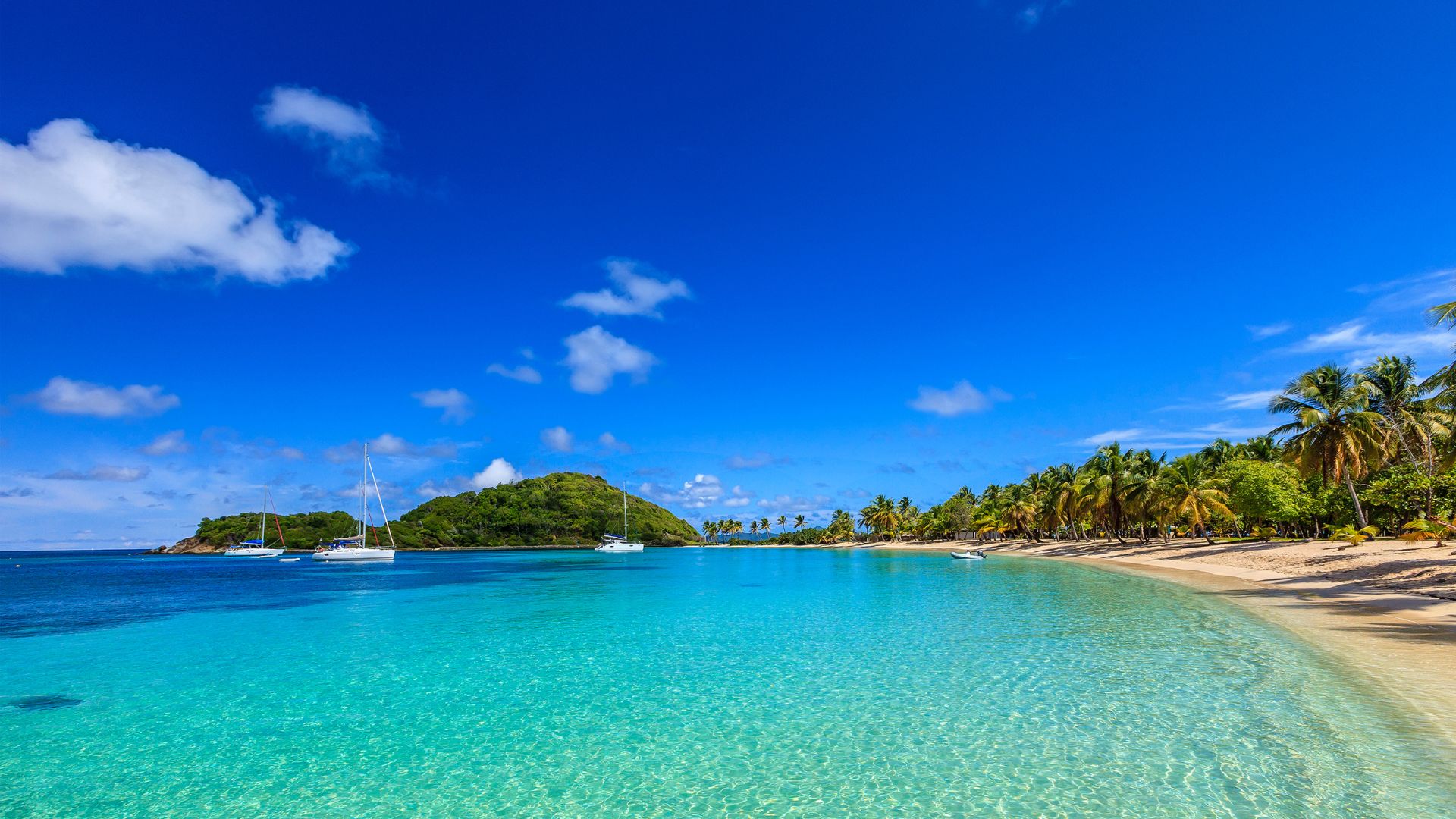
When to go, what it costs, and how to get there — the practical answers guests ask before booking a St. Vincent and the Grenadines crewed yacht charter.
De diciembre a abril se concentra el mayor volumen de reservas. Los vientos alisios del este-noreste soplan entre 15 y 22 nudos, las temperaturas diurnas rondan los 27 °C y la lluvia es poco frecuente. Navidad y Año Nuevo son las semanas más concurridas de la cadena — Britannia Bay frente a Mustique se llena con los yates más reconocibles del año, y los mejores barcos disponibles se reservan con 9 a 12 meses de antelación. Semana Santa es el segundo pico, protagonizado por la Bequia Easter Regatta — la regata de Pascua más antigua del Caribe — que atrae a todos los navegantes de la cadena a Admiralty Bay durante la semana.
Mayo, junio y la segunda mitad de noviembre quedan entre la temporada alta y el mayor riesgo de huracanes. Los vientos alisios se suavizan ligeramente, entre 12 y 18 nudos, la temperatura del agua sube por encima de los 27 °C, y las tarifas suelen bajar entre un 15 y un 25 % respecto a la temporada alta. La actividad tropical es estadísticamente poco frecuente en mayo, junio y noviembre. El tráfico de embarcaciones se reduce a medida que los navegantes de larga distancia abandonan la cadena antes de la temporada de huracanes, y los Tobago Cays en particular recuperan la tranquilidad de temporada baja. Para quienes tienen flexibilidad para elegir, esta suele ser la mejor época que ofrecen las Granadinas.
Las Granadinas se encuentran más al sur en el Caribe que las Islas Vírgenes Británicas o las Islas Vírgenes de EEUU, y la temporada se extiende más tarde. Los huracanes pueden afectar la cadena, pero la mayoría de los yates de la región se desplazan al sur, hacia Granada, durante la temporada de huracanes — y un puñado de esos barcos puede reposicionarse para un embarque de verano que navegue hacia el norte desde Granada por las Granadinas. El inventario es más reducido y los plazos importan, pero para quienes solo pueden viajar en verano vale la pena preguntar. Sabemos qué yates están posicionados en cada lugar.
$25,000–$100,000 per week
Los viajes en yate con tripulación por San Vicente y las Granadinas tienen un coste que generalmente oscila entre $25,000 y más de $100,000 por semana, según el tamaño del yate, el año de construcción y la tripulación. La mayoría de los yates operan en modalidad todo incluido — la tarifa semanal base cubre el yate, la tripulación, todas las comidas, un bar estándar (cerveza, vino, licores), combustible para la navegación habitual, deportes acuáticos y los amarres habituales. Algunos yates a motor de mayor tamaño funcionan en modalidad gastos aparte, donde la tarifa base cubre solo el yate y la tripulación, y los gastos de comida, bebida, combustible y atraques se gestionan a través de una APA (Asignación Anticipada de Provisiones) — un fondo previo establecido entre el 25 y el 35 % de la tarifa base, con contabilidad detallada y devolución del saldo no utilizado al final del viaje. El Parque Marino de los Tobago Cays cobra una tasa de entrada por yate que el capitán abona al realizar la entrada, y los amarres en Mustique y Canouan tienen un pequeño suplemento durante las semanas de temporada alta. La propina para la tripulación, habitual entre el 15 y el 20 % de la tarifa base, se entrega directamente al capitán en el desembarque.
About chartering in St. Vincent and the Grenadines.
Field-tested guides, itineraries, and tips — written from years of chartering these waters.

Clasificación de los mejores destinos de alquiler de yate para el kiteboarding: los bajos de Anegada, las Granadinas, las Exumas, los cayos exclusivos para barcos de Anguila y la Polinesia Francesa; además de sus respectivas temporadas de viento.

Descubre los mejores destinos para alquilar un yate en verano durante la temporada de huracanes: explora las Granadinas, Las Exumas o el Mediterráneo.
We charter across the Caribbean. Here are some other excellent alternatives.

Explore a British Virgin Islands yacht charter for an unmatched sailing adventure. Idyllic Caribbean setting, easy navigation, and iconic beach bars await you.

Experience the charm of a US Virgin Islands yacht charter. Discover pristine national parks, stunning beaches, and easy navigation in this Caribbean gem.

Set sail in Exuma, Bahamas for an unparalleled yacht charter experience. Revel in the stunning blues, serene solitude, and fishing in this Caribbean gem.

Loyalist clapboard towns a tender ride from the anchorage, the Hope Town light swinging its beam across the mooring field, Tahiti Beach's sandbar at low tide, and two national parks of no-take reef — the protected-water Bahamas, north of the Exumas, with history in the bones.

Explore a St. Martin yacht charter for a unique Caribbean adventure. Enjoy stunning beaches, rich culture, and ideal sailing conditions.

Twin volcanic Pitons rising straight off the mooring field, Marigot Bay's mangrove hurricane hole, reef and wreck diving inside the Soufrière marine reserve, and the Friday fish fry at Anse La Raye — the Windwards fleet, one island north of the Grenadines, with the postcard waiting at the first mooring.

Explore the serene Spanish Virgin Islands: pristine beaches, historic sites, and unspoiled nature await. The ultimate Caribbean sailing escape.

Embark on a Belize yacht charter to explore the Caribbean's unspoiled beauty, from vibrant reefs to serene cayes, in crystal-clear waters.

Embark on an unforgettable yacht charter in Antigua and Barbuda, where crystal-clear waters, rich history, and 365 beaches offer a paradise for every sailor.
Fill out our quick form and we'll dive into your unique preferences — from adventure-packed itineraries to pampered escapes. Whether you're a seasoned voyager or new to charters, we'll tailor recommendations just for you.
With over fifteen years of experience, we'll match you with the yacht that fits your style, group, and itinerary. We work directly with the captains and crews across our list — so the recommendation is built around the right boat-and-crew fit for your week, not whatever's easiest to book.
Once your yacht is booked, we'll take care of logistics: paperwork, reminders, and personalized resources to help you plan. From arrival planning to must-visit spots, we'll make your charter as seamless as it is unforgettable.

¿Qué esperar de un alquiler de yate privado con tripulación?
Conocé qué hace únicos a estos viajes en yate: servicio personalizado, gastronomía gourmet y un sinfín de aventuras y momentos de relax.

¿Cómo es el proceso de reserva?
Nuestro equipo se encarga de todo: desde tu primer consulta hasta que zarpás. Todo fluye de forma simple.

¿Cuánto cuesta un alquiler de yate con tripulación?
Entendé los distintos tipos de precios, lo que está incluido y lo que no.

Logística: planes probados para un inicio sin estrés
Planificá tu llegada con facilidad. Te damos tips sobre vuelos, traslados y todo lo necesario para arrancar relajado.
Alquiler de yate de luna de miel
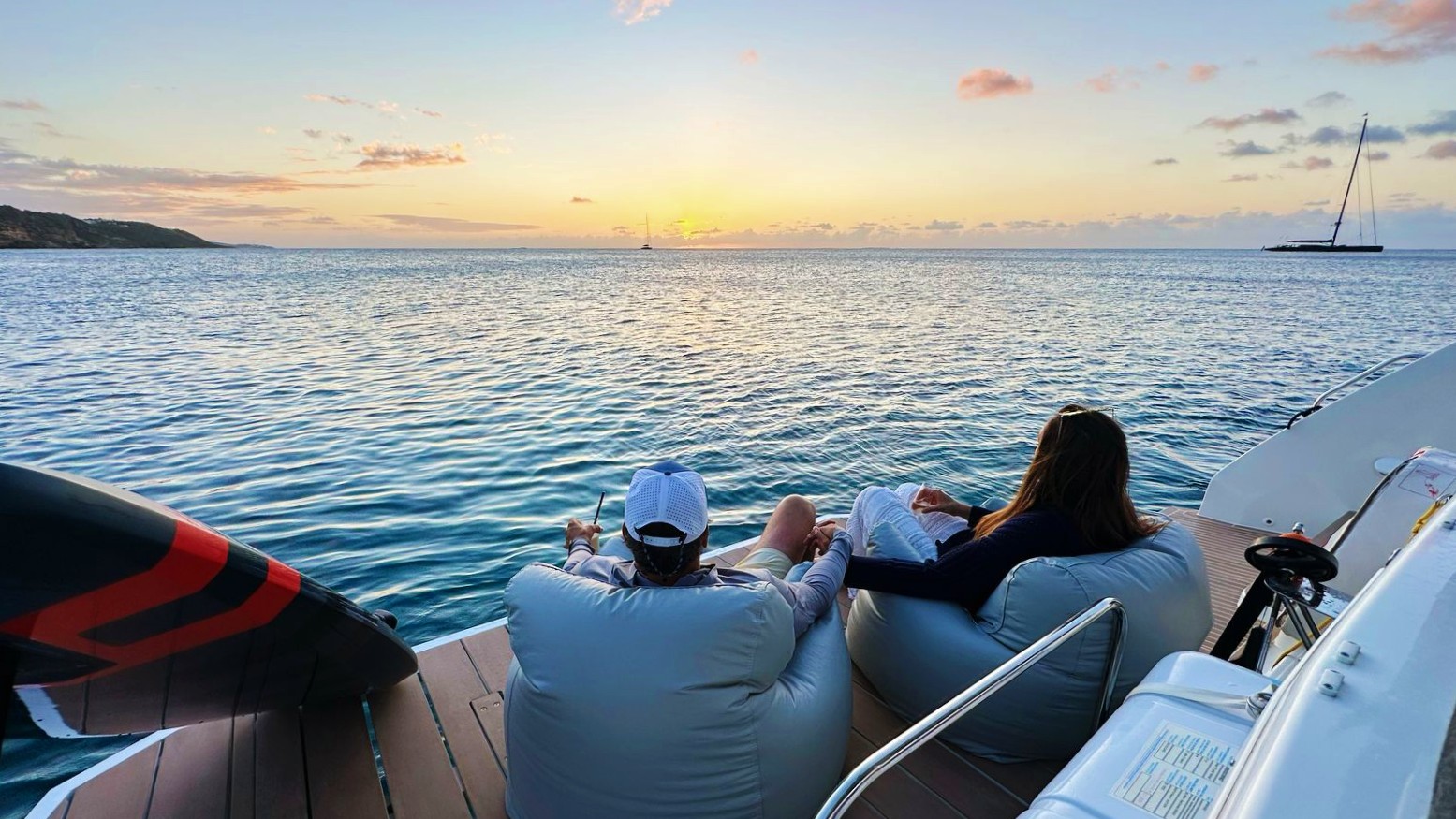
Comience su matrimonio en un yate privado. Explore playas solitarias, gastronomía gourmet y atardeceres inolvidables en el Caribe.
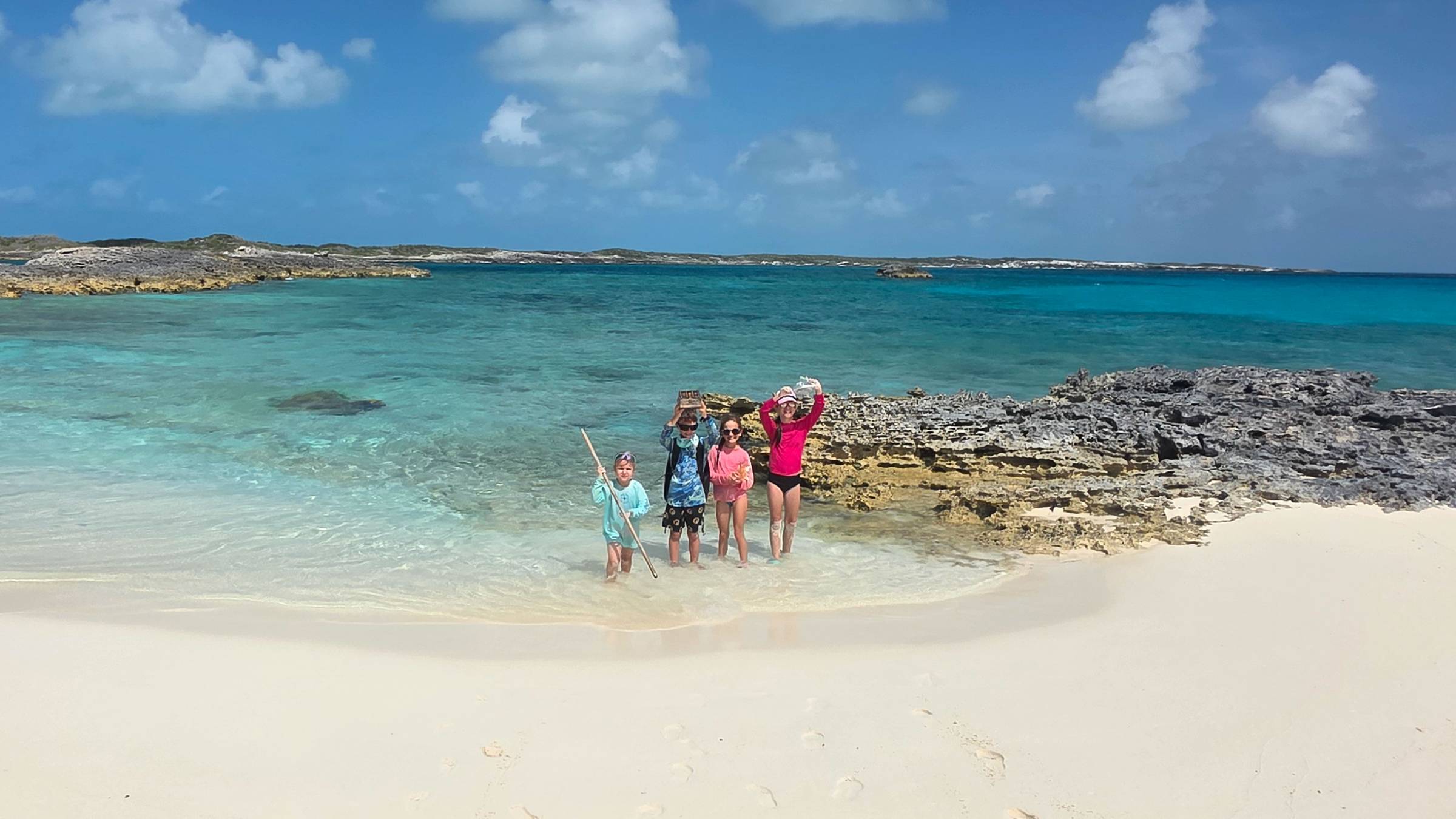
Alquiler de yate familiares
Un alquiler de yate con tripulación es perfecto para familias de todas las edades. Seguro, divertido y con servicio completo — sus hijos nunca lo olvidarán.

Preguntas frecuentes sobre alquileres de yate con tripulación
Obtenga respuestas a las preguntas más comunes sobre alquiler de yate con tripulación, desde precios y propinas hasta qué incluye y qué llevar.

Alquiler de yate con tripulación en las Islas Vírgenes Británicas
Las Islas Vírgenes Británicas son el destino #1 de alquiler de yate con tripulación en el Caribe. Navegaciones cortas, aguas protegidas y bahías de clase mundial.

Guía de Alquiler de Yate con Tripulación en Islas Vírgenes Británicas
Todo lo que necesitás saber antes de tu viaje en yate con tripulación en las Islas Vírgenes Británicas — precios, lista de equipaje, itinerario y cómo llegar.
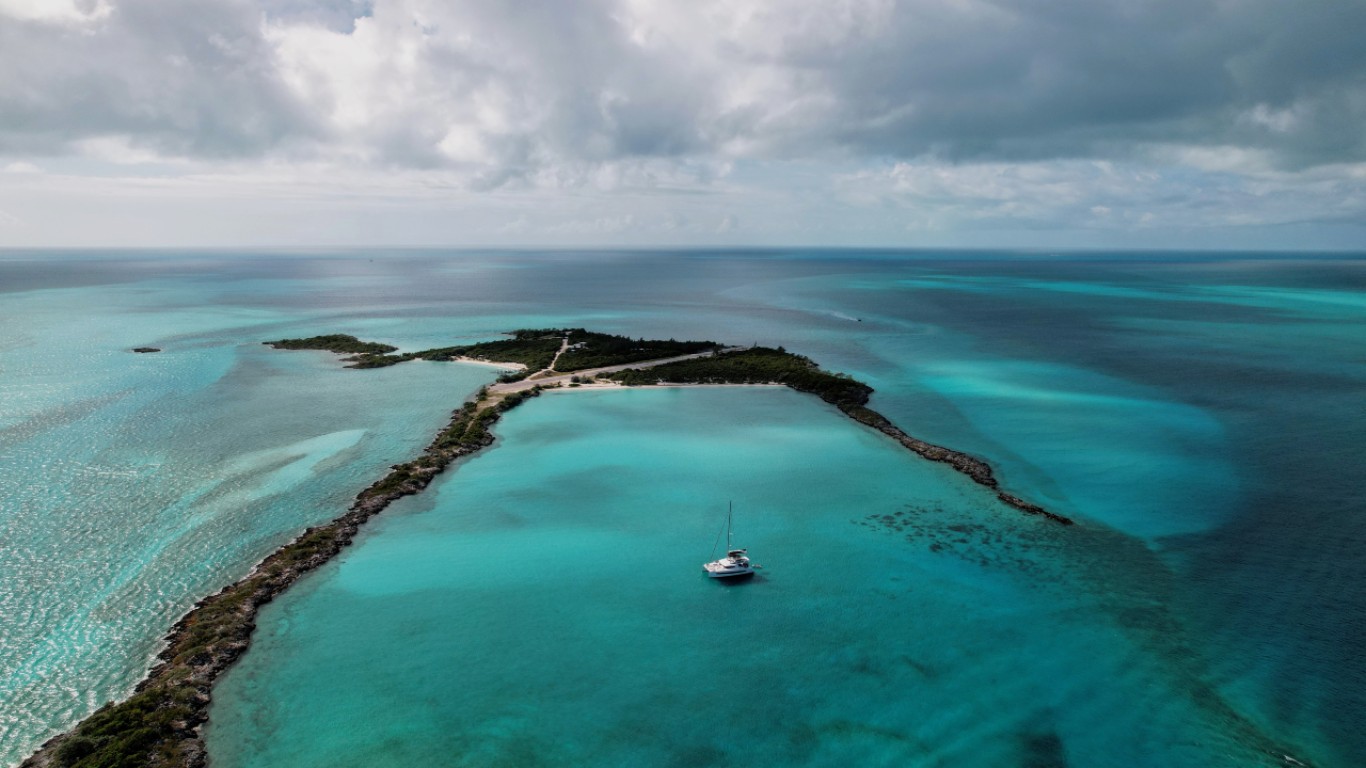
Alquiler de yate con tripulación en las Bahamas
Explore las Exumas en un yate privado con tripulación. Cerdos nadadores, bancos de arena y algunas de las aguas más cristalinas del mundo.
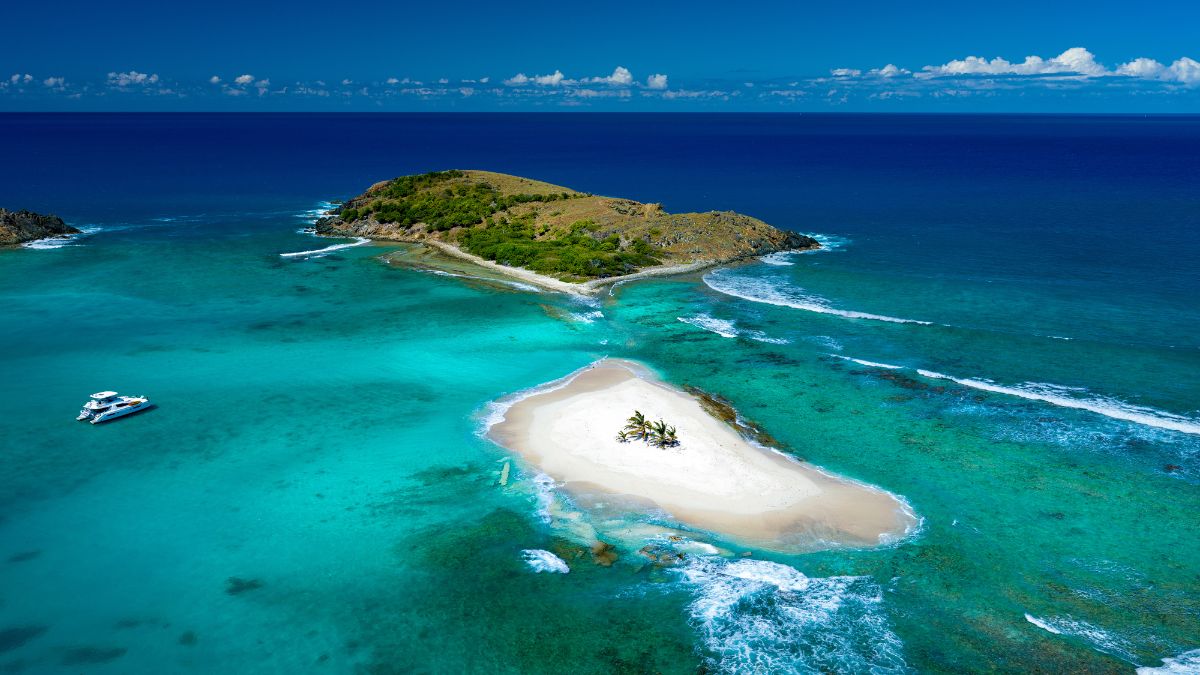
Alquiler de yate con tripulación en el Caribe
Alquiler de yate todo incluido con tripulación en todo el Caribe — Islas Vírgenes Británicas, Bahamas, Islas Vírgenes de EEUU, St. Martin, Antigua y más.