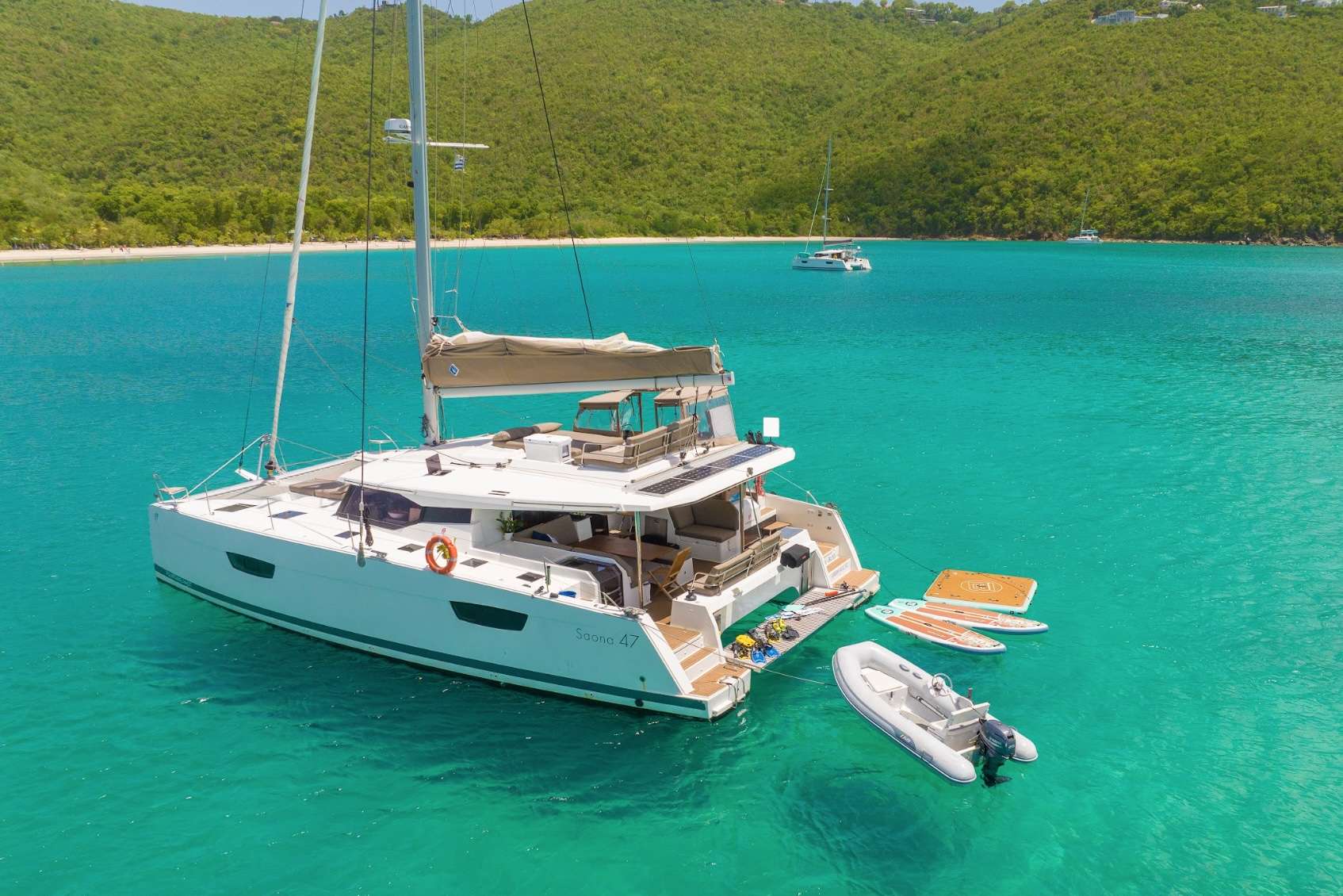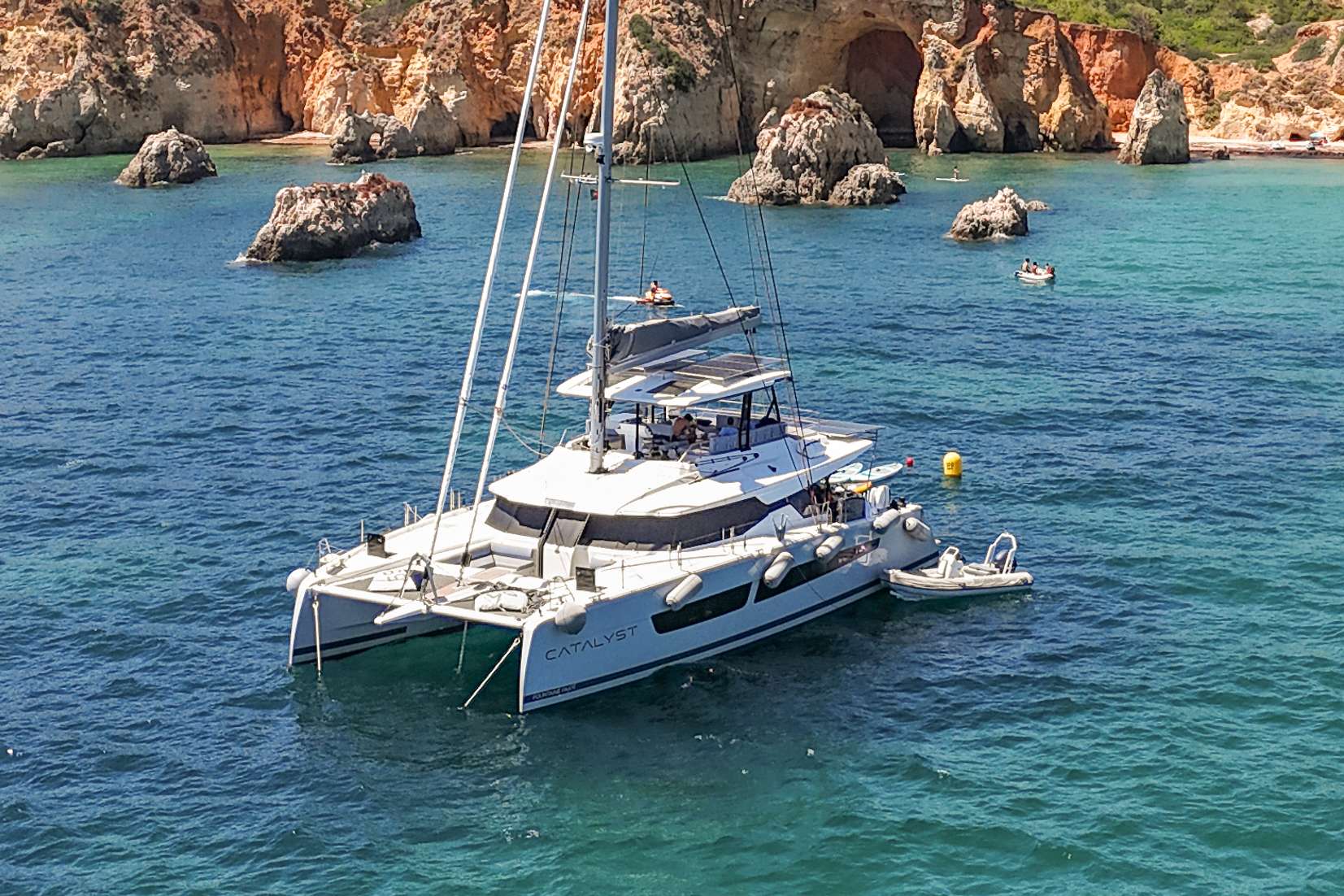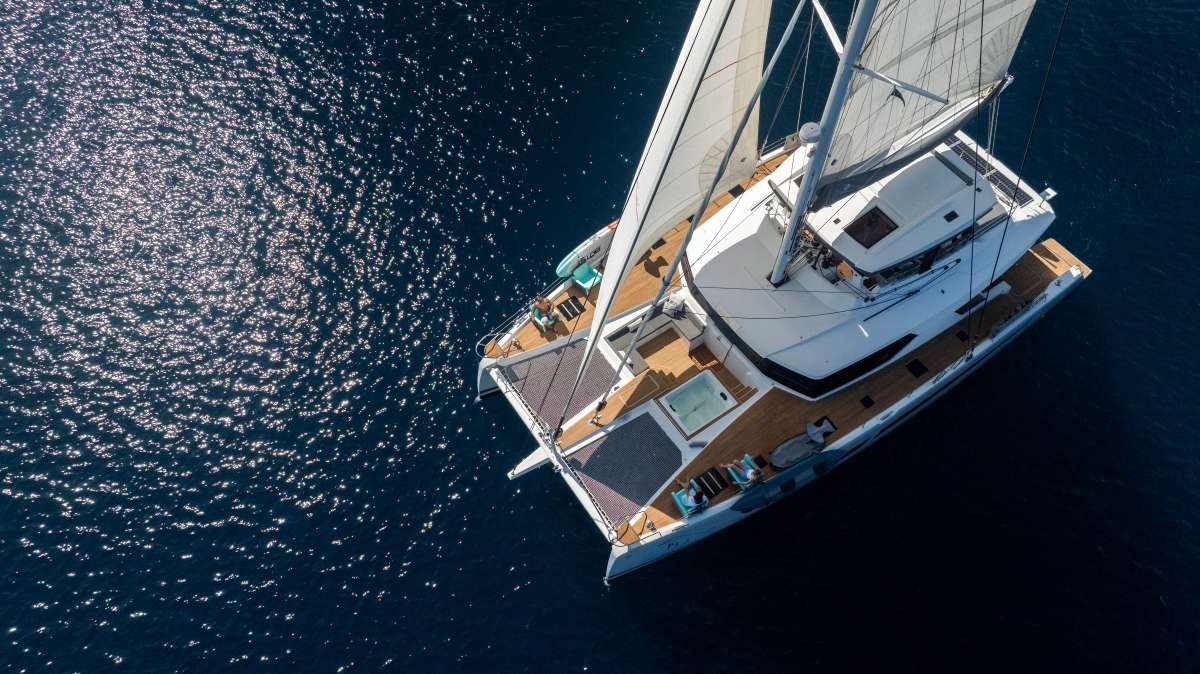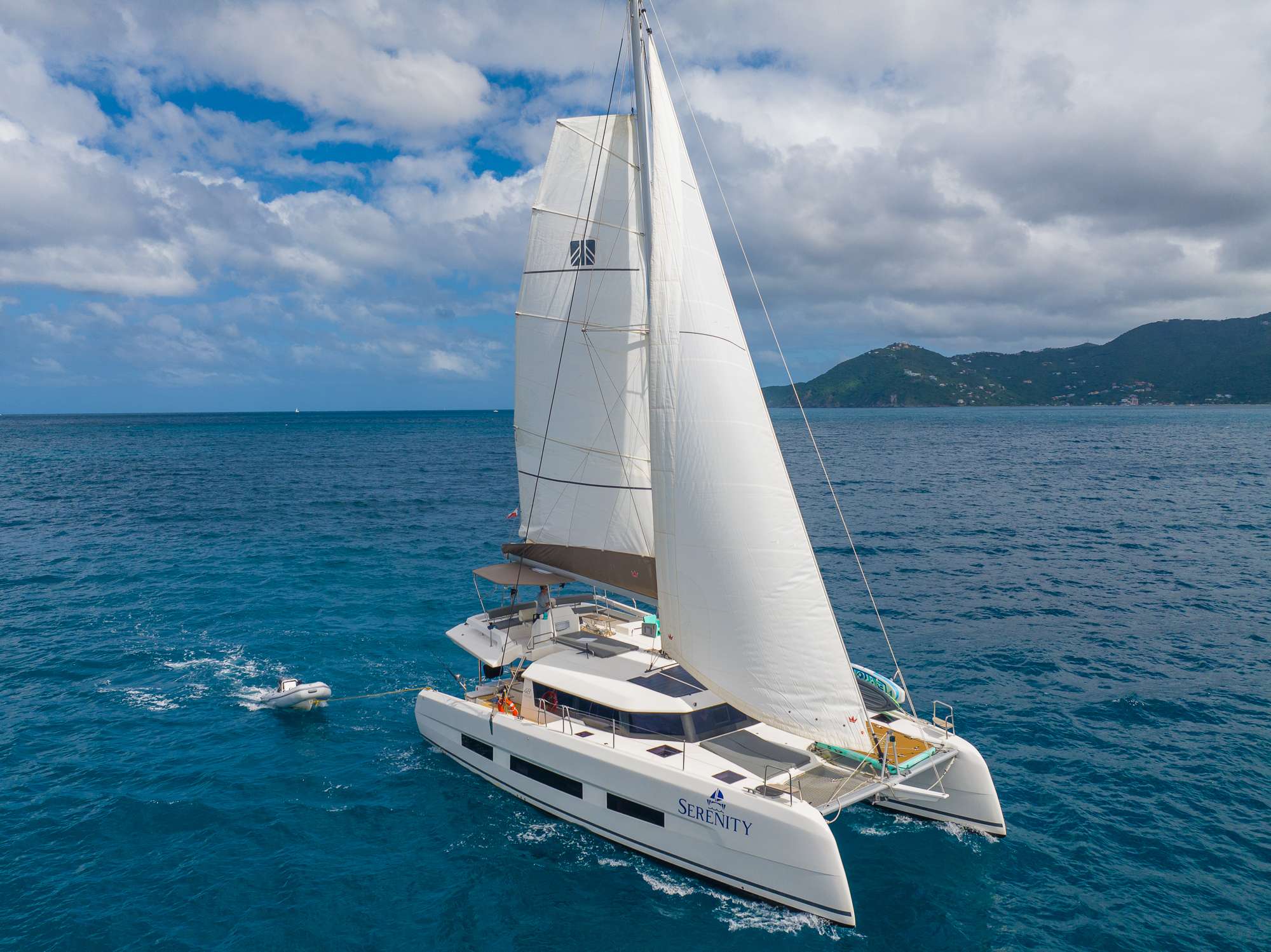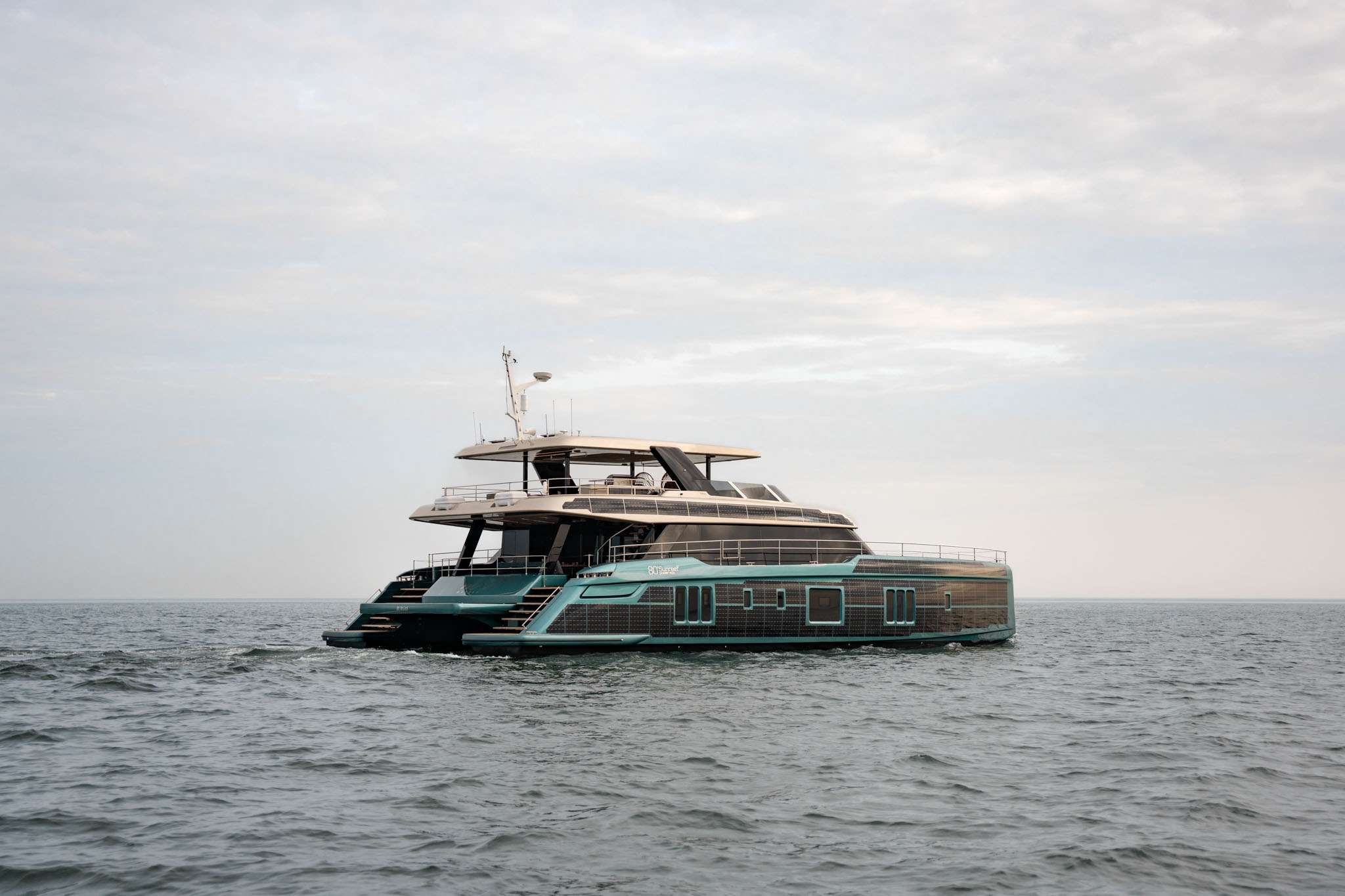

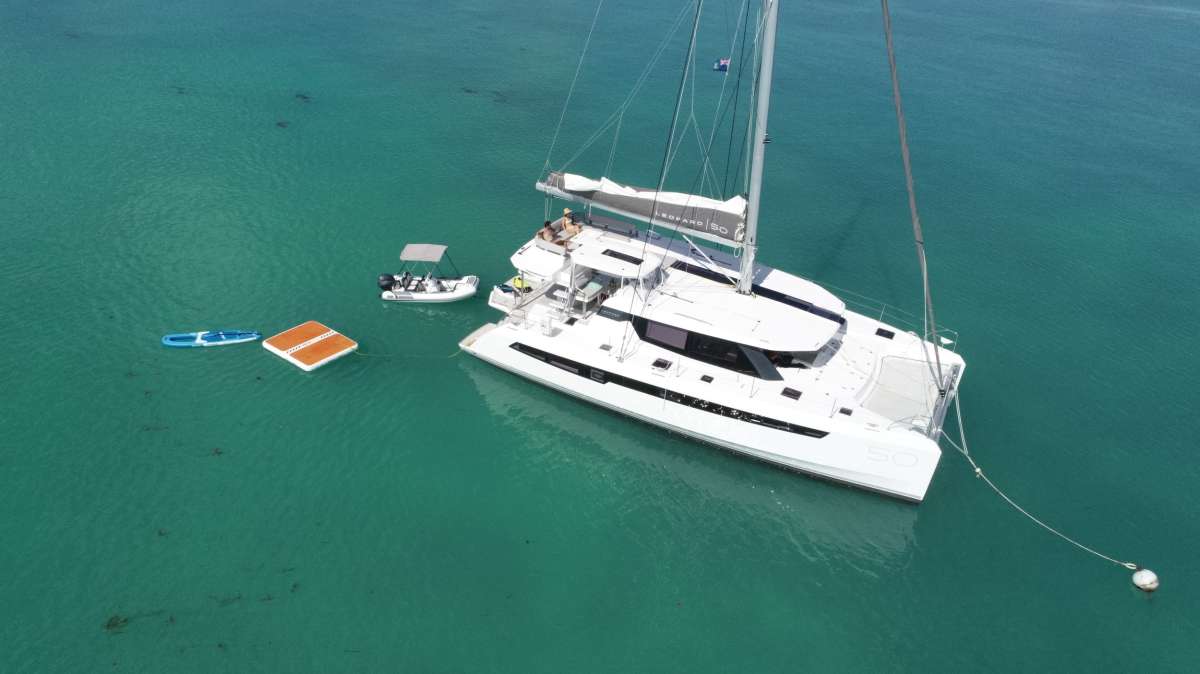
Andiamo Tutti
50FT · SAILING CATAMARAN
Desde $27,500/semana
6 Guests · 3 Cabins
Caribbean
Eastern Mediterranean
Western Mediterranean
South Pacific
United States
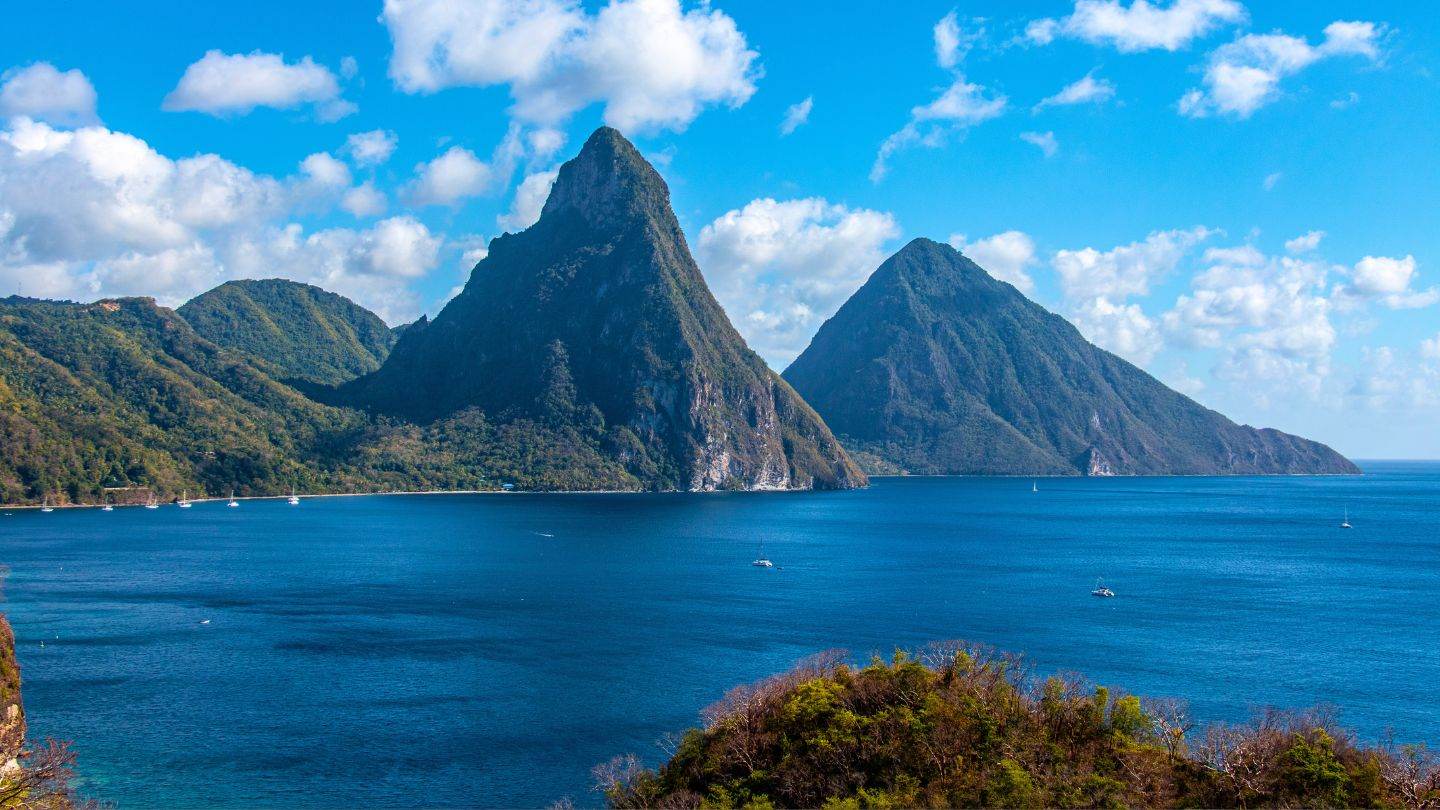
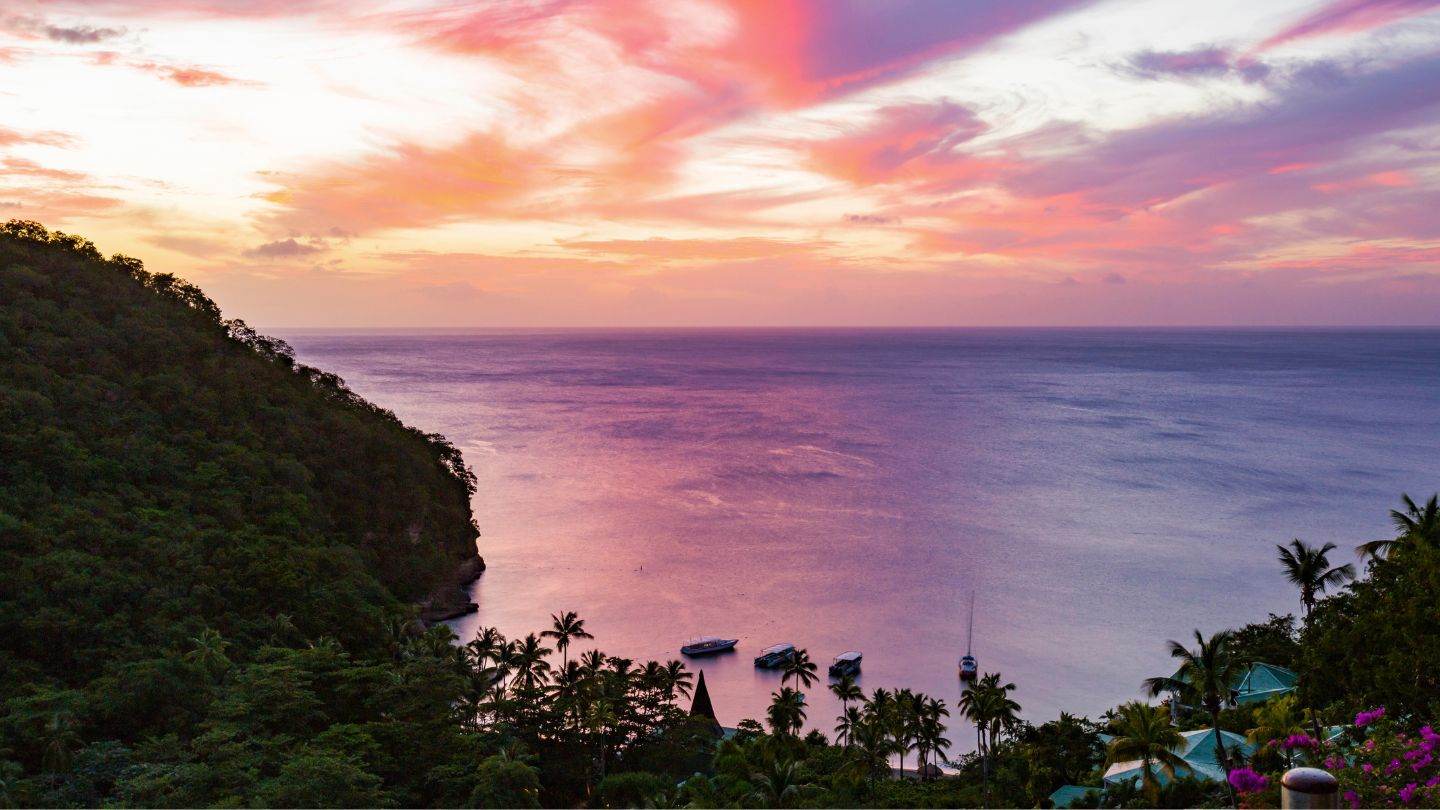
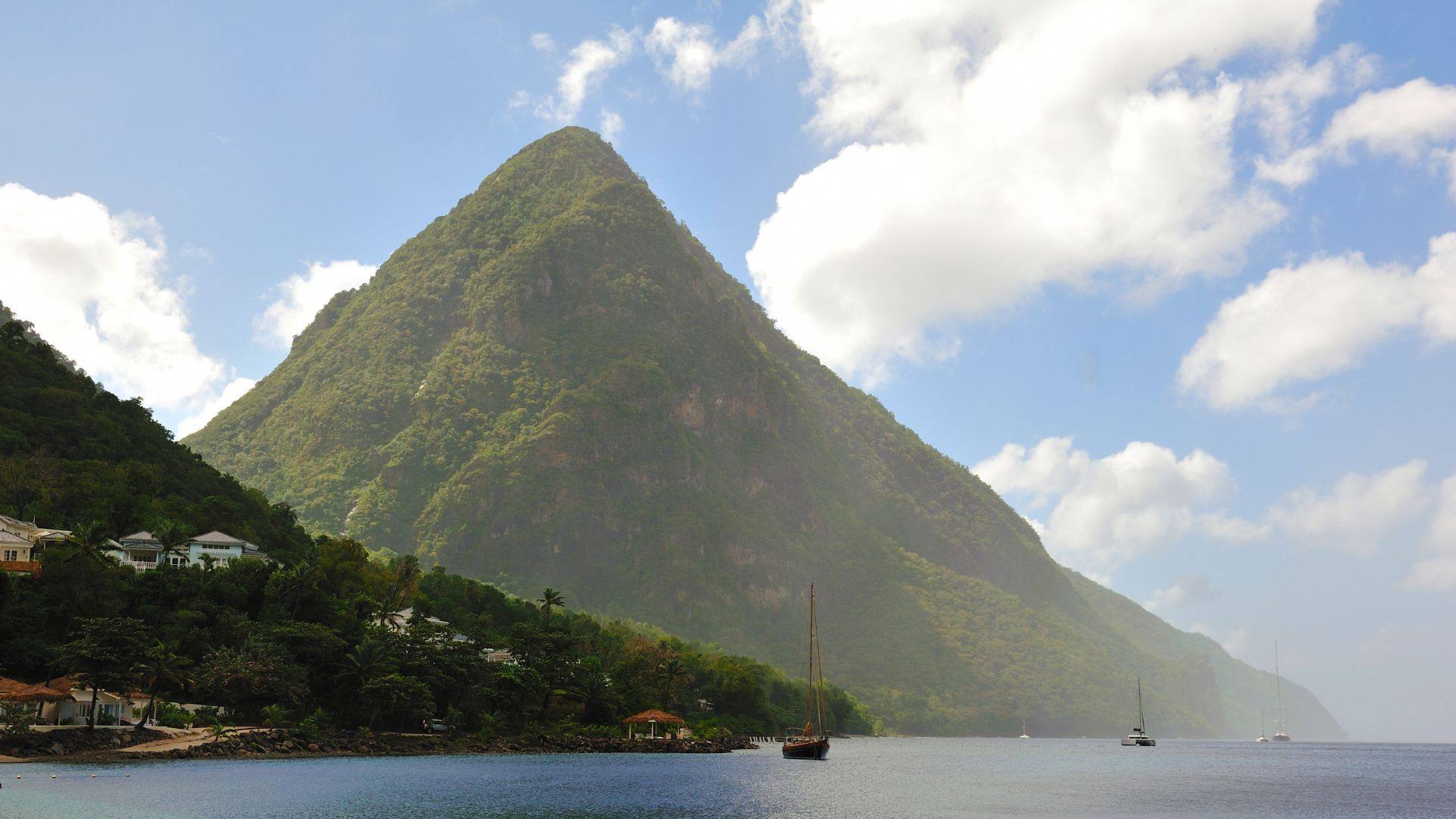
Twin volcanic spires rising straight from the sea with a mooring field at their base — rum punch on the aft deck as Petit Piton turns gold, reef a fin-kick off the swim platform, Rodney Bay's mast lights coming on astern on the last night out.
Why St. Lucia
The postcard arrives on night one. St. Lucia's mooring field at Malgretout sits directly beneath Petit Piton — you pick up the ball, the reserve's ranger collects the park fee over the rail, and the biggest scenery of the week is standing overhead before the first rum punch is poured. Most Eastern Caribbean charter grounds are old land, worn down to reef and sand. This one is a volcano before it's an island, and it still looks like the mountain-building isn't finished.
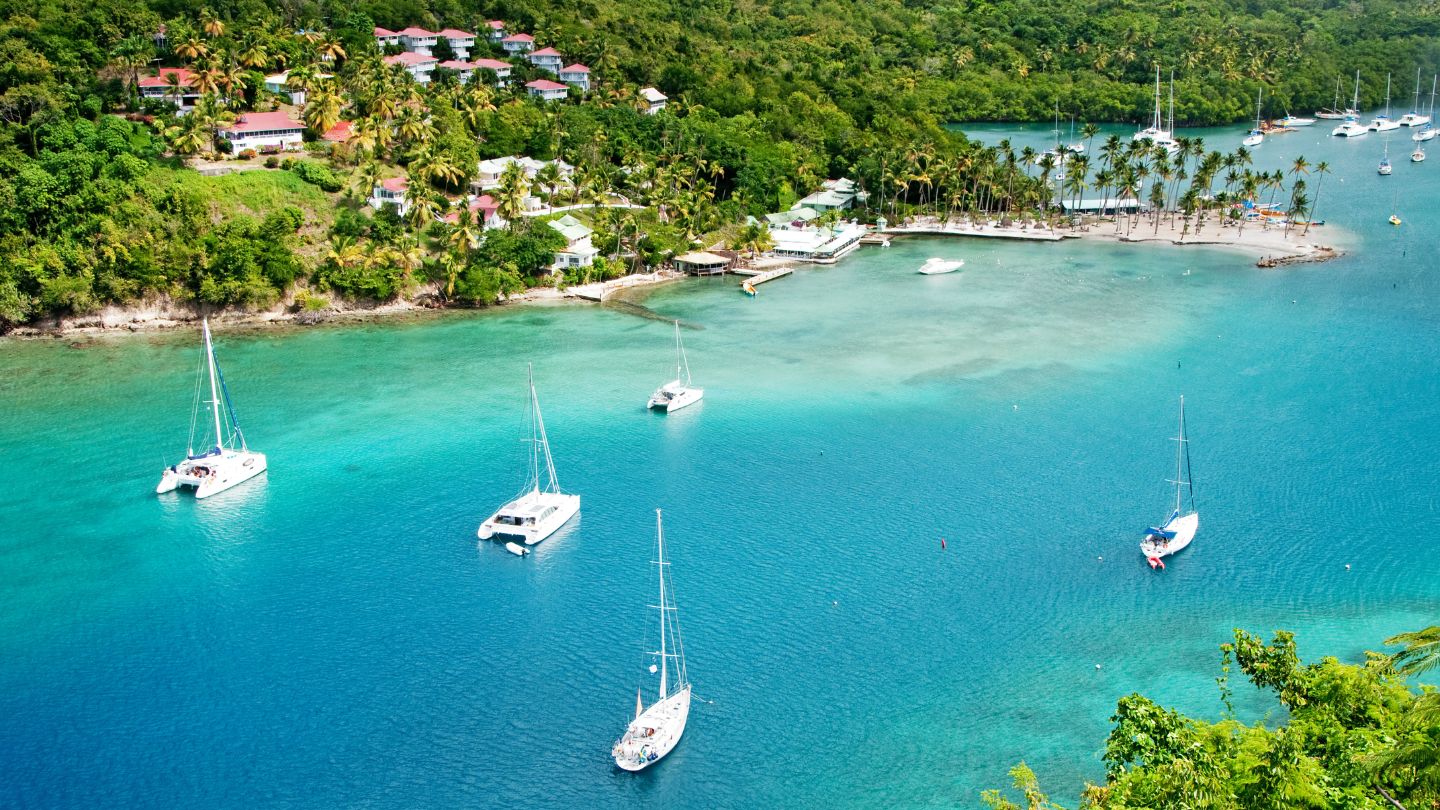
Your week packs more range into fewer miles than almost anywhere else we book. The southwest coast is the drama — a mooring under the Piton, the reef starting near the swim platform, Soufrière's fishing boats working the same bay you're swimming in. A short sail north, Marigot Bay closes in behind its mangrove arm — the hurricane hole Caribbean sailors have ducked into for three centuries — and Rodney Bay opens back out into restaurant row and a beach club a tender ride off the stern. Two different Caribbeans, one short coastline, no leg over twenty miles.
The honest comparison: if your dream week is a chain of small islands to wander, we'll send you south — the Grenadines do that better, and we book them constantly. Choose St. Lucia when you want one dramatic island done properly: the Caribbean's best sail-in anchorage, real restaurants, zero repositioning, and the postcard on night one instead of day four. It's also the natural first leg of the run south — same fleet, one island north — and we'll tell you plainly which version fits your group.
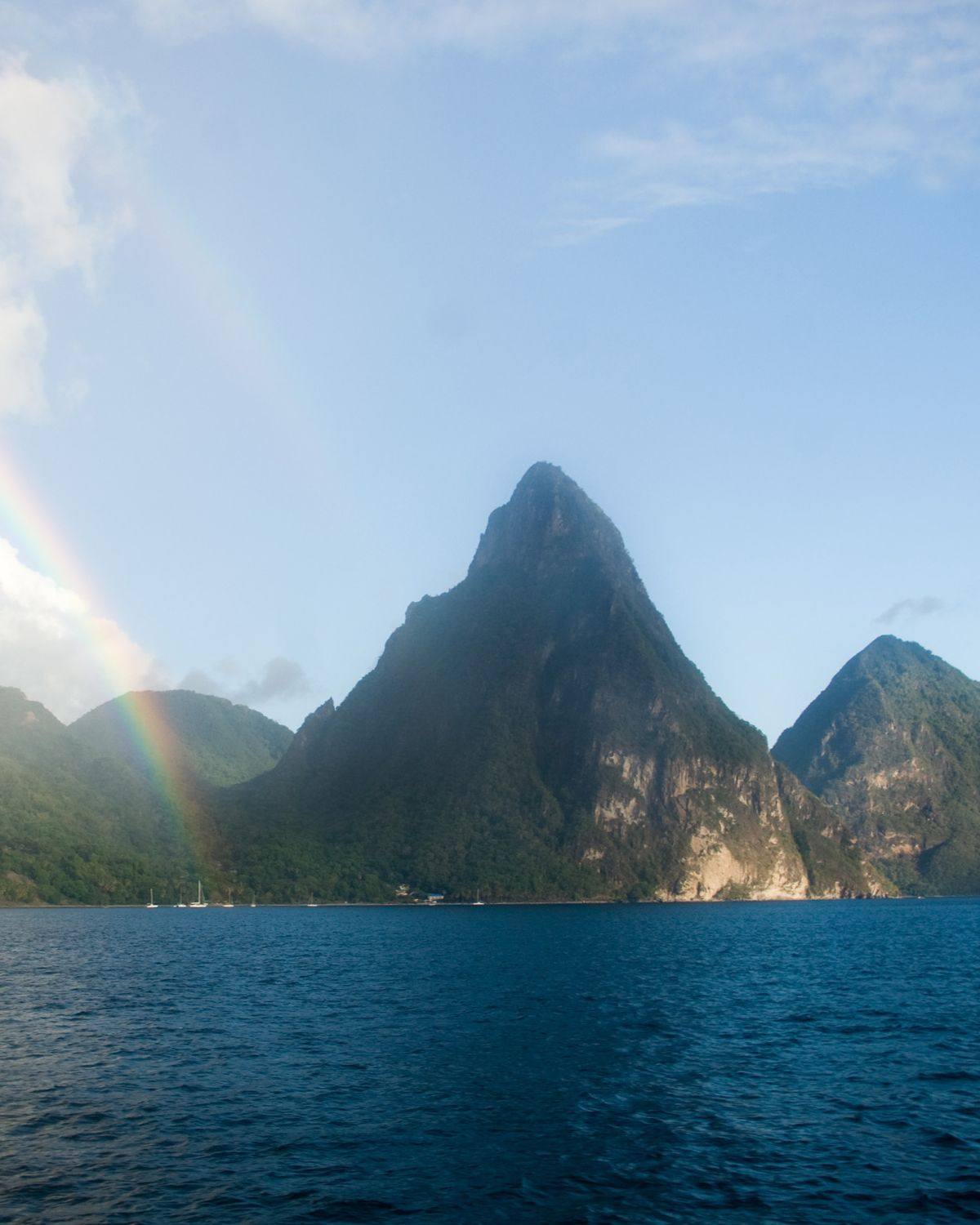
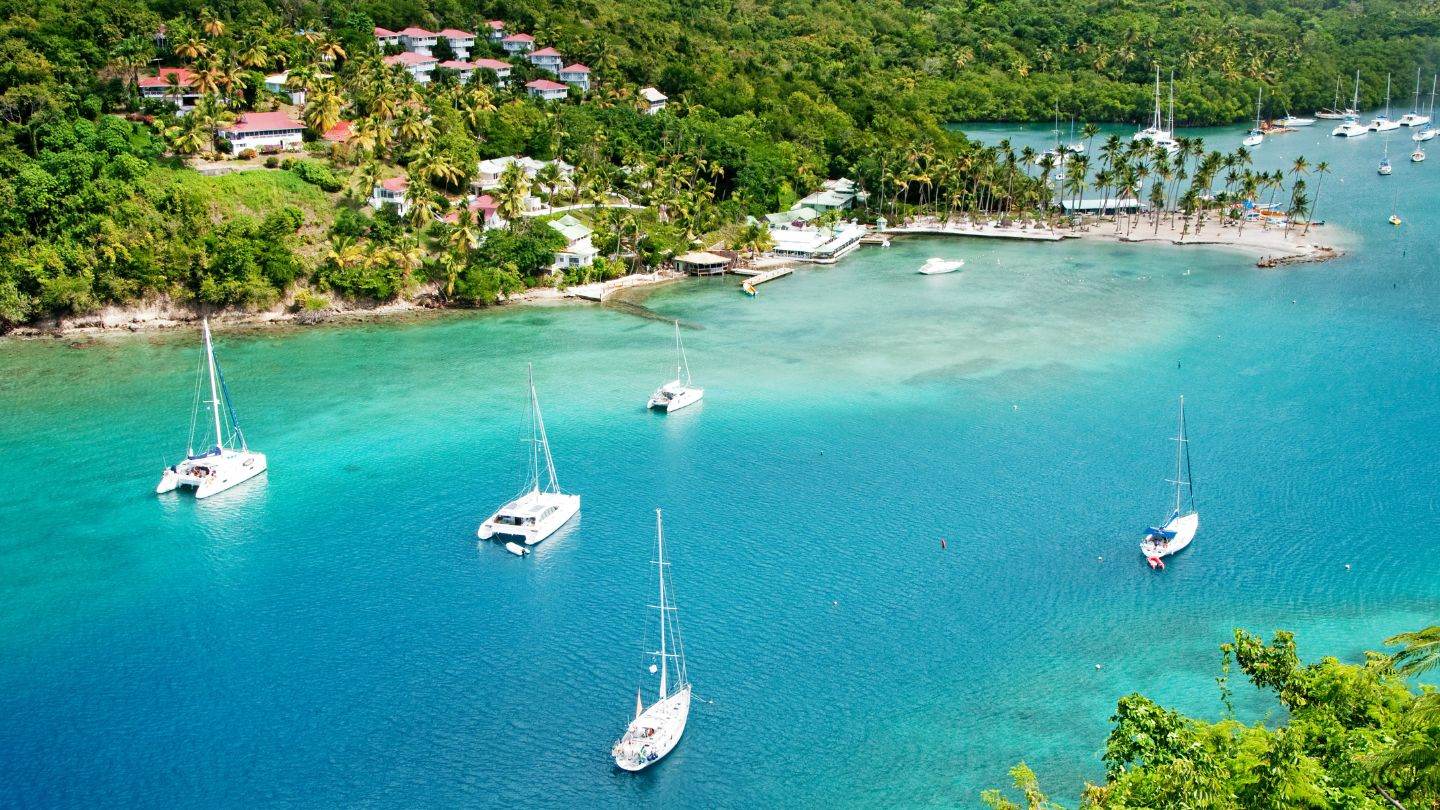
Four characteristics that distinguish St. Lucia from the other Caribbean charter grounds.
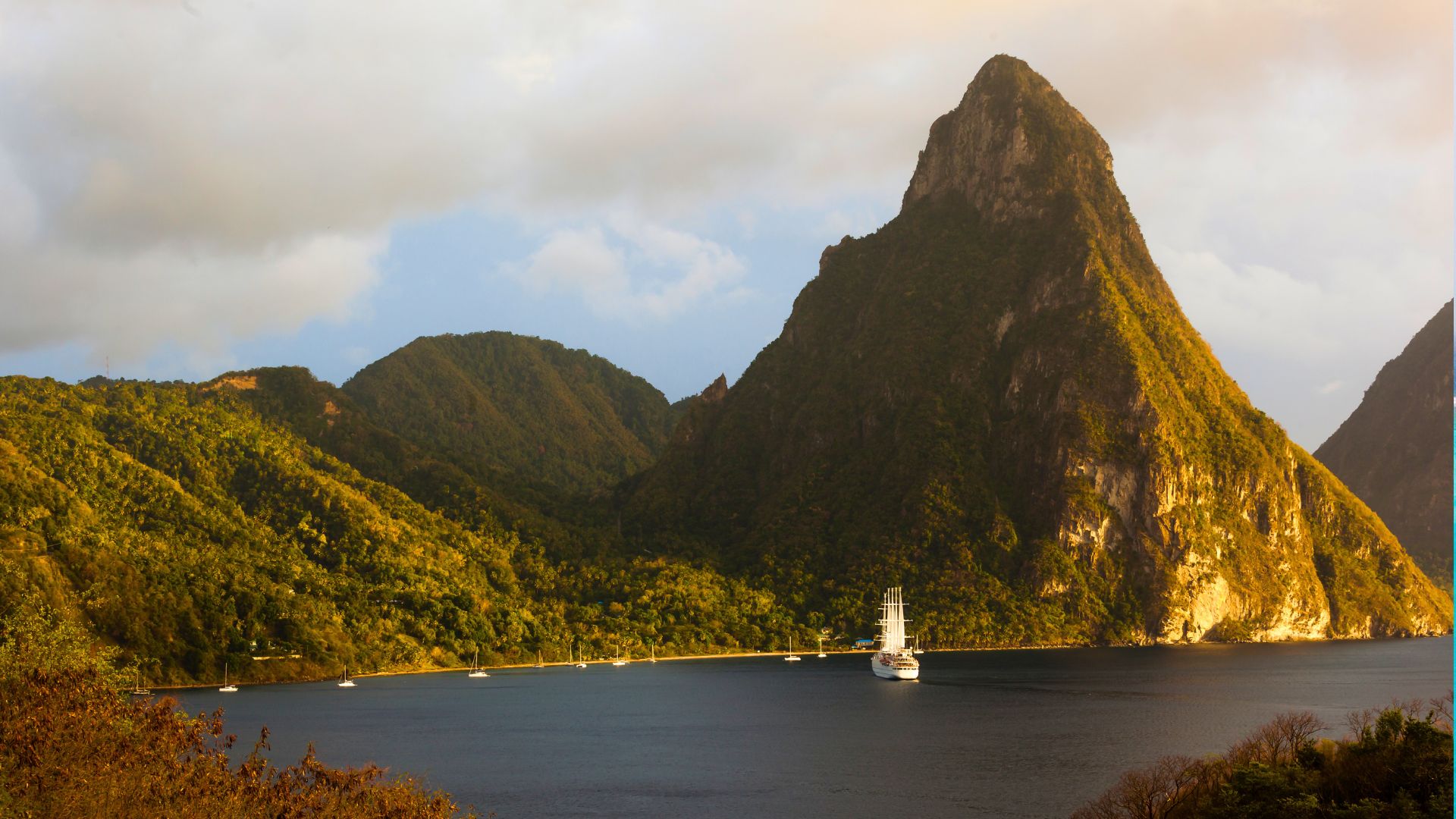
The two peaks read differently from a deck than from a resort balcony — Petit Piton rises close to three thousand feet almost straight off the mooring field, and the entire run from Soufrière to Malgretout happens in their shadow. The Soufrière Marine Management Area protects the whole stretch: anchoring is prohibited, rangers sell the conservation permit boat-to-boat on VHF, and the yacht picks up one of the maintained moorings under the peaks. The postcard every St. Lucia visitor chases is, for charter guests, just where the boat spends the night.
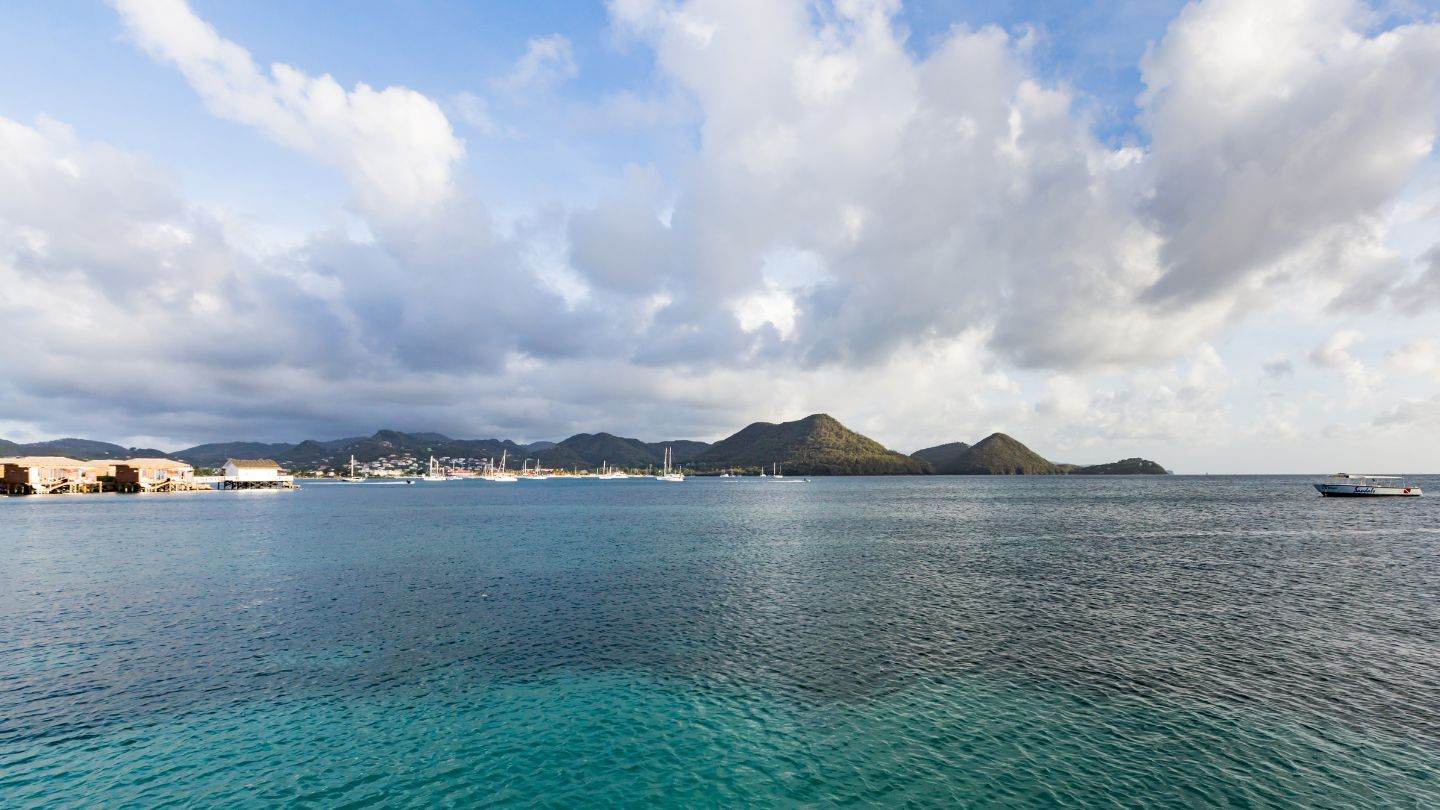
Marigot Bay is the coast's storied hurricane hole — a mangrove-armed inlet so enclosed that generations of Caribbean sailors have ridden out weather inside it, now ringed with hillside villas and a small marina. Rodney Bay, an hour north, is the opposite register: a working marina row, provisioning, restaurants, and Reduit Beach a short walk from the dinghy dock. Most weeks use both — the quiet night inside the mangroves, the lively one at the top of the island.
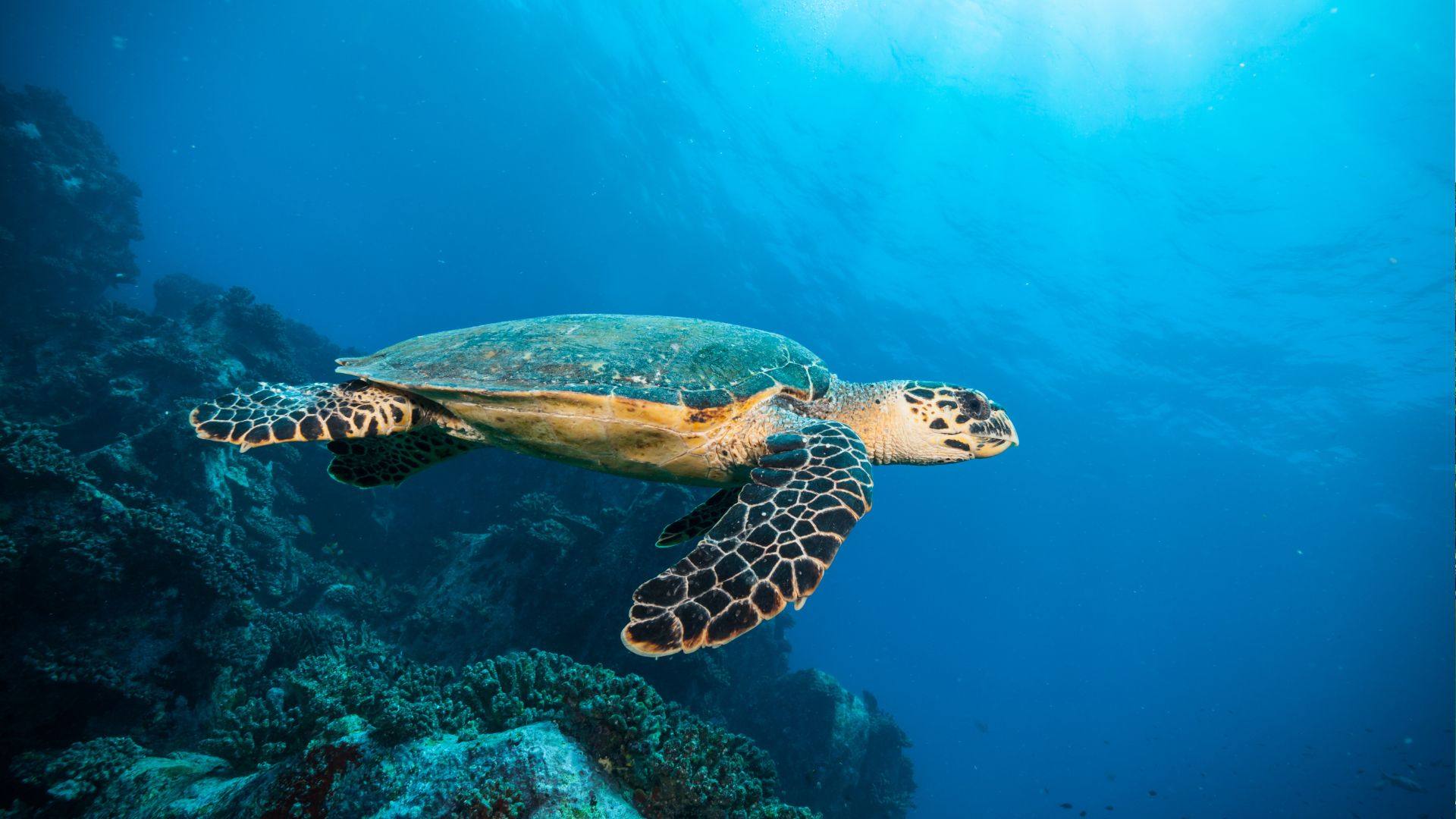
Step off the swim platform before breakfast and the reef starts where the ladder ends — Anse Chastanet's shallows drop away close to the beach, and hawksbill turtles work the edges while the coffee's still hot. Certified divers get the deliberately sunk freighter off Anse Cochon, now one of the easier wreck dives in the Windwards, with Soufrière's operators bringing tanks to the yacht on your schedule, not theirs.
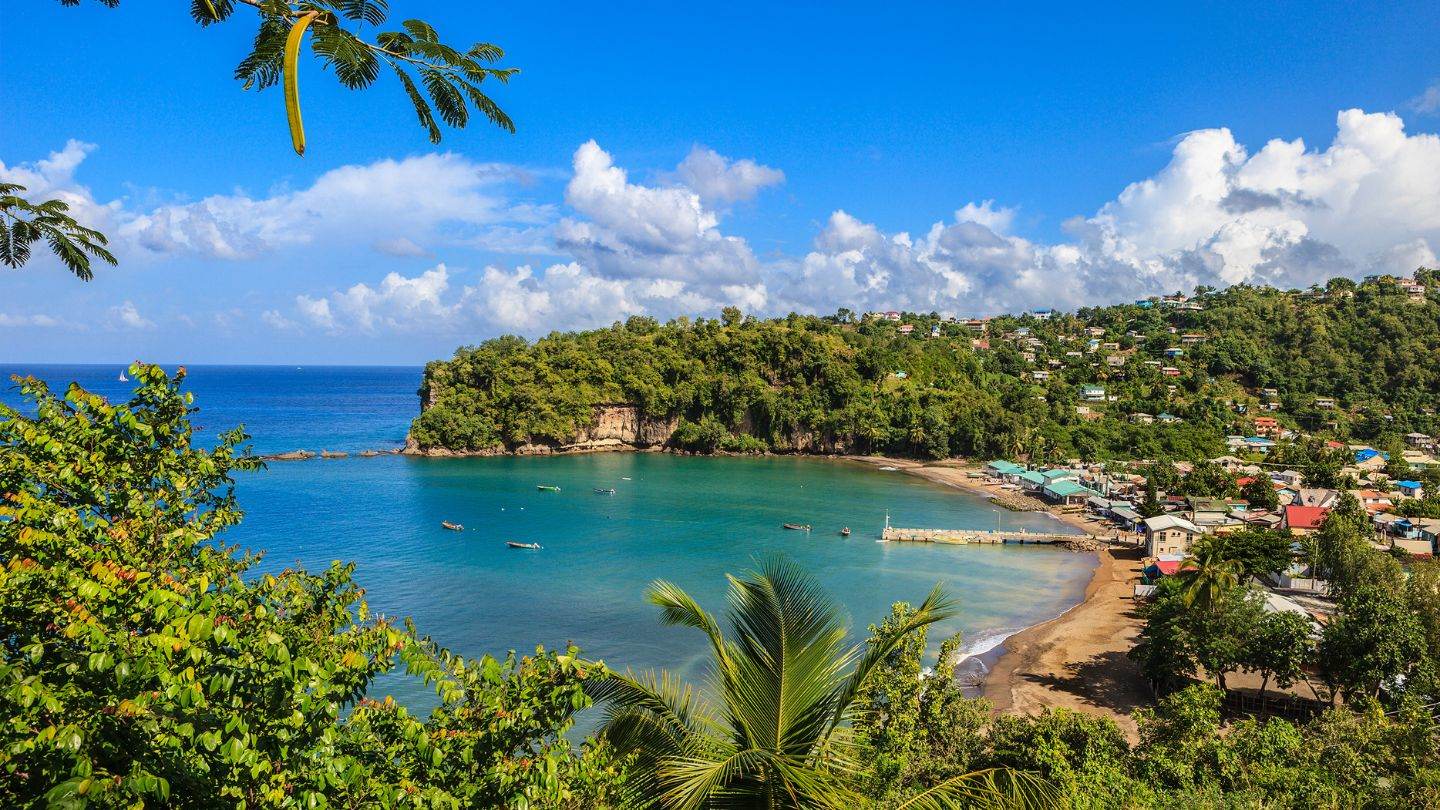
One evening a week, the fishing village of Anse La Raye closes its main street and fills it with grills, steel pan, and the day's catch cooked a dozen ways. It's a short tender or taxi from most west-coast anchorages, it costs a fraction of a resort dinner, and it's the closest thing the island has to a standing festival. Crews plan the Friday around it when the group wants a night ashore.
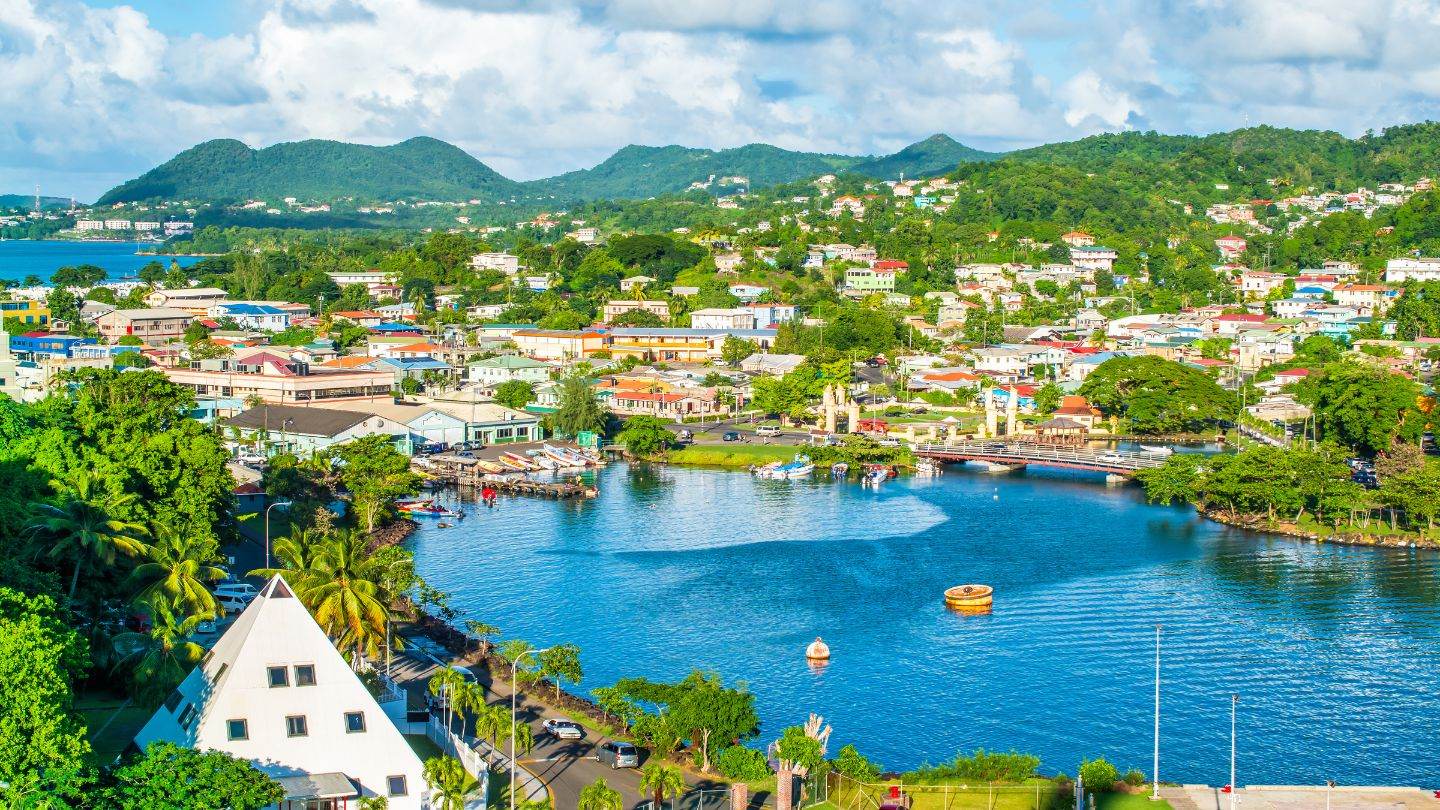
A hand-picked selection of crewed charter yachts for St. Lucia — yachts and crews we know firsthand.
Your week is shaped around your group's interests, the season, and the conditions on the water — your captain tailors the days as they unfold. Treat these itineraries as starting points for inspiration.
Crewed Itinerary · St. Lucia · The Grenadines · Grenada
This is the sailing trip. One-way from St. Lucia south through St. Vincent and the Grenadines to Grenada, ten days down the eastern edge of the Caribbean with the trade winds on the quarter and real blue water under the keel. The Grenadines round-trips are the deservedly famous postcard week; this is the route for the group that wants to actually sail it end to end — open channels, a few long passages, the best trolling water in the eastern Caribbean, and an island chain that changes character every twenty miles. You start under the Pitons and you finish in the spice harbor of St. George's, and in between you cross three countries without ever pointing the bow the wrong way for the wind.
Embarkation at Rodney Bay on St. Lucia's northwest coast, a transfer from Hewanorra International (UVF). Disembarkation at Port Louis Marina in St. George's, Grenada, a short hop from Maurice Bishop International (GND) on Day 11. Roughly a hundred and fifty nautical miles of cruising across ten days, built around two marquee passages — the St. Lucia Channel down past St. Vincent to Bequia, and the run from Carriacou across the open water to mainland Grenada — with the Grenadines strung out between them. A night moored beneath the Pitons. The turtles and the Horseshoe Reef anchorage at the Tobago Cays. Sandy Island off Carriacou. The underwater sculpture park at Molinère. This is the one for people who came to go sailing.
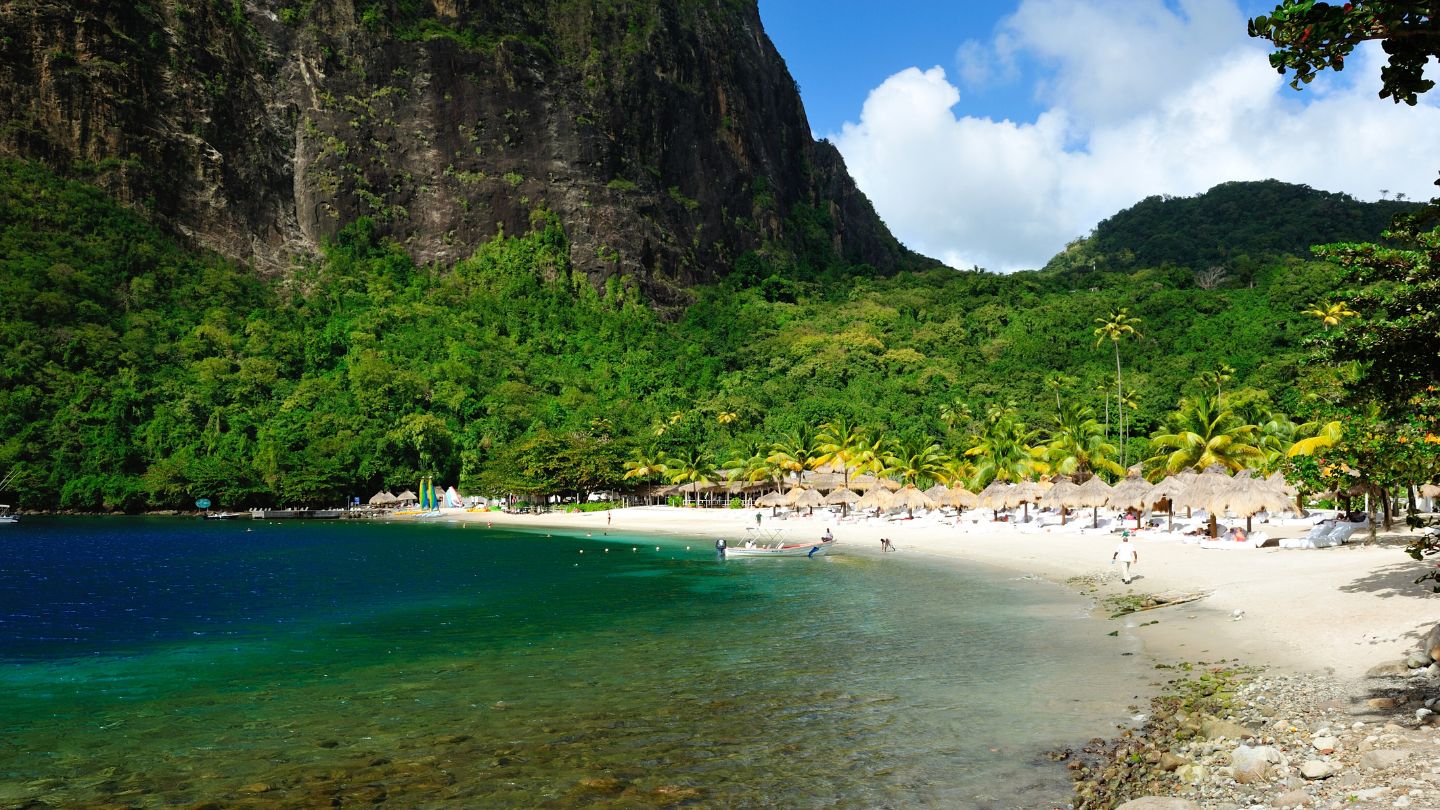
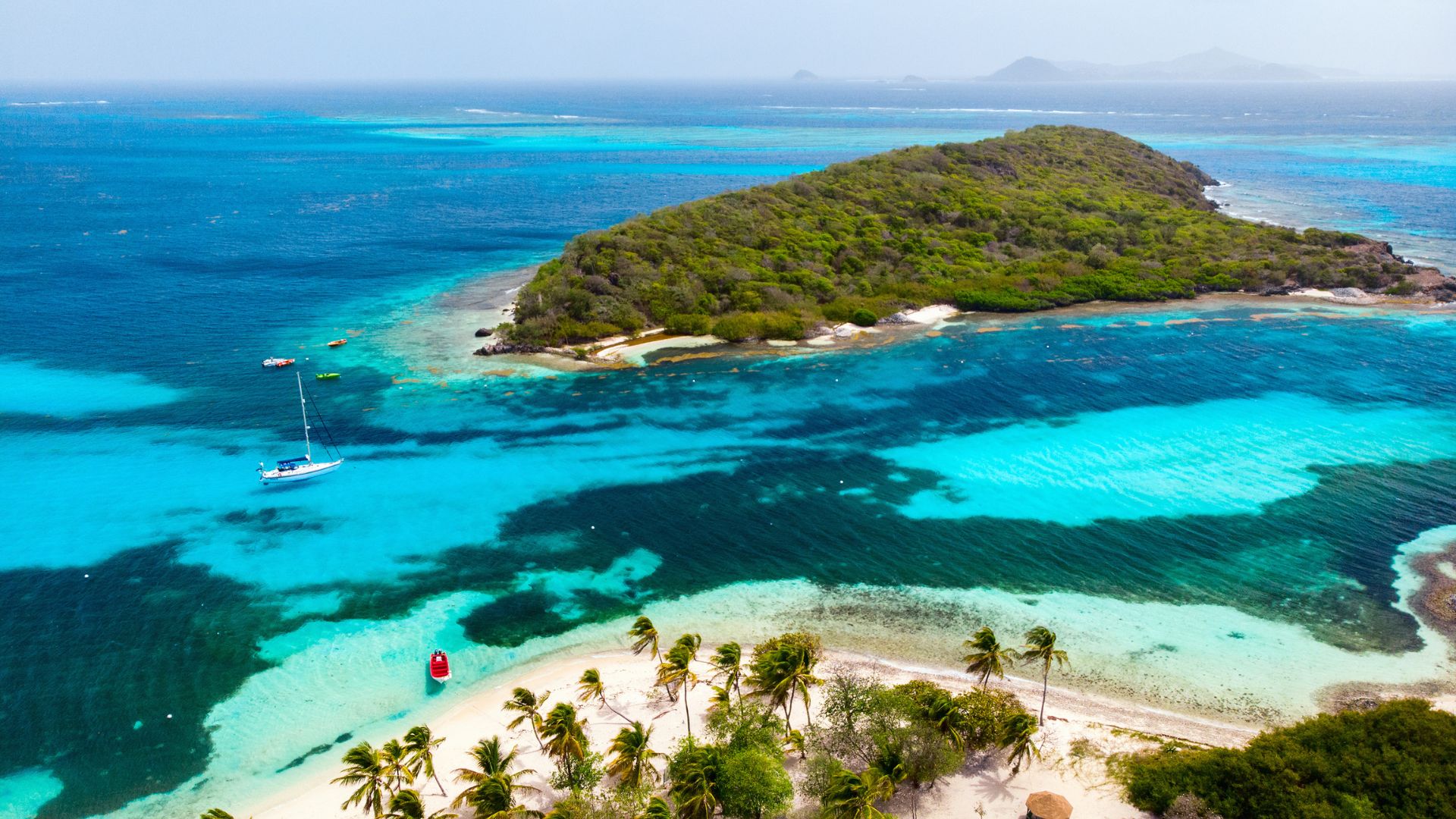
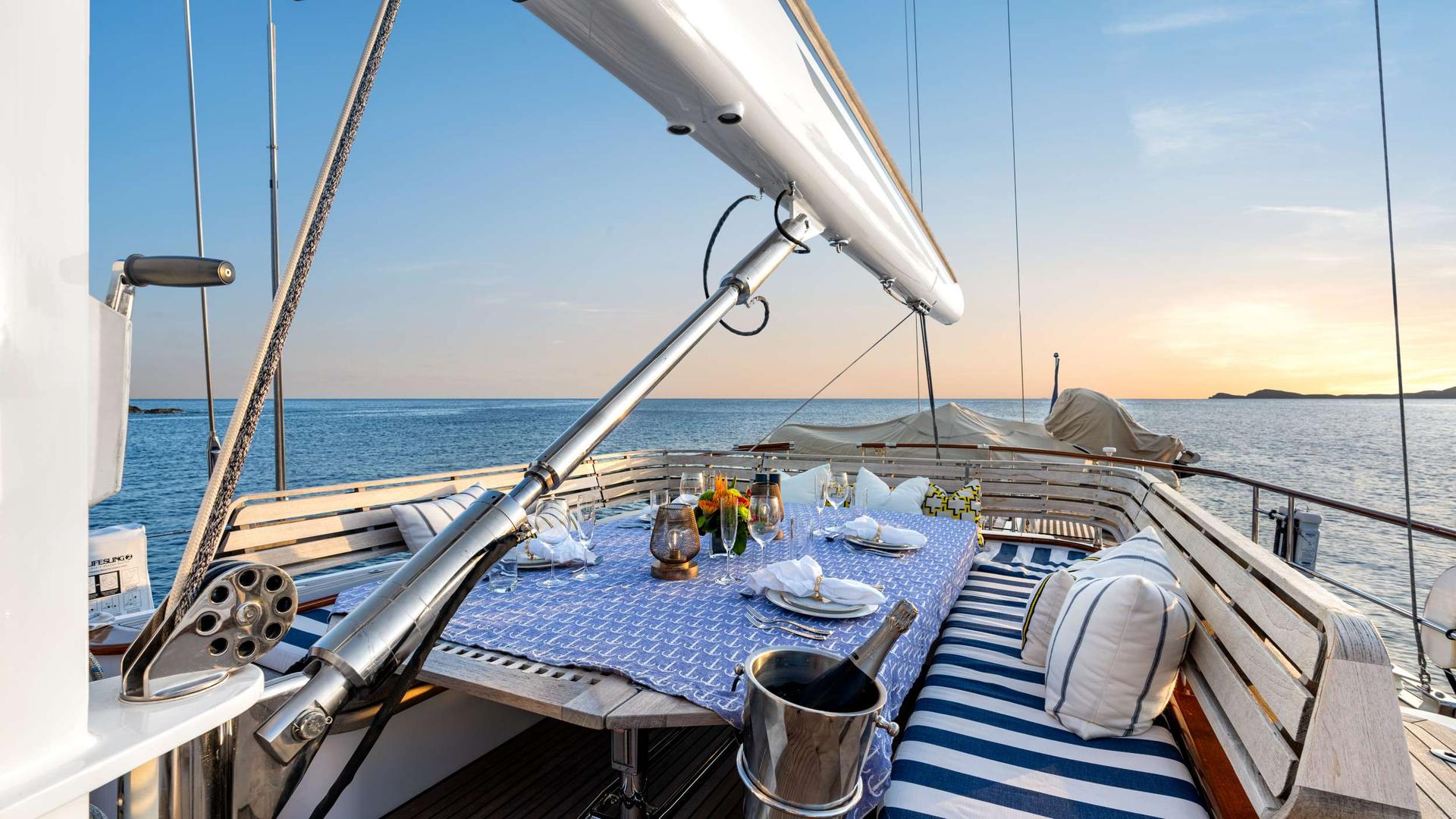
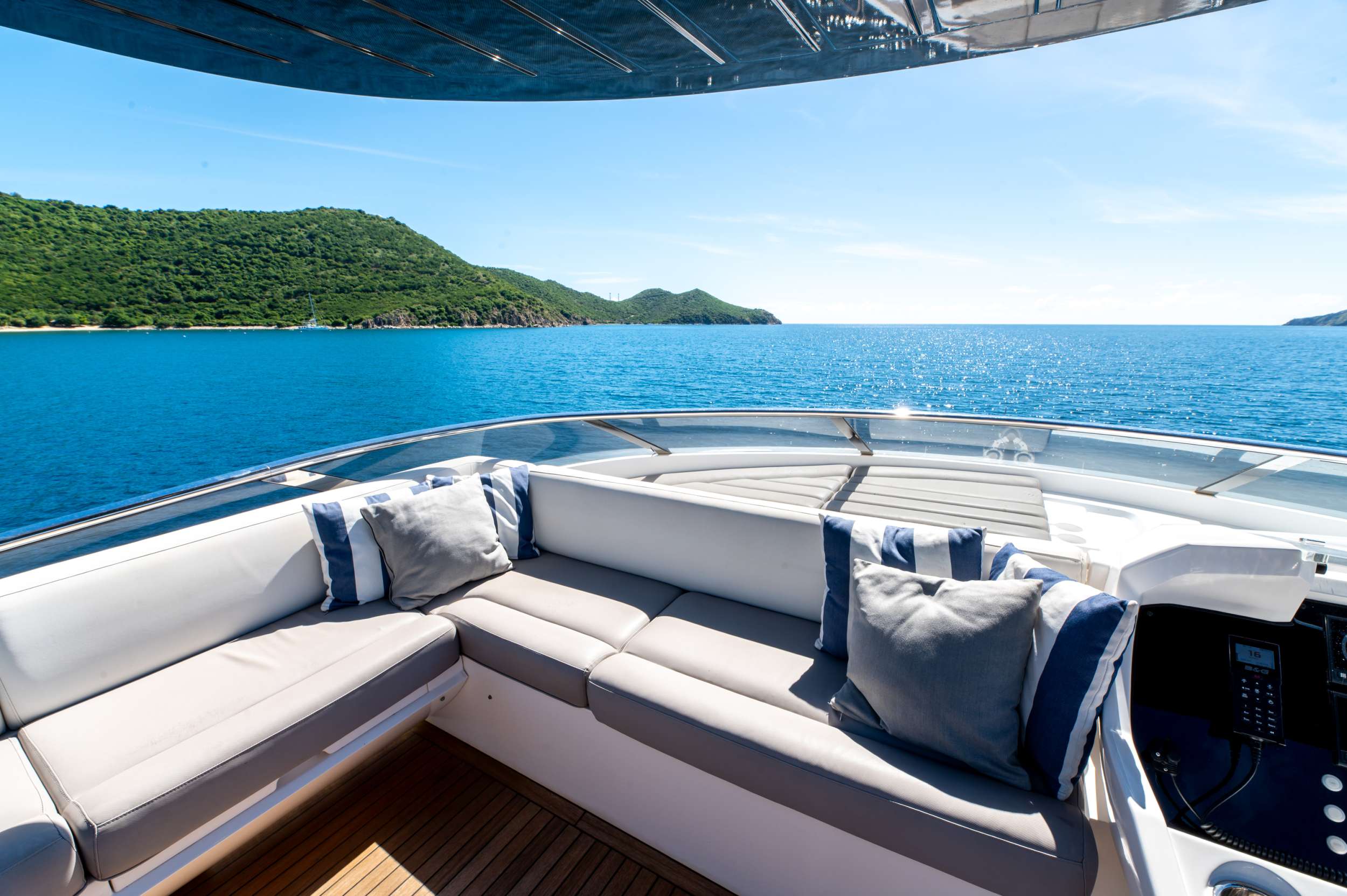
Three countries on one keel — St. Lucia, St. Vincent and the Grenadines, and Grenada — sailed north to south with the prevailing east-northeast trades behind the beam. The pacing is built around the wind, not against it: the long open-water legs (the St. Lucia Channel on Day 2, the Carriacou-to-Grenada passage on Day 8) are reaches with the swell on the quarter, and the short Grenadines hops in the middle are three-to-twelve-mile sails between anchorages. The headline natural sites are intact and world-class: the Pitons, the Tobago Cays Marine Park, Sandy Island's protected reef off Carriacou, and Molinère, the world's first underwater sculpture park, off Grenada's west coast.
Best for groups who have done a charter or two and want the sailing to be the point — open passages, deepwater trolling for mahi-mahi and wahoo, and the satisfaction of having actually moved the boat down an island chain rather than circling one anchorage. Ten days is what the one-way needs; the route deliberately doesn't double back, so every mile is new water. Strongest fit for sailing catamarans and performance monohulls where the downwind-south routing pays off, and for travelers who'd rather earn the next anchorage than be parked in the same bay for a week. December through May is the season — steady trades, dry air, and a track that runs along the southern edge of the hurricane belt.
Day 1 of 10 · Rodney Bay embark → the Pitons
The flight into Hewanorra (UVF) lands on St. Lucia's southern tip; the transfer runs up the island to Rodney Bay on the northwest coast, where your crew meets you at the slip with cold drinks and a chart briefing that lays out the ten days south. Rodney Bay is St. Lucia's full-service yachting hub — fuel, provisioning, and the customs office that clears you out of the country are all here — so the boat is stored, fueled, and cleared while you settle in.
By late morning, lines off and south down St. Lucia's leeward coast. The mountains block the trades on this side, so the first few hours are a quiet motor-sail through the wind shadows with the breeze funneling down the valleys, the green volcanic ridge sliding by to port. You pass Marigot Bay — the hurricane-hole cove where the original Doctor Dolittle was filmed — and then, in the last few miles, the Pitons announce themselves: two sheer volcanic plugs rising straight out of the sea, Gros Piton and Petit Piton, the most photographed silhouette in the Caribbean and a UNESCO World Heritage Site.
There's no anchoring here — the Soufrière Marine Management Area protects the reefs, and the water drops away too deep to set a hook anyway — so your captain picks up one of the park moorings at Anse des Pitons, in the saddle of water directly between the two peaks, with Sugar Beach in the notch behind you. The afternoon is a snorkel on the reef off Anse Chastanet or the drift along Petit Piton's base, a swim off the back of the boat, and then the light goes gold on the spires and you have dinner aboard with the two mountains filling the whole sky. It's a hard first night to beat, and the trip has barely started.
Day Highlights
Day 2 of 10 · The Pitons → Bequia
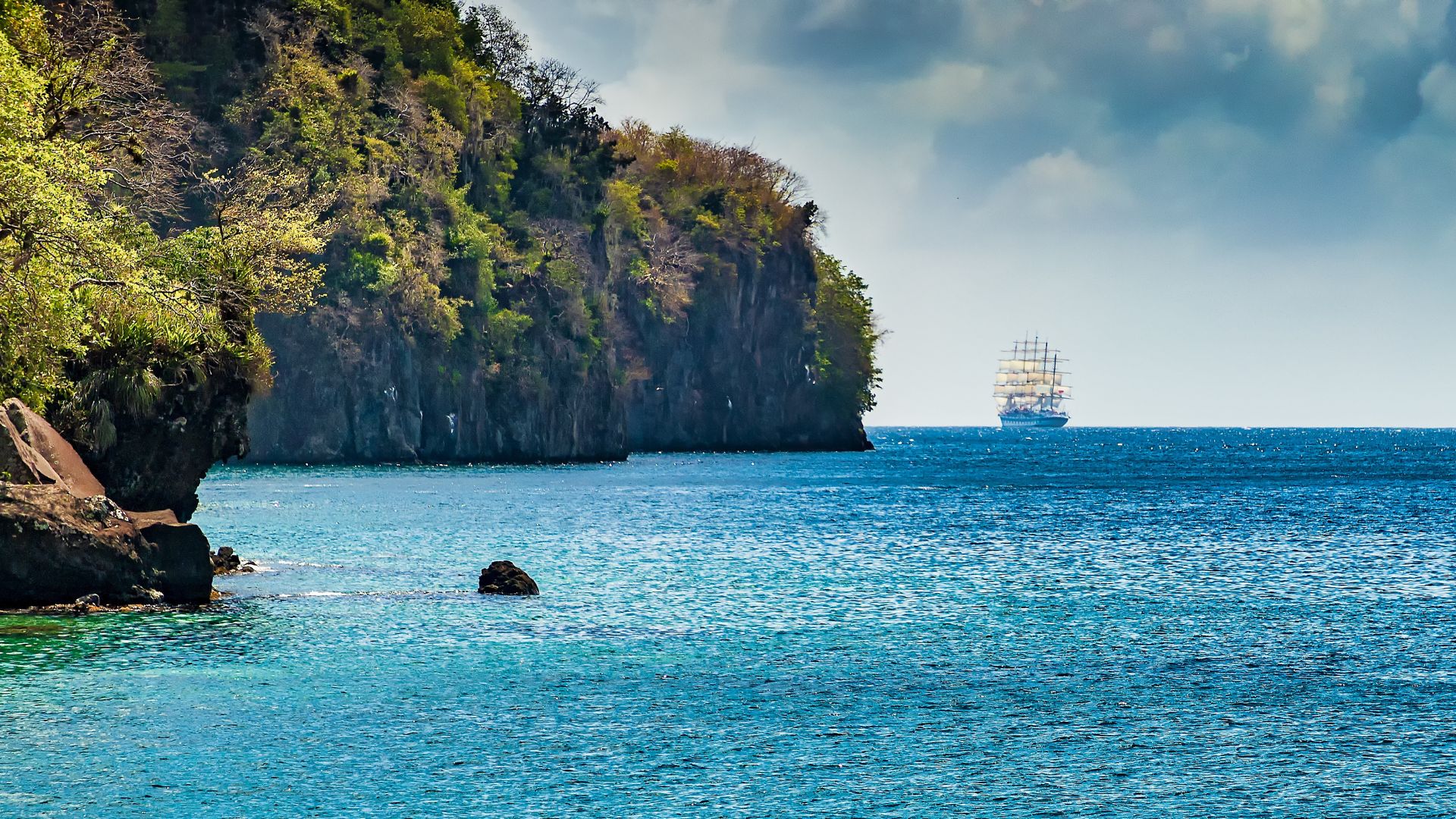
This is the day the trip earns its name. Your captain watches the forecast and picks a start time around when the breeze fills, because there's real water to cover — roughly fifty miles from the Pitons to Bequia, the longest single passage of the charter. Clear of St. Lucia's wind shadow, the boat hardens up into the open St. Lucia Channel: twenty-five-plus miles of blue water with the east-northeast trades and the Atlantic swell on the beam, a fast, lively reach that is exactly why this route exists. Lines go out the back as soon as you're in deep water — this channel is prime trolling ground, and mahi-mahi and wahoo are the signature catch.
Mid-passage, the high green wall of St. Vincent rises ahead and the boat slips into its lee. The wind drops behind the mountains and the water goes flat, and for a couple of hours St. Vincent is simply the scenery — the La Soufrière volcano (which last erupted in 2021) towering into the cloud, the deep cuts of Cumberland Bay, and Wallilabou, the cove where the first Pirates of the Caribbean built its Port Royal set and left the dock pilings standing. This itinerary doesn't overnight on the mainland; the play is to keep the boat moving and let the coast roll by, which is its own kind of pleasure after a morning of open water.
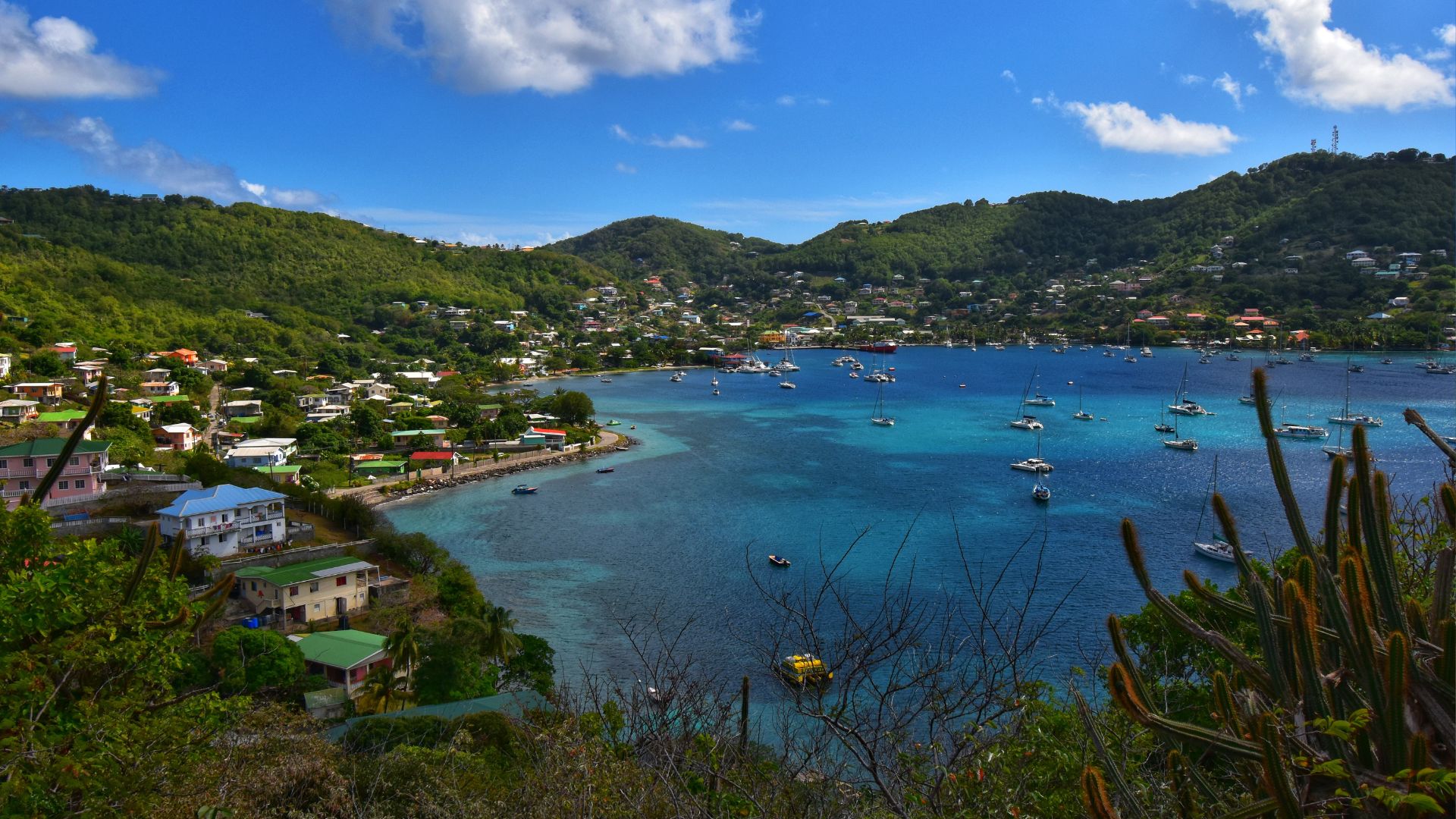
Out of St. Vincent's lee, the breeze returns for the last nine miles across the Bequia Channel, and Admiralty Bay opens on the bow — a deep, well-protected horseshoe full of moored sailboats, with the pastel waterfront of Port Elizabeth wrapped around it. Bequia is the friendliest and most authentically salty of the Grenadines, a working boat-building island where the Sargeant brothers still carve model schooners by hand near the ferry dock. Tender ashore for a walk along the Belmont Walkway, a cold Hairoun at a waterfront bar, and dinner aboard or up the hill at Mac's Pizzeria for the lobster pizza. You've earned the chair.
Day Highlights
Day 3 of 10 · Bequia → Mustique
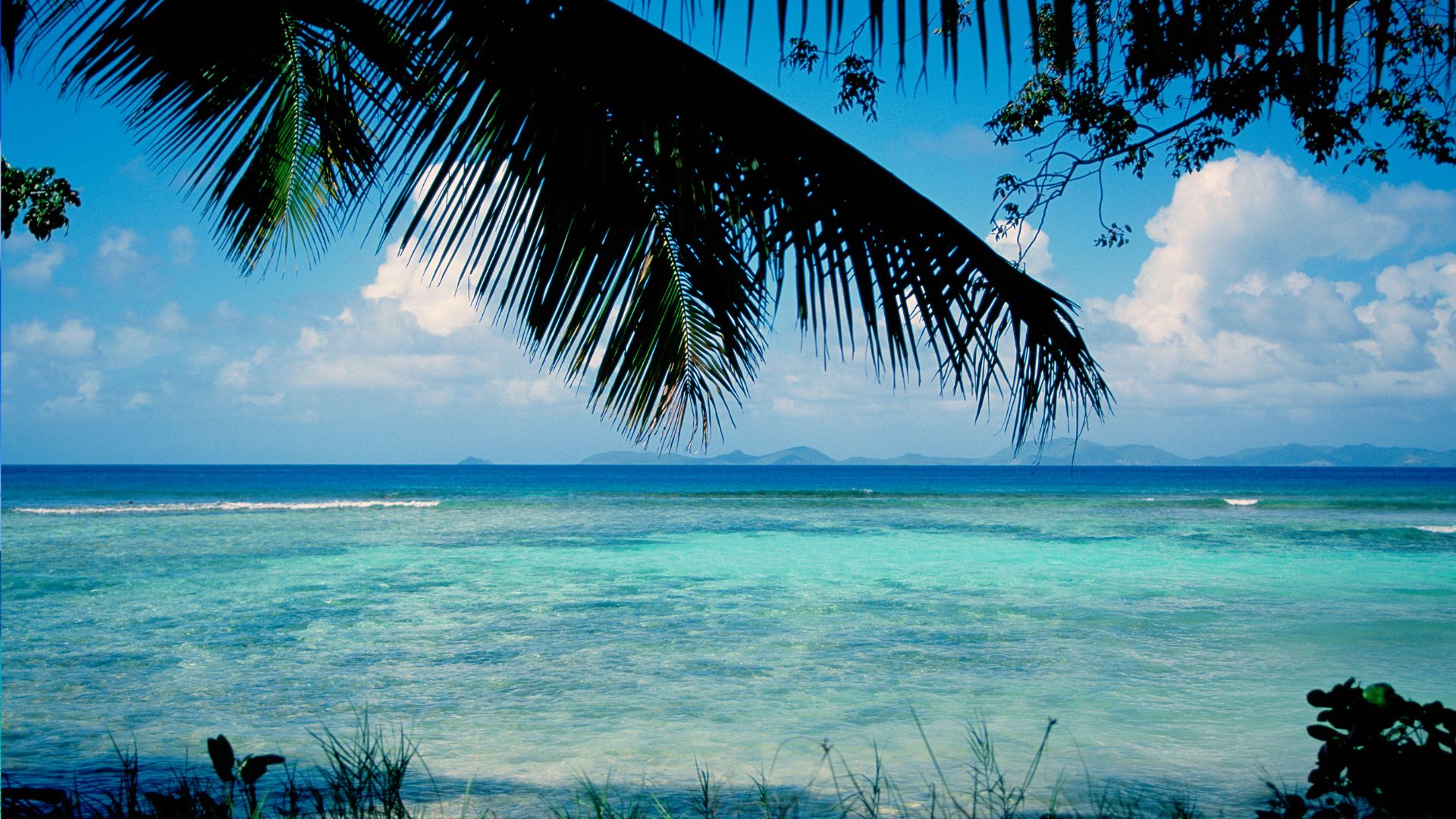
A slow Bequia morning first — coffee on deck, a last walk through Port Elizabeth's fish market, maybe a stop at the model-boat shop — and then lines off mid-morning for the sixteen-mile reach southeast to Mustique. The trades fill in across the open channel and the boat sails comfortably with Bequia receding astern and Mustique's low green profile growing on the bow. If anyone wants a turn at the helm, this is an easy, forgiving leg to take it.
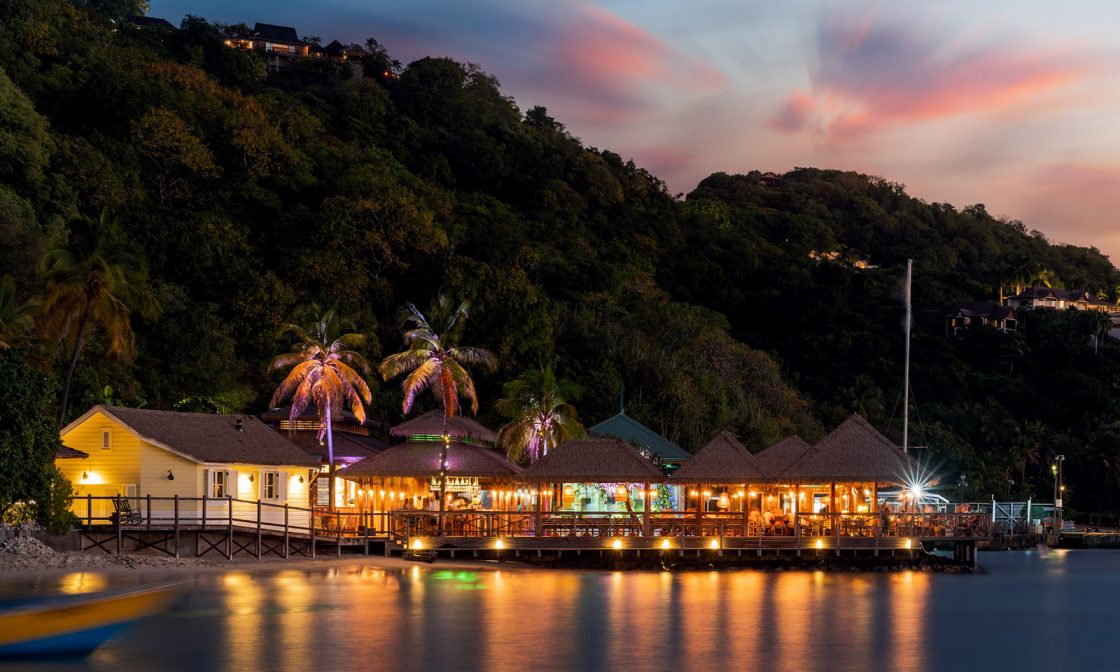
Your captain picks up a mooring in Britannia Bay on Mustique's west coast — the only legal anchorage on the island, run by the Mustique Company that has owned the place since 1958. There are no resorts here in the usual sense; Mustique is a private estate of about a hundred villas, the island Princess Margaret put on the map and the Mick Jagger and David Bowie crowd kept quiet. Most guests rent a Kawasaki Mule from the company office and spend the afternoon driving the perimeter road — Macaroni Beach on the Atlantic side, the windward cliffs, the turtle sanctuary at the north end.
Dinner is the headline. Basil's Bar at Britannia Bay — open-air, on stilts over the water, thatched roof — founded in 1976 by Basil Charles and reimagined by the designer Philippe Starck a few years back. Basil also started the Mustique Blues Festival, which fills the bar every January and February. Wednesday is the long-running Jump Up night when the band plays late and villa renters and yacht crews end up on the same dance floor; any other night is quieter and the food is excellent regardless. Tender back to the boat under a sky absolutely loaded with stars.
Day Highlights
Day 4 of 10 · Mustique → Mayreau
A twenty-mile run south down the heart of the chain, past Canouan on the way. Canouan is the polished island these days — the Sandy Lane Yacht Club marina on its south end is one of the most exclusive megayacht facilities in the Caribbean, and there's a Soho House on the beach — but it's largely a private, gated world, so most crewed charters cruise past its leeward coast and press on to the smaller islands. With the trades on the quarter, this is a fast, easy reach with the Grenadines stepping past on the port beam.
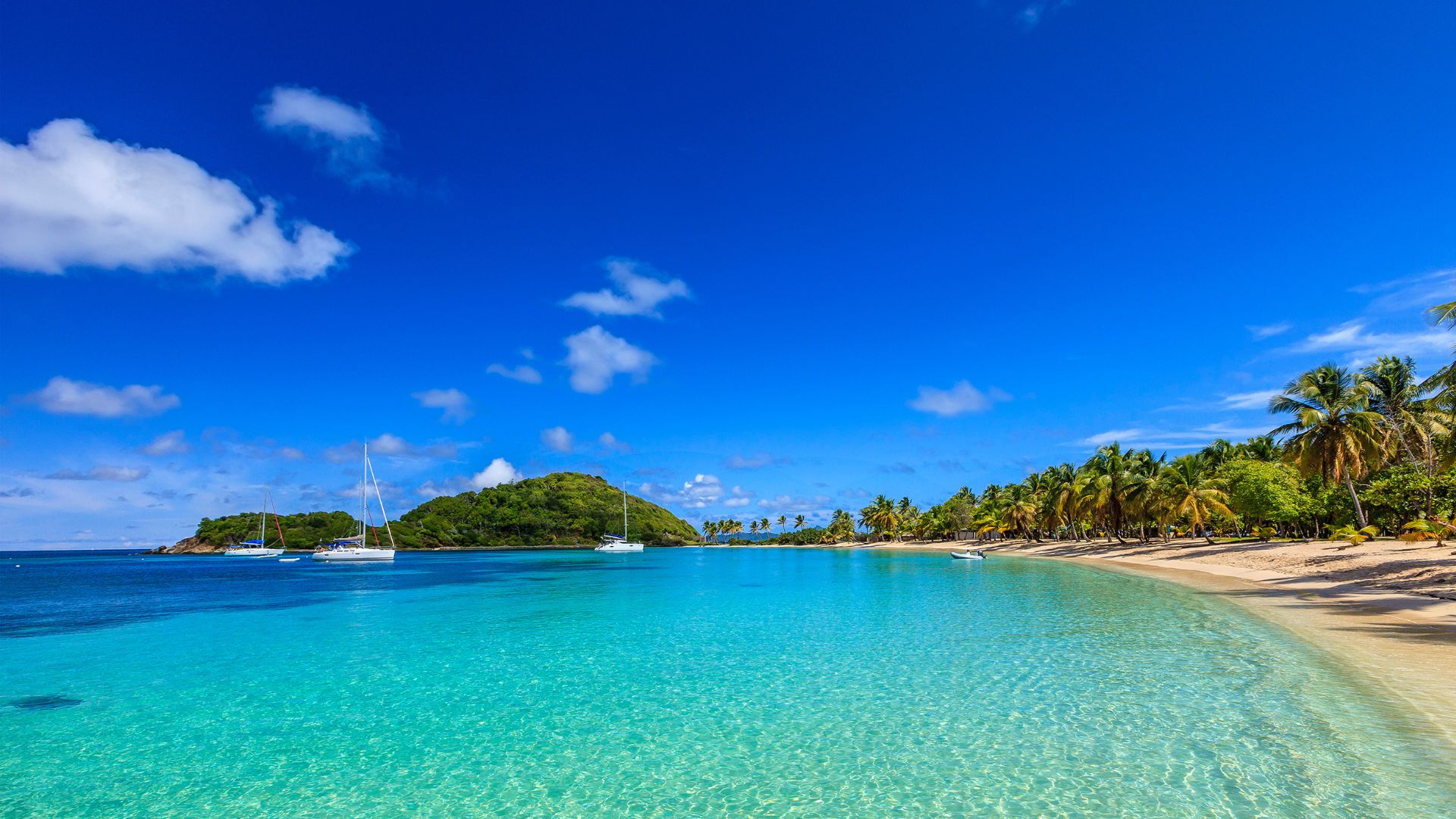
Mayreau is the smallest inhabited island in the chain and it holds the prettiest single anchorage in the Grenadines: Salt Whistle Bay, a narrow palm-lined neck of sand on the island's northwest tip, with the calm Caribbean on one side and the Atlantic surf a hundred feet away on the other. You anchor in the lee and the boat sits in flat, clear, sand-bottomed water with the beach a stone's throw off the bow. Hurricane Beryl came through hard here in 2024 and stripped the palms; they're coming back, and the bay's natural shape — the swim, the water, the setting — is exactly as good as it always was.
Lunch on the hook, an afternoon swimming and paddleboarding off the back, and a late tender ashore for a quiet sunset walk on the sand. There's a small hilltop village a fifteen-minute climb up the south side if you want the view across to the Tobago Cays you'll sail into tomorrow — from the church terrace you can see the whole marine park laid out below. Dinner aboard tonight, the boat barely moving on its chain. This is the deep-breath day before the headliner.
Day Highlights
Day 5 of 10 · Tobago Cays — full day
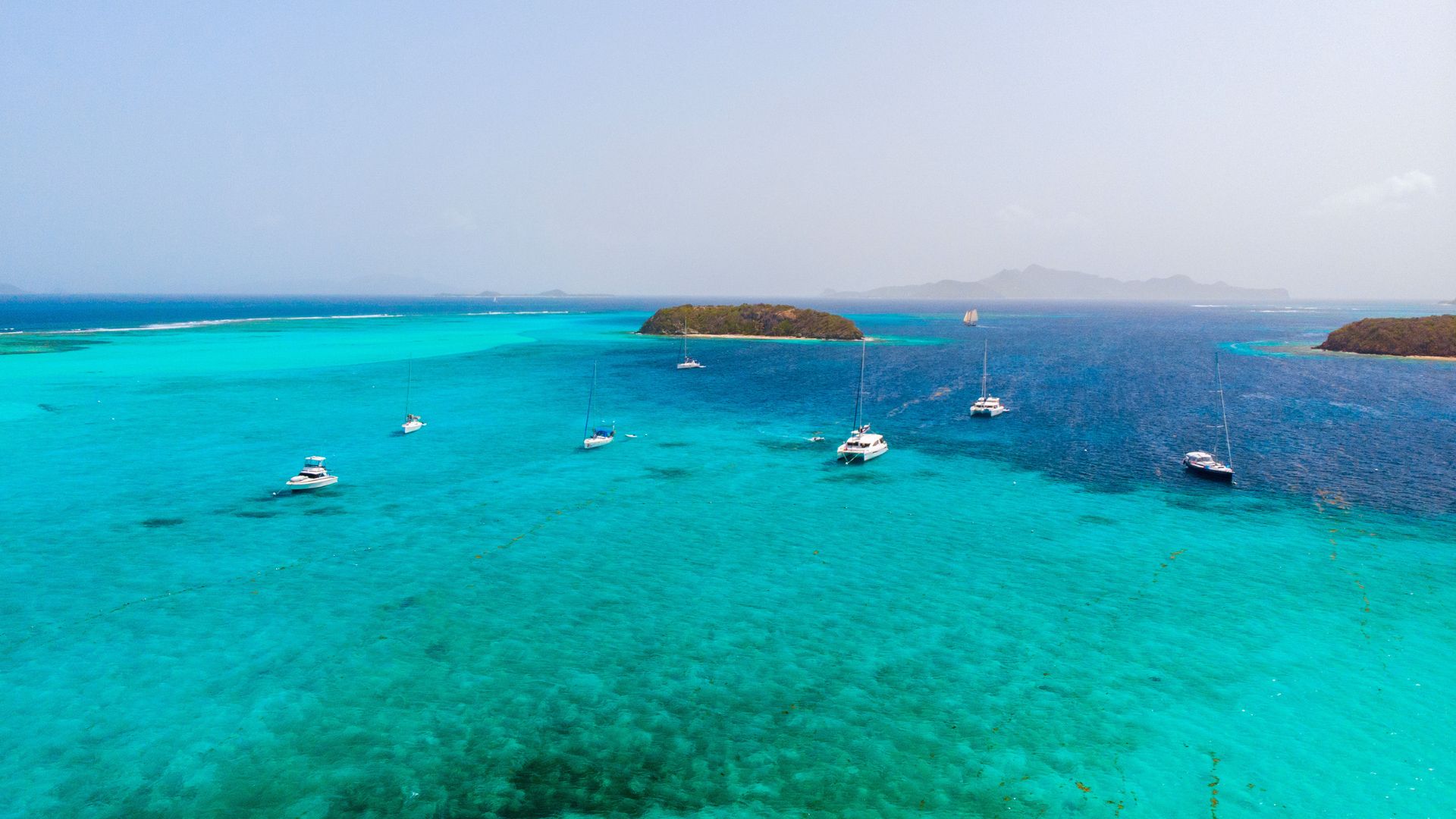
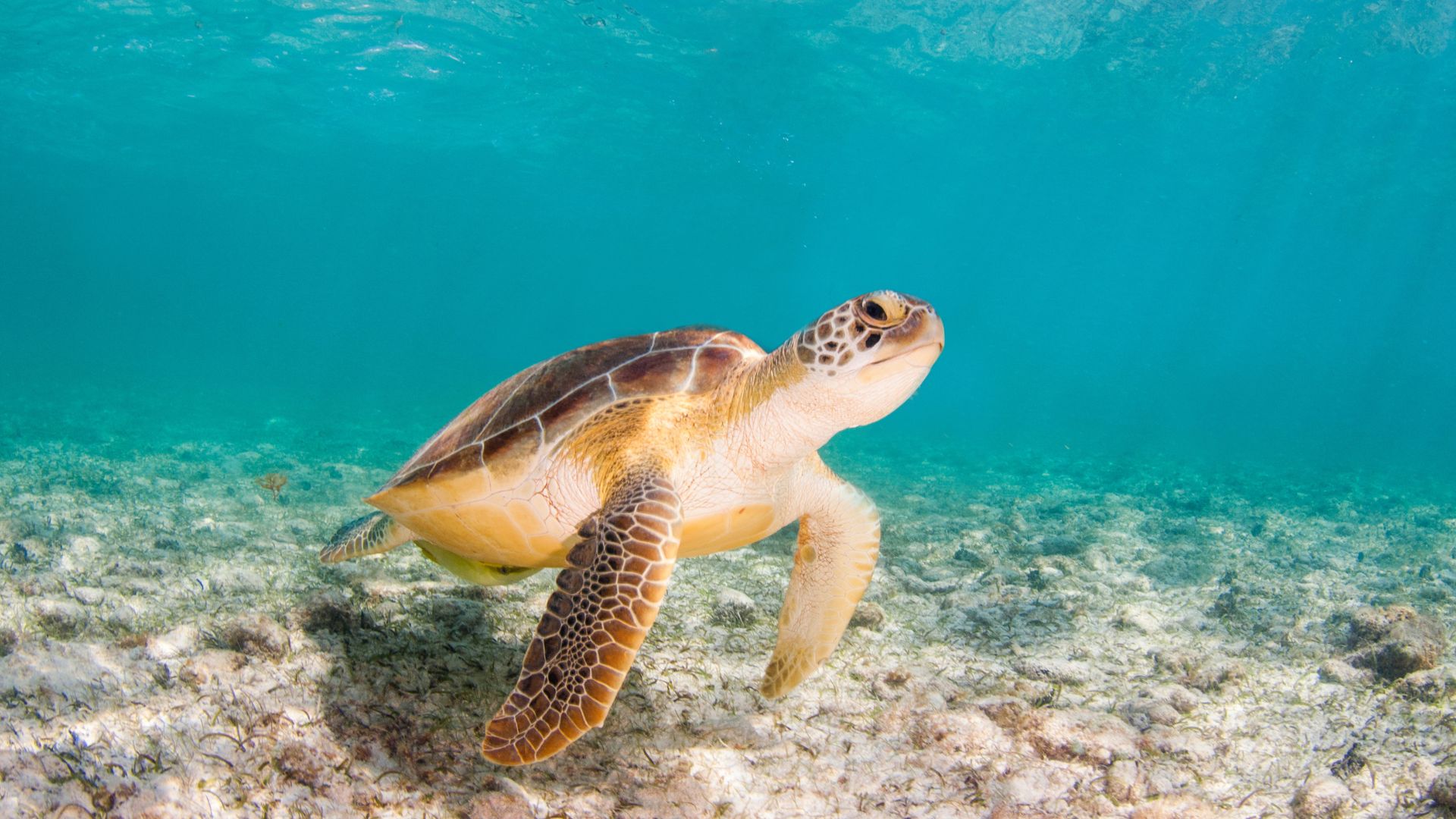
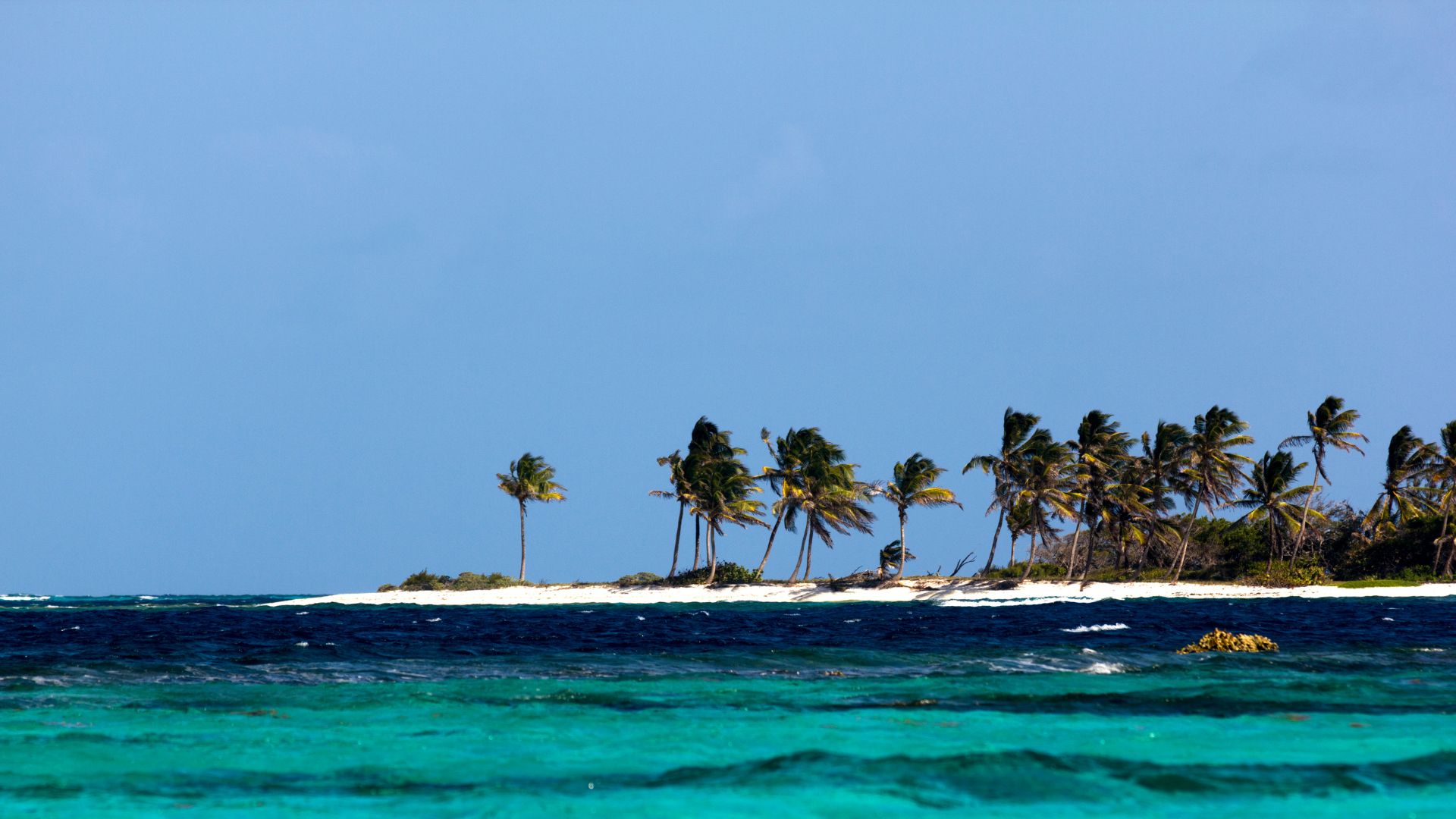
A short three-mile reposition this morning brings you into the Tobago Cays Marine Park — the centerpiece of the Grenadines and one of the great in-water experiences anywhere in the Caribbean. Five small uninhabited islands sit inside a horseshoe-shaped barrier reef that takes the full Atlantic swell on its eastern edge; you anchor inside the reef in fifteen feet of staggeringly clear water, the open ocean breaking white a hundred yards behind you and the cays spread across the western half of the view. The park came through Hurricane Beryl in good shape — the reef and the turtle grounds are intact, and it remains the strongest single stop in the southern Grenadines.
The seagrass beds off Baradal are a protected turtle-watching reserve and one of the most reliable green-sea-turtle snorkels in the Caribbean. You swim out from the swim platform and they're there, grazing the grass; park rules are strict and well enforced — snorkel from above, no chasing, no touching — which is exactly why the population is so healthy. A guided dinghy tour with one of the park rangers makes the morning, because they know which patches the turtles are working that week.
Lunch is a beach barbecue on Petit Bateau, arranged through one of the local boat boys who sets a table on the sand, grills the lobster (caught that morning, alive in a basket by the table until you order), pours the rum punch, and clears it all afterward. It's the most quintessentially Grenadines meal of the trip — feet in the sand, the boat on the hook a hundred meters offshore. The afternoon is a tender ride out to Petit Tabac, the palm-fringed spit on the Atlantic side where the first Pirates of the Caribbean marooned Jack Sparrow, then sundowners back aboard and a night sleeping inside the marine park with the reef breaking in the dark.
Day Highlights
Day 6 of 10 · Tobago Cays → Union Island
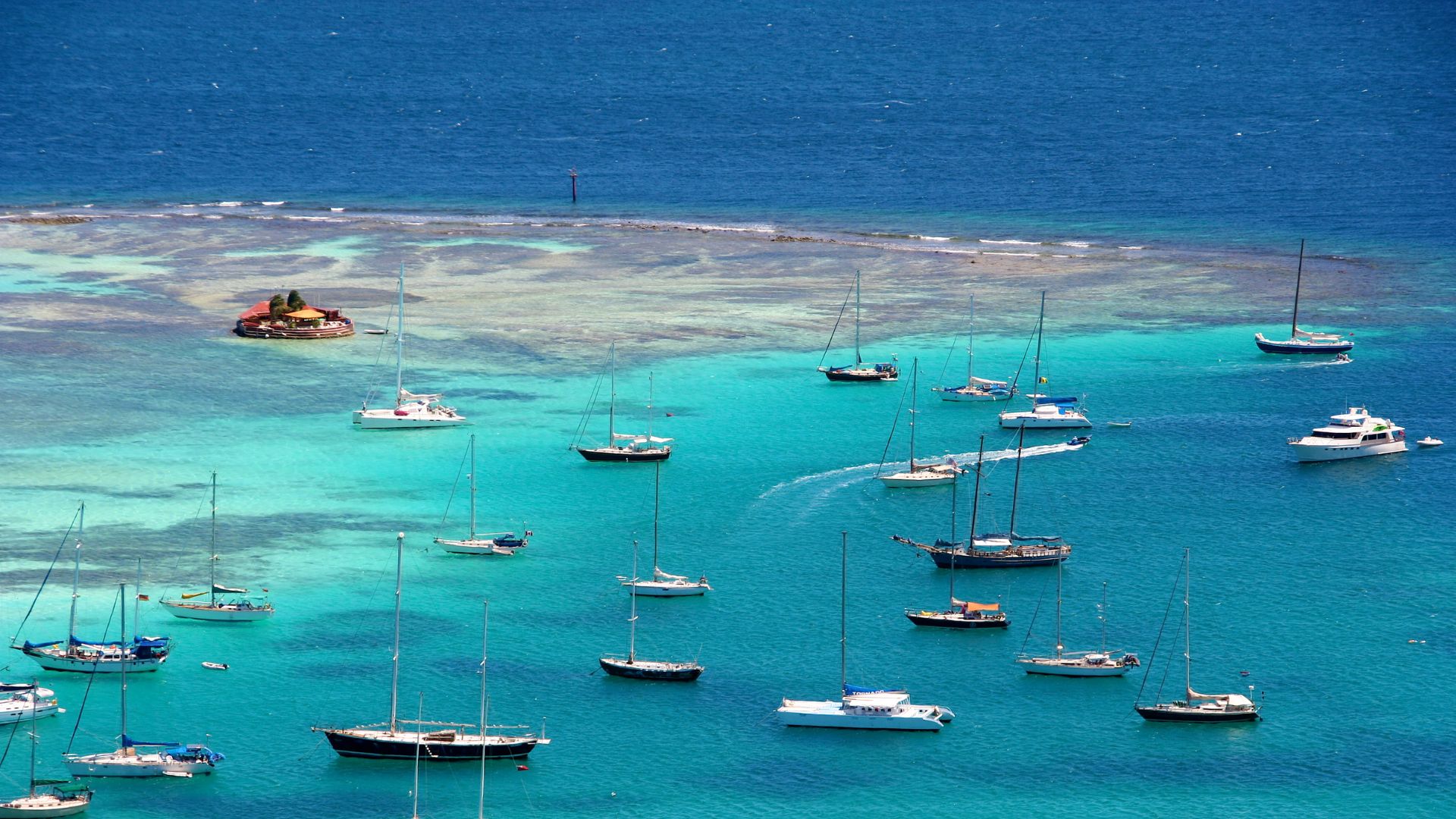
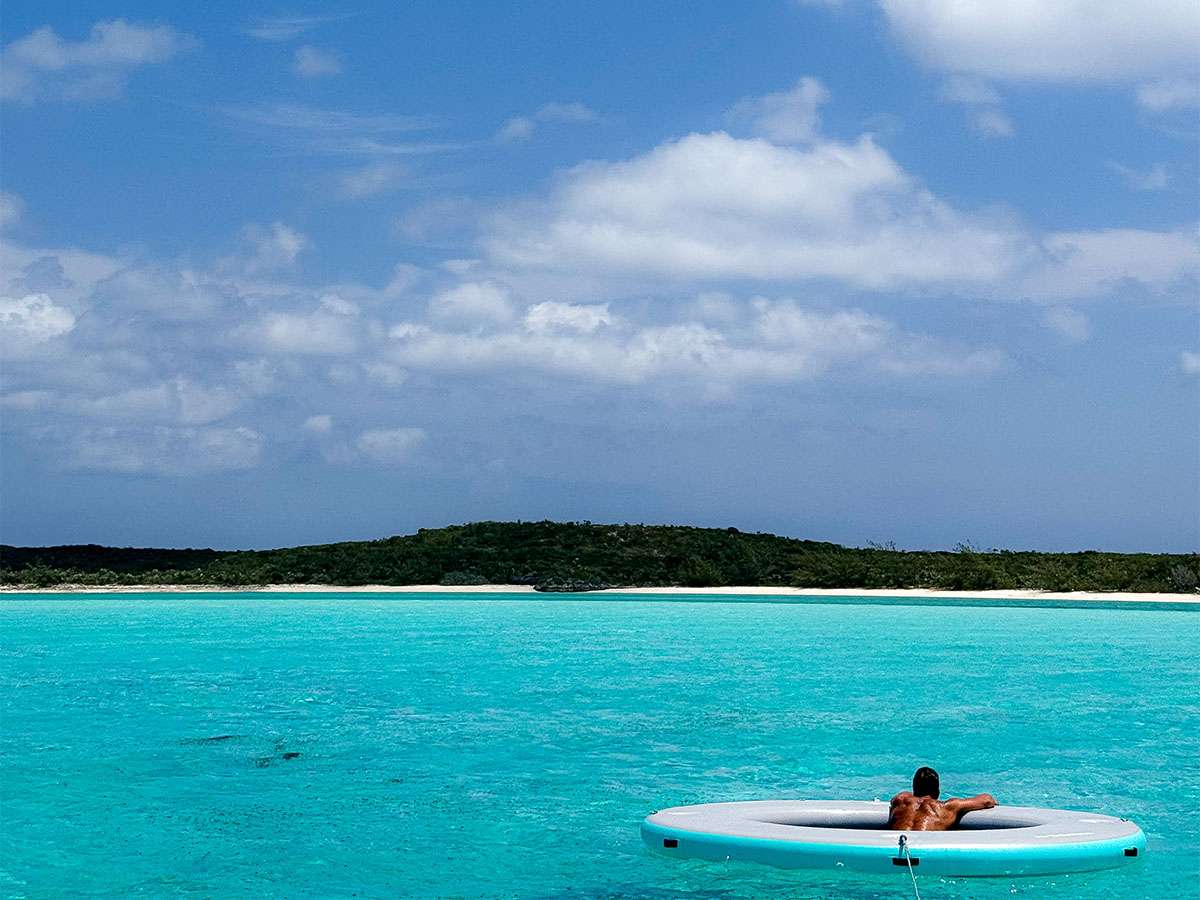
A short six-mile hop out of the Cays brings you to Union Island, the last of the Grenadines before the border. Union is the dramatic one — a jagged volcanic ridge that looks like a small Tahiti rising out of the sea — and it carries the southern customs office for St. Vincent and the Grenadines. Your captain ducks into Clifton Harbour, tucked behind its barrier reef on the windward side, to clear the boat outbound while you have an hour ashore in the most genuinely local town on the route.
Union took a hard, direct hit from Hurricane Beryl in 2024 and the town has been rebuilding ever since; the yacht services, the grocery, and the clearance office are all back up and running, and the place has a resilient, getting-on-with-it energy that's worth seeing. With the paperwork done, your captain rounds the island to Chatham Bay on the secluded west coast — a deep, quiet anchorage backed by a long empty beach, where a handful of rustic beach shacks are slowly coming back to life serving grilled fish and lobster in the sand.
The afternoon is yours in the lee: swimming and paddleboarding in the calm water, a walk down the empty beach, snorkeling the rocky ends of the bay. Chatham is the kind of anchorage that resets the trip after the social energy of Mustique and the marquee of the Cays — there's nothing to do and nowhere to be, which is precisely the point. Sundowners on the aft deck, dinner aboard or ashore at one of the beach grills, and a quiet last night in St. Vincent and the Grenadines.
Day Highlights
Day 7 of 10 · Union → Carriacou (clear into Grenada)
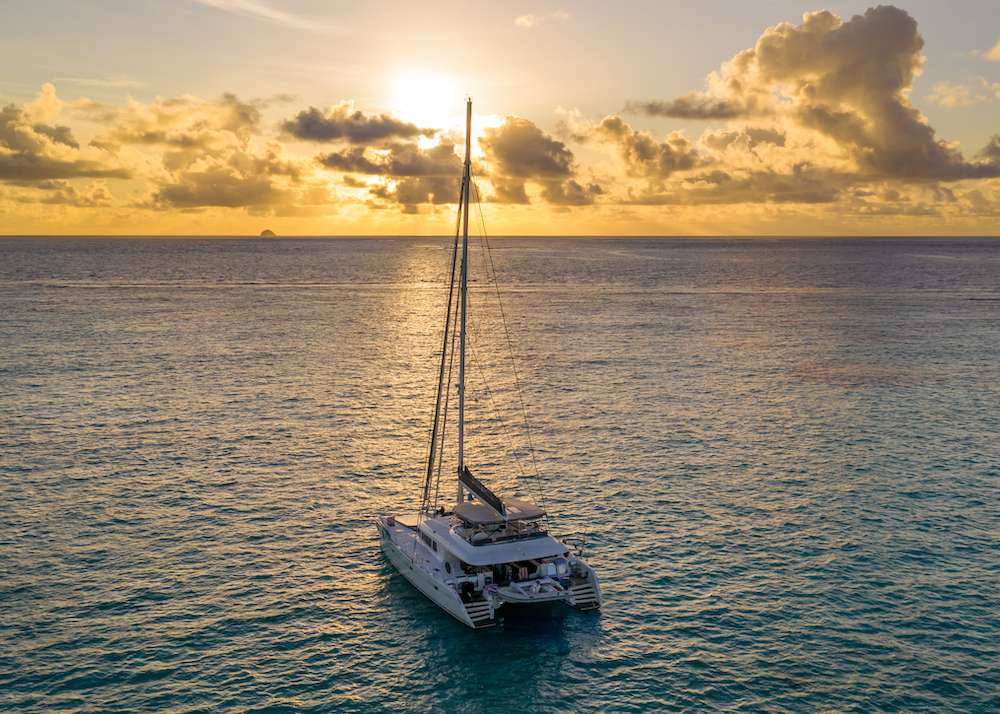
A ten-mile sail across the border this morning takes you from St. Vincent and the Grenadines into Grenada — and into one of the quietest, most under-the-radar corners of the eastern Caribbean. Your captain makes for Tyrrel Bay on Carriacou, a deep, well-sheltered horseshoe with a purpose-built customs and immigration office at the marina, and clears the boat into the country while you settle into the new water.
Carriacou is the largest of Grenada's offshore islands and a genuine boat-building community — they still lay down wooden sloops on the beach at Windward, by eye, the way the Scots shipwrights who settled here taught them to. The island was very near the eye of Hurricane Beryl in 2024 and took serious damage; what's striking now is how green it has come back and how far the recovery has come, with businesses reopened and the harbor working again. It is, refreshingly, an island almost no charter guests ever see.
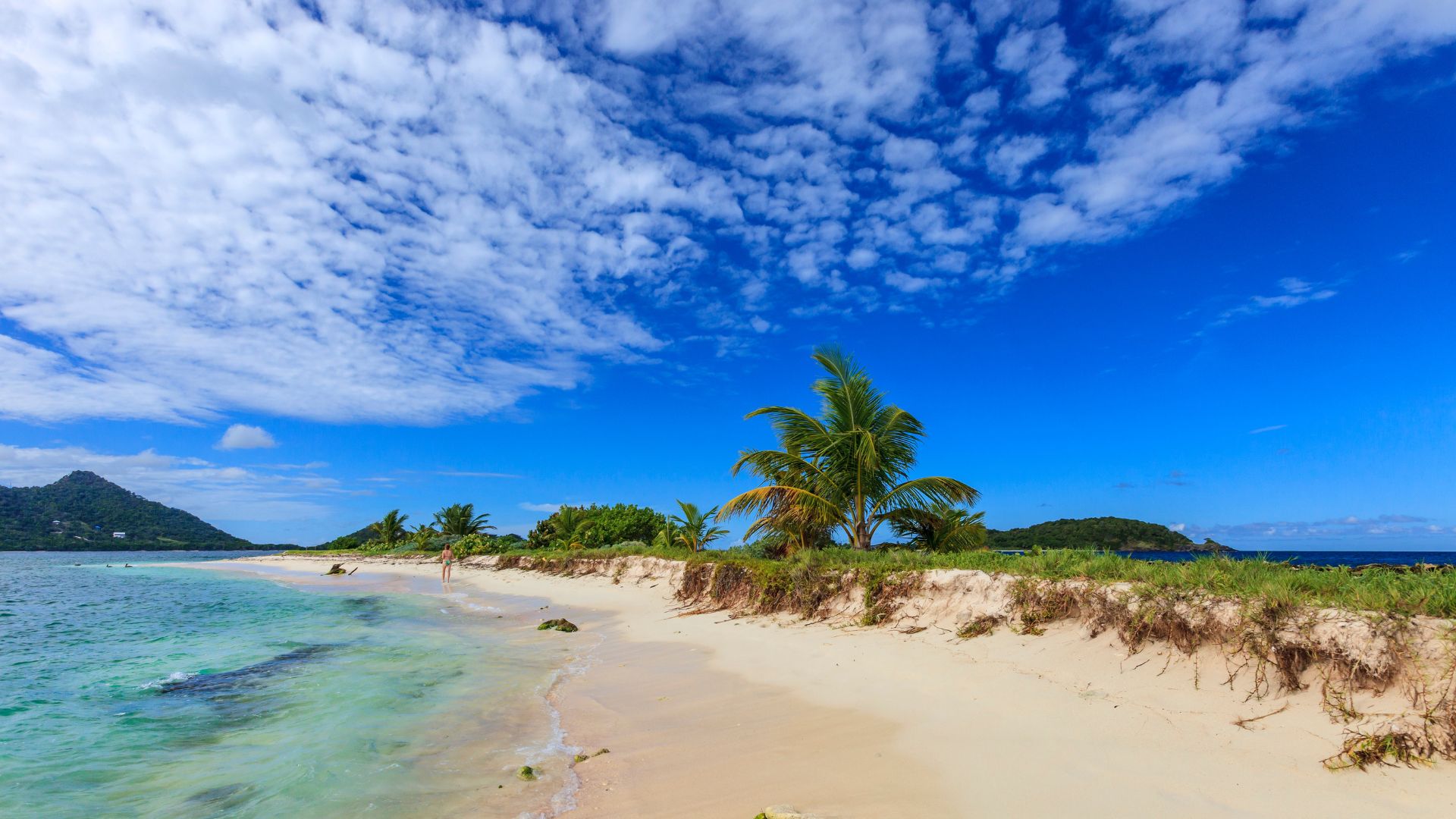
The afternoon's prize is Sandy Island — a tiny deserted sandbar with a fringe of palms, a mile off Carriacou's west coast, sitting inside the island's protected marine park. The reef around it is the best snorkeling on this end of Grenada, and the islet itself is a barefoot, no-footprints-but-yours kind of place. Anchor off, swim the reef, lay out on the sand, and tender across to the long calm sweep of Paradise Beach on the main island for a cold drink. Back aboard for the first Grenadian sunset, the big mainland passage on the chart for tomorrow.
Day Highlights
Day 8 of 10 · Carriacou → mainland Grenada
The second marquee passage. Roughly thirty-three miles of open water separate Carriacou from mainland Grenada, and the rhumb line runs more into the trades than the easy reaches up north, so your captain may angle the course to keep the boat sailing and time the start around the morning breeze. Lines go out the back early — the banks and drop-offs along this stretch hold mahi-mahi, wahoo, and tuna, and it's the best fishing of the trip after the St. Lucia Channel.
The passage threads past some genuinely wild water. Isle de Ronde and the rock cluster known as the Sisters break up the horizon, and a couple of miles off the route lies Kick 'em Jenny — an active submarine volcano with a marine exclusion zone the authorities adjust based on its activity. Your captain checks the current advisory before departure and gives it the required berth; from the deck it's simply open ocean, but it's a good reminder that this whole island chain is the rim of a very much living volcanic arc.
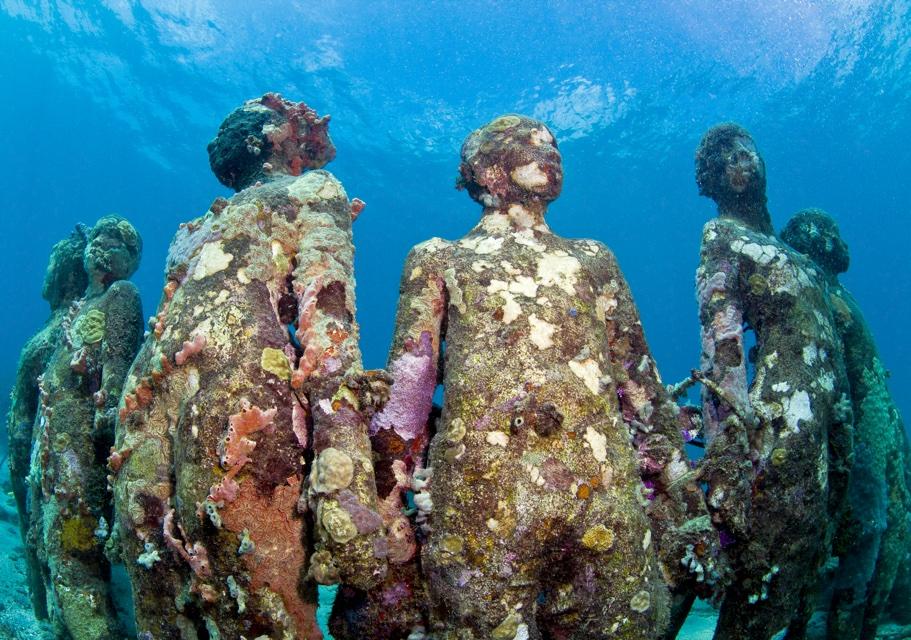
By mid-afternoon Grenada's green northwest coast fills the bow and the boat slips into the lee for the run down to the anchorages at Dragon Bay and Molinère. The reason to be here is the Molinère Underwater Sculpture Park — the world's first, created by the artist Jason deCaires Taylor in 2006, a field of cast-concrete human figures arranged on the sandy bottom in fifteen feet of clear water, now half-claimed by coral and fish. You snorkel it straight off the boat in the late-afternoon light. Dinner aboard on the hook, the lights of St. George's glowing a few miles south.
Day Highlights
Day 9 of 10 · West coast → St. George's
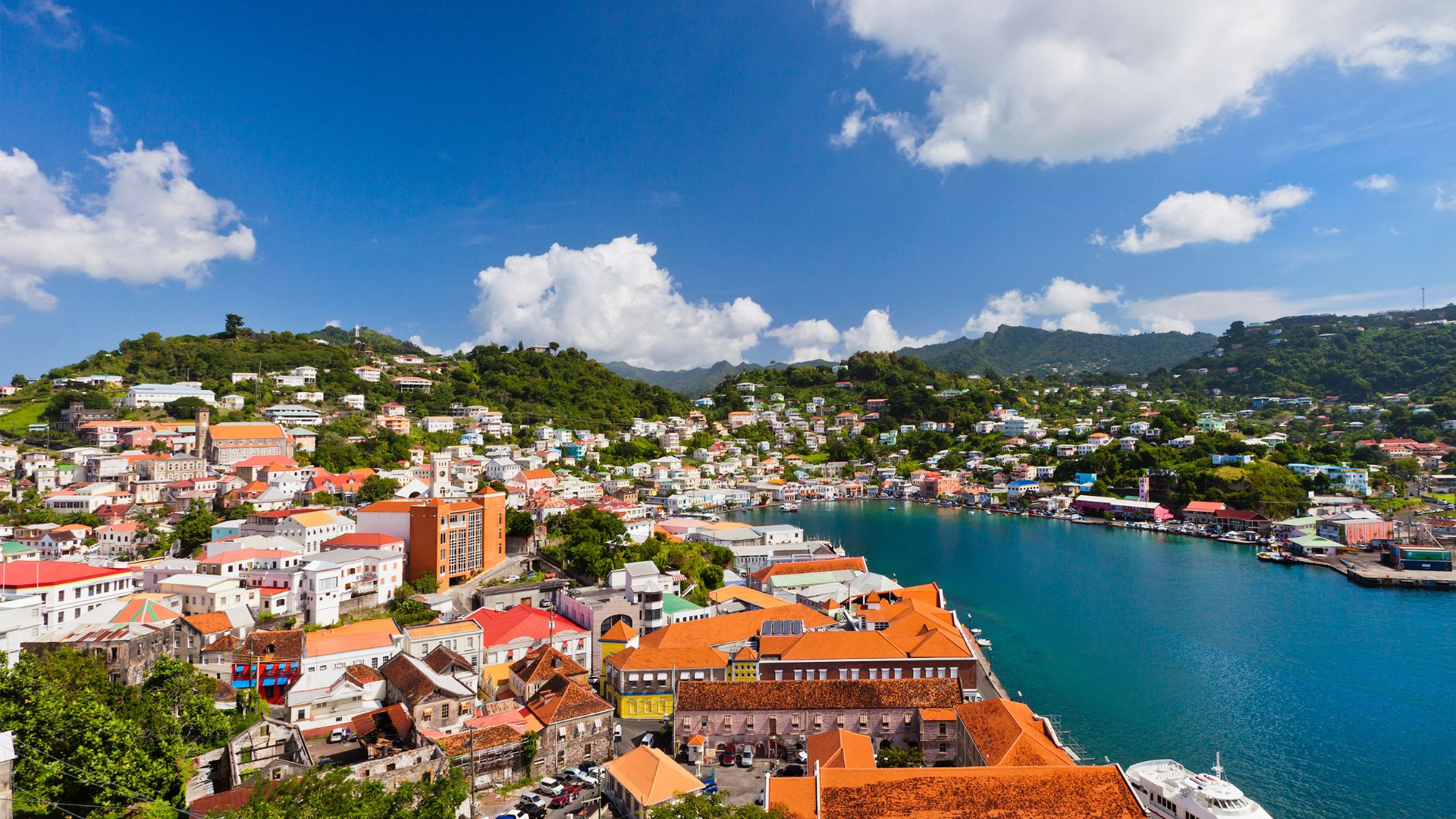
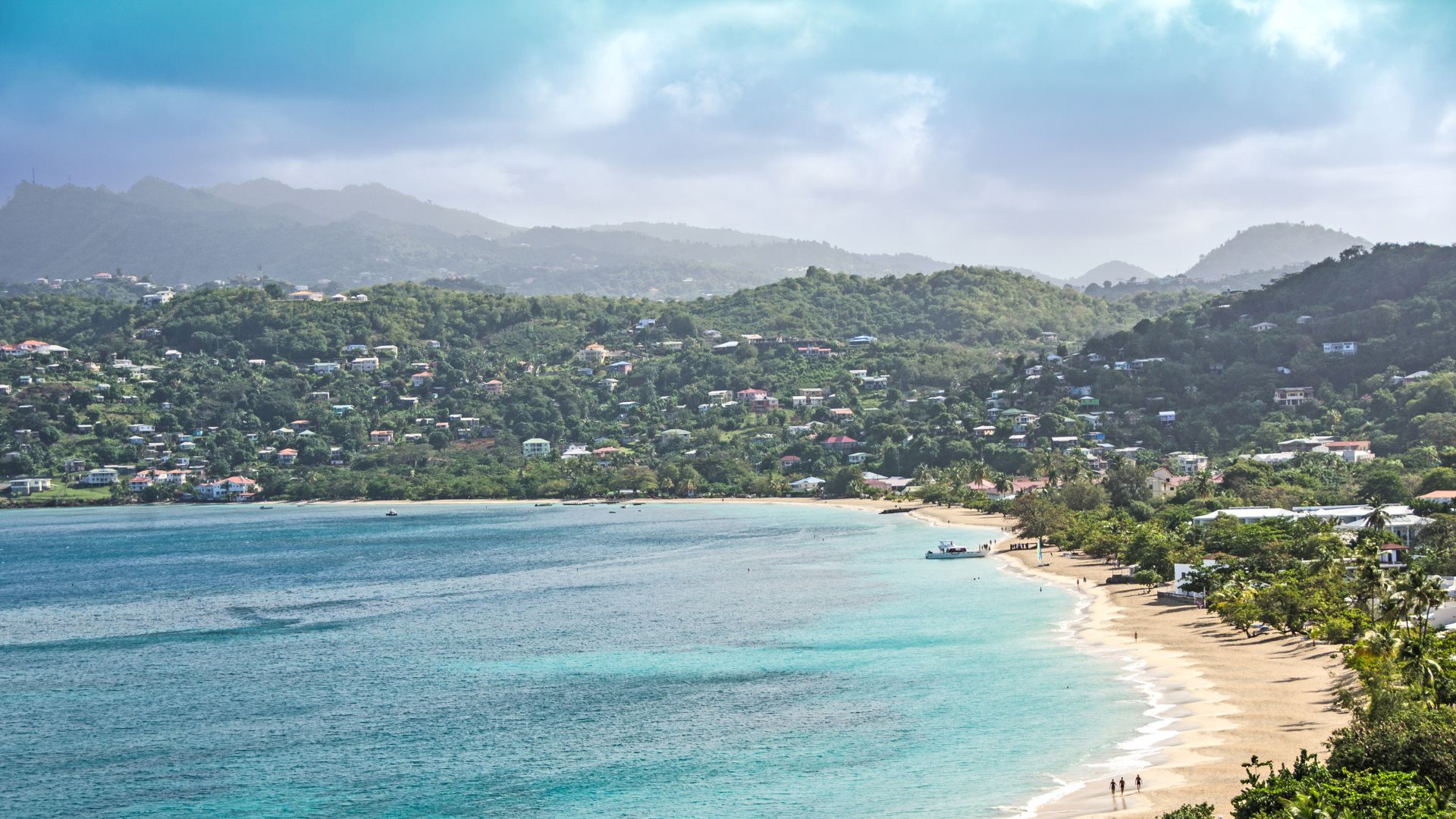
A short morning sail down the coast drops you into St. George's, the capital and, by wide agreement, the prettiest harbor town in the Caribbean. The Carenage — the horseshoe inner harbor — is ringed by pastel Georgian warehouses with red-tile roofs that climb the hillside beneath Fort George, the French-built fort that has watched over the harbor since the seventeenth century. Your captain berths the boat at Port Louis Marina in the Lagoon, the modern yachting basin a short walk from town.
Grenada is the Isle of Spice, and St. George's is where you understand why: the market square is a wall of nutmeg, mace, cinnamon, and cocoa, the air smells like a baking cupboard, and nutmeg is the only spice to appear on a national flag. Spend the morning in town — the market, the fort with its view over the harbor and its weight of recent history, the waterfront — and the afternoon at Grand Anse, the two-mile sweep of white sand and calm water just south of the capital that is one of the great swimming beaches in the region.
Tonight is the proper dinner ashore. St. George's has the best restaurant scene on the whole route, from the marina's waterfront tables to the local spots serving oildown — the national one-pot of breadfruit, salt meat, dumplings, and callaloo simmered down in coconut milk. Or the chef pulls out the stops aboard with the trip's running list of catches reduced to one plated set. Either way, it's a celebration of a charter that has covered real ground.
Day Highlights
Day 10 of 10 · St. George's → the south coast
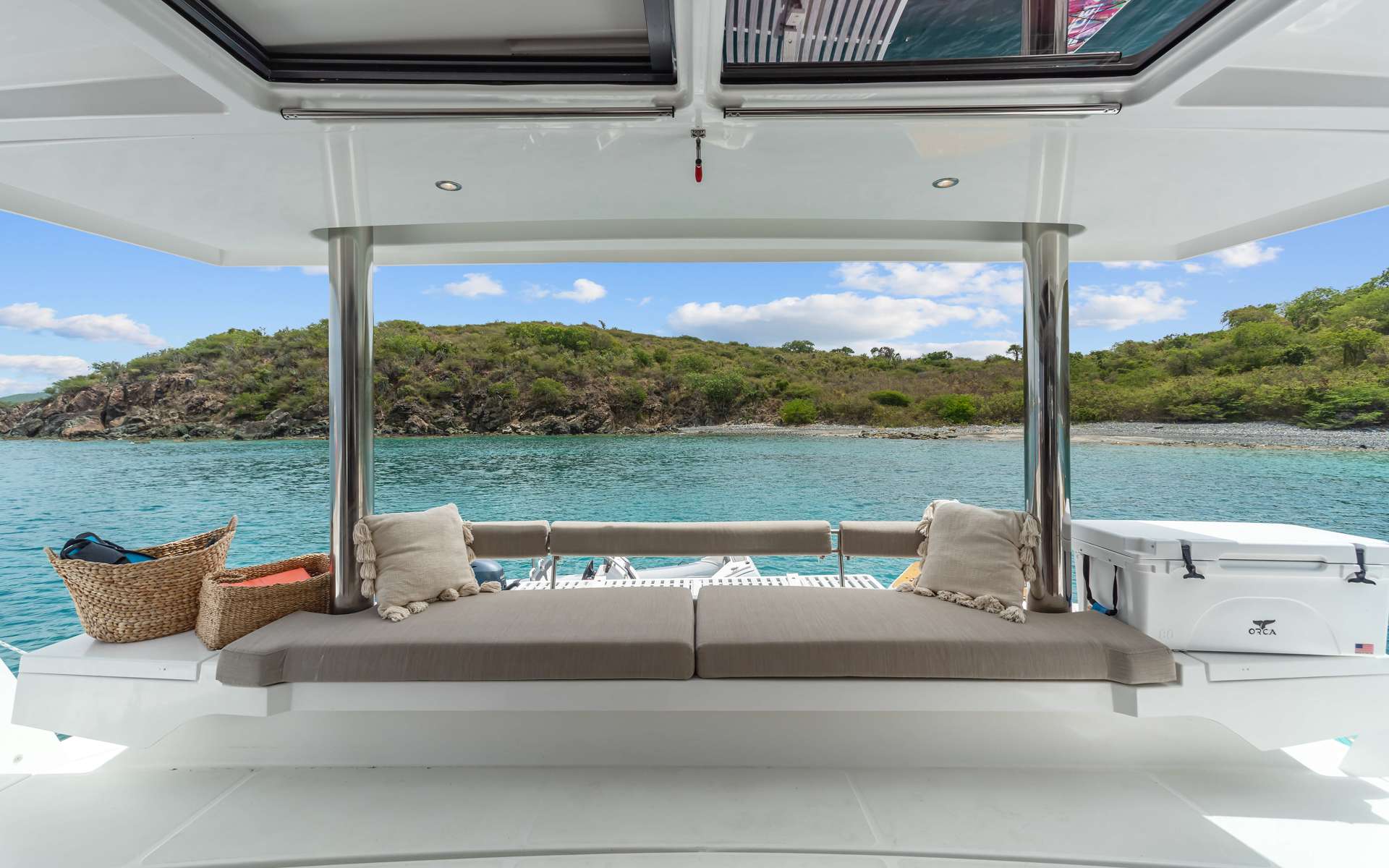
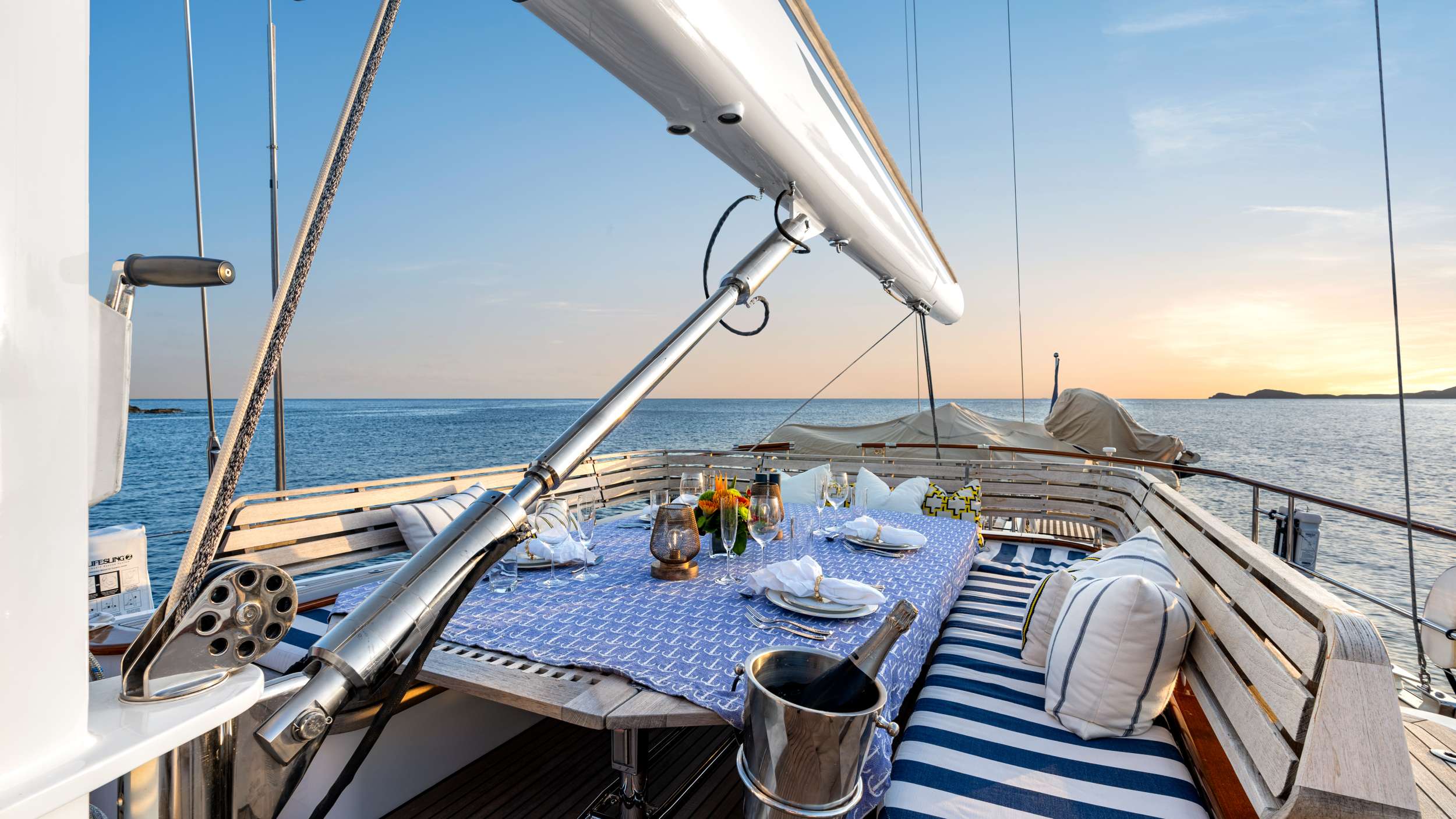
The last full day works its way around Grenada's south coast, a different world from the open windward passages — a maze of reef-protected bays, mangrove inlets, and quiet anchorages tucked behind the headlands. Your captain rounds Point Salines past the airport and into the lee, with options that shape the day around what the group wants for a finish.
Hog Island is the classic call: a low, undeveloped island off the south coast with a calm anchorage and Roger's Bar, a bamboo-and-driftwood shack on the beach that throws the most famous Sunday gathering in Grenada — live music, rum punch, and a barbecue that draws every cruiser in the area. Even on a quiet weekday the anchorage is a gem. For a more active last day, your captain can set up an inland run from Prickly Bay — Annandale Falls, a nutmeg plantation, or the River Antoine distillery, the oldest working rum distillery in the Caribbean, still driven by a waterwheel.
Or the group simply spends the day on the water — a last snorkel, the full slate of toys off the transom, a long lunch on the aft deck — and lets the trip wind down at anchor. Tonight is the farewell dinner: the chef's best, paired wines from the cellar, and a toast to a charter that started under the Pitons and ran the whole eastern edge of the Caribbean to get here. Last night aboard on the south coast of the Isle of Spice.
Day Highlights
Day 11 · Disembarkation
A last slow breakfast aboard, a final swim off the back of the boat, and a short morning run back to Port Louis Marina in St. George's for check-out. Your crew handles every logistic from the dock — the transfer to Maurice Bishop International (GND) is fifteen minutes, and most groups schedule the flight for mid-afternoon or later to keep the morning unhurried. Step off with salt in your hair, three countries' worth of sailing behind you, and the rare satisfaction of having actually gone somewhere.
Want to share or come back to this voyage later?
Bookmark this voyage →Crewed Itinerary · St. Lucia · Round-Trip
The day boats leave the Pitons by late afternoon. You don't — and that's the whole idea of this week. Two of your seven nights sit on the marine-park moorings directly beneath Petit Piton, with the peak going gold overhead after the crowds have gone and the reef starting a few fin kicks off the swim platform. Around those two nights: a three-century-old hurricane hole, the quietest reef coves on the island, and a Friday fish fry in a working fishing village — all inside thirty-five miles of calm leeward coastline.
If your group wants distance and three countries, we'd book the one-way to Grenada instead. This is the opposite trade, and we recommend it more often: one dramatic island done slowly, no leg over ten miles, one airport transfer, no repositioning fee. The right first charter for a group new to boats — and the right slow week for one that's done the mileage runs and wants the postcard without the passages.
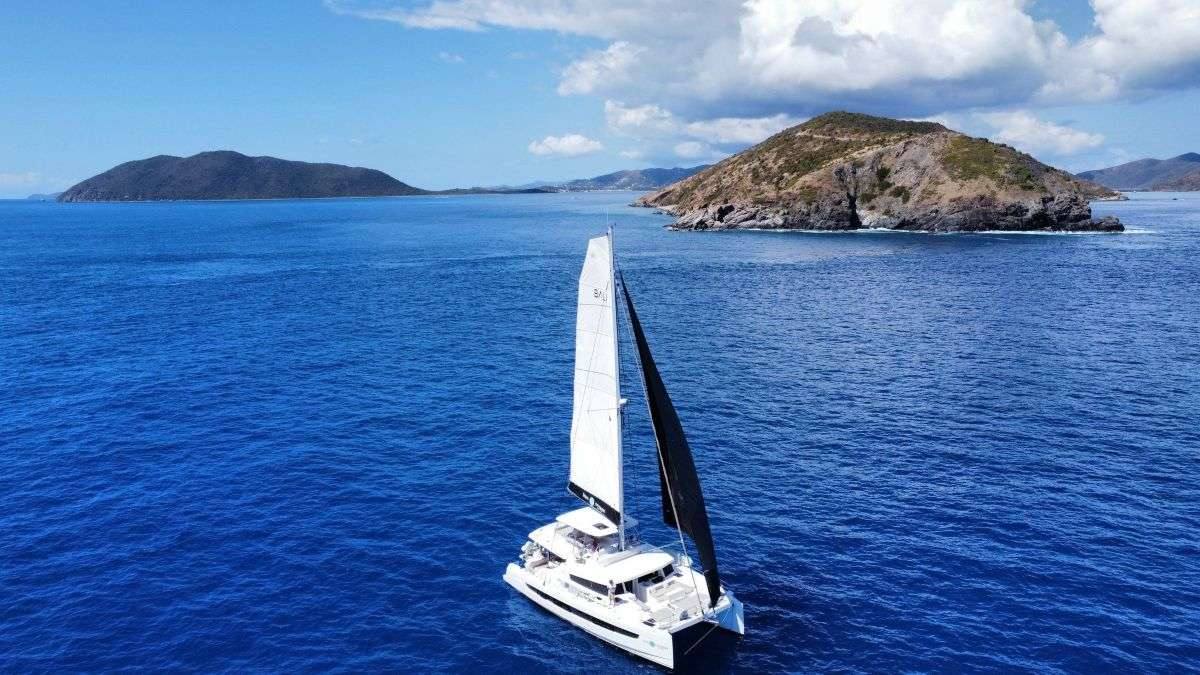
A round-trip down St. Lucia's west coast and back: Rodney Bay and Pigeon Island in the north, Marigot Bay's mangrove inlet, the quiet reef coves at Anse Cochon, and the Soufrière Marine Management Area under the Pitons in the south, with the Anse La Raye fish fry timed on the way back north. Every leg runs in the island's wind shadow — flat water, short hops, the mountains sliding by to port — and every night is a protected mooring or anchorage. The marine reserve prohibits anchoring entirely along the Piton coast; the yacht rides the park's maintained moorings with the reef beginning a few fin kicks off the swim platform.
Best for first charters, mixed-generation groups, and anyone whose brief is scenery over sea miles — nothing on this route asks more of a guest than deciding between the reef and the beach. Strongest fit is a crewed catamaran chartering all-inclusive, which is most of what works this coast; motor yachts run the same route faster and add air-conditioned interior living. December through April is the reliable season; May, June, and November are the value shoulder. Groups that want real passages and three countries should look at the ten-day one-way to Grenada instead — same fleet, same starting dock, different trip.
Day 1 of 7 · Rodney Bay embark → Pigeon Island
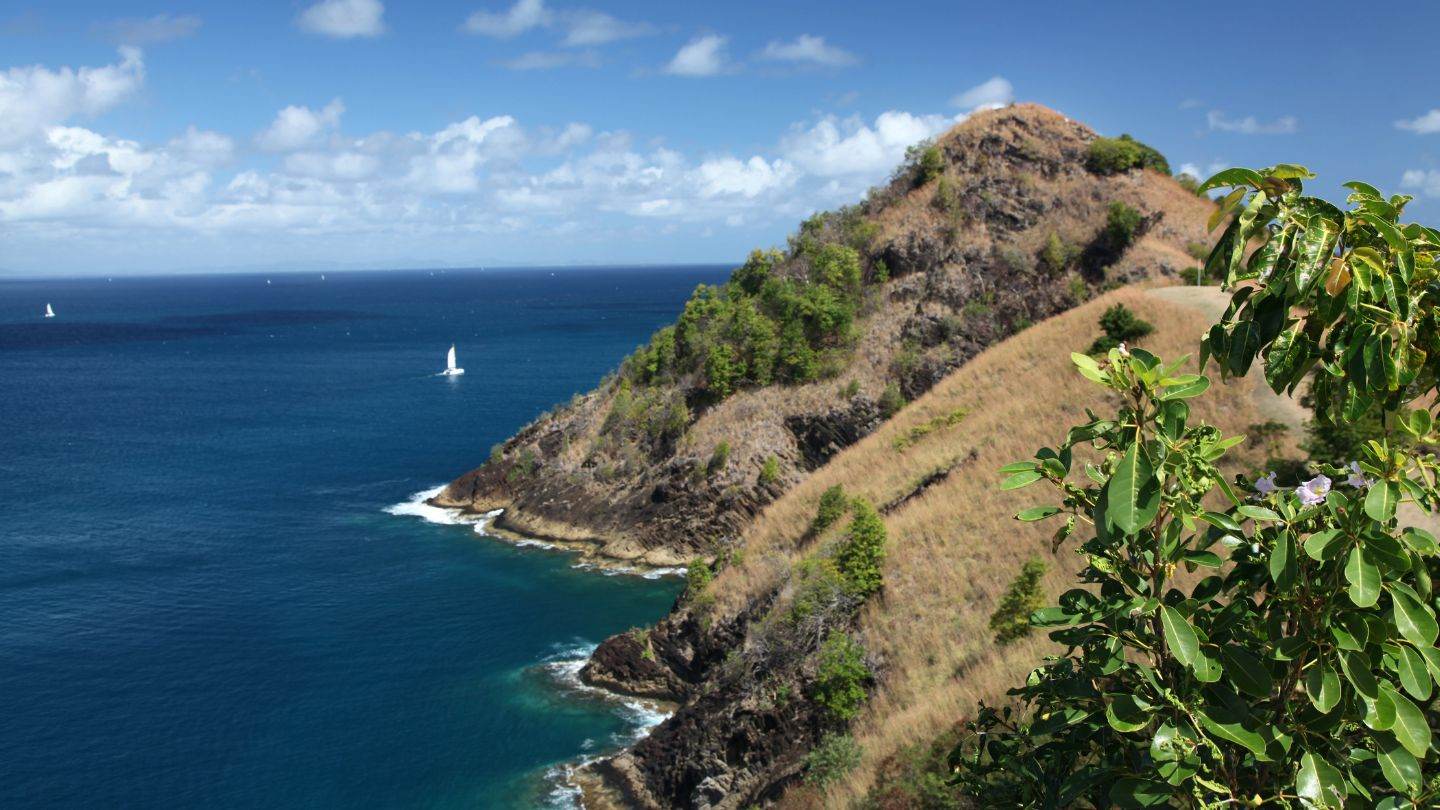
Fly into St. Lucia, transfer to Rodney Bay Marina, and step aboard to cold drinks and the chart briefing. Rodney Bay is the island's yachting hub — provisioning, fuel, and the marina's restaurant row all sit within a few minutes of the slip — so the boat is stocked to the group's preference sheet before anyone arrives, and the first afternoon belongs entirely to arriving well.
The first move is the shortest of the week: around the corner to the anchorage off Pigeon Island, the fortified islet at the top of the bay that's now a national landmark. There's time for a first swim off the platform, a walk up the ridge past the garrison ruins for the view down the coast, and sundowners on the foredeck as the light drops behind the point. Dinner aboard, the marina's lights across the bay, and the week's rhythm already set — short water, big scenery, nobody in a hurry.
Day Highlights
Day 2 of 7 · Pigeon Island → Marigot Bay
A lazy morning swim, then south along the leeward coast — the island's mountain spine kills the trade-wind chop on this side, so the run is flat water with the green ridges sliding by to port. An hour of easy miles ends at a gap in the coastline that's easy to sail straight past, which is precisely its centuries-old point: Marigot Bay, the mangrove-armed inlet where fleets have hidden from weather since the age of sail.
Inside, the bay is a bowl of still water ringed by palms and hillside villas, with a small marina and a handful of restaurants at its head. The afternoon runs on the group's preference — paddleboards in the flat inner bay, the tender to the beach bar on the sand spit, or nothing at all from a deck chair. Dinner is the week's first shore option: the bayside restaurants take reservations from yacht guests, and the crew runs the tender both ways. The version filmed in the original Doctor Dolittle looks essentially unchanged from the mooring.
Day Highlights
Day 3 of 7 · Marigot Bay → Anse Cochon
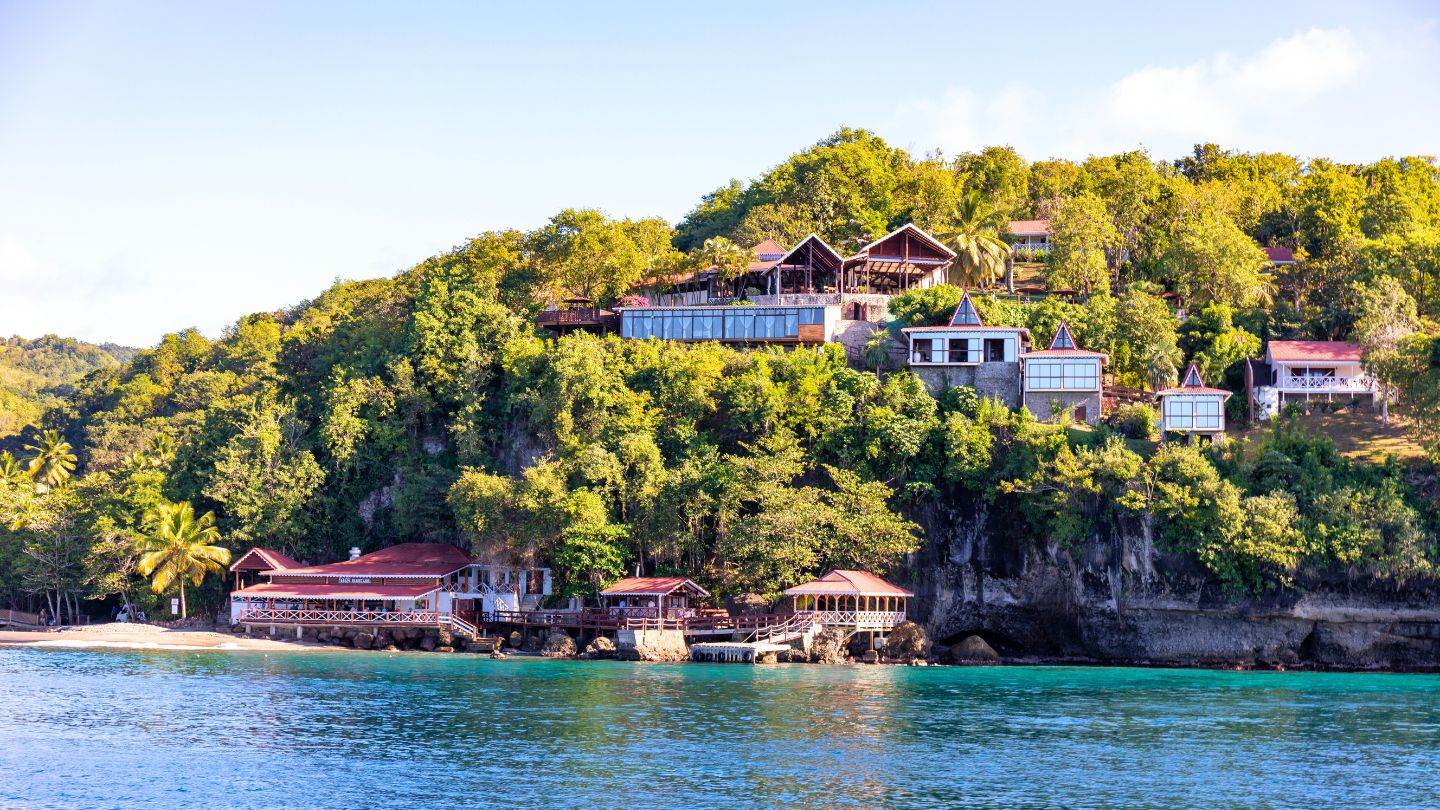
A short mid-morning hop brings the boat to Anse Cochon, the small dark-sand cove that holds some of the healthiest easy reef on the island. The draw here is underwater: the reef starts close along the headlands in calm, clear water, hawksbill turtles work the edges, and a deliberately sunk freighter lies within tender distance for certified divers — one of the easier wreck dives in the Windwards, and a Soufrière dive operator can meet the yacht with tanks on the boat's own schedule.
This is the day the water toys earn their keep — snorkel sets, paddleboards, the slow circuit of the cove before lunch on the aft deck. The cliffside bar above the southern headland does a sunset rum punch for groups who want a shore hour; otherwise the evening is the quietest of the week, a still cove with a handful of boats and the sky going orange behind the headland.
Day Highlights
Day 4 of 7 · Anse Cochon → the Pitons
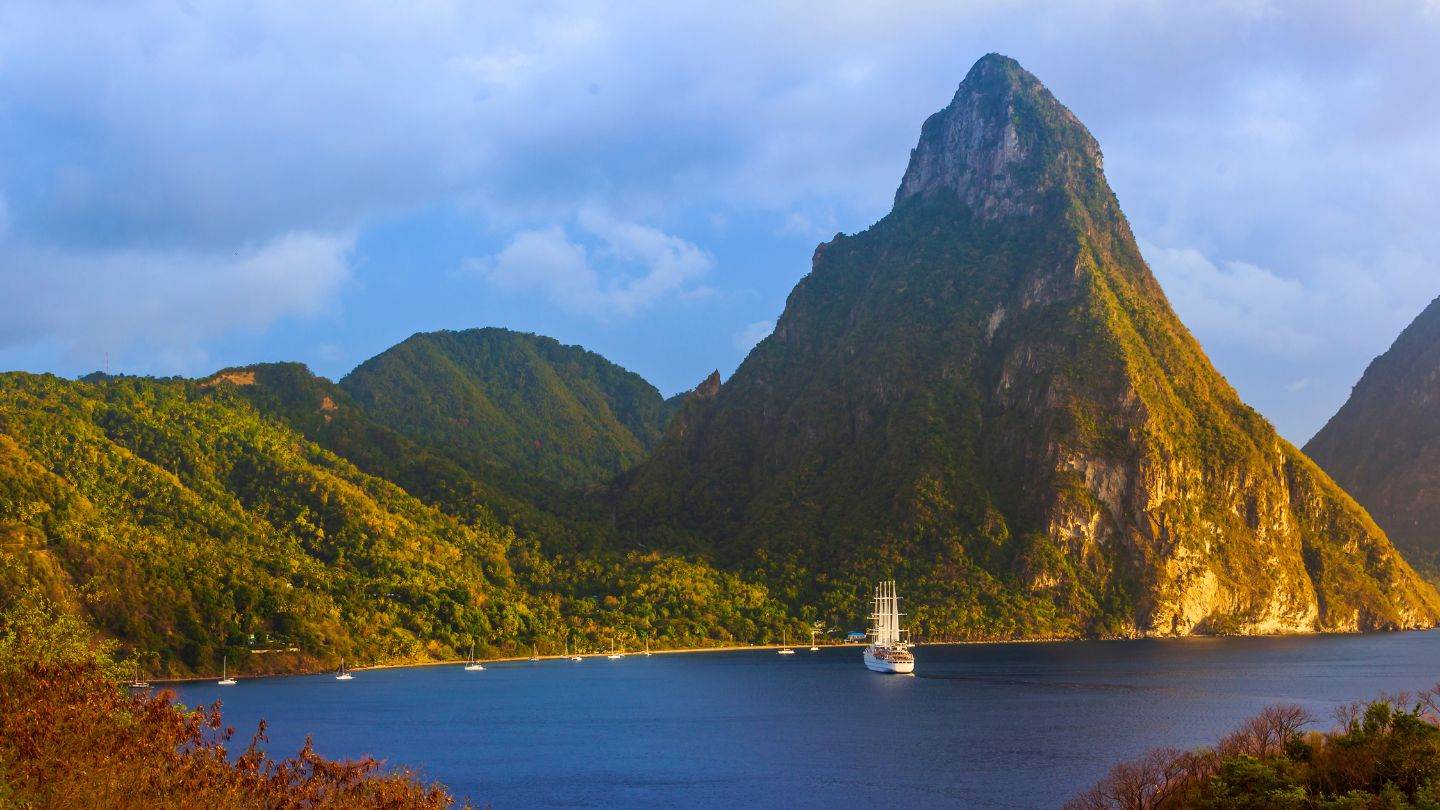
The morning run south crosses into the Soufrière Marine Management Area, and the coast changes register: the ridges sharpen, the water deepens to navy a boat-length off the shore, and then the Pitons open up ahead — two volcanic spires rising straight from the sea, the most photographed silhouette in the Caribbean. There's no anchoring anywhere on this stretch; a reserve ranger meets the boat at the mooring field and the captain settles the park fees over the rail while the group stares up.
The mooring at Malgretout or Anse des Pitons puts Petit Piton almost directly overhead — close enough that the peak fills the companionway when you come up from below. The afternoon is Sugar Beach by tender, the reef along the Piton's base, or nothing but the view. The day boats clear out by late afternoon, and the evening is the reason this route exists: the mooring field nearly empty, the light going gold up the spire, dinner on the aft deck under two thousand-plus feet of rock.
Day Highlights
Day 5 of 7 · Lay day under the peaks
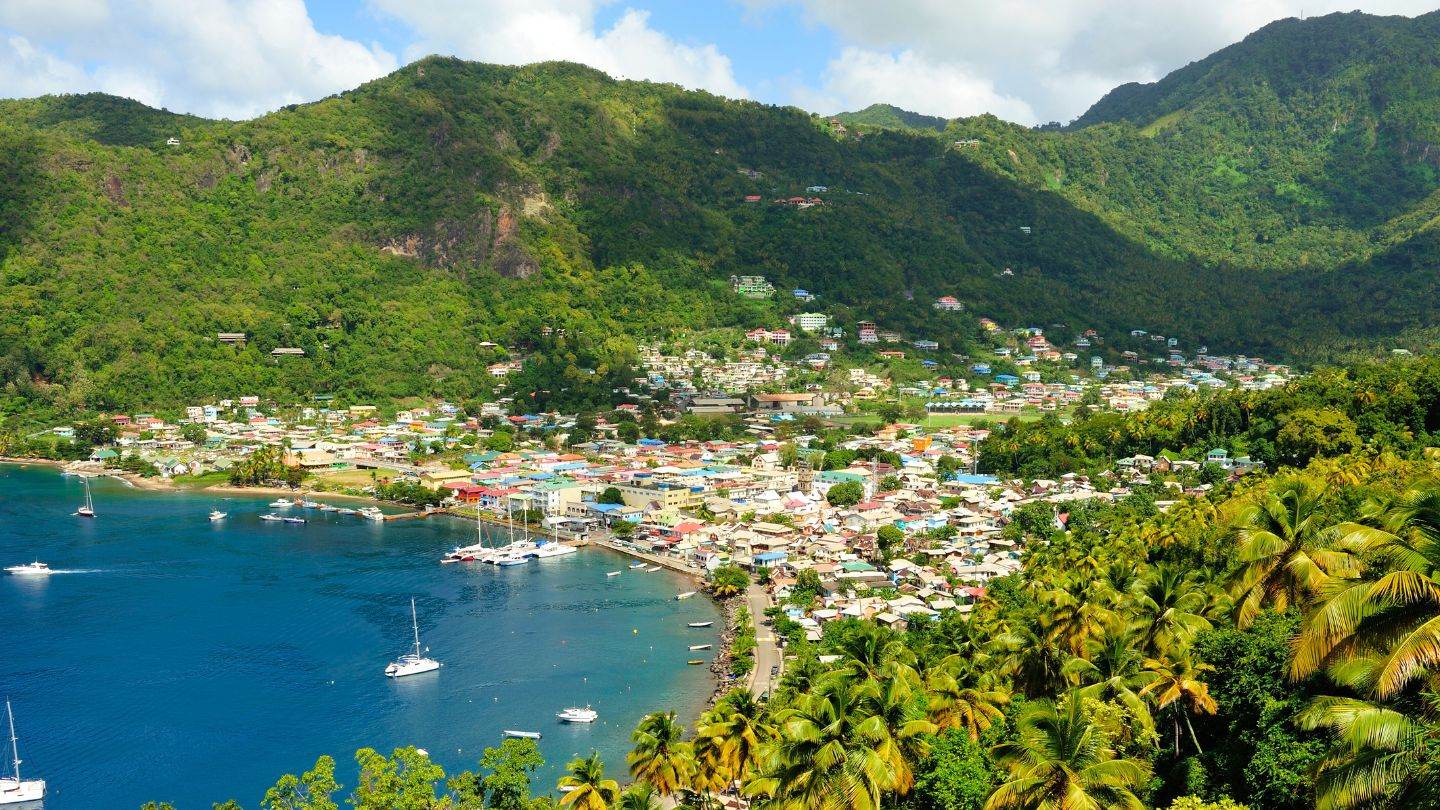
The second Piton night is what separates a charter from a day trip, and the lay day between them is the week's shore day. The energetic option is the guided Gros Piton hike — a half-day up the taller spire for a view down the whole southwest coast. The gentler circuit runs through Soufrière town to the drive-in sulfur springs, the mineral baths, and the botanical gardens in the valley behind — the volcanic engine room that built the scenery the boat has been floating on all week. The crew arranges guides and taxis; nothing needs planning from the guest side.
Back aboard, the afternoon is the reef or the deck. Guests who skipped the hike get the best snorkeling hour of the day as the light angles in over the Piton-base coral. The second evening on the mooring tends to be the one photographed least — by now the group has stopped reaching for phones and started just sitting with it.
Day Highlights
Day 6 of 7 · Soufrière → Anse La Raye
A last long look at the peaks over breakfast, then the boat retraces the leeward coast north to Anse La Raye, a working fishing village on a small cove that most itineraries sail straight past — except on the one night a week it matters. The crew has aimed the schedule at exactly that night: the village closes its main street, the grills come out, and the day's catch — lobster, conch, snapper — is cooked a dozen ways under string lights with steel pan carrying over the water to the anchorage.
It costs a fraction of a resort dinner, it isn't staged for anyone, and it's the shore night guests bring up a year later. The tender runs the group in as the street fills, and the evening goes as long as the band does. For groups whose dates can't land on the fry night, the crew reshuffles — Marigot's restaurants or a chef's night aboard cover it — but the week is built to be here when the grills light.
Day Highlights
Day 7 of 7 · Anse La Raye → Rodney Bay
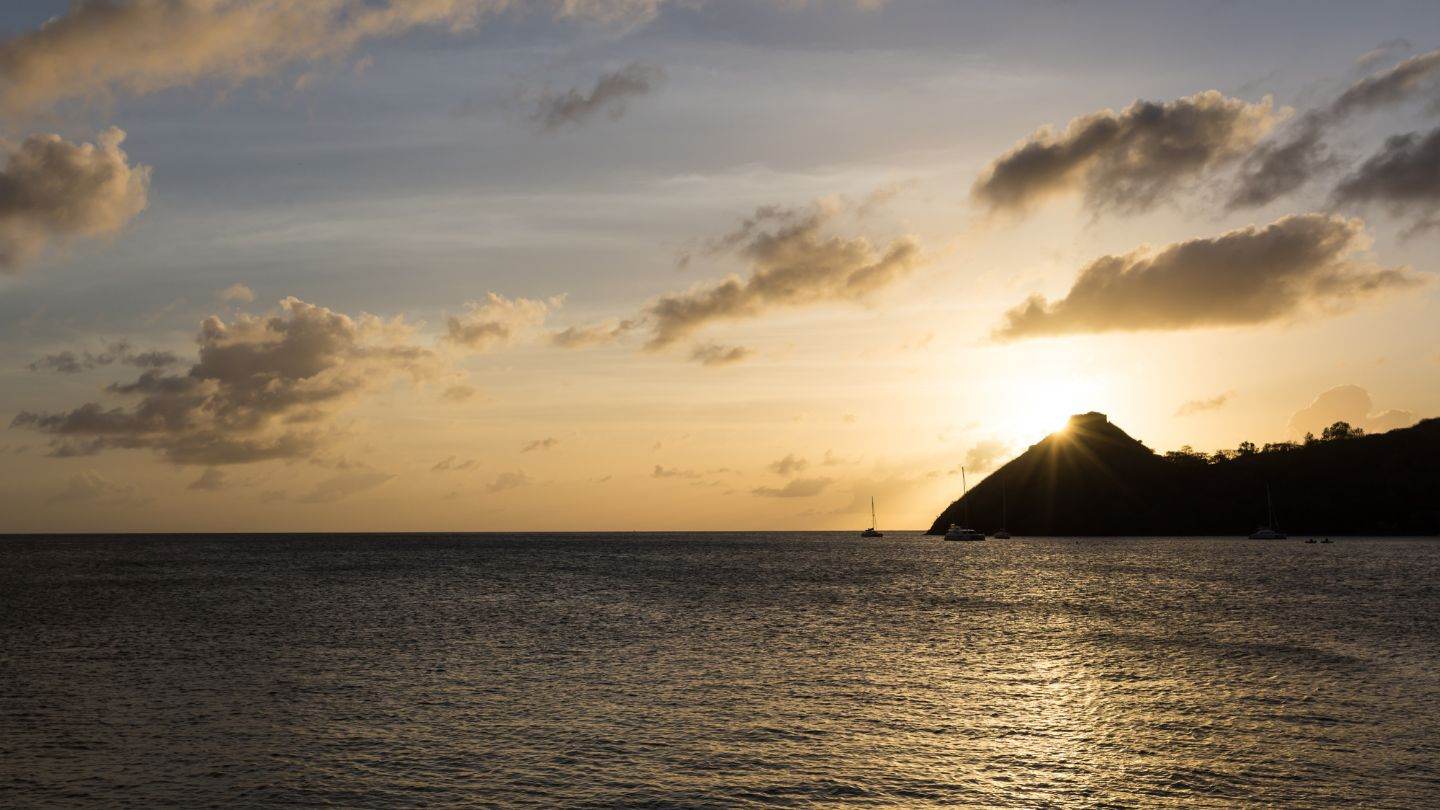
The final run north closes the loop in an easy morning, and the last full day plays to Rodney Bay's strengths: Reduit Beach for the swimmers, the marina row for anyone who wants a last island lunch ashore, and flat protected water for a final hour on the paddleboards. The crew starts the quiet business of the turnaround — settling accounts, confirming transfer timing — without any of it reaching the guests.
The last evening belongs to the anchorage off the beach: sundowners on the foredeck as the sun drops behind Pigeon Point, dinner from the chef's best night held in reserve, and the mast lights of the marina coming on across the bay. Seven nights, forty miles, and somehow the feeling of having seen an entire country.
Day Highlights
Day 8 · Departure
A slow breakfast, a last swim for whoever insists, and the short move to the marina slip for check-out. The transfer runs to either airport — about ten minutes to SLU for regional connections, roughly an hour south to UVF for the long-haul flights — and most groups book afternoon departures to keep the final morning unhurried. One country, one boat, no repositioning line on the invoice, and the Pitons already arguing for the return trip.
Want to share or come back to this voyage later?
Bookmark this voyage →
When to go, what it costs, and how to get there — the practical answers guests ask before booking a St. Lucia crewed yacht charter.
December through April is the most reliable sailing window in the Eastern Caribbean. The northeast trades hold at fifteen to twenty knots, daytime highs sit in the low eighties, and rain arrives as brief passing showers. The Piton moorings are busiest midday and empty out by late afternoon — overnighting guests get the peaks nearly alone. The best boats book six to nine months ahead for the December and Easter weeks.
May, June, and late November sit between peak season and the heart of storm risk. The trades soften to twelve to eighteen knots, the water warms into the mid-eighties, and rates typically run fifteen to twenty-five percent below peak. Tropical activity is statistically rare in these months, and the marquee moorings go quiet — the value window for groups with flexible dates.
St. Lucia sits inside the Atlantic hurricane belt, and much of the fleet relocates south toward Grenada for July through October, where the storm track historically runs thinner. Inventory on the island itself is limited through the summer, and lead time matters. For groups who can only travel then, the itineraries that work best usually start near Grenada and run north — we can tell you which yachts are positioned for it.
$25,000–$100,000 per week
Crewed yacht charters out of St. Lucia typically run from $25,000 to $100,000+ per week, depending on yacht size, build year, and crew — the same fleet that works the Grenadines and Grenada to the south. Most catamarans charter all-inclusive: the base weekly rate covers yacht, crew, all meals, the standard bar, fuel for normal cruising, water sports, and the Soufrière marine reserve's mooring and conservation fees. Larger motor yachts typically run plus-expenses instead — the base rate covers yacht and crew, and food, beverages, fuel, and dockage are paid through an Advance Provisioning Allowance set at twenty-five to thirty-five percent of the base rate, with the unused balance refunded at trip end. Crew gratuity is customary at fifteen to twenty percent of the base rate, paid directly to the captain on the last day.
About chartering in St. Lucia.
We charter across the Caribbean. Here are some other excellent alternatives.

Explore a British Virgin Islands yacht charter for an unmatched sailing adventure. Idyllic Caribbean setting, easy navigation, and iconic beach bars await you.

Experience the charm of a US Virgin Islands yacht charter. Discover pristine national parks, stunning beaches, and easy navigation in this Caribbean gem.

Set sail in Exuma, Bahamas for an unparalleled yacht charter experience. Revel in the stunning blues, serene solitude, and fishing in this Caribbean gem.

Loyalist clapboard towns a tender ride from the anchorage, the Hope Town light swinging its beam across the mooring field, Tahiti Beach's sandbar at low tide, and two national parks of no-take reef — the protected-water Bahamas, north of the Exumas, with history in the bones.

Explore a St. Martin yacht charter for a unique Caribbean adventure. Enjoy stunning beaches, rich culture, and ideal sailing conditions.

Crewed catamaran and motor yacht charters through Bequia, Mustique, the Tobago Cays, Mayreau, and the southern Grenadines.

Explore the serene Spanish Virgin Islands: pristine beaches, historic sites, and unspoiled nature await. The ultimate Caribbean sailing escape.

Embark on a Belize yacht charter to explore the Caribbean's unspoiled beauty, from vibrant reefs to serene cayes, in crystal-clear waters.

Embark on an unforgettable yacht charter in Antigua and Barbuda, where crystal-clear waters, rich history, and 365 beaches offer a paradise for every sailor.
Fill out our quick form and we'll dive into your unique preferences — from adventure-packed itineraries to pampered escapes. Whether you're a seasoned voyager or new to charters, we'll tailor recommendations just for you.
With over fifteen years of experience, we'll match you with the yacht that fits your style, group, and itinerary. We work directly with the captains and crews across our list — so the recommendation is built around the right boat-and-crew fit for your week, not whatever's easiest to book.
Once your yacht is booked, we'll take care of logistics: paperwork, reminders, and personalized resources to help you plan. From arrival planning to must-visit spots, we'll make your charter as seamless as it is unforgettable.

¿Qué esperar de un alquiler de yate privado con tripulación?
Conocé qué hace únicos a estos viajes en yate: servicio personalizado, gastronomía gourmet y un sinfín de aventuras y momentos de relax.

¿Cómo es el proceso de reserva?
Nuestro equipo se encarga de todo: desde tu primer consulta hasta que zarpás. Todo fluye de forma simple.

¿Cuánto cuesta un alquiler de yate con tripulación?
Entendé los distintos tipos de precios, lo que está incluido y lo que no.

Logística: planes probados para un inicio sin estrés
Planificá tu llegada con facilidad. Te damos tips sobre vuelos, traslados y todo lo necesario para arrancar relajado.
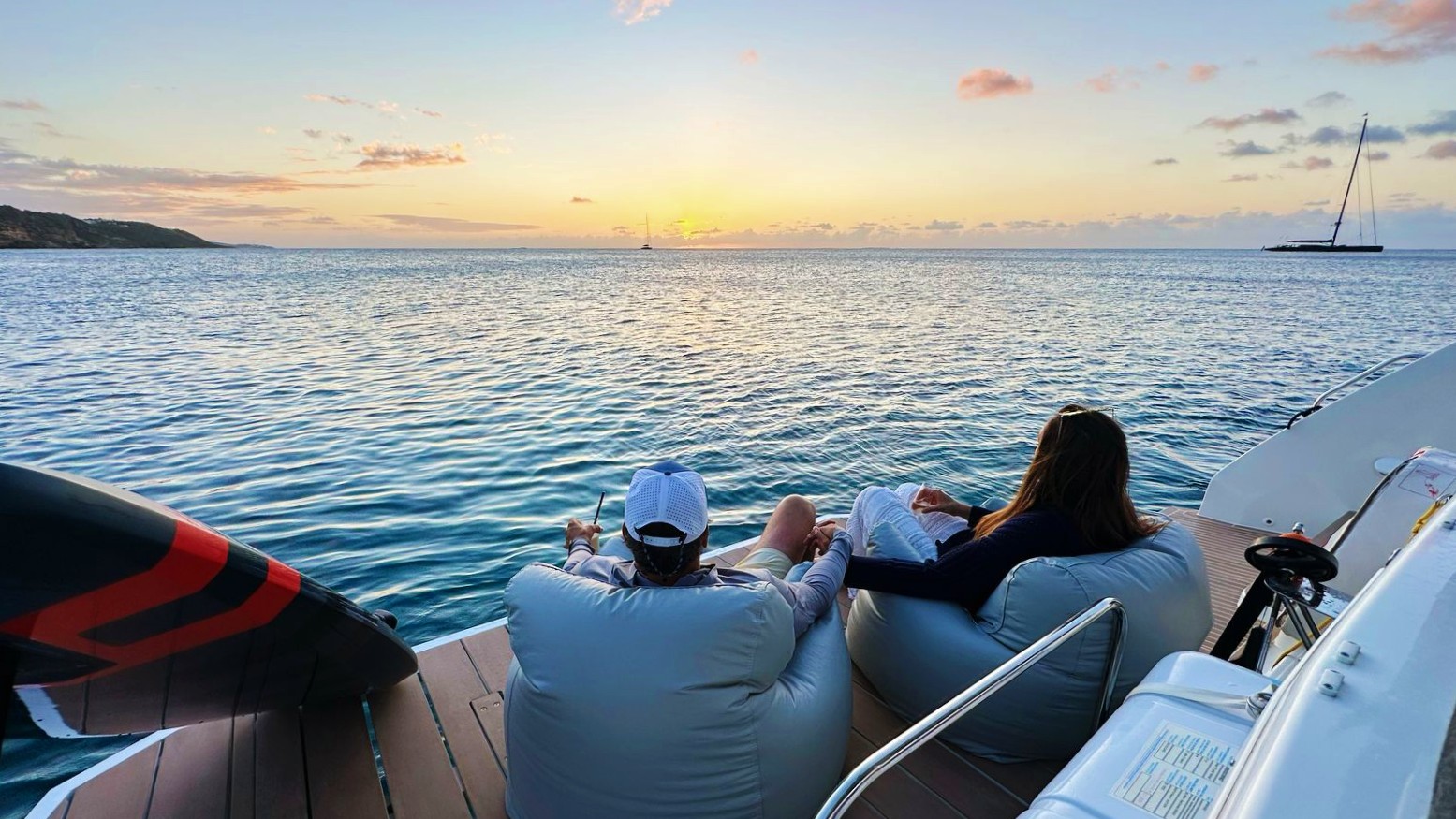
Alquiler de yate de luna de miel
Comience su matrimonio en un yate privado. Explore playas solitarias, gastronomía gourmet y atardeceres inolvidables en el Caribe.
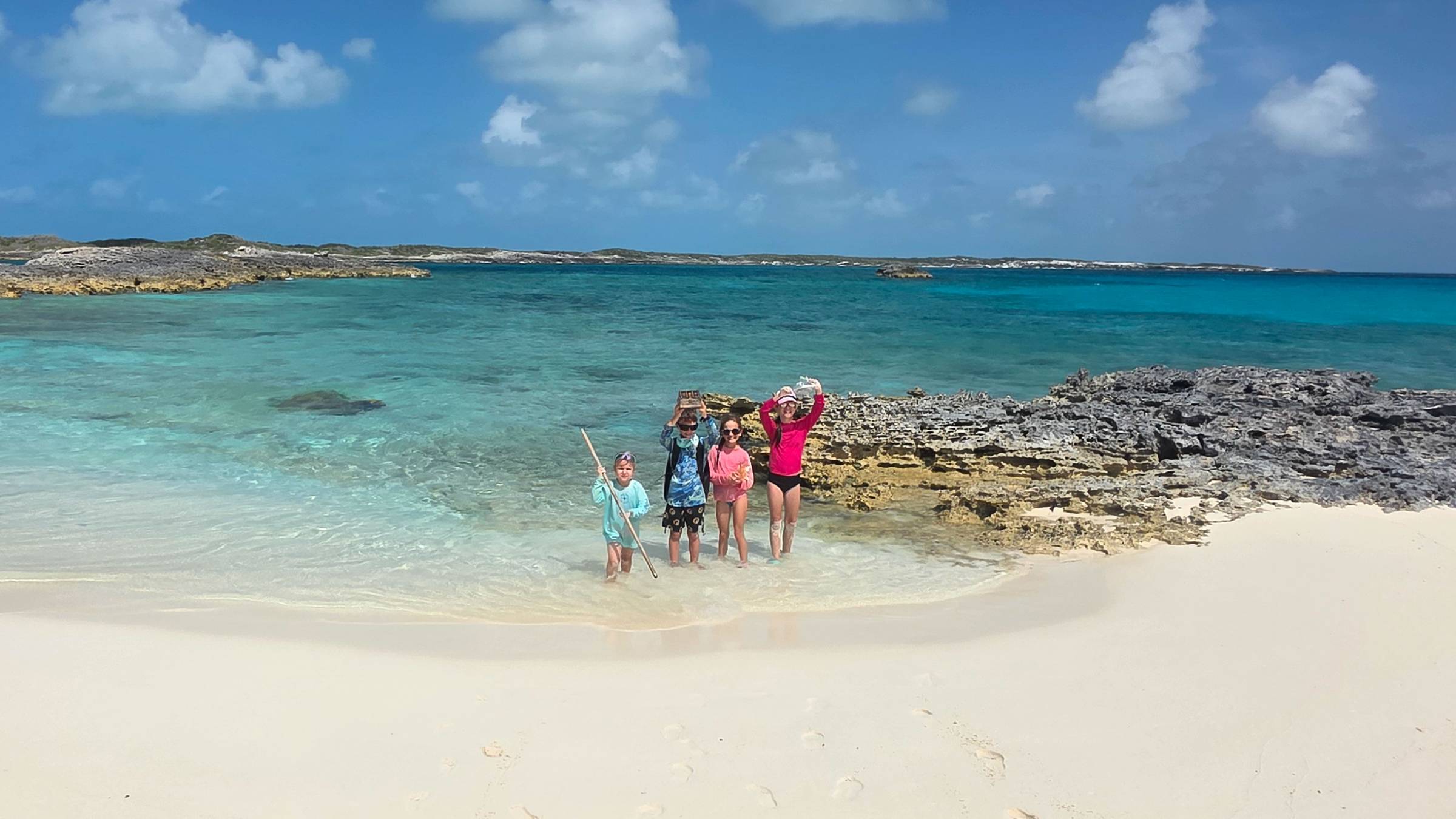
Alquiler de yate familiares
Un alquiler de yate con tripulación es perfecto para familias de todas las edades. Seguro, divertido y con servicio completo — sus hijos nunca lo olvidarán.

Preguntas frecuentes sobre alquileres de yate con tripulación
Obtenga respuestas a las preguntas más comunes sobre alquiler de yate con tripulación, desde precios y propinas hasta qué incluye y qué llevar.

Alquiler de yate con tripulación en las Islas Vírgenes Británicas
Las Islas Vírgenes Británicas son el destino #1 de alquiler de yate con tripulación en el Caribe. Navegaciones cortas, aguas protegidas y bahías de clase mundial.

Guía de Alquiler de Yate con Tripulación en Islas Vírgenes Británicas
Todo lo que necesitás saber antes de tu viaje en yate con tripulación en las Islas Vírgenes Británicas — precios, lista de equipaje, itinerario y cómo llegar.
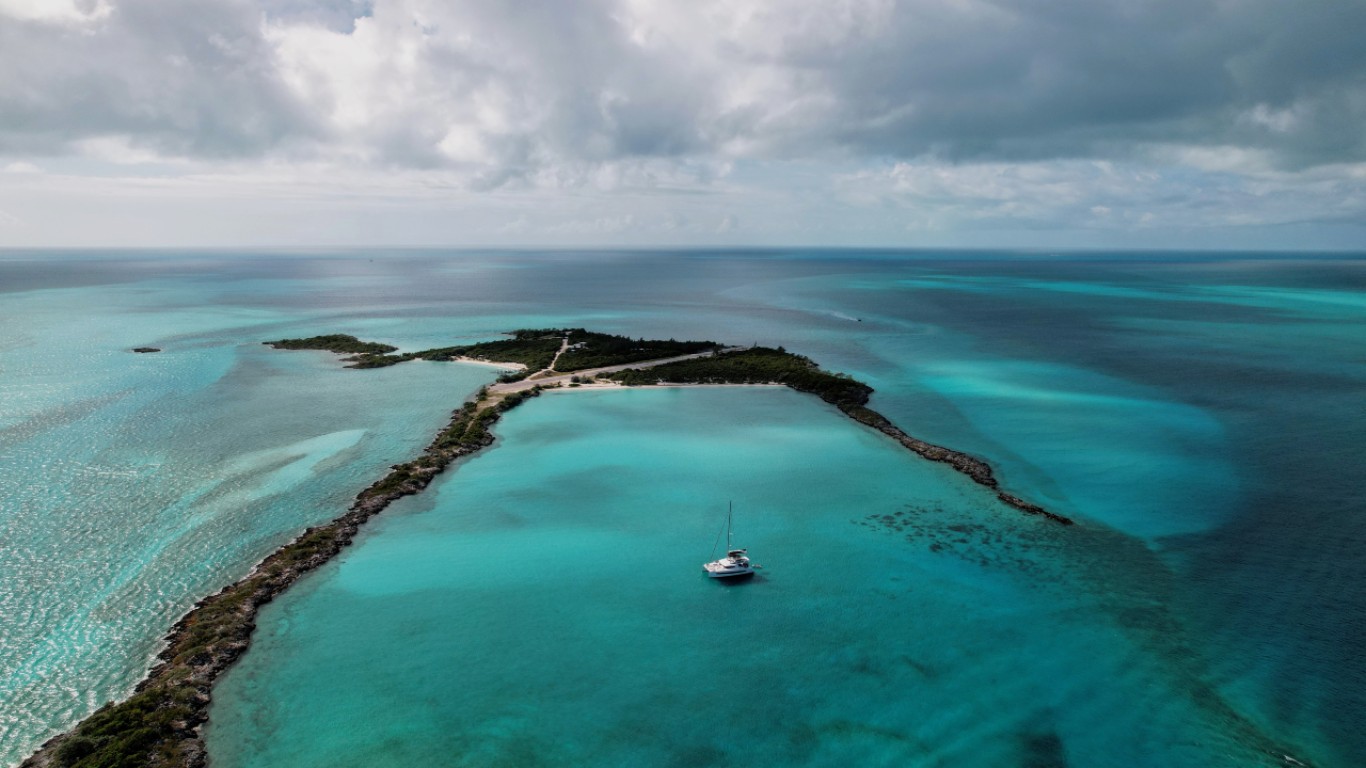
Alquiler de yate con tripulación en las Bahamas
Explore las Exumas en un yate privado con tripulación. Cerdos nadadores, bancos de arena y algunas de las aguas más cristalinas del mundo.
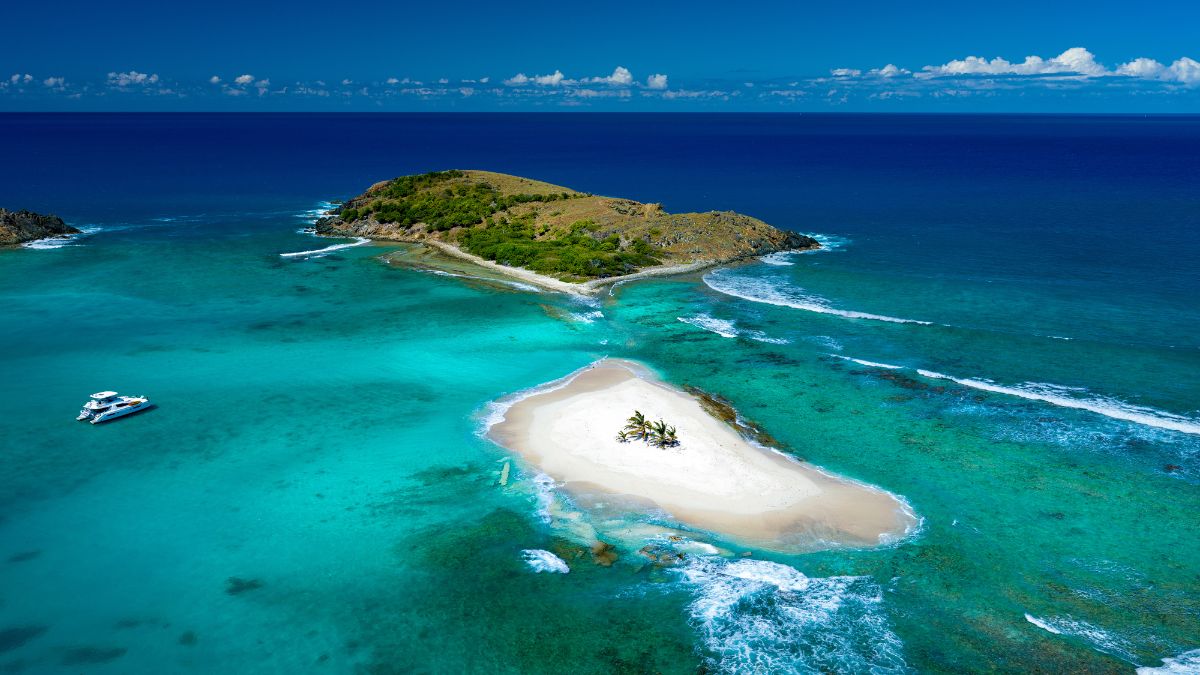
Alquiler de yate con tripulación en el Caribe
Alquiler de yate todo incluido con tripulación en todo el Caribe — Islas Vírgenes Británicas, Bahamas, Islas Vírgenes de EEUU, St. Martin, Antigua y más.