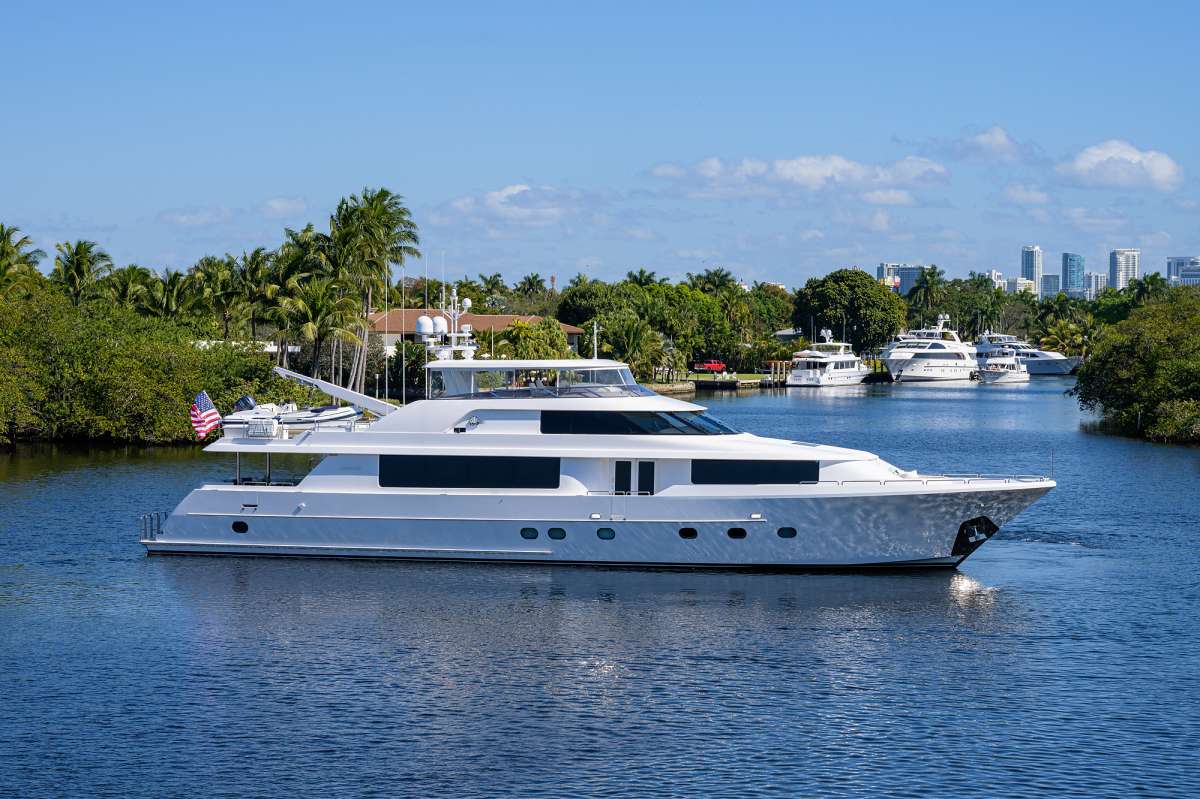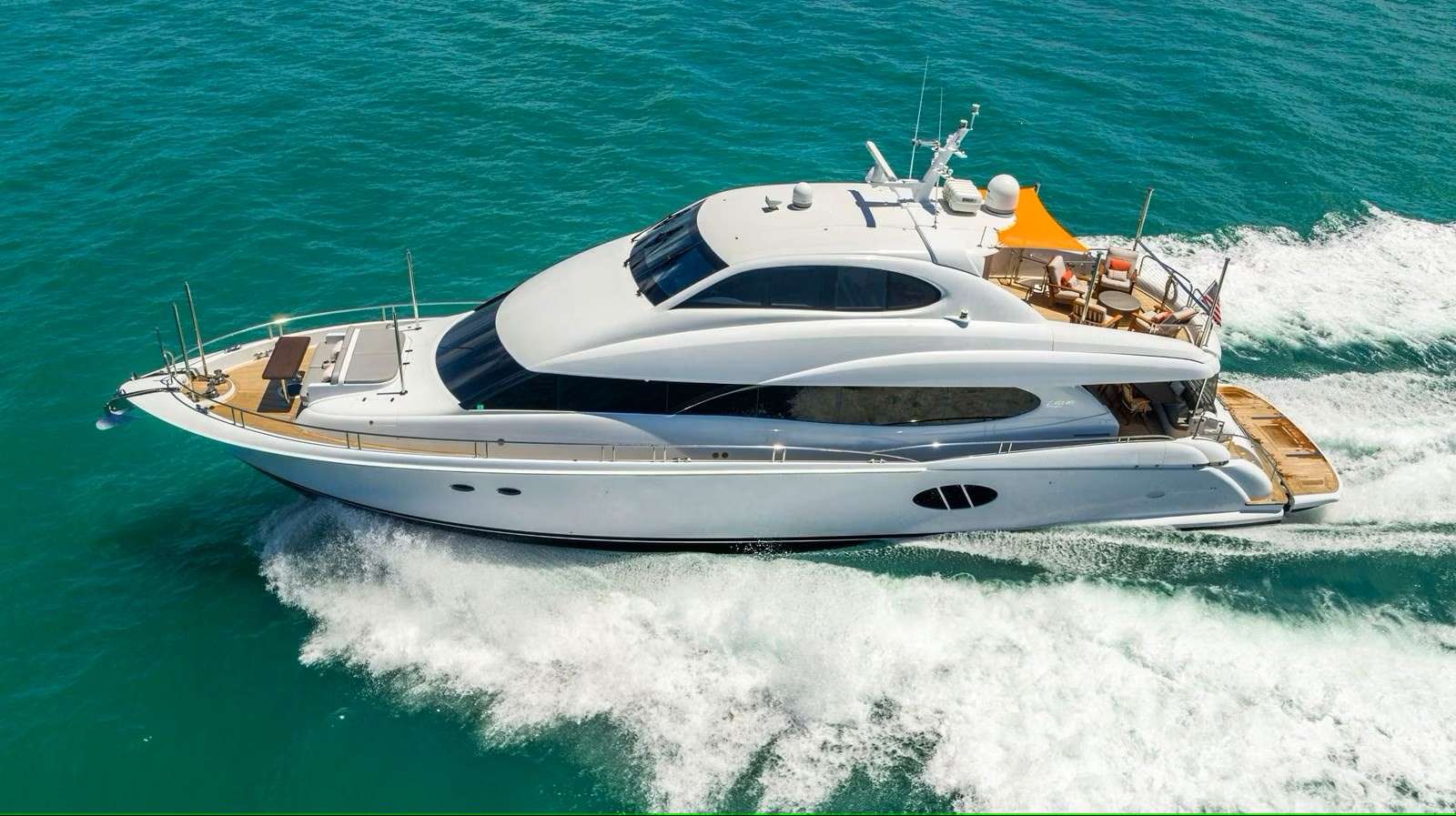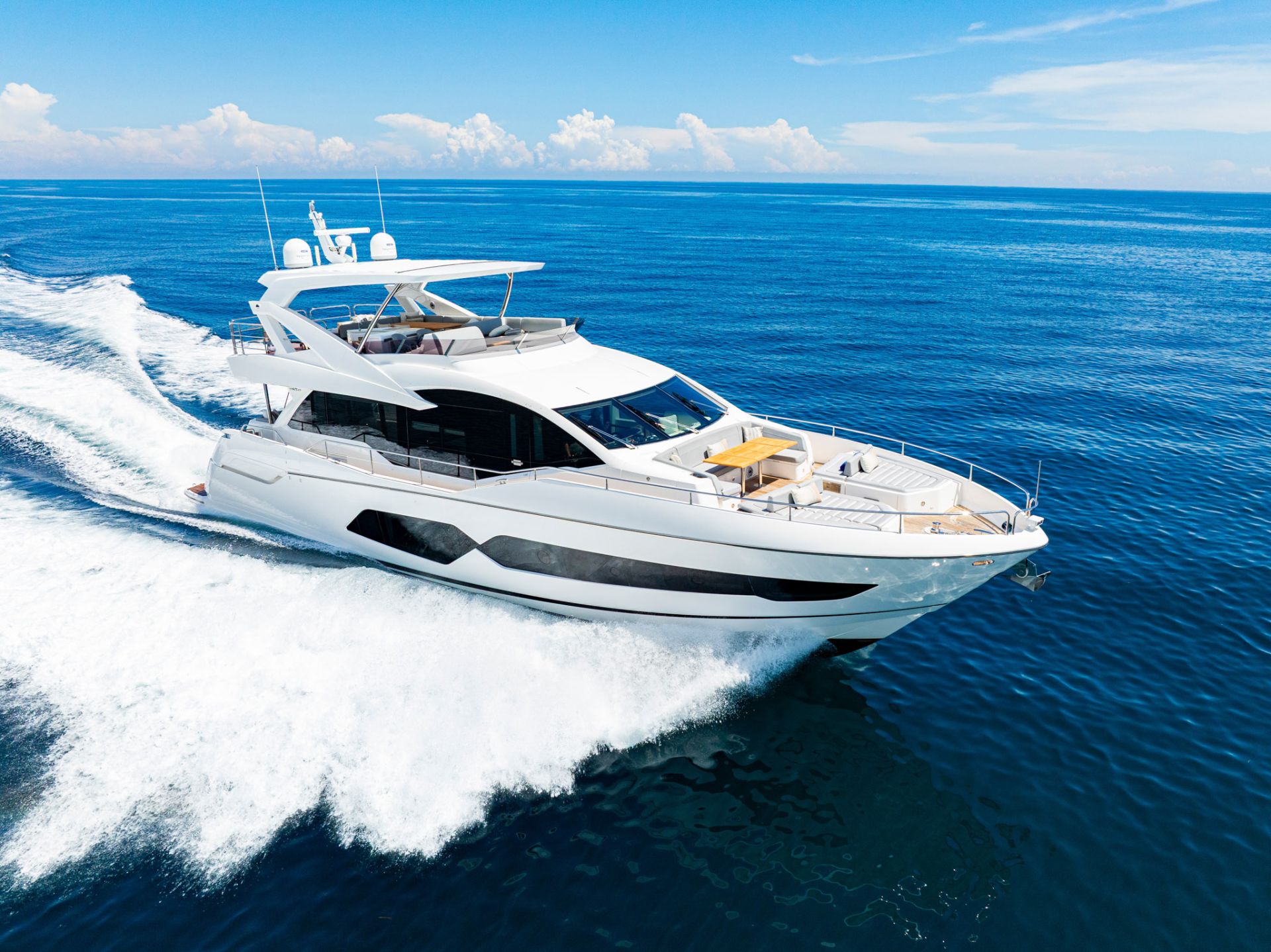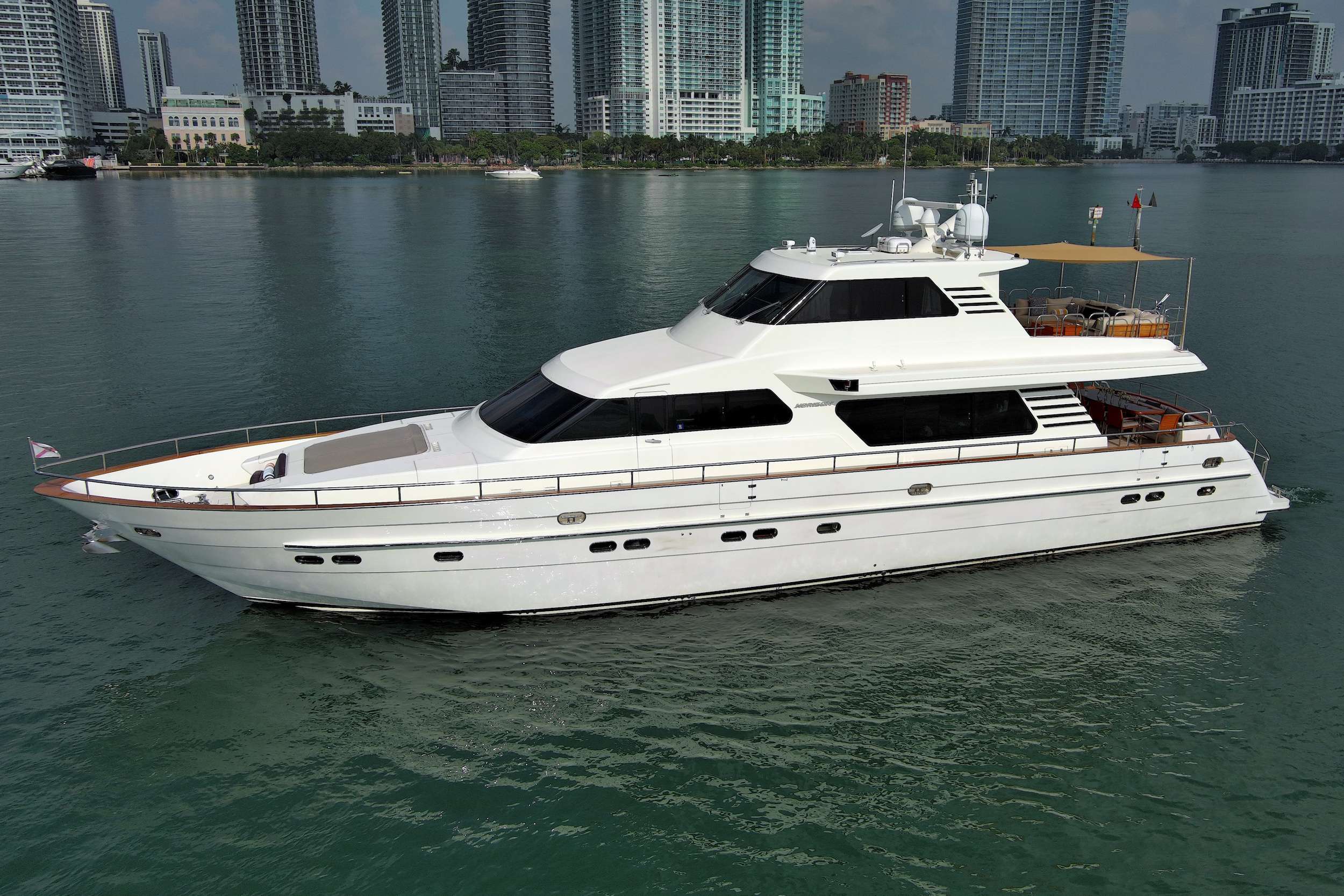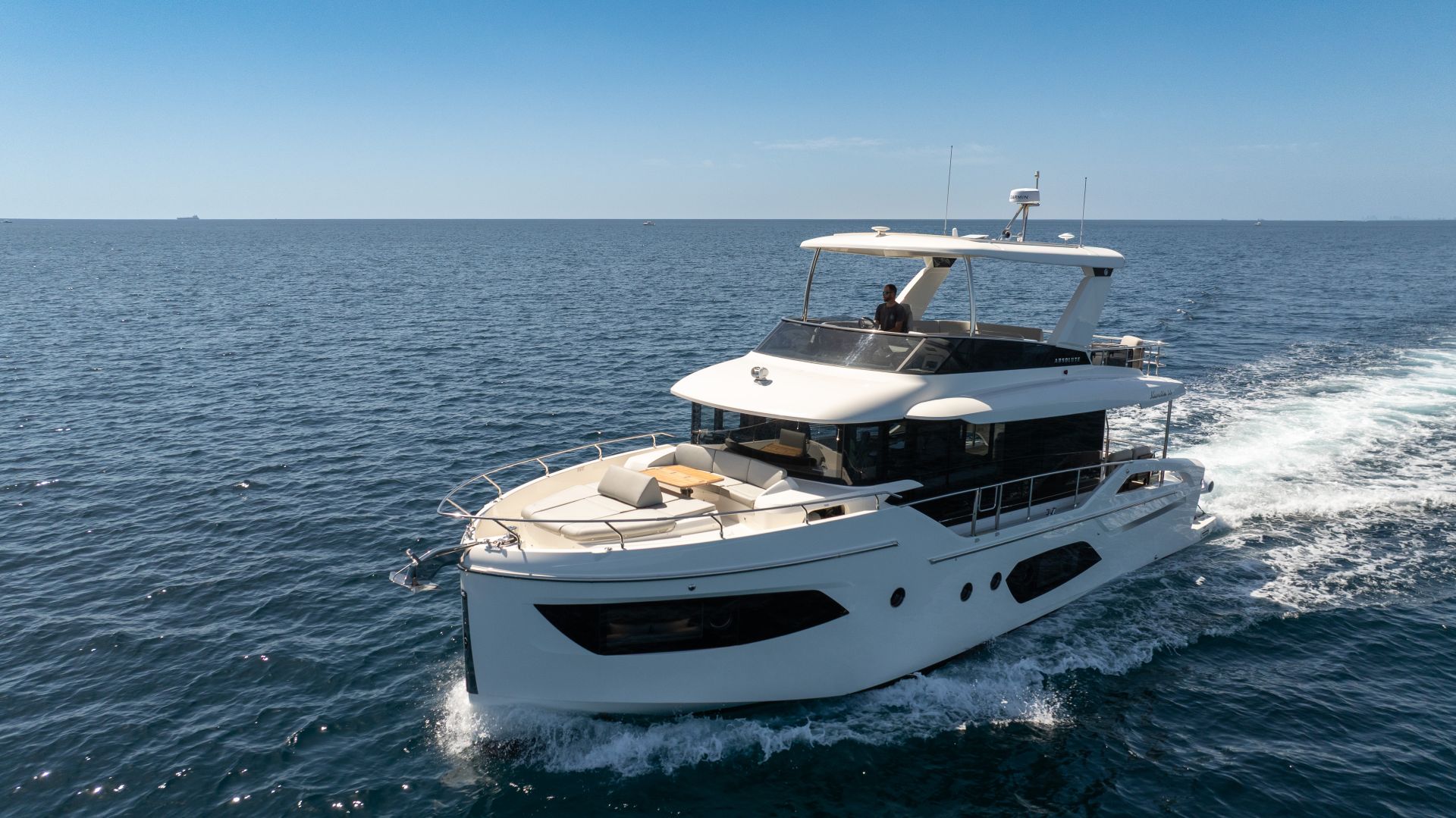

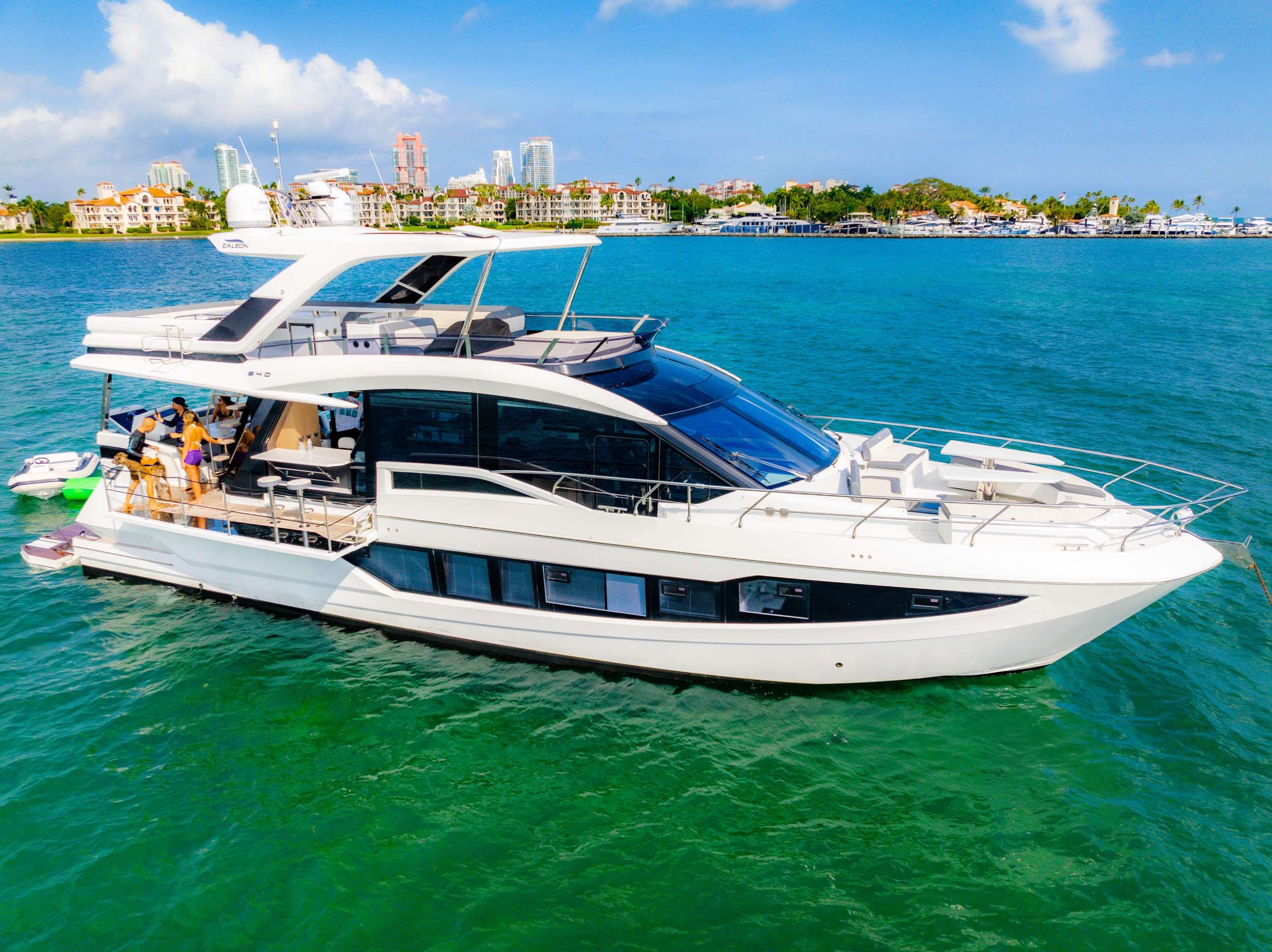
Optimus Prime
68FT · MOTOR YACHT
Desde $60,000/semana
6 Guests · 3 Cabins
Caribbean
Eastern Mediterranean
Western Mediterranean
South Pacific
United States
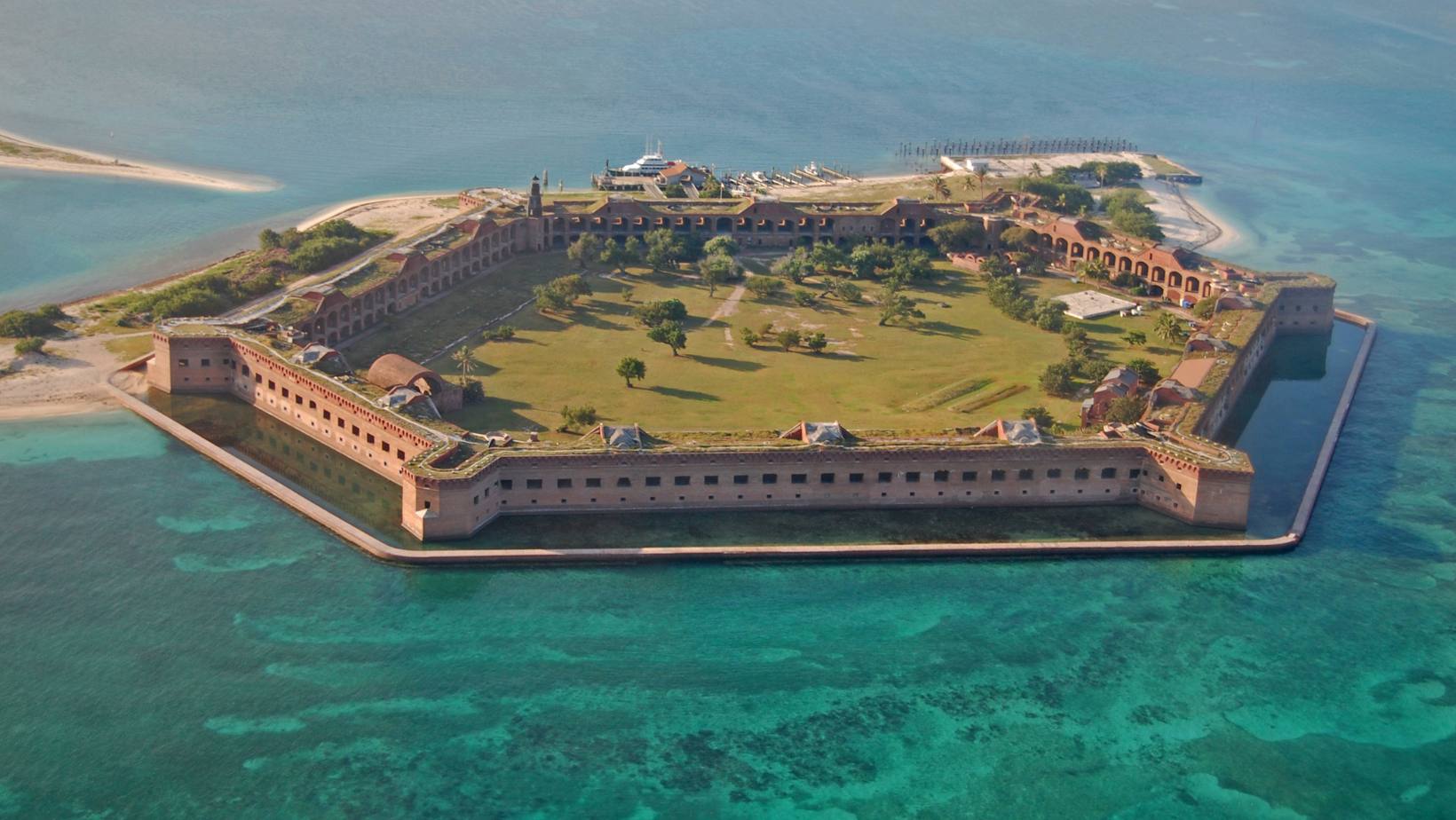
Fort Jefferson after the last ferry leaves. A mahi on the line seventy miles west of Key West. Dinner on deck with nothing but open Gulf on the horizon — this is the Florida Keys most visitors never see.
Why the Keys
Most people experience the Keys through a windshield. On a private yacht, the Overseas Highway disappears and the islands start to make sense: reef on one side, Gulf on the other, fishing lines working while breakfast disappears from the table, and a new waterfront waiting by afternoon. There are really two trips here — run south from Miami through Key Largo, Islamorada, and Marathon to finish with two nights in Key West, or start at the end of the road and keep going: seventy miles past Key West to Dry Tortugas National Park, where Fort Jefferson rises out of open water and the day-trippers leave before you do.
The Dry Tortugas route is the one we'd choose — we've made that crossing ourselves, and arriving by boat changes the experience completely. The ferry heads back to Key West in the afternoon. You don't. The fort goes quiet, the light turns gold, and your yacht is waiting a tender ride away. The rest of the chain has its own rhythm: fish the reef edge on the way to Islamorada, snorkel Key Largo, see the Seven Mile Bridge from the flybridge instead of through a car window, then pull into a marina, shower, and walk to dinner knowing your chef and your favorite bottle are waiting back at the slip.
This isn't the charter we'd recommend if your dream is seven days of tiny turquoise coves and powder-white beaches — the Exumas or the BVI do that better, and we'll say so. Choose the Keys for fishing, history, easy US logistics, and the chance to use a yacht for what it does best: taking you somewhere most people can't get to.
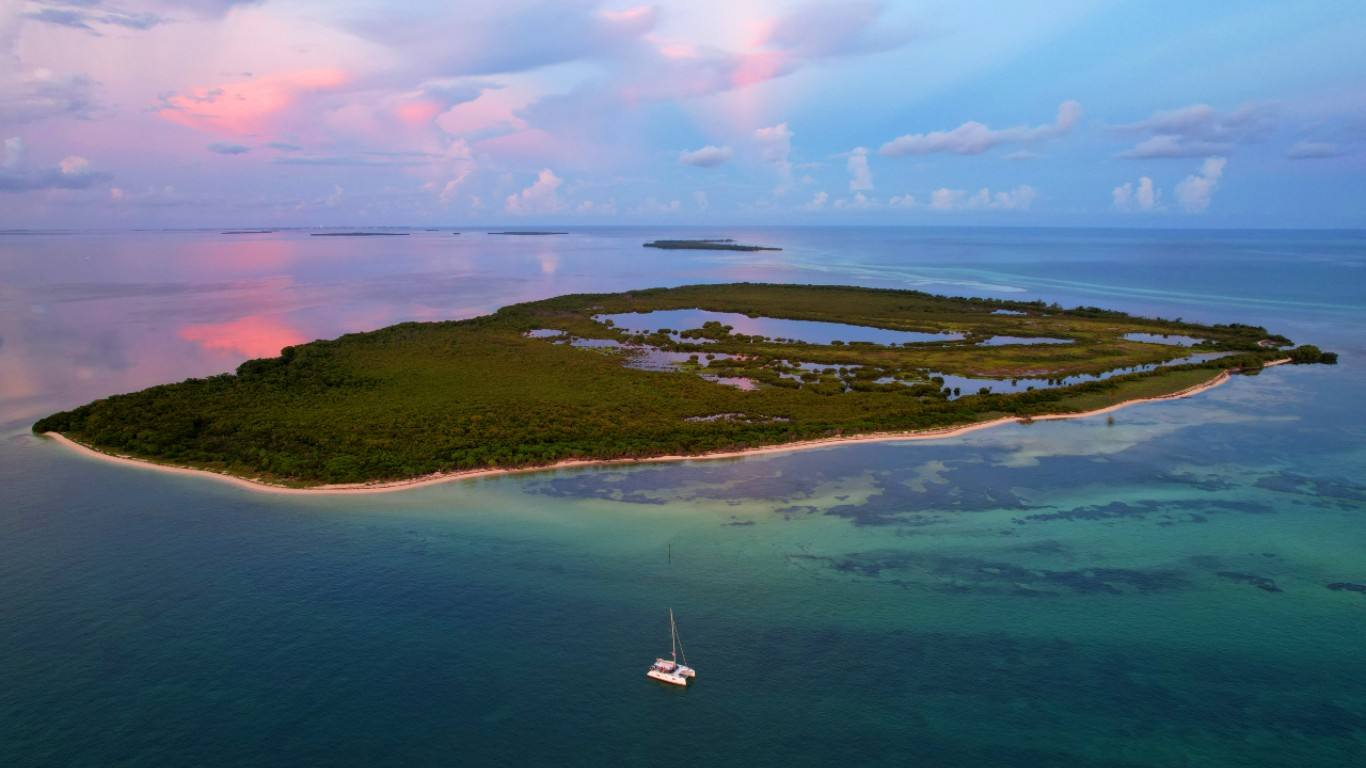
The experiences that make us choose the Keys over simply booking a waterfront hotel.
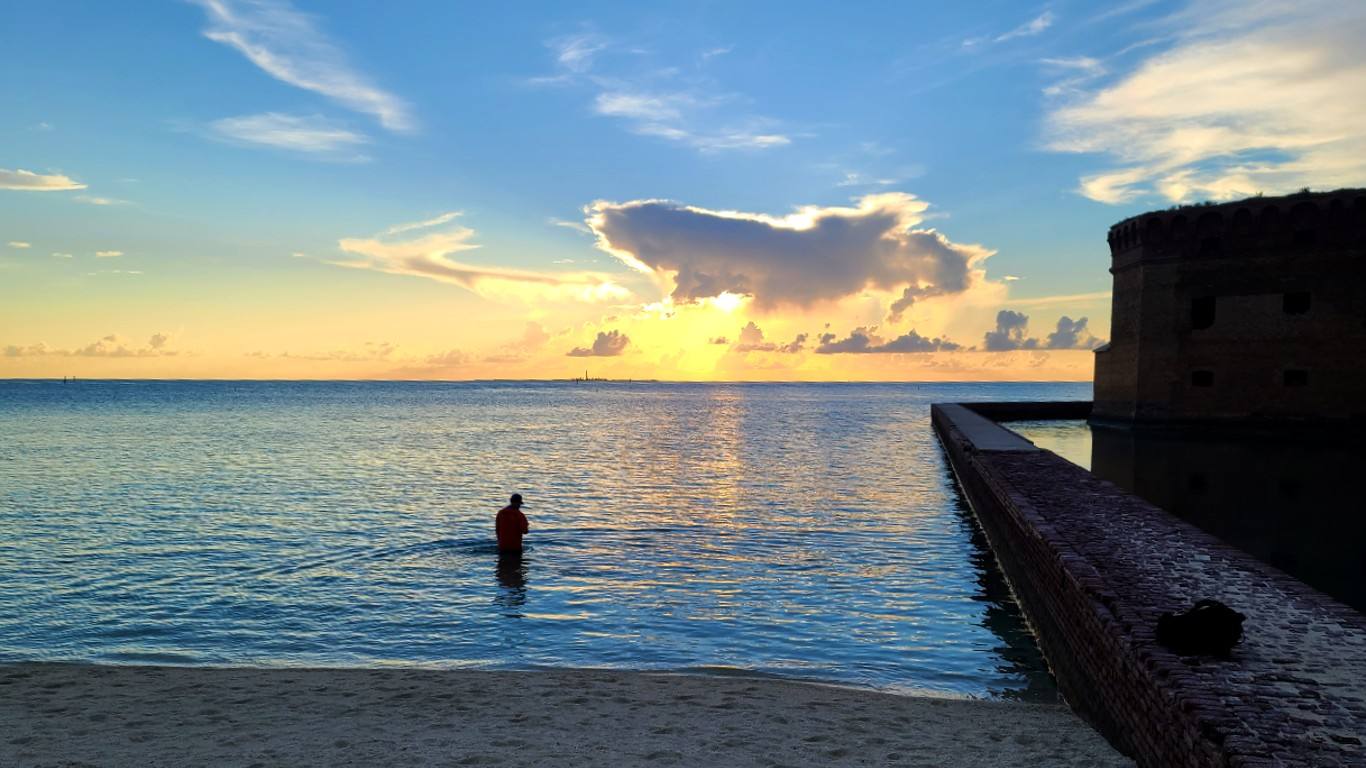
Seventy miles west of Key West, Fort Jefferson appears on the horizon where a fortress has no business being — sixteen million bricks surrounded by blue water. Most visitors arrive by ferry, tour the fort, and leave that afternoon. A yacht changes the entire experience: stay after the crowds disappear, walk the moat wall in the evening light, swim off Garden Key, then tender back for dinner aboard while the fort sits off the stern. We've done this trip ourselves. Being there after everyone else leaves is the reason we'd go back.
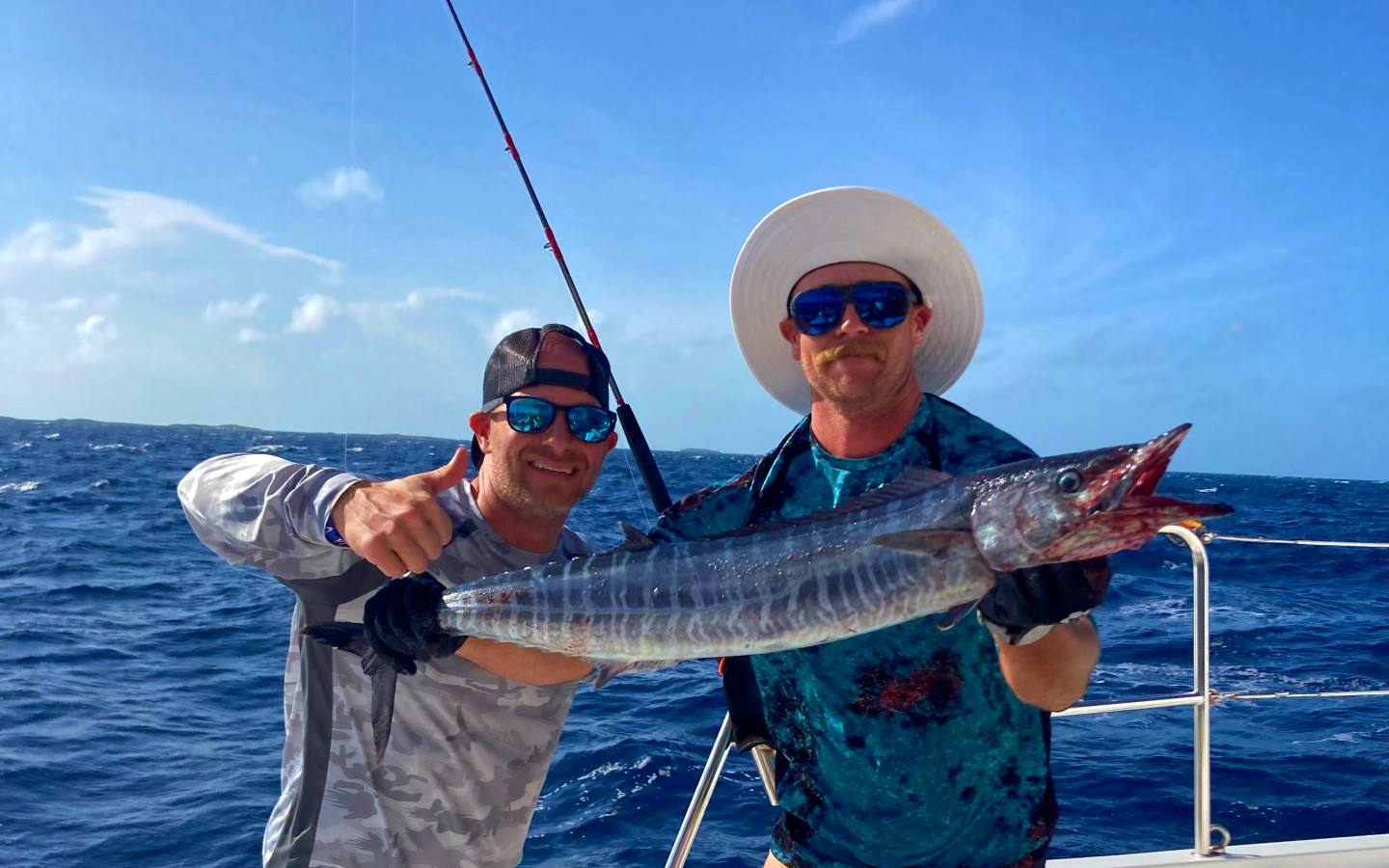
In the Keys, fishing doesn't need its own day on the itinerary. The crew puts lines out while the yacht is already moving — along the reef edge, between islands, or on the offshore run toward the Dry Tortugas. When the reel goes off, the entire boat changes gears. And there are few charter moments better than catching a mahi in the morning and seeing what your chef does with it that evening. Rods, tackle, and licenses ride on the boat; you just take the strike.
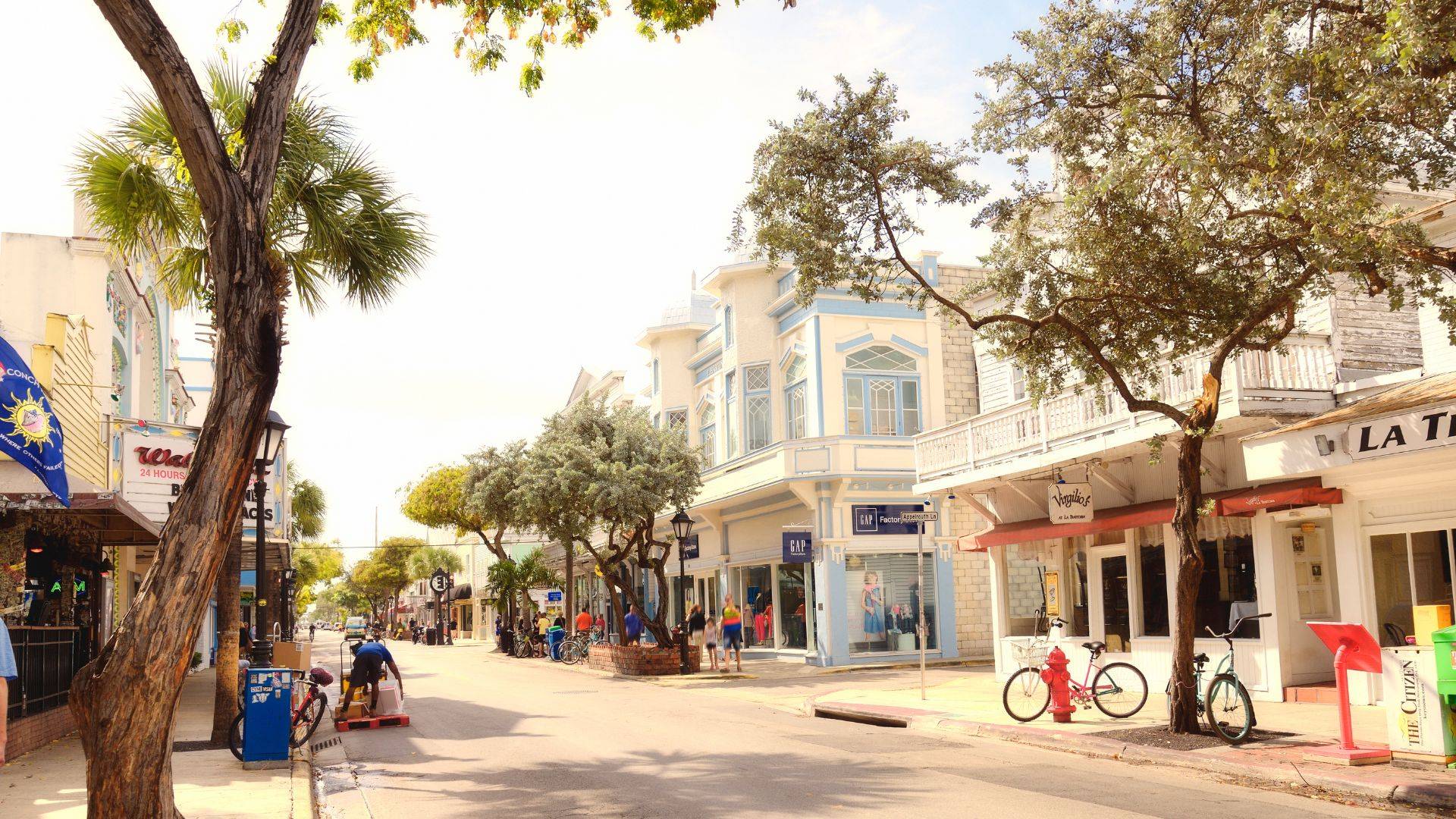
Key West is touristy. It's also one of the most entertaining places in America to finish a week on a yacht. Come back from several days offshore, tie up at the Bight, shower, change, and walk into Old Town — Hemingway's house, Mallory Square at sunset, galleries, and Duval Street are all close enough that nobody needs a plan for the whole group. The best part is knowing that when you're done with Key West, you get to go home to the yacht.
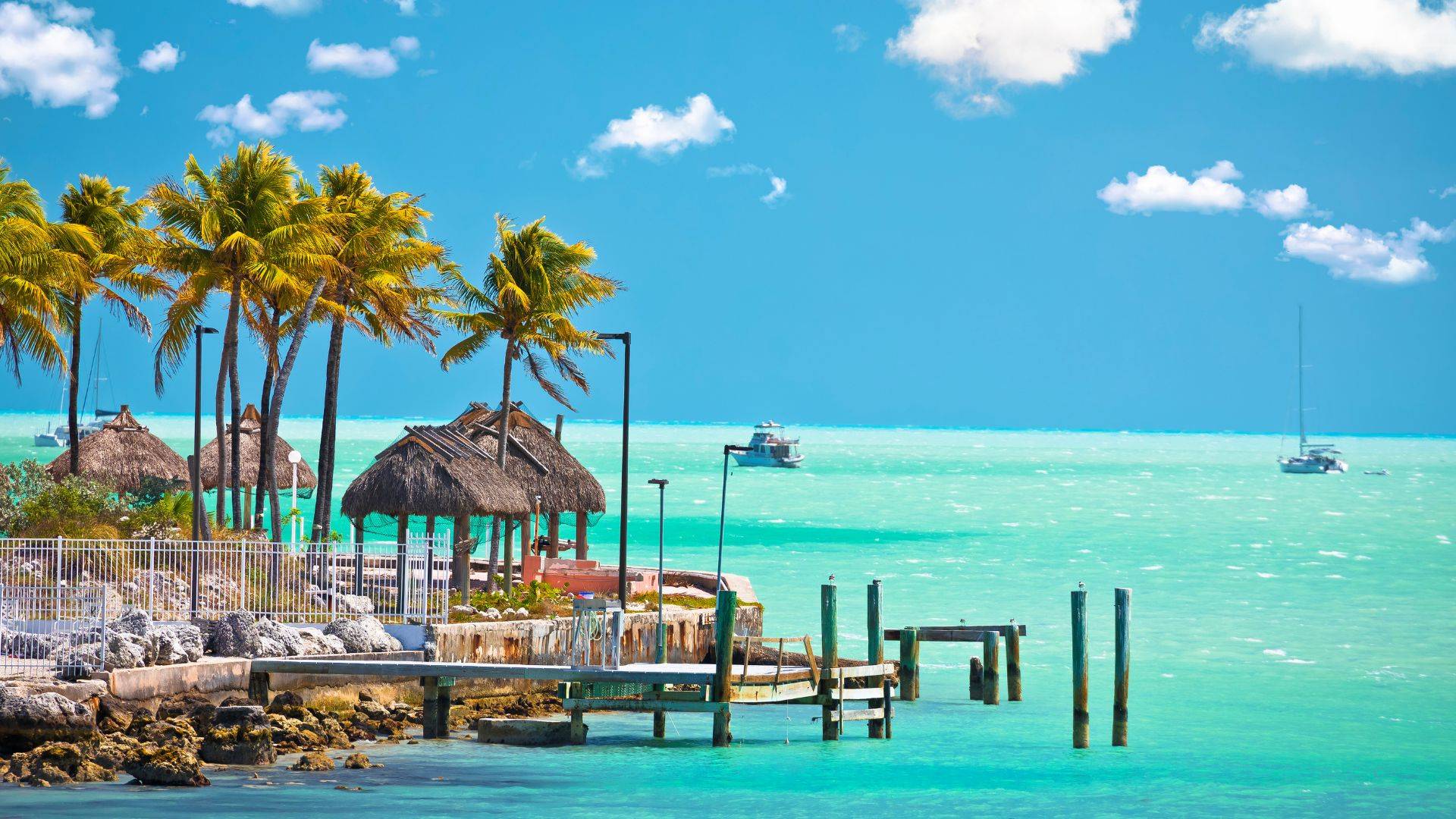
Islamorada and Marathon give the trip its local texture. In Islamorada, serious anglers disappear at dawn with a flats guide while everyone else sleeps in, hits a sandbar, or spends the morning aboard. In Marathon, the Seven Mile Bridge is better from the water, and Sombrero Reef puts one of the chain's best snorkels within easy reach. These aren't glamorous Mediterranean ports — that's part of the appeal. They're fishing towns, marinas, and waterfront restaurants: the Keys as they actually are.
A hand-picked selection of crewed charter yachts for Florida Keys — yachts and crews we know firsthand.
Your week is shaped around your group's interests, the season, and the conditions on the water — your captain tailors the days as they unfold. Treat these itineraries as starting points for inspiration.
Crewed Itinerary · Florida Keys · Round-Trip
If we were choosing one Florida Keys charter, this would be it. Board in Key West, point the bow west, and keep going long after the road has ended — seventy miles offshore, Fort Jefferson rises out of the Gulf, the centerpiece of Dry Tortugas National Park and an arrival that belongs to boats alone.
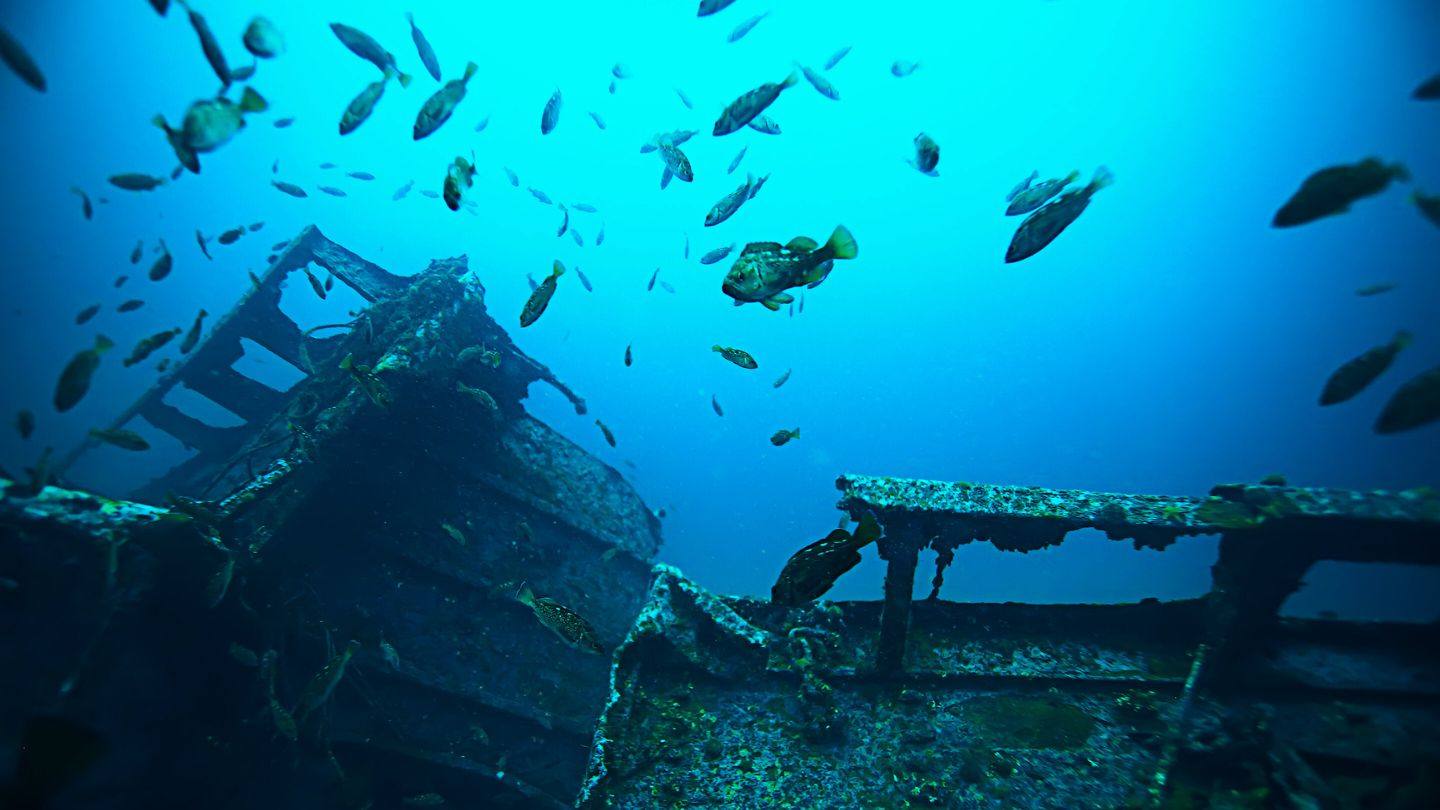
The crossing is part of the trip. Put the fishing lines out, settle into the flybridge, and watch Key West disappear. By afternoon you're anchored off Garden Key. The ferry leaves. You stay. Over the next few days you'll explore the fort, snorkel the Windjammer wreck off Loggerhead Key, and experience a national park after almost everyone else has gone home.
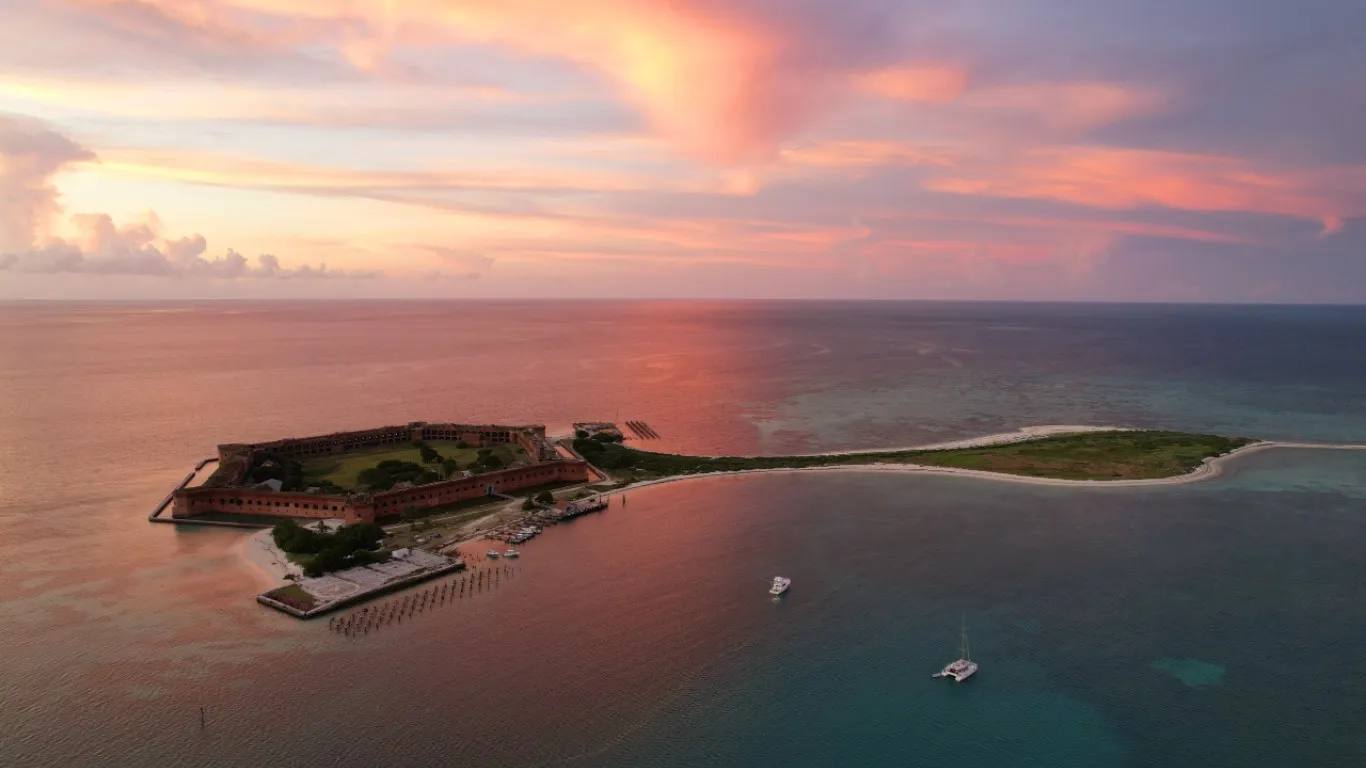
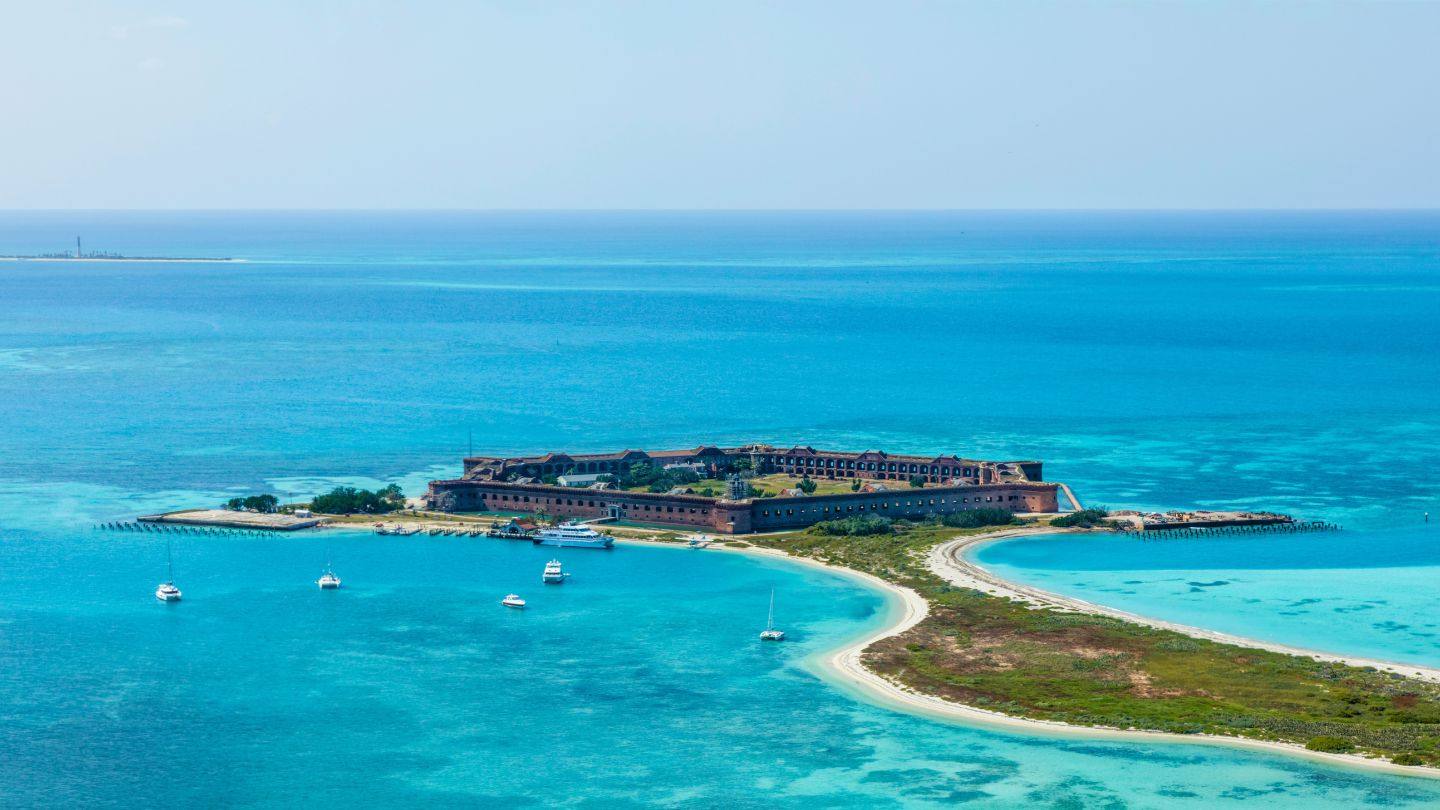
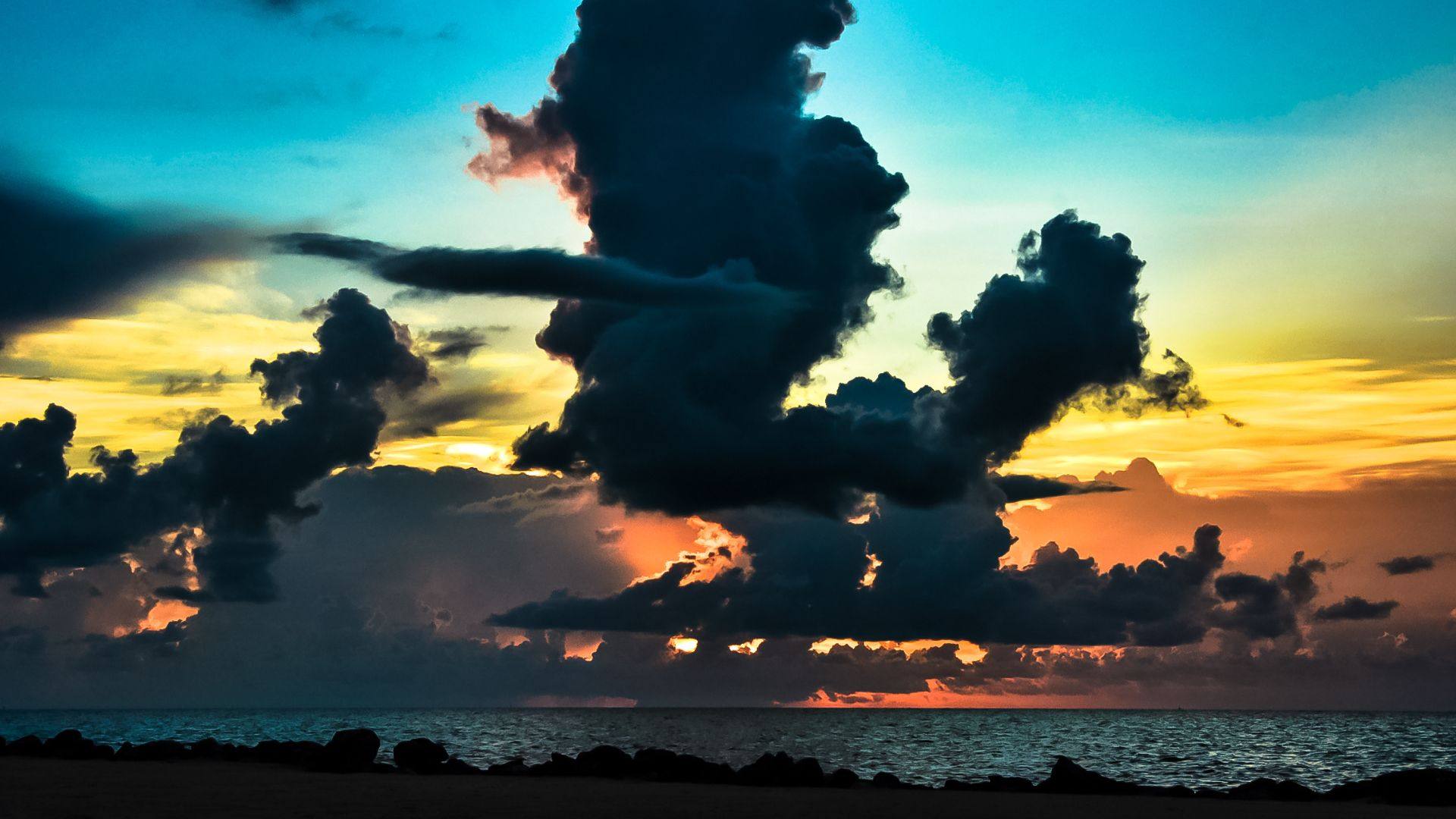
A round trip from Key West to the Dry Tortugas, with time for Fort Jefferson, Loggerhead Key, and the Windjammer wreck before working back east through the Marquesas and Boca Grande Key — with the best trolling water in the continental US under the transom the whole way.
This is the Keys itinerary for groups who care more about the experience than checking off towns: offshore fishing, remote water, American history, and several nights somewhere that can't be reached by car. The crossing is genuinely offshore and weather matters, so the captain builds the week around the best window rather than forcing a schedule. That's not a compromise — it's part of doing this trip properly.
Day 1 of 7 · Key West embark
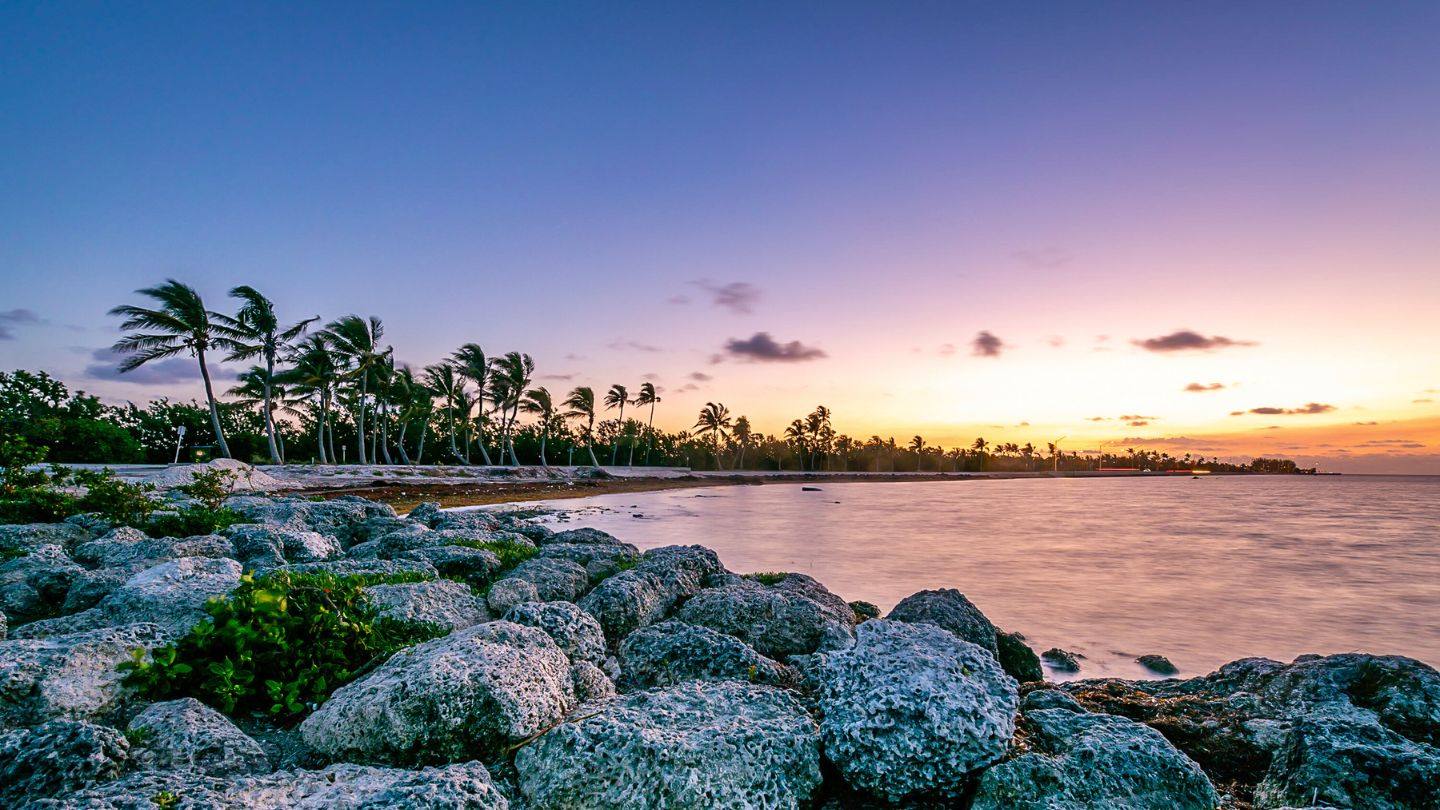
Direct flights land at Key West International minutes from the harbor, and the afternoon belongs to arrival done properly: the crew meets the group at the slip — Key West Bight, Garrison Bight, or Stock Island depending on the boat — with cold drinks and the chart briefing for the week's crossing. Provisioning is the easiest in the fleet's range; the chef has already been to the fishmonger.
The first evening stays in town on purpose. Mallory Square runs its sunset theater, the Bight's dock bars pour within walking distance of the boat, and the captain gives the honest word on the crossing window — which day the run goes, and what the fallback looks like. Dinner ashore or aboard; the week's biggest water comes next.
Day Highlights
Day 2 of 7 · The crossing
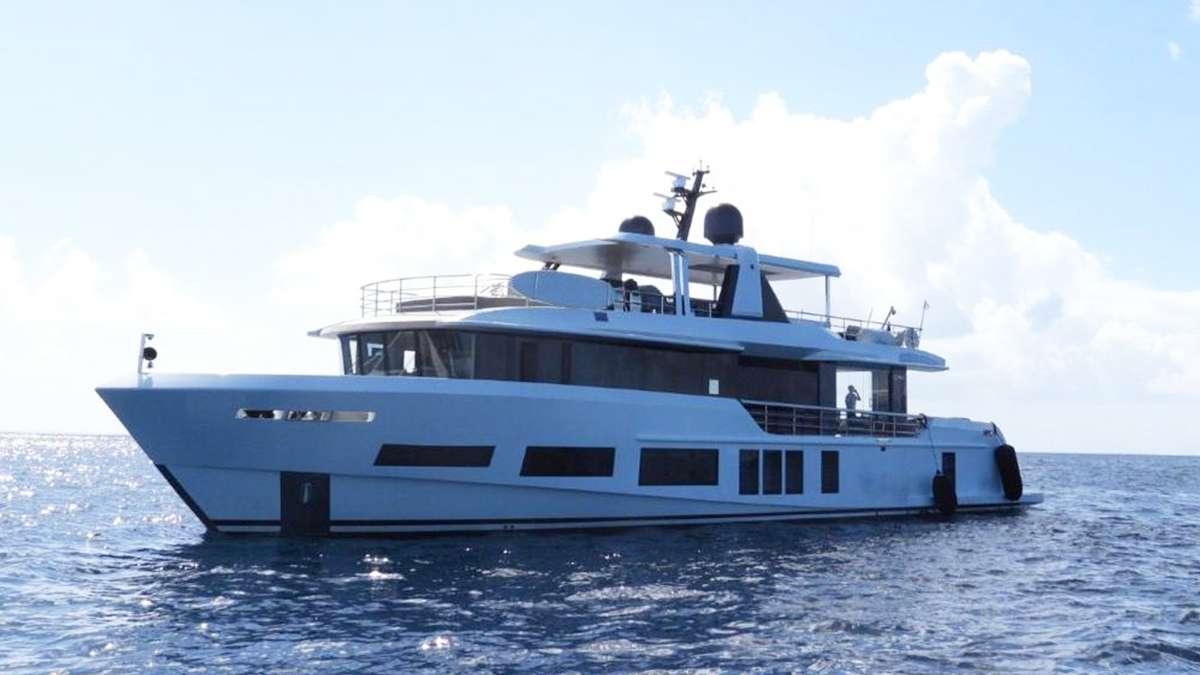
An early start puts the boat past the Marquesas by mid-morning and into the most productive trolling water in the continental US. The crew rigs the spread before the harbor's out of sight — mahi and wahoo work these edges, and a fish boated mid-passage is lunch by the time Fort Jefferson's walls lift over the horizon, which they do from miles out: a brick hexagon rising off the water where nothing should be.
The anchor goes down inside the park's one-mile zone off Garden Key, the captain walks to the dock house for the boat permit, and the afternoon opens on the fort as the ferry loads its last passengers. By four the park is nearly empty. First tour of the ramparts in the gold light, swim off the transom, dinner on deck under more stars than most guests have seen in years.
Day Highlights
Day 3 of 7 · Fort Jefferson
The full day at the fort earns the crossing. Fort Jefferson took three decades of building and was never finished — sixteen million bricks hauled to a sand spit to command the Gulf shipping lanes, garrisoned through the Civil War, and prison afterward to Dr. Samuel Mudd, the man who set John Wilkes Booth's broken leg. The self-guided ramparts walk runs past cannon still on their mounts; the moat wall makes a full circuit of the fortress over open sea.
Between fort sessions the day is water: the snorkeling along the moat wall and the swim beach is the park's easy marquee, with the reef running healthy and shallow. The ferries leave at three, the light goes long, and the second evening at anchor confirms what the first suggested — a national park after hours, five boats swinging in the dark, the lighthouse on Loggerhead blinking three miles west.
Day Highlights
Day 4 of 7 · Loggerhead & the wreck
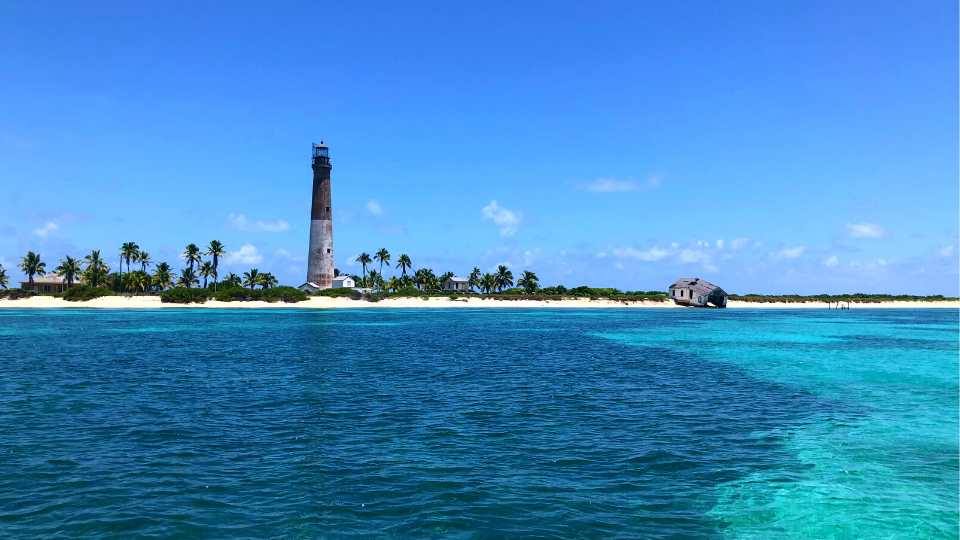
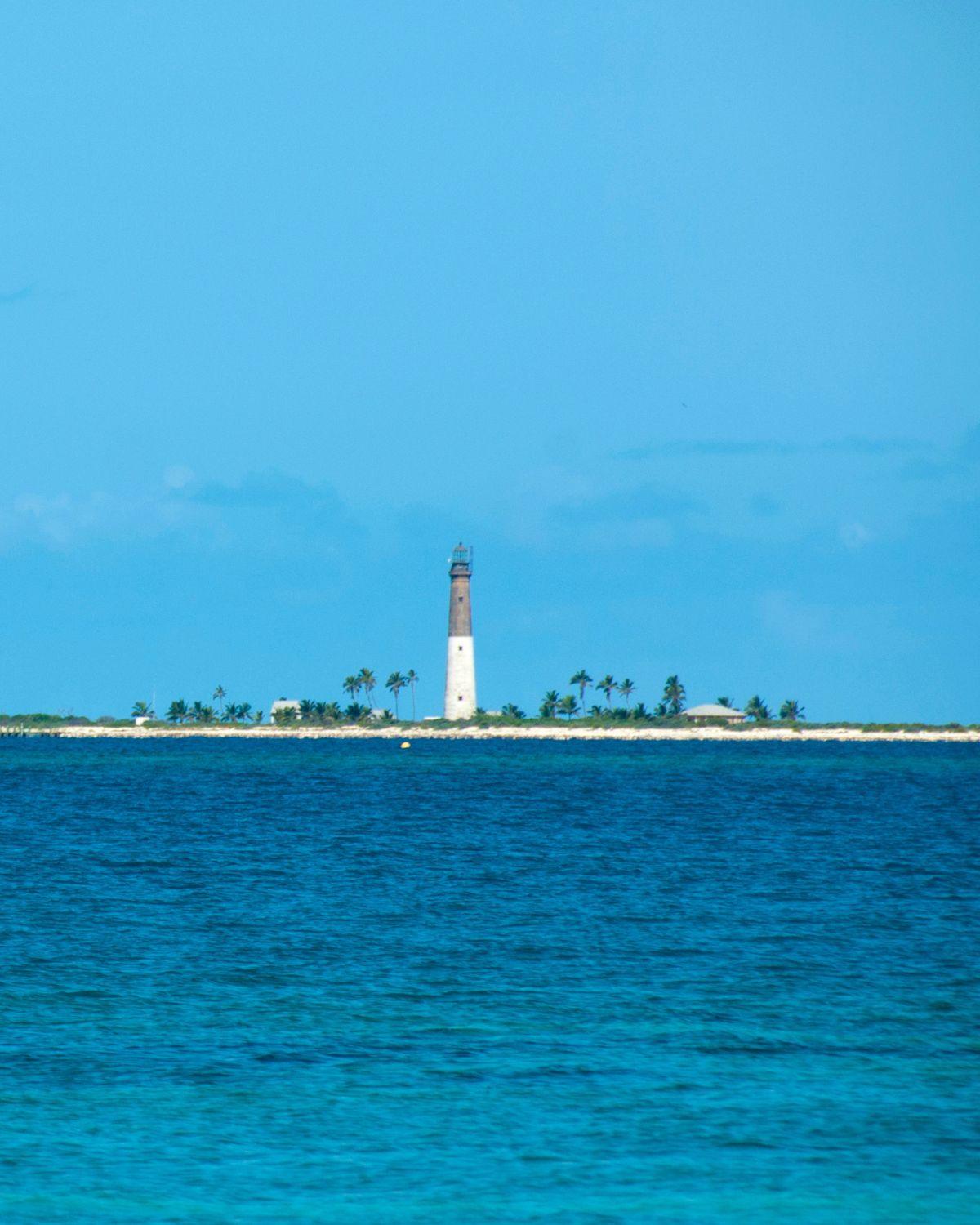
Three miles west of the fort, Loggerhead Key carries the park's other landmark: a working lighthouse over an empty white beach where day visits are welcome and overnights aren't — the tender runs the group across for a morning of the kind of beach that doesn't exist within a hundred miles of a road. The current along the key's west side drifts snorkelers over coral heads in gin-clear water.
The afternoon belongs to the Windjammer wreck, a steel-hulled sailing ship lost on the reef in 1907 and resting in snorkel depth ever since — masts, ribs, and hull plates furred in coral and packed with reef fish. It's the park's best swim and a genuinely great one by any standard. Back to Garden Key for the third and final fort night; the chef has been saving something.
Day Highlights
Day 5 of 7 · East to the Marquesas
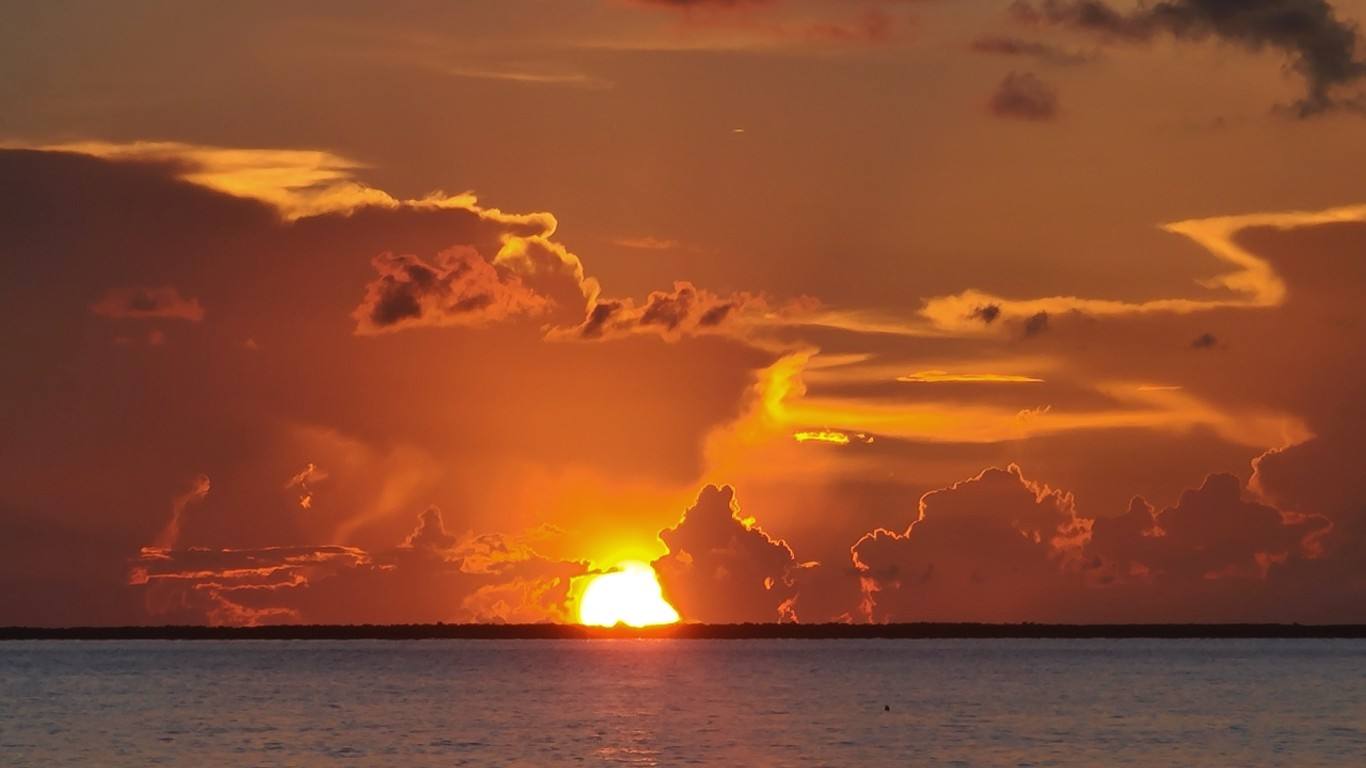
The return east breaks at the Marquesas Keys, the ring of uninhabited mangrove islands that legend ties to Spanish treasure — the Atocha's motherlode came off these shallows, and the treasure-fleet folklore is the genuine article. The trolling on the run over is the trip's second act; the flats around the ring hold bonefish and permit for guests who want the tender and a fly rod.
The anchorage is a lee-side roadstead, picked by the captain for the night's weather, and the evening is the quietest of the week — no fort, no town, no lights, just a mangrove ring between the boat and the Gulf. The kind of stop that doesn't photograph as well as it remembers.
Day Highlights
Day 6 of 7 · Back to the light
The short run east pauses at Boca Grande Key for a final wild-water morning — beach, reef, and flats inside a mangrove ring that marks the lower Keys' last uninhabited stretch. Lunch on deck, one more swim, and then the towers of Key West come up ahead as the boat closes the loop into the harbor by mid-afternoon.
The last full evening is the town's: showers, shore clothes, and Duval Street doing what Duval Street does — with the Bight's quieter oyster-and-beer waterfront as the alternative for groups whose energy runs lower than the street's. The crew handles reservations either way, and the boat is a ten-minute walk from all of it.
Day Highlights
Day 7 of 7 · Key West
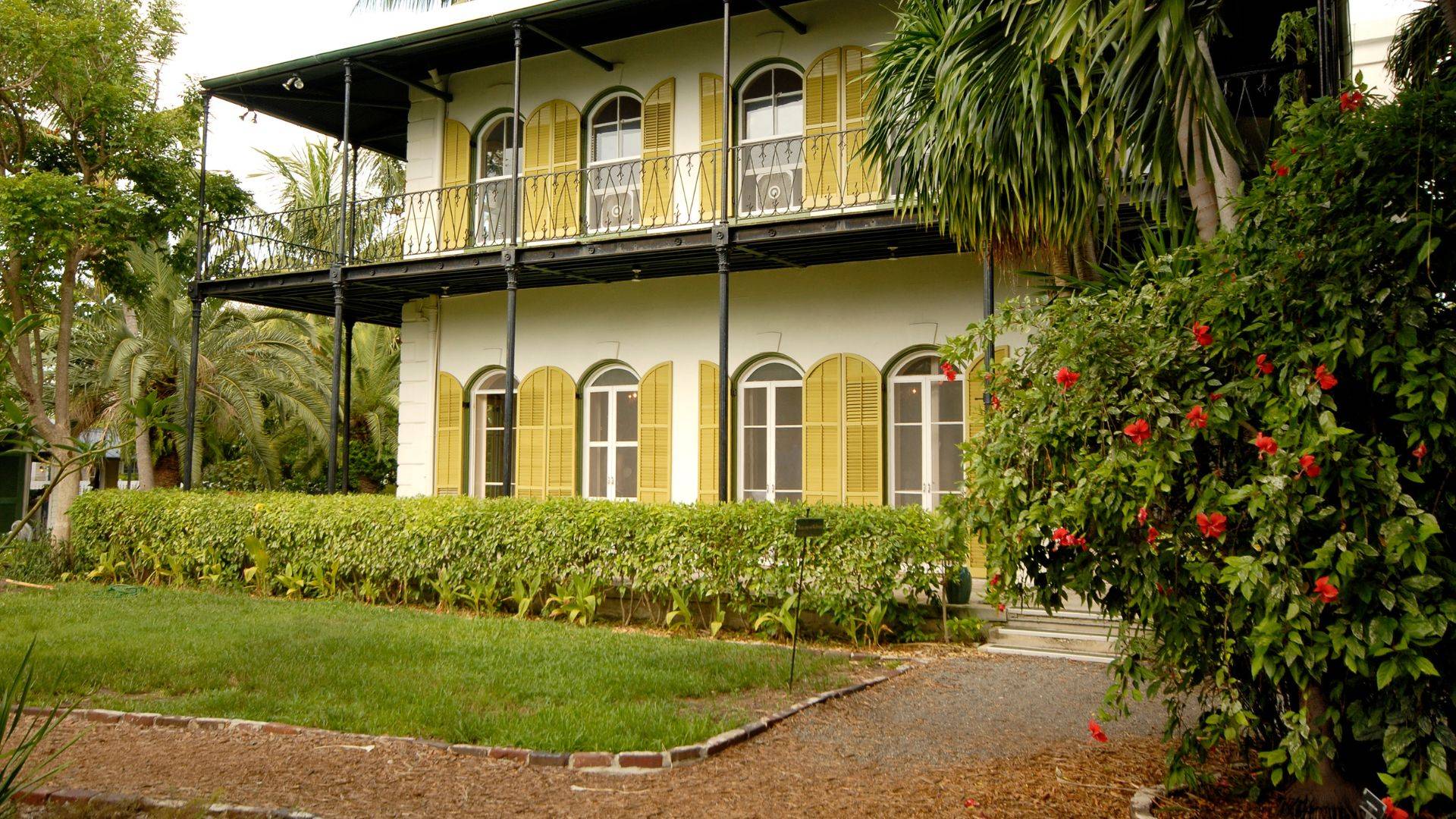
The closing day belongs to the town that anchors the whole chain: the Hemingway Home's six-toed cats and the study where the novels happened, the Custom House museum for the shipwreck-and-salvage version of the island's story, the Southernmost Point line for the obligated, and the galleries and rum bars for everyone else. Key West rewards walking, and everything is inside a mile of the slip.
The final sunset runs from the boat or Mallory Square, whichever the group prefers, with the chef's best dinner held for last. Seven nights, a national park with an empty parking lot, and the rare American trip that ends with salt on the deck and no customs line anywhere in the memory.
Day Highlights
Day 8 · Departure
Breakfast aboard, an unhurried pack, and the ten-minute transfer to Key West International — most groups are airborne before noon. No clearance, no paperwork, no line: the only stamps from this trip are the ones the fort left.
Want to share or come back to this voyage later?
Bookmark this voyage →Crewed Itinerary · Florida Keys · Round-Trip
Ten days gives the full Florida Keys enough room to breathe. Leave Miami behind, work south through Key Largo, Islamorada, and Marathon, spend two nights in Key West — then turn north and experience the chain again without simply retracing the same vacation.
The advantage isn't just seeing more. It's having time: fish Islamorada in one direction and explore the backcountry in the other, snorkel a reef because conditions are perfect that morning rather than because a schedule says you have ninety minutes, and give Key West a full day instead of treating it like a finish line.
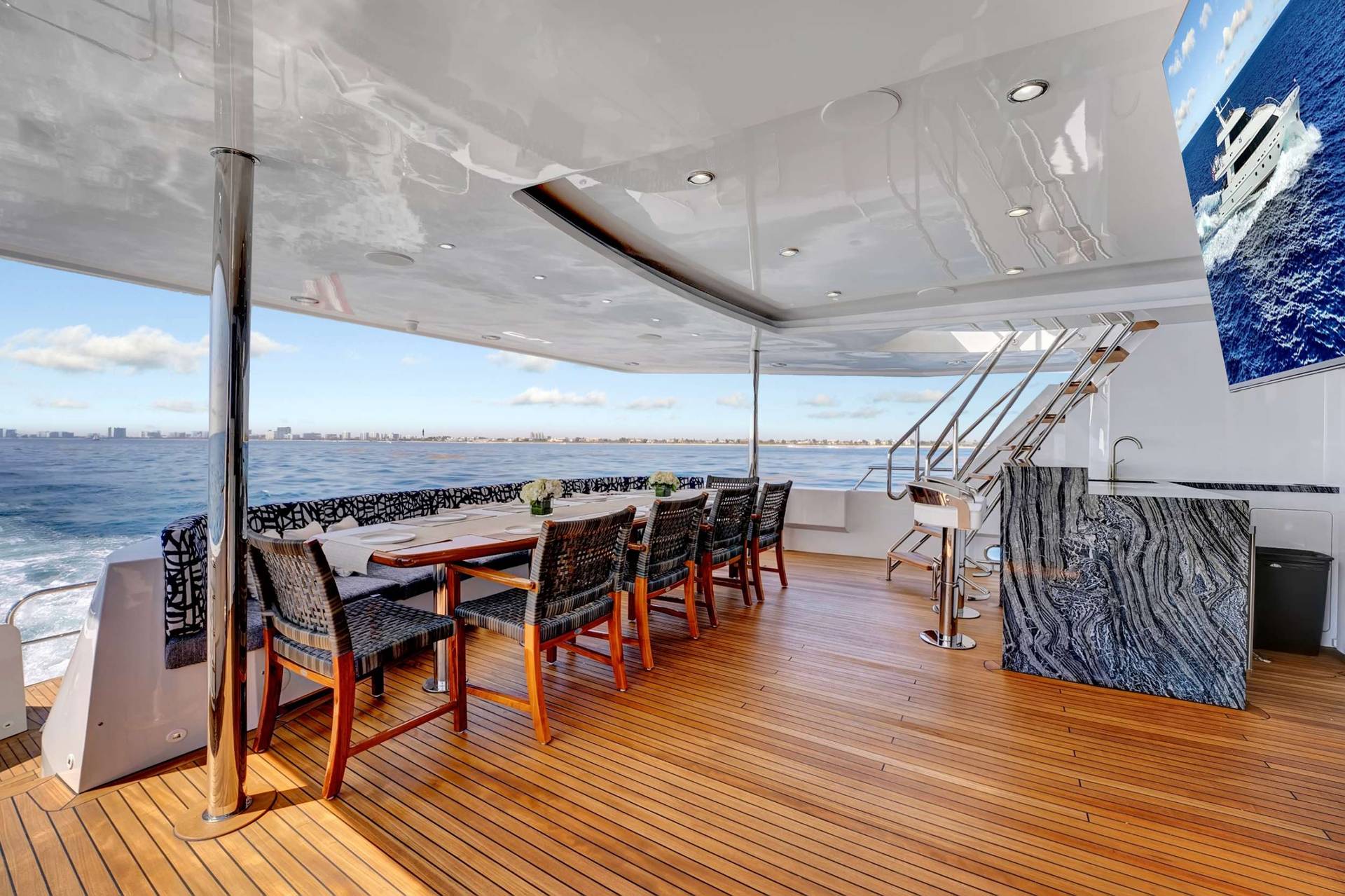
A ten-night round trip from Miami through Key Largo, Islamorada, and Marathon to Key West, then back north through the chain. The yacht covers the mileage in the mornings so the afternoons belong to reefs, fishing, sandbars, and time ashore — with marina berths throughout, which is exactly what you want on this coastline.
Best for groups who want the whole Keys without a one-way repositioning charge — and who would rather give the trip enough time than turn a private yacht vacation into a race down the coast. Motor yacht only: two of these legs stretch past five hours at sailing speed, and the ten-day pacing exists precisely so no day feels like a delivery.
Day 1 of 10 · Miami embark
Board at the Government Cut or Miami Beach marinas — under an hour from either airport — with the crew dockside and ten days of provisioning already struck below. The shakedown afternoon runs the skyline and Biscayne Bay, and the chart briefing lays out the shape of the thing: south for five days, the turn at Key West, and a northbound return that keeps what the southbound teased.
Dinner aboard against the lit skyline. The chain starts at breakfast.
Day Highlights
Day 2 of 10 · Southbound
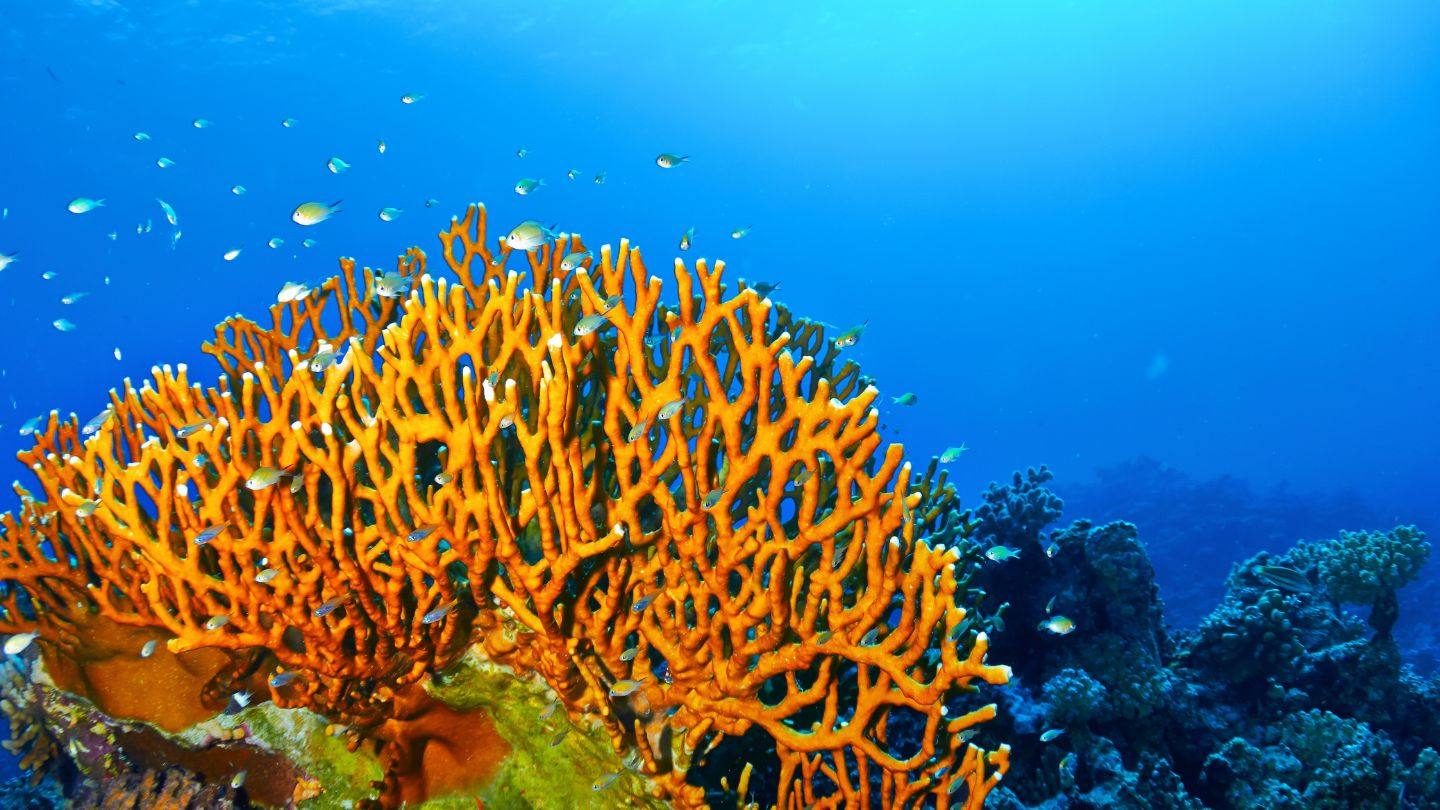
The longest leg of the entire ten days goes first and still finishes by lunch: forty-four miles down Hawk Channel with the reef line coloring the water to starboard and the first lines out as the depth breaks. Key Largo's marine-sanctuary reef sits minutes off the marina, and the afternoon belongs to it.
First slip of the chain, first conch fritters, first of many marina evenings where the fleet's day filters down the dock in fish stories.
Day Highlights
Day 3 of 10 · The capital
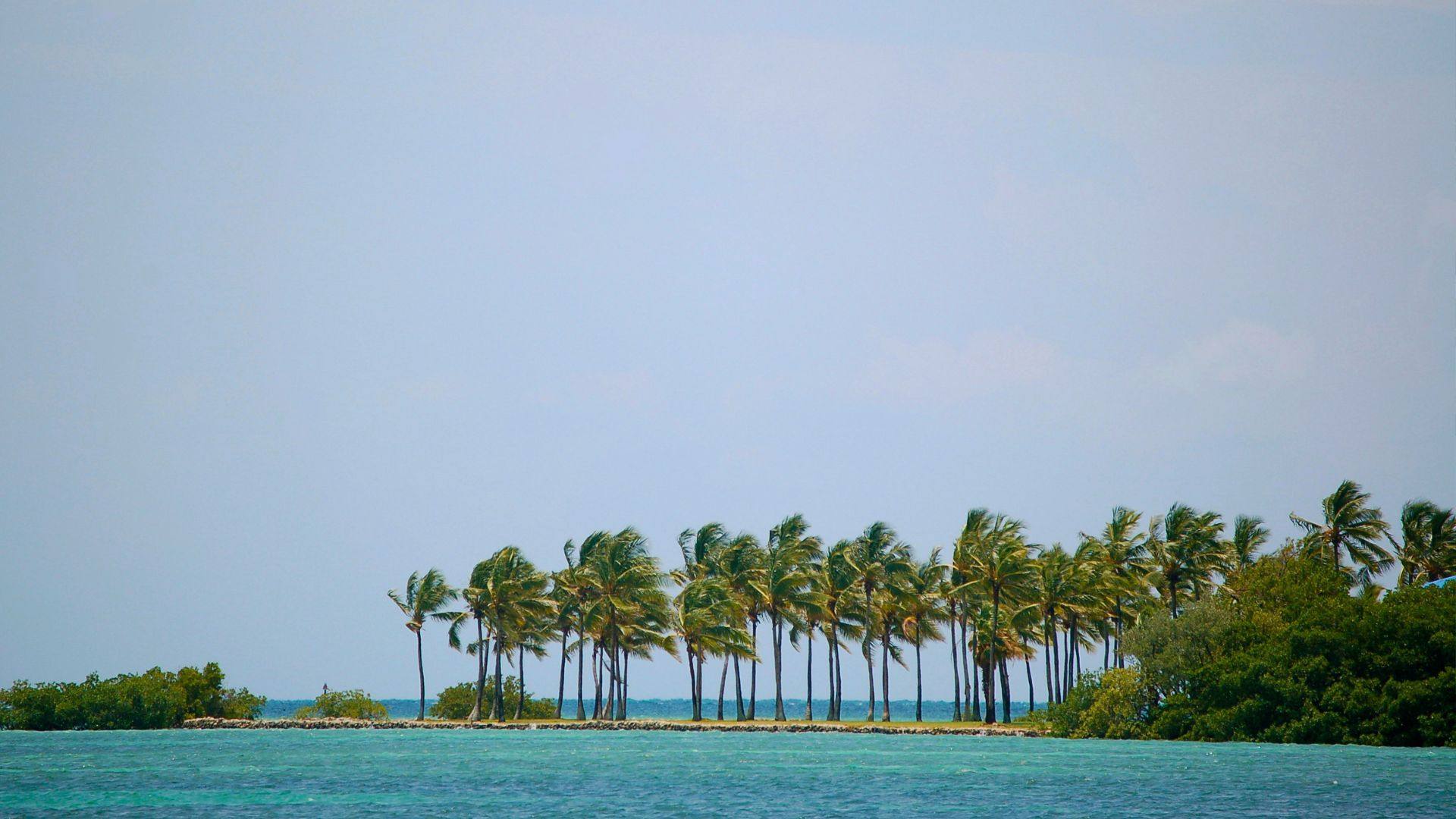
An hour's hop opens a full day in the sport-fishing capital: flats skiffs into the backcountry, the offshore fleet to the hump, or the yacht's own cockpit settling the question directly. The marina scales adjudicate at five o'clock.
Non-anglers get the sandbars — miles of knee-deep bay-side warmth — and everyone gets the Islamorada dinner ritual: the day's catch handed across the dock to a kitchen that knows what to do with it.
Day Highlights
Day 4 of 10 · The middle chain
Two hours south through the counting-down bridges to the chain's working middle. Marathon does boatyards and fish houses where Key West does costume, and its headline is best seen exactly the way you're seeing it: the Seven Mile Bridge from the water, from a flybridge, at whatever speed makes the photographer happy.
Sombrero Reef fills the snorkel slot, the Turtle Hospital covers the families, and the slip takes the boat for the night before the run to the turn.
Day Highlights
Day 5 of 10 · To the turn
The second forty-mile leg runs the chain's emptiest miles — wildlife-refuge backcountry, thinning traffic, a final southbound trolling pass — and lands Key West by early afternoon, timed so the group hits Mallory Square's sunset theater on arrival night.
Slip secured for two nights. The turn of the trip gets the town the chain builds toward, starting with Duval Street's opening arguments.
Day Highlights
Day 6 of 10 · The turn
The full town day: Hemingway's house and its six-toed staff, the Custom House's salvage-fortune history, the Bight's shrimp-boat waterfront, the galleries and rum rooms of Old Town — all on foot, all inside a mile of the slip. This is the day the ten-day format buys that the seven-day version can't.
The tender adds a harbor-sandbar swim for the restless, and the evening splits between the chef's mid-trip showcase and the town's best rooms. Halfway, and nothing has been rushed yet.
Day Highlights
Day 7 of 10 · Northbound
Northbound with the light reversed and the spread rigged for the second pass — the crew fishes the return smarter for what the southbound taught. The lower chain runs by at the same unhurried three hours, and Marathon takes the boat back for a night aimed at whatever the first visit skipped: Pigeon Key under the old bridge, a second reef site, or nothing but the flybridge and a book.
The northbound's quiet argument starts here: weekday-pace towns, no arrival logistics, the chain already familiar enough to enjoy carelessly.
Day Highlights
Day 8 of 10 · The backcountry day
The return's Islamorada day flips to the bay side: mangrove backcountry by tender, the sandbars at the tide the first pass missed, and for the anglers the flats at dawn — the skiff-and-fly-rod version of the town that the offshore day southbound didn't touch.
It's the ten-day format's thesis in one stop: the same town, twice, without repeating an hour of it. Marina dinner where they already know the group's order.
Day Highlights
Day 9 of 10 · Last full day
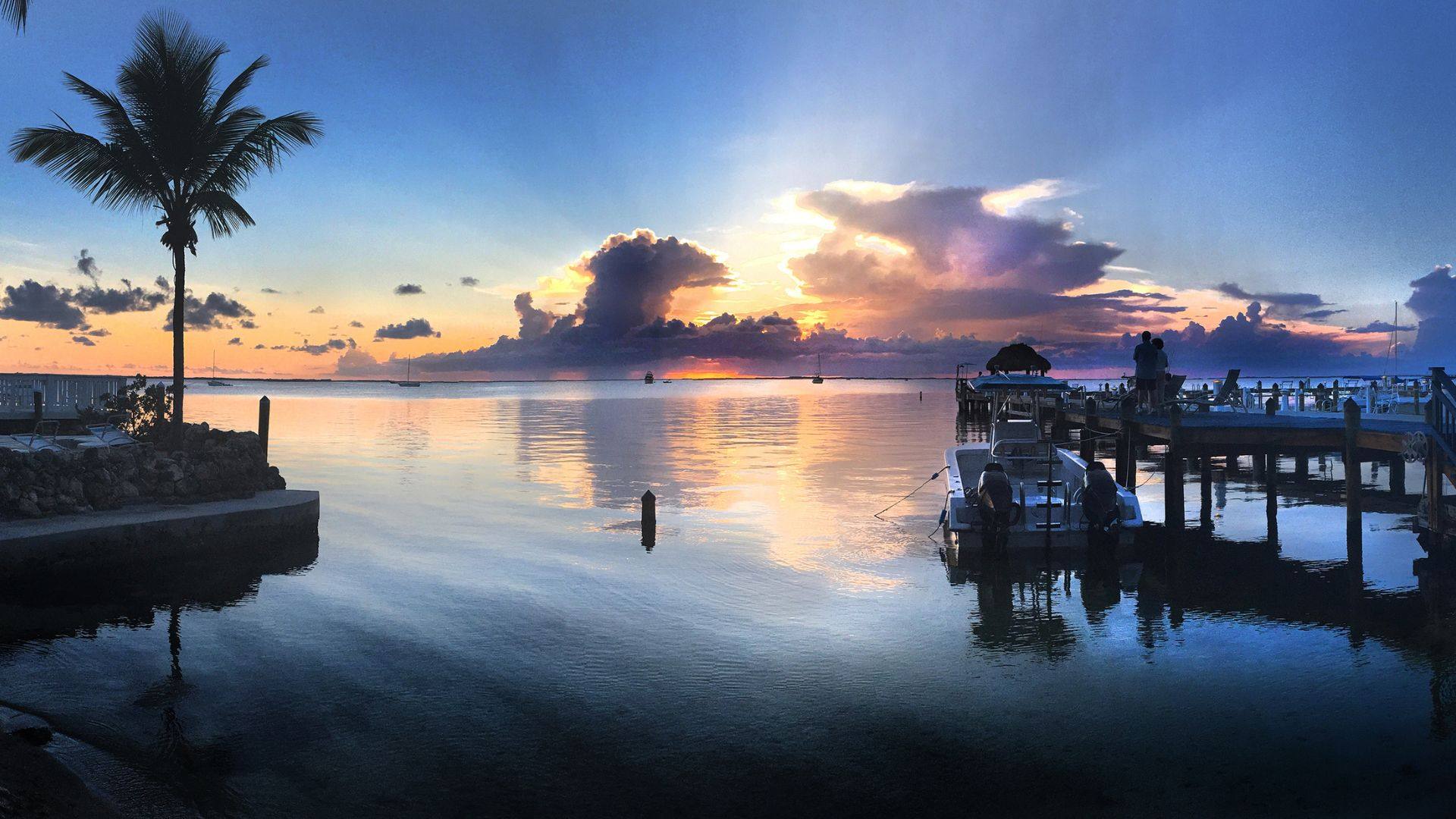
The hour north lands the last full day where the chain started, with the reef choice made by conditions instead of schedule — the site the divemaster actually recommends today, not the one the itinerary guessed at last week. The afternoon holds the trip's final swim, final troll, final sandbar hour, in whatever ratio the group votes.
The chef's saved-best closes the evening, and the crew quietly stages the turnaround while the dock lights come on. One easy leg left.
Day Highlights
Day 10 of 10 · The run home
The morning retraces the first leg in reverse — Hawk Channel north, the skyline lifting ahead, under three hours to the slip. Disembark by early afternoon, under an hour to either airport, with 260 miles of chain run at a pace that never once felt like delivery.
Ten days, one boat, both directions, and the whole argument for doing the Keys properly instead of quickly.
Want to share or come back to this voyage later?
Bookmark this voyage →Crewed Itinerary · Florida Keys · One-Way
If you have seven nights and want to see the entire chain, this is the version we'd book. Leave Miami's skyline behind and work south through Key Largo, Islamorada, and Marathon — with Key West waiting at the end instead of turning the yacht around halfway through your vacation.
A motor yacht makes the route work. Mornings cover the distance; afternoons belong to the reason you came — reef snorkeling, fishing, sandbars, the Seven Mile Bridge from the flybridge, and eventually Duval Street. When the week ends, fly home from Key West and let the yacht worry about getting back to Miami.
The full island chain in one direction: Miami to Key Largo, Islamorada, Marathon, and Key West. No backtracking, no repeated stops, and no need to spend the last days of the charter undoing distance you've already covered.
Best for first-time Keys guests and groups who want variety over routine. The trade-off is a repositioning charge for the yacht's return to Miami — we show it next to the base rate before you decide, because the number we care about is the real trip cost.
Day 1 of 7 · Miami embark
Embarkation runs from the marinas around Government Cut and Miami Beach — thirty to forty-five minutes from MIA or FLL, with the crew waiting dockside and the provisioning already struck below. The first afternoon is a shakedown cruise past the skyline and the cruise-ship row, a swim off Biscayne Bay's flats if the group wants water immediately, and the chart briefing for the run south.
Dinner is Miami's one contribution to the week — aboard against the lit skyline, or ashore at whatever table the group's tastes demand while the city is still within tender range. Tomorrow the chain begins.
Day Highlights
Day 2 of 7 · Into the chain
The longest leg of the week goes first: forty-four miles south, under three hours on the flybridge, with Biscayne Bay narrowing into the start of Hawk Channel and the reef line picking up the water's color to starboard. Lines go out as the depth changes — the reef edge works from the first morning.
Key Largo announces the Keys with its best asset underwater: the marine-sanctuary reefs sit minutes off the marina, and the afternoon goes to snorkeling or a guided dive on coral heads that made this town the self-declared dive capital of the world. First marina night of the chain; conch fritters non-optional.
Day Highlights
Day 3 of 7 · The short hop
A one-hour hop opens a full Islamorada day. The town calls itself the sport-fishing capital of the world and staffs the claim: flats skiffs pole the backcountry for bonefish and tarpon, the offshore fleet works the hump for tuna and mahi, and the marina scales weigh the evidence nightly. The crew books whichever version fits the group — or rigs the yacht's own cockpit and settles it directly.
For the non-fishing contingent the day is sandbars and swim platforms: the flats north of the chain run knee-deep and bathwater-warm for miles. Evening at a marina restaurant where the kitchen cooks the afternoon's catch — the Keys' oldest and best transaction.
Day Highlights
Day 4 of 7 · The middle chain
Two easy hours south, the bridges counting down overhead — forty-two of them stitch the chain together, and the biggest waits at the end of the day's run. Marathon is the Keys' working middle: a boatyard-and-fish-house town without Key West's costume, anchored by Boot Key Harbor's liveaboard fleet and the approach to the Seven Mile Bridge, which is exactly as photogenic from a flybridge as advertised.
The afternoon offers the Turtle Hospital for families, the bridge run for the photographers, and Sombrero Reef — one of the chain's best snorkel sites — for everyone else. Night in the slip; the lower Keys open tomorrow.
Day Highlights
Day 5 of 7 · The lower chain
The second of the week's two long legs, and the chain's loveliest: the lower Keys thin out into mangrove backcountry and National-Wildlife-Refuge water, the traffic disappears, and the reef edge keeps the lines honest for a final trolling pass. Under three hours of running lands the boat in Key West by early afternoon.
Arrival timing is deliberate — slip secured, showers taken, and the group on Mallory Square for the sunset celebration their first evening, with Duval Street's opening arguments afterward. Two nights here; the town gets the time it deserves.
Day Highlights
Day 6 of 7 · Key West
A full Key West day, on foot: the Hemingway Home and its six-toed cats, the Custom House's shipwreck-salvage history, the Bight's working waterfront, and the galleries, rum bars, and pastel streets that make the town the chain's whole closing argument. Everything sits inside a mile of the slip.
Groups with energy for one more swim get it — the tender runs to the harbor sandbars — and the last dinner splits between the chef's saved-best aboard and the town's white-tablecloth rooms. The captain confirms morning transfer timing; EYW is ten minutes away.
Day Highlights
Day 7 · Departure
Breakfast aboard and a ten-minute taxi to Key West International — no backtracking, no delivery run, no customs. The boat heads home on the repositioning leg without you; the whole chain stays run-once behind the stern. The only decision left is which of the week's two long-leg mornings gets retold first.
Want to share or come back to this voyage later?
Bookmark this voyage →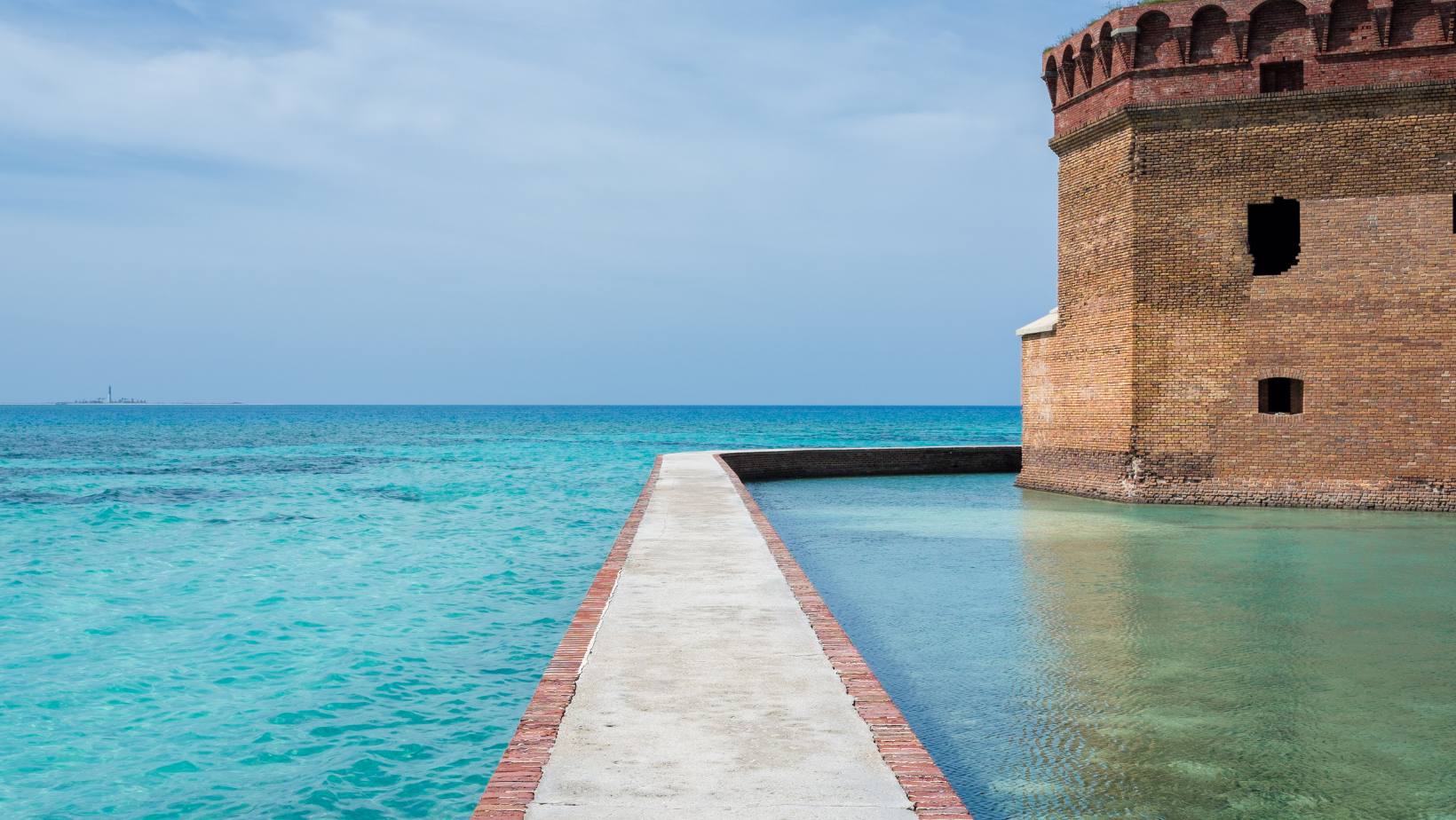
When to go, what it costs, and how to get there — the practical answers guests ask before booking a Florida Keys crewed yacht charter.
December through April brings the classic South Florida winter: warm days, low humidity, and some of the year's best fishing. It also brings periodic cold fronts — which is why your captain watches the forecast and moves the yacht on the settled days rather than treating the itinerary like a fixed schedule. For you, the upside is simple: escape winter at home, spend the days on the water, and let someone else worry about the weather window.
If your dates are flexible, we'd look hard at May, June, and November. The crowds thin, rates soften, and the water between Key West and the Dry Tortugas is often at its most settled of the year. For the offshore itinerary in particular, these are the dates we'd be happiest to book ourselves.
Summer is hotter and more humid, the wind often goes slack unless a tropical system is moving, and the whole season sits inside Atlantic hurricane season — so part of the fleet repositions and availability thins. Summer charters absolutely happen; they just deserve a straight conversation up front about the heat, hurricane-season contract terms, and whether your group would be happier in a different month. If the honest answer is book November instead, that's what we'll tell you.
$25,000–$150,000 per week
Florida Keys crewed motor yachts typically start around $25,000 per week and climb well past $150,000 for the largest boats. Most run plus-expenses: the base rate covers the yacht and crew, while food, beverages, fuel, dockage, and marina nights are funded through an Advance Provisioning Allowance and reconciled at trip end, with crew gratuity customary at fifteen to twenty percent. The number we care about is the real trip cost. Fuel matters on a route covering this much water; marina nights matter; a one-way adds repositioning. When we send options, we'll show you the yacht, the expected extras, and what you're actually getting for the difference between a $40,000 boat and a $100,000 one. And unlike the Bahamas, where a 14% cruising tax rides on every charter, the Keys add no charter tax at all.
About chartering in the Florida Keys.
Field-tested guides, itineraries, and tips — written from years of chartering these waters.

Para ayudarte a armar tu lista de lecturas de verano para esos momentos de relax en la playa, comparto algunos libros que recomiendo mucho.

Nuestra guía de pesca en velero tiene todo lo que necesitás para pescar peces serios desde tu velero. Aparejos, técnicas y más.
We charter across the United States. Here are some other excellent alternatives.

Newport's Gilded Age harbor as the base, Martha's Vineyard and Nantucket a day's hop east, and the Maine coast running Down East to Acadia. New England is the classic American summer taken by water — large motor yachts and classic sailing yachts, short passages, harbor towns that have hosted summer people for a century and a half, and no passport required.

Glacier-fronting anchorages in Tracy Arm, humpback bubble-nets in Frederick Sound, brown bears at the salmon run, and a thousand-foot-waterfall coast in Misty Fjords — the Inside Passage run at twelve knots with a captain who plans the next anchorage around the weather. The crewed-charter version of an Alaska summer — a small fleet of explorer motor yachts runs it, and almost nobody knows.
Fill out our quick form and we'll dive into your unique preferences — from adventure-packed itineraries to pampered escapes. Whether you're a seasoned voyager or new to charters, we'll tailor recommendations just for you.
With over fifteen years of experience, we'll match you with the yacht that fits your style, group, and itinerary. We work directly with the captains and crews across our list — so the recommendation is built around the right boat-and-crew fit for your week, not whatever's easiest to book.
Once your yacht is booked, we'll take care of logistics: paperwork, reminders, and personalized resources to help you plan. From arrival planning to must-visit spots, we'll make your charter as seamless as it is unforgettable.

¿Qué esperar de un alquiler de yate privado con tripulación?
Conocé qué hace únicos a estos viajes en yate: servicio personalizado, gastronomía gourmet y un sinfín de aventuras y momentos de relax.

¿Cómo es el proceso de reserva?
Nuestro equipo se encarga de todo: desde tu primer consulta hasta que zarpás. Todo fluye de forma simple.

¿Cuánto cuesta un alquiler de yate con tripulación?
Entendé los distintos tipos de precios, lo que está incluido y lo que no.

Logística: planes probados para un inicio sin estrés
Planificá tu llegada con facilidad. Te damos tips sobre vuelos, traslados y todo lo necesario para arrancar relajado.
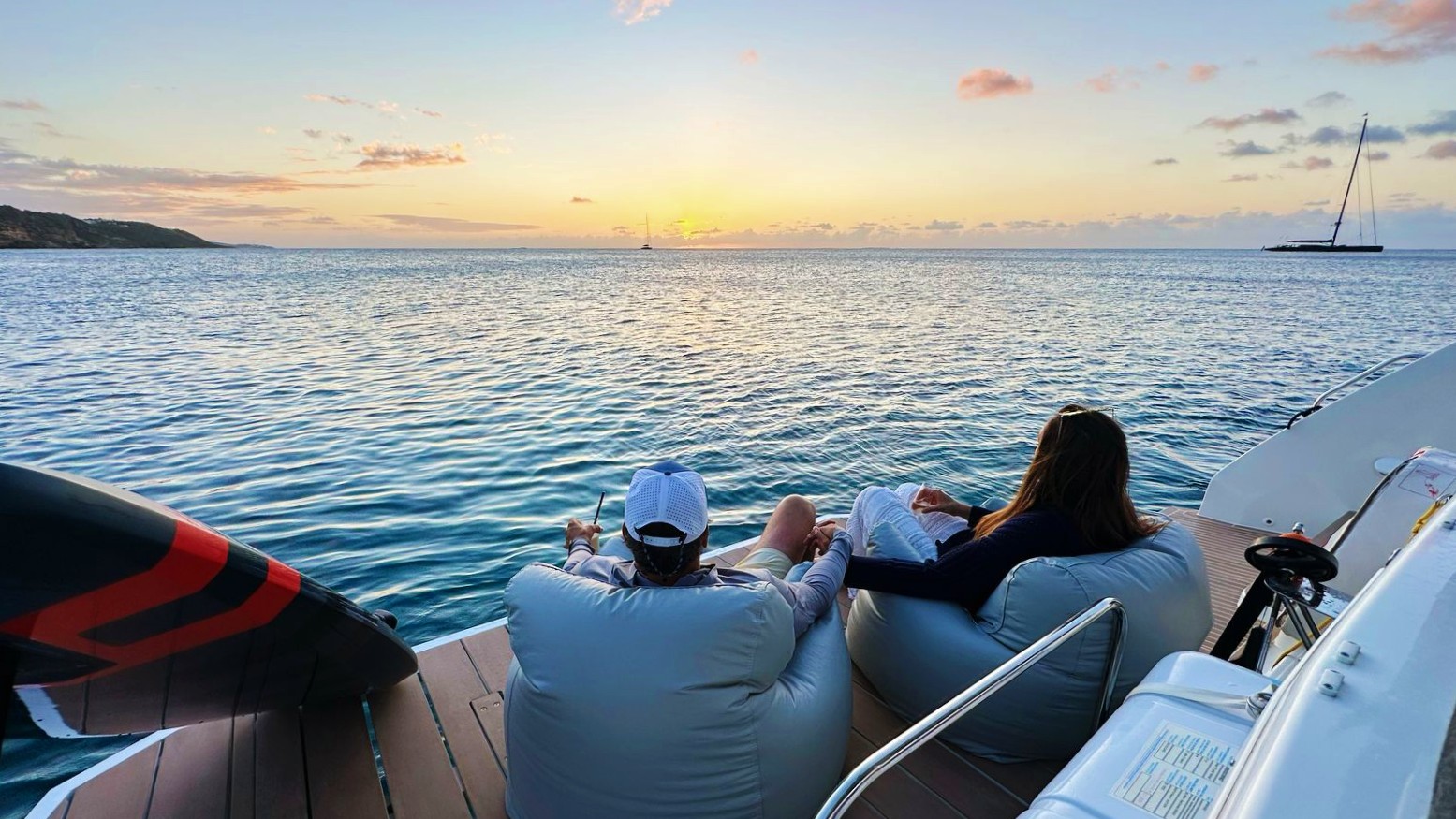
Alquiler de yate de luna de miel
Comience su matrimonio en un yate privado. Explore playas solitarias, gastronomía gourmet y atardeceres inolvidables en el Caribe.
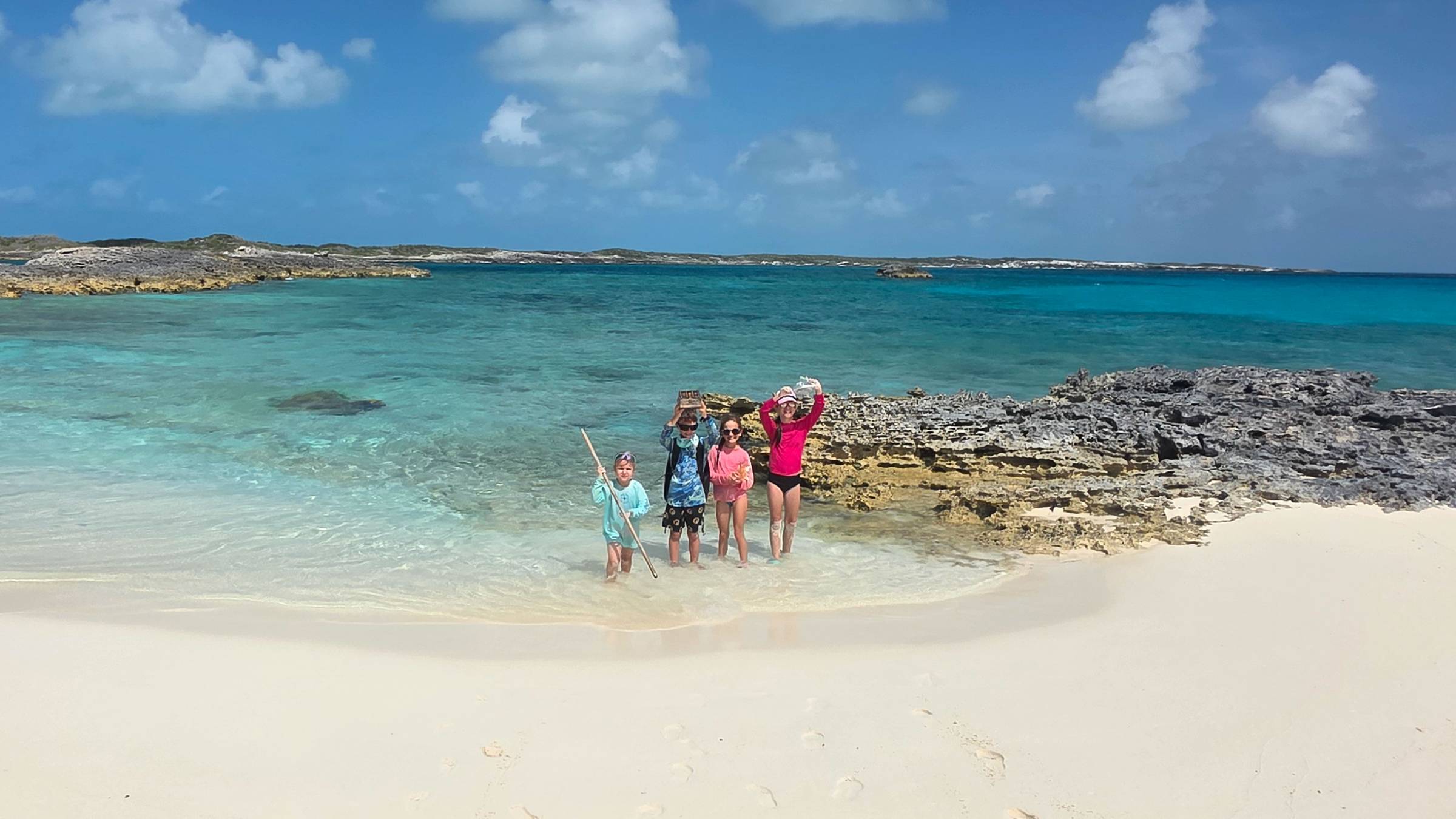
Alquiler de yate familiares
Un alquiler de yate con tripulación es perfecto para familias de todas las edades. Seguro, divertido y con servicio completo — sus hijos nunca lo olvidarán.

Preguntas frecuentes sobre alquileres de yate con tripulación
Obtenga respuestas a las preguntas más comunes sobre alquiler de yate con tripulación, desde precios y propinas hasta qué incluye y qué llevar.

Alquiler de yate con tripulación en las Islas Vírgenes Británicas
Las Islas Vírgenes Británicas son el destino #1 de alquiler de yate con tripulación en el Caribe. Navegaciones cortas, aguas protegidas y bahías de clase mundial.

Guía de Alquiler de Yate con Tripulación en Islas Vírgenes Británicas
Todo lo que necesitás saber antes de tu viaje en yate con tripulación en las Islas Vírgenes Británicas — precios, lista de equipaje, itinerario y cómo llegar.
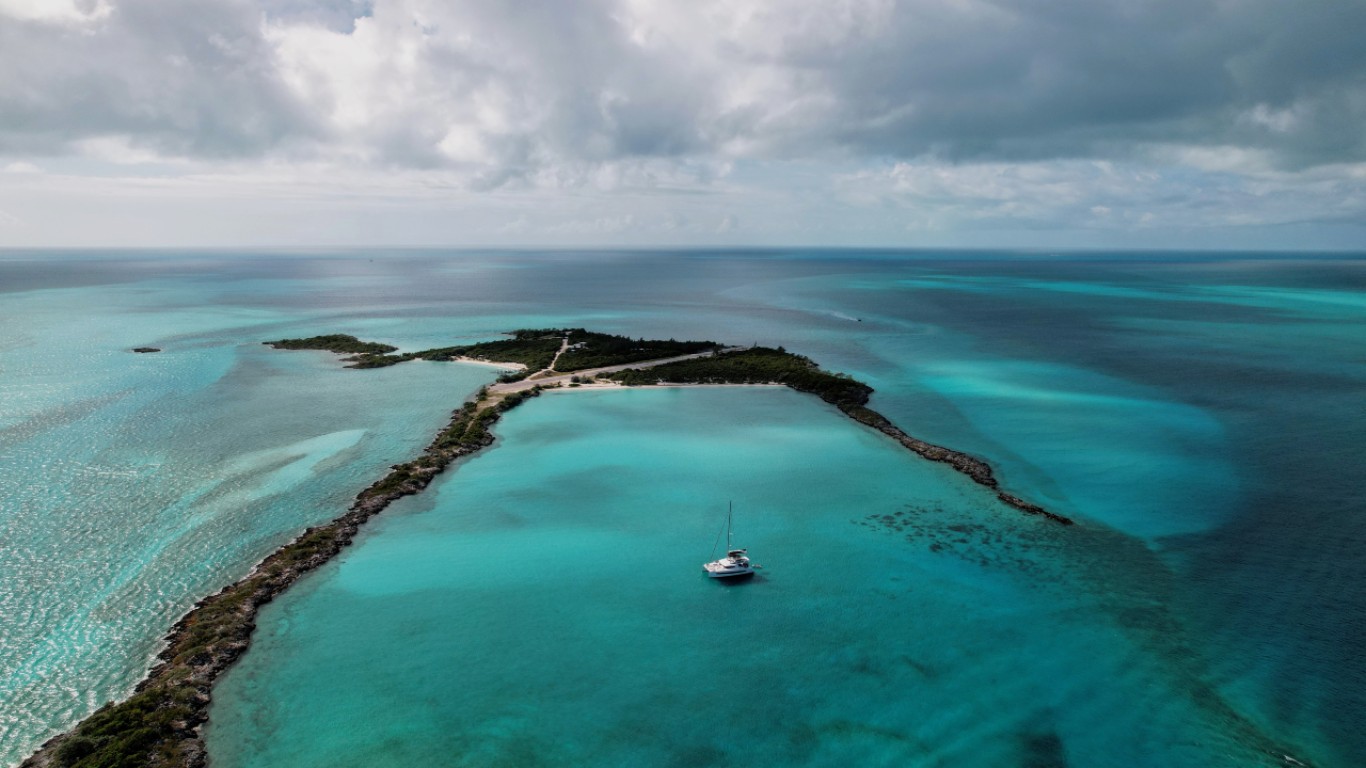
Alquiler de yate con tripulación en las Bahamas
Explore las Exumas en un yate privado con tripulación. Cerdos nadadores, bancos de arena y algunas de las aguas más cristalinas del mundo.
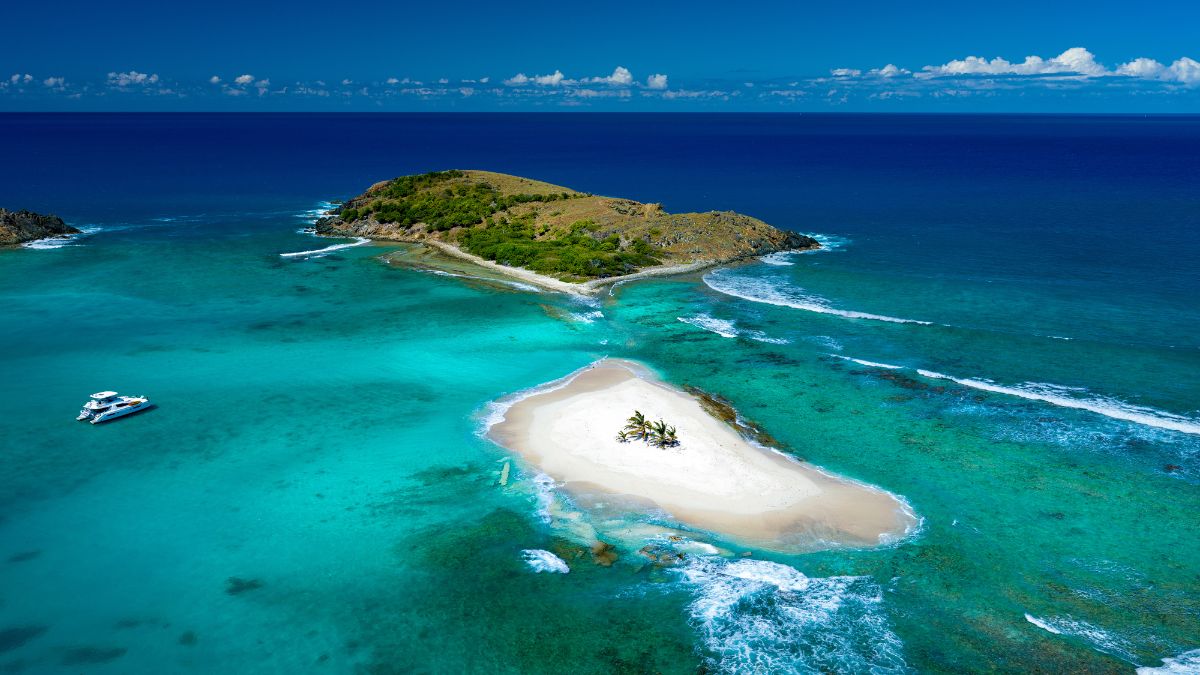
Alquiler de yate con tripulación en el Caribe
Alquiler de yate todo incluido con tripulación en todo el Caribe — Islas Vírgenes Británicas, Bahamas, Islas Vírgenes de EEUU, St. Martin, Antigua y más.