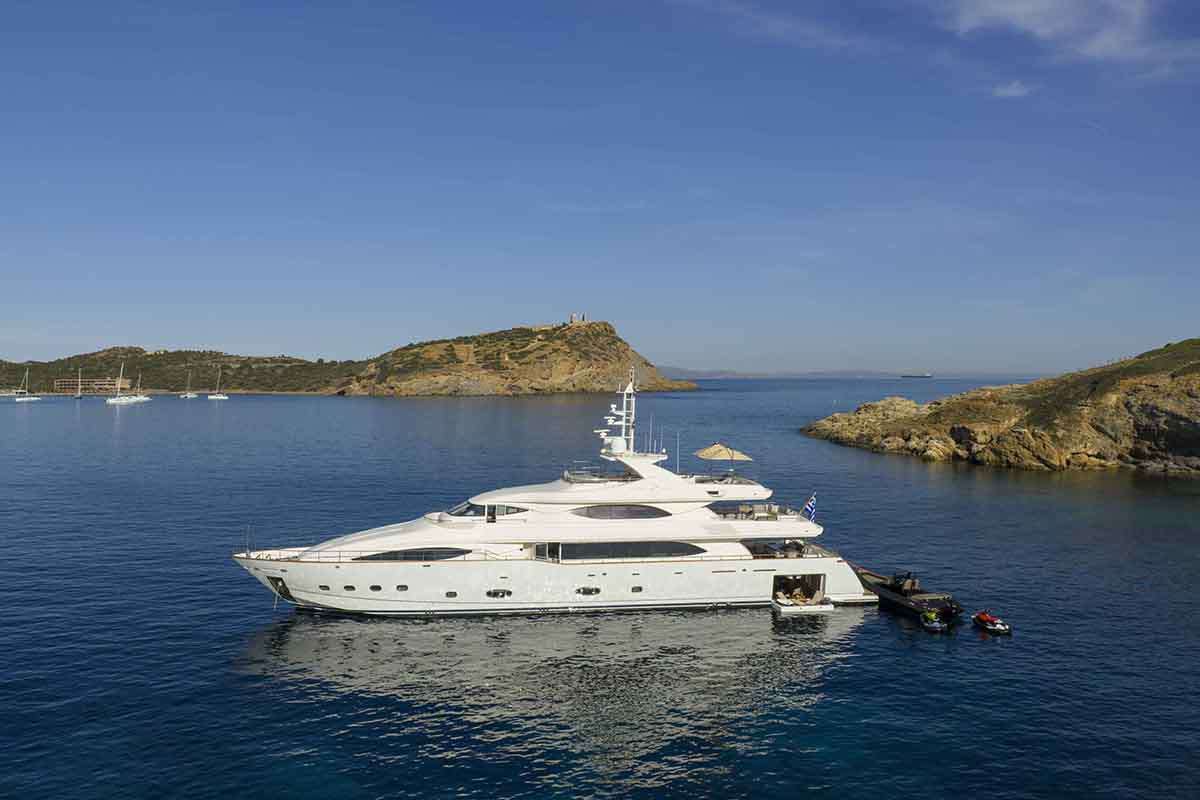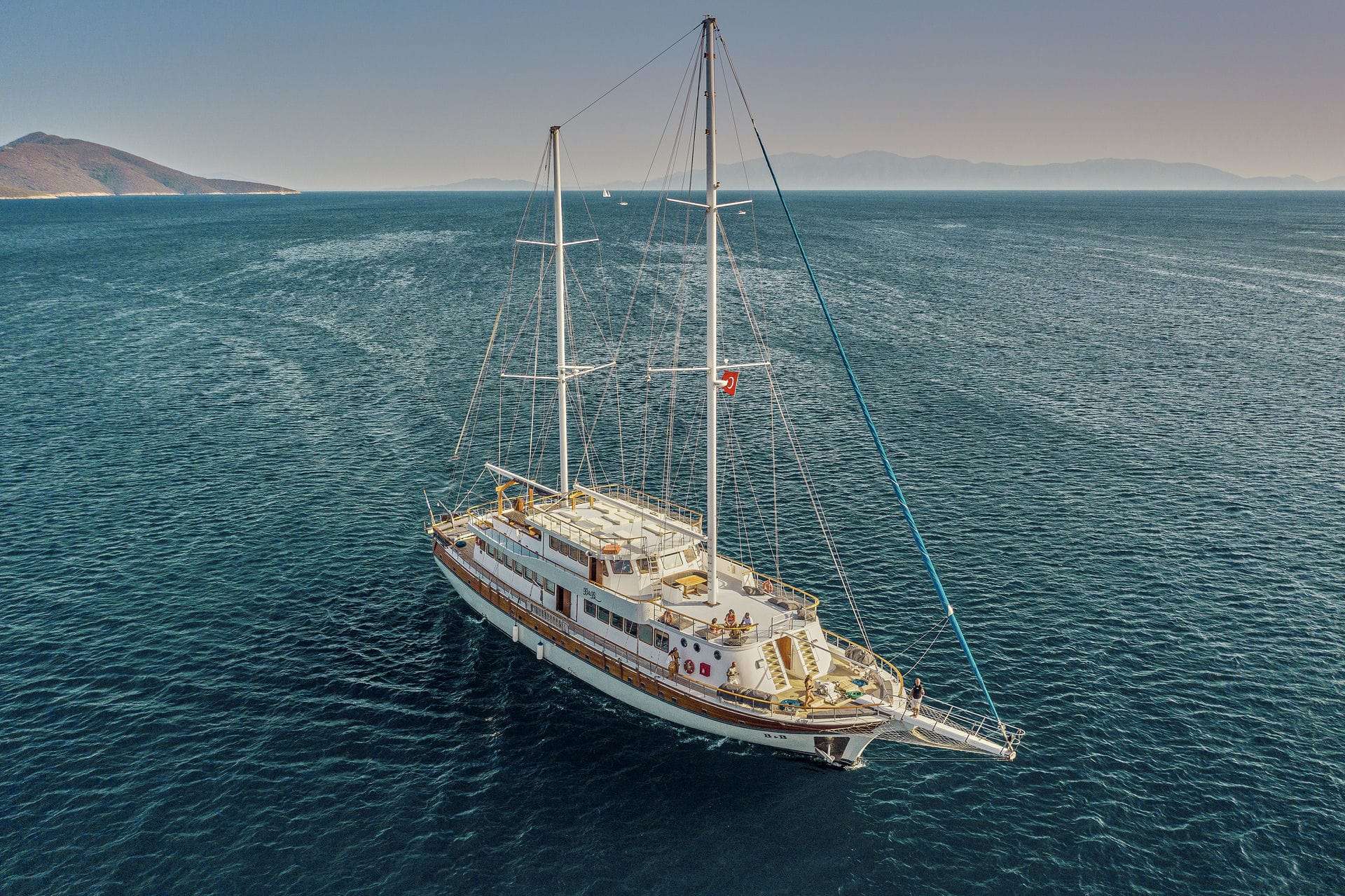


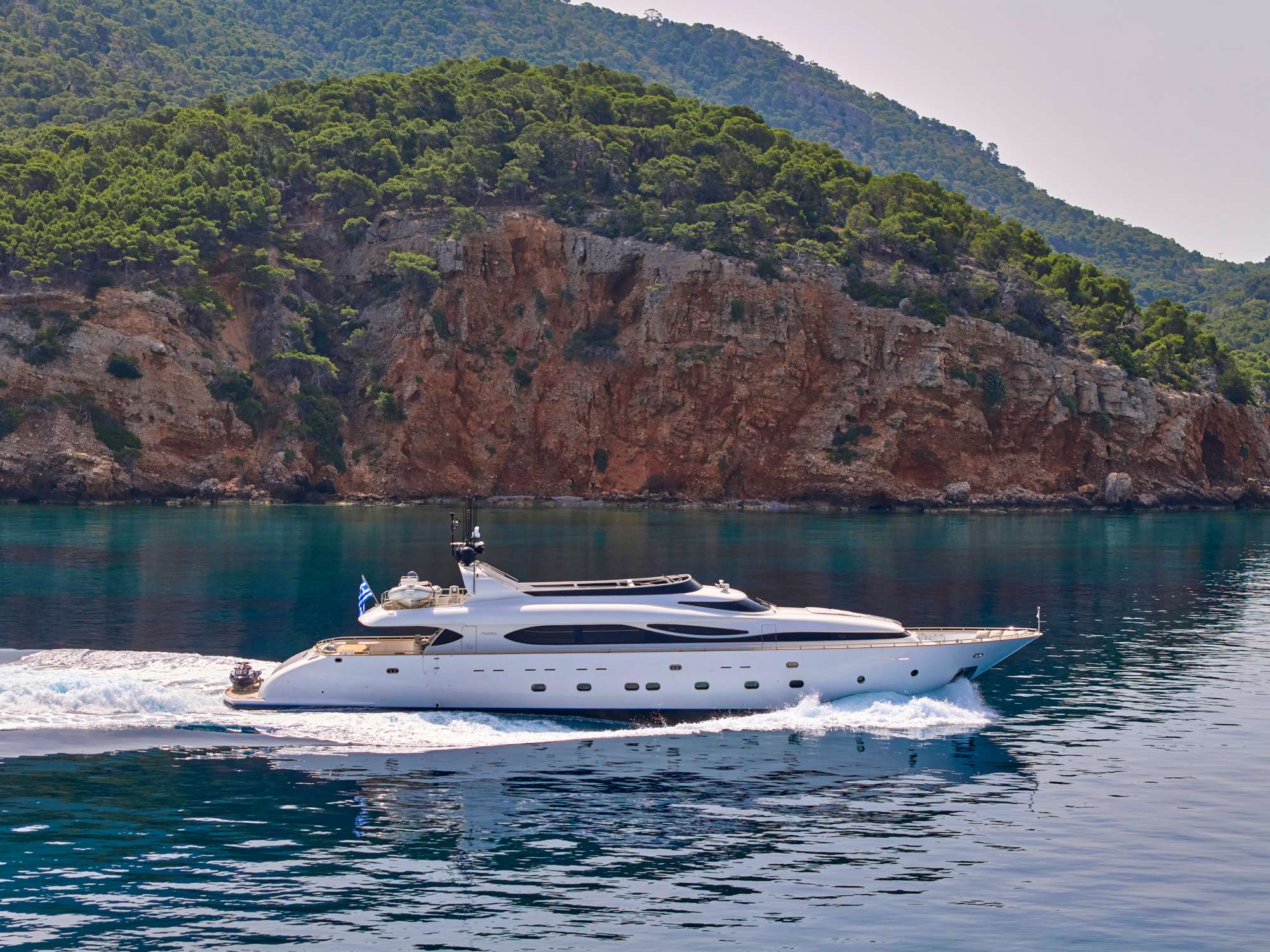
Anasa
114FT · MOTOR YACHT
Desde €79,000/semana
12 Guests · 5 Cabins
Caribbean
Eastern Mediterranean
Western Mediterranean
South Pacific
United States

El Mediterráneo que los turcos han guardado casi para sí mismos — restaurantes de chef a los que llegas caminando desde la popa en Yalıkavak, tumbas licias talladas en la roca sobre tu ancla en Fethiye, la ciudad sumergida de Simena visible en turquesa bajo tu casco en Kekova.
Por qué Turquía
El meltemi sopla a treinta nudos a pocos kilómetros al norte, en el canal abierto — y tu barco está en aguas planas. Ese es el truco del Golfo de Gökova: montañas cubiertas de pinos que actúan como un muro contra el viento, la orilla interior salpicada de bahías con tabernas de embarcadero de madera donde el capitán reserva la mesa bajando por el muelle. El almuerzo dura dos horas — lubina a la parrilla, mezze sobre la mesa, raki al final. Hacia las seis, los barcos de día se han ido y la cala es tuya. La única forma de vivirlo es desde la cubierta de un yate con tripulación.
Los tres itinerarios recorren esta costa de forma impecable. Una semana Caria de ida y vuelta desde Yalıkavak Marina, en Bodrum, atraviesa el Golfo de Gökova — el pontón del Maçakizi en Türkbükü para una cena con estrella Michelin bajo las estrellas, Cleopatra Beach en la Isla Sedir con las ruinas de Cedrae sobre la arena protegida, English Harbor y Knidos en el extremo occidental de la península de Datça, donde el templo de Afrodita Euploia domina tu bahía. Una semana por la Costa Turquesa de ida y vuelta desde Göcek recorre la orilla licia: las doce islas en la desembocadura del Golfo de Fethiye, el Butterfly Valley al que solo se llega en lancha auxiliar, Kalkan y Kaş para cenar en tierra, y Kekova, donde la ciudad sumergida de Simena reposa bajo tu ancla y el castillo cruzado del Kaleköy sin coches se alcanza a pie por senderos de piedra tallados en época helenística. El conector — de Bodrum a Göcek en una sola dirección — recorre ambos escenarios en una semana, con la excursión por el río Dalyan como día fuera del barco: el yate ancla en Ekincik, te trasladas a los botes locales de fondo plano, navegas entre los cañaverales pasando las tumbas licias talladas en la roca hasta el anfiteatro de Caunos y los baños termales de Sultaniye por la tarde. Hablamos contigo de cuál encaja mejor con tu grupo antes de que reserves.
Y luego está lo que los turcos llaman mavi yolculuk — el viaje azul — una tradición construida en torno a los gulets tradicionales, los cascos de madera artesanales con salones cubiertos en cubierta central con los que Turquía se asocia culturalmente. Nosotros ponemos a tu disposición yates a motor modernos directamente en esta costa — los mismos cascos que trabajan el lado griego y francés del Mediterráneo en verano. Para gulets de lujo modernos, trabajamos con los especialistas turcos en gulets bajo petición. Cuéntanos qué buscas. El ritmo culinario es mediterráneo — desayuno y almuerzo con tu chef a bordo, cena en tierra en un meyhane junto al muelle, en una terraza del Maçakizi, en uno de los restaurantes con chef de renombre en la marina de Yalıkavak, o en algún restaurante de la costa licia que los capitanes reservan de camino.


Cuatro características que distinguen la costa turca del resto del Mediterráneo oriental.

Yalıkavak Marina se encuentra en el extremo occidental de la península de Bodrum — 620 atraques, capacidad para yates de hasta 140 metros, elegida Mejor Marina del Mundo para Superyates en tres ocasiones. El muelle es la cena: Zuma, Novikov, Nusr-Et, Bagatelle Bodrum, Birds — cocinas de nivel internacional que esperarías encontrar en Mayfair o Tribeca, a las que llegas caminando desde la popa. Una corta travesía en lancha auxiliar hacia el norte, hasta la Bahía de Türkbükü, te deja en el Maçakizi, con una estrella Michelin en la guía 2026, dos pontones privados reservados para yates visitantes y una bahía llena de la flota de Estambul a la hora del aperitivo. Six Senses Kaplankaya está a unos veinticinco kilómetros al norte — un pantalán flotante privado en Indigo Bay, un spa de diez mil metros cuadrados, el tipo de establecimiento al que el yate ancla y los huéspedes llegan en lancha auxiliar para pasar el día o cenar.

En la costa licia oriental, la bahía de Kekova alberga la ciudad licia sumergida de Simena — hundida por los terremotos en algún momento del siglo II, con murallas, escalinatas y fragmentos de ánforas aún visibles en las aguas turquesas poco profundas bajo tu ancla. Los yates con tripulación fondean en el puerto de Üçağız o justo frente a la costa; desde allí, una corta travesía en lancha auxiliar lleva a la isla de Kaleköy, libre de coches — subes por los senderos de piedra hasta el castillo cruzado y el teatro más pequeño de Licia, siete filas talladas en la roca, trescientas butacas, con el mar llenando el horizonte desde la séptima fila. Nadar sobre las ruinas de la ciudad sumergida está prohibido para proteger la arqueología; las bahías de Tersane y Akvaryum, cercanas, son los puntos de baño. No existe ningún equivalente griego ni croata — Kekova es la bahía emblema de la costa turca.
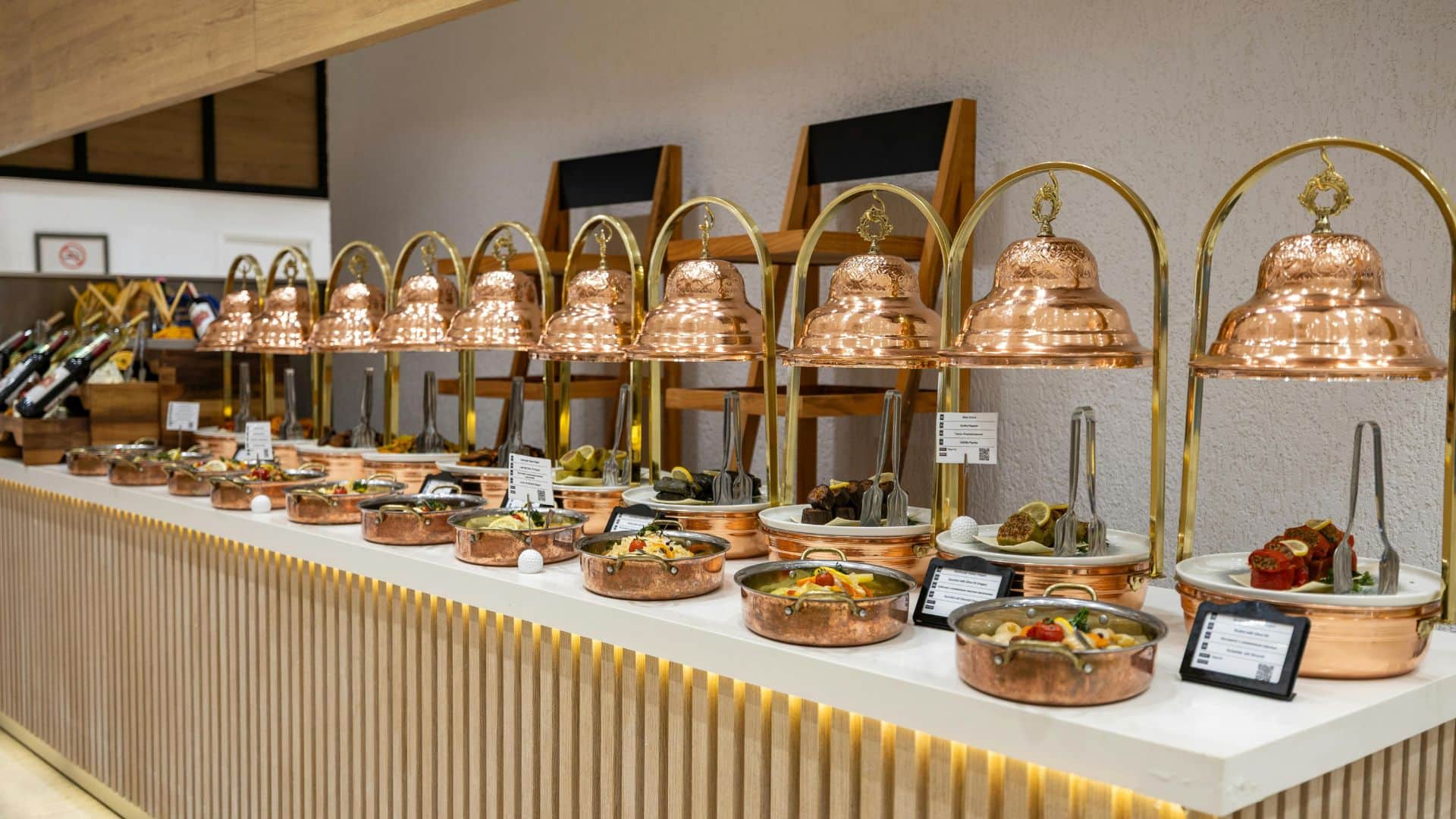
La gastronomía de esta costa es turco-egea — distinta a la griega, distinta a la italiana, y en gran medida un mundo propio. Mezze en platos llanos sobre una mesa larga, pescado del día a la parrilla aliñado solo con limón y sal, raki servido con agua fría mientras la familia recibe al capitán por su nombre. La península de Datça es tierra de olivos — los mismos árboles que plantaron los carios, con aceites prensados en el molino del pueblo — y las tabernas del muelle que reservan los capitanes son en su mayoría establecimientos familiares pequeños que no aparecen en ninguna guía que lea el turismo de cruceros. Los restaurantes de la orilla norte de Gökova siguen el mismo patrón: el Captain Ibrahim's en Çökertme, la parrilla de embarcadero de madera en English Harbor, la cocina de Bedri Rahmi Bay, donde el pintor dejó un pez sobre una roca en 1973 y la familia no ha dejado de cocinar allí desde entonces. La cena en tierra forma parte de todos los itinerarios.
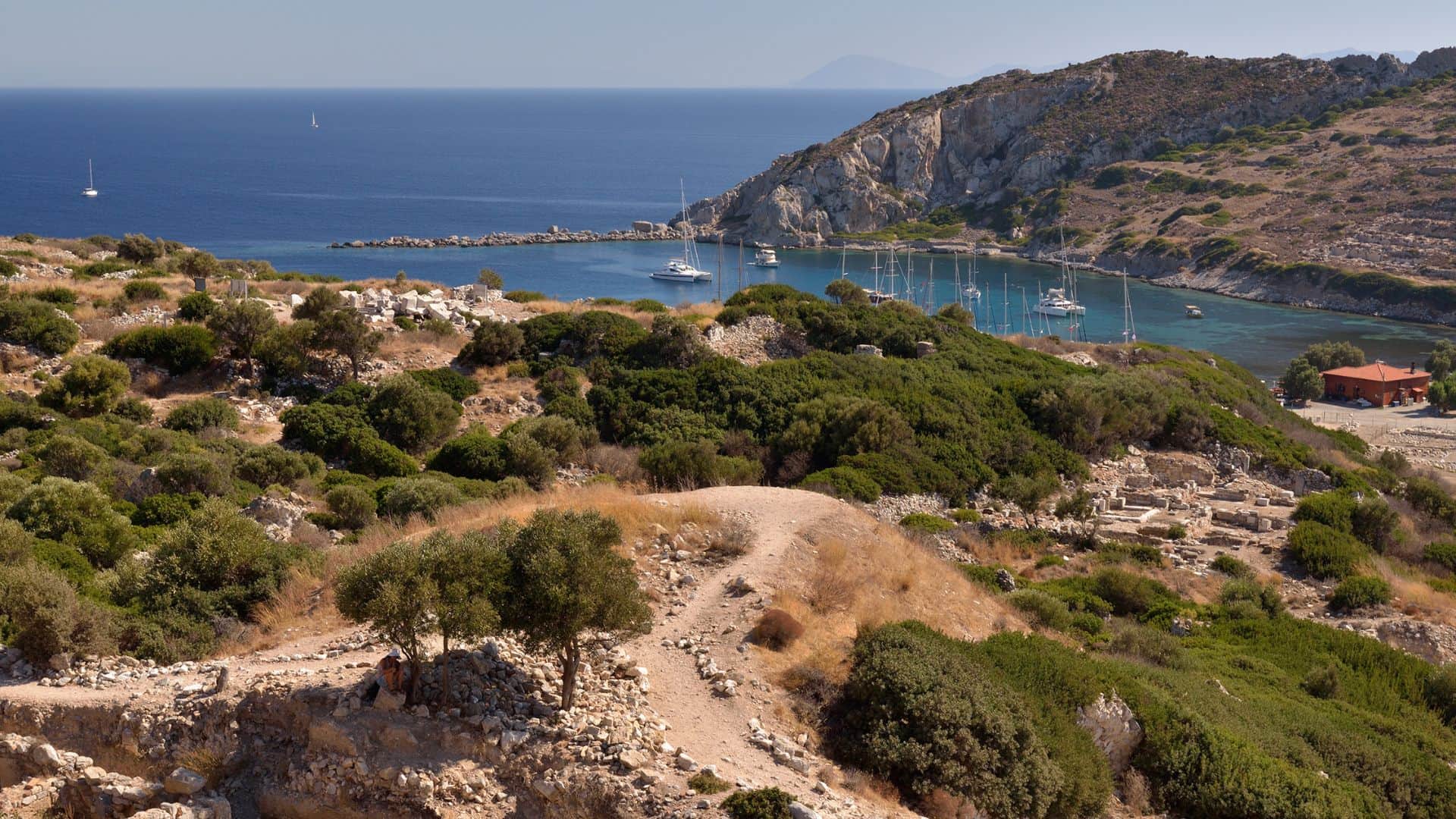
Tres de los lugares más fotografiados de esta costa solo son accesibles desde un yate. Knidos, en el extremo occidental de la península de Datça, no tiene carretera — el antiguo puerto dórico cuenta con dos puertos (los yates con tripulación fondean en el puerto comercial más grande, al este), dos teatros y el templo de Afrodita Euploia donde la Afrodita desnuda de Praxíteles se alzó en 365 a.C.; recorres las calles de mármol por la mañana mientras tu yate aguarda al ancla abajo. El Butterfly Valley, cerca de Ölüdeniz, solo es accesible en lancha auxiliar — el sendero por los acantilados desde Faralya está cerrado, la cala está expuesta al mar abierto, caminas por el fondo del valle durante una hora y regresas en lancha. Y el río Dalyan: los yates no pueden entrar en el río propiamente dicho (la desembocadura son bajíos de barro), así que fondeas en Ekincik y te trasladas a los botes locales de fondo plano; navegan entre los cañaverales pasando las tumbas licias talladas en la pared del acantilado, atracan en el anfiteatro de Caunos por la mañana y continúan hasta los baños termales de barro de Sultaniye por la tarde. Tres días de la semana son de muelle y lancha auxiliar; uno es el día de los botes fluviales.

A hand-picked selection of crewed charter yachts for Turkey — yachts and crews we know firsthand.
Your week is shaped around your group's interests, the season, and the conditions on the water — your captain tailors the days as they unfold. Treat these itineraries as starting points for inspiration.
Itinerario con tripulación · Turquía · Bodrum
El embarcadero de madera tiene una sola parrilla, una sola familia llevándola y, en la mesa de al lado, un capitán que reserva el sitio desde hace veinte años. El meltemi sopla a treinta nudos unas millas al norte, en el canal abierto, pero tú estás en aguas tranquilas en la orilla norte del golfo de Gökova, con montañas cubiertas de pinos detrás de la bahía. El almuerzo dura dos horas: mezze por toda la mesa, lubina de barco de día a la parrilla aliñada con limón y sal, raki servido con agua fría que vuelve el vaso lechoso. Para cuando te levantas de la mesa, los barcos de día se han ido a casa y la cala es tuya. Navegar Bodrum a nuestra manera es la semana caria: la costa turca alrededor de Bodrum y el golfo de Gökova, la zona de navegación más protegida del Egeo que ofrecemos.
La mayoría de los huéspedes que reservan esta semana son primerizos en la costa turca o navegantes que repiten en el Mediterráneo y quieren el lado del Egeo sin la presión del meltemi de las Cícladas abiertas. El viaje de ida y vuelta de 7 días desde Yalıkavak suma unas 100 millas náuticas en total: saltos cortos, almuerzos largos y la orilla norte del golfo de Gökova como un patio de recreo protegido del meltemi. Pensado en torno a un yate a motor de 30 a 50 metros con chef y tripulación completa; las gulets de lujo modernas y los yates de vela hacen la misma ruta a ritmos distintos. Embarque en Yalıkavak Marina (Palmarina), en el extremo oeste de la península de Bodrum, a veinticinco minutos por carretera del aeropuerto de Milas-Bodrum (BJV). La temporada alta va de mayo a octubre, con junio y septiembre como las mejores semanas del año en esta costa.


Esta es la semana de vida social y arqueología. Una primera noche en la marina de Yalıkavak, bajo la hilera de restaurantes de chefs famosos —Zuma, Novikov, Nusr-Et, Bagatelle—, seguida de una lancha al norte hasta la bahía de Türkbükü para cenar en Maçakizi, el ancla con una estrella Michelin de la península de Bodrum. Luego, el giro pausado al este, golfo de Gökova adentro: un baño y un paseo de tarde en la playa de Cleopatra, en la isla de Sedir, donde la prohibición de toallas sobre la arena se aplica desde hace veinte años y las ruinas de Cedrae sobre la arena protegida son la verdadera razón para bajar a tierra. Fondeaderos de la orilla norte en Çökertme y English Harbor: las parrillas de embarcadero de madera que los capitanes reservan desde hace años, con el meltemi soplando a treinta nudos unas millas al norte y tu yate en aguas tranquilas. Después, el largo tramo al oeste, rodeando la punta de la península de Datça hasta Knidos, donde fondeas en el mayor de los dos puertos antiguos y recorres las calles de mármol de una ciudad portuaria dórica, con el templo de Afrodita Euploia en el promontorio de arriba. La campiña de olivos de Datça para la última velada, mezze a lo largo del muelle. Y la travesía de la última mañana de regreso a Yalıkavak.
Otras dos semanas turcas corren junto a esta. El itinerario de la Costa Turquesa desde Göcek recorre la costa licia: las doce islas en la boca del golfo de Fethiye, el Valle de las Mariposas en lancha, Kalkan y Kaş para las cenas en tierra, Kekova y la ciudad sumergida de Simena. El trayecto solo ida de Bodrum a Göcek recorre ambas zonas en siete días, con la excursión por el río Dalyan como el día fuera del barco. Los precios en esta costa parten de unos 40.000 USD por semana y escalan hasta bien entrado el territorio de los superyates. **Una nota sobre bandera y embarque:** desde 2024, los yates de bandera extranjera de menos de treinta y nueve metros no pueden embarcar legalmente a huéspedes desde puertos turcos sin una licencia especial. La configuración estándar para huéspedes de EEUU en un yate de bandera extranjera es un yate de bandera griega (o con licencia griega) que embarca en Kos y cruza a Turquía el primer día. Repasamos contigo qué estructura encaja con tu yate antes de reservar.
Día 1 de 7 · Yalıkavak → Türkbükü
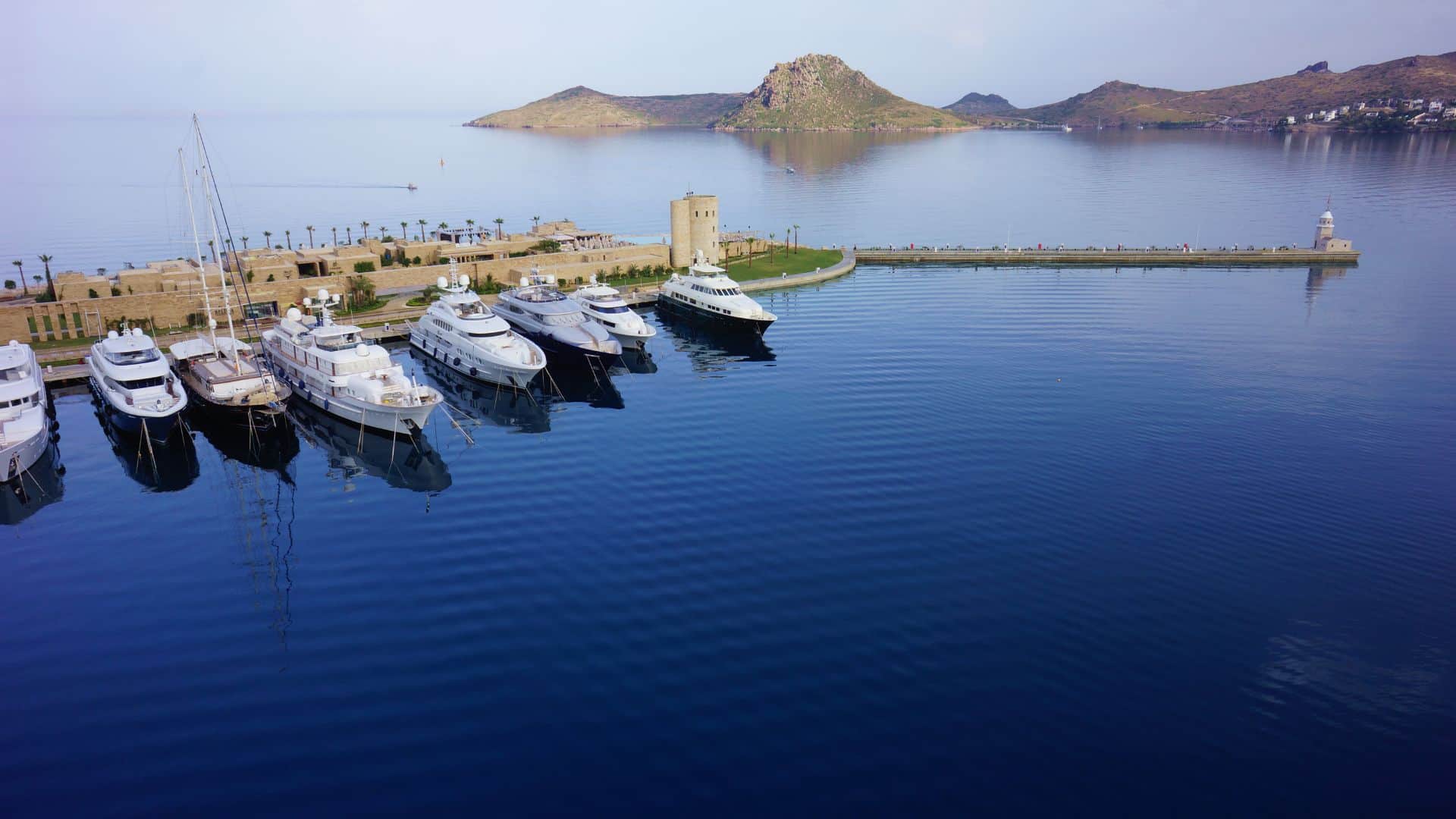
La semana empieza en Yalıkavak. A veinticinco minutos por carretera del aeropuerto de Milas-Bodrum, en el extremo oeste de la península de Bodrum, la marina se extiende a lo largo de un kilómetro de muelle bordeado de restaurantes —Zuma, Novikov, Nusr-Et, Bagatelle Bodrum, Birds—, el grupo de chefs famosos más concentrado del Mediterráneo, a un paseo desde tu cubierta de popa. Tu tripulación te recibe en el atraque con bebidas frías y la sesión informativa sobre la carta. La cocina ya está aprovisionada, el mayordomo acomoda tu equipaje en los camarotes y el chef te presenta el plato de bienvenida mientras el capitán prepara el barco para salir.
A media tarde, el capitán larga amarras. Una suave travesía de doce millas náuticas al norte y al este, rodeando la península de Bodrum hasta Türkbükü, la bahía protegida de la orilla norte que es el St. Tropez de Bodrum desde principios de los 2000. El fondeo es mar adentro, en ocho a doce metros de arena, con la plataforma de baño abierta al atardecer. Lancha a tierra para cenar en Maçakizi: una estrella Michelin en la guía de 2026, Aret Sahakyan en la cocina, dos pantalanes privados reservados para yates visitantes. Las reservas se hacen a través de tu capitán: la relación es lo que consigue la mesa.
Day Highlights
Día 2 de 7 · Türkbükü → isla de Sedir (playa de Cleopatra)
Una mañana pausada en navegación: el capitán pone la proa al este-sureste para la travesía de veinticinco millas náuticas hacia el golfo de Gökova, con la orilla norte escondida tras montañas cubiertas de pinos mientras el meltemi sopla en las Cícladas abiertas, unas millas al norte. La isla de Sedir se encuentra en el golfo: una pequeña isla protegida con un único emblema, la playa de Cleopatra, donde la arena blanca de granos esféricos está protegida por la ley de patrimonio turca desde 1974. Están prohibidas las toallas; están prohibidas las chanclas sobre la arena; la norma de no guardarse ni un solo grano la hace cumplir un vigilante en la pasarela de madera.
Sobre la playa, la verdadera arqueología: las ruinas de la antigua Cedrae, una pequeña ciudad cario-romana con un teatro, un ágora y los cimientos de un templo de Apolo. El folclore sobre Marco Antonio importando la arena de Egipto para Cleopatra es solo folclore: la ciudad es real, la arena es singular, el romance es color local. Un largo almuerzo en la cubierta de popa tras el baño, los platos del chef servidos sobre mantel blanco con el golfo abriéndose al este hacia Marmaris. Por la tarde, los barcos de día se han marchado; tienes la bahía para ti.
La cena es a bordo, al ancla, con la silueta de Sedir por la proa mientras se encienden las luces a lo largo de la pasarela de madera y el vigilante vuelve al ferry del pueblo. El agua del golfo en junio y septiembre ronda los veinticinco grados Celsius, apta para el baño hasta bien entrada la tarde; el aire baja lo justo de noche para que no haga falta el aire acondicionado del camarote.
Day Highlights
Día 3 de 7 · Sedir → Çökertme

Un corto salto de diez millas náuticas al norte y al este hasta Çökertme, uno de los fondeaderos de taberna con embarcadero de madera que definen la orilla norte del golfo de Gökova. El capitán lee las condiciones antes de decidir si fondear o coger un amarre de muelle: Çökertme ofrece ambas opciones según el tráfico. La de Captain Ibrahim es la parrilla con más solera de la bahía; el capitán reserva la mesa al llegar, una hilera de mezze cae en la mesa en menos de diez minutos, y el pescado del barco de día llega a la parrilla con nada más que limón y sal.
Lo que hace específico el día es la aritmética del meltemi. Las montañas cubiertas de pinos al sur de la península de Datça actúan como un muro de hormigón: mientras el canal entre Bodrum y las Cícladas sopla treinta nudos en las tardes de agosto, en Çökertme el agua está plana y en calma, con un térmico de tarde constante de diez nudos. Es la razón por la que esta ruta de la orilla norte aguanta cuando el lado del Egeo está clavado en puerto. Un largo baño antes del almuerzo, una siesta por la tarde, cena en tierra en la taberna o de vuelta a bordo: ambas funcionan.
Day Highlights
Día 4 de 7 · Çökertme → English Harbor
Doce millas náuticas más al este por la orilla norte hasta English Harbor —localmente Tuzla, llamado así por la presencia naval británica aquí durante la Segunda Guerra Mundial—. El fondeadero es profundo y protegido, mayormente vacío en las semanas de charter de principios y finales de verano, y la costa es en gran parte bosque de pinos sin urbanizar. El capitán fondea en ocho a doce metros de arena, baja la plataforma de baño, y el barco entra en modo de fondeo para un día entero: el equipo de deportes acuáticos desplegado por la popa, un largo baño, el chef preparando un almuerzo pausado.
A media tarde, una lancha a tierra para un paseo por el pinar hasta uno de los pequeños restaurantes de pescado que llevan los lugareños en el borde interior del puerto. El patrón es el mismo que en Çökertme —mezze por toda la mesa, pescado de barco de día, raki—, pero sin la multitud del embarcadero de madera. De vuelta a bordo para las copas al atardecer. La cena es en la cubierta de popa, al ancla, con el puerto vacío mientras se va la luz.
Day Highlights
Día 5 de 7 · English Harbor → Knidos

El tramo más largo de la semana: treinta millas náuticas al sur y al oeste, rodeando el hombro este de la península de Datça y por su costa sur hasta Knidos, en el extremo oeste. Knidos no tiene carretera; la única forma de entrar es por mar. Los yates fondean en el mayor de los dos puertos antiguos —el puerto comercial, al este— en ocho a quince metros de agua clara, con las columnas del templo de Afrodita Euploia visibles en el promontorio sobre la proa.
Knidos fue una importante ciudad portuaria dórica, fortificada por Esparta en el siglo V a. C. y famosa por dos cosas: la Afrodita de Knidos desnuda de Praxíteles (esculpida hacia el 365 a. C., el primer desnudo femenino a tamaño real del arte griego, con el original perdido pero copiado durante siglos) y una flota comercial que comerció por todo el Egeo durante seiscientos años. El yacimiento tiene dos teatros —uno más pequeño de cinco mil asientos que mira al fondeadero, y un anfiteatro mayor de veinte mil asientos en la ladera de atrás— más un ágora, calles aterrazadas y los cimientos del templo en el promontorio entre los dos puertos. Recorres las calles de mármol por la mañana mientras tu yate borneas al ancla abajo.
La cena es a bordo, al ancla en el puerto antiguo. No hay taberna en Knidos: el yacimiento es una zona de patrimonio, no un pueblo. El silencio de la noche es lo que importa: las ruinas del templo iluminadas por las luces de tu cubierta, el puerto vacío, el barco el único amarrado donde seiscientos años de comercio dórico echaron amarras una vez.
Day Highlights
Día 6 de 7 · Knidos → Datça
Quince millas náuticas al este, de vuelta por la costa sur de la península de Datça, hasta la propia Datça: un tranquilo pueblo portuario de la costa sur, mayormente evitado por la multitud de cruceros, el tipo de puerto que sigue siendo sobre todo turco y no de sabor turístico. El capitán atraca en el muelle o fondea mar adentro según el espacio y lee las condiciones. La carta de presentación de Datça son sus olivos: los mismos árboles que plantaron los carios, el aceite prensado en el molino del pueblo, las pequeñas meyhanes familiares a lo largo del puerto que llevan sirviendo a las mismas familias durante cuarenta años.
La cena es en tierra, en una de las meyhanes del muelle; el capitán elige el sitio. Mezze en platos planos a lo largo de una mesa larga, pescado de barco de día a la parrilla aliñado con nada más que limón y sal, raki servido con agua fría y hielo que vuelve el vaso lechoso a medida que avanza la noche. La cuenta es una fracción de lo que costaría la misma comida en Yalıkavak. Lo que cambia es el carácter: Datça es lo que era la costa de Bodrum antes de que llegaran tanto la lira turca como el mercado internacional del viaje en yates.
Day Highlights
Día 7 de 7 · Datça → Yalıkavak

Un último desayuno pausado en cubierta en el muelle de Datça, un baño final desde la plataforma de baño si la mañana es lo bastante cálida, y el capitán larga amarras para la travesía de treinta millas náuticas al norte y al oeste de regreso a Yalıkavak. La ruta sube al norte cruzando las bocas de Hisarönü y Gökova, con el canal abierto como la única exposición al meltemi de la semana, normalmente un térmico de tarde en aumento que el barco maneja sin problema. El almuerzo es a bordo durante el tramo, el plato de despedida del chef, una última copa de lo mejor de la bodega, y la silueta de la península de Bodrum creciendo por la proa.
Desembarco en Yalıkavak a media tarde. La tripulación tiene el traslado organizado: directo a BJV para los huéspedes que vuelan ese mismo día, o a un hotel en Bodrum para quienes añaden una noche en tierra. Muchos grupos amplían con una media jornada en Pamukkale (un vuelo nacional desde BJV, dos horas) o un día con chófer privado a Éfeso (tres horas por carretera). Tu capitán y tu chef bajarán del barco ya hablando de cuándo vuelves, que suele ser como terminan los buenos.
Day Highlights
Want to share or come back to this voyage later?
Bookmark this voyage →Itinerario con tripulación · Turquía · Costa licia
Para el tercer día, la geografía ha cambiado. Las montañas cubiertas de pinos del sur de Turquía se precipitan directas a un agua ocho grados más cálida que el Egeo abierto, con el meltemi soplando en el canal al norte mientras las bahías en las que fondeas se mantienen en calma: la península de Datça actúa como un muro de hormigón contra el viento, tal como los capitanes saben desde hace décadas. Hay tumbas licias excavadas en los acantilados sobre casi cada puerto de esta costa, y el agua de baño es la más cristalina del Mediterráneo. Navegar la Costa Turquesa es la semana licia estrella, la que ningún agente del Mediterráneo europeo se salta.
La mayoría de los huéspedes que reservan esta semana son navegantes que repiten en el Mediterráneo y quieren el lado del Egeo sin la presión del meltemi, o quienes visitan Turquía por primera vez y prefieren la costa licia al ambiente social de Bodrum. El viaje de ida y vuelta de 7 días desde Göcek suma unas 110 millas náuticas en total: saltos cortos, almuerzos largos y la sombra de viento de la península de Datça manteniendo las bahías tranquilas incluso en agosto. Pensado en torno a un yate a motor de 30 a 45 metros o una gulet de lujo moderna con chef y tripulación completa; los catamaranes de vela hacen la misma ruta a un ritmo más pausado. Embarque en Göcek (Skopea Marina o D-Marin Göcek), a veinticinco minutos por carretera del aeropuerto de Dalaman (DLM). La temporada alta va de mayo a octubre, con junio y septiembre como las mejores semanas, y agosto viable en esta costa de un modo que no lo es en el lado de Bodrum.


Esta es la semana de postal. Un primer día en las doce islas de Göcek, en la boca del golfo de Fethiye: la isla de Tersane con sus ruinas bizantinas de astillero, la laguna de Yassıca Adaları para un largo baño, la bahía de Bedri Rahmi donde el pintor puso un pez sobre una roca en 1973 y la familia cocina en la parrilla del embarcadero de madera desde entonces. Un segundo día en el Baño de Cleopatra, las ruinas romanas apenas visibles bajo el agua en la bahía de Manastır. Luego Fethiye por las tumbas licias excavadas en los acantilados sobre el puerto, el Valle de las Mariposas en lancha (el sendero del acantilado está cerrado; la única forma de entrar es desde el mar), y Kalkan y Kaş para las cenas en tierra. El fondeadero estrella de la semana: Kekova, donde la ciudad sumergida de Simena yace bajo tu ancla y al castillo cruzado del Kaleköy, sin coches, se llega a pie por senderos de piedra tallados en época helenística. Un último día en la isla de Gemiler por las ruinas bizantinas de la ladera sobre la bahía, y la travesía de vuelta a casa por las doce islas hasta Göcek.
Otras dos semanas turcas corren junto a esta. La semana caria desde Bodrum recorre la orilla norte del golfo de Gökova: Maçakizi, la playa de Cleopatra en la isla de Sedir, Knidos en el extremo oeste de la península de Datça. El trayecto solo ida de Bodrum a Göcek recorre ambas zonas en siete días, con la excursión por el río Dalyan como el día fuera del barco. Los precios en esta costa parten de unos 40.000 USD por semana y escalan hasta bien entrado el territorio de los superyates. **Una nota sobre bandera y embarque:** desde 2024, los yates de bandera extranjera de menos de treinta y nueve metros no pueden embarcar legalmente a huéspedes desde puertos turcos sin una licencia especial. La configuración estándar para huéspedes de EEUU en un yate de bandera extranjera es un yate de bandera griega (o con licencia griega) que embarca en Kos o Rodas y cruza a Turquía el primer día; repasamos contigo qué estructura encaja con tu yate antes de reservar.
Día 1 de 7 · Göcek → 12 Islas

La semana empieza en Göcek. A veinticinco minutos por carretera del aeropuerto de Dalaman, con seis marinas en la cabecera del golfo: Skopea (la primera marina privada de Turquía, inaugurada en 1989, la dirección boutique original) o D-Marin Göcek (el hub comercial más grande) para el embarque. Tu tripulación te recibe en el atraque con bebidas frías y la sesión informativa sobre la carta. La altura de los edificios en Göcek está regulada para preservar el panorama; el pueblo se siente más club náutico que el hub de chefs famosos de Bodrum.
A media mañana, el capitán larga amarras. Una corta travesía de ocho millas náuticas hasta las doce islas de la boca del golfo: el típico primer día tranquilo de cualquier semana licia. El capitán elige el fondeadero según el tráfico y el viento: la isla de Tersane por las ruinas bizantinas de astillero en su lado interior, Yassıca Adaları por la laguna del grupo de cinco islas, la bahía de Bedri Rahmi por la parrilla del embarcadero de madera que lleva el nombre del pintor turco que puso un pez sobre una roca allí en 1973. La plataforma de baño abierta toda la tarde; cena al ancla o en tierra en Bedri Rahmi, según decida el capitán.
Day Highlights
Día 2 de 7 · 12 Islas → bahía de Manastır
Doce millas náuticas al este, golfo adentro, hasta la bahía de Manastır, conocida localmente como el Baño de Cleopatra por la piscina termal romana cuyos muros de cimentación aún se ven bajo el agua en la cabecera de la bahía. El folclore sobre la propia Cleopatra bañándose aquí es solo folclore; las ruinas romanas son reales, la claridad del agua es real, y la bahía es uno de los fondeaderos nocturnos más resguardados de la costa licia. Tu capitán fondea en ocho a doce metros de arena, con la plataforma de baño abierta a media mañana.
Un largo almuerzo en la cubierta de popa, los platos del chef servidos con la bahía abriéndose al sur. La tarde es un snorkel tranquilo por el borde interior de la bahía: las cimentaciones romanas se ven en tres o cuatro metros de agua, un bajo contorno rectangular de piedra tallada. Al anochecer, los barcos de día ya se han marchado. La cena es a bordo, al ancla; la silueta de la cresta de pinos detrás de la bahía se vuelve negra contra el cielo y las luces de los camarotes del barco son las únicas que se ven.
Day Highlights
Día 3 de 7 · Manastır → Fethiye

Diez millas náuticas al sur hasta Fethiye, un pueblo de trabajo que ha sido puerto desde tiempos licios. La imagen característica es el acantilado sobre el pueblo: la Tumba de Amintas, una tumba licia excavada en la roca en el siglo IV a. C., con la fachada de frente de templo visible desde el puerto. El capitán atraca en el puerto o fondea mar adentro según el tráfico; el pueblo es accesible a pie desde cualquiera de los dos.
Una tarde en tierra: el mercado de pescado del puerto (eliges un pescado y un restaurante de al lado te lo cocina; el capitán conoce el sistema), el conjunto de tumbas licias en el acantilado (una subida empinada para quienes quieren verlas de cerca; las postales y una foto con teleobjetivo desde el barco sirven para quienes no), y un paseo por el mercado de productos mientras el chef recoge las verduras del día. La cena es de vuelta a bordo, al ancla, con las tumbas iluminadas al anochecer contra el acantilado sobre el pueblo.
Day Highlights
Día 4 de 7 · Fethiye → Ölüdeniz

Diez millas náuticas al sureste hasta el Valle de las Mariposas, una empinada cala de acantilado a poca distancia de Ölüdeniz. El valle debe su nombre a la mariposa tigre de Jersey que se reproduce en el cañón protegido sobre la playa, y la única forma de entrar es desde el mar: el sendero del acantilado desde el pueblo de Faralya se cerró por seguridad tras una serie de caídas. Tu yate fondea mar adentro; la lancha te deja en la playa y caminas tierra adentro durante una hora por el fondo del cañón.
El valle no es un fondeadero nocturno: la cala está abierta al Mediterráneo, expuesta al oleaje, y la zona de acampada de la playa es rudimentaria. Solo excursión en lancha: llega a media mañana, recorre el valle, báñate desde la playa, vuelve en la lancha al yate para el almuerzo y el capitán se reposiciona para la tarde. La mayoría de las semanas, el barco pasa la noche en una de las calas protegidas más al sur por la costa hacia Kalkan.
Day Highlights
Día 5 de 7 · Ölüdeniz → Kaş
Veinticinco millas náuticas al este por la costa licia, pasando las bahías de arena blanca de Patara, las calas de Kalkan y hasta Kaş. Kalkan es una breve parada de fondeo y lancha para que el capitán recoja provisiones o el grupo recorra el pueblo empedrado durante una hora; Kaş es la noche. El capitán fondea mar adentro o atraca en Kaş Marina (472 amarres, gestionada por Setur, con capacidad hasta 150 metros) según la disponibilidad y el tamaño del yate.
Kaş es el pueblo boutique de la costa licia: carácter de fondear y caminar a cenar, un puerto bordeado de casas bajas encaladas, la marina en el extremo este del pueblo. Los capitanes reservan en uno de tres: The Dolphin Restaurant, en el puerto, por el pulpo y la lubina; L'Apéro, en una casa de construcción griega de 150 años, por la fusión franco-turca; o Nereid Gurme, en otra antigua casa griega con terraza de meyhane. La cena es en tierra; de vuelta a bordo ya entrada la noche.
Day Highlights
Día 6 de 7 · Kaş → Kekova

Veintidós millas náuticas al este hasta Kekova: el fondeadero estrella de la semana, y uno de los fondeaderos estrella de todo el Mediterráneo oriental. La bahía alberga la ciudad licia sumergida de Simena, hundida durante los terremotos del siglo II d. C., con muros, escaleras y fragmentos de ánforas aún visibles en tres a cinco metros de agua turquesa poco profunda bajo tu ancla. Los yates fondean en el puerto de Üçağız (el fondeadero estándar para yates de alquiler) o justo mar adentro; el puerto admite yates hasta de clase superyate sin problema.
Nadar o bucear sobre las ruinas de la ciudad sumergida está prohibido para proteger el patrimonio arqueológico; la norma se aplica desde que en 1990 la zona se declaró protegida. Las bahías cercanas de Tersane y Akvaryum son los sitios de baño: agua clara, fondo de arena, sin arqueología. Lancha a tierra para una tarde en Kaleköy, el pequeño pueblo del promontorio que no tiene coches; subes por senderos de piedra desde el puerto hasta el castillo cruzado de la cresta.
Dentro del castillo está el teatro más pequeño de Licia: siete filas talladas en la roca durante el periodo helenístico, trescientos asientos, el mar llenando la vista desde la séptima fila hacia el pueblo moderno de abajo. No hay carretera hasta Kaleköy ni carretera dentro del pueblo: a cada casa se llega a pie. La cena es de vuelta a bordo, al ancla en el puerto de Üçağız; la noche es silenciosa salvo por el generador del barco y el chapoteo del agua contra el casco.
Day Highlights
Día 7 de 7 · Kekova → Göcek
Un último desayuno pausado al ancla en Üçağız, un baño final desde la plataforma de baño, y el capitán larga amarras para la travesía de regreso de treinta y cinco millas náuticas al oeste, hasta Göcek. La ruta vuelve por la costa licia por donde viniste, con una parada por el camino: la isla de Gemiler, también llamada isla de San Nicolás, frente a la costa al sur de Fethiye. Hay ruinas de época bizantina que trepan por la ladera sobre la bahía —capillas, una iglesia, estructuras residenciales de los siglos IV a VI d. C.—, cuando la isla era un importante lugar de peregrinación para los primeros cristianos que viajaban entre Constantinopla y Jerusalén.
Una breve lancha a tierra para la subida por el camino de mármol entre las ruinas, almuerzo de vuelta a bordo mientras el capitán cubre las últimas veinte millas hasta Göcek. Desembarco a media tarde en Skopea o D-Marin, donde hayas embarcado. La tripulación tiene el traslado organizado: directo a DLM para los huéspedes que vuelan ese mismo día, o a un hotel en Göcek para quienes añaden una noche en tierra. Muchos grupos amplían con un día con chófer privado a Letoon (un santuario licio Patrimonio de la Humanidad de la UNESCO, a una hora por carretera) o al sur, a la playa de Patara. Tu capitán y tu chef bajarán del barco ya hablando de cuándo vuelves, que suele ser como terminan los buenos.
Day Highlights
Want to share or come back to this voyage later?
Bookmark this voyage →Itinerario con tripulación · Turquía · Solo ida
Para el quinto día, has navegado las dos mitades de la costa turca. La semana empezó en el muelle de superyates de Yalıkavak y recorrió la orilla sur arqueológica del golfo de Gökova: Knidos y el templo de Afrodita Euploia, la campiña de olivos de Datça, los largos promontorios de época romana de la península de Datça. Luego al sur por el golfo de Hisarönü, con la península de Bozburun como resguardo de viento a ambos lados, y la costa licia abriéndose al este. Hoy es el día fuera del barco: el yate fondeado en Ekincik, las barcas locales de fondo plano llevándote río arriba por el Dalyan, pasando tumbas licias excavadas en la pared del acantilado, una mañana en el anfiteatro de Caunos y una tarde en los baños de barro termal de Sultaniye. Navegar Turquía de punta a punta en siete días es el arco editorial más largo de la costa: el enlace, sin volver sobre tus pasos, ambas zonas en una semana.
La mayoría de los huéspedes que reservan este itinerario son navegantes que repiten en el Mediterráneo y quieren la historia de una sola semana más larga que ofrece Turquía, o primerizos que añaden viaje por tierra antes o después. El trayecto solo ida de 7 días de Bodrum a Göcek suma unas 140 millas náuticas en total: saltos más largos que los itinerarios de ida y vuelta, con el tramo Datça-Marmaris-Ekincik como el día más largo. Pensado en torno a un yate a motor de más de 35 metros para los tramos largos; las gulets de lujo modernas hacen la misma ruta a un ritmo más pausado. Embarque en Yalıkavak Marina (puerta de BJV), desembarco en Göcek (puerta de DLM). La temporada alta va de mayo a octubre, con junio y septiembre como las mejores semanas del año.
Esta es la semana sin marcha atrás. Una primera tarde en Yalıkavak, luego un largo tramo al sur y al oeste hasta Knidos, en el extremo oeste de la península de Datça, fondeado en el mayor de los dos puertos antiguos, con las ruinas del templo de Afrodita Euploia en el promontorio sobre la proa. La campiña de olivos de Datça para la segunda noche, mezze en una de las meyhanes del muelle que los capitanes reservan desde hace cuarenta años. Después, al sur cruzando el golfo de Hisarönü hasta Bozburun y Selimiye, los restaurantes de pescado de embarcadero de madera a ambos lados de la península. El día estrella llega a mitad de semana: el yate fondeado en Ekincik, la excursión que solo se hace en yate río arriba por el Dalyan, entre los cañaverales y pasando tumbas licias hasta el anfiteatro de Caunos y los baños de barro termal de Sultaniye. Al este por la costa licia hasta las doce islas de Göcek, y la travesía de vuelta a casa por las islas hasta la propia Göcek.
El tercer itinerario turco —la semana de la Costa Turquesa de ida y vuelta desde Göcek— recorre la mitad este de la costa licia (Fethiye, el Valle de las Mariposas, Kalkan, Kaş, Kekova) a un ritmo más pausado. La semana caria de ida y vuelta desde Bodrum recorre la orilla norte del golfo de Gökova (Maçakizi, la playa de Cleopatra en la isla de Sedir, Çökertme, English Harbor, Knidos, Datça). Este enlace se queda a medio camino y añade la excursión por el Dalyan como un día estrella fuera del barco. Los precios en esta costa parten de unos 40.000 USD por semana y escalan hasta bien entrado el territorio de los superyates. **Una nota sobre bandera y embarque:** desde 2024, los yates de bandera extranjera de menos de treinta y nueve metros no pueden embarcar legalmente a huéspedes desde puertos turcos sin una licencia especial. La configuración estándar para huéspedes de EEUU en un yate de bandera extranjera es un yate de bandera griega (o con licencia griega) que embarca en Kos y cruza a Turquía el primer día; repasamos contigo qué estructura encaja con tu yate antes de reservar.
Día 1 de 7 · Yalıkavak → Knidos
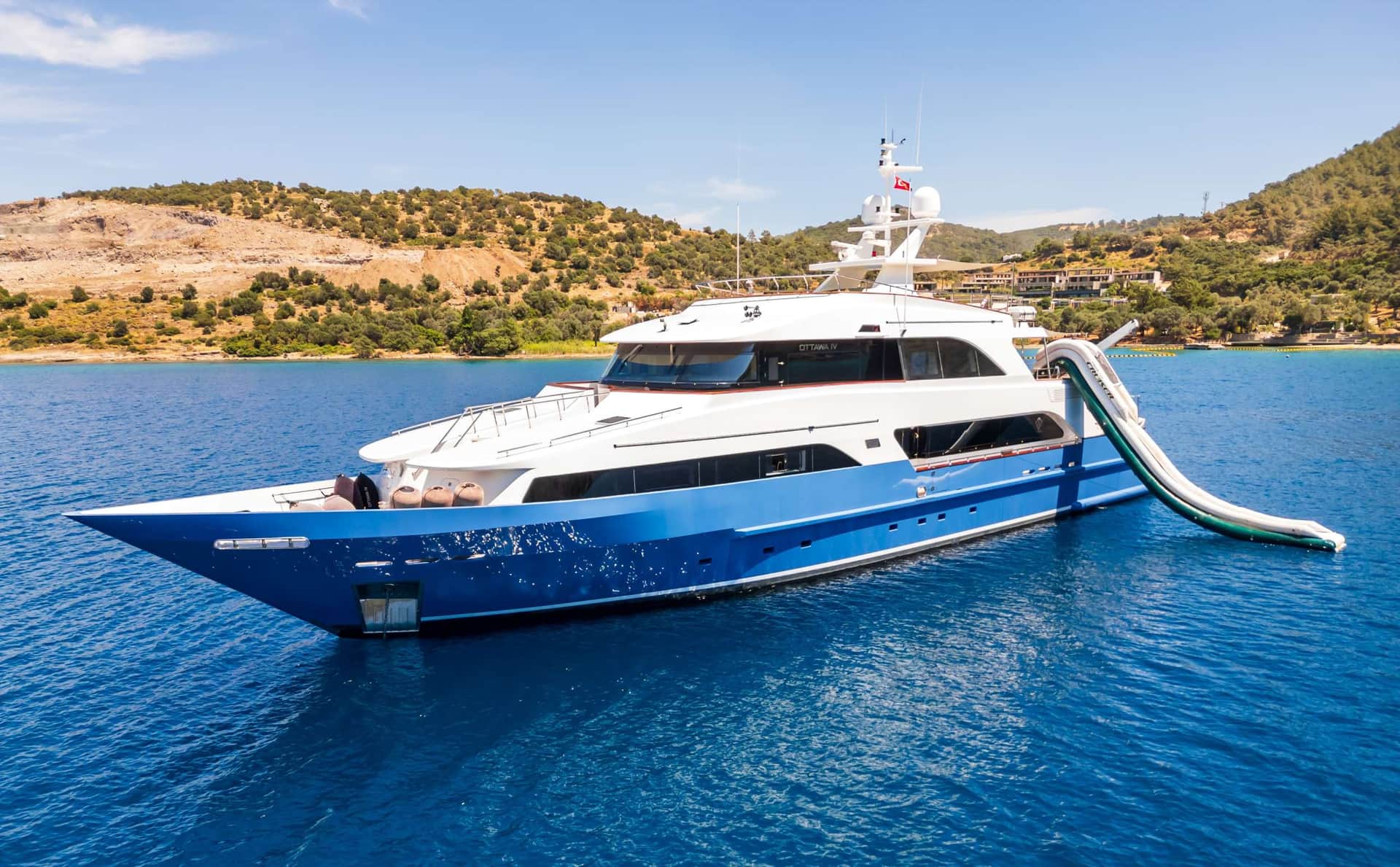
La semana empieza en Yalıkavak. A veinticinco minutos por carretera del aeropuerto de Milas-Bodrum, en el extremo oeste de la península de Bodrum, la marina se extiende a lo largo de un kilómetro de muelle bordeado de restaurantes. Tu tripulación te recibe en el atraque con bebidas frías y la sesión informativa sobre la carta. Almuerzo de bienvenida a bordo, el mayordomo acomodando tu equipaje en los camarotes, el chef presentándote el plato de bienvenida.
A media tarde, el capitán larga amarras. Una travesía de treinta y cuatro millas náuticas al sur y al oeste hasta Knidos, en el extremo oeste de la península de Datça: el primer día más largo de los tres itinerarios turcos, pero la decisión correcta para una semana solo ida, porque te deja en uno de los fondeaderos estrella al atardecer. Knidos no tiene carretera; la única forma de entrar es por mar. Los yates fondean en el mayor de los dos puertos antiguos (el puerto comercial, al este) en ocho a quince metros de agua clara, con el templo de Afrodita Euploia visible en el promontorio de arriba. Cena al ancla. No hay taberna en Knidos: el silencio de la noche es lo que importa.
Day Highlights
Día 2 de 7 · Knidos → Datça
Una mañana pausada en Knidos: un baño en el puerto antiguo, un paseo por las ruinas del templo y el teatro más pequeño de cinco mil asientos, almuerzo a bordo. A primera hora de la tarde, el capitán pone la proa al este para el salto de quince millas náuticas por la costa sur de la península de Datça hasta la propia Datça, un tranquilo pueblo portuario en gran parte fuera del circuito de cruceros, sobre todo turco y no de sabor turístico.
El capitán atraca en el muelle o fondea mar adentro según el espacio. La carta de presentación de Datça son sus olivos: los mismos árboles que plantaron los carios, el aceite prensado en el molino del pueblo, las pequeñas meyhanes familiares a lo largo del puerto que llevan sirviendo a las mismas familias durante cuarenta años. La cena es en tierra, en uno de los sitios del muelle que reservan los capitanes. Mezze en platos planos a lo largo de una mesa larga, pescado de barco de día a la parrilla aliñado con nada más que limón y sal, raki servido con agua fría que vuelve el vaso lechoso a medida que avanza la noche.
Day Highlights
Día 3 de 7 · Datça → Bozburun

Veinticinco millas náuticas al este-sureste cruzando la boca del golfo de Hisarönü hasta Bozburun, el pueblo pesquero de trabajo de la península homónima. La península de Bozburun está resguardada por ambos lados —el golfo de Hisarönü al norte, el golfo de Gökova al oeste— y la geografía de sombra de viento mantiene ambas costas en calma incluso en las tardes de agosto, cuando el meltemi sopla en el canal abierto. El capitán fondea mar adentro en el puerto de Bozburun o atraca en el pequeño muelle según el espacio.
El carácter de Bozburun es mitad pueblo pesquero, mitad astillero de yates: el pueblo es el corazón histórico de los astilleros de gulets de Turquía, y muchas de las gulets de lujo modernas de la flota turca de viaje se construyeron a mano en los astilleros locales. El almuerzo es a bordo, al ancla, con el chef trabajando una tarde pausada. Cena en tierra en uno de los restaurantes de pescado de embarcadero de madera: el capitán reserva la mesa al llegar, mezze y pescado de barco de día a la parrilla, la familia recibiendo al capitán por su nombre.
Day Highlights
Día 4 de 7 · Bozburun → Selimiye
Un corto salto de doce millas náuticas al norte y al este cruzando el golfo interior de Hisarönü hasta Selimiye, uno de los fondeaderos nocturnos más resguardados de la península, con el puerto bordeado de casas bajas encaladas y el muelle extendiéndose cerca de medio kilómetro por la bahía interior. El capitán fondea mar adentro en ocho a doce metros de arena o atraca en el muelle del pueblo; ambas opciones funcionan.
Selimiye es un día pausado. El agua está plana como un cristal dentro del puerto, los baños son de los más cálidos de este tramo de costa, y el pueblo va a un ritmo que hace que Bozburun parezca ajetreado. Largo baño antes del almuerzo, un paseo de tarde por las calles traseras hasta una de las pequeñas tiendas sobre el puerto, cena en tierra en una meyhane del muelle que el capitán conoce: el tipo de sitio donde no existe carta y el pedido queda fijado en cuanto te sientas.
Day Highlights
Día 5 de 7 · Selimiye → Ekincik (día del Dalyan)

Veintidós millas náuticas al este cruzando la boca del golfo de Köyceğiz hasta Ekincik, el fondeadero protegido en la desembocadura del río Dalyan. Este es el día estrella del itinerario de enlace, y la excursión que solo se hace en yate que ninguna zona de yate griega o croata puede igualar. Los yates no pueden entrar en el Dalyan: la desembocadura son bajos de barro poco profundos, y el tramo alto del río discurre entre cañaverales que las barcas locales de fondo plano navegan desde hace generaciones. El método es fondear en Ekincik en ocho a doce metros de arena y luego trasladarse a la flota local de barcas de río para el día.
Las barcas de río suben por el Dalyan pasando las tumbas licias excavadas en la pared del acantilado sobre el río: fachadas de tumbas del siglo IV a. C. talladas en la roca, arquitectura de frente de templo visible desde la barca al pasar. Atraque en el anfiteatro de Caunos para la mañana: un yacimiento cario-romano con un teatro, un ágora y los cimientos de una pequeña basílica. Luego, de vuelta a las barcas de río y hasta los baños de barro termal de Sultaniye: a doce kilómetros de Ekincik, un manantial de barro sulfuroso alimentado desde la cresta volcánica sobre el lago Köyceğiz. Entras en el barro, te sientas, sales y te enjuagas en el agua del manantial que corre al lado.
Las barcas de río te devuelven a tu yate en Ekincik a media tarde. El capitán reserva las barcas de río como parte de la organización estándar del viaje en yate; no mueves un dedo. La cena es a bordo, al ancla en Ekincik: el chef trabajando en el plato del día del Dalyan, las barcas de río amarradas de vuelta en el muelle del Dalyan, las luces de tu yate las únicas en la bahía.
Day Highlights
Día 6 de 7 · Ekincik → 12 Islas

Veinticinco millas náuticas al este-sureste hasta las doce islas en la boca del golfo de Fethiye: el típico primer día del itinerario de ida y vuelta de la Costa Turquesa, y la típica parada de última noche de la semana en el enlace. El capitán elige el fondeadero según el tráfico: la isla de Tersane por las ruinas bizantinas de astillero en su lado interior, Yassıca Adaları por la laguna del grupo de cinco islas, la bahía de Bedri Rahmi por la parrilla del embarcadero de madera que lleva el nombre del pintor turco que puso un pez sobre una roca allí en 1973.
Largo baño durante la tarde, el chef preparando el plato de despedida. Cena en tierra en Bedri Rahmi o de vuelta a bordo, al ancla. La noche es tranquila: la altura de los edificios en Göcek y el golfo circundante está regulada, no hay ruido desde tierra, y las luces de unos pocos yates más en la bahía de al lado son las únicas que se ven.
Day Highlights
Día 7 de 7 · 12 Islas → Göcek
Un último desayuno pausado en cubierta en las doce islas, un baño final desde la plataforma de baño, y el capitán larga amarras para la corta travesía de ocho millas náuticas hasta la propia Göcek. Almuerzo a bordo durante el tramo, el plato de despedida del chef, una última copa de lo mejor de la bodega, y la silueta de las marinas de Göcek creciendo por la proa.
Desembarco en Skopea o D-Marin a media tarde. La tripulación tiene el traslado organizado: directo a DLM para los huéspedes que vuelan ese mismo día, o a un hotel en Göcek para quienes añaden una noche en tierra. Muchos grupos amplían con un día con chófer privado a Letoon (un santuario licio Patrimonio de la Humanidad de la UNESCO, a una hora por carretera) o a la playa de Patara, en la costa licia. Tu capitán y tu chef bajarán del barco ya hablando de cuándo vuelves, que suele ser como terminan los buenos.
Day Highlights
Want to share or come back to this voyage later?
Bookmark this voyage →
When to go, what it costs, and how to get there — the practical answers guests ask before booking a Turkey crewed yacht charter.
El verano egeo en plena intensidad. Máximas diurnas de entre 27 y 29 °C en la costa, y más de 35 °C en las excursiones al interior a Éfeso o Pamukkale. Las temperaturas del mar alcanzan los veintisiete grados en agosto, las aguas de baño más cálidas del Mediterráneo. El meltemi sopla la mayoría de las tardes de julio y agosto — el noroeste que llega hacia el mediodía, se intensifica hasta los treinta nudos en el canal abierto entre las Cícladas y Bodrum, y amaina al atardecer. Bodrum y la península de Datça se llevan la mayor parte. Los puertos se llenan a mediados de agosto, cuando el Bayram turco y las vacaciones europeas de agosto coinciden; los atraques de primer nivel en Yalıkavak se reservan con nueve a doce meses de antelación. Quienes quieren la energía de Bodrum en temporada alta pagan por ello; quienes prefieren aguas más tranquilas y reservas más fáciles eligen las semanas de los costados.
La ventana que reservan la mayoría de los habituales — y donde la costa licia (itinerario 2) demuestra su ventaja. Las montañas cubiertas de pinos al sur de la península de Datça actúan como sombra de viento: mientras el canal de Bodrum sopla a treinta nudos en las tardes de agosto, la costa licia — Göcek, Fethiye, Kalkan, Kaş, Kekova — navega con una suave brisa marina de tarde de diez a veinte nudos. Es la razón por la que las semanas licias de finales de verano permanecen en calma cuando el lado egeo está bloqueado en puerto. Más allá del cálculo del meltemi: el agua llega a veinticinco grados a mediados de junio y se mantiene por encima de los veinticuatro hasta septiembre. Los días oscilan entre los 25 y los 29 °C. Las tarifas bajan entre un quince y un veinticinco por ciento respecto a la temporada alta. Junio y principios de septiembre son las mejores semanas del año en esta costa.
$40,000–$200,000 per week
Una semana con yate con tripulación en Turquía tiene una tarifa base de entre $40.000 y $200.000+, según el tamaño del yate, el año de construcción y la tripulación. Turquía opera bajo el modelo mediterráneo de gastos adicionales — la tarifa base cubre solo el yate y la tripulación, con una propina del 10–15% al estilo Med (el 10% es el punto medio habitual según la MYBA) pagada directamente al capitán en el desembarque, y un APA (Asignación Anticipada de Provisiones) del 25–35% pre-financiada al firmar para cubrir comida, bebidas, combustible, atraque en marina, tasas portuarias y aduana de excursiones a islas griegas (impuesto TEPAI, transit log, tasas de amarre) cuando el itinerario toca Kos o Symi. El panorama fiscal del alquiler de yates en Turquía es el más favorable del Mediterráneo para nuestro público: los yates comerciales de bandera extranjera (Caimán, Islas Marshall, Malta — lo que reserva la mayoría de los clientes estadounidenses) pagan 0% de IVA en aguas turcas, frente al 22% en Italia, el 13% en Croacia y el 12% en Grecia. Los yates de bandera turca pagan el 20% de IVA y raramente aparecen en la franja de precios mencionada. Los viajes en yate van de sábado a sábado.
About chartering in Turkey.
We charter across the Eastern Mediterranean. Here are some other excellent alternatives.

Embark on a Greece yacht charter to experience timeless beauty, crystal-clear waters, ancient ruins, and charming islands offering endless exploration.

Stone harbors and pine-rimmed coves down the Dalmatian coast — Roman ruins inside medieval walls, cold Pošip on a stern-to quay in Hvar, the Adriatic the way it was written about.

The Mediterranean week that looks like nowhere else in Europe — medieval walls dropping straight into the water, a baroque church on an island made from sunken ships, and the Sveti Stefan silhouette at the offshore anchor. The Adriatic week most guests book the second time they come.
Fill out our quick form and we'll dive into your unique preferences — from adventure-packed itineraries to pampered escapes. Whether you're a seasoned voyager or new to charters, we'll tailor recommendations just for you.
With over fifteen years of experience, we'll match you with the yacht that fits your style, group, and itinerary. We work directly with the captains and crews across our list — so the recommendation is built around the right boat-and-crew fit for your week, not whatever's easiest to book.
Once your yacht is booked, we'll take care of logistics: paperwork, reminders, and personalized resources to help you plan. From arrival planning to must-visit spots, we'll make your charter as seamless as it is unforgettable.

¿Qué esperar de un alquiler de yate privado con tripulación?
Conocé qué hace únicos a estos viajes en yate: servicio personalizado, gastronomía gourmet y un sinfín de aventuras y momentos de relax.

¿Cómo es el proceso de reserva?
Nuestro equipo se encarga de todo: desde tu primer consulta hasta que zarpás. Todo fluye de forma simple.

¿Cuánto cuesta un alquiler de yate con tripulación?
Entendé los distintos tipos de precios, lo que está incluido y lo que no.

Logística: planes probados para un inicio sin estrés
Planificá tu llegada con facilidad. Te damos tips sobre vuelos, traslados y todo lo necesario para arrancar relajado.
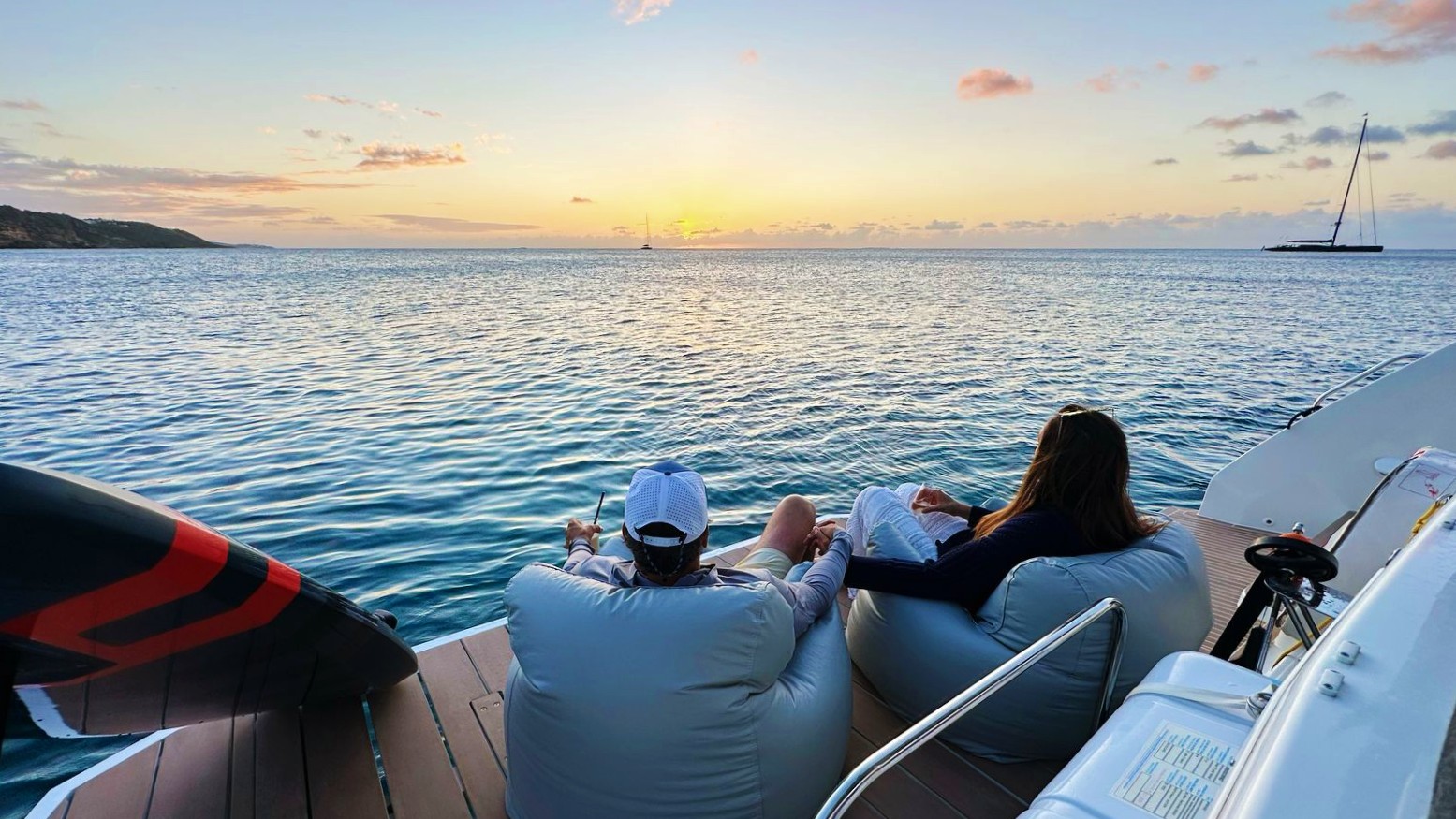
Alquiler de yate de luna de miel
Comience su matrimonio en un yate privado. Explore playas solitarias, gastronomía gourmet y atardeceres inolvidables en el Caribe.
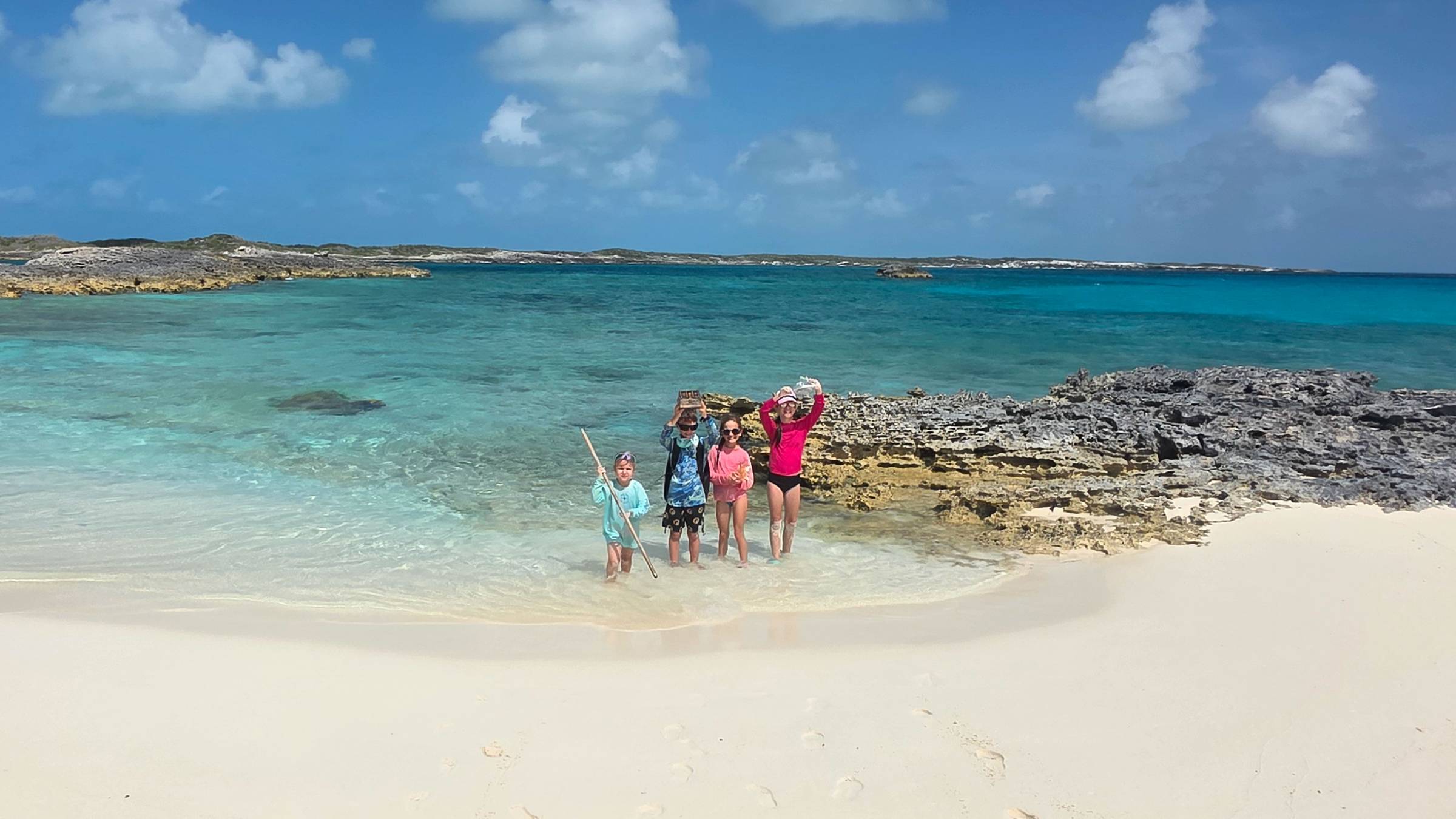
Alquiler de yate familiares
Un alquiler de yate con tripulación es perfecto para familias de todas las edades. Seguro, divertido y con servicio completo — sus hijos nunca lo olvidarán.

Preguntas frecuentes sobre alquileres de yate con tripulación
Obtenga respuestas a las preguntas más comunes sobre alquiler de yate con tripulación, desde precios y propinas hasta qué incluye y qué llevar.

Alquiler de yate con tripulación en las Islas Vírgenes Británicas
Las Islas Vírgenes Británicas son el destino #1 de alquiler de yate con tripulación en el Caribe. Navegaciones cortas, aguas protegidas y bahías de clase mundial.

Guía de Alquiler de Yate con Tripulación en Islas Vírgenes Británicas
Todo lo que necesitás saber antes de tu viaje en yate con tripulación en las Islas Vírgenes Británicas — precios, lista de equipaje, itinerario y cómo llegar.
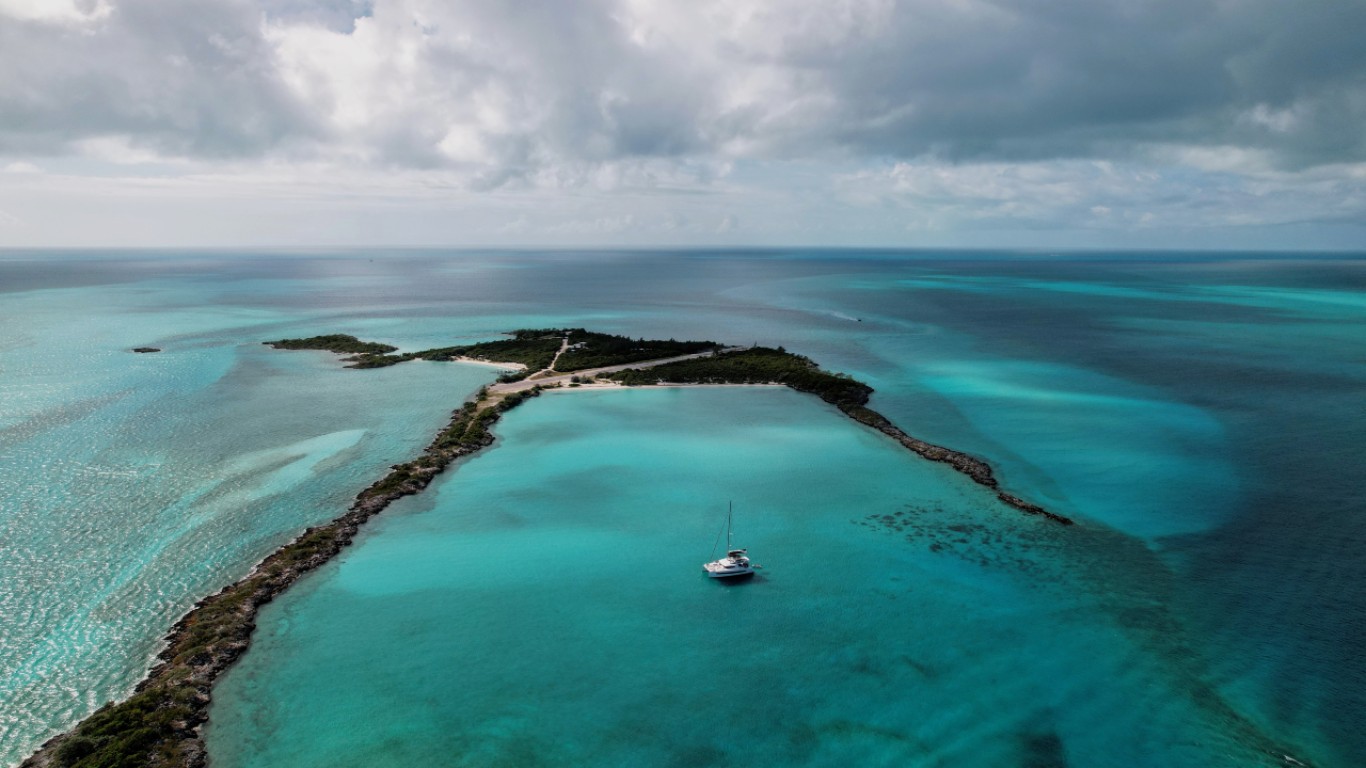
Alquiler de yate con tripulación en las Bahamas
Explore las Exumas en un yate privado con tripulación. Cerdos nadadores, bancos de arena y algunas de las aguas más cristalinas del mundo.
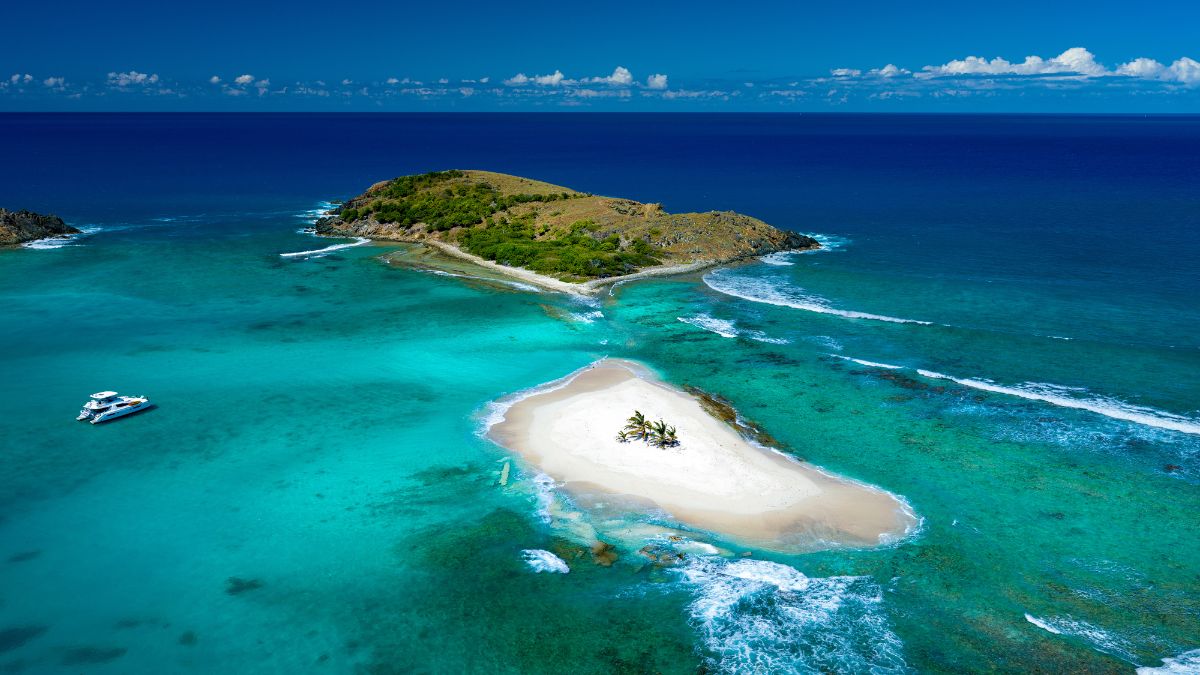
Alquiler de yate con tripulación en el Caribe
Alquiler de yate todo incluido con tripulación en todo el Caribe — Islas Vírgenes Británicas, Bahamas, Islas Vírgenes de EEUU, St. Martin, Antigua y más.