


Matt Weidert
Montenegro vs Croatia: Which Adriatic Trip Should You Take?
I'll start this with what most people Googling "Montenegro vs Croatia" don't admit they're really asking: which one of these two countries is actually worth my next vacation. Both look beautiful in the photos. Both come up in the same Adriatic recommendation lists. And on every comparison article online, both win.
Here's the more useful answer.
I haven't personally chartered yachts in either country — my fifteen-plus years on the water is mostly Caribbean and Bahamas — but I've spent the last few years working with the captains and brokers who run between these two Adriatic coasts every season, and I've sat with enough first-time-Adriatic guests on the back end of bookings to know what they wished someone had told them. This is what I've learned. If you want the postcard version, every other article on the internet has it. This is the practical version.
Montenegro vs Croatia: The Short Answer
If this is your first time in either country and you want one big country, a deep restaurant and hotel scene, and the easiest logistics — pick Croatia. Specifically the southern Dalmatian coast from Split to Dubrovnik. It has been the canonical Adriatic trip for twenty years for good reason: 1,800 km of coastline, 1,200-plus islands, a serious food and wine country, and a Croatian-airline network into both Split (SPU) and Dubrovnik (DBV) that makes it easy from anywhere.
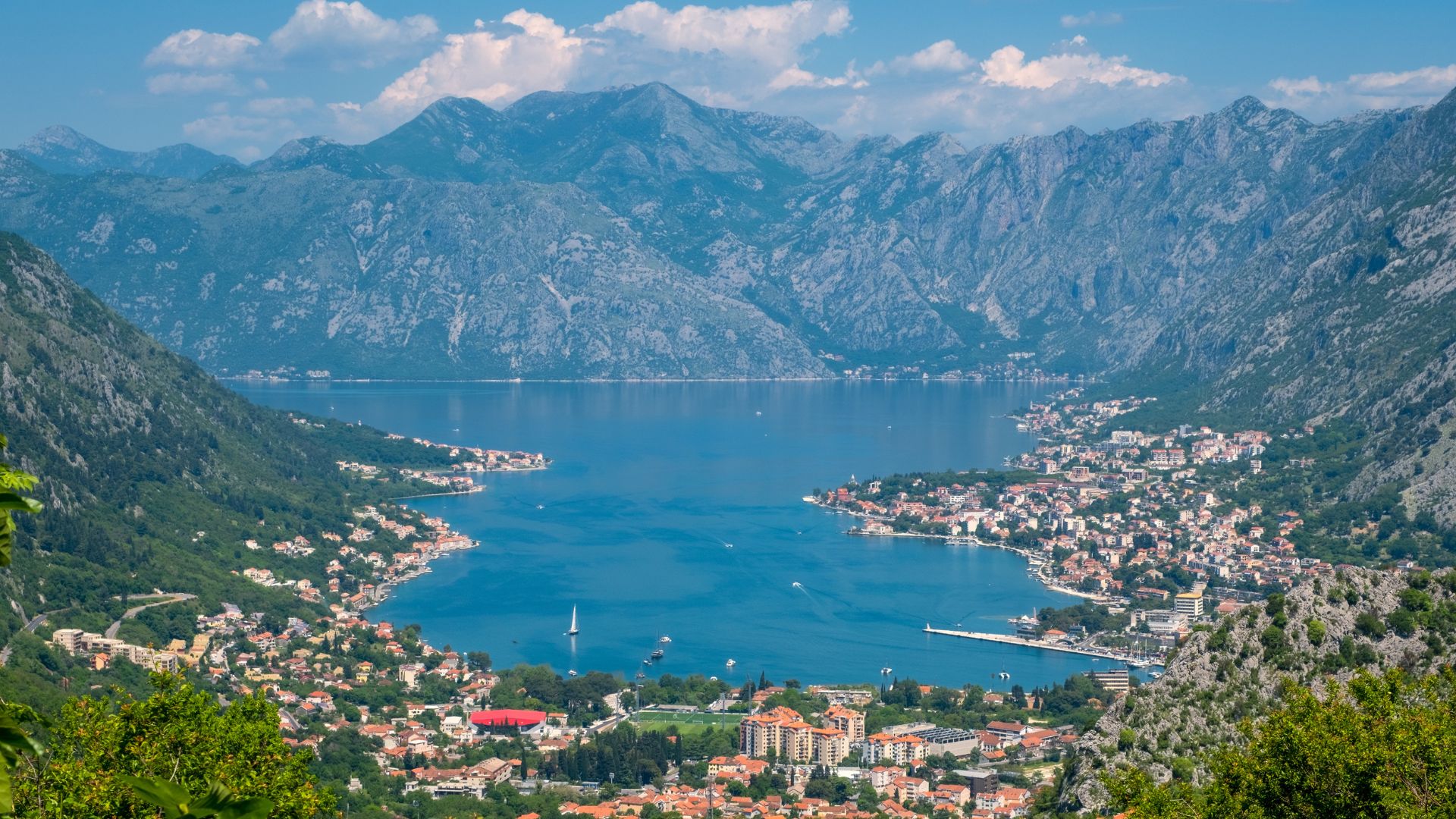
If you have already done a Mediterranean week — or you want quieter, cheaper, and a coastline that does not look like anywhere else in Europe — pick Montenegro. Specifically the Bay of Kotor, a 30-kilometer-long flooded river valley with a 1,700-meter mountain wall dropping straight to the water, a UNESCO-walled medieval town at its inner head, and a fraction of Croatia's crowds. The country is small in a way that works for a trip — small enough to actually see, big enough that no two days feel the same.
If you can do both — and most repeat Adriatic travelers eventually do — combine them. Two weeks, Split → Dubrovnik → Kotor. Or one week if you are moving fast. The single cross-border day is straightforward in any direction. We've written the full Croatia destination guide and Montenegro destination guide separately if you want the long version of either country.
The rest of this is the why.
Croatia vs Montenegro: The Two Cruising Grounds Side by Side
Croatia is the Dalmatian coast — about 1,800 km of coastline running south from Istria to Dubrovnik, with somewhere around 1,185 islands inside that span (only about 66 of them inhabited). The charter ground people actually use is the southern stretch: Split south through Brač, Hvar, Vis, Korčula, Mljet, the Pelješac peninsula, the Elaphiti islands, and Dubrovnik. That is where the marinas, the airports, and the marquee anchorages are. From the southernmost yacht-charter base at Dubrovnik's ACI Marina to the northern hub at Trogir is about 130 nautical miles direct — meaning a 7-night charter can do the highlights as a one-way or as a round-trip out of Split, and a 14-night charter can take in everything.
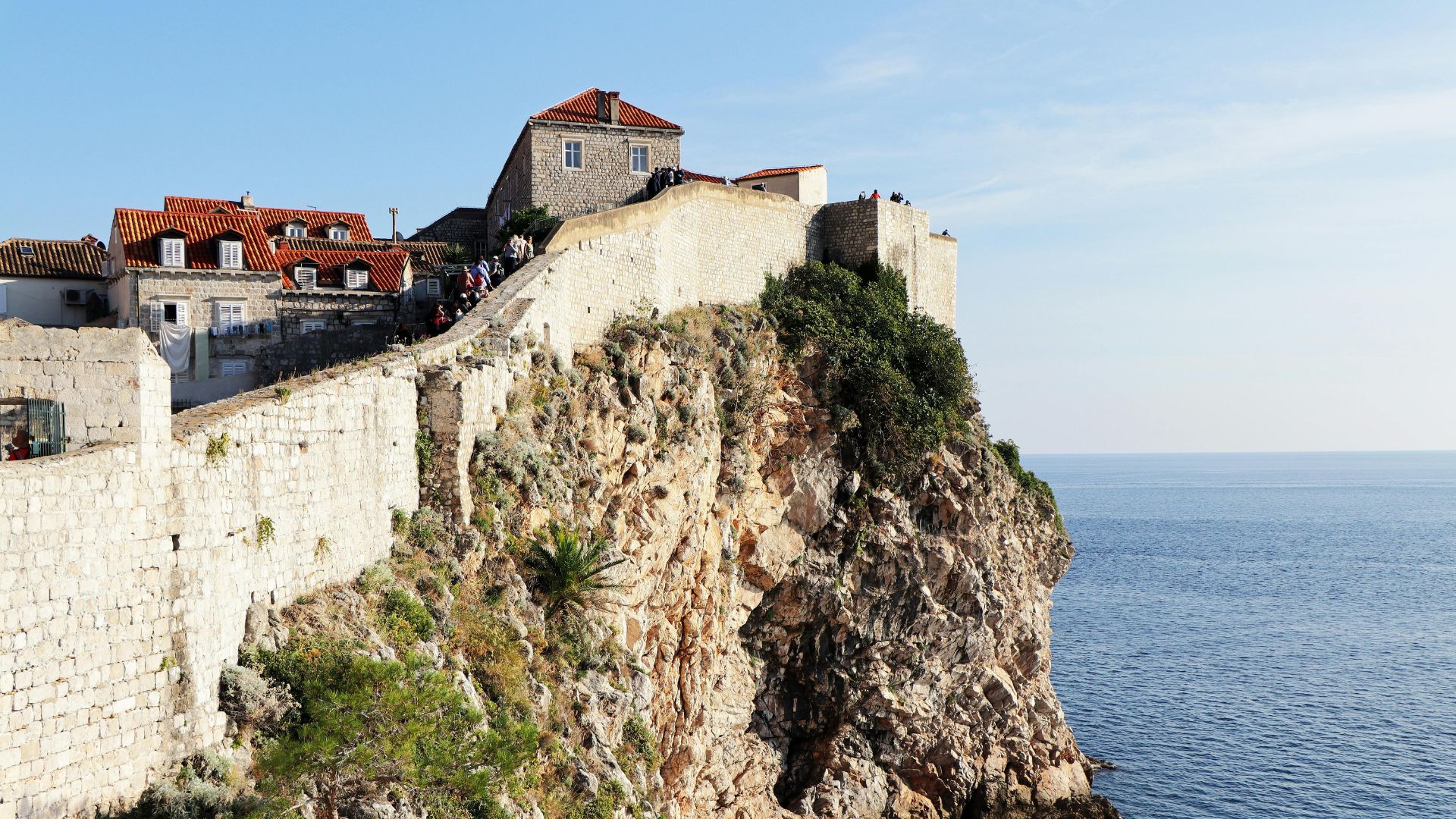
Montenegro is the opposite shape: roughly 60 nautical miles of charter-relevant coast, tip to tip, from the entrance of the Bay of Kotor at Herceg Novi down to Bar in the south. The marquee is the bay itself — the Bay of Kotor (Boka Bay), a long flooded river valley most people call a fjord. It is technically a ria, not a fjord. The visual experience, though, is honest fjord-character cruising — Mount Lovćen rises 1,749 metres straight out of the water at the bay's inner head, and the medieval city of Kotor sits at the foot of that wall with stone fortifications climbing 1,200 metres above the Old Town. There is nowhere else in the Mediterranean where you anchor with a vertical mountain wall directly above you. That is the experience you are paying for.
Two countries, two completely different cruising-ground shapes. Croatia is breadth and variety. Montenegro is depth and verticality. They are not in competition with each other — they are trying to do different things. That is the actual answer to the Montenegro vs Croatia question, and it is the answer most comparison articles miss.
The Towns You'd Actually Spend Time In
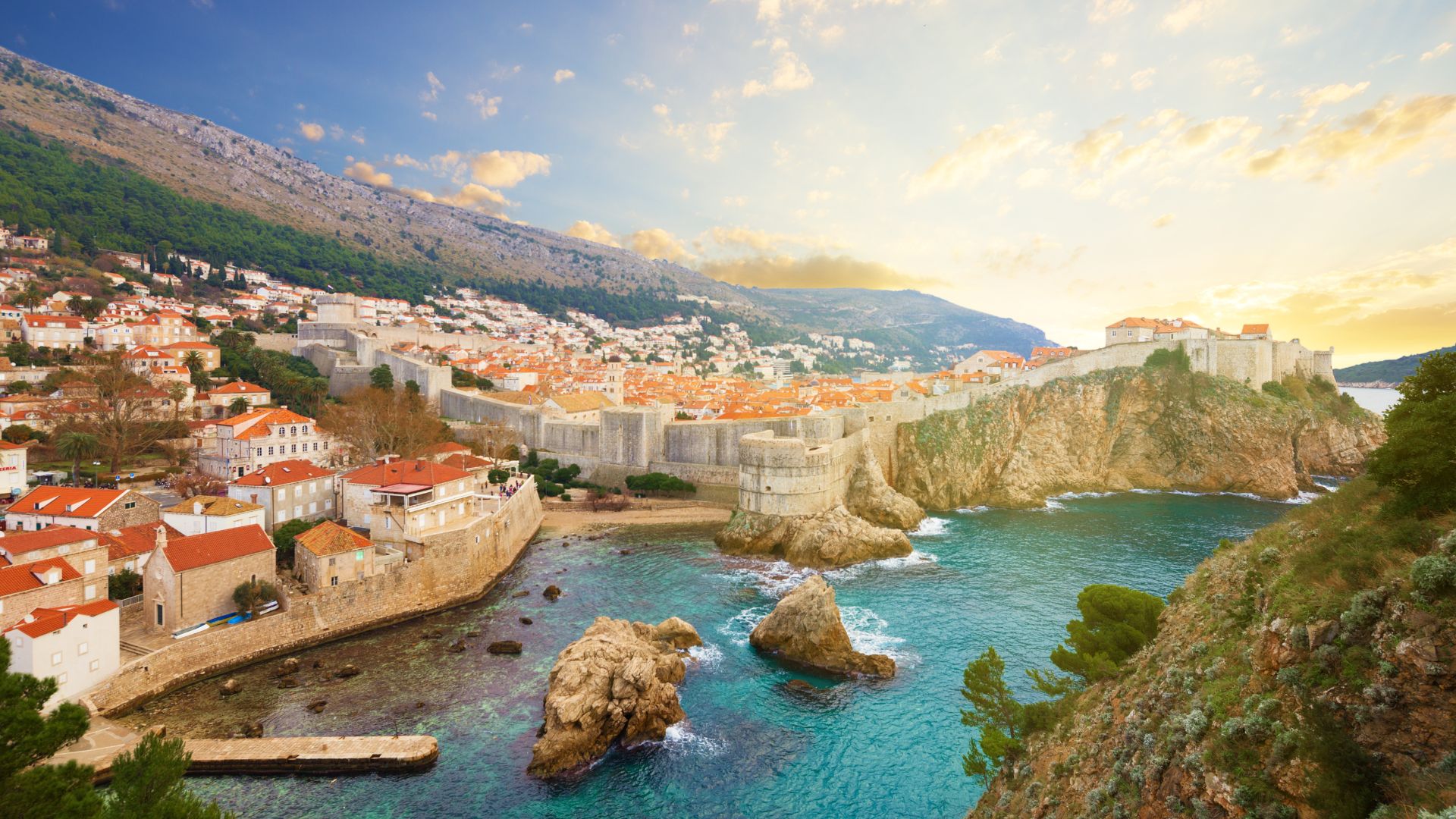
Croatia's marquee three: Dubrovnik, Split, and Hvar. Dubrovnik is the one everyone knows — the UNESCO walled city on the southern coast, the iconic ninety-minute walls walk, the cruise-ship congestion in the afternoons (book breakfast inside the walls, not lunch). Split is bigger, more functional, and built around Diocletian's Palace — a fourth-century Roman imperial residence that is now a working downtown with apartments and bars inside the original walls. Hvar town is the social capital — yacht clubs, beach clubs, a real summer scene, also the lavender island. Beyond those three: Korčula (Marco Polo's birthplace claim, walkable old town, one of the best restaurant scenes on the coast), Vis (until 1989 a closed Yugoslav military island, now the quietest of the marquee stops), Mljet (national park with two saltwater lakes and a 12th-century Benedictine monastery on one of them), and the Pelješac peninsula for the Plavac Mali vineyards inland.
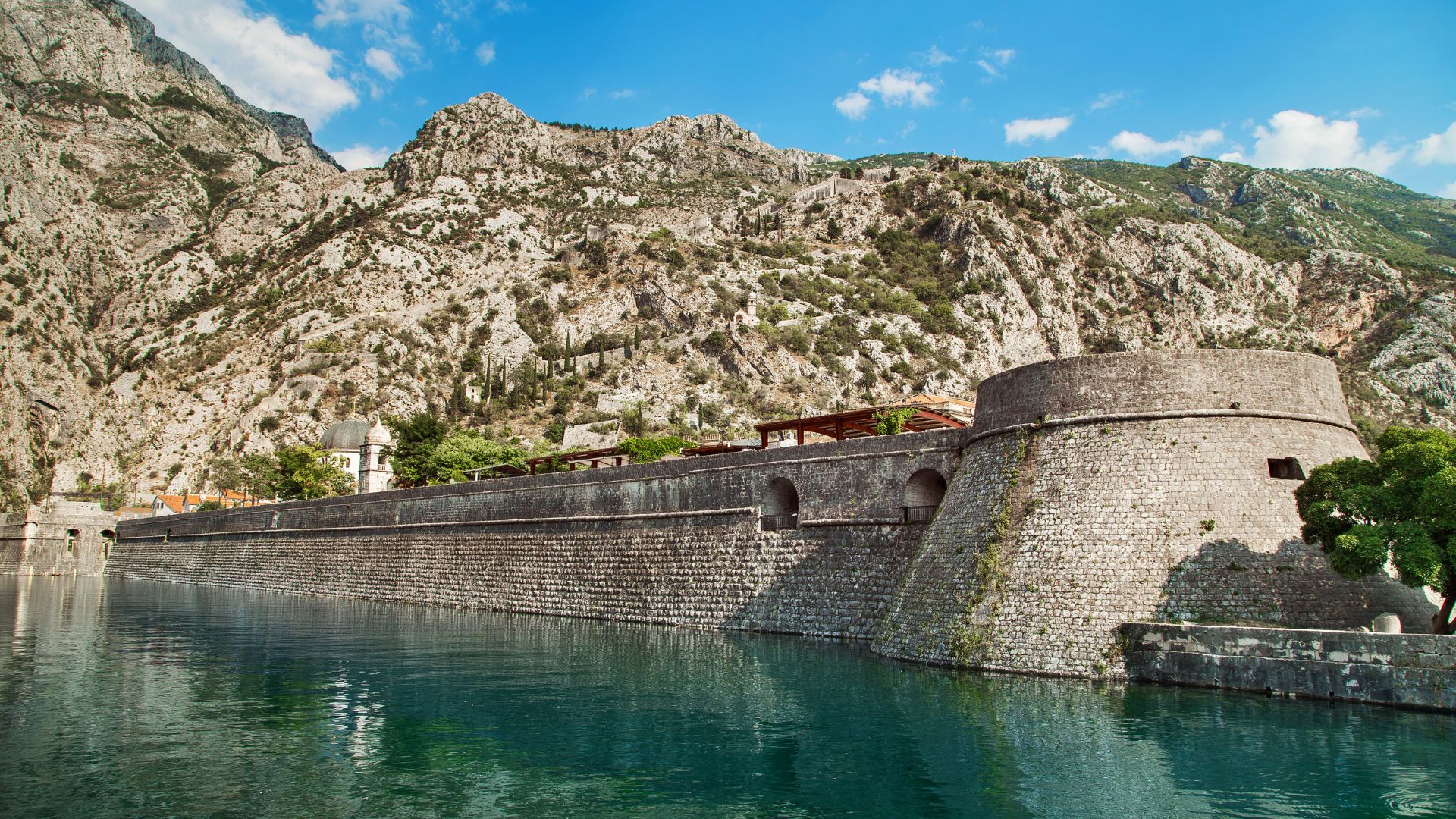
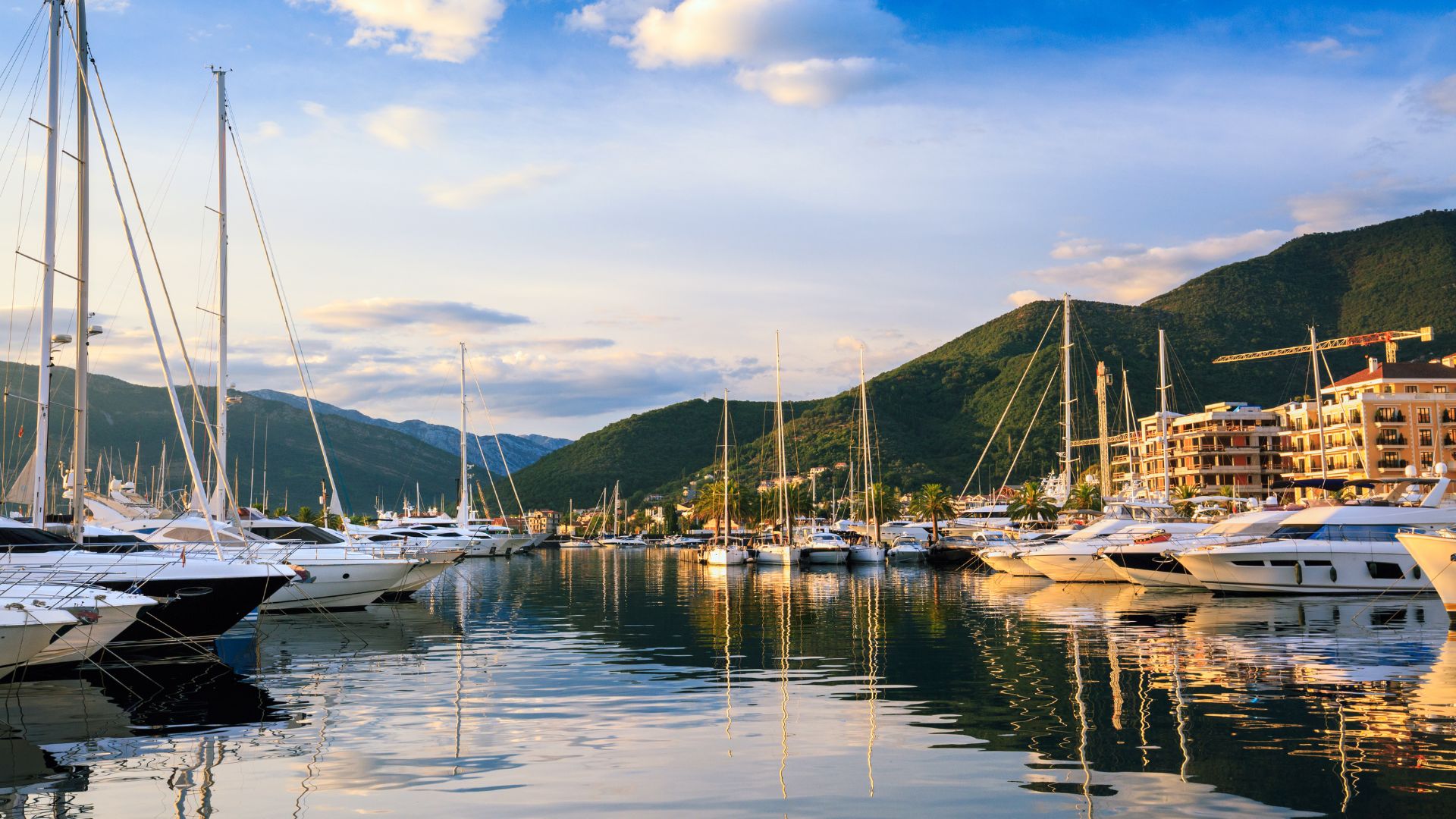
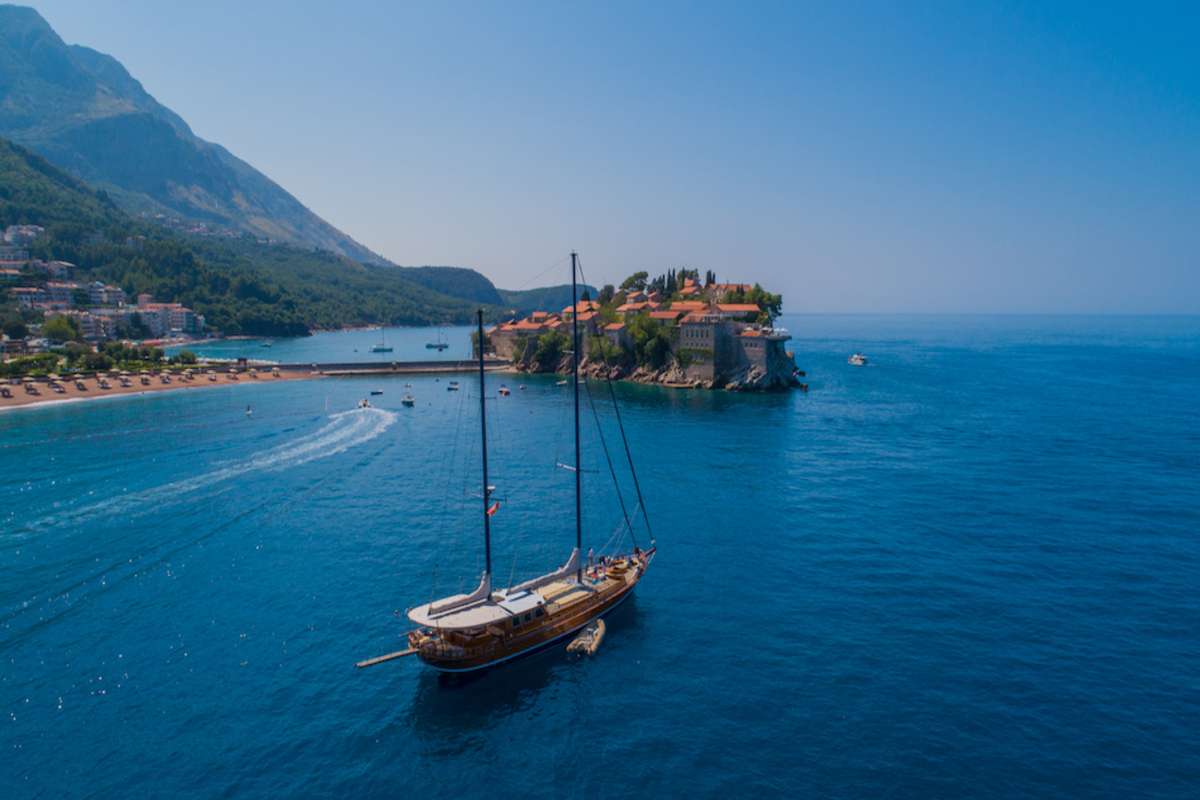
Montenegro's marquee four are smaller and closer together: Kotor, Perast, Tivat, and Sveti Stefan. Kotor is the UNESCO medieval town at the bay's inner head — the walled Old Town walks in an hour, the 1,200-meter fortification climb up Mt. Lovćen above the city is the iconic Montenegro photograph (do it in the cooler hour before sunset). Perast is the baroque town facing two small islands — Our Lady of the Rocks, an artificial island built over two hundred years from sunken-ship ballast, with a baroque church on top, and St. George, the natural islet with a Benedictine monastery. Tivat is the new-money town built around Porto Montenegro, the bay's superyacht marina — the Regent Hotel sits on the quay, the restaurant scene is the most polished on the coast. Sveti Stefan is the fortified medieval island a hundred meters off the mainland — the Aman that operated it 2009–2021 is currently closed in a legal dispute with the government but the silhouette from the road or the sea is the Montenegro shot. Smaller: Budva (busier old town, fifteen minutes north of Sveti Stefan), Herceg Novi (working town at the bay's outer end, the Forte Mare fortress above the harbor), and the Luštica peninsula (the bay's outer-southern arm, Blue Cave swim spot, Mamula Island fortress).
The walkability angle matters in the Montenegro vs Croatia decision: Croatian old towns are bigger and need more time. Kotor's medieval core walks in under an hour. Whichever country you pick, you spend less time getting in and out of stops in Montenegro and more time inside them.
Food and Wine
Both countries lean into Mediterranean — olive oil, grilled fish, lamb, vegetables, bread — but the regional registers diverge. Croatian Dalmatian cooking is closer to coastal Italian than people expect: peka (meat or octopus slow-cooked under a bell-shaped iron lid), brodet (fish stew), pašticada (slow-braised beef in red wine), black risotto from cuttlefish ink. The wines are the real story — Pošip (the southern Dalmatian white, mineral, structured, mostly from Korčula) and Plavac Mali (the dense Pelješac red that's a genetic cousin to Zinfandel) both deserve attention. Cheese from Pag island. Olive oil from Brač. The Croatian wine scene is in the middle of a quality renaissance — the names to know are Stina, Bibich, Korta Katarina, Krauthaker.
Montenegrin cooking shows the Boka region's history: Venetian on the coast, Ottoman in the highlands, a real Adriatic-Balkan crossover. Fresh seafood at the bay's restaurants (Conte in Perast, Galion in Kotor, La Veranda inside One&Only Portonovi if you're spending), but the inland register is where it gets interesting — Njeguški pršut (Mt. Lovćen prosciutto, similar to but distinct from Dalmatian pršut), Njeguški kashkaval cheese, lamb cooked under the sač (Montenegrin peka). The wine story is smaller: Vranac is the dense Montenegrin red, served at every table, often house-poured from the Plantaže producer in the Skadar Lake region. Krstač is the white. Quality has come a long way in ten years; we're still talking about a hundred-thousand-case industry total, not Croatia's deeper bench. If you're a wine person, Croatia delivers more on this axis of the Montenegro vs Croatia comparison.
Getting There (Without a Yacht)
For Croatia, you fly into Dubrovnik (DBV) or Split (SPU). DBV has more direct US East Coast service in summer (American, Delta, and United run seasonal direct from JFK and PHL). SPU is better for guests starting in the north. The Croatian Catamaran ferry network (Krilo, Jadrolinija) connects Split, Hvar, Korčula, Dubrovnik, and the islands cleanly — the fast ferries run twice daily in summer, and you can stitch a perfectly serviceable island-hopping trip together using just ferries and hotels.
For Montenegro, you fly into Tivat (TIV) if you want to be in the country, or DBV if you're combining with Croatia. Tivat has seasonal direct service from London, Paris, Frankfurt, Vienna, Istanbul, and Belgrade. From the US East Coast you connect through London, Frankfurt, or Istanbul — twelve to sixteen hours total. The DBV-to-Kotor drive is two and a half hours including the border crossing (which is straightforward by car — passports, ten minutes, no visa for US/UK/EU). Renting a car in Dubrovnik and driving south through Montenegro and back is a legitimate one-week itinerary if you don't want a yacht; we'd add a night in Cavtat or Konavle on the way down and a night at the One&Only Portonovi or the Regent Porto Montenegro at the bay's center.
Ferries between the two countries are less developed than you'd expect. The seasonal Dubrovnik–Bari (Italy)–Kotor circuit runs but isn't a daily option. For a multi-country trip, the road is faster and easier than the water unless you're on a yacht.
Croatia vs Montenegro: The Cost Math, Beyond Just the Charter
For a non-charter traveler the cost math is more about hotels, restaurants, and ground transport than tax line items. Both countries are still meaningfully cheaper than France, Italy, or Spain at equivalent quality, and the gap between Croatia and Montenegro is real but narrower than it used to be — Croatia's hotel rates in Dubrovnik and Hvar in peak season are now Italy-comparable, while Montenegrin rates outside the One&Only Portonovi and Regent Porto Montenegro stay below Croatia by roughly thirty percent on like-for-like. Restaurants are a tier cheaper than Croatia on average. Day-tours, transfers, and taxis are roughly the same.
Charter VAT — only relevant if you're chartering a yacht
Croatian charter VAT is 13% on the base rate — a reduced rate Croatia introduced specifically to compete with neighbouring countries on yacht charter. It's not the EU standard; the Croatian reduced rate is one of the most competitive in the Mediterranean. By comparison, France and Monaco charge 20% on charter departures from their ports, Italy charges 22%, Spain charges 21%, and Greece charges 12% reduced.
Montenegrin charter VAT for foreign-flagged commercial yachts is 0%. Montenegro isn't in the EU, doesn't apply EU VAT rules to commercial yacht charters, and doesn't charge a domestic equivalent on the charter fee for foreign-flagged inventory. The country also charges no VAT on fuel — a real cost difference when the captain refuels mid-charter. Croatian-flagged or Italian-flagged inventory operating in Montenegrin waters works differently, and the captain knows which yacht falls into which bucket; we tell guests up front.
On the same yacht at the same base rate, a Montenegrin charter saves you the 13% Croatia would charge. On a $50,000 base week that's $6,500. On a $100,000 base week that's $13,000. Treat it like the duty-free side of the equation — it's real money and it shows up at booking, not after.
One important caveat: if your itinerary crosses the border (which is the most common Montenegro pattern — a one-way from Dubrovnik to Kotor), Croatian VAT applies pro-rata for the days spent in Croatian waters. So a week that starts in Dubrovnik with one day inside Croatia and six in Montenegro would pay 13% on one-seventh of the base rate. The captain logs the time in each country's waters and the broker calculates the split at trip end.
Yacht inventory — Croatia is wide, Montenegro is narrow
Croatia has somewhere between 400 and 1,200 crewed yachts available for charter, depending on whose count you trust. The fleet skews modern catamaran heavy (Lagoon 50, Fountaine Pajot Saba 50, Bali 5.4 are the workhorse boats) with a healthy motor yacht and superyacht segment above 30 metres. The country has been a serious charter destination for two decades and the inventory reflects that — anything from a 50-foot crewed cat at $25,000 a week to a 75-metre superyacht at $1.5 million plus.
Montenegro's resident charter fleet is much smaller — somewhere around 30 yachts that actually summer in Montenegrin waters in the observation pool we work from, and our data is consistent with what the Boka-based agents publish. The reality is that most yachts that work Montenegro for the week reposition there from Croatia for the booking. The Croatian catamaran fleet (Touch Adriatic, Sail Dalmatia, others) routinely runs a week south for Montenegro guests and a week north for Croatia guests.
What that means practically: if you want a wide selection and want to compare four or five yachts before booking, Croatia gives you more to choose from. If you want a Montenegro week specifically, the captain will likely be a Croatian boat running south, and our pool surfaces enough quality options to build a real choice without needing the Croatia fleet's depth.
Crowds, Peak Season, and the August Reality
Croatia in July and August is busy. Hvar harbor in peak week genuinely is a queue of superyachts; Dubrovnik gets hit by cruise-ship day-traffic that congests the Old Town in the afternoons; the marina restaurants book a week ahead and the marquee anchorages off Hvar town hold dozens of yachts on a hot Saturday. Some guests love the energy — Hvar's beach clubs (Carpe Diem, Hula Hula) and Pakleni day-anchorages at peak are a legitimate part of the experience. Some hate it. We tell first-time Croatia clients honestly: if you want quiet, book June or September. If you want the social Hvar week, book July or August and we'll route around the worst congestion at the right times of day.
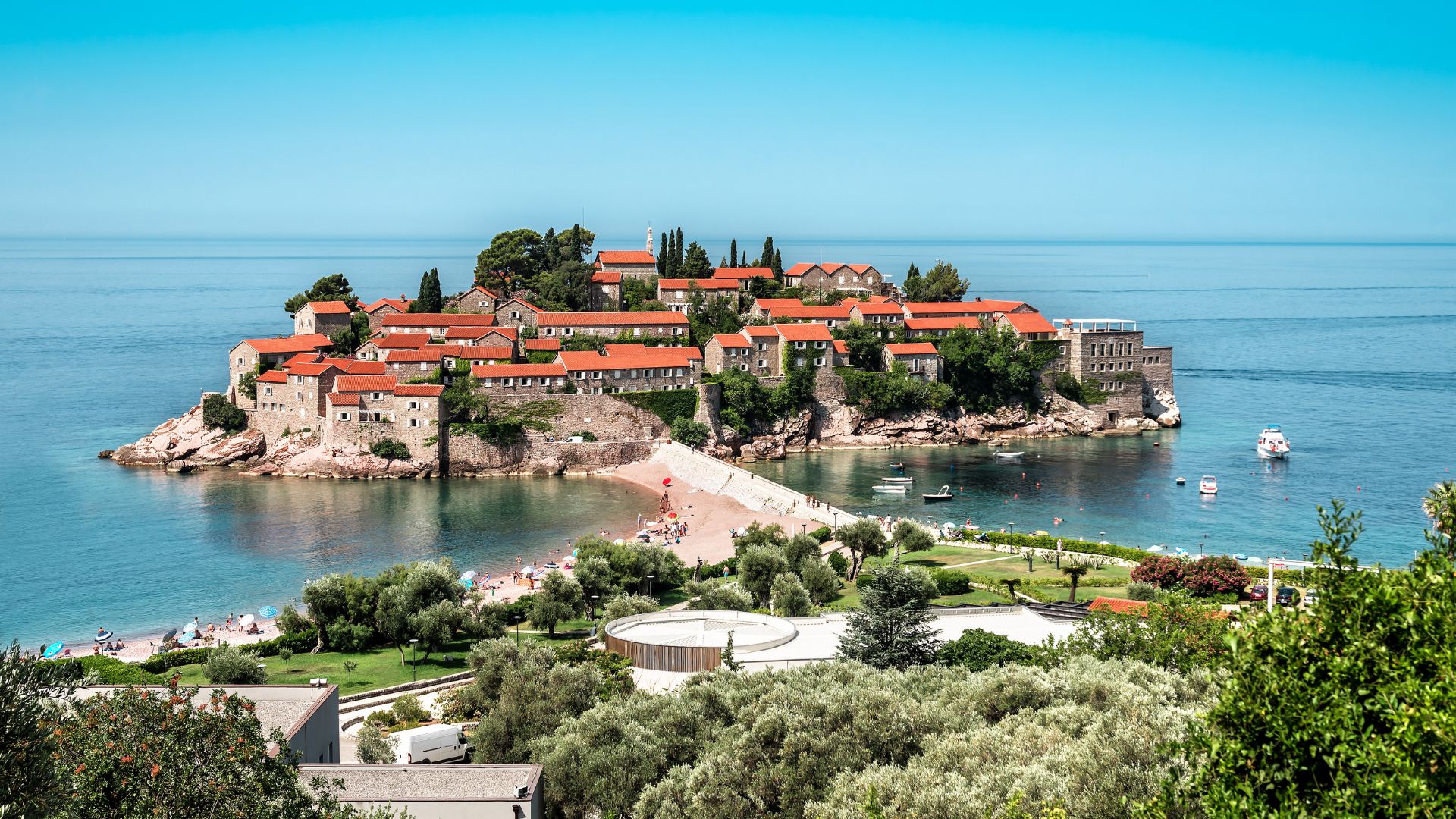
Montenegro in July and August is busy by Montenegrin standards, which is much less busy than Croatian standards. Porto Montenegro's restaurants book ahead, the Sveti Stefan offshore anchorage holds a dozen yachts on a good Saturday, and the One&Only Portonovi runs a waitlist. But the Bay of Kotor doesn't have a Hvar — there's no single anchorage that turns into a hundred-yacht parking lot. The 60-nautical-mile cruising ground spreads the inventory thinner than the Dalmatian coast does. If quiet matters to you in peak, that's a real reason to pick Montenegro over Croatia.
Shoulder season — late May through June and September into early October — is when both coasts are at their best. Warm enough to swim, the marina restaurants have tables, the rates run 20–30% below peak. June and September are the months we book for first-time Med charterers who can flex their calendar; the trade-off is slightly cooler water (the Adriatic warms to 22–24°C by July) and the occasional weather system rolling down the Adriatic, but the captain plans the route around the forecast and the savings are real.
Montenegro vs Croatia: Who Picks Which
Honest framing of the Montenegro vs Croatia decision:
- First Med charter ever, big group (8+ guests), kids on board: Croatia. More inventory in the catamaran segment that handles bigger groups, more marquee-restaurant nights, more flexibility to adapt the route to the kids' energy and the weather, the Dubrovnik-or-Split airport choice for international travel.
- Already done the Croatian week, want something different: Montenegro. The Bay of Kotor doesn't look like the Dalmatian coast and the experience is genuinely different — verticality, fewer islands, the 0% VAT, the One&Only Portonovi as a stop-ashore anchor, the cross-border story.
- HNW guests for whom the 13% VAT line item is a real conversation: Montenegro for the cost-tax math, or a Croatia-Montenegro combined week to optimize across both.
- Anyone whose group includes a Yacht Week–style social-energy contingent: Croatia, and probably July. Montenegro doesn't have that scene at scale.
- Anyone whose group includes wellness or longevity priorities: Montenegro, with a stop at the Chenot Espace inside One&Only Portonovi. There's nothing equivalent on the Croatian coast.
If You're Considering a Yacht Charter
The rest of the post is for charter shoppers. If a yacht trip isn't on the table, skip to the closing — the cost, towns, food, and getting-there sections above cover the rest of the comparison.
What a Week Actually Looks Like in Croatia
The two routes that get the most bookings:
Split to Dubrovnik one-way (about 130 nm, 7 nights). Embark Split; head south through Brač (Bol's Zlatni Rat / Golden Horn, one of the most photographed beaches in the Adriatic); overnight Hvar for the Old Town, the Pakleni islands, and the Carpe Diem / Hula Hula scene; a day at Vis for the Stiniva cove and the Blue Cave at Biševo; Korčula for the Marco Polo old town and one of the best restaurant scenes on the coast; Mljet's national park for the saltwater lakes and the 12th-century Benedictine monastery; the Elaphiti islands for a quieter day before Dubrovnik; finish Dubrovnik with a night at the ACI Marina and the Old Town walls at sunrise. This is the iconic Croatia week. Full day-by-day in our central Dalmatia itinerary.
Split round-trip (similar mileage, 7 nights). Same southern islands but with the loop back through Hvar's Pakleni cluster or out to Vis and Lastovo on the return. Useful for guests flying in and out of Split and wanting to skip the one-way transfer to Dubrovnik airport.
What a Week Actually Looks Like in Montenegro
The two we'd actually book for a guest:
Bay of Kotor round-trip out of Tivat (about 70 nm, 7 nights). Embark Porto Montenegro; up to Kotor for the Old Town walls climb and dinner ashore at Galion or Bocalibre; Perast for the tender out to Our Lady of the Rocks; out through the Verige Strait narrows (the bay's 340-metre gateway) to Žanjic and the Blue Cave on the Luštica peninsula; the offshore swim day at Sveti Stefan with the fortified-island silhouette filling your foreground; an overnight at D-Marin Portonovi and dinner at La Veranda inside the One&Only Portonovi; a last day back through the inner bay past the Lipci petroglyphs above Risan; disembark Tivat. Full day-by-day in our Bay of Kotor round-trip itinerary.
Dubrovnik to Kotor one-way (about 100 nm, 7 nights — including the cross-border day). Embark Dubrovnik; a night in the Old Town; Cavtat for the customs morning; cross to Herceg Novi to clear in and overnight at D-Marin Portonovi; through Luštica to the Blue Cave and Mamula; Verige Strait into Tivat for Porto Montenegro; up to Perast and Kotor; finish with the Sveti Stefan swim day; disembark Tivat. This is the marquee Montenegro itinerary — it captures the cross-border story, owns the head-term search, and routes through both countries' best stops in one week. Full day-by-day in our Dubrovnik to Kotor crossing itinerary.
The Combined-Week Answer (Worth Its Own Section)
The most-booked Adriatic charter for repeat-Med guests: Split → Hvar → Korčula → Mljet → Dubrovnik on the front half (the canonical Croatian week), then south across to the Bay of Kotor on the back half. Ten or fourteen nights total. The yacht type that runs this best is a modern crewed catamaran 50–65 feet or a motor yacht 30–45 metres. Either handles the cross-border legs cleanly and the Dalmatian-to-Boka transition is a single half-day of cruising. The captain plans the customs morning into the schedule from the start, so it lands as a soft day rather than a full cruising-day cost.
For VAT purposes: charter VAT in this scenario is paid at the rate of the country where the charter starts, then a pro-rata adjustment for time spent in the other country's waters. Embark Split, you pay 13% Croatian VAT on the base rate proportional to the Croatian days; embark Kotor, you pay 0% on the Montenegrin portion and a 13% pro-rata for the Croatian days. Either direction works; the cost is roughly equivalent.
When to Actually Book This
Both coasts: June, July, August, September, and the front half of October are the working months. Peak (July and August) is hottest, busiest, and 25–40% above shoulder pricing. Shoulder (June and September) is the working sweet spot for most Mediterranean veterans. May and October work for the value-conscious — slightly cooler swimming, lower rates, occasional weather, but a captain who knows the coast routes around the forecast.
The best yachts and crews on both coasts book nine to twelve months in advance. If you're targeting peak weeks, especially with a specific yacht in mind, we tell clients to inquire at least eight months out. Shoulder weeks are easier to land closer to departure but the inventory you actually want (the named, well-reviewed boats with the captains who've done these coasts for years) still goes early.
Montenegro vs Croatia: The Bottom Line
Croatia for breadth, variety, the deeper food and wine country, and the easier first trip. Montenegro for depth, quiet, the verticality you don't get in the Mediterranean anywhere else, and a real cost gap on hotels and meals. Both for the trip you'll remember longest — and the one most repeat Adriatic travelers eventually book.
If you're shopping a yacht charter specifically, the destination pages have the long versions: Croatia yacht charters and Montenegro yacht charters. The marquee Adriatic itinerary — the one-way cross-border week most repeat guests book — is the Dubrovnik to Kotor one-way. The slower Montenegro-only week is the Bay of Kotor round-trip from Tivat. Reach out and we'll walk through the calendar, the group, and the route. The research is on us.
— Matt

