Crewed Itinerary · Abaco Bahamas · Round-Trip

The Classic Abacos Loop: A 7-Day Crewed Bahamas Charter

If it's your first Abacos charter, this is the week we'd book. Seven nights on the Sea of Abaco stringing together the chain's greatest hits: sundowners at the bluff-top beach bar on Great Guana, the lighthouse beam sweeping your mooring in Hope Town harbor, the sandbar at Tahiti Beach appearing on the falling tide, Man-O-War's working boatyards, and New Plymouth's drifted-south New England streets — with no leg longer than a couple of easy hours.

The logistics are the easiest in our range: under an hour's flight from Florida, minutes from wheels-down to swimming off the boat. And the barrier cays keep the entire route in protected water — which is why this is the Bahamas chain we recommend for mixed groups and three-generation trips: flat passages, a lee anchorage behind every cay, and the swim platform usable essentially every day.

Duration
7 days / 7 nights
Base
Marsh Harbour, round-trip
Plan your the Abacos charter Custom-tailored to your dates and group preferences
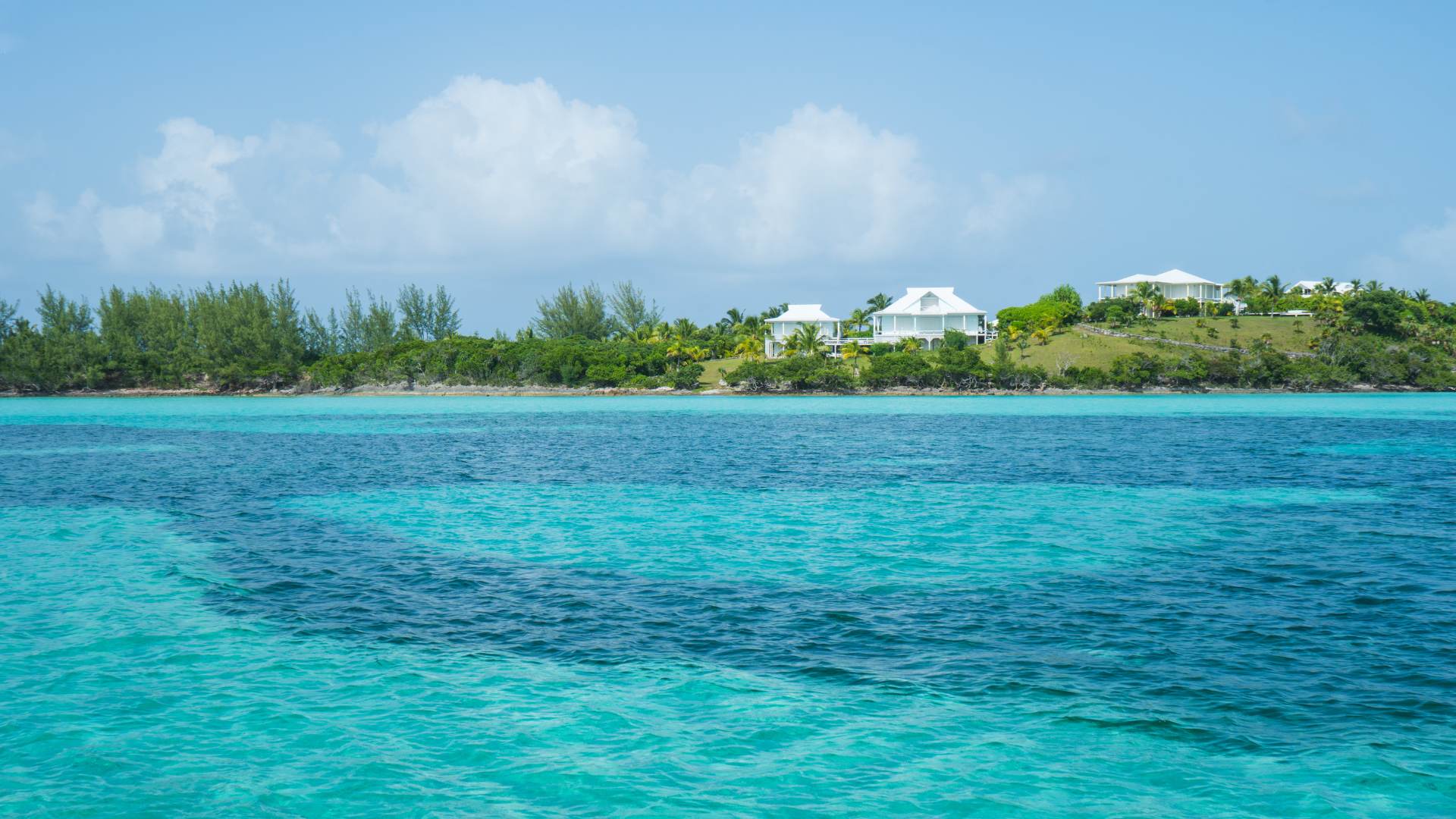
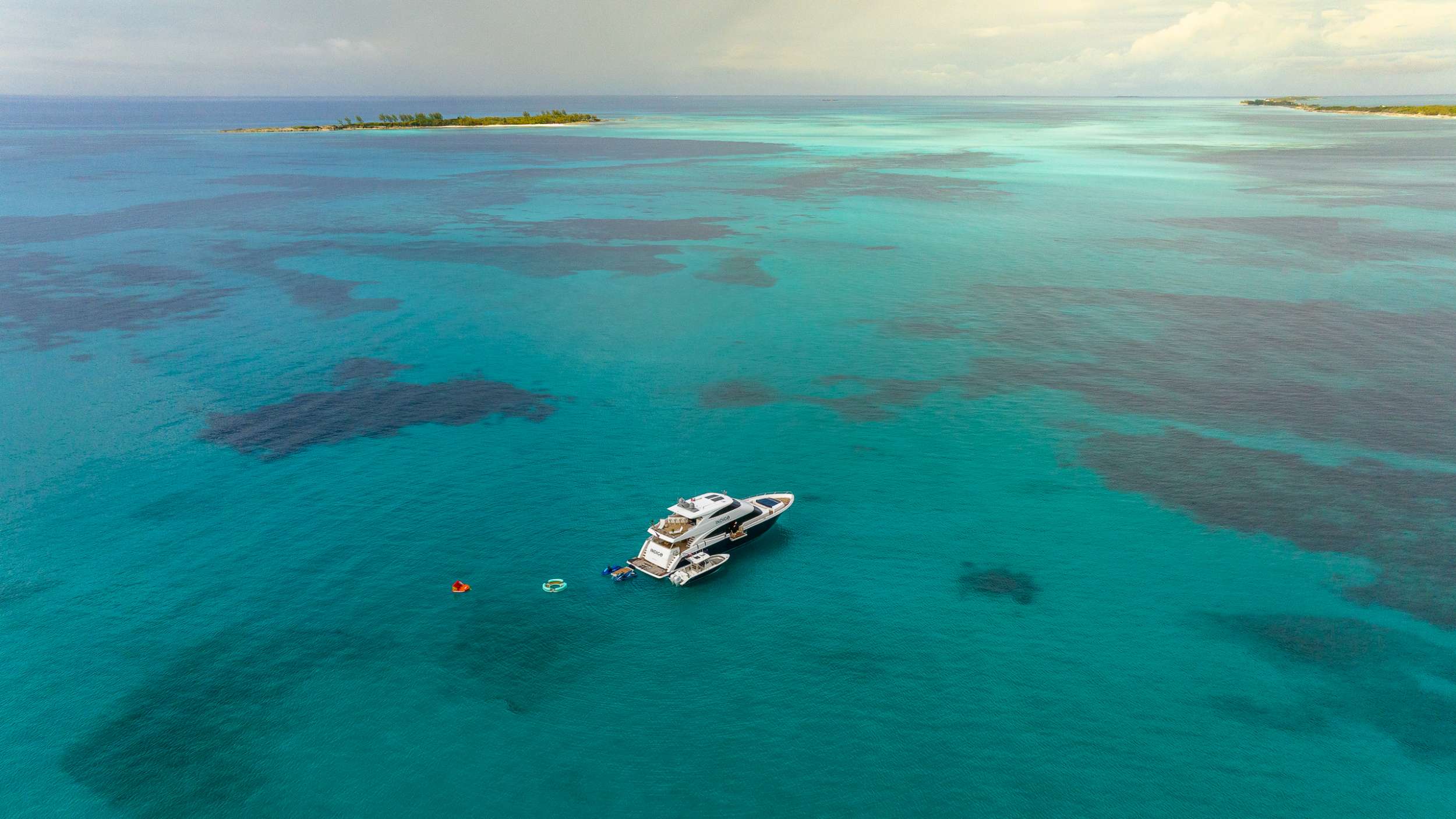
Drone aerial of a motor yacht anchored in shallow turquoise, toys deployed.
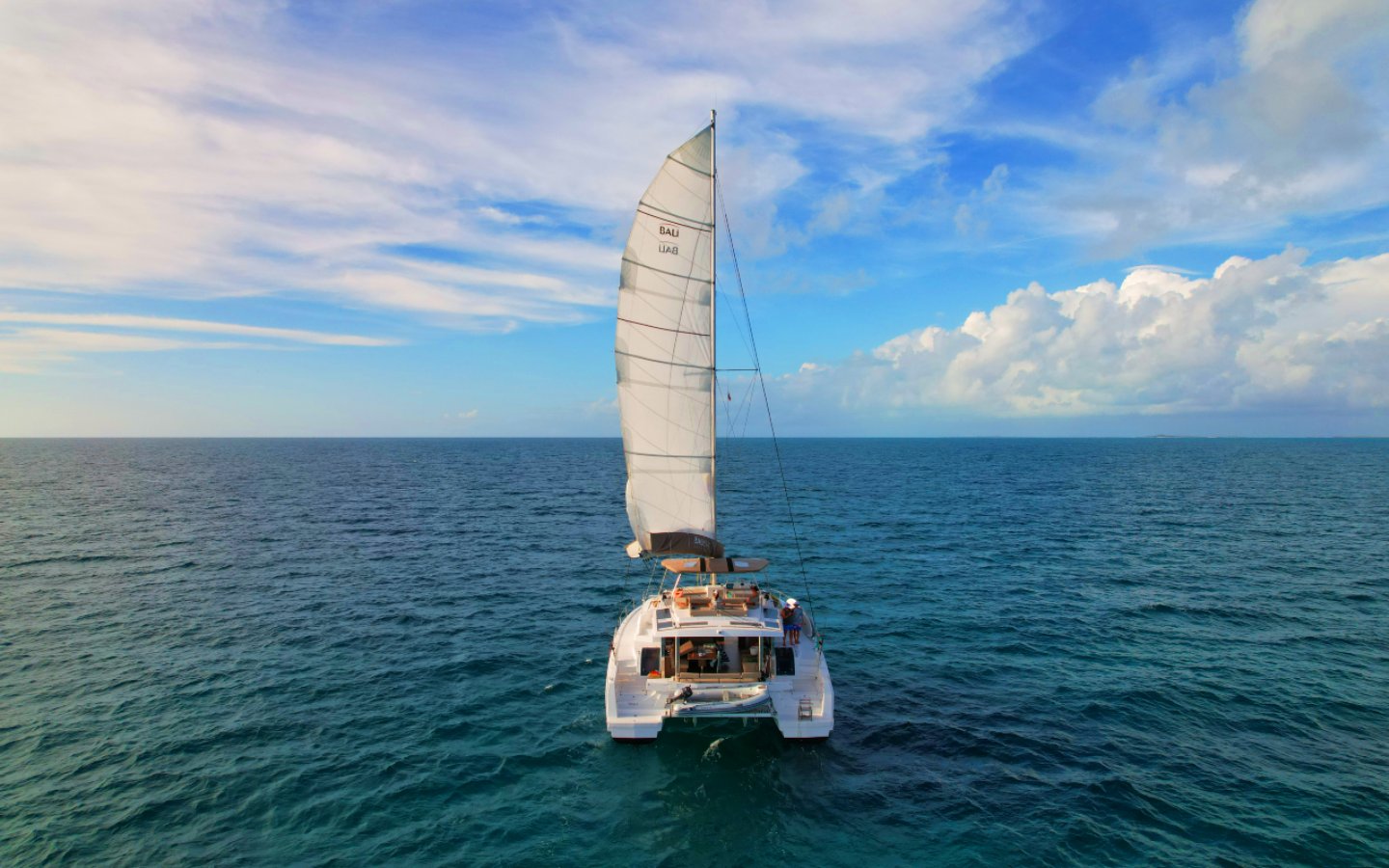
A crewed sailing catamaran running downwind in Bahamas water.
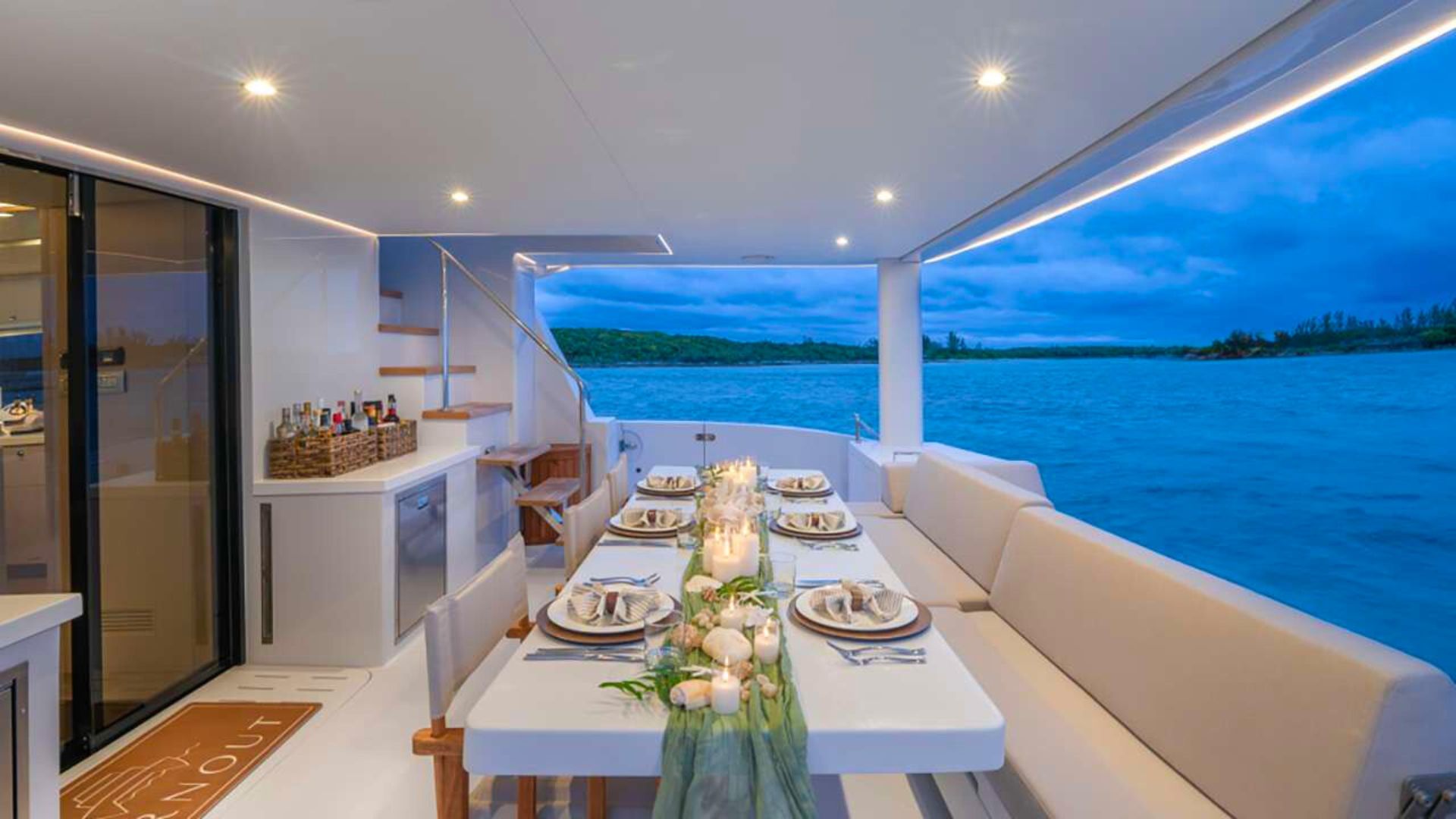
A candlelit aft-deck dinner table set at dusk.
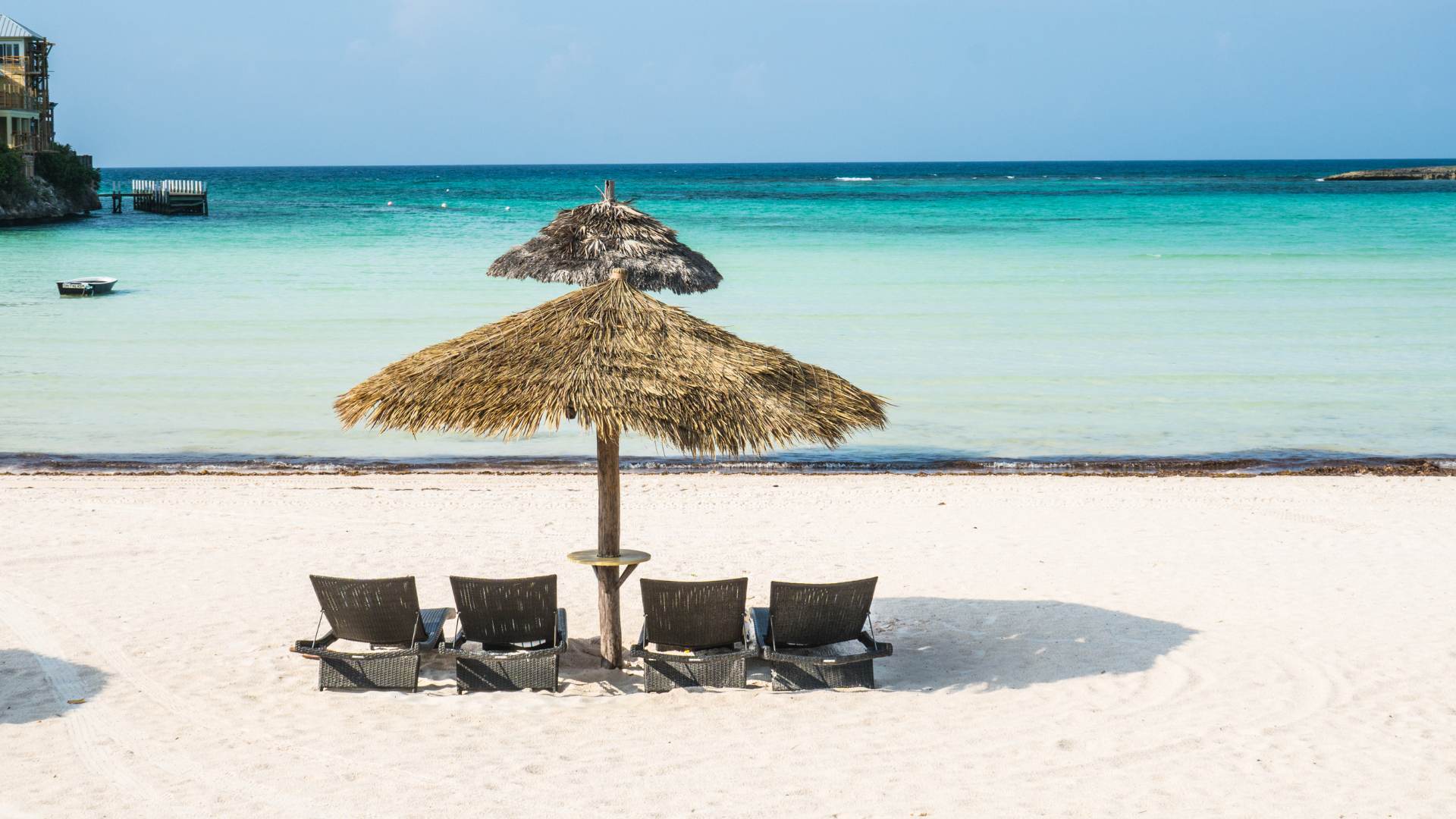
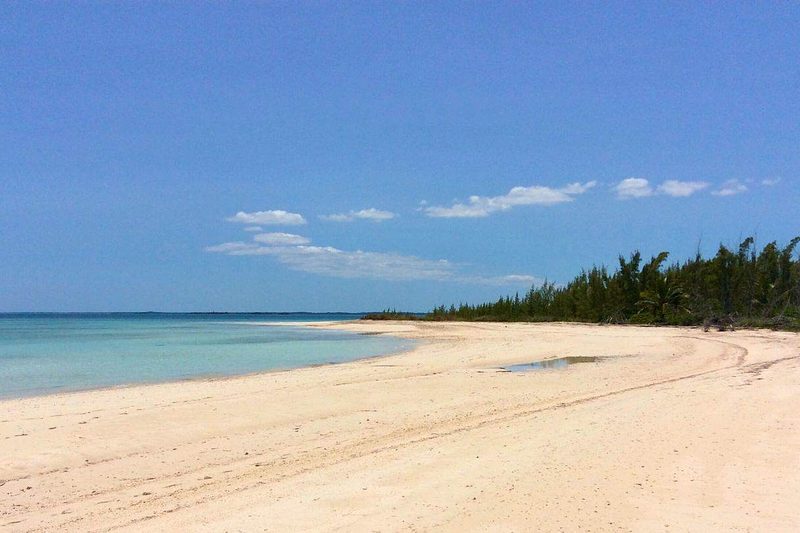
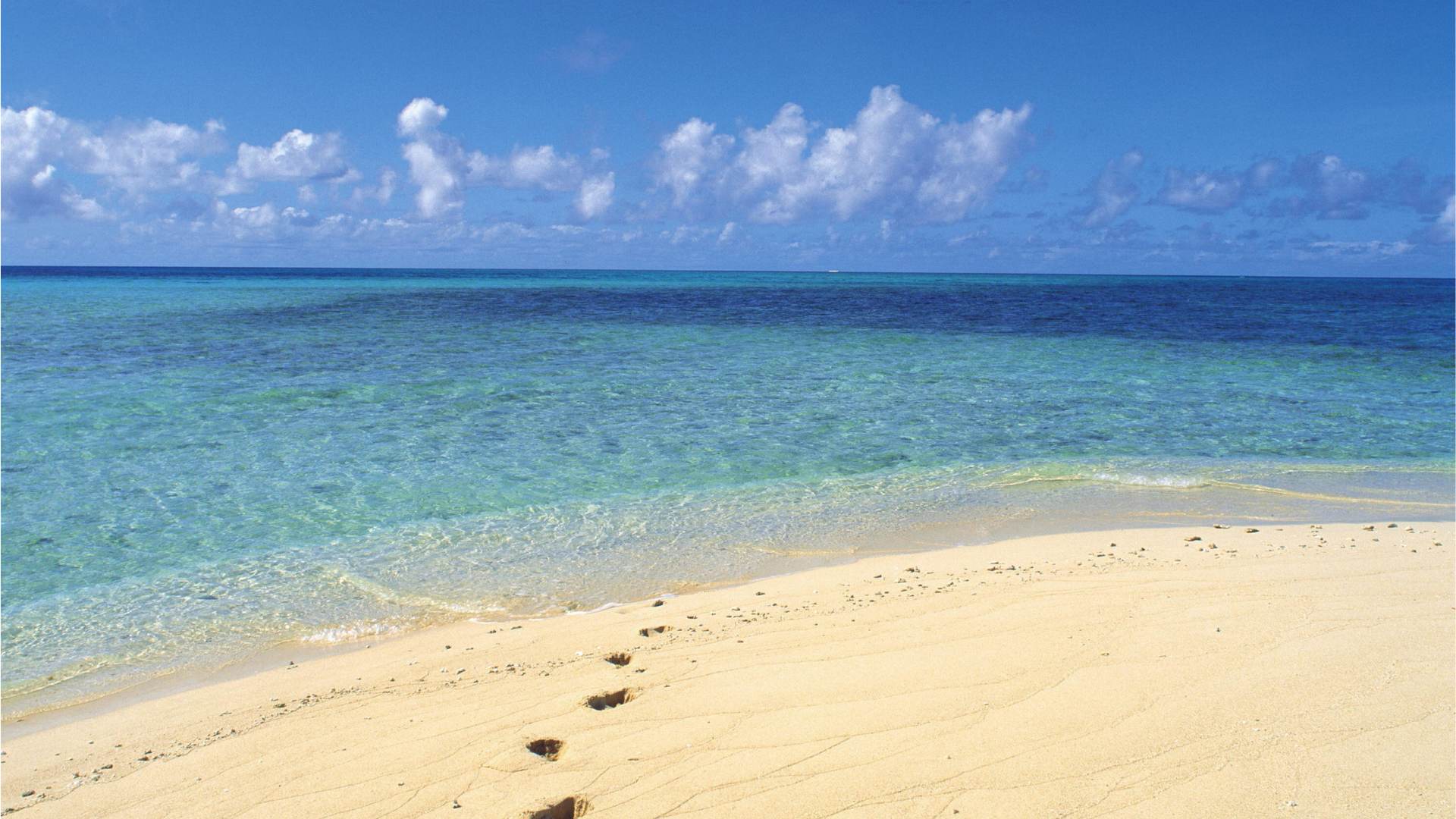
Footprints down an empty white-sand beach toward clear shallows.

What this Abacos itinerary covers

A round-trip from Marsh Harbour covering the central and northern Sea of Abaco: Great Guana Cay, two nights at Hope Town on Elbow Cay with the Tahiti Beach sandbar day, Man-O-War Cay and the Fowl Cays National Park reef, the Whale Cay passage north to Green Turtle Cay and the No Name Cay swimming pigs, and the run home via the banks. Roughly eighty-five nautical miles across the week, computed short hop by short hop — the longest single leg runs about twenty miles, and several days move the boat less than five.

Best for first Bahamas charters, families spanning three generations, and groups who want history walks and beach bars folded into the sandbar-and-reef week. Shallow-draft catamarans and motor yachts both fit the route. December through May is high season; November and June-July are the quiet-value windows. The one weather gate is the short Whale Cay passage outside the barrier — in settled conditions it's twenty minutes of ocean; in a northerly swell the captain reorders the week around it, which is exactly what you're paying a captain for.

1

Day 1 of 7 · Marsh Harbour → Great Guana Cay

Aboard at Marsh Harbour — First Night Off the Bluff
Anchorage: Fisher's Bay / Great Guana lee
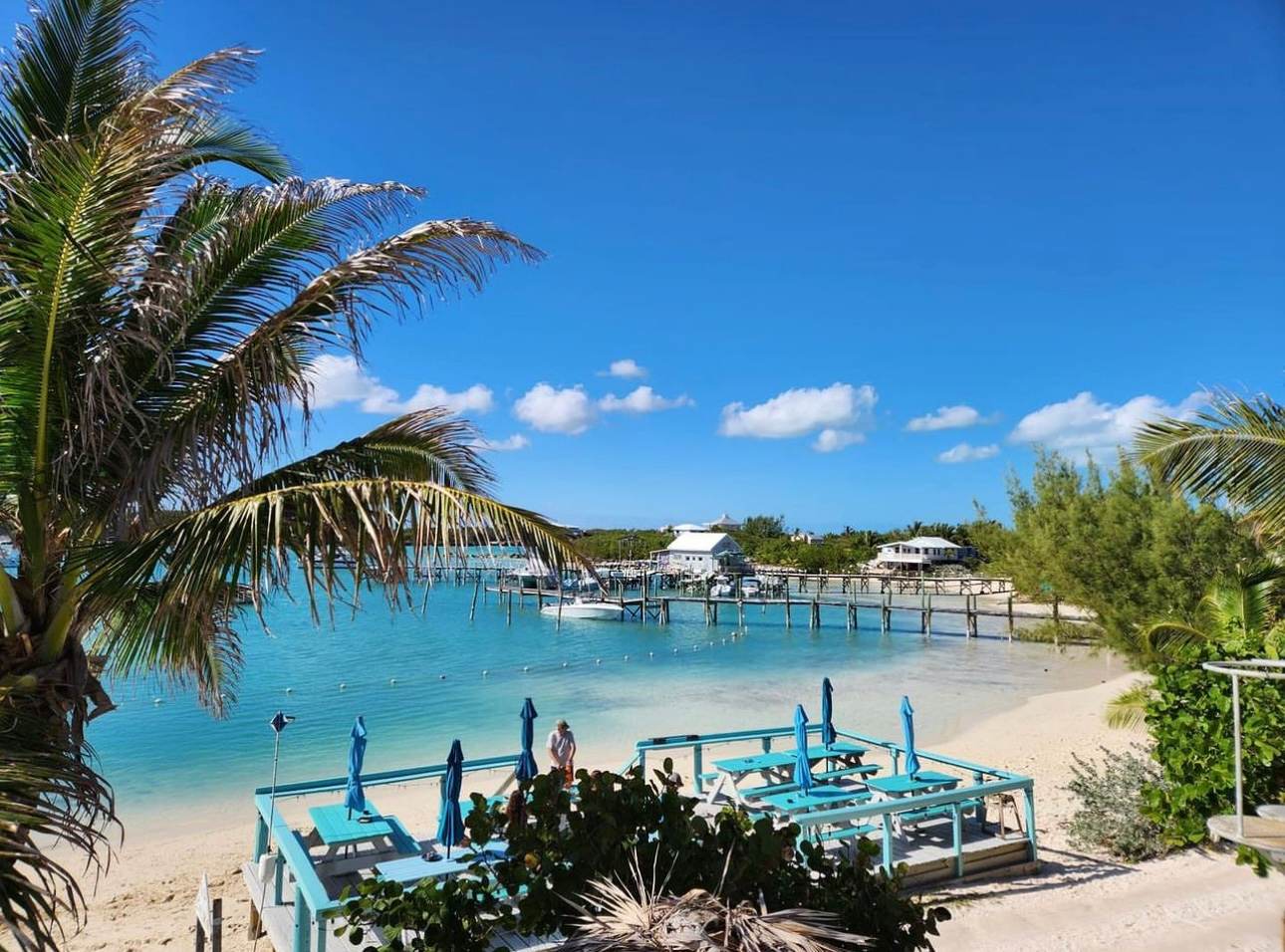
The Sea of Abaco's standing invitation — a beach-bar deck a tender ride from the anchorage.

The flight from Florida is under an hour, the airport is minutes from the marina, and most groups are swimming off the boat by early afternoon — the Abacos' opening argument is how little of the first day travel eats. The crew meets the group at the dock with cold drinks and the chart briefing, the provisioning is already aboard to the preference sheet, and the first leg is a flat eight-mile run up the Sea of Abaco.

Great Guana Cay is the right first night: seven miles of Atlantic beach on the ocean side, protected anchorage on the lagoon side, and the famous bluff-top beach bar in between, where the rum drinks arrive with a view of surf on one horizon and glass-calm turquoise on the other. Sundowners ashore or on the foredeck, dinner aboard, and the week's rhythm set before the first sunset finishes.

Day Highlights

  • Sub-hour flight, minutes to the dock — swimming by afternoon.
  • The bluff-top beach bar between ocean surf and lagoon calm.
  • First night in the lee of Great Guana's beach.
2

Day 2 of 7 · Great Guana → Hope Town

The Lighthouse Harbor

Anchorage: Hope Town harbour (mooring)
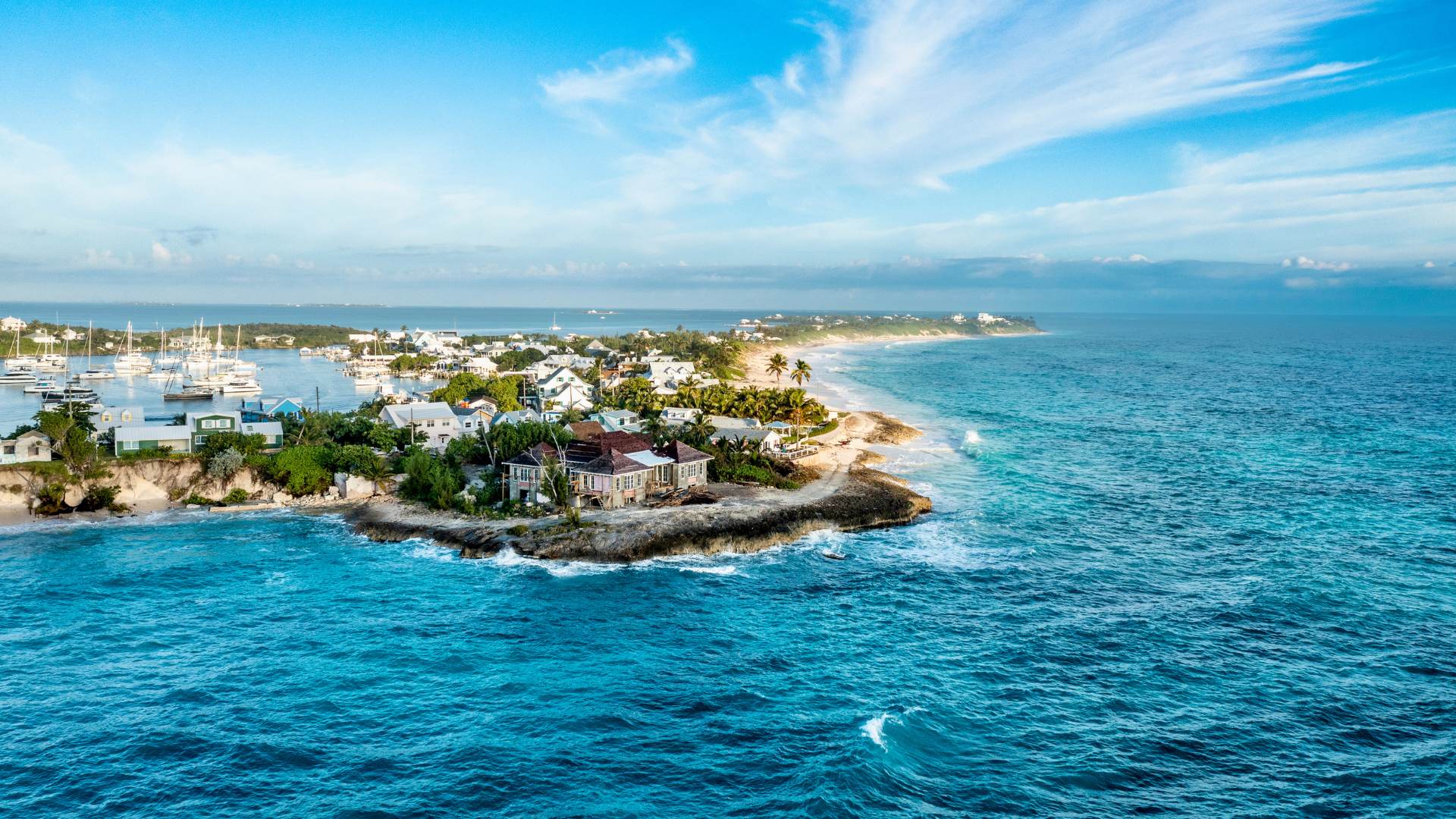
Hope Town from above — the hurricane-hole harbor, the Loyalist cottages, and the ocean beach all on one small point.

A morning sail south lands the boat at the Abacos' postcard: Hope Town, the Loyalist settlement wrapped around a hurricane-hole harbor under the candy-striped lighthouse that has run on hand-wound kerosene since the 1860s. The harbor is moorings-only and golf-cart quiet — the tender drops the group at the public dock and the town does the rest.

The afternoon is the classic circuit: the lighthouse climb for the view down the chain, the pastel lanes and picket fences, a harbor-front lunch, and the ocean beach a two-minute walk over the dune line. After dark comes the detail nobody expects: the light still sweeps the mooring field, and dinner on the aft deck happens under a working nineteenth-century beam. Two nights here — tomorrow belongs to the sandbar.

Day Highlights

  • The 1860s kerosene lighthouse, climbed by day and working by night.
  • Loyalist lanes, harbor-front lunch, ocean beach over the dune.
  • First of two nights on the Hope Town moorings.
3

Day 3 of 7 · Elbow Cay lay day

Tahiti Beach — The Sandbar Day

Anchorage: Hope Town harbour, second night
Tahiti Beach at the south end of Elbow Cay — the sandbar appears as the tide falls and the afternoon plans itself.

The tide chart runs this day. At the south end of Elbow Cay, Tahiti Beach disappears at high water and re-emerges on the falling tide as a long white sandbar strung between two islands — knee-deep, bathwater-warm shallows running a hundred yards out. The crew times the tender for the bottom half of the tide, the paddleboards and floats go with it, and the hard question of the day is whether lunch happens on the sandbar or back on the aft deck.

The energetic contingent gets options: the reef off the cay's ocean side when conditions allow, a golf-cart run down-island, or the surf beach for the swimmers. But this is deliberately the week's slowest day, and the groups who do it right let it be — the Abacos' whole argument is that the best afternoon is the one where the boat barely moves.

Day Highlights

  • The disappearing sandbar, timed to the falling tide.
  • Paddleboards, floats, and a hundred yards of knee-deep warm water.
  • The week's designated do-nothing day.
4

Day 4 of 7 · Hope Town → Man-O-War → Fowl Cays

Boatbuilders and the No-Take Reef

Anchorage: Man-O-War lee / Fowl Cays vicinity
The central cays from the water — cottages over shallows, reef a tender ride out.

A short hop north lands the group at Man-O-War Cay, the chain's boatbuilding settlement — a working town where hand-built Abaco dinghies still come off the ways and the harbor is filled with hulls their builders can name from the dock. It's the driest, most traditional cay in the chain, and the morning walk through the yards is the kind of shore hour the Exumas can't offer at any price.

The afternoon belongs to Fowl Cays National Park, a ten-minute run out: a no-take reef where grouper hold territory in fifteen feet of aquarium-clear water and rays work the sand between coral heads. The snorkeling goes straight off the tender, the light is best from mid-afternoon, and the chef takes delivery of whatever the crew's conch run produced on the way back. Night at anchor in the lee, with the ocean-side surf just audible over the cay.

Day Highlights

  • Man-O-War's working boatyards — generations of hand-built hulls.
  • Fowl Cays National Park's no-take reef, snorkeled off the tender.
  • Conch to the galley on the run home.
5

Day 5 of 7 · North through the Whale to Green Turtle

The Passage North — New Plymouth's Drifted Village

Anchorage: White Sound / New Plymouth anchorage
The ocean side at work — the short Whale Cay passage jogs outside the barrier, weather permitting, and the captain calls it.

The one real passage of the week: where the inside channel shoals at Whale Cay, the route jogs briefly outside the barrier into open Atlantic water — twenty minutes of ocean in settled weather, and a day the captain simply reorders if a northerly swell is running. It's charted, everyday Abacos seamanship, and it's the toll that keeps the northern cays quiet.

The reward is Green Turtle Cay and New Plymouth, a Loyalist fishing village that reads like New England drifted a thousand miles south — clapboard houses, a memorial sculpture garden, and a bar with a legitimate claim to inventing the Goombay Smash. The tender drops the group at the town dock for the late-afternoon wander; dinner runs ashore or aboard, and the anchorage settles into the kind of quiet the central chain traded away.

Day Highlights

  • The Whale Cay passage — twenty minutes of ocean, captain's call.
  • New Plymouth's clapboard lanes and the Goombay Smash's birthplace.
  • First night at the quiet end of the chain.
6

Day 6 of 7 · Pigs at No Name, then south

The Swimming Pigs, Without the Convoy

Anchorage: Treasure Cay side / bank anchorage
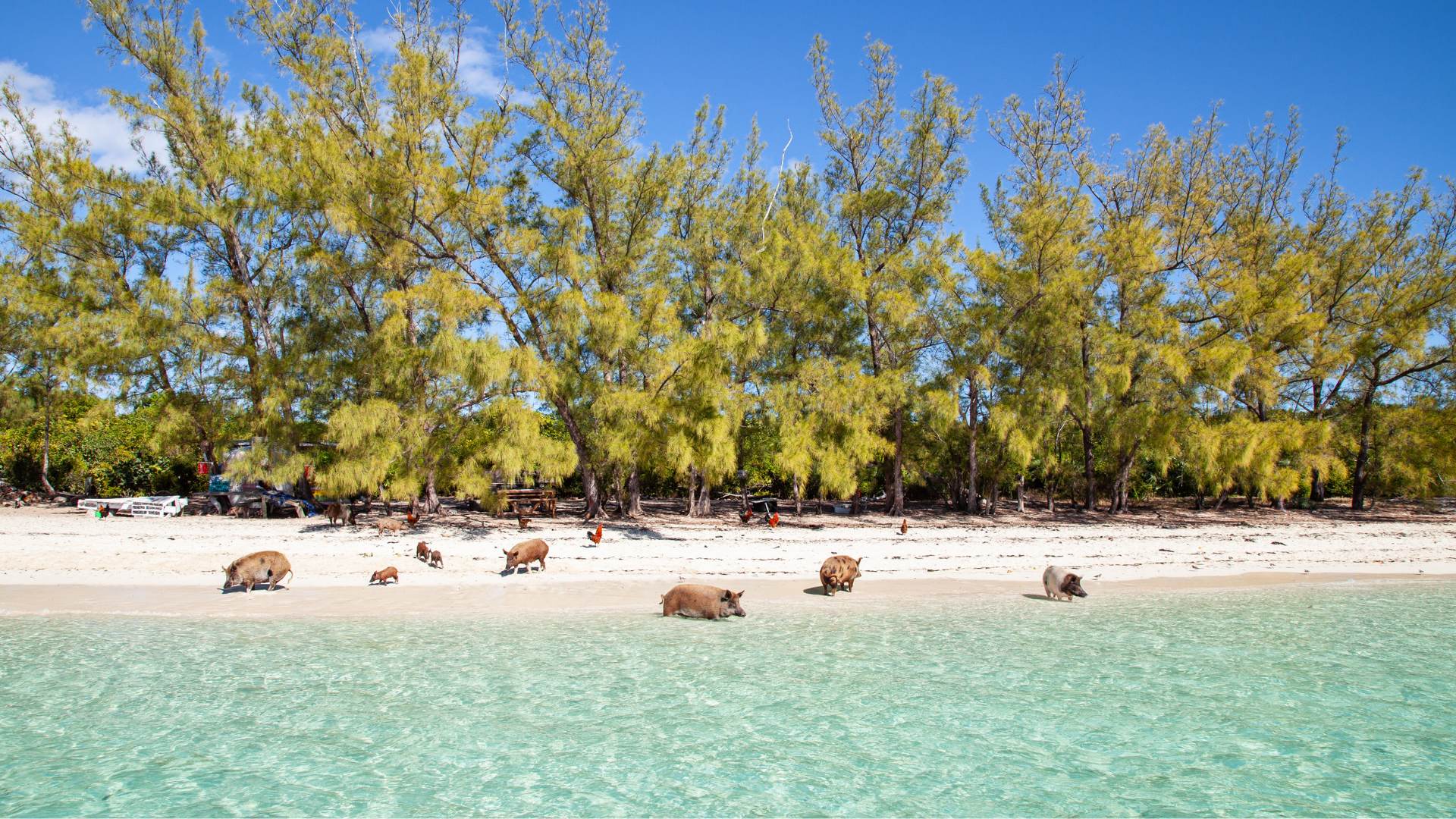
The No Name Cay colony wades out on cue — the Exumas' famous act, without the tour-boat line.

Morning belongs to the youngest crew members' agenda: No Name Cay, one hop south of Green Turtle, where the Abacos' own swimming-pig colony wades out to meet the tender with total confidence in its entitlement. The scene is the famous Exumas act without the tour-boat convoy — on a weekday morning the beach is often yours — and the whole stop costs half a morning instead of a repositioning day.

From there the boat turns south, back through the passage on the day's weather, and runs the banks toward the Treasure Cay side of the big island — a long, lazy afternoon of bank cruising over water that cycles through every shade the Bahamas are famous for. Anchor down in the lee by late afternoon, floats off the stern, and the second-to-last sunset taken slowly.

Day Highlights

  • No Name Cay's pigs — the postcard without the crowd.
  • A bank-cruising afternoon over ten shades of turquoise.
  • Quiet anchorage on the big island's lee.
7

Day 7 of 7 · The parks, then home

Pelican Cays Reef — Last Swim, Last Sunset

Anchorage: Marsh Harbour
The Bank on the last run home — chart depths in single digits, the bottom readable from the rail.

The last full day saves a second helping of reef: the Pelican Cays Land and Sea Park south of Marsh Harbour, the chain's other no-take zone, where the morning snorkel gets the best visibility of the day. It's the closing argument for the week's quiet thesis — that protected water and protected reef make each other better — and the chef builds lunch around whatever the last conch run produced.

Back at Marsh Harbour by late afternoon, the last evening plays to the harbor's strengths: a final swim off the platform, the crew quietly running the turnaround, and the chef's saved-best dinner as the mast lights come on along the marina row. Seven nights, eighty-five gentle miles, and a chain's worth of towns, sandbars, and reef behind the stern.

Day Highlights

  • Pelican Cays' no-take reef in the morning glass.
  • The chef's saved-best final dinner.
  • Marsh Harbour's mast lights to close the loop.
8

Day 8 · Departure

Last Morning — Minutes to the Airport

Anchorage:

A slow breakfast, a last swim for whoever insists, and the five-to-ten-minute transfer to the airport — the Abacos exit as easily as they arrive. Most groups book early-afternoon flights and are back in Florida before the sunburn fades. One country, no repositioning line on the invoice, and the northern cays already making the case for the second trip.

Frequently asked

Abacos or Exumas — how do we choose?
Same country, different registers. The Exumas are the wilderness postcard — sandbars, iguanas, the famous pigs, almost no towns — and the week is about untouched water. The Abacos add civilization in its best form: Loyalist settlements older than the United States, a working lighthouse, boatbuilding yards, and a beach-bar circuit, all wrapped inside a protected lagoon that keeps passages short and flat. Groups with history-curious travelers, first-time charterers, or anyone prone to seasickness lean Abacos; groups chasing maximum remoteness lean Exumas. Plenty of guests do one, then book the other the following year — they're complements, not rivals.
What's the deal with the Whale Cay passage?
It's the one spot on the route where the inside channel shoals and traffic jogs briefly outside the barrier into open Atlantic water — about twenty minutes in settled weather. When a northerly swell is running, the passage gets rough, and the answer is simple: the captain doesn't go that day. The itinerary is built to flex — the Hope Town and Man-O-War days can swap with the northern leg in either direction — so a waiting day costs nothing but reshuffling. This is a known, charted, everyday piece of Abacos seamanship, not an adventure. It's also the reason the northern cays stay quieter than the central chain.
Can the group actually go ashore in the towns, or is it all beaches?
The towns are half the point. Hope Town is a mooring field inside a hurricane-hole harbor with the lighthouse above it — the tender drops you at the public dock and the whole settlement is a golf-cart-lane stroll of pastel cottages, small museums, and harbor-front lunch spots. Man-O-War is quieter and drier (the cay is famously traditional — check the crew's guidance on what's open), with working boatyards that have built Abaco dinghies for generations. New Plymouth on Green Turtle feels like a New England village that drifted a thousand miles south. None of it needs planning from the guest side; the crew times the tender runs and the group wanders.
When should we book, and what does the week cost?
Crewed yachts in the Abacos run from around $25,000 per week for all-inclusive catamarans to $150,000+ for the largest motor yachts on plus-expenses terms, with the Bahamas' 14% cruising tax on top — the same structure as the rest of the country. December through May books first, with the holiday and Easter weeks going six to nine months out. November and June-July are the value windows with barely diminished weather. August through October is hurricane season and the honest answer is a different month or a different ocean — most of the fleet repositions anyway.
Is the fishing and snorkeling actually good, or is it all sandbars?
The reef is the underrated half of the chain. Fowl Cays National Park and the Pelican Cays Land and Sea Park are no-take zones where grouper and snapper hold territory in ten to twenty feet of aquarium-clear water — easy snorkeling directly off the tender, with rays on the sand between coral heads. Outside the parks, the crew runs conch dives on the grass banks and reef-edge fishing where regulations allow, and the chef turns the day's catch into lunch. It's not the deep-water trolling of the Windwards passages — it's shallow-water abundance, which suits the week the Abacos are actually selling.

Ready to set sail in the Abacos?

Every itinerary we send is custom-tailored. Tell us your dates, the size of your group, and what you want out of your charter—we'll handle the rest.