Crewed Itinerary · St. Lucia · Round-Trip

St. Lucia Round-Trip: The Pitons Week

This is the compact St. Lucia week — a seven-night crewed charter that never leaves the island's calm leeward coast and never sails a leg longer than about ten nautical miles, built around two nights on the marine-park moorings directly beneath the Pitons. Where the one-way Grenada run is about distance, this route is about density: the most dramatic anchorage in the Caribbean, a three-century-old hurricane hole, a reef-and-wreck coast inside a managed marine reserve, and a Friday fish fry in a working fishing village, all inside thirty-five miles of coastline.

Embarkation and disembarkation at Rodney Bay Marina in the north — one airport transfer, one country, no repositioning fees. The pacing is deliberately unhurried: mornings on the water, afternoons at anchor with the toys down, and the two marquee nights saved for the moorings at Soufrière where Petit Piton rises straight off the stern. It's the right first charter for a group new to boats, and the right slow week for a group that's done the mileage runs and wants the postcard without the passages.

Duration
7 days / 7 nights
Base
Rodney Bay Marina, round-trip
Plan your St. Lucia charter Custom-tailored to your dates and group preferences
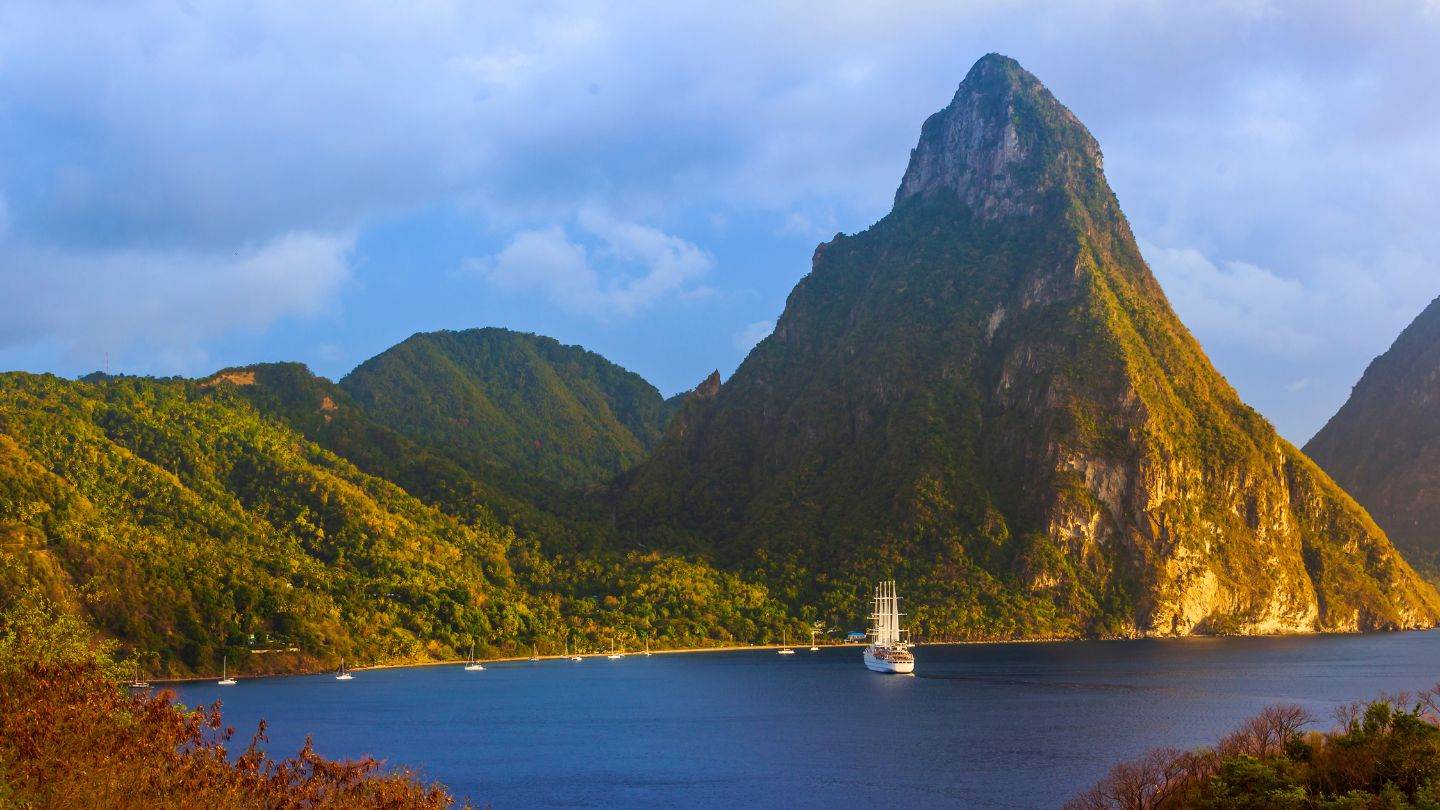
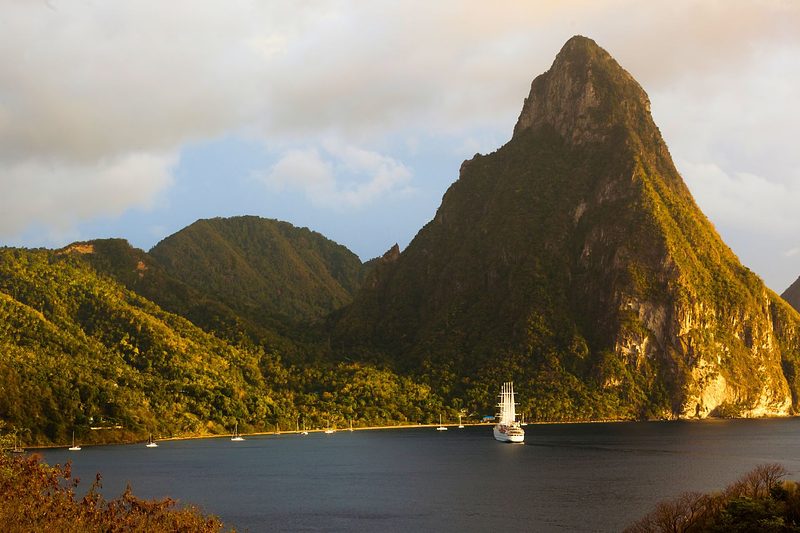
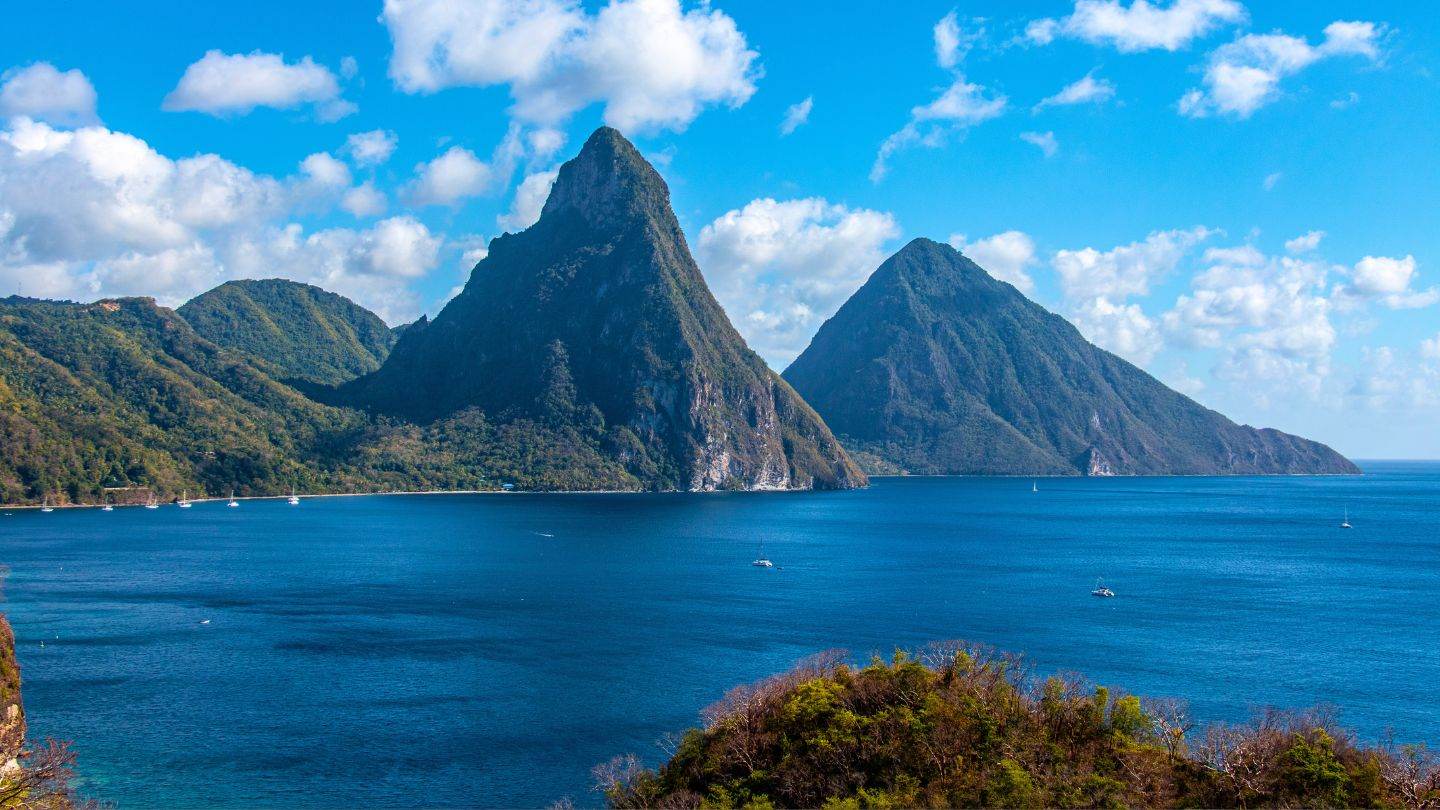
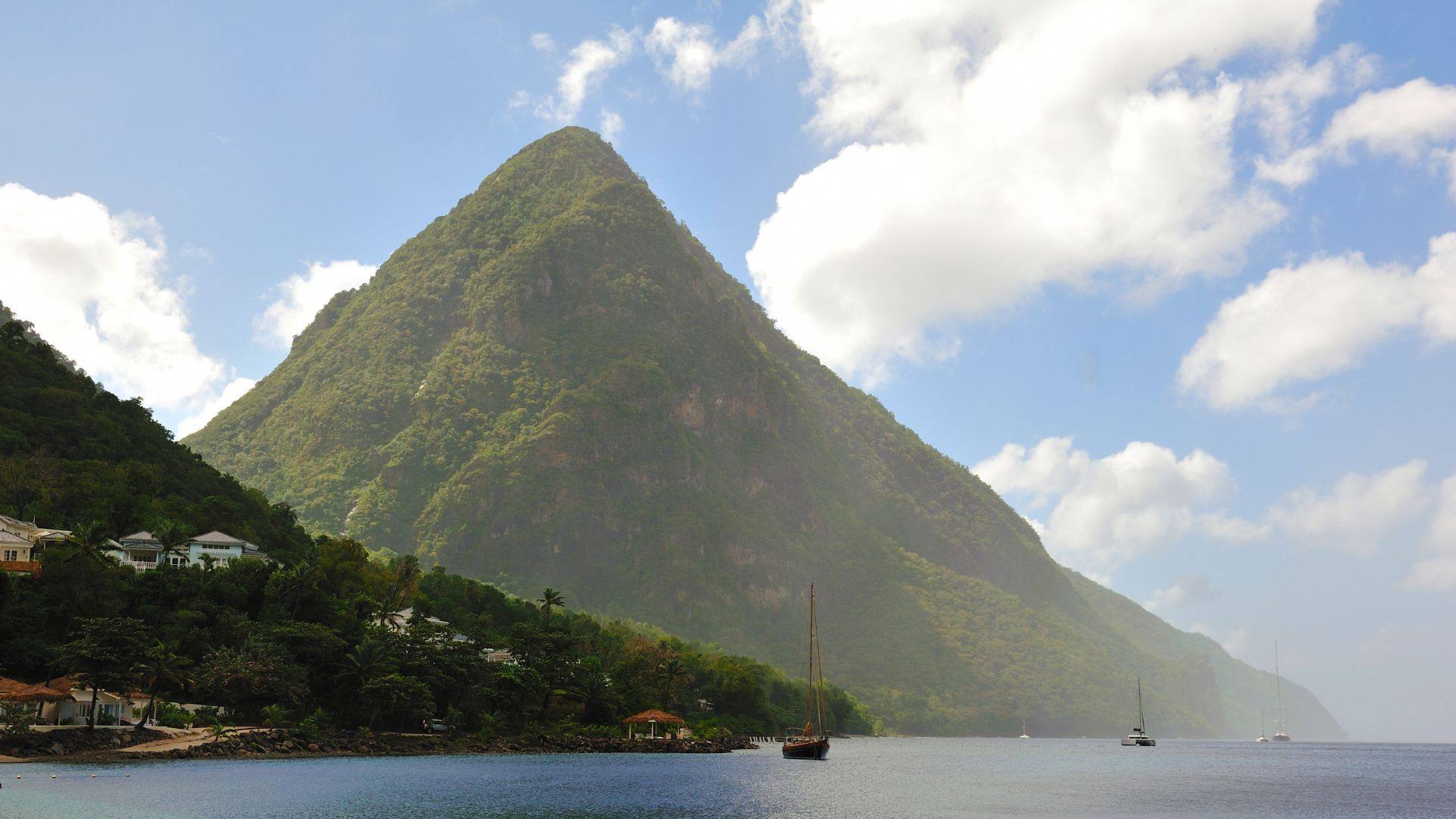
Gros and Petit Piton rising from the sea with boats at anchor along the beach at their base.
Boats at anchor beneath Gros Piton in the marine reserve.
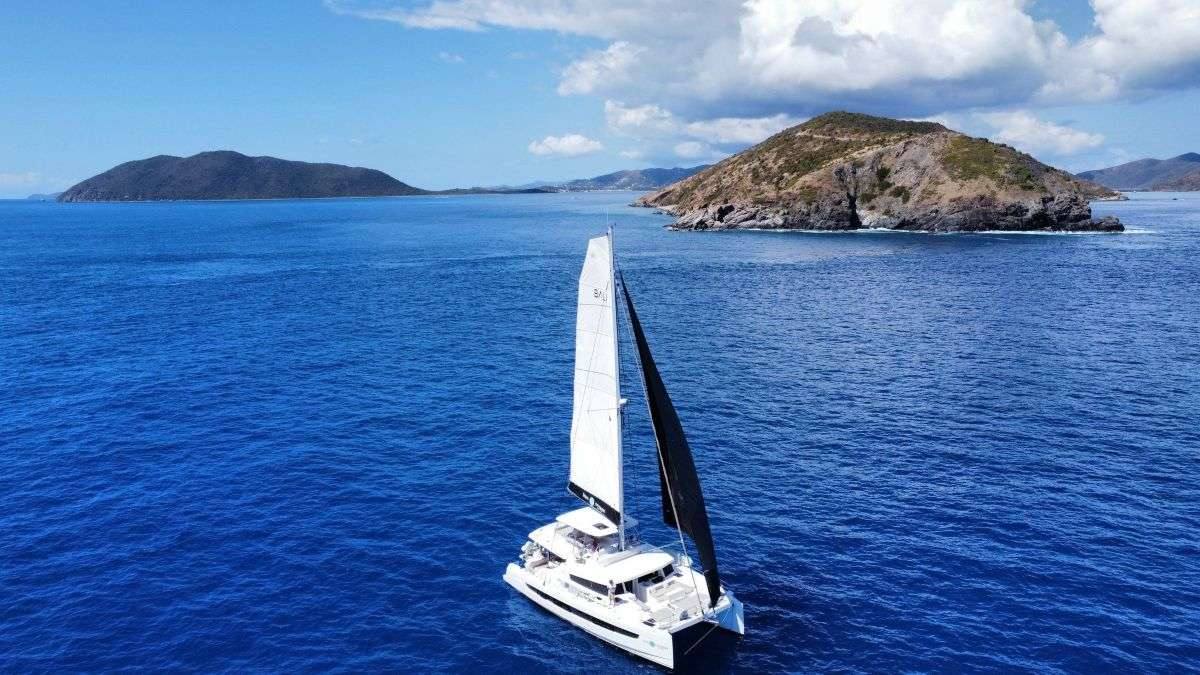
A crewed catamaran under sail in open Caribbean water.
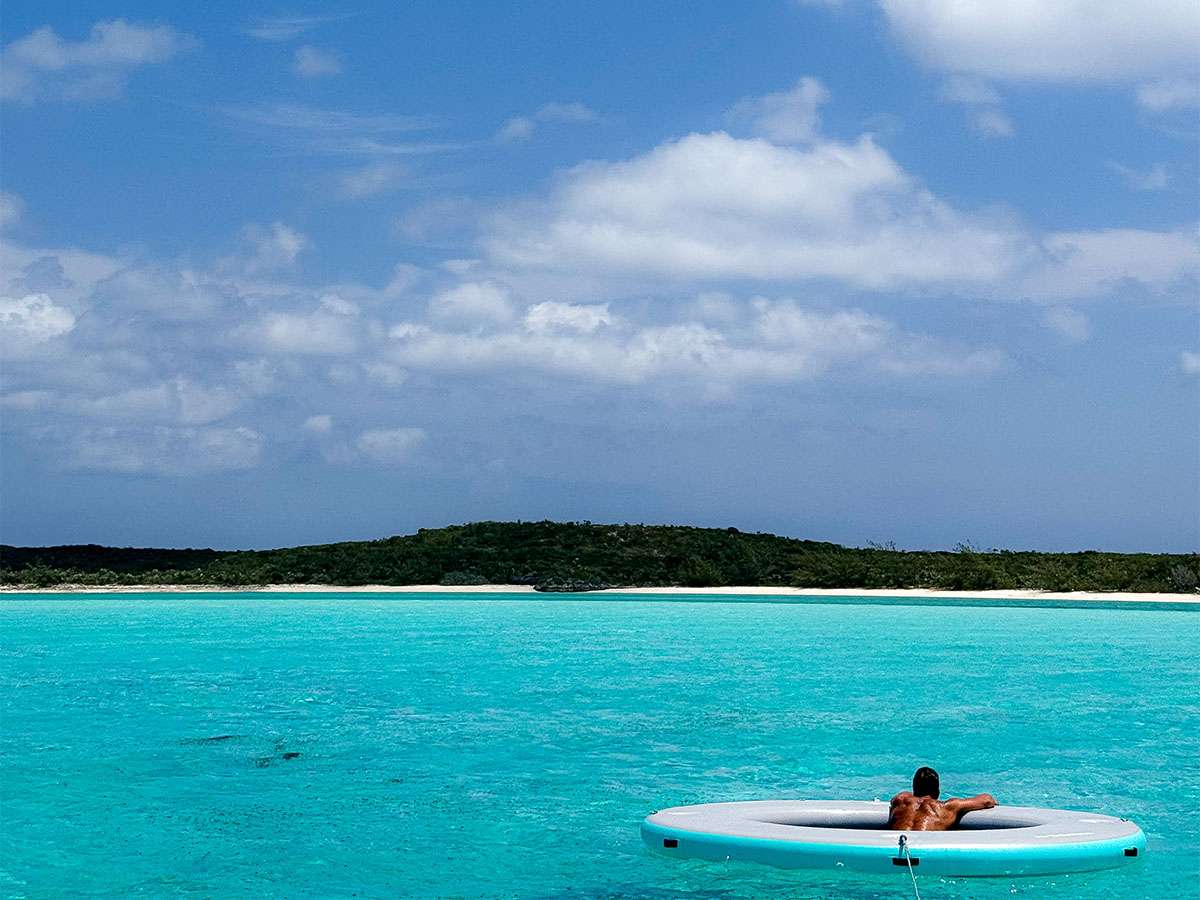
Guests floating off the swim platform of a crewed catamaran in calm Windwards water.

What this St. Lucia itinerary covers

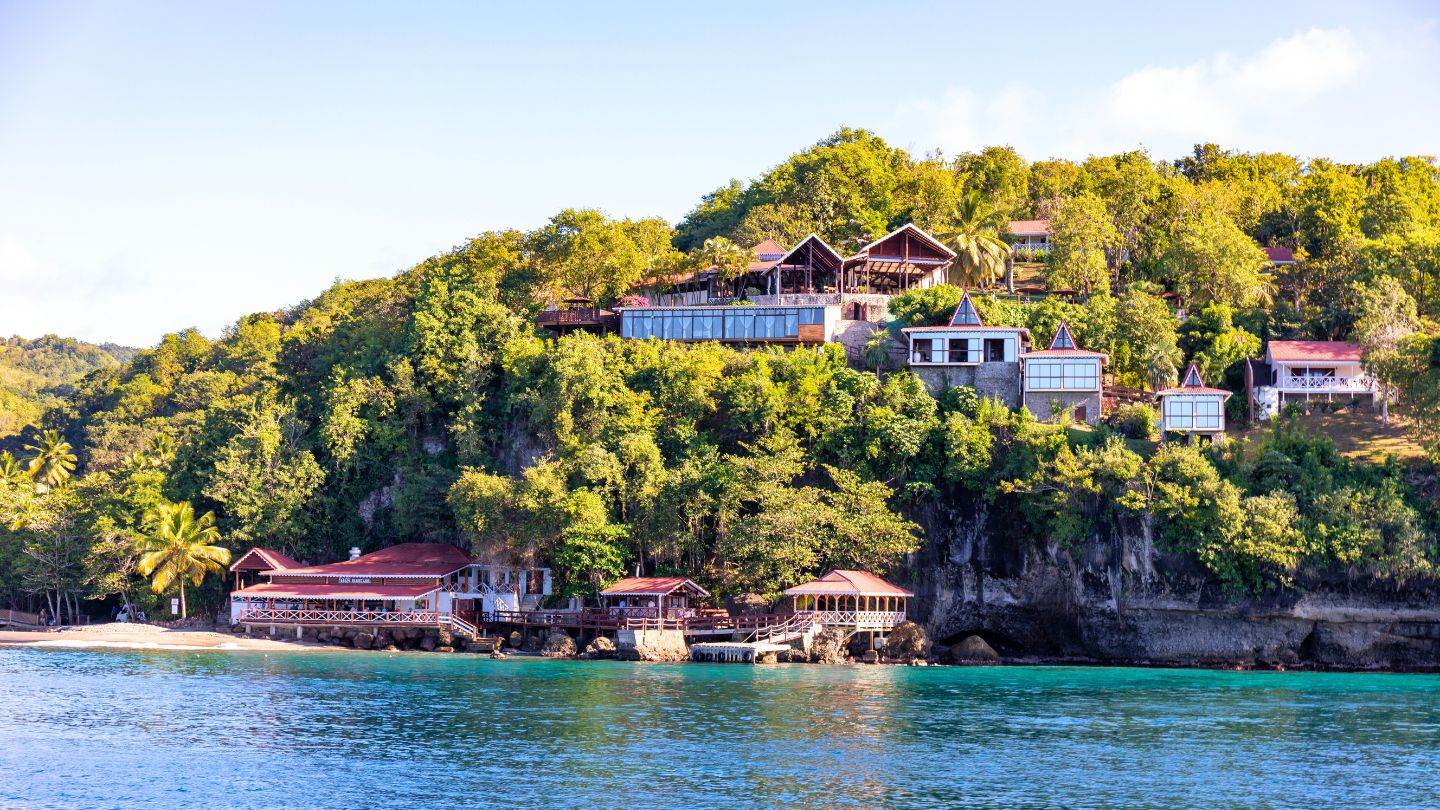
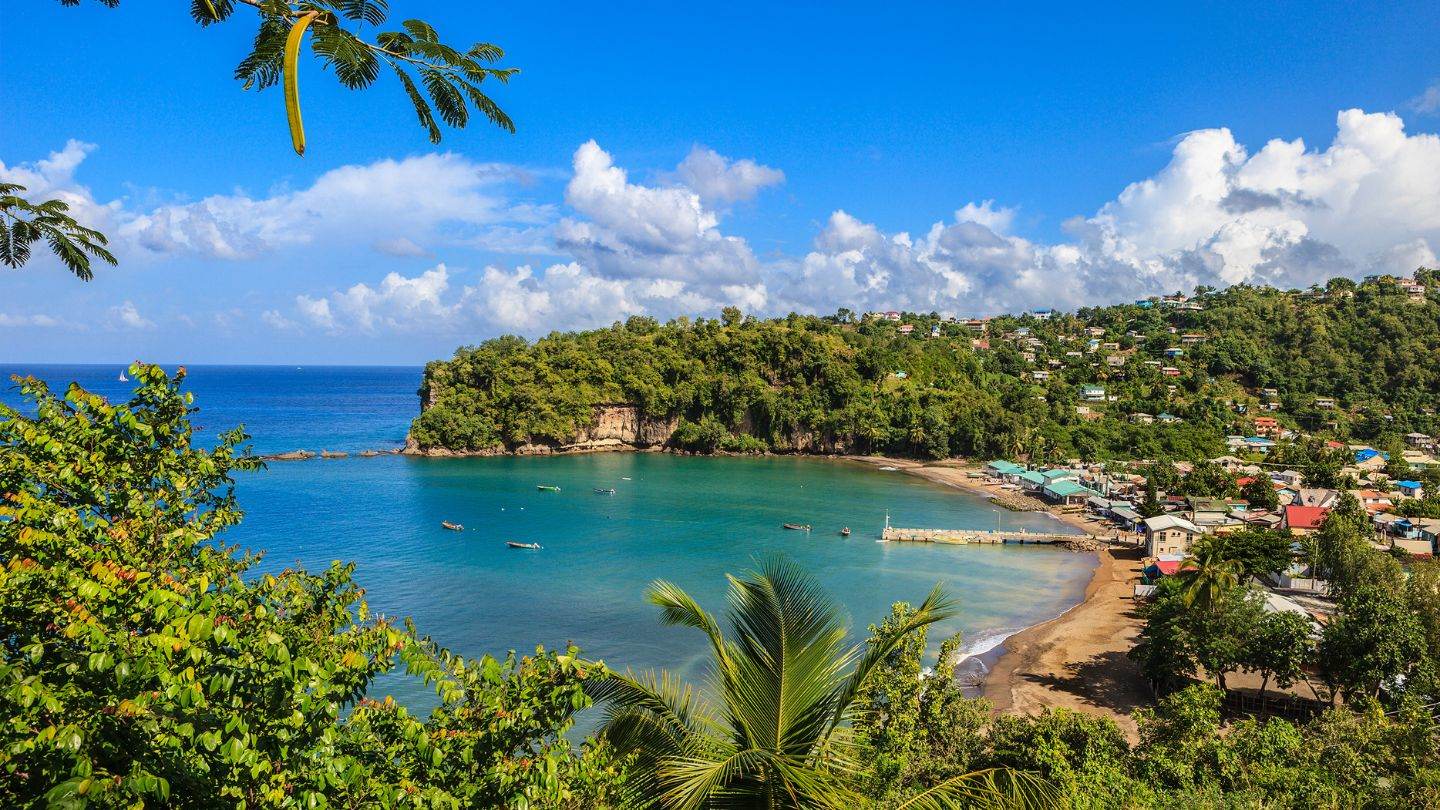
A round-trip down St. Lucia's west coast and back: Rodney Bay and Pigeon Island in the north, Marigot Bay's mangrove inlet, the quiet reef coves at Anse Cochon, and the Soufrière Marine Management Area under the Pitons in the south, with the Anse La Raye fish fry timed on the way back north. Every leg runs in the island's wind shadow — flat water, short hops, the mountains sliding by to port — and every night is a protected mooring or anchorage. The marine reserve prohibits anchoring entirely along the Piton coast; the yacht rides the park's maintained moorings with the reef beginning a few fin kicks off the swim platform.

Best for first charters, mixed-generation groups, and anyone whose brief is scenery over sea miles — nothing on this route asks more of a guest than deciding between the reef and the beach. Strongest fit is a crewed catamaran chartering all-inclusive, which is most of what works this coast; motor yachts run the same route faster and add air-conditioned interior living. December through April is the reliable season; May, June, and November are the value shoulder. Groups that want real passages and three countries should look at the ten-day one-way to Grenada instead — same fleet, same starting dock, different trip.

1

Day 1 of 7 · Rodney Bay embark → Pigeon Island

Aboard at Rodney Bay — First Swim Under the Fort
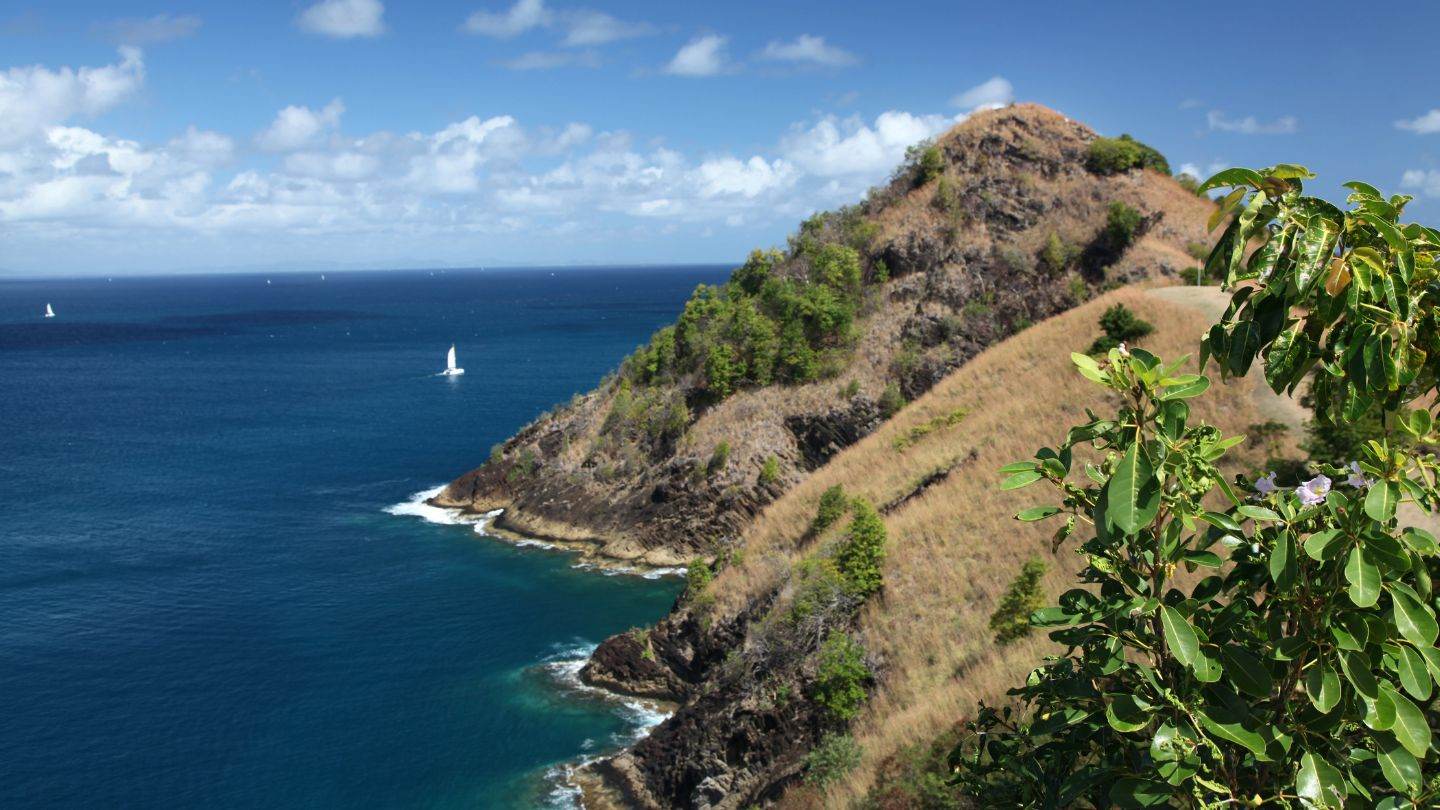
Anchorage: Rodney Bay / Pigeon Island anchorage
Pigeon Island's ridge above the channel — the national landmark that guards the top of Rodney Bay, a first-evening walk from the anchorage.

Fly into St. Lucia, transfer to Rodney Bay Marina, and step aboard to cold drinks and the chart briefing. Rodney Bay is the island's yachting hub — provisioning, fuel, and the marina's restaurant row all sit within a few minutes of the slip — so the boat is stocked to the group's preference sheet before anyone arrives, and the first afternoon belongs entirely to arriving well.

The first move is the shortest of the week: around the corner to the anchorage off Pigeon Island, the fortified islet at the top of the bay that's now a national landmark. There's time for a first swim off the platform, a walk up the ridge past the garrison ruins for the view down the coast, and sundowners on the foredeck as the light drops behind the point. Dinner aboard, the marina's lights across the bay, and the week's rhythm already set — short water, big scenery, nobody in a hurry.

Day Highlights

  • Embarkation, chart briefing, and a stocked bar before the first line drops.
  • Ridge walk through Pigeon Island's garrison ruins at golden hour.
  • First night at anchor within sight of the marina's restaurant row.
2

Day 2 of 7 · Pigeon Island → Marigot Bay

Down the Coast to the Hurricane Hole

Anchorage: Marigot Bay (mooring/inner anchorage)
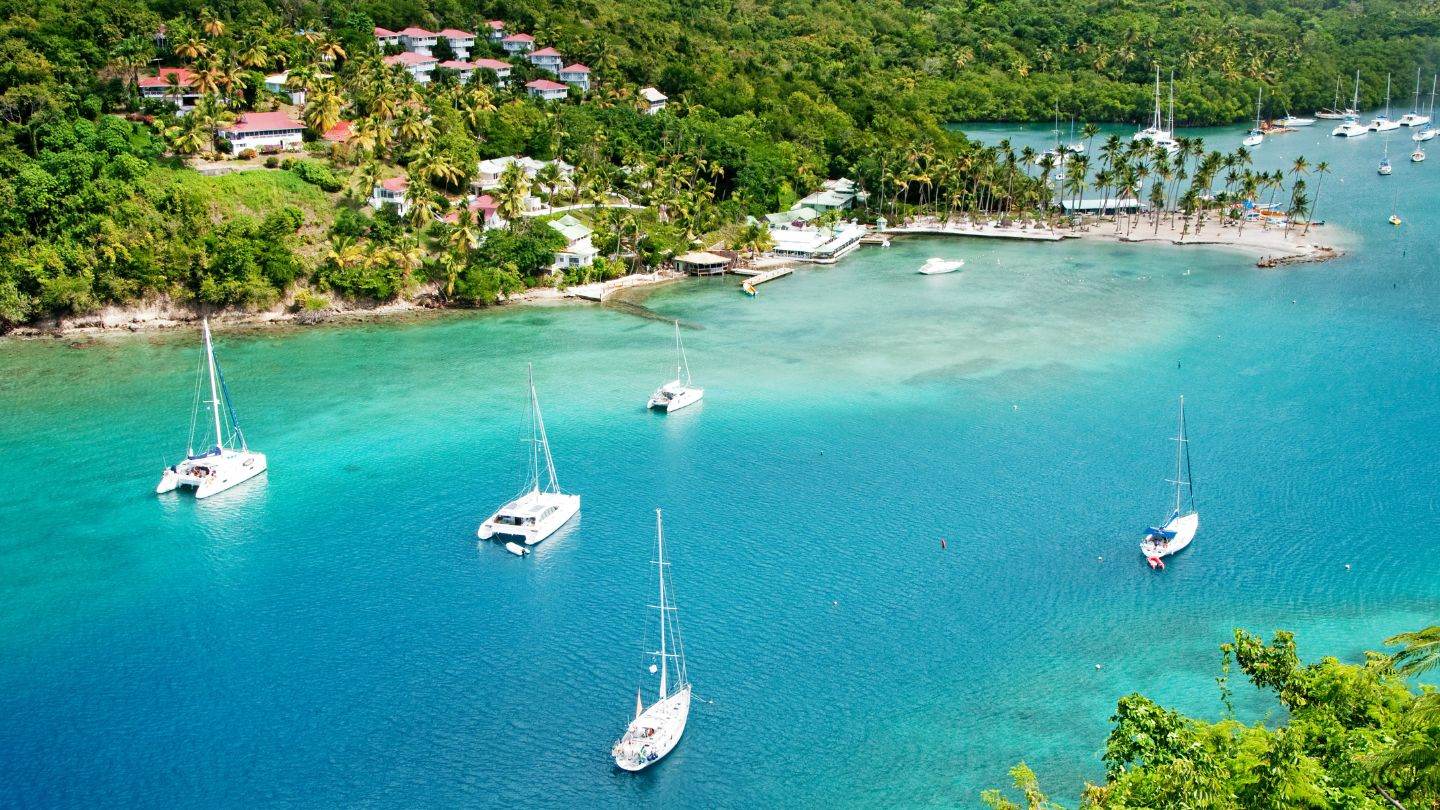
Marigot Bay from above — the mangrove-armed inlet Caribbean sailors have used as a hurricane hole for three centuries.

A lazy morning swim, then south along the leeward coast — the island's mountain spine kills the trade-wind chop on this side, so the run is flat water with the green ridges sliding by to port. An hour of easy miles ends at a gap in the coastline that's easy to sail straight past, which is precisely its centuries-old point: Marigot Bay, the mangrove-armed inlet where fleets have hidden from weather since the age of sail.

Inside, the bay is a bowl of still water ringed by palms and hillside villas, with a small marina and a handful of restaurants at its head. The afternoon runs on the group's preference — paddleboards in the flat inner bay, the tender to the beach bar on the sand spit, or nothing at all from a deck chair. Dinner is the week's first shore option: the bayside restaurants take reservations from yacht guests, and the crew runs the tender both ways. The version filmed in the original Doctor Dolittle looks essentially unchanged from the mooring.

Day Highlights

  • Flat-water leeward-coast cruising — the mountains block the trade chop.
  • The Caribbean's storied hurricane hole, entered by a gap you'd sail past.
  • First dinner-ashore option; crew handles reservations and tender runs.
3

Day 3 of 7 · Marigot Bay → Anse Cochon

Reef Day — The Quiet Coves

Anchorage: Anse Cochon
Anse Cochon from the water — the quiet cove whose reef and wreck make it the island's easiest serious snorkel.

A short mid-morning hop brings the boat to Anse Cochon, the small dark-sand cove that holds some of the healthiest easy reef on the island. The draw here is underwater: the reef starts close along the headlands in calm, clear water, hawksbill turtles work the edges, and a deliberately sunk freighter lies within tender distance for certified divers — one of the easier wreck dives in the Windwards, and a Soufrière dive operator can meet the yacht with tanks on the boat's own schedule.

This is the day the water toys earn their keep — snorkel sets, paddleboards, the slow circuit of the cove before lunch on the aft deck. The cliffside bar above the southern headland does a sunset rum punch for groups who want a shore hour; otherwise the evening is the quietest of the week, a still cove with a handful of boats and the sky going orange behind the headland.

Day Highlights

  • The island's easiest serious snorkel — reef close aboard in calm water.
  • Optional guided wreck dive; the operator meets the yacht with tanks.
  • The quietest anchorage of the week.
4

Day 4 of 7 · Anse Cochon → the Pitons

Into the Reserve — First Night Under Petit Piton

Anchorage: SMMA mooring, Anse des Pitons / Malgretout
Golden hour at the foot of Petit Piton — the mooring field the whole week is built around.
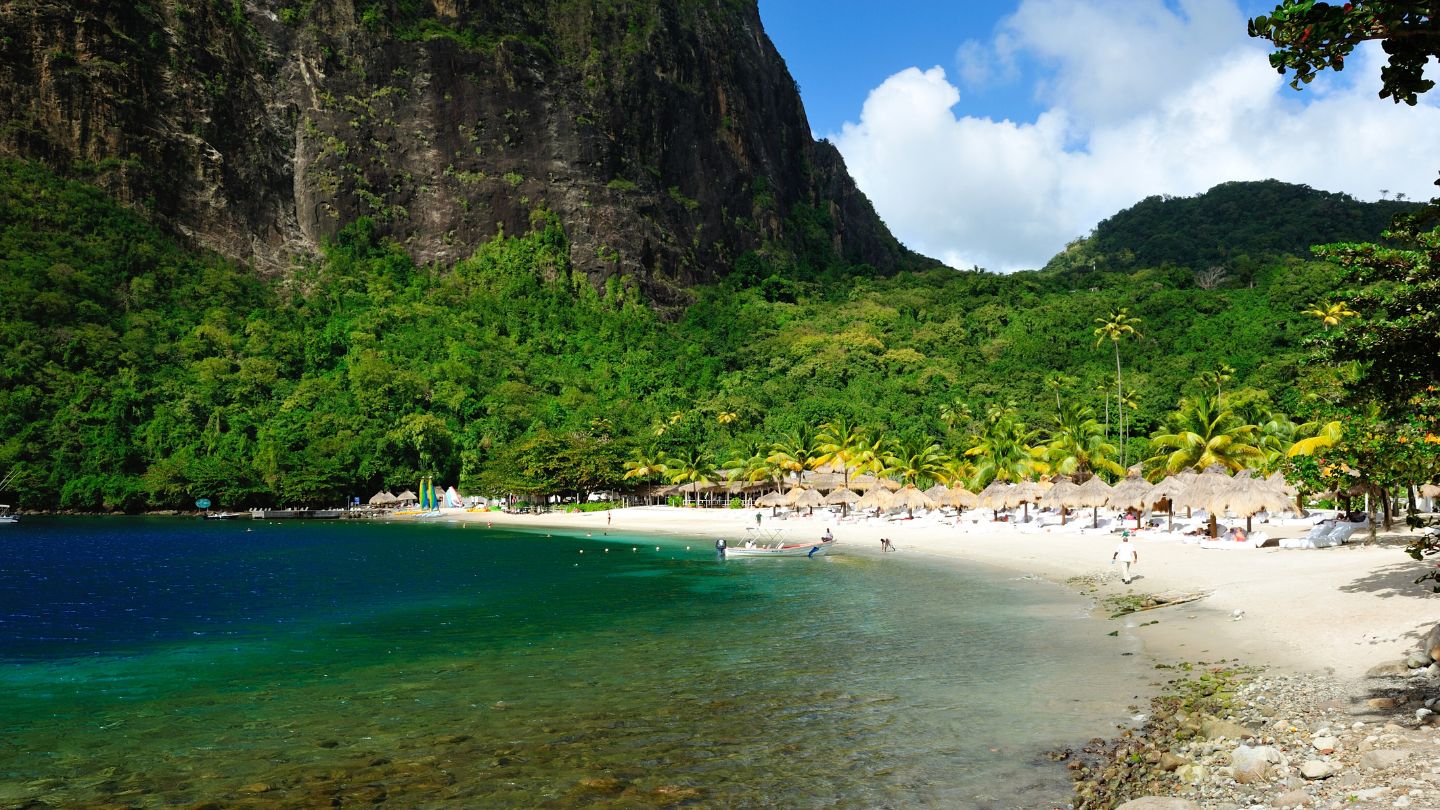
Sugar Beach in the notch between the peaks — a tender ride from the mooring.

The morning run south crosses into the Soufrière Marine Management Area, and the coast changes register: the ridges sharpen, the water deepens to navy a boat-length off the shore, and then the Pitons open up ahead — two volcanic spires rising straight from the sea, the most photographed silhouette in the Caribbean. There's no anchoring anywhere on this stretch; a reserve ranger meets the boat at the mooring field and the captain settles the park fees over the rail while the group stares up.

The mooring at Malgretout or Anse des Pitons puts Petit Piton almost directly overhead — close enough that the peak fills the companionway when you come up from below. The afternoon is Sugar Beach by tender, the reef along the Piton's base, or nothing but the view. The day boats clear out by late afternoon, and the evening is the reason this route exists: the mooring field nearly empty, the light going gold up the spire, dinner on the aft deck under two thousand-plus feet of rock.

Day Highlights

  • Entering the marine reserve — moorings only, rangers collect fees boat-side.
  • Sugar Beach and the Piton-base reef by tender.
  • The Caribbean's most dramatic overnight, after the day boats leave.
5

Day 5 of 7 · Lay day under the peaks

Soufrière Day — Volcano, Gardens, or the Mountain

Anchorage: SMMA mooring, second night
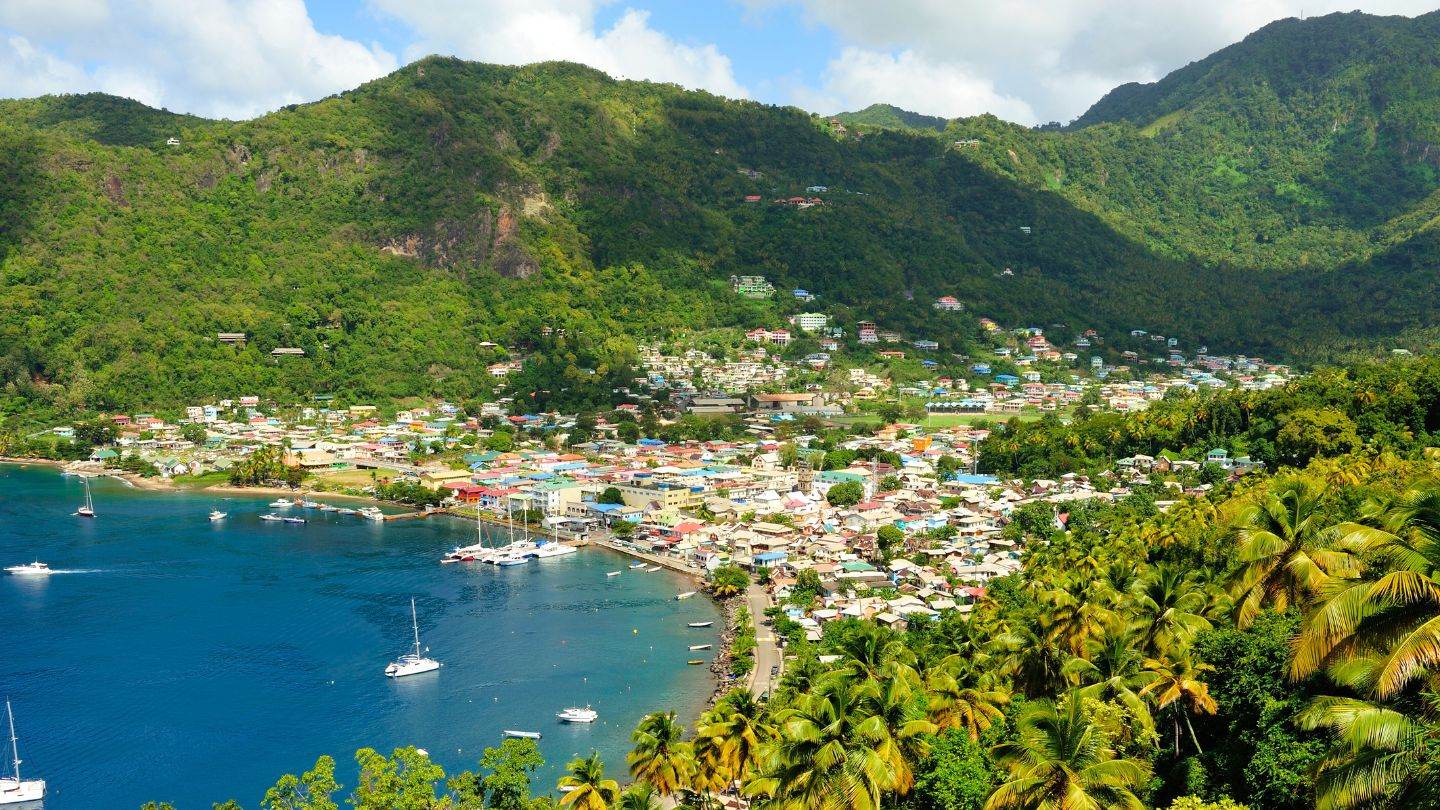
Soufrière on its bay — the old French capital at the foot of the peaks, tender distance from the moorings.

The second Piton night is what separates a charter from a day trip, and the lay day between them is the week's shore day. The energetic option is the guided Gros Piton hike — a half-day up the taller spire for a view down the whole southwest coast. The gentler circuit runs through Soufrière town to the drive-in sulfur springs, the mineral baths, and the botanical gardens in the valley behind — the volcanic engine room that built the scenery the boat has been floating on all week. The crew arranges guides and taxis; nothing needs planning from the guest side.

Back aboard, the afternoon is the reef or the deck. Guests who skipped the hike get the best snorkeling hour of the day as the light angles in over the Piton-base coral. The second evening on the mooring tends to be the one photographed least — by now the group has stopped reaching for phones and started just sitting with it.

Day Highlights

  • Guided Gros Piton hike for the ambitious half of the group.
  • Sulfur springs, mineral baths, and botanical gardens for the rest.
  • Second night on the mooring — the one nobody photographs.
6

Day 6 of 7 · Soufrière → Anse La Raye

North to the Fish Fry

Anchorage: Anse La Raye
Anse La Raye on its cove — one night a week the village closes the main street and lights the grills.

A last long look at the peaks over breakfast, then the boat retraces the leeward coast north to Anse La Raye, a working fishing village on a small cove that most itineraries sail straight past — except on the one night a week it matters. The crew has aimed the schedule at exactly that night: the village closes its main street, the grills come out, and the day's catch — lobster, conch, snapper — is cooked a dozen ways under string lights with steel pan carrying over the water to the anchorage.

It costs a fraction of a resort dinner, it isn't staged for anyone, and it's the shore night guests bring up a year later. The tender runs the group in as the street fills, and the evening goes as long as the band does. For groups whose dates can't land on the fry night, the crew reshuffles — Marigot's restaurants or a chef's night aboard cover it — but the week is built to be here when the grills light.

Day Highlights

  • The week deliberately timed so this anchorage lands on fish-fry night.
  • Lobster and the day's catch grilled in the street, steel pan over the water.
  • The unstaged island night — a village Friday, not a show.
7

Day 7 of 7 · Anse La Raye → Rodney Bay

Back North — Beach Afternoon and the Last Sunset

Anchorage: Rodney Bay / Reduit Beach anchorage
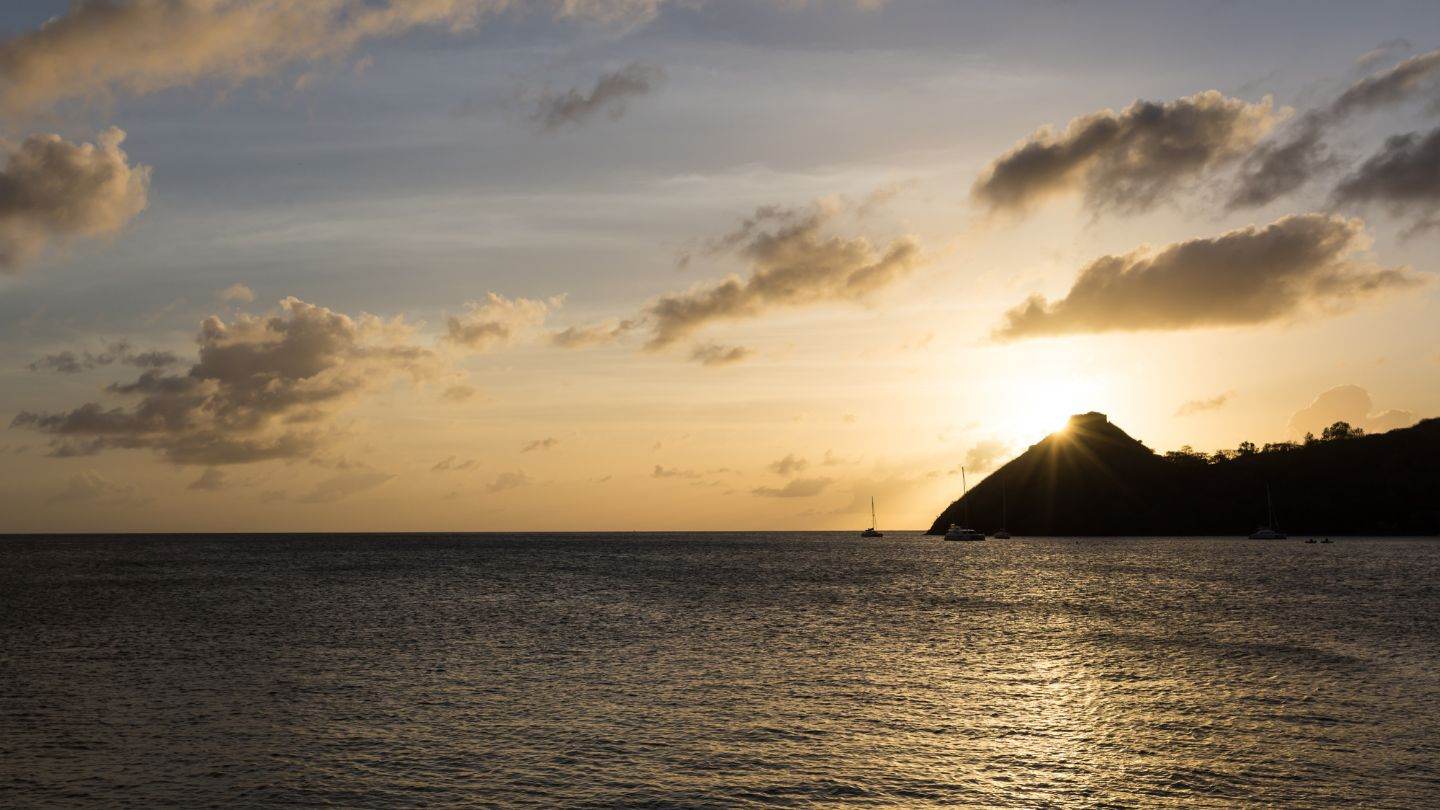
Last light behind Pigeon Point from the Rodney Bay anchorage — the week's closing frame.

The final run north closes the loop in an easy morning, and the last full day plays to Rodney Bay's strengths: Reduit Beach for the swimmers, the marina row for anyone who wants a last island lunch ashore, and flat protected water for a final hour on the paddleboards. The crew starts the quiet business of the turnaround — settling accounts, confirming transfer timing — without any of it reaching the guests.

The last evening belongs to the anchorage off the beach: sundowners on the foredeck as the sun drops behind Pigeon Point, dinner from the chef's best night held in reserve, and the mast lights of the marina coming on across the bay. Seven nights, forty miles, and somehow the feeling of having seen an entire country.

Day Highlights

  • Reduit Beach afternoon and a last marina-row lunch option.
  • The chef's saved-best final dinner aboard.
  • Sunset behind Pigeon Point to close the loop.
8

Day 8 · Departure

Last Morning — Disembark at Rodney Bay

Anchorage:

A slow breakfast, a last swim for whoever insists, and the short move to the marina slip for check-out. The transfer runs to either airport — about ten minutes to SLU for regional connections, roughly an hour south to UVF for the long-haul flights — and most groups book afternoon departures to keep the final morning unhurried. One country, one boat, no repositioning line on the invoice, and the Pitons already arguing for the return trip.

Frequently asked

Is a week too long for one island?
Not this one. St. Lucia's west coast packs more change-of-scene per mile than almost anywhere in the chain — the working marina row at Rodney Bay, a national-landmark islet, an enclosed mangrove inlet, empty reef coves, a volcano town inside a marine reserve, and the Pitons themselves. The days are short on purpose: the point of a crewed charter here isn't covering water, it's that the afternoon belongs to the reef and the evening to the mooring with the peaks overhead. Groups that finish this week wishing it had more sailing book the Grenadines one-way next time — that's the natural progression, and we'll say so up front.
What's special about overnighting at the Pitons versus day-tripping them?
The day boats run down from the resorts mid-morning and are gone by late afternoon. Overnighting guests get the two windows the postcard is actually made of: the last hour of light, when the crowds have left and Petit Piton goes gold above an almost-empty mooring field, and first light, when the water is glass and the only sound is the fishing boats working out of Soufrière. The marine reserve's moorings make it effortless — no anchor watch, no depth anxiety, just the crew picking up the ball and the evening arranging itself. Two nights is the right number; one always feels like leaving early.
How does the marine reserve work for guests?
The Soufrière Marine Management Area covers the whole Piton coast. Anchoring is prohibited — the yacht uses the reserve's maintained moorings — and uniformed rangers come to the boat to collect mooring and conservation fees, hailed on VHF like everything else on the coast. On all-inclusive catamarans those fees are folded into the rate; on plus-expenses yachts they run through the APA. Guests notice none of the mechanics and all of the results: three decades of no anchors on the coral means the snorkeling off Anse Chastanet and the wreck dive off Anse Cochon are the healthiest reef stops on the island.
Can we get off the boat — hikes, the volcano, dinners ashore?
Yes, and this island does shore days better than most of the chain. From the Soufrière moorings: a guided Gros Piton hike for the fit and determined, the drive-in sulfur springs and botanical gardens for everyone else, and resort restaurants that take dinner reservations from yacht guests when the group wants a night off the boat. The crew books all of it and runs the tender. The shore night that guests talk about afterward is the Anse La Raye fish fry — the fishing village closes its main street one night a week and grills the day's catch under string lights. The crew aims the week so the boat is there when it happens.
When should we book, and what does the week cost?
December through April is peak — trades at fifteen to twenty knots, low-eighties days, and the best boats booking six to nine months out for the holiday and Easter weeks. May, June, and late November run fifteen to twenty-five percent softer on rate with barely diminished weather. Crewed catamarans on this route mostly charter all-inclusive from around $25,000 per week for a group of six to eight, meals, bar, toys, and reserve fees included; larger motor yachts run plus-expenses from the mid five figures. July through October is hurricane season and much of the fleet repositions south — possible, but we route those groups differently and tell them so honestly.

Ready to set sail in St. Lucia?

Every itinerary we send is custom-tailored. Tell us your dates, the size of your group, and what you want out of your charter—we'll handle the rest.