Crewed Itinerary · St. Lucia · The Grenadines · Grenada

St. Lucia to Grenada: A 10-Day One-Way Sailing Itinerary

This is the sailing trip. One-way from St. Lucia south through St. Vincent and the Grenadines to Grenada, ten days down the eastern edge of the Caribbean with the trade winds on the quarter and real blue water under the keel. The Grenadines round-trips are the deservedly famous postcard week; this is the route for the group that wants to actually sail it end to end — open channels, a few long passages, the best trolling water in the eastern Caribbean, and an island chain that changes character every twenty miles. You start under the Pitons and you finish in the spice harbor of St. George's, and in between you cross three countries without ever pointing the bow the wrong way for the wind.

Embarkation at Rodney Bay on St. Lucia's northwest coast, a transfer from Hewanorra International (UVF). Disembarkation at Port Louis Marina in St. George's, Grenada, a short hop from Maurice Bishop International (GND) on Day 11. Roughly a hundred and fifty nautical miles of cruising across ten days, built around two marquee passages — the St. Lucia Channel down past St. Vincent to Bequia, and the run from Carriacou across the open water to mainland Grenada — with the Grenadines strung out between them. A night moored beneath the Pitons. The turtles and the Horseshoe Reef anchorage at the Tobago Cays. Sandy Island off Carriacou. The underwater sculpture park at Molinère. This is the one for people who came to go sailing.

Duration
10 days / 11 nights
Base
Rodney Bay, St. Lucia → St. George's, Grenada (one-way)
Plan your the Windward Islands charter Custom-tailored to your dates and group preferences
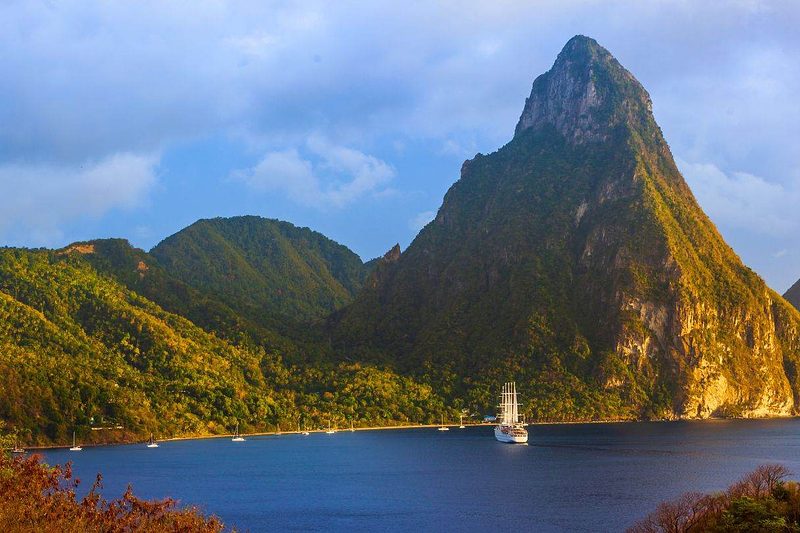
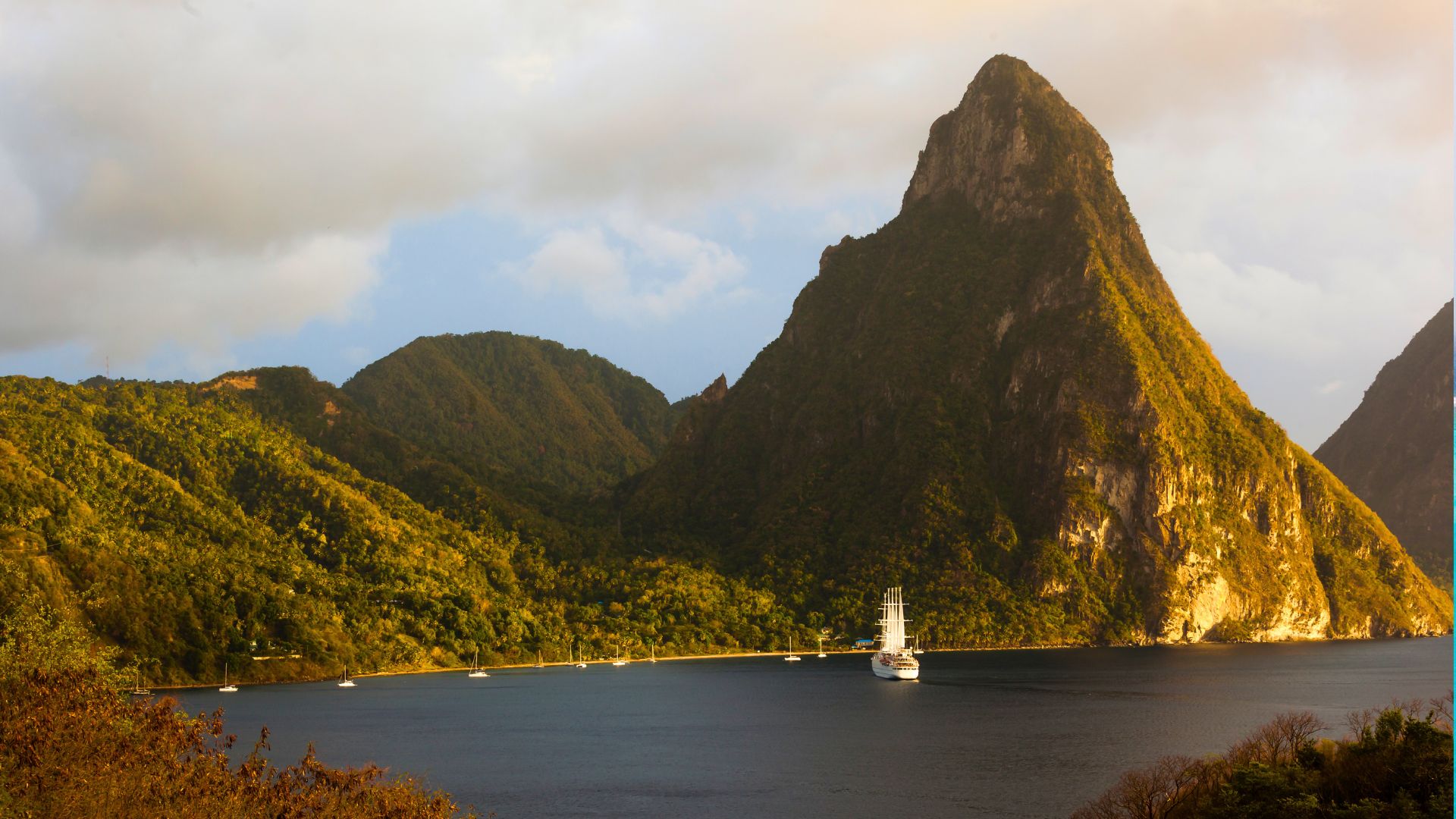
A Piton lit gold by late-afternoon sun rising above Soufrière Bay, St. Lucia, with a tall ship and yachts anchored in the water below.
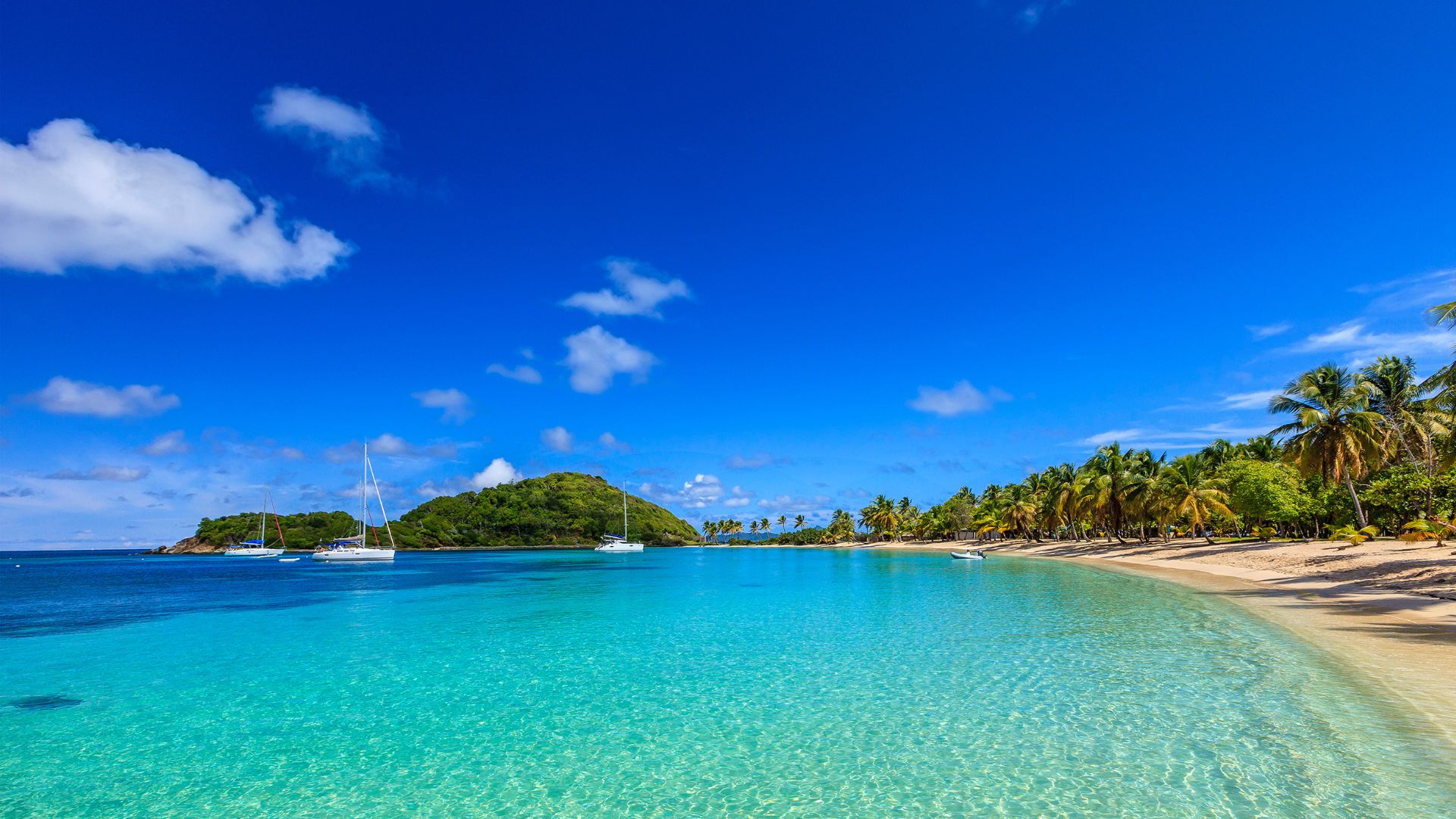
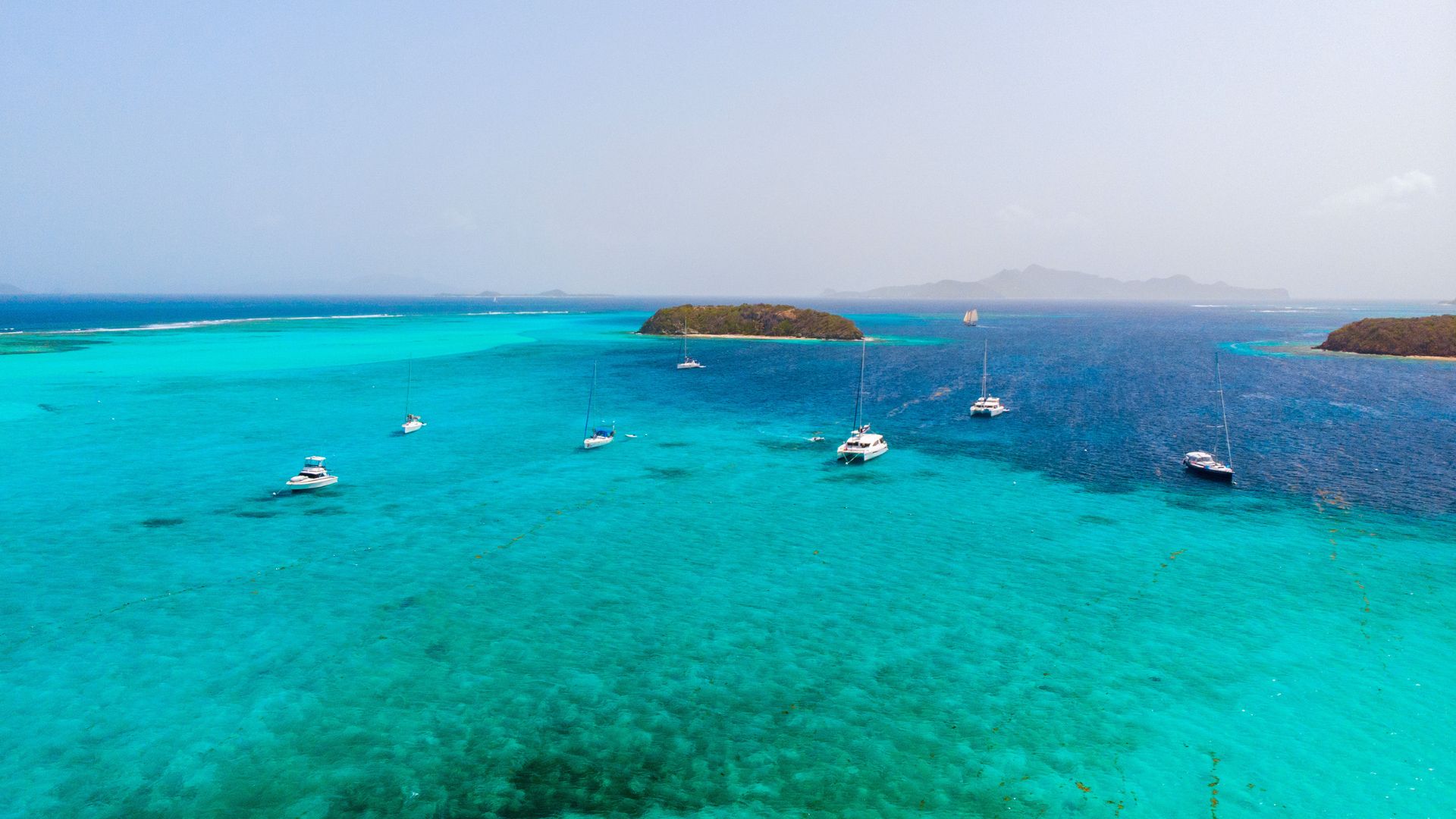
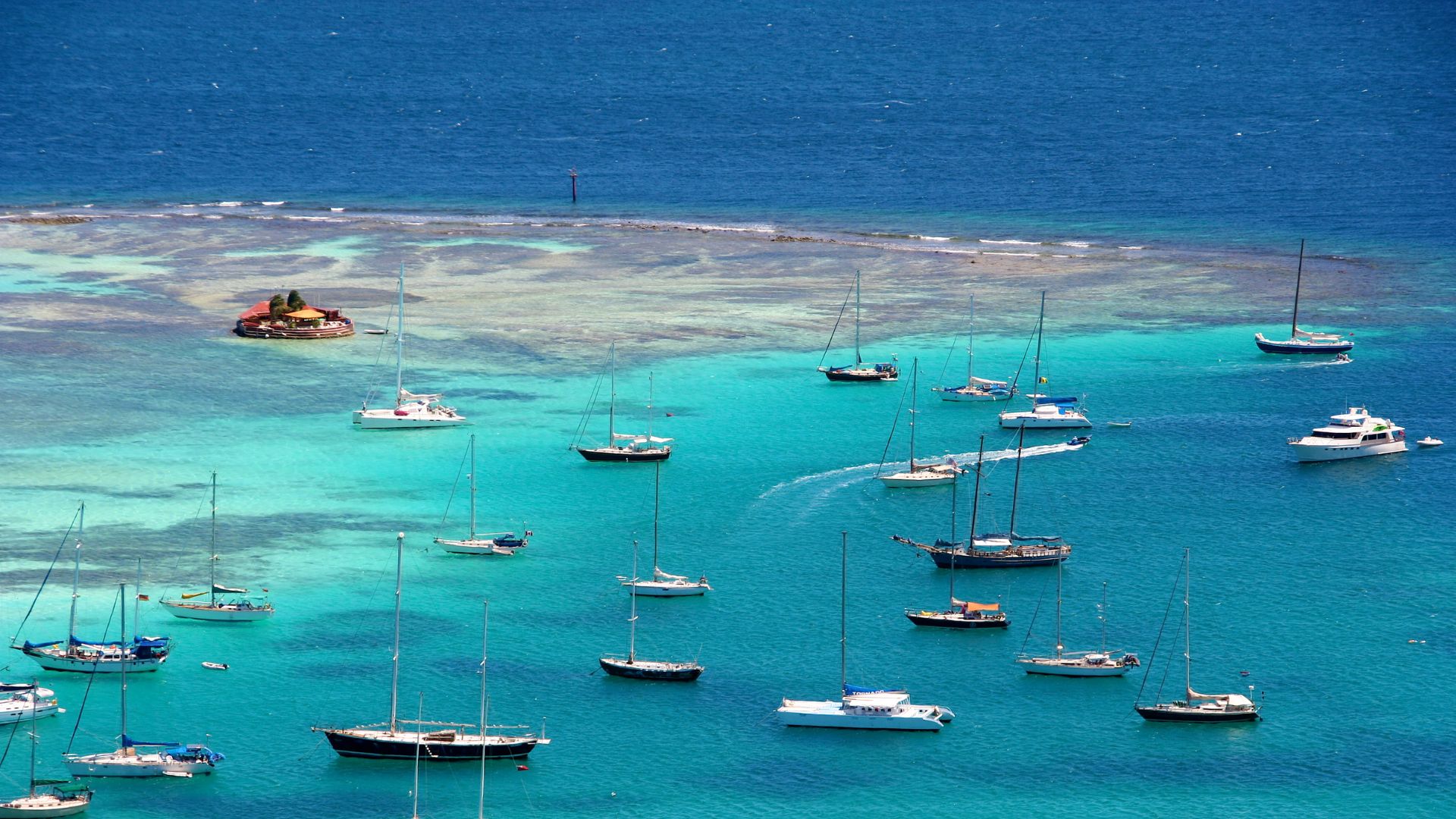
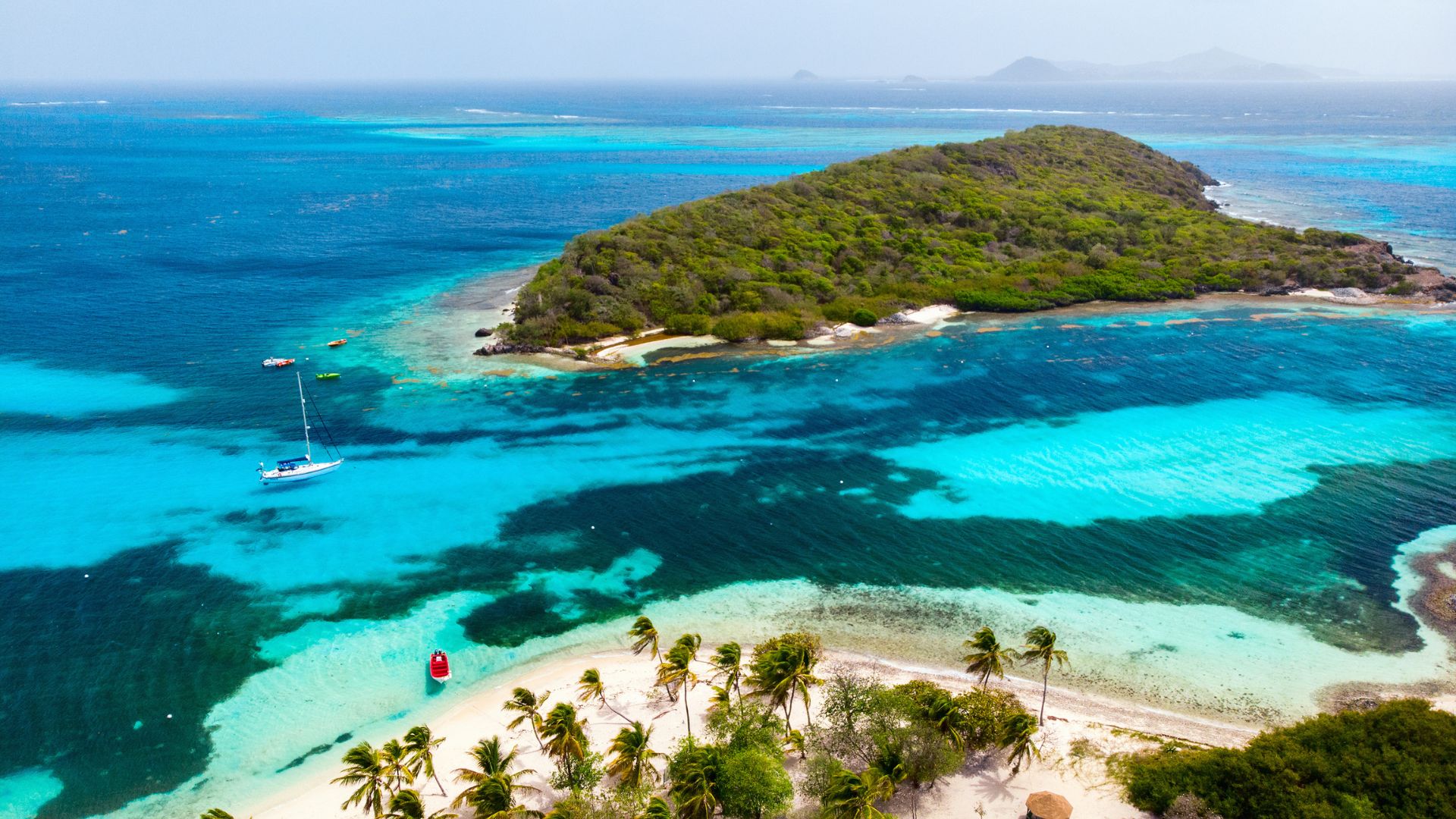
Aerial view of yachts at anchor inside the Tobago Cays Marine Park, with the Horseshoe Reef and the small uninhabited cays visible.
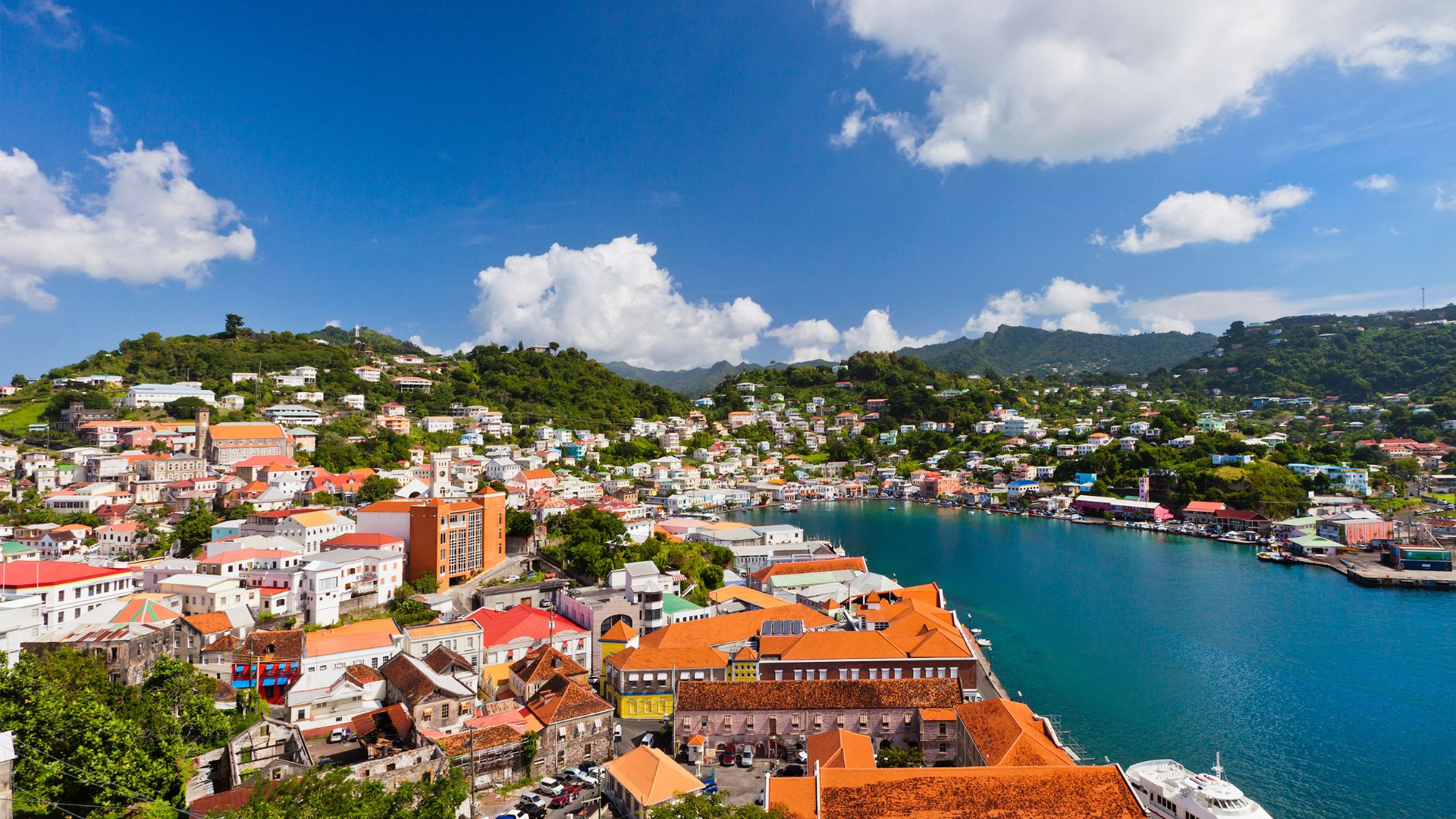
The pastel hillside town of St. George's, Grenada, with red-roofed warehouses climbing above the turquoise inner harbor.
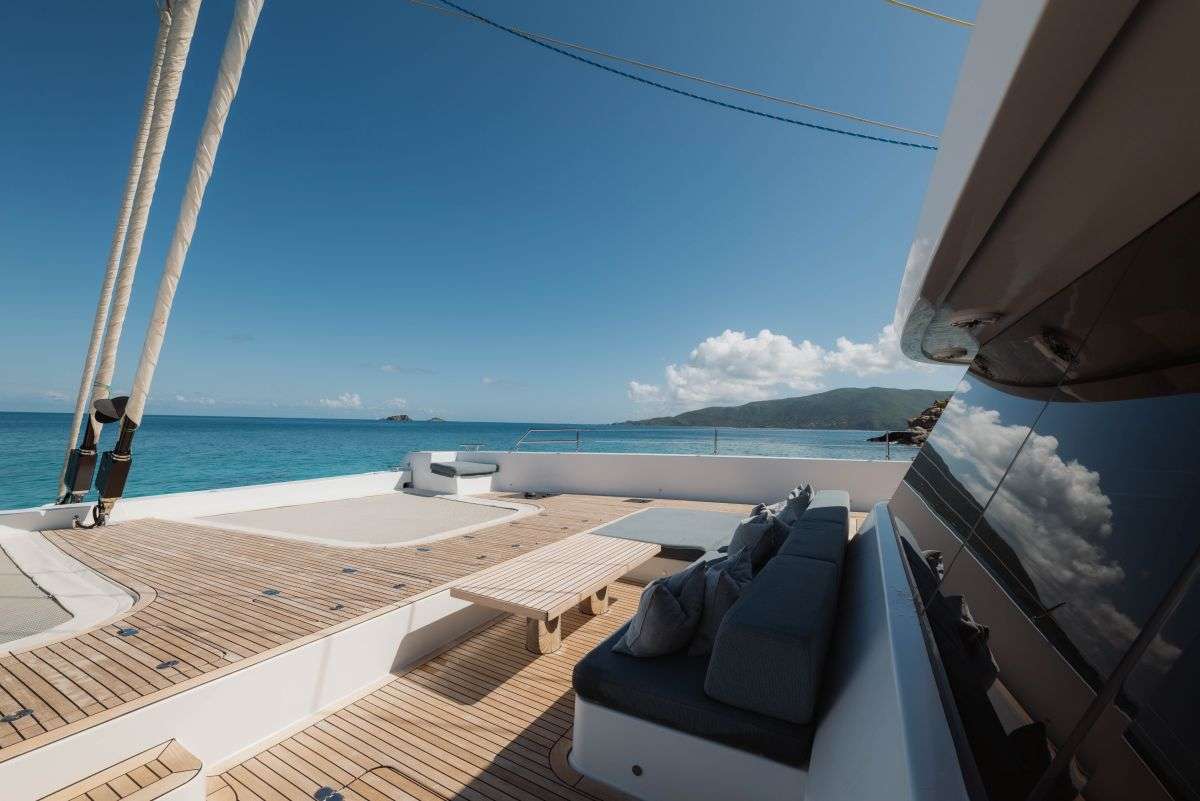
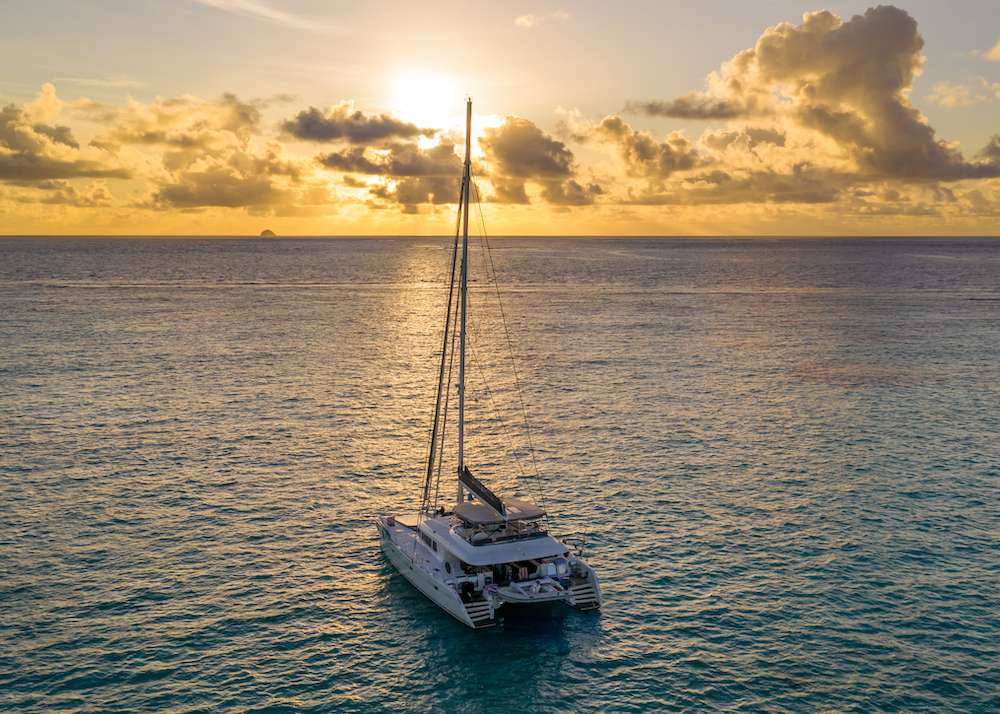
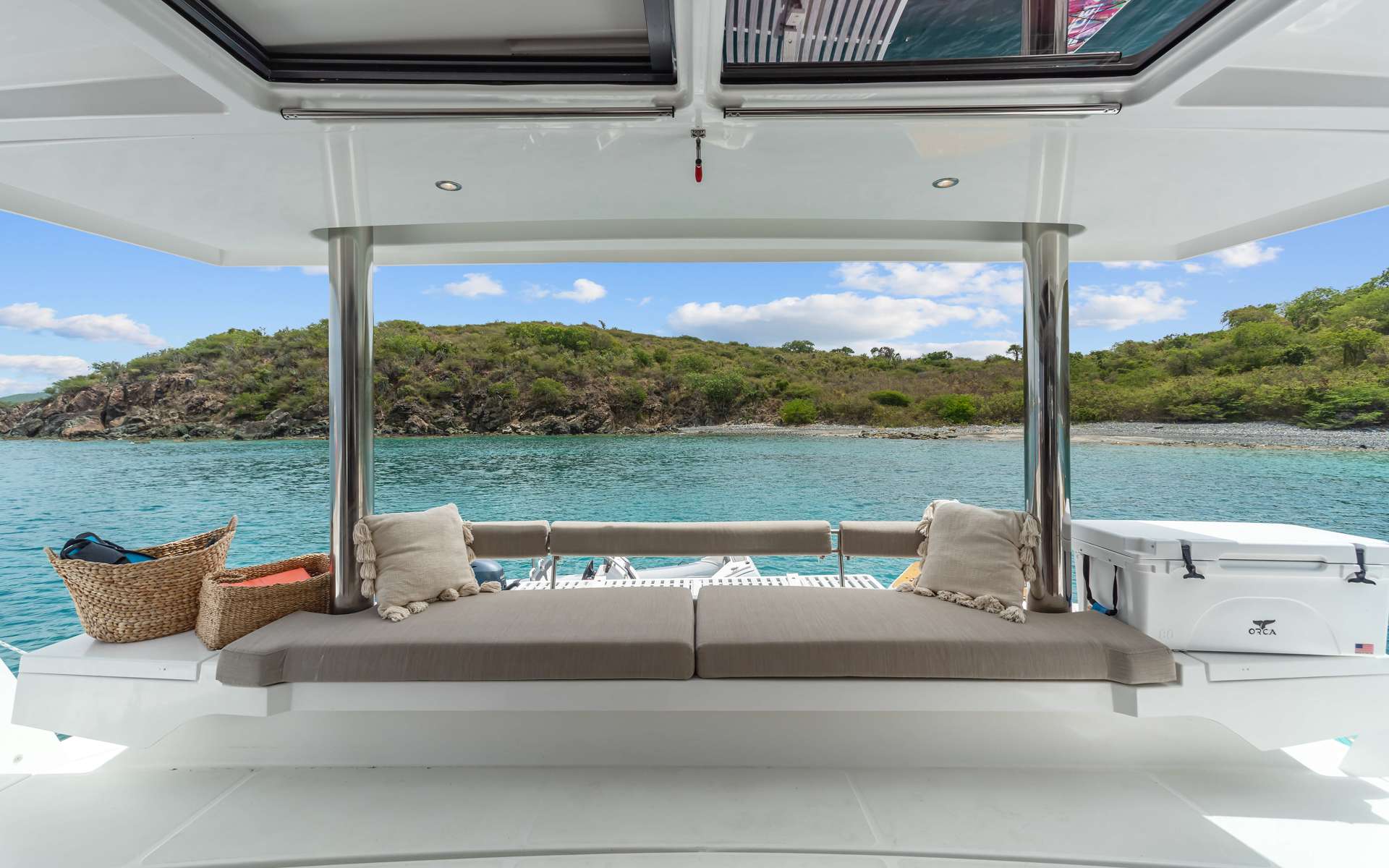
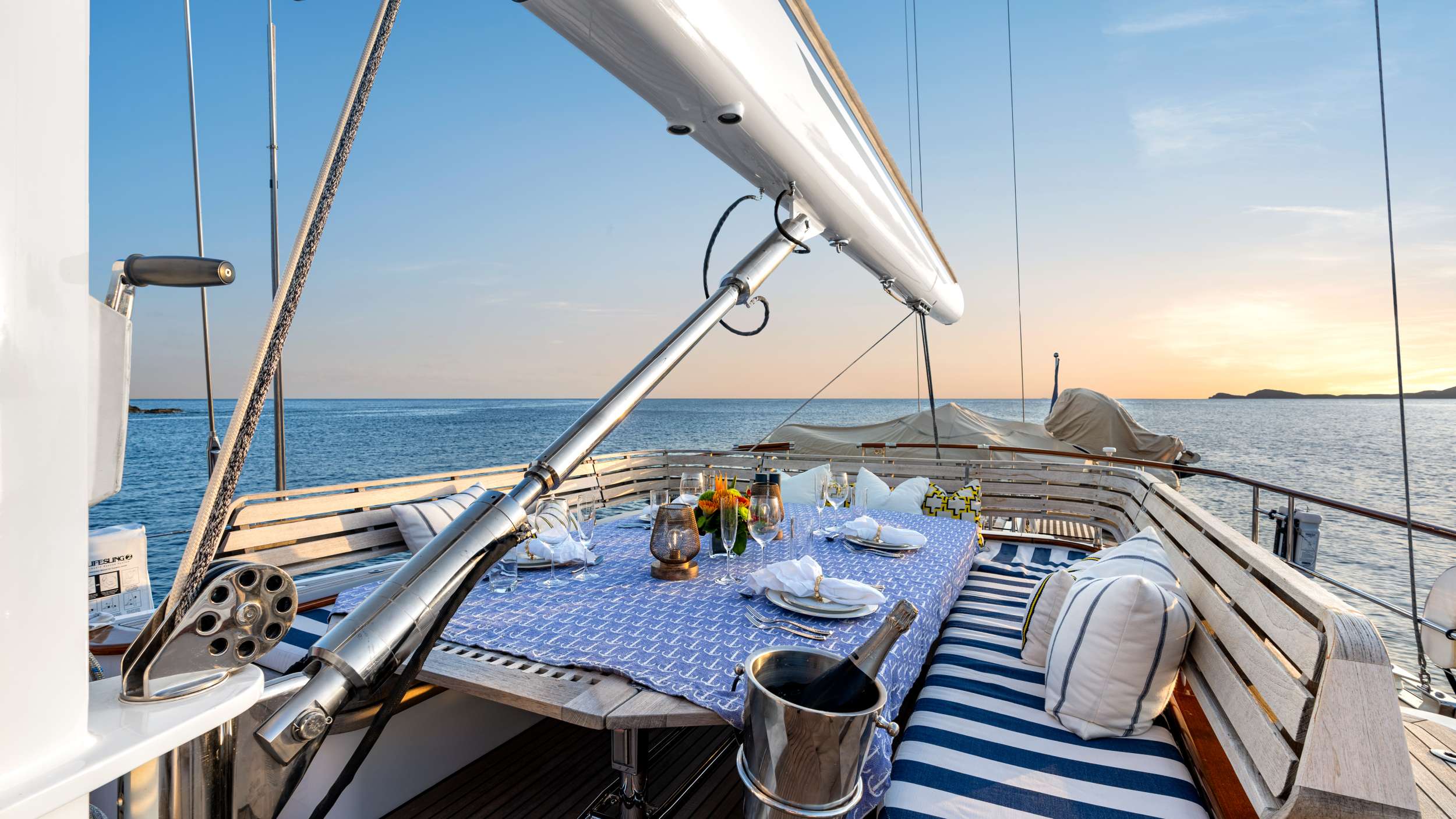
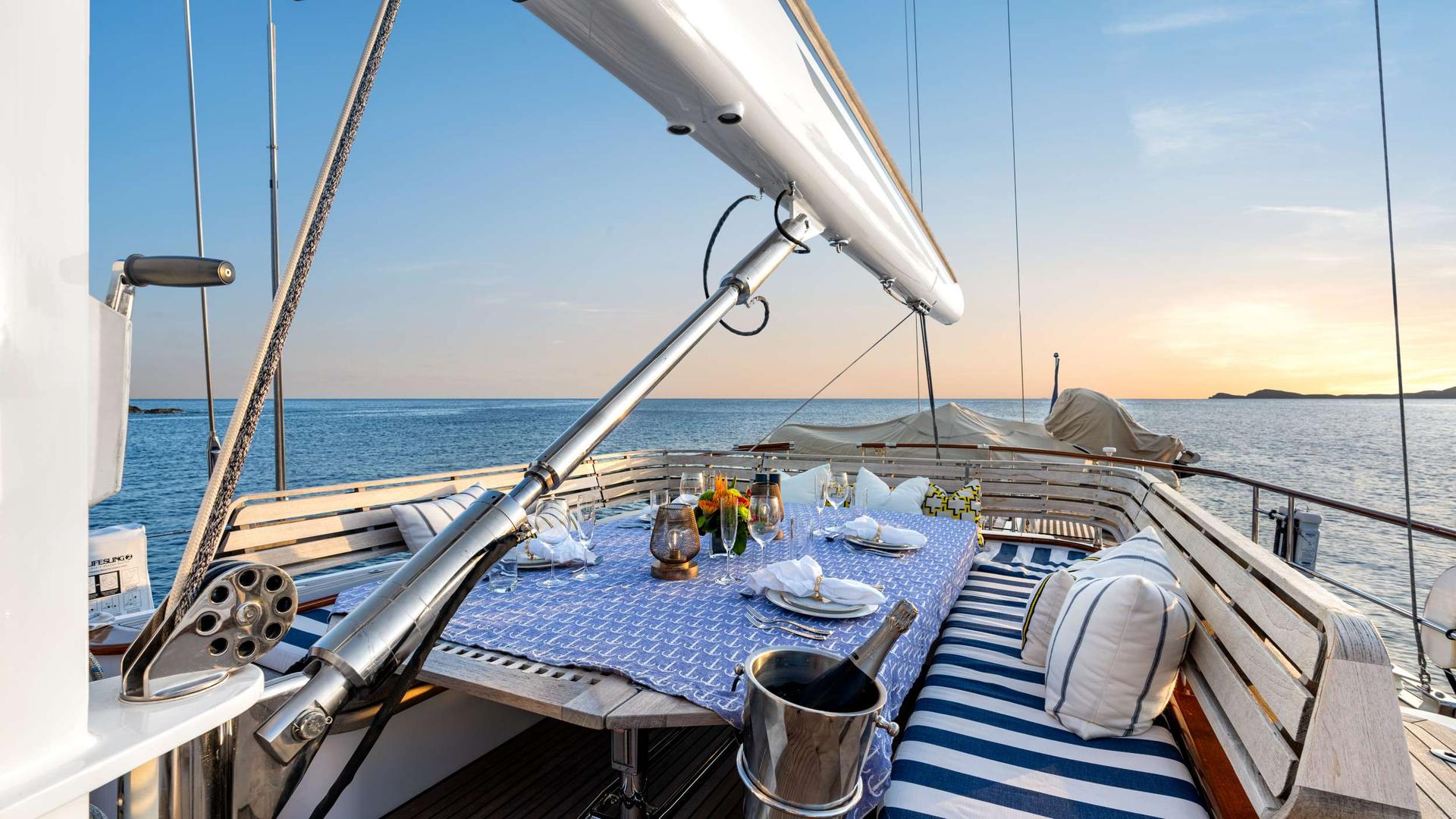
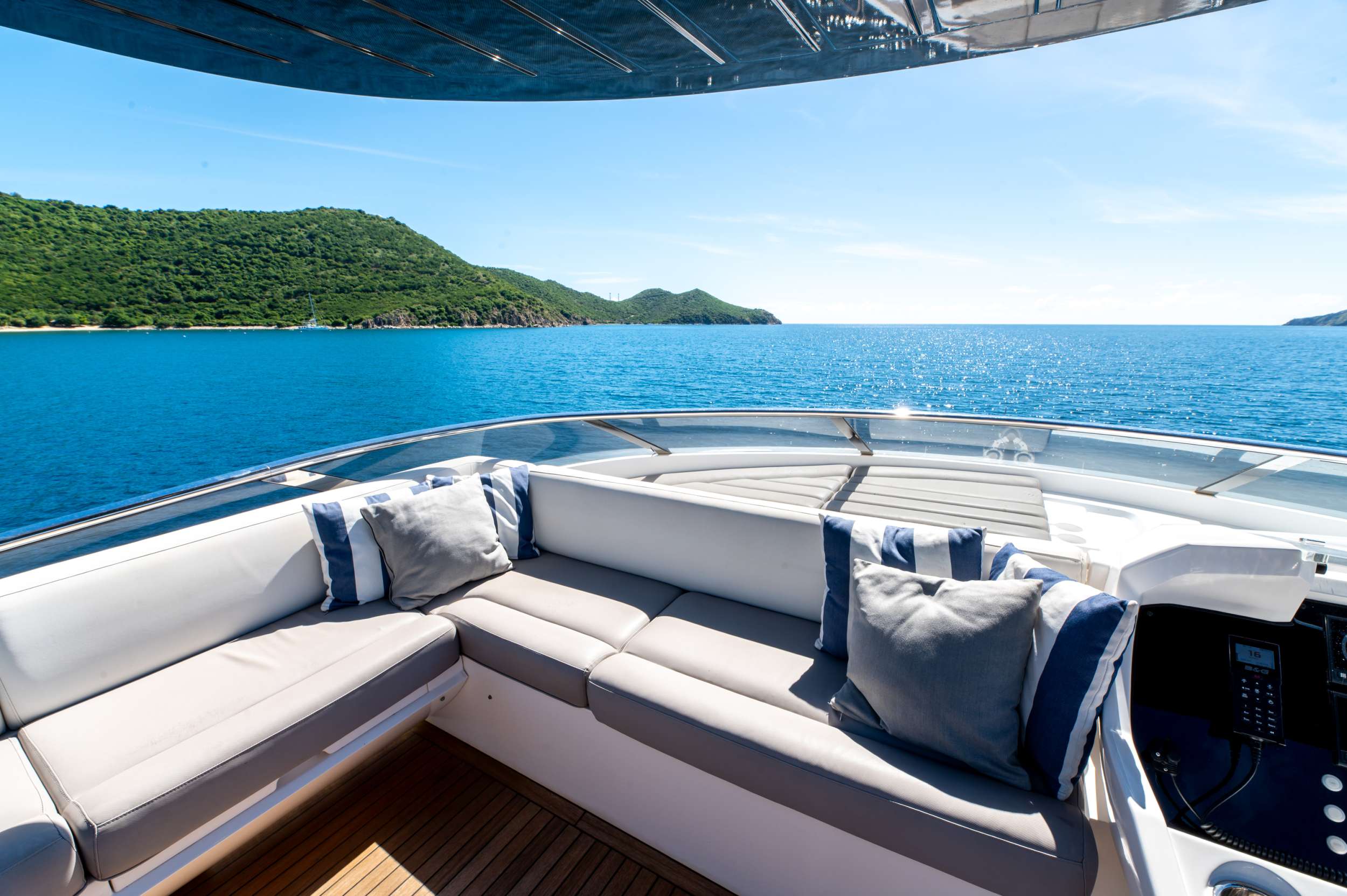
The bow lounge of a crewed catamaran underway in open Caribbean water with an island on the horizon.

What this St. Lucia to Grenada itinerary covers

Three countries on one keel — St. Lucia, St. Vincent and the Grenadines, and Grenada — sailed north to south with the prevailing east-northeast trades behind the beam. The pacing is built around the wind, not against it: the long open-water legs (the St. Lucia Channel on Day 2, the Carriacou-to-Grenada passage on Day 8) are reaches with the swell on the quarter, and the short Grenadines hops in the middle are three-to-twelve-mile sails between anchorages. The headline natural sites are intact and world-class: the Pitons, the Tobago Cays Marine Park, Sandy Island's protected reef off Carriacou, and Molinère, the world's first underwater sculpture park, off Grenada's west coast.

Best for groups who have done a charter or two and want the sailing to be the point — open passages, deepwater trolling for mahi-mahi and wahoo, and the satisfaction of having actually moved the boat down an island chain rather than circling one anchorage. Ten days is what the one-way needs; the route deliberately doesn't double back, so every mile is new water. Strongest fit for sailing catamarans and performance monohulls where the downwind-south routing pays off, and for travelers who'd rather earn the next anchorage than be parked in the same bay for a week. December through May is the season — steady trades, dry air, and a track that runs along the southern edge of the hurricane belt.

1

Day 1 of 10 · Rodney Bay embark → the Pitons

Aboard at St. Lucia — South to a Night Beneath the Pitons
Anchorage: Anse des Pitons, Soufrière (mooring)
Late light on the Pitons over Soufrière Bay — the marquee first night, with yachts on the park moorings in the calm water beneath the spires.
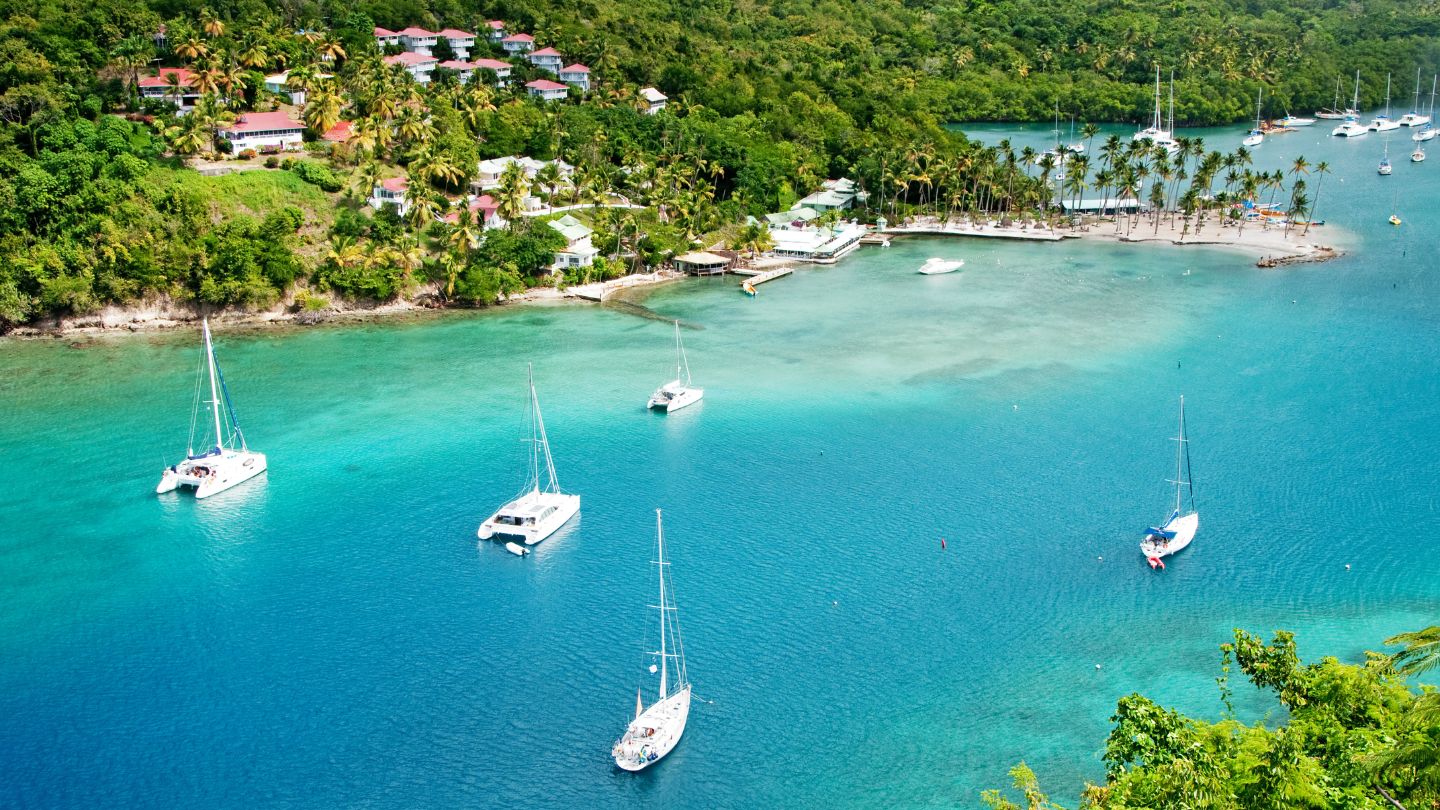
Marigot Bay on the cruise south — the palm-ringed hurricane hole where the original Doctor Dolittle was filmed, passed on the way down to the Pitons.

The flight into Hewanorra (UVF) lands on St. Lucia's southern tip; the transfer runs up the island to Rodney Bay on the northwest coast, where your crew meets you at the slip with cold drinks and a chart briefing that lays out the ten days south. Rodney Bay is St. Lucia's full-service yachting hub — fuel, provisioning, and the customs office that clears you out of the country are all here — so the boat is stored, fueled, and cleared while you settle in.

By late morning, lines off and south down St. Lucia's leeward coast. The mountains block the trades on this side, so the first few hours are a quiet motor-sail through the wind shadows with the breeze funneling down the valleys, the green volcanic ridge sliding by to port. You pass Marigot Bay — the hurricane-hole cove where the original Doctor Dolittle was filmed — and then, in the last few miles, the Pitons announce themselves: two sheer volcanic plugs rising straight out of the sea, Gros Piton and Petit Piton, the most photographed silhouette in the Caribbean and a UNESCO World Heritage Site.

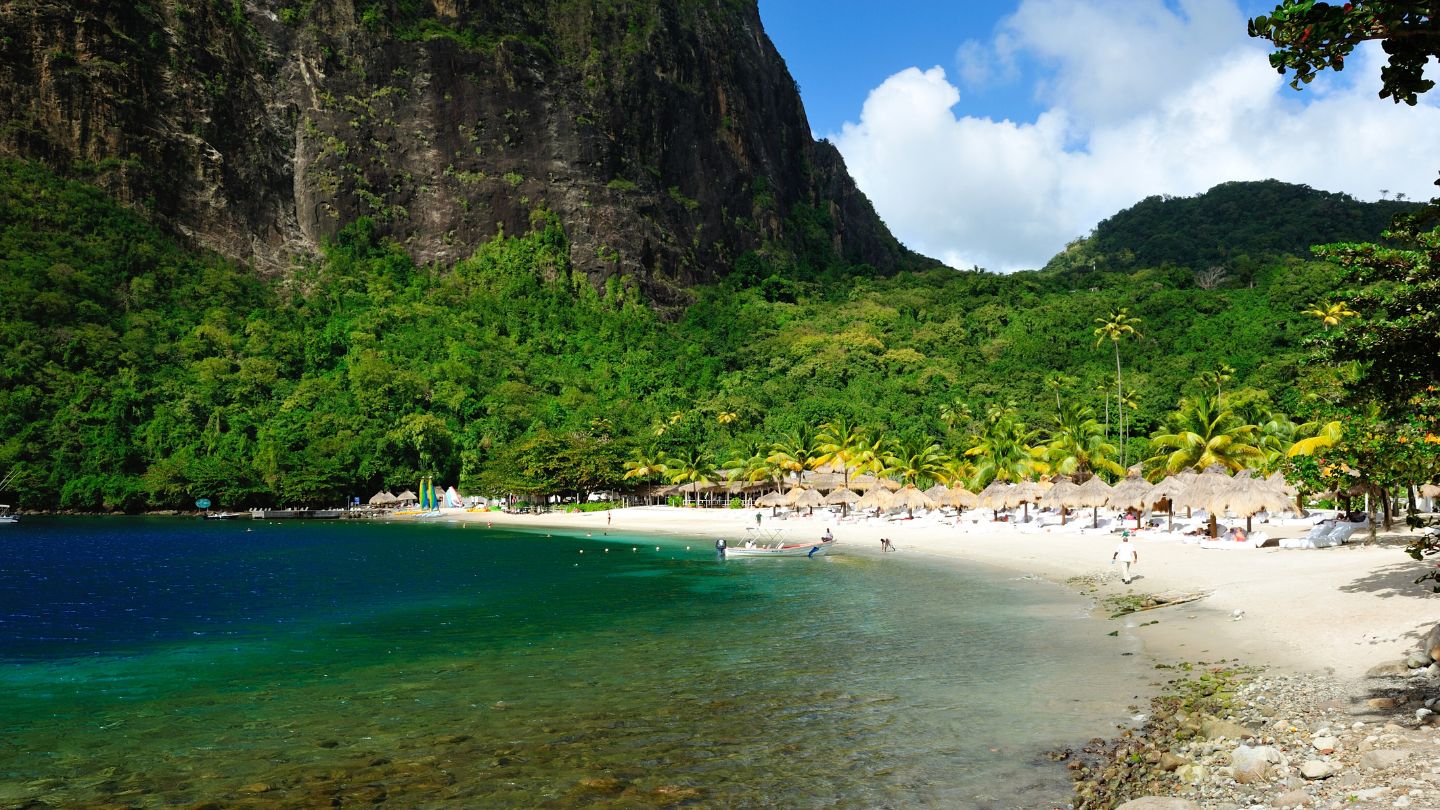
There's no anchoring here — the Soufrière Marine Management Area protects the reefs, and the water drops away too deep to set a hook anyway — so your captain picks up one of the park moorings at Anse des Pitons, in the saddle of water directly between the two peaks, with Sugar Beach in the notch behind you. The afternoon is a snorkel on the reef off Anse Chastanet or the drift along Petit Piton's base, a swim off the back of the boat, and then the light goes gold on the spires and you have dinner aboard with the two mountains filling the whole sky. It's a hard first night to beat, and the trip has barely started.

Day Highlights

  • Welcome and chart briefing at Rodney Bay, St. Lucia's full-service yachting base.
  • Leeward-coast cruise south past Marigot Bay.
  • Pick up a park mooring at Anse des Pitons, directly between Gros and Petit Piton.
  • Reef snorkel off Anse Chastanet and the first dinner aboard beneath the spires.
2

Day 2 of 10 · The Pitons → Bequia

The Big Passage — Across the Channel and Down St. Vincent to Bequia

Anchorage: Admiralty Bay, Bequia
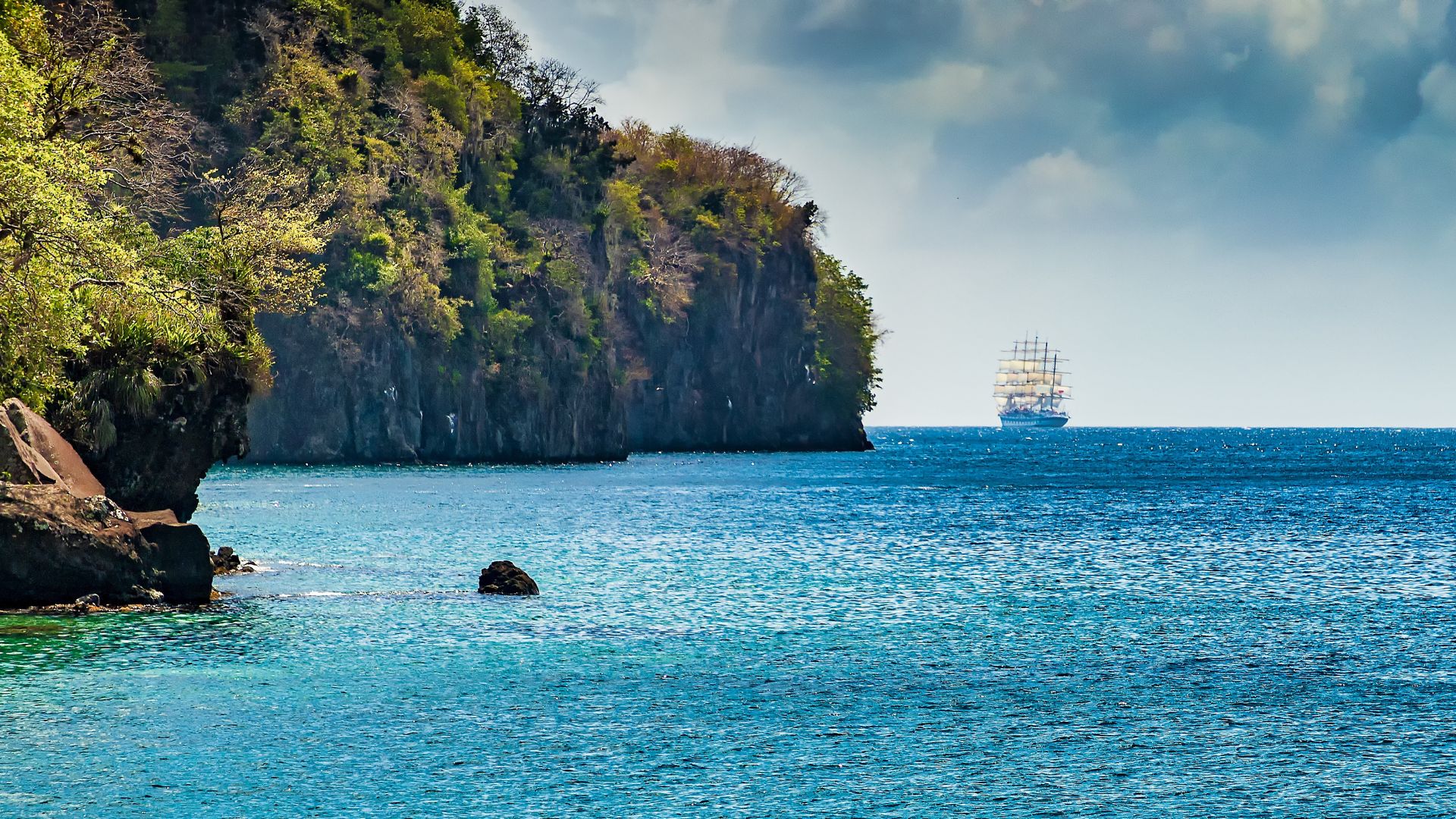
Running down St. Vincent's leeward coast — steep green cliffs falling straight to the sea, a tall ship standing off the headland. The boat keeps moving; the island is the scenery.
Admiralty Bay opens up at the end of the run — the friendliest harbor in the Grenadines and the reward for a fifty-mile day.

This is the day the trip earns its name. Your captain watches the forecast and picks a start time around when the breeze fills, because there's real water to cover — roughly fifty miles from the Pitons to Bequia, the longest single passage of the charter. Clear of St. Lucia's wind shadow, the boat hardens up into the open St. Lucia Channel: twenty-five-plus miles of blue water with the east-northeast trades and the Atlantic swell on the beam, a fast, lively reach that is exactly why this route exists. Lines go out the back as soon as you're in deep water — this channel is prime trolling ground, and mahi-mahi and wahoo are the signature catch.

Mid-passage, the high green wall of St. Vincent rises ahead and the boat slips into its lee. The wind drops behind the mountains and the water goes flat, and for a couple of hours St. Vincent is simply the scenery — the La Soufrière volcano (which last erupted in 2021) towering into the cloud, the deep cuts of Cumberland Bay, and Wallilabou, the cove where the first Pirates of the Caribbean built its Port Royal set and left the dock pilings standing. This itinerary doesn't overnight on the mainland; the play is to keep the boat moving and let the coast roll by, which is its own kind of pleasure after a morning of open water.

Out of St. Vincent's lee, the breeze returns for the last nine miles across the Bequia Channel, and Admiralty Bay opens on the bow — a deep, well-protected horseshoe full of moored sailboats, with the pastel waterfront of Port Elizabeth wrapped around it. Bequia is the friendliest and most authentically salty of the Grenadines, a working boat-building island where the Sargeant brothers still carve model schooners by hand near the ferry dock. Tender ashore for a walk along the Belmont Walkway, a cold Hairoun at a waterfront bar, and dinner aboard or up the hill at Mac's Pizzeria for the lobster pizza. You've earned the chair.

Day Highlights

  • Fifty-mile passage — the marquee sailing day of the trip.
  • Open St. Lucia Channel reach, then the flat-water cruise down St. Vincent's lee.
  • Trolling for mahi-mahi and wahoo in the deep channels.
  • Pass the La Soufrière volcano and the Wallilabou film set without stopping.
  • Anchor in Admiralty Bay, Bequia, and a walk along the Belmont Walkway.
3

Day 3 of 10 · Bequia → Mustique

Bequia to Mustique and a Night at Basil's Bar

Anchorage: Britannia Bay, Mustique (mooring)
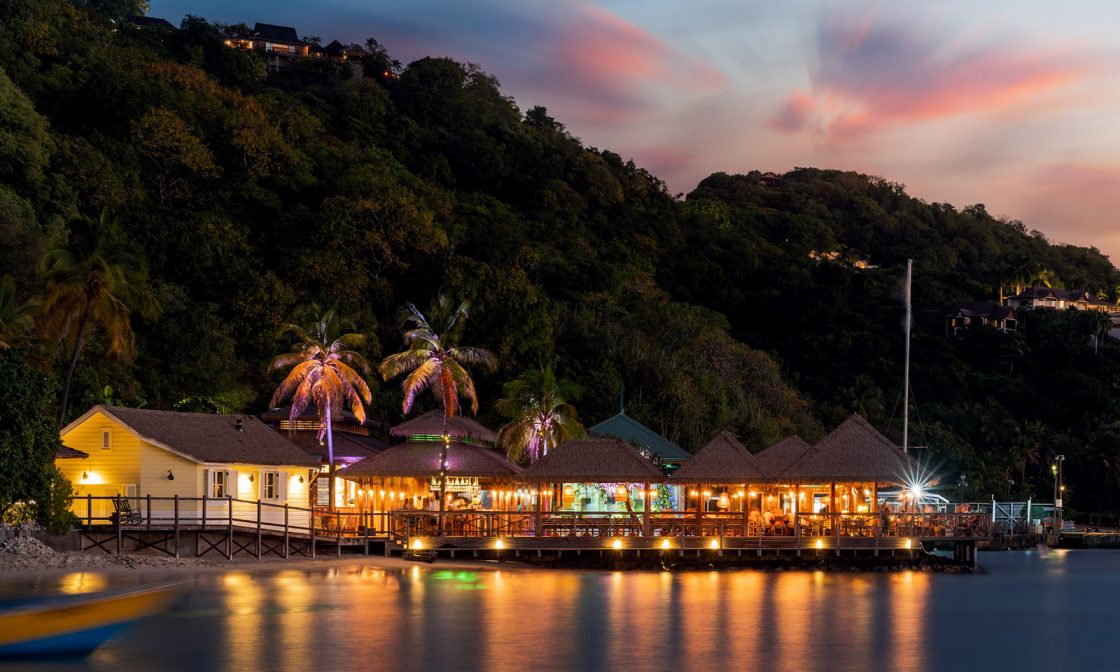
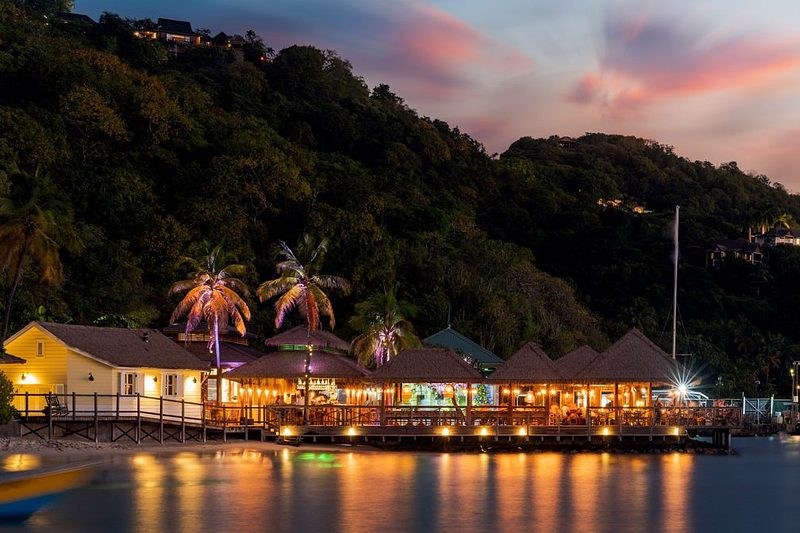
Basil's Bar at Britannia Bay — open-air, on stilts over the water, founded in 1976 by Basil Charles and still the most famous beach bar in the Caribbean.
The view from the windward side of Mustique — a private island of a hundred villas, kept deliberately quiet.

A slow Bequia morning first — coffee on deck, a last walk through Port Elizabeth's fish market, maybe a stop at the model-boat shop — and then lines off mid-morning for the sixteen-mile reach southeast to Mustique. The trades fill in across the open channel and the boat sails comfortably with Bequia receding astern and Mustique's low green profile growing on the bow. If anyone wants a turn at the helm, this is an easy, forgiving leg to take it.

Your captain picks up a mooring in Britannia Bay on Mustique's west coast — the only legal anchorage on the island, run by the Mustique Company that has owned the place since 1958. There are no resorts here in the usual sense; Mustique is a private estate of about a hundred villas, the island Princess Margaret put on the map and the Mick Jagger and David Bowie crowd kept quiet. Most guests rent a Kawasaki Mule from the company office and spend the afternoon driving the perimeter road — Macaroni Beach on the Atlantic side, the windward cliffs, the turtle sanctuary at the north end.

Dinner is the headline. Basil's Bar at Britannia Bay — open-air, on stilts over the water, thatched roof — founded in 1976 by Basil Charles and reimagined by the designer Philippe Starck a few years back. Basil also started the Mustique Blues Festival, which fills the bar every January and February. Wednesday is the long-running Jump Up night when the band plays late and villa renters and yacht crews end up on the same dance floor; any other night is quieter and the food is excellent regardless. Tender back to the boat under a sky absolutely loaded with stars.

Day Highlights

  • Sixteen-mile reach southeast from Bequia to Mustique.
  • Mooring in Britannia Bay, the only legal anchorage on the island.
  • Mule-rental loop — Macaroni Beach, the windward cliffs, the turtle sanctuary.
  • Dinner and drinks at Basil's Bar, the Caribbean's most famous beach bar.
4

Day 4 of 10 · Mustique → Mayreau

South Past Canouan to Salt Whistle Bay, Mayreau

Anchorage: Salt Whistle Bay, Mayreau
Salt Whistle Bay on Mayreau — a narrow neck of sand with the Caribbean on one side and the open Atlantic on the other. The palms are growing back; the anchorage is as good as ever.
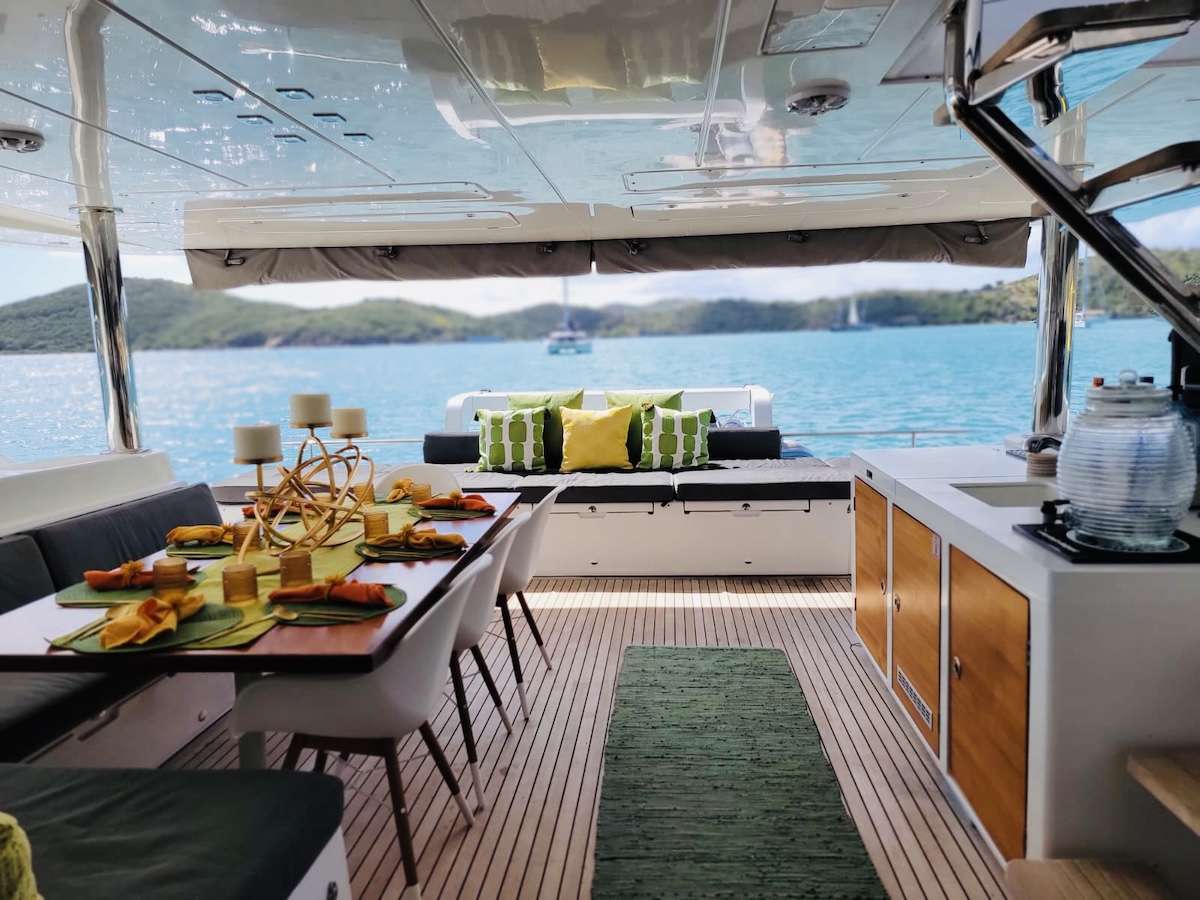
A quiet afternoon on the hook off Mayreau — aft deck open, nothing on the schedule until the sun goes down.

A twenty-mile run south down the heart of the chain, past Canouan on the way. Canouan is the polished island these days — the Sandy Lane Yacht Club marina on its south end is one of the most exclusive megayacht facilities in the Caribbean, and there's a Soho House on the beach — but it's largely a private, gated world, so most crewed charters cruise past its leeward coast and press on to the smaller islands. With the trades on the quarter, this is a fast, easy reach with the Grenadines stepping past on the port beam.

Mayreau is the smallest inhabited island in the chain and it holds the prettiest single anchorage in the Grenadines: Salt Whistle Bay, a narrow palm-lined neck of sand on the island's northwest tip, with the calm Caribbean on one side and the Atlantic surf a hundred feet away on the other. You anchor in the lee and the boat sits in flat, clear, sand-bottomed water with the beach a stone's throw off the bow. Hurricane Beryl came through hard here in 2024 and stripped the palms; they're coming back, and the bay's natural shape — the swim, the water, the setting — is exactly as good as it always was.

Lunch on the hook, an afternoon swimming and paddleboarding off the back, and a late tender ashore for a quiet sunset walk on the sand. There's a small hilltop village a fifteen-minute climb up the south side if you want the view across to the Tobago Cays you'll sail into tomorrow — from the church terrace you can see the whole marine park laid out below. Dinner aboard tonight, the boat barely moving on its chain. This is the deep-breath day before the headliner.

Day Highlights

  • Twenty-mile reach south past Canouan and the Sandy Lane Yacht Club.
  • Anchor in Salt Whistle Bay — sand on both sides of a narrow isthmus.
  • The best pure swim stop in the chain after the Tobago Cays.
  • Optional walk up to the village church for the view of tomorrow's marine park.
5

Day 5 of 10 · Tobago Cays — full day

The Tobago Cays — Turtles, the Horseshoe Reef, and Petit Tabac

Anchorage: Tobago Cays Marine Park
Anchored inside Horseshoe Reef — the cays in front of you, the open Atlantic breaking white on the reef behind, and the whole day on whatever schedule you want.
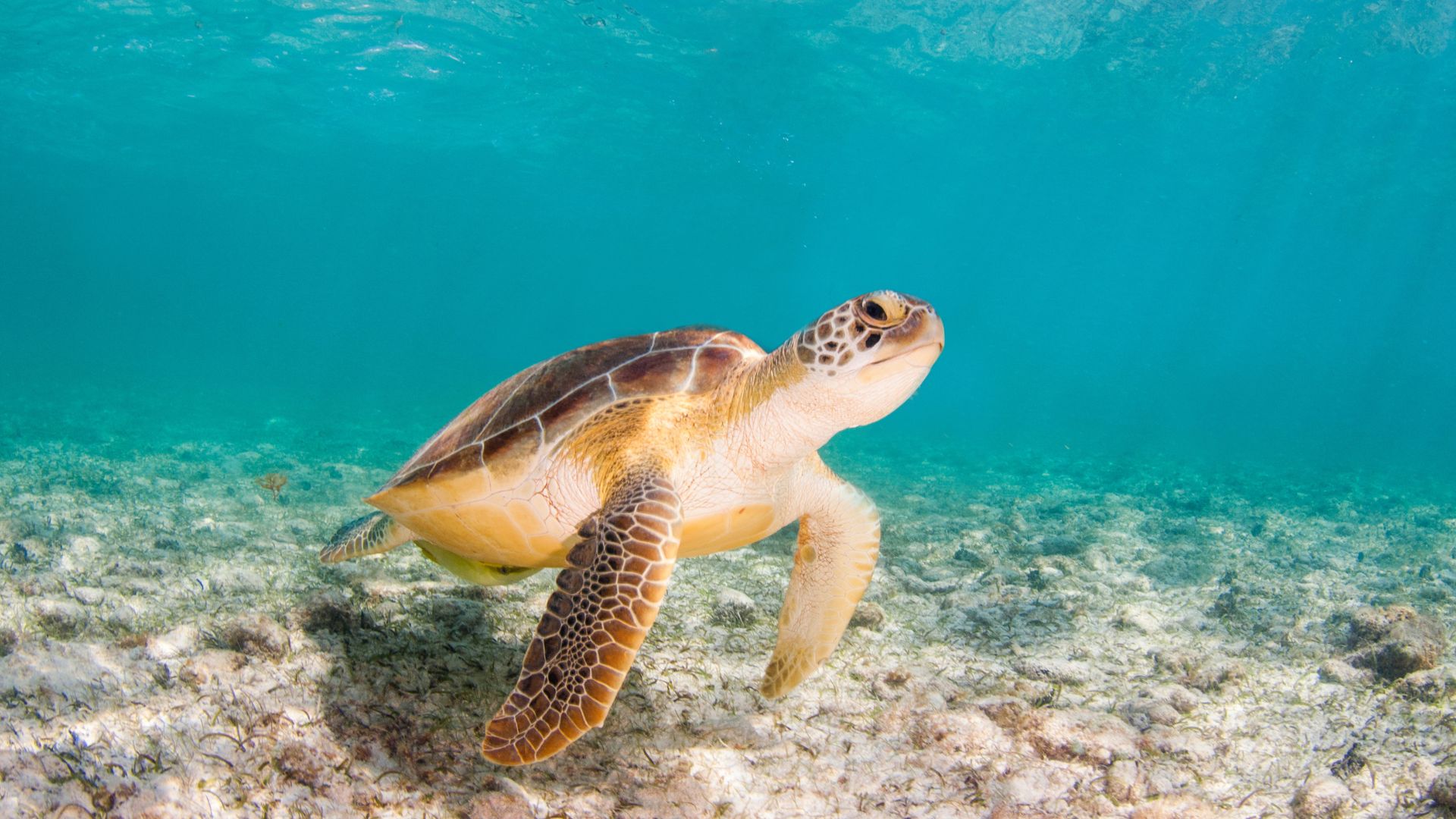
Green sea turtles graze the protected seagrass beds off Baradal year-round. Slip in from the swim platform, keep your distance, and they'll surface around you.
Petit Tabac, on the Atlantic side of the reef — the islet where Captain Jack Sparrow gets marooned in the first Pirates of the Caribbean. Worth the tender ride out.

A short three-mile reposition this morning brings you into the Tobago Cays Marine Park — the centerpiece of the Grenadines and one of the great in-water experiences anywhere in the Caribbean. Five small uninhabited islands sit inside a horseshoe-shaped barrier reef that takes the full Atlantic swell on its eastern edge; you anchor inside the reef in fifteen feet of staggeringly clear water, the open ocean breaking white a hundred yards behind you and the cays spread across the western half of the view. The park came through Hurricane Beryl in good shape — the reef and the turtle grounds are intact, and it remains the strongest single stop in the southern Grenadines.

The seagrass beds off Baradal are a protected turtle-watching reserve and one of the most reliable green-sea-turtle snorkels in the Caribbean. You swim out from the swim platform and they're there, grazing the grass; park rules are strict and well enforced — snorkel from above, no chasing, no touching — which is exactly why the population is so healthy. A guided dinghy tour with one of the park rangers makes the morning, because they know which patches the turtles are working that week.

Lunch is a beach barbecue on Petit Bateau, arranged through one of the local boat boys who sets a table on the sand, grills the lobster (caught that morning, alive in a basket by the table until you order), pours the rum punch, and clears it all afterward. It's the most quintessentially Grenadines meal of the trip — feet in the sand, the boat on the hook a hundred meters offshore. The afternoon is a tender ride out to Petit Tabac, the palm-fringed spit on the Atlantic side where the first Pirates of the Caribbean marooned Jack Sparrow, then sundowners back aboard and a night sleeping inside the marine park with the reef breaking in the dark.

Day Highlights

  • Anchor inside the Tobago Cays Marine Park behind the Horseshoe Reef.
  • Snorkel with green sea turtles in the protected Baradal seagrass beds.
  • Beach lobster BBQ on Petit Bateau, set up by a local boat boy.
  • Tender out to Petit Tabac, the Pirates of the Caribbean marooning island.
  • Overnight on the hook inside the reef.
6

Day 6 of 10 · Tobago Cays → Union Island

Union Island — Chatham Bay and Clearing South

Anchorage: Chatham Bay, Union Island
Clifton Harbour on Union Island, behind its protecting reef — the southern clearance port of St. Vincent and the Grenadines and the last stop before Grenada.
An afternoon in the lee of Chatham Bay — the water toys off the transom and the secluded west-coast beach a short swim away.

A short six-mile hop out of the Cays brings you to Union Island, the last of the Grenadines before the border. Union is the dramatic one — a jagged volcanic ridge that looks like a small Tahiti rising out of the sea — and it carries the southern customs office for St. Vincent and the Grenadines. Your captain ducks into Clifton Harbour, tucked behind its barrier reef on the windward side, to clear the boat outbound while you have an hour ashore in the most genuinely local town on the route.

Union took a hard, direct hit from Hurricane Beryl in 2024 and the town has been rebuilding ever since; the yacht services, the grocery, and the clearance office are all back up and running, and the place has a resilient, getting-on-with-it energy that's worth seeing. With the paperwork done, your captain rounds the island to Chatham Bay on the secluded west coast — a deep, quiet anchorage backed by a long empty beach, where a handful of rustic beach shacks are slowly coming back to life serving grilled fish and lobster in the sand.

The afternoon is yours in the lee: swimming and paddleboarding in the calm water, a walk down the empty beach, snorkeling the rocky ends of the bay. Chatham is the kind of anchorage that resets the trip after the social energy of Mustique and the marquee of the Cays — there's nothing to do and nowhere to be, which is precisely the point. Sundowners on the aft deck, dinner aboard or ashore at one of the beach grills, and a quiet last night in St. Vincent and the Grenadines.

Day Highlights

  • Six-mile hop from the Cays to Union Island.
  • Clear outbound at Clifton Harbour, behind its windward reef.
  • Anchor in secluded Chatham Bay on the quiet west coast.
  • Beach walk, swim, and dinner ashore at a Chatham Bay grill.
7

Day 7 of 10 · Union → Carriacou (clear into Grenada)

Into Grenada — Carriacou, Sandy Island, and Paradise Beach

Anchorage: Tyrrel Bay, Carriacou
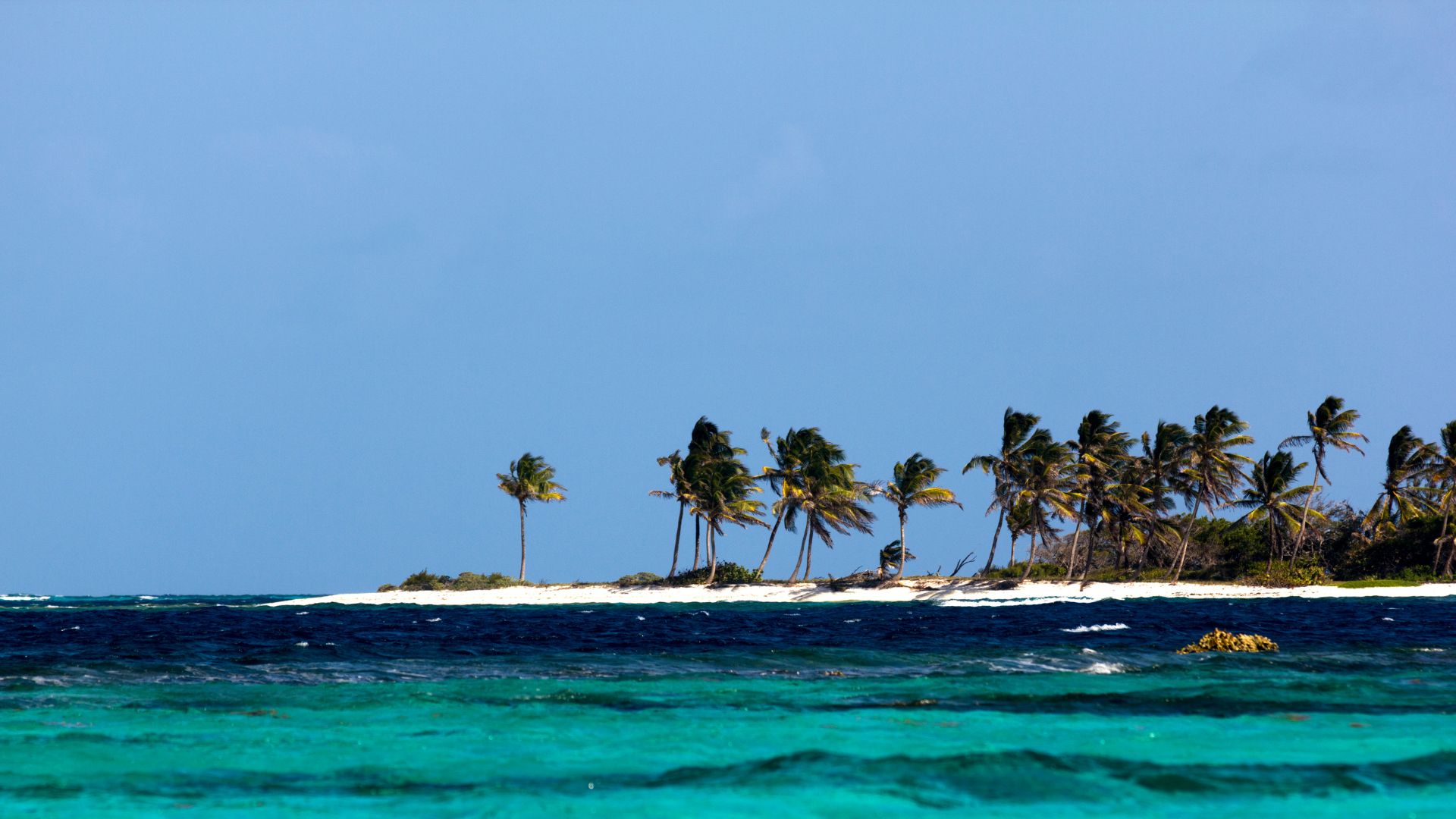
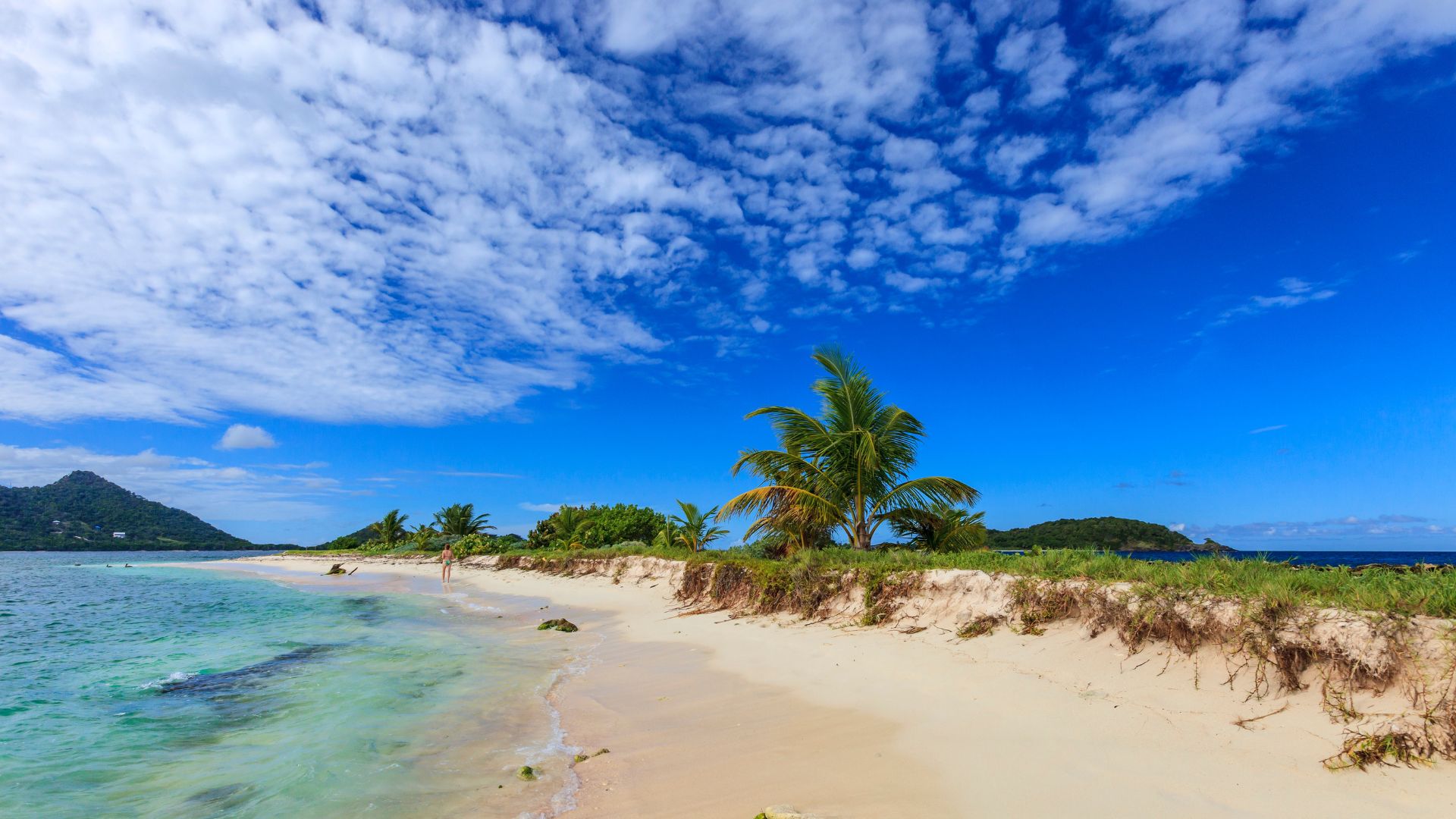
Sandy Island off Carriacou — a low, all-but-deserted spit of sand and palms inside Grenada's largest marine protected area, the bigger island behind it. The reef here is the best snorkeling on this end of Grenada.
First night in Grenadian waters, anchored off Carriacou — the chain behind you, the mainland passage ahead.

A ten-mile sail across the border this morning takes you from St. Vincent and the Grenadines into Grenada — and into one of the quietest, most under-the-radar corners of the eastern Caribbean. Your captain makes for Tyrrel Bay on Carriacou, a deep, well-sheltered horseshoe with a purpose-built customs and immigration office at the marina, and clears the boat into the country while you settle into the new water.

Carriacou is the largest of Grenada's offshore islands and a genuine boat-building community — they still lay down wooden sloops on the beach at Windward, by eye, the way the Scots shipwrights who settled here taught them to. The island was very near the eye of Hurricane Beryl in 2024 and took serious damage; what's striking now is how green it has come back and how far the recovery has come, with businesses reopened and the harbor working again. It is, refreshingly, an island almost no charter guests ever see.

The afternoon's prize is Sandy Island — a tiny deserted sandbar with a fringe of palms, a mile off Carriacou's west coast, sitting inside the island's protected marine park. The reef around it is the best snorkeling on this end of Grenada, and the islet itself is a barefoot, no-footprints-but-yours kind of place. Anchor off, swim the reef, lay out on the sand, and tender across to the long calm sweep of Paradise Beach on the main island for a cold drink. Back aboard for the first Grenadian sunset, the big mainland passage on the chart for tomorrow.

Day Highlights

  • Ten-mile crossing into Grenada; clear in at Tyrrel Bay, Carriacou.
  • Carriacou — a real wooden-boat-building island few charter guests reach.
  • Snorkel the reef off Sandy Island, inside the marine protected area.
  • Paradise Beach on the main island for a sundowner ashore.
8

Day 8 of 10 · Carriacou → mainland Grenada

The Mainland Passage — Past Kick 'em Jenny to the West Coast

Anchorage: Dragon Bay / Molinère, west coast Grenada
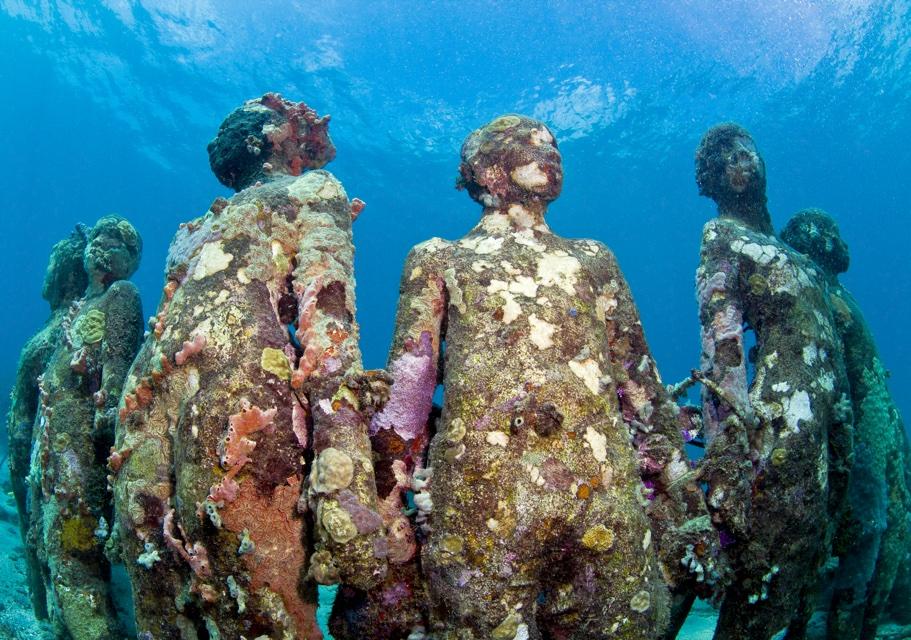
Molinère, off Grenada's west coast — the world's first underwater sculpture park, the cast figures now thick with coral and sponge. You snorkel it straight off the boat.
Dinner aboard at anchor off the west coast after the passage, with the lights of St. George's glowing a few miles south.

The second marquee passage. Roughly thirty-three miles of open water separate Carriacou from mainland Grenada, and the rhumb line runs more into the trades than the easy reaches up north, so your captain may angle the course to keep the boat sailing and time the start around the morning breeze. Lines go out the back early — the banks and drop-offs along this stretch hold mahi-mahi, wahoo, and tuna, and it's the best fishing of the trip after the St. Lucia Channel.

The passage threads past some genuinely wild water. Isle de Ronde and the rock cluster known as the Sisters break up the horizon, and a couple of miles off the route lies Kick 'em Jenny — an active submarine volcano with a marine exclusion zone the authorities adjust based on its activity. Your captain checks the current advisory before departure and gives it the required berth; from the deck it's simply open ocean, but it's a good reminder that this whole island chain is the rim of a very much living volcanic arc.

By mid-afternoon Grenada's green northwest coast fills the bow and the boat slips into the lee for the run down to the anchorages at Dragon Bay and Molinère. The reason to be here is the Molinère Underwater Sculpture Park — the world's first, created by the artist Jason deCaires Taylor in 2006, a field of cast-concrete human figures arranged on the sandy bottom in fifteen feet of clear water, now half-claimed by coral and fish. You snorkel it straight off the boat in the late-afternoon light. Dinner aboard on the hook, the lights of St. George's glowing a few miles south.

Day Highlights

  • Thirty-three-mile open-water passage from Carriacou to the mainland.
  • Trolling the banks past Isle de Ronde and the Sisters.
  • Give the active Kick 'em Jenny volcano its exclusion zone.
  • Snorkel the Molinère Underwater Sculpture Park off the west coast.
  • Anchor at Dragon Bay with St. George's in sight.
9

Day 9 of 10 · West coast → St. George's

St. George's — The Spice Harbor and Grand Anse

Anchorage: Port Louis / the Lagoon, St. George's
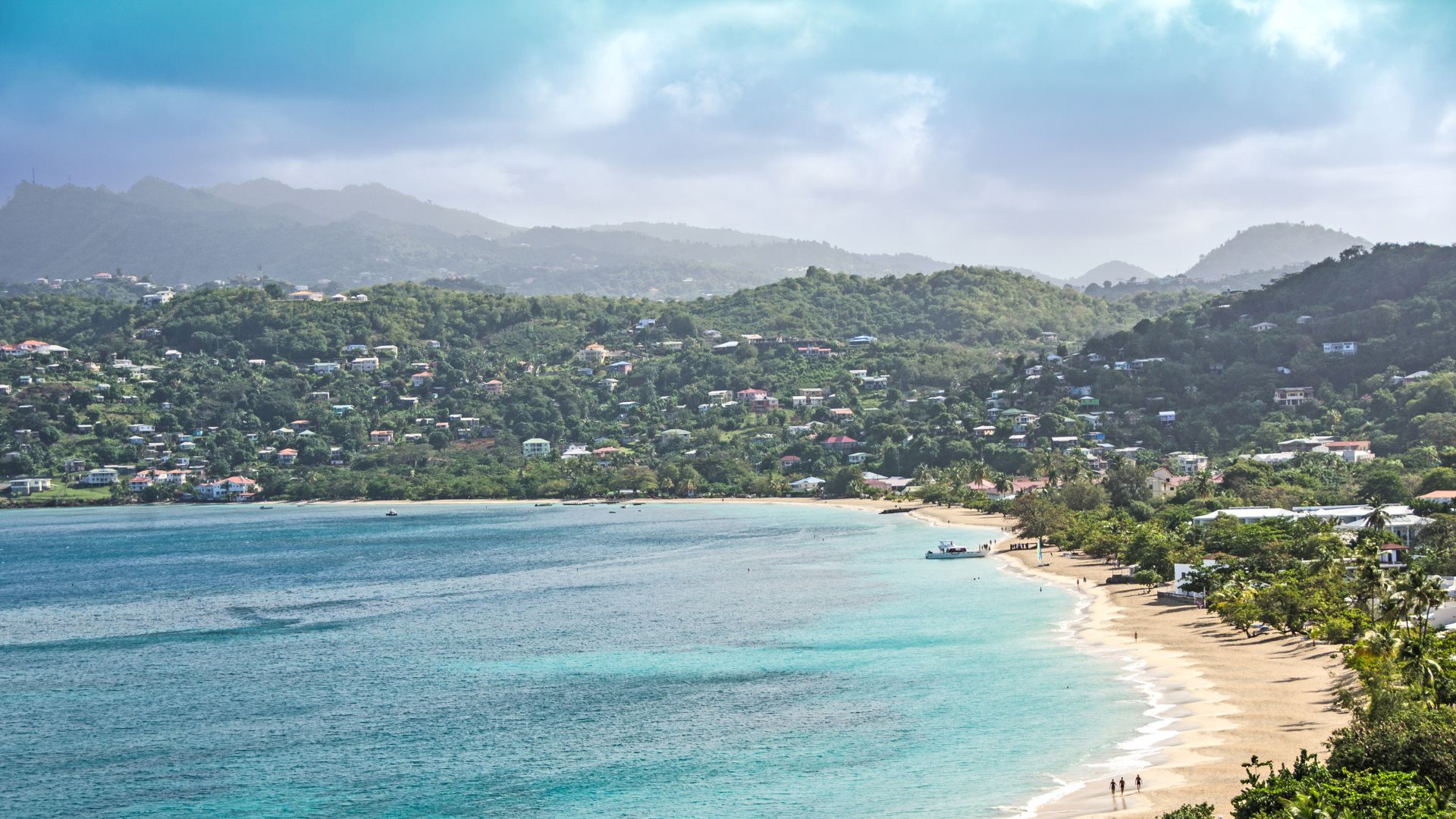
St. George's from above — pastel houses and red-roofed warehouses stacked up the hillside over the harbor, widely called the prettiest port town in the Caribbean.
Grand Anse — a long curve of pale sand and calm water below the green hills just south of St. George's, one of the great swimming beaches in the region.

A short morning sail down the coast drops you into St. George's, the capital and, by wide agreement, the prettiest harbor town in the Caribbean. The Carenage — the horseshoe inner harbor — is ringed by pastel Georgian warehouses with red-tile roofs that climb the hillside beneath Fort George, the French-built fort that has watched over the harbor since the seventeenth century. Your captain berths the boat at Port Louis Marina in the Lagoon, the modern yachting basin a short walk from town.

Grenada is the Isle of Spice, and St. George's is where you understand why: the market square is a wall of nutmeg, mace, cinnamon, and cocoa, the air smells like a baking cupboard, and nutmeg is the only spice to appear on a national flag. Spend the morning in town — the market, the fort with its view over the harbor and its weight of recent history, the waterfront — and the afternoon at Grand Anse, the two-mile sweep of white sand and calm water just south of the capital that is one of the great swimming beaches in the region.

Tonight is the proper dinner ashore. St. George's has the best restaurant scene on the whole route, from the marina's waterfront tables to the local spots serving oildown — the national one-pot of breadfruit, salt meat, dumplings, and callaloo simmered down in coconut milk. Or the chef pulls out the stops aboard with the trip's running list of catches reduced to one plated set. Either way, it's a celebration of a charter that has covered real ground.

Day Highlights

  • Berth at Port Louis Marina in the St. George's Lagoon.
  • The Carenage and the nutmeg-and-spice market in town.
  • Fort George above the harbor.
  • An afternoon at Grand Anse Beach and dinner ashore in St. George's.
10

Day 10 of 10 · St. George's → the south coast

Grenada's South Coast — Hog Island and a Last Day on the Water

Anchorage: Hog Island / Prickly Bay, south Grenada
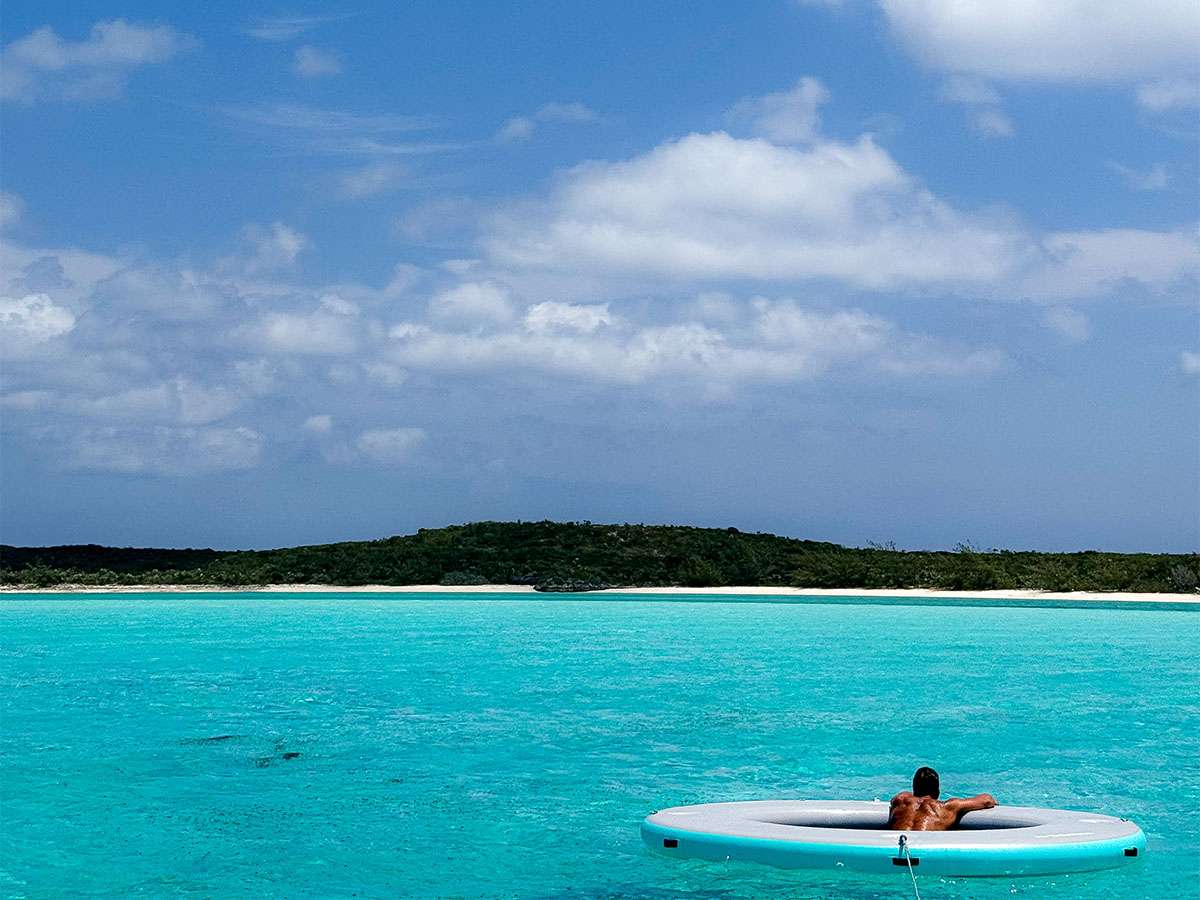
A last full day on the water along Grenada's sheltered south coast — the toys off the transom, nowhere to be.
The farewell dinner at anchor on the south coast — the last sunset of a ten-day, three-country sail.

The last full day works its way around Grenada's south coast, a different world from the open windward passages — a maze of reef-protected bays, mangrove inlets, and quiet anchorages tucked behind the headlands. Your captain rounds Point Salines past the airport and into the lee, with options that shape the day around what the group wants for a finish.

Hog Island is the classic call: a low, undeveloped island off the south coast with a calm anchorage and Roger's Bar, a bamboo-and-driftwood shack on the beach that throws the most famous Sunday gathering in Grenada — live music, rum punch, and a barbecue that draws every cruiser in the area. Even on a quiet weekday the anchorage is a gem. For a more active last day, your captain can set up an inland run from Prickly Bay — Annandale Falls, a nutmeg plantation, or the River Antoine distillery, the oldest working rum distillery in the Caribbean, still driven by a waterwheel.

Or the group simply spends the day on the water — a last snorkel, the full slate of toys off the transom, a long lunch on the aft deck — and lets the trip wind down at anchor. Tonight is the farewell dinner: the chef's best, paired wines from the cellar, and a toast to a charter that started under the Pitons and ran the whole eastern edge of the Caribbean to get here. Last night aboard on the south coast of the Isle of Spice.

Day Highlights

  • Cruise Grenada's reef-protected south coast.
  • Anchor off Hog Island for Roger's Bar.
  • Optional inland run — Annandale Falls, a spice plantation, or River Antoine rum.
  • Farewell dinner aboard at anchor.
11

Day 11 · Disembarkation

Last Morning — Disembark at Port Louis, St. George's

A last slow breakfast aboard, a final swim off the back of the boat, and a short morning run back to Port Louis Marina in St. George's for check-out. Your crew handles every logistic from the dock — the transfer to Maurice Bishop International (GND) is fifteen minutes, and most groups schedule the flight for mid-afternoon or later to keep the morning unhurried. Step off with salt in your hair, three countries' worth of sailing behind you, and the rare satisfaction of having actually gone somewhere.

Frequently asked

Why sail one-way from St. Lucia to Grenada instead of a Grenadines round-trip?
The round-trip out of St. Vincent is the classic Grenadines week and it's wonderful — but it stays inside one country and never gets the long passages. The one-way from St. Lucia to Grenada is the route for groups who want the sailing itself: the open St. Lucia Channel crossing, the run down St. Vincent's coast to Bequia, the deepwater trolling, and the passage from Carriacou across to mainland Grenada past Kick 'em Jenny. You see three countries, you never repeat an anchorage, and the trades sit behind the beam the whole way south. It's more boat-handling and more blue water than a round-trip — which is exactly the appeal.
How do guests get to the start and home from the end?
Fly into Hewanorra International (UVF) on St. Lucia's southern tip — the long-haul gateway with non-stops from the US, UK, and Canada — and transfer about an hour up to Rodney Bay to board. Disembark ten days later at Port Louis Marina in St. George's, Grenada, fifteen minutes from Maurice Bishop International (GND), which connects through Miami, New York, and London. Because the yacht finishes a different country than it started, the quote carries a one-way relocation line that covers the crew's repositioning time, fuel, and the three sets of customs clearances. It's a real number that scales with the yacht's size, and we lay it out next to the base rate so the comparison is honest.
What's the sailing actually like on this route?
Real, but well within a crewed yacht's comfort. The two big legs — the St. Lucia Channel to Bequia (around fifty miles) and Carriacou to St. George's (around thirty-three) — are open-water reaches with the east-northeast trades and the Atlantic swell on the beam or quarter; lively, fast, and dry on a catamaran in the December-to-May window. The Grenadines hops in the middle are short and sheltered. Your captain reads the forecast a few days out and picks the start times around when the breeze fills, so the passages are sailed, not endured. Groups who want genuine open-water time get it here; groups who'd rather day-bounce between calm anchorages are better matched to the BVI.
Is the fishing really that good?
The channels between these islands drop into deep water fast, and the trade-wind current pushes bait through them — it's some of the most productive trolling in the eastern Caribbean. Mahi-mahi (dorado) and wahoo are the signature catches on the St. Lucia Channel and the Carriacou passage; yellowfin tuna and kingfish run year-round, and blue and white marlin and sailfish hold offshore. Most crewed yachts on this route carry trolling gear and the crew knows the water; the chef turns the day's catch into lunch on the aft deck. The two long passage days are the ones to have the lines out.
When's the best time of year for this charter?
December through May. The trades settle into a steady fifteen-to-twenty-five knots, the air dries out, and the swell is consistent enough to plan the passages around. The 'Christmas Winds' from mid-December into January blow harder — twenty-five to thirty — which makes for fast sailing if your group is up for it; February through April is the sweet spot of steady breeze and little rain. The whole route runs along the southern edge of the hurricane belt, and a winter charter sidesteps the season entirely. Book six-plus months out for the holiday and February weeks.

Ready to set sail in the Grenadines?

Every itinerary we send is custom-tailored. Tell us your dates, the size of your group, and what you want out of your charter—we'll handle the rest.