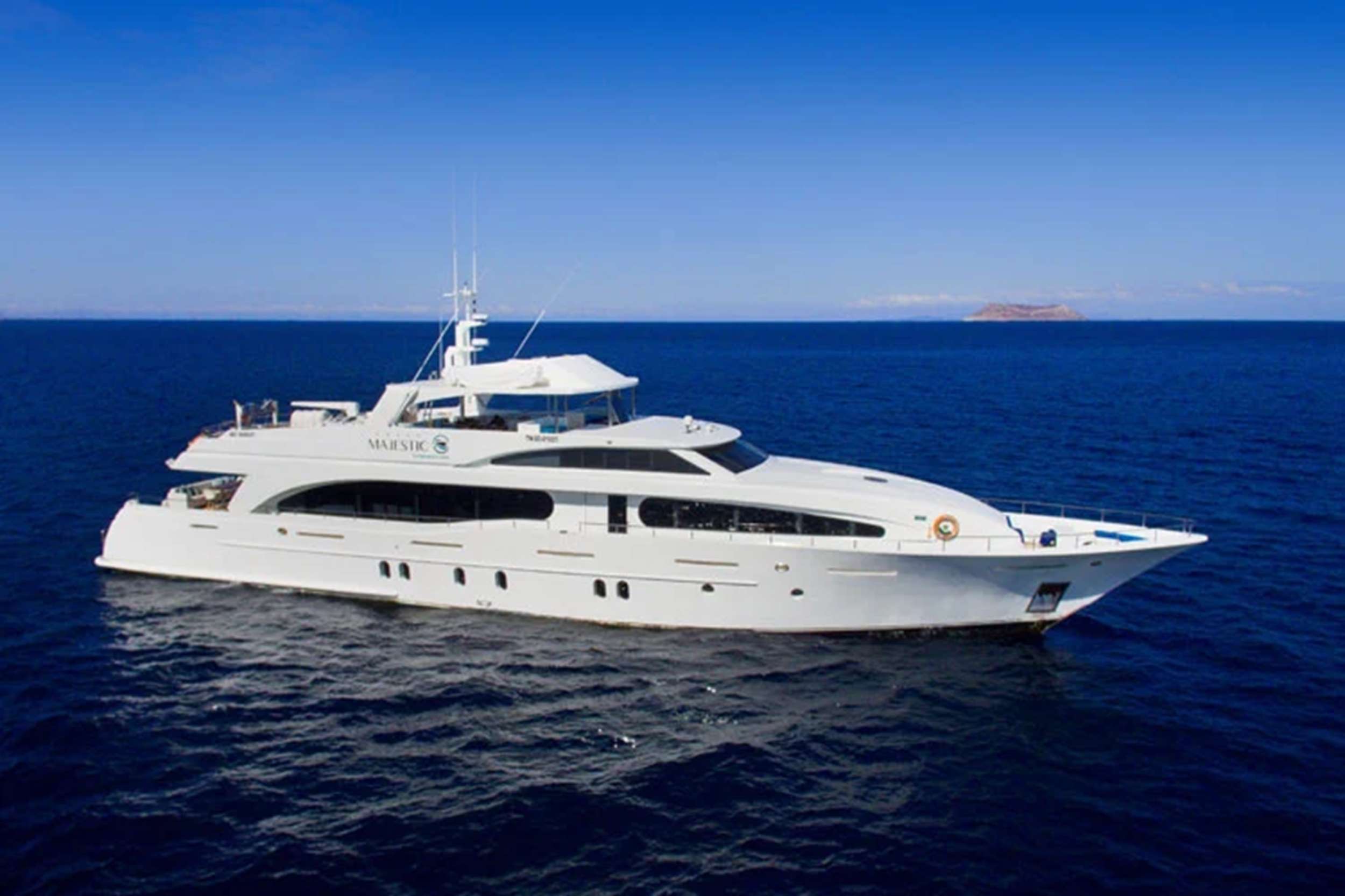

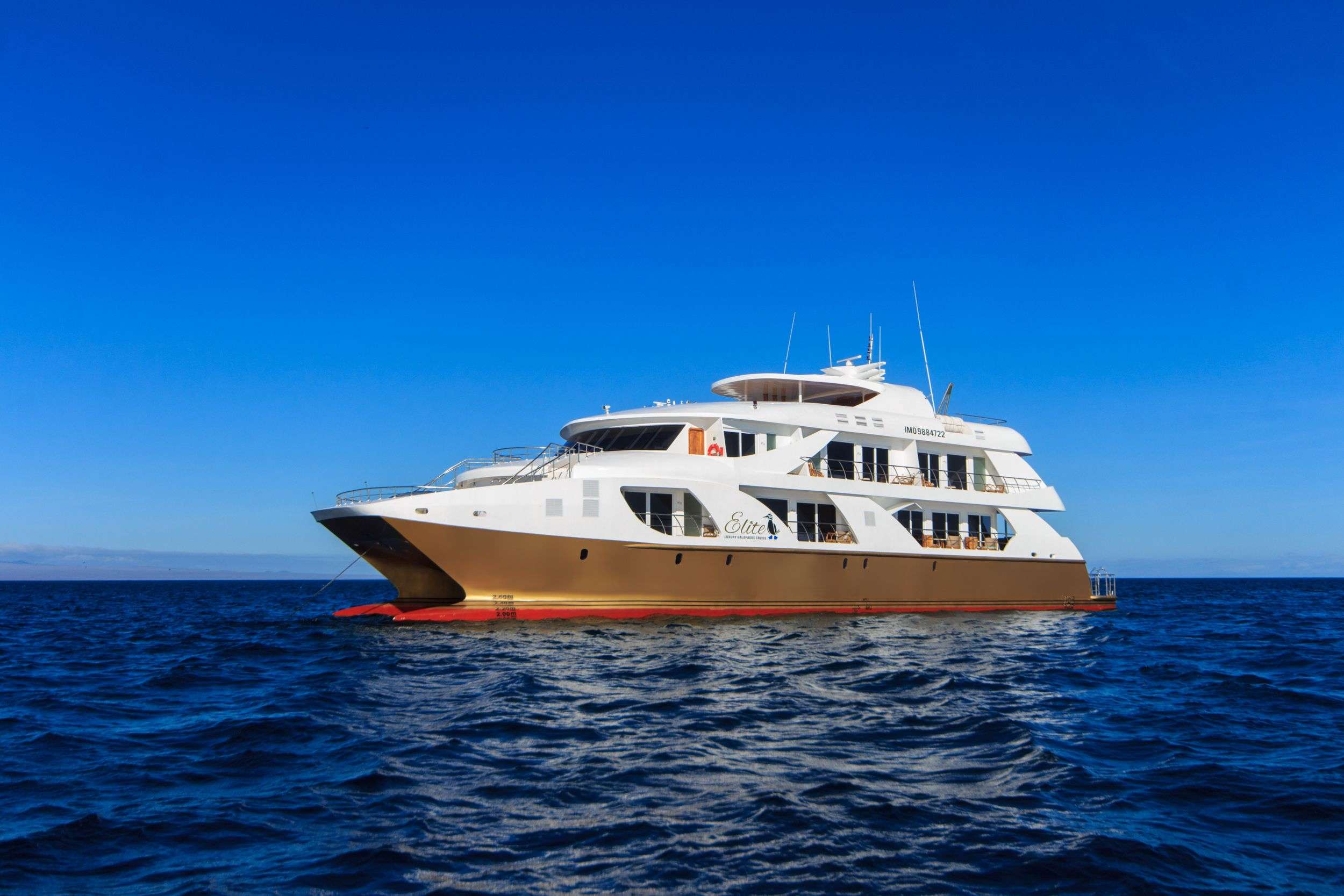
ELITE
123FT · MOTOR YACHT
Pricing from $149,190/week
16 Guests · 9 Cabins · 12 Crew
Caribbean
Eastern Mediterranean
Western Mediterranean
South Pacific
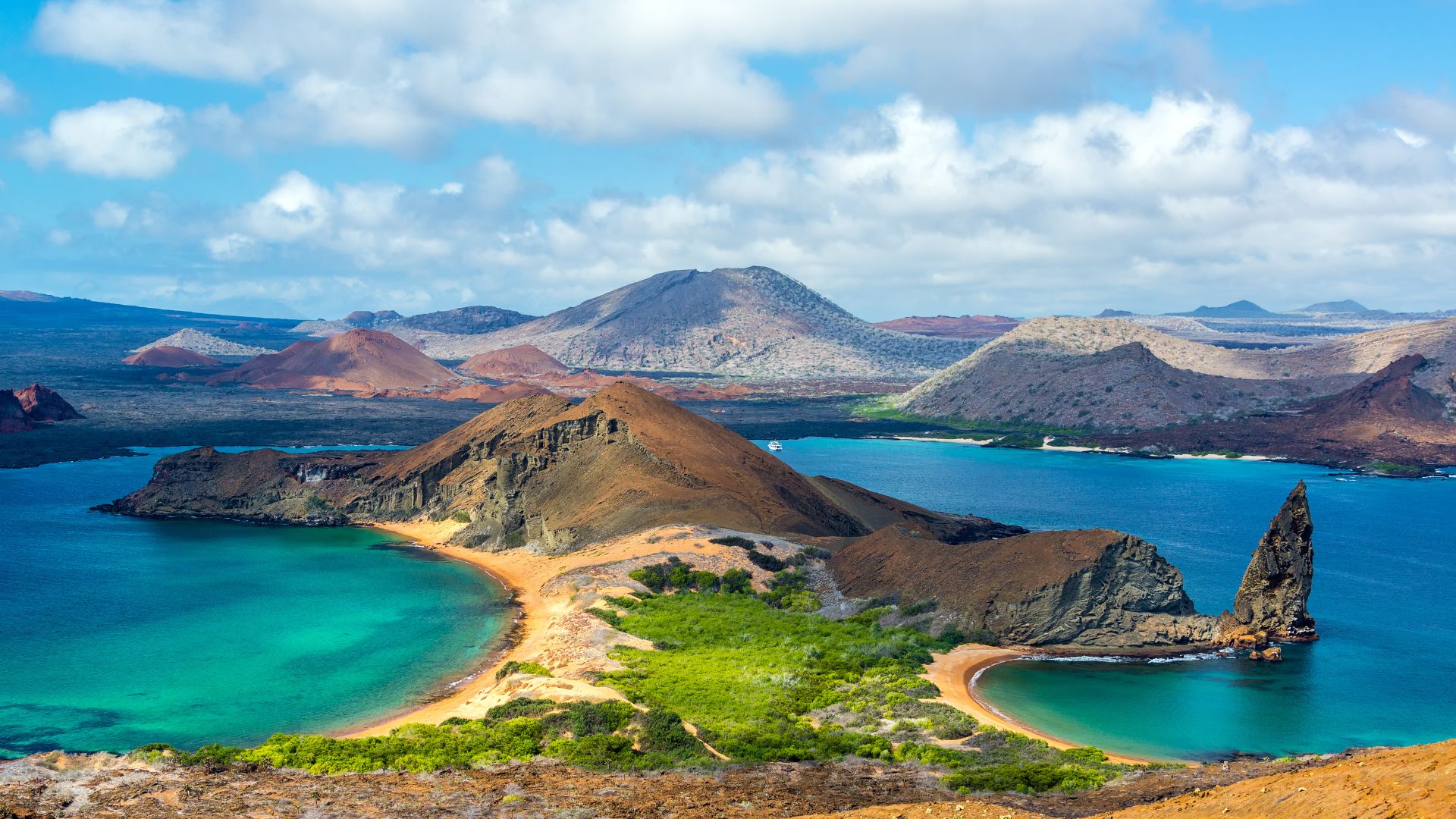
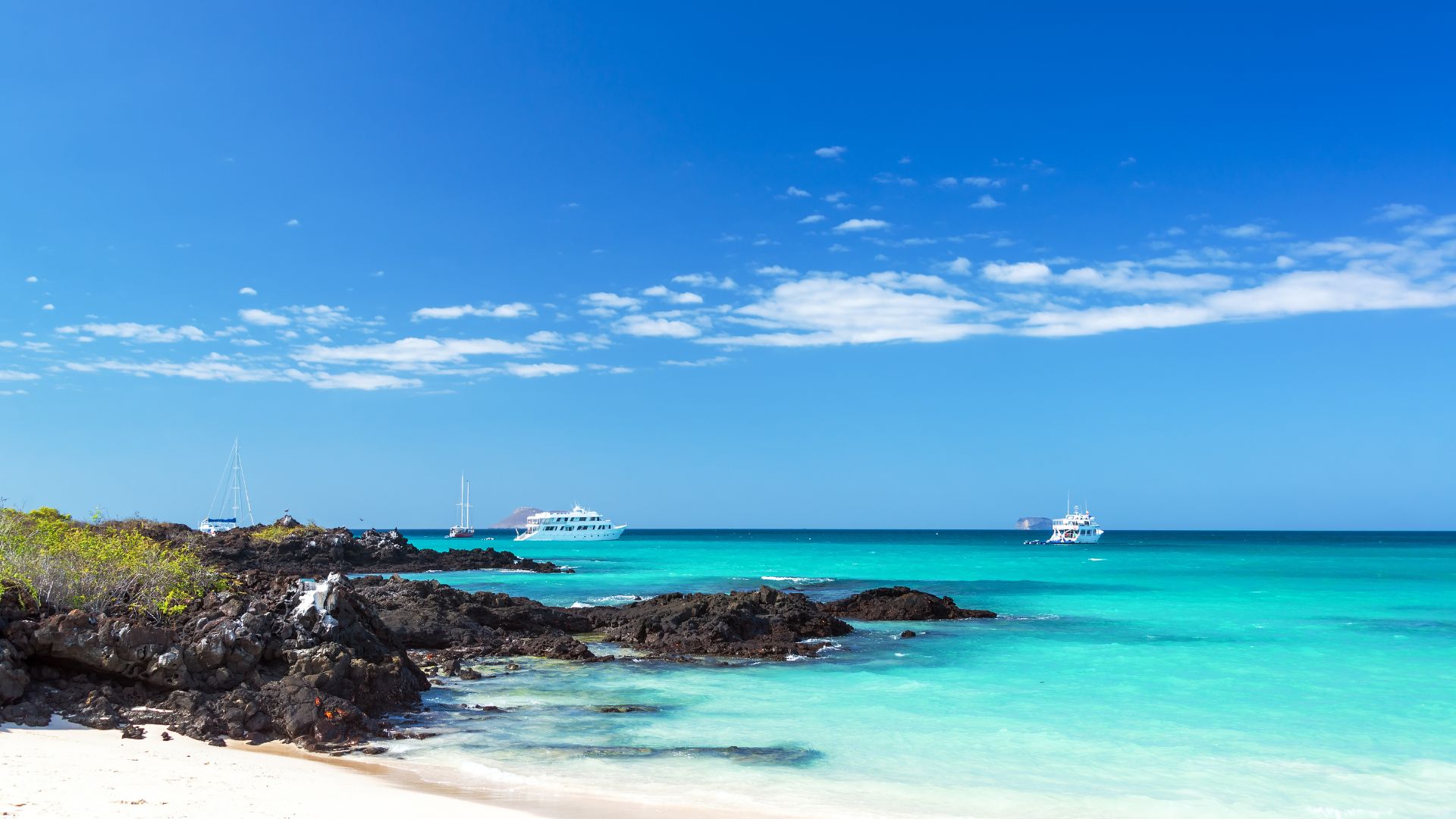
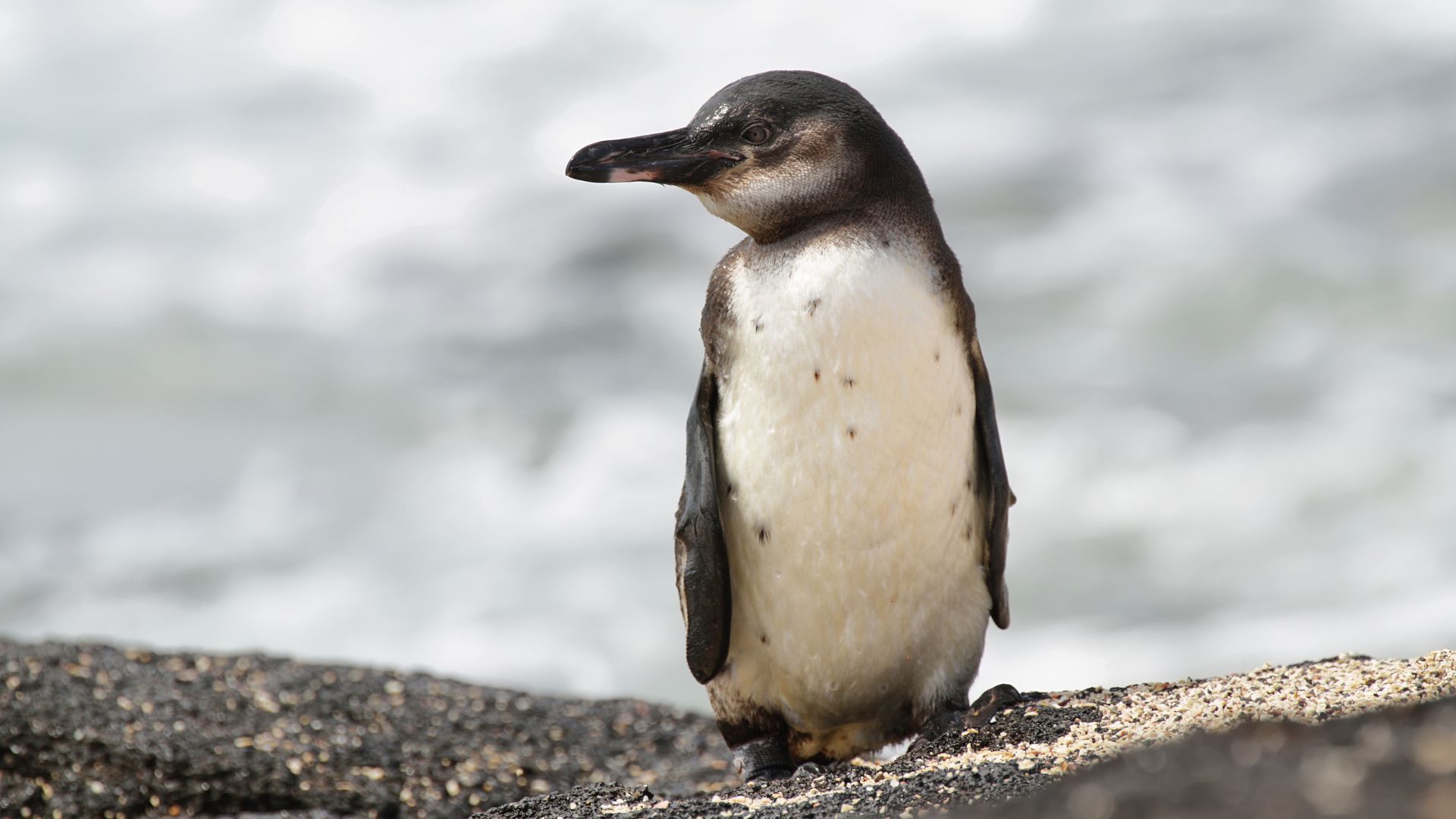
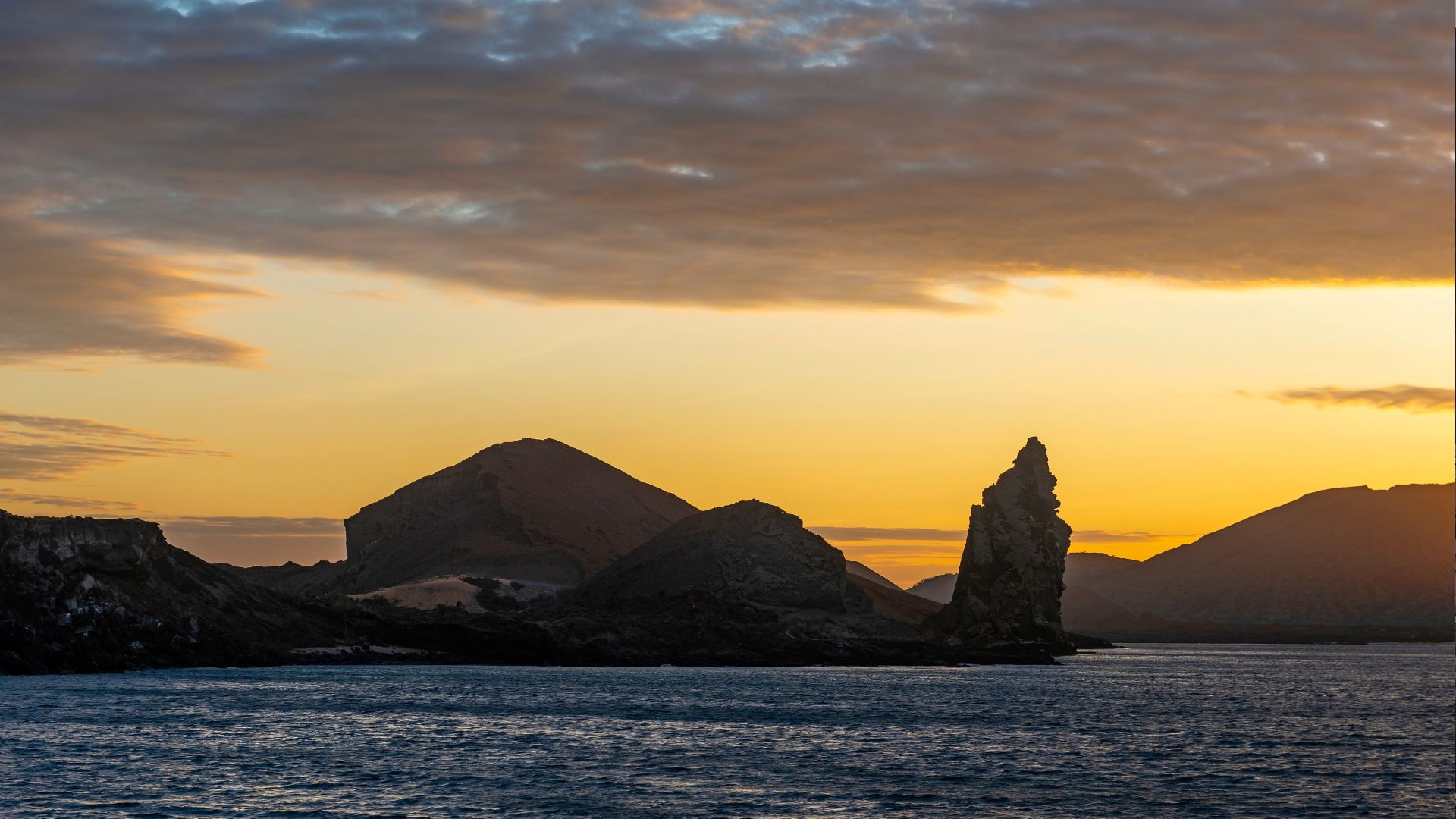
A private expedition yacht for your group — Pinnacle Rock above your aft deck at sunrise, blue-footed boobies from the foredeck rail at North Seymour, a Galapagos penguin past your snorkel mask at Bartolomé, and a naturalist who knows which finch belongs on which island.
Why Galapagos
The Galapagos is the trip your group puts off booking and finally commits to. Eight couples for a milestone year, three families with the teenagers brought along, the partners and their spouses for the trip everyone has been talking about. Six hundred miles off the Ecuadorian coast, more endemic species than anywhere else on the planet, wildlife so unconcerned with humans you photograph it from a meter away. The right way for a group of sixteen to see it is to take over a whole expedition yacht for the week.
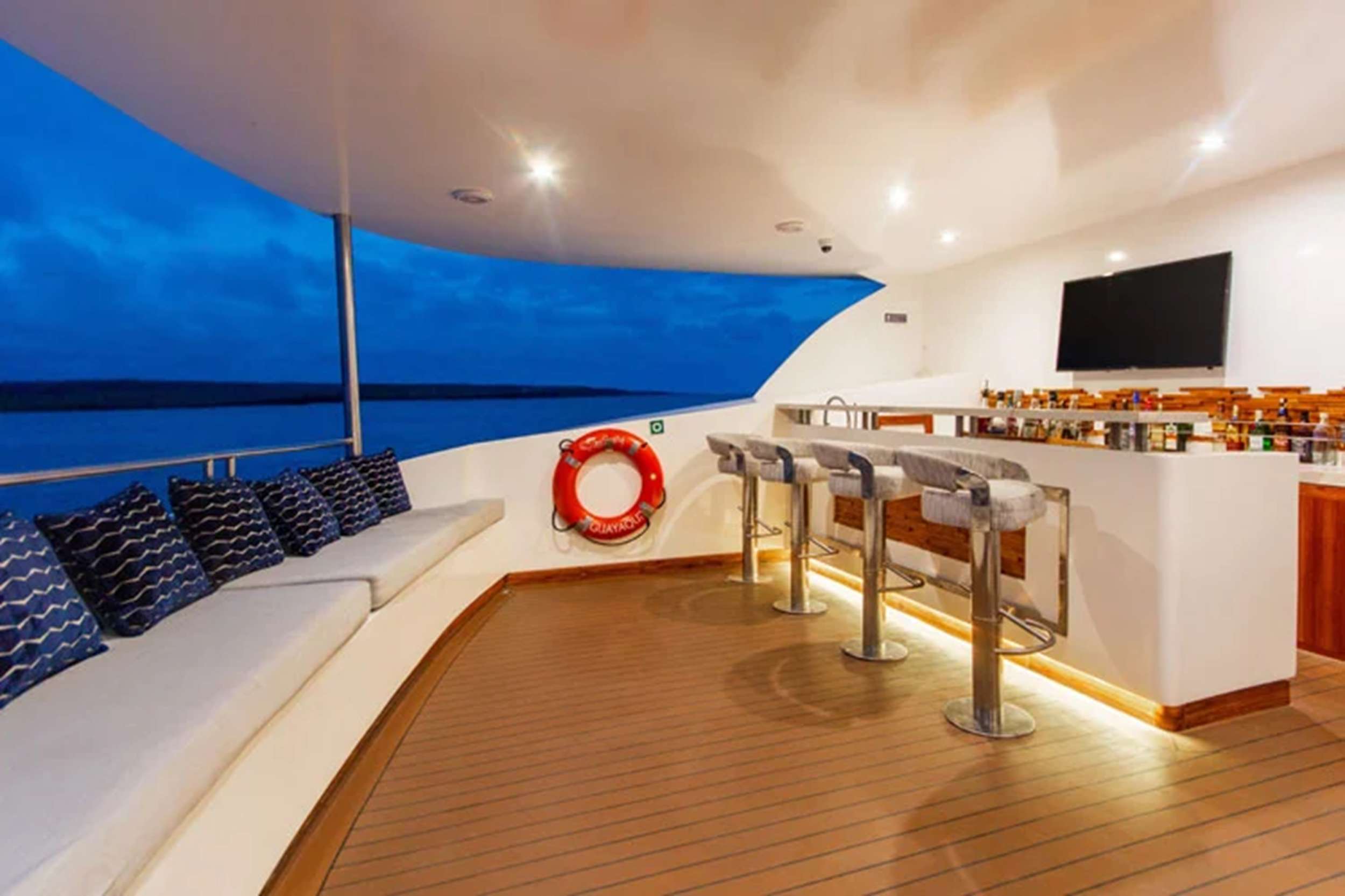
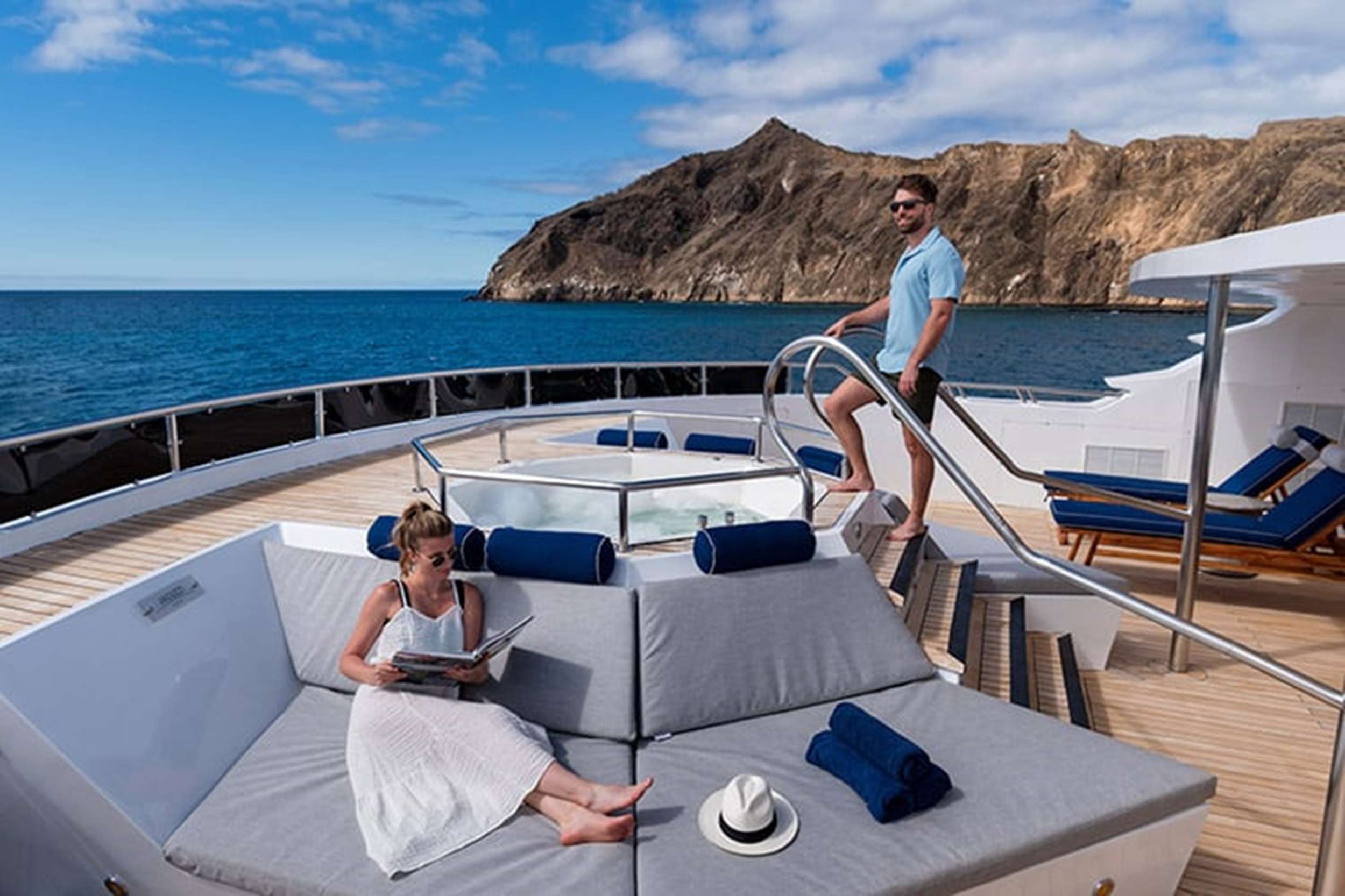
Galapagos has lower-tier products — day boats from Santa Cruz hotels, the sixteen-to-hundred-passenger ships that dominate the cruise market, dive liveaboards working only Wolf and Darwin. A private yacht charter buys out an entire motor expedition vessel for your party — eight cabins, sixteen guests on most boats, twenty on the larger ones — with no strangers in the next cabin. The chef and Class III naturalist are on board for your group only. Dawn pangas land from your own swim platform; dinners on the aft deck are with your people; the captain runs the inter-island transits overnight while you sleep. The Park licenses the route; the way your group runs through it is yours alone.
Two rotations run on alternate weeks, and the right one depends on what the group is after. The Western route — Fernandina, Isabela's west coast, Santiago — is where the marine iguanas are largest, the Galapagos penguin and flightless cormorant exist nowhere else on Earth, and the Sierra Negra caldera hikes from a south-Isabela landing. The Eastern-and-Northern route — Española, Floreana, Genovesa, Bartolomé — is the bird-and-courtship Galapagos: waved albatross at Punta Suárez April through December only, the Kicker Rock hammerhead snorkel, the wooden mail barrel at Post Office Bay still in use after two hundred and fifty years. Groups with two weeks book both back-to-back on the same yacht. Most pick one.
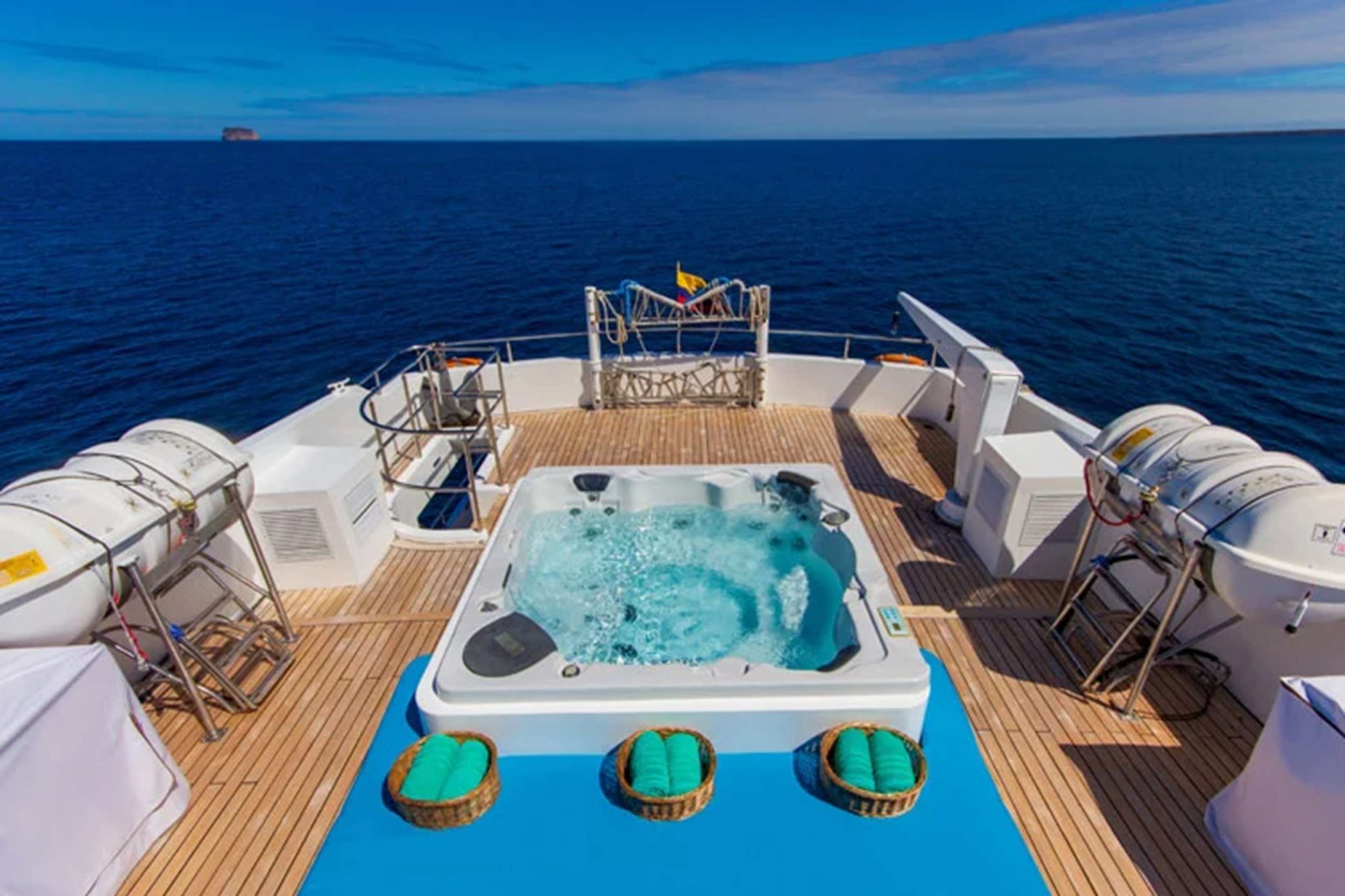
Four reasons a private yacht is the right way for a group of sixteen to see the Galapagos.
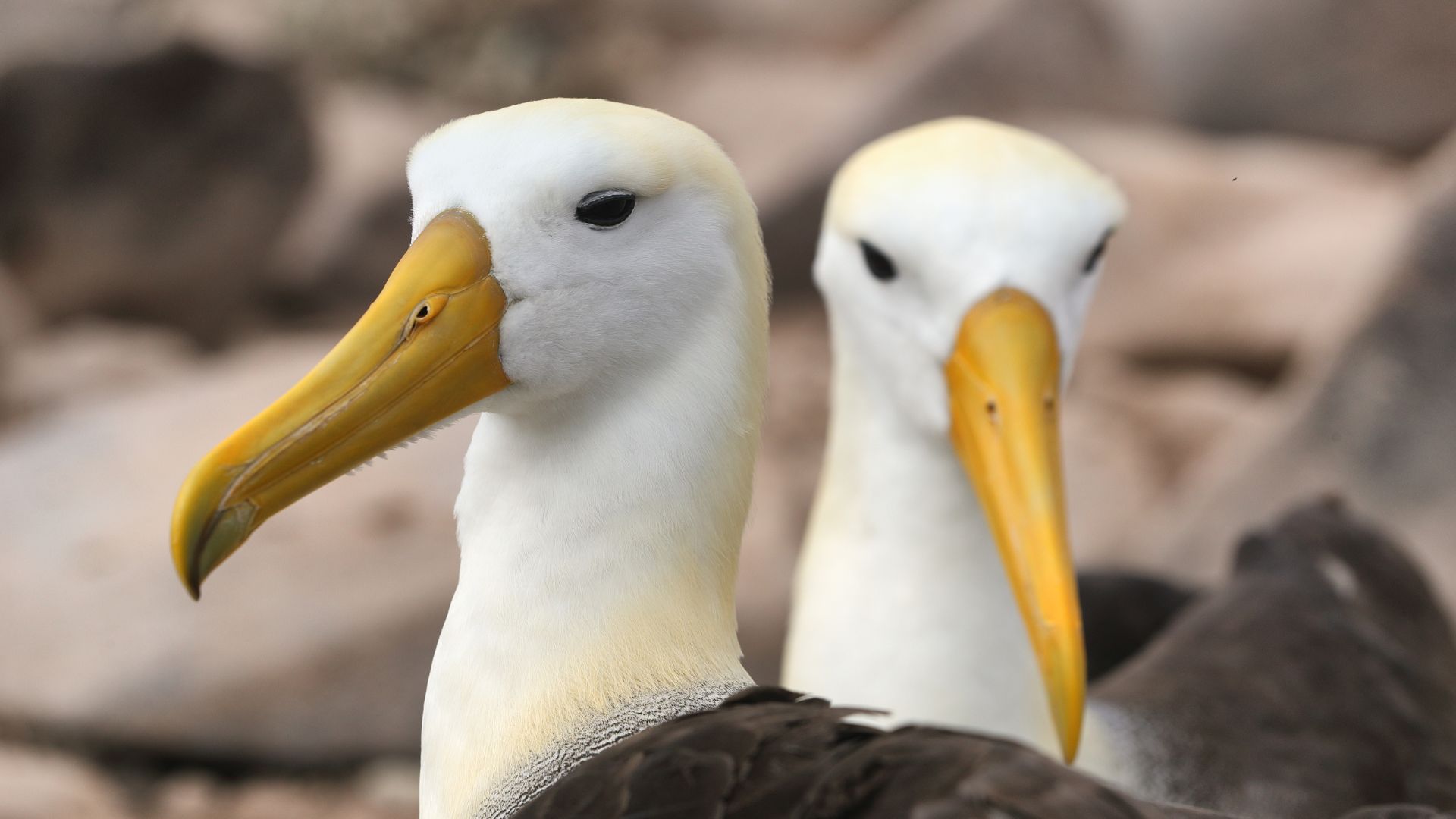
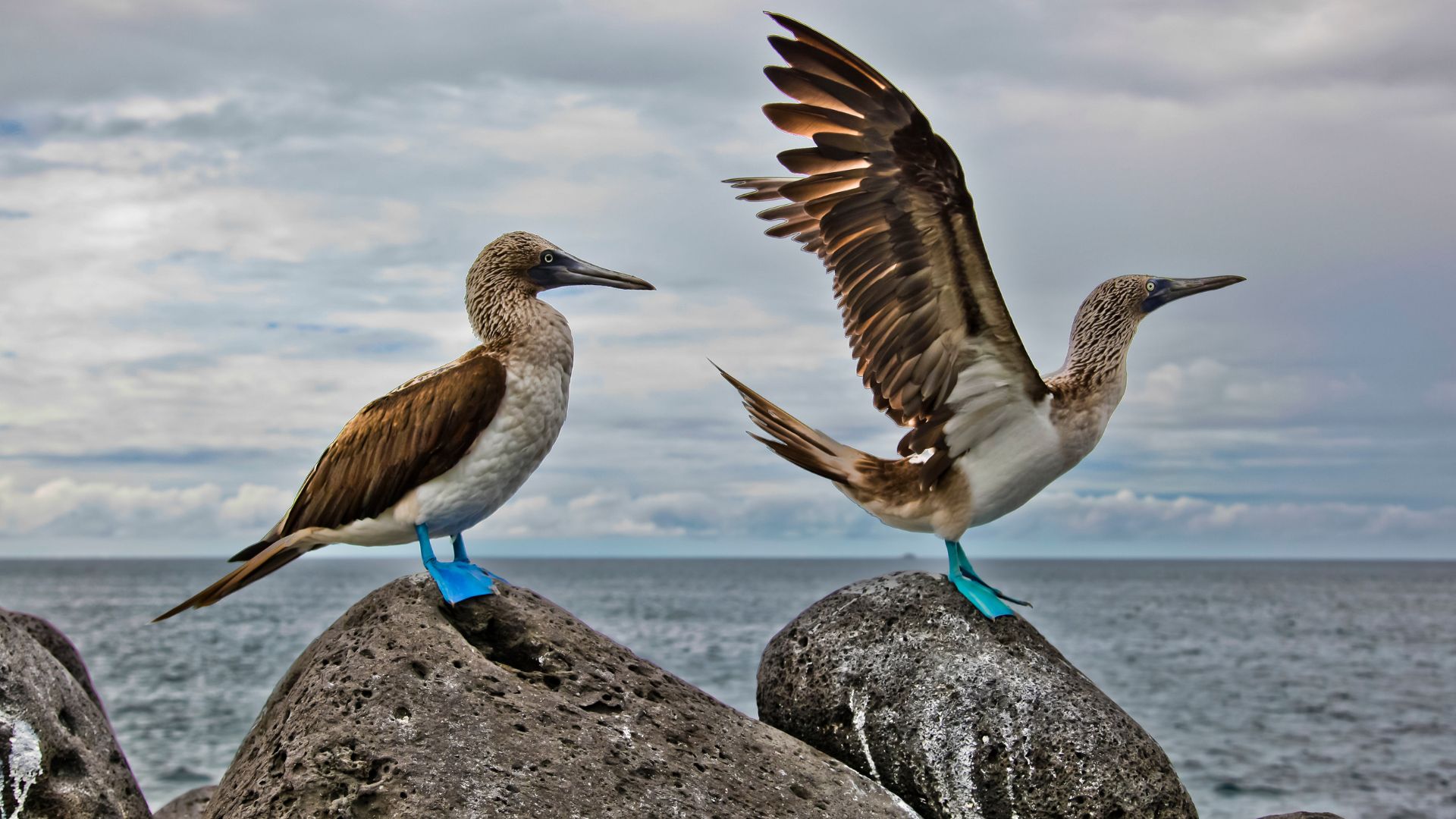
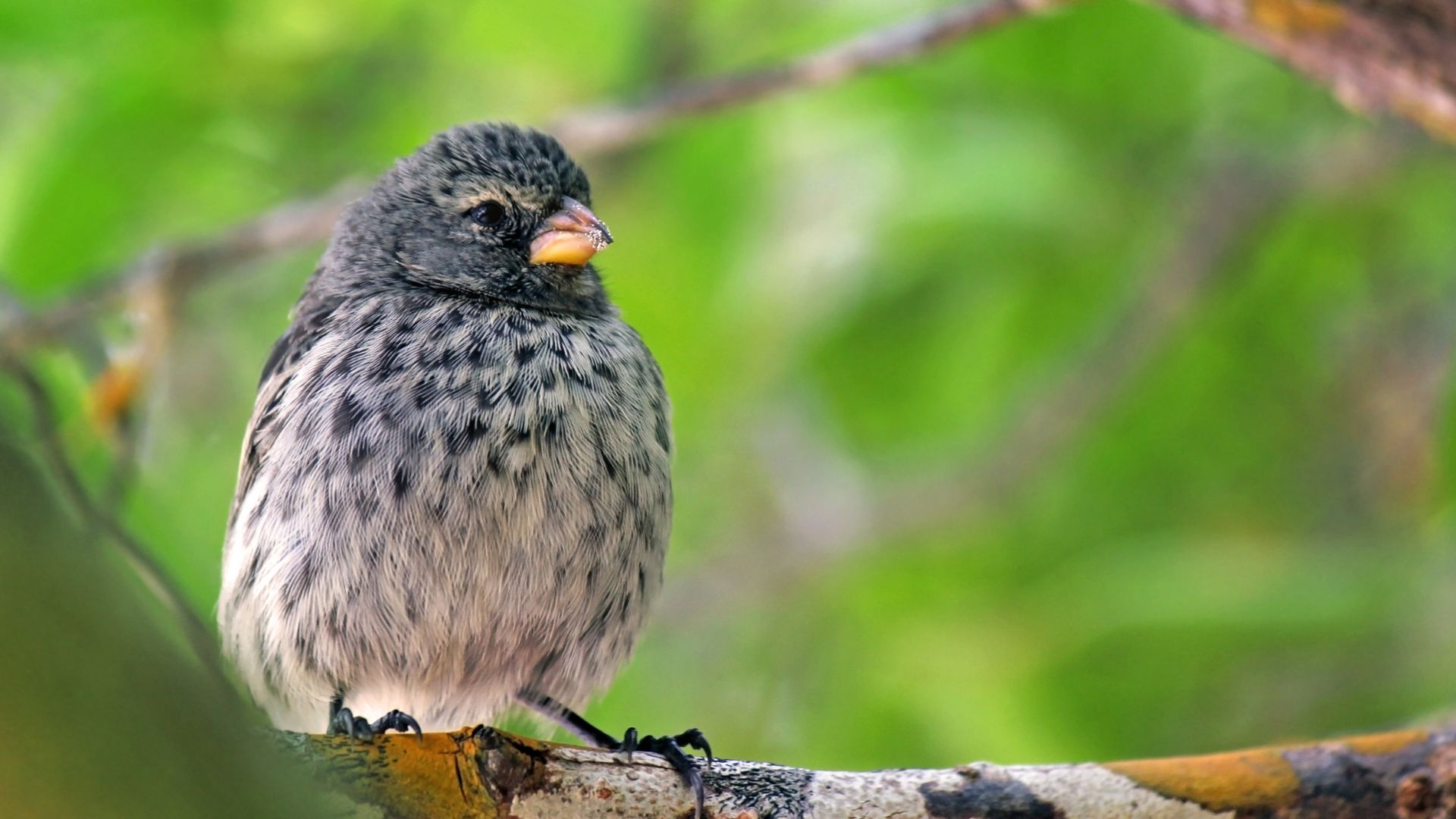
Blue-footed booby sky-pointing dances. Frigate birds inflating the red gular sac in courtship. Marine iguanas, the only lizards on Earth that forage in the ocean. Waved albatrosses on Española from April through December and nowhere else on the planet. Galapagos penguins on the equator. Flightless cormorants on Fernandina. The naturalist on your yacht knows which of Darwin's thirteen finch species belongs on which island; the theory of natural selection was built on the variation that lives here.
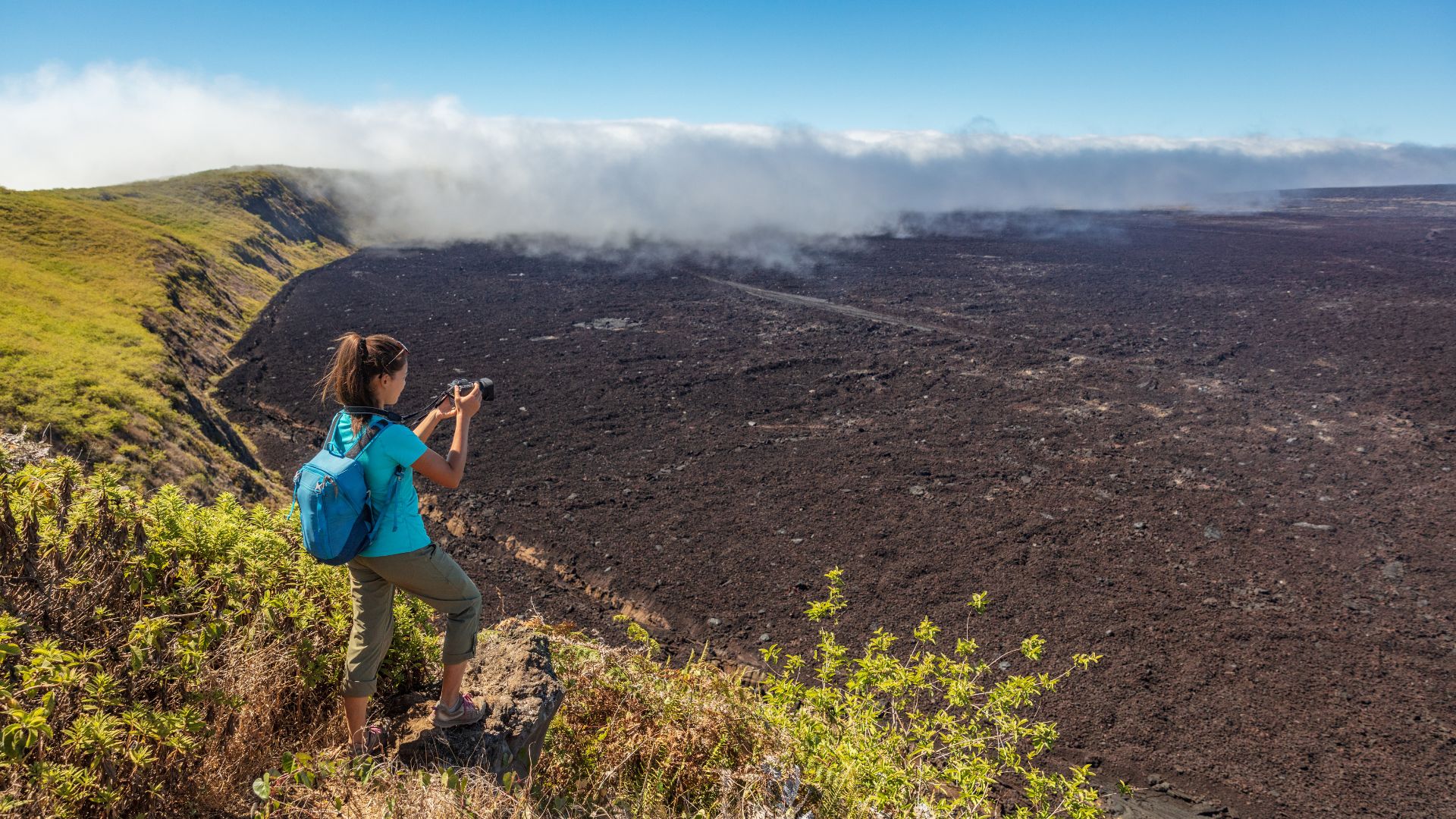
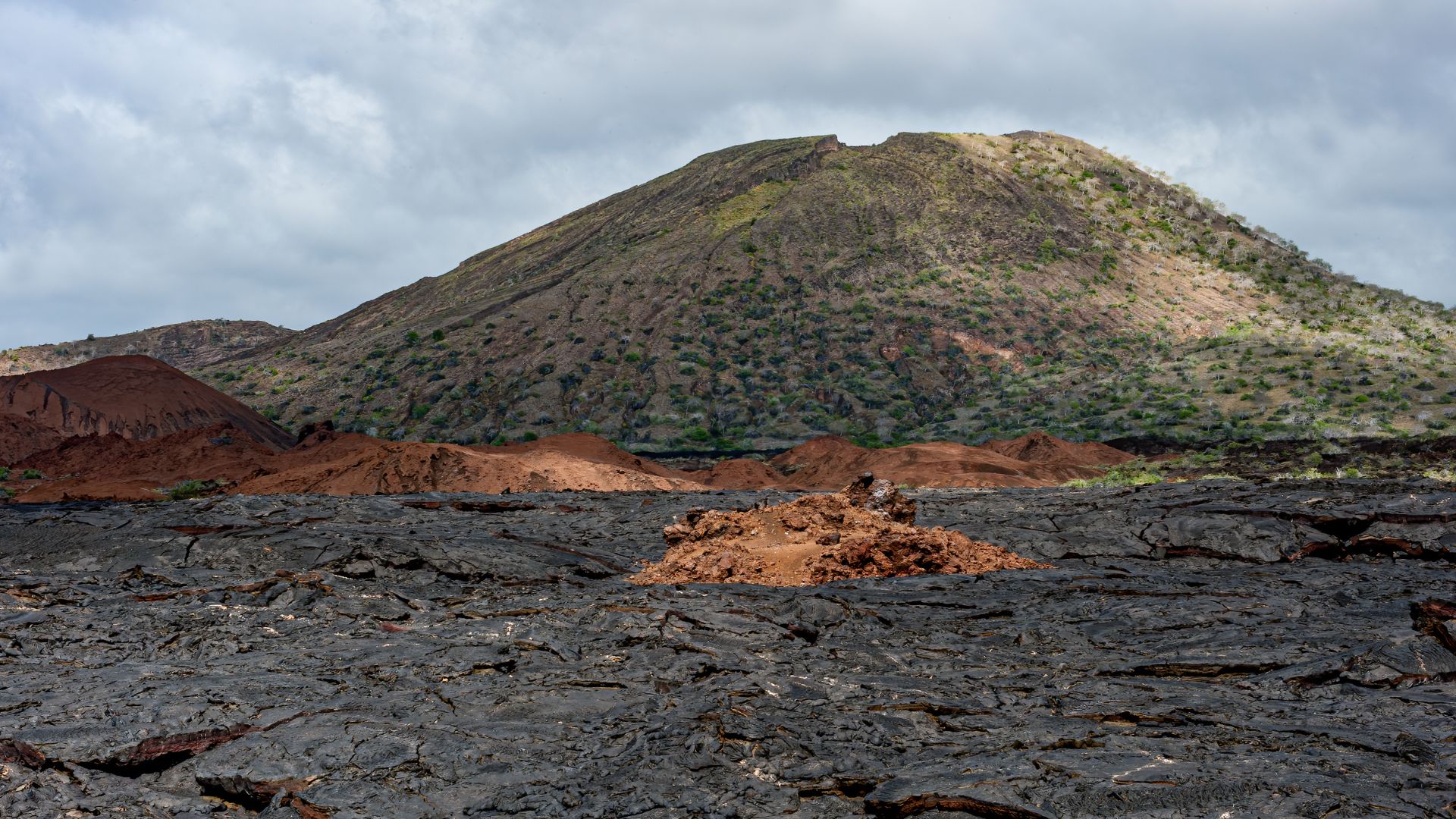
Fernandina is roughly seven hundred thousand years old; the Cumbre volcano at its center erupted as recently as 2020. Sierra Negra on Isabela is the second-largest active caldera on the planet, ten kilometers across, hikable in a morning from a south-Isabela landing. Sullivan Bay on Santiago is pahoehoe lava only a century cooled. Anchoring below these volcanoes — slate water from the Humboldt upwelling, bare slopes, species that evolved here in isolation — reads closer to an early-Earth diorama than a Caribbean or Mediterranean charter.
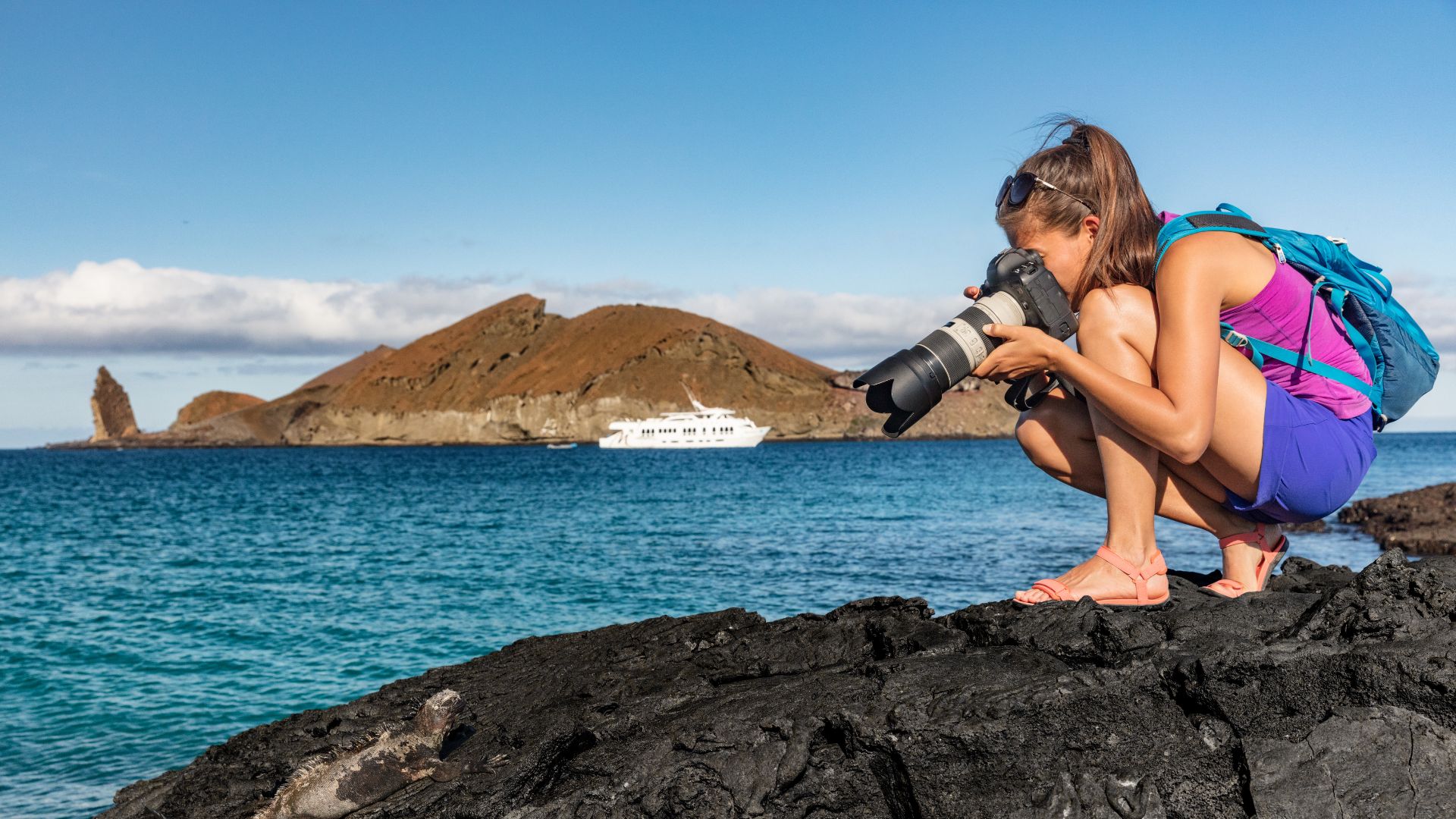
Galapagos wildlife has no fear of humans — the islands had no terrestrial predators for most of their evolutionary history. Marine iguanas sit a few meters from the trail; you photograph them from a rock with the yacht visible offshore in the cove. Galapagos penguins stand on lava as the panga drifts past. Waved albatrosses sky-clap a meter from the trail on Española. Sea lion pups follow swimmers out from the beach at Gardner Bay. The park's two-meter rule is enforced from the guest side; the animals themselves have no concept of it.
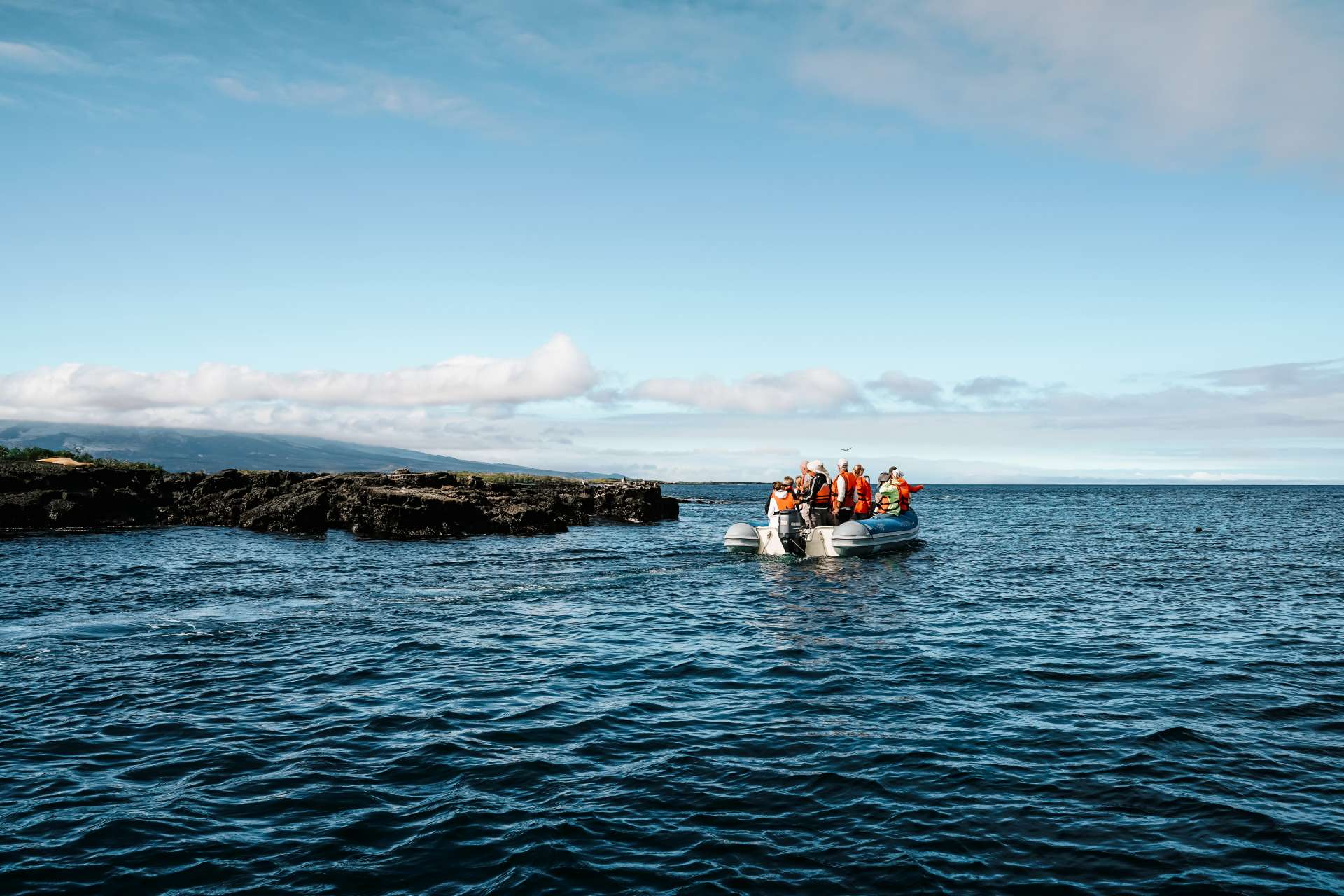
The Galapagos National Park caps tourism vessels at sixteen guests on most boats, twenty on the largest. Eight cabins per yacht. On a private charter your party fills the boat alone, no other groups aboard. The contrast versus the hundred-passenger cruise ships that dominate the destination is concrete: one panga at each landing instead of six rotating cohorts, one naturalist running the day for your group, dinners on the aft deck rather than buffet lines, crew-to-guest ratios above one-to-one. The licensed itinerary is the same. The way your group runs through it is not.
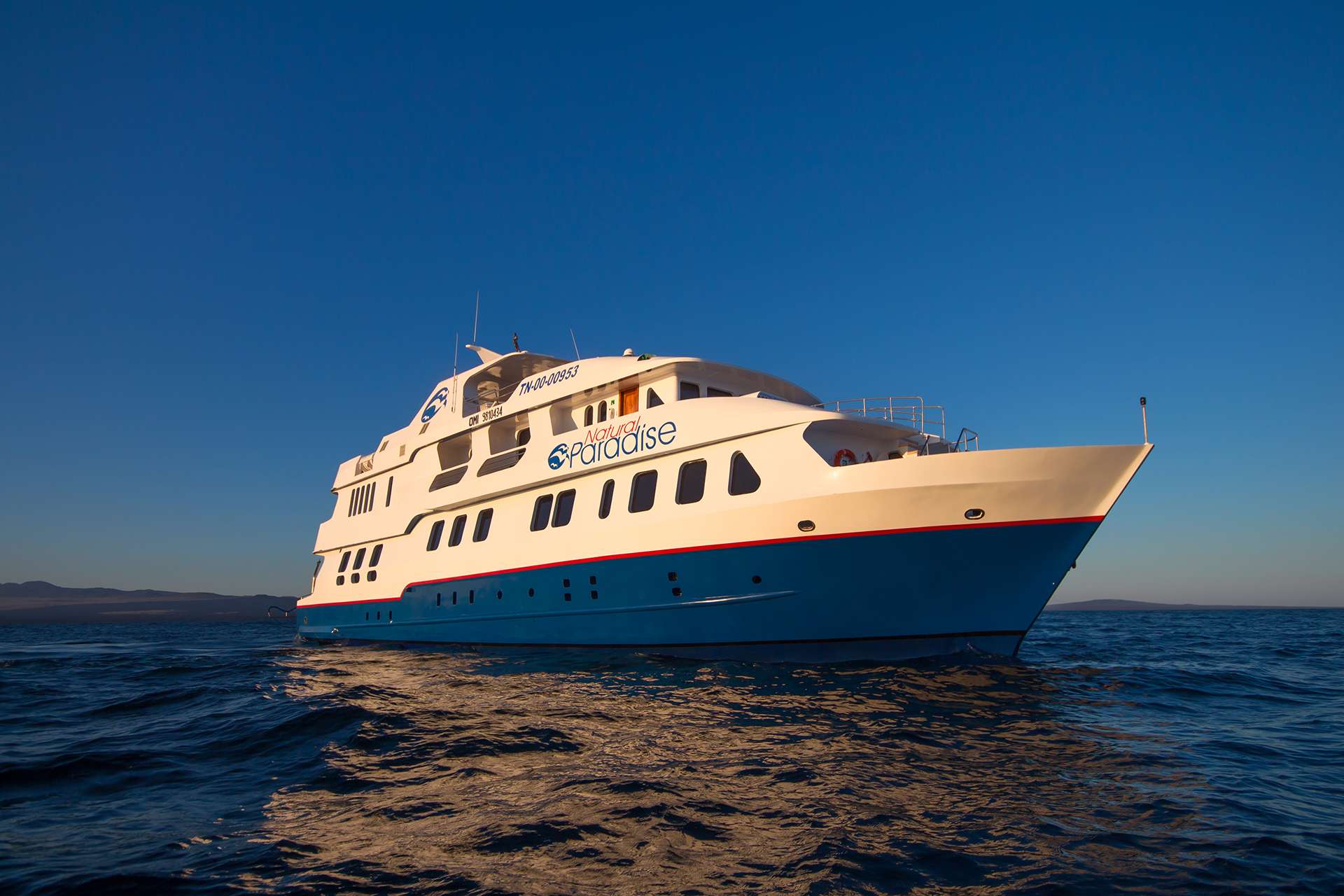
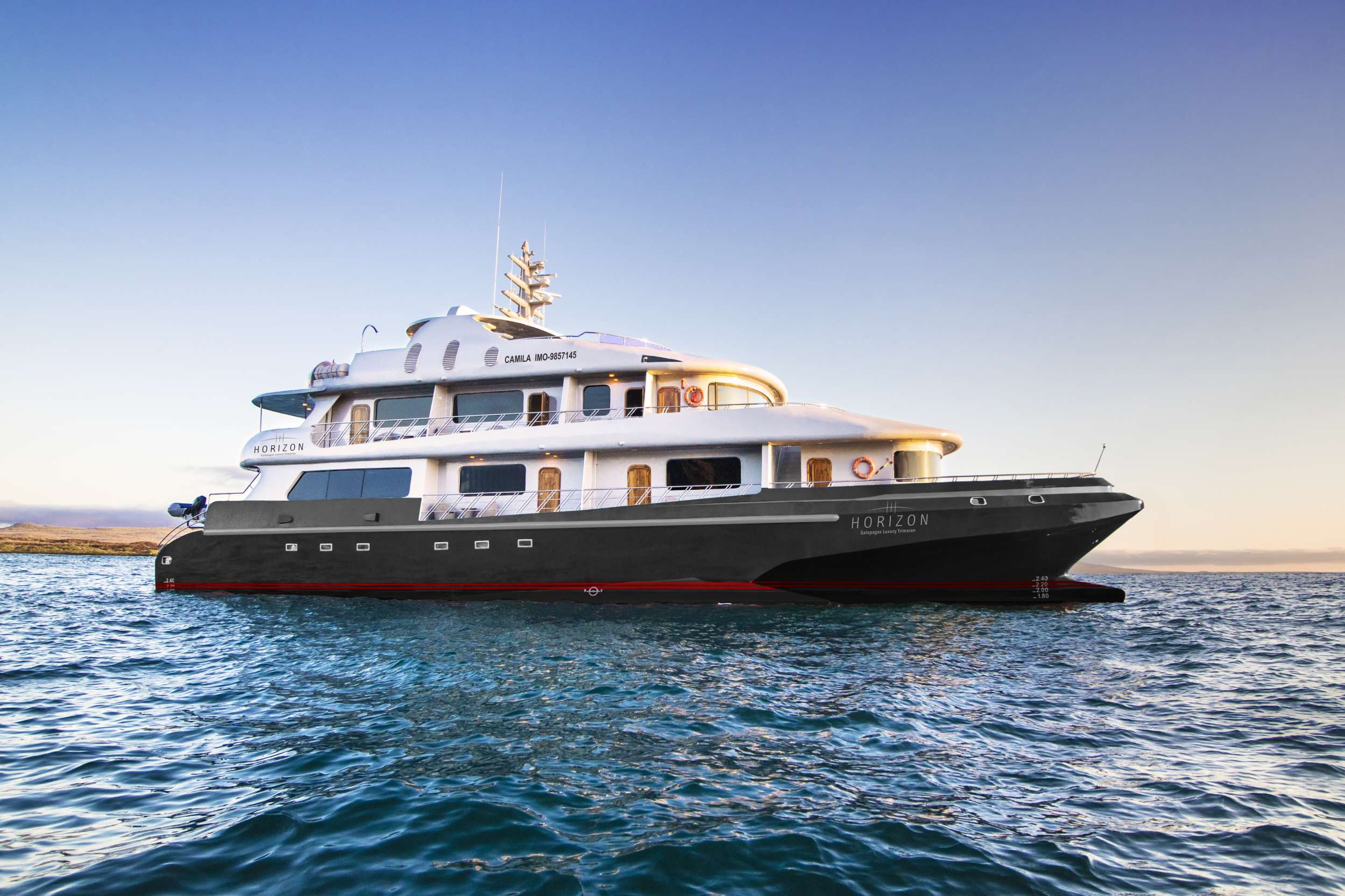
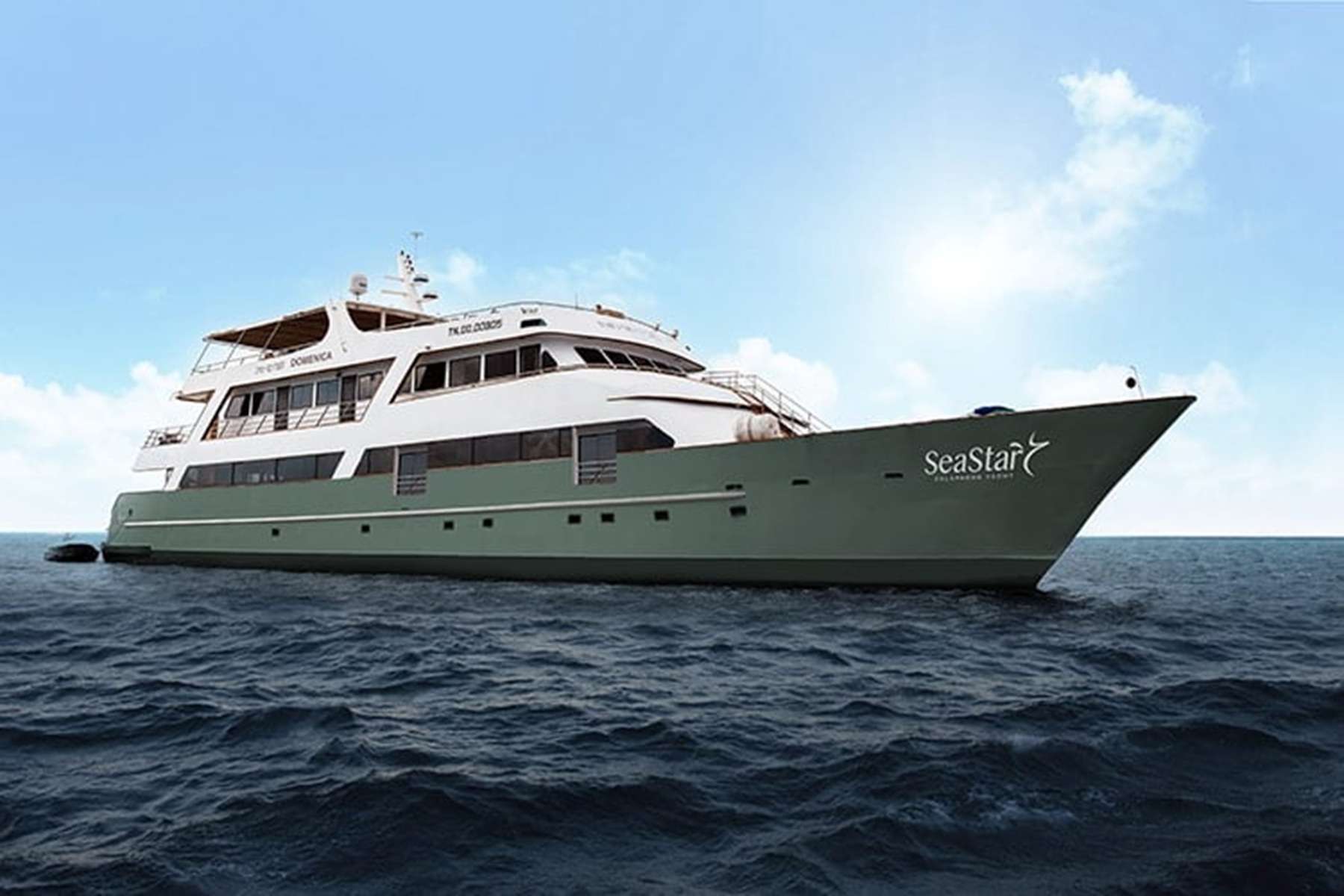
A hand-picked selection of crewed charter yachts for Galapagos — yachts and crews we know firsthand.
Your week is shaped around your group's interests, the season, and the conditions on the water — your captain tailors the days as they unfold. Treat these itineraries as starting points for inspiration.
Crewed Itinerary · Galapagos · Western Rotation
This Galapagos itinerary opens at Sullivan Bay's pahoehoe lava — ropy black rock only a century cooled, the yacht at anchor in the cove. The middle of the week works Isabela's west coast: the largest marine iguana colonies on Earth at Fernandina, the Galapagos penguin and flightless cormorant nowhere else on the planet, the Sierra Negra caldera hikeable from a south-Isabela landing, Tagus Cove's whaler graffiti above a sea-only anchorage. Floreana's Post Office Bay and the central islands close the week. Disembark at San Cristóbal.
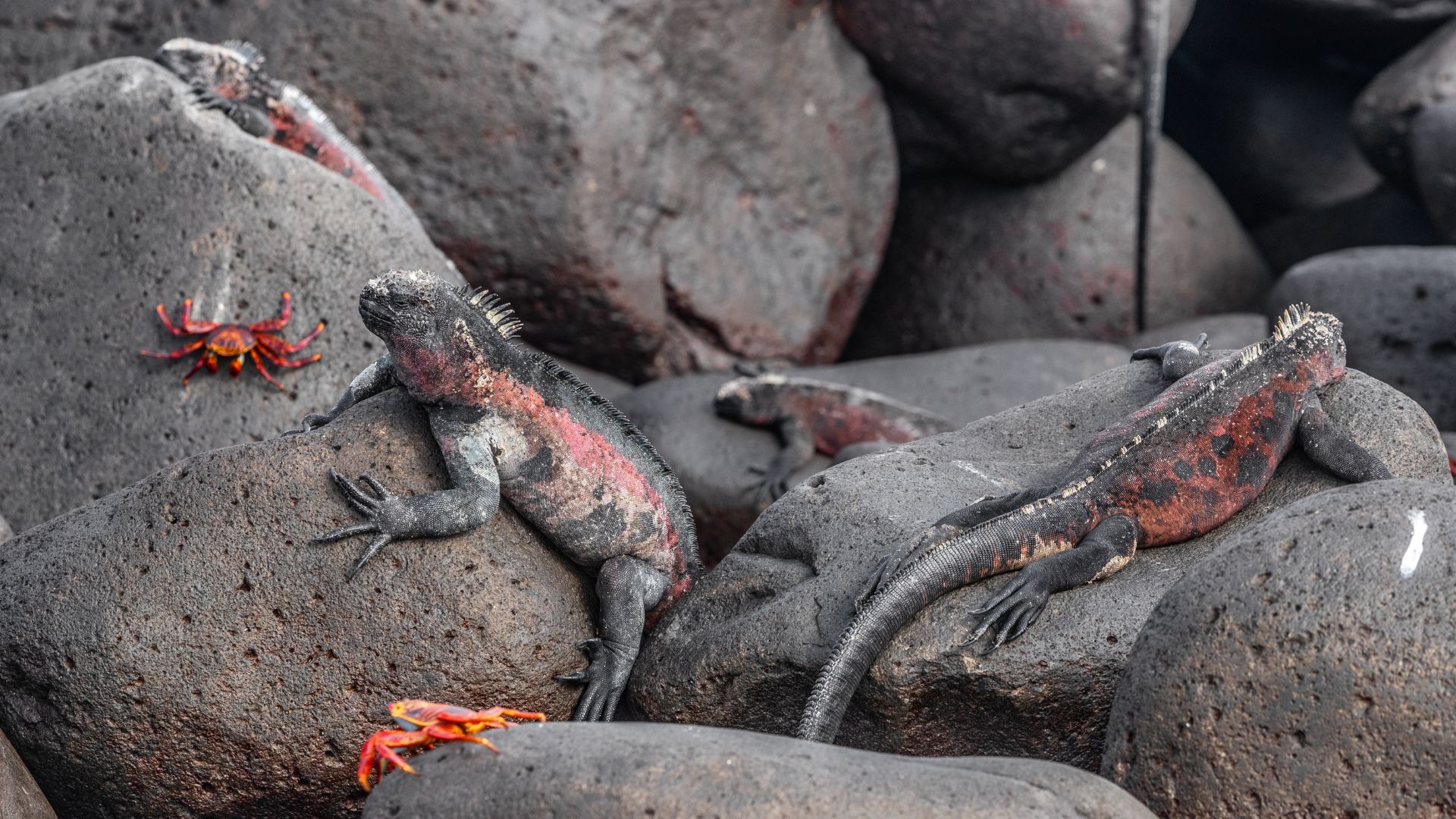
The Western Galapagos itinerary is what guests describe to friends when they get home — marine iguanas at their largest, penguins on the equator, the geology you can read from the air. Saturday-to-Saturday from Baltra to San Cristóbal on a private full-yacht charter. The alternate Eastern-and-Northern week and a 5-day Central intro run on the same boats; groups with two weeks book back-to-back and see everything.
Day 1 of 8 · Baltra → Sullivan Bay
Land at GPS on the morning flight from Quito or Guayaquil. The captain meets you at the gate, ferries you across the Itabaca channel, and the yacht is at anchor with the chef plating lunch on the aft deck. The naturalist runs the welcome briefing; the crew files the cruise plan with the park officer.
Mid-afternoon the captain points the bow north and east for the fifty-nautical-mile run to Sullivan Bay. By late afternoon the panga lands you on the 1903 pahoehoe — ropy black rock, lava bombs, pioneer plants pushing through cracks. Sundowners and dinner at anchor, the lava silhouetted against the western light.
Day Highlights
Day 2 of 8 · Punta Vicente Roca + Punta Espinoza
Overnight west into the Bolívar Channel. Morning brings the yacht into Punta Vicente Roca on Isabela's northwest tip — thousand-foot cliffs with seabirds nesting on the ledges, sea turtles surfacing in the channel, Galapagos sharks under the panga. Too current-driven for a swim from the boat; the naturalist runs the species identification from the panga.
Mid-day crossing west to Fernandina. Punta Espinoza is the only visitor site: a lava-flow point with the largest marine iguana colony anywhere on Earth — hundreds piled on bare black rock, the only lizards that forage in the ocean. The flightless cormorant nests at the site as well. Afternoon snorkel from the panga over green sea turtles.
Day Highlights
Day 3 of 8 · Tagus Cove + Urbina Bay
Short morning run south to Tagus Cove — a small protected anchorage tucked into the tuff cliffs of a tilted volcanic crater. Whaling crews used it as a watering stop from the 1820s through the 1880s; the cliff face above the anchorage carries their names and dates, the earliest legible from 1836. The naturalist runs a kayak program in Darwin's Lake behind the cove and a panga along the cliff base.
Afternoon repositioning south to Urbina Bay. The trail above the landing crosses dead coral and bleached sea-urchin shells — in 1954 an offshore reef rose four meters above sea level overnight, tied to Alcedo volcano's activity. Land iguanas and giant tortoises forage the area in wet season. Dinner at anchor; overnight repositioning to Elizabeth Bay.
Day Highlights
Day 4 of 8 · Elizabeth Bay + Moreno Point
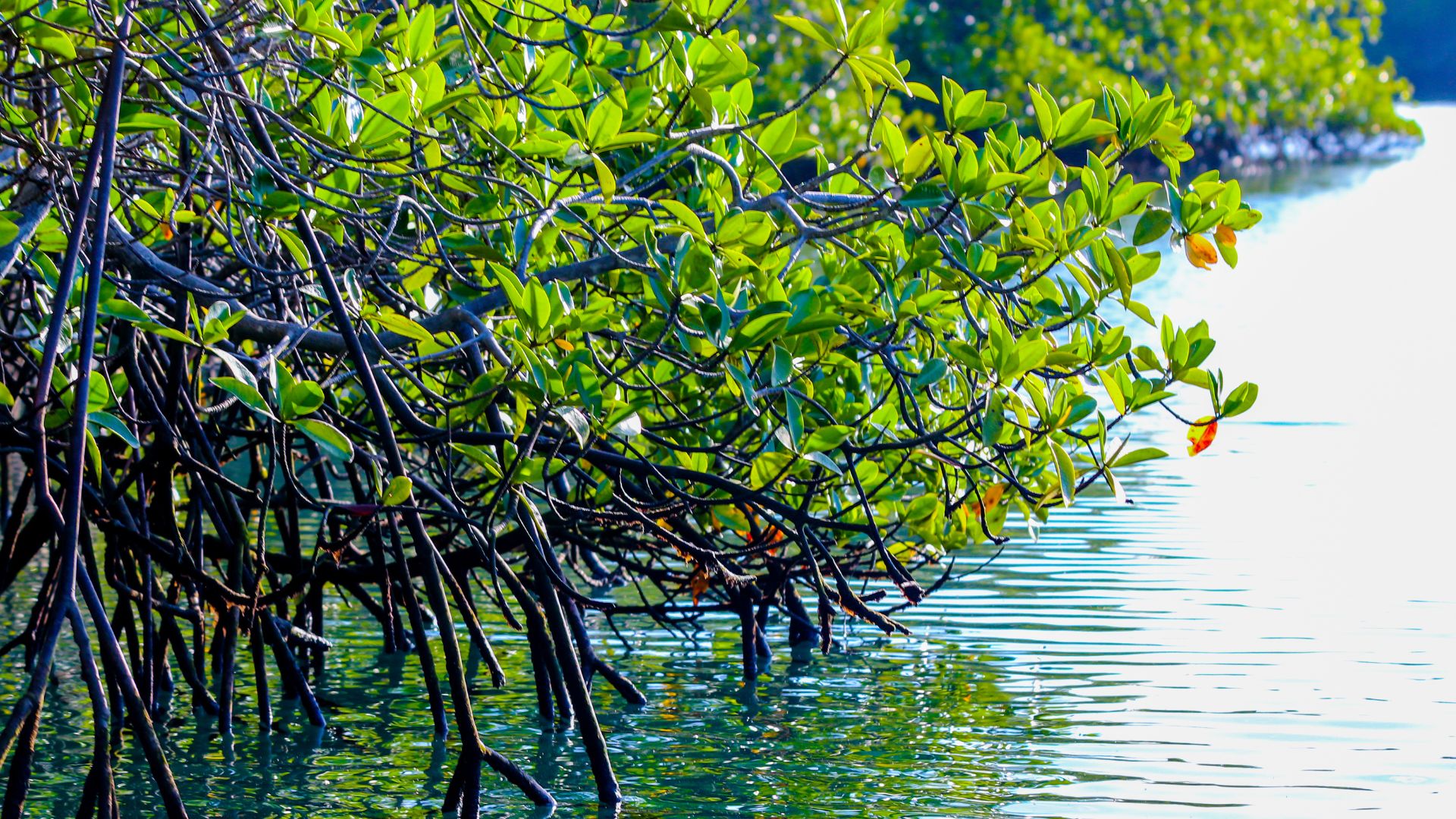
Morning runs entirely from the panga. Elizabeth Bay is a series of red and black mangrove lagoons — too shallow for the yacht, channels accessible only by panga drift at idle. Green sea turtles in pairs, golden cow-nose rays gliding under the boat, white-tipped reef sharks in deeper pools, Galapagos penguins on the rocks at the channel mouths. The Marielas Islets at the head of the bay hold one of the largest penguin colonies in the archipelago.
Midday south to Moreno Point — a lava-flow promontory between Sierra Negra and Cerro Azul. The landing crosses young pahoehoe to brackish lagoons with flamingos and white-cheeked pintail ducks. Afternoon snorkel from the panga over green sea turtles and Galapagos sharks. Overnight repositioning to Santa Cruz.
Day Highlights
Day 5 of 8 · Charles Darwin Research Station + Highlands
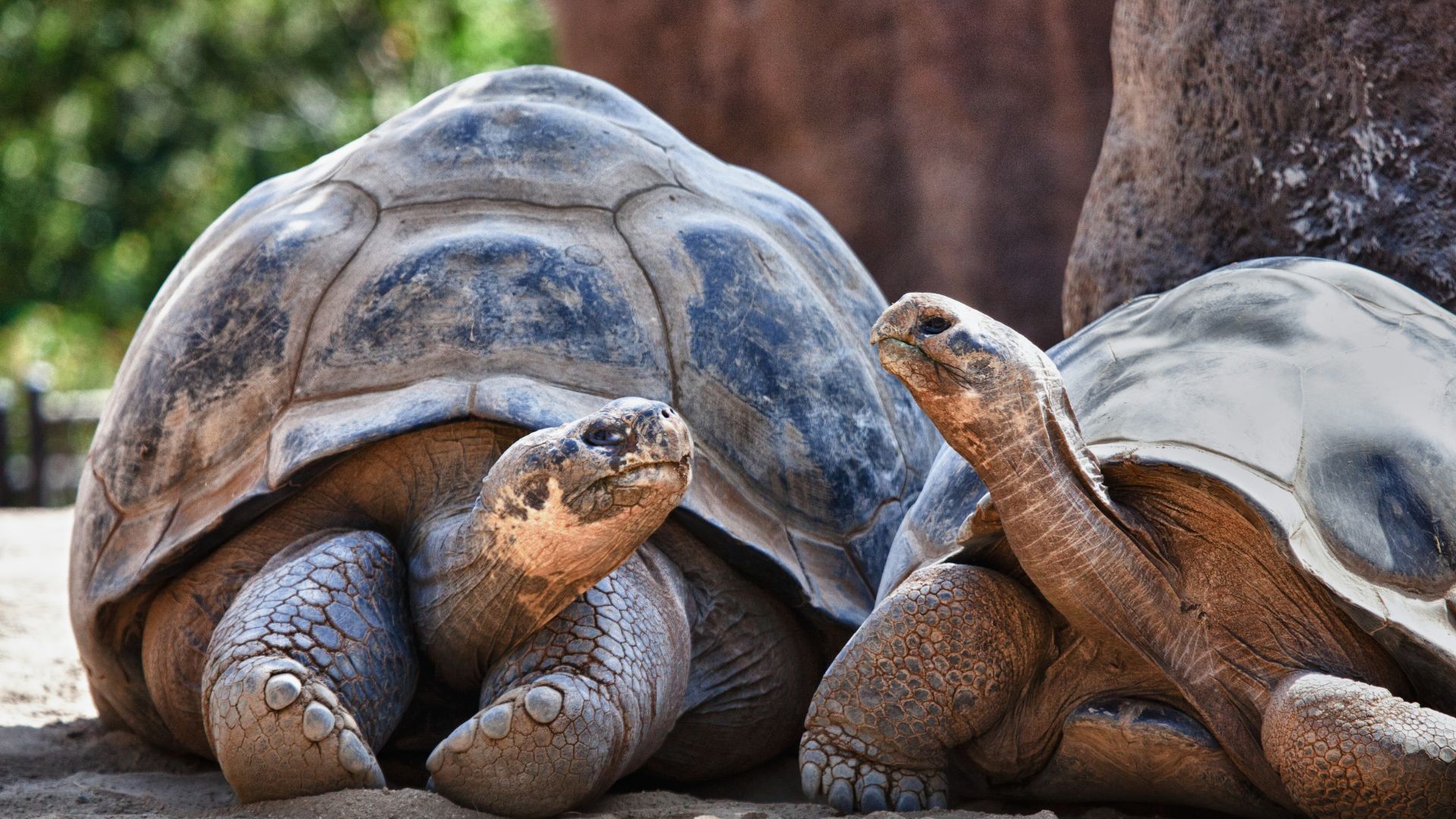
Overnight east to Academy Bay off Puerto Ayora. Morning landing at the Charles Darwin Research Station — the captive-breeding program running since 1959, the Lonesome George Memorial (the last Pinta Island tortoise, taxidermied after his 2012 death), interpretive signage on the conservation work.
Midday transfer up to the highlands by private vehicle — twenty minutes from town, twelve hundred meters of elevation gain, scalesia forest and Miconia shrubland, lava tubes you walk through with the naturalist. El Chato Reserve or Rancho Manzanillo hold wild Galapagos giant tortoise populations grazing in pasture. No barriers; the animals approach as they please. Overnight repositioning south to Floreana.
Day Highlights
Day 6 of 8 · Floreana — Post Office Bay + Devil's Crown
Overnight south to Floreana — the smallest of the four populated islands, the first settled in 1832, the densest in stories. Morning lands at Post Office Bay: the wooden mail barrel that British whalers installed in 1793 still works exactly as designed. Visitors leave stamped postcards inside; later visitors take any addressed to their home city and hand-deliver them on return. The longest-running unbroken postal tradition in the Pacific.
Afternoon repositioning to Devil's Crown — a partially submerged volcanic caldera ring a few hundred meters offshore. Snorkel from the panga inside the ring and along the outside: green sea turtles, white-tipped reef sharks on the sand, Galapagos sharks on the deeper edges, schools of king angelfish. The current pulls through on a tide cycle. Cormorant Point caps the day — green olivine-sand beach, flamingo lagoon, sea turtle nesting site.
Day Highlights
Day 7 of 8 · Santa Fe + South Plaza
Overnight north to Santa Fe — one of the oldest islands in the archipelago at roughly four million years, home to the endemic Santa Fe land iguana (a species found nowhere else). The landing at Barrington Bay brings you onto a long white-sand beach with a resident sea lion colony. Inland trail through a dense Opuntia cactus forest where the Santa Fe iguanas graze on the fruit.
Midday repositioning to South Plaza — a half-mile islet east of Santa Cruz with the densest Galapagos land iguana population in the archipelago, golden against red Sesuvium ground cover in dry season. The trail follows the cliff edge above a swallow-tailed gull colony. Afternoon snorkel from the panga over sea lions and Galapagos sharks. Overnight north to San Cristóbal.
Day Highlights
Day 8 of 8 · San Cristóbal disembark
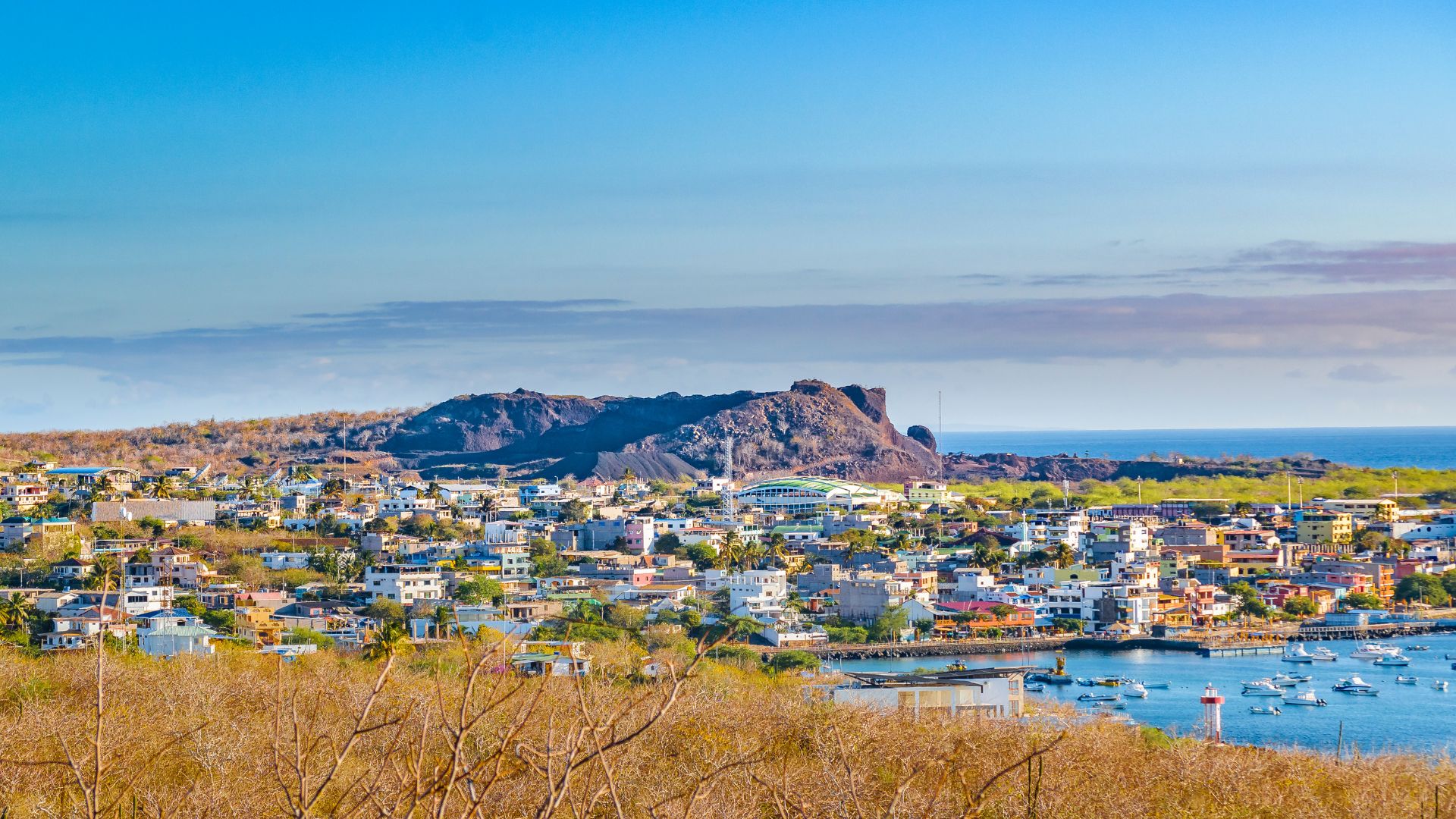
The yacht arrives off Puerto Baquerizo Moreno overnight. A final morning snorkel at Lobos Islet — a small islet a half-mile offshore named for the sea lion colony that lives on it. The naturalist runs a panga ride past blue-footed boobies nesting on the islet's south side and a final snorkel over juvenile sea lions in the channel. Farewell breakfast on the aft deck with the captain and naturalist.
Disembarkation at the dinghy dock by mid-morning. Short transfer to SCY for mid-morning flights direct to Quito and Guayaquil. Guests extending their Latin America trip from here typically connect to Cuzco (via UIO or GYE) or back to Quito for a night in the old town before flying home.
Day Highlights
Want to share or come back to this voyage later?
Bookmark this voyage →Crewed Itinerary · Galapagos · Eastern + Northern Rotation
This Galapagos itinerary peaks on day three with the bird-and-courtship circuit: the Kicker Rock channel snorkel for hammerheads and Galapagos sharks, Punta Suárez's waved albatross colony (April through December only — they nest nowhere else on Earth), Gardner Bay's sea lion nursery on white sand. Day four climbs Bartolomé for Pinnacle Rock at sunrise — the photograph that anchors every Galapagos trip. The week chains Pitt Point's three-booby colony, Cerro Brujo's snorkel cove, Genovesa's red-footed boobies and frigates, North Seymour for the final morning. Eight days from San Cristóbal to Baltra.
This Galapagos itinerary is the rotation where the waved albatross window decides the timing: April through December, Punta Suárez on Española, the only place on Earth they nest. Outside that the boobies, frigates, sea lions, and hammerheads carry the trip. The Western alternate is the marine-iguana-and-volcano counterpart; back-to-back combines them in fifteen nights on the same yacht.
Day 1 of 8 · San Cristóbal — David Rodriguez Breeding Center
Land at SCY on the morning flight from Quito or Guayaquil. Short transfer to the Puerto Baquerizo Moreno dinghy dock, panga across to the anchored yacht, welcome lunch on the aft deck with the naturalist's daily-program briefing.
Afternoon transfer up to the David Rodriguez Breeding Center on the northern edge of town — the local captive-breeding facility for the San Cristóbal tortoise subspecies (Chelonoidis chathamensis), one of three centers in the islands running similar conservation work. Back to the yacht for an overnight at anchor and an early start.
Day Highlights
Day 2 of 8 · Pitt Point + Cerro Brujo
Morning run north and east to Pitt Point — the only site in the archipelago where all three booby species (blue-footed, red-footed, Nazca) nest in the same area. The trail climbs to a cliff-top viewpoint over the colony; the naturalist works through the species identification (foot color is the obvious tell). Frigate birds patrol the colony for kleptoparasitism.
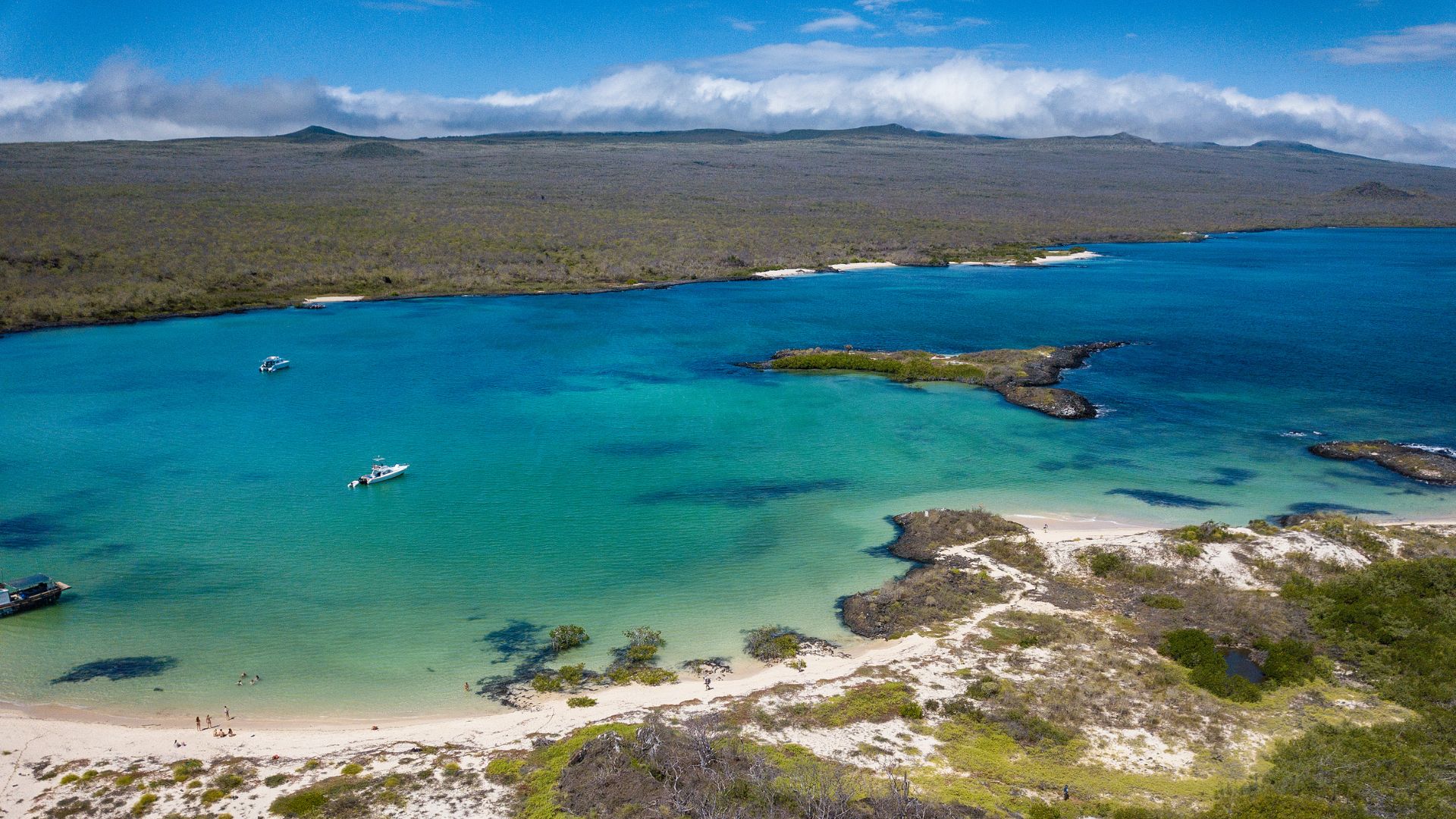
Afternoon repositioning to Cerro Brujo (Witch Hill) — a long white-sand beach in a sheltered bay, named for the rust-colored volcanic tuff cliff that rises behind it. The first snorkel of the week from the beach: green sea turtles, sea lions on the sand and in the surf, marine iguanas on the rocks. Overnight south for Kicker Rock and Española.
Day Highlights
Day 3 of 8 · Kicker Rock + Punta Suárez + Gardner Bay
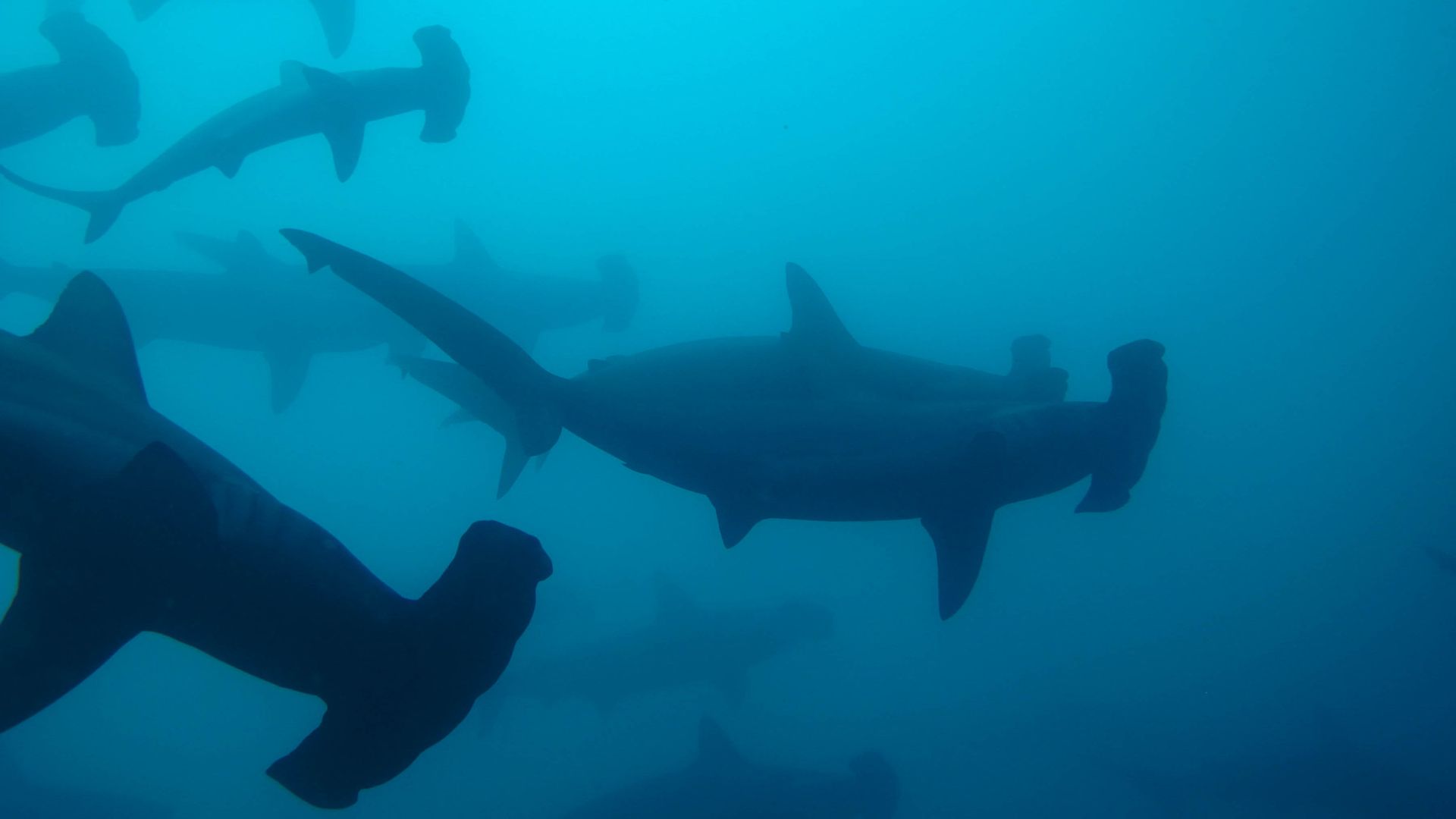
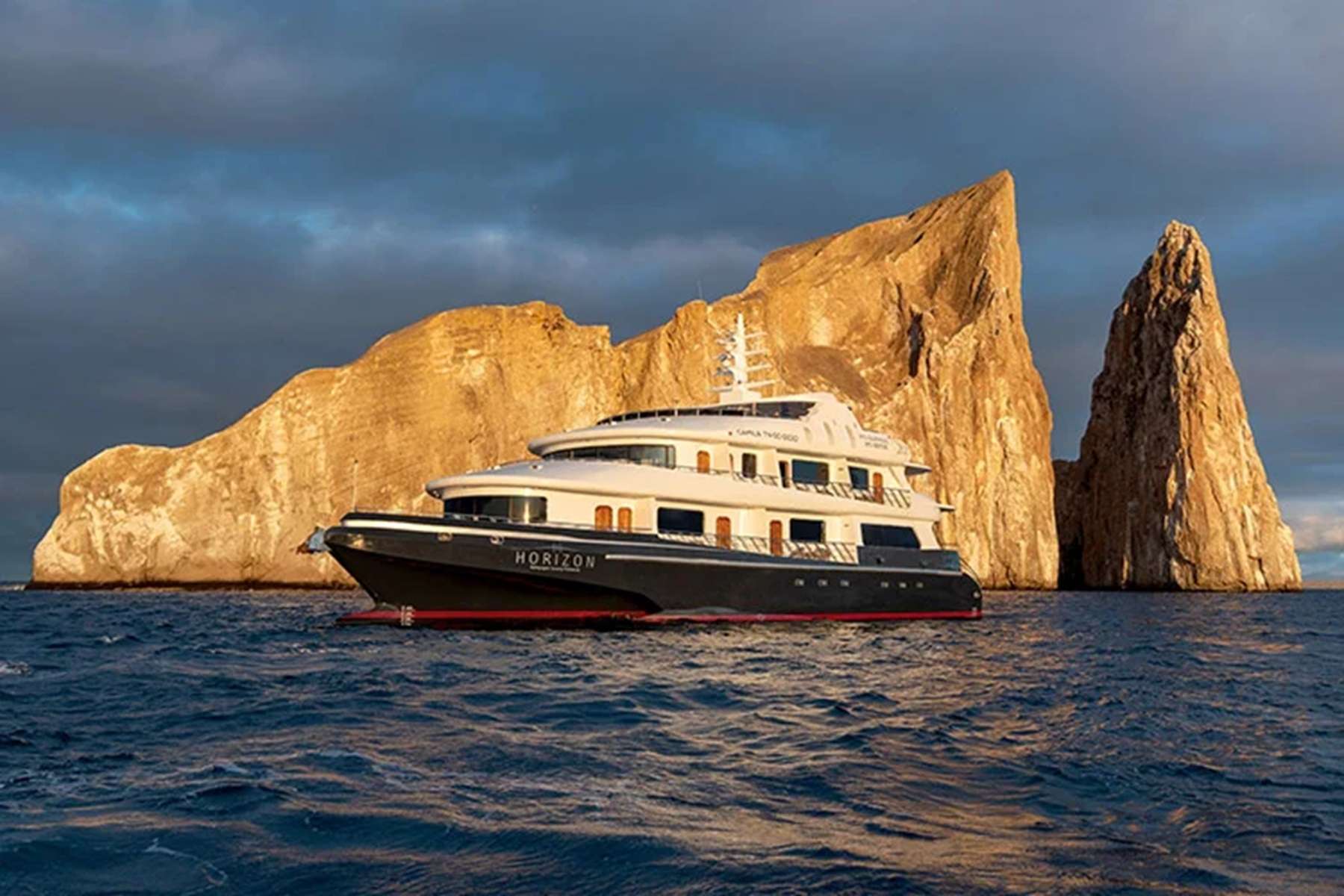
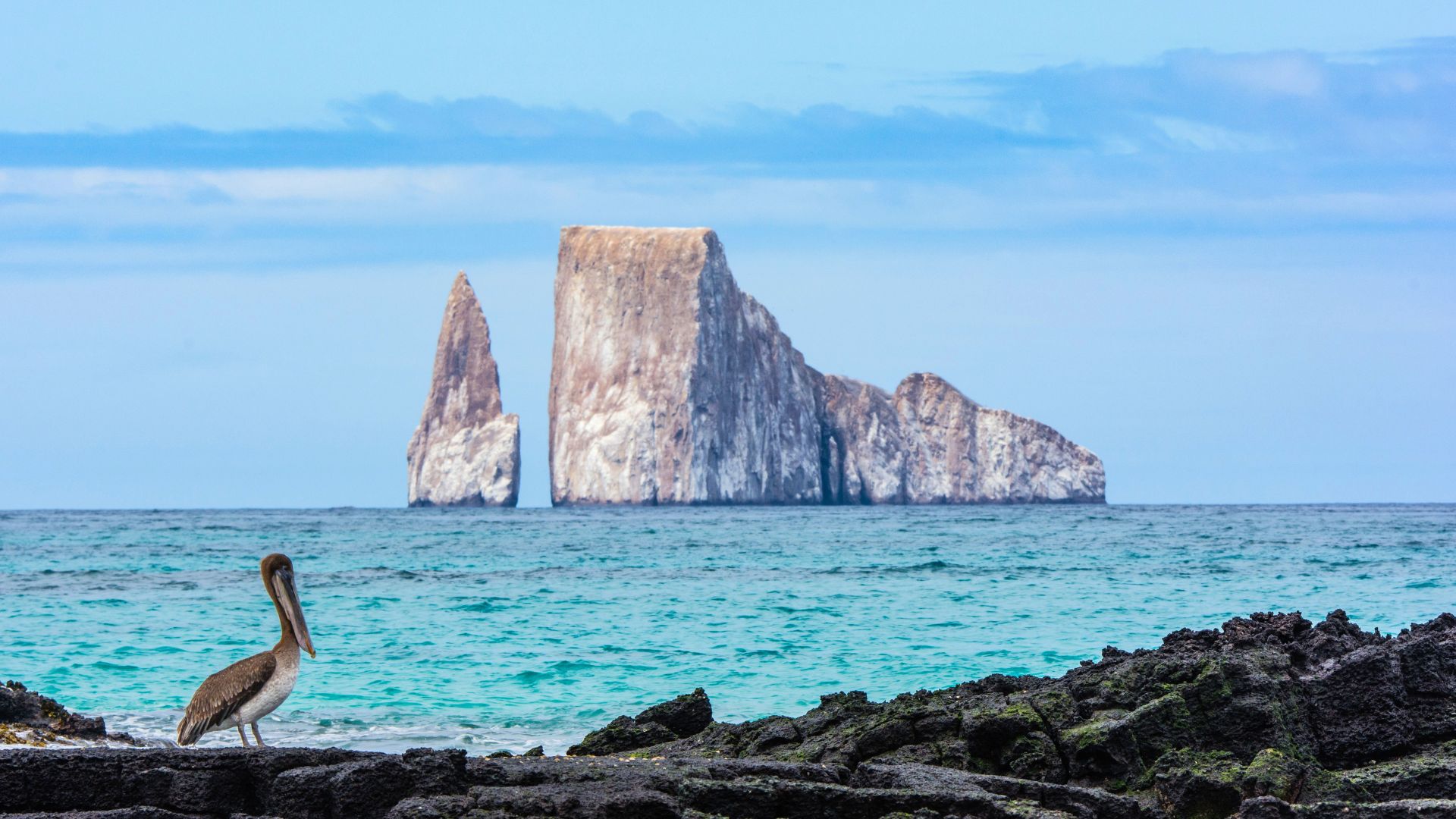
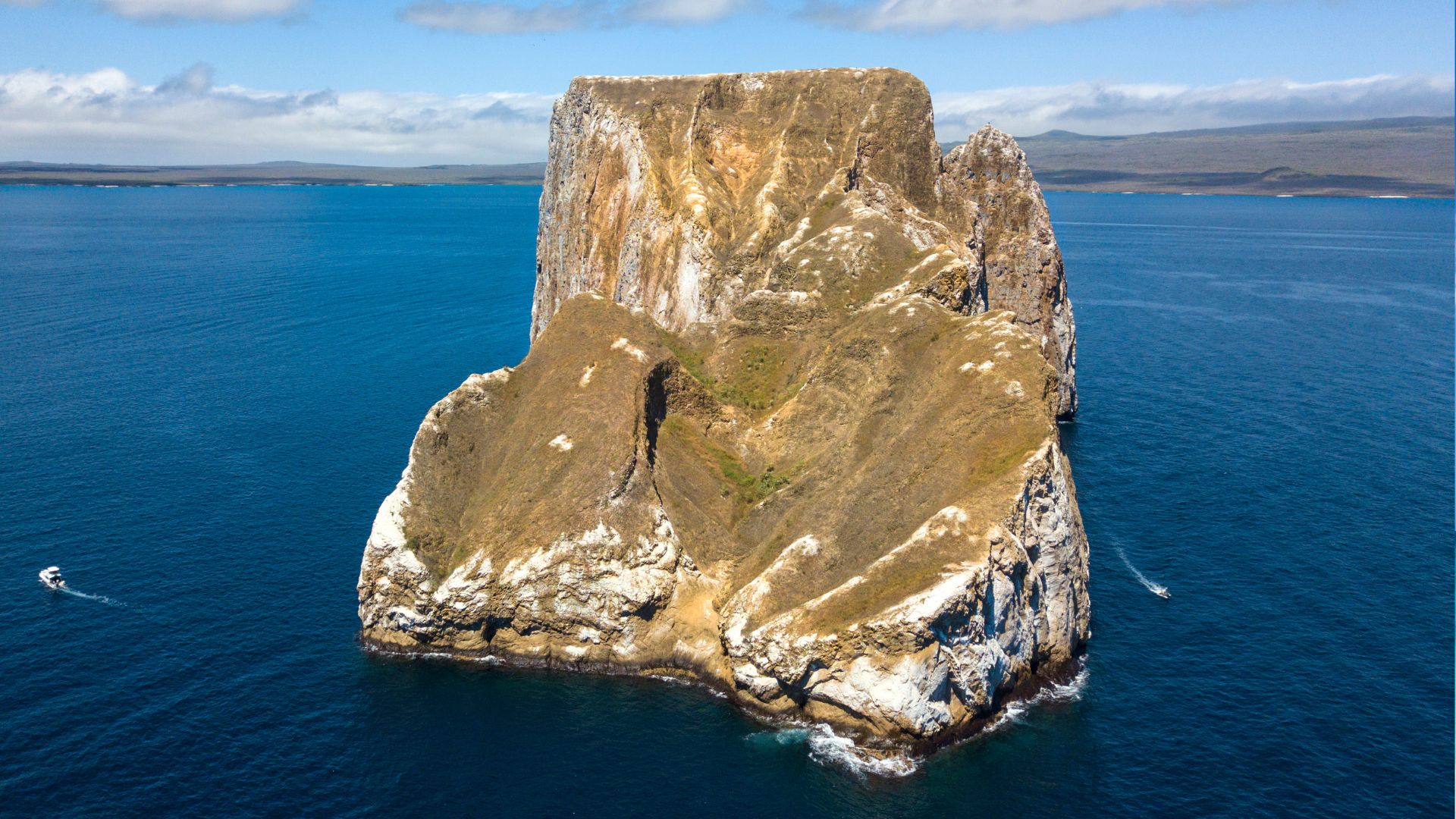
First light brings the yacht to Kicker Rock — the twin basalt pillars off San Cristóbal's northeast coast. The morning program is the channel snorkel: the panga drops you at the eastern entrance, the current drifts you between the cliffs, the naturalist runs the boat alongside. Scalloped hammerheads in schools below, Galapagos sharks patrolling, sea turtles, eagle rays. Most groups do two passes.
Mid-day transit south to Española — the southernmost and oldest of the major islands. The afternoon landing at Punta Suárez is the bird walk most guests remember from the trip. The trail follows the cliff top past the waved albatross colony (April through December — nowhere else on Earth), the Española mockingbird, Nazca and blue-footed booby nesting sites, and a basalt blowhole that spouts seawater fifty feet up the cliff face.
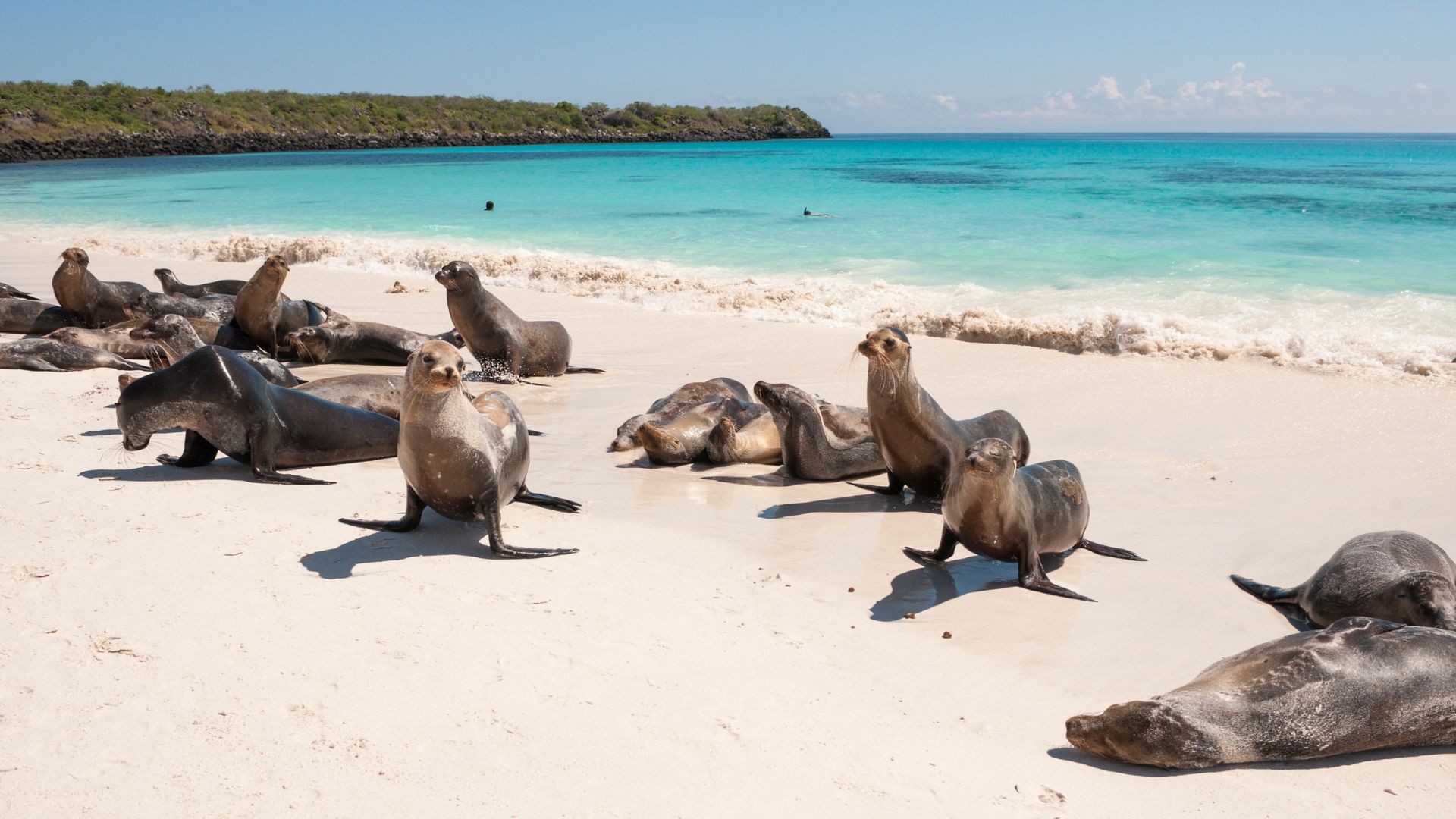
Late afternoon at Gardner Bay — a half-mile crescent of white sand backed by low scrub and a resident sea lion colony. Sea lion pups follow swimmers; adults sprawl across the sand. The two-meter park-rule distance is enforced from the guest side — the animals themselves don't acknowledge it.
Day Highlights
Day 4 of 8 · Bachas Beach + Bartolomé Summit
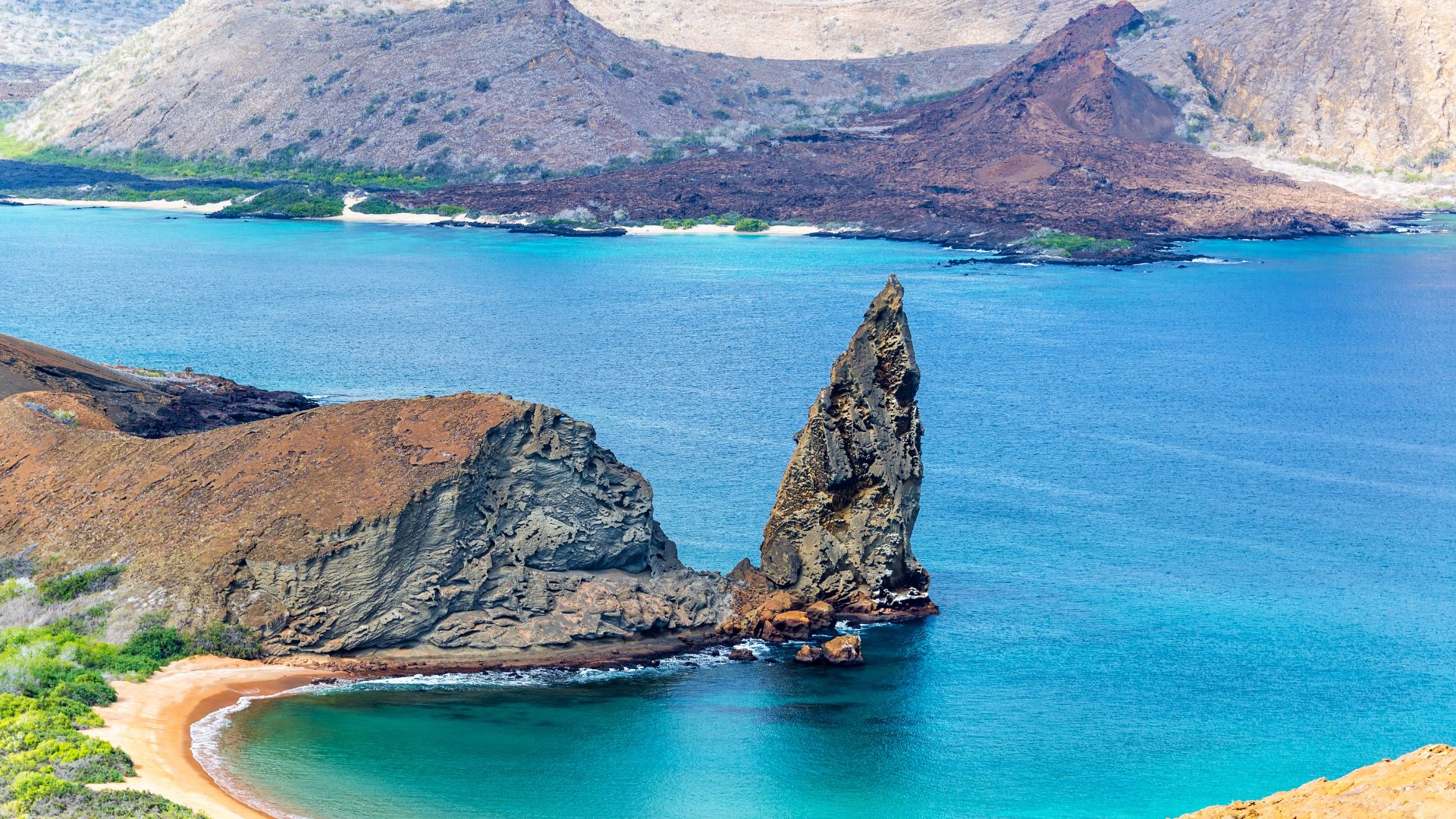
Overnight northwest — a hundred and ten nautical miles, the longest single leg of the week. Pre-dawn arrival in Sullivan Bay. The naturalist runs the sunrise summit hike — a 372-step wooden staircase from the southern landing climbs the volcanic cone to the lookout at 114 meters. The view from the top is the photograph that anchors every Galapagos trip: Pinnacle Rock, Sullivan Bay's pahoehoe lava across Santiago, the yacht below, the Bolívar Channel opening west.
Late morning shifts to Bachas Beach on the north coast of Santa Cruz — a wide white-sand beach with a brackish lagoon behind it holding flamingos and white-cheeked pintail ducks. ('Bachas' is the local pronunciation of 'barges' — two American Navy barges ran aground here during World War II.) Afternoon snorkel from the beach over sea turtles. Overnight repositioning west for Santiago's landings.
Day Highlights
Day 5 of 8 · Santiago (Egas Port) + Rabida
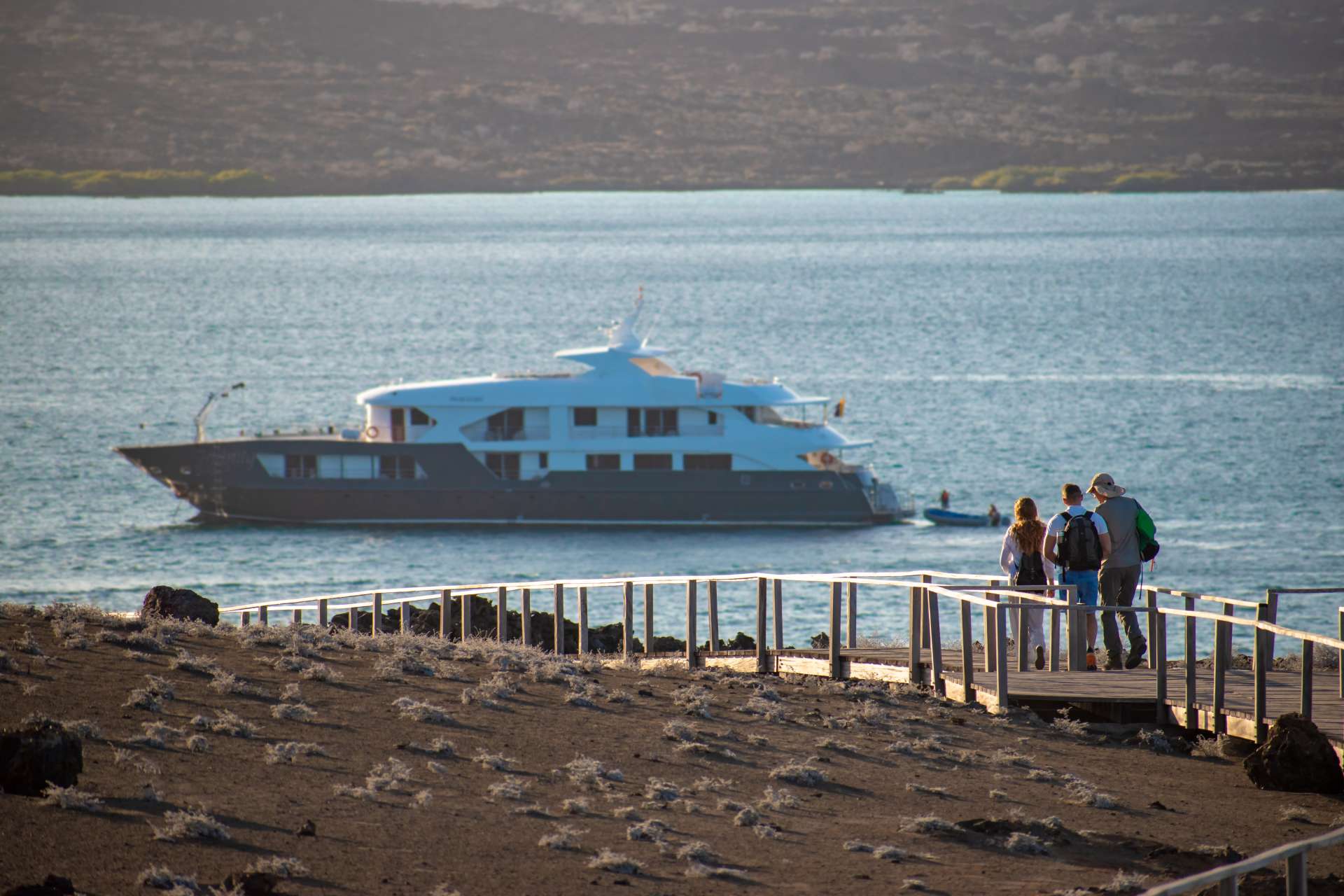
Morning landing at Puerto Egas (James Bay) on Santiago's northwest coast — a long black-lava shore with a fur seal colony in the cliff-base grottos, the densest sally lightfoot crab population in the islands, and a marine iguana population distinct from the western colonies. The trail runs along the lava shore to the grottos where the Galapagos fur seal rests in shaded sea caves.
Mid-day repositioning south to Rabida — distinctive for the iron-oxide-rich volcanic rock that turns the beach a deep red-brown. The trail behind the beach runs to a brackish lagoon with white-cheeked pintail ducks and (in wet season) flamingos. Afternoon snorkel along the cliff base — schools of king angelfish, parrotfish, reef fish in the rocky shallows. Overnight north toward Genovesa.
Day Highlights
Day 6 of 8 · Genovesa — Darwin Bay + Prince Philip's Steps
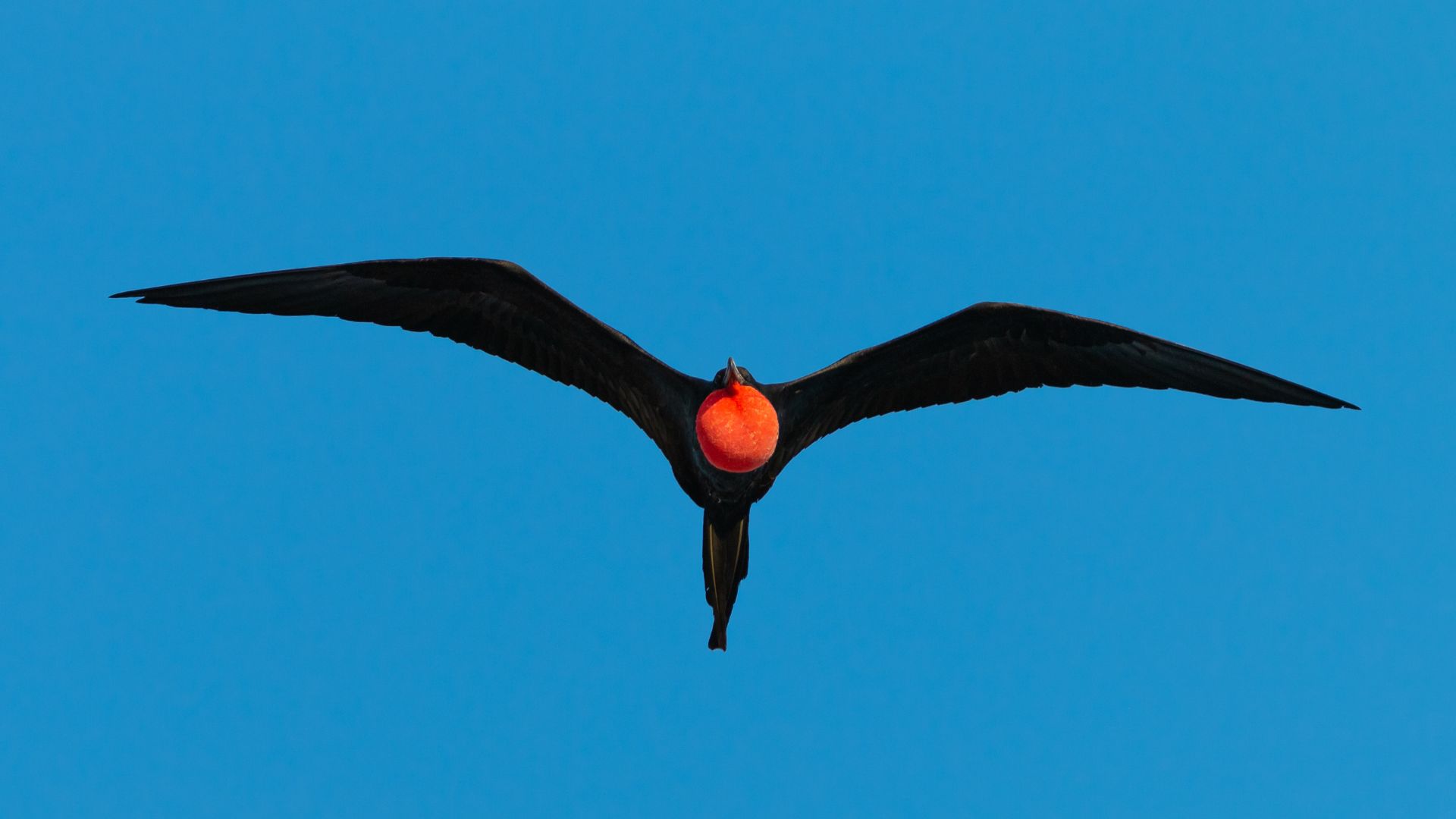
Overnight transit north — 120 nautical miles across open water to Genovesa, a flooded volcanic caldera in the far north of the archipelago. Genovesa is uninhabited and gets no day-boat traffic; only the yachts running an A-route variant reach it. Morning landing at Darwin Bay — a half-moon beach inside the caldera rim, the calmest water of the week. Bird colonies the densest in the islands: the great frigate bird with the inflated red gular sac, the largest red-footed booby colony in the world, the Nazca booby, the swallow-tailed gull, the storm petrels in the lava cracks.
Afternoon landing at Prince Philip's Steps on the east side of the caldera — named for Prince Philip's 1965 visit. A steep climb on wooden and rock-cut steps brings you to a flat plateau on the rim — another concentration of Nazca and red-footed boobies, the storm petrel colony, short-eared owls hunting them at dusk. Overnight south back to the central islands.
Day Highlights
Day 7 of 8 · Mosquera Islet + Santa Cruz Highlands
Morning landing at Mosquera Islet — a low sand bar between North Seymour and Baltra. A resident sea lion colony lives on the islet; the snorkel from the beach drops you among playing juveniles. Mosquera is the most relaxed landing of the week — short, no climbing, mostly an opportunity to be in the water with the wildlife one more time.
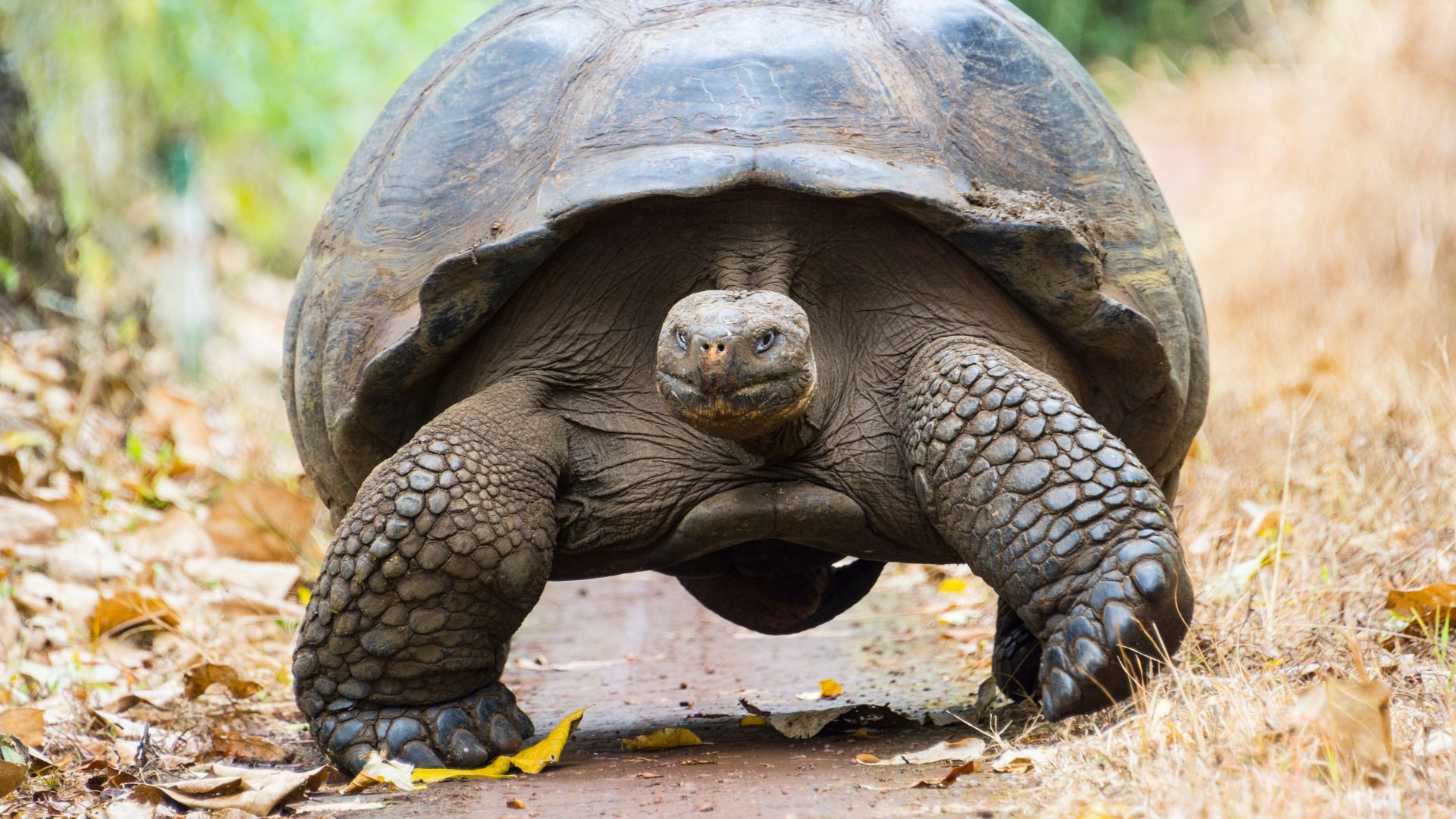
Afternoon transit south to Academy Bay off Puerto Ayora. Private-vehicle transfer up to the highlands — twenty minutes from town, twelve hundred meters of elevation, scalesia forest into Miconia shrubland. El Chato Reserve or Rancho Manzanillo holds wild Galapagos giant tortoise populations grazing in pasture. No barriers; the animals approach as they please. Overnight transit to Baltra.
Day Highlights
Day 8 of 8 · North Seymour + Baltra disembark
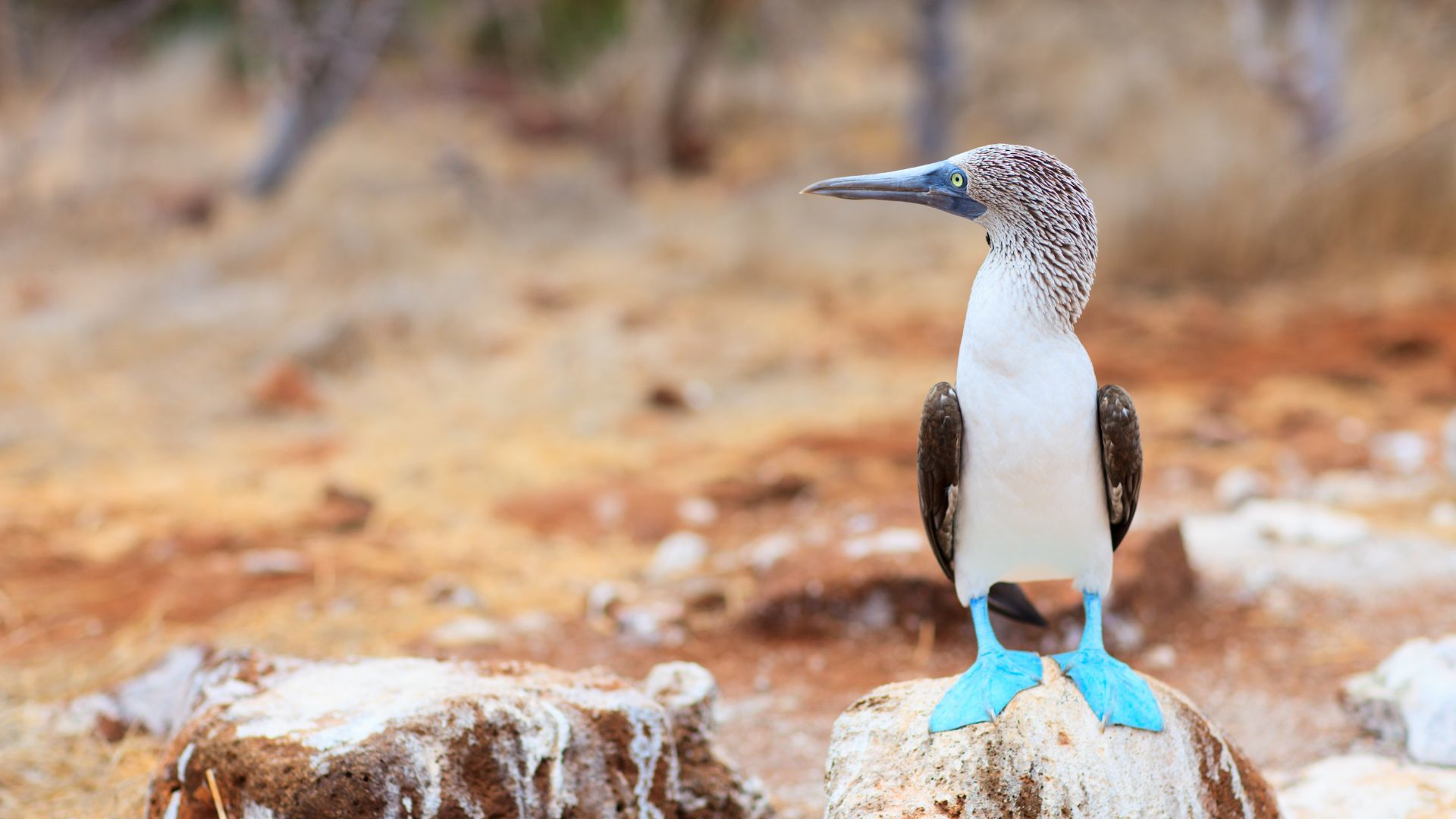
Pre-dawn run to North Seymour — a small flat island just north of Baltra, formed by tectonic uplift rather than volcanic activity. The sunrise landing brings you onto a low coastal trail past the blue-footed booby colony (the sky-pointing courtship dance performed at close range), the magnificent frigate bird colony (males with the inflated red gular sac), and the resident land iguana population.
Back on board for breakfast and the short transit to Baltra. The crew arranges the transfer to GPS for mid-morning flights direct to Quito and Guayaquil. Guests extending their Latin America trip from here typically connect to Cuzco, Lima, or back to Quito for a night in the old town before flying home.
Day Highlights
Want to share or come back to this voyage later?
Bookmark this voyage →Crewed Itinerary · Galapagos · 5-Day Cut
A 5-day Galapagos itinerary, Saturday-to-Wednesday from Baltra. Sullivan Bay's lava on day one, Punta Vicente Roca's seabird cliffs and Fernandina's marine iguanas on day two, Isabela's west coast on day three, Charles Darwin Research Station and the Santa Cruz highland tortoises on day four, Baltra disembark Wednesday. The Galapagos compressed for groups pairing it with a Peru, Quito, or Amazon trip on either end.
The 5-day Galapagos itinerary is the right answer when the calendar is the binding constraint and Galapagos is one leg of a longer Latin America trip. The Western route's marquee sites compressed into four nights. The 8-day Western is the full version of this rotation; the 8-day Eastern-and-Northern is the alternate week. For groups with one week to spend on the islands, we recommend the 8-day Western over this 5-day cut — same wildlife density, more time.
Day 1 of 5 · Baltra → Sullivan Bay
Land at GPS on the morning flight from Quito or Guayaquil. The captain meets you at the gate, ferries across the Itabaca channel, and the yacht is at anchor with the chef plating lunch. The naturalist runs the welcome briefing; the cruise plan is filed with the park officer.
Mid-afternoon the captain runs north and east to Sullivan Bay. By late afternoon the panga lands you on the 1903 pahoehoe — ropy black rock, lava bombs, pioneer plants pushing through cracks. Sundowners and dinner at anchor.
Day Highlights
Day 2 of 5 · Punta Vicente Roca + Punta Espinoza
Overnight west into the Bolívar Channel. Morning brings the yacht into Punta Vicente Roca on Isabela's northwest tip — thousand-foot cliffs with seabirds nesting on the ledges, sea turtles surfacing in the channel, Galapagos sharks under the panga.
Mid-day crossing west to Fernandina. Punta Espinoza is the only visitor site: a lava-flow point with the largest marine iguana colony anywhere on Earth — hundreds piled on bare black rock, the only lizards that forage in the ocean. The flightless cormorant nests at the site as well. Afternoon snorkel from the panga over green sea turtles.
Day Highlights
Day 3 of 5 · Tagus Cove + Urbina Bay
Morning run south to Tagus Cove — a small protected anchorage tucked into tuff cliffs. Whaling crews used it as a watering stop from the 1820s through the 1880s; the cliff face above the anchorage carries their names and dates, the earliest legible from 1836. The naturalist runs a kayak program in Darwin's Lake behind the cove.
Afternoon south to Urbina Bay. The trail above the landing crosses dead coral and bleached sea-urchin shells — in 1954 an offshore reef rose four meters above sea level overnight, tied to Alcedo volcano's activity. Land iguanas and giant tortoises forage the area in wet season. Overnight east toward Santa Cruz.
Day Highlights
Day 4 of 5 · Charles Darwin Research Station + Highlands
Morning at the Charles Darwin Research Station — the captive-breeding program running since 1959, the Lonesome George Memorial (the last Pinta Island tortoise, taxidermied after his 2012 death), interpretive signage on the conservation work.
Midday transfer up to the highlands by private vehicle — twenty minutes from town, twelve hundred meters of elevation, scalesia forest into Miconia shrubland, lava tubes you walk through with the naturalist. El Chato Reserve or Rancho Manzanillo holds wild Galapagos giant tortoise populations grazing in pasture. Overnight transit to Baltra.
Day Highlights
Day 5 of 5 · Baltra disembark
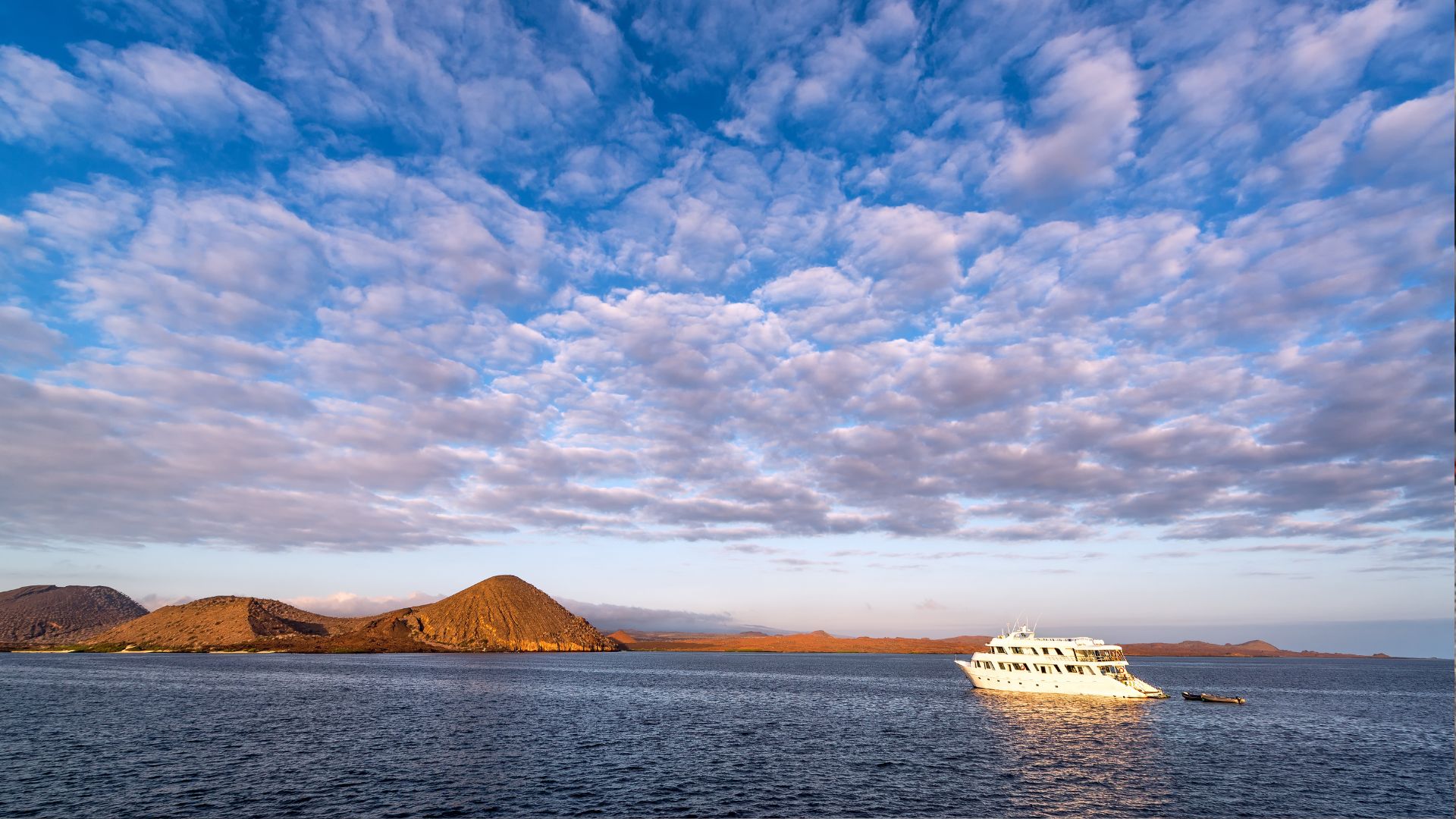
Overnight transit north to Baltra. Farewell breakfast on the aft deck before disembarkation by mid-morning. Panga to the Itabaca channel dock, short ferry, transfer to GPS for the morning flight back to Quito or Guayaquil.
From here most groups connect to the next leg. Cuzco / Machu Picchu typically connects through GYE on LATAM, arriving Cuzco mid-afternoon for the four- or five-night Peru program. Quito old-town pairing stays in Ecuador. Amazon pairing connects from UIO to Coca for the Mashpi or Napo Wildlife Center transfer.
Day Highlights
Want to share or come back to this voyage later?
Bookmark this voyage →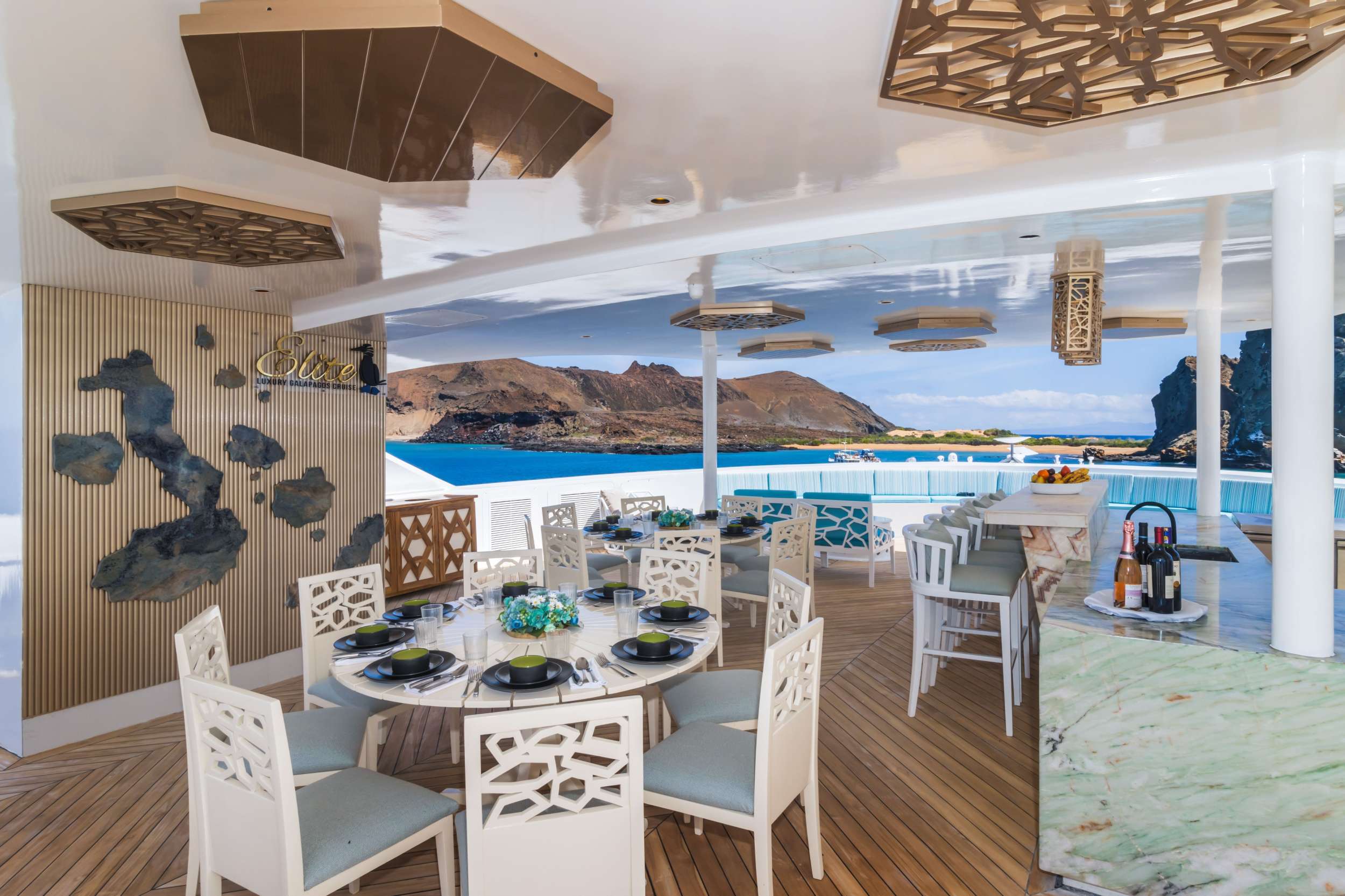
When to go, what it costs, and how to get there — the practical answers guests ask before booking a Galapagos crewed yacht charter.
Mid-to-high seventies Fahrenheit water, calm seas, lush vegetation, the warmest snorkeling of the year. Marine iguana hatchlings in March, green sea turtle nesting December through March. Brief afternoon showers typical. The window we recommend for first-time guests — warmest water, most consistent weather, no wetsuit needed.
Humboldt upwelling drops water to the high sixties and low seventies and drives the highest marine productivity of the year. Best snorkeling visibility and feeding density. Waved albatross at Punta Suárez April through December (the only place on Earth they nest). Plan a 3mm wetsuit. Cool-season weeks book strong with serious wildlife travelers.
Lock the week to the species you want: waved albatross April–December, sea lion pups September–November, marine iguana hatchlings December–March, green turtle nesting December–March, blue-footed booby mating June–August, red-footed booby May–October. Frigate-bird courtship runs year-round with peaks tied to El Niño. The naturalist builds the daily program around what's actively happening when you arrive.
$60,000–$150,000 per week
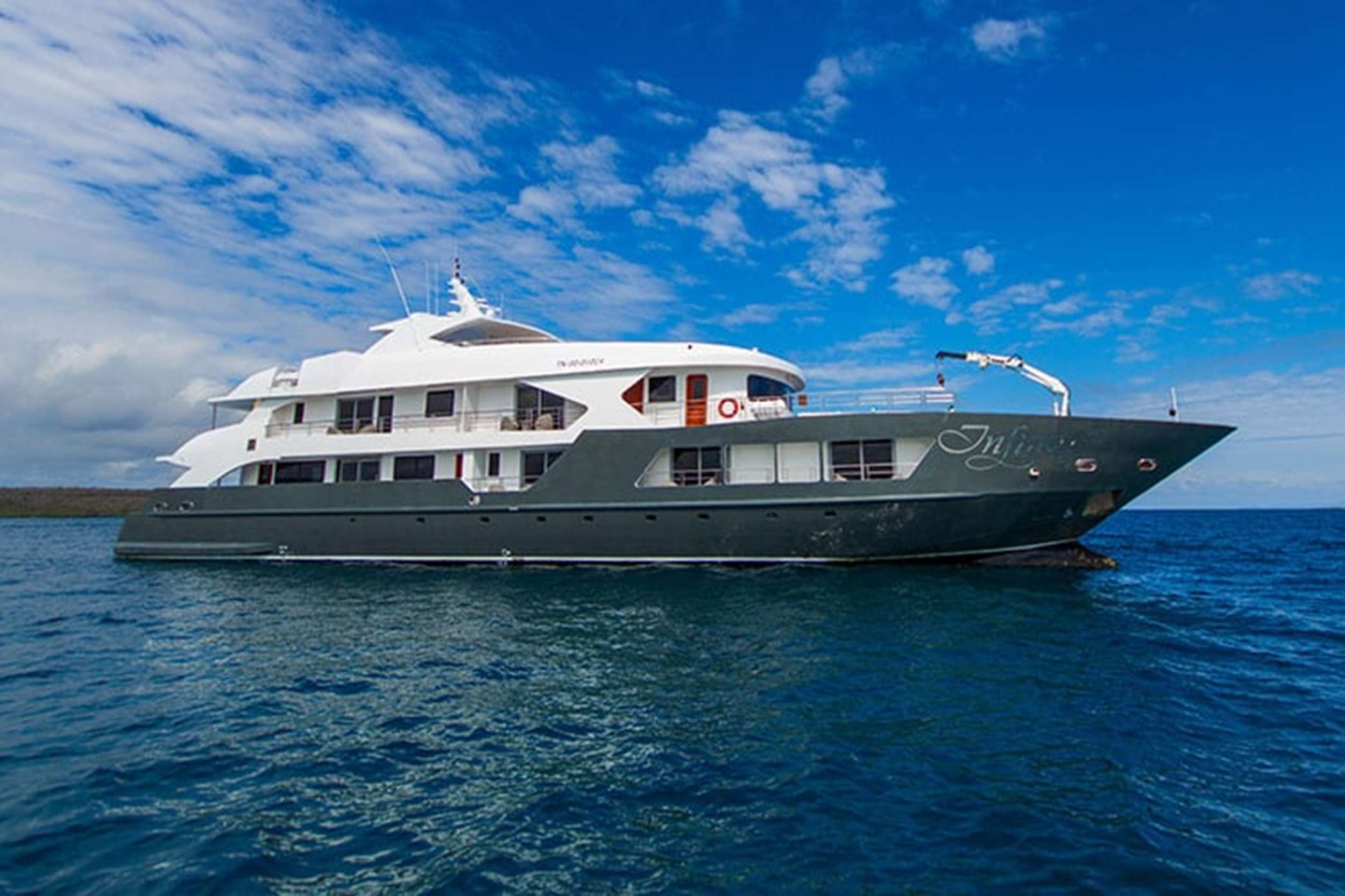
A private full-yacht Galapagos expedition charter runs roughly $60,000 to $150,000+ per week, depending on yacht tier and time of year. The lower end captures the First Class category; the upper end captures the Luxury Class boats — Infinity, Galapagos Horizon, Galapagos Sea Star. The base rate covers the entire yacht for your party (eight cabins, sixteen to twenty guests), captain and crew, a Class III licensed naturalist guide, all meals and a full bar, panga tenders, snorkel gear and wetsuits, kayaks, paddleboards, and the licensed itinerary fees. Park entry, the Galapagos transit card, hyperbaric chamber contribution, and airport-to-yacht transfers are itemized at booking and paid separately. Crew gratuity is customary at ten to fifteen percent of the base rate. Charter departures are set by the park schedule — 4-day Friday-to-Monday, 5-day Monday-to-Friday or Tuesday-to-Saturday, 8-day Saturday-to-Saturday or Monday-to-Monday. Long-haul flights to Quito or Guayaquil are not included.
About chartering in the Galapagos.
We charter across the South Pacific. Here are some other excellent alternatives.
Fill out our quick form and we'll dive into your unique preferences — from adventure-packed itineraries to pampered escapes. Whether you're a seasoned voyager or new to charters, we'll tailor recommendations just for you.
With over fifteen years of experience, we'll match you with the yacht that fits your style, group, and itinerary. We work directly with the captains and crews across our list — so the recommendation is built around the right boat-and-crew fit for your week, not whatever's easiest to book.
Once your yacht is booked, we'll take care of logistics: paperwork, reminders, and personalized resources to help you plan. From arrival planning to must-visit spots, we'll make your charter as seamless as it is unforgettable.

What to Expect on a Private, Crewed Yacht Charter
Learn what makes crewed yacht charters extraordinary: personalized service, gourmet dining, and endless opportunities for adventure and relaxation.

How Does the Booking Process Work?
Our team handles every detail of your crewed yacht charter booking, ensuring a seamless experience from your first inquiry to setting sail.

Crewed Yacht Charter Pricing Explained
Understand what a crewed charter costs, the types of pricing, and what is included / not included.

Logistics: Proven Travel Plans for a Stress-Free Start
Plan your journey to your crewed yacht charter with ease. Tips on flights, transfers, and logistics for a stress-free start to your vacation.
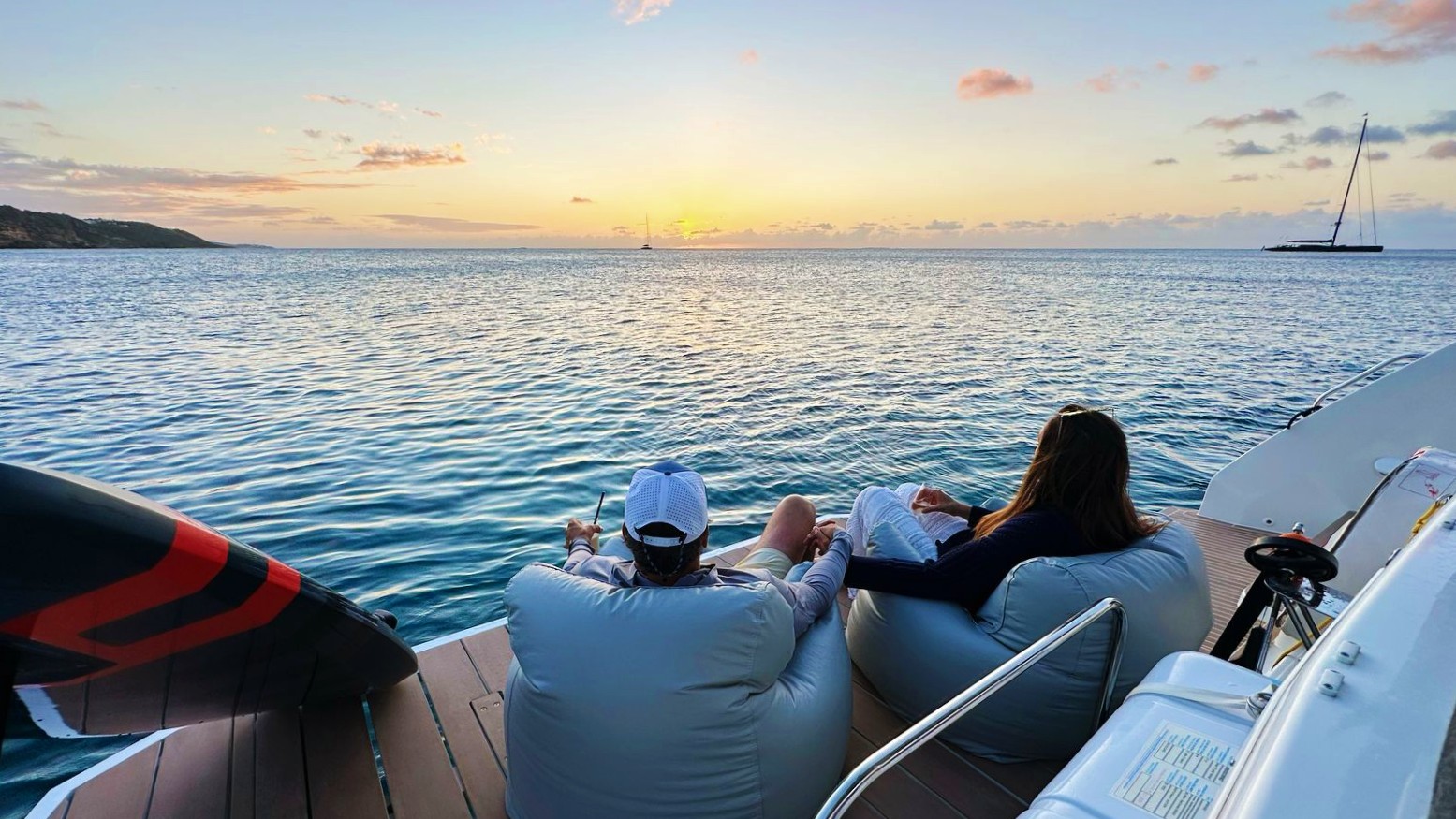
Honeymoon Yacht Charters
Start your marriage on a private yacht. Explore secluded beaches, gourmet dining, and unforgettable sunsets in the Caribbean.
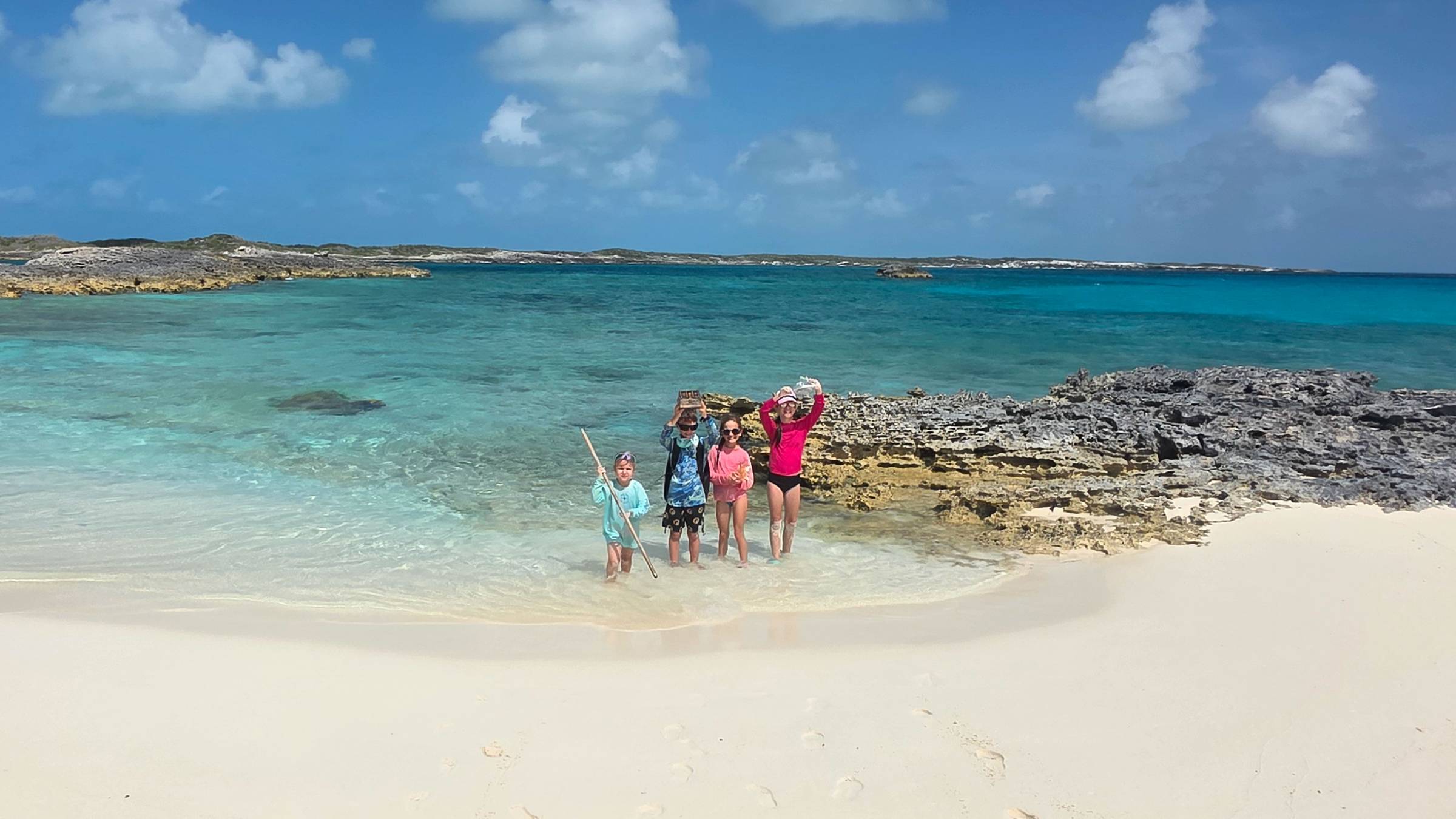
Family Yacht Charters
A crewed yacht charter is perfect for families of all ages. Safe, fun, and fully catered — your kids will never forget it.

Crewed Charter FAQ
Get answers to common questions about crewed yacht charters, from pricing and tipping to what's included and what to pack.

BVI Crewed Yacht Charters
The British Virgin Islands are the #1 crewed charter destination in the Caribbean. Short sails, protected waters, and world-class anchorages.

BVI Crewed Charter Guide
Everything you need to know before your BVI crewed catamaran charter — pricing, packing list, sample itinerary, and getting there.
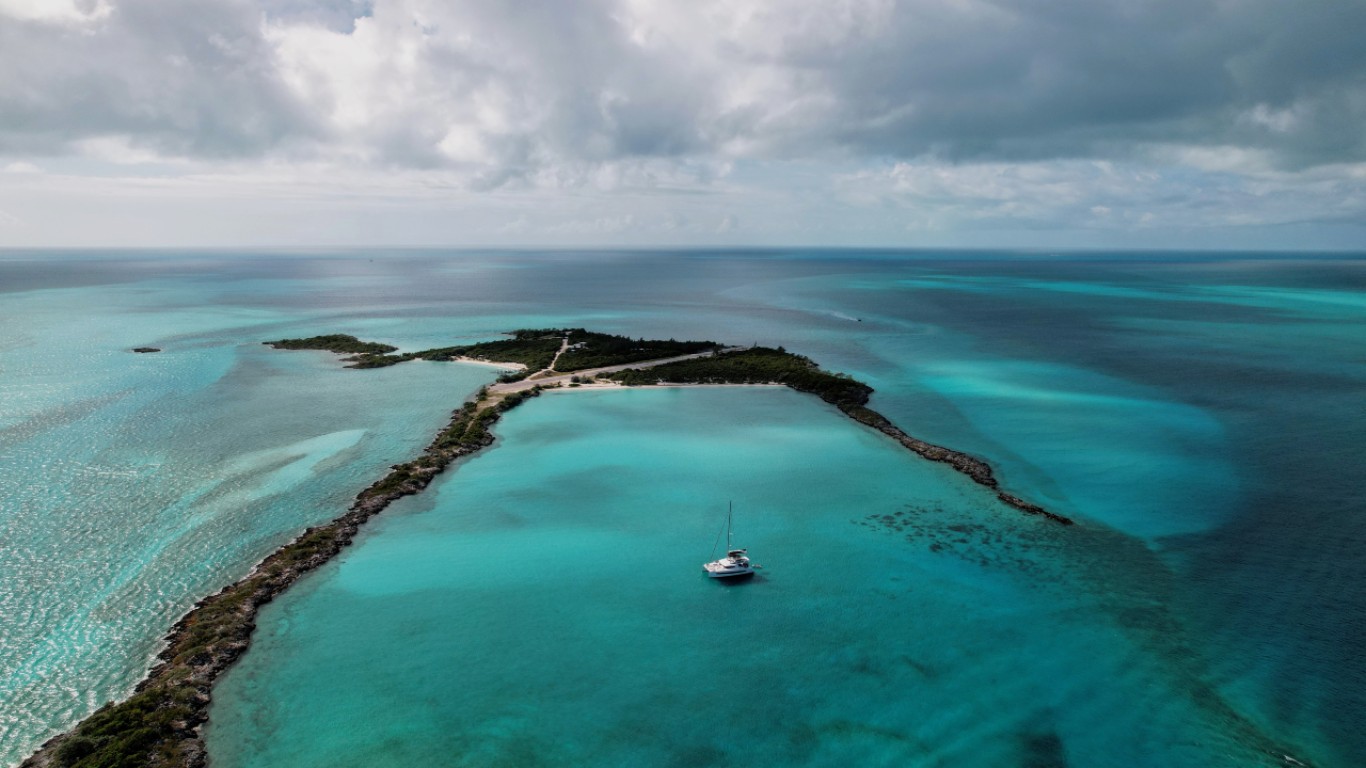
Bahamas Crewed Yacht Charters
Explore the Exumas on a private crewed yacht. Swimming pigs, sandbars, and some of the clearest water on earth.
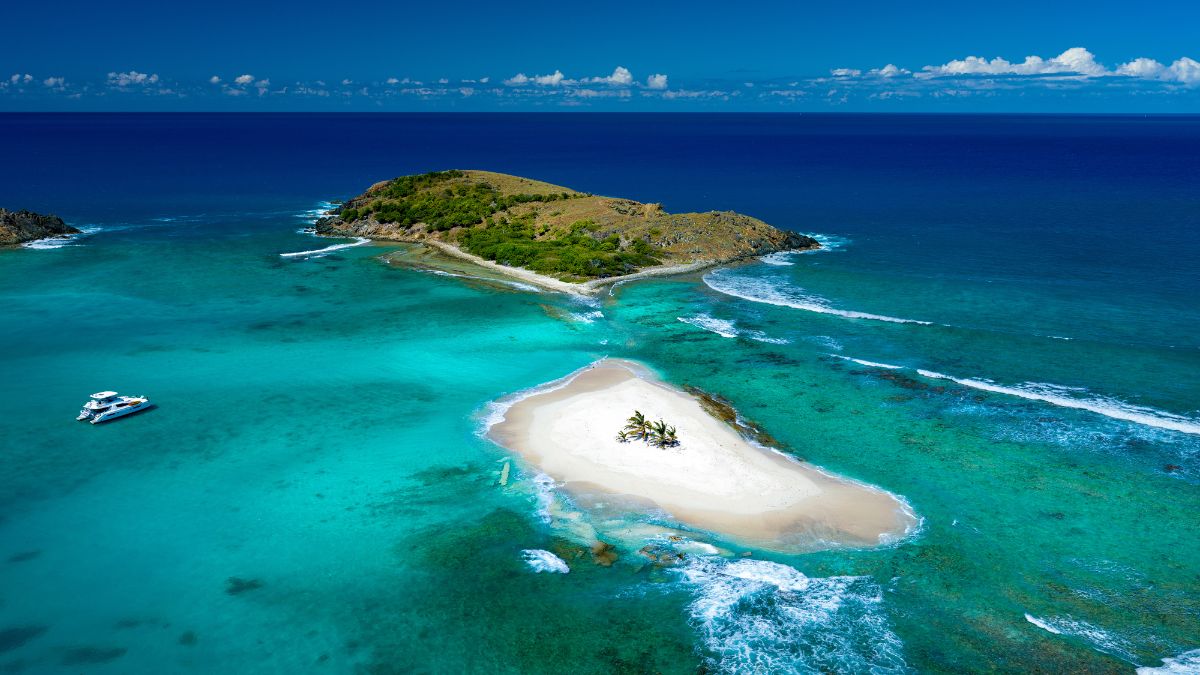
Caribbean Crewed Yacht Charters
All-inclusive crewed charters across the Caribbean — BVI, Bahamas, USVI, St. Martin, Antigua, and beyond.