
Crewed Itinerary · Alaska

Alaska Itinerary: Frederick Sound and Humpback Wildlife in 7 Nights

This is the wildlife-first Alaska week — a seven-night crewed motor-yacht charter built around Frederick Sound's humpback bubble-net feeding season and the brown-bear runs at the salmon-stream mouths. The route starts in Petersburg, works the bubble-nets and the Brothers Islands haul-outs through the early week, runs the Dawes Glacier face in Endicott Arm midweek, and closes with bear-viewing days at Pavlof Harbor and a final hot-spring soak at Baranof Warm Springs. About two hundred and eighty nautical miles end to end. The week is timed to the wildlife calendar in a way the other Alaska routes are not — bubble-net feeding runs late May into mid-July, and the trip is engineered to land inside that window.

Most groups booking this route are wildlife travelers who have done the East Africa Big Five week or the Galapagos and want the marine-mammal version. Frederick Sound is the only place in the world where humpback bubble-net feeding is reliably visible from a yacht — the coordinated group-feeding behavior pushes a school of herring to the surface, then the whales surface through the bait ball in a ring of open mouths. A good June or July week sees four or five bubble-nets across the trip, plus brown bear viewing, Steller sea lion haul-outs, orca pods, and the running glacier face at Dawes. The route trades the Glacier Bay permit for wildlife density; for guests whose week is built around what they want to see rather than where they want to anchor, that is the right trade.

Duration
7 nights · flexible embark day
Base
Petersburg or Juneau (round-trip)
Plan your Alaska charter Custom-tailored to your dates and group preferences
Humpback whales mid-bubble-net feed, several open mouths breaking the surface together, snow mountains behind.
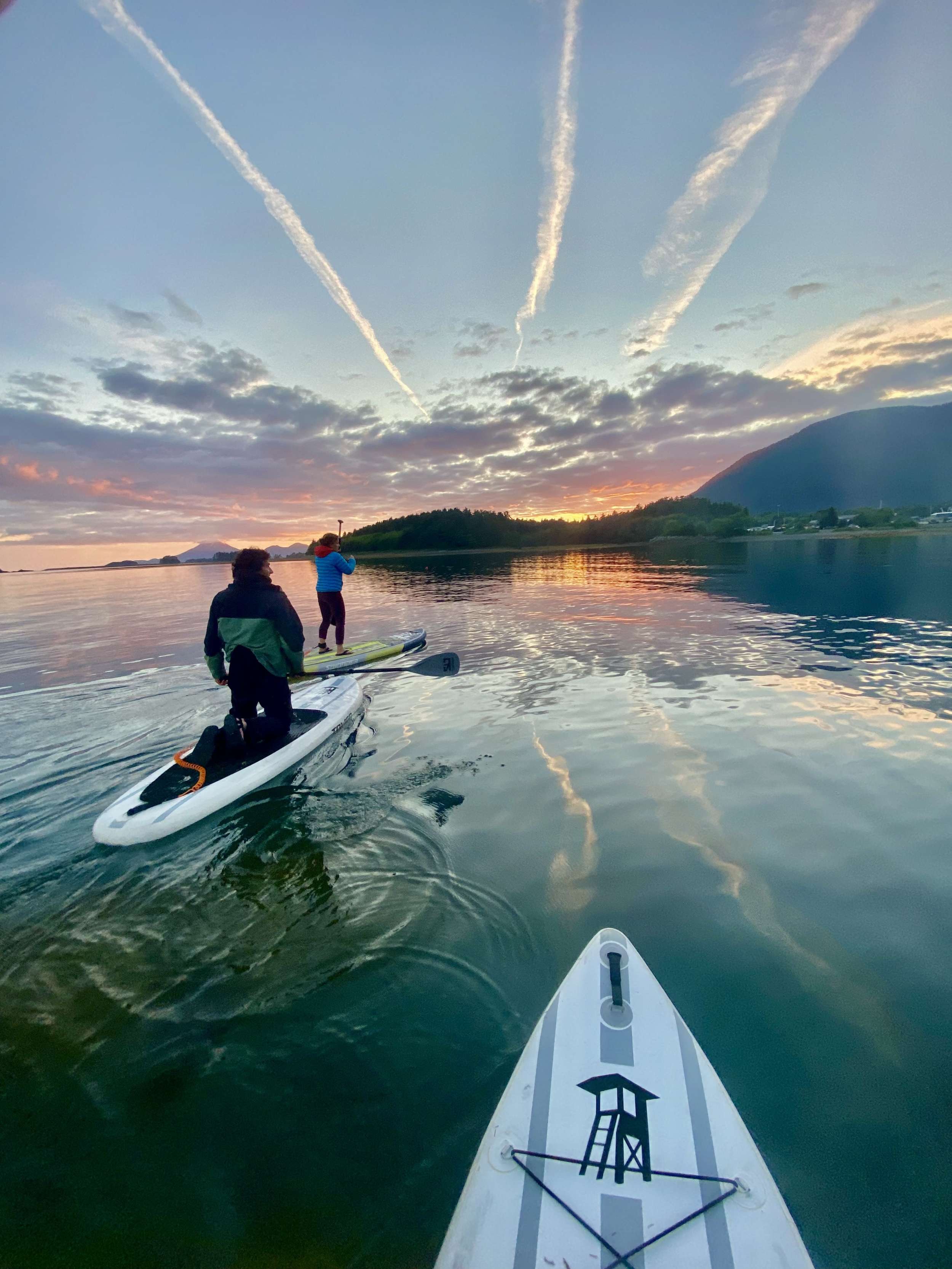
Two paddleboards on calm water at sunset, a distant volcanic peak silhouette on the horizon.
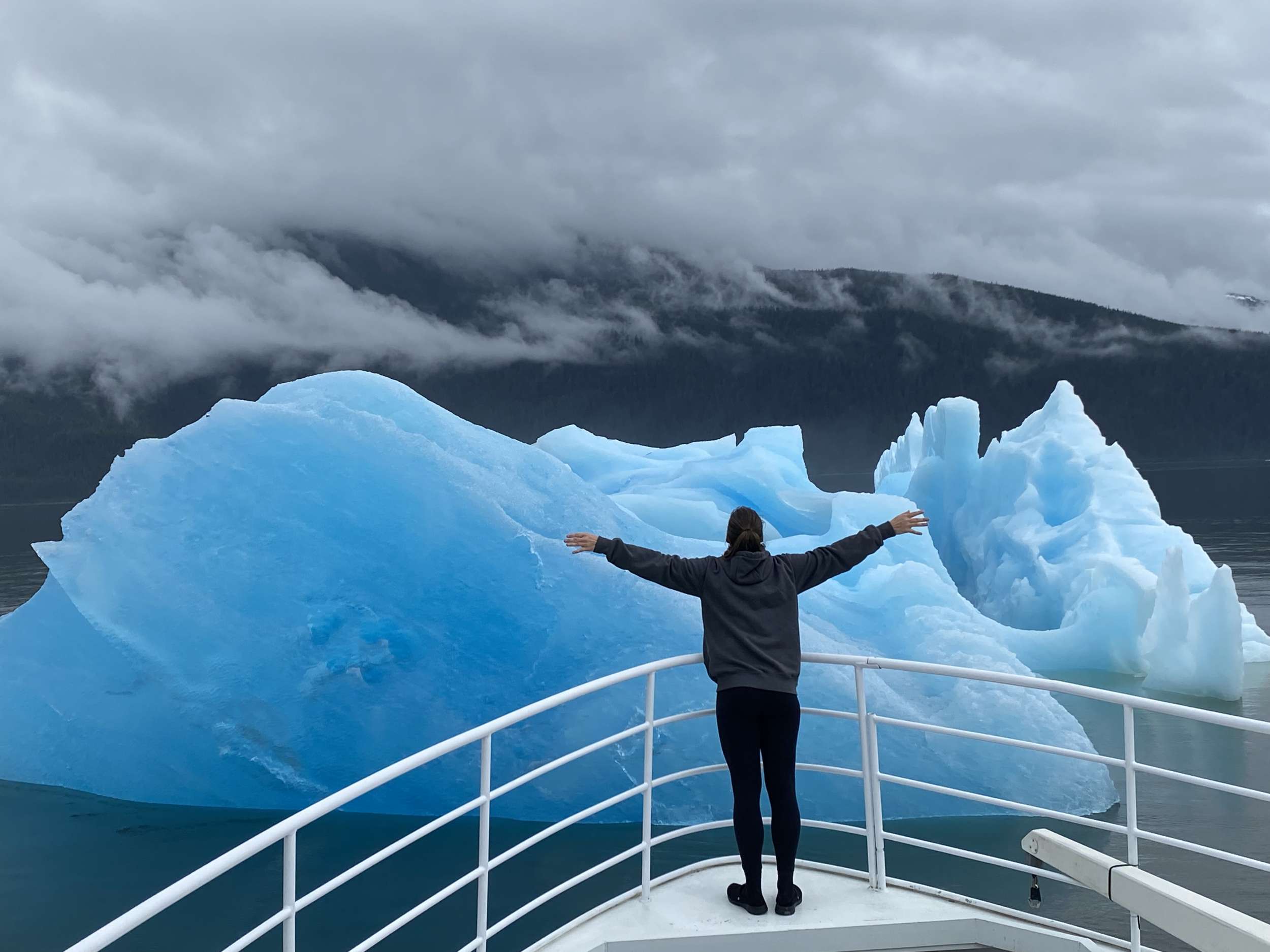
A guest at the bow rail with blue iceberg ice floating in the water and fog-draped mountains behind.
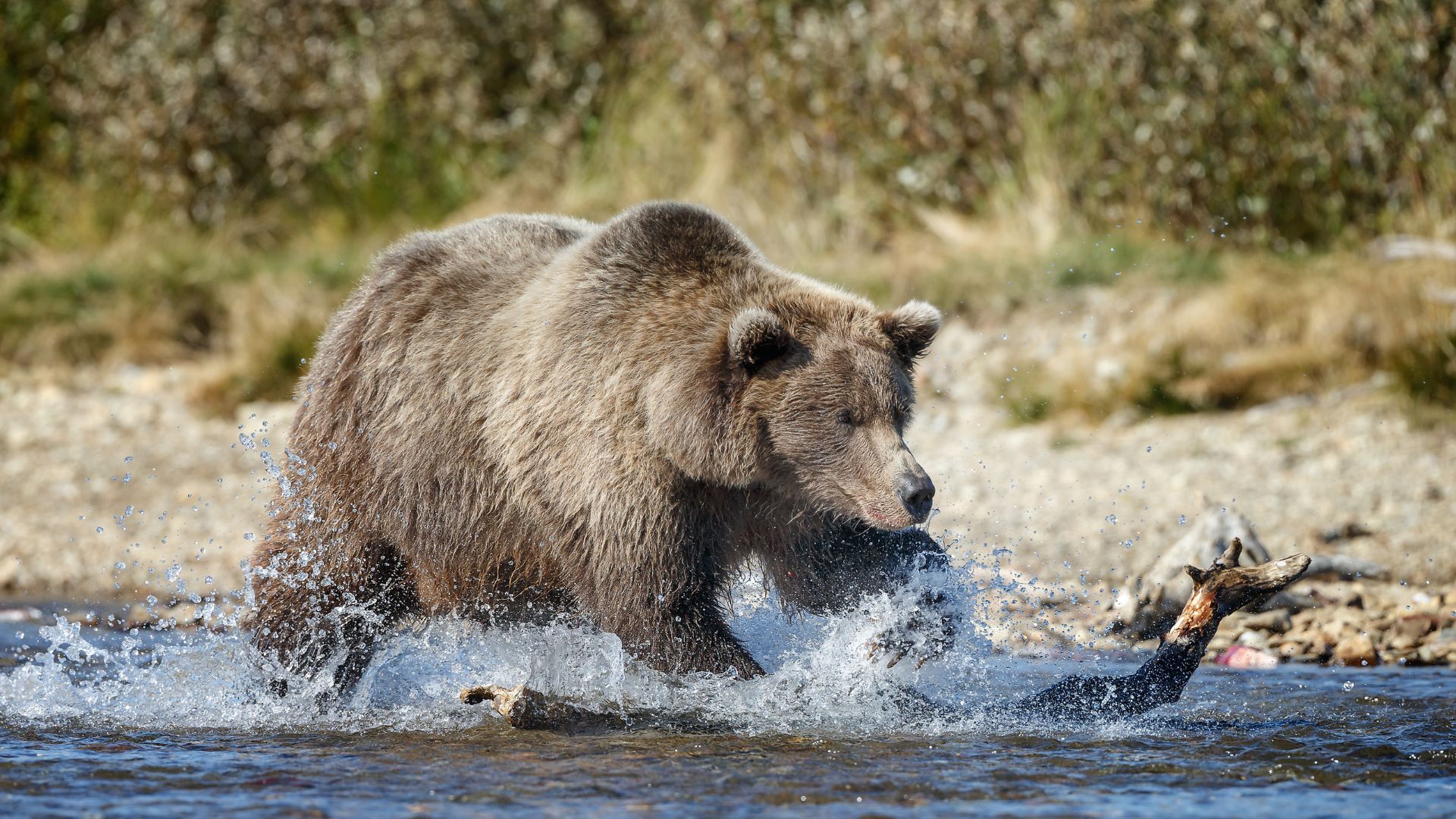
A brown bear mid-splash chasing a salmon through a shallow stream.

Why this is the wildlife-density Alaska charter week

This is Frederick Sound with the Brothers Islands haul-out, Endicott Arm and the Dawes Glacier, Pavlof Harbor for the bear stack-up, and a Baranof Warm Springs hot-spring close — two hundred and eighty nautical miles over seven nights, with most days running thirty to forty nautical miles inside the protected channels of central southeast Alaska. The route's gating constraint is timing rather than permits: late May through mid-July is the only reliable window for bubble-net feeding behavior, and dates lock in early.

It is the right Alaska charter for wildlife-driven groups, milestone family trips with teenagers along, and guests who have done the Inside Passage route and want a second Alaska week structured differently. If the brief is the marquee Alaska brand-recognition photographs — Glacier Bay, Tracy Arm — the Inside Passage route is the stronger fit. If the brief leans south with less park rigidity and more granite-fjord geography, the Misty Fjords route from Ketchikan is the answer. The captain shapes the day-by-day around the bubble-net activity reports and the bear-stream timing; the structure below is the standard frame.

1

Day 1 of 7 · Petersburg → Five Finger

Embark in Petersburg and stage at Five Finger for the morning
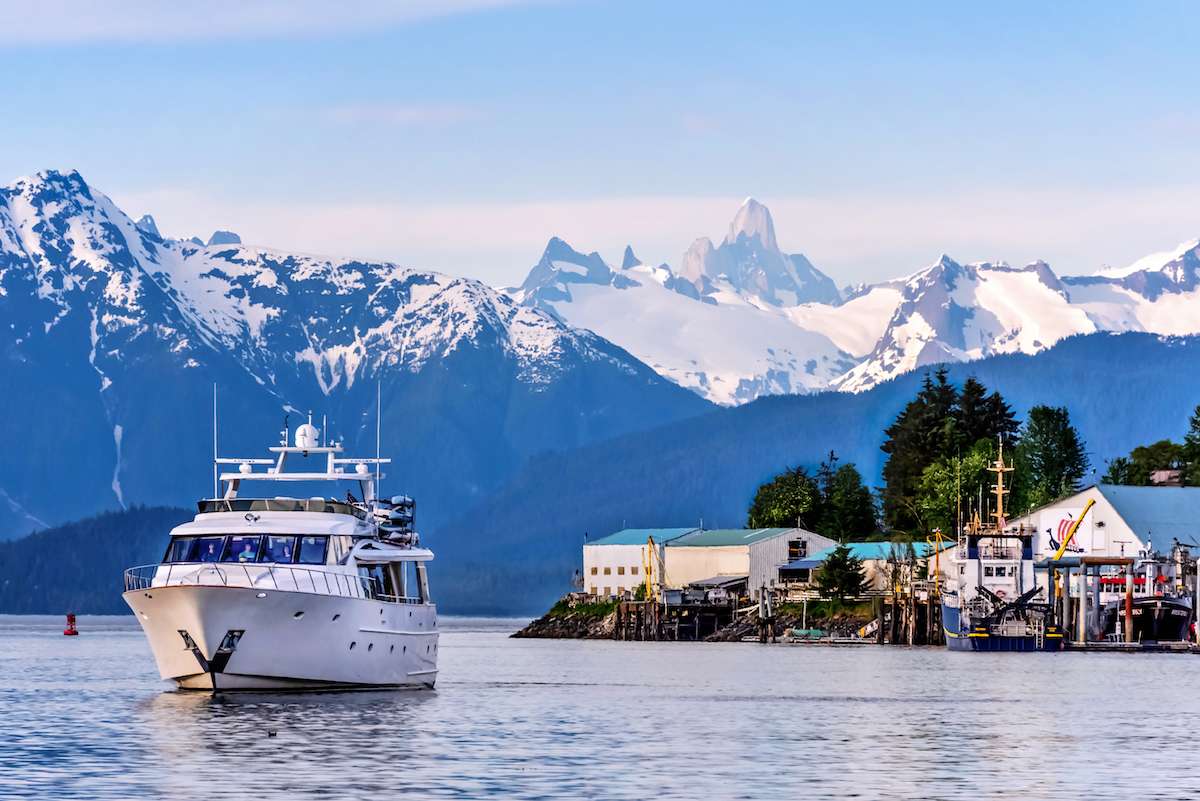
Anchorage: Five Finger Lighthouse roadstead
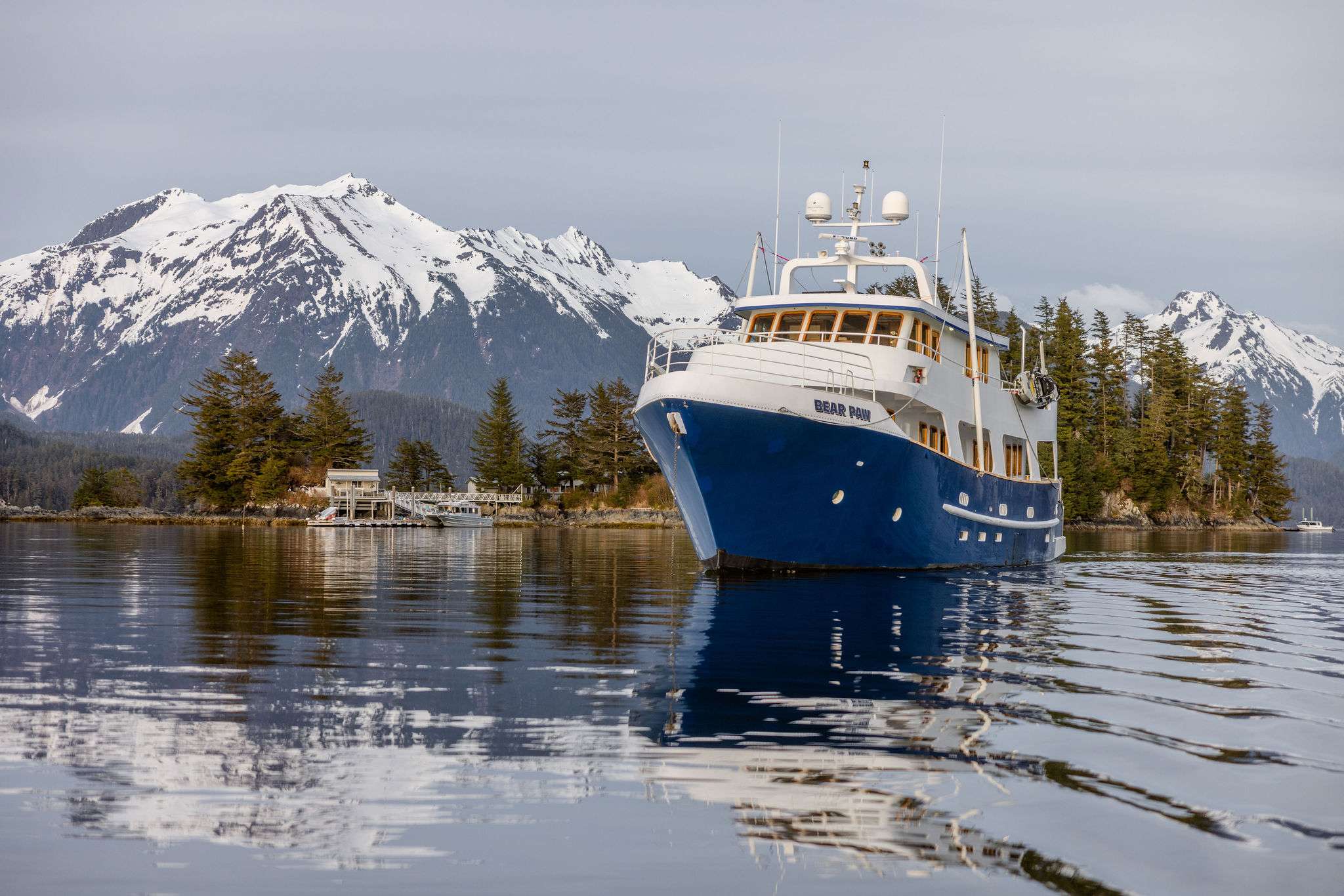
A classic motor yacht arriving at the Petersburg waterfront, Devil's Thumb's spire on the horizon behind — the working fishing town at the north end of Mitkof Island where this route embarks.
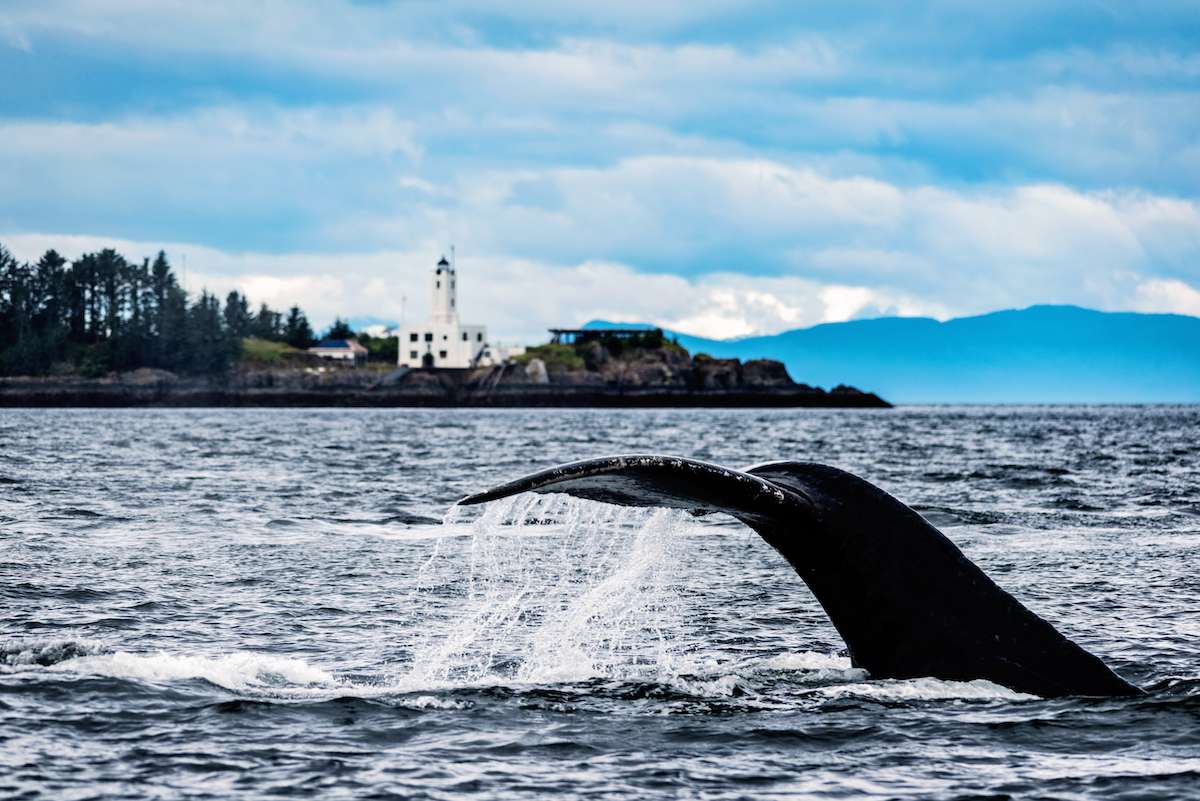
A lighthouse on Frederick Sound with a humpback fluke diving nearby at long twilight — the strait's wildlife density starts right at the channel markers.

The charter begins in Petersburg, a working fishing town at the northern end of Mitkof Island and one of the cleanest small ports in southeast Alaska. The town was founded by Norwegian immigrants in 1897 — the architecture is still Scandinavian on the central streets, and the harbor runs three hundred commercial fishing boats year-round. Crew meet the group at North Harbor or South Harbor depending on which dock the yacht is on, with hot drinks and the chart briefing once luggage is aboard. Petersburg's grocery and provisioning infrastructure is the strongest of the small embarkation ports — the chef typically does a final-day produce run before guests board.

The opening leg is short by design. Lines off mid-afternoon for a twenty-five-nautical-mile run northwest across the head of Frederick Sound to the Five Finger Lighthouse roadstead. The lighthouse — a square white-and-red tower built in 1902 — sits on a rock at the strait split between Frederick Sound (running southeast back toward Petersburg) and Stephens Passage (running northwest toward Juneau). Both channels run heavy humpback density in the early summer; the staging anchorage at Five Finger puts the yacht in the wildlife-rich corner of the system for the morning's start.

Dinner aboard at anchor. The bridge crew typically deploys the hydrophone on the first night — listening for the long, descending humpback vocalizations through the hull's underwater speaker is part of the trip's standard rhythm from the opening evening. The northern twilight runs late: the sun sets after 10pm at solstice, with civil light enough to read on the aft deck until past midnight.

Day Highlights

  • Embarkation at Petersburg (PSG) — North Harbor or South Harbor.
  • Twenty-five-nautical-mile opening run northwest across Frederick Sound.
  • Staging anchorage at Five Finger Lighthouse on the strait split.
  • Hydrophone deployment on the first evening; dinner aboard.
2

Day 2 of 7 · The bubble-net day

The Frederick Sound bubble-net feeding day

Anchorage: Spasski Bay or Frederick Sound cove
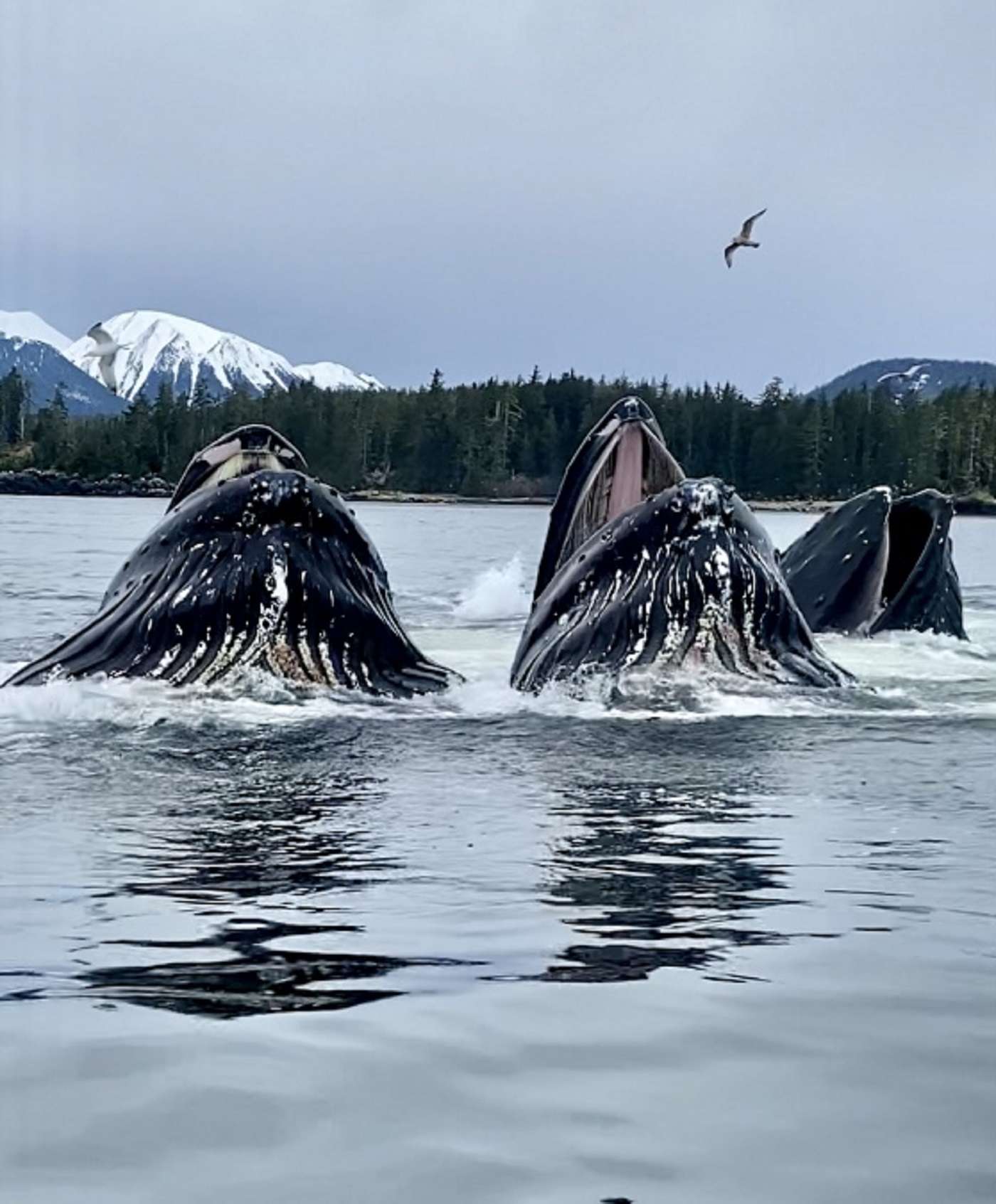
Humpback whales rise together through a bait ball, mouths open at the surface — the cooperative bubble-net behavior this route is timed to catch.
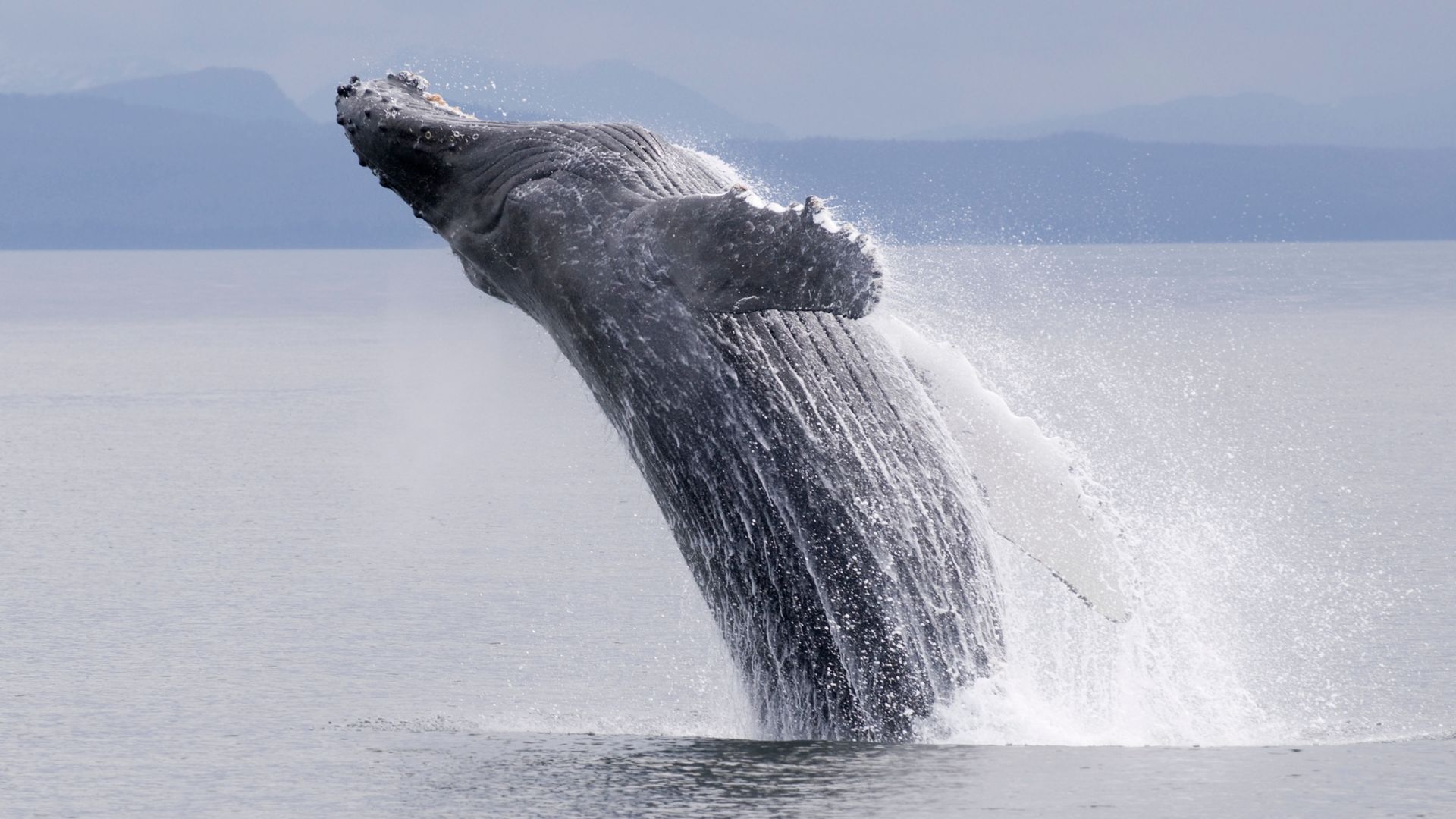
A humpback breaching clear of the water in Frederick Sound, misty mountains behind — between the bubble-net events, breaches like this keep the whole deck on watch.

The marquee day of the week, and the one the trip is timed around. Morning at anchor below Five Finger, breakfast on the aft deck, the hydrophone live the whole way. The first surface activity usually shows up in the first hour after lines off — humpback blows visible against the morning fog from a mile off. The captain reads the surface pattern (single animals, paired animals, or grouped cohorts), the hydrophone's vocalizations, and the surface-current direction, and positions the yacht outside the regulated hundred-yard zone of the feeding center.

Bubble-net events build through the morning into the afternoon. The pattern: a feeding cohort of four to twelve animals descends together on a herring school, then the lead whale exhales a rising circle of bubbles to drive the school upward against the bubble wall. The cohort rises through the trapped bait ball with open mouths — a few hundred pounds of herring through each mouth in a single push — and the surface event runs ten to fifteen seconds before the whales submerge. A good day sees three to five bubble-nets, plus paired and solitary feeding animals between the cooperative events.

The yacht spends the day in slow drift through the central Frederick Sound feeding zone — east of Five Finger, in the band between Admiralty Island and the Hugh-and-Tom rocks. The captain repositions on each event but keeps the engines slow; the bridge is in radio contact with the regional whale-research vessels through the day. Late afternoon turn into Spasski Bay on the Admiralty side or one of the smaller Chichagof-side coves for the overnight. Dinner aboard at anchor.

Day Highlights

  • Full-day drift through the central Frederick Sound feeding zone.
  • Hydrophone-driven positioning outside the regulated whale-distance band.
  • Bubble-net events through the morning and afternoon; paired and solo feeding between.
  • Overnight anchorage in Spasski Bay or a smaller side cove.
3

Day 3 of 7 · Sea lion haul-out day

The Brothers Islands and Pybus Bay

Anchorage: Pybus Bay or Brothers anchorage
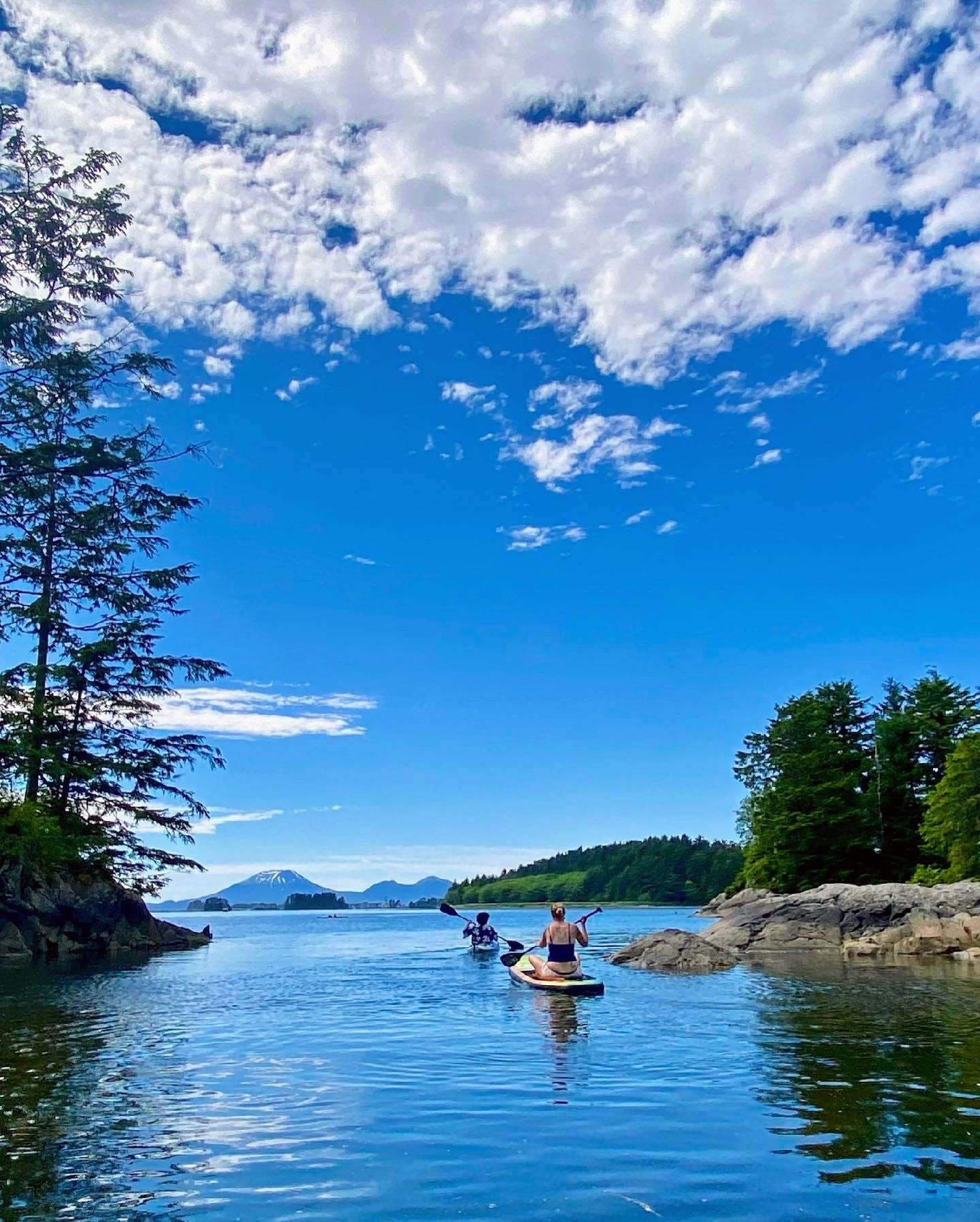
A kayak and paddleboard tucked into a rocky, spruce-lined cove — the kind of protected inlet this route's water-toy afternoons use.

Lines off mid-morning for the thirty-nautical-mile run north up Frederick Sound toward the Brothers Islands. The route stays in the wildlife-rich Admiralty side of the strait — the bridge watches for surface activity through the morning, and a mid-passage bubble-net stop is common. The Brothers themselves are two small forested islands a half-mile apart in the upper sound, with one of the densest Steller sea lion haul-outs in southeast Alaska on the rocks at the southern tip of the larger island.

The yacht stands off at the federally regulated distance — Stellers are an endangered species under the western population designation, and the haul-out is part of the official rookery network. From a quarter-mile off, the deck is loud with the colony: the bulls' deep barks, the cows and pups higher, the air thick with the smell of the haul-out. Most of the bulls run a thousand pounds; the bigger ones top eleven hundred. Eagles work the air above the rocks; black oystercatchers and harbor seals share the lower wave-cut platforms.

Afternoon turn west across the upper Frederick Sound into Pybus Bay on Admiralty's southern shore — one of the larger protected bays on the island, with a shoreline-to-water transition of pure Tongass spruce and a forest service trail running back from the inner cove. Kayaks deploy from the swim platform; the bay's protected inner sections handle a two-hour paddle with no commercial-vessel traffic to read for. Dinner aboard at anchor. Pybus is a quieter close to the wildlife-density middle of the trip.

Day Highlights

  • Thirty-nautical-mile run north past the Brothers Islands haul-out.
  • Stand-off at the Steller sea lion rookery; bulls, cows, and pups visible.
  • Afternoon move into Pybus Bay on Admiralty's southern shore.
  • Kayak excursion in the protected inner bay; dinner aboard.
4

Day 4 of 7 · Tidewater glacier day

Endicott Arm and the Dawes Glacier face

Anchorage: Wood Spit or just outside the bar
A tall waterfall drops into a fjord cove, a tender working the water below — cascades like this line the walls the whole approach to the glacier face.
A guest at the bow rail with berg ice off the bow and fog-draped peaks behind — glacial ice this route positions the yacht close to.

Morning at anchor in Pybus Bay — breakfast on the aft deck, the day's chart pre-cast for the run to Endicott Arm. Lines off mid-morning for the forty-nautical-mile run east across Stephens Passage and into the southern of the two long fjords that climb east from the Inside Passage toward the Coast Range. Endicott Arm is the sister system to Tracy Arm thirty miles north — same scale of granite-wall geography, same tidewater glacier at the head, fewer day-tour boats and less traffic on the bar at the mouth.

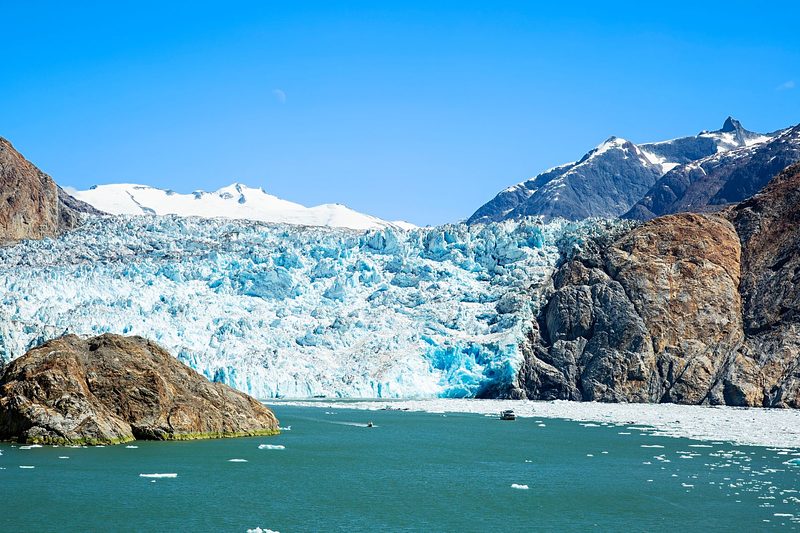
Inside the arm the route runs thirty nautical miles east between two-thousand-foot granite walls. The shore is bare granite and slate; cascades drop from the upper rim; harbor seals haul out on the floe ice in front of the glacier face. At the head of the arm the Dawes Glacier opens off the right side — a mile-wide tidewater face roughly two hundred feet high above the water. The yacht idles in to a half-mile off the face and kills the engines. The afternoon runs silent except for the work of the ice: the rifle-shot crack when a column lets go, the wash when it hits the water, the harbor seals shifting on the floes.

After an hour the captain runs the yacht slowly along the face — staying outside the regulated distance from the calving zone — and then turns and runs back out for the overnight. The standard anchorage is Wood Spit just outside the bar, the same spot the Tracy Arm route uses thirty miles north. Dinner aboard at anchor. The fjord walls stay lit by the northern twilight until past midnight at solstice; the cabin from the saloon shows the entry walls in the long light.

Day Highlights

  • Forty-nautical-mile run east across Stephens Passage to the Endicott Arm bar.
  • Thirty-nautical-mile passage up the arm between two-thousand-foot granite walls.
  • Half-mile-off positioning at the Dawes Glacier calving face; engines down.
  • Overnight at Wood Spit just outside the fjord mouth.
5

Day 5 of 7 · Brown bear day

Pavlof Harbor and the salmon-run bears

Anchorage: Pavlof Harbor (Chichagof Island)
A brown bear mid-chase through a salmon stream — the pink-salmon run brings this kind of close-up action to the falls.

Lines off mid-morning from Wood Spit for the fifty-five-nautical-mile run northwest across Stephens Passage, around the north end of Admiralty Island, and across Icy Strait into Pavlof Harbor on the eastern shore of Chichagof Island. The route's longest single passage, and the day the wildlife focus shifts from marine mammals to bears. Icy Strait's humpback density is high through the run — the bridge watches for surface activity on the way, and a mid-passage feeding stop is common in the late-June-into-July window.

Pavlof Harbor is the marquee brown bear stop on the route — a protected anchorage at the foot of a salmon stream that runs a quarter-mile inland to a set of low falls. From mid-July through August, the pink-salmon run stacks at the falls, and the brown bears come down to feed. The yacht anchors in the harbor a few hundred meters off the stream mouth; the tender lands at the beach, and the boardwalked Forest Service trail reaches the falls viewing area in fifteen minutes. The distance from the bears at the platform is maintained at the federally mandated minimum.

Bears, eagles, and sometimes wolves work the same waterway — Chichagof Island carries one of the densest brown bear populations on Earth, and the falls bring the population concentrated to the run for weeks at a time. The captain reads the conditions before authorizing the shore landing. On a quieter day the bears feed for hours within view of the platform; on a busier day the platform itself is full and the timing matters. Back to the yacht for lunch, afternoon at anchor with paddleboards down for the protected upper harbor, dinner aboard. Overnight at anchor.

Day Highlights

  • Fifty-five-nautical-mile run northwest across Stephens Passage and Icy Strait.
  • Anchored at Pavlof Harbor with the salmon stream a few hundred meters off the bow.
  • Forest Service boardwalk trail to the falls viewing platform.
  • Brown bear viewing at the falls; dinner aboard at anchor.
6

Day 6 of 7 · Hot-spring close

Baranof Warm Springs and the slow Baranof close

Anchorage: Warm Springs Bay (Baranof Island)
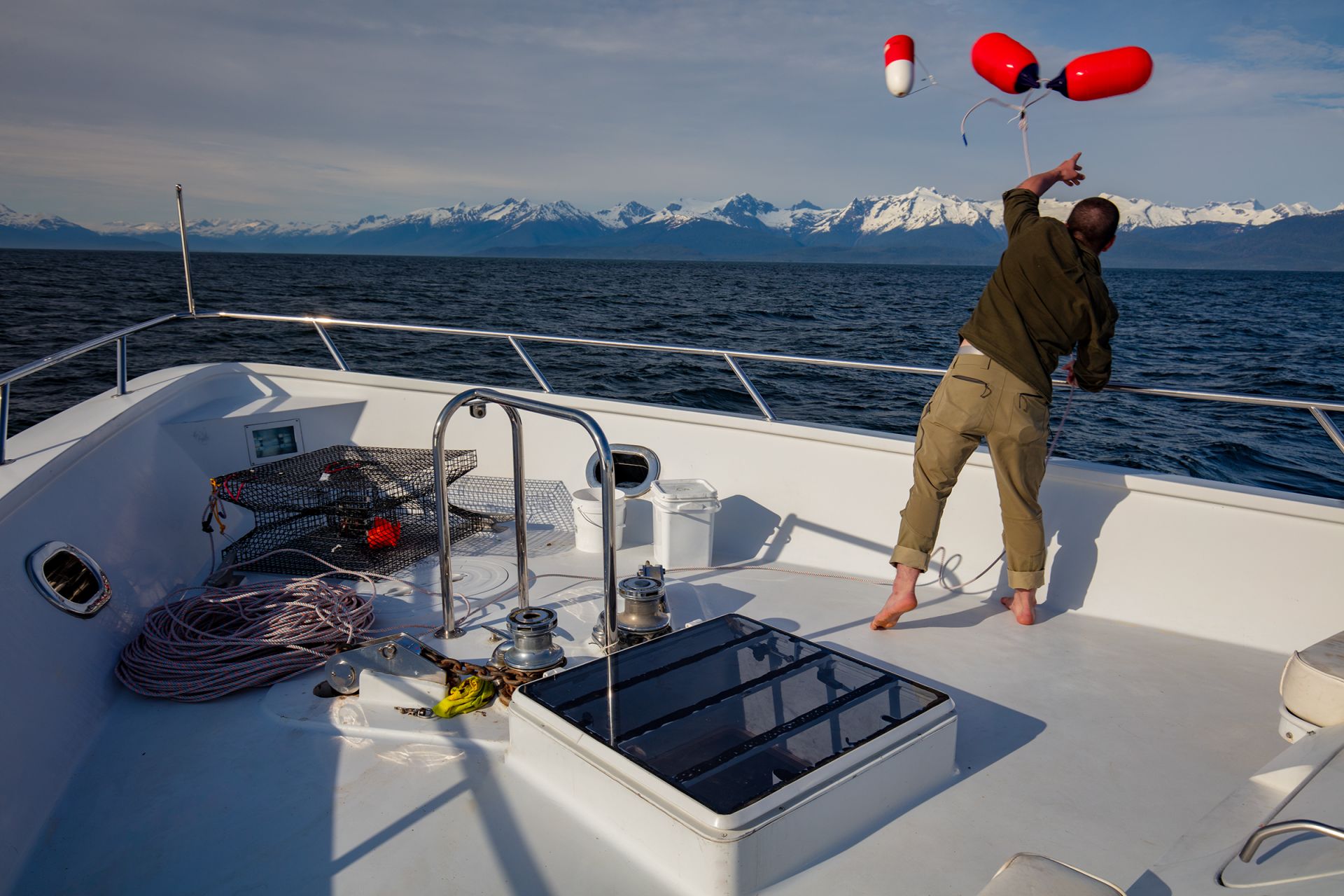
A crew member sends a crab-pot buoy off the bow, a dramatic snow-mountain panorama behind — the slower, scenery-forward register the trip settles into on the run down toward Baranof.

Lines off mid-morning from Pavlof for the forty-five-nautical-mile run southwest down Chatham Strait to the eastern shore of Baranof Island. The day shifts the trip's register from wildlife-density toward a slower close. Chatham Strait runs three hundred fifty meters deep down the middle — the deepest channel in southeast Alaska — and the geology around the run shifts from the Admiralty-Chichagof forest patterns to Baranof's higher-relief volcanic terrain. The Coast Range opens to the east; the Tongass spruce gets denser on the slopes.

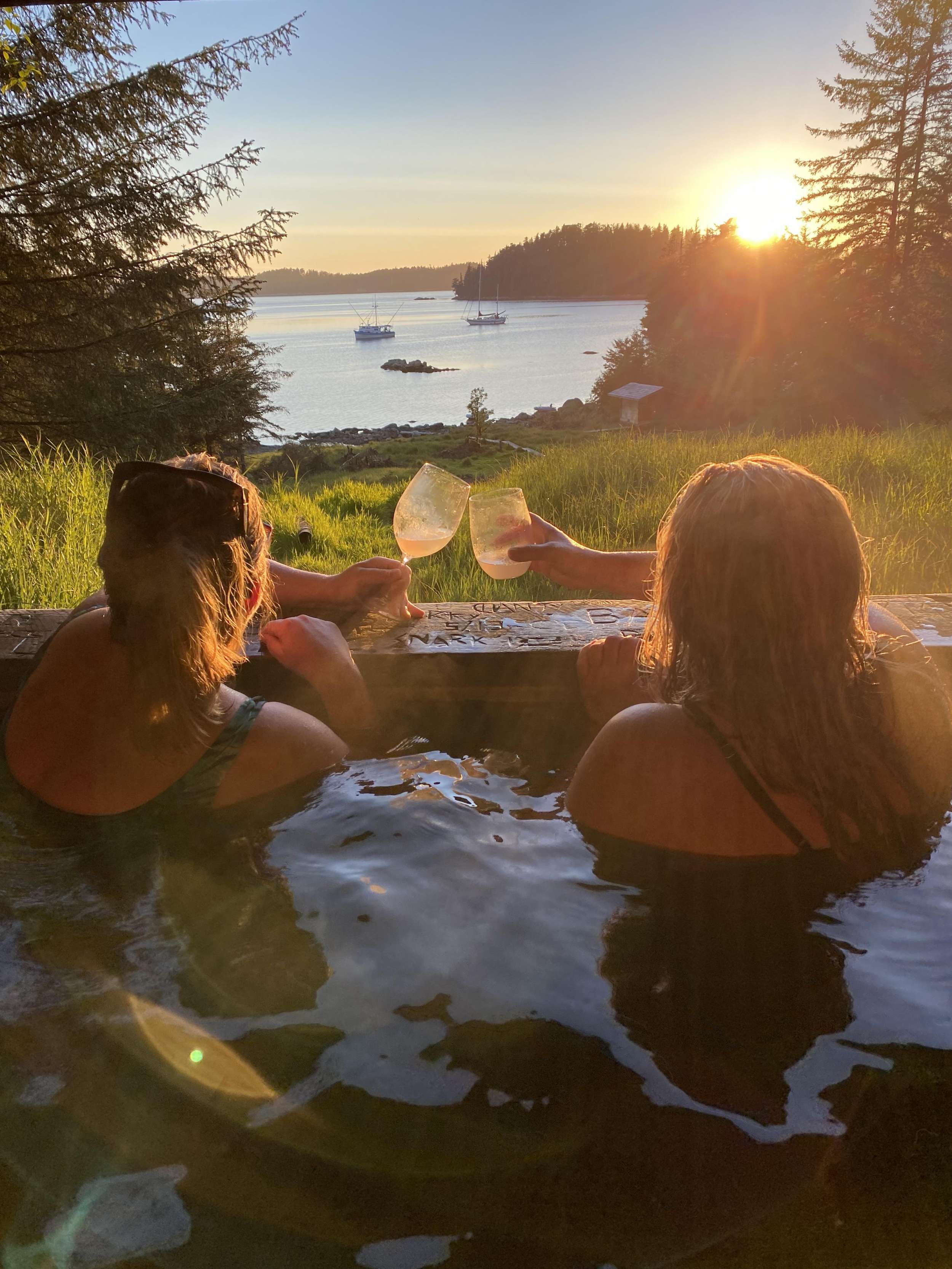
Baranof Warm Springs sits at the head of Warm Springs Bay — a small protected cove on Baranof's eastern shore with a public dock, a handful of seasonal residences, the falls dropping a hundred feet from the lake above the bay, and three small hot-spring cabins on the boardwalk above the dock. The yacht ties to the public dock or anchors out in the bay depending on conditions; tender ashore for the trail to the natural pools above the falls. The pools sit a quarter-mile up the boardwalk; the water runs hot enough to soak through to the bones after a day of layered shoreside cold.

Afternoon back to the yacht for the slower close to the week — paddleboards down in the bay, the chef working on the closing dinner, the captain reading the chart for tomorrow's run back to Petersburg. The bay is quiet enough that the saloon evenings here are part of the program rather than the wind-down. Overnight at the dock or at anchor in the bay.

Day Highlights

  • Forty-five-nautical-mile run southwest down Chatham Strait.
  • Falls and natural hot-spring pools at Baranof Warm Springs.
  • Tender ashore for the boardwalk trail to the upper pools.
  • Slower closing afternoon at anchor; dinner aboard.
7

Day 7 of 7 · Return run

Last whale-watch transit and the close back to Petersburg

Anchorage: Just outside Petersburg or at the marina
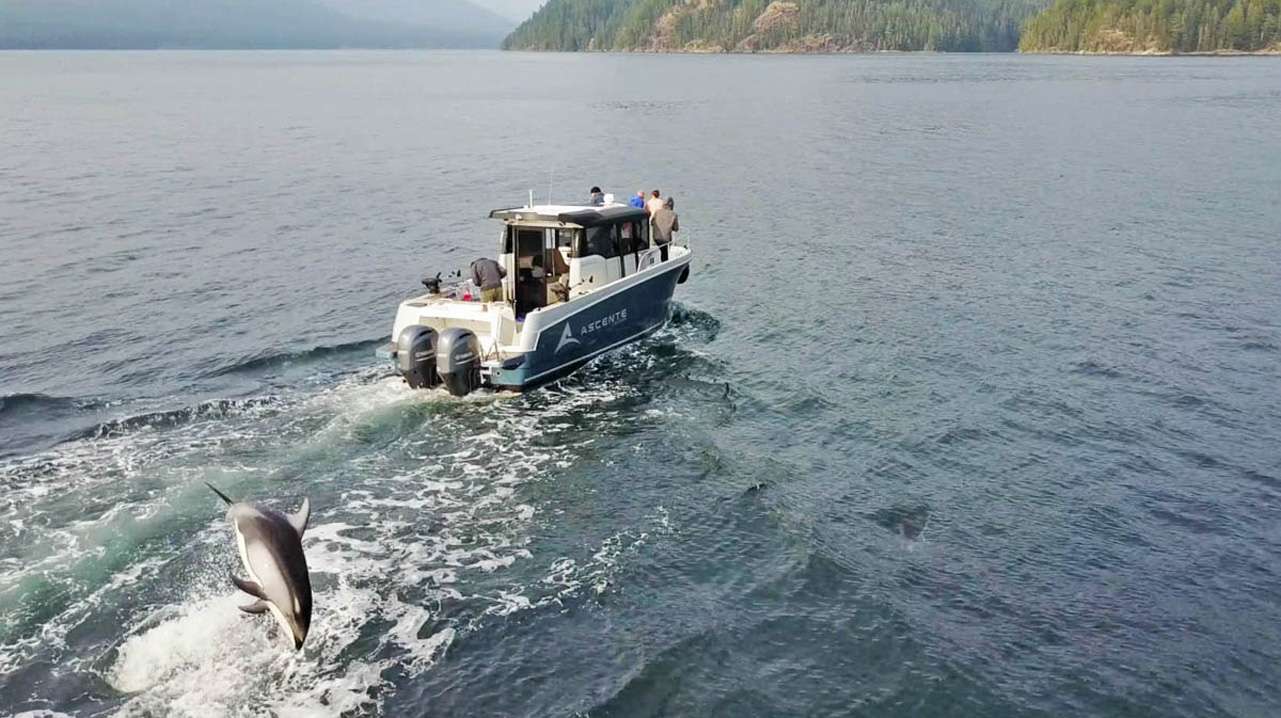
A Pacific white-sided dolphin alongside the tender — the closing-day escort through the channels.
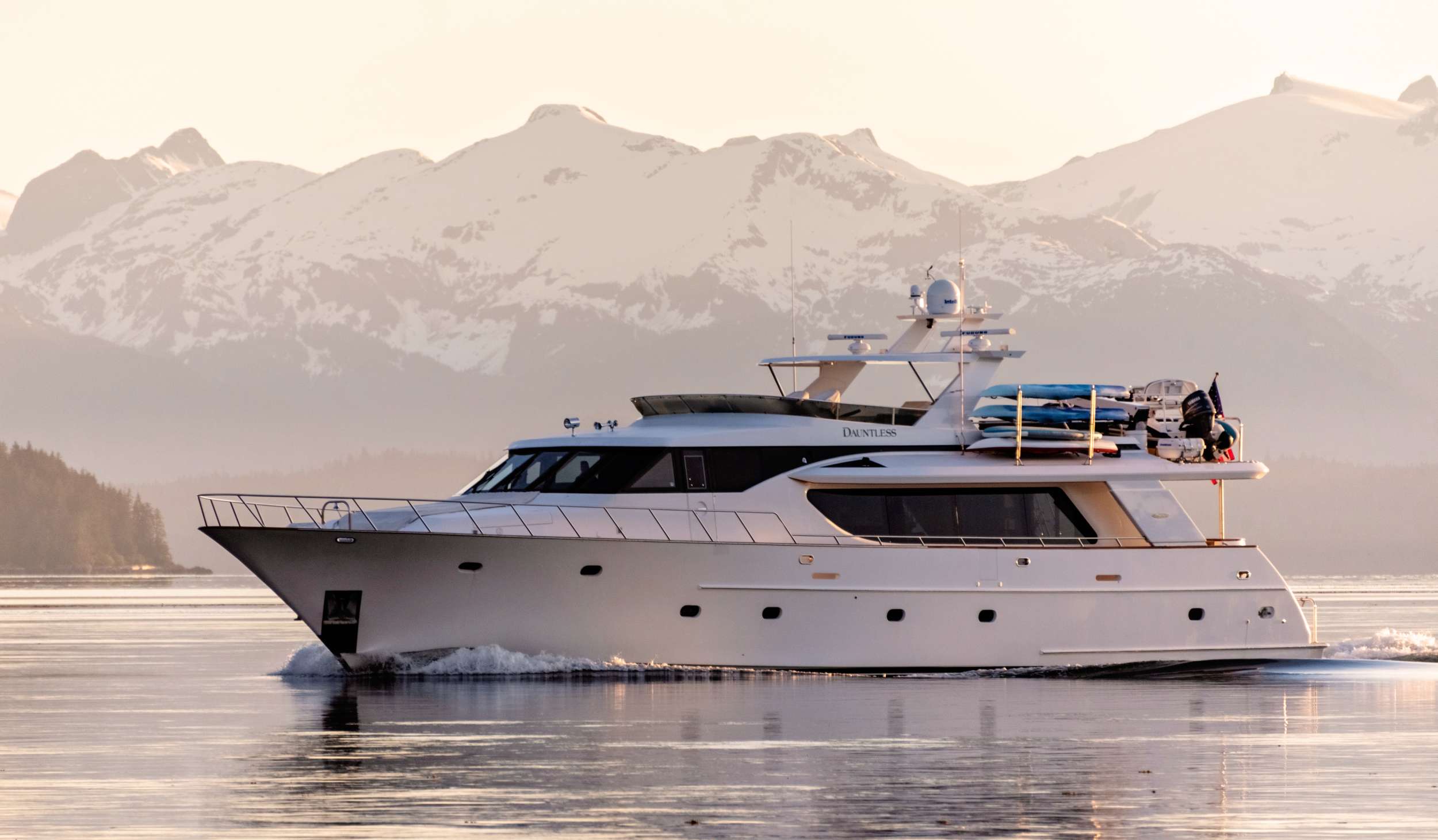
The yacht heading into her homeport of Petersburg — the closing run back into port after the week's wildlife circuit.

The final cruising day. Lines off mid-morning from Warm Springs Bay for the fifty-five-nautical-mile return run east across Chatham Strait, into Frederick Sound, and south back toward Petersburg. The route's last whale-watch windows run through the morning — Frederick Sound holds humpback density through the back half of the season, and a transit-day bubble-net or feeding event is common into late July. The captain holds slow watch through the central Sound on the return.

By late afternoon the yacht is closing on Mitkof Island and the approach to Petersburg's North Harbor. The captain shapes the final-evening anchorage based on the morning's departure logistics — most charters tie the yacht at the marina for the closing night so the morning's transfer is short, but a final at-anchor evening in the lee of Mitkof is the alternative if the group's flights run later in the day.

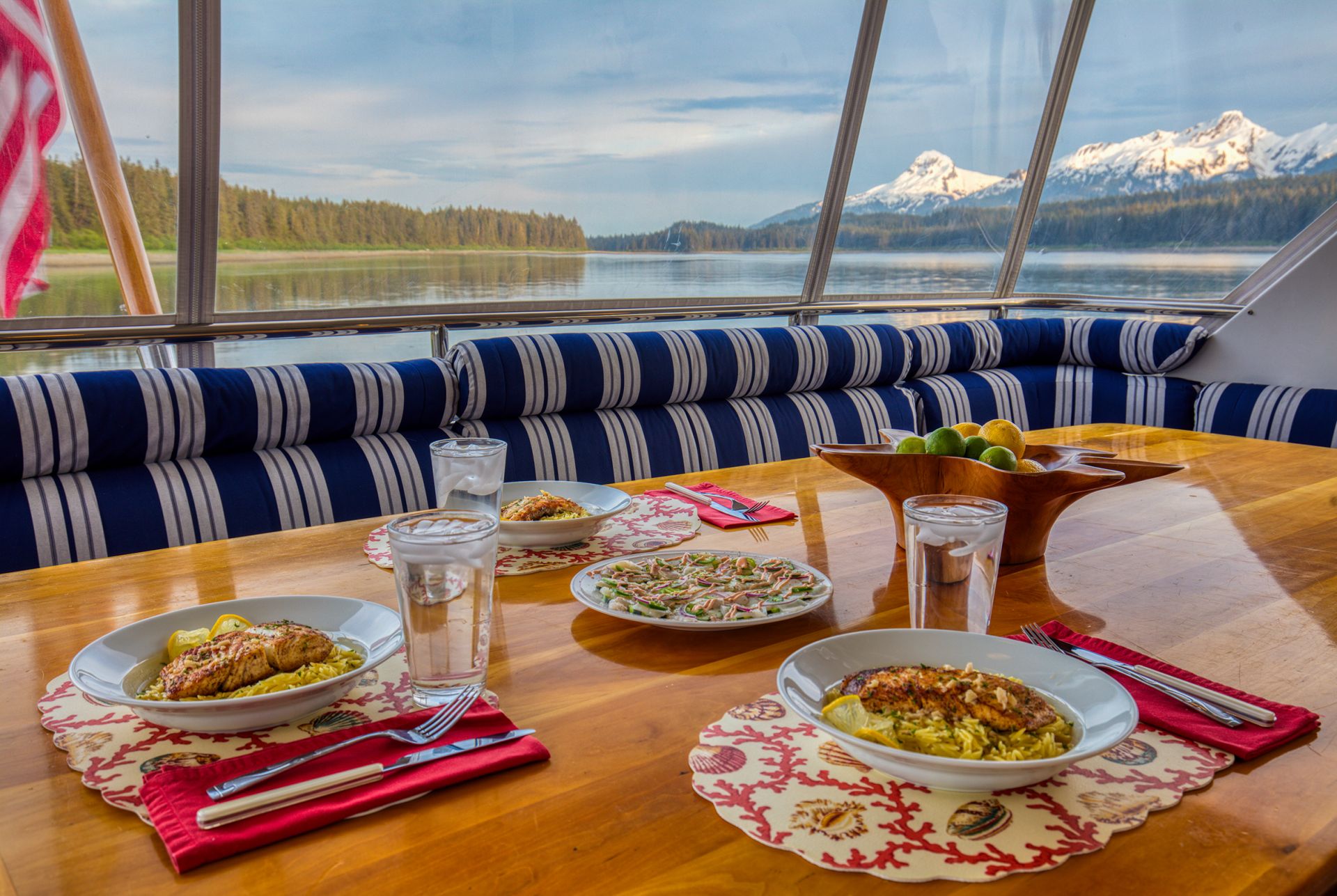
Closing dinner aboard. The chef's plating tends to lean on the week's catch — Frederick Sound halibut, Chichagof spot prawns, the pink salmon from the Pavlof run — and the captain runs through the trip's wildlife log over coffee after. Most charters book Alaska as a multi-year trip — guests who run the Frederick Sound route this year usually return for the Inside Passage and Glacier Bay route in a subsequent season.

Day Highlights

  • Fifty-five-nautical-mile return run east through Frederick Sound.
  • Last humpback windows on the central Sound transit.
  • Final anchorage at Petersburg's North Harbor or in the Mitkof lee.
  • Closing dinner aboard; trip wildlife log walk-through with the captain.
8

Day 8 · Departure

Disembarkation and onward transfers

The yacht underway on the final run in, a dramatic peak on the horizon — the last stretch before the dock and the transfer to the airport.

Breakfast aboard, luggage off, and a straightforward transfer to PSG. The airport is five minutes from North Harbor by car; the crew handles the move, with pre-booked private transfers for any flights with restricted timing. Petersburg connects daily to Juneau (JNU) and on most days direct to Seattle (SEA) on Alaska Airlines; from Seattle onward connections are single-flight days to most US hubs.

The wildlife week ends the way it usually reads best — the trip's strongest memories are out on the water rather than ashore. Most groups that run this route come back for the Inside Passage and Glacier Bay charter on a subsequent trip; the captain typically walks through the second-charter option with the group before the dispersal at the marina.

Frequently asked

How reliably will we see bubble-net feeding?
In Frederick Sound between mid-May and late July, very reliably. Bubble-net feeding is a learned cooperative behavior — a small group of humpbacks (usually four to twelve animals) coordinates a dive, exhales a circle of bubbles to corral a school of herring, then surfaces through the bait ball with open mouths. The behavior is rare almost everywhere humpbacks feed; Frederick Sound is the densest location in the world for it. A standard mid-June through mid-July week sees three to six bubble-net events, plus dozens of individual humpback sightings on transit days. Most yachts working this coast deploy a hydrophone — the whales make a distinct ascending sound during the dive that signals a bubble-net is forming. The captain reads the hydrophone, repositions the yacht outside the regulated distance, and the deck has the show in front of it for the rise.
What's the difference between this route and the Inside Passage charter?
Wildlife focus versus the marquee Alaska brand-recognition photographs. The Inside Passage charter is built around the Glacier Bay permit, the South Sawyer face in Tracy Arm, and the marquee tidewater glaciers — geological-density week. Frederick Sound is built around the bubble-net feeding window, the Brothers Islands sea lion haul-outs, brown bears at Pavlof Harbor, and Endicott Arm's Dawes Glacier — wildlife-density week. Frederick Sound trades the Glacier Bay permit (which requires booking a year ahead for a specific date) for the wildlife calendar's flexibility (the captain reads bubble-net activity reports the night before and shapes the next day around them). Most repeat Alaska guests run both routes across separate seasons; the wildlife week is usually the one that captures the trip's strongest memories.
Are the whales actually that close, and is it safe?
Federal law requires vessels to maintain a hundred-yard distance from a feeding humpback. The bubble-net itself is unpredictable — the whales surface where the dive's bubble ring brought the bait ball, which can be a few yards from where the dive started or a hundred yards away. Yachts working the route hold the regulated distance from the dive's apparent center; when the surface event happens, it can read as much closer than a hundred yards because of the whales' size (forty-five tons each), the angle from a low yacht deck, and the spray and noise of fifteen tons of fish-eating ocean a few hundred feet off the rail. The captain has the legal duty to maintain distance, and the yachts that work this fleet have spent multiple seasons reading the same feeding cohorts. Safety is genuinely a non-issue; the proximity is the trip's wow moment, not the risk.
When in the season is the bubble-net window strongest?
Mid-June through mid-July is the densest window. The behavior starts in late May as the humpbacks return from their Hawaiian and Mexican wintering grounds and ramps as the herring schools build through the early summer. The peak feeding density usually runs from about June 10th through July 20th — bubble-nets are most frequent, feeding cohorts are largest, and individual humpback sightings outside the cohorts are at their highest count. The behavior tapers in late July as the herring move on; by August the feeding has shifted to other patterns and individual humpback sightings stay high but bubble-net density drops. May charters see the early-season build with smaller cohorts and longer drift times between events. The captain matches the week to the activity reports — Auke Bay Whale Photo and the citizen-science network log surface events daily through the season.
Do we still get to see glaciers and bears on this route?
Yes — Endicott Arm's Dawes Glacier face is the marquee tidewater stop midweek (the same scale and register as Tracy Arm's South Sawyer, with fewer day-tour boats), and the bear-viewing day at Pavlof Harbor sits in the back half of the week. The Dawes face is one of the largest tidewater glaciers in southeast Alaska that doesn't require a Glacier Bay permit; the yacht positions a half-mile off and kills the engines the same way Tracy Arm's south face works. Pavlof Harbor's brown-bear stack-up at the falls runs from mid-July through August on the pink-salmon run — June trips see the run starting, July and early August see the peak. The route delivers the full Alaska tableau (whales, glaciers, bears, sea lions, eagles) inside one week; the lead is the whales rather than the glaciers.
What's the best timing if we want to combine humpbacks with bear viewing?
Mid-July is the overlap window. Bubble-net feeding density is still strong (the herring schools are still on the eastern shore of Frederick Sound), and the pink-salmon run at Pavlof Harbor's falls is starting (the bears typically arrive within a few days of the first salmon push). The week of July 10th through July 25th catches both peaks more often than not. Mid-June trips are the strongest bubble-net experience but the bears are not yet at the streams — most Chichagof bears are still feeding on the sedge meadows in late spring. Mid-August trips are the strongest bear-viewing experience but the bubble-net density is winding down. The captain reads the season's reports and matches the week to the trip's lead — if the group's brief is wildlife-driven and the dates are flexible, mid-July is the answer.

Ready to set sail through Frederick Sound and the central Inside Passage?

Every itinerary we send is custom-tailored. Tell us your dates, the size of your group, and what you want out of your charter—we'll handle the rest.