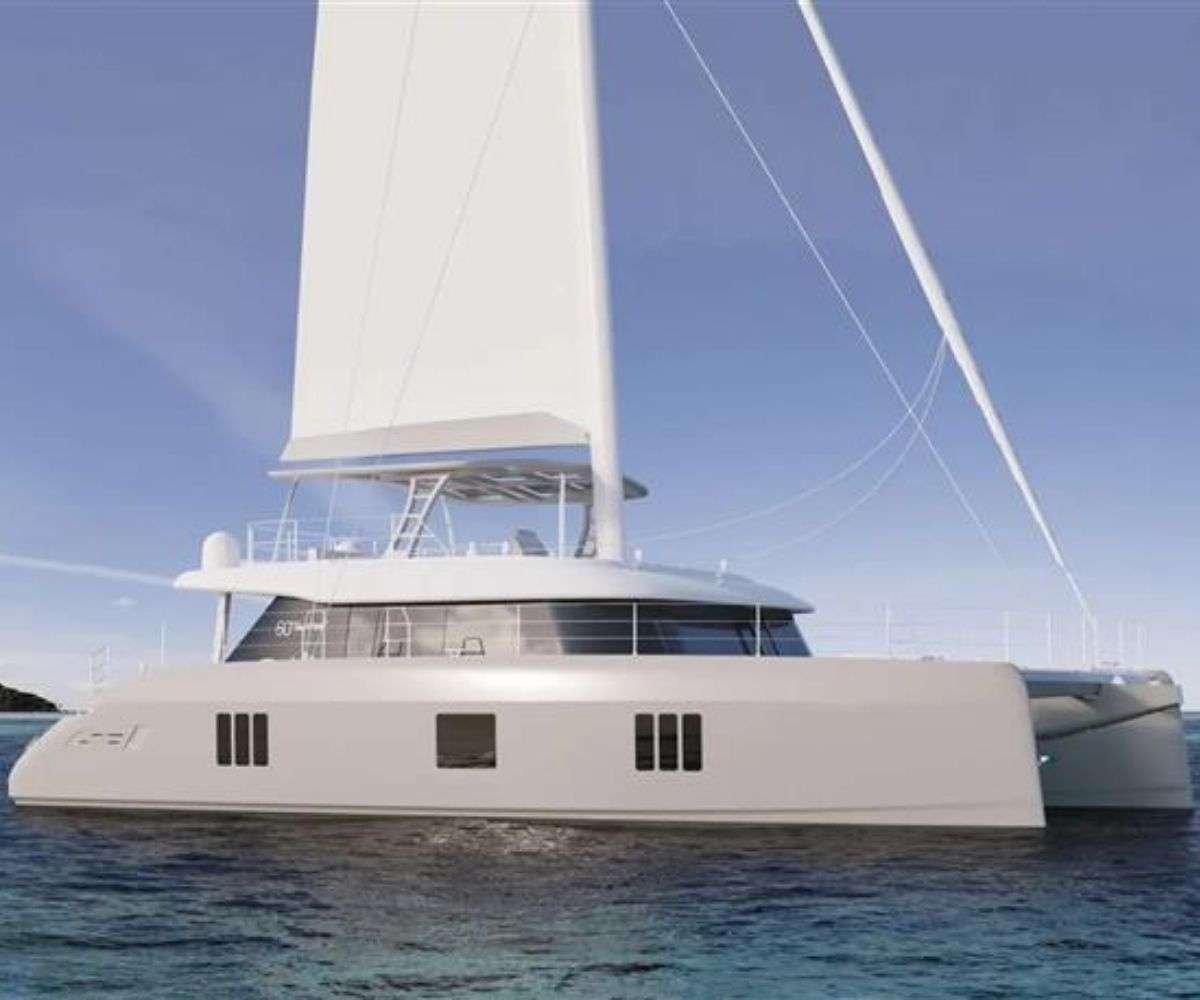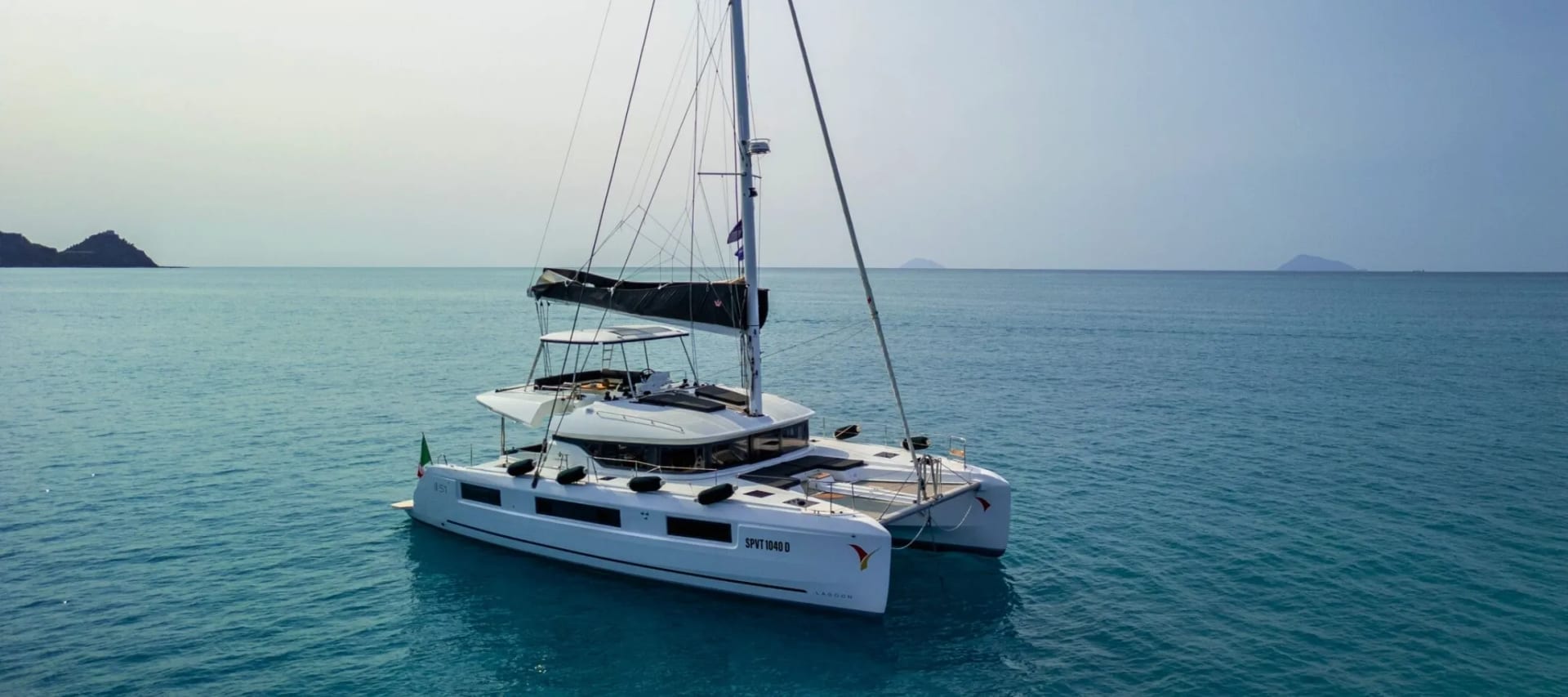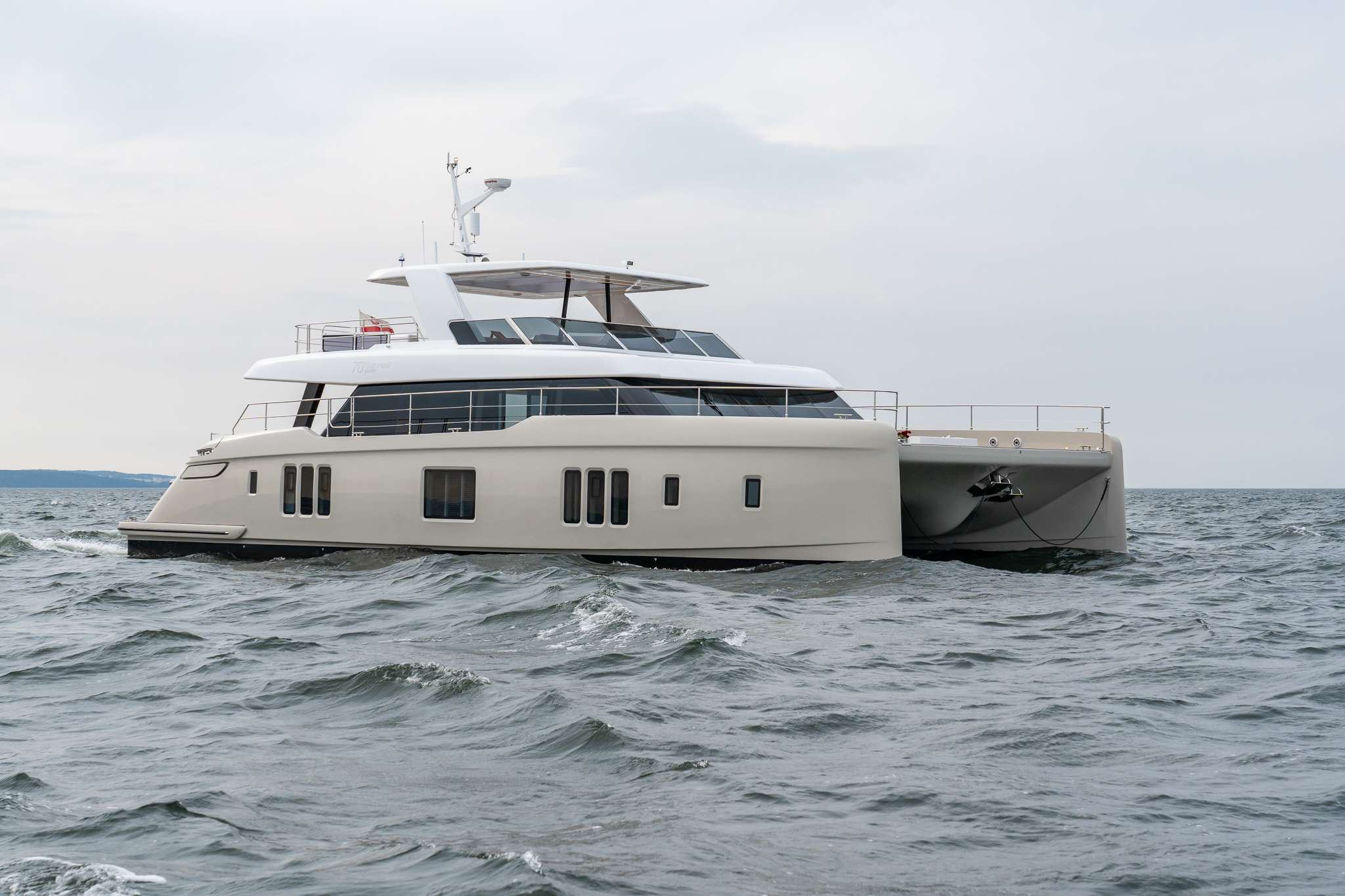

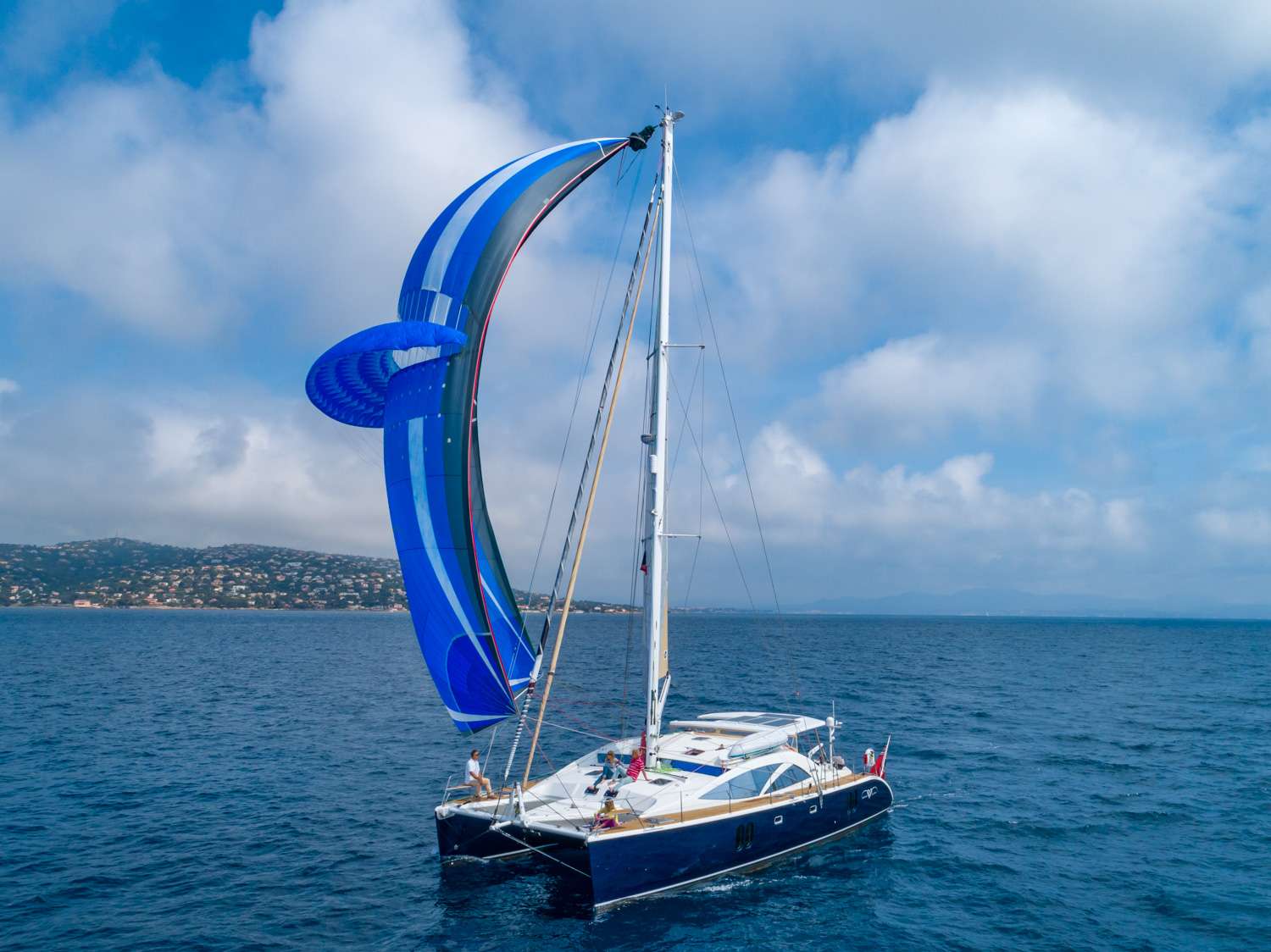
Curanta Cridhe
50FT · SAILING CATAMARAN
Desde €20,000/semana
6 Guests · 3 Cabins
Caribbean
Eastern Mediterranean
Western Mediterranean
South Pacific
United States
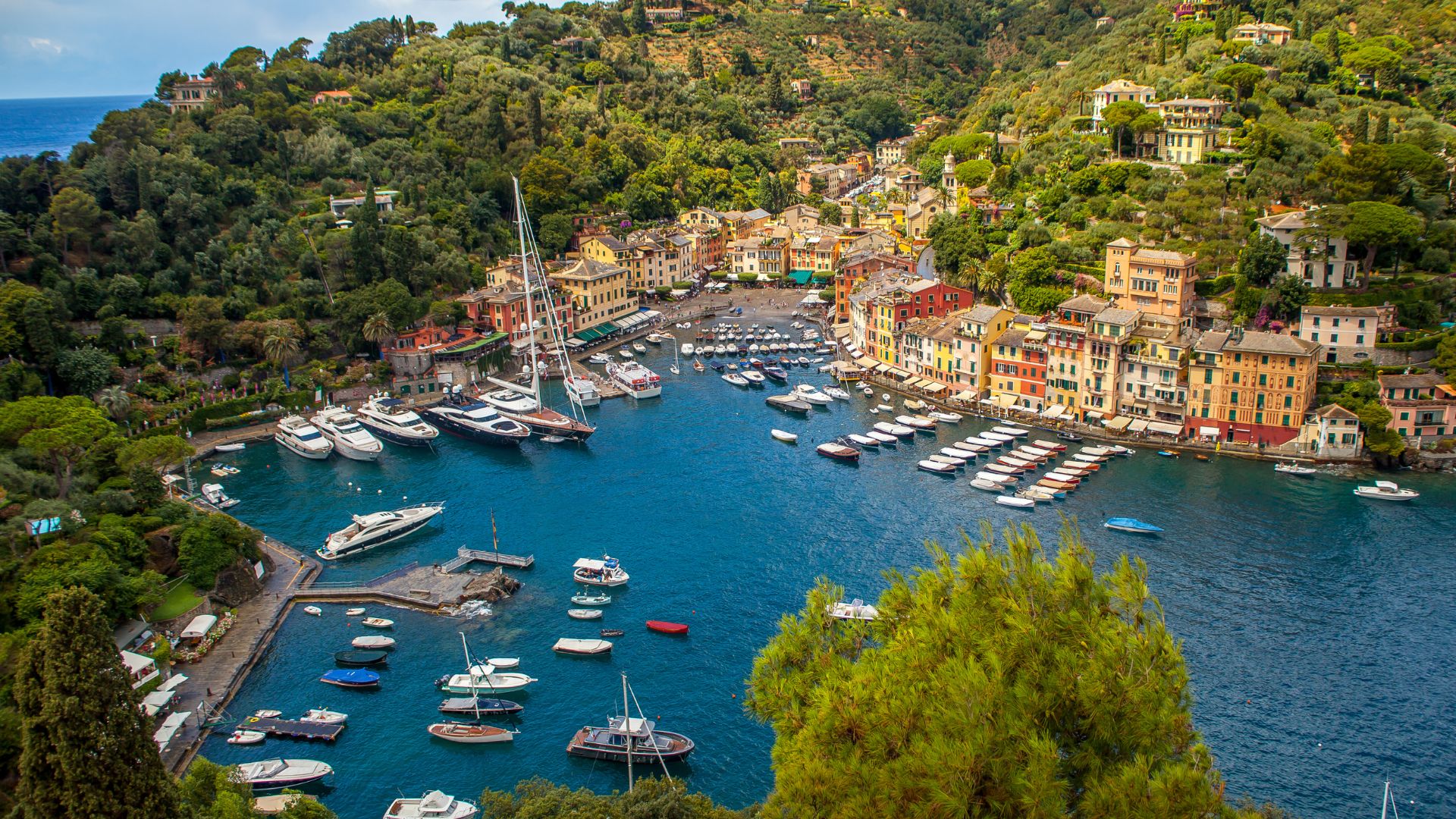
Una semana italiana más tranquila que Amalfi o la Côte d'Azur — el puerto pastel de Portofino desde la popa, los pueblos acantilados de las Cinque Terre vistos desde la bahía, y Portovenere iluminada sobre la proa a la hora de cenar. El archipiélago toscano queda a medio día hacia el sur para quienes quieran prolongar el viaje.
Por qué la Riviera Italiana
La Riviera Italiana es la respuesta para quienes quieren vivir el verano italiano sin la densidad de Amalfi en agosto. La zona de navegación se extiende desde la frontera francesa hacia el sur, hasta Toscana — Portofino y Santa Margherita en el extremo más glamuroso y boutique, Cinque Terre y Portovenere en el tramo central de los pueblos sobre el acantilado, y Elba y Argentario como etapa sur de menor afluencia. Las distancias son cortas. La mayoría de las semanas adoptan un ritmo de travesías matinales de tres a cuatro horas, largos almuerzos al ancla y veladas en los puertos. La identidad gastronómica es ligurina, no italiana genérica: pesto Genovese en el lugar donde nació, focaccia, anchoas, trofie y el sciacchetrà elaborado con las viñas en terrazas sobre el mar.
Tres rutas cubren la zona de navegación, y la adecuada depende del grupo y las fechas. La ruta clásica de las Cinque Terre y Portofino es la primera semana ideal en la Riviera Italiana — con base en Génova o Santa Margherita, recorriendo la costa de Portofino y el Tigullio, Vernazza y Monterosso desde el agua, y Portovenere como el giro hacia el este. La ruta por la Liguria Oriental y el Archipiélago Toscano se adentra hacia el sur, en Elba, Giglio y Argentario, para una semana con menos afluencia, más bahías y menos cadencia de puerto. La ruta de sentido único de la Riviera Italiana a la Côte d'Azur es el cruce premium hasta Mónaco, y es la que antes se reserva por cómo encaja en la rotación estacional de la flota del Mediterráneo occidental. Analizamos la ruta correcta antes de hacer la reserva.
Esta es la zona de navegación para parejas y grupos que quieren los pueblos italianos sobre el acantilado sin el agobio de agosto. Los yates a motor y los catamaranes funcionan bien; los veleros afrontan cómodamente las travesías en mar abierto hacia Toscana. Junio y septiembre son las semanas más recomendables. La combinación de la Riviera Italiana con la Riviera Francesa es el itinerario largo premium, y la extensión toscana hacia el sur es la alternativa más tranquila para un viaje en yate más largo — cuál es la opción correcta es una conversación que tenemos con cada cliente a medida que se definen el yate y las fechas.
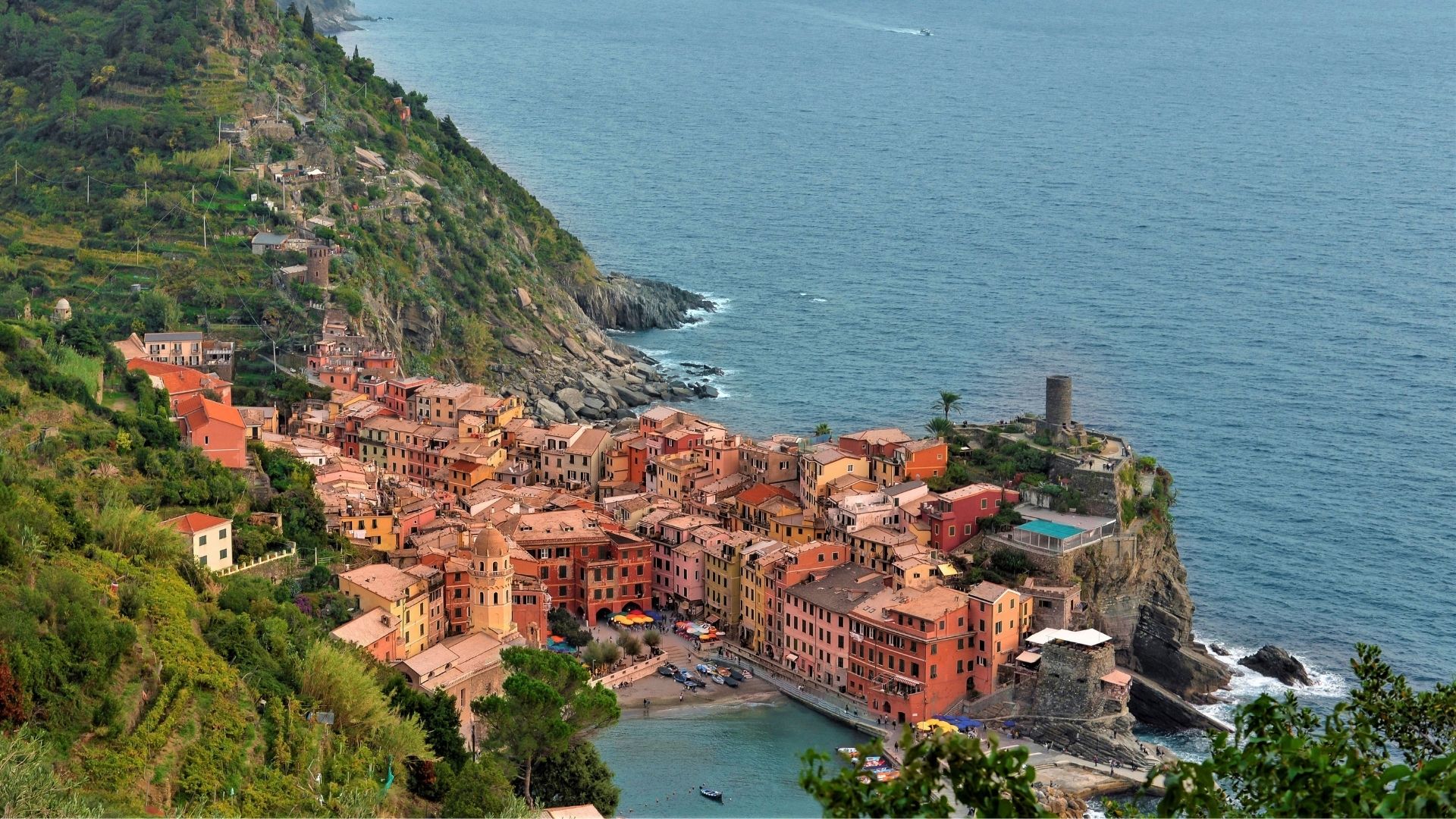
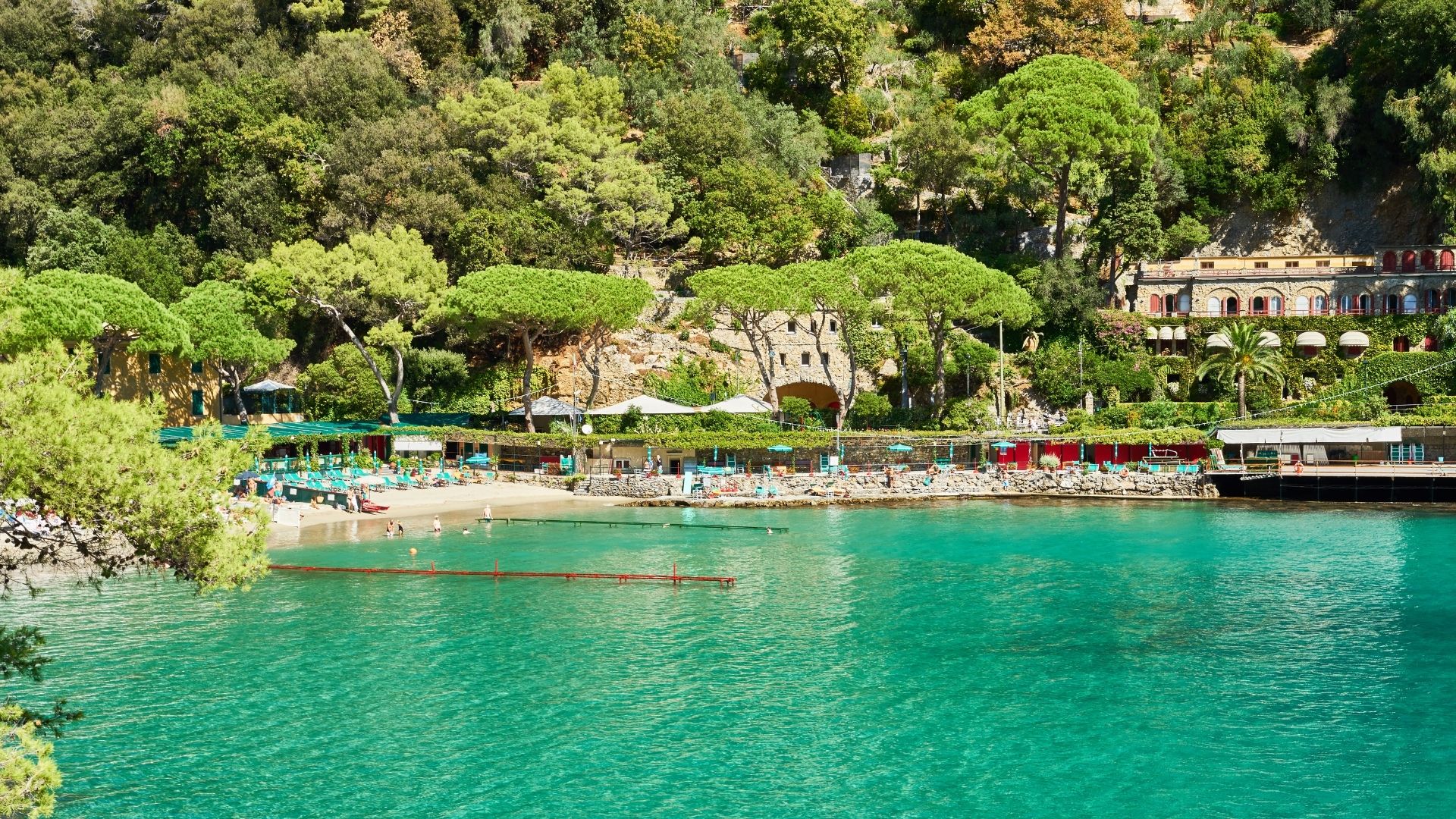
Cuatro características que distinguen la semana ligurina del resto del oeste de Italia.
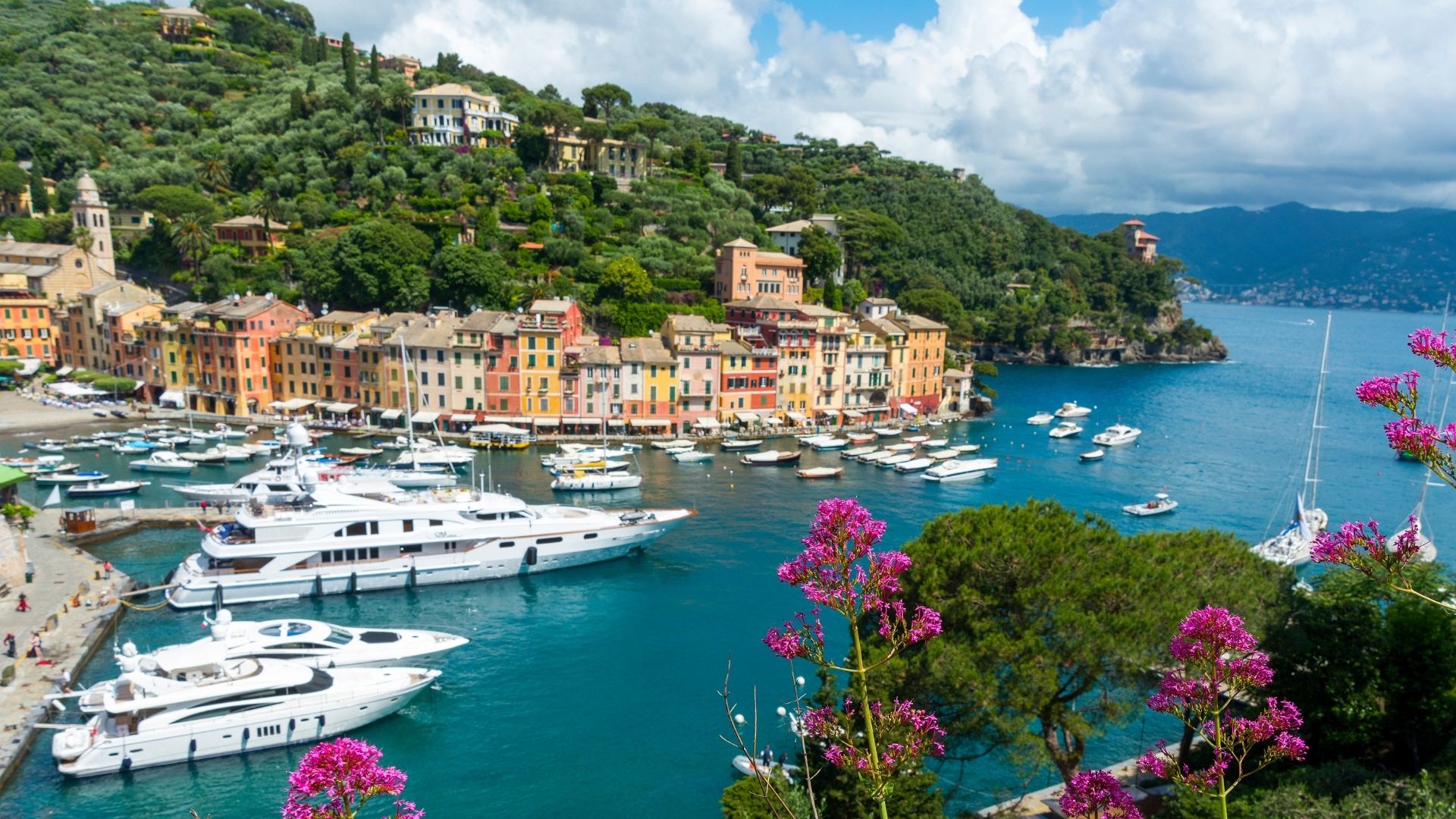
Portofino es la parada de puerto boutique con la que el resto de la costa se mide — fachadas pastel, una dársena compacta y una piazzetta que se recorre en cinco minutos. Santa Margherita y Paraggi están a un corto trayecto en bote auxiliar hacia el oeste, y forman la pareja de fondeo más tranquila para pasar la noche cuando el muelle de Portofino está completo. Aperitivo sobre el puerto, cena en tierra y luego una noche más serena al ancla.
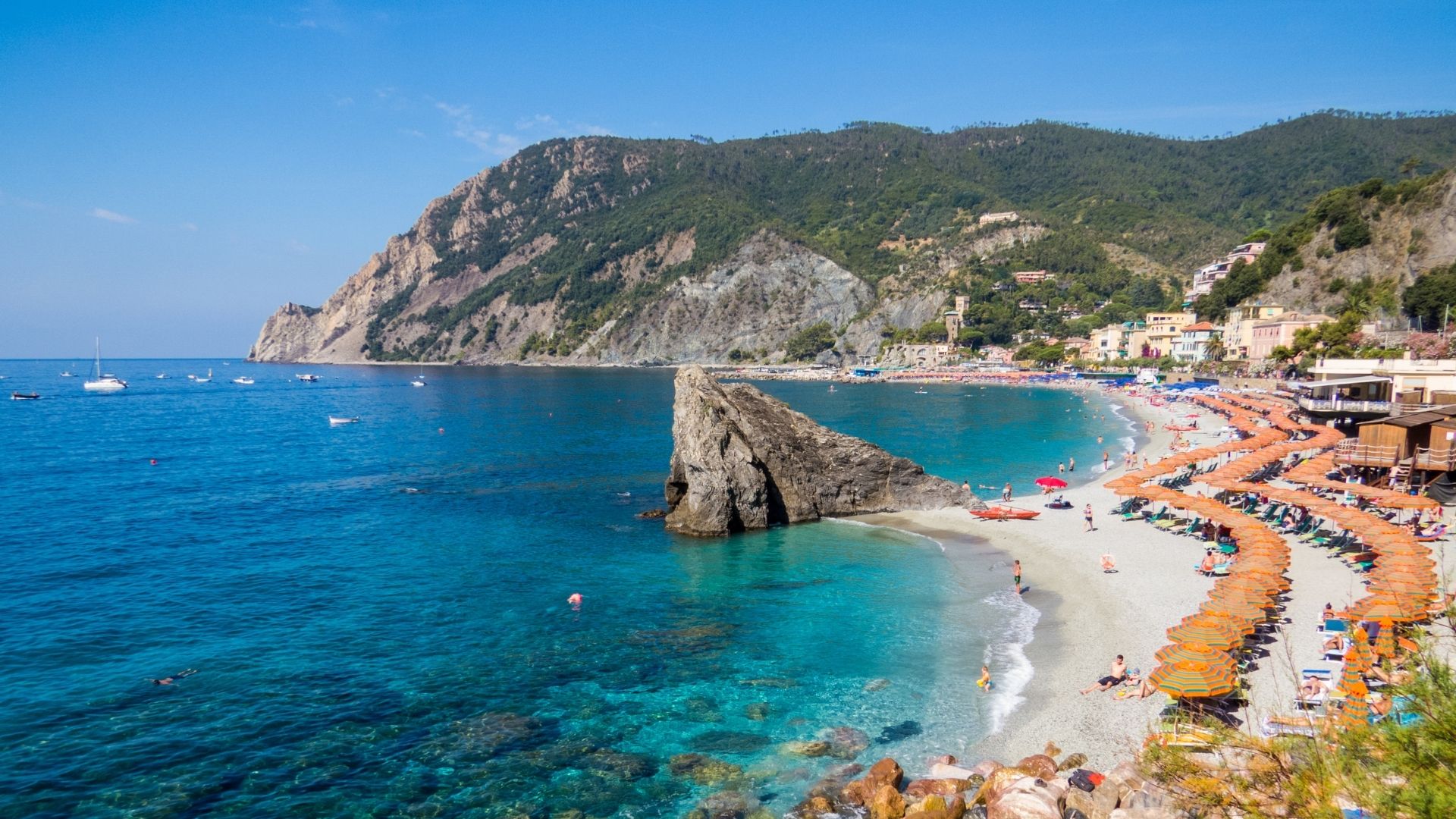
Los cinco pueblos de las Cinque Terre son la imagen más icónica de esta costa vista desde tierra — pero desde el agua se perciben de otro modo. El yate ancla frente a Vernazza o Monterosso, el bote auxiliar lleva a tierra para un espresso o un almuerzo antes de que lleguen los trenes, y el barco zarpa de nuevo antes de que las multitudes del ferry llenen el puerto por la tarde. El acceso exclusivo en yate es lo que transforma las Cinque Terre de postal a experiencia vivida.
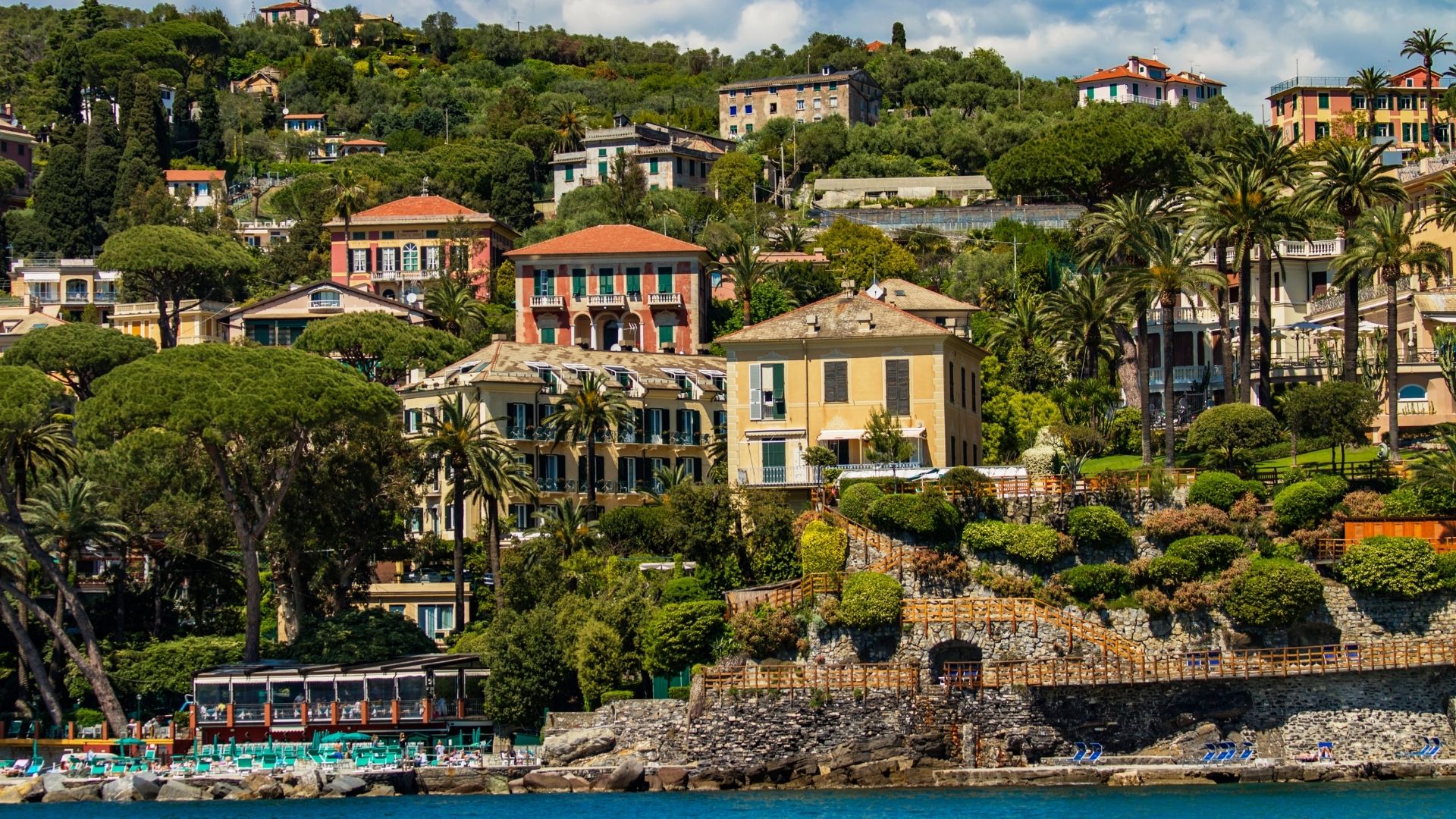
Portovenere cierra el extremo oriental de la ruta ligurina — fachadas pintadas apiladas a lo largo de un malecón, una iglesia genovesa sobre las rocas en la boca del puerto, y el Golfo de La Spezia abriéndose hacia el sur. Palmaria y Lerici se asoman al otro lado de la bahía para una noche más tranquila. El puerto es una de las mejores paradas para cenar de toda la costa, y la bahía fue donde Shelley y Byron amarraban sus embarcaciones — de ahí el nombre que quedó: el Golfo de los Poetas.
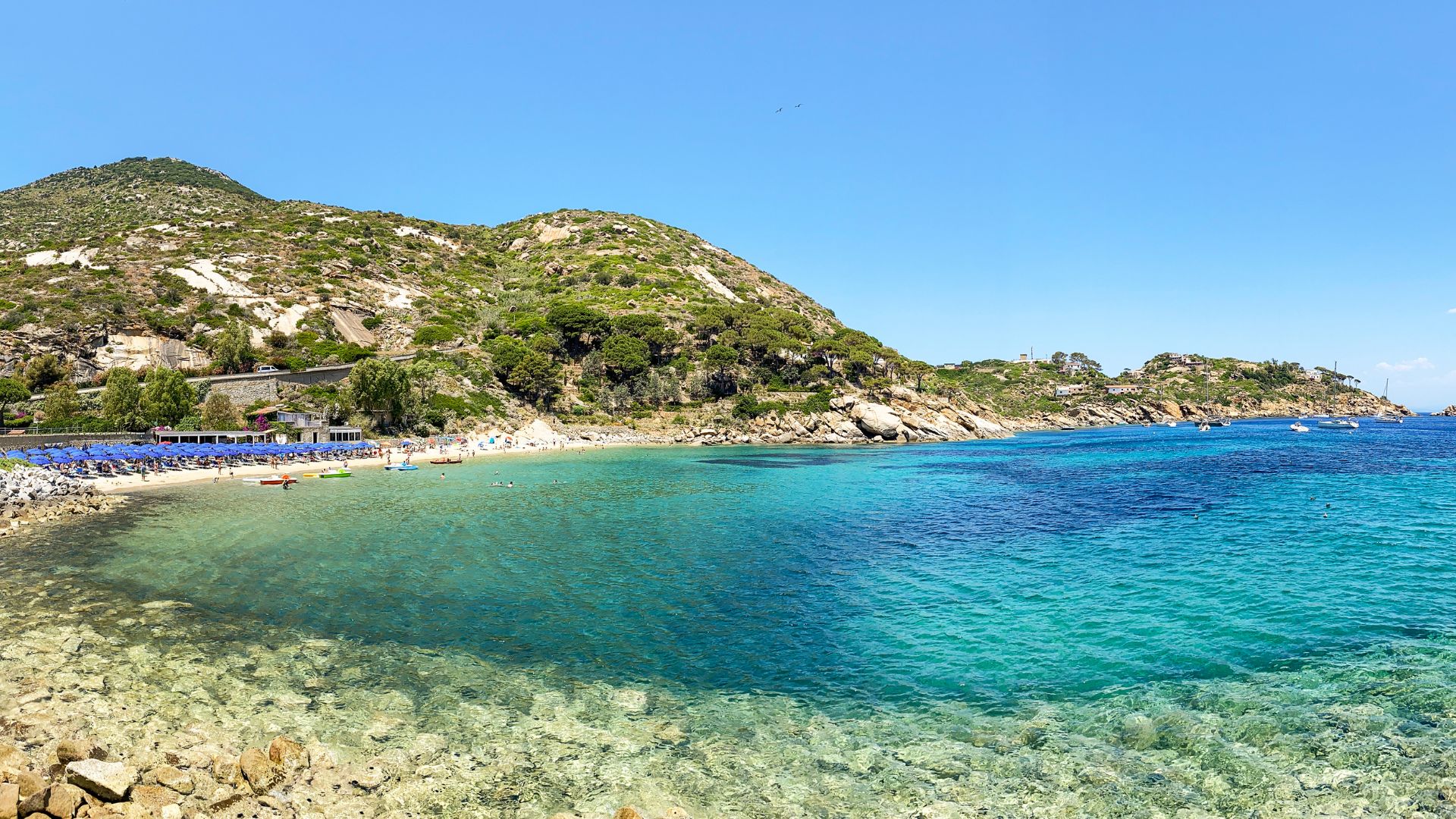
Al sur de La Spezia, la costa se convierte en Toscana. Las calas de Elba son la primera prueba, la península de Argentario la segunda, y Giglio es la isla más tranquila que queda entre ambas. Las distancias aumentan en este tramo — travesías de medio día en lugar de saltos de dos horas — y el carácter de la semana pasa de los pueblos portuarios a las calas de baño. Esta es la extensión para una segunda semana en un viaje en yate más largo, o la alternativa de menor afluencia para una primera reserva.
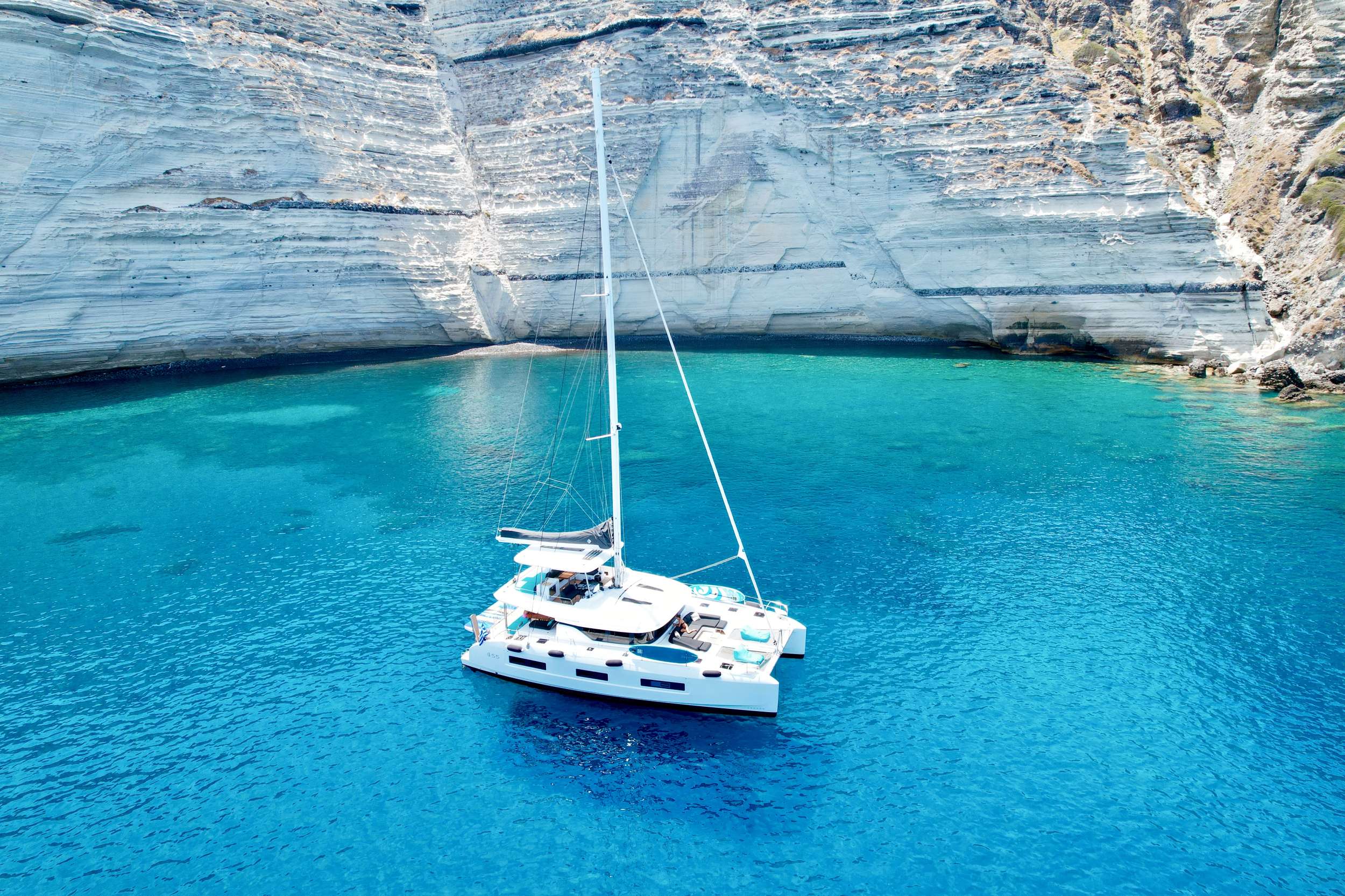
A hand-picked selection of crewed charter yachts for Italian Riviera & Tuscany — yachts and crews we know firsthand.
Your week is shaped around your group's interests, the season, and the conditions on the water — your captain tailors the days as they unfold. Treat these itineraries as starting points for inspiration.
Itinerario con Tripulación · Riviera Italiana y Toscana
Esta es la semana clásica de Liguria — un yate con tripulación durante siete noches que parte desde los alrededores de Génova, recorre Portofino y Santa Margherita, avanza hacia el este por San Fruttuoso y el Golfo de Tigullio, se adentra en las Cinque Terre y Portovenere, y luego regresa. Unas setenta millas náuticas de punta a punta, sin ninguna etapa de más de veintidós. El recorrido es compacto para los estándares mediterráneos, y eso es precisamente el punto. El atractivo aquí no es la travesía en mar abierto; es una costa donde el yate le da a los pueblos su ritmo natural — acceso temprano a los puertos antes de que lleguen los trenes, tardes largas sobre el agua una vez que las multitudes del ferry se dispersan.
La mayoría de los grupos que reservan esta ruta están eligiendo entre Amalfi y la Riviera, y se inclinan por la opción más tranquila. Portofino ofrece el glamour del puerto boutique. Las Cinque Terre representan ese mundo de pueblos en acantilado que define la costa. Portovenere y Lerici cierran la semana sin que haya que convertir cada hora en una obligación turística. Los yates a motor y los catamaranes funcionan muy bien — los acantilados bloquean los vientos predominantes, las distancias son cortas, y la cultura de atracar de popa se adapta a ambos tipos. Junio y septiembre son los meses más recomendables. Julio y agosto también funcionan, pero la alta densidad de visitantes en las Cinque Terre requiere que el yate dicte el ritmo en lugar del horario de trenes.
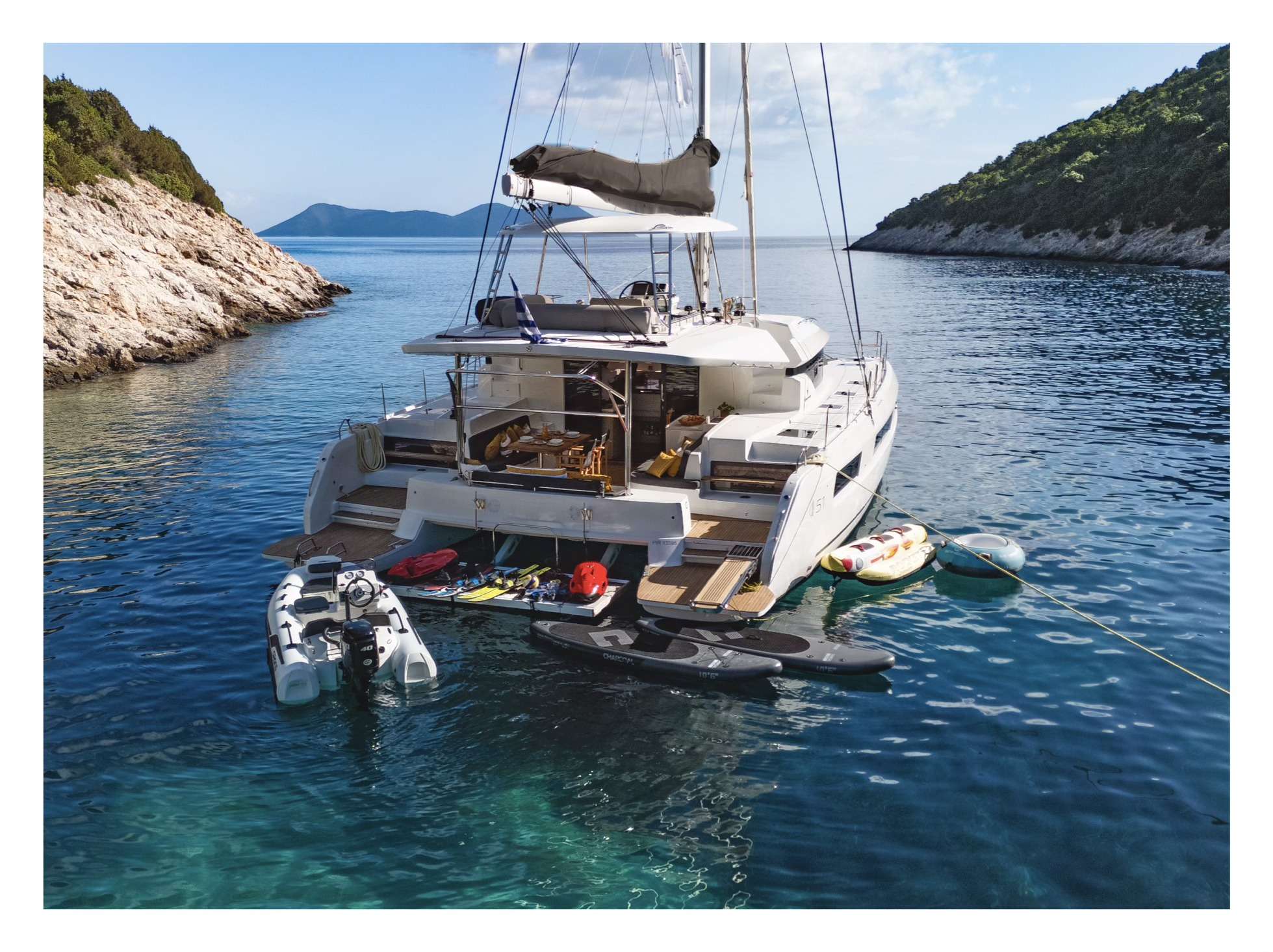
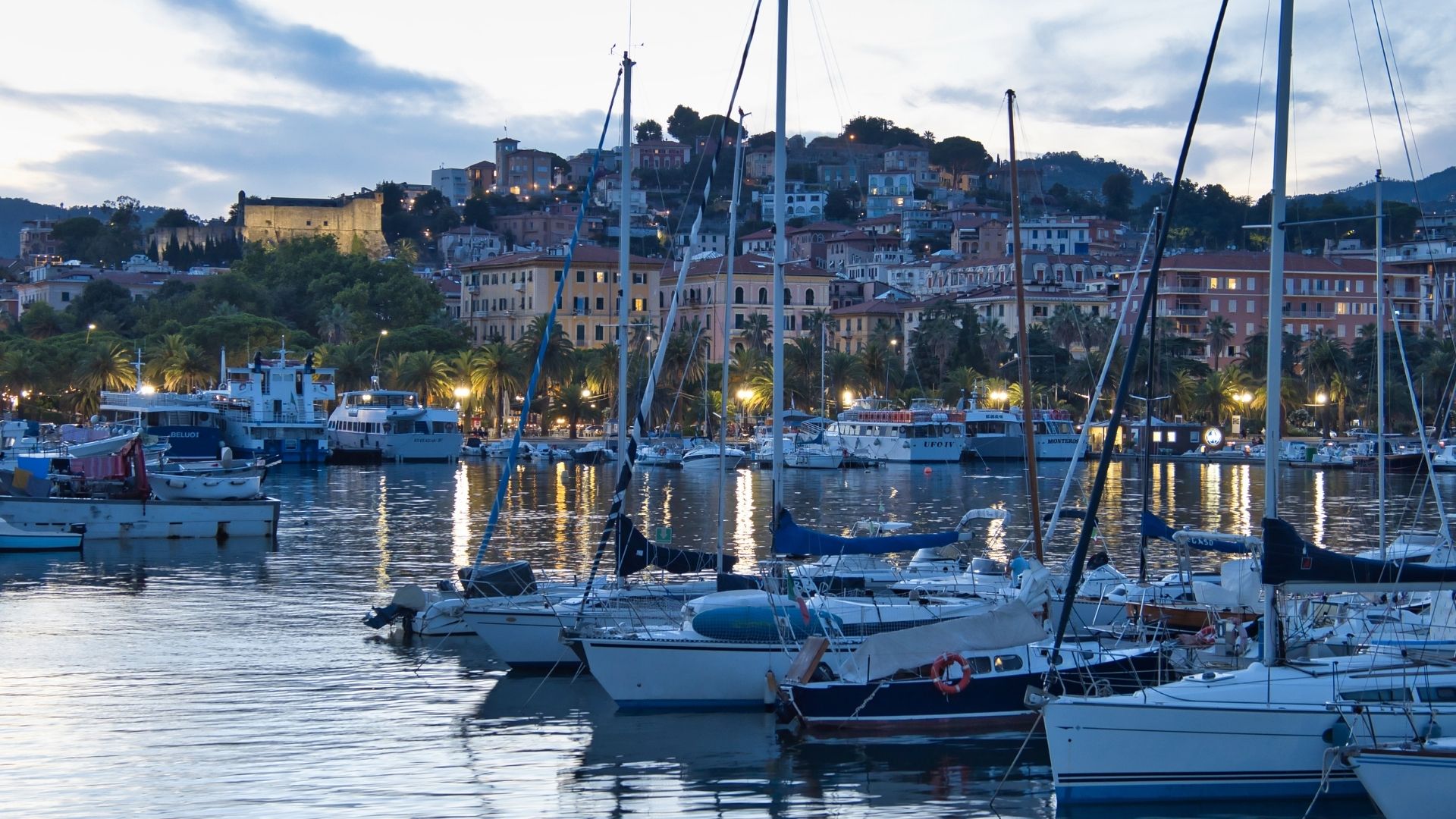
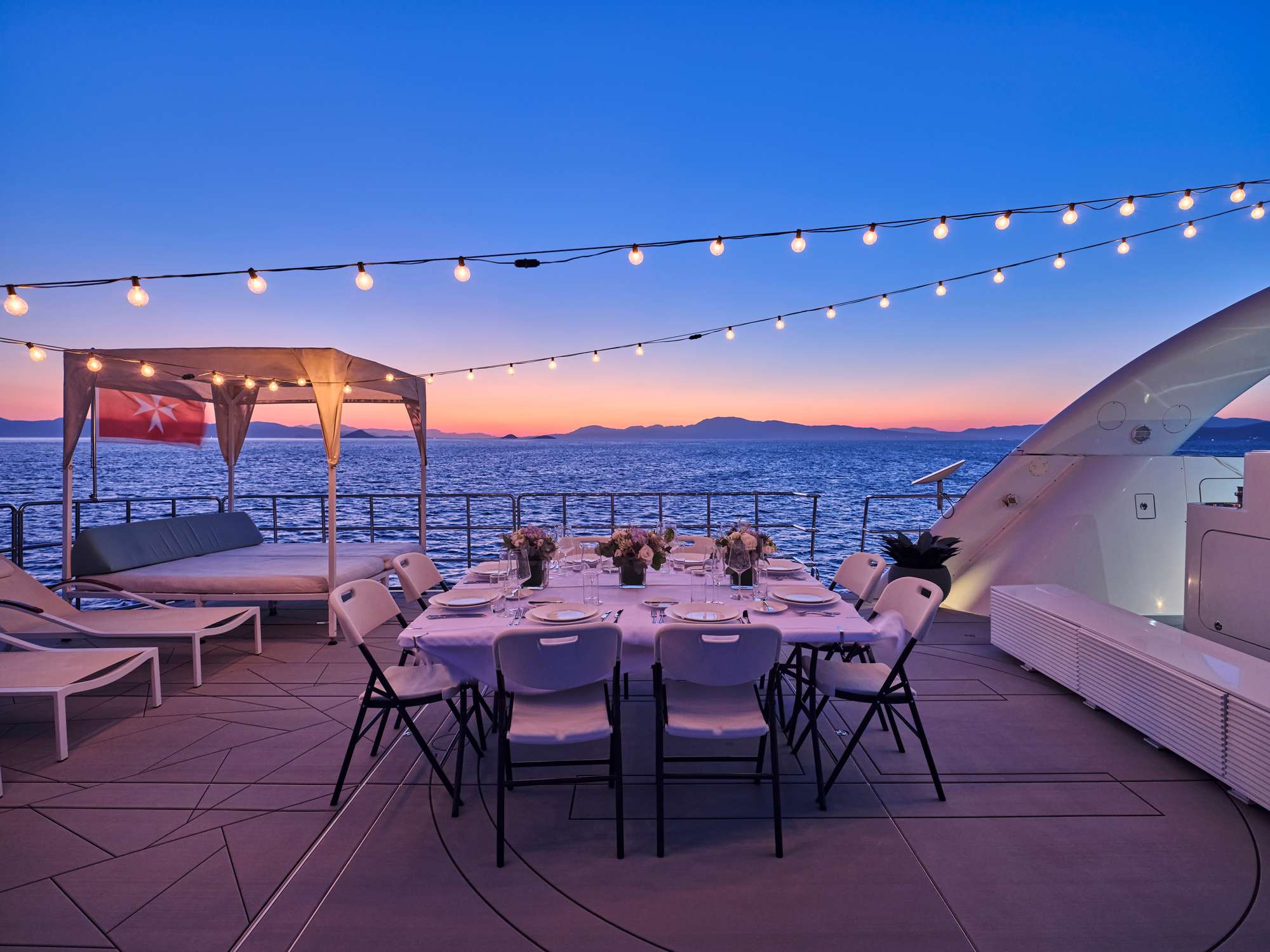
Esta es la semana de Liguria por excelencia — Portofino, Santa Margherita, San Fruttuoso, los cinco pueblos de las Cinque Terre, Portovenere y el Golfo de La Spezia en siete noches. Unas setenta millas náuticas de punta a punta, sin ninguna etapa lo suficientemente larga como para condicionar la forma del día. El yate es lo que le da vida a la ruta: llegar antes de que los trenes llenen los pueblos, partir después de que los ferrys se vacíen, y dormir lejos del flujo principal.
Es el mejor primer viaje en yate para quienes quieren la Riviera Italiana sin necesidad de encajar la Toscana o Mónaco en la misma semana. Si lo que se busca son bahías con menor densidad de visitantes y una extensión hacia el sur en dirección a Elba, la ruta del archipiélago toscano es la opción más adecuada. Si la idea es terminar en Mónaco, la ruta de ida hacia el oeste es la respuesta correcta. El capitán adapta el día a día al grupo; el esquema que aparece a continuación es el marco estándar.
Día 1 de 7 · Génova → Portofino
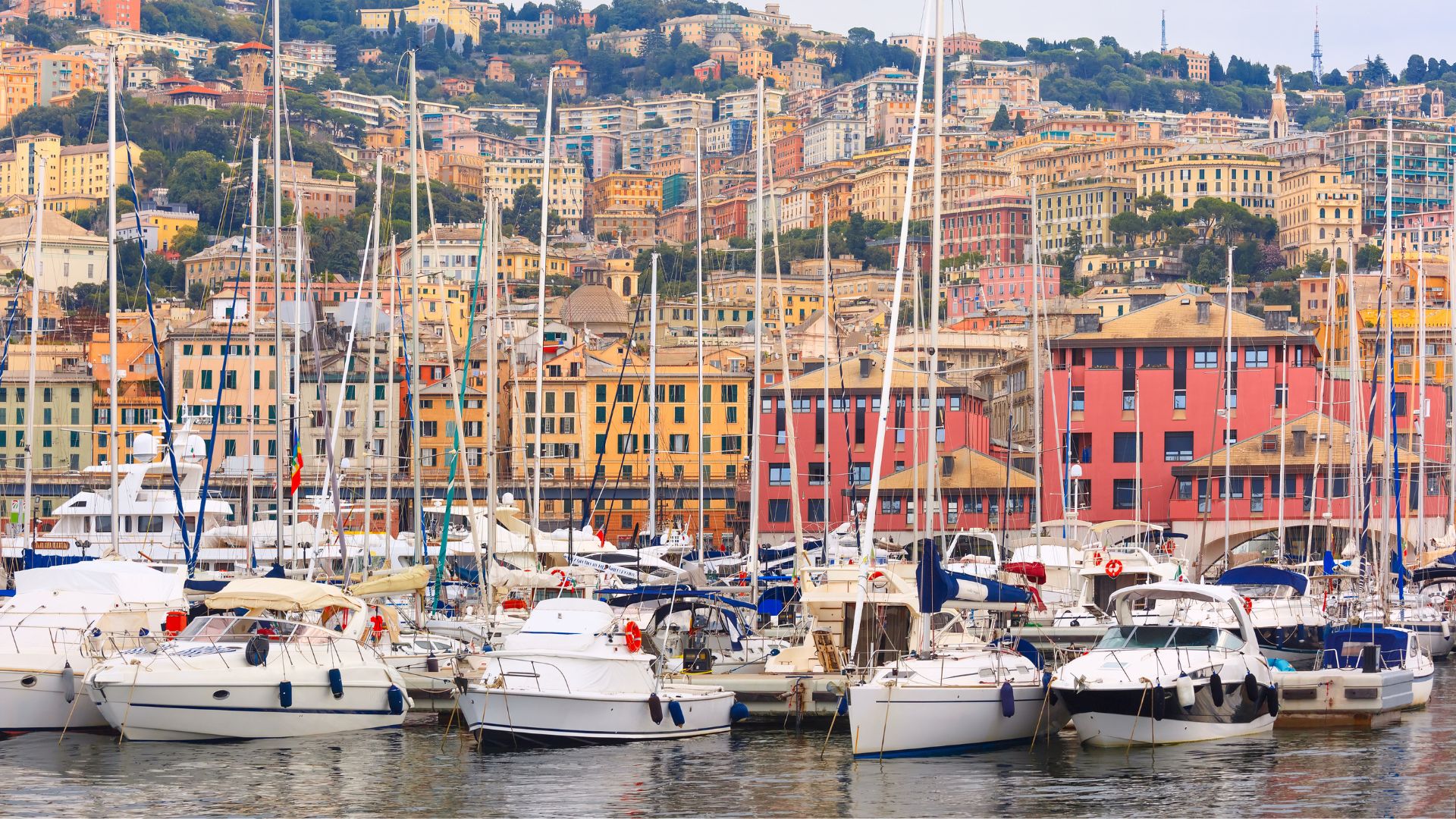
El viaje en yate comienza en Génova, la antigua capital de la república marítima cuyo puerto sigue siendo el mayor puerto comercial de Italia. La tripulación recibe al grupo en el muelle de Marina Genova Aeroporto — a quince minutos en coche de GOA — o en Porto Antico, en plena ciudad, según el yate. Se ultima el aprovisionamiento, el chef repasa con el grupo las preferencias gastronómicas de la semana, y se revisa la carta para la primera singladura antes de largar las amarras.
La primera etapa hacia el este es corta por diseño — dieciséis millas náuticas rodeando el promontorio de Portofino hasta el puerto al otro lado. La costa intermedia son los suburbios genoveses y una empinada cresta boscosa; la recompensa llega cuando el yate dobla el cabo y se abre la dársena de Portofino. El puerto en sí es estrecho — unas doce plazas de amarre de popa dentro del rompeolas — así que los yates a motor de mayor eslora y los que llegan entrada la tarde fondean en la Bahía de Paraggi, la esmeralda cala a un corto trayecto en lancha auxiliar hacia el oeste.
El aperitivo en tierra es el movimiento canónico de la primera noche. La Gritta American Bar, en la terraza del puerto, tiene el aperitivo más fotografiado de la costa; los restaurantes de la Piazzetta — Puny y Da U Batti son los dos nombres de siempre — se reservan con un día de antelación en temporada. El Belmond Splendido se asoma desde el acantilado de arriba, visible desde cualquier punto del puerto; cenar a bordo o en el pueblo funciona igual de bien, y el capitán gestiona la reserva en cualquier caso.
Day Highlights
Día 2 de 7 · Costa de Portofino
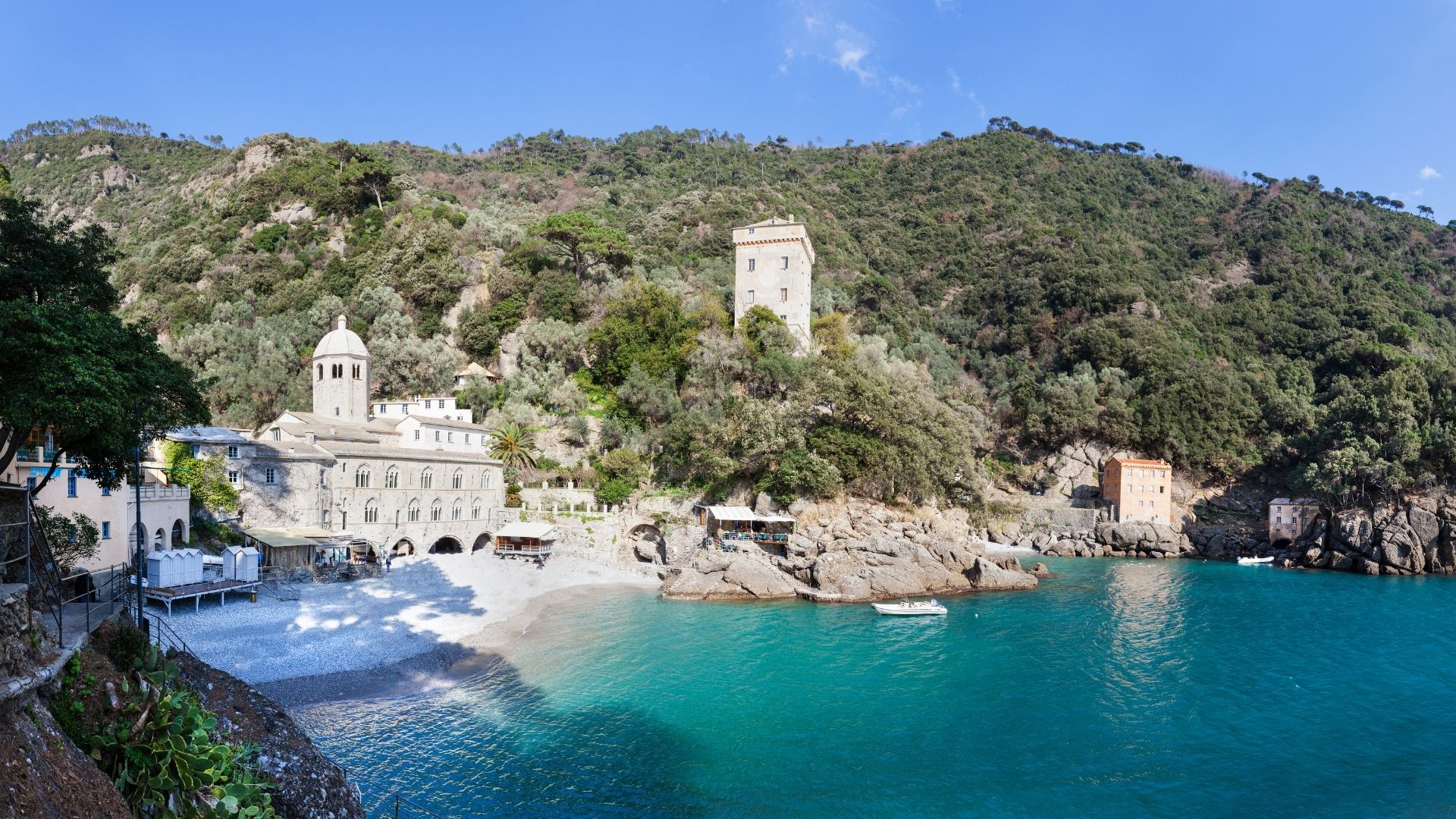
Mañana fondeados o en el muelle de Portofino, desayuno en la bañera de popa, el chef preparando el almuerzo mientras la tripulación alista la lancha auxiliar para el día. A media mañana se largan amarras para el corto salto hacia el norte, rodeando el promontorio hasta San Fruttuoso, la cala de la abadía en el lado marítimo de la península de Portofino. La costa intermedia — Punta Chiappa, Cala dell'Oro — ofrece algunas de las aguas más limpias para nadar en este tramo de Liguria.
Se fondea frente a San Fruttuoso. La propia abadía fue construida en el siglo X por monjes benedictinos; la estructura actual data principalmente del siglo XIII, con las reformas que la familia Doria añadió en el XVII. No hay carretera de acceso — solo se llega en barco o a pie por un sendero de dos horas desde Portofino — así que la cala acoge unas pocas docenas de yates en un sábado de verano y casi nada más. Se baja a tierra en la lancha auxiliar para visitar la abadía, nadar a lo largo de la orilla rocosa y ver la estatua del Cristo de los Abismos, la figura de bronce sumergida diecisiete metros desde 1954 en memoria de los buceadores perdidos en el mar.
Almuerzo a bordo fondeados o en la lancha auxiliar hasta Da Giovanni, la pequeña trattoria al pie del muro de la abadía. Por la tarde, traslado de tres millas náuticas al sur hasta Santa Margherita Ligure. Es el mayor de los dos puertos del Golfo de Tigullio, con las mismas fachadas de la Belle Époque ligur que Portofino pero con el ritmo de una ciudad viva debajo — la flota pesquera en el muelle, las focaccerie en las calles del interior, el Imperiale Palace en el lado oriental de la bahía. Cena en tierra en la Trattoria dei Pescatori del puerto o en el Skipper Bar, a una manzana de distancia; el capitán gestiona cualquiera de las dos opciones.
Day Highlights
Día 3 de 7 · Tigullio → Cinque Terre
La etapa más larga de la semana, y la que termina de girar la ruta desde los puertos de la Belle Époque ligur hacia el registro de las Cinque Terre. Baño matutino en Paraggi o en una de las calas más pequeñas del Tigullio — Bagni Fiore es la terraza clásica sobre la bahía, Langosteria Paraggi es el beach club de nueva generación para el almuerzo — y luego se largan amarras a media mañana para el empuje hacia el sur. La costa intermedia sigue siendo ligur antes de los acantilados: Rapallo con su Castello sul Mare junto al paseo marítimo, Chiavari, y la Baia del Silenzio de Sestri Levante, la cala protegida al este que es una de las mejores paradas para nadar en la ruta si las condiciones lo permiten.
A media tarde los acantilados se hacen más verticales y la arquitectura cambia. Los cinco pueblos de las Cinque Terre — Monterosso, Vernazza, Corniglia, Manarola, Riomaggiore — se asientan en un tramo de costa de unos doce kilómetros, todos integrados en el Parque Nacional de las Cinque Terre y Patrimonio de la UNESCO desde 1997. Los pueblos están conectados entre sí por el Sentiero Azzurro y por la línea de tren regional que corre en túneles a sus espaldas. Desde el agua, lo que impacta primero es la pendiente de los viñedos en terrazas y cómo los edificios se apilan completamente sobre la roca.
Monterosso al Mare es la primera noche práctica. Es el único de los cinco con una playa de verdad, dividido entre Fegina (el lado moderno, donde están la estación de tren y las hamacas) y Vecchio (el barrio medieval en el promontorio oriental). El yate fondea frente a la costa — no hay ningún puerto con capacidad para yates de charter — y la lancha auxiliar lleva hasta el rompeolas. Cena en tierra en Miky, en el paseo marítimo de Fegina, famoso por sus mariscos, o en L'Ancora della Tortuga, sobre las rocas de la playa, para una velada más teatral; el capitán reserva en cualquiera de los dos.
Day Highlights
Día 4 de 7 · El corazón de las Cinque Terre
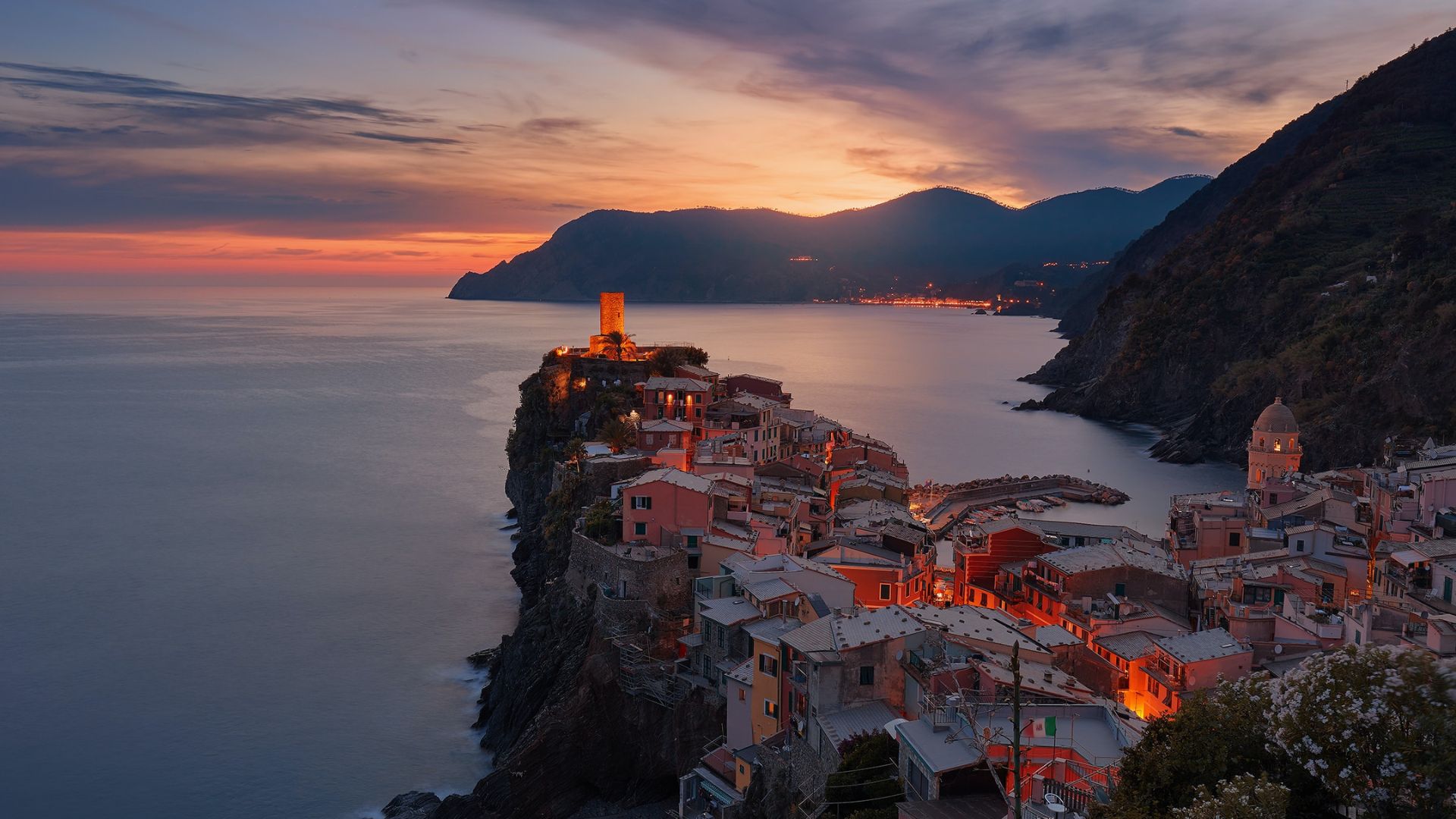
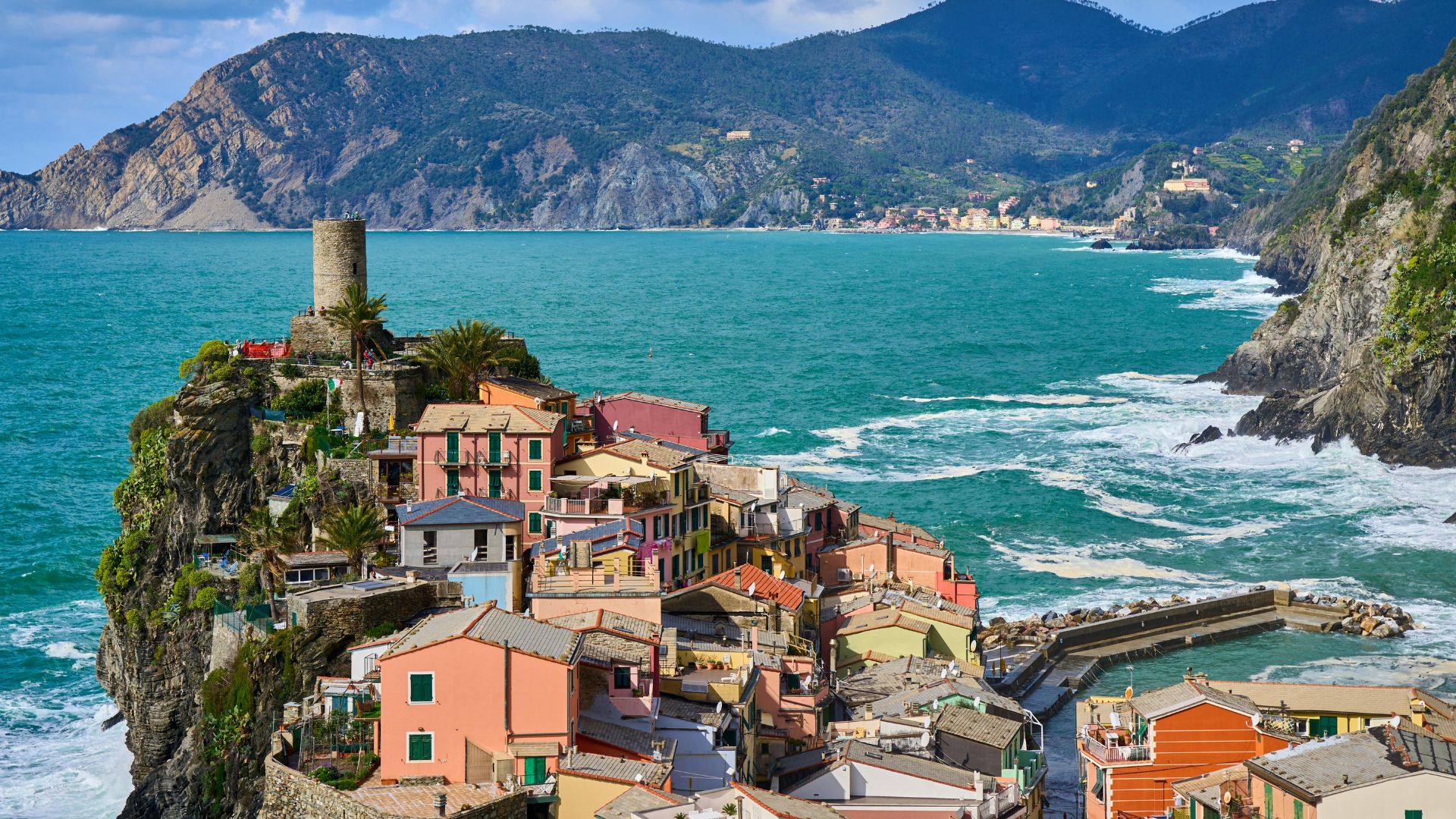
El día se construye en torno al tiempo. Bajada temprana a tierra en la lancha auxiliar en Vernazza — antes de que los trenes regionales de las 9 empiecen a llegar con los visitantes de día — para un espresso en alguno de los bares del puerto y una subida por los escalones hasta la torre Belforte para la fotografía más icónica del pueblo. La iglesia de Santa Margherita d'Antiochia en el puerto data de 1318; la propia Belforte fue construida en el siglo XI como atalaya contra los piratas sarracenos y es hoy la terraza de restaurante más destacada del pueblo. Hacia las 10 de la mañana los andenes ya están llenos y la calle del puerto pertenece al tráfico de visitantes; el yate regresa al fondeo y pone rumbo al sur.
La bajada hacia el sur recorre los pueblos restantes en unas seis millas náuticas. Corniglia es el único que no está junto al agua — se asienta 100 metros más arriba en un promontorio, al que se llega desde la estación de tren por la Lardarina, un zigzag de 33 tramos de escaleras — así que el yate lo deja atrás y la mayoría de los grupos no suben. Manarola es la siguiente parada fotogénica de amarre de popa, más pequeño que Vernazza y casi completamente visible desde un solo acercamiento en lancha auxiliar; Riomaggiore es el pueblo más al sur, con el sendero de la Via dell'Amore hasta Manarola (parcialmente reabierto en 2024 tras un largo cierre por desprendimiento de tierras). Almuerzo a bordo entre las visitas a tierra — fondeados frente a Manarola, el chef sirviendo en la bañera de popa, con el pueblo leyéndose como una pintura desde el agua.
A última hora de la tarde, de vuelta a Vernazza o Manarola para una visita al atardecer una vez que los trenes han vaciado los pueblos — el ambiente se recupera a partir de las 6. Cena en tierra en Belforte si se logró la reserva, o a bordo fondeados si el capitán prefiere no estar en el muelle por la noche. El sciacchetrà — el vino dulce de las Cinque Terre, elaborado con uvas secadas sobre bastidores de caña durante tres meses tras la vendimia en las terrazas sobre el mar — cierra la mayoría de las veladas en este tramo; la producción es tan pequeña que las botellas suelen estar disponibles solo en los propios pueblos.
Day Highlights
Día 5 de 7 · Cinque Terre → Portovenere
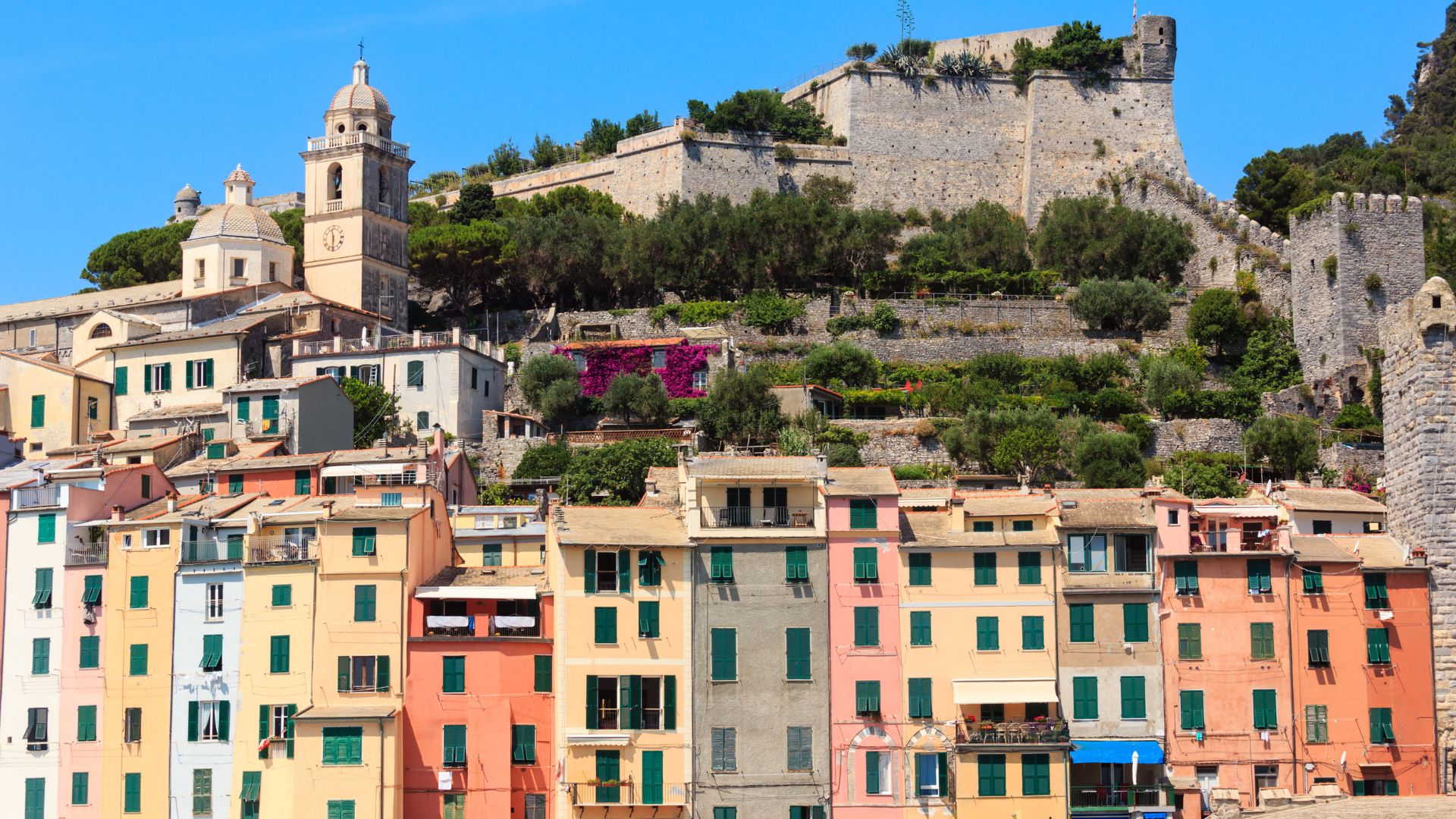
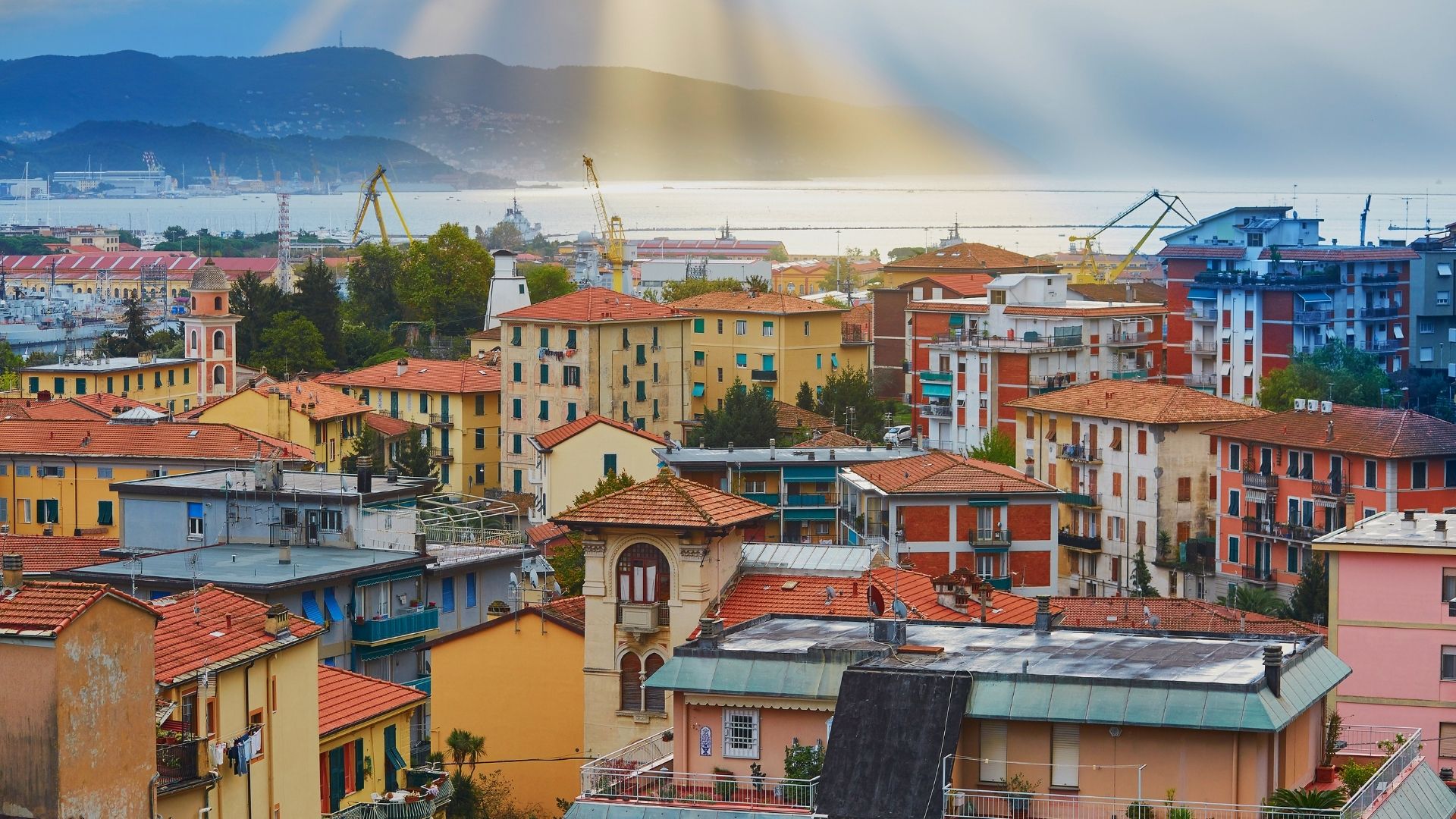
Corto salto bajando desde las Cinque Terre — seis millas náuticas doblando el cabo y entrando en el Golfo de La Spezia. Portovenere cierra el extremo oriental del recorrido ligur, y el cambio de registro es inmediato: en lugar de la escala comprimida de los pueblos en acantilado de las Cinque Terre, aquí el puerto se abre en una bahía más amplia con un malecón de verdad, un muelle con espacio suficiente para el amarre de popa, y una de las entradas a puerto más limpias de toda la costa.
La arquitectura justifica la estancia larga. La Iglesia de San Pietro se alza sobre el promontorio rocoso a la entrada del puerto, construida en 1198 sobre una basílica del siglo V que a su vez reemplazó a un templo romano dedicado a Venus — el nombre del pueblo, 'Portus Veneris', se remonta a esa época. El Castillo Doria se eleva sobre el pueblo por callejuelas en zigzag; la subida dura veinte minutos y desde la cima las vistas abarcan desde los acantilados de las Cinque Terre, a espaldas del yate, hasta el Golfo de La Spezia que se abre al sur. Byron es el ancla literaria local — cruzó a nado desde aquí hasta Lerici en 1822, y la gruta bajo San Pietro se llama la Grotta di Byron por eso. Shelley se ahogó en la bahía ese mismo año; el sobrenombre del golfo viene de aquel verano.
El amarre de popa del yate en el muelle de Portovenere pone el pueblo a distancia caminando desde la pasarela. Cena en tierra en el paseo de la Calata Doria — Antica Osteria del Carugio para los platos ligures de toda la vida, Iseo en el puerto para el pescado del día de las barcas, o Locanda Lorena al otro lado, en Palmaria, si el grupo prefiere cenar llegando en lancha auxiliar en lugar de dar un paseo junto al muelle. La Locanda es la opción más tranquila para la velada; el trayecto en lancha desde el fondeadero de Palmaria dura cinco minutos.
Day Highlights
Día 6 de 7 · Golfo de los Poetas
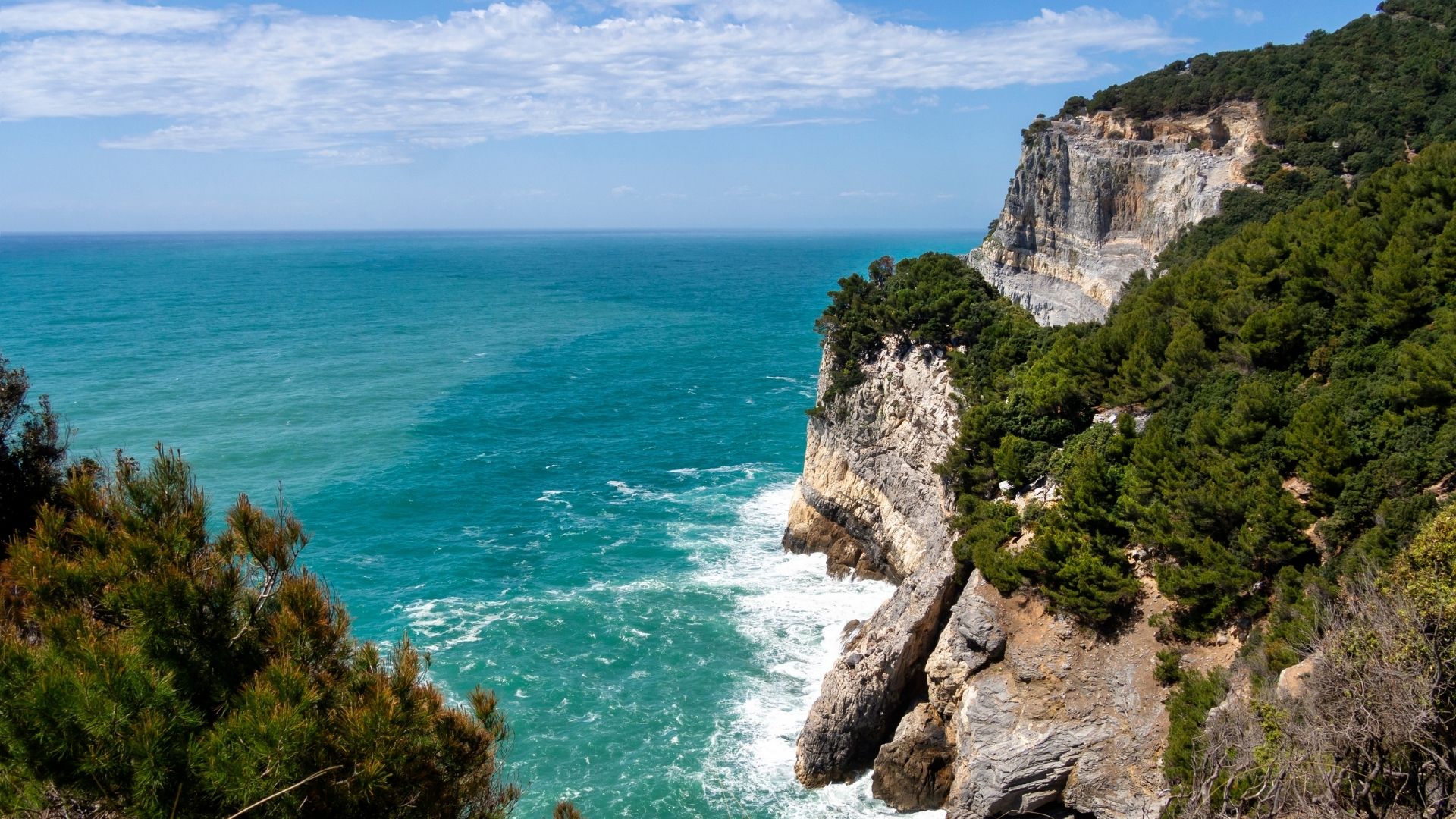
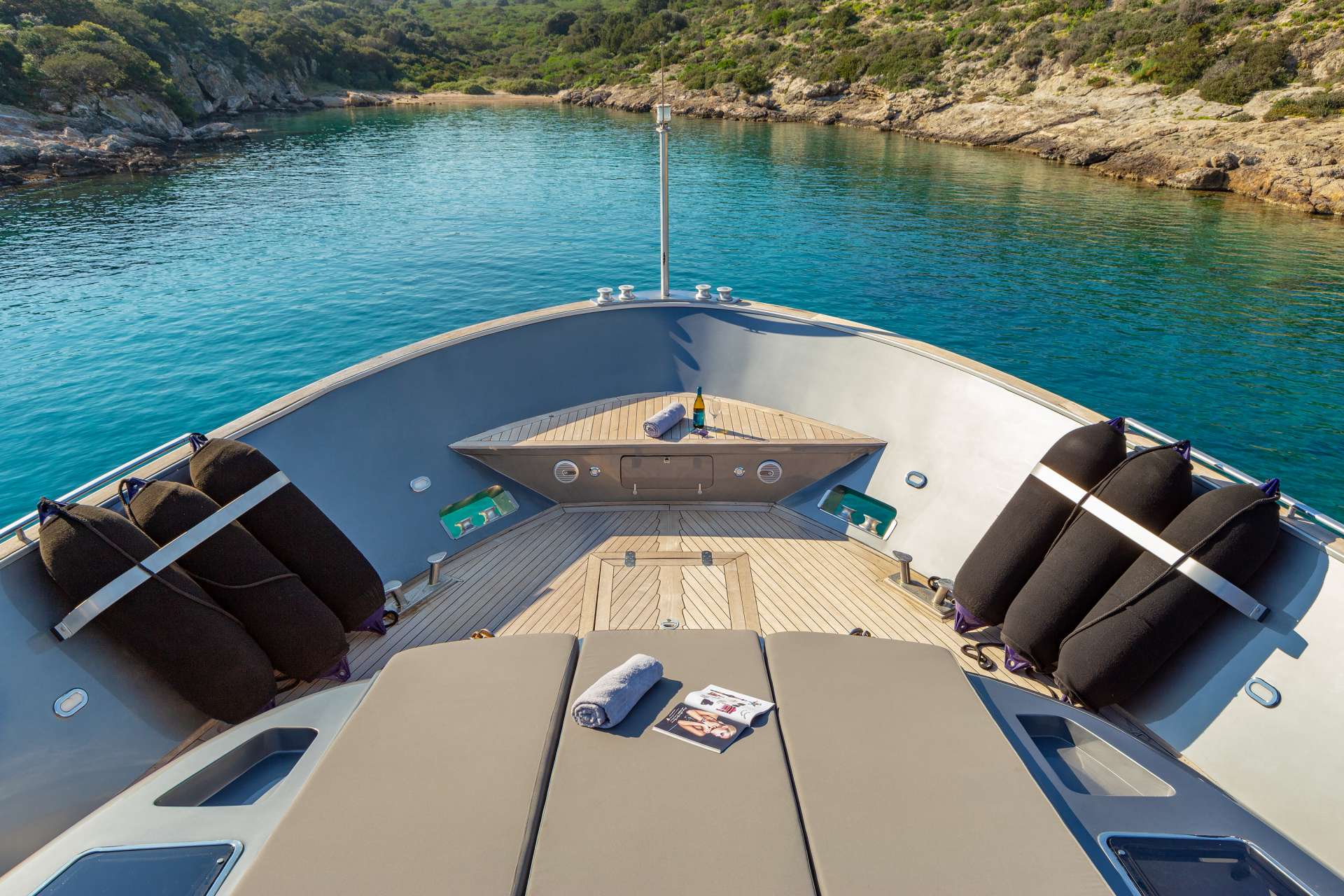
El penúltimo día baja el ritmo deliberadamente. Por la mañana se sale del muelle de Portovenere cruzando el estrecho canal de las Bocche — de menos de un kilómetro de ancho — hacia una bahía para nadar a lo largo de la costa oriental de Palmaria. La isla es la mayor de las tres a la entrada del golfo, parte del Parque Regional de Portovenere, e integrada en la misma inscripción UNESCO que cubre las Cinque Terre. Las calas orientales tienen las aguas más limpias de la bahía; los acantilados occidentales todavía conservan los restos de hormigón de las baterías de artillería de la Marina italiana de la Segunda Guerra Mundial, cuando La Spezia era la mayor base naval del país.
Almuerzo fondeados — las tablas de paddle surf en el agua, el chef preparando mariscos ligures y un vaso de Vermentino de las colinas sobre el golfo — y una tarde tranquila antes del corto cruce hasta Lerici, en el lado oriental del golfo. El puerto de Lerici es más pequeño y menos conocido que el de Portovenere, pero funciona como el contrapunto más italiano y cotidiano: el Castello di San Giorgio se alza sobre el pueblo sobre una base del siglo XII, la playa frente a las fachadas de colores es una de las pocas playas de arena de verdad en este tramo de costa, y el paseo hasta San Terenzo rodeando la bahía por el promontorio lleva treinta minutos.
Casa Magni — la última residencia de Percy y Mary Shelley, donde vivían cuando Percy murió al cruzar el golfo de regreso desde Livorno en julio de 1822 — está en el extremo occidental de San Terenzo, señalizada aunque sin grandes alardes. El peso literario es sobre todo ambiental; el verdadero valor de la velada en Lerici es el propio puerto. Cena en tierra en Doi Camin bajo el castillo, Pescarino en el puerto para el pescado del día de las barcas, o Conchiglia en San Terenzo si el capitán prefiere el lado más tranquilo de la bahía. El sciacchetrà cierra la velada por última vez.
Day Highlights
Día 7 de 7 · Regreso hacia el oeste
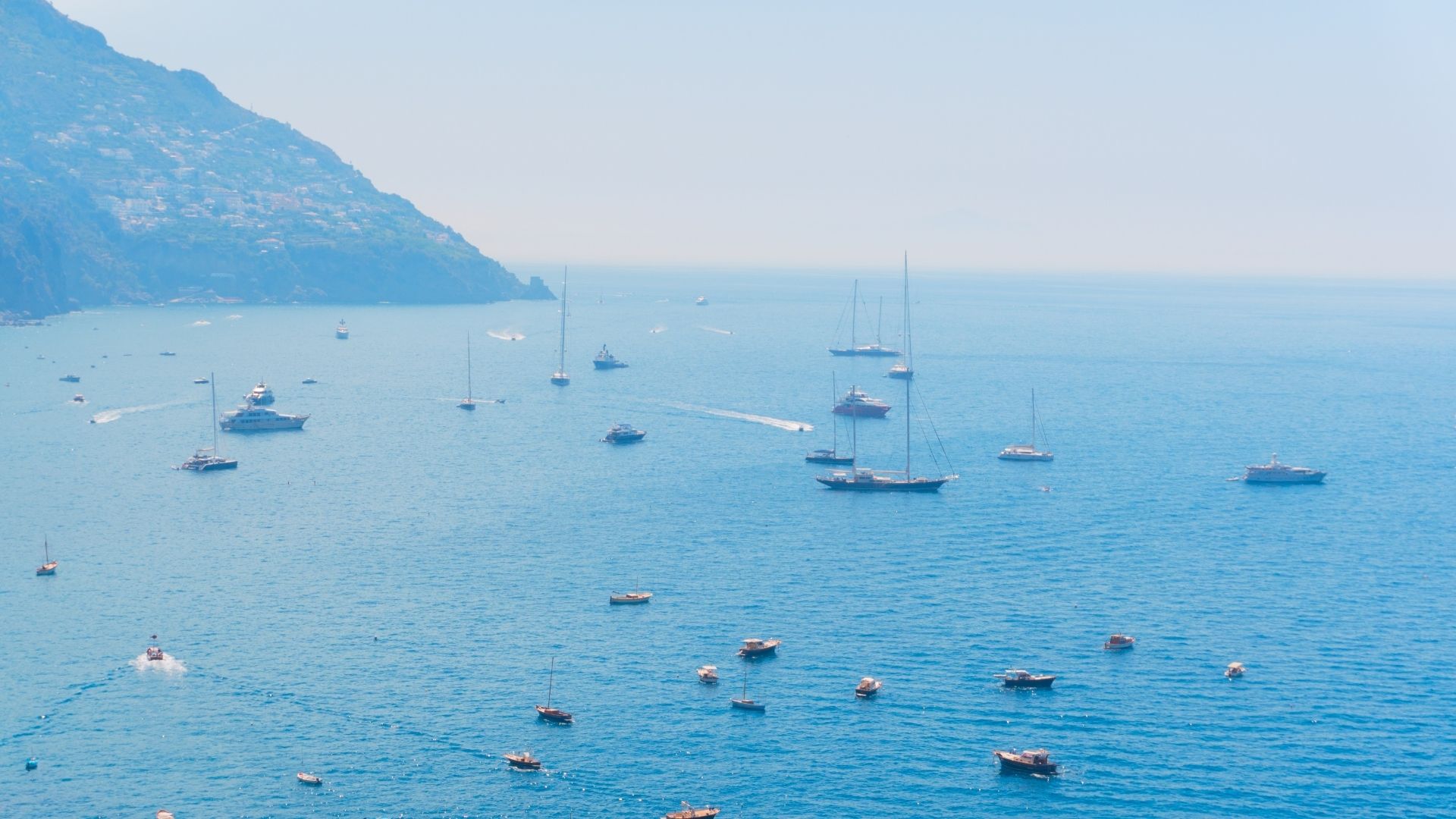
El último día completo tiene millas de verdad bajo la quilla en lugar de quedarse reducido a la pura logística del desembarque. Veinticinco millas náuticas de regreso hacia el oeste hasta el Tigullio — una etapa más larga que el resto de la semana, pero el único recorrido significativo de vuelta en el itinerario de ida y vuelta — con una parada para nadar por el camino si el tiempo acompaña. La Baia del Silenzio de Sestri Levante es la opción habitual si las condiciones lo permiten; Punta Manara, el promontorio rocoso entre Sestri y Riva Trigoso, es la alternativa.
A última hora de la tarde el yate vuelve a estar en el Golfo de Tigullio. Santa Margherita ofrece la noche más tranquila para el grupo; Portofino funciona si el puerto tiene plazas y el grupo quiere una segunda vuelta a la dársena. Los yates a motor de mayor eslora que no caben dentro del rompeolas de Portofino fondean en Paraggi para la última velada. El capitán decide de qué extremo del golfo partir según la logística de la mañana siguiente.
La cena de la última noche en tierra es el cierre canónico — Puny en la piazzetta de Portofino si el puerto lo permite, Trattoria dei Pescatori en Santa Margherita si la noche se decantó hacia el oeste, o una de las terrazas de Paraggi si el yate se quedó fondeado. Un aperitivo más en la bañera de popa antes de cenar, un puerto más iluminado después del atardecer, y una última noche que todavía sabe a vacaciones y no a trámite administrativo.
Day Highlights
Día 8 · Desembarque
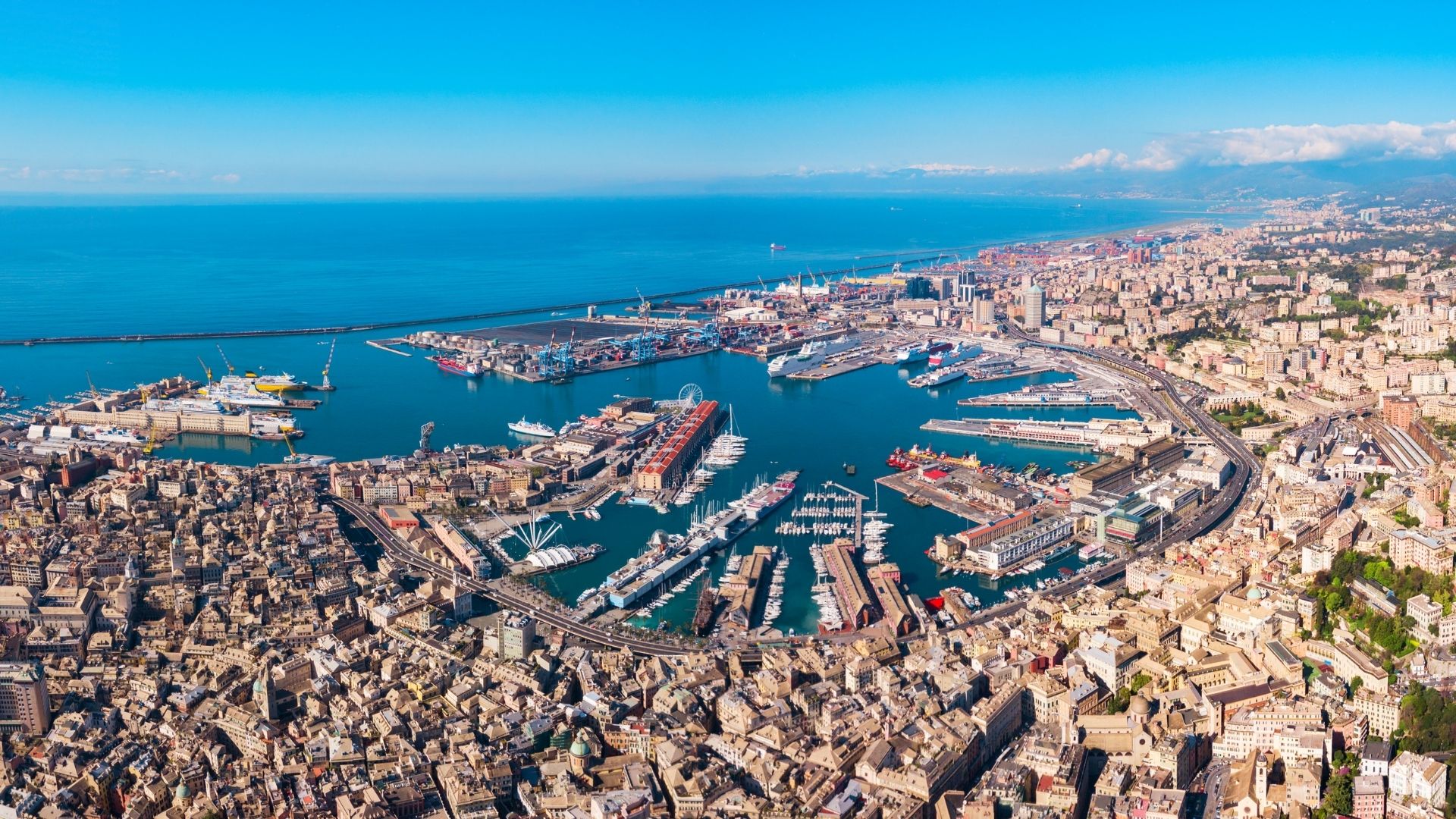
Desayuno a bordo, equipaje en tierra y traslado directo a GOA, PSA o las conexiones de tren según la ruta y los planes del grupo en Italia. Desde Marina Genova Aeroporto el aeropuerto está a quince minutos en coche. Desde Santa Margherita o Portofino, el tren directo desde la estación de Santa Margherita-Portofino llega a Milán en dos horas y a Roma en cinco; el traslado privado a MXP es de unas tres horas por carretera.
La semana en la Riviera Italiana termina como suele leerse mejor — compacta, refinada y más tranquila que las costas de mayor nombre con las que la mayoría de los huéspedes la compararon antes de reservar. La mayoría de los grupos que hacen esta ruta vuelven a por la extensión del archipiélago toscano en un segundo viaje; el capitán y el agente de yate repasan las opciones para el siguiente viaje antes de que el grupo se despida.
Want to share or come back to this voyage later?
Bookmark this voyage →Itinerario con Tripulación · Riviera Italiana y Toscana
Esta es la semana de la Italia occidental menos transitada — menos teatro en Portofino, más Portovenere, Palmaria, Elba, Giglio y Argentario. La ruta comienza en La Spezia, usa Portovenere y el Golfo de los Poetas como bisagra de salida de Liguria y luego gira al sur más de treinta millas náuticas en aguas abiertas hasta el archipiélago toscano. Unas noventa millas náuticas de extremo a extremo, con la única travesía larga del viaje el día tres, cuando el yate cruza desde tierra firme hasta Portoferraio en Elba. Para la cuarta noche, la ruta se ha convertido plenamente en un viaje en yate por las islas toscanas — el puerto del exilio de Napoleón en Elba, el pueblo medieval de Giglio Castello encaramado en la cima, y la península de Argentario cerrando el arco sur.
Esta es la versión de la costa que los viajeros que repiten en el Mediterráneo suelen pedir una vez que saben que no necesitan parar en cada rincón famoso de las Cinque Terre. Tanto yates de motor como veleros bien equipados funcionan — las travesías del sur son lo suficientemente expuestas como para que la eslora del casco y la estabilización importen, pero las distancias se mantienen manejables. El archipiélago toscano es un parque nacional (Parco Nazionale dell'Arcipelago Toscano), el parque marino más grande de Europa, con siete islas y controles de fondeo más estrictos que en el lado ligur; el capitán gestiona los permisos y las boyas de amarre donde corresponde.
Siete noches, unas noventa millas náuticas, desde La Spezia a través de Portovenere y Palmaria hasta el archipiélago toscano — Elba, Giglio y Argentario — y de regreso. La distribución de distancias es distinta a la de la semana centrada en Liguria: menos tiempo en los pueblos de la costa, tardes más largas en bahías, dos travesías genuinas en aguas abiertas en el tramo sur. El archipiélago toscano completo — Elba, Giglio, Pianosa, Capraia, Gorgona, Montecristo, Giannutri — se extiende en un triángulo de cien kilómetros frente a la costa de Toscana; este itinerario cubre las tres islas que encajan de manera natural en una semana.
Esta es la ruta adecuada para los huéspedes que quieren el registro de pueblo y puerto de la Riviera Italiana sin quedarse anclados al corredor de postal de las Cinque Terre. Si la prioridad son los famosos pueblos en los acantilados, la ruta de Portofino es más acertada. Si lo que se busca es un viaje de primera clase en una sola dirección que termine en la Côte d'Azur, la ruta de Mónaco encaja mejor. Los permisos de fondeo dentro de las reservas marinas de Pianosa y Montecristo (efectivamente cerradas a los yates de charter), así como los campos de fondeo gestionados en la costa este de Giglio y en Argentario, son trámites habituales que el capitán resuelve sin involucrar a los huéspedes.
Día 1 de 7 · La Spezia → Portovenere
El viaje comienza en Marina Porto Mirabello, en La Spezia — el marina de aguas profundas a la cabecera del Golfo de La Spezia, capaz de albergar yates de motor de hasta unos noventa metros. La tripulación recibe al grupo en el muelle, enseña el yate, guarda el equipaje y repasa la carta de navegación de la semana. La Spezia es la mayor base naval del país y no es un lugar donde los huéspedes suelan pasar tiempo; el marina está separado del puerto de trabajo y tiene vida propia. Almuerzo a bordo en el muelle mientras el chef termina el aprovisionamiento.
El primer tramo es corto a propósito — cinco millas náuticas cruzando el golfo y atravesando el canal de las Bocche hasta Portovenere. El golfo recibe el nombre de Golfo de los Poetas — un apelativo que perduró después de que Percy Shelley se ahogara en la bahía en 1822 y de que Byron, Mary Shelley y el círculo romántico mantuvieran villas a su orilla — y la travesía hacia Portovenere es la primera hora más bonita de la semana. A media tarde, el yate está ya popa a tierra en el muelle de Portovenere o fondeado frente a Palmaria, al otro lado del estrecho canal.
El pueblo merece la larga escala. La iglesia de San Pietro se asienta sobre el promontorio rocoso en la boca del puerto, construida en 1198 sobre una basílica del siglo V que a su vez reemplazó a un templo romano dedicado a Venus — el nombre 'Portus Veneris' viene de aquella época. El Castillo Doria domina el pueblo desde lo alto, al que se asciende por callejuelas en zigzag; la subida dura veinte minutos y desde la cima la vista abarca desde los acantilados de las Cinque Terre al este hasta el Golfo de La Spezia abriéndose al sur hacia la travesía toscana que la ruta hace el día tres. Cena en tierra en la Antica Osteria del Carugio para los clásicos de la cocina ligur, en Iseo junto al puerto para el pescado del día, o en lancha auxiliar hasta la Locanda Lorena en Palmaria para una opción más tranquila.
Day Highlights
Día 2 de 7 · Golfo de los Poetas y primer vistazo a las Cinque Terre
Salida matinal del muelle de Portovenere cruzando el canal de las Bocche hacia las calas del este de Palmaria. La travesía dura diez minutos; el agua al lado este de la isla es la más limpia del Golfo de los Poetas, y la orilla rocosa alberga varias pequeñas concesiones de playa que funcionan como paradas en lancha auxiliar. La terraza de la Locanda Lorena, en el extremo sur de la isla, ofrece la opción de almuerzo en tierra más fiable; los acantilados del oeste albergan restos de hormigón de las baterías de artillería de la Marina italiana construidas en los años cuarenta, cuando La Spezia era la principal base naval del país.
Zarpe a media tarde para un paso hacia el norte por las Cinque Terre — ocho millas náuticas costa arriba, lo suficientemente cerca como para distinguir claramente los cinco pueblos desde el agua pero sin comprometer un día entero en tierra en ninguno de ellos. Los pueblos se suceden de norte a sur: Monterosso, Vernazza, Corniglia, Manarola y Riomaggiore. Monterosso es el único con una playa de verdad. Vernazza es la fotografía más reconocible, con la torre de Belforte sobre la roca. Corniglia se encarama 100 metros arriba en un acantilado y es el único pueblo que no tiene salida al mar. Manarola y Riomaggiore cierran la línea — ambos con arquitectura apiñada en los acantilados, ninguno con amarres para yates.
El paso funciona porque el centro de gravedad de esta ruta está al sur, no al norte. Forzar una escala en tierra aquí distorsionaría las millas de la semana justo antes de la travesía a Elba de mañana. El yate regresa popa a tierra al muelle de Portovenere o fondea en el canal para la segunda noche — el capitán decide el fondeo en función del pronóstico matinal para la travesía en abierto hacia el sur. Cena en tierra en Iseo si el muelle está disponible; si no, a bordo fondeado con un Vermentino de las colinas que dominan el golfo.
Day Highlights
Día 3 de 7 · Liguria → Elba
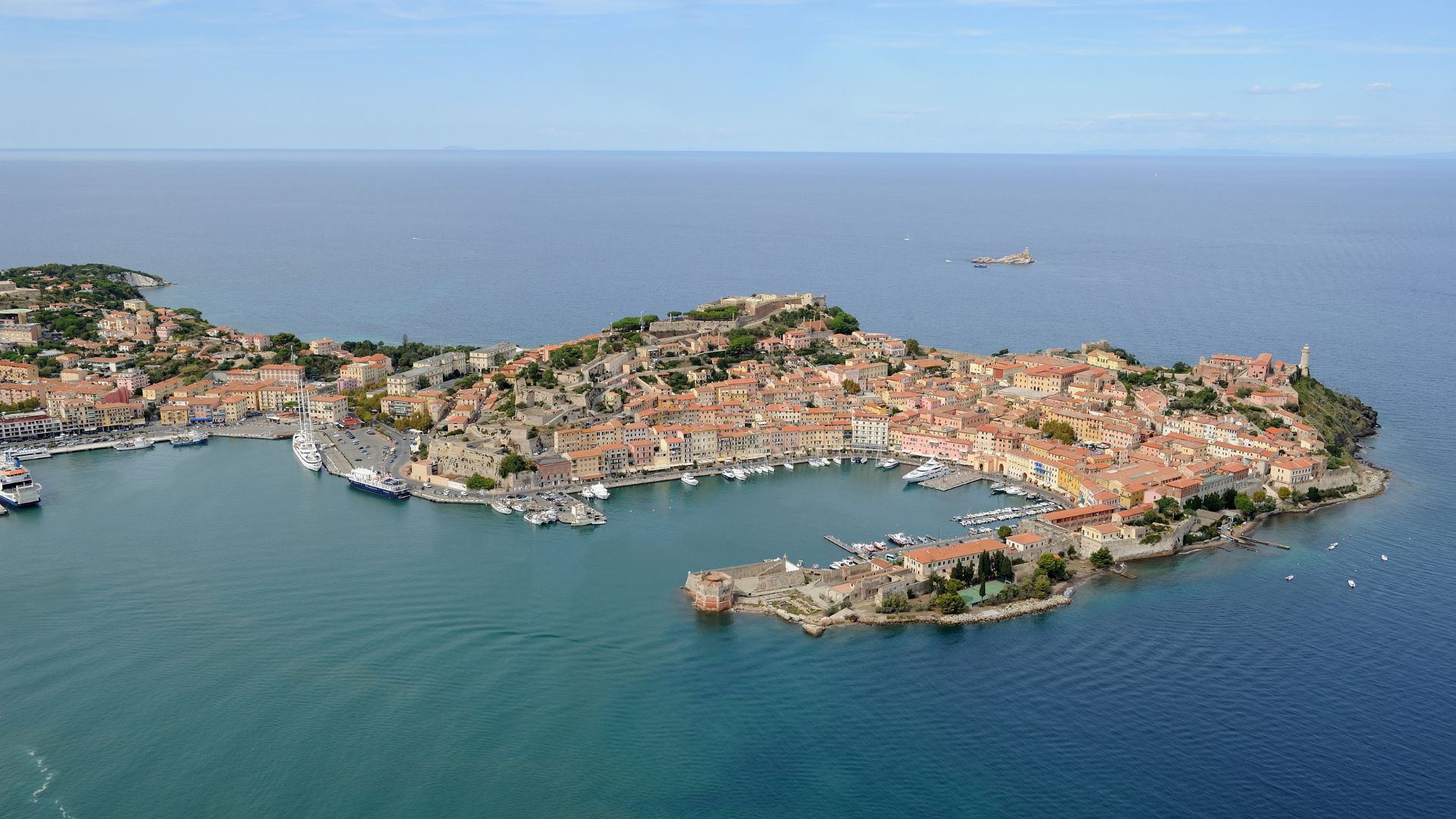
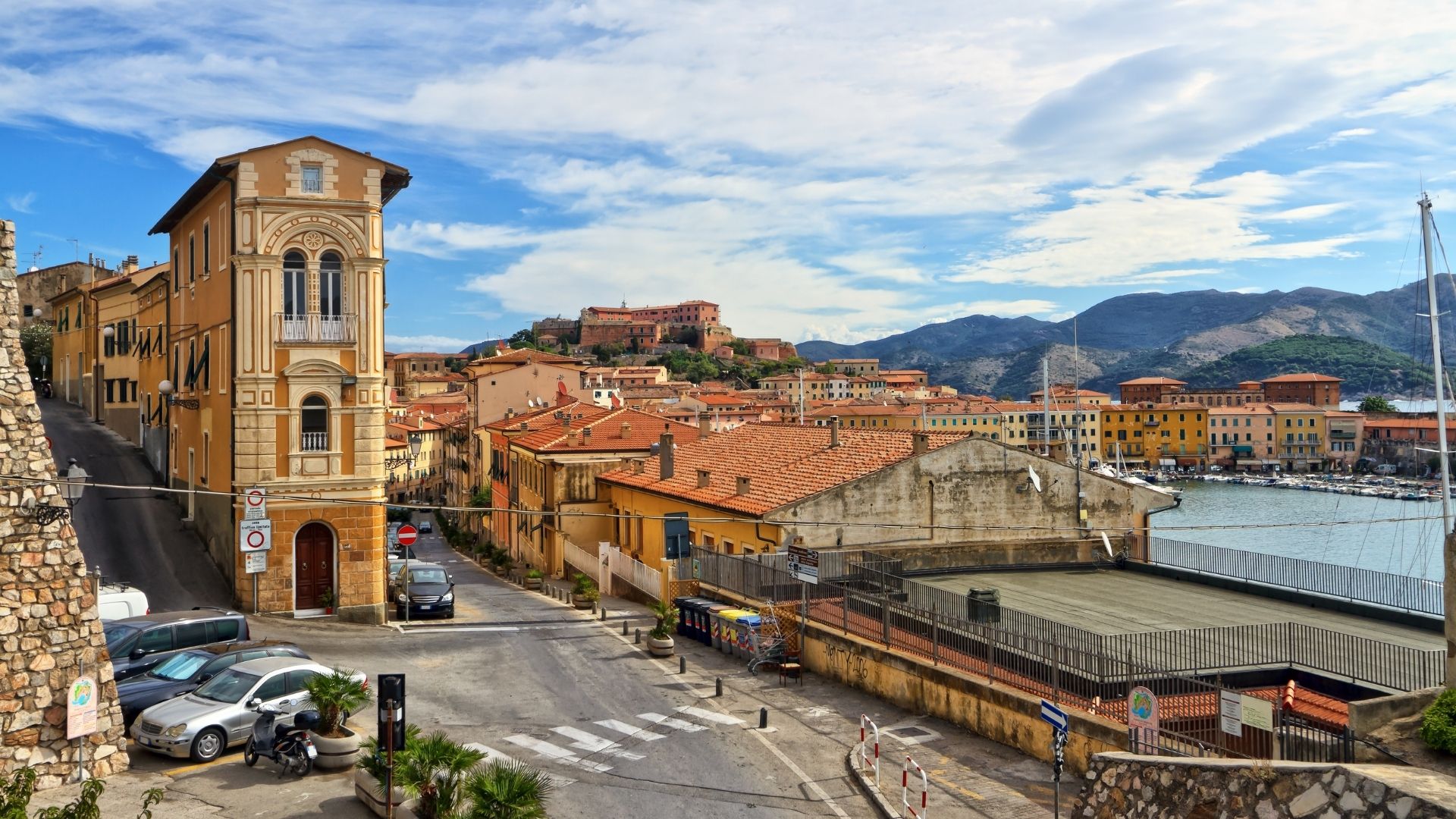
La travesía más larga del viaje y el día que convierte el itinerario en una semana por las islas toscanas en lugar de un recorrido por Liguria con un apéndice sureño. Cincuenta millas náuticas en aguas abiertas del Tirreno desde Portovenere hasta Portoferraio en la costa norte de Elba, hecha como travesía diurna. El capitán sale de Portovenere temprano — el patrón veraniego habitual es mares tranquilos por la mañana que van aumentando con el térmico de la tarde — y la travesía dura unas cinco horas en un yate de motor de treinta nudos, ocho o nueve en un velero con una brisa aprovechable. El chef sirve el almuerzo de camino; la plataforma de baño se baja a mitad de travesía si las condiciones lo permiten.
A media tarde aparece la costa norte de Elba — promontorios boscosos, la masa granítica de Capo d'Enfola en el lado oeste de la entrada al puerto, y Portoferraio encajado dentro de un puerto en anfiteatro natural. Las murallas mediceas se ven desde millas antes: Cosimo de' Medici fortif icó el puerto en 1548 con tres ciudadelas — Forte Stella, Forte Falcone y la torre de Linguella — que aún rodean el promontorio. El nombre completo de la ciudad aparece como Cosmopoli en los mapas del siglo XVII; el escudo de los Medici está tallado sobre la puerta principal.
El yate entra al puerto de Portoferraio para la primera noche en Elba, o fondea en una de las calas de la costa sur — Ottone, Bagnaia, Magazzini — si el grupo prefiere un final más tranquilo tras un largo día de navegación. El casco antiguo de Portoferraio sube por el promontorio entre las dos ciudadelas principales por callejuelas en zigzag; la Palazzina dei Mulini en lo alto es la residencia de Napoleón durante sus diez meses de exilio aquí en 1814–15, con su biblioteca personal y su correspondencia del exilio todavía en exhibición. Cena en tierra en Stella Marina, cerca del embarcadero del ferry, para el pescado del día, o en la Osteria Libertaria en la calle del puerto para un ambiente más local. El capitán reserva en cualquiera de las dos.
Day Highlights
Día 4 de 7 · Día completo en Elba
Elba merece un día completo. La isla es la tercera más grande de Italia después de Sicilia y Cerdeña, con doscientos kilómetros de costa y el terreno más variado del archipiélago toscano — picos de granito sobre Marciana, minas de mineral de hierro en la costa este (la fuente del nombre de la isla en la antigüedad), laderas boscosas al sur de Portoferraio, y una hilera de calas con playa alrededor del extremo suroeste. El día completo suele dividirse entre una mañana en tierra en Portoferraio y una tarde fondeados en la costa sur, con el yate reposicionándose una vez.
Mañana en tierra en Portoferraio — la subida a la Palazzina dei Mulini para ver la residencia de Napoleón (cuarenta y cinco minutos de ida y vuelta), o la Villa San Martino en el interior del pueblo para la casa de campo napoleónica con su Galería de las Esfinges de temática egipcia. El casco antiguo ofrece la mejor oferta gastronómica en las calles bajas: Sotto la Vela para el pescado, Da Lido en el puerto para la pasta de mediodía. De vuelta a bordo a primera hora de la tarde, se levanta el amarre y se da un corto salto rodeando el promontorio hacia la costa sur.
Fondeo vespertino en Cavoli o Fetovaia en el extremo suroeste de la isla — ambas protegidas, ambas con agua transparente sobre fondos de arena, ambas con una pequeña concesión de playa en tierra. El agua aquí recuerda más a Cerdeña que a la costa peninsular italiana; losas de granito bajo el agua, colores en un rango de siete a diez metros. A última hora de la tarde se vuelve al norte hasta Marciana Marina para la velada — un pueblo portuario animado en la costa norte, bajo el Forte di San Giacomo del siglo XVI, donde las opciones para cenar van desde Capo Nord (frente al mar, pescado del día) hasta la Osteria del Noce en el interior para la cocina local. Porto Azzurro en la costa este es la alternativa para pernoctar; el capitán elige en función del rumbo matinal hacia Giglio.
Day Highlights
Día 5 de 7 · Elba → Giglio
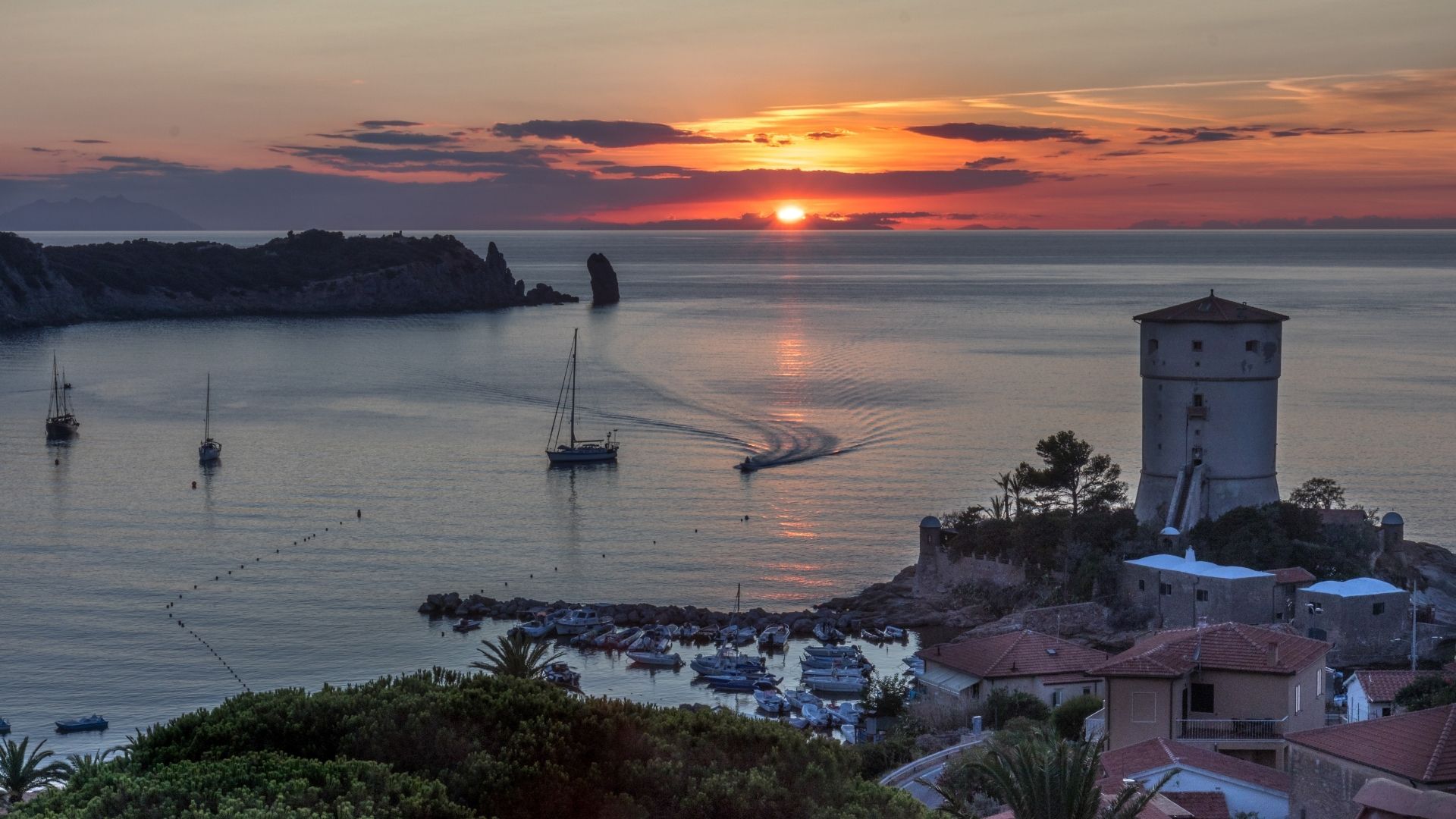
Tramo de treinta millas náuticas en aguas abiertas hacia el sur desde Elba hasta Giglio. La travesía cruza el Tirreno abierto — Pianosa y Montecristo son visibles en el horizonte este al pasar el punto medio del canal, ambas dentro de la reserva marina, ambas efectivamente cerradas a los yates — y llega a la costa este de Giglio en unas tres o cuatro horas. El capitán ajusta el horario según el pronóstico de viento de la mañana; la ruta se hace a vela la mayoría de los días despejados y con motor en los demás.
Giglio Porto es un puerto de trabajo más pequeño que Portoferraio — unos ocho puestos popa a tierra para viajes en yate, todos los cuales se reservan pronto en temporada alta. Los yates de motor más grandes fondean en Cala delle Cannelle o Cala dell'Allume en la costa este; ambas están protegidas, ambas tienen agua transparente y pequeñas concesiones de playa en tierra. La geología de la isla es granítica, no caliza como la Toscana continental, y el agua recuerda más a Cerdeña que a la media del Tirreno. El Costa Concordia encalló justo al norte del puerto en enero de 2012; el naufragio ha desaparecido, la orilla no muestra casi ningún rastro, y el pueblo ha retomado el mismo ritmo de pesca y turismo de antes.
El movimiento definitorio en tierra en Giglio es hacia arriba. Giglio Castello se alza a 400 metros sobre el puerto — el pueblo medieval en la cima, fortificado por la familia Aldobrandeschi en el siglo XI, amurallado en piedra, y recorrible en veinte minutos dentro de sus puertas. Taxi o coche de alquiler para subir; la carretera serpentea durante unos seis kilómetros. Cena en tierra en Giglio Castello en Da Maria para los platos locales (panficato, el pastel de frutos secos de Giglio; pasta con conejo y hinojo silvestre) o de vuelta en el puerto en La Vecchia Pergola para el pescado junto al muelle. El cielo nocturno desde el pueblo en lo alto es suficientemente oscuro como para que las estrellas del Tirreno brillen notablemente más que sobre tierra firme.
Day Highlights
Día 6 de 7 · Giglio → Argentario
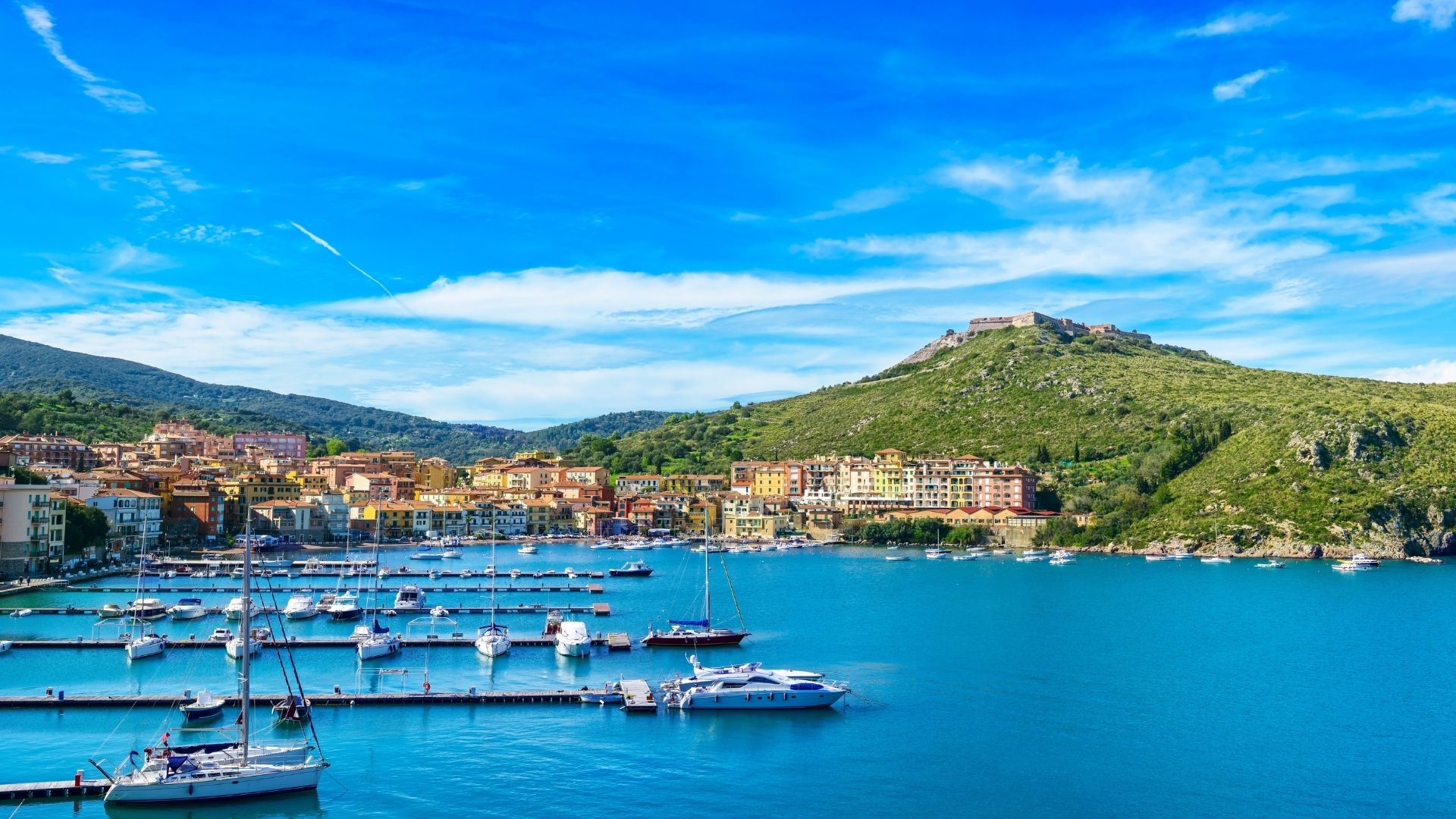
Once millas náuticas al este desde Giglio cruzando el canal hasta la península de Argentario, el punto de quiebre sur del área de navegación. El Argentario es geográficamente una antigua isla unida a la Toscana continental por tres tomboli de arena — Feniglia, Giannella y el dique interior a través de la laguna de Orbetello — que se rellenaron con miles de años de sedimentación; desde el agua y desde el yate sigue pareciendo una isla. La península tiene dos pueblos portuarios en lados opuestos: Porto Ercole en el flanco este, Porto Santo Stefano en el noroeste, con la masa boscosa del Monte Argentario entre ambos.
Porto Ercole es el más refinado de los dos y el fondeo habitual para esta ruta. Los españoles fortificaron el puerto en el siglo XVI con tres fortalezas — Forte Filippo, Forte Stella y Rocca Aldobrandesca — que aún rodean el promontorio; el propio puerto se asienta bajo ellas en una dársena cerrada. Cala Galera, el marina a un kilómetro al sur, tiene los puestos de amarre más grandes cuando el muelle de Porto Ercole está lleno. Caravaggio murió en esta orilla en julio de 1610, habiendo desembarcado enfermo de fiebre tras su último viaje desde Nápoles; la pequeña iglesia en la calle del puerto, San Sebastiano, conserva el memorial local, y la lápida en disputa se encuentra en el cementerio parroquial en la ladera de arriba.
La cena en tierra es el cierre canónico del tramo toscano. Il Pellicano está en su propia bahía al sur de Porto Ercole — el restaurante del hotel tiene dos estrellas Michelin y la reserva necesita hacerse con una semana de antelación en temporada — y es la opción de alto registro. La Capannina en la calle principal de Porto Ercole es la opción del pueblo de toda la vida para el pescado del día; la Osteria dei Nobili Santi, a una manzana del puerto, es el punto medio más tranquilo. El yate pernocta en el puerto; las fortalezas iluminadas de Argentario sobre el puerto cierran el día mejor que la mayoría de las bahías.
Day Highlights
Día 7 de 7 · Día de cierre
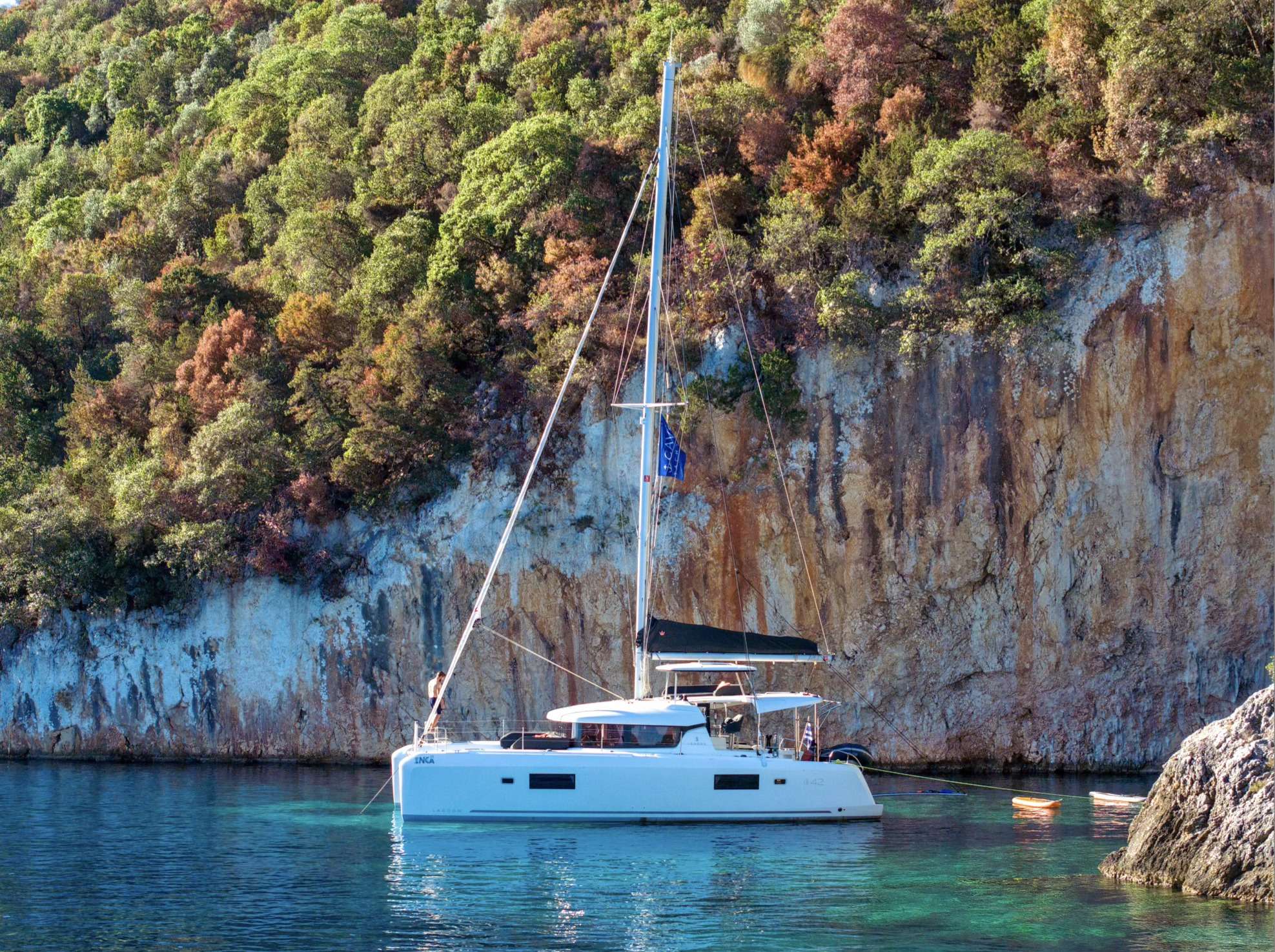
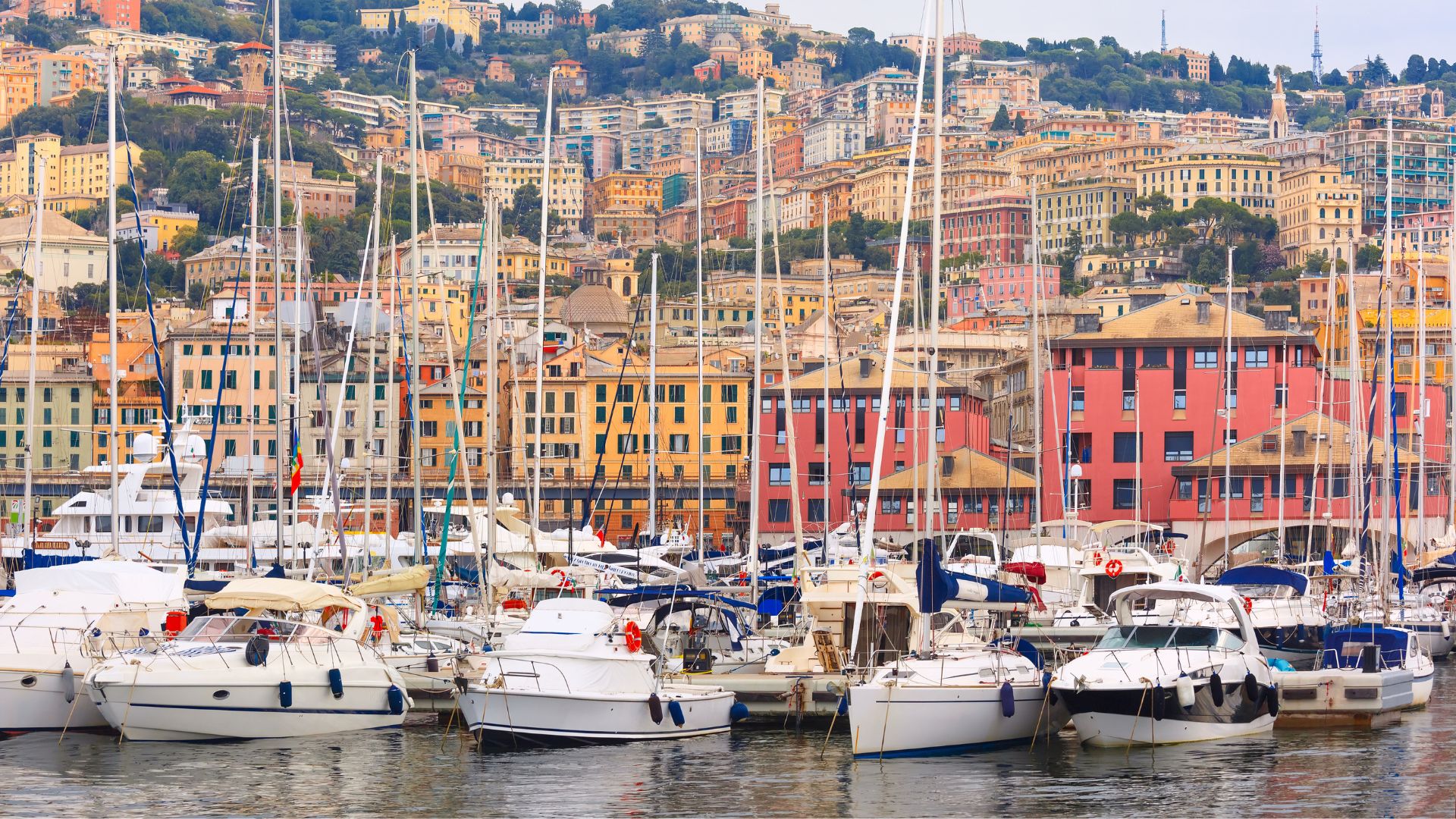
El día de cierre sigue siendo un día de viaje en yate de verdad y no se disuelve en logística administrativa. Movimiento matinal hacia el sur o el este hasta Giannutri — la más meridional de las siete islas del archipiélago toscano, a unas ocho millas náuticas al sur de Argentario — para la mejor bahía de baño de la semana. Giannutri está dentro de la reserva marina, fondear sobre posidonia está prohibido, y el capitán toma una de las boyas autorizadas en la costa oeste. Las ruinas romanas en Cala Maestra (la villa del siglo II d.C. de la gens Domitia) se encuentran a un corto paseo desde la cala y son accesibles en lancha auxiliar y a pie si el grupo quiere añadir la visita histórica; el agua abajo es la parada más limpia del tramo sur.
Salida a media tarde hacia el norte en dirección a la base de desembarque. La ruta puede volver vía Giglio o ir directamente al norte hacia Elba y Portoferraio, dependiendo de dónde el capitán tenga el yate posicionado para el cambio del sábado. La mayoría de los yates en este circuito pasan su última noche en Cala Galera (Argentario), Portoferraio o de vuelta en Marciana Marina en Elba — la última noche se determina según la logística del traslado matinal a PSA, GOA o el FCO de Roma si los planes del grupo continúan hacia el sur.
Cena de la última noche en tierra donde el yate haya hecho escala — Il Pellicano si la noche cerró de vuelta en Argentario, Stella Marina en Portoferraio, o uno de los puertos más pequeños a discreción del capitán. Un último aperitivo en la cubierta de popa antes de cenar, un último puerto iluminado al caer la noche, y una última noche que sigue perteneciendo al viaje. Las millas de la semana suman unas noventa millas náuticas de extremo a extremo — modestas para los estándares mediterráneos, y la respuesta perfecta para una costa que premia el ritmo de bahía y las veladas en el puerto sobre las largas travesías.
Day Highlights
Día 8 · Desembarque
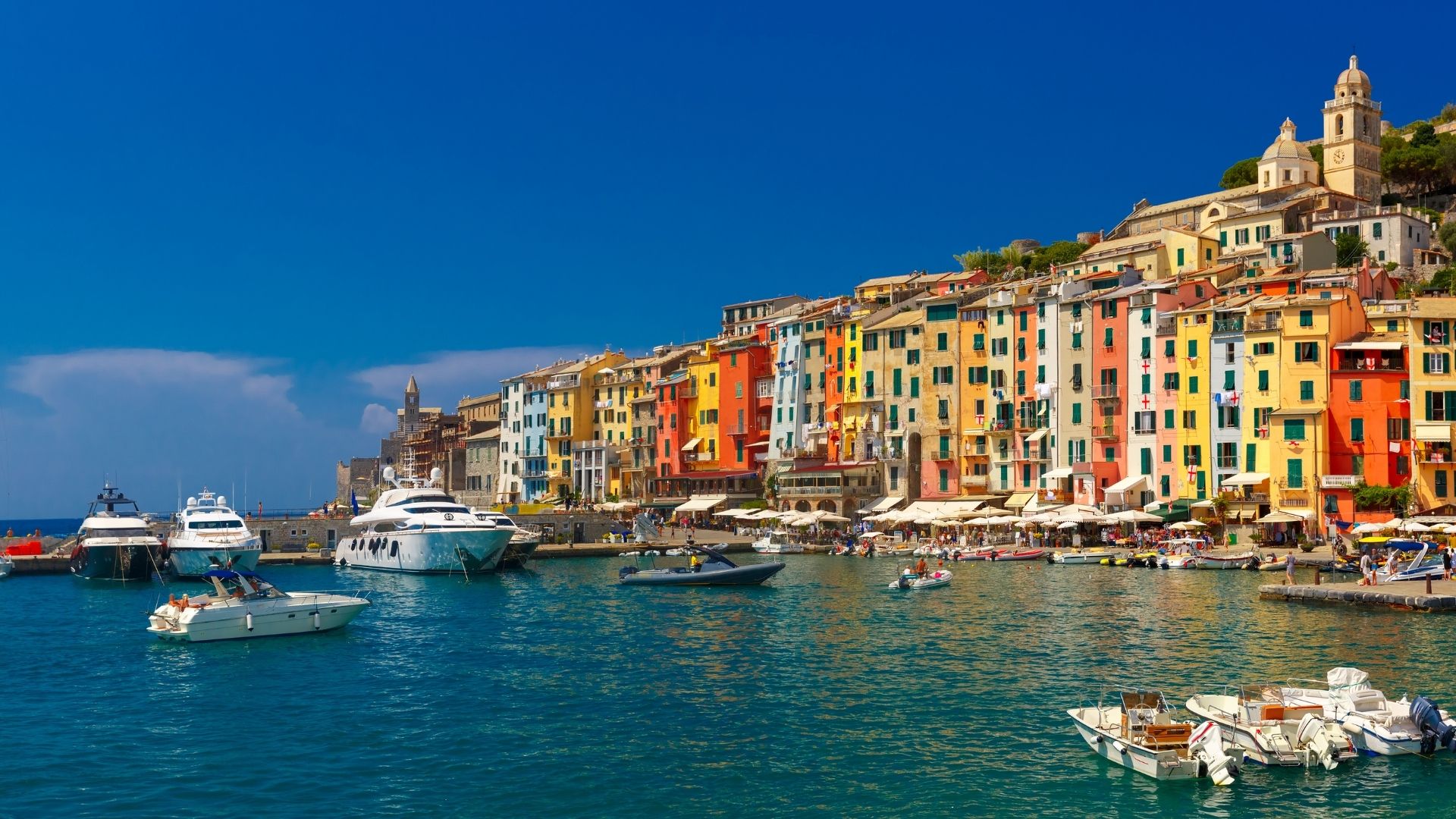
Desayuno a bordo, equipaje en tierra y traslado de salida por La Spezia, Pisa, Génova o una de las combinaciones toscanas de ferry y tren según donde el yate haya pasado la última noche. Desde Marina Porto Mirabello en La Spezia, PSA está a cuarenta y cinco minutos en coche y el tren directo a Milán tarda unas tres horas. Si el yate desembarca en Portoferraio en Elba — una opción válida para algunas rutas — el traslado habitual es el ferry de una hora hasta Piombino en la Toscana continental, y después en tren o carretera hacia el sur hasta Roma (unas tres horas) o hacia el norte hasta Pisa (una hora).
La ruta termina exactamente donde debe — más tranquila que la semana centrada en Liguria, más amplia de lo que la mayoría espera de un viaje en yate por la 'Riviera Italiana', y construida en torno a tres islas genuinamente distintas en lugar de un único racimo de Cinque Terre. La mayoría de los grupos que hacen esta versión vuelven para el clásico de Liguria en un segundo viaje, o para la cadena más larga hacia las Islas Pontinas al sur de Argentario; el capitán y el agente de yate repasan las opciones para el segundo viaje antes de que el grupo se disperse.
Want to share or come back to this voyage later?
Bookmark this voyage →Itinerario con Tripulación · Riviera Italiana y Toscana
Este es el itinerario premium de sentido oeste en ruta de un solo camino — la costa de Portofino y Liguria dejando paso a San Remo, Menton, Cap Ferrat, Villefranche y Monaco a lo largo de siete noches, con llegada a Port Hercule. Unas noventa millas náuticas de extremo a extremo, con un ascenso progresivo de registro: desde los pequeños puertos italianos hasta el corredor de megayates más denso del Mediterráneo occidental. El viaje comienza en calma y termina con toda la intensidad, por diseño.
Es una semana orientada al yate a motor. La ruta resulta más convincente cuando las travesías se desarrollan con comodidad, los tramos del oeste de Liguria se sienten como crucero y no como singladura forzada, y la llegada a Monaco transmite elegancia natural, no esfuerzo. Los yates a motor modernos de 24 a 60 metros dominan la oferta disponible; los superyates de mayor eslora encajan bien en la segunda mitad. El Festival de Cine de Cannes (mediados de mayo) y el Grand Prix de Monaco (último fin de semana de mayo) bloquean los amarres del corredor con doce o más meses de antelación — el capitán y el agente de yates analizan los precios en ventanas de eventos y la disponibilidad de amarres antes de confirmar las fechas.
La ruta comienza en Liguria y termina en Monaco — Portofino, la costa del Tigullio, San Remo, Menton, Cap Ferrat, Villefranche y Port Hercule a lo largo de unas noventa millas náuticas. La mitad italiana conserva el carácter de pueblo, la gastronomía ligurina y la escala íntima de sus puertos. La mitad francesa aporta el acabado de mayor prestigio del corredor — las villas Belle Époque de Cap Ferrat, la bahía de aguas profundas de Villefranche y el propio Monaco.
Es la ruta más sólida para los huéspedes que saben que quieren la Riviera pero aún están decidiendo qué tipo de semana en la Riviera desean — y para los grupos que usan el viaje en yate como un viaje especial en el que la llegada a Monaco es parte central del plan. Si el objetivo es puramente italiano, el itinerario de ida y vuelta desde Portofino es la opción más limpia. Si la intención es vivir la Côte d'Azur desde el primer momento, la página dedicada a la Riviera Francesa es el punto de entrada adecuado. El valor de esta ruta reside en el contraste, no solo en la geografía.
Día 1 de 7 · Génova → Portofino
El embarque en Génova hace que el primer día sea eficiente y permite llegar a Portofino con claridad por la tarde. Marina Genova Aeroporto está a quince minutos del aeropuerto GOA; Porto Antico, en el centro de la ciudad, es la alternativa para los grupos que llegan el día anterior. La tripulación recibe al grupo en el muelle, recorre el yate, estiba el equipaje y repasa la carta de navegación de la semana. El chef termina el aprovisionamiento mientras el almuerzo se sirve en la cubierta de popa.
Apertura de dieciséis millas náuticas hacia el este rodeando el promontorio de Portofino hasta la dársena al otro lado. La cuenca alberga cerca de una docena de puestos de atraque de popa dentro del dique exterior; los yates a motor más grandes fondean en la bahía de Paraggi, la cala esmeralda a un corto trayecto en bote auxiliar hacia el oeste. La primera noche importa para el resto de la ruta: es aquí donde el viaje establece qué significa el lado italiano de la comparación antes de dar paso al final francés.
Aperitivo en tierra en La Gritta American Bar — la terraza del puerto y el primer trago de la tarde más fotografiado de la Riviera Italiana — con el Belmond Splendido visible en el acantilado al oeste. Cena en la piazzetta en Puny o Da U Batti, los dos restaurantes históricos del puerto en torno a los cuales gira la vida del pueblo; el capitán reserva en cualquiera de los dos. El yate está amarrado antes de las 6 de la tarde, el pueblo está a cinco minutos a pie desde la pasarela, y el contraste entre Portofino y Monaco queda establecido desde el primer día.
Day Highlights
Día 2 de 7 · Costa del Tigullio
La ruta se concede un día más en Liguria en lugar de dejar Portofino como una parada fugaz. Salida por la mañana rodeando el promontorio hasta San Fruttuoso, la cala de la abadía en el lado marino de la península de Portofino. La abadía fue construida por monjes benedictinos en el siglo X; la familia Doria se hizo con ella en el siglo XIII y reconstruyó la iglesia en su forma actual. No hay acceso por carretera — la única entrada es en barco o a pie por un sendero de dos horas desde Portofino — de modo que la cala acoge unas pocas docenas de yates en un sábado de calor y prácticamente nada más. Bote auxiliar a tierra para visitar la abadía, baño en la orilla rocosa y un vistazo desde el agua al Cristo de los Abismos, la figura sumergida a diecisiete metros desde 1954 como memorial a los buceadores perdidos en el mar.
Almuerzo a bordo al ancla o bote auxiliar a tierra en Da Giovanni, la pequeña trattoria al pie del muro de la abadía. Parada vespertina para bañarse en Paraggi — la vieja terraza de Bagni Fiore sobre la bahía o el beach club de Langosteria Paraggi a pie de agua — antes del corto trayecto hasta Santa Margherita Ligure para la segunda noche. El puerto es el mayor de los dos del Golfo de Tigullio, con una flota pesquera activa, el Imperiale Palace en el lado este de la bahía y una calle principal real de focaccerie y trattorias tierra adentro desde el muelle.
Dejar que la mitad italiana se disfrute a fondo es lo que hace que la mitad francesa se viva como contraste y no como sobreescritura. Cena en tierra en Trattoria dei Pescatori con el pescado del día, Skipper Bar a una manzana del puerto para una noche más tranquila, o Da O Vittorio tierra adentro para las especialidades liguras de la zona — pansoti con salsa de nueces, la focaccia di Recco que el pueblo de arriba hornea a diario, trofie al pesto. La noche anterior al gran empuje hacia el oeste funciona mejor como cierre tranquilo, no como preparación para el kilometraje de la mañana siguiente.
Day Highlights
Día 3 de 7 · Liguria de poniente
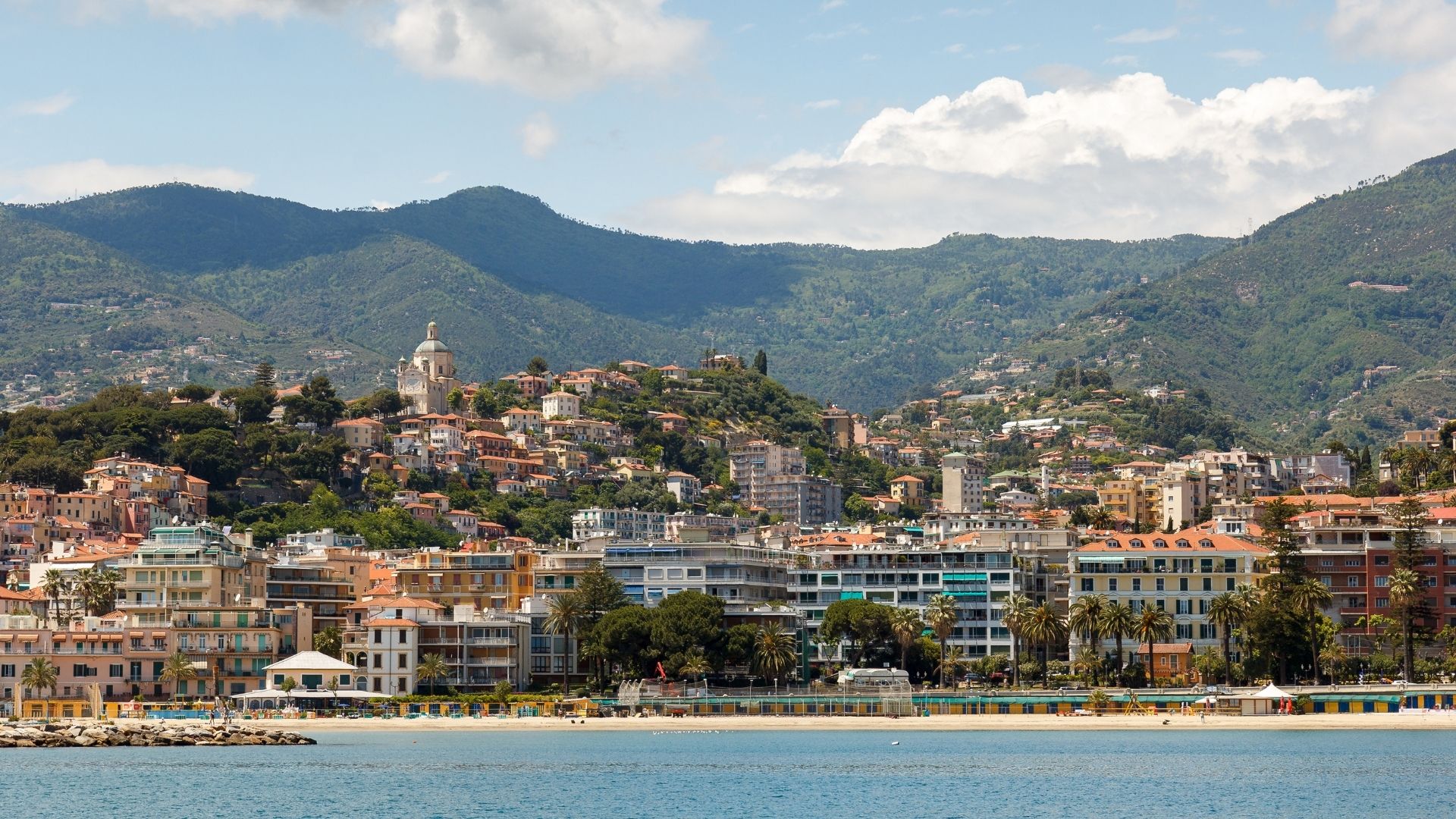
El tramo más largo del itinerario y el que saca la ruta del reducido bolsillo de Portofino hacia la costa más amplia del oeste de Liguria. Unas setenta y cinco millas náuticas de Santa Margherita a San Remo, cubiertas en una singladura diurna — el capitán sale de Santa Margherita temprano para dejar atrás la costa abierta antes de que se desarrolle la térmica suroeste de la tarde. En un yate a motor de treinta nudos el tramo son unas tres horas de navegación; en un barco más lento, cinco o seis. Almuerzo en la cubierta de popa en ruta; la plataforma de baño baja en una de las paradas de natación a la largo del camino si las condiciones lo permiten.
La costa entre Génova e Imperia es el tramo menos conocido de Liguria — Cervo, Diano Marina, Alassio e Imperia, todos ellos pueblos costeros italianos con vida propia, muy distintos de los puertos pesqueros de la mitad oriental. La ruta los pasa de largo; este es el día que se gana el resto del final occidental. A media tarde el yate está en San Remo, la mayor ciudad portuaria entre Génova y la frontera francesa y la bisagra práctica entre las dos identidades de la Riviera.
Portosole es la marina que acoge los yates a motor más grandes; el antiguo Porto Vecchio en el centro de la ciudad tiene amarres más pequeños y la flota pesquera local. El Casino di San Remo sobre el casco antiguo abrió en 1905 y sigue en funcionamiento — un superviviente Belle Époque con las salas de juego originales y una sala de club separada para bacará de altas apuestas. El barrio medieval, conocido localmente como La Pigna porque las calles ascienden en espiral por la colina formando un patrón de piña, se recorre en quince minutos desde el puerto. Cena en tierra en Pesce Pazzo en el puerto con el pescado del día, Da Vittorio arriba en el pueblo para la cocina ligurina local, o Buca di Bacco para el registro de pueblo trabajador que el puerto aún conserva.
Day Highlights
Día 4 de 7 · Entrada en Francia
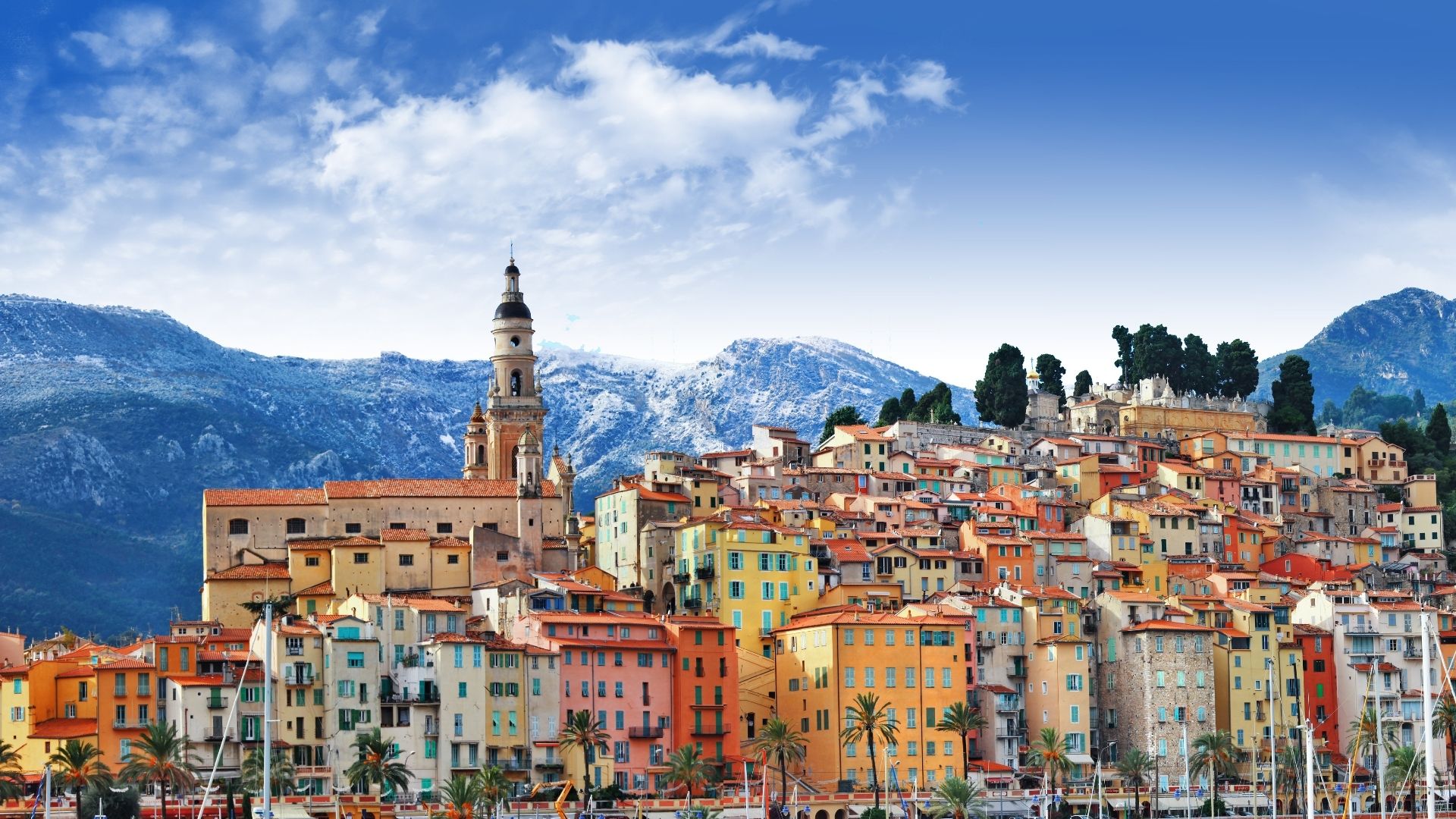
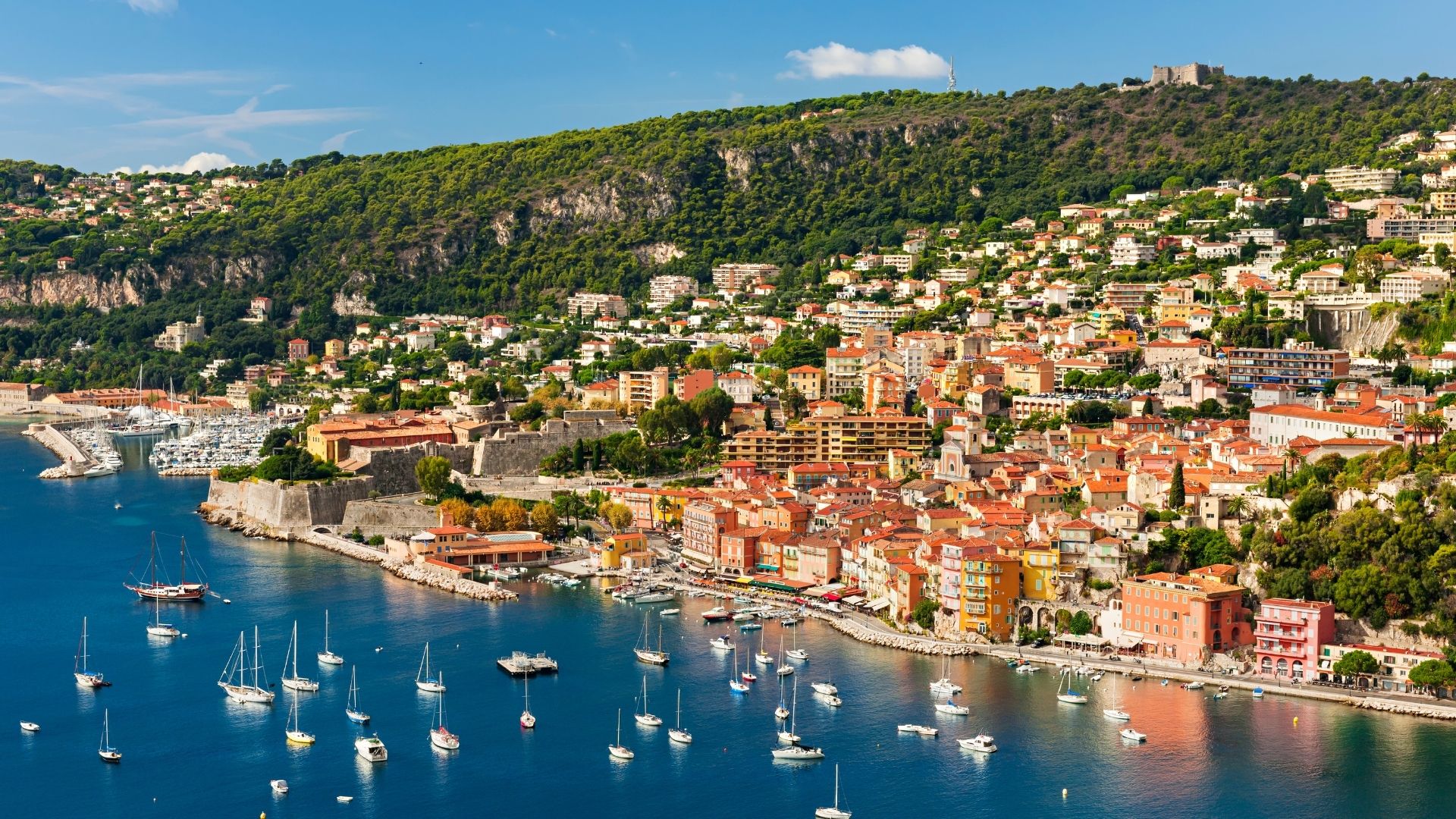
Travesía de doce millas náuticas desde San Remo hasta Francia. La frontera marítima frente a Menton es una línea Schengen interna a efectos de alquiler de yate, por lo que no hay parada aduanera; el capitán registra el tránsito y el yate la cruza sin más trámites. Menton es la ciudad más oriental de la Riviera Francesa y resulta una primera noche francesa más serena que saltar directamente a Monaco — la arquitectura cambia visiblemente al pastel Belle Époque, el idioma pasa al francés, el registro gastronómico se orienta hacia lo nizardo (pissaladière, la clásica coca de anchoas y cebolla; barbajuan, el pastel frito monegasco; socca, la torta de garbanzo de Niza), y la costa empieza a leerse inequívocamente como Côte d'Azur sin comprometerse aún con el glamour de máxima densidad.
El yate dentro del Vieux Port de Menton o fondeado frente a la costa en la bahía de Garavan, al este del pueblo. El puerto es pequeño — unos treinta amarres aptos para yates — así que los yates a motor de mayor eslora fondean. La huella de Cocteau da forma a buena parte del litoral: el Bastión del puerto es la fortaleza del siglo XVII que Cocteau transformó en su propio museo en 1957, decorado por sus propias manos por dentro y por fuera; el Museo Jean Cocteau propiamente dicho abrió en el paseo marítimo en 2011 y alberga la colección más amplia. La Salle des Mariages en el ayuntamiento — también pintada por Cocteau, también accesible a pie desde el muelle — es la tercera parada si el programa lo permite.
Los jardines son el otro registro de Menton. El Jardin Serre de la Madone y el Jardín Botánico Val Rahmeh se alcanzan a pie desde el puerto; los limoneros sobre el pueblo son la fuente del Festival del Limón de la ciudad cada febrero. La cena en tierra en Mirazur — el restaurante de tres estrellas Michelin de Mauro Colagreco en el acantilado sobre el pueblo, elegido Mejor Restaurante del Mundo en 2019 — es la opción de mayor registro (reserva con un mes de antelación en temporada); Le Riva en el puerto para el pescado del día; A Braijade Meridiounale tierra adentro para la cocina nizarda a la brasa. El capitán gestiona la reserva en cualquiera de los dos.
Day Highlights
Día 5 de 7 · Costa de Cap Ferrat
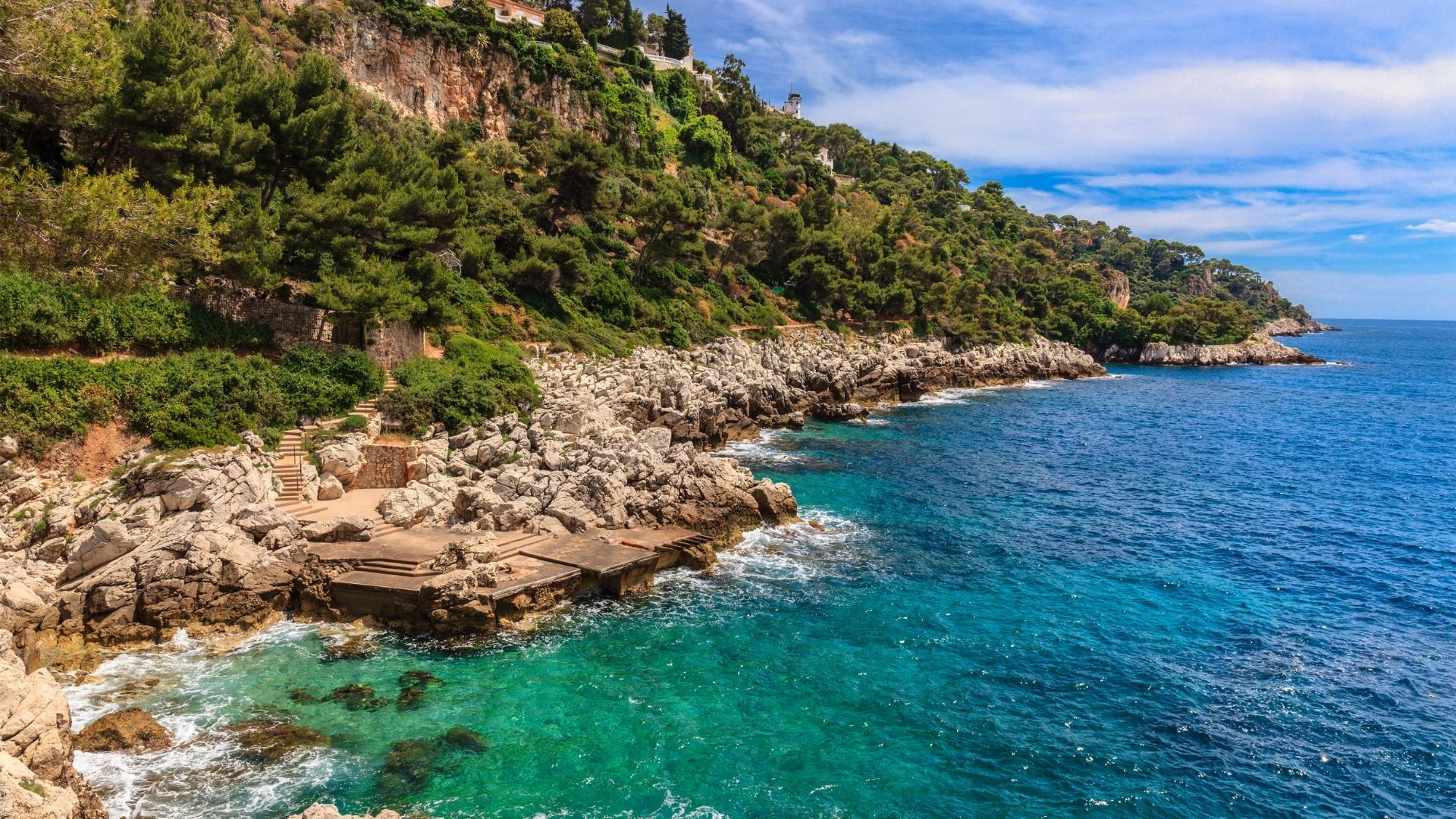
Cap Ferrat es el punto de inflexión visual del itinerario. Catorce millas náuticas al oeste desde Menton a lo largo de la costa, pasando por Cap Martin (la cabaña modernista de Le Corbusier, el Cabanon, aún en la orilla al este de Roquebrune) y el flanco este de Monaco sin detenerse aún. La costa se vuelve abiertamente jalonada de villas y visiblemente Belle Époque — fincas rosas y ocre en acantilados sobre pequeñas calas privadas, la mayoría construidas entre 1880 y 1914, cuando la Riviera era el destino invernal de la nobleza rusa y británica. La península de Cap Ferrat se adentra hacia el sur entre Beaulieu y Villefranche; la carretera del acantilado que la rodea es el tramo más concentrado de propiedades de legado histórico en toda Francia.
Visita matinal a Villa Ephrussi de Rothschild — la villa Belle Époque rosa construida en 1912 por Béatrice de Rothschild en la silla norte de la península, donada a la Académie des Beaux-Arts en 1934 y abierta al público. Nueve jardines temáticos en la propiedad; las vistas desde la logia se extienden al este hacia Beaulieu y al oeste hacia Villefranche. Almuerzo en tierra en Plage Paloma en el lado sur de la península (el Grand-Hôtel du Cap-Ferrat gestiona el beach club más cuidado; Paloma es la cala más pequeña con restaurante) o a bordo al ancla en una de las pequeñas calas de la costa este de la península.
Traslado por la tarde a la bahía de Villefranche — unas tres millas náuticas más al oeste. La bahía es el fondeadero de aguas profundas que ha acogido flotas navales desde el siglo XVII (originalmente la flota rusa, después la británica, luego la Sexta Flota de EE. UU. hasta principios de los años sesenta); hoy es el fondeadero preferido exclusivamente por yates entre Monaco y Niza. La bahía baja a noventa metros a cincuenta metros de la playa, lo que permite incluso a los grandes yates a motor fondear muy cerca de la orilla. Villefranche-sur-Mer se extiende a lo largo de la costa este; la Chapelle Saint-Pierre en el puerto fue pintada por dentro por Cocteau en 1957 (la tercera parada Cocteau de la ruta), y la medieval Rue Obscure — un pasaje abovedado del siglo XV bajo el casco antiguo — va desde la iglesia hasta la ciudadela. Cena en tierra en La Mère Germaine en el muelle o a bordo al ancla para una noche más tranquila.
Day Highlights
Día 6 de 7 · Día de aproximación a Monaco
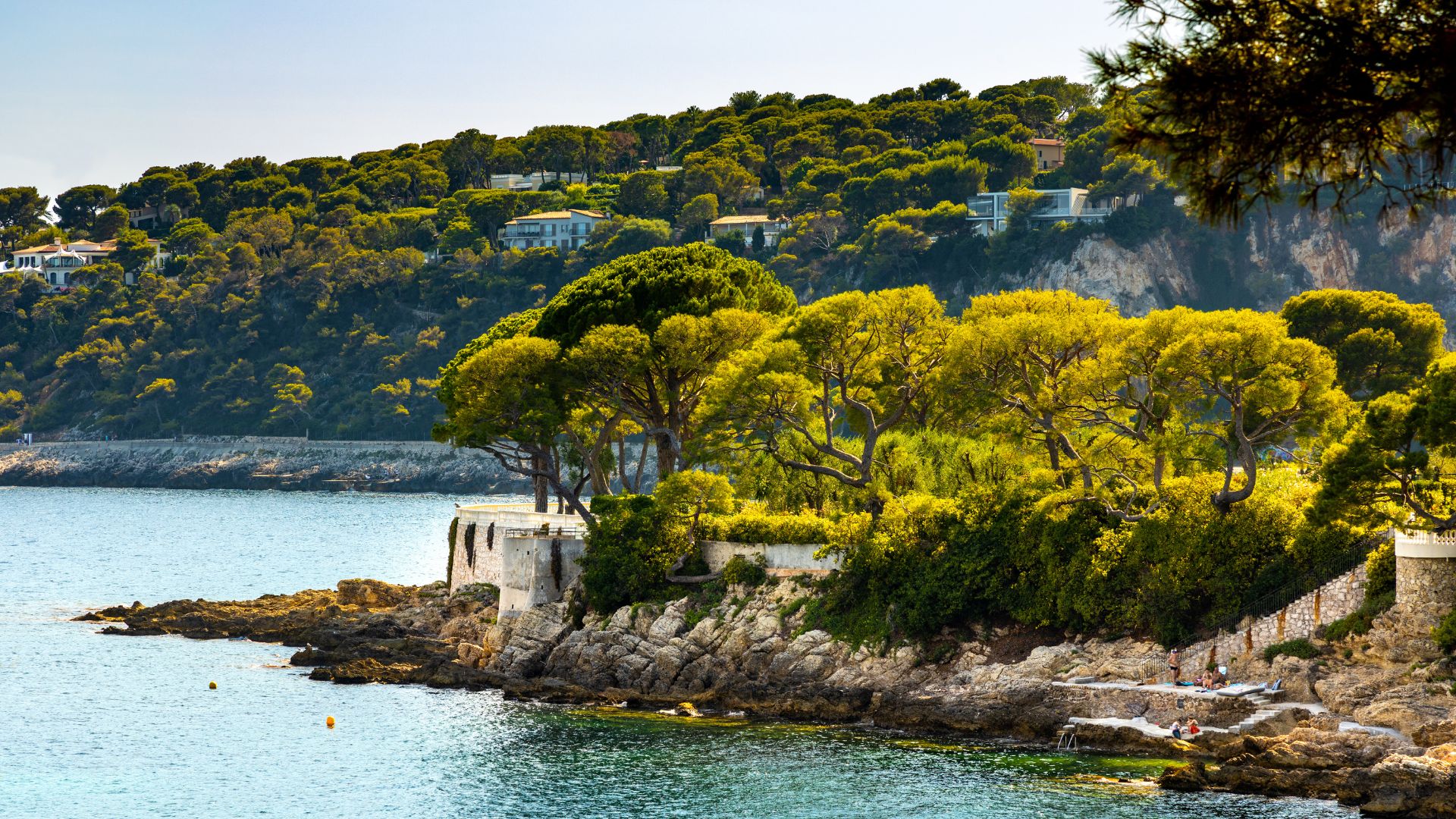
El último día completo de navegación de la ruta mantiene Monaco cerca sin consumir toda la jornada en el teatro de la llegada. Ocho millas náuticas a lo largo de la costa al este de Villefranche cubren Beaulieu-sur-Mer, el pueblo acantilado de Èze, Cap d'Ail y los accesos occidentales a Monaco — todo visible desde cubierta, sin necesidad de una parada completa en ningún punto. El capitán posiciona el yate para la noche al ancla frente a Cap d'Ail, en la pequeña marina de Beaulieu si se ha liberado un amarre, o en uno de los fondeaderos de aguas profundas a lo largo de la cornisa.
Èze es la excursión en tierra más destacada del día si el grupo lo desea. El pueblo medieval encaramado se asienta a 425 metros sobre el agua en una pared de acantilado, accesible a pie por el Camino de Nietzsche (el filósofo escribió Así habló Zaratustra paseando por esta colina en 1883) desde Èze-Bord-de-Mer, o en coche desde la carretera de la cornisa. El Château de la Chèvre d'Or — un hotel Relais & Châteaux construido en las murallas medievales del pueblo — ostenta dos estrellas Michelin y es la opción de almuerzo de mayor registro; el Jardin Exotique d'Èze en la cumbre del pueblo ofrece la panorámica más limpia entre Niza y Monaco. Veinte minutos de bajada de vuelta al yate cuando la visita termina.
Última hora de la tarde de vuelta al ancla, tablas de paddle surf en el agua, el chef preparando la cena, la costa de la cornisa a un lado y los rascacielos de Monaco apenas visibles al este. Cena a bordo en su mayor parte — las opciones gastronómicas en los muelles de Cap d'Ail y Èze son más limitadas que las de Villefranche o Beaulieu, y la noche siguiente pertenece a Monaco de todas formas. El yate está en posición para el corto acercamiento matinal a Port Hercule; el último tramo es ya tan breve que los tiempos los decide el grupo y no la ruta.
Day Highlights
Día 7 de 7 · Llegada final
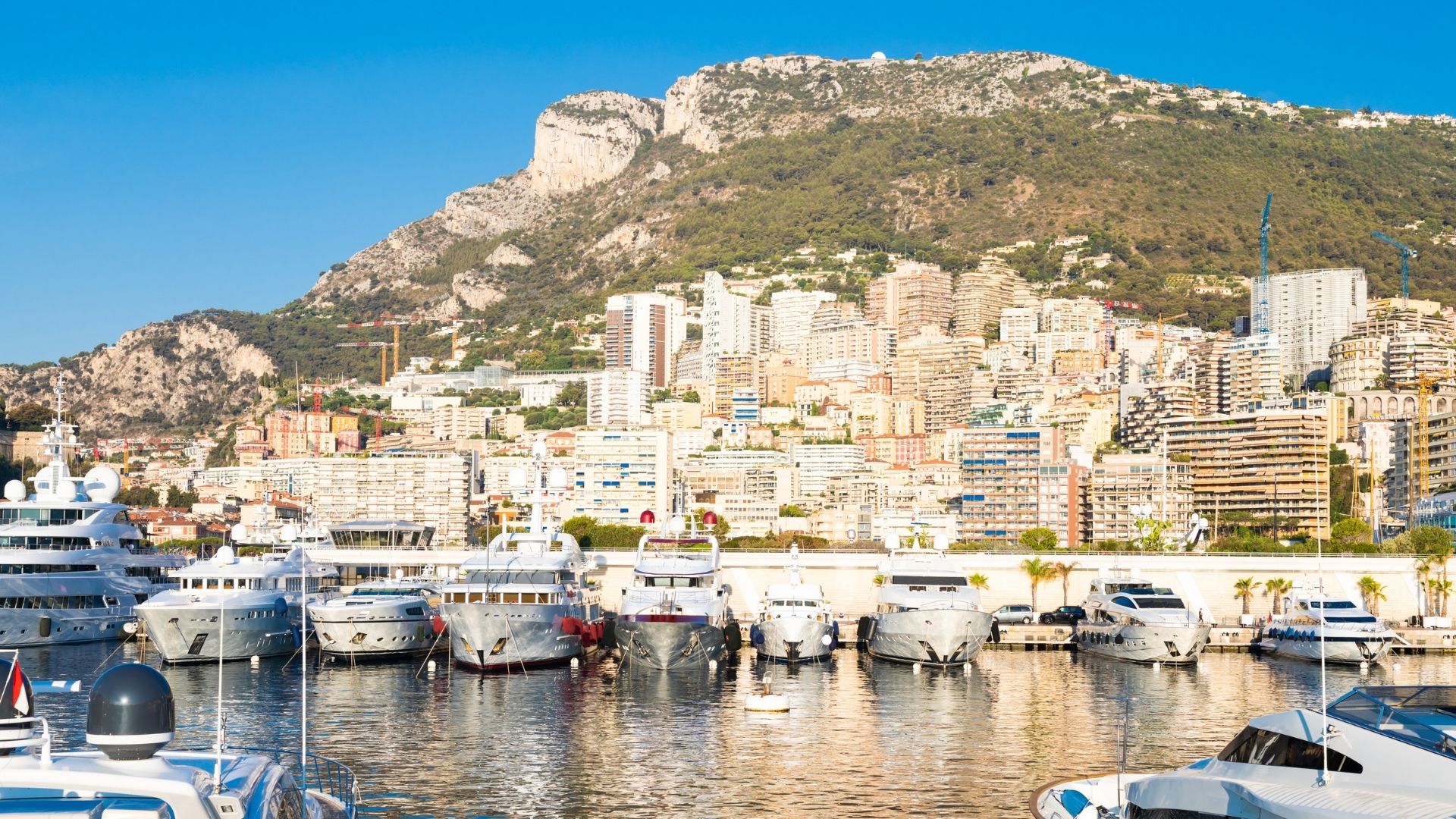
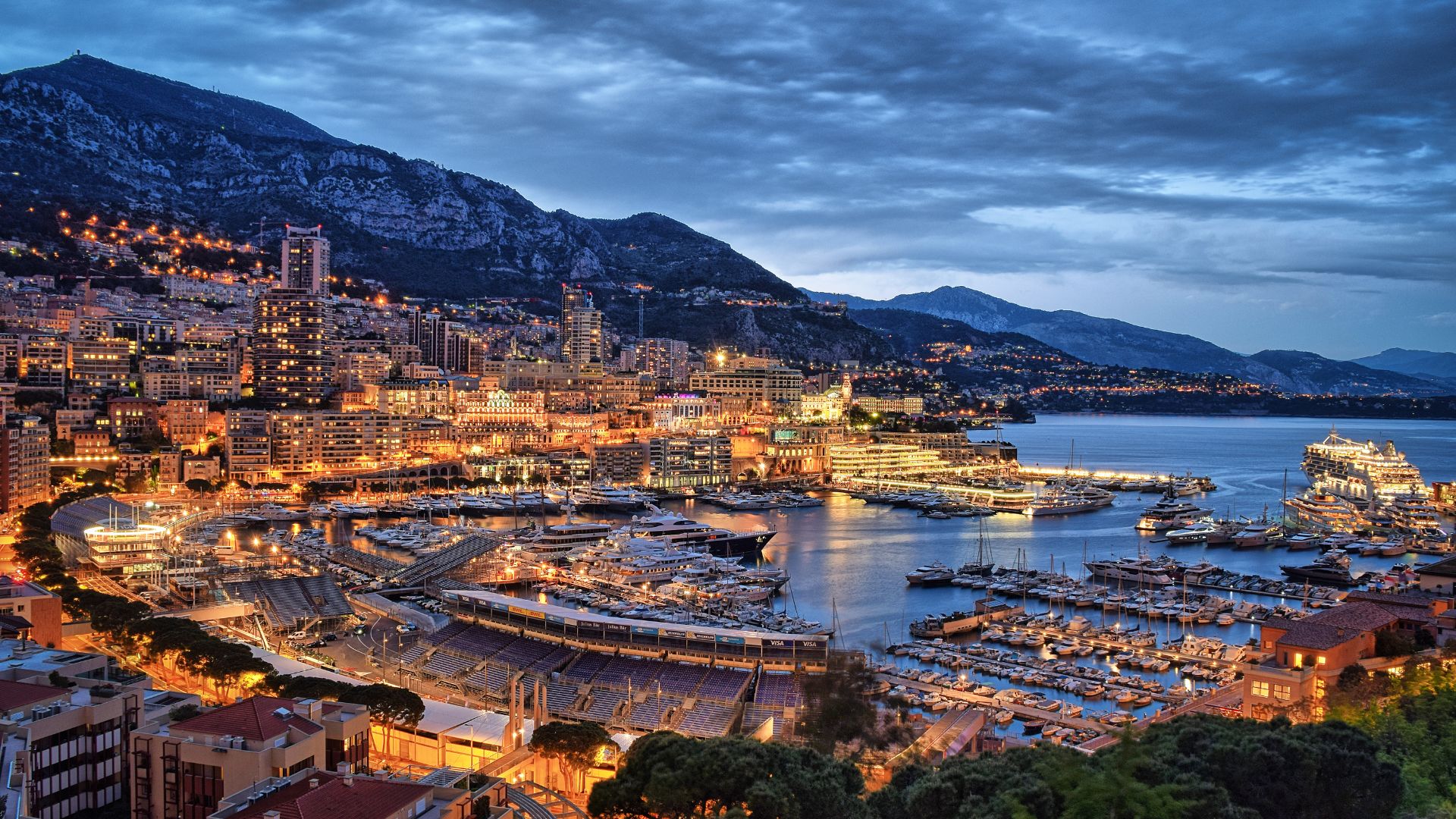
Corta aproximación de cinco millas náuticas hacia el este hasta Port Hercule. El puerto es el principal fondeadero de aguas profundas de Monaco y uno de los puntos de infraestructura para megayates más concentrados del Mediterráneo — el Quai Antoine 1er acoge yates de hasta 110 metros, el dique (el rompeolas flotante de hormigón que prolonga la pared este del puerto) gestiona los superyates de mayor tamaño, y el más pequeño Quai des États-Unis en el lado oeste acoge los alquileres de yate a motor de 24 a 60 metros. Los amarres en temporada son muy limitados; el agente de yates confirma el puesto antes de la llegada. El yate está atracado a media mañana, y el principado se recorre en tres minutos desde la pasarela.
El Yacht Club de Monaco — el edificio de Norman Foster de 2014 en el lado este del puerto, con su superestructura en terrazas inspirada en un yate a motor de lujo — concentra la vida social del sector náutico más intensa del mundo durante la temporada. Los visitantes de paso no pueden acceder al club como tal, pero el paseo del Quai Antoine 1er discurre bajo él y es uno de los mejores recorridos a pie de la semana. Almuerzo en La Marée en Quai des États-Unis (frente al mar, pescado, clásico), Maya Bay (fusión asiática, la opción de almuerzo que se prolonga hasta la hora de los cócteles) o en la azotea de Le Grill del Hôtel de Paris para el registro de Casino Square. El Casino de Monte-Carlo, el propio Hôtel de Paris y la Place du Casino están a diez minutos a pie cuesta arriba desde el puerto.
La cena de gala en tierra es el cierre canónico — Le Louis XV en el Hôtel de Paris (Alain Ducasse, tres estrellas Michelin, la apuesta de mayor registro en Monaco; reserva con un mes de antelación), Cipriani Monte-Carlo, o Beefbar para el cierre con protagonismo de la carne. También funciona cenar a bordo en el muelle para la última noche más tranquila; las luces del puerto y la chicane de la primera curva del Grand Prix visible desde la cubierta de popa hacen buena parte del trabajo de cierre. El contraste aterriza aquí: el viaje que comenzó en una piazzetta de Portofino recorrible en cinco minutos termina en Port Hercule, donde el país entero se recorre en veinte.
Day Highlights
Día 8 · Desembarque
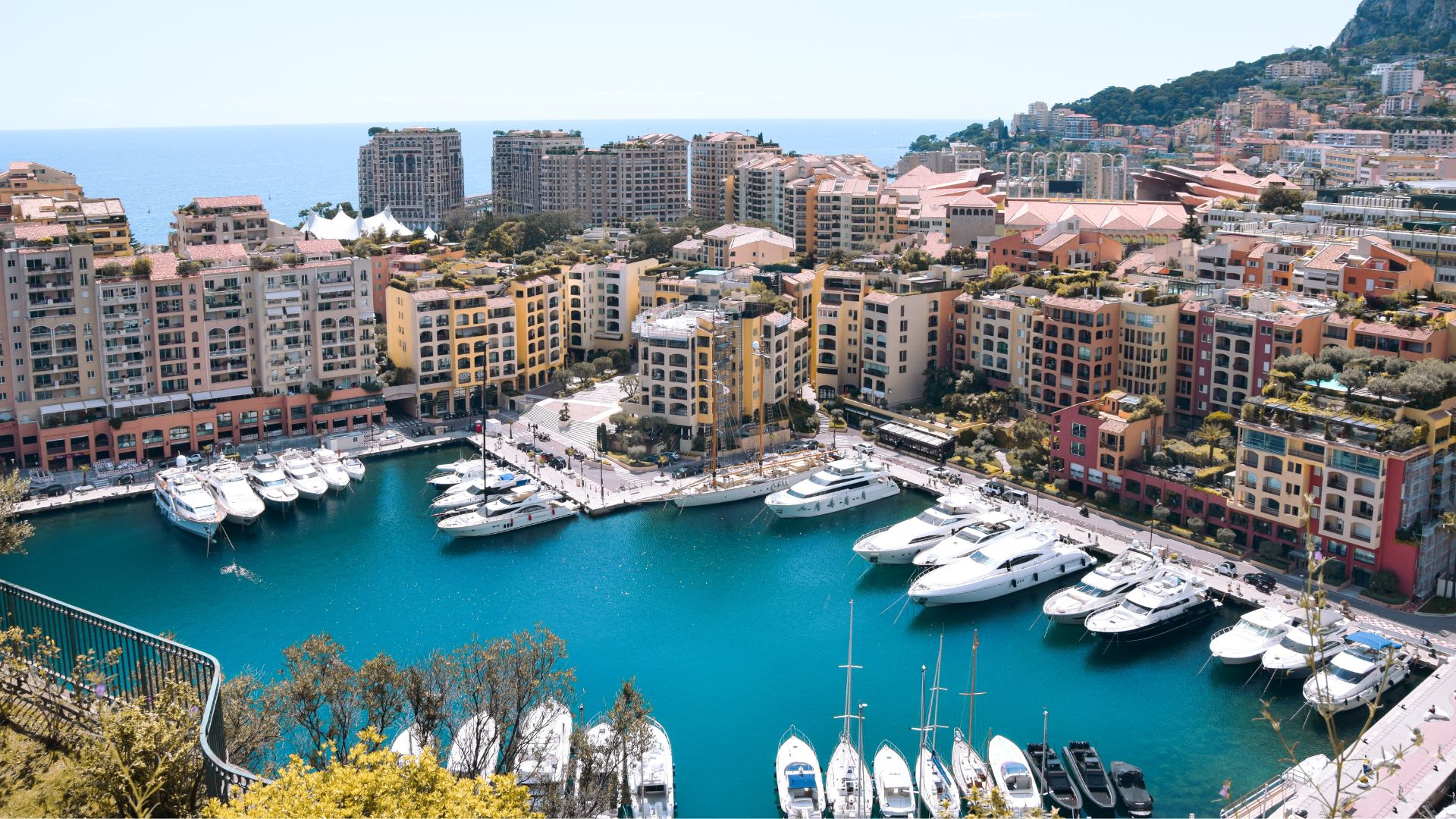
Desayuno a bordo en el muelle de Port Hercule, equipaje en tierra y traslado en coche o helicóptero según los planes del grupo. Niza (NCE) es el aeropuerto habitual para las salidas — treinta minutos en coche por la cornisa o seis minutos en helicóptero de Monacair desde el helipuerto de Fontvieille, con lanzadera en intervalos de veinte minutos. Los trenes directos desde la estación de Monaco-Monte Carlo llegan a Marsella en tres horas y a París en TGV en seis. Algunos grupos se quedan en Monaco una o dos noches más en el Hôtel de Paris, el Hôtel Métropole o el Hôtel Hermitage; el capitán coordina los tiempos con el embarque de los siguientes huéspedes si es el caso.
La ruta funciona porque no le pide a una costa que imite a la otra. Portofino sigue siendo Portofino; Monaco sigue siendo Monaco. Cada registro mantiene su propia escala y su propia identidad gastronómica, y el yate es el único elemento que los une. La mayoría de los grupos que realizan esta versión regresan para un viaje en yate más largo por Italia en el siguiente viaje, o para una semana completa en la Côte d'Azur en la página dedicada a la Riviera Francesa; el capitán y el agente de yates repasan las opciones para el segundo viaje antes de que el grupo se disperse.
Want to share or come back to this voyage later?
Bookmark this voyage →
When to go, what it costs, and how to get there — the practical answers guests ask before booking a Italian Riviera & Tuscany crewed yacht charter.
Julio y agosto son las semanas de mayor actividad en la temporada de la Riviera Italiana. Las temperaturas del aire rondan los 30 °C, las del agua alcanzan su punto máximo en torno a los 24 °C, y los pueblos de las Cinque Terre registran los índices de visitas más altos del año — la mayoría llega en tren y ferry. El valor de un yate en esta costa es más evidente en temporada alta: acceso tranquilo por las mañanas antes de que se instalen las multitudes del día, y puertos serenos al anochecer una vez que los excursionistas se van. Los amarres en el muelle de Portofino y Santa Margherita se reservan con meses de antelación en temporada alta. La mayoría de los días transcurren entre travesías matinales y largas tardes al ancla, con cena en tierra una vez que el bullicio de los ferrys ha remitido. Las tarifas se sitúan entre un veinticinco y un cuarenta por ciento por encima de los hombros de temporada.
Junio y septiembre son las mejores semanas del año para esta costa. Las temperaturas del aire oscilan entre los 25 y los 28 °C, el agua ronda los 24 °C en junio y sigue siendo perfecta para bañarse hasta principios de octubre, y los pueblos mantienen su ritmo cotidiano sin llegar a la densidad de agosto. Las tarifas bajan entre un veinte y un treinta por ciento respecto a la temporada alta. Finales de mayo y principios de octubre son viables para quienes tienen flexibilidad de calendario — el agua está algo más fresca, hay menos ferrys y los restaurantes están más tranquilos — con una salvedad: el Festival de Cannes a mediados de mayo y el Gran Premio de Mónaco a finales de mayo bloquean con mucha antelación toda la flota de yates a motor del Mediterráneo occidental para cualquier cruce de sentido único hacia la Côte d'Azur.
$30,000–$120,000 per week
El alquiler de yate con tripulación en la Riviera Italiana suele oscilar entre 30.000 y más de 100.000 USD por semana de tarifa base, según el tamaño del yate, el año de construcción y la tripulación. La flota de la Riviera tiende a ser más económica que la de Costa Smeralda o Capri — las distancias cortas y la cultura de atraque en popa favorecen los catamaranes y los yates a motor de tamaño pequeño a mediano. El modelo es más gastos, no todo incluido. La tarifa base cubre únicamente el yate y la tripulación. Alimentación, bebidas, combustible, amarre en marina, tasas portuarias, agua, electricidad y cualquier amarre premium se financian a través de una APA (Asignación Anticipada de Provisiones), prepagada en un treinta a treinta y cinco por ciento de la tarifa base y liquidada al final del viaje. La propina a la tripulación es del diez al quince por ciento en el Mediterráneo — menor que el quince a veinte por ciento del Caribe — y se paga directamente al capitán en el desembarque. El IVA italiano para yates es del veintidós por ciento sobre la tarifa base (el tipo estándar del país, vigente desde noviembre de 2020) y se añade en el momento de la reserva. Los viajes en yate se realizan de sábado a sábado como norma general. La ruta de sentido único de la Riviera Italiana a Mónaco tributa bajo el IVA italiano independientemente de dónde finalice el viaje; el impuesto se calcula en el lugar donde comienza la semana.
About chartering in the Italian Riviera & Tuscany.
We charter across the Western Mediterranean. Here are some other excellent alternatives.

Four cruising grounds in one country — the Amalfi Coast, Sardinia & Corsica, Sicily and the Aeolian Islands, the Italian Riviera south to Tuscany. The hardest part of an Italy yacht charter is choosing which week to take first.

Cliff-stacked villages and long lunches the tender reaches — the Italian summer the boat makes possible, anchored under the Faraglioni at sundowners and tied up in Amalfi by midnight.

Costa Smeralda granite coves and Bonifacio's white-cliff citadel six miles apart, the Strait between two islands cruised in a single afternoon — the Mediterranean the Italians and French keep mostly for themselves.

Stromboli erupting off the anchorage at Panarea, the Greek theatre at Taormina with Etna smoking behind, and the Cappella Palatina at Palermo's Norman Palace — the Mediterranean's only active-volcano cruising ground and the Italian week most guests book the second time they come.

Monaco's Port Hercule, Cap Ferrat's villa coast, Cannes and Antibes in the central corridor, and Saint-Tropez at the west end. The French Riviera is the western Mediterranean's maximum-glamour yacht week: shorter passages, premium dockage, Michelin density, and the visible harbor theater guests are usually booking on purpose.

Mallorca's mountain coast on one side, Ibiza and Formentera's clearer water and sand-bottomed coves on the other, and the yacht-only Cabrera National Park between them — three weekly itineraries from Palma or Ibiza Town.
Fill out our quick form and we'll dive into your unique preferences — from adventure-packed itineraries to pampered escapes. Whether you're a seasoned voyager or new to charters, we'll tailor recommendations just for you.
With over fifteen years of experience, we'll match you with the yacht that fits your style, group, and itinerary. We work directly with the captains and crews across our list — so the recommendation is built around the right boat-and-crew fit for your week, not whatever's easiest to book.
Once your yacht is booked, we'll take care of logistics: paperwork, reminders, and personalized resources to help you plan. From arrival planning to must-visit spots, we'll make your charter as seamless as it is unforgettable.

¿Qué esperar de un alquiler de yate privado con tripulación?
Conocé qué hace únicos a estos viajes en yate: servicio personalizado, gastronomía gourmet y un sinfín de aventuras y momentos de relax.

¿Cómo es el proceso de reserva?
Nuestro equipo se encarga de todo: desde tu primer consulta hasta que zarpás. Todo fluye de forma simple.

¿Cuánto cuesta un alquiler de yate con tripulación?
Entendé los distintos tipos de precios, lo que está incluido y lo que no.

Logística: planes probados para un inicio sin estrés
Planificá tu llegada con facilidad. Te damos tips sobre vuelos, traslados y todo lo necesario para arrancar relajado.
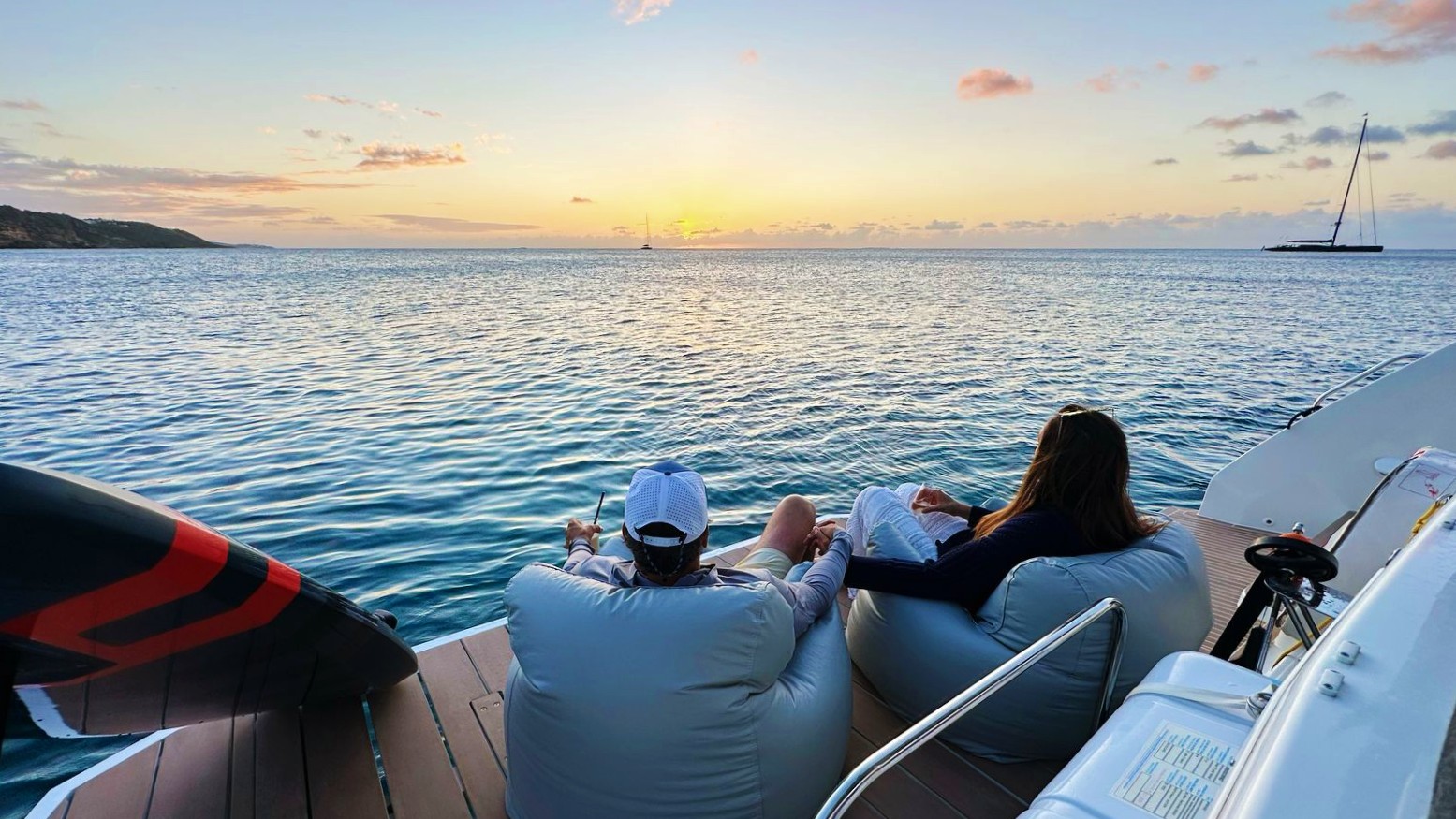
Alquiler de yate de luna de miel
Comience su matrimonio en un yate privado. Explore playas solitarias, gastronomía gourmet y atardeceres inolvidables en el Caribe.
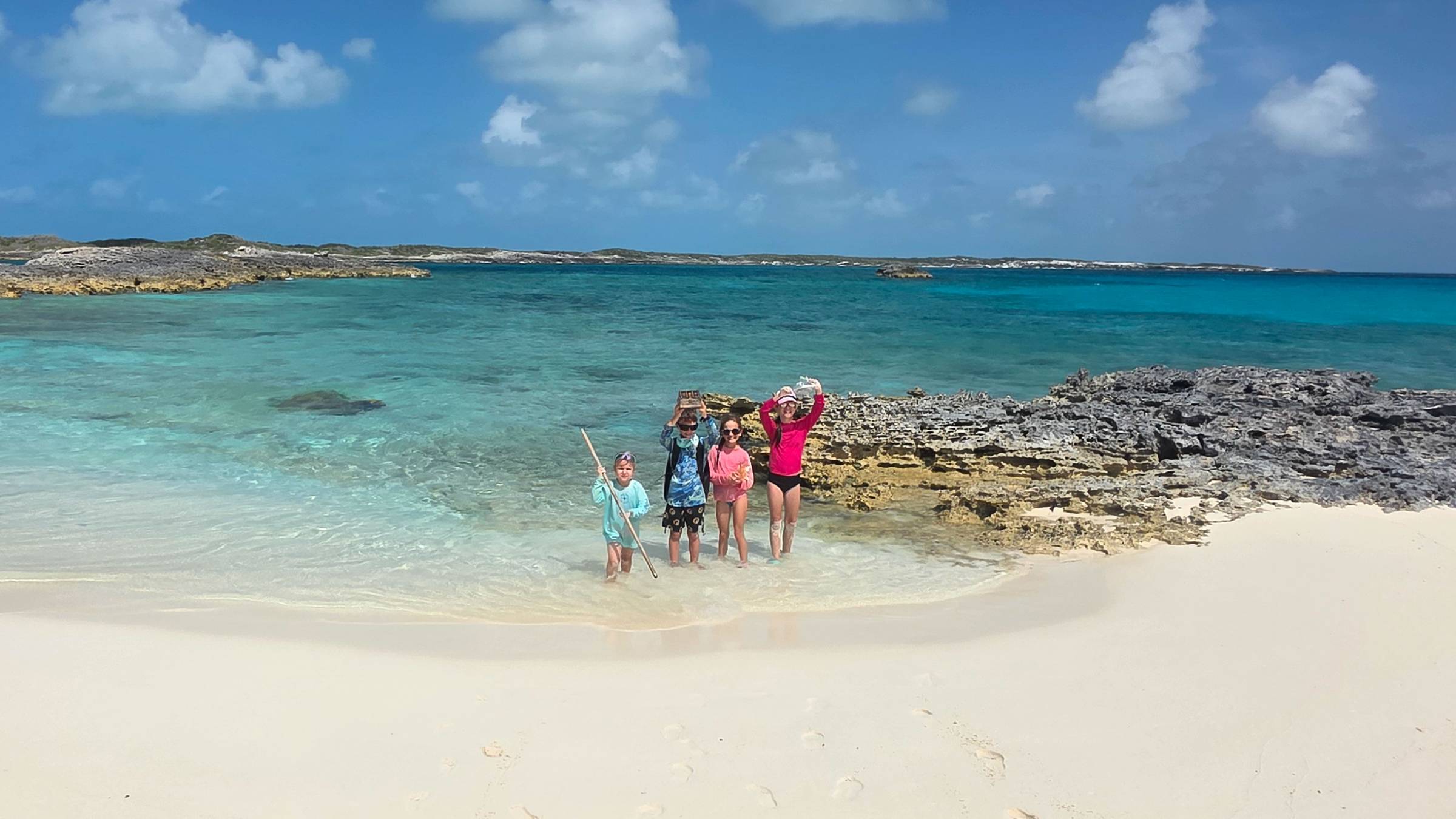
Alquiler de yate familiares
Un alquiler de yate con tripulación es perfecto para familias de todas las edades. Seguro, divertido y con servicio completo — sus hijos nunca lo olvidarán.

Preguntas frecuentes sobre alquileres de yate con tripulación
Obtenga respuestas a las preguntas más comunes sobre alquiler de yate con tripulación, desde precios y propinas hasta qué incluye y qué llevar.

Alquiler de yate con tripulación en las Islas Vírgenes Británicas
Las Islas Vírgenes Británicas son el destino #1 de alquiler de yate con tripulación en el Caribe. Navegaciones cortas, aguas protegidas y bahías de clase mundial.

Guía de Alquiler de Yate con Tripulación en Islas Vírgenes Británicas
Todo lo que necesitás saber antes de tu viaje en yate con tripulación en las Islas Vírgenes Británicas — precios, lista de equipaje, itinerario y cómo llegar.
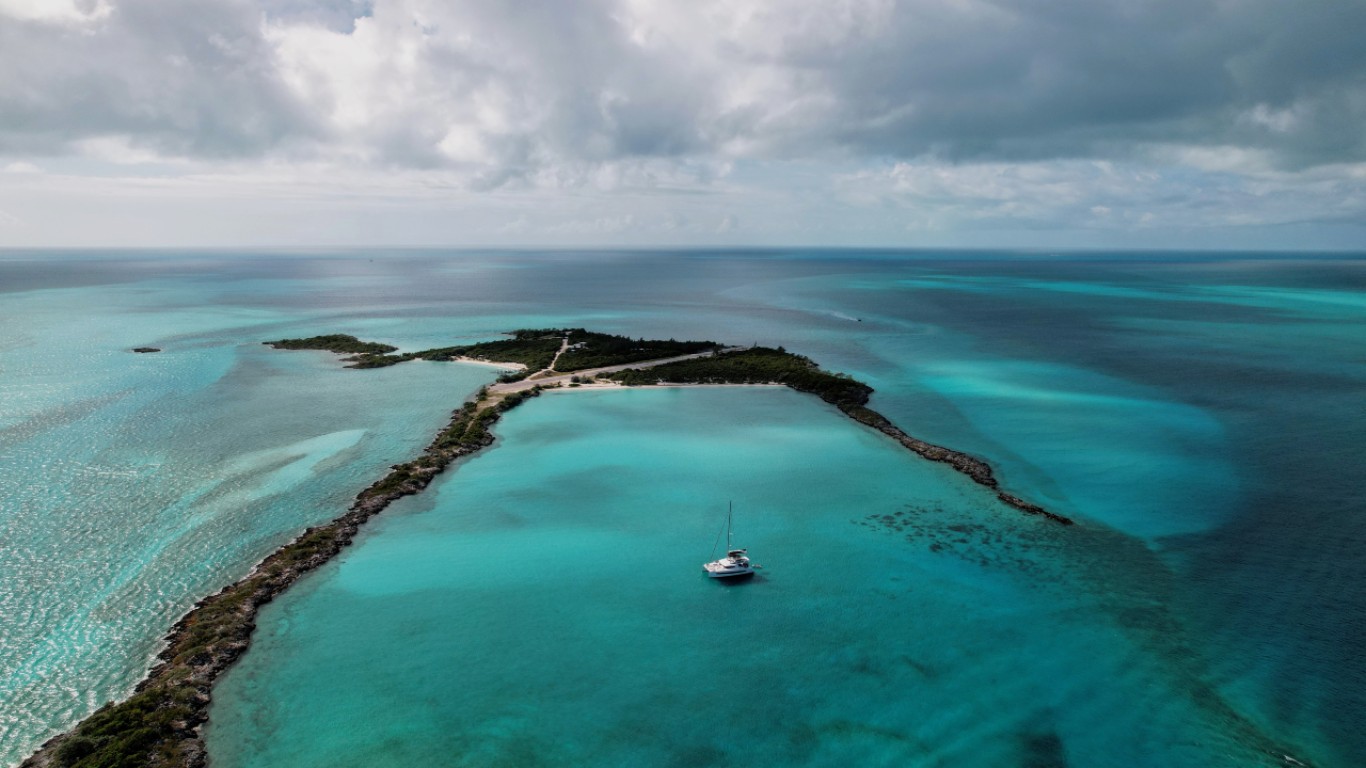
Alquiler de yate con tripulación en las Bahamas
Explore las Exumas en un yate privado con tripulación. Cerdos nadadores, bancos de arena y algunas de las aguas más cristalinas del mundo.
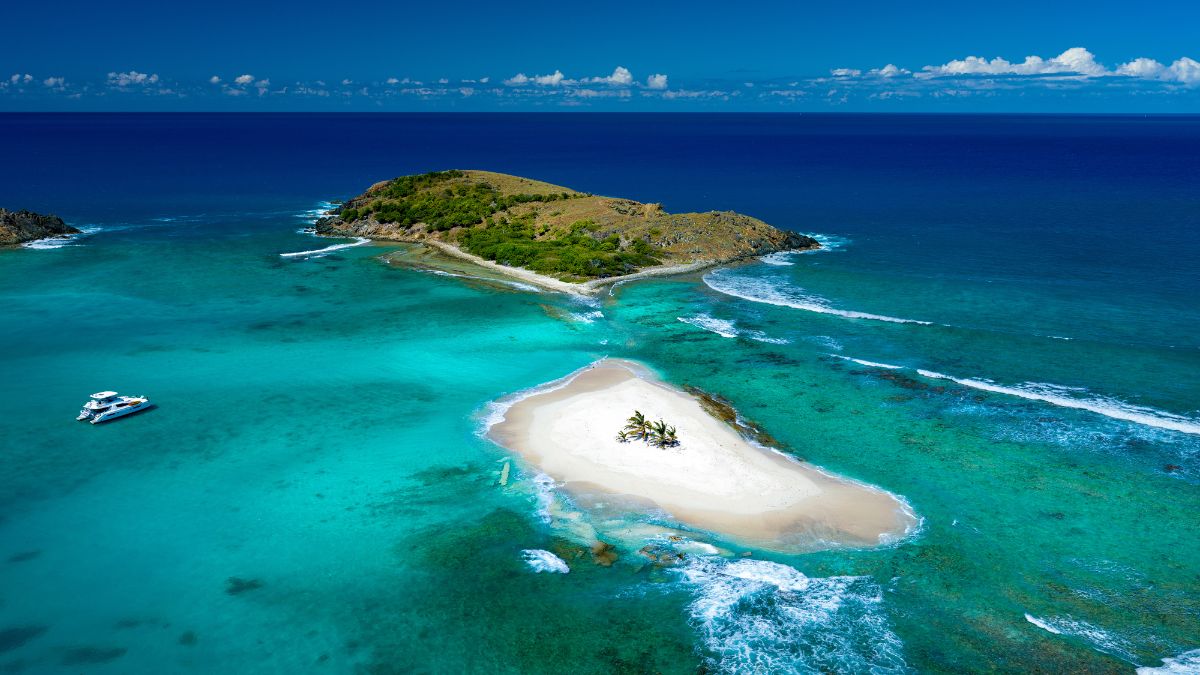
Alquiler de yate con tripulación en el Caribe
Alquiler de yate todo incluido con tripulación en todo el Caribe — Islas Vírgenes Británicas, Bahamas, Islas Vírgenes de EEUU, St. Martin, Antigua y más.