


Matt Weidert
The Best Yacht Charter Destinations for Kiteboarding
Here's the dirty secret of kiteboarding travel: the spot is never the problem. The access is.
You fly six hours to a famous kite beach and share the launch with forty other riders. The wind clocks around and the "world-class spot" your hotel sits on goes dead while the other side of the island fires. You go down a half mile out and spend twenty minutes swimming your gear back in.
A kiteboarding yacht charter solves all three at once. You anchor in the flat water behind the reef, rig on the foredeck, and launch off the back. When the forecast shifts, the yacht moves — you kite the best spot within reach every single day instead of the one your room happens to face. And the dinghy is the chase boat every kiter wishes they had: drop your kite way downwind and you're back aboard with a drink in your hand ten minutes later.
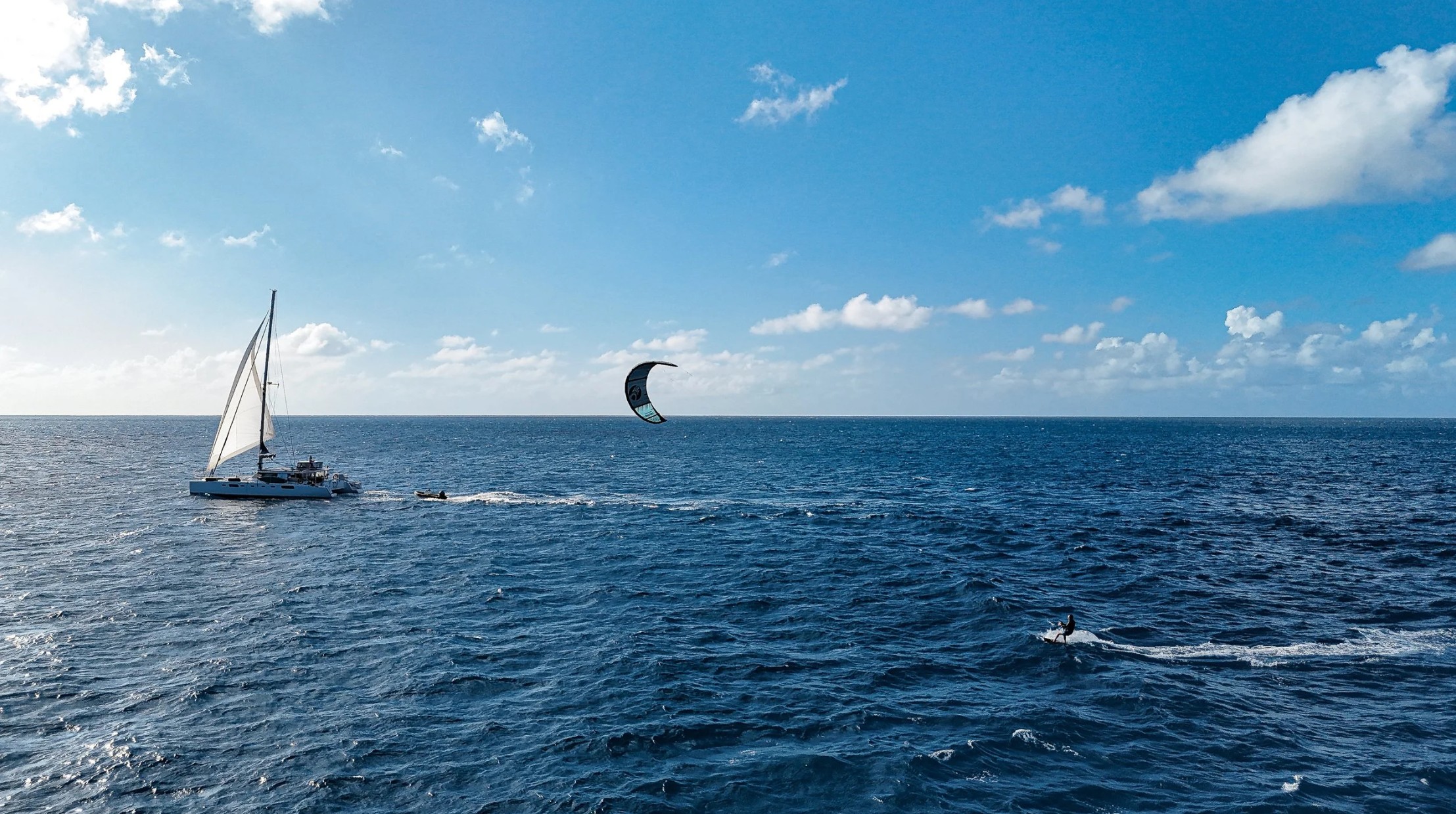
Kiting off the back of Awatea | the dinghy is never far behind
So where should you take that floating kite basecamp? After years of chartering these waters, here's my list.
- The British Virgin Islands — Anegada's waist-deep flats and the North Sound kite scene
- The Grenadines — Union Island's reef-held lagoon and the Tobago Cays
- The Exumas, Bahamas — a hundred miles of sandbar downwinders
- St. Martin & Anguilla — boat-only cays with wind and nobody on them
- French Polynesia — the destination that peaks while the Caribbean sleeps
Let's get into why — and when the wind actually blows in each.
Kiteboarding in the British Virgin Islands
The BVI is the easiest place in the Caribbean to combine a serious kite trip with a charter the rest of your group will love, and it has two genuinely different kite zones a day's sail apart.
Anegada
Anegada is the BVI's kite capital. The whole north shore hides behind Horseshoe Reef — one of the largest barrier reefs on Earth — so the trades arrive smooth off open ocean while the reef knocks the swell flat. Inside it you get waist-deep, sandy-bottom water running for miles, with nothing to hit. The wind blows a steady 17–22 knots through the season, cross-onshore, about as clean as trade-wind kiting gets.
There's a proper school here too: Tommy Gaunt Kitesurfing runs lessons and downwinders from Keel Point in front of the Anegada Beach Club. If someone in your group wants to learn while you ride, this is the friendliest classroom in the Caribbean — you stand up mid-lesson, you're standing on sand.
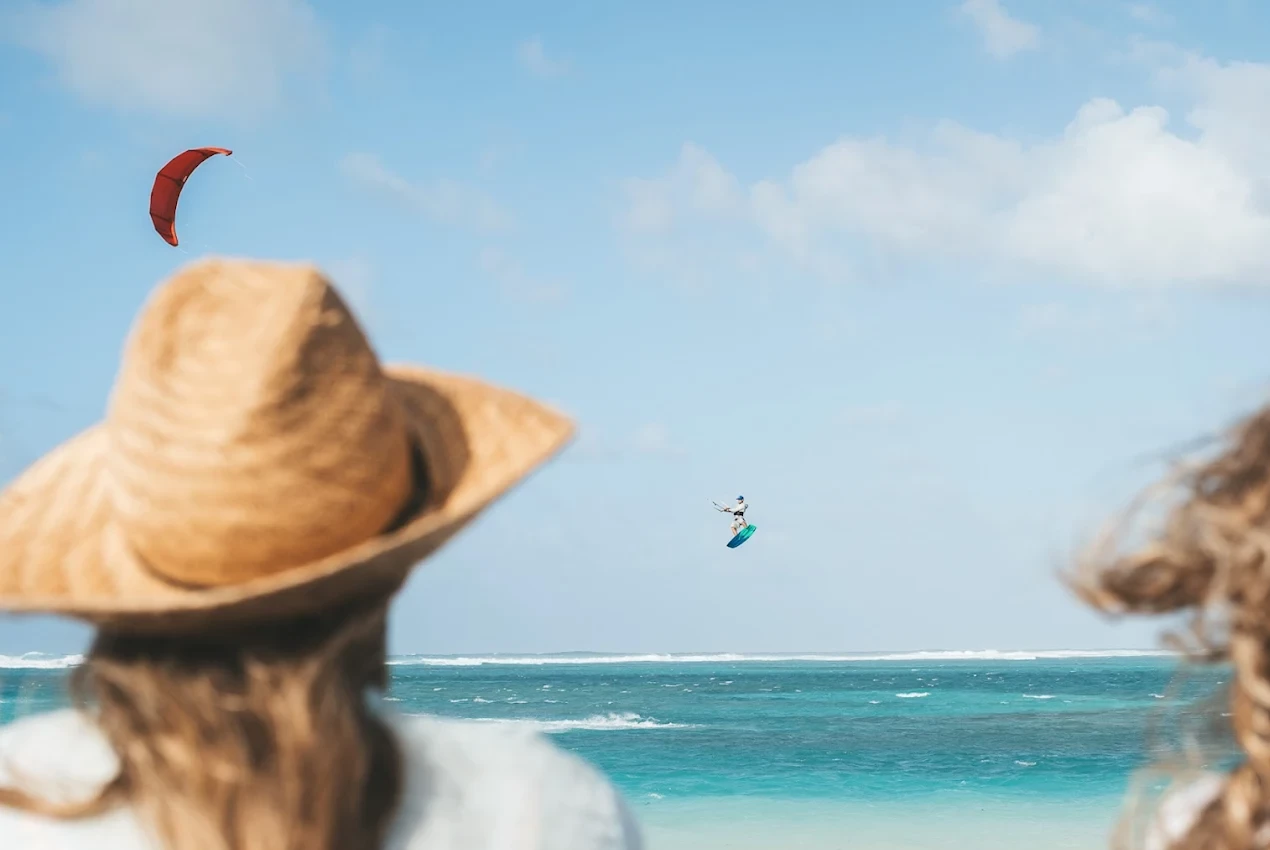
Anegada's north shore | waist-deep flats behind Horseshoe Reef, with miles of room to run
One practical note: yachts anchor at Setting Point on Anegada's south side, and the kiting is on the north shore — a short taxi ride across the island, not a dinghy hop. Worth it. Order the lobster at the beach bar afterward; you've earned it.
North Sound & Eustatia Sound, Virgin Gorda
North Sound is where the BVI's kite culture actually lives. This is Richard Branson's backyard — the BVI Kite Jam was born here after he and his instructor kited from Necker Island all the way to Anegada — and on a windy afternoon you'll watch kiters flying back and forth off Saba Rock while you sip something cold at the bar.
The move from a yacht is Eustatia Sound, tucked behind the reef northeast of the anchorage. The reef blocks the ocean chop but lets the trades roll straight over the top, so the water inside is shallow, flat, and nearly empty. Take the tender through the cut east of Prickly Pear, drop a hook on sand, and kite until your legs give out. Prickly Pear's southern shoreline launches are about as beginner-friendly as the BVI gets.

Saba Rock, North Sound | the kite traffic flies right past the bar
Kiteboarding in the Grenadines
If I had to pick one Caribbean destination purely for kiting, it's the Grenadines. The trades blow harder and longer here than almost anywhere else in the islands — 15 to 25 knots, reliably, from November through July — and the geography is a string of reef-protected lagoons that were practically designed for it.
Union Island
The lagoon at Clifton is the famous one: a fringing reef holds the water flat while the wind howls over the top, and Happy Island — a bar a local built by hand out of conch shells on the reef itself — sits right at the edge of the spot. Kite a session, land at a bar in the middle of the water, repeat. The JT Pro Center, run by pro rider Jérémie Tronet, operates here with dinghy support, and advanced riders run the downwinder from Clifton to the dead-flat lagoon at Frigate Island off Union's south side.
Honest note: Hurricane Beryl hit Union Island hard in 2024. The kite operations are back up and running, but parts of Clifton are still rebuilding — go with good expectations and your tourism dollars do real work here.
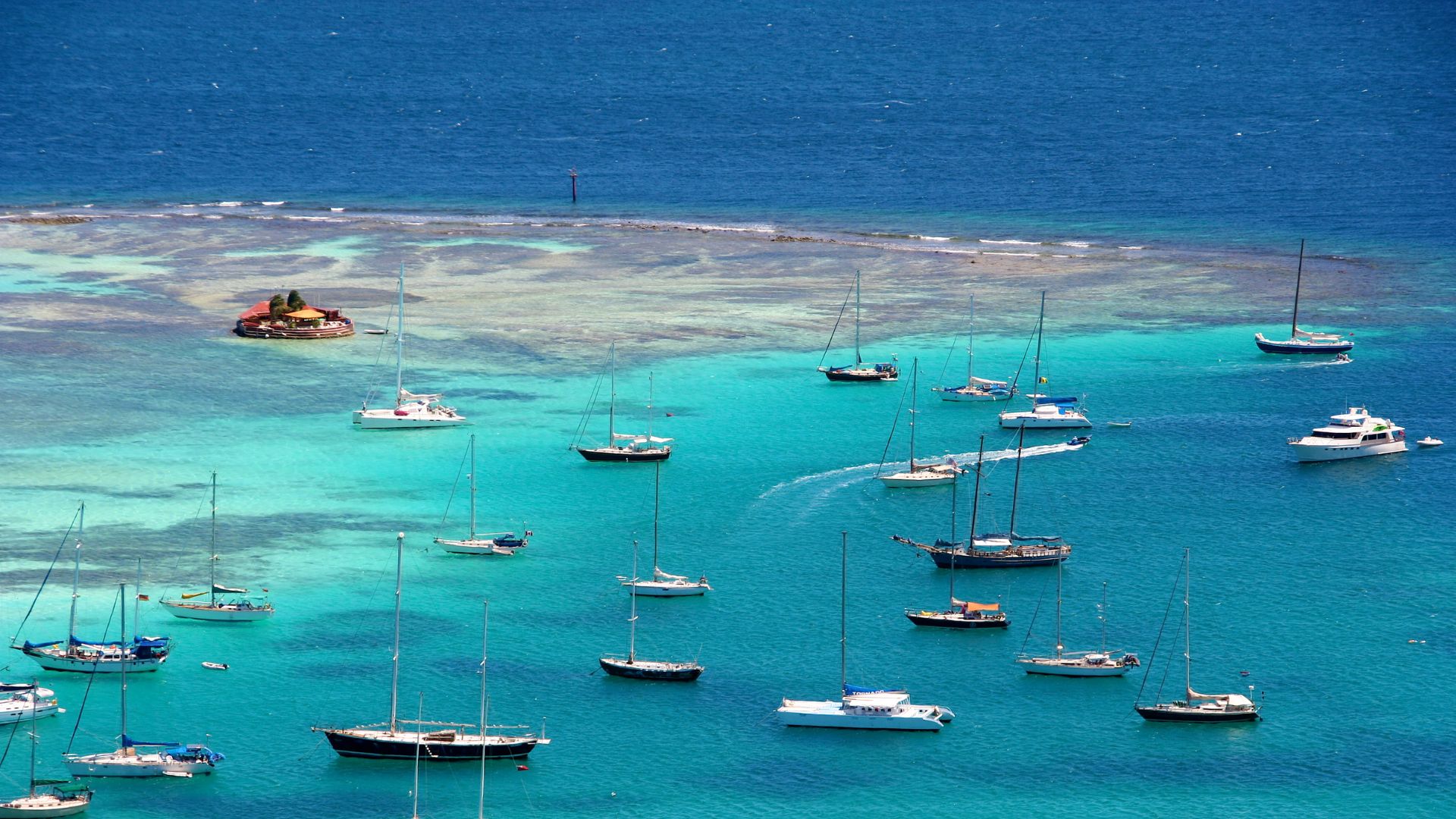
Clifton Harbour, Union Island | Happy Island sits right on the reef that keeps the kite lagoon flat
The Tobago Cays
Then there's the headliner: kiting the Tobago Cays, a horseshoe reef wrapped around four uninhabited cays in a marine park, with turtles grazing the seagrass below you. It's the kind of session you replay for years.
Know the rules before you pump up — this is a protected park. Launching from Baradal's beach is prohibited (that's the turtle zone), and you can't kite through the anchorage between the yachts. The answer is exactly what a yacht is for: the crew runs you out in the dinghy, you water-launch clear of the fleet, and the whole reef is yours. Mayreau and Palm Island add quieter flats and even some wave riding nearby, almost all of it boat-access.
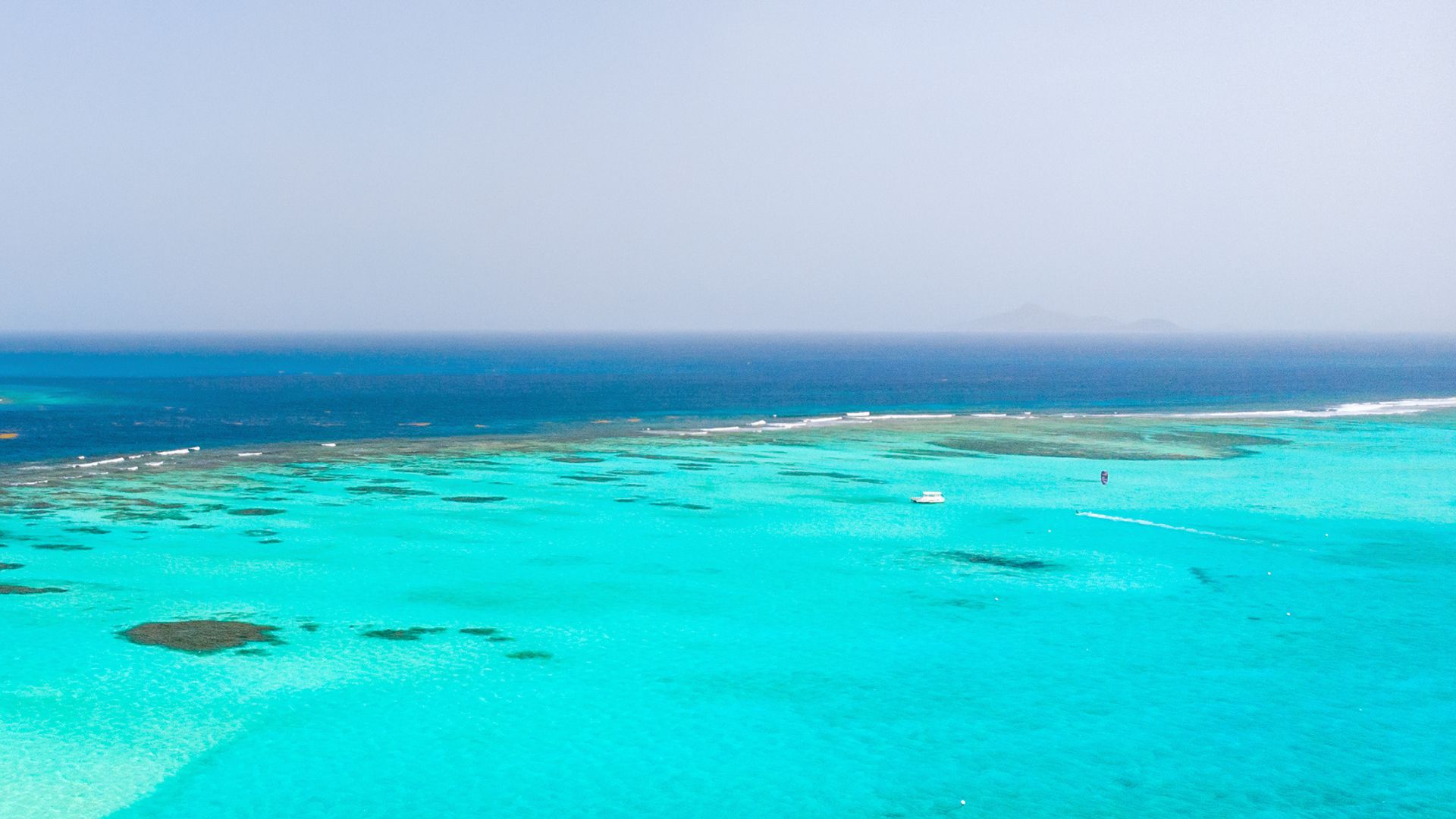
The Tobago Cays | one kite, one support boat, and the whole reef to yourself
Kiteboarding in the Exumas, Bahamas
The Exumas don't have a famous kite beach, and that's exactly the point. What they have is a hundred-mile chain of cays and sandbars with shallow, gin-clear water on the banks side — and steady winter trades of 15 to 20 knots blowing across all of it from November through April.
This is the best downwinder terrain I know of. You kite from cay to cay with the dinghy shadowing you, stop on a sandbar that didn't exist two hours ago, and keep going. The water is standing depth almost everywhere, which makes it a dream for progression — there are dedicated kite-catamaran operators who run the Exumas for exactly this reason. Near Georgetown, the protected flats around Moriah Harbour Cay and Elizabeth Harbour hold the classic spots when you get that far down the chain.

The Exuma banks | standing-depth water for miles — this is the whole kite spot
One thing to respect out here: the tide. The cuts between the cays run hard when it's moving, and sandbars flood on the incoming. Kite with the dinghy in sight and never alone — remote is the whole appeal, and remote means self-sufficient.
Kiteboarding in St. Martin & Anguilla
St. Martin is the established kite hub — Orient Bay is a two-and-a-half-kilometer stretch of windward coast with schools that have been teaching since the nineties, and Le Galion next door is the locals' flat-water lagoon with a wave breaking on the reef at the end of it. Mid-December through mid-July, the trades do their job.
But the reason this makes my list is across the channel. Anguilla's offshore cays — Sandy Island, the Prickly Pear Cays, Dog Island — are scattered little sand-and-reef islets that you simply cannot reach without a boat, they pick up a few knots more wind than St. Martin itself, and most days nobody is on them. Flat water on the inside, wind on the outside, a beach-shack lunch at Prickly Pear between sessions. Day operators run kite trips out here from St. Martin precisely because it's that good; from a charter yacht, it's just Tuesday.
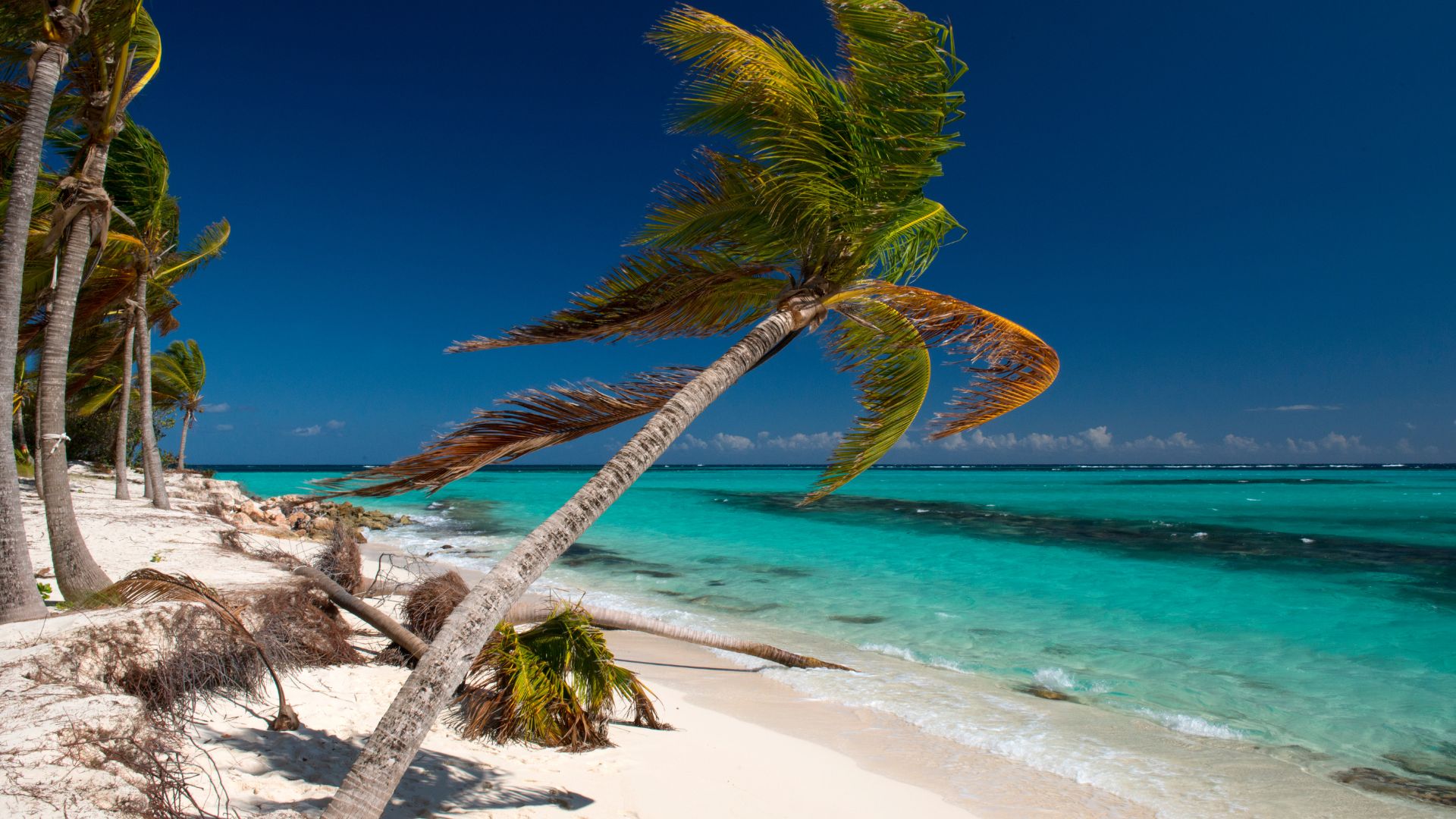
Anguilla's cays | trades bending the palms and a reef holding the water flat — boat access only
Kiteboarding in French Polynesia
Here's the one that surprises people: French Polynesia's wind peaks from June through October — the maraamu, the reinforced southeast trade of the austral winter, blows 25 knots and better for days at a stretch. That's the exact window when the Caribbean goes light and hurricane-season. If you're a kiter who wants to ride all year, this is how you do it.
In the Society Islands, the shared lagoon around Raiatea and Taha'a is the playground — the local kite school's "spot" is a motu off Taha'a that's a forty-five-minute boat ride from town, which tells you everything about why a yacht is the right tool here. Bora Bora has a friendly, shallow launch at Matira Point, and quiet Maupiti serves up an uncrowded lagoon when conditions allow the pass (your captain will make that call — Maupiti's single pass is famously sporty).
The Tuamotus take it up a level. At Fakarava, Hirifa in the southeast corner is the most famous flat-water spot in the atolls; at Rangiroa, the pink-sand banks of Les Sables Roses sit at the far end of a forty-mile lagoon — inches-deep, wind-on flat, and essentially reachable only by yacht. Launch from a bare motu (skip the ones with coconut trees upwind; they chew up the breeze), watch for coral heads, and ride water most kiters will never see.
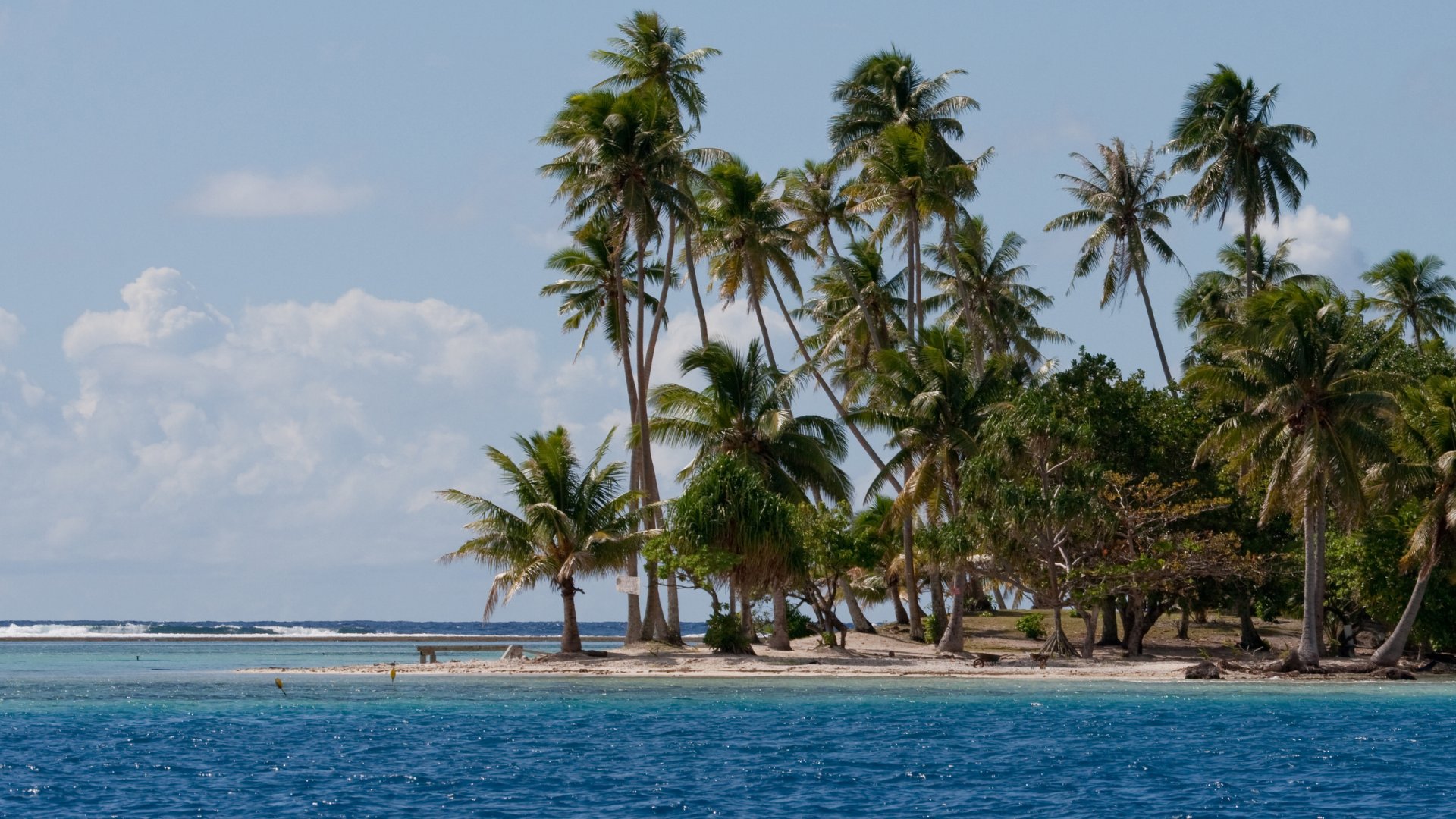
A motu on the Taha'a reef | your launch, your shade, and your lunch stop in one
When does the wind blow?
The Caribbean kiteboarding (or kitesurfing — same sport, different passport) season is simple: the winter trades run roughly December through April at 15 to 25 knots, with the famous Christmas winds — late December into February — delivering the strongest, steadiest stretch, sometimes 25 to 30 knots for days. The Grenadines and St. Martin stay rideable into July; Anegada's season runs November through July as well. Summer goes light almost everywhere, which is e-foil weather, not kite weather.
French Polynesia runs the opposite calendar: June through October is the strong season. Between the two hemispheres, there's wind somewhere on this list every month of the year.
Should you bring your own gear?
If you're an independent rider: yes, bring your quiver — or at least your bar, harness, and the two kite sizes you actually ride. Kite gear is personal, and kite bags fly as regular sports luggage. Some yachts do carry kite kit aboard, and we'll confirm exactly what's on the yacht you pick before you decide what to pack.
If you're learning, don't buy anything yet. We'll route the itinerary past the schools — Anegada, Union Island, Orient Bay, Raiatea — and you'll learn on their gear in shallow, sandy water with an instructor and a boat behind you. By the end of the week you'll know exactly what to order.
Final thoughts
Every destination on this list works as a kite trip. The trick is that they're all better as a yacht trip that happens to carry kites — because the wind doesn't care where your hotel is, and a yacht doesn't either.
Start with the season: Caribbean from December through April or early summer, French Polynesia from June through October. Then pick your flavor — the BVI for the easiest all-around charter, the Grenadines for the most wind, the Exumas for empty flats, Anguilla's cays for the private-spot feeling, the Tuamotus for the adventure.
Browse the yachts set up for kiteboarding charters, or dig into the destination guides for the BVI, the Grenadines, the Exumas, St. Martin, and French Polynesia. When you're ready, reach out — we'll find the wind.


